

Lu Wanyao — After-Sales Service Supervisor
 Home / Author / Lu Wanyao — After-Sales Service Supervisor / How High-Pile Solid Area Rugs Combine Comfort, Safety, and Efficient Textile Manufacturing
 2026.11.01
 Lu Wanyao — After-Sales Service Supervisor
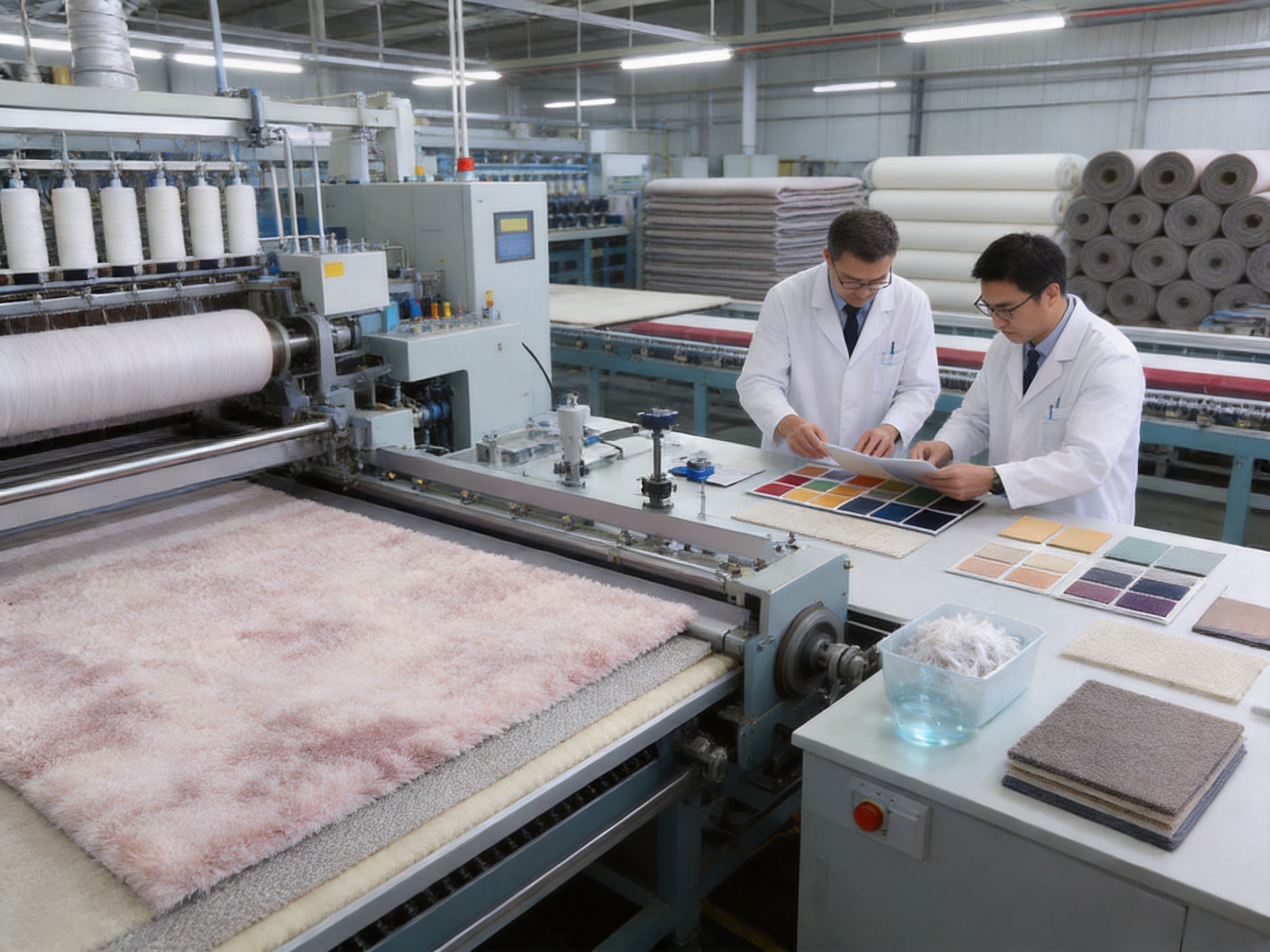
A well-designed area rug does more than cover a floor. It changes the atmosphere of a room, softens hard surfaces, improves everyday comfort, and helps define separate living areas within an interior. For homes, hospitality spaces, family rooms, nurseries, and bedrooms, the right rug must balance softness, durability, maintenance, appearance, and safety. The PV Plush Solid Carpet is designed around this balance, combining a deep 40 mm pile, a dense 1000 gsm construction, a cushioned memory foam layer, and a backing equipped with anti-slip dots.
This product is a rectangular solid-color area rug made primarily from polyester. It is intended for indoor use and is available in standard dimensions ranging from 2' x 3' to 8' x 10', with custom sizing also available. Its simple solid-color appearance allows it to work with contemporary, minimalist, family-oriented, and transitional interiors without competing with furniture or decorative accessories.
Behind the finished rug is an integrated textile manufacturing system operated by Zhejiang Benyi Textile Technology Co., Ltd. The company combines fabric development, weaving, dyeing and printing, backing, and finished-product processing through its own production resources. This level of control can support more consistent quality, clearer production coordination, and greater flexibility for wholesale and customized orders.
The following article examines the construction, performance, applications, maintenance, manufacturing advantages, customization potential, and purchasing considerations associated with this high-pile solid area rug.
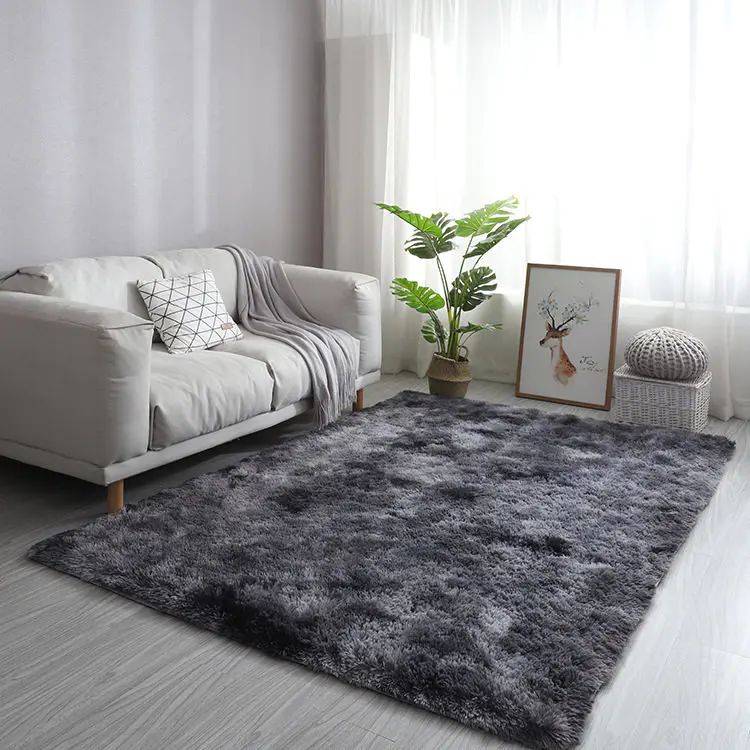
PV plush Solid Carpet
Content
The PV Plush Solid Carpet is a plush area rug developed for indoor environments where softness and visual simplicity are important. Its most noticeable characteristic is its long pile, measuring approximately 40 mm. This height creates a thick, fluffy surface that feels comfortable under bare feet and gives the rug a substantial visual presence.
The rug has a stated weight of 1000 gsm. Although total product weight will vary according to the selected dimensions, a 1000 gsm specification indicates a dense and substantial textile surface compared with many lightweight decorative mats. The combination of long pile and high material density contributes to a fuller appearance and a more cushioned feeling underfoot.
The product uses polyester as its principal material. Polyester is widely used in residential textile products because it can provide softness, color flexibility, dimensional versatility, and practical resistance to everyday wear. The product description also emphasizes fade resistance and durability, making the rug suitable for repeated household use when maintained according to care instructions.
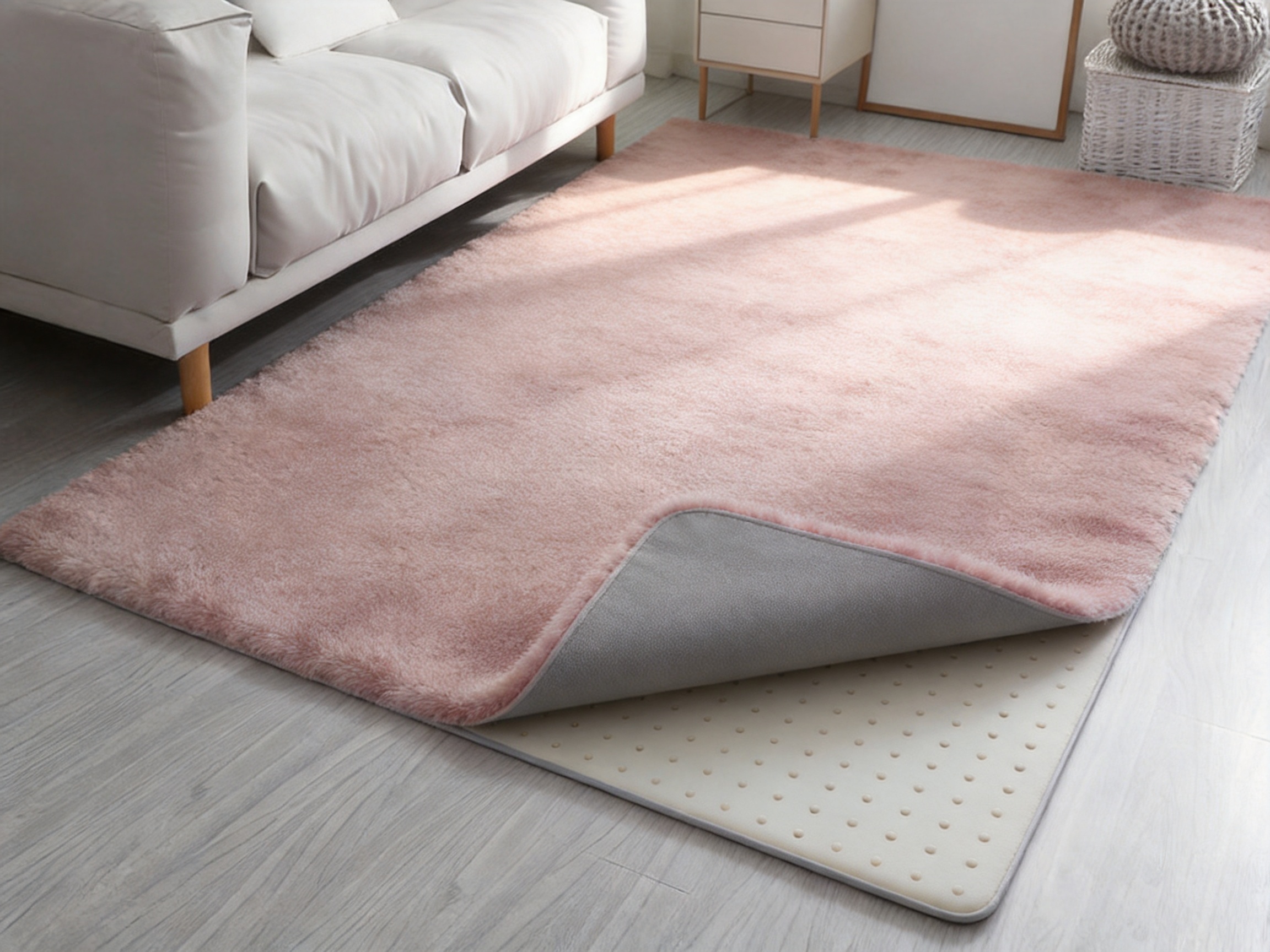
The construction is described as bonded. Rather than relying only on a simple surface fabric, the rug is assembled through multiple functional layers. The upper layer provides the visible plush surface, the middle layer includes memory foam for cushioning, and the backing consists of non-woven fabric with anti-slip dots. Each layer contributes a different performance benefit.
| Product Attribute | Specification | Practical Significance |
|---|---|---|
| Product type | Solid area rug | Suitable for defining and warming indoor spaces |
| Primary material | Polyester | Supports softness, color versatility, and everyday durability |
| Pile height | 40 mm | Creates a deep, plush, comfortable surface |
| Weight | 1000 gsm | Provides a dense and substantial textile feel |
| Construction | Bonded | Combines surface, cushioning, and backing layers |
| Middle layer | Memory foam | Adds cushioning and improves underfoot comfort |
| Backing | Non-woven fabric with anti-slip dots | Helps improve stability on indoor floors |
| Shape | Rectangular | Fits common furniture layouts and room arrangements |
| Care | Water washable; vacuum cleaning is also indicated | Supports practical household maintenance |
| Available sizes | 2' x 3' through 8' x 10', plus custom sizes | Serves both small accent areas and larger rooms |
| Recommended use | Indoor | Designed for bedrooms, living rooms, kids’ spaces, and nurseries |
These specifications position the product between a decorative floor covering and a comfort-focused home textile. It can act as a visual foundation for furniture while also offering a soft surface for walking, sitting, reading, or playing.
Pile height refers to the length of the visible fibers or loops extending above the rug’s foundation. At 40 mm, the PV Plush Solid Carpet has a notably deep pile. This creates a surface that feels more luxurious than a flatwoven mat or a low-profile printed rug.
A high pile can soften the transition between hard flooring and living areas. Wood, tile, laminate, and vinyl floors may be durable and easy to clean, but they can feel cold or firm under bare feet. A thick plush rug introduces warmth and texture without requiring a permanent flooring renovation.
The height also gives the rug visual depth. Even in a solid color, the surface can appear rich because the fibers reflect light differently as they bend and move. This allows a plain-color rug to avoid looking visually flat. Depending on the selected color and room lighting, the pile may create subtle shading that adds dimension while preserving a clean overall appearance.
Gsm means grams per square meter and is used to describe the weight of a textile surface. The stated 1000 gsm specification indicates that the rug has a substantial material presence. Weight alone does not determine quality, but it is useful when considered alongside pile height, fiber type, backing, and construction.
A denser textile surface can help the rug maintain a fuller appearance during normal use. It also supports the product’s premium feel when compared with very thin or loosely made alternatives. For buyers selecting rugs for bedrooms, living rooms, and children’s areas, the combined effect of long pile and substantial weight is especially important because these spaces benefit from a comfortable, inviting surface.
The dense construction may also improve the way the rug photographs and displays in a showroom or online catalog. A fuller surface communicates softness and quality at a glance. For retailers, interior suppliers, and hospitality buyers, this can be a useful merchandising advantage.
Comfort is one of the strongest reasons consumers choose a plush rug. The long polyester pile cushions the contact between feet and floor, while the memory foam layer adds another level of softness beneath the textile surface. Together, these elements create a more forgiving walking and standing experience.
The product is particularly suitable for areas where people frequently walk barefoot or spend time close to the floor. Examples include bedrooms beside the bed, reading corners, children’s rooms, nursery areas, and lounge spaces. It can also be used beside sofas and coffee tables to make a seating area feel more complete.
Memory foam is valuable because it can compress under pressure and recover after use. The exact level of recovery depends on temperature, loading, usage, and product care, but the layer is intended to create a cushioned sensation rather than the firm feel of a thin fabric mat.
The surface is made from 100% polyester long pile according to the supplied product information. Polyester is a practical choice for a soft decorative rug because it can be engineered in different fiber lengths, colors, and surface effects. It also supports efficient large-scale production and can be used for a broad range of interior color programs.
The long pile is designed to provide a cozy tactile experience. Its texture can make a room feel warmer and more relaxed, especially when used with neutral furniture, upholstered seating, wood accents, or soft lighting. The solid-color format allows the texture to become the main decorative feature.
Polyester also offers advantages for product development. Manufacturers can produce consistent color series and coordinate rug colors with other household textiles. This is useful for wholesalers and private-label buyers who need a repeatable product range rather than isolated one-off designs.
The memory foam layer is a key differentiating feature of the product. Many simple rugs consist primarily of a surface textile and a thin backing. By adding foam between the surface and the backing, the rug gains additional cushioning and a more substantial hand feel.
This layer can help reduce the perceived hardness of the floor and may make standing or walking more comfortable. In a bedroom, it provides a soft landing beside the bed. In a family room, it creates a more comfortable surface for children to sit or play on. In a living room, it makes the area around a sofa feel more inviting.
Because the product has a deep pile and foam layer, buyers should consider door clearance, furniture placement, and floor transitions before installation. The rug is best positioned where its height will not interfere with doors or create an unnecessary trip point at a narrow threshold.
The backing uses non-woven fabric with anti-slip dots. Non-woven materials are produced by bonding or entangling fibers rather than forming a conventional woven structure. In a rug backing, non-woven fabric can provide a stable foundation for the upper layers while supporting efficient manufacturing.
The backing helps keep the rug’s layered structure together and contributes to the overall shape. Its function is especially important in a plush product, because a thick surface needs a reliable foundation to maintain performance during handling, installation, and regular use.
Small anti-slip dots on the backing are intended to improve grip between the rug and the floor. This feature can reduce unwanted movement on suitable indoor surfaces and helps the rug remain more stable during normal walking.
Anti-slip performance depends on the floor condition, floor material, moisture, dust, rug size, and amount of traffic. The floor should be clean, dry, and level before the rug is placed. Buyers should not assume that any anti-slip backing can eliminate all movement in every situation. For very young children, older adults, or areas with unusually high traffic, the rug should be checked regularly and positioned carefully.
The integrated anti-slip backing is a practical advantage because the product information indicates that no additional rug pad is needed under normal conditions. This can simplify installation and reduce the number of separate components required by the end user.
Thin printed rugs and lightweight flat mats can be convenient, but they may provide limited cushioning. The PV Plush Solid Carpet addresses this issue through its 40 mm pile and memory foam middle layer. It is designed not simply as a visual accessory but as a comfort surface.
This distinction can be important in bedrooms, children’s spaces, and seating areas. A thin rug may define a zone, while a plush foam-backed rug can also make the zone feel softer and more usable. Customers seeking warmth and tactile comfort may therefore prefer this type of construction over a basic low-profile alternative.
Patterned rugs can become strong visual focal points, but they may not suit every room or furniture arrangement. A solid-color design offers greater flexibility. It can support a wide variety of decorative styles without introducing additional lines, motifs, or contrasting colors.
The solid surface is particularly appropriate for minimalist interiors, rental properties, staged homes, hotel rooms, nurseries, and coordinated furniture collections. It also makes it easier for retailers to offer several color choices while keeping a consistent product structure.
Some rugs require an additional underlay for grip and cushioning. The integrated backing of this product combines non-woven fabric, anti-slip dots, and a memory foam layer. This can reduce installation complexity and may lower the total accessory cost for the buyer.
A separate pad can still be considered when a customer has special requirements, an unusually smooth floor, or a need for extra cushioning. However, the supplied product information presents the built-in backing as sufficient for typical indoor use.
The product is offered in sizes from 2' x 3' to 8' x 10', with custom dimensions available. This range makes the rug suitable for multiple applications. Smaller sizes can be used beside beds, beneath small tables, in reading corners, or at the entrance to a room. Medium sizes can define seating arrangements, while larger sizes can anchor a living room or bedroom.
Custom sizing is especially valuable for commercial buyers, interior designers, property developers, and retailers serving customers with non-standard floor plans. It can also help reduce the compromises associated with forcing a standard rug into an unusual space.
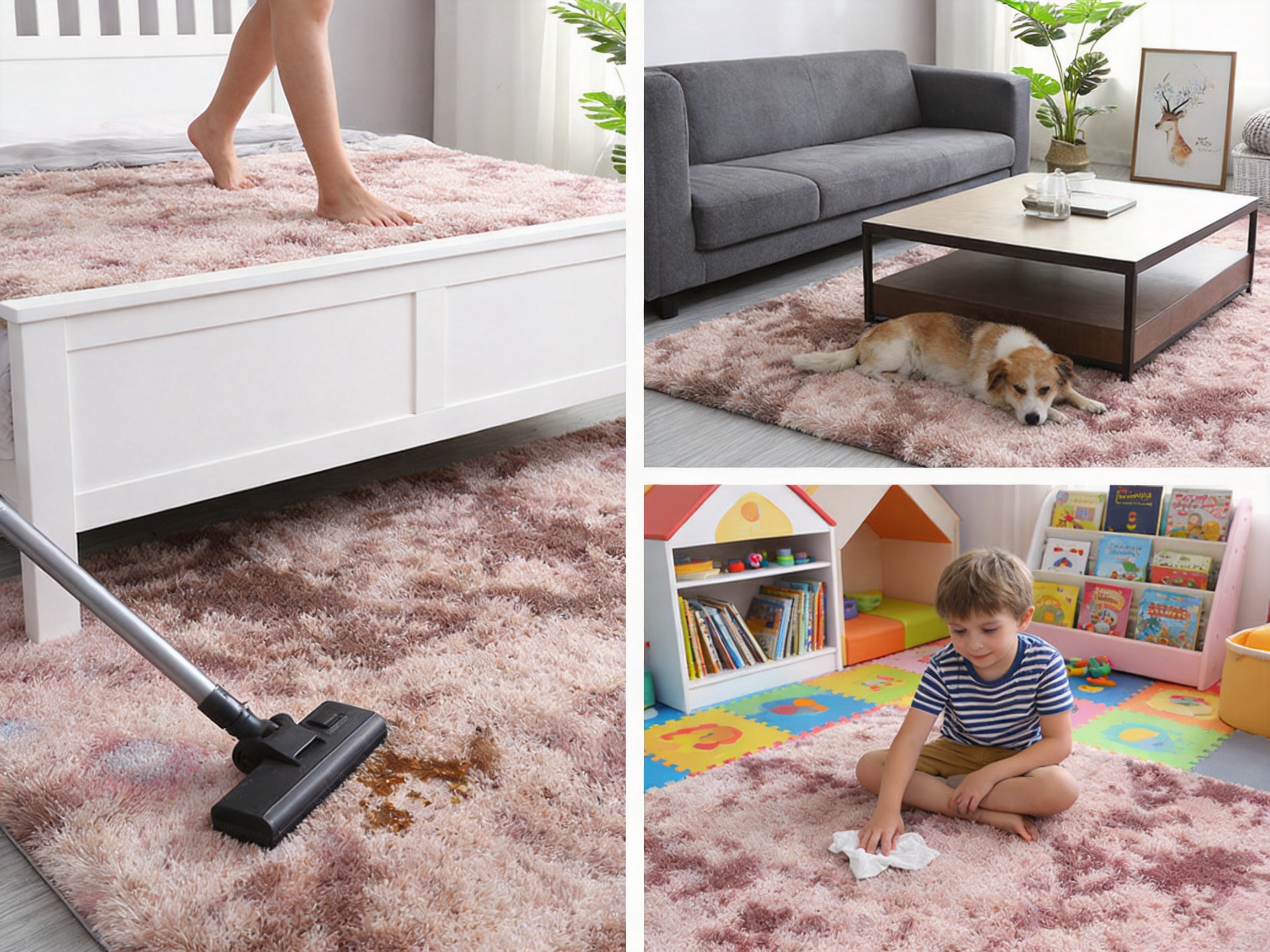
The product is described as water washable, and the supplementary instructions also mention cleaning with a vacuum cleaner or water. Washability is a meaningful advantage for households with children, pets, frequent visitors, or high expectations for cleanliness.
Cleaning should follow the supplier’s final care instructions and should account for the rug’s thickness. After washing, the product must be dried thoroughly to help prevent residual moisture, odor, or backing damage. A gentle vacuuming routine can help remove loose dust and surface debris between deeper cleanings.
Some rugs are primarily selected for their pattern, while others are selected for their ability to make a room feel comfortable. This product is positioned strongly in the second category. Its plush surface, foam cushioning, and non-slip backing respond to practical needs that are important in bedrooms, living rooms, nurseries, and children’s rooms.
For buyers comparing products, the relevant question is not only whether the rug looks attractive when new, but also whether it supports the way the room will be used. The PV Plush Solid Carpet is designed for spaces where people walk barefoot, sit on the floor, relax, or spend time with family.
A bedroom rug can add softness beside a bed, beneath a bed, or in a dressing area. The high pile creates a comfortable surface for bare feet, especially in the morning or during colder seasons. A solid color can also create a calm visual environment and coordinate easily with bedding, curtains, and upholstered furniture.
For smaller bedrooms, a 2' x 3' or 2' x 6' format may be suitable for bedside placement. Larger rooms may benefit from a 5' x 7', 6' x 9', or 8' x 10' configuration, depending on the bed size and desired furniture layout.
In a living room, the rug can define the seating zone and connect a sofa, chairs, and coffee table. The solid design keeps the arrangement visually organized, while the thick surface adds warmth to hard flooring.
When selecting a size, buyers should consider whether the front legs of seating furniture will sit on the rug or whether the rug will remain centered beneath a coffee table. A larger rug generally creates a more unified appearance, while a smaller rug can highlight a specific table or conversation area.
Children’s rooms and nurseries benefit from soft floor surfaces because children often sit, crawl, read, and play at floor level. The thick pile and memory foam layer can make the area more comfortable than bare flooring.
Safety remains essential. The rug should be placed on a clean, level surface, and its anti-slip backing should be inspected regularly. Spills should be addressed promptly, and the rug should be completely dry before it is returned to use. Adults should also consider allergies, cleaning routines, and age-appropriate supervision when selecting any textile for a child’s environment.
A small plush rug can make a reading corner more inviting. Placed beneath a lounge chair, floor cushion, or small side table, it creates a defined area without requiring a large installation. The solid color helps preserve a peaceful appearance, while the deep pile adds sensory comfort.
Although the product is specified for indoor household use, its construction may also interest interior designers, furnishing suppliers, and hospitality buyers seeking soft decorative floor coverings. Custom dimensions and coordinated colors can support project-based purchasing.
Commercial buyers should evaluate expected traffic, cleaning procedures, fire and safety requirements, and local regulatory standards before specifying the product for a particular project. The product information identifies indoor residential-style applications, so project suitability should be confirmed according to the intended environment.
Zhejiang Benyi Textile Technology Co., Ltd. is located in Shaoxing, Zhejiang Province, a region widely associated with textile production and supply chains. This location provides access to textile expertise, supporting industries, production resources, and labor with experience in fabric development and processing.
The company’s position in the “World Textile Capital” area is relevant to buyers because an established textile cluster can support sourcing efficiency and communication among fiber, fabric, dyeing, printing, finishing, and logistics partners. Regional specialization can also help manufacturers respond more quickly to market trends and material developments.
The company states that it operates or controls weaving, dyeing and printing factories, and finished carpet processing factories. This creates a more integrated production model than a business that only purchases finished materials from unrelated suppliers.
Integrated control can offer several potential advantages. Production stages can be coordinated more closely, product specifications can be communicated directly between departments, and quality issues may be identified earlier. It can also help reduce delays caused by transferring materials between separate organizations.
For buyers, the benefit is not merely the existence of multiple factories. The important point is the ability to connect the development of the surface fabric with the backing and final assembly process. A rug’s performance depends on how these components work together, so coordination across stages is valuable.
The company describes a production approach that combines the bottom and surface, simplifying the traditional carpet manufacturing model. This approach is relevant to the PV Plush Solid Carpet because the finished product relies on the relationship between the plush surface, memory foam, and anti-slip backing.
A coordinated lamination or bonding process can help create a unified product rather than a loose collection of independent layers. Consistency in bonding, edge finishing, dimensional stability, and backing placement is important for a rug intended to remain comfortable and stable during everyday use.
Advanced manufacturing does not mean that every product is identical in every circumstance. Textile performance can vary by color, size, batch, and production conditions. However, a defined integrated process provides a foundation for repeatability and quality control.
The company reports a team of more than 20 fabric engineers. This development capacity allows it to create new carpet fabrics each quarter based on market trends and customer needs. For wholesale buyers, ongoing product development can be an advantage because interior preferences change rapidly.
Fabric engineers can work on fiber selection, pile effects, color development, surface feel, backing combinations, and application-specific requirements. The result is a broader ability to adjust the product rather than relying on one fixed specification.
In the case of the PV Plush Solid Carpet, the engineering focus can be seen in the combination of a deep pile, high fabric weight, memory foam, non-woven backing, and anti-slip dots. These features address tactile comfort, visual fullness, stability, and practical maintenance in one product concept.
Because the company works across fabric production and finished carpet processing, it can maintain greater oversight of quality and lead times than a purely trading-based model may provide. Control over more stages can make it easier to investigate variations in color, pile density, backing attachment, or dimensions.
For distributors and retailers, lead-time reliability is important. Stock planning, private-label launches, seasonal collections, and project installations all depend on predictable production schedules. Integrated manufacturing cannot eliminate every delay, but it can reduce dependence on multiple disconnected suppliers and improve production coordination.
The company provides customized services according to customer requirements. In the context of this product, customization may involve dimensions, color selection, packaging, labeling, or product combinations, subject to technical and commercial confirmation.
Custom size availability is already identified in the product information. This is useful for buyers who serve customers with specific room dimensions or who need rugs for furniture collections and interior projects. Before placing a custom order, buyers should confirm minimum order quantities, sampling procedures, color standards, tolerance ranges, packaging, and production timelines.
The company presents ecological protection and consumer health as part of its business direction. It states that it invests in sustainable materials and production methods, including recycled polyester and water-saving dyeing techniques.
Recycled polyester can reduce reliance on virgin petroleum-based raw materials when it is properly sourced and processed. Water-saving dyeing methods can help reduce water consumption in textile production. The actual environmental benefit depends on the material source, production technology, energy mix, wastewater management, and certification documentation.
The company also states that it has passed OEKO-TEX® and GRS certifications. Buyers should request current certificates and confirm which facilities, materials, and products are covered. Certifications are most useful when their scope, validity, and chain-of-custody information are clearly documented.
Sustainability in a rug also involves product life. A durable, attractive, washable product may remain useful for a longer period, reducing the need for frequent replacement. Practical maintenance, suitable construction, and responsible material selection can therefore work together to support a more considered purchasing decision.
For wholesale customers, sustainability claims should be reviewed as part of a broader supplier assessment. Documentation, traceability, wastewater controls, packaging choices, labor standards, and product testing can all contribute to a responsible sourcing program.
Regular vacuuming can remove dust, lint, crumbs, and loose particles from the surface. Because the pile is long, vacuuming should be performed with equipment and settings appropriate for high-pile rugs. Excessive suction or an aggressive rotating brush may pull fibers or stress the surface.
Moving furniture occasionally can help prevent permanent compression in one area. If a section of the pile becomes flattened, gentle brushing or careful redistribution of the fibers may improve its appearance. The rug should not be treated harshly, especially when it includes a foam layer and bonded backing.
Spills should be addressed as soon as possible. Blotting is generally preferable to vigorous rubbing because rubbing can push liquid deeper into the pile and spread the affected area. A clean cloth and a suitable mild cleaning solution may be used only after checking the supplier’s care instructions and testing an inconspicuous area.
Strong bleach, harsh solvents, and unapproved chemicals may affect color, fibers, foam, or backing. Buyers should follow the care information supplied with the final production batch, especially if the rug includes a customized material or finish.
The product is described as water washable. Because it is thick and includes memory foam, buyers should ensure that the washing method is appropriate for the rug’s actual size and weight. Smaller pieces may be easier to wash and dry, while larger rugs may require professional cleaning equipment.
After washing, the rug must be dried fully. It should not be returned to a floor while damp. Adequate ventilation and complete drying help reduce the risk of odor, mildew, and backing deterioration. The rug should also be placed flat or supported in a way that does not permanently distort its shape while drying.
The anti-slip dots should be kept free from excessive dust and moisture. Dirt between the backing and floor can reduce grip and may scratch some floor finishes. The floor should be cleaned and dried before the rug is placed down.
When moving the rug, it is better to lift or roll it carefully rather than drag it across the floor. Dragging can stress the bonded layers, distort the edges, or damage delicate flooring.
Size should be selected according to the room layout rather than the empty floor area alone. In a living room, the rug may be large enough to connect the main seating pieces. In a bedroom, it may extend around the sides and foot of the bed. In a nursery, a smaller format may be easier to clean and reposition.
Custom sizes can solve difficult layout problems, but buyers should confirm dimensional tolerances and final measurements before production. Room measurements should include door swings, built-in cabinets, heating vents, and furniture legs.
A solid-color rug is simple in appearance but still requires careful color management. Buyers placing repeat orders should establish an approved color sample, lighting conditions for evaluation, and acceptable variation between batches.
Digital images may not display color accurately because screens, lighting, and image processing vary. A physical sample is recommended for private-label collections, large projects, and coordinated interior programs.
The product is designed for indoor use and comfort-oriented applications. Buyers should match the rug to the expected traffic level. Bedrooms and family rooms may present different wear patterns from entrances, corridors, retail spaces, or commercial lobbies.
Although the product includes durable polyester and a substantial construction, no textile is immune to compression, staining, abrasion, or damage caused by unsuitable use. Clear placement and care guidance can help customers achieve better long-term results.
Wholesale buyers should request samples before committing to a larger order. Useful sample checks include pile height, surface softness, color, backing coverage, anti-slip dot placement, edge finish, odor, dimensional accuracy, and wash response.
Product specifications should be recorded in a purchase agreement or technical sheet. Important items include material composition, gsm, pile height, size tolerance, backing type, packaging method, labeling, inspection standards, and delivery schedule.
Modern interiors often combine clean lines with tactile materials. A solid-color plush rug fits this direction because it provides visual simplicity while adding physical softness. It can soften a minimalist room without introducing a complicated motif.
The product is also adaptable to changing décor. If furniture or wall colors change, a solid rug is less likely to clash with the new arrangement than a strongly patterned design. This flexibility can be valuable for rental properties, home staging, furniture showrooms, and retailers that need products with broad customer appeal.
Its rectangular shape matches common architectural layouts and furniture arrangements. The range of sizes allows the same surface concept to be used in a small bedroom, a family room, a children’s area, or a large living space. This creates opportunities for coordinated merchandising and collection building.
From a comfort perspective, the deep pile and foam layer respond to consumer interest in homes that feel more relaxing and inviting. People increasingly use living rooms for multiple activities, including working, reading, watching media, exercising lightly, and spending time with family. A comfortable floor covering can support these flexible lifestyles.
The main surface material is polyester, described as 100% polyester long pile. The rug also includes a memory foam middle layer and a non-woven backing with anti-slip dots.
The stated pile height is 40 mm. This creates a deep, plush surface intended to provide a soft and comfortable feel underfoot.
Gsm means grams per square meter. The 1000 gsm specification indicates the textile surface has a substantial material weight. It should be considered together with pile height, fiber type, backing, and construction when evaluating the product.
Yes. The rug is specified for indoor use and is recommended for bedrooms. Its plush surface and memory foam layer can provide a comfortable landing area beside or beneath a bed.
It is listed as suitable for kids’ rooms and nurseries. The anti-slip backing and soft construction are useful features, but the rug should be placed on a clean, level floor and checked regularly. Adults should follow appropriate supervision and cleaning practices.
The product information states that the non-woven backing with anti-slip dots is designed so that no additional rug pad is needed. Actual performance depends on the floor surface, rug size, moisture, and traffic. A separate pad may be considered for special conditions.
Yes. The supplied information describes it as water washable and also indicates cleaning with a vacuum cleaner or water. The rug must be dried completely after washing, and buyers should follow the final care instructions provided with the product.
Standard sizes include 2' x 3', 2' x 6', 3' x 5', 4' x 6', 5' x 7', 6' x 9', and 8' x 10'. Custom dimensions are also available, subject to confirmation by the manufacturer.
The listed design is a solid color. Its plain surface is intended to coordinate easily with different furniture styles and interior color schemes.
No. The product information identifies it for indoor use. It should be protected from prolonged outdoor exposure, standing water, and weather conditions unless the manufacturer confirms a special outdoor version.
The company states that it provides customized services according to customer requirements. Buyers should discuss size, colors, packaging, labeling, quantity, samples, tolerances, and delivery schedules before placing an order.
The company reports its own weaving, dyeing and printing factories, and finished carpet processing factories. It also states that it has more than 20 fabric engineers and develops new carpet fabrics each quarter.
The company states that it invests in recycled polyester and water-saving dyeing methods and has passed OEKO-TEX® and GRS certifications. Buyers should request current documentation and verify the scope of each certification.
A buyer should review material composition, pile height, gsm, softness, color consistency, backing coverage, anti-slip dots, edge finish, dimensions, odor, wash performance, and packaging. A sample should be evaluated under conditions similar to the intended application.
The PV Plush Solid Carpet is designed as a comfort-focused indoor area rug that combines a 40 mm polyester pile, 1000 gsm weight, memory foam cushioning, and anti-slip backing. Its solid-color appearance gives it broad decorative flexibility, while its layered construction provides more softness and substance than many basic flat or lightweight rug formats.
The product is suitable for bedrooms, living rooms, children’s rooms, nurseries, reading corners, and other indoor spaces where warmth and underfoot comfort are important. Its range of standard sizes and availability of custom dimensions make it relevant to both individual consumers and wholesale buyers.
Its manufacturing background is another important advantage. Zhejiang Benyi Textile Technology Co., Ltd. combines textile engineering, weaving, dyeing and printing, backing, and finished carpet processing. This integrated structure can support product consistency, customized development, quality oversight, and improved production coordination.
The company’s stated focus on recycled polyester, water-saving dyeing, environmental protection, and textile certifications also reflects the growing importance of responsible manufacturing. As with all sustainability claims, buyers should review current documentation and confirm the exact scope of certifications and processes.
For customers seeking a rug that combines a simple visual style with deep softness, cushioned support, practical stability, and flexible sizing, the PV Plush Solid Carpet offers a balanced solution. Its value comes not from one isolated feature, but from the way its surface, middle layer, backing, maintenance options, and manufacturing capabilities work together.
1. Product specification sheet for PV Plush Solid Carpet, including material, pile height, weight, construction, backing, dimensions, care instructions, and recommended applications.
2. Company information supplied by Zhejiang Benyi Textile Technology Co., Ltd., including manufacturing capabilities, textile engineering resources, customization services, and production-chain management.
3. General textile terminology reference covering pile height, grams per square meter, polyester fibers, bonded construction, and non-woven backing materials.
4. General residential rug care guidance concerning vacuuming, spot cleaning, water washing, drying, and protection of layered textile products.
5. OEKO-TEX® certification principles and textile product safety guidance.
6. Global Recycled Standard principles concerning recycled materials, chain of custody, social requirements, and responsible processing.

ADD: No.75 Zhenyuan Road, Yuecheng District, Shaoxing City, Zhejiang Province, China 312000

Tel : +86-189 6750 9795

FAX : +86-0575-8803 2773

Email : fisher@benetextile.com

Copyright © Zhejiang Benyi Textile Technology Co., Ltd. All Rights Reserved. Carpets and Rugs Manufacturer

 English
 Français
 Deutsch
 عربى