

Qiao Yunting — Senior Carpet Sales Manager
 Home / Author / Qiao Yunting — Senior Carpet Sales Manager / Imitation Cashmere Fine Yarn Area Rug for Soft, Washable, Non-Slip Interior Comfort
  2026.07.18
 Qiao Yunting — Senior Carpet Sales Manager
Modern interiors require floor textiles that do more than fill empty space. A well-designed area rug must feel soft underfoot, support daily family life, complement different furniture styles, remain stable on the floor, and be easy to clean when real living happens. The Imitation Cashmere Carpet (Fine Yarn) is developed for precisely this balance: a luxurious touch inspired by cashmere, practical machine-washable care, digital printed beauty, and dependable non-slip performance for bedrooms, living rooms, dining rooms, kitchens, kids’ rooms, and other indoor spaces.
This product belongs to the printed area rug category and is made from 100% polyester microfiber. It uses fine yarn to create a soft hand feel, a 6–8 mm middle pile height, and a 1400 gsm structure that provides comfort without becoming too heavy or difficult to maintain. Its bonded construction and TPR plus cotton fabric backing give it flexibility, skid resistance, and the ability to be folded for washing and drying. Available in standard sizes from 2' x 3' to 8' x 10', as well as custom sizes, it serves both retail and project-based purchasing needs.
For homeowners, designers, wholesalers, and importers, this rug offers a strong combination of decorative value and commercial practicality. It can carry Persian, Moroccan, modern, classic, geometric, or cartoon designs through digital printing, allowing one base product to support many markets and interior themes. For buyers comparing options, its advantages are clear: softer than many ordinary polyester rugs, easier to maintain than high-pile luxury carpets, safer than rugs without anti-skid backing, and more design-flexible than traditional woven-pattern carpets.
Imitation Cashmere Carpet (Fine Yarn)
Content
The word “luxury” in floor coverings often suggests high cost, delicate cleaning, and limited practicality. The Imitation Cashmere Carpet (Fine Yarn) takes a different approach. It focuses on creating the sensory comfort associated with cashmere while using durable polyester microfiber that is suitable for daily indoor use. The result is a rug that feels plush and inviting yet remains resistant to fading, easy to wash, and adaptable to many rooms.
The rug’s pile height of 6–8 mm is especially important. Low-pile rugs can be easy to clean but may lack the cozy feeling expected in bedrooms and living rooms. Very high-pile rugs can feel luxurious but may trap dust, become difficult to wash, and interfere with furniture or doors. A middle pile height offers a practical compromise. It provides enough softness to create warmth underfoot while remaining manageable for machine washing, folding, shipping, and everyday use.
The fine yarn surface also contributes to the product’s smooth texture. The microfiber yarns are engineered to create a cashmere-like hand feel, giving the rug a velvety softness that enhances the experience of walking, sitting, or playing on it. This makes it suitable not only for formal spaces but also for homes with children, reading corners, guest rooms, and relaxed family areas.
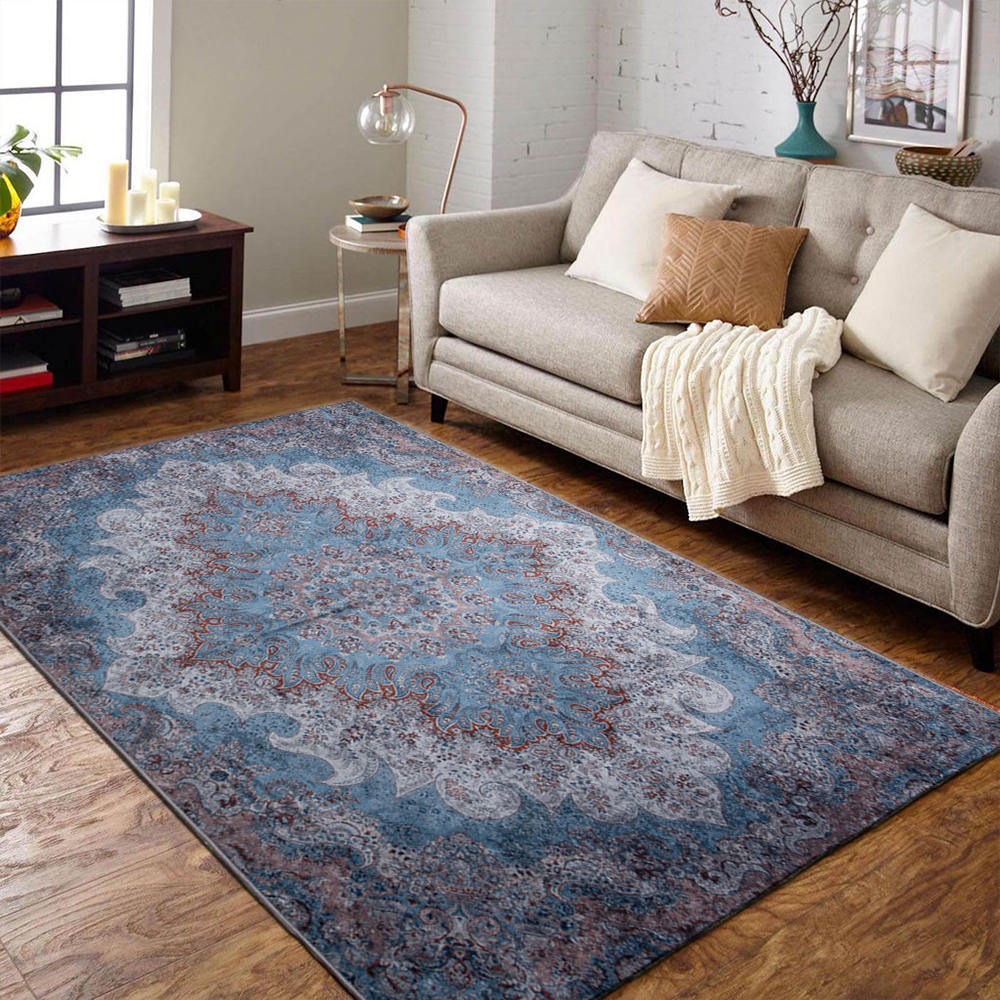
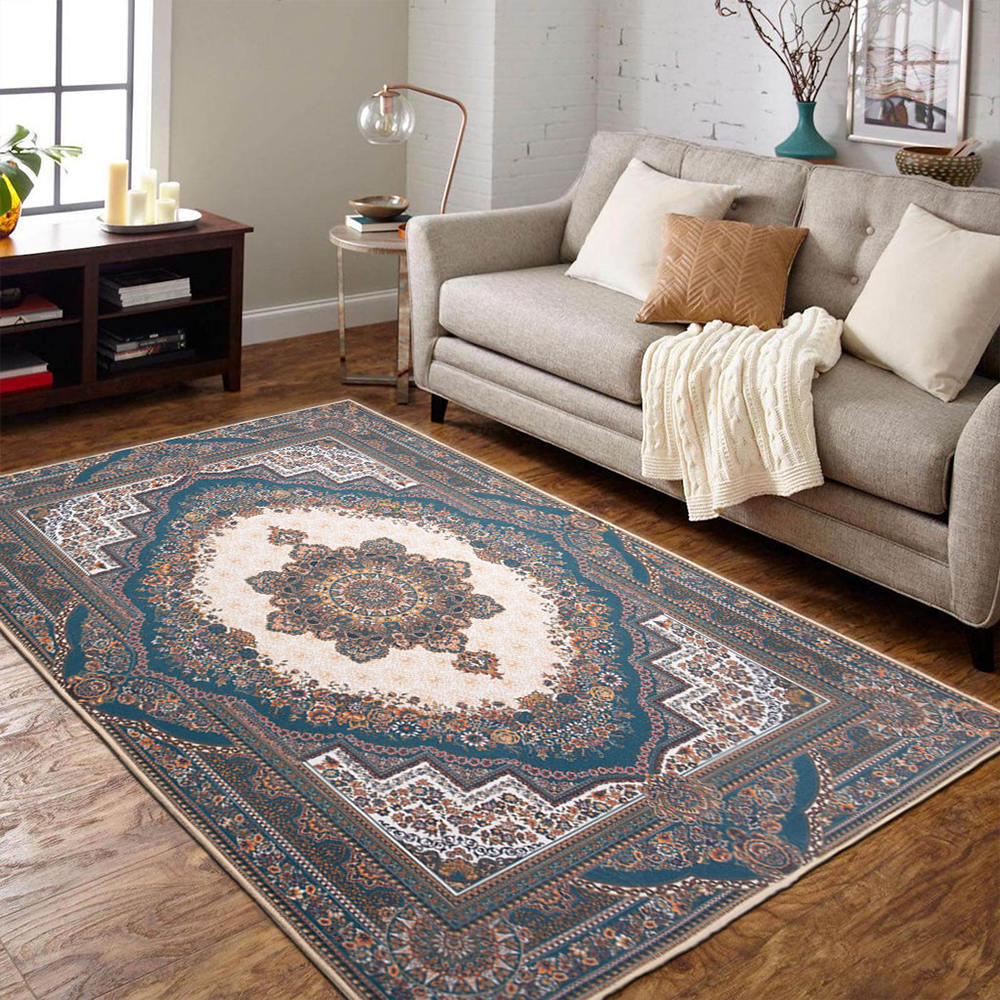
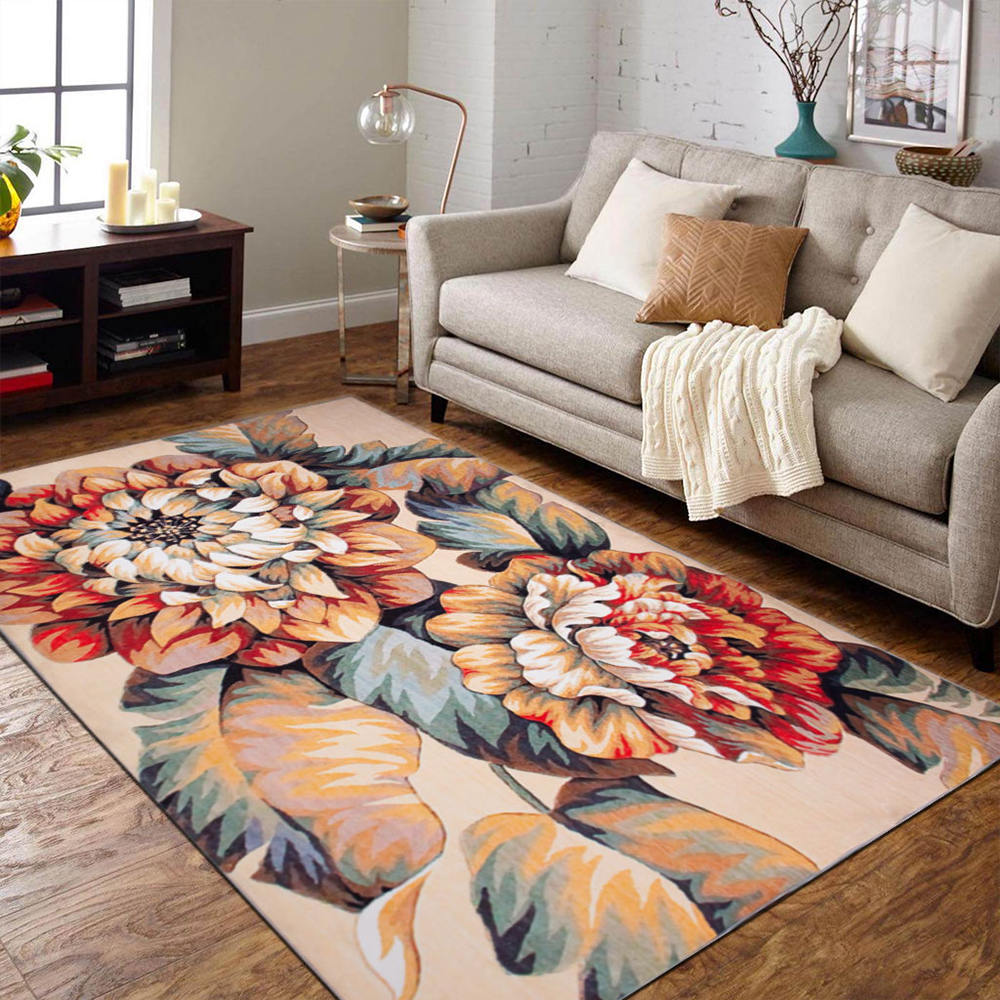
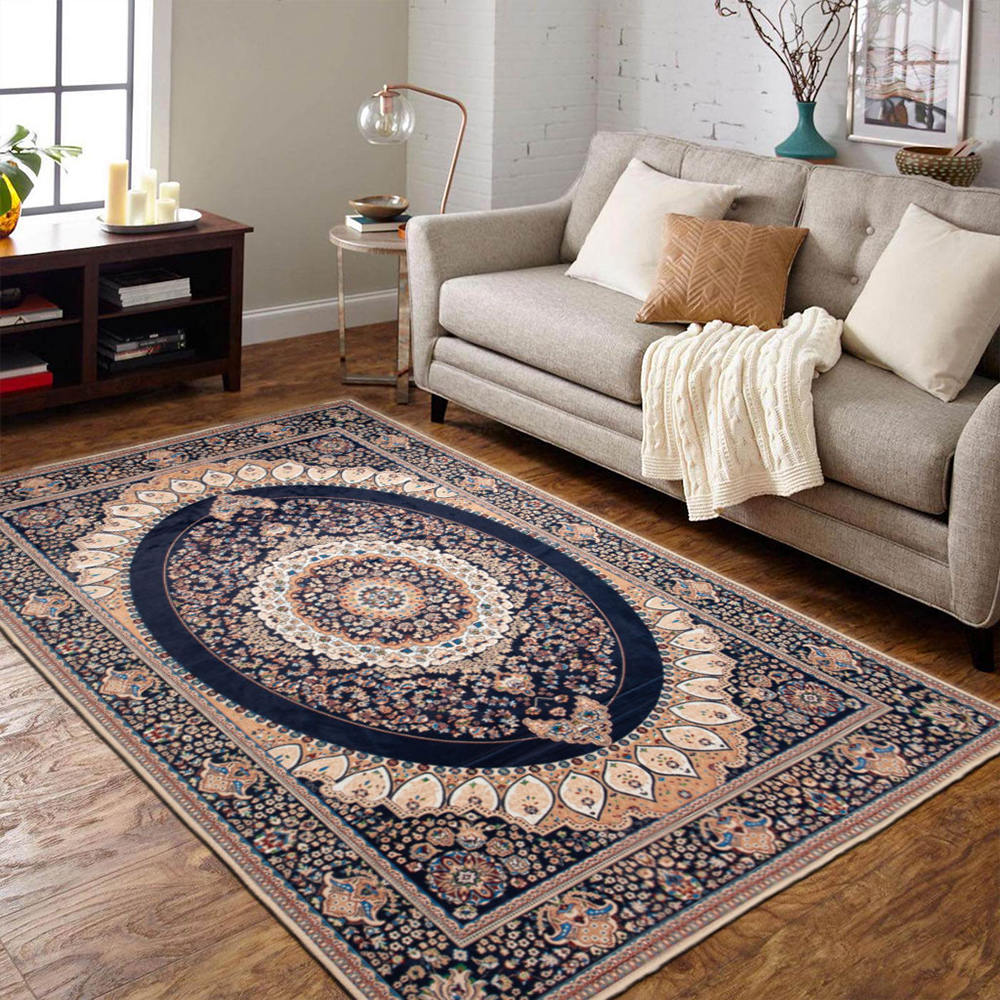
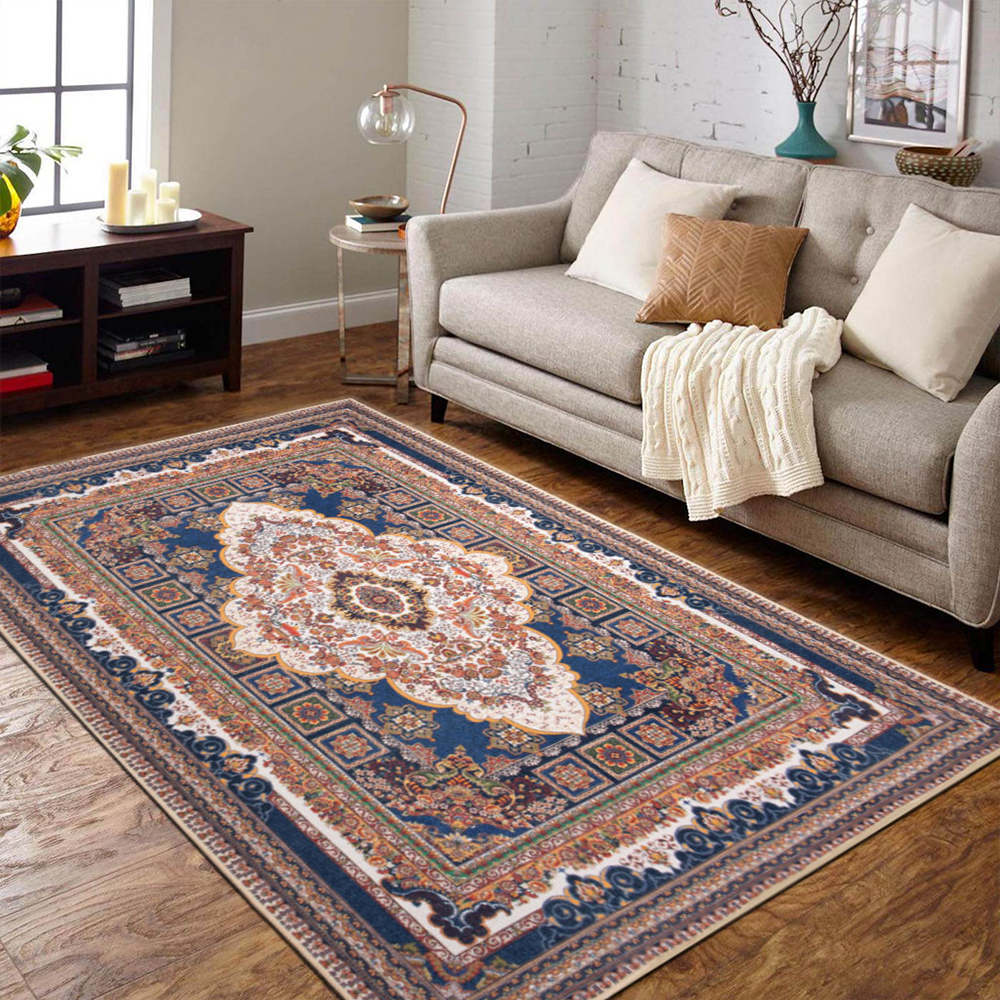
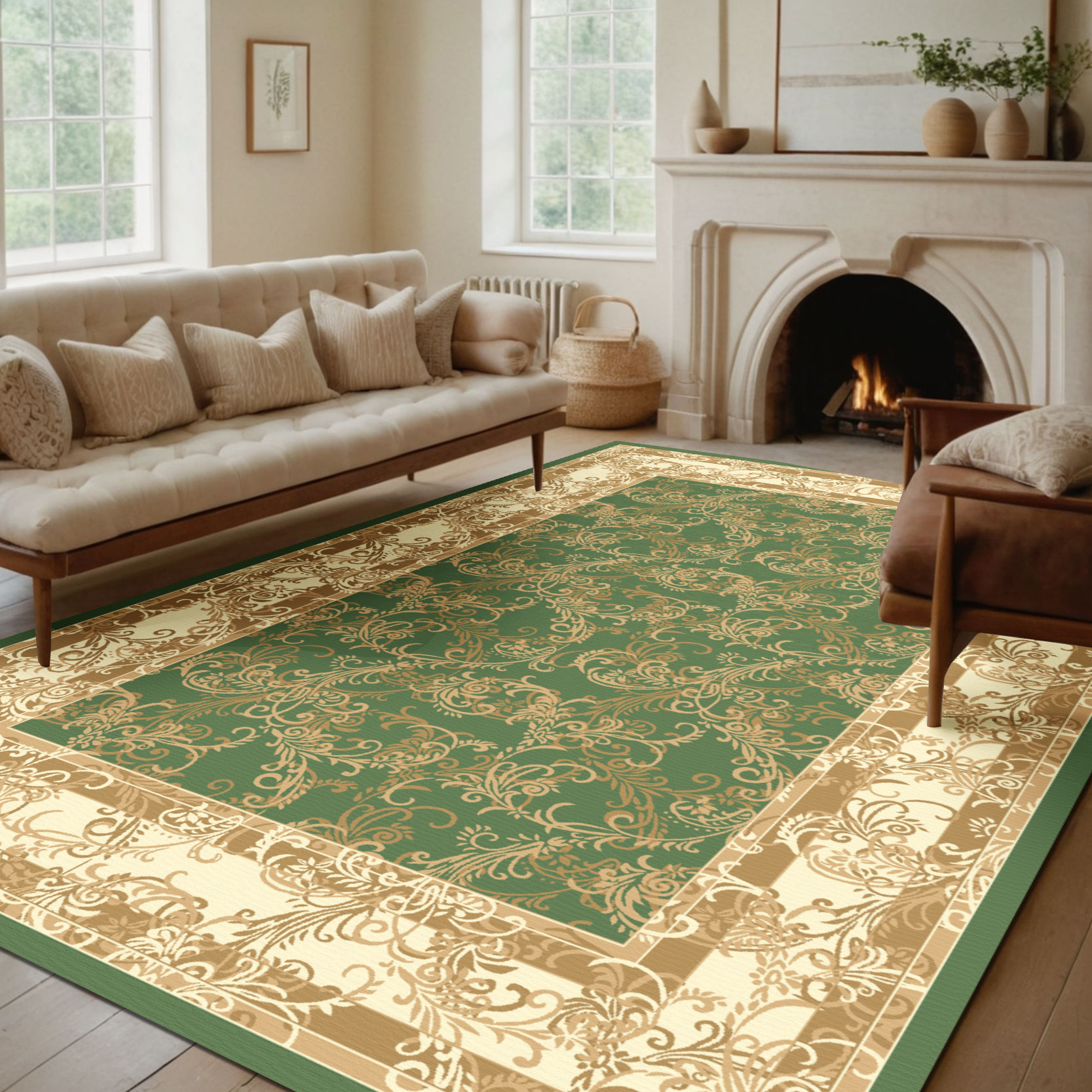
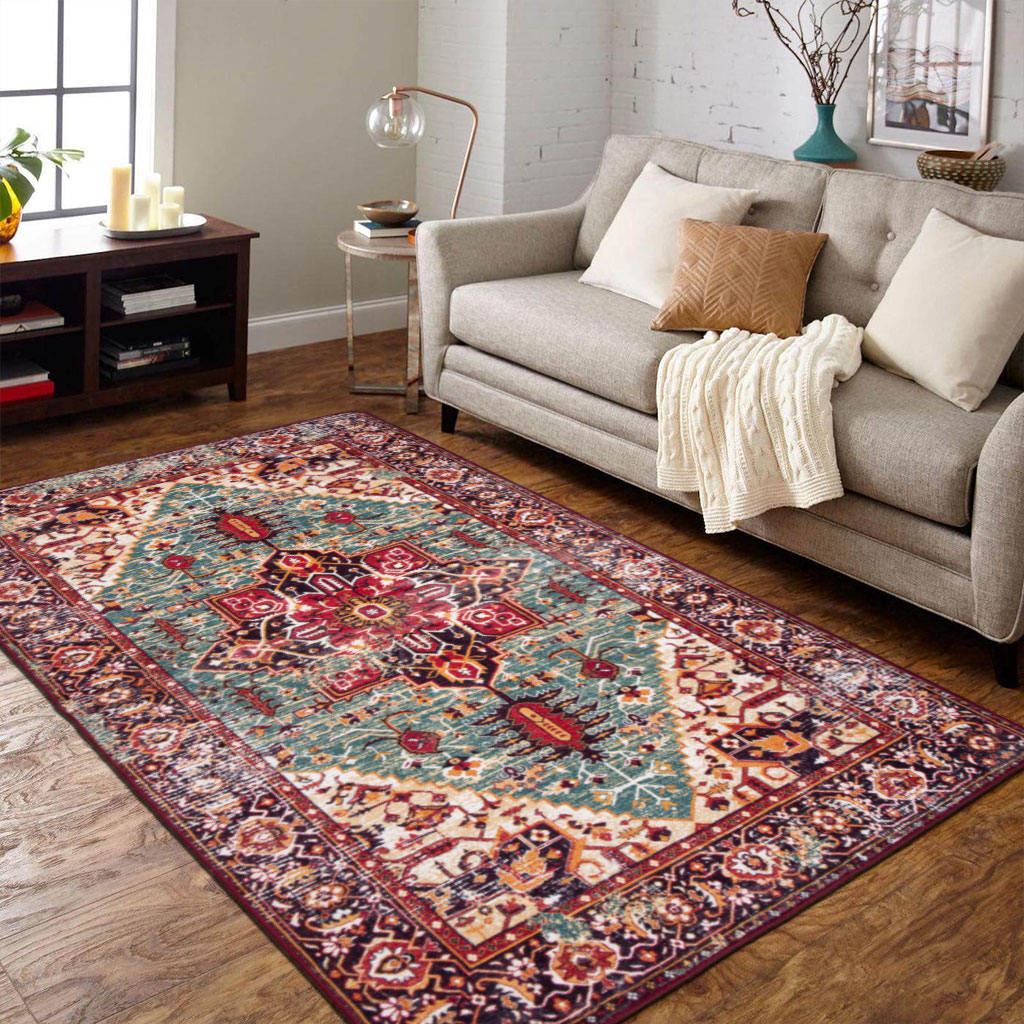
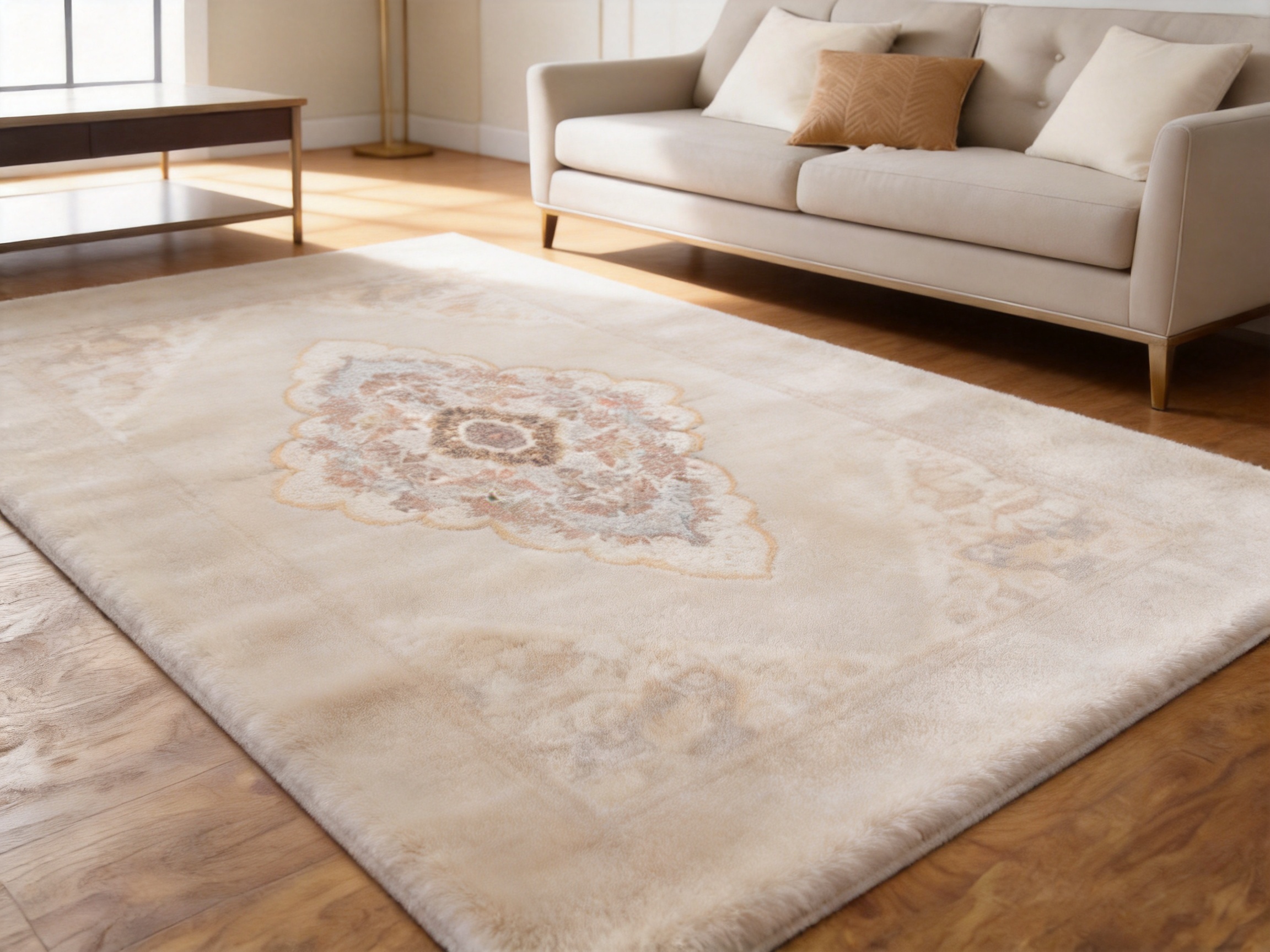
From a design perspective, the rug is not limited to one aesthetic. The listed Persian pattern demonstrates its ability to carry classic decorative detail, but the production method supports many print directions. Digital printing makes it possible to create richly detailed ornamental motifs, subtle neutral textures, bold geometric arrangements, cartoon themes for children’s rooms, or modern abstract designs. This gives retailers and private-label buyers broad freedom to develop collections for different consumer segments.
The following table summarizes the main technical and practical attributes of the Imitation Cashmere Carpet (Fine Yarn).
| Product Type | Printed Area Rug |
| Product Name | Imitation Cashmere Carpet (Fine Yarn) |
| Rug Form | Area Rug |
| Material | 100% Polyester Microfiber |
| Weight | 1400 gsm |
| Pile Height | 6–8 mm |
| Construction | Bonded |
| Backing | TPR plus Cotton Fabric |
| Available Sizes | 2' x 3', 2' x 6', 3' x 5', 4' x 6', 5' x 7', 6' x 9', 8' x 10', or Custom |
| Shape | Rectangular |
| Care | Machine Washable |
| Special Features | Soft, Fade Resistant, Non-Slip, Washable |
| Recommended Use | Indoor Spaces Including Bedroom, Living Room, Dining Room, Kitchen, Kids’ Room, and Entry Areas |
Natural cashmere is known for its softness, but it is rarely practical as a standard area rug material because of cost, sensitivity, and maintenance limitations. The Imitation Cashmere Carpet (Fine Yarn) solves this problem by using polyester microfiber designed to emulate a soft cashmere touch. This gives consumers a premium tactile experience without the disadvantages normally associated with fragile luxury fibers.
Compared with ordinary polyester area rugs, the fine yarn construction offers a more refined hand feel. Many low-cost rugs can feel stiff, rough, or flat, especially after repeated use. This product emphasizes surface comfort, making it suitable for barefoot rooms and intimate spaces. The pile is not simply decorative; it is engineered for touch. The softness helps the rug create a sense of warmth and relaxation, making a room feel more complete and comfortable.
Compared with wool rugs, it offers easier maintenance and improved suitability for modern households. Wool can be beautiful and long-lasting, but it may require careful cleaning, may shed, and can be less convenient for families that need washable floor coverings. This imitation cashmere rug provides a soft alternative that can be placed into a washing machine, depending on size and machine capacity, reducing the burden of professional cleaning.
Compared with thick shag rugs, it is easier to manage. Shag carpets can create a dramatic look, but their long fibers may trap crumbs, hair, and dust. The 6–8 mm pile height provides softness without creating an overly deep surface. This is especially valuable in homes with pets, children, or high daily activity, where comfort and cleanability must work together.
One of the strongest advantages of this rug is its machine-washable care. Modern consumers increasingly expect home textiles to be easy to maintain. A rug that looks elegant but becomes a problem after a spill is less attractive for everyday use. This product is designed to reduce that concern. Its soft TPR backing allows the rug to be folded and placed into a washing machine for cleaning and drying, depending on the rug size and equipment capacity.
Washability gives this rug an advantage in multiple settings. In a bedroom, it can be refreshed periodically to maintain a clean and cozy environment. In a living room, it can handle the realities of snacks, foot traffic, and casual gatherings. In a kids’ room, it supports playtime while giving parents a more practical cleaning solution. In a kitchen or dining area, where spills are more likely, washable construction provides added confidence.
Machine washing also improves the product’s appeal for online retail. Consumers buying rugs through digital channels often worry about long-term care. A clear washable feature is easy to communicate and easy to understand. It adds value without requiring complicated explanation. For distributors and wholesalers, this translates into stronger selling points and broader market acceptance.
The rug’s polyester composition supports this convenience. Polyester is known for durability, color retention, and resistance to many forms of everyday wear. When combined with digital printing and fade-resistant performance, it helps the rug maintain visual appeal through normal use. The result is not only a soft rug but also a practical floor textile designed for repeat use in active homes.
Floor safety is a major consideration for area rugs. A beautiful rug loses much of its value if it shifts, wrinkles, or slides during use. The Imitation Cashmere Carpet (Fine Yarn) is equipped with a skid-resistant TPR backing combined with cotton fabric. This structure helps the rug grip the floor more effectively and reduces the need for an additional rug pad in many indoor applications.
TPR, or thermoplastic rubber, is widely valued in home textile backing because it offers flexibility and grip. In this rug, the backing supports both safety and usability. It helps keep the rug in place while still allowing it to remain soft enough to fold. This is an important competitive advantage. Some rugs use stiff backings that make washing, storage, or shipping more difficult. Others use light fabric backing that may not provide sufficient anti-skid performance. The TPR plus cotton fabric combination addresses both concerns.
Non-slip performance is especially valuable in entryways, children’s rooms, bedrooms, and living rooms. In entry areas, rugs are often stepped on from different directions and may be placed on smooth floors. In children’s rooms, active movement can cause lightweight rugs to shift. In bedrooms, a stable rug beside the bed can reduce slipping risk when stepping onto the floor. In living rooms, a non-slip rug helps maintain a neat appearance under coffee tables and seating arrangements.
For commercial buyers, the non-slip backing also adds product value because it reduces the need to sell separate accessories. Consumers often prefer an all-in-one rug solution. When a product already includes skid-resistant backing, it becomes easier to present as convenient and complete.
Digital printing is one of the most important features of this area rug. Traditional rug patterns often require specific weaving setups, large minimum quantities, or limited color flexibility. Digital printing allows the surface design to be changed more efficiently, making it possible to produce Persian, Moroccan, modern, classic, geometric, cartoon, and customized designs on the same rug base.
This flexibility gives the product a strong advantage in fast-changing markets. Interior trends shift quickly, and buyers often need seasonal collections, regional designs, private-label artwork, or exclusive patterns. Digital printing helps manufacturers respond faster than traditional production methods. It also supports sharper detail and richer visual expression, which is particularly suitable for Persian-inspired or ornamental patterns where fine lines and color transitions matter.
For retailers, design flexibility means better assortment planning. A single technical product can become many style groups: neutral rugs for minimalist homes, colorful rugs for youth markets, vintage-inspired rugs for classic interiors, or playful rugs for kids’ rooms. This allows inventory strategies to be built around proven construction while refreshing appearance through print.
For interior designers and project buyers, digital printing opens the door to customized visual solutions. A hotel, apartment project, showroom, or branded interior may require specific colors or themes. With proper artwork preparation and production planning, printed rug technology can support these requirements more efficiently than many conventional rug-making methods.
A rug’s appearance must last beyond the first impression. The Imitation Cashmere Carpet (Fine Yarn) is described as fade resistant, an important quality for printed area rugs. Fade resistance helps protect the visual strength of patterns and colors during normal indoor use and cleaning. This is especially important for rugs placed in living rooms, dining rooms, or sunny bedrooms where the surface is constantly visible.
Polyester microfiber contributes to this advantage because polyester generally has strong color performance compared with some natural fibers. When combined with controlled printing and finishing processes, it can maintain attractive colors while offering practical durability. For consumers, this means the rug can remain decorative over time rather than quickly becoming dull or uneven.
Fade resistance is also important for repeat sales and customer satisfaction. If a rug maintains its appearance after washing and daily use, customers are more likely to trust the product category and purchase additional sizes or designs. For wholesalers and retailers, this helps reduce complaints and improve brand loyalty.
In competitive markets, many rugs look appealing in product photos but fail to perform in the home. A combination of soft hand feel, washable care, non-slip backing, and fade-resistant printing helps this rug compete beyond appearance alone. It is designed to continue delivering comfort and decorative value after the initial purchase.
The Imitation Cashmere Carpet (Fine Yarn) is suitable for a wide range of indoor spaces. Its rectangular shape and multiple size options make it easy to integrate into different layouts, from small accent placements to large room-defining arrangements.
In the bedroom, the rug creates warmth and softness beside the bed or under a seating corner. The cashmere-like surface supports barefoot comfort, while the washable nature helps maintain a fresh sleeping environment. A 2' x 3' or 2' x 6' size can work well beside a bed, while larger sizes such as 5' x 7', 6' x 9', or 8' x 10' can anchor the room.
In the living room, the rug can define the conversation area and add visual depth. Persian-inspired designs provide elegance, while modern or geometric prints can support contemporary spaces. The middle pile height allows furniture to sit comfortably on the rug without excessive sinking or instability.
In the dining room, a washable rug offers obvious benefits. Dining spaces experience crumbs, spills, and chair movement. A soft yet manageable pile height and fade-resistant printed surface make this product a practical decorative layer. Buyers should select a size large enough for chairs to remain on the rug when pulled back.
In kids’ rooms, the rug offers a soft place for playing, reading, and relaxing. Digital printing can create cartoon or colorful themes, while machine-washable care supports daily family needs. The non-slip backing also contributes to stability during active use.
In kitchens and entry areas, smaller sizes can add comfort and decoration. The non-slip backing is especially useful on smooth floors, and washability helps manage tracked-in dust or accidental spills. While the rug is intended for indoor use, it can serve many practical indoor transition zones.
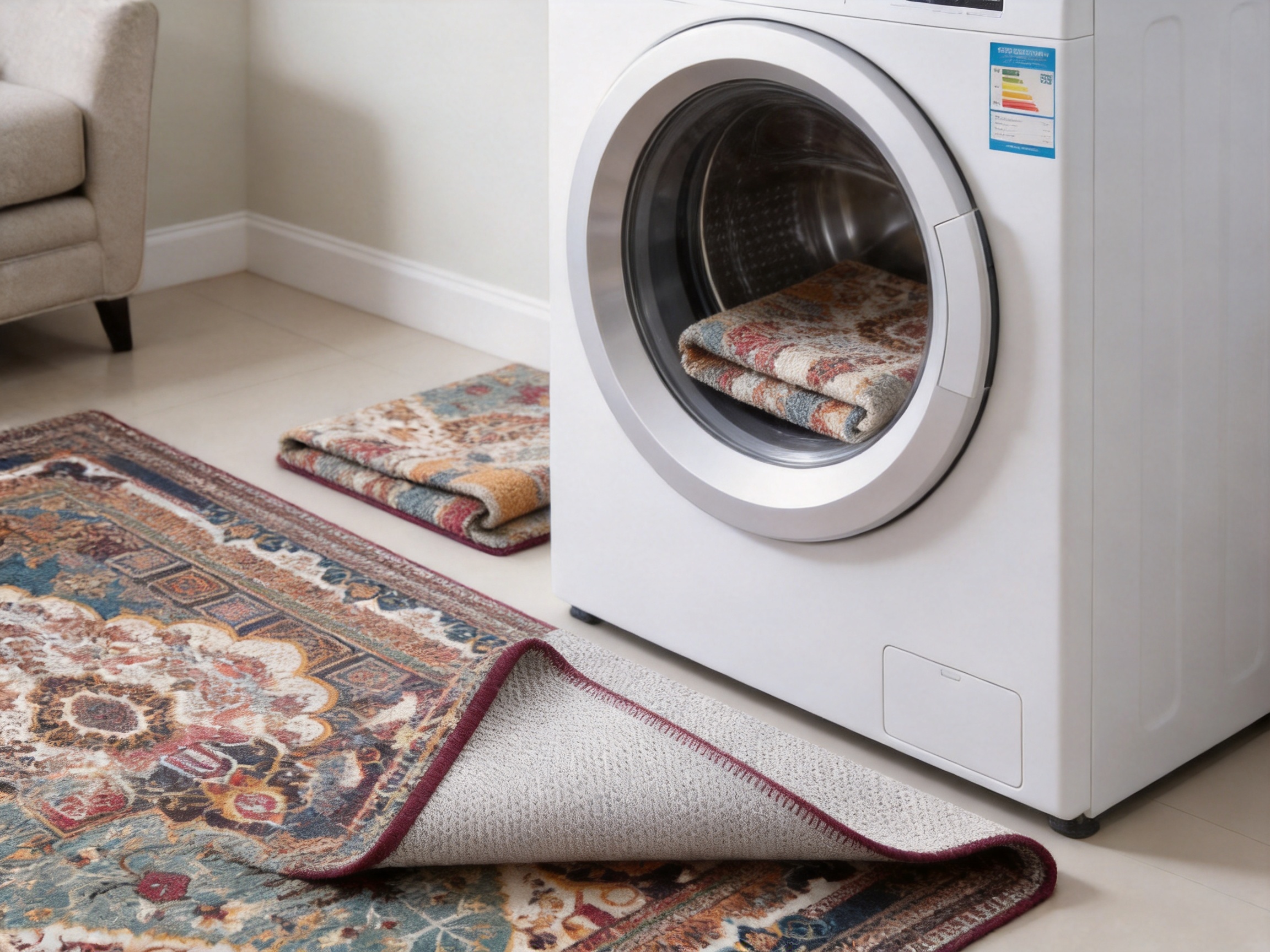
When compared with standard printed polyester rugs, this product stands out through its cashmere-like hand feel, 1400 gsm weight, and 6–8 mm pile height. Many printed rugs focus mainly on surface appearance, but this rug places equal emphasis on touch and comfort. It is not merely a decorative mat; it is a soft area rug designed to improve the atmosphere of a room.
When compared with traditional woven rugs, it offers greater design flexibility. Woven patterns can be beautiful, but changing designs may require more complex production adjustments. Digital printing allows more efficient pattern development and customization. This gives buyers greater control over style direction and faster response to market trends.
When compared with wool rugs, it is easier to care for and often more accessible in cost. Wool remains a premium natural material, but it can require more careful maintenance and may not be ideal for machine washing. This imitation cashmere rug gives consumers a soft, elegant alternative with simpler daily care.
When compared with shag rugs, it provides better balance. Shag rugs may feel soft but can be difficult to clean and less suitable under furniture. The middle pile height of this rug provides comfort while keeping maintenance realistic. It can fit more rooms and more lifestyles.
When compared with rugs that require separate rug pads, the TPR backing provides built-in anti-skid value. This simplifies the purchasing decision for consumers and reduces the number of products needed to create a stable floor setup.
When compared with low-cost mats, it offers a more premium surface and broader decorative potential. Its soft microfiber, printed design capability, bonded structure, and washable care place it in a stronger position for buyers seeking both value and quality.
The quality of an area rug depends not only on materials but also on manufacturing control. Zhejiang Benyi Textile Technology Co., Ltd. is located in Shaoxing, Zhejiang Province, an area widely known as a major textile center. The company focuses on new textile production technologies, ecological development, and improved consumer experience. Its production capabilities cover carpet fabrics, rug fabrics, and finished carpet processing, allowing stronger control over the full supply chain.
One of the company’s major strengths is its integrated manufacturing structure. It has its own weaving facilities, dyeing and printing factories, and finished carpet processing factories. This integration improves consistency, quality control, and lead-time management. In rug manufacturing, small variations in fabric preparation, printing, backing, cutting, bonding, or finishing can affect final performance. By controlling multiple production stages, the company can reduce uncertainty and deliver more stable products.
The company also emphasizes the combination of carpet surface and backing technology. By combining bottom and surface production in a more efficient system, it breaks away from the traditional carpet industry model where high costs and low efficiency can limit flexibility. This approach supports simpler and more efficient carpet production, which is valuable for both standard products and customized orders.
The presence of more than 20 fabric engineers strengthens product development. These engineers develop new carpet fabrics each quarter based on market trends and customer needs. For the Imitation Cashmere Carpet (Fine Yarn), this technical background is reflected in the balance of softness, pile height, backing flexibility, washable performance, and printable surface quality. The product is not a random combination of materials; it is the result of textile engineering aimed at practical comfort.
The manufacturing process of a printed imitation cashmere area rug requires careful coordination from yarn selection to final packaging. The first stage begins with polyester microfiber selection. The fibers must support softness, durability, and print compatibility. Fine yarn quality is essential because the hand feel of the rug depends heavily on yarn smoothness and surface consistency.
The next stage involves fabric formation. The surface material must be prepared to achieve the correct density, pile height, and texture. A 6–8 mm pile must be consistent across the rug so that the finished product feels uniform and prints evenly. Uneven pile can cause irregular color absorption or visual distortion, so process control at this stage is important.
Digital printing follows, allowing the desired artwork to be transferred onto the rug surface. Accurate printing requires color management, pattern alignment, and surface preparation. The ability to print Persian, Moroccan, modern, classic, geometric, or cartoon patterns depends on stable equipment and experienced operators. Proper printing also helps ensure that fine details remain clear and attractive.
After printing, finishing processes help support fade resistance, softness, and usability. The rug must maintain its hand feel while achieving the necessary surface durability. The backing stage then combines the printed surface with TPR and cotton fabric backing through bonded construction. This is a critical step because the bond must be secure enough for daily use and washing while still flexible enough for folding.
Final processing includes cutting, edging, inspection, and packaging. Rectangular shape accuracy, edge cleanliness, backing stability, surface appearance, and size consistency must all be checked. For export and wholesale buyers, packaging also matters because rugs must arrive in good condition after storage and transportation. A rug that folds well and resists damage during handling provides logistical advantages.
Quality control runs through each stage rather than appearing only at the end. Material inspection, color checking, pile assessment, backing adhesion review, anti-skid evaluation, washability checks, and final appearance inspection all contribute to a reliable finished product. This multi-stage control is one reason integrated manufacturing can outperform fragmented supply chains.
Consumers and professional buyers increasingly consider environmental responsibility when selecting textile products. Zhejiang Benyi Textile Technology Co., Ltd. is committed to environmental protection and sustainability, with attention to both people’s living experience and ecological impact. The company invests in sustainable materials and production methods, including recycled polyester and water-saving dyeing techniques.
This responsible development direction is important for modern rug manufacturing. Polyester is widely used because it is durable and practical, but responsible sourcing and efficient processing can improve its overall environmental profile. Water-saving dyeing and printing approaches can reduce resource consumption compared with older methods. Certifications such as OEKO-TEX and GRS further support buyer confidence by indicating attention to product safety and recycled material standards where applicable.
For international importers, sustainability commitments can support compliance with market expectations. Many retailers now prefer suppliers that can discuss material safety, production responsibility, and traceability. A manufacturer with knowledge of ecological textile technology is better positioned to serve these customers.
For consumers, sustainability also connects to product lifespan. A washable, fade-resistant, durable rug can remain useful longer, reducing premature replacement. When a product combines comfort, style, and practical care, it is more likely to stay in use rather than become waste after a short period.
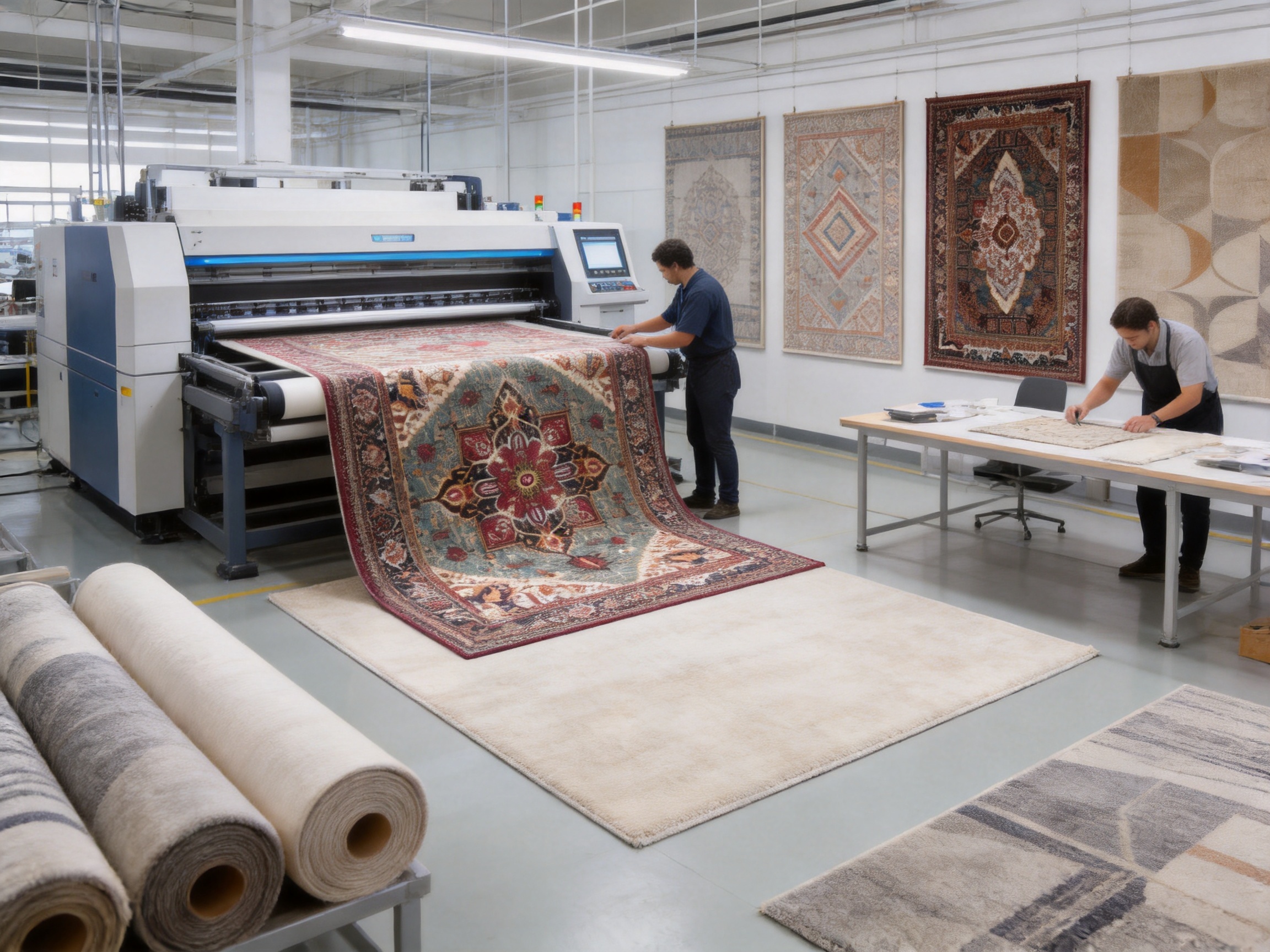
Customization is one of the key commercial advantages of this rug. Standard sizes include 2' x 3', 2' x 6', 3' x 5', 4' x 6', 5' x 7', 6' x 9', and 8' x 10', but custom sizing is also available. This allows the product to support different distribution channels, including retail stores, online shops, interior projects, and private-label programs.
Custom design potential is equally valuable. Digital printing enables a wide variety of visual styles, making it possible to tailor collections by country, customer group, season, or brand identity. For example, a European buyer may prefer muted vintage Persian designs, while a North American retailer may request neutral modern patterns. A children’s product line may require cartoon prints, while a home décor brand may prefer exclusive geometric motifs. The same technical rug base can serve all of these directions.
Flexible customization helps reduce development risk. Instead of creating entirely new construction for each design concept, buyers can rely on a tested rug structure and modify appearance. This supports faster product launches and more efficient sampling. It also helps manufacturers maintain quality consistency because the base material, backing, and finishing processes remain controlled.
Custom sizing further expands the product’s use in projects. Hotels, apartments, model rooms, offices, and rental properties may need specific rug dimensions to fit floor plans. With custom production, buyers can match rug size to interior design requirements rather than compromising with only standard dimensions.
For wholesalers, the Imitation Cashmere Carpet (Fine Yarn) offers a strong mix of marketable features. Softness, washability, non-slip backing, fade resistance, and design flexibility are easy to explain and appealing to many customer types. This makes the rug suitable for broad distribution.
For retailers, the product supports attractive merchandising. A single collection can include multiple sizes and patterns, encouraging customers to coordinate rugs across rooms. Smaller sizes can serve entryways, kitchens, or bedside areas, while larger sizes can anchor living rooms and bedrooms. This size range helps increase average order value and repeat purchase potential.
For online sellers, the product’s practical features help reduce hesitation. Consumers shopping online often cannot touch the rug before purchase, so clear specifications such as pile height, material, backing, washability, and anti-slip performance become important trust factors. The cashmere-like softness and washable care can be emphasized in product descriptions, images, and customer education.
For importers, the manufacturer’s integrated supply chain provides advantages in production coordination. Having weaving, dyeing and printing, and finished rug processing under stronger control can help improve lead-time reliability. The company’s engineering team and customization ability also support product development for different markets.
Selecting the correct rug size improves both appearance and function. A 2' x 3' rug is suitable for entryways, beside a bed, in front of a sink, or in small accent areas. A 2' x 6' runner works well in hallways, kitchens, bedside placements, or narrow spaces. A 3' x 5' rug can serve small seating corners, kids’ play areas, or compact bedrooms.
A 4' x 6' size is suitable for medium accent areas, reading corners, or under a small coffee table. A 5' x 7' rug can define a standard living room seating area or bedroom floor space. A 6' x 9' rug provides stronger room coverage and works well under larger furniture groupings. An 8' x 10' rug can anchor spacious living rooms, dining rooms, or master bedrooms.
When choosing a dining room rug, buyers should allow enough space for chairs to remain on the rug when pulled out. In living rooms, the rug should ideally connect the main furniture pieces visually. In bedrooms, larger rugs can extend beyond the bed to create softness on both sides. Custom sizing is useful when standard dimensions do not match the room layout.
Although this rug is machine washable, proper care helps preserve its appearance and performance. Regular vacuuming or gentle shaking can remove surface dust and debris. For small spills, prompt blotting is recommended before washing. Avoid harsh scrubbing that may affect the printed surface or pile texture.
When machine washing, users should follow care instructions and consider the rug size relative to washing machine capacity. Smaller rugs are generally easier to wash at home, while larger rugs may require a commercial-size washer. Mild detergent and gentle cycles are typically preferable for soft printed textiles. Excessive heat should be avoided unless specifically approved by the care instructions, as high temperatures can affect backing materials.
After washing, the rug should be dried properly before being placed back on the floor. Ensuring the backing is fully dry helps maintain hygiene and performance. The rug should be placed on a clean, dry floor surface to maximize non-slip effectiveness. Periodic rotation can help balance wear in high-traffic areas.
With reasonable care, the rug can maintain its soft feel, printed design, and practical function through everyday use. Its washable construction makes maintenance simpler than many traditional rugs, but thoughtful handling still extends its lifespan.
The Imitation Cashmere Carpet (Fine Yarn) succeeds because it brings together several qualities that consumers and professional buyers often seek separately. It is soft enough to create a premium underfoot experience, practical enough to be machine washable, stable enough to include non-slip backing, and flexible enough to support many printed designs. This combination gives it broad appeal across different rooms and markets.
Its competitive strength lies in balance. Some rugs are beautiful but difficult to clean. Some are washable but lack softness. Some are soft but slide on the floor. Some are affordable but limited in design. This rug addresses all of these concerns with a unified construction: polyester microfiber for softness and durability, 6–8 mm pile for comfort and manageability, TPR plus cotton backing for grip and flexibility, and digital printing for style diversity.
The manufacturing background further enhances its value. An integrated textile company with weaving, printing, dyeing, and finished rug processing capabilities can better control quality and support customization. Engineering expertise, sustainability awareness, and supply-chain coordination all contribute to a more reliable product for wholesale and retail buyers.
For homes, the rug offers comfort and beauty without excessive maintenance. For businesses, it offers a scalable, customizable, and market-ready floor textile. For designers, it provides visual flexibility and tactile appeal. In a competitive rug market, these combined advantages make it a compelling choice.
The rug is made from 100% polyester microfiber. This material is selected for softness, durability, fade resistance, and practical maintenance. It is engineered to provide a cashmere-like hand feel while remaining suitable for everyday indoor use.
Yes. The rug is designed to be machine washable, and its soft TPR backing allows it to be folded for cleaning and drying. Users should always consider rug size and washing machine capacity and follow suitable care practices.
In many indoor applications, no additional rug pad is needed because the rug includes skid-resistant TPR backing. However, performance can vary depending on floor type, floor cleanliness, and use conditions.
It is suitable for indoor rooms such as bedrooms, living rooms, dining rooms, kitchens, kids’ rooms, entry areas, and other interior spaces. Its soft surface and non-slip backing make it versatile for many household uses.
It combines digital printed design with a soft imitation cashmere feel, 6–8 mm pile height, 1400 gsm weight, washable construction, fade resistance, and TPR non-slip backing. Many ordinary printed rugs focus mainly on appearance, while this rug also emphasizes comfort and practical performance.
Yes. In addition to standard sizes, custom sizing is available. Digital printing also allows many design styles, including Persian, Moroccan, modern, classic, geometric, cartoon, and customized patterns.
Yes. The soft surface supports comfortable play, while machine-washable care helps parents manage spills and daily use. The non-slip backing also improves stability compared with rugs that lack anti-skid support.
The 6–8 mm pile height provides a middle-pile structure that feels soft underfoot while remaining easier to clean and manage than very high-pile rugs. It also works well with many furniture types and room layouts.
Digital printing allows the rug to carry many styles and detailed patterns without being limited to one woven design. It supports faster design development, customization, and market-specific collections.
The product is supported by integrated manufacturing capabilities, including weaving, dyeing and printing, and finished carpet processing. Engineering expertise, quality control, and sustainable production awareness help improve consistency, customization, and lead-time reliability.
The Imitation Cashmere Carpet (Fine Yarn) is a modern printed area rug designed for buyers who want softness, safety, style, and convenience in one product. Its polyester microfiber surface delivers a cashmere-like touch, while its 6–8 mm pile height provides balanced comfort. Its TPR plus cotton fabric backing improves floor stability, and its machine-washable construction makes it practical for real homes.
Beyond household comfort, the rug has strong commercial value. Digital printing enables broad design freedom, custom sizes support different markets, and integrated manufacturing strengthens quality control. With fade resistance, washable care, soft texture, and non-slip performance, it offers clear advantages over many competing rugs.
For bedrooms, living rooms, dining rooms, kitchens, kids’ spaces, and indoor entry areas, this rug provides an elegant yet practical solution. For wholesalers, importers, retailers, and designers, it represents a flexible product platform with strong market potential. It is a floor covering built not only to decorate a room, but also to improve the way that room feels, functions, and lives every day.
1. Textile Institute. Textile Terms and Definitions. Textile Institute Publications.
2. Horrocks, A. R., and Anand, S. C. Handbook of Technical Textiles. Woodhead Publishing.
3. Kadolph, S. J. Textiles. Pearson Education.
4. Saville, B. P. Physical Testing of Textiles. Woodhead Publishing.
5. Sinclair, R. Textiles and Fashion: Materials, Design and Technology. Woodhead Publishing.
6. Adanur, S. Wellington Sears Handbook of Industrial Textiles. CRC Press.
7. Goswami, K. K. Advances in Carpet Manufacture. Woodhead Publishing.

ADD: No.75 Zhenyuan Road, Yuecheng District, Shaoxing City, Zhejiang Province, China 312000

Tel : +86-189 6750 9795

FAX : +86-0575-8803 2773

Email : fisher@benetextile.com

Copyright © Zhejiang Benyi Textile Technology Co., Ltd. All Rights Reserved. Carpets and Rugs Manufacturer

 English
 Français
 Deutsch
 عربى
عربى