

Shen Ruoxi — International Product Sales Executive
 Home / Author / Shen Ruoxi — International Product Sales Executive / Double-Sided Jacquard Cloud Velvet Blanket: A Complete Guide to Luxury, Performance, and Wholesale Value
 2026.09.18
 Shen Ruoxi — International Product Sales Executive
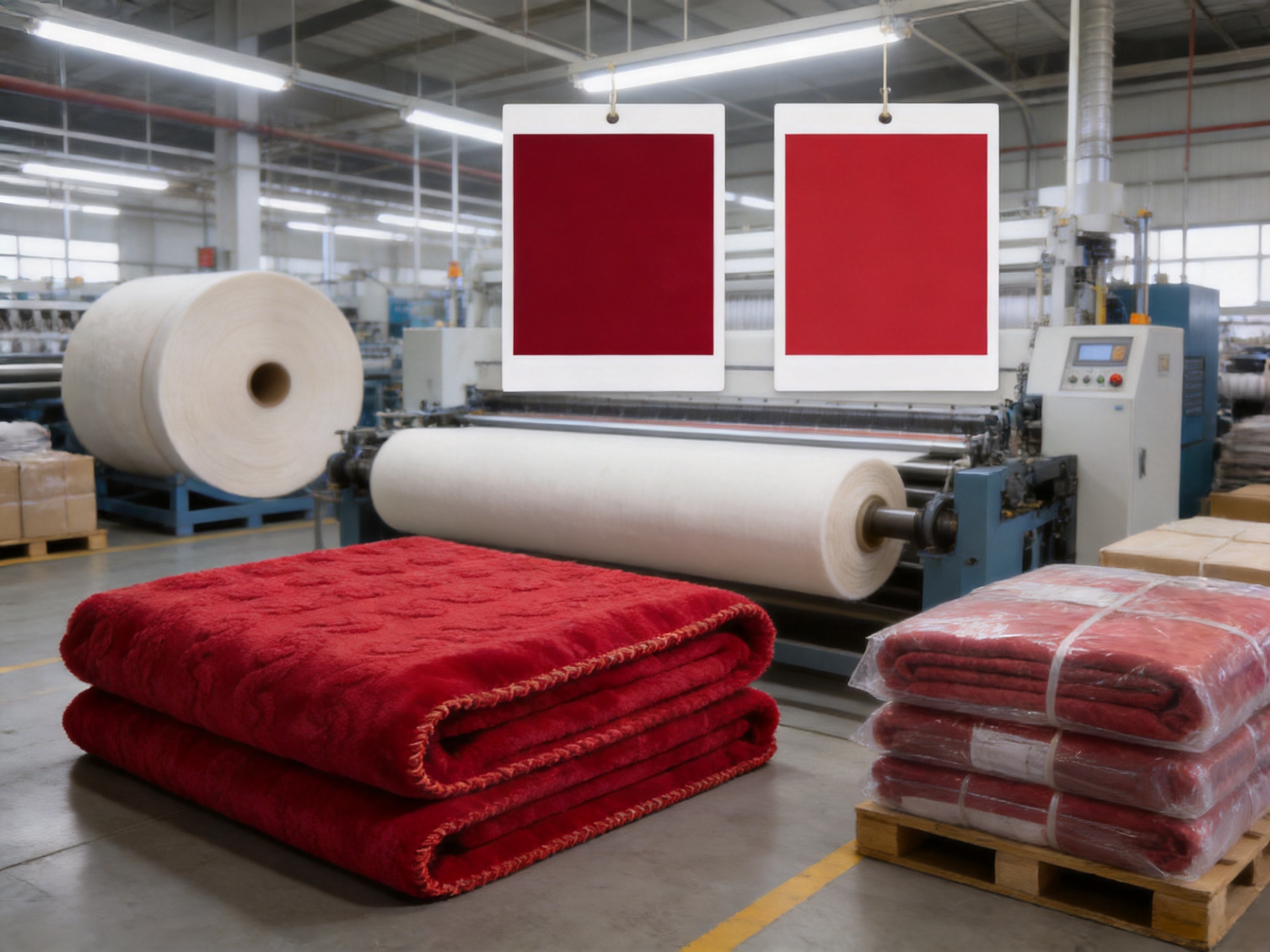
A high-quality blanket is more than a seasonal comfort item. It is a practical home textile, a decorative accent, a hospitality essential, and a versatile gift. For retailers, distributors, hotels, furniture stores, and online sellers, the right blanket must combine softness, durability, attractive presentation, manageable care requirements, and dependable manufacturing support. The Double Sided Jacquard Cloud Velvet Blanket is designed to meet these expectations through a combination of plush polyester construction, knitted texture, jacquard styling, practical sizing, and flexible indoor and outdoor use.
Produced by Zhejiang Benyi Textile Technology Co., Ltd., a textile manufacturer based in Shaoxing, Zhejiang Province, this blanket reflects the capabilities of a company operating in one of the world’s most important textile production centers. The manufacturer controls multiple stages of the supply chain, including weaving, dyeing and printing, and finished textile processing. This level of integration can help improve consistency, shorten communication cycles, support customization, and provide greater control over quality and lead time.
The blanket is positioned as a soft, warm, washable, and adaptable textile suitable for sofas, beds, hotels, planes, offices, travel, camping, and family use. Its solid-color styling makes it easy to coordinate with different interior design schemes, while the jacquard surface adds visual and tactile interest without relying on an overly complicated pattern. It can be offered as a throw blanket, a bed covering, a hospitality product, or a gift item for many occasions.
Content
The Double Sided Jacquard Cloud Velvet Blanket is made from 100% polyester and uses a knitted weave to create a soft, flexible, and comfortable surface. Its cloud velvet character is associated with a fine, even pile that feels smooth against the skin. The textile is designed to provide warmth without becoming excessively heavy or restrictive, making it appropriate for relaxation, sleep, travel, and everyday use.
The double-sided jacquard appearance gives the blanket a more refined presentation than a basic flat fleece or ordinary solid-color throw. Depending on the selected color and production version, the surface can offer subtle texture and visual depth while retaining the versatility of a solid-color design. This makes the product suitable for minimalist bedrooms, contemporary living rooms, hotel rooms, guest rooms, offices, and other settings where comfort and appearance must work together.
One of the product’s most important advantages is its broad application range. A small size can function as a personal throw or travel blanket, while larger sizes can be used across beds or as generous sofa coverings. The same product family can therefore support multiple retail price points and customer needs without requiring a completely different textile platform.
| Product Feature | Specification or Application |
| Product name | Double-Sided Jacquard Cloud Velvet Blanket |
| Brand | Bene |
| Material | 100% polyester |
| Weave type | Knitted |
| Pattern | Solid colors |
| Available sizes | 50 x 60 inches, 60 x 80 inches, 90 x 90 inches, and 90 x 110 inches |
| Recommended uses | Sofa, bed, hotel, plane, office, travel, camping, and home decoration |
| Age range | All ages |
| Care instructions | Machine washable |
| Special features | Soft, warm, washable, lightweight, and versatile |
| Construction information | Product documentation identifies lock-edge construction; selected versions should be confirmed before ordering |
Product materials supplied for this article contain two different references concerning weight and construction: one description identifies a 700gsm double-layer version with welt sewing, while the technical information lists 340gsm, single-layer construction with lock-edge finishing. These details may represent different production versions, listings, or configurations. Wholesale buyers should confirm the exact gsm, number of layers, edge treatment, color, and size before placing a purchase order. This confirmation is especially important when comparing samples, preparing packaging, or calculating freight.
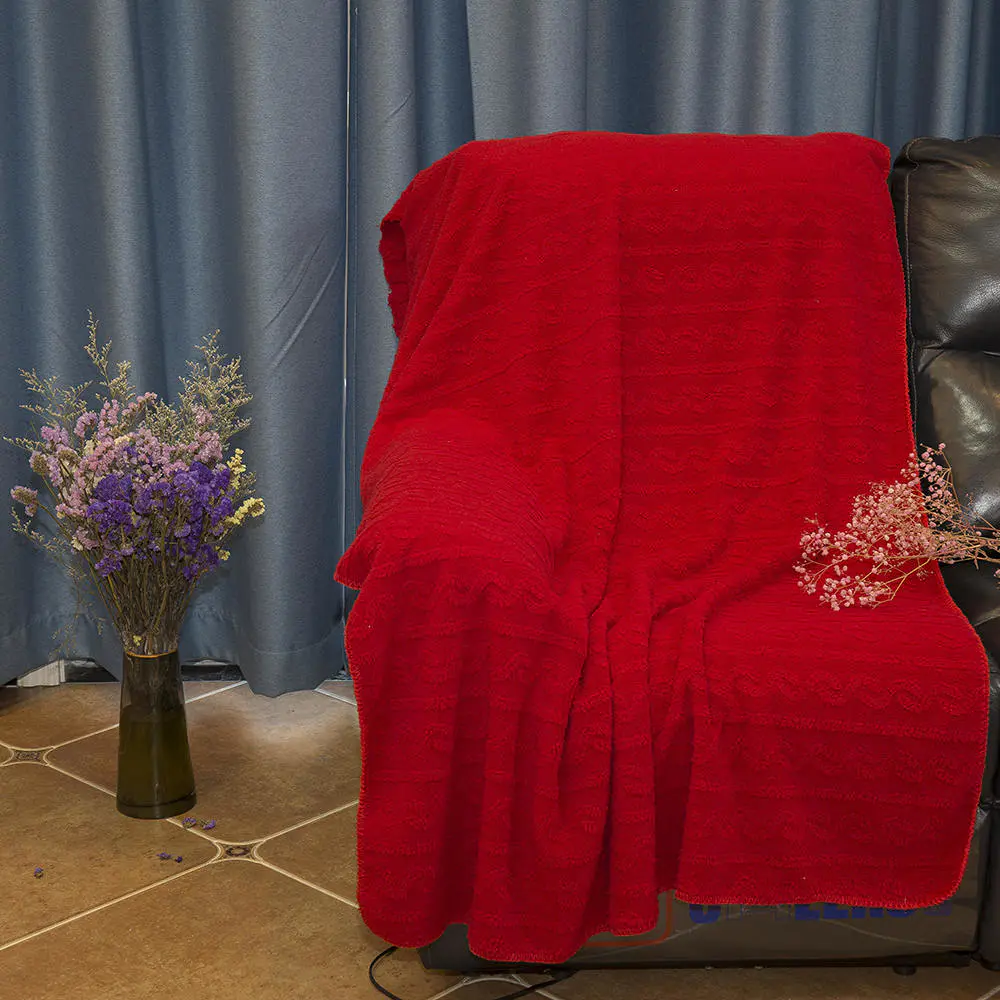
Double Sided Jacquard Cloud Velvet Blanket
Consumers increasingly expect home textiles to provide both sensory comfort and practical performance. A blanket that looks attractive but feels rough is unlikely to generate repeat purchases. Similarly, a blanket that feels soft but sheds excessively, loses its appearance after washing, or lacks suitable sizes may create dissatisfaction. Cloud velvet is designed to address the comfort side of this equation through a plush, fine-pile surface and a smooth hand feel.
The soft texture is particularly valuable for products used directly against the body. Customers may use the blanket while reading, watching television, working from home, sleeping, traveling, or resting on a sofa. For children and older family members, a comfortable blanket can also become a familiar and reassuring part of the home environment. The all-ages positioning allows retailers to promote the product to a broad customer base rather than limiting it to one demographic.
Unlike some highly specialized thermal blankets, this product is described as suitable for all seasons. In cooler weather, it can be layered with bedding or used as a warm cover. During transitional seasons, it can serve as a standalone throw. In air-conditioned offices, airplanes, and hotels, it can provide personal comfort when room temperatures fluctuate. This all-season positioning supports year-round sales rather than concentrating demand exclusively in winter.
The lightweight design is another useful selling point. A blanket can provide warmth while remaining easy to fold, transport, store, and pack. Customers who travel, camp, commute, or move between rooms often prefer a blanket that does not feel cumbersome. Retailers can present the product as a practical companion for journeys, road trips, outdoor events, dormitories, guest rooms, and temporary accommodation.
The jacquard construction gives the product more design character than a completely flat textile. Jacquard techniques can create texture and pattern through the structure of the fabric rather than relying only on a surface print. This can contribute to a more premium appearance and help the blanket stand out in a retail display.
At the same time, the product is described with a solid-color pattern. This combination is commercially useful because it offers surface interest without becoming difficult to coordinate. Solid colors work well with neutral furniture, patterned bedding, wood finishes, upholstered sofas, and modern interior palettes. A retailer can carry several colors and create a coordinated collection for different rooms or customer preferences.
The blanket can be folded at the end of a bed, draped across an armchair, placed over the back of a sofa, or displayed in a basket. Its decorative role means customers do not need to hide it when it is not in use. This is an important advantage over purely functional blankets that may look unsuitable in carefully styled rooms.
For hospitality buyers, a refined solid-color blanket can support a consistent visual identity across guest rooms, lounges, executive offices, and transportation environments. It can be paired with bedding, towels, curtains, cushions, and rugs without creating excessive pattern conflict. For furniture and home décor retailers, the blanket can also be displayed alongside sofa cushions and area rugs as part of a complete room concept.
The listed size range includes 50 x 60 inches, 60 x 80 inches, 90 x 90 inches, and 90 x 110 inches. These dimensions cover several distinct use cases. The 50 x 60-inch format is suitable for a personal throw, child’s blanket, office blanket, or travel accessory. The 60 x 80-inch size provides more coverage for an individual user and can work well on a sofa, recliner, or single bed.
The 90 x 90-inch size offers broad coverage for larger beds, shared use, or generous sofa styling. The 90 x 110-inch format is intended for customers who want substantial coverage across a large bed or for two people sharing a blanket. Offering several sizes allows a seller to serve customers who prioritize portability as well as those who want full-bed coverage.
Size variety also creates opportunities for tiered merchandising. Smaller blankets can be positioned as accessible gift items or impulse purchases, while larger versions can be presented as premium home-comfort products. Online retailers can build size-based product options under one listing, helping customers compare dimensions and choose according to their room, bed, or intended activity.
For hospitality, travel, and institutional buyers, size selection can be aligned with the intended environment. A compact blanket may be useful for airplanes, offices, lounge chairs, and guest amenities. A large version may be more appropriate for hotel beds, residential bedrooms, and premium suites. Buyers should always confirm finished measurements after washing and production, as textile dimensions can vary slightly according to manufacturing and finishing conditions.
The blanket uses 100% polyester, a material widely used in modern home textiles because it offers a practical balance of softness, durability, color flexibility, and ease of care. Polyester fibers can be engineered into fine filaments and processed into plush surfaces that feel smooth and comfortable. They can also support a wide range of colors and textures, helping manufacturers produce coordinated collections for different markets.
Polyester is valued in commercial environments because it generally offers good resistance to everyday handling. Blankets used in homes, hotels, offices, and transportation settings may be folded, unfolded, carried, stored, and washed frequently. A durable synthetic fiber can help the textile maintain its usefulness through repeated use when it is correctly manufactured and properly cared for.
The supplied product information emphasizes a fine and even pile, resistance to fading, and reduced tendency toward pilling. These qualities are meaningful to buyers because surface appearance has a direct effect on perceived value. A blanket that retains a neat appearance after repeated use is more likely to satisfy customers and support positive reviews. Actual performance depends on yarn quality, knitting parameters, dyeing methods, finishing, washing conditions, and usage intensity, so sample testing remains recommended for commercial programs.
Polyester also contributes to easier logistics. Compared with some bulky natural-fiber products, a polyester blanket can be folded and packaged efficiently. This can assist warehouse storage, retail presentation, and shipment planning. The precise packed volume will depend on gsm, size, folding method, packaging, and whether the product is compressed, boxed, or supplied in a fabric bag.
Convenient care is a major advantage in the blanket category. The product is identified as machine washable, which allows customers to clean it using common household equipment rather than relying on specialist services. This is particularly important for families with children, households with pets, hospitality businesses, offices, and users who take blankets outdoors.
Easy care can also increase the practical value of a blanket. Customers may hesitate to purchase a decorative textile if they believe it will require complicated maintenance. Clear care labeling and appropriate washing guidance can reduce uncertainty. Retailers should communicate the recommended water temperature, detergent type, drying method, and any restrictions confirmed by the manufacturer for the selected version.
Machine washing does not mean that every washing method is suitable. Excessive heat, aggressive bleach, harsh mechanical action, or improper drying can affect color, pile, dimensions, and edge stability. Buyers should request the final care label before selling the product and should test the blanket according to the target market’s normal laundering conditions.
For hotels and other institutional users, washability is especially important. A blanket that can be cleaned efficiently may support better room turnover and easier housekeeping management. Commercial buyers should evaluate the product using their own laundering systems, including industrial washing, drying, folding, and storage procedures, before approving it for large-scale use.
Blanket durability depends on more than the face fabric. The seams, edges, yarn structure, and finishing processes all influence how a product behaves over time. The supplied information refers to neat stitching and secure edge construction. Lock-edge finishing is listed in the technical specifications, while another description references welt sewing. These methods should be confirmed for each version, but both references indicate that edge stability is treated as an important part of product quality.
Well-finished edges help prevent fraying and maintain a clean outline. This is valuable for blankets that are frequently folded or dragged across furniture. A neat border can also improve presentation on a retail shelf or product photograph. In hospitality environments, consistent edge finishing supports a more professional appearance across multiple rooms and replacement cycles.
The knitted structure contributes to flexibility and softness. Unlike a rigid textile, a knitted blanket can drape naturally over a sofa or bed. It can also fold into a compact shape for travel and storage. The manufacturer’s control of weaving, dyeing, and finished processing provides a foundation for managing construction consistency, although the exact production method should be verified against the approved sample and purchase specification.
Durability is also influenced by appropriate use. A blanket intended for home use may not automatically be suitable for intensive commercial laundering. Hotels, airlines, hospitals, and other institutions should communicate their required performance standards at the quotation stage. The manufacturer can then evaluate the appropriate yarn, gsm, edge finish, packaging, and quality-control requirements.
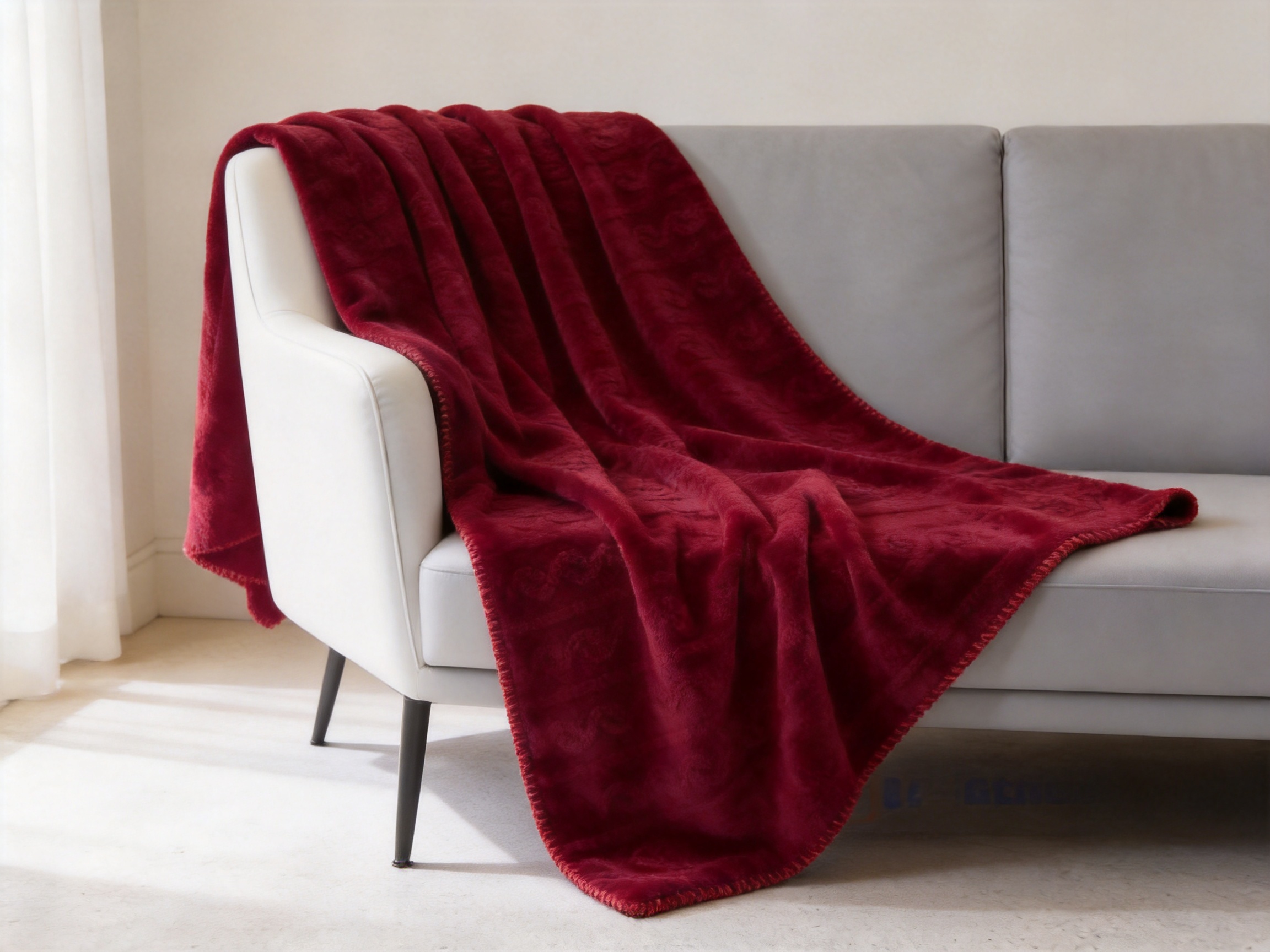
The blanket category includes many low-cost products that compete primarily on price. These may use coarse fibers, thin construction, weak edge finishing, uneven pile, unstable dyeing, or limited sizing. While such products can be attractive to buyers with a very restricted budget, they may offer less comfort and shorter useful life. The Double Sided Jacquard Cloud Velvet Blanket is positioned to compete through a more complete value proposition rather than through price alone.
First, the cloud velvet surface emphasizes softness and tactile appeal. A comfortable hand feel is immediately noticeable when a customer touches the product in a store or opens the package at home. This sensory impression can support a premium position and differentiate the blanket from ordinary thin fleece or rough woven alternatives.
Second, jacquard styling provides greater visual refinement. A basic blanket may have a flat appearance and limited decorative value. The jacquard surface can add texture and a more substantial look, helping the product function as both a comfort item and a room accessory.
Third, the range of sizes gives sellers more flexibility than a single-format blanket. Retailers can build a collection around individual use, sofa use, bed use, and oversize coverage. This supports cross-selling and enables customers to select a product that fits their actual needs.
Fourth, machine washability improves convenience. A washable blanket is easier to use in households, hotels, offices, and travel settings than a product that requires specialist cleaning. When combined with a durable polyester base and quality edge finishing, this can contribute to better long-term value.
Fifth, the manufacturer’s integrated production capabilities may offer advantages over suppliers that outsource every stage. Control over weaving, dyeing or printing, and finished processing can improve coordination and make it easier to address issues related to color, texture, construction, and lead time. It can also support customized programs for buyers seeking specific colors, sizes, labels, packaging, or textile developments.
Zhejiang Benyi Textile Technology Co., Ltd. is located in Shaoxing, a city widely recognized for its extensive textile ecosystem. The company’s location provides access to textile expertise, material resources, processing services, logistics networks, and a large community of textile professionals. This industrial environment can support efficient sourcing and product development for domestic and international customers.
The company describes itself as a new textile technology enterprise focused on carpets, rug fabrics, and finished textile products. Although the featured product is a blanket, the wider manufacturing background is relevant because it demonstrates experience with textile structures, surface development, coloration, finishing, and finished-product processing.
The company operates its own weaving, dyeing and printing factories, and finished carpet processing facilities. This vertically coordinated structure can reduce dependence on unrelated third parties. When a buyer requests a change in color, surface, size, construction, or finishing, internal production coordination may be more direct than in a fragmented supply chain.
Vertical integration may also support better control over production planning. Textile orders often involve several linked stages, and delays at one stage can affect the entire delivery schedule. When major processes are coordinated within the same manufacturing organization, the company can potentially monitor progress more closely and respond faster to technical or scheduling questions.
For international buyers, communication and documentation are equally important. A coordinated supplier can help align the approved sample, technical specification, packaging requirements, inspection criteria, and shipping schedule. Buyers should still establish formal quality standards and inspection procedures, but a manufacturer with broad process control may be better prepared to manage these requirements.
The company reports a team of more than 20 fabric engineers who develop new carpet fabrics each quarter based on market trends. This product-development culture is relevant to blanket buyers because it indicates attention to material innovation, surface effects, changing consumer preferences, and commercial design requirements.
Customization can be valuable for retailers and private-label customers. A buyer may require a specific color palette to match a seasonal collection, a particular size for a hotel bed, a custom label, or packaging designed for a specialty store. Other buyers may want a different gsm, edge finish, jacquard texture, or blend of sizes. Each request should be assessed technically, but the manufacturer’s stated custom-service capability creates a foundation for these discussions.
Customized production is particularly useful for brands seeking differentiation. Rather than selling an identical blanket available from many suppliers, a retailer can develop a unique combination of color, texture, packaging, and size. This may help protect margins and create a stronger relationship between the product and the seller’s identity.
Development should begin with a clear product brief. The brief should specify material, gsm, dimensions, layer structure, edge treatment, color references, acceptable tolerances, care instructions, packaging, labeling, and intended use. Buyers should request a pre-production sample and compare it against the approved standard before authorizing mass production.
Quality control is essential when purchasing blankets in volume. A professional inspection program should evaluate both appearance and performance. Important appearance checks include color consistency, jacquard clarity, pile uniformity, edge neatness, stitching, stains, holes, loose threads, and packaging condition.
Dimensional checks should confirm the finished length and width of each size, along with reasonable tolerances. The buyer should also verify the agreed gsm or weight range, especially because the supplied product materials contain different weight references. If a buyer is selling a 340gsm version, it should not be mixed with a heavier 700gsm version without clear product labeling and customer communication.
Performance testing may include colorfastness to washing and rubbing, dimensional stability after laundering, pilling resistance, seam or edge strength, and surface appearance after repeated wash cycles. The specific tests should reflect the target market and intended application. A hotel or airline buyer may require more intensive testing than a retailer selling occasional-use throws.
Packaging checks are also important. Each blanket should be folded consistently, protected from moisture and dust, and labeled with the correct size, color, material, care instructions, and quantity. Carton markings should match the purchase order and shipping documents. Good packaging reduces warehouse errors and supports a professional customer experience.
Buyers should agree on an inspection standard before production. This may include acceptable quality limits, sample sizes, defect classifications, and procedures for handling nonconforming goods. Clear documentation protects both the buyer and manufacturer by ensuring that quality expectations are understood before the order is made.
Modern textile buyers increasingly consider environmental impact alongside price, appearance, and performance. The company states that it invests in sustainable materials and production methods, including recycled polyester and water-saving dyeing techniques. It also reports OEKO-TEX and GRS certifications. Buyers should request current certification documents, confirm their scope, and verify whether they apply to the specific blanket, material, factory, and production batch being purchased.
Recycled polyester can support a more resource-conscious product strategy when it is properly sourced and documented. Water-saving dyeing methods may help reduce water consumption during coloration. These initiatives do not eliminate the environmental impact of textile production, but they can form part of a broader approach that includes responsible material selection, efficient production, durable design, reduced packaging, and longer product life.
Durability is itself an important sustainability consideration. A blanket that remains useful for a longer period may reduce the need for frequent replacement. Softness, color retention, stable edges, and washability can all contribute to continued use. Buyers should avoid making environmental claims beyond the evidence supplied by the manufacturer and should communicate certification details accurately.
Responsible sourcing also includes transparency. Importers and distributors should maintain records covering materials, factory information, testing, certifications, and production specifications. These records can help meet customer expectations and support compliance with applicable market requirements.
In bedrooms, the blanket can be used as an additional layer during cool weather or as a decorative cover at the foot of the bed. The larger sizes offer broad coverage, while the soft surface supports comfortable resting and sleeping. Solid colors can coordinate with sheets, duvets, pillows, curtains, and rugs.
On a sofa or armchair, the blanket provides warmth during reading, watching television, or relaxing. It can also help protect upholstery from everyday contact. When folded or draped neatly, the jacquard texture adds a decorative accent without requiring additional furniture or accessories.
Hotels can use the blanket in guest rooms, lounges, executive suites, and seasonal bedding programs. Its washable construction and range of sizes are practical for housekeeping and room preparation. Before adoption, hospitality buyers should evaluate laundering performance, replacement cost, color standards, and compatibility with existing linens.
In offices, the blanket can be used in meeting rooms, rest areas, private workspaces, or temperature-controlled environments. The smaller sizes are convenient for personal use. Its lightweight characteristics also make it suitable for airplane travel and other situations where passengers may need an extra layer.
The blanket can accompany customers on camping trips, picnics, road journeys, sporting events, and outdoor gatherings. Polyester is practical for a portable product, but the blanket should not be represented as waterproof, fire-resistant, or designed for extreme weather unless those properties have been specifically tested and certified.
The soft surface and all-ages positioning make the product appropriate for family environments. It can be used in children’s rooms, nurseries, family rooms, and travel bags. Parents and caregivers should follow the care label and any applicable safety guidance, particularly for infants and unsupervised sleeping environments.

The blanket can be merchandised through several product stories. A comfort-focused display can emphasize softness, warmth, and relaxation. A home décor display can pair the blanket with cushions, rugs, bedding, and furniture. A travel display can present the smaller sizes as portable comfort accessories. A seasonal gift display can highlight birthdays, housewarmings, anniversaries, Valentine’s Day, Thanksgiving, Halloween, Christmas, and other celebrations.
Color assortment is important. Neutral shades may appeal to customers seeking long-term coordination, while stronger colors can support seasonal collections and gift merchandising. Retailers should select colors based on local preferences, target age groups, interior trends, and the surrounding product assortment. The manufacturer’s ability to develop customized colors may help buyers create a more distinctive range.
Online listings should provide accurate photographs, dimensions, material details, washing instructions, and a clear explanation of the intended uses. Customers often underestimate the difference between a throw blanket and a full-bed blanket, so visual size references can reduce returns. The listing should also identify whether the specific version is 340gsm or 700gsm and whether it is single-layer or double-layer.
Packaging should protect the surface and communicate quality. A folded blanket in a clean, well-designed package can be sold as a ready-to-gift item. Retailers may request private-label packaging, hangtags, belly bands, reusable bags, or carton configurations according to their sales channel.
Wholesale buyers should begin by identifying the intended market and application. A home décor retailer may prioritize colors, packaging, and tactile presentation. A hotel may prioritize laundering performance, replenishment, and consistent dimensions. An online seller may focus on photography, compact packaging, and customer-friendly size options. A distributor may require a broad assortment, stable lead times, and mixed-color or mixed-size cartons.
Before placing an order, buyers should request a detailed quotation that identifies the exact material, gsm, size, construction, color, edge treatment, packaging, minimum order quantity, production lead time, and shipping terms. The product name alone is not sufficient to define a commercial specification, especially when different versions may be available.
Sample approval should be treated as a formal stage rather than an informal review. The approved sample should be labeled and retained. Any later changes to yarn, dyeing, construction, edge finishing, dimensions, or packaging should require buyer approval. This process helps prevent misunderstandings during mass production.
Lead time should include material preparation, knitting or weaving, dyeing, finishing, inspection, packing, and shipment preparation. Seasonal buyers should plan early, particularly before winter, Christmas, promotional campaigns, or major retail events. The manufacturer’s integrated facilities may support lead-time management, but schedules should still be confirmed in writing.
Freight planning should consider the blanket’s size, weight, carton dimensions, compression method, and destination regulations. A larger blanket may have a relatively high packed volume even when its fabric weight is moderate. Buyers should request carton dimensions and gross weight to calculate shipping costs accurately.
A strong blanket product must offer visible and functional reasons for customers to choose it. The Double Sided Jacquard Cloud Velvet Blanket combines several such reasons: soft cloud-like texture, a refined jacquard surface, solid-color versatility, multiple sizes, machine washability, broad application, and support from an integrated textile manufacturer.
These advantages can be translated into different sales messages according to the market. For consumers, the emphasis can be on comfort, warmth, softness, and easy care. For interior designers, the focus can be on texture, color coordination, and decorative drape. For hospitality buyers, the focus can be on consistent production, washable performance, and professional presentation. For distributors, the focus can be on assortment flexibility and customization.
Compared with a low-priced, undifferentiated blanket, the product offers more opportunities for premium merchandising. Compared with highly decorative blankets that are difficult to coordinate, its solid-color design offers broader interior compatibility. Compared with products requiring specialist cleaning, its machine-washable positioning is more convenient. Compared with suppliers with limited production control, the manufacturer’s integrated facilities may provide stronger support for customized and repeat orders.
Customers should follow the care label supplied with the exact product version. Machine washing should generally be performed using a suitable cycle and mild detergent, while excessive heat and harsh chemicals should be avoided unless specifically permitted. The blanket should be washed with similar colors, especially during the first laundering cycle.
To preserve the plush surface, users should avoid sharp objects, rough surfaces, and excessive friction. The blanket should be completely dry before storage. Long-term storage is best carried out in a clean, dry, well-ventilated location away from direct sunlight and excessive moisture.
For commercial users, laundering procedures should be tested before regular operation. Hotels and facilities should consider whether the blanket will be washed separately or with other textiles, how it will be dried, and how it will be folded and stored. A test program can identify any changes in dimensions, color, pile, or edge condition.
Although the blanket is suitable for many indoor and outdoor uses, it should not be described as protective equipment or as a substitute for specialized thermal, fire-resistant, waterproof, or medical textiles without supporting test results. Accurate product communication protects consumers and strengthens the credibility of the seller.
The blanket is made from 100% polyester. The knitted polyester construction is designed to provide a soft, smooth, and flexible surface while supporting practical everyday use.
Cloud velvet refers to the soft, plush, fine-pile character of the blanket surface. It is intended to create a smooth and comfortable hand feel similar to the gentle sensation associated with cloud-like softness.
Yes. The product is described as suitable for all seasons. It can be used as a standalone blanket in mild conditions, as an additional layer in colder weather, or as a comfort layer in air-conditioned offices, hotels, airplanes, and vehicles.
The listed sizes are 50 x 60 inches, 60 x 80 inches, 90 x 90 inches, and 90 x 110 inches. The smaller formats are suitable for personal and travel use, while the larger formats provide broader sofa and bed coverage.
Yes. The supplied product information identifies machine washing as the care method. Buyers should confirm the final care label and recommended washing conditions for the exact production version.
Yes. Hotel use is listed among the recommended applications. Hospitality buyers should conduct laundering and durability tests using their own cleaning procedures before placing a large order.
The product is described as double-sided jacquard, indicating that both sides are designed as part of the product’s visual and tactile appeal. The exact appearance of each side should be confirmed through the approved sample.
The technical information lists 340gsm, while another supplied description refers to a 700gsm version. Because these figures may represent different configurations, buyers should confirm the exact gsm on the quotation, sample specification, and purchase order.
The technical table identifies single-layer construction, while the product description mentions double-layer construction. This discrepancy should be resolved with the manufacturer before ordering. The confirmed construction should appear on the final technical specification.
The technical information identifies lock-edge construction, while another description references welt sewing. The correct edge finish should be confirmed for the selected version because edge treatment affects appearance, durability, and care performance.
The manufacturer states that it provides customized services according to customer requirements. Custom color, size, packaging, labeling, or construction requests should be discussed during the quotation and sample-development process.
Yes. Its broad age range, attractive texture, multiple sizes, and practical machine-washable design make it suitable for birthdays, housewarmings, anniversaries, holidays, and other gift occasions. Packaging options can further support gift-oriented retail programs.
The product combines a soft cloud velvet surface with jacquard styling, solid-color versatility, a range of sizes, machine washability, and manufacturer support for customization. These features can provide a more refined and commercially flexible offering than a basic, undifferentiated fleece blanket.
Working with an integrated textile manufacturer can simplify product development and supply-chain communication. When weaving, dyeing or printing, and finished processing are managed within the same organization, the buyer may have a clearer route for discussing technical adjustments and resolving production questions.
For repeat orders, integrated production can support closer consistency between batches. Color, surface texture, edge construction, and finished dimensions still require inspection, but centralized control may reduce variation caused by coordination among unrelated suppliers.
The company’s experience with carpets, rug fabrics, and finished products also reflects a broader understanding of textile surfaces and home furnishing applications. This background can be valuable when developing coordinated collections that include blankets, rugs, cushions, and other soft furnishings.
Its location in Shaoxing provides access to a deep textile manufacturing network, while its own facilities and engineering team support product development. Together, these strengths make the company a potential partner for buyers seeking more than a standard catalog item.
Before ordering, confirm the exact product name, material composition, gsm, layer structure, weave, edge finish, available dimensions, color references, and tolerances. Make sure that the information on the quotation matches the approved sample and the final packaging.
Request a sample for hand-feel evaluation, visual inspection, measurement, washing, drying, and storage testing. If the blanket is intended for a hotel, airline, institutional, or other high-use environment, test it under realistic operating conditions.
Discuss minimum order quantities, sample charges, customization fees, packaging requirements, production lead time, payment terms, inspection arrangements, and shipping documentation. These details should be agreed upon before production begins.
Ask for current information concerning OEKO-TEX and GRS certifications if sustainability or chemical-safety claims will be used in marketing. Confirm the certification scope and ensure that all public claims accurately describe the relevant product and facility.
Finally, establish a repeat-order process. Retain the approved color standard, construction specification, packaging artwork, and inspection criteria. This documentation helps maintain consistency as the product becomes part of a long-term collection.
The Double Sided Jacquard Cloud Velvet Blanket is a versatile home textile developed around comfort, appearance, convenience, and commercial adaptability. Its 100% polyester knitted construction, soft cloud velvet surface, jacquard styling, solid-color presentation, multiple sizes, machine-washable care, and broad application range make it suitable for homes, hotels, offices, travel, camping, and gift retail.
Its advantages over basic blanket alternatives include a more refined tactile experience, stronger decorative potential, flexible sizing, easy-care positioning, and opportunities for customized development. These benefits can help retailers and distributors create a product offering that competes on overall value rather than price alone.
The manufacturing strengths of Zhejiang Benyi Textile Technology Co., Ltd. further support the product’s wholesale potential. The company’s Shaoxing location, integrated weaving and dyeing capabilities, finished-product processing, textile engineering team, customization services, and stated sustainability initiatives provide a strong foundation for domestic and international textile programs.
Because the supplied materials contain different references for gsm, layer structure, and edge finishing, professional buyers should confirm the precise configuration before purchase. Once the technical details are aligned, the blanket can serve as a dependable addition to home-textile, hospitality, décor, travel, and seasonal-gifting assortments.
1. Product specification sheet for the Double-Sided Jacquard Cloud Velvet Blanket, including material, dimensions, care instructions, recommended uses, weave type, and special features.
2. Manufacturer-provided product description concerning cloud velvet softness, jacquard styling, durability, machine washing, outdoor use, and gifting applications.
3. Zhejiang Benyi Textile Technology Co., Ltd. company profile describing textile manufacturing capabilities, weaving, dyeing, printing, finished-product processing, engineering resources, and customization services.
4. Manufacturer-provided sustainability information concerning recycled polyester, water-saving dyeing methods, OEKO-TEX certification, and GRS certification.
5. General textile quality-control principles for dimensional stability, colorfastness, pilling resistance, seam durability, care labeling, and wholesale inspection procedures.
6. General home-textile merchandising practices for blankets, including size assortment, seasonal promotion, interior coordination, retail packaging, and hospitality applications.

ADD: No.75 Zhenyuan Road, Yuecheng District, Shaoxing City, Zhejiang Province, China 312000

Tel : +86-189 6750 9795

FAX : +86-0575-8803 2773

Email : fisher@benetextile.com

Copyright © Zhejiang Benyi Textile Technology Co., Ltd. All Rights Reserved. Carpets and Rugs Manufacturer

 English
 Français
 Deutsch
 عربى