

Lu Wanyao — After-Sales Service Supervisor
 Home / Author / Lu Wanyao — After-Sales Service Supervisor / Chenille 3 100% Polyester Carpet Fabric: Durable, Versatile, and Efficient for Modern Rug Production
 2026.10.20
 Lu Wanyao — After-Sales Service Supervisor
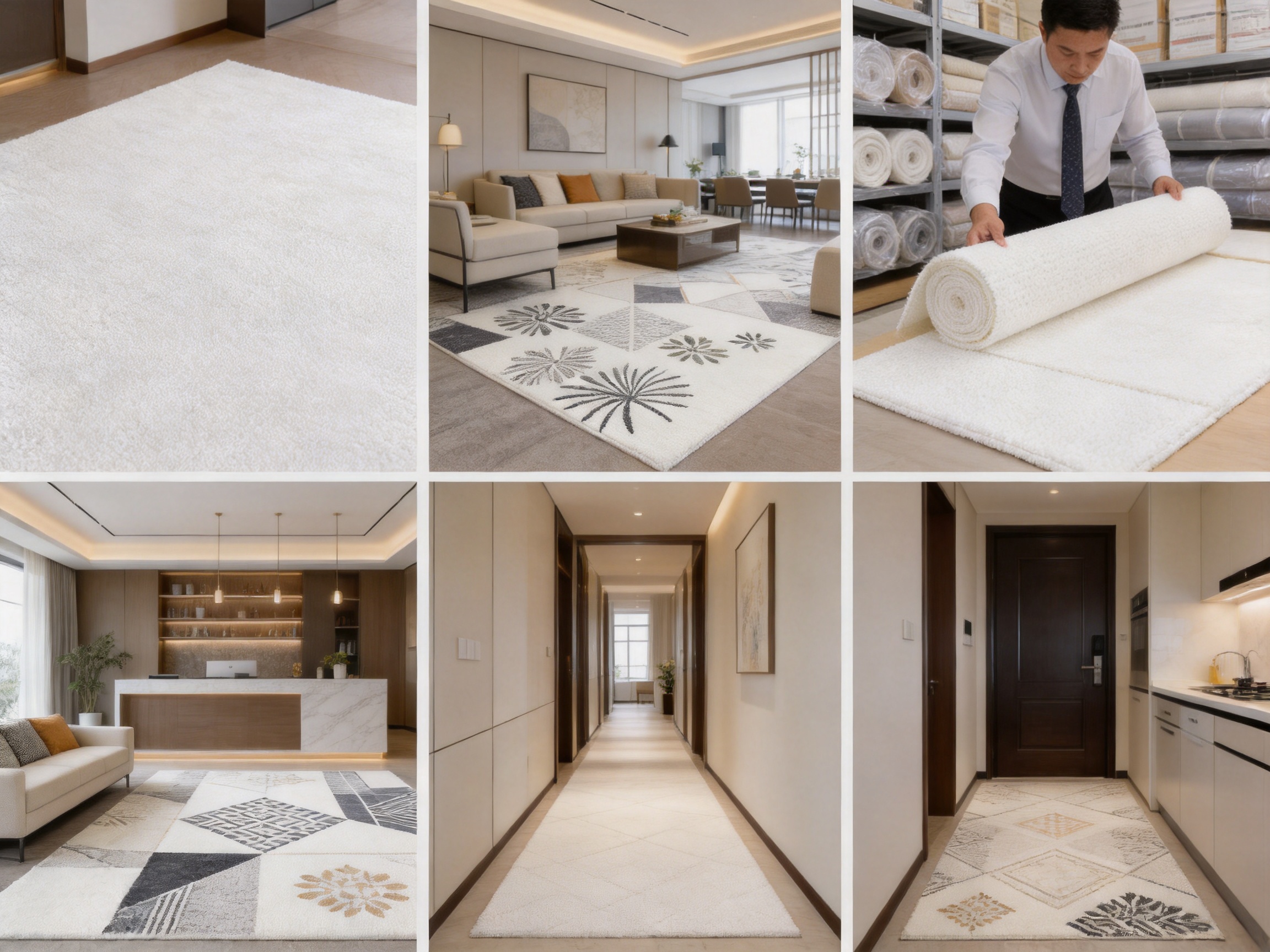
Carpet and rug manufacturers increasingly need materials that combine attractive appearance, reliable performance, efficient processing, and dependable supply. The Chenille 3# 100% polyester carpet fabric is designed to meet these requirements in a practical and commercially flexible way. Made from 100% polyester chenille yarn, this knitted fabric offers a soft and cool touch, a low 2 mm pile height, a substantial 380 gsm weight, and widths suitable for a wide range of carpet and rug projects.
Unlike many conventional carpet materials that require manufacturers to balance softness against durability, or visual appeal against production efficiency, this fabric is engineered to provide a useful combination of these characteristics. Its knitted structure supports flexibility and dimensional stability, while the polyester composition contributes to easy maintenance, resistance to fading, and suitability for high-use environments. The material can also be used as a base for digital printing or paper transfer printing, allowing buyers to create customized designs without being restricted to a limited selection of standard patterns.
Available in 170 cm, 190 cm, and 210 cm widths, with customized sizes available and a maximum width that can reach 3.2 meters, the fabric can support both standard and specialized production plans. It is supplied by rolls and produced on a make-to-order basis, helping buyers select the quantity, width, and design direction that best suit their market. With an indicated minimum order quantity of 500 kilograms per color and a delivery time of approximately 15 to 20 days, the product is suitable for wholesale sourcing, contract manufacturing, private-label collections, and project-based orders.
This article examines the construction, performance, processing advantages, applications, quality considerations, and supply strengths of Chenille 3# carpet fabric. It also explains how Zhejiang Benyi Textile Technology Co., Ltd. supports product development through integrated textile manufacturing, engineering expertise, printing capability, and coordinated finished-product processing.
Content
Chenille 3# is a knitted carpet fabric made from 100% polyester. It is identified by product model number 100019 and is supplied in PFP white, making it a practical foundation for subsequent printing, dyeing, or customized surface design. The product is intended for carpet and rug applications, although its low-profile structure and flexible width options make it adaptable to other textile-based interior products where a durable, soft, printable surface is required.
| Product name | Chenille Fabric 3# |
| Item model number | 100019 |
| Material | 100% polyester |
| Weight | 380 gsm |
| Available widths | 170 cm, 190 cm, 210 cm, or customized |
| Maximum stated width | Up to 3.2 meters |
| Pile height | 2 mm |
| Supply type | Make-to-order |
| Technics | Knitted |
| Recommended usage | Carpet and rug production |
| Color | PFP white |
| Minimum order quantity | 500 kilograms per color |
| Packaging | By rolls |
| Indicative delivery time | 15 to 20 days |
| Primary characteristics | Soft and cool hand feel, durable construction, printable surface |
The combination of these specifications is important because carpet fabric performance is determined by more than fiber content alone. Weight, pile height, fabric construction, width, finishing, and intended use all influence the final result. A 380 gsm knitted material with a 2 mm pile provides a smooth and relatively low-profile surface, while retaining enough substance for a quality feel and practical handling during converting and installation.
The PFP white color is particularly useful for buyers who need a neutral base for custom designs. Instead of purchasing a different pre-colored base for every collection, manufacturers can use the same fabric platform for multiple patterns, themes, and colorways. This can simplify raw-material planning, support seasonal product updates, and reduce the need to hold large inventories of finished colors.
Polyester is widely used in home textiles because it offers a strong balance between performance, affordability, appearance, and processing convenience. In this fabric, the use of 100% polyester creates a consistent material platform for manufacturers seeking repeatable production results.
Carpets and rugs are exposed to foot traffic, friction, movement, cleaning, and changes in indoor conditions. A fabric intended for these uses must retain its basic structure during handling and service. Polyester fibers are valued for their strength and resistance to everyday wear, making them suitable for residential rooms, commercial interiors, hospitality areas, entrances, and other locations where a textile surface is used regularly.
The knitted construction of Chenille 3# adds flexibility to the material while supporting its structural integrity. Rather than relying solely on a loose or unstable surface, the fabric is formed through an organized knitting process. This helps it remain manageable during cutting, printing, backing, edging, and other downstream operations.
Carpet buyers commonly prioritize ease of cleaning. Dust, food particles, moisture, and accidental spills are unavoidable in many homes and commercial environments. Polyester is naturally suited to products where surface maintenance is important because it does not readily absorb moisture in the same way as many natural fibers. This makes the material easier to clean and helps it dry more readily after appropriate care.
The 2 mm pile height also contributes to practical maintenance. A low pile is generally easier to vacuum, sweep, and wipe than a deep, high-pile surface. Dirt has fewer places to settle, and the relatively smooth profile can be beneficial in rooms where frequent cleaning is expected. For kitchens, entrances, offices, guest rooms, and other busy spaces, this low-profile structure can provide a useful balance between comfort and maintenance efficiency.
The product information identifies fade resistance as one of the benefits associated with the polyester chenille yarn. This characteristic is valuable for printed rugs and carpets, where the visual identity of the product is central to its commercial appeal. A stable base helps patterns remain attractive through normal use, cleaning, and exposure to indoor light.
Actual color performance depends on the selected printing method, ink or dye system, finishing process, installation environment, and care conditions. Nevertheless, polyester provides a suitable foundation for manufacturers that need to reproduce decorative graphics, geometric designs, nature-inspired images, branding elements, or coordinated interior patterns.
Although carpet fabric must be durable, it should not feel harsh or uncomfortable. Chenille yarn is recognized for its soft surface character, while the product specification identifies the fabric as soft and cool. This makes it appropriate for rugs used in bedrooms, living rooms, reading areas, children’s spaces, and other interiors where users may touch the surface directly.
The cool hand feel can also be useful in warm climates or interiors where consumers prefer a smooth textile surface rather than a heavy, heat-retaining pile. The result is a fabric that can provide tactile comfort without requiring a deep construction.
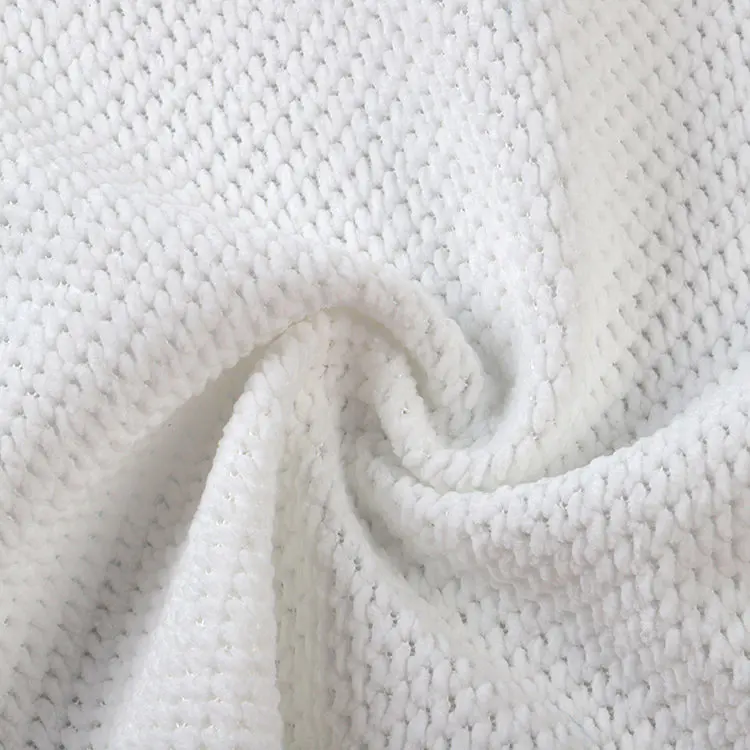
Chenille 3# 100% polyester Carpet Fabric
The manufacturing technique used for Chenille 3# is knitting. Knitted carpet fabric can offer several practical benefits compared with less flexible textile structures. The intermeshed construction allows the material to bend and conform to different shapes while remaining suitable for cutting and conversion.
Carpet and rug manufacturers may need to produce rectangular rugs, runners, mats, custom panels, or other shapes. A flexible fabric can move more smoothly through production equipment and may be easier to align during lamination, printing, and edge finishing. This is especially important for buyers supplying multiple product categories rather than a single standardized rug format.
Flexibility also benefits installation. A material that can be handled without excessive stiffness is easier to position, trim, and fit into a room. For custom projects, the ability to work with a fabric that responds well to cutting and shaping can reduce production complications.
Consistent knitting is essential for producing a reliable carpet base. Variations in density, width, weight, or surface formation can affect printing quality and the appearance of the final rug. An organized knitting process enables the manufacturer to monitor the fabric structure as it is produced and to maintain a more predictable material platform for subsequent operations.
For wholesale customers, consistency is as important as the performance of an individual roll. Retailers and project buyers need products from different production batches to maintain a similar appearance. A controlled fabric process supports repeat ordering and helps manufacturers create collections with a consistent identity.
The product information indicates that the knitted construction is suitable for high-traffic areas. This does not mean that every installation will have the same performance; traffic levels, backing, edging, cleaning, and installation conditions all influence service life. However, the combination of polyester yarn, knitted formation, and low pile height provides a practical starting point for products intended to withstand regular use.
Commercial corridors, hotel rooms, reception areas, offices, retail spaces, and busy household entrances may benefit from a surface that is not excessively deep or difficult to maintain. Chenille 3# can be incorporated into designs where low-profile convenience is more important than the thick cushioning associated with deep-pile carpets.
Pile height is one of the most visible and functional characteristics of carpet fabric. At 2 mm, Chenille 3# offers a sleek, low-profile appearance. This construction can be advantageous for contemporary interiors that favor clean lines, simple surfaces, and easy transitions between flooring areas.
Low-pile rugs are generally easier to place beneath doors, furniture, and shelving than thick rugs. They can also reduce the height difference between a rug and the surrounding floor, which may be useful in rooms where smooth movement is desired. In entrances, hallways, and kitchens, a low-profile surface can be more convenient than a bulky construction.
Manufacturers can use the fabric for products designed to sit beneath dining tables, desks, sofas, beds, and other furniture. The reduced thickness may also simplify packaging and shipping, depending on the selected backing and finished product construction.
A 2 mm pile is relatively easy to vacuum and maintain. It does not create the same depth of fiber entanglement associated with shag or deep-pile rugs. This helps manufacturers position finished products toward consumers who want decorative flooring accessories but do not want demanding maintenance routines.
The surface remains suitable for printed designs because the low profile can help graphics appear clear and defined. Pattern visibility is particularly important when the rug is intended to reproduce detailed images, modern linework, lettering, or coordinated interior motifs.
The product information notes that the 2 mm pile height can increase friction with the soles of the feet. This may contribute to a more secure and comfortable walking experience when the fabric is used with an appropriate backing and installed correctly. The final slip resistance of a finished rug depends on the backing material, floor type, surface condition, and installation method, so manufacturers should evaluate the complete product rather than the fabric alone.
One of the most commercially significant advantages of Chenille 3# is its suitability for digital printing or paper transfer printing. The PFP white base provides a clean starting point for customized designs and allows buyers to develop collections that are not limited to a small range of standard colors.
Digital printing is valuable for manufacturers that need design flexibility, short or medium production runs, and quick collection updates. It can support photographic images, watercolor effects, abstract graphics, geometric shapes, botanical themes, children’s patterns, and many other visual concepts.
For retailers and private-label brands, digital printing can shorten the path from design concept to finished sample. Designers can adjust colors and artwork digitally before committing to larger quantities. This is useful for testing new collections, responding to regional preferences, or creating coordinated products for hospitality and interior-design projects.
Paper transfer printing provides another route for applying patterns to suitable polyester surfaces. Depending on the production setup, this process can deliver clear and vivid decorative effects while supporting repeatable designs across multiple rolls. The availability of two printing approaches gives manufacturers more flexibility when balancing artwork requirements, order quantities, equipment availability, and production schedules.
The standard widths of 170 cm, 190 cm, and 210 cm cover many common production needs. At the same time, customized widths and a maximum stated width of up to 3.2 meters allow buyers to plan the material around their final product dimensions.
Width customization can improve cutting efficiency. When the material width is selected to match a rug format or a group of related formats, manufacturers may reduce unused selvage and off-cut waste. This can improve material utilization and support more efficient production planning. It may also be valuable for large-area wall-to-wall applications, oversized decorative rugs, exhibition flooring, and hospitality projects requiring broad continuous surfaces.
Buyers should confirm the exact achievable width, tolerances, roll length, and production conditions with the supplier before placing an order. Width capability may depend on the selected construction, equipment, pattern, finishing requirements, and order quantity.
Chenille 3# is not intended to replace every type of carpet material. Deep-pile carpets, tufted carpets, woven rugs, natural-fiber textiles, and specialized technical floor coverings each have their own applications. However, this product presents several advantages for manufacturers seeking a versatile and efficient low-profile fabric.
At 380 gsm, the fabric has enough substance to feel substantial without becoming excessively heavy during handling. This balance can benefit workers who need to move, cut, print, laminate, and package the material. A fabric that is too light may lack the desired quality impression, while a very heavy fabric can increase shipping weight and processing difficulty.
The selected weight also gives buyers flexibility when adding backing, padding, anti-slip layers, or other functional components. The final rug can be engineered according to the intended market rather than relying on the surface fabric alone to provide every performance characteristic.
Compared with high-pile or shaggy materials, the 2 mm surface is easier to place, clean, and store. It is suitable for interiors where furniture clearance, smooth floor transitions, and straightforward maintenance are important. The low pile also supports a contemporary appearance that can be used in minimalist, Scandinavian-inspired, modern commercial, or functional residential collections.
A PFP white base that accepts digital or transfer printing gives manufacturers greater freedom than a material available only in a fixed selection of yarn colors. New designs can be introduced without changing the core fabric platform. This can simplify sampling and help companies serve customers with different visual preferences.
Standard and customized widths make the material adaptable to different production lines. A buyer producing small area rugs may select a conventional width, while a project supplier may request a wider format. This scalability is a practical advantage over fabrics that are limited to one narrow dimension.
Make-to-order production can help align manufacturing with confirmed demand. Instead of requiring buyers to select only from available stock, it allows discussions around color, width, quantity, and production purpose. This approach may be especially useful for customized projects, seasonal collections, and wholesale orders that need consistent specifications.
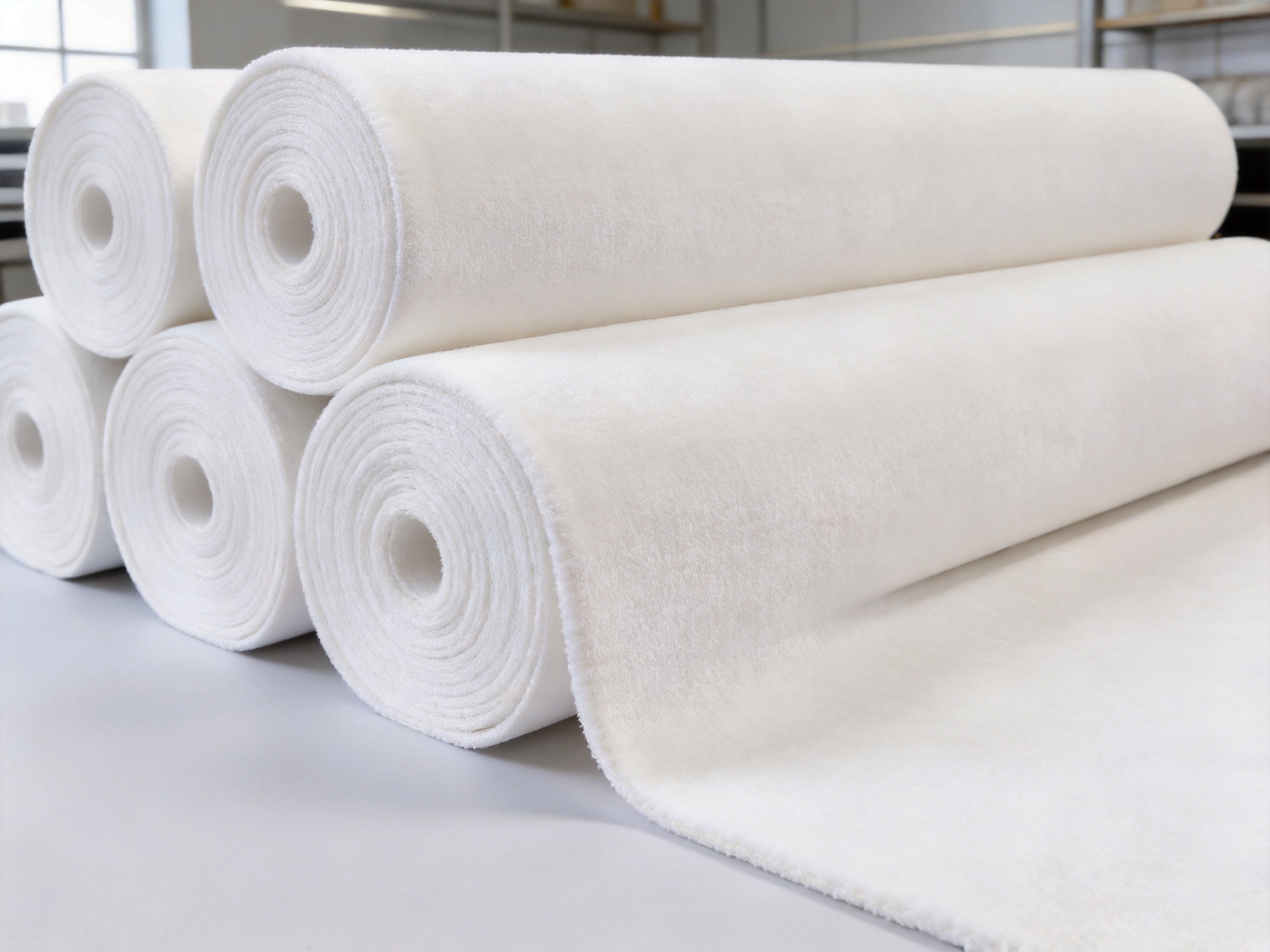
Chenille 3# can be used in a wide range of carpet and rug products. Its final suitability should be confirmed through product testing and consideration of the complete construction, including backing and finishing. Within those conditions, the fabric can support the following applications.
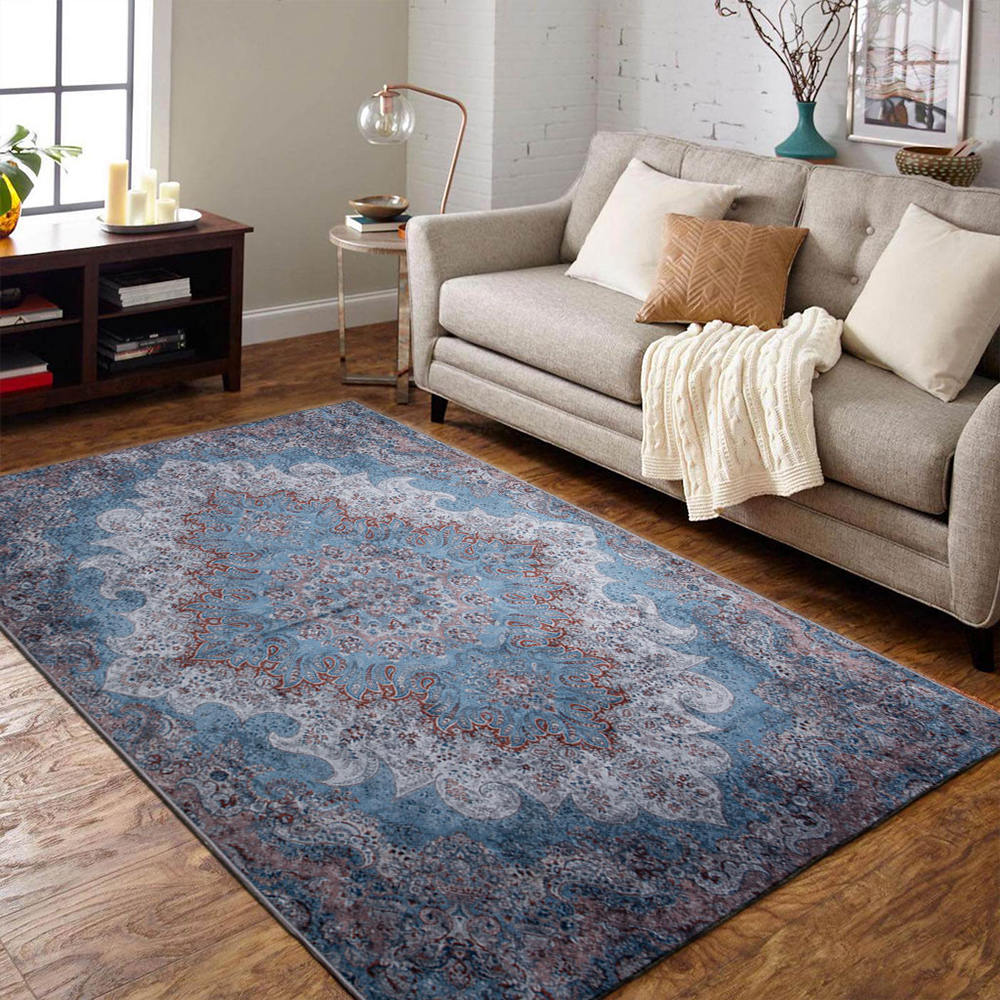
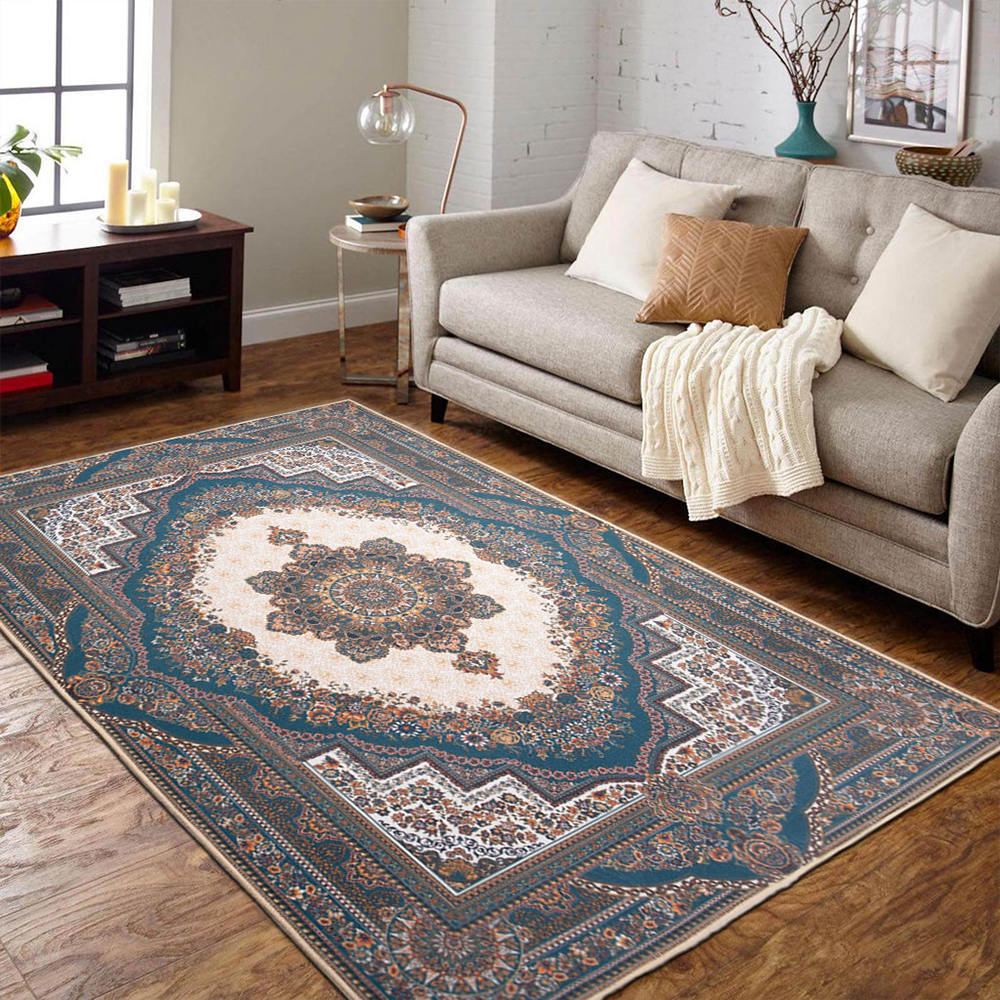
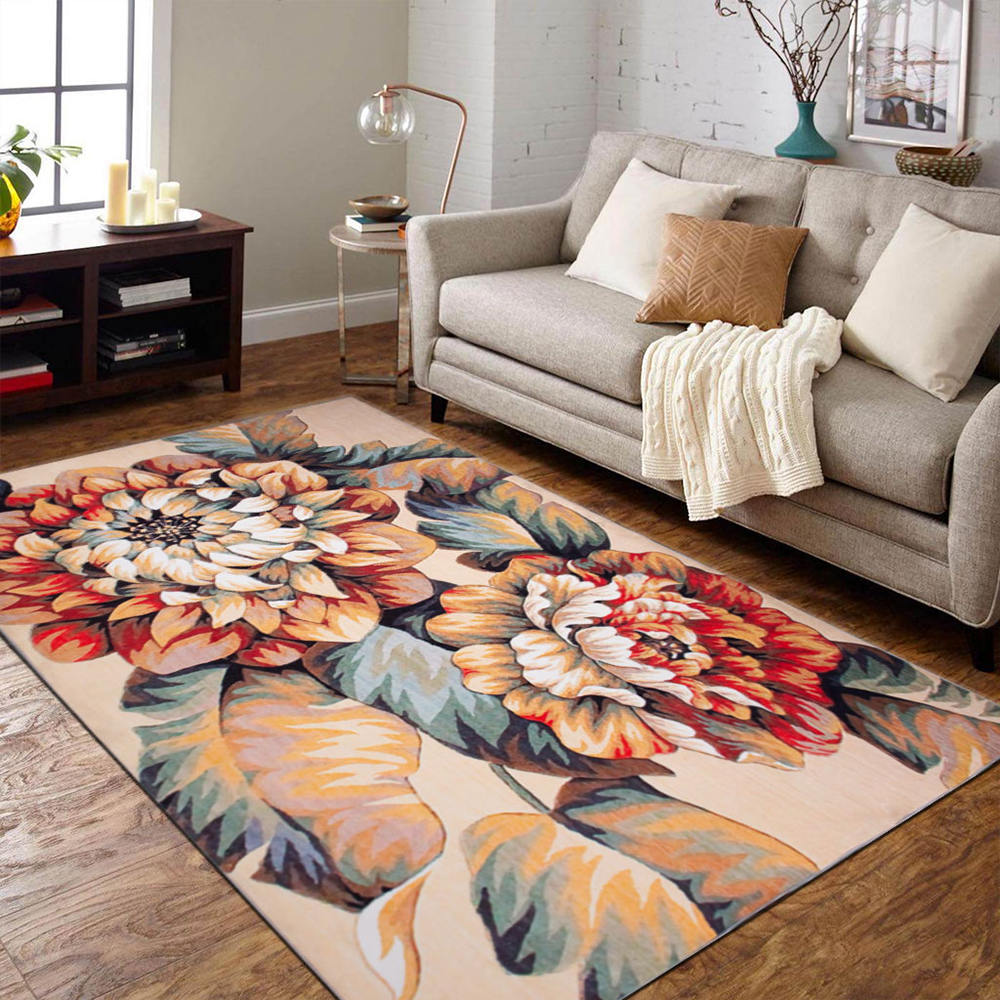
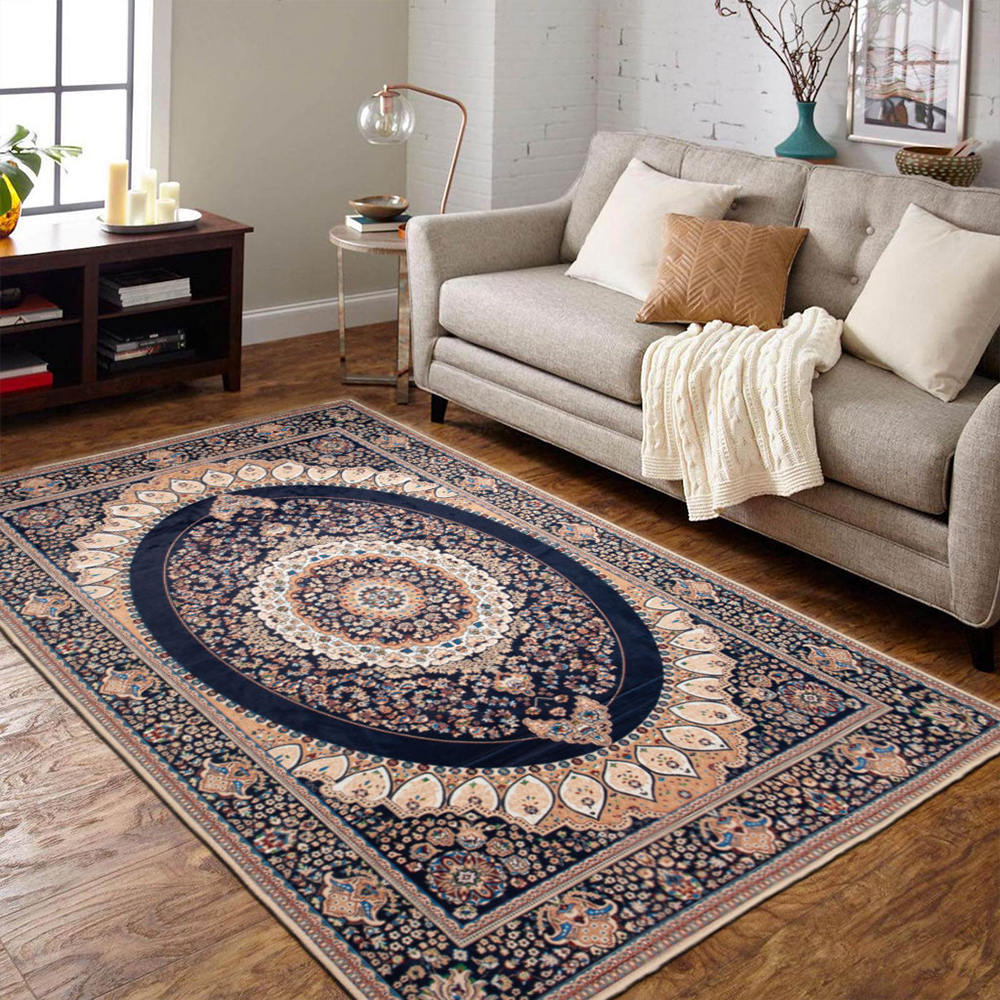
Living rooms often require a surface that contributes color and texture without creating excessive visual or physical bulk. A printed Chenille 3# rug can introduce geometric designs, muted tonal effects, landscape images, or decorative patterns while remaining relatively easy to clean. Its soft feel can add comfort around sofas, coffee tables, and seating areas.
Bedroom rugs are frequently selected for their tactile comfort and quiet visual character. The chenille surface can provide a soft sensation underfoot, while the low pile makes the rug easier to position beside beds or beneath bedroom furniture. Custom printing allows manufacturers to develop calming color palettes and patterns suited to residential collections.
Entrances and hallways experience repeated foot traffic and can collect dirt from outdoor footwear. A low-profile, easy-care polyester surface is suitable for products designed for these areas. Runners can be produced in coordinated designs for residential projects, hotels, offices, and retail interiors.
Kitchen mats need to be practical, cleanable, and stable when properly backed. Chenille 3# can be used as a surface fabric for printed kitchen mats with contemporary designs, food-related imagery, abstract patterns, or coordinated home décor themes. Because the surface is low profile, it can be more convenient around cabinets and appliances than a thick rug.
Hotels, serviced apartments, restaurants, offices, and other commercial environments often require coordinated floor textiles in repeatable designs. The fabric’s printable surface and width flexibility can support project-specific graphics and color schemes. Its polyester construction and low pile are also appropriate for buyers who prioritize regular maintenance and practical handling.
Retailers and event organizers may use printed rugs to reinforce visual identity, highlight a display area, or create a themed environment. Digital printing enables detailed artwork, logos, slogans, and seasonal graphics. For such uses, buyers should select appropriate printing and finishing methods and verify color accuracy and durability under the expected traffic conditions.
The printable white base can be used to develop children’s rugs featuring educational graphics, animals, roads, maps, stars, or imaginative scenes. The low pile is easier to clean than many deeper constructions. For children’s products, manufacturers should also evaluate edge finishing, backing safety, chemical compliance, and slip performance in the complete finished item.
The performance of a carpet fabric depends not only on the specification sheet but also on the manufacturer’s ability to control the production chain. Zhejiang Benyi Textile Technology Co., Ltd. is located in Shaoxing, Zhejiang Province, a major textile manufacturing region known for its broad supply network and technical resources.
The company specializes in carpets, rug fabrics, and finished carpet products. Its manufacturing model combines surface and bottom components to simplify carpet production and improve coordination between fabric development and finished-product processing. This integrated approach can reduce the complications that arise when separate suppliers manage the surface fabric, backing, printing, and final assembly independently.
The company has its own weaving, dyeing and printing factories, as well as finished carpet processing facilities. Although Chenille 3# is identified as a knitted fabric, the broader factory network supports the development and processing of different textile structures and finished products. Control over these linked capabilities can improve communication when buyers require customized colors, printed patterns, special widths, or coordinated product formats.
Integrated production may also help shorten the feedback cycle. If a problem occurs during printing or finishing, the manufacturing team can trace it back to the fabric construction and make adjustments more efficiently than a supply chain in which every stage is separated across unrelated companies.
The company has a team of more than 20 fabric engineers and develops new carpet fabrics each quarter based on market trends. This product-development capability is important in a market where buyers seek new textures, color effects, low-maintenance surfaces, and customized visual concepts.
Regular development activity helps the supplier respond to changes in interior design, consumer preferences, and application requirements. It also gives customers an opportunity to discuss modifications rather than choosing only from a fixed catalog. For private-label and project buyers, this can support differentiated products and more distinctive collections.
In-house control of multiple production stages can support closer management of quality and delivery schedules. The stated delivery time for Chenille 3# is approximately 15 to 20 days, subject to order details, quantity, customization, and production planning. Buyers should confirm the final schedule before ordering, especially when a project involves special widths, printing, backing, or multiple approval stages.
Coordinated production is also valuable for repeat orders. When the supplier has records of the fabric construction, printing requirements, and finishing details, it may be easier to reproduce a product consistently. Buyers should still approve samples and establish quality tolerances for color, weight, width, pile height, and surface appearance.
The company states that it focuses on ecological and environmental protection, consumer health, and sustainable textile development. Its sustainability initiatives include investment in recycled polyester and water-saving dyeing techniques. The company also states that it has passed OEKO-TEX® and GRS certifications.
Certification status, scope, validity, and applicability should always be confirmed for the specific product, production site, and order. Nevertheless, attention to recycled materials, water use, and chemical management reflects the direction of the modern textile industry. Buyers increasingly need suppliers that can provide not only attractive products but also clearer information about material origin, production practices, and compliance.
When purchasing Chenille 3# or any carpet fabric, buyers should evaluate the product according to the requirements of the finished application. A structured quality-control plan helps reduce misunderstandings and supports consistent production.
The fabric is specified as 100% polyester. Buyers may request documentation or testing appropriate to their procurement standards to verify fiber composition. If recycled polyester is required, the order should clearly identify the desired recycled content, certification requirements, and chain-of-custody documentation.
The stated weight is 380 gsm, and standard widths are 170 cm, 190 cm, and 210 cm, with customized widths available. Buyers should define acceptable tolerances for weight, width, selvage condition, and roll length. These details affect cutting plans, yield calculations, and finished-product dimensions.
The pile height is 2 mm. Inspection should consider uniformity across the roll, surface smoothness, loose fibers, visible defects, and variations in chenille formation. A consistent surface is especially important when the fabric will be digitally printed because irregularities may influence image sharpness or visual uniformity.
PFP white fabric should be evaluated for base whiteness, cleanliness, and compatibility with the selected printing method. Printed samples should be checked for color accuracy, pattern alignment, detail reproduction, rubbing performance, and cleaning response. For repeat orders, the buyer and supplier should agree on reference samples or measurable color standards.
The surface fabric is only one part of a finished rug. Backing selection influences dimensional stability, floor grip, cushioning, washability, and overall service life. Manufacturers should test the complete construction on the intended floor surfaces. If a rug is marketed as slip resistant, that claim should be supported by appropriate testing under relevant conditions.
Chenille 3# is supplied by rolls. Roll packaging should protect the fabric from dust, moisture, crushing, and contamination during storage and transport. Buyers should confirm roll diameter, core size, roll length, protective materials, labeling, and pallet or container requirements before shipment.
Because the supply type is make-to-order, a well-prepared purchasing plan can improve the overall experience. Buyers should provide the supplier with the intended application, required width, target quantity, color or printing plan, backing requirements, packaging preferences, and delivery destination.
The minimum order quantity is stated as 500 kilograms per color. This quantity is suitable for wholesale production and helps make customized manufacturing more practical. Buyers with smaller requirements may discuss sample quantities, stock availability, combined production, or development options directly with the supplier.
Sampling is strongly recommended before mass production. A sample can be used to verify hand feel, surface appearance, print quality, color, pile height, backing compatibility, cutting behavior, and packaging requirements. For large projects, a production approval sample or signed reference standard can help ensure that later rolls remain aligned with the approved specification.
Lead time should be planned from the point at which all technical details and approvals are complete. The indicated 15-to-20-day delivery period may vary according to order size, customization, printing, production capacity, holidays, shipping arrangements, and inspection requirements. Clear communication at the quotation stage helps buyers establish realistic deadlines.
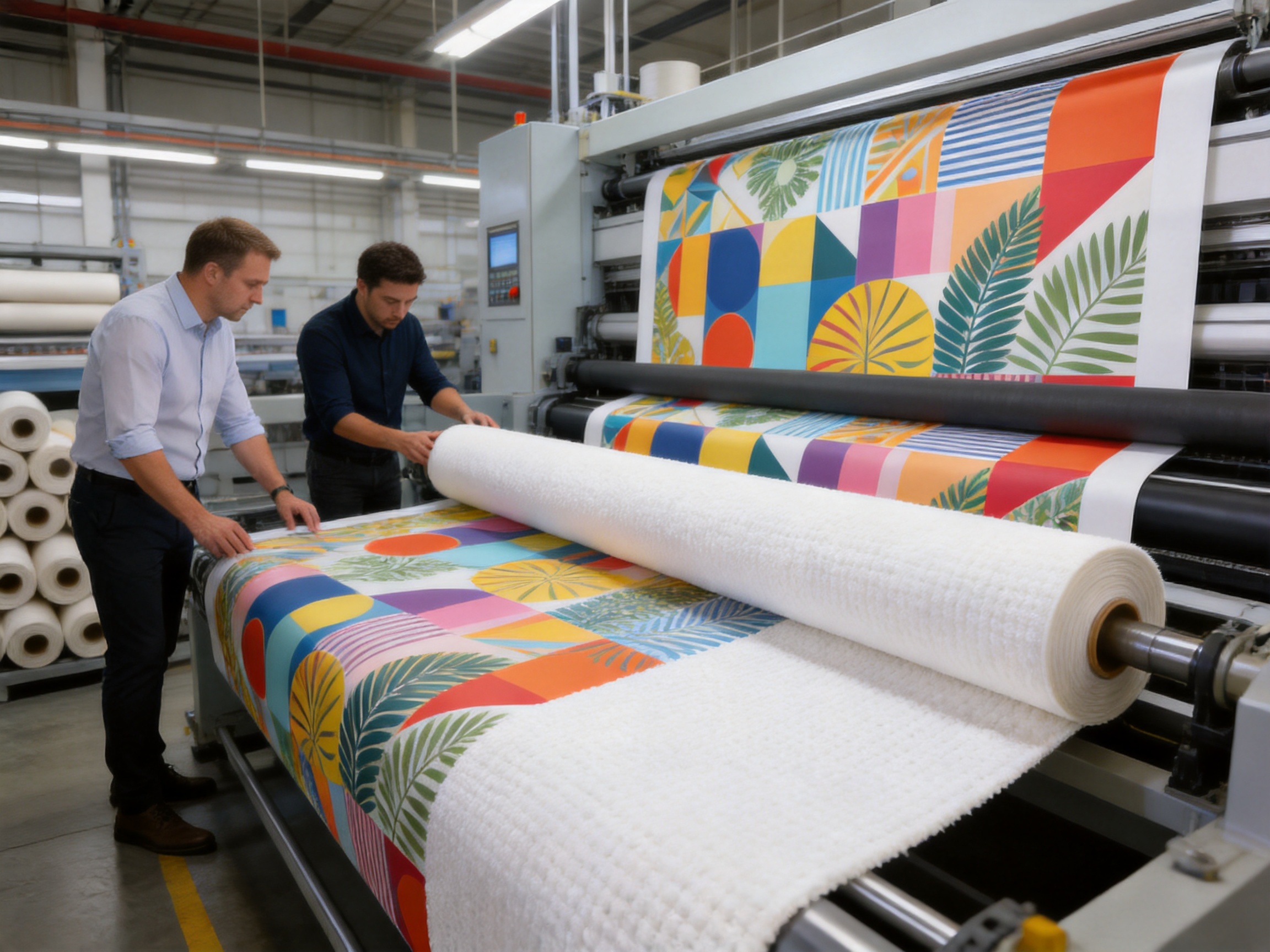
Manufacturers can use the fabric as one component in a complete finished-rug production sequence. The precise process depends on the product design and equipment, but a typical workflow may include the following stages.
The buyer first confirms the rug dimensions, artwork, surface effect, backing type, edge finish, label requirements, packaging format, and target market. At this stage, designers should consider how the 2 mm pile will display fine details and whether the selected width will maximize material utilization.
Before printing or cutting, the fabric may be inspected, conditioned, aligned, and prepared for processing. Any required treatment should be discussed with the supplier to ensure that it does not negatively affect the surface or printing response.
Digital printing or paper transfer printing can then be applied according to the approved artwork. Production settings should be selected to achieve the required color strength, sharpness, repeat accuracy, and surface penetration. Printed rolls should be inspected before they move to cutting and finishing.
The fabric is cut to the required rug, runner, mat, or panel dimensions. Customized widths can help reduce waste, especially when the cutting plan is designed before the material is produced. Accurate cutting is important for maintaining square corners, consistent dimensions, and pattern alignment.
A suitable backing may be applied to improve grip, weight, stability, cushioning, or dimensional control. Edges can be bound, overlocked, folded, or finished through another selected method. The choice depends on the target price point, design, usage environment, and expected care method.
The finished product should be inspected for surface defects, color consistency, dimensional accuracy, edge quality, backing adhesion, and cleanliness. It can then be folded or rolled according to the packaging design. Appropriate packaging protects the rug during transport and presents it effectively to wholesalers, retailers, or end users.
Finished products made with Chenille 3# should include care instructions appropriate to the complete construction. The polyester surface is designed for practical maintenance, but the correct cleaning method depends on the backing, printing system, edge finish, and manufacturer’s recommendations.
Routine cleaning may include vacuuming or gentle surface cleaning to remove dust and loose particles. Spills should generally be addressed promptly using a suitable method that does not damage the print or backing. Harsh chemicals, aggressive brushing, excessive moisture, and high heat should be avoided unless the finished product has been tested for those conditions.
For commercial and hospitality applications, buyers should establish a maintenance schedule based on traffic level. Entrance products may require more frequent cleaning than bedroom rugs. Proper installation, use of an appropriate underlay when needed, and avoidance of prolonged moisture can help preserve the appearance and performance of the finished rug.
Chenille 3# offers several features that can support wholesale business models. The printable PFP white base enables product differentiation, while the polyester composition and low pile support practical use. Buyers can create multiple designs from one fabric platform, reducing the need to manage numerous unrelated raw materials.
Width customization can help serve different customer groups, from small home décor retailers to contract furnishing companies. A standard width can support routine products, while wider formats can be considered for larger installations. The ability to request customized specifications can also help buyers develop exclusive collections that are less easily copied from generic catalog products.
The product’s 380 gsm weight and roll packaging make it suitable for organized bulk handling. With a minimum order of 500 kilograms per color, buyers can plan production runs around wholesale quantities rather than individual retail pieces. Make-to-order manufacturing can also help coordinate product launches and reduce reliance on unpredictable spot purchases.
For businesses that sell finished rugs, the fabric can serve as a common base across living room, bedroom, hallway, kitchen, hospitality, and promotional collections. The design can change while the underlying fabric specification remains familiar. This simplifies training, production documentation, quality inspection, and purchasing procedures.
Working with an integrated supplier can offer advantages beyond the purchase of a single roll of fabric. Product development, textile engineering, printing, dyeing, backing, and finished-rug processing are closely related activities. When these capabilities are coordinated, buyers can receive more practical advice about how a surface fabric will behave in the final product.
Zhejiang Benyi Textile Technology Co., Ltd. presents itself as a full-chain supplier with facilities covering fabric production, dyeing and printing, and finished carpet processing. This structure can help customers move from an initial concept to a production-ready item with fewer communication gaps. It also supports customization, as technical changes can be discussed within a connected production system.
The company’s location in Shaoxing provides access to a mature textile ecosystem, while its engineering team supports ongoing fabric development. Its stated focus on sustainability, recycled polyester, water-saving dyeing, OEKO-TEX® certification, and GRS certification may be relevant to buyers seeking more responsible sourcing options.
As with all supplier relationships, buyers should conduct their own due diligence. This may include reviewing samples, factory information, certifications, test reports, production capacity, quality procedures, and references. A clear technical agreement is the best way to convert the supplier’s capabilities into reliable commercial results.
Chenille 3# is made from 100% polyester chenille yarn. The polyester composition supports durability, practical maintenance, and compatibility with printing processes used for customized carpet and rug designs.
The stated fabric weight is 380 gsm, or grams per square meter. This gives the fabric a substantial feel while keeping it manageable for cutting, printing, handling, and installation.
The standard widths are 170 cm, 190 cm, and 210 cm. Customized widths are also available, and the maximum stated width can reach 3.2 meters, subject to production requirements and confirmation by the supplier.
The pile height is 2 mm. This low-profile construction supports easy cleaning, contemporary appearance, convenient furniture clearance, and practical use in busy areas.
Yes. The fabric can be directly used for digital printing or paper transfer printing in a wide range of designs. The PFP white base is suitable for customized artwork and color development.
The knitted polyester construction is identified as suitable for high-traffic applications. However, the performance of a finished rug depends on the complete construction, including backing, edging, installation, cleaning, and traffic conditions. Buyers should test the finished product for the intended environment.
It is primarily intended for carpets and rugs. It can also support related products such as runners, entrance rugs, kitchen mats, bedroom rugs, hospitality floor textiles, retail display rugs, and printed decorative mats when the complete construction is properly engineered.
The stated minimum order quantity is 500 kilograms per color. Buyers should confirm whether special widths, printing, or other customization requirements affect the minimum quantity.
The fabric is supplied by rolls. Packaging details such as roll length, core size, protective wrapping, labeling, and palletization should be confirmed when placing an order.
The indicated delivery time is approximately 15 to 20 days. The actual schedule may vary according to order quantity, customization, production planning, approvals, and shipping arrangements.
The listed product color is PFP white, which is intended to provide a flexible base for printing or further processing. Buyers requiring dyed colors or special effects should discuss the available options and minimum quantities with the supplier.
The company states that it invests in sustainable materials, including recycled polyester. Buyers who require recycled content should confirm the available composition, percentage, certification, documentation, and applicability to the specific Chenille 3# order.
Buyers should evaluate fiber composition, weight, width, pile height, surface uniformity, print quality, color consistency, cutting performance, backing compatibility, edge finishing, dimensional stability, and cleaning behavior. Testing should be based on the requirements of the finished product and target market.
Chenille 3# 100% polyester carpet fabric is a versatile material for manufacturers seeking a durable, printable, low-profile, and commercially adaptable surface. Its 380 gsm weight provides a substantial feel without excessive handling difficulty, while the 2 mm pile supports easy maintenance and contemporary design requirements. The knitted construction contributes flexibility and suitability for a range of carpet and rug production processes.
The product’s PFP white base expands customization possibilities through digital printing and paper transfer printing. Standard widths of 170 cm, 190 cm, and 210 cm cover common requirements, while customized widths and a maximum stated width of up to 3.2 meters create additional opportunities for specialized projects. Make-to-order supply, roll packaging, and a minimum order quantity of 500 kilograms per color make the material appropriate for wholesale and project-based production.
Its advantages become more significant when combined with an integrated manufacturing partner. Zhejiang Benyi Textile Technology Co., Ltd. provides fabric engineering, textile production, dyeing and printing resources, finished carpet processing, and customization support. Its stated focus on sustainability, recycled materials, water-saving production, OEKO-TEX® certification, and GRS certification also responds to the increasing importance of responsible textile sourcing.
For buyers, the best results will come from treating Chenille 3# as part of a complete product-development process. Clear specifications, approved samples, appropriate backing, reliable printing controls, and final-product testing are essential. When these factors are managed carefully, the fabric can support attractive and practical carpets, rugs, runners, mats, and interior textile products for residential, commercial, hospitality, and customized markets.
1. Product specification sheet for Chenille Fabric 3#, item model number 100019, including material, weight, width, pile height, technics, usage, packaging, minimum order quantity, and delivery information.
2. Technical product description for 100% polyester chenille carpet fabric, including printing compatibility, low-pile construction, durability, and surface characteristics.
3. Textile fiber performance references concerning polyester durability, moisture behavior, maintenance, color stability, and applications in home furnishings.
4. General textile manufacturing references concerning knitted fabric construction, fabric weight, width control, printing preparation, and finished carpet processing.
5. Sustainability and textile certification references concerning recycled polyester, water-saving dyeing, OEKO-TEX® standards, and Global Recycled Standard principles.
6. Internal company information regarding textile engineering, factory integration, carpet and rug production, product development, customization services, and manufacturing capabilities.

ADD: No.75 Zhenyuan Road, Yuecheng District, Shaoxing City, Zhejiang Province, China 312000

Tel : +86-189 6750 9795

FAX : +86-0575-8803 2773

Email : fisher@benetextile.com

Copyright © Zhejiang Benyi Textile Technology Co., Ltd. All Rights Reserved. Carpets and Rugs Manufacturer

 English
 Français
 Deutsch
 عربى