

Lu Wanyao — After-Sales Service Supervisor
 Home / Author / Lu Wanyao — After-Sales Service Supervisor / Waffle Chenille Composite Shu Velveteen Blanket: A Complete Guide to Comfort, Performance, and Textile Innovation
 2026.10.18
 Lu Wanyao — After-Sales Service Supervisor
A blanket is more than a simple covering. It can influence the comfort of a bedroom, add warmth to a sofa, improve the experience of a long journey, and contribute to the visual character of a hospitality or commercial setting. For these reasons, buyers increasingly look for blankets that combine softness, warmth, attractive design, durability, convenient care, and dependable manufacturing quality. The Waffle Chenille Composite Shu Velveteen Blanket is designed around these expectations.
Made from 100% polyester and produced with a double-layer composite construction, this blanket brings together two different textile surfaces. One side uses waffle chenille fabric, while the reverse side uses knitted Shu Velveteen fabric. The combination is intended to balance breathability and visual texture on one side with plush softness and thickness on the other. With a listed weight of 480gsm, the blanket offers a substantial hand feel without being limited to a single indoor application.
Its available sizes include 50 x 60 inches, 60 x 80 inches, 90 x 90 inches, and 90 x 110 inches. These options allow the product to serve as a personal throw, sofa blanket, bed covering, guest-room layer, travel blanket, or larger family blanket. The solid-color appearance also makes it easy to coordinate with contemporary, classic, minimalist, and hospitality interiors.
This article examines the blanket’s construction, material performance, applications, care requirements, quality advantages, and the manufacturing strengths behind it. It also explains how the product compares with common single-layer and ordinary fleece blankets, while identifying the factors that buyers should consider when selecting a textile supplier.
Waffle Chenille Composite Shu Velveteen Blanket
Content
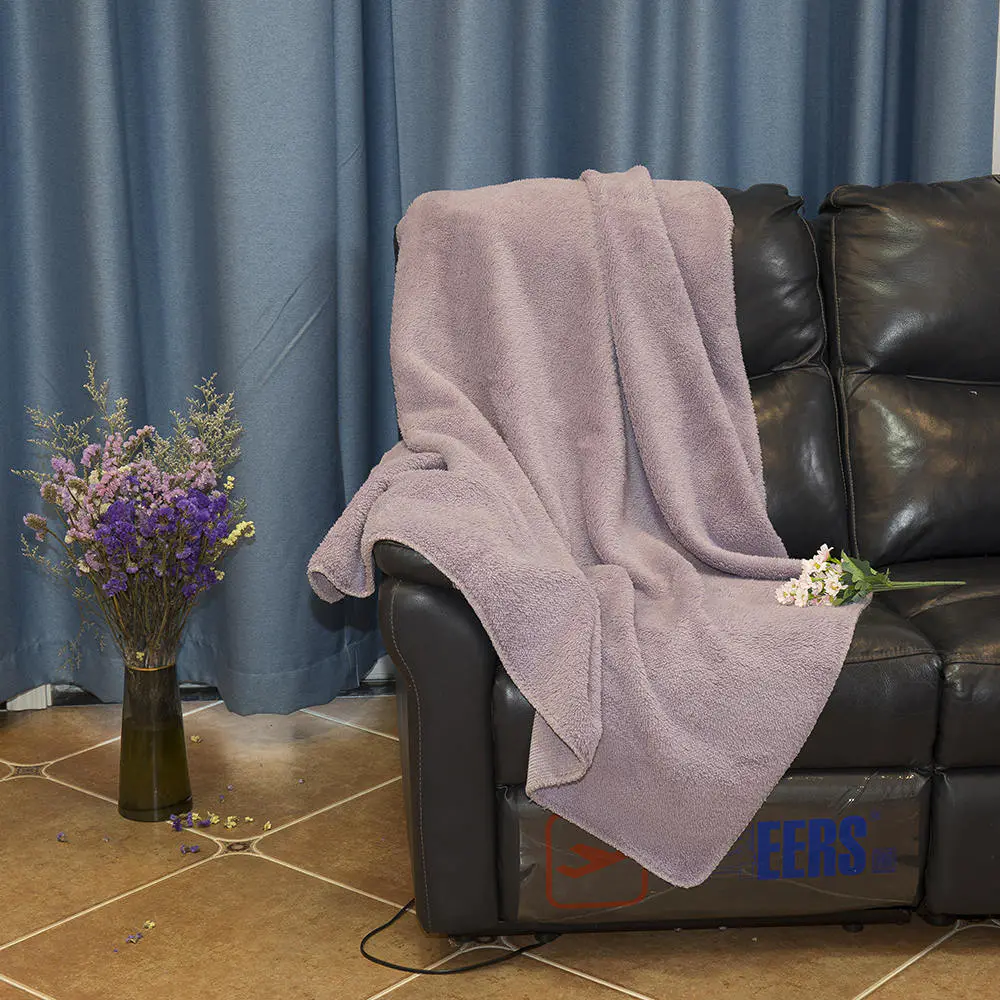
The Waffle Chenille Composite Shu Velveteen Blanket is a reversible, double-layer blanket created for year-round use. Its design combines a textured waffle chenille face with a soft Shu Velveteen reverse. This arrangement gives the product two distinct tactile and functional surfaces rather than relying on one fabric to provide every benefit.
The waffle chenille surface is visually structured and provides a decorative textile effect. Its raised waffle appearance can help the blanket look more refined when placed over a sofa, bed, lounge chair, or hotel furnishing. The texture also gives the surface a more dimensional appearance than a plain knitted or flat fleece blanket.
The Shu Velveteen side is designed to feel especially soft and plush. It provides a comfortable surface against the skin and can create a warmer sensation during colder conditions. When used as a bed layer or winter sofa blanket, this side offers the thickness and softness expected from a premium comfort textile.
| Specification | Product Detail |
|---|---|
| Product type | Double-layer composite blanket |
| Material | 100% polyester |
| Listed weight | 480gsm |
| Primary fabrics | Waffle chenille and knitted Shu Velveteen |
| Construction | Composite, double layer |
| Weave or fabric character | Knitted and textured |
| Available sizes | 50 x 60 inches, 60 x 80 inches, 90 x 90 inches, and 90 x 110 inches |
| Pattern | Solid colors |
| Recommended uses | Sofa, bed, hotel, plane, office, study, and general home use |
| Care | Machine wash; tumble dry low |
| Seasonality | Suitable for all seasons |
| Special features | Soft, warm, washable, wrinkle resistant, shrink resistant, and color stable with proper care |
| Age suitability | Suitable for all ages |
The listed 480gsm weight communicates a dense and substantial blanket feel. Product information also identifies a construction using 260gsm waffle chenille fabric and 200gsm knitted Shu Velveteen fabric. Buyers ordering for commercial or private-label programs should confirm the final production specification, tolerance, edge treatment, dimensions, and finished weight with the supplier before placing a bulk order.
Many basic blankets are manufactured from a single fabric. Single-layer construction can be practical and economical, but it often requires a compromise. A very light fabric may be easy to carry but lack warmth. A thick fabric may provide warmth but feel less breathable or less flexible. A highly smooth surface may be comfortable but visually plain. The composite structure of this blanket is intended to address several of these limitations at the same time.
By combining two materials with different surface characteristics, the blanket can be adapted to different comfort preferences. The waffle chenille side offers a textured, breathable-feeling surface suitable for warmer rooms or decorative use. The Shu Velveteen side offers a softer and more insulating-feeling surface for colder conditions or direct contact with the body.
This reversible approach improves practical versatility. A user can place the preferred side against the skin, use the textured side outward for visual presentation, or change the orientation according to the season. In a hotel or guest room, the blanket can be folded so that the waffle surface provides a polished presentation. At home, the softer reverse can be turned outward when maximum tactile comfort is the priority.
The double-layer format also adds body to the product. Compared with a thin single-layer throw, the composite blanket is less likely to appear flimsy when draped over furniture. Its added structure can help it maintain a fuller appearance on a bed, chair, or sofa, which is valuable for both residential styling and hospitality presentation.
Chenille is valued for its soft, dimensional, and visually rich appearance. In this blanket, the waffle construction introduces a repeating texture that can make the surface look more distinctive than a standard solid fleece. The pattern remains restrained because the product uses solid colors rather than busy printed graphics.
The textured surface can complement many interior styles. Neutral colors can support modern rooms, while deeper shades may work well in hospitality lounges, executive offices, bedrooms, and living areas. Because the design is not dependent on a seasonal print, the blanket can remain useful after a trend changes.
The waffle face also contributes to the blanket’s identity in a crowded marketplace. Buyers comparing many polyester blankets may distinguish this product by its combination of texture, reversible use, and composite construction. This makes it suitable for suppliers and retailers seeking a product with more visual and tactile interest than a basic smooth throw.
The Shu Velveteen reverse is intended to provide a soft, fluffy, and comfortable hand feel. It is particularly useful in applications where the blanket touches the body, such as sleeping, resting, reading, watching television, working at a desk, or traveling by plane.
The reverse side also adds thickness to the product. In colder weather, the extra layer can create a more enclosed and comfortable feeling than a lightweight decorative throw. Although warmth depends on room temperature, clothing, personal preference, and the way the blanket is used, the construction is clearly intended to support cold-season comfort as well as year-round use.
Softness is especially important in products used by children, older adults, guests, and people who spend long periods seated. The all-ages positioning of this blanket reflects its general-purpose design. As with any textile product, users should follow care instructions and consider individual sensitivities when selecting fabrics.
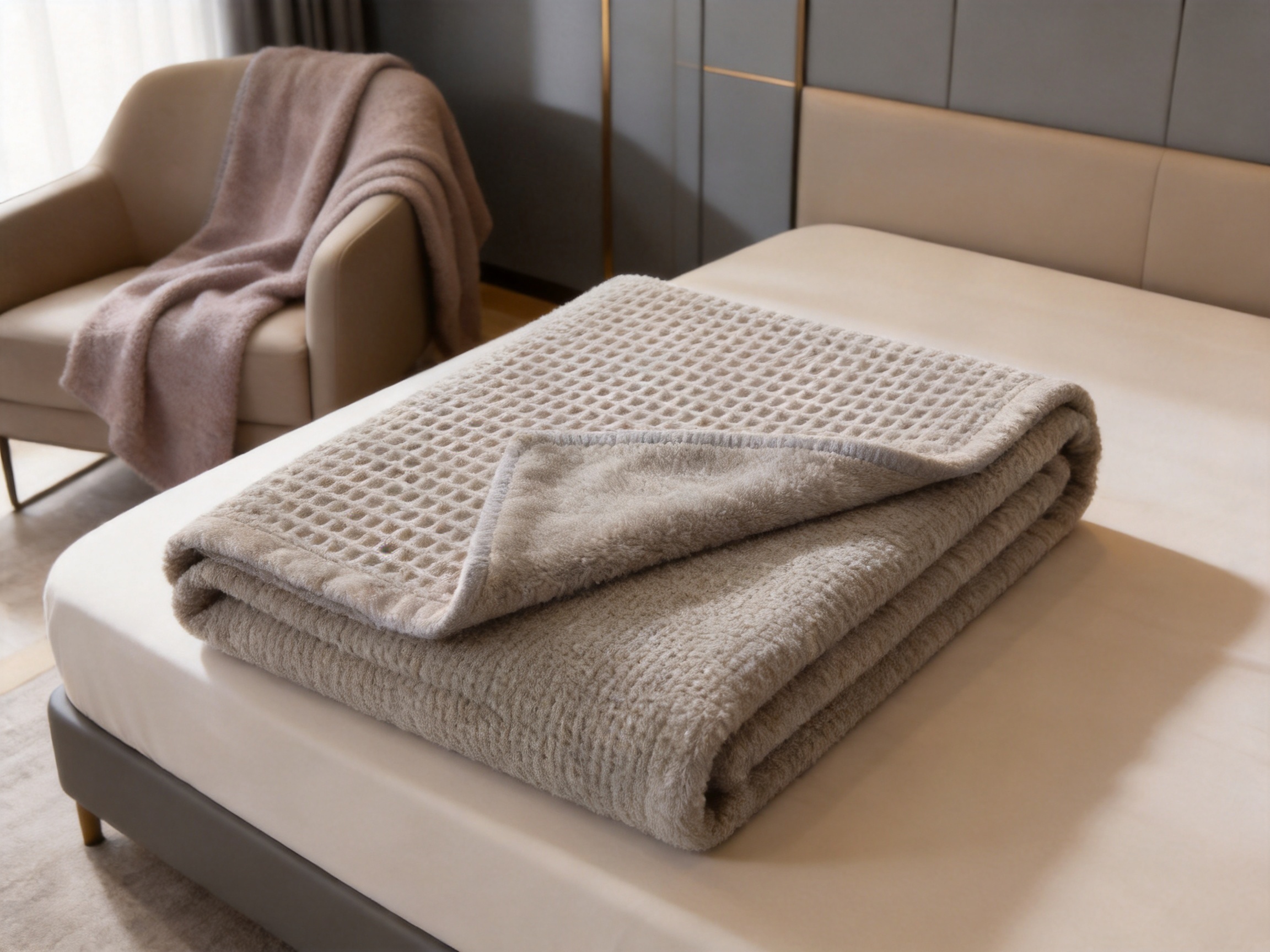
A major advantage is the ability to use two different surfaces. Many conventional blankets offer one dominant experience: smooth, fuzzy, knitted, or quilted. This product gives the user a textured chenille face and a plush velveteen reverse. The result is greater flexibility for changing weather, interior presentation, and personal preference.
The 480gsm listed weight and double-layer design provide a fuller feel than many lightweight travel throws. At the same time, the blanket remains a flexible textile rather than a rigid comforter. It can be folded, layered, carried, and placed over furniture without requiring the construction of a heavily filled quilt.
Printed patterns can be attractive, but they may restrict the markets and interior settings in which a product can be used. Solid colors offer broader coordination. The waffle texture provides visual interest without overwhelming the room, making the blanket appropriate for homes, hotels, offices, lounges, and transportation environments.
A product that serves several applications can simplify purchasing and inventory planning. The smaller size can function as a personal throw or travel blanket. The medium size is suitable for a sofa, office chair, or individual bed. The larger sizes can cover a double bed, family seating area, or hospitality bed. This range allows distributors to offer a coordinated product line instead of a single fixed format.
Washability is essential for blankets used frequently or shared by multiple people. The product is designed for machine washing, with recommendations to wash separately in cold water and tumble dry on low. This makes routine maintenance more accessible than products that require specialized cleaning.
The supplied product information also describes the blanket as wrinkle resistant, shrink resistant, and resistant to fading with proper care. These characteristics can help preserve the product’s appearance over repeated use, although actual performance depends on washing temperature, detergent, mechanical action, drying method, exposure to sunlight, and production quality.
The product is described as suitable for all seasons. The waffle chenille side is presented as cool and breathable in feeling, while the velveteen side provides greater softness and warmth. This does not mean that the same blanket will replace every winter bedding layer in every climate. Rather, its reversible construction gives users more ways to adjust comfort throughout the year.
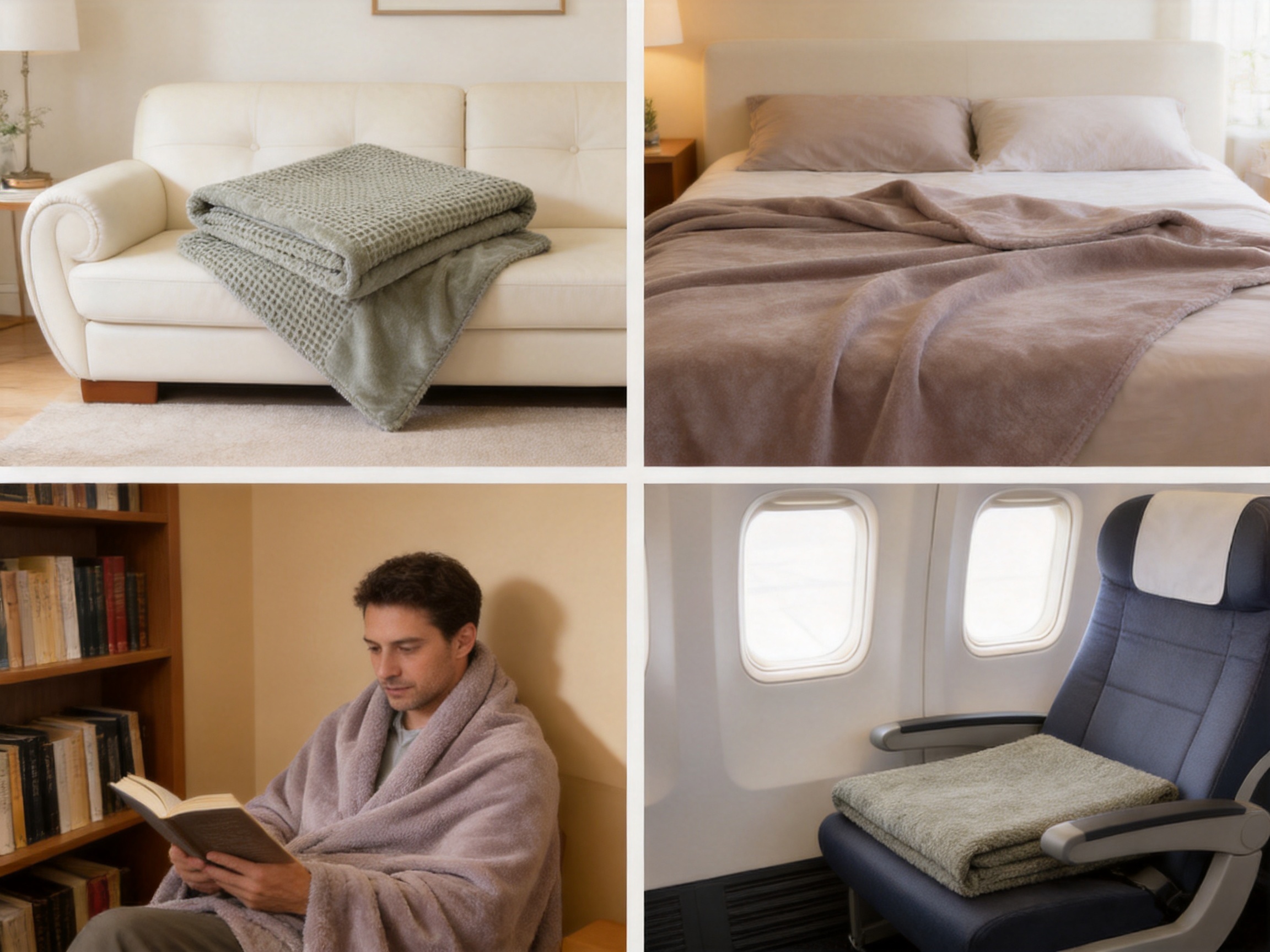
On a sofa, a blanket must perform both a practical and decorative function. It should be comfortable enough for everyday use while maintaining a tidy appearance when folded or draped. The textured waffle surface can provide a finished look, while the velveteen side offers warmth during reading, television viewing, or relaxation.
The blanket can also help protect upholstery from light contact, dust, and incidental marks. It should not be considered a substitute for a dedicated protective cover, but it can create an additional washable layer over a sofa or lounge chair. This is particularly helpful in homes with frequent guests, children, or pets, subject to the user’s cleaning and safety requirements.
On a bed, the blanket can be used as a decorative top layer, an additional source of warmth, or a flexible covering for daytime rest. The larger 90 x 90 inch and 90 x 110 inch sizes are suitable for broader coverage, while the smaller sizes may be useful for individual sleepers or partial bed layering.
The solid-color format supports coordinated bedroom design. A blanket can be matched with sheets, duvet covers, curtains, rugs, or upholstered furniture without introducing a competing pattern. The waffle texture adds depth to the bed while retaining a relatively simple visual language.
Hotels require textiles that are attractive, comfortable, practical, and manageable in routine laundering. A reversible blanket gives housekeeping teams flexibility in presentation. The waffle side can be displayed for a refined folded finish, and the soft side can be used when direct comfort is more important.
For hospitality buyers, purchasing decisions should include more than softness. Important evaluation points include color consistency across production lots, dimensional stability after laundering, edge construction, resistance to pilling, packaging, labeling, inspection procedures, and delivery reliability. A supplier with control over fabric production and finished processing can be better positioned to manage these requirements.
Temperature can vary significantly in offices, meeting rooms, libraries, and study areas. A compact blanket can provide personal comfort without requiring permanent changes to a building’s heating or cooling settings. The 50 x 60 inch size may be practical for desk use, while the 60 x 80 inch size can provide broader coverage during breaks or extended work sessions.
Because the blanket uses a solid-color design, it can fit naturally into professional environments. It can be stored in a drawer, cabinet, lounge area, or guest room and brought out when needed.
The product information identifies planes and coaches among its recommended applications. Travel blankets need to balance comfort, portability, and ease of care. The smaller sizes are especially relevant for personal use during flights or long-distance journeys. The fabric construction provides a softer alternative to very thin emergency-style blankets.
Travel users should select the size according to luggage capacity and intended coverage. A smaller blanket is easier to carry, while a larger blanket provides more coverage but requires additional packing space. In commercial travel or promotional programs, packaging and labeling can be customized according to the buyer’s requirements.
Using 100% polyester gives the blanket several practical characteristics. Polyester is commonly selected for blankets because it can provide softness, color versatility, dimensional stability, and convenient machine care. It is also suitable for producing different surface effects, including chenille textures and velvety finishes.
Polyester allows manufacturers to create consistent fabric constructions across multiple colors and sizes. For commercial buyers, this can support coordinated collections and repeat ordering. It can also make the product easier to position at different price levels depending on weight, finishing, packaging, and order quantity.
However, polyester performance is influenced by yarn quality, fiber preparation, knitting density, dyeing, finishing, brushing, bonding, stitching, and inspection. The fiber name alone does not determine the complete quality of a blanket. A well-managed production process is necessary to achieve the intended softness, appearance, and durability.
GSM, or grams per square meter, is a useful indicator of fabric density and overall material presence. The listed 480gsm specification suggests a relatively substantial blanket compared with lightweight throws. A higher GSM can contribute to warmth and a fuller hand feel, but it may also influence drying time, shipping weight, and storage requirements.
Buyers should evaluate weight together with softness, flexibility, air permeability, surface recovery, pilling resistance, and dimensional stability. A heavier blanket is not automatically better for every application. For travel, office use, and warm climates, moderate weight may be preferred. For winter bedding and cold rooms, a more substantial double-layer product may be advantageous.
The supplied information describes the fabric as offering an anti-pilling hand feel. Pilling is affected by fiber length, yarn structure, friction, washing conditions, drying, and contact with other surfaces. A properly engineered fabric and suitable finishing process can reduce the tendency for visible pills, but no textile should be treated as completely immune to surface change under all conditions.
For long-term performance, users should wash the blanket according to the care instructions, avoid excessive heat, use suitable detergent, and reduce unnecessary friction. Commercial buyers may also request laboratory testing or production samples to assess pilling performance before confirming a large order.
Solid colors offer a clean appearance, but color consistency remains important. The face and reverse may have different visual characteristics because they are made from different fabrics. A carefully controlled dyeing and finishing process helps ensure that the final product looks coordinated rather than mismatched.
Color fastness should be considered in relation to washing, rubbing, perspiration, and light exposure. The product information states that the blanket is designed not to fade with long use and multiple washes when properly cared for. Buyers requiring formal performance guarantees should specify test methods, acceptable limits, and inspection standards in the purchase agreement.
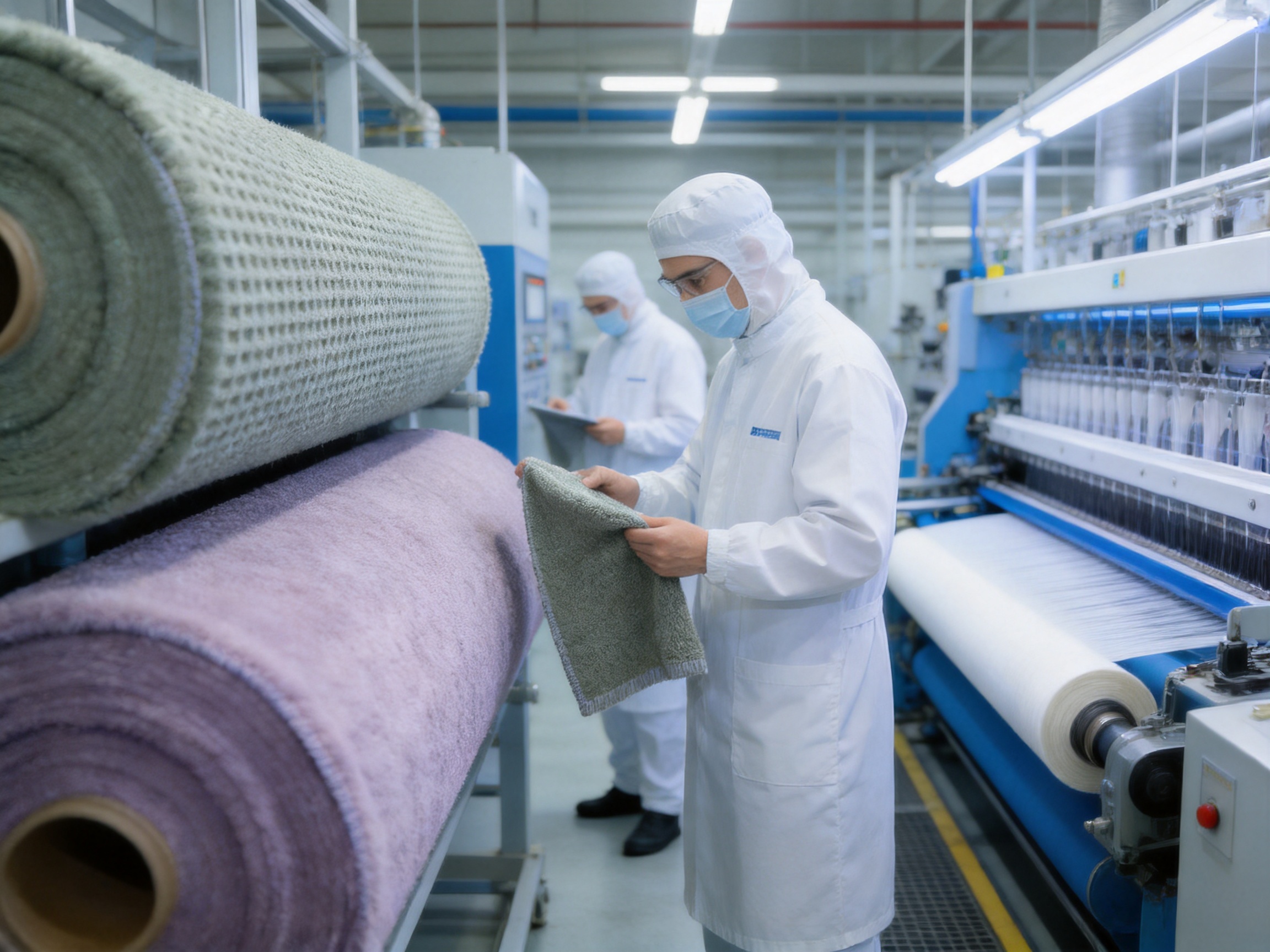
The product is manufactured by Zhejiang Benyi Textile Technology Co., Ltd., a textile technology company based in Shaoxing, Zhejiang Province. Shaoxing is widely recognized as an important textile production center, often referred to as the World Textile Capital. This location provides access to textile engineering knowledge, fabric supply networks, dyeing resources, production services, and logistics infrastructure.
The company specializes in carpets, rug fabrics, and finished textile products, while also developing products relevant to broader home textile applications. Its manufacturing model includes weaving, dyeing and printing factories, and finished carpet processing facilities. Control across multiple stages of the production chain can support closer management of quality, lead times, material coordination, and product development.
An integrated textile supply chain can provide advantages over a business that depends entirely on unrelated subcontractors. When fabric development, dyeing, finishing, and final processing are managed within a connected production system, it may be easier to identify the cause of quality variation and correct it earlier.
For this blanket, integrated capabilities are relevant to the coordination of the waffle chenille and Shu Velveteen components. The two surfaces must work together in terms of color, dimensional behavior, hand feel, and final appearance. Differences in shrinkage or finishing can affect the flatness and usability of a composite blanket, so production coordination is important.
The company reports a team of more than 20 fabric engineers. This technical workforce supports the development of new fabrics based on market trends and customer requirements. For buyers, access to fabric engineers can be valuable when a standard product needs modification.
Potential areas of customization may include size, color, fabric weight, surface texture, packaging, labeling, edge finishing, and application-specific specifications. Customization should be reviewed through a formal development process that includes sample approval, material confirmation, testing, cost evaluation, and production scheduling.
Regular product development also helps suppliers respond to changing preferences. Consumers may seek softer textures, lower-maintenance fabrics, recycled content, new color palettes, or products suitable for specific hospitality and retail environments. A supplier that combines manufacturing resources with textile development can respond more effectively than one that only resells finished goods.
Quality management begins with raw materials and continues through yarn preparation, knitting or weaving, dyeing, finishing, composite assembly, cutting, sewing, inspection, and packaging. Each stage can influence the final product. A blanket may have excellent fabric but still perform poorly if the layers are not aligned, the edges are weak, or the dimensions are inconsistent.
Control over the production chain can also support lead-time management. Buyers often need predictable delivery for seasonal launches, hotel projects, retail promotions, and private-label programs. While delivery times depend on order volume, material availability, customization, and shipping conditions, internal coordination can reduce unnecessary delays.
Commercial customers should still request a production schedule, approval samples, inspection criteria, packaging details, and shipment plan. Strong manufacturing capability is most valuable when it is supported by clear communication and documented quality procedures.
The company describes an emphasis on ecological protection and consumer health. Its reported initiatives include the use of sustainable materials and production methods such as recycled polyester and water-saving dyeing techniques. It also reports OEKO-TEX and Global Recycled Standard certifications.
Certifications can provide useful evidence when they apply to the specific material, facility, and production scope involved in an order. Buyers should confirm certificate validity, certification scope, transaction documentation, and whether the requested blanket contains certified recycled content. A general company capability should not automatically be interpreted as certification for every product or every production batch.
Environmental performance is a continuing process rather than a single product feature. Fiber selection, dye consumption, energy use, water management, waste reduction, packaging, shipment efficiency, product life, and end-of-life options all contribute to the overall impact of a blanket. Durable and washable products may support longer use, but responsible care and disposal remain important.
Wholesale buyers should evaluate the blanket through a combination of documentation, samples, testing, and factory communication. A product description is an important starting point, but physical evaluation allows the buyer to confirm whether the blanket meets the intended market position.
| Evaluation Area | Questions for Buyers | Why It Matters |
|---|---|---|
| Fabric weight | Does the finished blanket meet the agreed GSM tolerance? | Weight affects warmth, feel, shipping, and product positioning. |
| Dimensions | Are size measurements consistent after finishing and laundering? | Accurate sizing is essential for bedding and retail descriptions. |
| Surface softness | Does the chenille and velveteen side meet the approved sample standard? | Hand feel strongly influences customer satisfaction. |
| Layer alignment | Are the two layers flat, even, and securely joined? | Alignment affects appearance, comfort, and durability. |
| Edge finishing | Are hems, binding, stitching, and corners neat and secure? | Edges receive frequent handling and influence service life. |
| Color fastness | Has the product been evaluated for washing and rubbing? | Color change can lead to returns and complaints. |
| Pilling resistance | Does the fabric retain an acceptable surface after testing? | Surface pills can reduce perceived quality. |
| Care labeling | Are washing and drying instructions clear and accurate? | Correct care guidance helps protect product performance. |
| Packaging | Does packaging protect the blanket during storage and transport? | Clean, secure packaging supports retail presentation. |
| Compliance | Are requested standards and certificates documented? | Compliance may be required by market, retailer, or customer. |
Samples should be assessed under normal lighting and, where possible, after washing. Buyers can compare the pre-wash and post-wash dimensions, examine the surface for loose fibers, inspect the seams, and evaluate whether the blanket retains its intended softness. For hospitality orders, it is useful to simulate repeated laundering according to the planned care process.
The blanket is designed for machine washing. The recommended approach is to wash it separately in cold water and tumble dry it on a low setting. Washing separately can reduce color transfer, friction against other garments, and contact with rough fasteners or zippers.
Cold water is generally gentler on synthetic textiles and can help reduce unnecessary energy use. A mild detergent may be appropriate, while bleach and aggressive chemicals should be avoided unless specifically approved by the supplier. High heat can affect softness, dimensions, surface finish, and color, so low-temperature drying is preferable.
Users should avoid overloading the washing machine. A blanket needs sufficient space for water and detergent to circulate. Overloading can result in incomplete cleaning, uneven rinsing, excessive creasing, and increased mechanical stress. After washing, the product should be dried thoroughly before storage to prevent unwanted odor or moisture retention.
For storage, the blanket should be clean and completely dry. Folding it loosely in a ventilated location can help preserve its shape. Long-term storage in a tightly compressed package may reduce loft temporarily. If the blanket becomes creased, gentle airing or low-temperature treatment may be preferable to high heat.
Care instructions should be printed clearly on the product label or included with the packaging. Retailers and hospitality operators should ensure that staff understand the recommended laundering method, particularly when the blanket is washed in commercial equipment.
Retailers can position the blanket as a versatile home textile with a premium tactile story. The reversible construction gives sales teams several features to explain: textured chenille, plush velveteen, double-layer design, substantial weight, solid colors, multiple sizes, and machine washability.
The product can be displayed folded to show both surfaces or draped over furniture to demonstrate texture and scale. Retail descriptions should clearly distinguish the available sizes and explain the recommended care instructions. Color collections can be organized around neutral, seasonal, or coordinated home décor themes.
Hotels, serviced apartments, resorts, and guest houses may value the balance between presentation and practicality. The waffle side can contribute to a refined room appearance, while the soft side enhances guest comfort. Washability and multiple size options can simplify standardization across different room categories.
Hospitality purchasers should define whether the blanket is intended for decorative display, guest use, seasonal layering, or all three. They should also verify laundering compatibility, replacement availability, packaging, and the supplier’s ability to reproduce colors in future orders.
The blanket can be suitable for corporate gifts, employee comfort programs, travel kits, or branded hospitality packages. Solid colors provide a clean base for packaging or labeling. Depending on production capability and order requirements, buyers may explore custom tags, sleeves, cartons, or other presentation elements.
Any branding or customization should be approved through a sample process. The buyer should confirm logo placement, color accuracy, minimum order quantity, packaging dimensions, and production time before final approval.
Distributors may benefit from the product’s broad application range. One collection can serve bedding, living room, travel, office, and hospitality channels. This flexibility can reduce the need to maintain entirely separate product lines for different customer groups.
Distributors should create clear product tiers based on size, color, packaging, and intended application. A smaller blanket can be marketed as a personal or travel item, while larger formats can be promoted for bed and home use. The same underlying construction can therefore support several merchandising strategies.
Accurate communication is essential when selling textile products. The blanket may be described as soft, warm, washable, reversible, textured, and suitable for all seasons based on its supplied specifications. However, sellers should avoid absolute claims such as “guaranteed never to pill,” “completely hypoallergenic,” or “suitable for every climate” unless those claims are supported by appropriate testing.
Warmth is influenced by the blanket’s weight and construction, but also by room temperature, humidity, clothing, body size, personal preference, and layering. Similarly, softness can change with washing and use. Clear, realistic product descriptions help customers select the right size and avoid mismatched expectations.
Sustainability statements should also be precise. If recycled polyester or certified materials are used, the seller should identify the relevant percentage, certification, and product scope. Environmental claims should be supported by current documentation rather than general statements about a company’s broader capabilities.
The main difference is the double-layer composite construction. This blanket combines a waffle chenille surface with a knitted Shu Velveteen reverse, giving it two distinct textures and a more substantial structure. A standard fleece blanket commonly uses one primary surface and may have a simpler visual and tactile profile.
Yes. Both sides are designed for use. The waffle chenille side provides a textured and decorative appearance, while the Shu Velveteen side provides a softer and plush hand feel. Users can select the side that best suits the season, setting, or personal preference.
The blanket is made from 100% polyester. The product combines waffle chenille fabric and knitted Shu Velveteen fabric in a double-layer composite construction.
GSM means grams per square meter and describes the approximate material weight. A listed weight of 480gsm indicates a relatively substantial blanket compared with lightweight throws. Buyers ordering in bulk should confirm the applicable finished-product tolerance with the supplier.
The available sizes are 50 x 60 inches, 60 x 80 inches, 90 x 90 inches, and 90 x 110 inches. The smaller sizes are suitable for personal, office, or travel use, while the larger sizes offer broader coverage for beds, sofas, and hospitality applications.
Yes. The recommended care method is to wash the blanket separately in cold water and tumble dry it on low. Users should avoid excessive heat and follow the final care label supplied with the product.
The double-layer design and plush Shu Velveteen side are intended to provide warmth and thickness for colder conditions. The blanket can be used as a winter comfort layer, although the level of warmth required will vary according to the climate, room temperature, and individual preference.
It is presented as an all-season product. The waffle chenille side is designed to provide a cooler and more breathable-feeling surface, while the reverse offers additional softness. In hot climates, users may prefer the lighter or more breathable side and use the blanket as a comfort layer rather than a heavy winter cover.
Yes. The product is listed for hotel use and combines decorative texture, reversible comfort, multiple sizes, and machine-washable care. Hospitality buyers should conduct laundering and durability evaluations based on their own operating conditions before approving a large order.
The company reports customized services according to customer requirements and maintains fabric engineering resources for product development. Potential customization may include colors, sizes, weights, finishing, packaging, and labeling. Specific options, minimum quantities, and production times should be confirmed for each project.
Wholesale buyers should request a physical sample, confirmed specifications, color references, care labeling, packaging details, quality standards, testing information, production schedule, and certification documentation where relevant. These details help ensure that the delivered goods match the intended market and sales claims.
It should be stored clean and completely dry in a cool, ventilated place. Avoid compressing it excessively for long periods. Proper storage helps preserve the surface feel and reduces the risk of unwanted odors or moisture-related problems.
The Waffle Chenille Composite Shu Velveteen Blanket is designed to offer more than basic warmth. Its principal strength is the combination of two complementary surfaces in one double-layer product. The waffle chenille face contributes texture, decorative appeal, and a breathable-feeling option, while the knitted Shu Velveteen reverse provides plush softness and added thickness.
The 480gsm listed weight, solid-color design, multiple sizes, all-season positioning, and machine-washable care make the blanket suitable for a wide variety of applications. It can be used in bedrooms, living rooms, hotels, offices, study areas, airplanes, coaches, and other settings where comfort and practical maintenance are important.
Its advantages over simpler blankets include reversible use, greater tactile variety, enhanced visual texture, substantial construction, and broader application potential. These features can help retailers, distributors, hospitality purchasers, and private-label customers create a more differentiated textile offering.
The manufacturing foundation is equally important. Zhejiang Benyi Textile Technology Co., Ltd. operates within the Shaoxing textile industry and reports capabilities covering weaving, dyeing and printing, finished processing, fabric engineering, customized development, and supply-chain coordination. Its stated focus on sustainable materials, water-saving dyeing, recycled polyester, and relevant textile certifications provides additional points for buyers to investigate during sourcing.
As with any textile product, final performance depends on material selection, production controls, testing, laundering, and proper use. Buyers who confirm the specifications, inspect samples, evaluate care performance, and communicate their requirements clearly can make the most of this composite blanket’s comfort, appearance, and versatility.
1. Product specification sheet for the Waffle Chenille Composite Shu Velveteen Blanket, including material, size, construction, weight, care, and application information.
2. Textile terminology reference materials covering grams per square meter, knitted fabrics, chenille surfaces, polyester fibers, and textile finishing.
3. General guidance for household textile care, machine washing, low-temperature drying, color maintenance, and dimensional stability.
4. Supplier-provided company information concerning textile engineering, integrated production, sustainable materials, water-saving dyeing, and certification capabilities.
5. General quality-assurance principles for home textiles, including fabric inspection, color fastness, pilling resistance, seam evaluation, dimensional testing, and production sampling.

ADD: No.75 Zhenyuan Road, Yuecheng District, Shaoxing City, Zhejiang Province, China 312000

Tel : +86-189 6750 9795

FAX : +86-0575-8803 2773

Email : fisher@benetextile.com

Copyright © Zhejiang Benyi Textile Technology Co., Ltd. All Rights Reserved. Carpets and Rugs Manufacturer

 English
 Français
 Deutsch
 عربى