

Lu Wanyao — After-Sales Service Supervisor
 Home / Author / Lu Wanyao — After-Sales Service Supervisor / Cut Velvet Fabric for Area Rugs: A Soft, Durable, and Customizable Textile Solution
  2026.07.24
 Lu Wanyao — After-Sales Service Supervisor
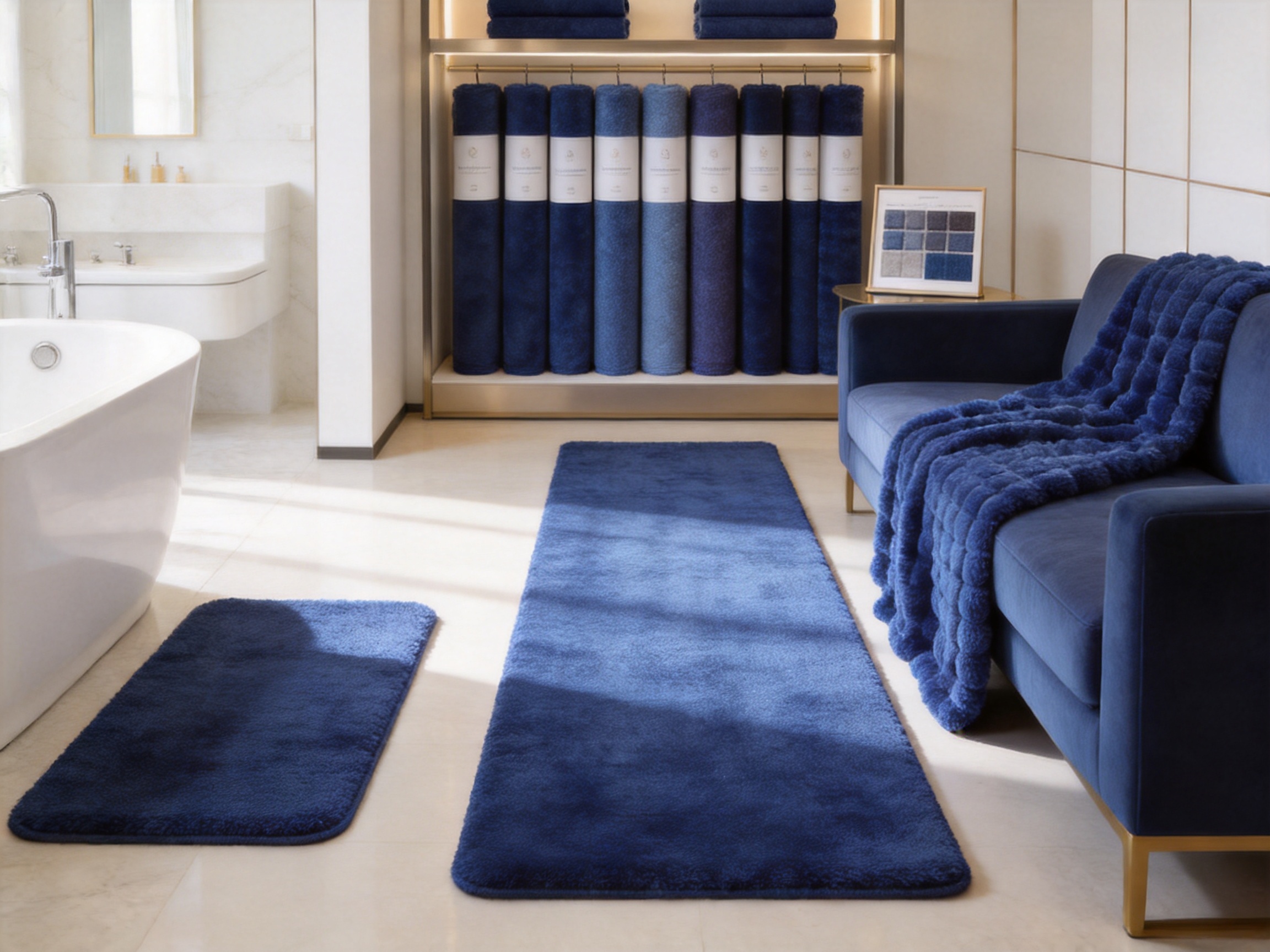
Cut velvet fabric is increasingly valued by rug manufacturers, home textile brands, interior designers, and private-label buyers who want to combine softness, visual richness, and production flexibility. The KS Cut Velvet Fabric for Area Rug is developed as a versatile textile material for area rugs, bath mats, blankets, carpets, and other finished home furnishing products. Made from 100% polyester microfiber, it offers a smooth hand feel, a plush pile, solid-dyed color performance, and a practical structure that can be adapted to different product designs.
Unlike a finished rug, this product is supplied as fabric rolls, giving manufacturers greater control over dimensions, backing systems, cutting, edging, printing, and final assembly. Buyers can select standard widths of 170, 190, or 210 centimeters, or request customized dimensions. The maximum width can reach 3.2 meters, supporting the production of larger carpet panels and reducing the need for unnecessary joins in selected applications.
This article examines the material composition, appearance, manufacturing process, performance characteristics, customization options, commercial benefits, and suitable applications of this cut velvet fabric. It also explains how an integrated textile manufacturing model can help buyers improve efficiency, maintain quality consistency, and develop new carpet and rug collections.
Content
Cut velvet fabric is a textile with a raised surface formed by loop or pile construction and subsequent finishing processes that create a soft, upright, and visually even pile. In this product, the pile height is approximately 6–10 millimeters. This height gives the fabric a noticeable three-dimensional surface while keeping it practical for use in rugs, bath mats, blankets, and other household textile products.
The surface has a smooth and soft touch that makes it suitable for products intended to provide comfort underfoot or against the skin. When used in an area rug, the pile creates a refined appearance and contributes to a warmer, more comfortable interior atmosphere. When used in a blanket or soft furnishing component, the same construction can provide a cozy tactile experience.
The fabric is knitted from 100% polyester microfiber. Polyester is widely used in home textiles because it can offer a useful balance of softness, strength, color adaptability, and production efficiency. Microfiber construction can create a fine and pleasant surface, while the knitted structure gives manufacturers flexibility when processing the material into different finished products.
Because the fabric is supplied as rolls, it can be incorporated into a range of downstream production systems. A rug factory may laminate it to a backing, cut it into standard sizes, add anti-slip treatment, bind the edges, or combine it with other layers. A bath mat producer may use a suitable backing and shape the fabric into bathroom formats. A blanket or throw manufacturer can use the material as a decorative or comfort-focused surface layer.
The following specifications summarize the principal characteristics of the cut velvet fabric.
| Specification | Details |
|---|---|
| Product name | KS Cut Velvet Fabric |
| Product category | Carpet fabric |
| Material | 100% polyester microfiber |
| Weight | 260 gsm |
| Pile height | 6–10 mm |
| Standard widths | 170 cm, 190 cm, and 210 cm |
| Maximum stated width | Up to 3.2 meters |
| Supply type | Make-to-order |
| Manufacturing technique | Knitted construction |
| Color method | Solid dyed; custom colors available |
| Typical uses | Area rugs, carpets, bath mats, blankets, and related home textiles |
| Minimum order quantity | 500 kilograms per color |
| Packaging | Rolls |
| Stated delivery time | Approximately 15–20 days |
| Item model number | 100144 |
The 260 gsm weight provides a substantial fabric feel while remaining suitable for roll handling and further processing. The exact suitability of the material for a finished rug depends on the intended size, backing, edge treatment, traffic level, and installation environment. For commercial buyers, these factors should be evaluated during sampling and product development.
The choice of 100% polyester microfiber is central to the product’s performance. Polyester fibers are commonly selected for carpets and home textiles because they can be engineered into soft, fine, and visually attractive surfaces. Microfiber yarns are especially useful when a product needs a smooth touch and a dense-looking appearance.
One important advantage is tactile comfort. The fine fibers create a pleasant surface that feels soft under bare feet. This is valuable for area rugs placed beside beds, sofas, coffee tables, or seating areas. It is also relevant to bath mats, where users often expect a comfortable surface after bathing or showering.
Another advantage is color flexibility. The fabric can be solid dyed in a broad range of shades, allowing buyers to coordinate rug collections with interior design trends, seasonal palettes, hospitality projects, or private-label brand guidelines. The ability to request different colors can help manufacturers create coordinated product ranges rather than relying only on a small set of stock shades.
Polyester microfiber can also support efficient production. The fiber is compatible with established knitting and dyeing processes, and the material can be produced in a repeatable way for larger orders. A consistent base fabric helps reduce variations between production lots, although buyers should still approve laboratory dips, color standards, and pre-production samples before bulk manufacturing.
The supplied information also identifies durability and fade resistance as benefits of the 100% polyester microfiber construction. These characteristics are useful in household textile applications, where products may be exposed to regular foot traffic, cleaning, daylight, and repeated handling. Actual service life will depend on the finished product structure, color, care instructions, and usage conditions.
The 6–10 millimeter pile height is designed to create a soft surface without making the fabric excessively deep or difficult to process. A shorter surface may not provide the same plush visual effect, while a much deeper pile can increase material consumption, complicate cutting, and affect the stability of a finished rug. The selected pile range provides a practical balance for many home textile products.
For area rugs, pile height influences the way the product feels underfoot and how it interacts with furniture. The cut velvet surface can bring a more luxurious appearance to simple rug shapes, including rectangular, round, runner, and custom-cut formats. The surface may also reflect light differently depending on the direction of the pile, creating subtle tonal variation that adds depth to a solid color.
For bath mats, the soft surface helps create a comfortable transition between the bathroom floor and bare feet. The fabric still requires an appropriate backing to provide stability, moisture management, and slip resistance. The textile itself is one component of the finished bath mat system; the final performance depends on the backing compound, construction, edge finishing, and care method.
For blankets and throws, the pile height can contribute to warmth and visual texture. Depending on the final design, the material may be used as a complete surface, a decorative face, or one layer in a multi-material construction. Manufacturers should evaluate drape, seam behavior, washing performance, and pilling resistance for blanket applications before confirming a large production program.
The smooth surface is also useful for products intended to look polished and contemporary. Solid-dyed velvet-like textiles can fit minimalist interiors, hotel rooms, bedrooms, lounges, and modern living spaces. A carefully selected neutral color can create a quiet background, while darker or brighter shades can become a stronger decorative feature.

KS Cut Velvet Fabric For Area Rug
Buyers comparing carpet fabrics often consider appearance, softness, manufacturing flexibility, width, color availability, minimum order requirements, and delivery reliability. The KS Cut Velvet Fabric addresses these purchasing factors through a combination of material and supply characteristics.
Many rugs depend on printed designs, jacquard effects, or multicolor patterns to create visual interest. Those methods are useful, but they may not suit every interior or product collection. A solid-dyed cut velvet fabric provides a simpler visual foundation. Its texture and pile can create depth without requiring an elaborate pattern. This makes it suitable for neutral collections, contemporary furniture programs, hospitality interiors, and products where the emphasis is on touch and color.
A specialized fabric that can be used for only one product may increase inventory complexity. This material is suitable for area rugs, carpets, bath mats, and blankets, giving buyers more options for product development. A single approved textile platform can support multiple collections, provided that the finished construction is adapted to the demands of each application.
Width is a major consideration in textile production because it affects cutting efficiency, seam placement, material waste, and finished product dimensions. Standard widths of 170, 190, and 210 centimeters cover many common manufacturing requirements. For larger projects, the stated maximum width of 3.2 meters can offer additional design flexibility. Customized widths may help buyers align fabric production with cutting plans and reduce unnecessary offcuts.
Make-to-order manufacturing can be beneficial for buyers who require a specific color, width, or production quantity. Rather than selecting only from pre-existing stock, the buyer can communicate technical requirements before production begins. This approach is particularly valuable for private-label programs, coordinated room collections, hospitality projects, and seasonal product launches.
Roll packaging is appropriate for fabric that will be processed by cutting tables, lamination lines, sewing equipment, or automated production systems. It can simplify transportation and warehouse handling compared with individually packed finished rugs. Roll supply also allows factories to determine their own cutting patterns and final packaging formats.
The supplier operates within a textile manufacturing environment that includes weaving, dyeing or printing, and finished carpet processing capabilities. This type of production integration can make communication more direct between material development and finished product manufacturing. It may also help reduce the number of external production steps and improve coordination of quality control and delivery schedules.
The manufacturing process begins with the selection and preparation of polyester microfiber yarns. Fiber quality, yarn consistency, and knitting parameters influence the evenness of the finished surface. A controlled knitting process forms the basic fabric structure and establishes the foundation for the pile and overall weight.
Knitted construction can provide a flexible and efficient platform for carpet fabric production. During knitting, machine settings must be managed carefully to maintain consistent width, fabric density, pile formation, and surface appearance. Production teams monitor the relationship between yarn input, machine speed, tension, and fabric take-up. These parameters can affect the final 260 gsm weight and the 6–10 millimeter pile range.
After knitting, the fabric may undergo inspection and preparation for dyeing. The preparation stage is important because uneven cleaning, contamination, or tension can affect color absorption. A stable preparation process supports more uniform solid-dyed results across the width and along the length of the roll.
Dyeing is used to create the requested solid color. Buyers seeking custom shades generally provide a physical standard, color reference, or approved sample. The factory can then develop a laboratory sample or color dip for review. Once the color is approved, production dyeing can proceed under controlled conditions. Bulk color should be compared with the approved standard using consistent lighting and inspection procedures.
After dyeing, the fabric is dried and finished. Finishing may influence hand feel, surface smoothness, dimensional behavior, and roll appearance. The material must be handled carefully to avoid unnecessary crushing or distortion of the pile. Depending on the buyer’s requirements, additional steps may include width setting, surface brushing, inspection, rolling, labeling, and packing.
The company’s broader manufacturing model includes its own weaving, dyeing or printing factories, and finished carpet processing factories. This vertical capability can provide several commercial advantages. It allows technical teams to communicate across departments, helps coordinate fabric development with finished product requirements, and can reduce dependence on unrelated outside suppliers.
More than 20 fabric engineers are involved in product development, according to the company information. A dedicated engineering team can support the development of new textures, colors, weights, and constructions based on market trends. It can also help buyers adapt the fabric to a particular product concept, packaging requirement, or target price range.
The company states that it develops new carpet fabrics each quarter. Regular development activity can help maintain a current product portfolio and give customers access to new surface effects. For buyers, this may support the creation of fresh collections for online retail, department stores, hospitality procurement, home furnishing chains, and contract interior projects.
Quality control for carpet fabric should cover both appearance and measurable technical characteristics. For this cut velvet material, important inspection points include fiber cleanliness, color uniformity, fabric width, weight, pile height, surface direction, roll length, edge condition, and visible defects.
Width should be measured at multiple points because knitted fabrics can experience variation caused by tension, finishing, or roll handling. The buyer and supplier should agree on a practical tolerance before bulk production. The same principle applies to weight and pile height. A stated range provides a useful specification, but a purchase order should identify acceptable tolerances and inspection methods.
Color inspection should be performed under an agreed light source. Solid-dyed fabrics can show differences caused by batch variation, lighting, pile direction, or surface compression. A physical approved sample is often more reliable than a digital image for judging the final appearance. Buyers should also confirm whether different production lots may be combined in one finished product.
Surface inspection can identify issues such as streaks, uneven pile, knitting faults, dye marks, oil contamination, or crushed sections. Rolls should be inspected under suitable lighting and recorded by batch. A clear defect classification system helps both parties decide whether a roll is acceptable, repairable, or subject to replacement.
For downstream rug production, buyers should test lamination, cutting, sewing, binding, and edge finishing. The fabric’s behavior may vary depending on the selected backing and adhesive. A production trial can confirm whether the material cuts cleanly, maintains its surface appearance, and remains stable during assembly.
Testing should also reflect the final product rather than the fabric alone. An area rug may require evaluation for dimensional stability, colorfastness, abrasion, shedding, pilling, and backing adhesion. A bath mat may require moisture exposure and slip-related testing. A blanket may require washing, drying, seam, and comfort testing. The appropriate standards depend on the destination market and the product category.
Customization is one of the principal advantages of make-to-order carpet fabric. Buyers may discuss color, width, pile height, weight, roll format, and downstream construction requirements with the supplier. Not every request will be suitable for every production line, so technical confirmation and sampling are essential.
The fabric can be dyed in solid colors, and the company information indicates that it can be dyed to any colors subject to production confirmation. Custom color development is useful for brands that operate with defined seasonal palettes or corporate interior standards. Buyers should submit a physical color standard whenever possible and confirm the acceptable difference between laboratory samples and bulk production.
The standard widths of 170, 190, and 210 centimeters provide a practical starting point. Customized widths can be discussed for special rug dimensions, large-format carpets, or cutting plans that require a particular layout. The stated maximum width of 3.2 meters may be particularly relevant to larger rugs and carpet panels. Buyers should verify the available width after finishing because usable width can differ from nominal machine width.
Although the product is supplied as fabric rolls, the company also specializes in finished carpets and rugs. This can allow buyers to choose between purchasing raw carpet fabric for their own processing or discussing a more complete finished product solution. A buyer may request different shapes, dimensions, backing treatments, edge finishes, labels, and packaging formats according to the target market.
Sampling is recommended before a bulk order. A sample can help confirm color, softness, pile appearance, cutting behavior, backing compatibility, and final product appearance. It also gives the buyer an opportunity to check whether the material meets the requirements of a specific retail channel or customer group.
Area rugs are one of the most suitable applications for this fabric. The plush surface can add comfort and visual warmth to living rooms, bedrooms, lounges, reading areas, and home offices. The solid color format supports a wide range of design styles, from Scandinavian and minimalist interiors to more luxurious hotel-inspired spaces.
For a finished area rug, the fabric is usually combined with a backing. The backing can improve dimensional stability, protect the underside, support anti-slip performance, and influence the overall thickness. Depending on the market and intended use, manufacturers may use different backing materials, such as textile layers, rubber-like compounds, PVC-related systems, or other engineered solutions.
The fabric can be cut into standard retail sizes or made into custom dimensions. Common formats may include small bedside rugs, medium living-room rugs, long runners, and larger room-sized carpets. The broad width options can help manufacturers plan cutting layouts that reduce seams and material waste.
Designers can also use the material as a base for additional treatments. Possible approaches include contrast binding, embroidered details, cut shapes, layered construction, logo applications, or combinations with printed and textured panels. Because the base fabric is solid dyed, additional design elements can be used selectively without competing with a complex surface pattern.
In higher-traffic spaces, the complete rug construction should be evaluated carefully. Surface softness is desirable, but commercial buyers must also consider abrasion, cleaning frequency, furniture pressure, rolling loads, and maintenance procedures. The right backing and edge construction can significantly affect the service performance of the finished rug.
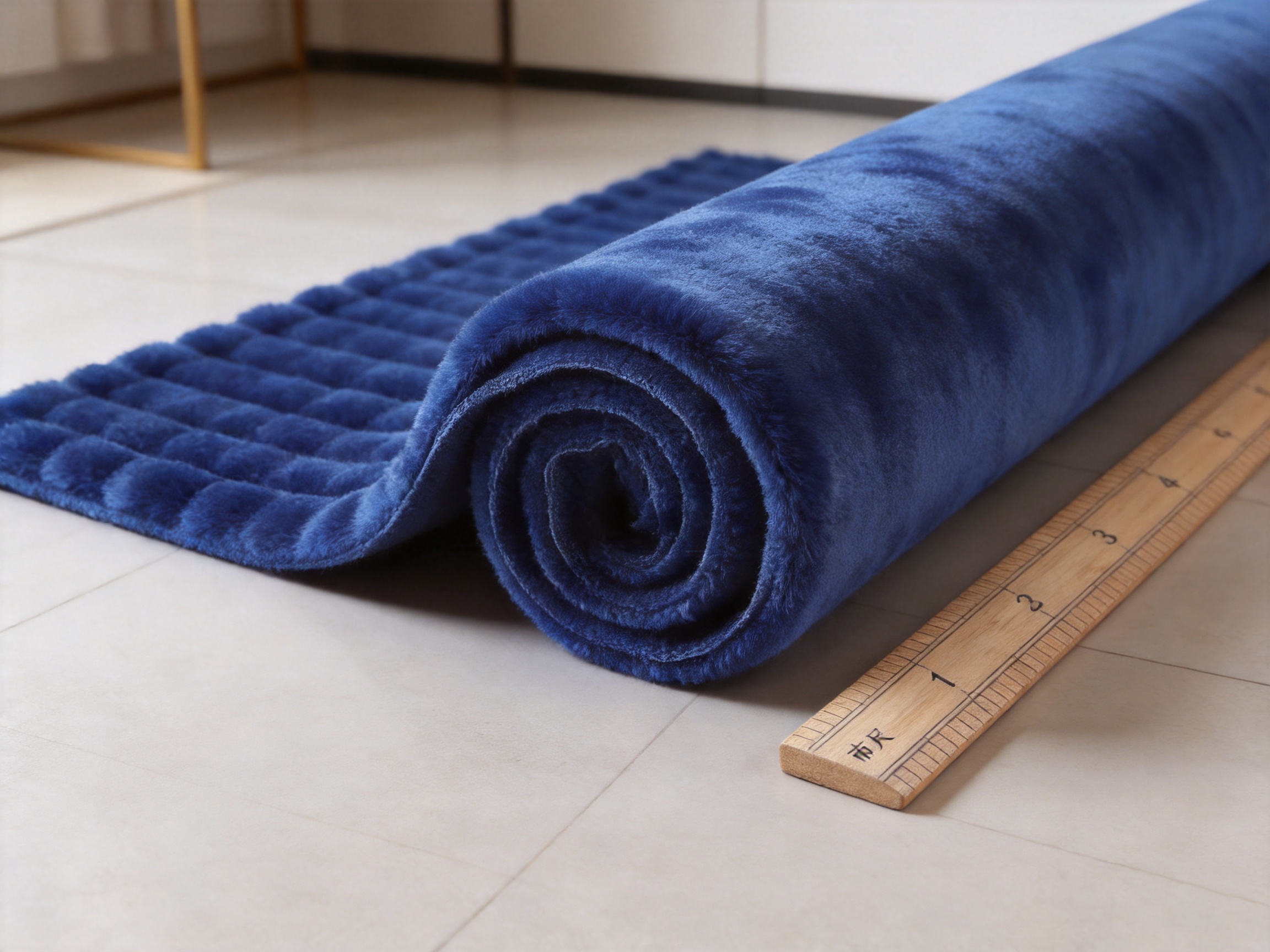
Bath mats require a balance of softness, absorbency, stability, drying behavior, and safety. The cut velvet surface can provide a comfortable top layer for bathroom use, particularly when paired with an appropriate backing. Its smooth and plush hand feel can enhance the perceived quality of the finished product.
Manufacturers should select a backing that is suitable for humid environments and that supports safe placement on the floor. The backing should be evaluated for adhesion, odor, flexibility, washing behavior, and resistance to cracking or peeling under expected conditions. Slip resistance should be assessed for the complete bath mat, not inferred from the textile surface alone.
Color customization can help bath mat brands create coordinated bathroom collections. Neutral colors may suit hotel and rental properties, while soft pastels or stronger fashion colors may appeal to retail consumers. Solid-dyed surfaces can also make it easier to create matching sets in several sizes.
Care instructions should be established through testing. The finished bath mat may be washable, but its performance depends on the backing and edge treatment. Buyers should verify dimensional stability, colorfastness, pile recovery, drying time, and appearance after repeated care cycles.
Although the product is categorized as carpet fabric, its soft surface and microfiber composition also make it suitable for selected blanket and throw applications. The material can be used as a plush face, a decorative layer, or part of a reversible design. The 6–10 millimeter pile gives a noticeably textured appearance that can differentiate a blanket from a flat fleece or conventional knitted surface.
Blanket manufacturers should test the fabric for drape, seam strength, edge curling, lint release, pilling, and laundering. A textile originally developed for rugs may need adaptation when used against the skin or when subjected to frequent washing. A softer finishing treatment, a different edge construction, or a lighter supporting layer may be appropriate for a blanket program.
Throws made from solid-dyed cut velvet fabric can complement sofas, armchairs, beds, and hospitality interiors. The material may be particularly attractive in winter collections or premium home furnishing ranges where tactile comfort is an important selling point.
Environmental performance is becoming an important factor in textile purchasing. The company describes its production philosophy as focused on ecological protection, consumer health experiences, and more sustainable textile development. It also reports investment in recycled polyester and water-saving dyeing techniques.
Recycled polyester may be considered for selected product developments when the required specifications and certification conditions are met. Buyers interested in recycled content should request confirmation of the exact composition, chain-of-custody documentation, and any applicable certification for the specific order. Sustainability claims should always be connected to documented material and production information.
The company information states that it has passed OEKO-TEX® and GRS certifications. These certifications can provide useful assurance when they apply to the relevant facility, material, and production scope. Buyers should confirm certificate validity, scope, transaction documentation, and whether the certification covers the specific fabric being ordered.
Water-saving dyeing methods may help reduce resource consumption compared with less efficient processes. However, the actual environmental profile depends on dye selection, wastewater treatment, energy use, production volume, and finishing requirements. A responsible procurement program should review the complete supply chain rather than relying on one production feature alone.
Roll packaging can also support efficient transportation and storage because it avoids the excess packaging sometimes used for individually packed finished rugs. Buyers can discuss roll diameter, protective wrapping, labels, palletization, and container loading plans to balance product protection with material efficiency.
Wholesale buyers often need to balance product quality, price, minimum order quantities, lead time, and assortment flexibility. The stated minimum order quantity is 500 kilograms per color. This quantity is suitable for buyers planning a meaningful product launch or a production run across multiple finished rug sizes. It may be less suitable for very small test orders, so sample development and order consolidation should be planned in advance.
The ability to order by color rather than only by finished product style can give manufacturers more control over their production program. A buyer may use one color across several rug sizes or across different categories such as area rugs, bath mats, and throws. This can simplify collection planning and improve color coordination.
The stated delivery time is approximately 15–20 days. Actual timing may vary according to order quantity, color development, production scheduling, raw material availability, inspection, and shipping arrangements. Buyers should request a confirmed production schedule before issuing a purchase order and should allow additional time for sample approval, freight, customs, and local delivery.
Direct access to a manufacturer with fabric and finished product capabilities can also reduce communication complexity. Instead of coordinating separate suppliers for surface fabric, dyeing, backing, and finished rug processing, a buyer may be able to discuss several stages with one integrated partner. This can help clarify responsibility when technical changes are required.
The combination of standard products and customization is another commercial benefit. Standard widths and specifications can support efficient repeat purchasing, while custom widths and colors can help a brand develop differentiated products. A balanced product strategy may use standard fabric for core collections and customized fabric for premium or seasonal ranges.
Carpet fabrics are available in many constructions, including flat woven textiles, tufted surfaces, printed fabrics, loop pile materials, chenille-like structures, fleece fabrics, and cut pile constructions. Each category has different strengths. Cut velvet fabric is particularly appropriate when a buyer prioritizes softness, surface richness, color flexibility, and a refined appearance.
Compared with flat fabrics, the raised surface of cut velvet can provide more cushioning and a stronger tactile identity. Compared with heavily patterned materials, a solid-dyed surface may offer greater coordination flexibility. Compared with very deep pile constructions, the 6–10 millimeter height can be easier to cut, laminate, roll, and process.
Compared with some natural fibers, polyester microfiber may offer easier color development and a more consistent industrial supply. However, natural fibers may be selected for different reasons, including natural origin, specific thermal behavior, or traditional appearance. The best choice depends on the buyer’s target market, technical specifications, sustainability goals, and budget.
Compared with finished rugs, fabric rolls provide more freedom for downstream manufacturing. A finished rug is ready for sale, but its size, shape, backing, edge treatment, and packaging are already determined. Fabric rolls allow the buyer or processing partner to create a broader range of formats from the same material platform.
The most important competitive advantage is therefore not one isolated feature. It is the combined offering of a soft microfiber surface, a practical pile height, several width options, custom color development, roll supply, make-to-order production, and access to integrated textile and carpet processing capabilities.
Before requesting a quotation, buyers should identify the intended product category, finished dimensions, target weight, backing type, edge finish, packaging format, sales channel, and expected use conditions. A bedroom rug, hotel carpet panel, bath mat, and decorative blanket will require different evaluations.
The buyer should confirm the required width, color, pile height, weight, roll length, and acceptable tolerances. If the material will be laminated or sewn, the buyer should provide information about the selected backing, adhesive, equipment, and finishing method.
A laboratory color dip or fabric sample should be evaluated under suitable lighting. The buyer should check whether the shade, softness, smoothness, pile direction, and surface density meet the intended design. If the product will be sold as a coordinated set, all related colorways should be reviewed together.
A small production trial can reveal issues that are not visible in a sample swatch. The buyer should test cutting, joining, backing adhesion, edge binding, labeling, folding, rolling, and packaging. Finished products should be reviewed for appearance, dimensions, and handling performance.
Depending on the market, buyers may request a specification sheet, color approval record, inspection report, composition declaration, certification information, packing list, and shipping documents. If sustainability or chemical compliance is important, the buyer should identify the required documentation before production begins.
For repeat orders, the buyer should retain approved color standards and reference samples. Production lots should be compared with previous orders, and any planned change to yarn, dye, finishing, or machinery should be communicated in advance. These controls help maintain consistency across seasonal replenishment programs.
The fabric is packaged by rolls. Roll packaging protects the material during movement and supports efficient storage in a textile warehouse. Each roll should be identified with information such as product name, color, batch number, width, weight, roll length, and production date where applicable.
During storage, rolls should be kept in a clean, dry, and well-ventilated area. Direct sunlight, excessive humidity, sharp objects, and heavy pressure should be avoided. The pile surface should not be compressed for longer than necessary, particularly if a smooth and upright appearance is important to the finished product.
When handling the rolls, workers should use equipment that supports the roll without damaging the edges. Dragging the material across rough floors can create contamination or distortion. Before cutting, the fabric may need time to relax after transportation, especially if dimensional accuracy is important.
Buyers should also confirm whether the material is shipped on cores, wrapped in protective film, or secured with additional packaging. Container loading plans should account for roll weight, roll diameter, moisture protection, and unloading conditions at the destination.
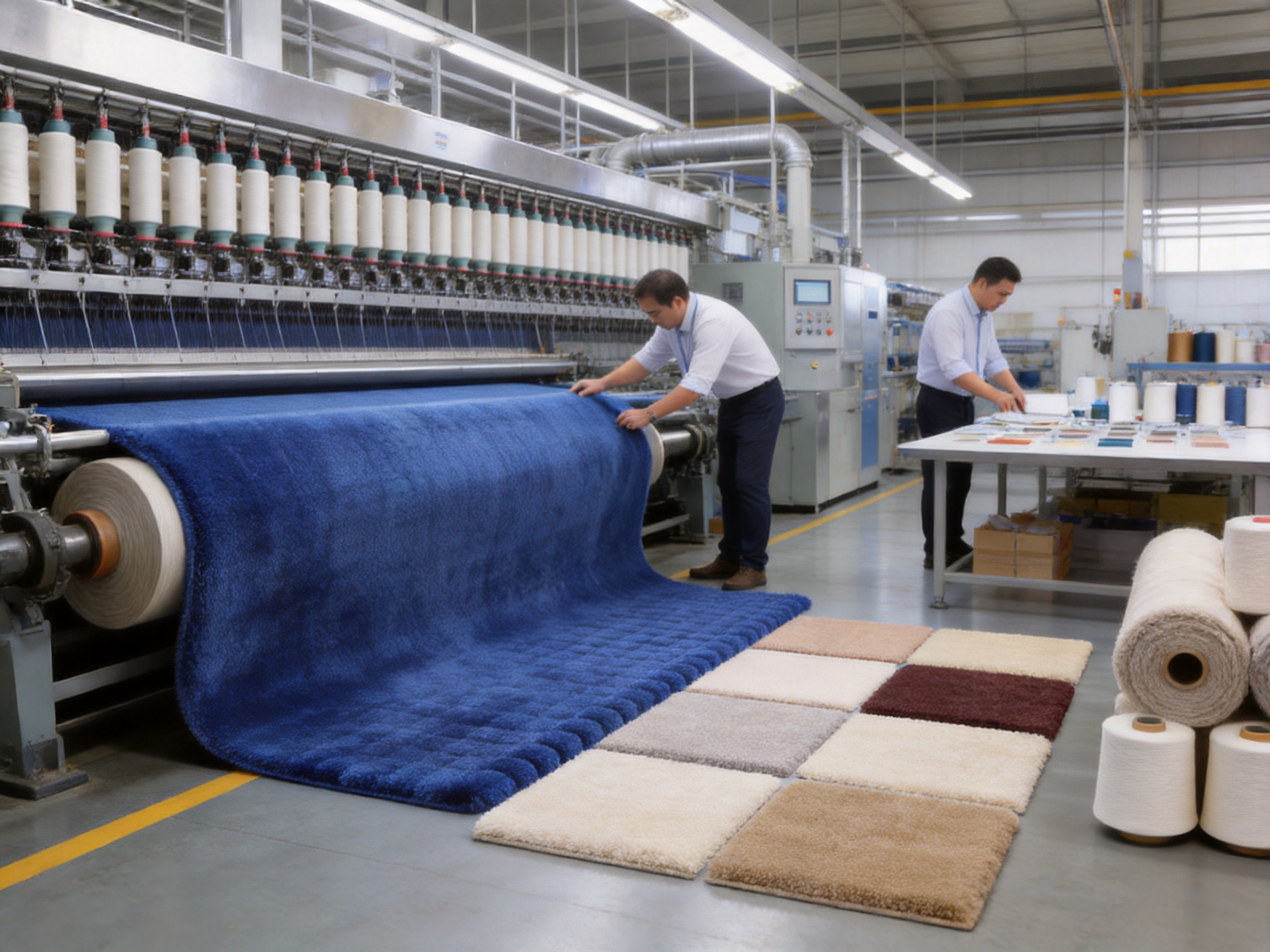
The fabric’s solid color and plush surface make it suitable for coordinated interior collections. A manufacturer can develop matching or complementary products for bedrooms, living rooms, bathrooms, entryways, and lounge areas. This approach can help retailers present a complete home textile story rather than a single isolated rug.
In hospitality interiors, the fabric may be considered for decorative rugs, soft furnishings, seating accents, and selected room accessories. Hotel designers often seek materials that create a comfortable visual impression while allowing color coordination across different areas. Custom dyeing can support project-specific palettes, although the finished construction must be evaluated against the expected traffic and maintenance schedule.
For residential products, the fabric can support both understated and expressive designs. Beige, gray, cream, brown, and muted green shades may suit natural interiors, while jewel tones or deep colors may create a more dramatic appearance. Surface direction can also influence the way the color is perceived, so finished samples are important for design approval.
The material can be paired with contrasting borders or layered with other textiles. For example, a plain velvet-like field can be combined with a woven edge, decorative binding, printed panel, or geometric cut detail. These techniques can create product differentiation without requiring a completely new base construction.
Zhejiang Benyi Textile Technology Co., Ltd. is located in Shaoxing, Zhejiang Province, a region widely recognized for its textile production infrastructure. Access to a mature textile ecosystem can support raw material sourcing, technical collaboration, dyeing, finishing, logistics, and production development.
The company describes itself as a textile technology enterprise focused on carpets, rug fabrics, and finished products. Its manufacturing model combines the bottom and surface of carpet products to simplify production and improve efficiency. This approach is intended to address the traditional challenges of high production costs and complex manufacturing processes.
Owning or directly operating weaving, dyeing or printing, and finished carpet processing facilities can support greater control over the production chain. The benefits may include more direct quality feedback, clearer production scheduling, improved coordination between material and finished-product teams, and fewer handoffs between unrelated factories.
The company’s engineering team develops new carpet fabrics each quarter and provides customized services according to customer requirements. For buyers, technical development support can be important when launching a new product category or adapting a surface to a specific market. An experienced supplier can help identify practical combinations of yarn, weight, width, pile height, color, and backing.
The company also emphasizes ecological protection and consumer health experiences. Its stated investment in recycled polyester, water-saving dyeing, OEKO-TEX® certification, and GRS certification reflects an effort to respond to current supply chain expectations. Buyers should verify the current documentation and product scope for each project, but these capabilities can provide a useful foundation for responsible sourcing discussions.
The fabric is made from 100% polyester microfiber. This construction is designed to provide a soft, smooth surface with useful color flexibility and durability for selected home textile applications.
The stated pile height is 6–10 millimeters. This range creates a plush surface while remaining practical for cutting, roll handling, backing, and finished rug processing.
Standard widths are 170, 190, and 210 centimeters. Customized widths can also be discussed, and the stated maximum width can reach 3.2 meters, subject to technical confirmation.
Yes. The fabric is supplied in solid-dyed colors, and custom color development is available subject to sample approval, production feasibility, and order requirements.
The main applications include area rugs and carpets. It can also be used for bath mats, blankets, throws, and related home textile products when the complete construction is tested for the intended use.
No. The product is supplied as carpet fabric in rolls. Buyers can process it into finished rugs or discuss finished carpet products and customized processing with the supplier.
The stated minimum order quantity is 500 kilograms per color. Buyers should confirm whether a specific custom width, color, or finishing requirement changes the applicable minimum.
The stated delivery time is approximately 15–20 days. The final schedule depends on color approval, order quantity, production capacity, inspection, packaging, and shipping arrangements.
The fabric is packaged by rolls. Buyers can confirm roll dimensions, protective wrapping, labeling, and loading requirements before shipment.
It may be suitable for selected commercial applications, but this should not be assumed without testing. The finished rug’s performance depends on the backing, edge construction, cleaning program, traffic level, and installation environment. Commercial buyers should request relevant performance tests.
Yes, bath mats are listed among the intended uses. An appropriate backing is required to support stability and slip-related performance, and the complete bath mat should be tested for moisture exposure and care conditions.
Yes, the fabric can be used for blankets and throws. Because the material is primarily presented as carpet fabric, blanket manufacturers should test drape, washing, seam behavior, skin comfort, pilling, and edge finishing before bulk production.
Useful information includes product category, required color, width, quantity, pile height, weight, finished dimensions, backing requirements, packaging details, delivery destination, and any compliance or certification requirements.
The company provides customized services according to customer requirements. Customization may involve colors, widths, fabric specifications, finished carpet processing, or packaging, subject to technical review and order confirmation.
The company information states that it has passed OEKO-TEX® and GRS certifications. Buyers should request current certificates and verify that the scope applies to the relevant facility, material, and order.
The KS Cut Velvet Fabric for Area Rug is a versatile carpet textile designed for buyers who require softness, surface appeal, color flexibility, and adaptable production options. Its 100% polyester microfiber construction, 260 gsm weight, 6–10 millimeter pile height, solid-dyed color format, and roll packaging create a practical foundation for area rugs, carpets, bath mats, blankets, and other home textile products.
Its competitive value comes from the combination of tactile comfort and manufacturing flexibility. Standard widths of 170, 190, and 210 centimeters can serve common production plans, while customized widths and a stated maximum width of 3.2 meters provide additional scope for larger designs. Make-to-order production allows buyers to develop colors and specifications around their own collections rather than relying entirely on standard inventory.
The supplier’s integrated textile capabilities, including weaving, dyeing or printing, and finished carpet processing, can support closer control of development, quality, and lead time. Its engineering team and ongoing fabric development program may also help buyers create differentiated products for changing market demands.
For the best results, buyers should treat the fabric as part of a complete product system. Sampling, color approval, backing selection, production trials, performance testing, and documentation review are all important before bulk production. When these steps are managed carefully, cut velvet fabric can provide a soft, visually rich, and commercially flexible basis for modern rug and home textile collections.
1. Product specification sheet for KS Cut Velvet Fabric, item model number 100144.
2. Supplier-provided technical information covering material composition, weight, width, pile height, applications, packaging, minimum order quantity, and delivery time.
3. Supplier company profile describing textile engineering, weaving, dyeing or printing, finished carpet processing, and customized development services.
4. Supplier-provided sustainability information concerning recycled polyester, water-saving dyeing methods, OEKO-TEX® certification, and GRS certification.
5. General textile manufacturing principles relating to knitted polyester microfiber, pile fabrics, dyeing, finishing, roll packaging, and finished carpet construction.
6. General product development and quality-control practices for area rugs, bath mats, blankets, and other household textile products.
7. Buyer and supplier recommendations for sample approval, color matching, dimensional inspection, backing compatibility, and finished-product performance testing.

ADD: No.75 Zhenyuan Road, Yuecheng District, Shaoxing City, Zhejiang Province, China 312000

Tel : +86-189 6750 9795

FAX : +86-0575-8803 2773

Email : fisher@benetextile.com

Copyright © Zhejiang Benyi Textile Technology Co., Ltd. All Rights Reserved. Carpets and Rugs Manufacturer

 English
 Français
 Deutsch
 عربى
عربى