

Lu Wanyao — After-Sales Service Supervisor
 Home / Author / Lu Wanyao — After-Sales Service Supervisor / Why a High-Performance Velvet Bath Mat Belongs in Every Modern Home
  2026.08.03
 Lu Wanyao — After-Sales Service Supervisor
A bath mat is one of the most frequently used textile products in a home. It meets wet feet every day, protects floors from standing water, provides a warmer surface than tile, and contributes to the overall appearance of a bathroom. Although bath mats may appear simple, differences in fiber quality, surface density, pile height, backing construction, water absorption, washing performance, and manufacturing consistency can significantly influence daily comfort and product life.
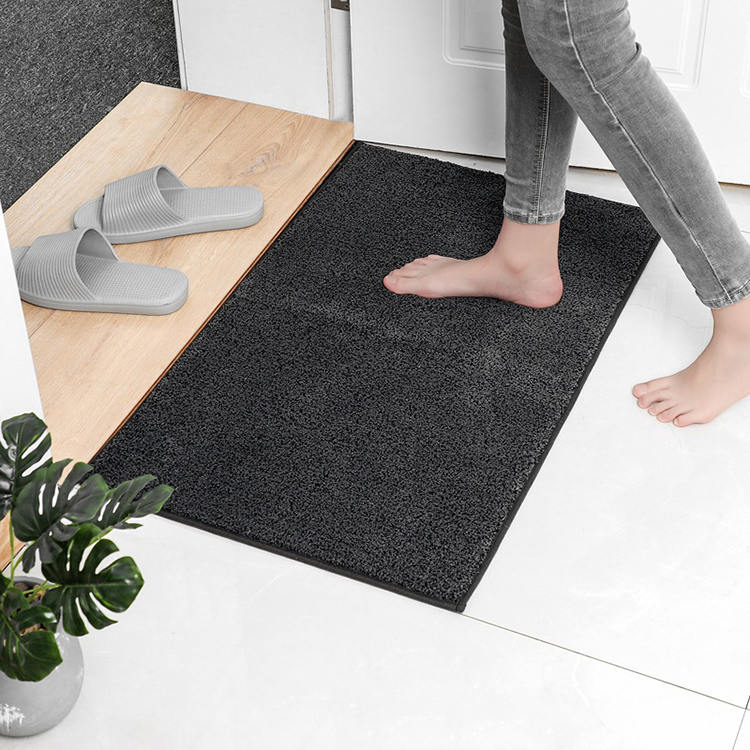
The Polaris Velvet Bath Mat is designed as a practical, comfortable, and attractive solution for bathrooms and other indoor spaces. Made from polyester microfiber and built with a plush 20 mm pile, it combines a soft contact surface with strong water absorption. Its 1650 gsm weight gives the mat a substantial, luxurious feel, while the TPR backing helps reduce shifting and skidding on smooth floors. Available in standard rectangular sizes or in customized dimensions, it is suitable for residential use, hospitality projects, retail programs, and other applications requiring dependable indoor floor textiles.
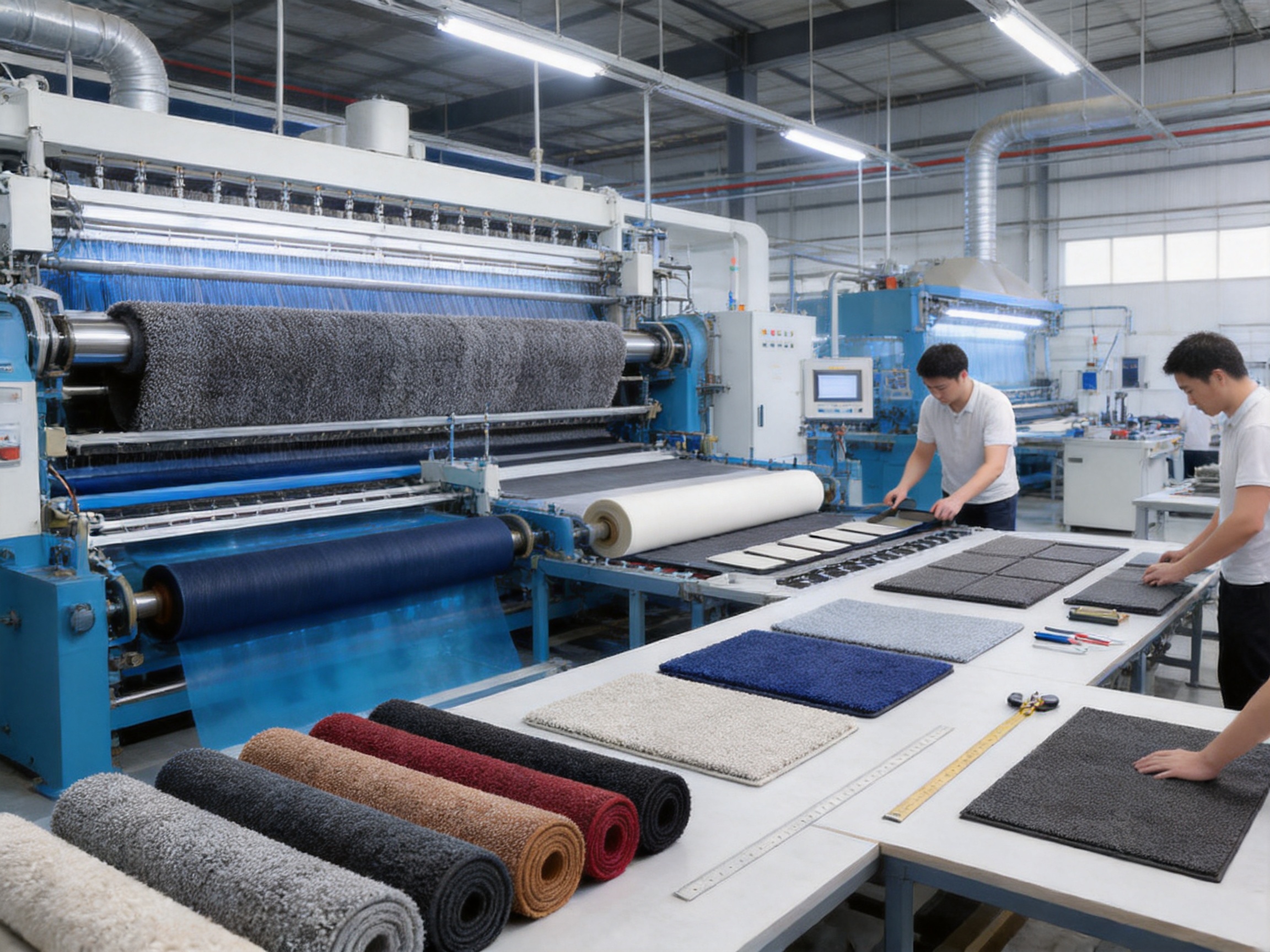
More than a decorative accessory, this bath mat represents the integration of textile engineering, coordinated production, and controlled finishing. The manufacturer operates its own weaving, dyeing and printing, and finished carpet processing facilities, allowing important stages of production to be managed within one supply chain. This manufacturing structure supports better quality control, more consistent lead times, and greater flexibility for customers seeking customized products.
Content
Bathrooms present several challenges for floor textiles. A bath mat must absorb moisture quickly without remaining saturated on the surface. It should feel soft and comfortable underfoot while retaining its shape after repeated use. It must also remain stable on the floor, particularly when placed near a shower, bathtub, or sink. At the same time, consumers expect easy maintenance, attractive colors, and a product that can withstand regular washing.
The Polaris Velvet Bath Mat addresses these needs through a combination of material selection and construction details. The polyester microfiber surface creates a soft, dense contact layer that feels comfortable against bare feet. The 20 mm pile height provides cushioning and helps create a plush sensation. The 1650 gsm weight contributes to a fuller structure, making the mat feel more substantial than lightweight mats that may flatten quickly or move easily during use.
Its rectangular form is practical for common bathroom layouts. The available 40 × 60 cm, 50 × 80 cm, and 60 × 90 cm formats can be used beside a toilet, in front of a sink, beside a shower enclosure, or near a bathtub. Custom sizing is also available, making the product adaptable to different floor plans, furniture arrangements, commercial specifications, and private-label programs.
Although categorized as a bath mat, the product is suitable for more than bathrooms. It can be used in kitchens, children’s rooms, entrance areas, utility spaces, dressing areas, and other indoor locations where a soft, absorbent, and slip-resistant floor covering is useful. This versatility allows buyers to select one coordinated product type for several areas of a home or project.
Polaris Velvet Bath Mat
Polyester is widely used in modern home textiles because it offers a useful balance of softness, durability, color performance, and ease of care. In this bath mat, polyester microfiber is used to create a fine, soft surface that is comfortable underfoot and capable of holding moisture within the textile structure.
Microfiber consists of very fine synthetic fibers. The fine fiber structure increases the available surface area compared with coarser yarns, allowing the textile to interact efficiently with water. When a person steps onto the mat with wet feet, the velvet-like surface helps draw moisture away from the skin and into the pile. This makes the floor feel drier and helps prevent water from remaining visibly on the top surface.
The product information identifies the material as 100% polyester microfiber. This construction provides several practical benefits. Polyester has good resistance to everyday abrasion, which is important for a mat that receives repeated foot traffic. It also offers good color retention when properly dyed and cared for. The material is suitable for machine washing, allowing users to clean the mat more conveniently than many delicate decorative textiles.
Material selection also affects the visual character of the mat. A fine polyester velvet surface can create a smooth, rich appearance in solid colors. Solid-color styling makes the product easy to coordinate with ceramic tile, painted walls, sanitary ware, cabinets, towels, and other bathroom accessories. It also supports simple, modern interior styles as well as more traditional or family-oriented environments.
Some highly decorative bath mats prioritize appearance but offer little cushioning or moisture management. Other low-cost mats may provide basic absorbency but have a thin surface that feels rough or quickly loses its comfort. The Polaris Velvet Bath Mat is designed to balance both requirements. Its dense microfiber contact layer provides a soft sensation, while the pile height and overall weight create a more supportive underfoot experience.
The 20 mm pile is high enough to provide noticeable cushioning while remaining practical for a floor textile. It helps create the feeling of standing on a soft surface rather than directly on a hard floor. This can be particularly welcome in cooler bathrooms, during morning routines, or in homes where family members spend time standing at a sink or dressing area.
The product is also suitable for children’s rooms and other indoor spaces where softness is important. However, as with any textile floor covering, the mat should be placed on a clean, dry, and suitable floor surface, and it should be kept free from excessive moisture beneath the backing.
Water absorption is one of the most important performance characteristics of a bath mat. A mat that merely spreads water across its surface does not solve the problem of wet feet or damp flooring. An effective bath mat should capture moisture rapidly, hold it within the textile structure, and allow the mat to dry properly between uses.
The soft velvet microfiber layer is designed to absorb water from wet feet. Its dense surface gives moisture numerous fiber interfaces through which it can be drawn away from the skin. This helps reduce the amount of water transferred to the surrounding floor after bathing or washing.
Another practical advantage is that water does not remain as a large visible pool on the surface. Instead, it is distributed into the absorbent pile. This improves the immediate user experience and helps the mat maintain a cleaner, more comfortable appearance during normal use.
Absorption performance depends on several factors, including the amount of water, room ventilation, frequency of use, washing conditions, and drying time. No bath mat can replace proper bathroom ventilation or routine cleaning. Nevertheless, a dense microfiber surface provides a strong foundation for moisture management and is more appropriate for this application than a flat, non-absorbent floor covering.
The areas beside a shower, bathtub, or sink are high-contact zones. People often stand on these areas while drying, grooming, washing hands, or preparing for the day. A plush bath mat can make these brief routines more comfortable and can provide a warmer transition between a wet area and the rest of the room.
The substantial 1650 gsm construction helps the mat feel full and stable underfoot. Compared with very light mats, a heavier construction may be less prone to curling and may provide a more premium appearance. The dense structure also supports the product’s ability to combine softness and absorbency in a single surface.
A bath mat must remain in position during normal use. Smooth bathroom floors, polished stone, vinyl, and ceramic tiles can all allow an unsuitable mat to slide. Movement can reduce comfort and create a potential tripping concern. For this reason, the Polaris Velvet Bath Mat uses a TPR back material.
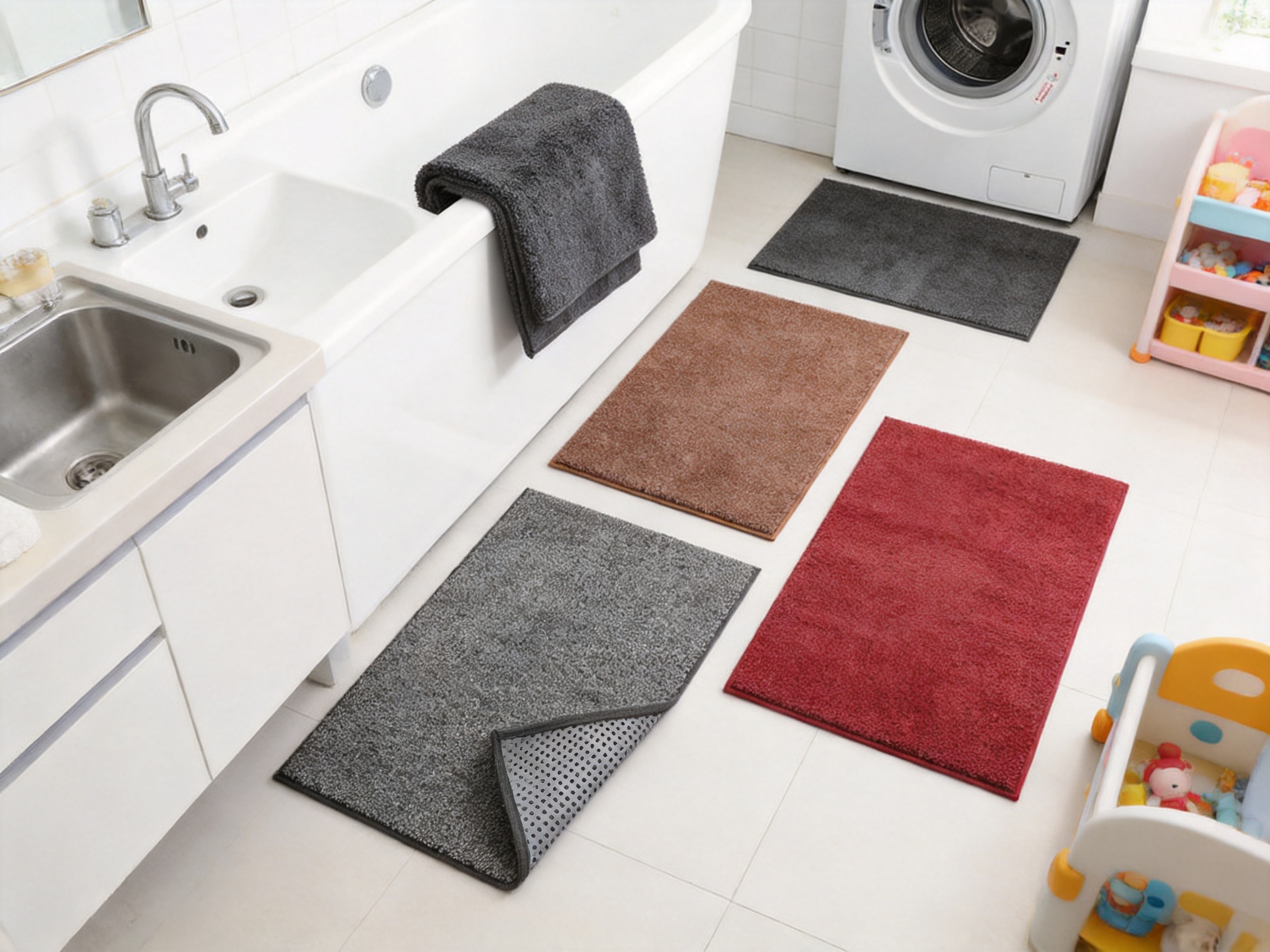
TPR, or thermoplastic rubber, is commonly used in household floor textiles because it can provide a flexible backing with traction against smooth surfaces. The backing is intended to help prevent shifting and skidding as users step onto or off the mat. This is particularly useful in bathrooms, where wet feet and hard flooring can increase the chance of unwanted movement.
The TPR backing also separates the absorbent upper surface from the floor. This helps support the product’s bonded construction and provides a structured base for the plush pile. The backing should be used on a clean, dry floor, because dust, water, soap residue, or other contaminants can reduce traction. Users should also follow appropriate care instructions and avoid placing the mat over unsuitable heated surfaces unless the flooring manufacturer permits it.
Non-slip performance is not created by the backing alone. It depends on the relationship between the backing, total weight, dimensions, floor condition, and how the mat is used. The product’s 1650 gsm weight gives it a substantial body, while the TPR backing helps improve contact with the floor. Together, these features support a more stable experience than a lightweight mat with no specialized backing.
For households with children, older adults, or people who require additional stability, it is important to inspect the mat regularly. The mat should lie flat, and any curled edges or damage should be addressed promptly. The surrounding floor should also be kept clean and dry. These common-sense practices complement the product’s non-slip design.
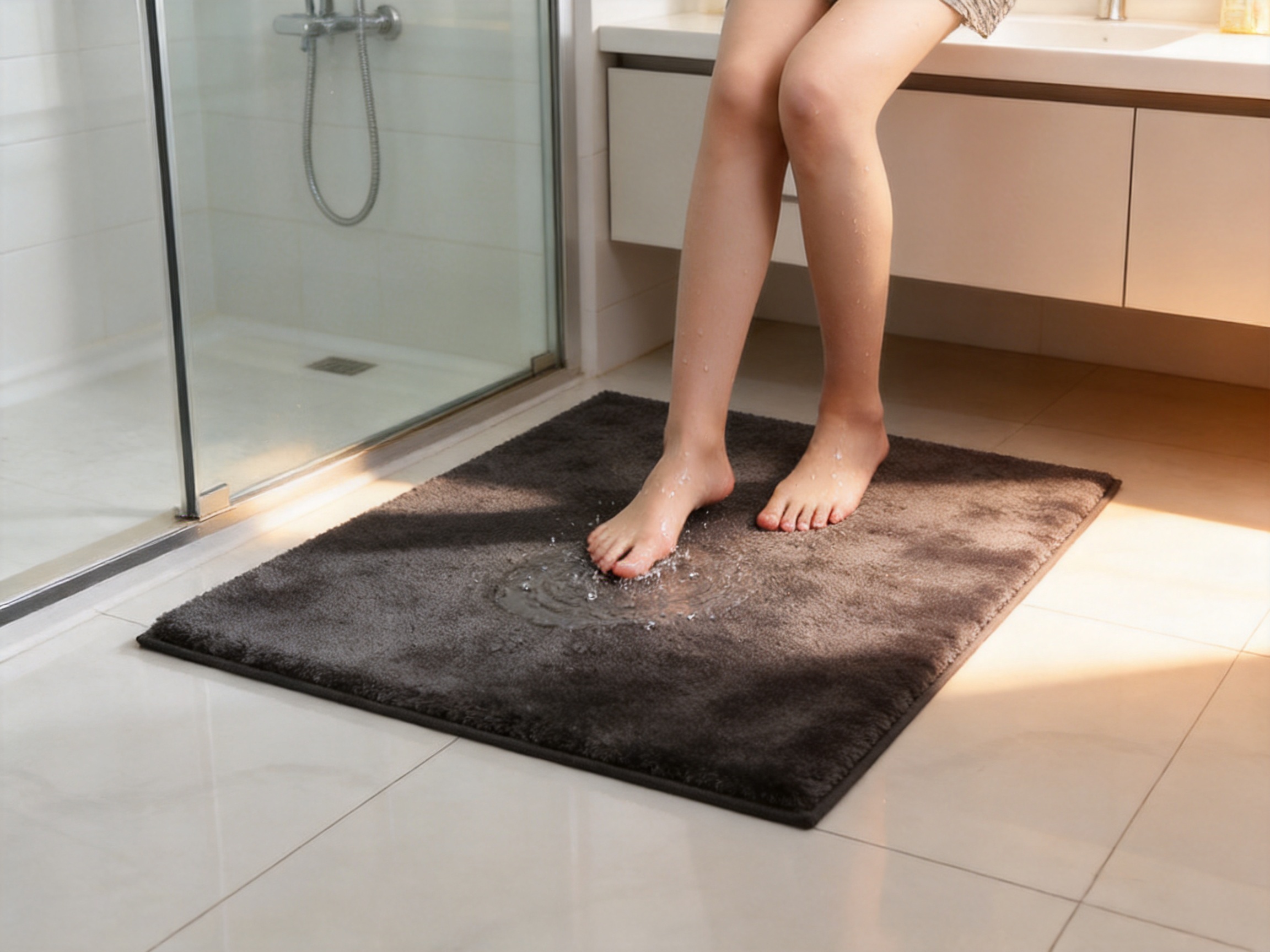
The product uses a bonded construction type, a manufacturing approach in which the surface and backing are combined to create a unified floor textile. Bonding can help maintain the relationship between the soft upper layer and the supporting base during everyday use. A well-controlled bonding process is important because insufficient bonding may lead to separation, while excessive or uneven bonding may affect flexibility and comfort.
Durability is especially important for bath mats because they are exposed to repeated stepping, moisture, cleaning, and changes in temperature. A product that looks attractive when new but loses its surface integrity after a few washes offers limited value. The use of polyester microfiber, a structured pile, and a bonded TPR backing is intended to support a longer useful life under normal indoor conditions.
The mat’s durability should be understood as part of a complete care system. Machine washing should be performed according to the recommended instructions. Cold water and mild detergent are advised, while chlorine and bleach should be avoided. Tumble drying at low speed or hang drying can help preserve the textile structure. Excessive heat, harsh chemicals, or aggressive mechanical treatment may affect the pile, color, or backing over time.
Regular maintenance helps preserve softness and appearance. Before washing, loose debris can be removed by shaking or gently vacuuming the mat. The mat should be washed with similar colors and without heavy objects that could place unnecessary stress on the pile. A mild detergent is preferable because strong chemicals may weaken fibers or alter the color.
After washing, the mat should be dried thoroughly. Hang drying can help reduce heat exposure, while low-speed tumble drying may be suitable when used carefully. The mat should not be returned to the floor while it is still heavily damp, since trapped moisture beneath the backing can affect the floor and create an undesirable environment for odors.
Because the product is machine washable, it is easier to include in a normal household cleaning routine. This is a meaningful advantage over mats that require specialized cleaning or that cannot tolerate regular washing. Cleanliness is not only an aesthetic concern; a frequently used bathroom mat can collect moisture, dust, hair, and other residues, so convenient care contributes to better everyday hygiene.
The three standard sizes are intended to cover common residential requirements. The 40 × 60 cm size is convenient for compact spaces, guest bathrooms, small sink areas, or placement beside a toilet. The 50 × 80 cm size offers a broader standing area and can work well in front of a sink, shower, or bathtub. The 60 × 90 cm size provides more coverage for larger bathrooms or spaces where users want a wider protective surface.
| Size | Typical Placement | Primary Benefit |
|---|---|---|
| 40 × 60 cm | Compact bathroom, toilet area, small sink zone | Space-efficient coverage |
| 50 × 80 cm | Sink, shower, or bathtub area | Balanced comfort and floor coverage |
| 60 × 90 cm | Larger bathroom or broad standing area | Extended absorbent surface |
| Custom size | Residential projects, hospitality, retail, or special layouts | Adaptation to individual specifications |
Custom sizing is particularly useful for buyers who need coordinated products across multiple room dimensions. Interior designers, hospitality operators, property developers, and retailers may require specific widths, lengths, packaging arrangements, or color selections. Custom production can help reduce the need to compromise between the available floor area and the size of a standard product.
When specifying a custom bath mat, buyers should provide accurate measurements and consider door clearance, cabinet placement, shower opening direction, and the distance between fixtures. A bath mat should offer useful coverage without obstructing doors or creating a raised transition that interferes with movement.
The bath mat is offered in solid colors, a versatile design choice for residential and commercial interiors. Solid colors can create a calm, orderly appearance and are easy to coordinate with other textiles. They can be selected to match towels and curtains, contrast with neutral tiles, or complement a particular brand or hospitality color palette.
For contemporary bathrooms, a solid neutral shade can reinforce a clean, minimalist atmosphere. In family bathrooms, a brighter color can introduce energy without creating a visually crowded pattern. In hotels, serviced apartments, and residential developments, coordinated color programs can help create a consistent look across multiple rooms.
Color performance is supported by the use of polyester, which is known for good dye affinity and resistance to ordinary fading when properly processed and cared for. The manufacturer’s production capabilities include dyeing and printing facilities, allowing color development and textile finishing to be coordinated more closely. Buyers requiring exact shades should confirm color standards, sample approvals, and production tolerances before placing a large order.
The bath mat market includes a wide range of products, from thin entry-level mats to premium, high-density floor textiles. The Polaris Velvet Bath Mat is positioned around a combination of features rather than a single selling point. Its advantages become clearer when compared with common limitations found in basic alternatives.
Thin flat mats may be easy to store and inexpensive to purchase, but they often provide less cushioning and may feel less comfortable under bare feet. Their lower weight can also make them more likely to move on smooth floors. By contrast, the 20 mm pile and 1650 gsm weight provide a fuller, softer, and more substantial experience.
Some decorative mats are chosen mainly for appearance and may not be designed to manage water effectively. A microfiber velvet surface is better suited to bathroom use because it is intended to draw moisture away from wet feet. This gives the product a functional advantage in addition to its visual appeal.
A mat without a traction-oriented backing may shift when stepped on, especially on smooth tile or polished surfaces. The TPR backing is designed to reduce this problem. While floor condition and correct placement remain important, the backing gives the product a clear functional advantage over simple textile pieces that have no non-slip structure.
Some decorative floor coverings require delicate cleaning or are difficult to dry. This bath mat is designed for machine washing, cold water, and mild detergent. Its maintenance requirements are straightforward, which is valuable for busy households and commercial operators that need practical cleaning routines.
Products offered in only one size may not fit different bathroom configurations. The availability of three standard sizes and custom dimensions creates more flexibility. Buyers can choose a compact format for a small space, a larger format for better coverage, or a special size for a particular design plan.
These comparisons do not mean that one product is suitable for every situation. Each buyer should consider floor type, usage frequency, budget, care expectations, and design requirements. However, the combination of plush microfiber, substantial weight, non-slip TPR backing, washable construction, solid-color styling, and size flexibility gives this bath mat a well-rounded performance profile.
Product performance depends not only on the listed specifications but also on the manufacturing system used to achieve them consistently. Zhejiang Benyi Textile Technology Co., Ltd. is located in Shaoxing, Zhejiang Province, an important textile manufacturing region known for its extensive fabric supply chain and production expertise.
The company specializes in carpets, rug fabrics, and finished textile products. Its capabilities extend across weaving, dyeing and printing, and finished carpet processing. Controlling these stages within an interconnected manufacturing structure can provide several advantages. It can reduce dependence on unrelated outside suppliers, improve communication between technical teams, support more consistent production planning, and make it easier to respond to customer feedback.
Weaving is fundamental to textile quality. Yarn selection, fabric density, surface formation, and dimensional stability all influence the final performance of a floor textile. By operating its own weaving facilities, the company can coordinate fabric development with the needs of finished products. This is especially important when a customer requires a particular surface feel, weight, color, width, or construction.
Integrated weaving also supports product development. Instead of treating the fabric as a fixed commodity, technical teams can adjust the textile structure to achieve a desired balance between softness, durability, absorbency, and production efficiency. For a velvet bath mat, control over the surface formation is directly connected to the final underfoot experience.
Color consistency is essential for buyers who order repeated production runs or develop coordinated home-textile collections. The company’s dyeing and printing facilities allow it to manage coloration as part of its own production chain. This can support more direct control over shade development, process conditions, and finishing requirements.
Solid-color products may appear simple, but consistent coloration requires attention to fiber preparation, dye selection, temperature, processing time, washing, drying, and batch control. Variations can become visible when mats are placed together in the same room or when a retailer presents several products under one collection. Coordinated dyeing capabilities help support a more reliable appearance.
The final processing stage brings together the upper textile, backing, bonding, cutting, shaping, inspection, and packaging requirements. Finished carpet processing facilities enable the manufacturer to focus on the product as a complete item rather than only as a roll of fabric.
This distinction is important for buyers who need ready-to-sell bath mats. A finished product supplier can help coordinate dimensions, edge treatment, backing application, labels, packaging, and quality checks. It may also simplify communication for customers who do not want to manage separate textile, backing, and assembly suppliers.
The company has a team of more than 20 fabric engineers and develops new carpet fabrics each quarter based on market trends. This ongoing development program supports the creation of products that respond to changing expectations regarding softness, color, sustainability, function, and interior design.
Regular product development is valuable because consumer preferences do not remain fixed. A buyer may seek a deeper pile, a different hand feel, a new color range, an alternative backing, or a lighter construction for a particular market. Engineering resources make it easier to evaluate these requirements systematically rather than relying only on minor changes to existing products.
Customization is another significant strength. Customers may request special sizes, colors, patterns, packaging, or product specifications. Customization can be useful for private-label brands, hotel groups, home furnishing retailers, construction projects, promotional programs, and distributors that need a differentiated collection.
A successful customization process generally includes a clear technical brief, sample development, approval of dimensions and colors, confirmation of materials, testing of construction, and agreement on packaging and delivery requirements. The manufacturer’s integrated production resources can help make these steps more efficient by keeping key technical discussions within one coordinated organization.
Managing quality and lead time is particularly important for wholesale buyers. Delays in fabric production, dyeing, backing, or finishing can affect product launches and inventory planning. An integrated factory structure gives the manufacturer more visibility across the production chain and may reduce the coordination problems that occur when every stage is handled by a separate supplier.
Quality management should cover raw materials, color, dimensions, pile height, weight, bonding, backing coverage, surface appearance, sewing or edge finishing, packaging, and final product cleanliness. Buyers can request agreed inspection standards and sample retention procedures to support consistency across orders.
The company’s focus on full-chain control is intended to support product quality and delivery reliability. Although actual lead time depends on order volume, customization, seasonal demand, and shipping arrangements, centralized production management can provide a stronger foundation for planning than a fragmented sourcing model.
Modern textile buyers increasingly consider the environmental impact of materials and manufacturing. The company describes its development approach as focused on ecological protection, consumer health experiences, sustainable materials, and water-saving production methods.
Its sustainability initiatives include investment in recycled polyester and water-saving dyeing technologies. Recycled polyester can help reduce reliance on newly produced petroleum-based raw materials when it is appropriately sourced and processed. Water-saving dyeing methods can reduce water consumption and support more responsible textile production.
The company also states that it has passed OEKO-TEX® and GRS certifications. Buyers should verify the scope, validity, certificate holder, and product applicability of any certification during procurement. Certification documentation is especially important when a project has formal sustainability requirements or when products are being sold in markets with specific compliance expectations.
Environmental responsibility is not limited to one material or one certificate. It includes resource efficiency, chemical management, production waste reduction, responsible wastewater treatment, packaging choices, product durability, and the ability to maintain a product through washing rather than replacing it prematurely. A durable, washable bath mat can contribute to a more practical lifecycle when it is cared for properly.
The most obvious application is the family bathroom. The mat can be placed in front of a sink, beside a shower, near a bathtub, or in another area where water is commonly present. Its soft surface makes daily routines more comfortable, while its absorbent pile helps manage moisture.
In guest bathrooms, appearance and cleanliness are especially important. A solid-color velvet mat can create a neat, coordinated look without competing with other design elements. Its machine-washable construction supports regular preparation between visitors.
The product information identifies kids’ rooms as one suitable room type. Its softness can make it useful near a child’s wash area or in an indoor play and dressing space. Adults should still ensure that the mat lies flat, remains clean, and is placed on an appropriate floor.
The mat can also be used in kitchens or utility areas where people stand for extended periods and occasional water spills occur. It may provide cushioning in front of a sink or work area. Because it is intended for indoor use, it should be protected from outdoor exposure and prolonged contact with mud, rain, or harsh environmental conditions.
Hotels, serviced apartments, student residences, care facilities, and other accommodation providers may use coordinated bath mats as part of a room-textile program. Standard sizes can simplify purchasing, while custom sizes and colors can support a particular interior concept or brand palette. Commercial buyers should establish their own washing, inspection, replacement, and hygiene procedures based on the intensity of use.
Following appropriate care instructions is essential for preserving the mat’s appearance and function. The recommended approach is machine washing with cold water and mild detergent. Chlorine and bleach should not be used, as they may affect the color, weaken fibers, or damage the backing.
Low-speed tumble drying or hang drying is recommended. High heat should be avoided because excessive temperature may affect the TPR backing, alter the pile feel, or contribute to dimensional changes. The mat should be dried completely before being placed back on the floor.
Users should avoid ironing the mat and should not expose it unnecessarily to harsh chemicals. If a localized spill occurs, prompt blotting can help reduce staining. Routine shaking or gentle vacuuming can remove loose debris between washes. The care label supplied with the specific order should always take priority if it provides more detailed instructions.
| Care Stage | Recommended Practice | Practice to Avoid |
|---|---|---|
| Washing | Machine wash with cold water | Very hot water or harsh cycles |
| Detergent | Use a mild detergent | Chlorine or bleach |
| Drying | Low-speed tumble dry or hang dry | Excessive heat |
| Placement | Use on a clean, dry indoor floor | Placing over standing water or debris |
| Inspection | Check the backing and edges regularly | Continuing to use a damaged or curled mat |
Choosing the correct size begins with measuring the available floor area. The mat should cover the place where wet feet are most likely to land without blocking doors, drawers, cabinets, or bathroom fixtures. A narrow space may benefit from the 40 × 60 cm option, while a larger sink or shower zone may be better served by the 50 × 80 cm or 60 × 90 cm format.
For a double vanity, a wider arrangement or multiple coordinated mats may provide better coverage than one small mat. For a bathtub, the mat should be positioned where users step out rather than placed so close to the tub that it interferes with movement. In front of a shower, sufficient clearance should be maintained so the door or screen can operate freely.
Custom sizes are useful when standard dimensions do not fit. Before ordering, the buyer should confirm whether the requested dimensions refer to the finished mat size and should clarify acceptable tolerances. For repeated commercial projects, it is also useful to approve a pre-production sample or production reference.
The bath mat is suitable for wholesale programs because it combines a broadly useful product category with multiple sizes and customization options. Retailers can offer it as an individual bathroom accessory or as part of a larger coordinated carpet and rug collection. Distributors can select standard colors and sizes for inventory while requesting special production for key accounts.
Private-label customers may benefit from the manufacturer’s ability to coordinate finished products, packaging, and technical requirements. A private-label program can include custom labels, barcode arrangements, carton specifications, color assortments, and product inserts, subject to order quantity and production confirmation.
For large orders, buyers should discuss minimum order quantities, sampling procedures, color approval, packaging, inspection standards, shipping terms, and production schedules at the beginning of the project. Clear communication reduces misunderstandings and helps ensure that the delivered product matches the approved specification.
The company’s location in Shaoxing provides access to a mature textile ecosystem. This regional advantage can support material sourcing, technical development, manufacturing coordination, and export-oriented production. Its own factories and engineering team further strengthen its ability to serve customers that require more than a standard off-the-shelf item.
| Specification | Details |
|---|---|
| Product category | Bath mat |
| Product name | Polaris Velvet Bath Mat |
| Brand | Bene |
| Model number | 100065 |
| Material | 100% polyester microfiber |
| Weight | 1650 gsm |
| Pile height | 20 mm |
| Construction | Bonded |
| Backing | TPR |
| Shape | Rectangular |
| Pattern | Solid color |
| Usage | Indoor |
| Standard sizes | 40 × 60 cm, 50 × 80 cm, and 60 × 90 cm |
| Customization | Custom sizes available |
| Care | Machine wash; cold water and mild detergent recommended |
| Key features | Softness, water absorption, non-slip performance, and washability |
| Suitable rooms | Bathroom, kitchen, indoor areas, and kids’ rooms |
Buyers evaluating a bath mat should look beyond photographs and compare the complete construction. Useful evaluation points include the evenness of the pile, softness of the surface, consistency of the color, accuracy of the dimensions, weight per square meter, backing coverage, edge finishing, bonding strength, and washing performance.
A physical sample is particularly valuable for wholesale projects. It allows the buyer to assess how the mat feels underfoot, how quickly it absorbs a small amount of water, whether the backing grips the intended floor, and how the mat looks under the lighting used in the target market. A sample can also be washed to evaluate changes in softness, color, dimensions, and backing condition.
For custom programs, a technical specification sheet should record the approved material, pile height, weight, construction, backing, size, color, tolerance, care label, packaging, and inspection requirements. This document can serve as a reference for production and future repeat orders.
The bath mat is made from 100% polyester microfiber. The fine fibers are selected to provide a soft velvet-like surface, practical durability, and effective moisture absorption.
The listed pile height is 20 mm. This creates a plush surface that provides cushioning and a comfortable underfoot feel.
Gsm means grams per square meter. A weight of 1650 gsm indicates a substantial textile construction. It contributes to the mat’s fuller feel, surface density, and premium tactile experience.
Yes. The backing material is TPR, which is designed to help prevent shifting and skidding on suitable indoor floors. For best performance, the floor should be clean and dry, and the mat should be inspected regularly.
Yes. Machine washing is part of the product care guidance. Cold water and mild detergent are recommended. Chlorine and bleach should be avoided, and the mat should be dried at low speed or hung to dry.
The standard sizes are 40 × 60 cm, 50 × 80 cm, and 60 × 90 cm. Custom dimensions are also available for customers with special space, project, or merchandising requirements.
The product is specified for indoor use. It is suitable for bathrooms, kitchens, children’s rooms, and other indoor areas, but it is not designed for prolonged exposure to rain, outdoor dirt, or severe weather conditions.
Yes. The product information identifies the kitchen as one suitable room type. It can be placed near a sink or another indoor area where softness and moisture absorption are useful.
The listed pattern is solid color. Solid colors make the mat easy to coordinate with different interior styles and can support customized color programs for retailers or commercial projects.
Its performance is based on several combined features: polyester microfiber, a 20 mm pile, 1650 gsm weight, bonded construction, TPR backing, water absorption, machine washability, and multiple size options. Together, these features provide a more complete balance of comfort, function, stability, and customization than a thin or unsupported textile mat.
Yes. Custom sizing is specifically available, and the manufacturer provides customized services according to customer requirements. Buyers should confirm available colors, construction details, packaging, minimum quantities, and technical tolerances during the quotation and sampling process.
The manufacturer is located in Shaoxing, Zhejiang Province, China. Shaoxing is widely recognized as an important textile production center, providing access to a broad network of textile expertise and supply-chain resources.
The company operates weaving, dyeing and printing, and finished carpet processing factories. It also has a team of more than 20 fabric engineers and develops new carpet fabrics each quarter based on market trends.
The company specializes in carpets, rug fabrics, and finished products and offers wholesale and customization capabilities. Wholesale buyers should discuss order quantities, lead times, packaging, color approvals, inspections, and shipping requirements before confirming production.
It may be tumble dried at low speed or hung to dry. Excessive heat should be avoided to help protect the microfiber pile and TPR backing. The mat should be completely dry before it is returned to the floor.
Use mild detergent, avoid chlorine and bleach, wash with cold water, dry with limited heat, and place the mat on a clean and dry floor. Regular inspection can identify curled edges, backing wear, or other conditions that may affect safe use.
The Polaris Velvet Bath Mat is designed to provide more than a soft decorative surface. Its polyester microfiber construction, 20 mm pile, 1650 gsm weight, bonded structure, and TPR backing address the core requirements of a dependable bath mat: comfort, absorbency, durability, stability, and convenient care.
Its three standard sizes make it suitable for common bathroom layouts, while custom dimensions expand its usefulness for special residential, hospitality, retail, and commercial projects. The solid-color design offers broad interior flexibility, and the ability to use the product in kitchens, children’s rooms, and other indoor areas creates additional value for buyers seeking a versatile textile solution.
The product is supported by a manufacturer with integrated weaving, dyeing and printing, and finished carpet processing capabilities. Its fabric engineering team, ongoing product development, customization services, and focus on sustainability strengthen its position as a capable supplier for both standard and specialized orders. By combining product-level functionality with coordinated manufacturing resources, the company can serve customers looking for consistent quality, flexible specifications, and efficient supply-chain management.
For households, the mat offers a warmer and more comfortable surface for everyday routines. For retailers and wholesale buyers, it provides a practical product with clear functional benefits and multiple merchandising possibilities. For project customers, its customization potential and manufacturing support make it a useful option for coordinated interior textile programs.
1. Product specification sheet for the Polaris Velvet Bath Mat, including material, weight, pile height, construction, backing, sizes, usage, and care information.
2. Manufacturer-provided company information for Zhejiang Benyi Textile Technology Co., Ltd., including factory capabilities, engineering resources, product development, and customization services.
3. Textile manufacturing principles relating to polyester microfiber, pile construction, bonded floor textiles, and thermoplastic rubber backing.
4. General household textile care guidance for machine washing, mild detergent use, low-temperature drying, and moisture management.
5. Manufacturer-provided sustainability information concerning recycled polyester, water-saving dyeing methods, OEKO-TEX® certification, and GRS certification.
6. General interior textile planning considerations for bathroom, kitchen, hospitality, residential, and indoor floor-covering applications.

ADD: No.75 Zhenyuan Road, Yuecheng District, Shaoxing City, Zhejiang Province, China 312000

Tel : +86-189 6750 9795

FAX : +86-0575-8803 2773

Email : fisher@benetextile.com

Copyright © Zhejiang Benyi Textile Technology Co., Ltd. All Rights Reserved. Carpets and Rugs Manufacturer

 English
 Français
 Deutsch
 عربى
عربى