

Qiao Yunting — Senior Carpet Sales Manager
 Home / Author / Qiao Yunting — Senior Carpet Sales Manager / Chenille 3 100% Polyester Carpet Fabric: A Durable, Flexible Foundation for Modern Rugs and Carpets
 2026.11.05
 Qiao Yunting — Senior Carpet Sales Manager
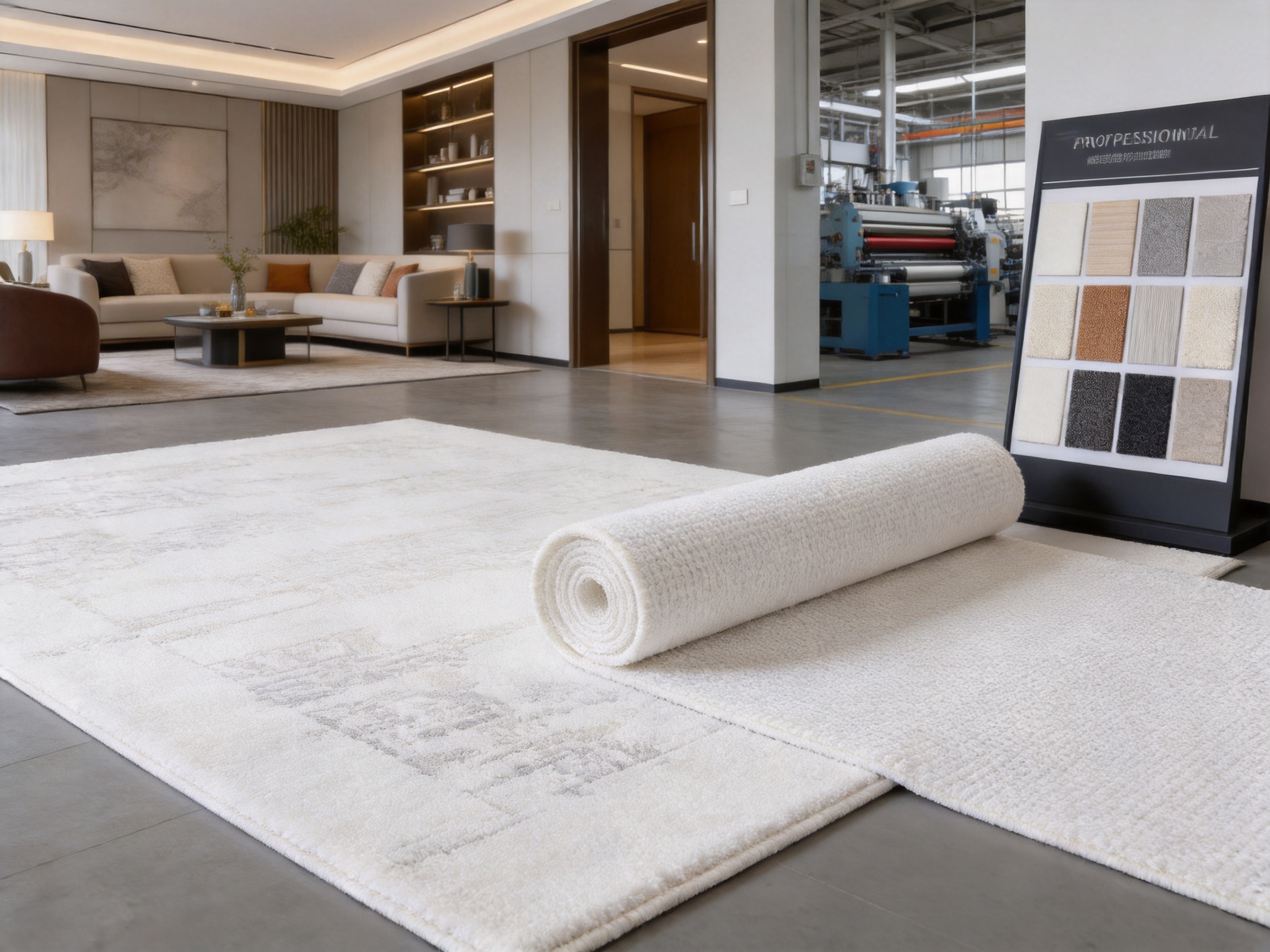
Carpet and rug manufacturers increasingly need materials that combine attractive texture, dependable performance, efficient processing, and flexible customization. The Chenille 3# 100% polyester carpet fabric is designed to meet these requirements in a single, practical textile solution. Made from 100% polyester chenille yarn and produced through a knitted construction, this fabric offers a soft yet durable surface for carpet and rug applications. Its 380gsm weight, 2mm pile height, adaptable width options, and suitability for digital or paper transfer printing make it a versatile material for residential, commercial, hospitality, and customized interior projects.
Unlike a finished carpet that is limited to a particular pattern, size, or color, carpet fabric gives manufacturers and buyers a flexible foundation for developing different products. The Chenille 3# fabric can be used in its PFP white form or processed with decorative printing to create designs according to market requirements. It can support large-scale production as well as customized projects, and its maximum possible width of up to 3.2 meters can help reduce unnecessary joins when producing broad carpet surfaces.
This article examines the structure, performance, processing advantages, customization potential, manufacturing capabilities, and commercial value of Chenille 3# carpet fabric. It also explains why a supplier with integrated weaving, dyeing and printing, and finished carpet processing capabilities can offer greater control over quality, lead time, and product development.
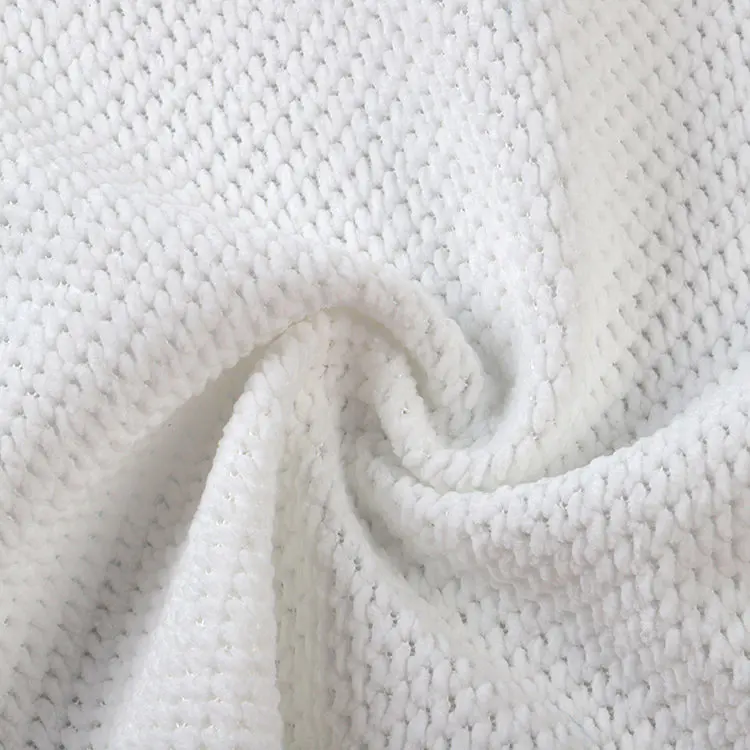
Chenille 3# 100% polyester Carpet Fabric
Content
Chenille 3# is a knitted carpet fabric made from 100% polyester. The product is identified by item model number 100019 and is supplied primarily for carpet and rug production. It has a standard weight of 380gsm and a 2mm pile height, giving it a balanced combination of body, softness, and practical handling.
The fabric is available in widths of 170cm, 190cm, and 210cm, with customized widths also possible. According to the product information, the maximum width can reach 3.2 meters. This broad-width capability is particularly valuable for manufacturers working on large rugs, carpet panels, floor coverings, and other applications where minimizing seams is important.
The standard color is PFP white. This unfinished or prepared-for-processing color provides a neutral base for subsequent digital printing or paper transfer printing. Buyers can therefore develop patterns, graphics, branding elements, seasonal designs, and interior-specific color schemes instead of being restricted to a limited selection of pre-dyed surfaces.
As a make-to-order fabric, Chenille 3# is suitable for buyers who require planned production rather than immediate off-the-shelf shipment. The stated minimum order quantity is 500 kilograms per color. The usual delivery time is 15 to 20 days, while the fabric is packaged in rolls for efficient transport, storage, and downstream processing.
| Product name | Chenille Fabric 3# |
| Item model number | 100019 |
| Material | 100% polyester |
| Weight | 380gsm |
| Standard width options | 170cm, 190cm, and 210cm |
| Maximum stated width | Up to 3.2 meters |
| Pile height | 2mm |
| Construction | Knitted |
| Standard color | PFP white |
| Supply type | Make-to-order |
| Primary usage | Carpet and rug production |
| Minimum order quantity | 500kg per color |
| Packaging | Rolls |
| Standard delivery time | 15–20 days |
| Product features | Soft and cool hand feel |
The material composition is one of the most important factors in carpet fabric selection. Chenille 3# uses 100% polyester, a fiber widely valued for its durability, stable performance, ease of maintenance, and suitability for coloration and printing. The polyester composition helps create a fabric that can withstand regular handling and repeated use while remaining practical for manufacturers and end users.
Polyester is also suitable for applications in which stain resistance and straightforward care are important considerations. The product description identifies the fabric as resistant to stains and easy to maintain. These characteristics are relevant for rugs and carpets used in living rooms, bedrooms, entrances, commercial areas, hospitality spaces, and other environments where floor coverings can be exposed to dust, footprints, spills, and frequent contact.
Another advantage of polyester is its compatibility with decorative processing. Chenille 3# can be directly used for digital printing or paper transfer printing in various designs. This expands the range of possible visual results, from subtle contemporary patterns to detailed decorative artwork. A fabric that can accept different printing approaches gives manufacturers greater freedom when responding to changing consumer preferences.
Polyester also supports efficient product planning. Because the fabric is produced in rolls and can be ordered in multiple widths, manufacturers can coordinate fabric supply with cutting, printing, backing, edging, and final assembly operations. This can make it easier to organize production for both standard collections and customized orders.
Chenille 3# is knitted by 100% polyester cool chenille yarn. The yarn and construction combination is intended to provide added durability and fade resistance. For floor coverings, durability is essential because the surface may experience regular walking, movement of furniture, repeated cleaning, and long periods of use.
The fabric’s 380gsm weight gives it a substantial feel without making it excessively difficult to handle. A material that is too light may lack the desired body, while a material that is unnecessarily heavy can increase handling and transportation challenges. The 380gsm specification offers a practical middle ground for manufacturers seeking a fabric with visible substance and manageable processing characteristics.
The 2mm pile height creates a low-profile surface. Compared with a much deeper pile, a 2mm pile can be easier to clean, vacuum, cut, handle, and integrate into modern floor-covering designs. Its relatively short surface also provides a sleek appearance that can suit contemporary interiors and products requiring a smooth, uncluttered finish.
Low-pile carpet fabrics are often useful in areas where doors, furniture, mobility equipment, or frequent foot traffic require a flatter surface. The 2mm pile can also contribute to a more consistent appearance after printing because the design is applied to a relatively controlled surface height.
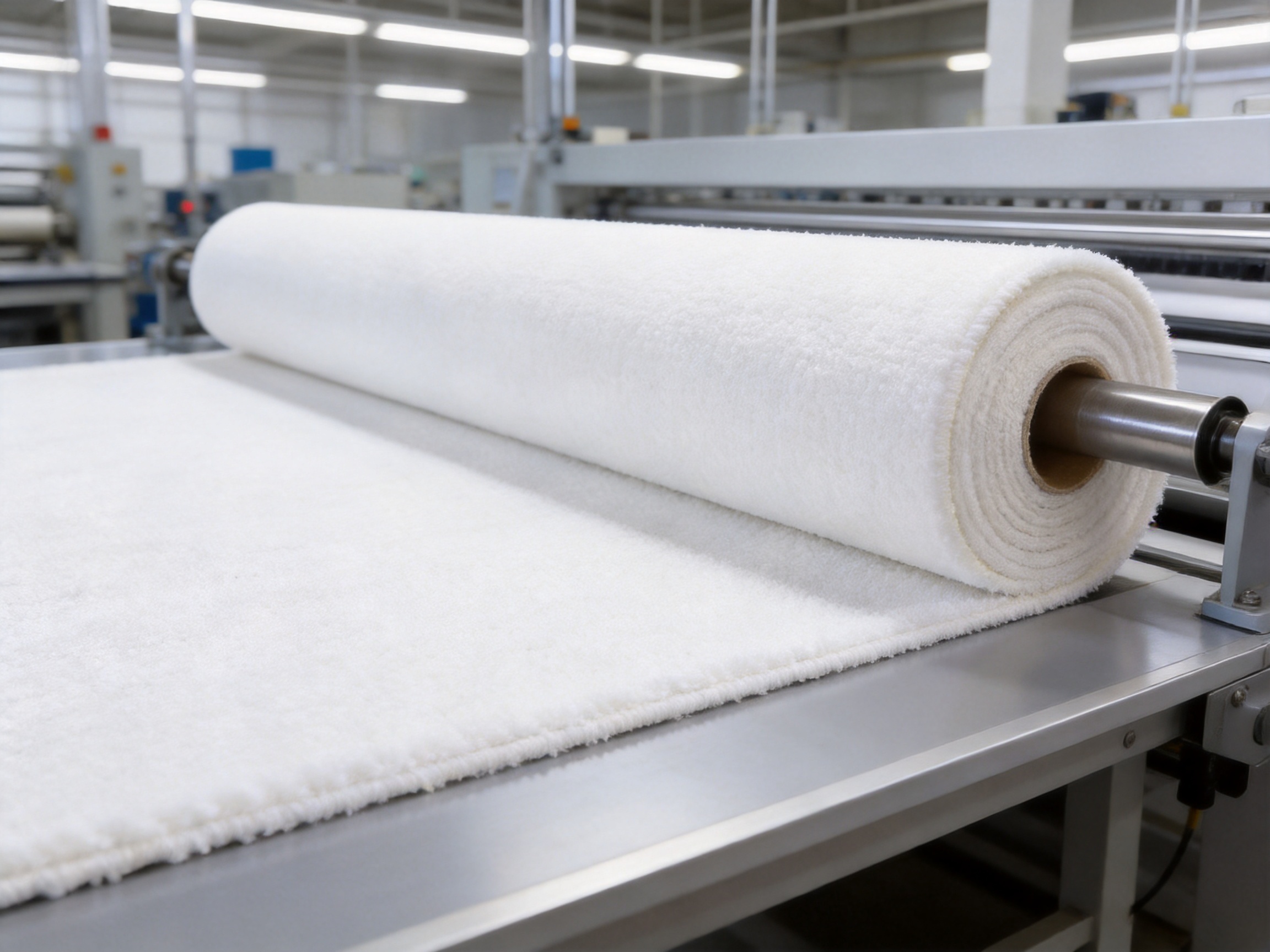
Chenille 3# is produced using knitted technology rather than being described simply as a flat, loose, or unstructured textile. Knitted construction can provide useful flexibility and strength, making the fabric suitable for conversion into carpet and rug products. The structure supports the fabric’s ability to be handled during cutting, printing, backing, and finishing.
For manufacturers, flexibility is an important operational benefit. Carpet fabric must often pass through several stages before becoming a finished floor covering. It may be unrolled, aligned, printed, dried or processed, cut to size, combined with a backing, finished at the edges, inspected, and packed. A knitted fabric with suitable strength and flexibility can be more convenient during these operations.
The knitted construction also contributes to the fabric’s visual and tactile qualities. Chenille yarn is known for its soft surface and distinctive texture. In Chenille 3#, this softness is balanced with the practical requirements of a carpet material. The stated product features include a soft and cool feel, which can help create a comfortable surface for interior applications.
The fabric’s low 2mm pile height and chenille surface create a balance between texture and practicality. The surface is not intended to be excessively deep or shaggy. Instead, it offers a controlled profile that can support contemporary rug designs, printed carpet surfaces, entrance mats, and other products where visual clarity and ease of handling matter.
The cool hand feel can be advantageous in interior settings where users value a surface that feels pleasant underfoot. In combination with a soft chenille yarn, it gives the fabric a more refined sensory character than a purely utilitarian floor-covering base.
One of the most important advantages of Chenille 3# is its ability to support further design processing. The PFP white base can be directly used for digital printing or paper transfer printing in a wide range of designs. This capability allows manufacturers to create products for different markets without changing the fundamental carpet fabric construction.
Digital printing is suitable for detailed artwork, individualized designs, photographic effects, gradients, and smaller or more flexible production runs. It can help manufacturers respond to specific customer briefs, interior projects, retail collections, and seasonal product releases. Because the image is created digitally, the design process can be adjusted without requiring a new woven pattern for every visual concept.
Paper transfer printing provides another route for applying designs. Offering more than one printing method can help manufacturers select a process according to the required appearance, order size, color arrangement, and production plan. The ability to print directly onto the fabric gives the material greater commercial flexibility than a product limited to a single preselected color.
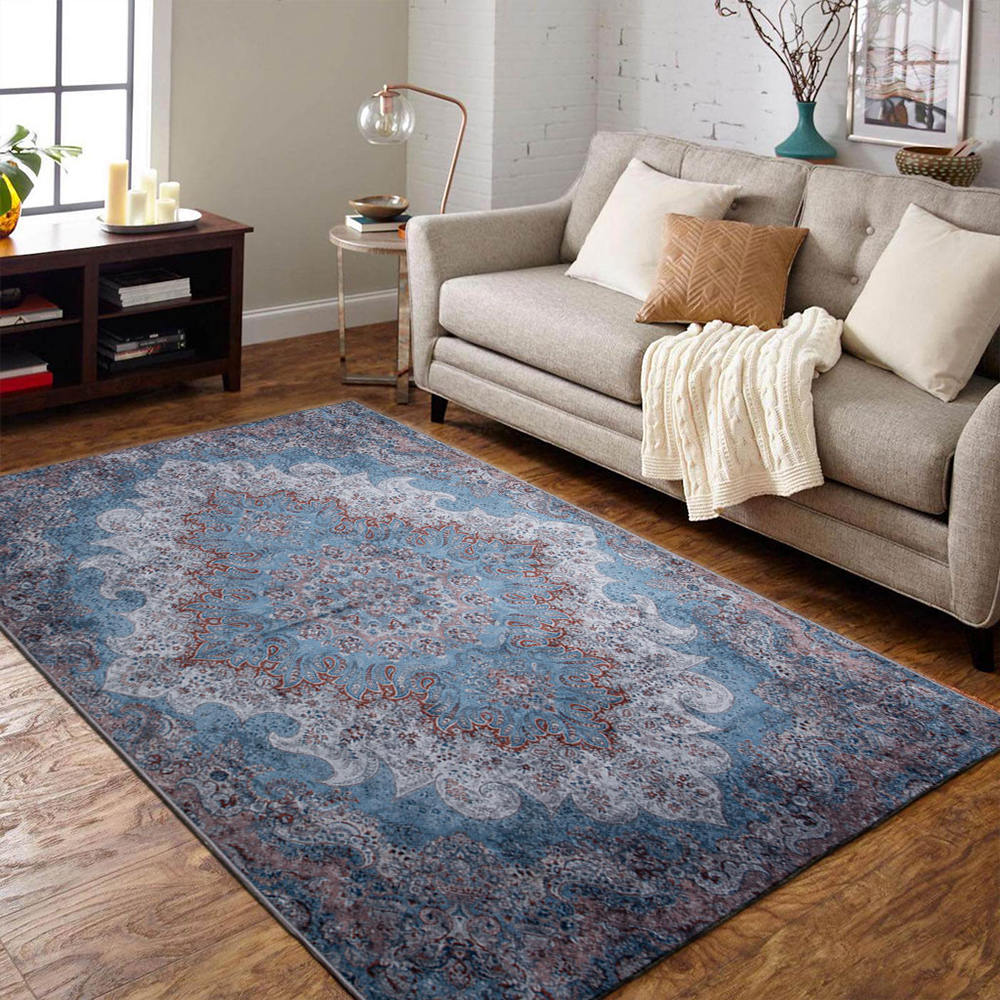
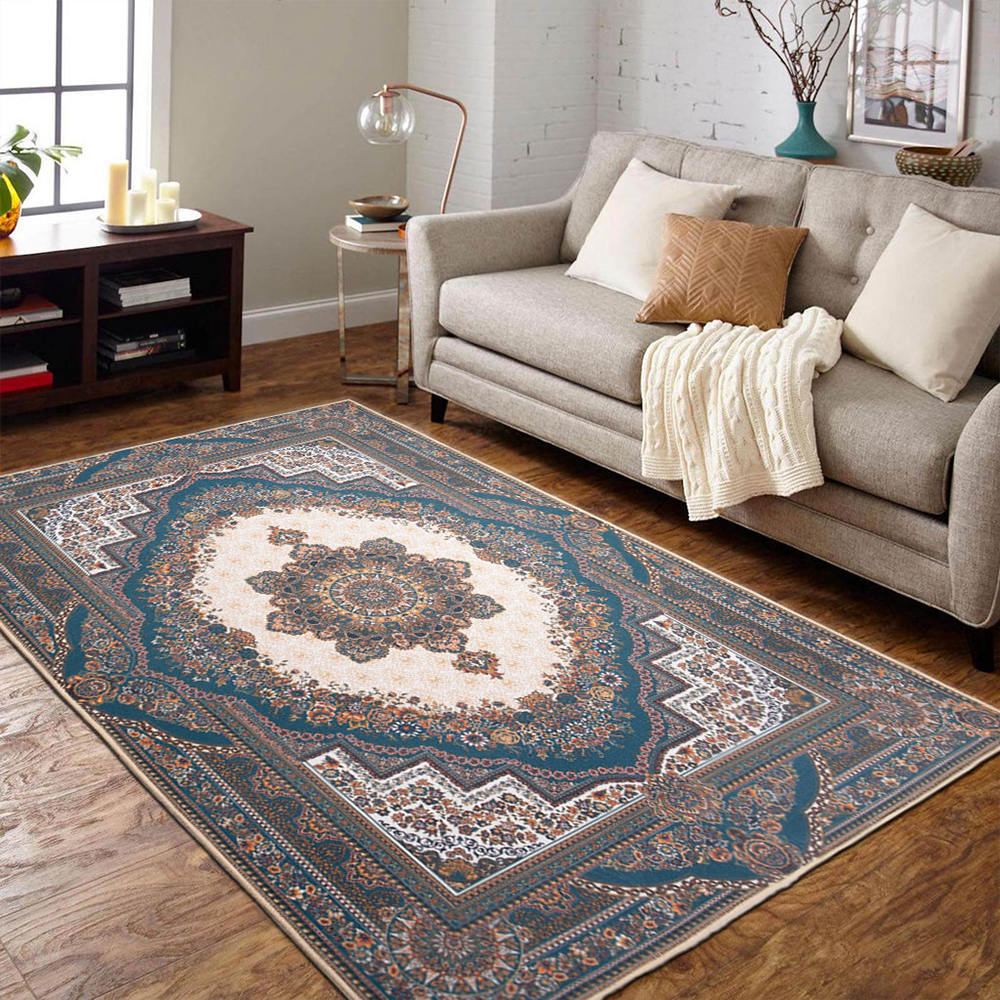
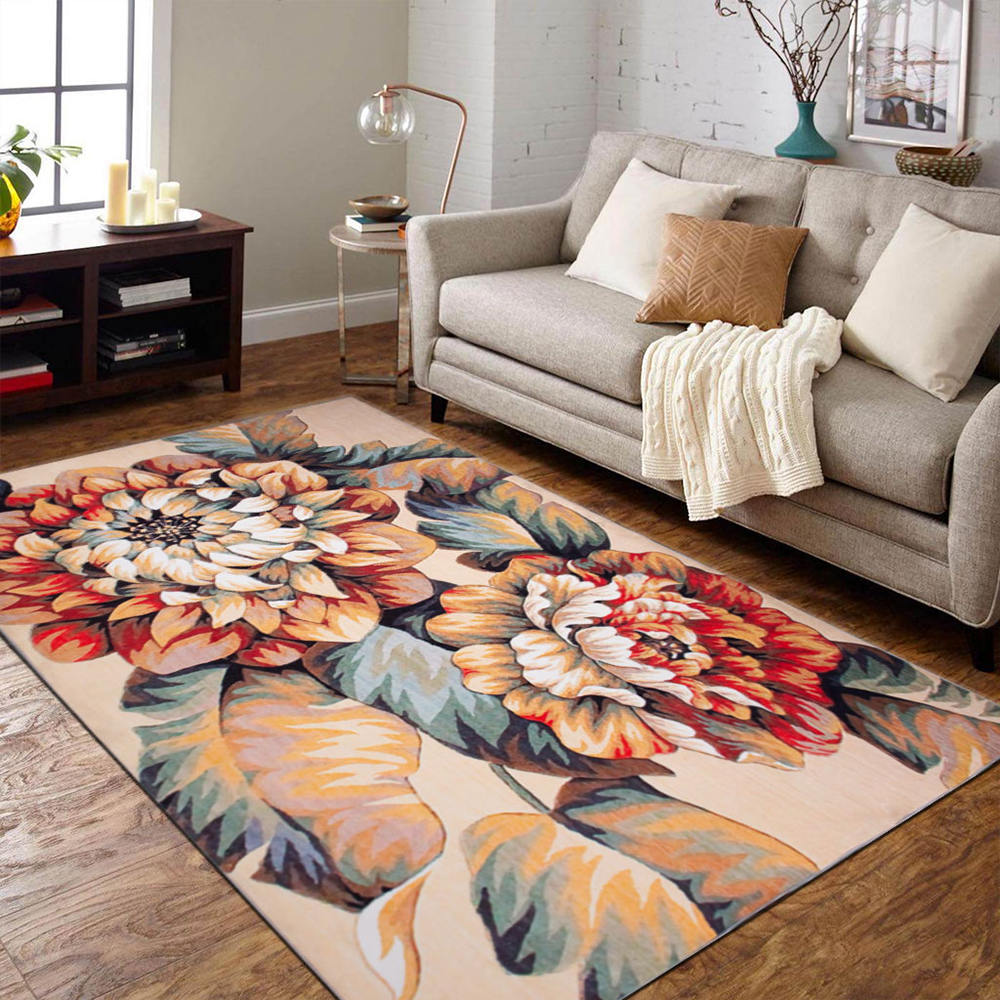
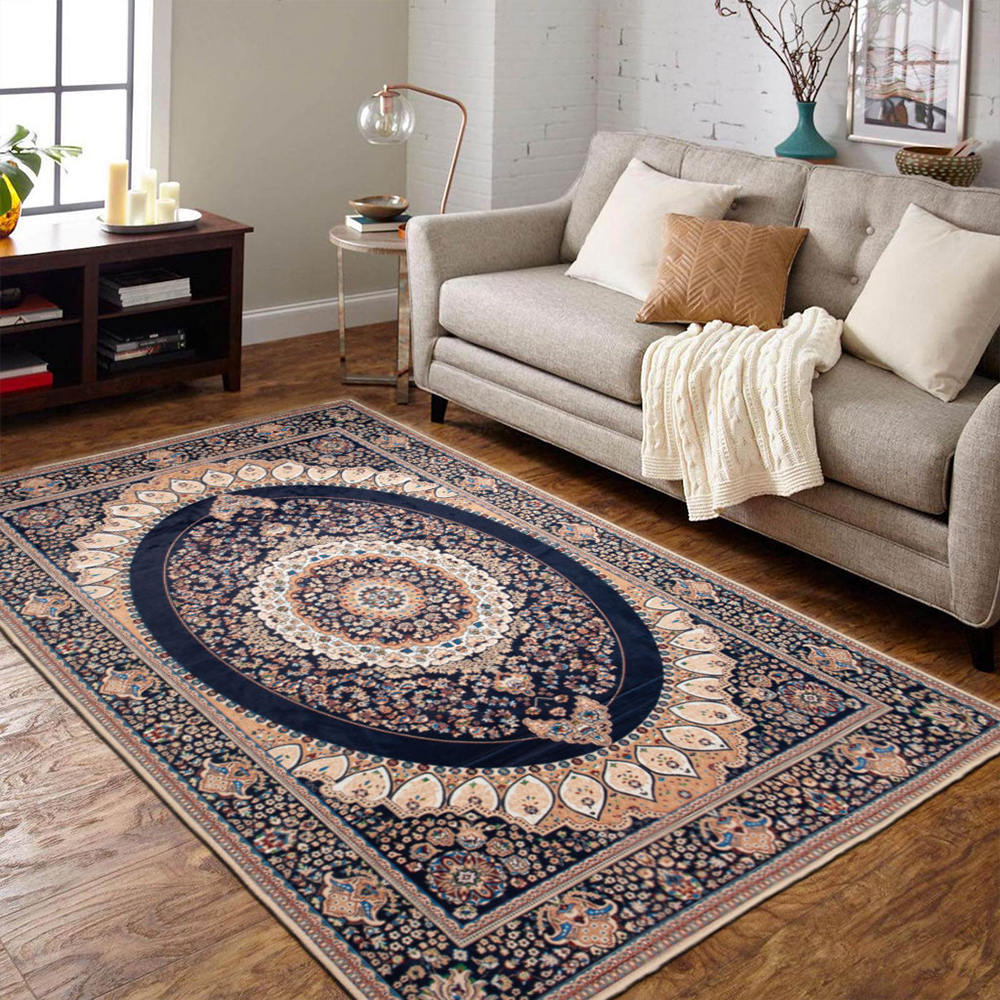
Printed Chenille 3# can be developed into rugs for living rooms, bedrooms, and children’s spaces. It can also be adapted for hospitality interiors, entrance areas, display environments, decorative floor coverings, and other locations where visual identity is important.
For commercial buyers, the fabric can support private-label collections and customized designs. A retailer may select different patterns for different markets, while a hospitality project may require coordinated motifs, colors, or visual themes. Designers can use the PFP white base as a starting point for developing products that match furniture, walls, lighting, or architectural details.
The fabric can also be considered for promotional or branded floor coverings when the intended printing and finishing specifications are appropriate. Logos, symbols, directional graphics, and decorative visual elements can be incorporated into the design process. Any final use should be evaluated through sampling and technical confirmation before mass production.
Width selection has a direct effect on carpet production efficiency. Chenille 3# is available in 170cm, 190cm, and 210cm widths, and customized dimensions can be discussed. The stated maximum width of up to 3.2 meters provides additional flexibility for larger projects.
Broad fabric widths can help reduce the number of seams required in a finished rug or carpet. Fewer joins may create a cleaner visual appearance and can simplify certain finishing processes. Large-width fabric may also improve cutting efficiency when manufacturers plan multiple sizes from a single roll.
Customized width production is especially useful for buyers with established cutting layouts or specific finished-product dimensions. Instead of forcing a standard width into every project, the buyer can discuss a width that better matches the planned product range. This may help reduce offcuts, improve material utilization, and support more efficient order planning.
Width selection should be considered together with printing equipment, roll handling, cutting tables, storage capacity, packaging requirements, and final product dimensions. The supplier’s ability to discuss customized widths gives buyers an opportunity to coordinate the material specification with the entire manufacturing process.
| Width requirement | Potential benefit | Typical consideration |
| 170cm | Suitable for narrower rugs and efficient handling | Useful for compact product formats |
| 190cm | Balanced width for varied rug and carpet sizes | Can support broader product planning |
| 210cm | Greater coverage for larger floor coverings | May reduce joins in selected applications |
| Customized width | Better alignment with project specifications | Requires confirmation during order planning |
| Up to 3.2m | Supports wide-format applications | Should be coordinated with equipment and logistics |
Carpet fabrics differ significantly in their ability to support customization, printing, production efficiency, and downstream use. Chenille 3# offers several advantages over materials that are limited to fixed widths, fixed colors, or a single production method.
A pre-colored fabric may be suitable for basic products, but it can restrict a manufacturer’s ability to respond to changing design trends. Chenille 3# is supplied in PFP white and can be printed in various designs. This means the same fundamental fabric can serve multiple collections and customer requirements.
The design team can develop different artwork while the production team retains a consistent fabric specification. This can simplify product development, especially for businesses that sell to several markets or update their collections frequently.
Some carpet materials are supplied only in one standard width. That limitation can lead to additional cutting waste, more joins, or compromises in finished dimensions. Chenille 3# offers three listed widths, customized widths, and a maximum width of up to 3.2 meters. This gives buyers more room to plan production around their own product architecture.
At 380gsm, Chenille 3# offers a substantial textile foundation while remaining manageable for roll packaging and processing. The fabric is not presented as an excessively heavy construction, which can be beneficial when the product must be transported, stored, cut, printed, or combined with other components.
The 2mm pile height distinguishes Chenille 3# from deep-pile materials. Its low-profile structure can support clean modern designs, easier maintenance, and compatibility with spaces where a flatter carpet surface is preferred. It may also be more convenient for products positioned beneath furniture or near doorways, subject to the requirements of the finished construction.
The supplier’s integrated production resources provide another advantage. The company has its own weaving, dyeing and printing factories, and finished carpet processing factories. This means the supply chain can include fabric development, coloration or printing, and final carpet processing within a connected manufacturing system.
Integrated production can improve communication between technical teams and reduce the risk of information loss between separate vendors. It can also help the supplier coordinate quality control, production schedules, and customization requests more effectively.
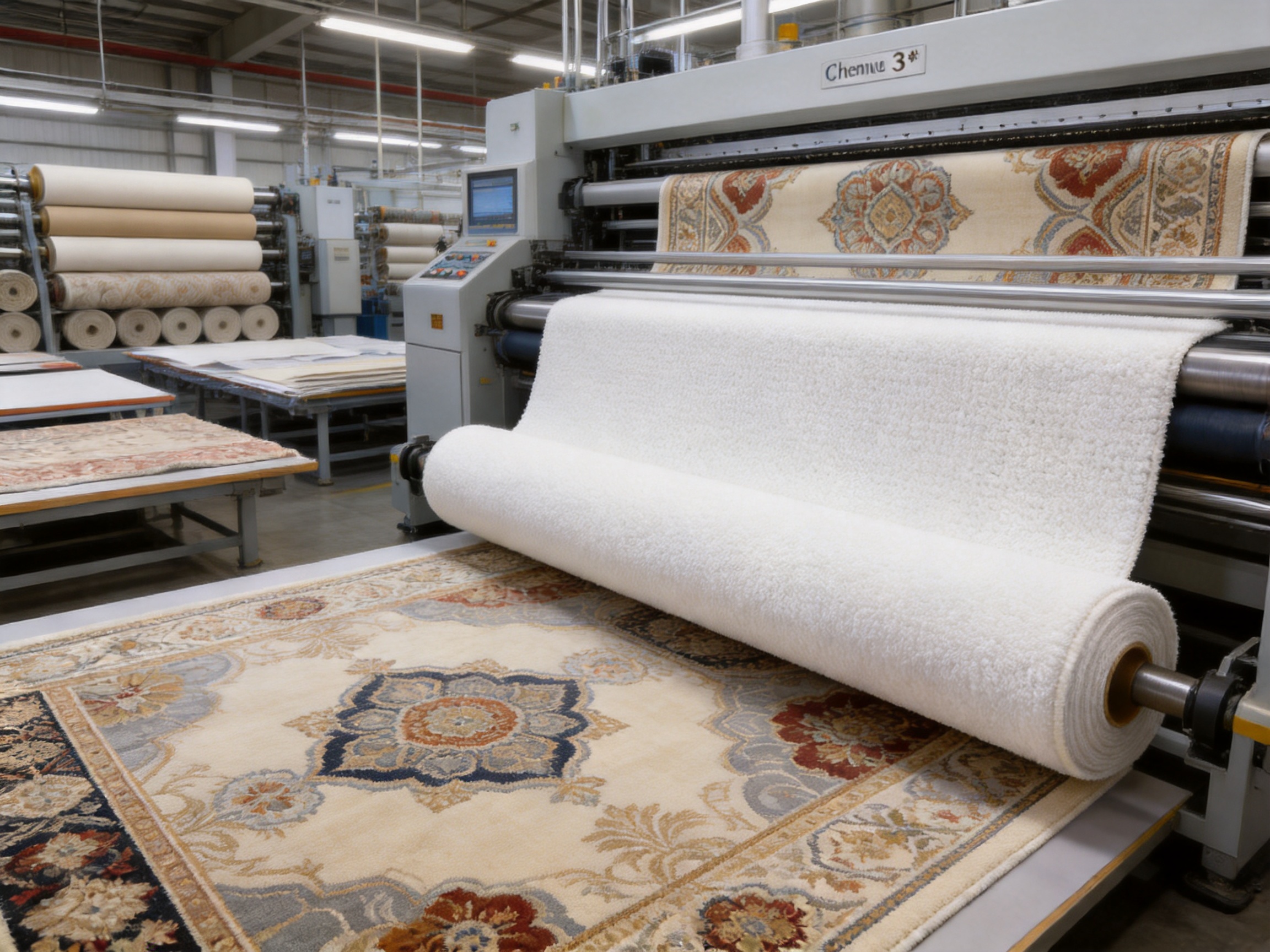
The manufacturer is based in Shaoxing, Zhejiang, a region widely associated with textile production and known as the “World Textile Capital.” This location provides access to a developed textile ecosystem, technical knowledge, production resources, and experienced personnel.
The company operates as a textile technology enterprise focused on carpet fabrics, carpets, rugs, and related finished products. Its business model combines fabric production and downstream processing rather than treating the fabric as an isolated commodity. By combining the surface and bottom of the carpet, the company aims to simplify production and improve efficiency compared with more traditional approaches.
Weaving and textile construction are fundamental to the performance of carpet fabric. In-house weaving capability can support closer control over yarn selection, fabric structure, width, weight, and production consistency. For Chenille 3#, the knitted construction is an important part of the product’s identity and performance.
When technical teams can communicate directly with the production department, adjustments can be evaluated more efficiently. This is valuable for make-to-order products, where width, color, printing preparation, and other specifications may vary from one customer project to another.
The company’s dyeing and printing facilities support the transformation of PFP white fabric into customized visual products. This is particularly relevant for Chenille 3#, because the fabric is suitable for digital printing and paper transfer printing.
Integrated printing resources can help coordinate artwork, color development, sample approval, production scheduling, and quality inspection. It also gives customers access to a broader range of visual possibilities without having to identify and manage a separate printing partner.
Finished carpet processing allows the supplier to move beyond the production of fabric rolls. The company can support the development of complete carpet and rug products, including appropriate downstream processing according to customer requirements.
This capability is useful for buyers who want to purchase a material and develop a finished product through one manufacturing partner. It can also support customers who need technical advice about how the fabric should be cut, printed, combined, or finished for a particular use.
The company has a team of more than 20 fabric engineers. This technical team develops new carpet fabrics each quarter based on market trends and provides customized services according to customer requirements.
Regular product development is important in a market where consumer preferences, interior styles, and application requirements change continuously. A supplier with dedicated fabric engineers can study new yarns, structures, surface effects, printing possibilities, and production methods rather than relying only on a fixed catalog.
For buyers, this can create opportunities to develop exclusive specifications or adapt an existing material. Chenille 3# itself demonstrates the value of combining a soft chenille yarn, knitted construction, low pile height, printing compatibility, and multiple width options in one product.
Carpet fabric quality must be considered across several dimensions. These include material composition, weight, width, pile height, surface appearance, color or print consistency, roll condition, and suitability for downstream processing. Because Chenille 3# is a make-to-order product, clear technical communication is important before production begins.
A reliable production process should establish the required width, target weight, color or PFP white condition, printing method, roll length, packaging plan, and delivery schedule. Buyers should also confirm the finished product’s intended use so that the appropriate processing and quality checks can be planned.
The supplier’s control of weaving, dyeing and printing, and finished carpet processing can help create a more coordinated quality system. Instead of dividing responsibility among unrelated factories, an integrated supplier can track the material through multiple stages and address issues within a connected production structure.
The company’s stated commitment to ecological and environmental protection also forms part of its broader manufacturing approach. It invests in sustainable materials and production methods, including recycled polyester and water-saving dyeing techniques. The company has also passed OEKO-TEX® and GRS certifications, according to the supplied company information. Certification details should be confirmed for the specific product, production batch, and intended market before commercial release.
Although the standard specifications provide a useful foundation, a production sample is recommended for important projects. Sampling allows buyers to evaluate the hand feel, surface appearance, color, print clarity, width, pile height, and compatibility with backing or finishing processes.
A sample can also help confirm whether the selected design appears as expected on chenille fabric. Textured surfaces may influence color perception and visual sharpness, so artwork should be reviewed on the actual material rather than only on a computer screen.
Chenille 3# is primarily intended for carpet and rug applications. Its material composition, low pile height, soft hand feel, roll packaging, and printing compatibility make it suitable for a wide range of interior product categories.
Residential rugs can be designed for living rooms, bedrooms, dining areas, study spaces, entrances, and other rooms. The soft chenille surface can contribute to a comfortable interior experience, while the 2mm pile height offers a modern, manageable profile.
Manufacturers can create coordinated collections using different printed patterns while maintaining the same material foundation. This can help retailers build product families with consistent quality and varied visual styles.
Commercial and hospitality spaces often require floor coverings that combine visual impact with practical maintenance. Chenille 3# can be considered for selected hotel, guestroom, office, showroom, restaurant, and reception-area applications, provided that the final carpet construction meets the project’s performance requirements.
Digital printing can support interior themes, decorative motifs, directional patterns, and coordinated branding. The availability of wide fabric can also be valuable for larger areas where a consistent appearance is desired.
The low-profile surface can be relevant to entrance and transitional areas where a flatter carpet is more convenient. The supplied product information also notes that the 2mm pile height can increase friction with the soles of the feet. The final slip, friction, and safety performance should always be evaluated on the completed product, because backing, surface treatment, installation, and environmental conditions also affect performance.
Custom printing makes the fabric suitable for projects that require a unique image rather than a standard repeating pattern. These may include decorative floor graphics, special event products, themed interiors, seasonal collections, and private-label merchandise.
Because Chenille 3# is supplied on a make-to-order basis, successful purchasing begins with accurate technical planning. Buyers should provide the intended application, required width, expected order quantity, desired color or design, printing method, finishing requirements, and delivery destination.
The minimum order quantity is 500 kilograms per color. This quantity is appropriate for professional carpet manufacturers, distributors, project suppliers, and private-label businesses planning a production run rather than a single sample. Buyers should discuss whether multiple designs can be included in one order and how the supplier defines a color for minimum-order purposes.
The stated delivery time is 15 to 20 days. Actual timing may depend on order confirmation, material availability, artwork approval, printing requirements, customization, production volume, inspection, and shipping arrangements. Early confirmation of specifications can help reduce avoidable delays.
| Planning stage | Information to confirm |
| Product selection | Chenille 3#, model 100019, 100% polyester |
| Width planning | 170cm, 190cm, 210cm, or customized width |
| Surface specification | 380gsm weight and 2mm pile height |
| Design development | PFP white base, digital printing, or paper transfer printing |
| Order quantity | Minimum 500kg per color |
| Packaging | Roll packaging and roll identification requirements |
| Quality approval | Sample, color, width, hand feel, and printing confirmation |
| Schedule | Target delivery within the expected 15–20 day production period |
| Final conversion | Cutting, backing, edging, and finished-product requirements |
Chenille 3# is packaged by rolls, which is a practical format for textile transport and factory storage. Rolls should be stored in a clean, dry, and organized environment that protects the fabric from unnecessary moisture, contamination, compression, and direct exposure to damaging conditions.
During handling, operators should avoid dragging rolls across rough surfaces or placing heavy objects on the fabric. Correct identification of each roll is also important when multiple widths, colors, or printed designs are included in one shipment.
Before cutting or printing, the fabric should be inspected for width, surface condition, roll direction, and design alignment where applicable. For printed materials, the production team should verify pattern repeat, image placement, color consistency, and any required registration marks before beginning large-scale cutting.
The final carpet construction may include backing, edge finishing, anti-slip treatment, or other components not specified in the basic fabric data. These additional processes should be selected according to the intended application. A residential rug, a decorative hospitality carpet, and an entrance product may require different finishing solutions.
Carpet fabric performance depends not only on the face material but also on the completed structure. Backing can influence dimensional stability, weight, grip, flexibility, insulation, and installation behavior. Buyers should therefore test Chenille 3# together with the intended backing system rather than evaluating the face fabric alone.
Integrated manufacturing capability can be helpful at this stage because the supplier can discuss the relationship between the surface fabric and the final carpet construction. This may simplify development for customers who do not have their own complete technical team.
Environmental responsibility is becoming increasingly important in the textile and floor-covering industries. The company’s stated focus includes ecological and environmental protection, improved consumer health experiences, sustainable materials, and more efficient production methods.
The company invests in recycled polyester and water-saving dyeing techniques. These approaches are relevant to buyers seeking to improve the environmental profile of their product lines. Recycled polyester can support the use of recovered materials, while water-saving dyeing methods may reduce water consumption during processing.
The company also states that it has passed OEKO-TEX® and GRS certifications. Such certifications can provide useful information about material and process standards, although buyers should confirm the scope, validity, and applicability of each certification for a specific order and market.
Responsible manufacturing should be considered throughout the product life cycle. This includes material selection, efficient width planning, reduction of cutting waste, controlled printing, durable construction, appropriate packaging, and the development of products that can remain useful over time. Chenille 3# supports several of these goals through its customizable widths, durable polyester construction, roll packaging, and potential for long-term use.
A specialized supplier understands that carpet fabric is not simply another textile roll. It must function as part of a complete floor-covering product. Its surface, backing compatibility, pile height, printing behavior, dimensional characteristics, and finishing requirements all influence the final result.
A supplier focused specifically on carpets, rugs, carpet fabrics, and finished floor coverings is more likely to understand these relationships. The company described in the supplied information has dedicated fabric engineers, its own production facilities, and a product development program based on market trends. These strengths support a more technical and collaborative approach than simple material trading.
The company’s control of the production chain can also provide advantages in communication. Customers can discuss their requirements with a supplier that understands weaving or knitting, printing, and finished carpet processing. This may reduce the need to coordinate several separate factories and can make it easier to trace an issue back to its source.
For international buyers, supplier reliability also includes lead-time management, order communication, packaging, and responsiveness to customization. The company’s stated goal is to provide high-quality products and excellent customer service while developing into a leading carpet and rug manufacturer in China and worldwide.
Chenille 3# can be positioned as a versatile carpet fabric for buyers who want a balance of softness, durability, design freedom, and production adaptability. Its 100% polyester composition supports everyday practicality, while its chenille yarn provides a more comfortable and visually appealing surface.
For value-oriented products, the fabric can provide a dependable base for printed rugs and carpets. For design-focused products, the PFP white surface can be used to develop customized patterns. For project-based products, the available widths and broad-width capability can help support larger format requirements.
The fabric may also be positioned as a development platform. A manufacturer can use it to test different printed collections, offer multiple width options, and create finished carpet products for different customer segments without changing the basic textile foundation.
Compared with a material that is available only in one color or one width, Chenille 3# provides a more adaptable starting point. Compared with a deep-pile fabric, its 2mm construction offers a flatter and potentially easier-to-maintain surface. Compared with a loosely defined textile product, its stated weight, pile height, construction, supply type, and packaging provide a clearer basis for procurement and production planning.
The main product strengths of Chenille 3# can be summarized in five areas. First, the 100% polyester chenille yarn provides a durable and soft material base. Second, the knitted construction offers flexibility and strength for carpet and rug conversion. Third, the 380gsm weight and 2mm pile height create a practical low-profile surface. Fourth, the PFP white base supports digital and paper transfer printing. Fifth, the available widths, customized dimensions, and maximum width of up to 3.2 meters support varied production plans.
These strengths are reinforced by the supplier’s manufacturing structure. In-house weaving, dyeing and printing, and finished carpet processing provide an integrated production chain. A team of more than 20 fabric engineers supports ongoing product development and customization. The company’s investment in sustainable materials and production methods also reflects the changing expectations of the textile market.
| Performance area | Chenille 3# characteristic | Business value |
| Material | 100% polyester | Durability, practical maintenance, and printing suitability |
| Yarn | Cool chenille yarn | Soft feel and added surface appeal |
| Construction | Knitted | Flexibility and support during conversion |
| Weight | 380gsm | Substantial feel with manageable handling |
| Pile height | 2mm | Low-profile appearance and easier maintenance potential |
| Width | 170cm, 190cm, 210cm, or customized | Flexible cutting and product planning |
| Printing | Digital or paper transfer printing | Broad design and customization possibilities |
| Packaging | Rolls | Efficient transport and factory storage |
| Supply method | Make-to-order | Suitable for planned production and customized orders |
Chenille 3# is made from 100% polyester. It is knitted using polyester chenille yarn and is designed for carpet and rug applications.
The stated weight is 380gsm. This gives the fabric a substantial feel while keeping it practical for handling, printing, cutting, and downstream processing.
The pile height is 2mm. This low-profile construction creates a sleek surface that can be easier to clean and maintain than a much deeper pile.
The standard width options are 170cm, 190cm, and 210cm. Customized widths can also be discussed, and the maximum stated width can reach up to 3.2 meters.
Yes. The PFP white fabric can be directly used for digital printing or paper transfer printing in various designs. Buyers should approve a sample before mass production to confirm color, image clarity, and pattern alignment.
PFP white refers to the standard white base supplied for further processing. It provides a neutral surface for printing or other subsequent coloration and design treatments.
The primary applications are carpets and rugs. Depending on the finished construction and project requirements, the fabric may be used in residential, commercial, hospitality, entrance, bedroom, living room, bathroom, kitchen, and other interior products.
The product description identifies the knitted construction and polyester chenille yarn as contributing to durability and suitability for high-traffic applications. However, the final performance depends on the complete carpet construction, backing, installation, maintenance, and site conditions. A project-specific sample and performance evaluation are recommended.
The stated minimum order quantity is 500 kilograms per color. Buyers should confirm how custom prints and multiple designs are handled within the order.
The fabric is packaged by rolls. Roll packaging supports transportation, storage, and processing in carpet manufacturing facilities.
The stated delivery time is 15 to 20 days. The actual schedule should be confirmed according to the order quantity, customization, artwork approval, production plan, inspection, and shipping arrangements.
Yes. The product information states that widths can be customized. Buyers should provide their required finished dimensions and cutting plan so the supplier can confirm technical feasibility and production conditions.
Yes. The company has weaving, dyeing and printing factories, and finished carpet processing factories. This enables it to provide both carpet fabric and finished carpet-related products according to customer requirements.
The company states that it invests in recycled polyester and water-saving dyeing techniques and has passed OEKO-TEX® and GRS certifications. Certification scope and validity should be confirmed for the specific product and order.
Buyers should provide the target application, required width, quantity, design or color, printing method, finishing requirements, expected delivery date, and destination. A sample should then be reviewed and approved before mass production.
Chenille 3# 100% polyester carpet fabric is a versatile material for manufacturers seeking a dependable and customizable foundation for carpets and rugs. Its 100% polyester chenille yarn, 380gsm weight, knitted construction, 2mm pile height, soft and cool feel, and stated resistance to stains and fading provide a practical balance of comfort and durability.
The product’s strongest commercial advantage is its flexibility. Buyers can choose from 170cm, 190cm, and 210cm widths, request customized dimensions, and potentially use widths of up to 3.2 meters. The PFP white surface can be processed through digital printing or paper transfer printing, enabling a wide range of patterns and customized designs.
The supplier’s integrated manufacturing model adds further value. In-house weaving, dyeing and printing, and finished carpet processing provide greater control over product development, quality, communication, and lead time. More than 20 fabric engineers support new product development and customized solutions, while the company’s focus on sustainable materials and water-saving production methods reflects the evolving needs of responsible textile buyers.
For residential rugs, commercial carpets, hospitality interiors, entrance products, and custom printed floor coverings, Chenille 3# offers a balanced starting point for efficient product development. With suitable sampling, technical confirmation, and finished-product testing, it can help manufacturers create attractive, practical, and market-responsive carpet products.
1. Product specification sheet for Chenille Fabric 3#, item model number 100019.
2. Technical information regarding 100% polyester chenille yarn, knitted construction, 380gsm weight, and 2mm pile height.
3. Manufacturer-provided information concerning width options, customized widths, roll packaging, minimum order quantity, and delivery time.
4. Manufacturer-provided information concerning digital printing and paper transfer printing applications.
5. Company information concerning integrated weaving, dyeing and printing, and finished carpet processing capabilities.
6. Company information concerning fabric engineering, quarterly product development, and customized textile services.
7. Company information concerning recycled polyester, water-saving dyeing techniques, OEKO-TEX® certification, and GRS certification.
8. General textile manufacturing principles concerning polyester fibers, knitted structures, carpet pile height, printing preparation, and roll-based material handling.

ADD: No.75 Zhenyuan Road, Yuecheng District, Shaoxing City, Zhejiang Province, China 312000

Tel : +86-189 6750 9795

FAX : +86-0575-8803 2773

Email : fisher@benetextile.com

Copyright © Zhejiang Benyi Textile Technology Co., Ltd. All Rights Reserved. Carpets and Rugs Manufacturer

 English
 Français
 Deutsch
 عربى