

Qiao Yunting — Senior Carpet Sales Manager
 Home / Author / Qiao Yunting — Senior Carpet Sales Manager / Why a 560 GSM Chenille and Arctic Fleece Blanket Is a Strong Choice for Modern Textile Collections
 2026.10.28
 Qiao Yunting — Senior Carpet Sales Manager
Blankets are no longer viewed only as seasonal household necessities. In today’s home textile market, buyers look for products that combine comfort, attractive appearance, practical performance, easy maintenance, and dependable manufacturing. A blanket that satisfies only one of these requirements may struggle to stand out. A product that delivers softness, warmth, durability, flexible use, and visual appeal can serve many customer groups at once, from individual consumers and hospitality businesses to retailers, interior designers, and professional procurement teams.
The Fancy Yarn Chenille Composite Arctic Fleece Blanket is designed around this broader understanding of modern blanket performance. It combines a 310 GSM fancy yarn chenille fabric with a 230 GSM arctic fleece backing, creating a total weight of approximately 560 GSM. This double-layer construction gives the blanket a substantial hand feel while preserving the softness and versatility expected from a premium everyday textile.
The combination of chenille and arctic fleece is the central advantage of this design. Chenille contributes a decorative surface, a distinctive yarn texture, and a comfortable, relatively breathable feel. Arctic fleece contributes thickness, insulation, softness, and a fluffy reverse side. Together, the two materials provide a balanced experience that is difficult to achieve with a single-layer blanket.
Manufactured by Zhejiang Benyi Textile Technology Co., Ltd., a textile technology company based in Shaoxing, Zhejiang Province, China, the blanket reflects a production model that integrates fabric development, weaving, dyeing and printing, and finished-product processing. This integrated structure supports better coordination between material selection, appearance, construction, quality control, and delivery planning.
For wholesalers and product developers, the blanket offers a useful combination of commercial flexibility and technical value. It is suitable for sofas, beds, hotels, offices, aircraft travel, study areas, and other indoor settings. Its solid-color design can coordinate with a wide range of interior styles, while its available size options allow businesses to serve different applications and customer preferences.
Fancy Yarn Chenille Composite Arctic Fleece Blanket
Content
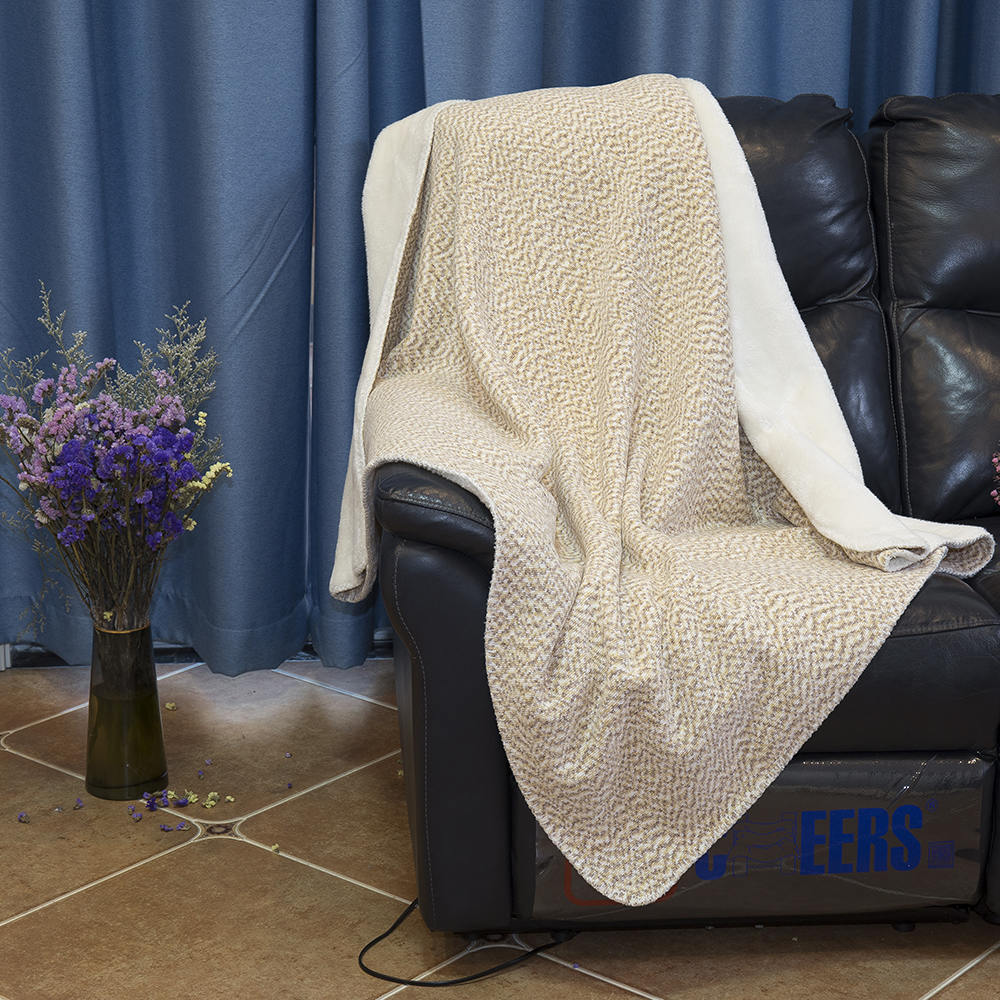
The Fancy Yarn Chenille Composite Arctic Fleece Blanket is a reversible, double-layer knitted blanket made from 100% polyester. Its construction is described as composite because two different textile surfaces are joined to create one finished product. One side uses fancy yarn chenille fabric, while the other uses arctic fleece.
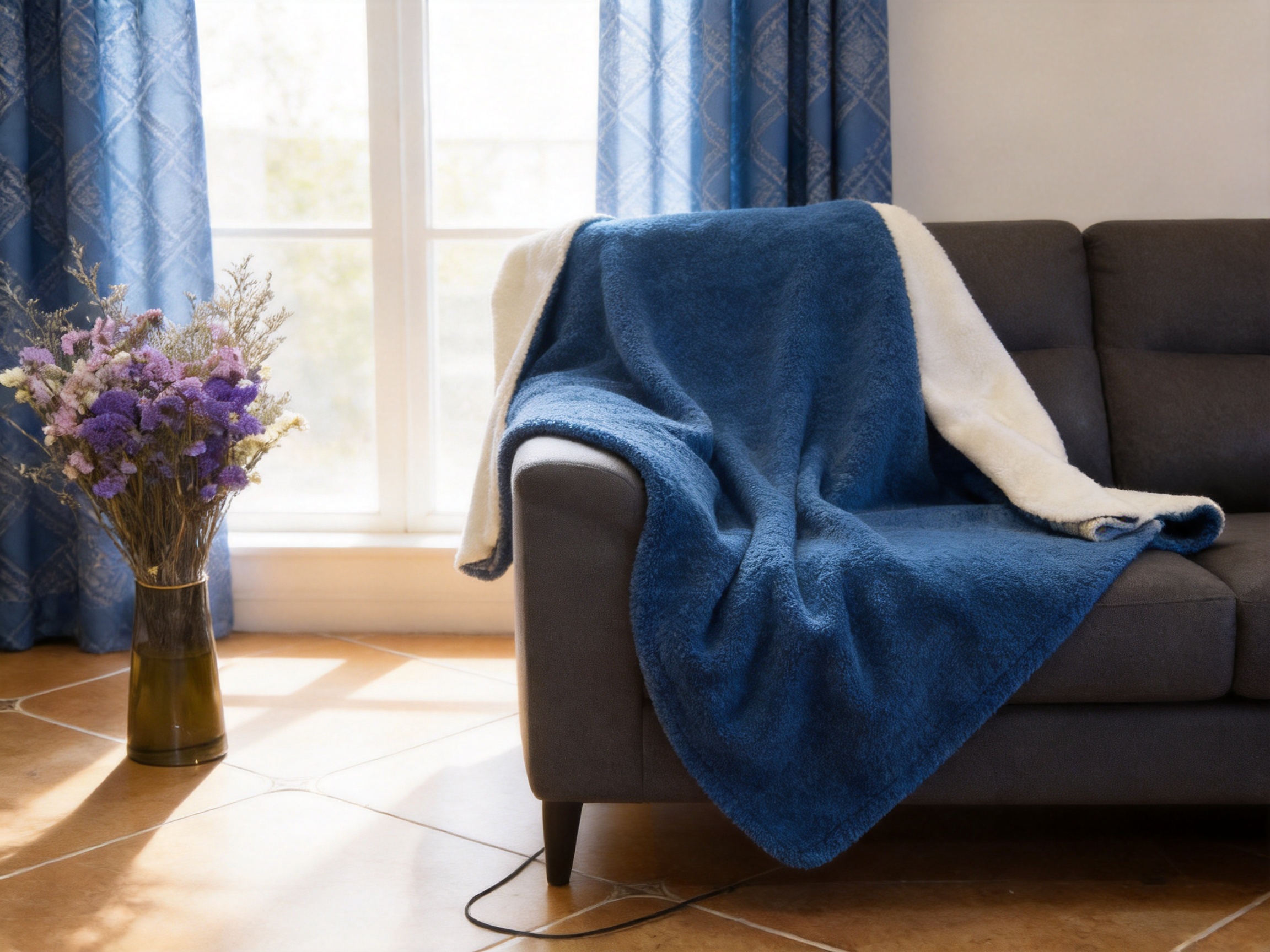
The chenille side provides the blanket with a refined, textured appearance. Chenille yarn is valued for its soft pile-like character and its ability to create visual depth without relying on complicated printed patterns. The surface can look elegant on a sofa, bed, or lounge chair, making the blanket both a functional covering and a decorative home accessory.
The arctic fleece side is designed to increase thickness and warmth. Its soft, fluffy hand feel is especially useful during cold weather, when users want a blanket that feels comforting immediately after contact. The fleece backing also supports the blanket’s reversible function. Users can select the surface that best matches their comfort preference, décor, or intended use.
With a total weight of 560 GSM, the blanket has a heavier and more substantial construction than many lightweight throws. The composition is based on 310 GSM fancy yarn chenille fabric and 230 GSM arctic fleece. This specific weight balance helps create a blanket that feels warm and full without relying on excessive bulk.
The product is knitted, which supports a soft and flexible hand feel. A knitted structure can also help the blanket drape naturally over a bed, sofa, or armchair. Rather than appearing stiff or rigid, the textile can conform to the shape of the furniture or the user’s body.
| Product Name | Fancy Yarn Chenille Composite Arctic Fleece Blanket |
| Category | Blanket |
| Brand | Bene |
| Material | 100% Polyester |
| Total Weight | 560 GSM |
| Construction | Double-layer composite |
| Outer Surface | 310 GSM fancy yarn chenille fabric |
| Reverse Surface | 230 GSM arctic fleece |
| Weave or Knit Type | Knitted |
| Pattern | Solid colors |
| Available Sizes | 50 x 60 inches; 60 x 80 inches; 90 x 90 inches; 90 x 110 inches |
| Recommended Uses | Sofa, bed, hotel, plane, office, study, coach, and travel use |
| Care Instructions | Machine wash separately in cold water and tumble dry on low |
| Seasonal Use | All seasons |
| Age Range | All ages |
| Key Features | Soft, warm, washable, reversible, wrinkle resistant, shrink resistant, and color stable |
The chenille surface gives the blanket a richer appearance than a basic flat fleece throw. Its fancy yarn texture creates a tactile finish that can complement upholstered furniture, bedding, and contemporary interiors. Because the product is available in solid colors, the visual effect comes primarily from the yarn construction and surface depth rather than from a busy printed pattern.
This makes the blanket suitable for customers who prefer understated design. Solid colors can be used in minimalist rooms, hotel suites, modern offices, neutral bedrooms, and traditional living spaces. Retailers can also combine several color options to create coordinated seasonal collections without changing the basic construction.
The decorative chenille face can serve as a soft styling layer on a couch or bed. When placed over furniture, it adds texture and warmth while helping protect the underlying surface from everyday dust, accidental contact, and light staining. This dual role can increase the product’s value in the eyes of both consumers and hospitality buyers.
The arctic fleece side is focused on comfort. Its fluffy structure gives the blanket a plush reverse surface that feels warm against the skin. This is particularly beneficial for use during winter, in air-conditioned rooms, during travel, or in offices where temperatures may vary throughout the day.
The fleece backing also adds thickness to the overall construction. Instead of using a thin fabric that provides limited insulation, the blanket offers a fuller layer between the user and the surrounding environment. The result is a more reassuring and comfortable experience for people who want a substantial blanket without choosing a heavy traditional bedcover.
Because the fleece and chenille surfaces provide different tactile experiences, the product can be used in both warm and cool indoor conditions. The chenille side may feel more suitable when a breathable decorative layer is preferred, while the fleece side can be selected when maximum softness and warmth are the priority.
Reversibility is an important practical feature. A single-sided blanket may have one preferred orientation, but a composite blanket can be turned over according to the user’s needs. This expands the product’s functional range and can also help maintain a fresh appearance in frequently used environments.
For hotels and furnished apartments, reversible construction gives housekeeping teams more flexibility when preparing rooms. For households, it allows the blanket to function as both a decorative throw and a personal comfort layer. For offices and aircraft travel, the user can choose the surface that feels more comfortable during a particular season or temperature condition.
Many low-cost blankets are built from a single layer of relatively light fabric. These products can be easy to manufacture and transport, but they may offer limited warmth, less tactile depth, and fewer styling possibilities. The 560 GSM composite blanket is positioned differently. Its two-layer construction provides a fuller feel and creates a clear distinction between the decorative face and the comfort-oriented reverse.
Compared with a thin single-layer fleece blanket, the composite design can provide improved perceived warmth and a more substantial drape. Compared with a plain flat polyester blanket, it offers more surface texture and a more premium appearance. Compared with a very heavy traditional blanket, it can provide softness and warmth while remaining flexible enough for sofas, offices, travel, and multipurpose use.
The product also offers advantages over blankets that rely entirely on printed graphics. A solid-color chenille surface has a more adaptable appearance and is less likely to conflict with existing furniture or bedding. It can be marketed as a quiet luxury product, a hotel comfort item, a neutral home accessory, or a practical winter blanket depending on the chosen color and size.
Another advantage is care convenience. The blanket is machine washable, wrinkle resistant, shrink resistant, and designed not to fade easily after repeated use and washing. These features are commercially important because customers increasingly expect home textiles to be attractive but not difficult to maintain.
A product that requires special cleaning can create inconvenience and additional ownership costs. By contrast, the recommended care process is straightforward: wash separately in cold water and tumble dry on a low setting. Clear care guidance helps protect the textile and gives retailers an easy benefit to communicate to end customers.
Some blankets are optimized for appearance but do not feel sufficiently soft. Others are extremely soft but appear too casual for carefully designed interiors. The chenille and arctic fleece combination addresses both expectations. The chenille side supports visual presentation, while the fleece side emphasizes physical comfort.
This balance is especially relevant in hospitality. A hotel blanket should look clean and coordinated when folded at the foot of a bed, but it must also feel warm and pleasant when used. In an office, the blanket should be comfortable without appearing out of place in a professional environment. In a living room, it can function as both a practical layer and a decorative accent.
Product versatility can help wholesalers reduce the need to carry many unrelated blanket constructions. One composite blanket can be promoted across several channels, including home furnishing stores, bedding retailers, hotel suppliers, office product distributors, travel accessory businesses, and online marketplaces.
The available sizes support different selling positions. The 50 x 60 inch option can function as a personal throw for sofas, chairs, offices, or travel. The 60 x 80 inch size can serve as a larger personal blanket or single-bed covering. The 90 x 90 inch and 90 x 110 inch options are more suitable for larger beds, shared use, guest rooms, and hospitality applications.
This range also allows buyers to develop tiered collections. Smaller sizes can be positioned as accessible entry products, while larger sizes can be presented as premium comfort items. The same material concept can therefore serve multiple price points and room types.
The quality of a blanket depends not only on its design but also on the consistency of the manufacturing system used to make it. Zhejiang Benyi Textile Technology Co., Ltd. operates in Shaoxing, a major textile production center known for its broad industrial network and textile expertise. This location provides access to fabric development resources, production knowledge, processing services, and supply-chain coordination.
The company specializes in carpets, rug fabrics, and finished textile products, while also developing materials for wider home furnishing applications. Its production structure includes weaving factories, dyeing and printing factories, and finished carpet processing factories. This degree of integration is valuable because it allows different production stages to be coordinated rather than treated as completely separate activities.
When a supplier controls or closely coordinates multiple production stages, it can respond more effectively to issues involving color, texture, weight, construction, and finishing. For a composite blanket, this coordination is particularly important because the chenille and fleece layers must work together in appearance, hand feel, and performance.
An integrated manufacturing model can help reduce communication gaps between material developers and finished-product processors. It also makes it easier to evaluate whether a new fabric concept can be converted into a stable commercial product. This is an important advantage for buyers seeking more than a standard catalog item.
The company’s experience in both surface and backing materials supports a broader understanding of textile construction. The same technical awareness used in carpet and rug fabrics can be applied to questions of wear, softness, color, surface effect, and dimensional performance in blanket development.
The company has a team of more than 20 fabric engineers and develops new carpet fabrics each quarter based on market trends. Although the blanket is a finished home textile rather than a carpet, this development culture is relevant to the product. A supplier accustomed to experimenting with yarns, surfaces, weights, and textile combinations is better positioned to create differentiated materials.
Market-responsive development can support changes in color direction, surface texture, product weight, size, packaging, and end-use positioning. Buyers may be able to request adaptations for private-label programs, hospitality projects, seasonal collections, or specific retail channels, subject to production evaluation and minimum order requirements.
Customization is also useful when a customer needs a coordinated product family. For example, a buyer may want blankets that match a collection of cushions, rugs, or other soft furnishings. Solid colors and adaptable textile surfaces make this kind of coordination more achievable.
Controlling more parts of the production chain can improve visibility over quality and lead times. Instead of depending entirely on unrelated external suppliers, an integrated textile manufacturer can coordinate material planning, processing schedules, finishing requirements, and final inspection more closely.
This does not eliminate the need for product inspection or buyer specifications. However, it can create a stronger foundation for consistent production. For wholesale customers, predictable lead times are particularly important because delayed blanket deliveries can affect seasonal launches, hotel opening schedules, promotional campaigns, and inventory planning.
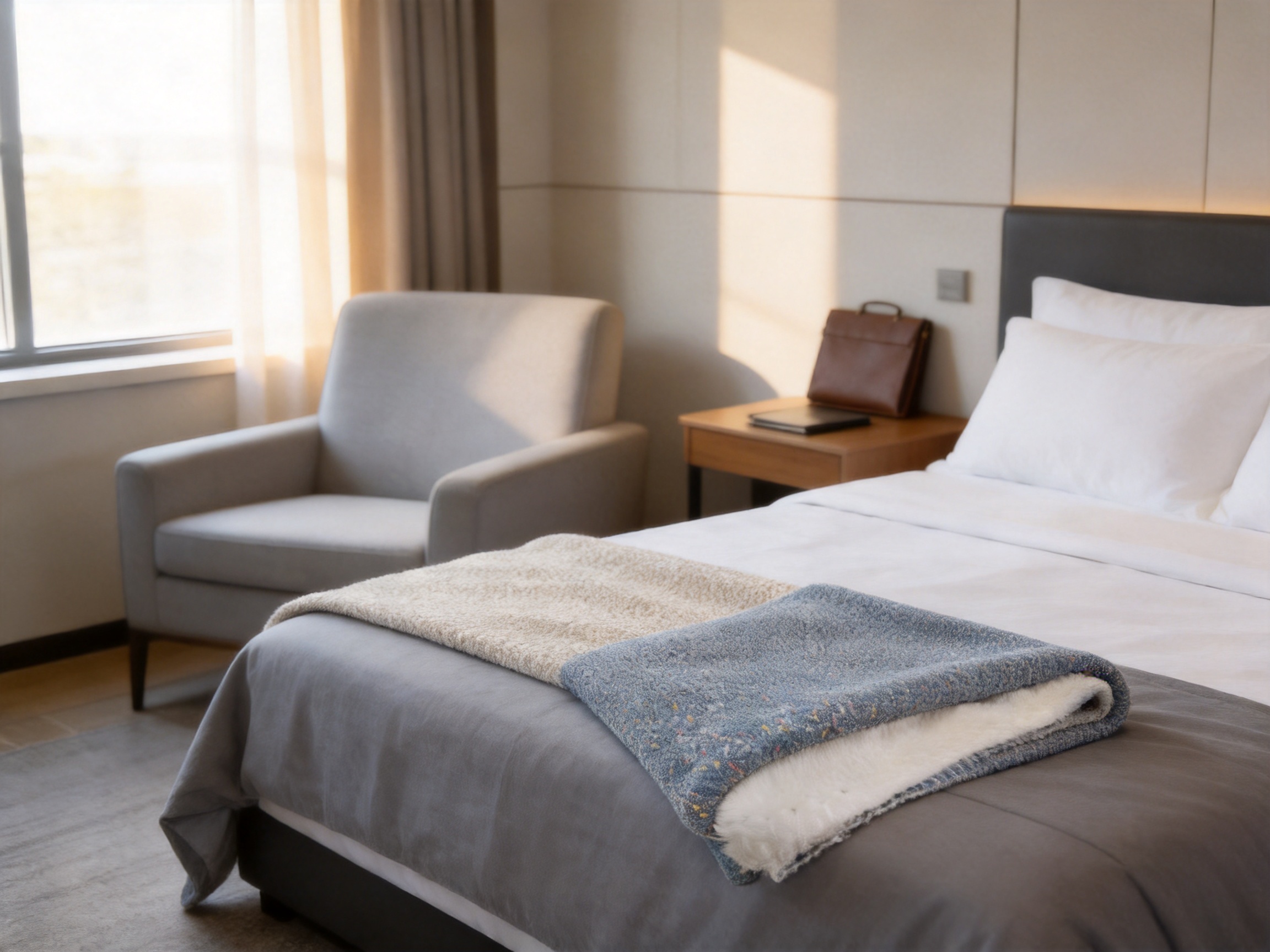
The blanket is made from 100% polyester. Polyester is widely used in home textiles because it can provide softness, color retention, durability, and practical care performance. It is also suitable for the production of chenille-style yarn surfaces and fleece structures, allowing manufacturers to combine different textures within one product.
In this blanket, polyester supports the requirements of repeated household and commercial use. The material can be machine washed, and the product is designed to resist common concerns such as wrinkling, shrinkage, and fading. These performance characteristics help extend the useful life of the blanket and reduce the likelihood that it will quickly lose its original appearance.
The company also emphasizes ecological and environmental protection in its textile development. Its stated approach includes investment in sustainable materials and production methods, including recycled polyester and water-saving dyeing techniques. The company has also passed OEKO-TEX and Global Recycled Standard certifications, according to the supplied company information.
Responsible textile manufacturing is becoming increasingly relevant to professional buyers. Retailers and hospitality groups may need more information about material sourcing, processing, chemical management, and environmental practices when selecting suppliers. A manufacturer that is already developing sustainability capabilities can be better aligned with these procurement expectations.
It is important for buyers to confirm the specific certification scope, transaction documentation, and production batch requirements for any individual order. Even so, the company’s stated focus on environmental protection indicates that sustainability is considered as part of its broader textile technology strategy rather than treated only as a marketing phrase.
A blanket’s value is strongly influenced by how easily it can be cared for. The recommended instructions for this product are simple: wash separately in cold water and tumble dry on a low setting. Following these instructions can help maintain the chenille texture, fleece softness, color stability, and dimensional integrity of the blanket.
Washing the blanket separately can reduce friction with garments or textiles that contain zippers, hooks, rough surfaces, or strong dyes. Cold water can help limit unnecessary stress on the fibers and colors, while low-temperature tumble drying can help protect the surface and reduce the risk of excessive heat exposure.
The blanket is described as wrinkle resistant and shrink resistant. These properties are valuable for both individual users and commercial operators. A household user can return the blanket to service without extensive ironing or reshaping. A hotel or office can maintain a neat presentation with less labor.
Color stability is equally important for solid-color products. Because the design depends on understated color and textured yarn, fading or uneven appearance could reduce its decorative value. A product that remains visually consistent after multiple washes is more suitable for long-term use and repeat purchasing.
Durability does not mean that the blanket should be handled without care. Sharp objects, harsh bleaching agents, excessively high temperatures, and aggressive mechanical treatment can damage many textile products. Clear care labeling and appropriate user education can help preserve the intended performance of the chenille and fleece surfaces.
In the living room, the blanket can be folded over a sofa arm, placed across a chair, or arranged over the back of a couch. The chenille surface creates a decorative layer, while the fleece side remains available when someone wants additional warmth. Its substantial weight also helps it stay in place better than extremely light throws.
In the bedroom, the larger sizes can be used as an additional comfort layer over bedding. The blanket may be suitable for guest rooms, reading corners, children’s rooms, and shared family spaces. Because it is designed for all ages, it can be positioned as a general household comfort product rather than a narrowly specialized item.
In a study or home office, the smaller size can provide warmth during extended periods of sitting. It can also be used in rooms where heating and air conditioning create temperature differences throughout the day.
Hotels can use the blanket in guest rooms, lounges, executive suites, reading areas, and transportation-related hospitality settings. The solid-color design can be selected to match existing décor, while the reversible construction gives staff flexibility during room presentation and guest use.
Offices may provide the blanket in private workspaces, meeting rooms, reception lounges, nursing rooms, or rest areas. In these environments, machine washability and resistance to wrinkling are practical benefits because the product may be shared or cleaned frequently.
The blanket is also suitable for aircraft travel, coaches, and other transport-related situations where compact comfort matters. The smaller size options can be considered for personal travel use, although buyers should confirm packaging, hygiene, and operational requirements for their particular transport application.
The solid-color pattern makes the blanket easy to incorporate into different product lines. Instead of competing with furniture or bedding through an elaborate graphic, it adds depth through texture. This can appeal to consumers who prefer calm, coordinated interiors and to commercial buyers who require products that fit several room schemes.
Retailers can merchandise the blanket by color family, room application, season, or material story. A display may emphasize the chenille surface and decorative character, while product packaging or signage can explain the warm arctic fleece reverse. Demonstrating both sides is useful because the two surfaces represent different aspects of the product’s value.
The blanket can also be promoted with complementary products. It may be displayed alongside sofa cushions, carpet fabrics, area rugs, bedroom textiles, or other soft furnishings. Since the company specializes in carpets, rug fabrics, and finished textile products, coordinated sourcing may be possible for buyers developing broader interior collections.
For online sales, close-up images should show the chenille texture, fleece reverse, edge finishing, and overall drape. Customers often judge softness and thickness visually when they cannot touch a product in person. Detailed specification panels should clearly state the GSM, material, dimensions, layer construction, and care instructions.
For hospitality or contract buyers, the merchandising message should focus on consistency, maintainability, reversible function, and suitability for repeated use. For consumer retail, the focus can shift toward softness, warmth, home décor, gifting, and year-round comfort.
| 50 x 60 Inches | Personal throw, sofa, armchair, office, aircraft travel, reading, and smaller spaces |
| 60 x 80 Inches | Large personal blanket, single-bed use, sofa coverage, guest room, and home office |
| 90 x 90 Inches | Double-bed coverage, shared household use, larger sofas, and hospitality applications |
| 90 x 110 Inches | Large bed coverage, family use, spacious guest rooms, and premium comfort positioning |
Size selection should be based on intended use, local bedding standards, furniture dimensions, and preferred drape. Buyers should also confirm final production tolerances and packaging dimensions before placing a large order, particularly when the blankets will be distributed internationally.
Wholesale buyers often evaluate more than the product itself. They need to understand whether a supplier can maintain quality across repeat orders, communicate effectively, offer practical customization, and support delivery schedules. The manufacturing profile of Zhejiang Benyi Textile Technology Co., Ltd. addresses several of these concerns.
The company is located in Shaoxing, one of China’s most important textile regions. Its production network includes fabric engineering, weaving, dyeing and printing, and finished-product processing. This combination provides a foundation for developing textiles with controlled surface effects and for converting those textiles into finished products suitable for commercial sale.
The company’s focus on new textile production technologies can be useful for buyers seeking differentiated products rather than generic stock items. Its engineers develop new fabric concepts according to market trends, while its customization services can support projects with particular color, material, construction, or application requirements.
Quality control is also supported by the company’s stated ability to manage the production chain. In a composite blanket, inspection may involve raw material quality, color matching, fabric weight, surface consistency, layer alignment, stitching or joining, dimensions, edge condition, and final appearance. Close coordination among production stages can make these checks more efficient.
For international buyers, a professional supplier relationship should include confirmed specifications, approved samples, production standards, packaging requirements, inspection procedures, and shipping documentation. The blanket’s detailed construction gives buyers a useful starting point for creating a clear technical specification sheet.
The blanket can be positioned above basic promotional throws because of its 560 GSM weight, double-layer construction, chenille face, arctic fleece reverse, and reversible use. It can also be positioned as a more accessible alternative to highly specialized luxury blankets that require delicate maintenance or have limited application ranges.
Its competitive appeal comes from the combination of features rather than from one isolated specification. A heavy weight alone does not guarantee comfort. A soft surface alone does not guarantee visual appeal. A decorative face alone does not guarantee warmth. The product joins these qualities in one construction and adds machine-washable care convenience.
Another competitive strength is its broad application range. Many blankets are marketed either as decorative throws or as cold-weather bedcovers. This product can serve both roles and can move between home, hospitality, office, and travel environments. That flexibility can help retailers and distributors create more efficient inventories.
The company’s ability to develop fabrics and provide customized services further supports competitive differentiation. Buyers may be able to request colors or product variations that are not available from suppliers focused only on standardized, high-volume items. Customization should be assessed with regard to minimum order quantities, sampling requirements, technical feasibility, and production lead time.
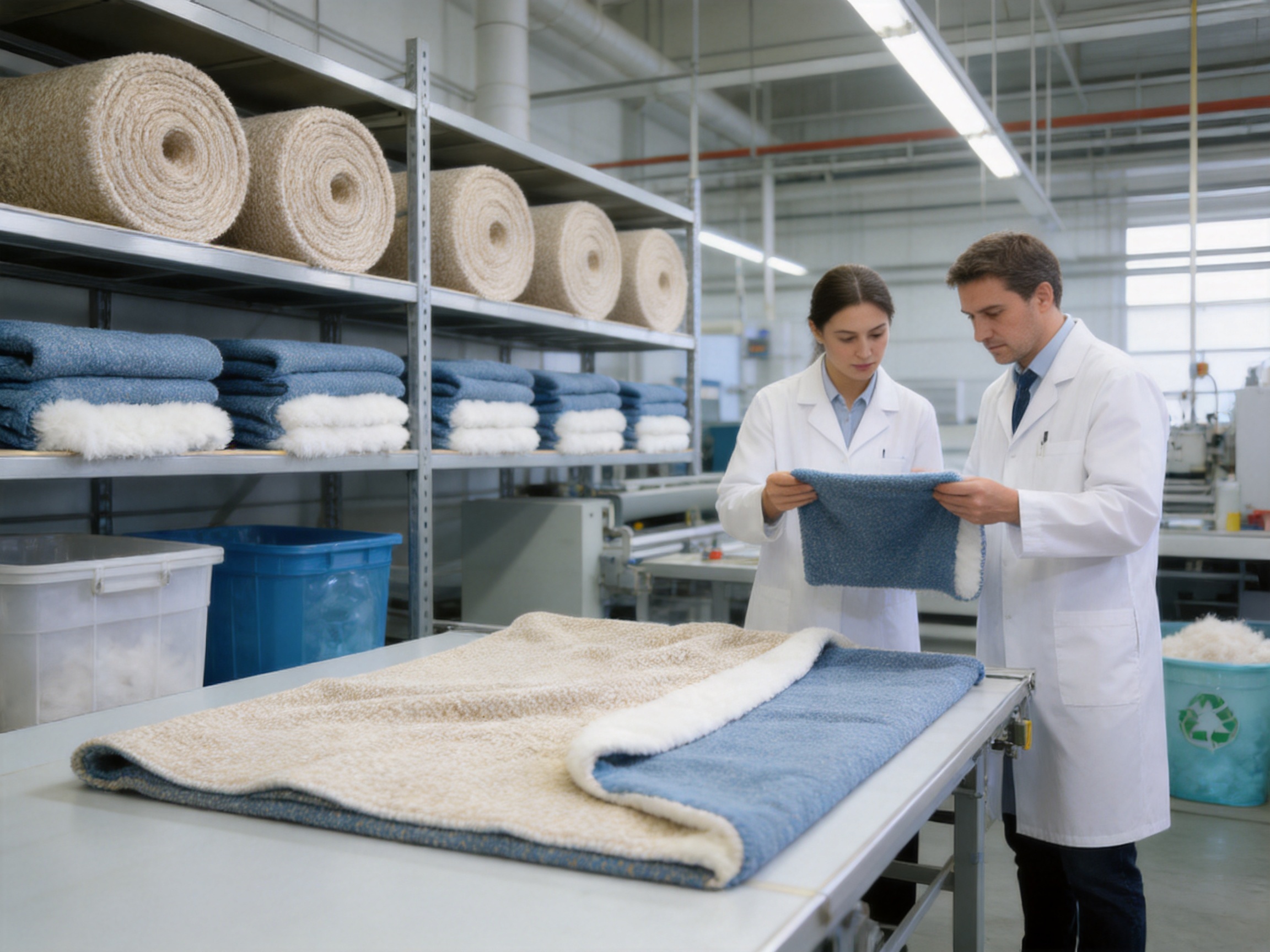
Before approving a large production run, buyers should evaluate a representative sample of the blanket. The sample should be checked for overall dimensions, fabric weight, color accuracy, surface softness, fleece density, edge finishing, layer attachment, and general appearance.
It is also advisable to perform practical washing tests according to the proposed care instructions. The buyer can compare the pre-wash and post-wash dimensions, surface feel, color, pile appearance, and overall drape. If the product will be used in hotels or other commercial settings, the testing process should reflect the expected frequency and type of laundering.
Other useful checks include seam or edge strength, resistance to loose fibers, consistency between pieces, packaging protection, label accuracy, and folding presentation. Buyers may also request information concerning the applicable OEKO-TEX and Global Recycled Standard documentation when sustainability or chemical safety requirements are part of the procurement process.
These checks do not replace the manufacturer’s internal quality system. Instead, they help the buyer and supplier establish shared expectations before production. Clear approval procedures can reduce misunderstandings and support consistent repeat orders.
The blanket’s packaging should protect both the chenille surface and the fleece reverse from dust, moisture, compression damage, and handling marks. Packaging design may vary according to whether the product is intended for retail shelves, online fulfillment, hotel supply, or bulk distribution.
For retail, packaging should communicate the most important benefits without making unsupported claims. The label can identify the 100% polyester material, 560 GSM weight, double-layer construction, available size, reversible design, machine-washable care, and intended uses.
For online distribution, packaging should be designed to control shipping volume while preserving the product’s shape and surface. Product images and specification documents should make it clear whether the stated dimensions are measured before or after washing and whether the blanket is supplied folded, rolled, or compressed.
For hospitality orders, bulk packaging may prioritize efficient storage and easy inventory identification. Size labels, color codes, batch information, and care instructions can help warehouse and housekeeping teams manage the product more effectively.
A successful blanket can become more than a single product listing. It can serve as the foundation for a broader textile collection. Retailers may develop color families, size tiers, seasonal promotions, and coordinated accessories around the chenille and fleece concept.
The product can also support different brand positions. In a home décor line, it can be presented as a textured decorative throw. In a winter comfort line, it can be presented as a warm, substantial blanket. In a hotel supply line, the emphasis can be placed on reversible construction, easy care, and dependable presentation.
For interior product companies, the blanket can complement area rugs, carpet fabrics, sofa cushions, and other soft furnishings. The company’s broader experience with carpets and rug materials may provide opportunities for coordinated texture and color development across several categories.
Long-term value also depends on consistency. A product line is easier to maintain when the supplier can repeat the approved construction, color standards, size specifications, and finishing details. The manufacturer’s integrated production capabilities and fabric engineering resources are relevant advantages in this area.
The product uses a double-layer composite construction rather than a single fleece layer. One side is made from 310 GSM fancy yarn chenille fabric, and the other is made from 230 GSM arctic fleece. This combination provides a textured decorative face, a soft warm reverse, and a total weight of approximately 560 GSM.
Yes. The blanket is designed for all-season use. The arctic fleece side provides warmth in colder conditions, while the chenille side offers a comfortable and decorative layer for milder indoor environments. Actual comfort will depend on room temperature, personal preference, and the selected size.
Yes. The recommended care method is to wash the blanket separately in cold water and tumble dry it on a low setting. Following these instructions helps maintain the fabric texture, color, and dimensions.
Yes. Both sides can be used. The chenille side offers textured visual appeal, while the arctic fleece side provides a fluffy and soft hand feel. Users can select the side that best suits their comfort or décor needs.
The listed sizes are 50 x 60 inches, 60 x 80 inches, 90 x 90 inches, and 90 x 110 inches. These options cover personal throws, sofa use, single-bed applications, larger beds, guest rooms, and shared household use.
It can be suitable for hotels, guest rooms, lounges, and other hospitality environments because it offers a substantial feel, reversible construction, solid-color styling, and machine-washable care. Hospitality buyers should confirm their required laundering process, color standards, packaging, and performance testing before bulk purchasing.
The blanket is made from 100% polyester. Its construction combines fancy yarn chenille fabric and arctic fleece to create two different surfaces within one finished product.
The product description states that the composite construction provides a super-soft, fluffy, and anti-pilling hand feel. It is also described as resistant to fading after long-term use and multiple washes when properly cared for. Buyers may conduct their own tests based on the requirements of their market.
The manufacturer provides customized services according to customer requirements. Potential customization may include colors, sizes, packaging, labeling, or related textile development, subject to technical review, sampling, minimum quantities, and production conditions.
Buyers should confirm the final material composition, weight tolerance, dimensions, colors, edge finishing, care label, packaging, inspection standard, order quantity, delivery schedule, and available certification documentation. An approved pre-production sample is recommended for important or repeated orders.
The company is located in Shaoxing, Zhejiang, a major textile manufacturing center. This provides access to textile engineering resources, fabric production, dyeing and finishing capabilities, and a broad supply-chain network. The company also operates or coordinates weaving, dyeing and printing, and finished-product processing capabilities.
Yes. Its solid colors and textured chenille surface make it suitable for coordination with rugs, carpet fabrics, sofa cushions, bedding, and other interior products. Buyers can explore color and texture matching for broader home furnishing collections.
The Fancy Yarn Chenille Composite Arctic Fleece Blanket combines substantial weight, dual-surface comfort, decorative texture, practical care, and broad application potential. Its 560 GSM construction is formed by joining 310 GSM fancy yarn chenille fabric with 230 GSM arctic fleece, creating a reversible textile that can function as both a home accessory and a reliable warmth layer.
Its strongest advantage is the balance between appearance and performance. The chenille face offers a refined textured look, while the arctic fleece reverse provides softness and insulation. The blanket is suitable for sofas, beds, offices, hotels, travel, study areas, and other indoor environments. Its solid-color design supports flexible merchandising, and its multiple sizes allow buyers to serve different customer groups.
The product is also supported by a manufacturer with fabric engineering experience, integrated textile production resources, and capabilities covering weaving, dyeing and printing, and finished-product processing. The company’s focus on customized development, environmental protection, sustainable materials, and water-saving production methods adds value for buyers seeking a more capable long-term supplier.
For retailers, wholesalers, hospitality suppliers, and private-label developers, this blanket offers a practical way to expand a textile collection with a product that is soft, warm, washable, visually adaptable, and commercially versatile. With appropriate sampling, quality checks, and care communication, it can serve as a dependable addition to modern home textile and contract furnishing programs.
1. Product specification sheet for the Fancy Yarn Chenille Composite Arctic Fleece Blanket, including material, GSM, construction, sizes, care instructions, and recommended applications.
2. Manufacturer information supplied by Zhejiang Benyi Textile Technology Co., Ltd., including company capabilities, production resources, fabric engineering, customization services, and textile development activities.
3. General textile product development principles concerning knitted structures, polyester fibers, chenille surfaces, fleece constructions, composite materials, and textile care.
4. General guidance for home textile quality inspection, including dimensional stability, color fastness, surface consistency, washing performance, packaging, and pre-production approval.
5. Sustainability information supplied by the manufacturer concerning recycled polyester, water-saving dyeing techniques, OEKO-TEX certification, and Global Recycled Standard certification.

ADD: No.75 Zhenyuan Road, Yuecheng District, Shaoxing City, Zhejiang Province, China 312000

Tel : +86-189 6750 9795

FAX : +86-0575-8803 2773

Email : fisher@benetextile.com

Copyright © Zhejiang Benyi Textile Technology Co., Ltd. All Rights Reserved. Carpets and Rugs Manufacturer

 English
 Français
 Deutsch
 عربى