

Qiao Yunting — Senior Carpet Sales Manager
 Home / Author / Qiao Yunting — Senior Carpet Sales Manager / Why Zero-Pile Crystal Velvet Kitchen Mats Are Redefining Everyday Floor Protection
  2026.08.31
 Qiao Yunting — Senior Carpet Sales Manager
In a modern home, a kitchen mat must do much more than add color to the floor. It should provide a comfortable and dependable standing surface, help protect flooring from daily wear, remain stable during movement, and be easy to clean when exposed to spills, crumbs, grease, moisture, and frequent foot traffic. At the same time, it should complement the room rather than appear like a purely functional accessory. The Zero Pile Height Crystal Velvet Kitchen Mat has been developed around these practical and aesthetic requirements.
This kitchen mat combines a smooth zero-pile surface, dense polyester microfiber construction, digital printed patterns, bonded manufacturing, and a non-woven backing with anti-slip dots. Available in several standard rectangular sizes and customizable dimensions, it can be used in compact kitchen work areas, along countertops, beside sinks, in hallways, or in other indoor locations that require a washable and low-profile floor covering.
The product is manufactured by Zhejiang Benyi Textile Technology Co., Ltd., a textile technology company based in Shaoxing, Zhejiang Province, China. Shaoxing is widely recognized as an important global textile production center, and the company operates within a regional supply chain that supports fabric development, dyeing, printing, weaving, and finished carpet processing. This integrated background gives the product a practical advantage: material selection, surface design, bonding, finishing, and quality control can be coordinated rather than treated as unrelated stages.
For buyers comparing kitchen mats, area rugs, and carpet-based floor products, the most important question is not simply whether a mat looks attractive when new. The more useful question is how well it performs over time. The Zero Pile Height Crystal Velvet Kitchen Mat is designed to answer that question through a combination of low-maintenance construction, dimensional flexibility, visual customization, and controlled production.
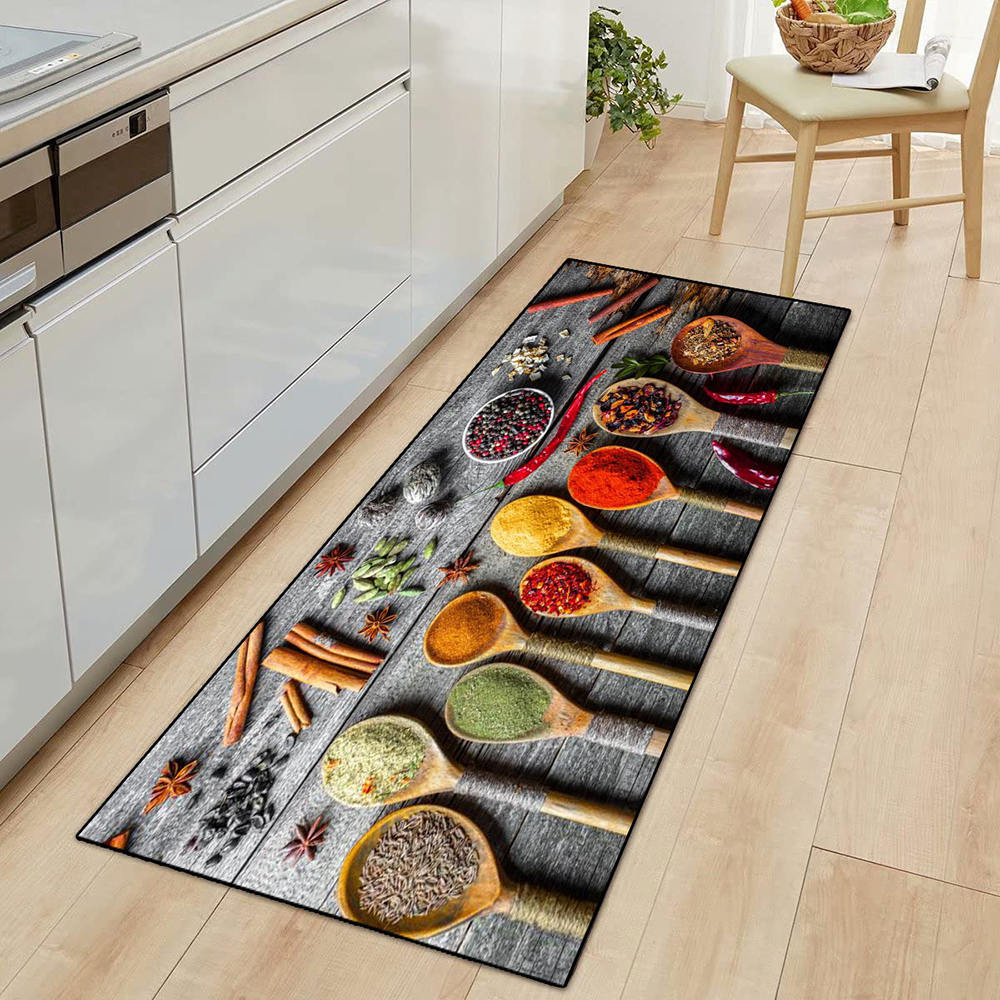
Zero Pile Height Crystal Velvet Kitchen Mat
Content
The defining characteristic of this product is its zero pile height. Unlike a conventional shag mat, tufted rug, or thick plush runner, the surface does not have raised loops or a deep pile that can trap large amounts of dirt. The stated pile height is 0 millimeters, creating a smooth and nearly level surface suitable for areas where doors, drawers, chairs, carts, and feet move frequently.
A zero-pile design can be especially useful in kitchens because kitchen spaces often contain multiple transition points. A mat may sit in front of a sink, beneath a preparation area, beside an island, or near a doorway. If a floor covering is too thick, it can interfere with cabinet doors, create a raised edge, or become an obstruction in a busy walkway. The low-profile structure reduces these concerns and gives the product a streamlined appearance.
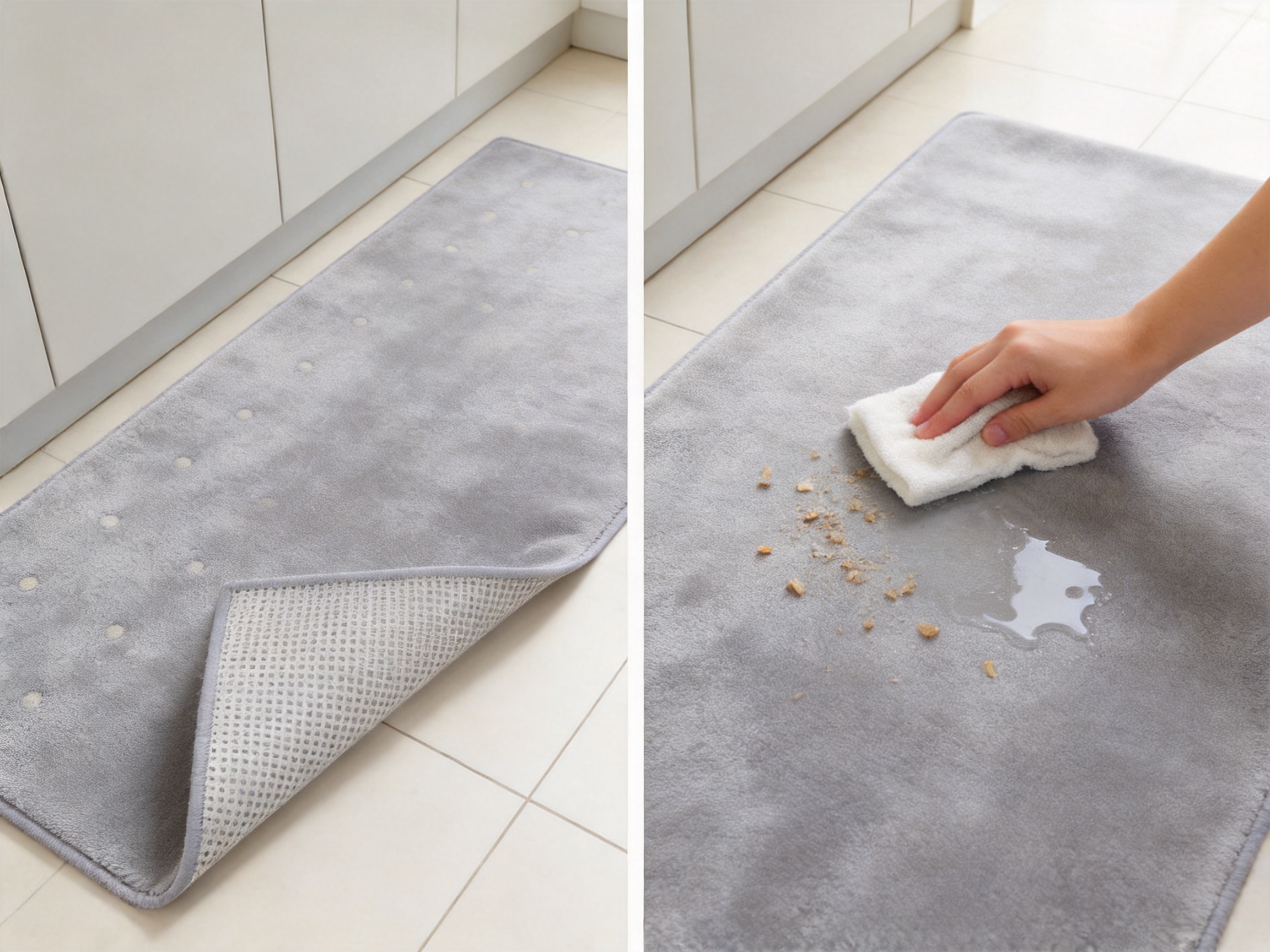
The smooth surface also makes routine cleaning simpler. Loose crumbs and surface dust can generally be removed by sweeping or vacuuming, while many small spills can be handled with a wet wiping cloth. When a more complete cleaning is needed, the product is machine washable according to the provided care information. This combination of daily wipe-clean maintenance and periodic machine washing is valuable for a mat used in a room where food and liquids are handled every day.
Low pile does not mean the mat has been designed without substance. The product has an indicated weight of 800 grams per square meter, giving it a denser feel than a very lightweight printed floor sheet. The bonded construction joins the surface and supporting layers into a unified product, helping the mat retain its intended form during routine use.
Kitchens are among the most demanding indoor environments for textile floor products. They combine high foot traffic with frequent movement of stools, chairs, appliances, storage containers, and cleaning tools. A thick rug can look comfortable, but it may be harder to position safely in a space filled with opening doors and narrow passages.
The zero-pile surface offers a practical alternative. It creates a visually finished textile layer without introducing unnecessary height. This is particularly helpful under or near cabinet doors, at the bottom of kitchen islands, and in hallways connecting the kitchen to other rooms. It can also be useful in apartments or smaller homes where every part of the floor must remain easy to navigate.
Compared with deep-pile alternatives, the smooth construction is less likely to hold crumbs below the visible surface. Compared with unbacked fabric, the layered construction provides more stability and a more finished appearance. Compared with rigid plastic or rubber mats, it offers a softer textile feel and a broader range of printed design possibilities.
The mat is made from polyester, specifically described as 100% polyester microfiber in the product details. Polyester is widely used in interior textile products because it offers a favorable balance of durability, color retention, dimensional stability, and ease of care. Microfiber construction can provide a smooth hand feel while supporting a dense and consistent surface.
For kitchen use, material performance must be considered in relation to maintenance. A floor covering exposed to spills cannot be evaluated only by its initial softness or appearance. It must also be able to tolerate repeated cleaning without quickly losing its visual quality. The product’s fade-resistant specification and machine-wash care instructions are intended to support repeated everyday use.
The crystal velvet description refers to the soft, smooth surface character rather than a high-pile structure. This distinction is important. The product can offer a comfortable textile touch while maintaining a flat profile. It therefore bridges the gap between a decorative fabric floor covering and a practical low-clearance mat.
Polyester is also suitable for digital printing, allowing the product to display modern and three-dimensional visual effects. The surface can be developed with patterns that imitate depth, texture, geometry, or decorative layering without physically creating a thick pile. This makes it possible to achieve a visually rich design while preserving the cleaning and clearance benefits of a flat surface.
The stated 800gsm weight is one of the product’s notable specifications. In general, a higher fabric weight can contribute to a more substantial feel and improved resistance to everyday handling, although actual service life also depends on construction quality, floor conditions, cleaning practices, and traffic levels. In this product, the weight works together with bonded construction and the backing layer to create a balanced floor mat.
The mat is not presented as an industrial anti-fatigue platform or as a heavy commercial safety mat. Its intended role is an indoor residential and lifestyle floor covering for kitchens and hallways. Within that role, the combination of dense polyester, a stable backing, and a washable design offers an appropriate balance between practical performance and visual appeal.
The flat structure can also reduce the risk of edges becoming heavily compressed in the way a thicker plush pile may do. Since the printed visual effect is created on the surface, the design does not depend on long fibers remaining upright. This supports a consistently clean and contemporary appearance over the normal use cycle of a household mat.
A kitchen mat should remain in place when people step onto it or move across it. The product uses non-woven fabric with anti-slip dots on the back. This backing system is designed to increase contact with the floor and help prevent unwanted movement under normal indoor conditions.
The non-woven layer provides a structured backing surface, while the anti-slip dots create points of friction between the mat and the floor. This is an important advantage over a simple piece of unbacked carpet fabric, which may shift more easily on smooth tile, laminate, wood, or vinyl surfaces.
Stability is especially relevant near sinks, preparation counters, entrances, and passageways. A mat that slides can become inconvenient and may create a tripping concern. The anti-slip backing is intended to reduce that problem without requiring an additional rug pad. However, the floor should always be clean, dry, and free of oil or loose debris, and users should inspect the mat periodically to confirm that it remains properly positioned.
Because the product is low profile, its stability benefits are complemented by a reduced edge height. A mat that lies relatively flat is less likely to form a bulky transition than a thicker rug. The combination of a low surface and a grippy backing is one of the main functional advantages over decorative textiles that have no purpose-built floor backing.
The mat is intended for indoor use and can be placed on many common household flooring surfaces. Before use, the floor should be clean and dry. Newly installed or specially finished floors should be checked according to the flooring manufacturer’s recommendations, particularly if they are sensitive to friction, moisture, or contact with textile backings.
Although the backing is designed to resist movement, no textile mat can eliminate every risk in every condition. Water, grease, dust, and cleaning chemicals can affect friction between the backing and the floor. Regular cleaning beneath the mat and prompt removal of spills help preserve stability. The mat should also be laid flat rather than folded or heavily creased.
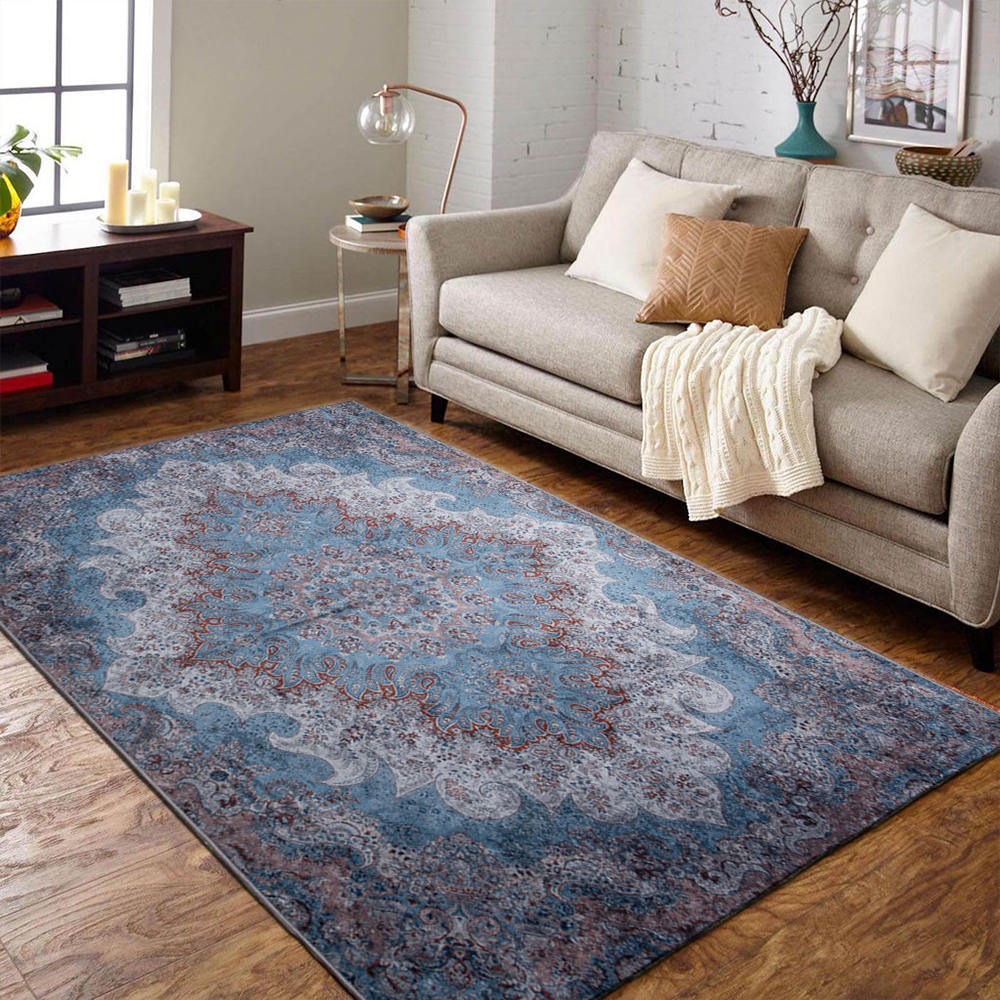
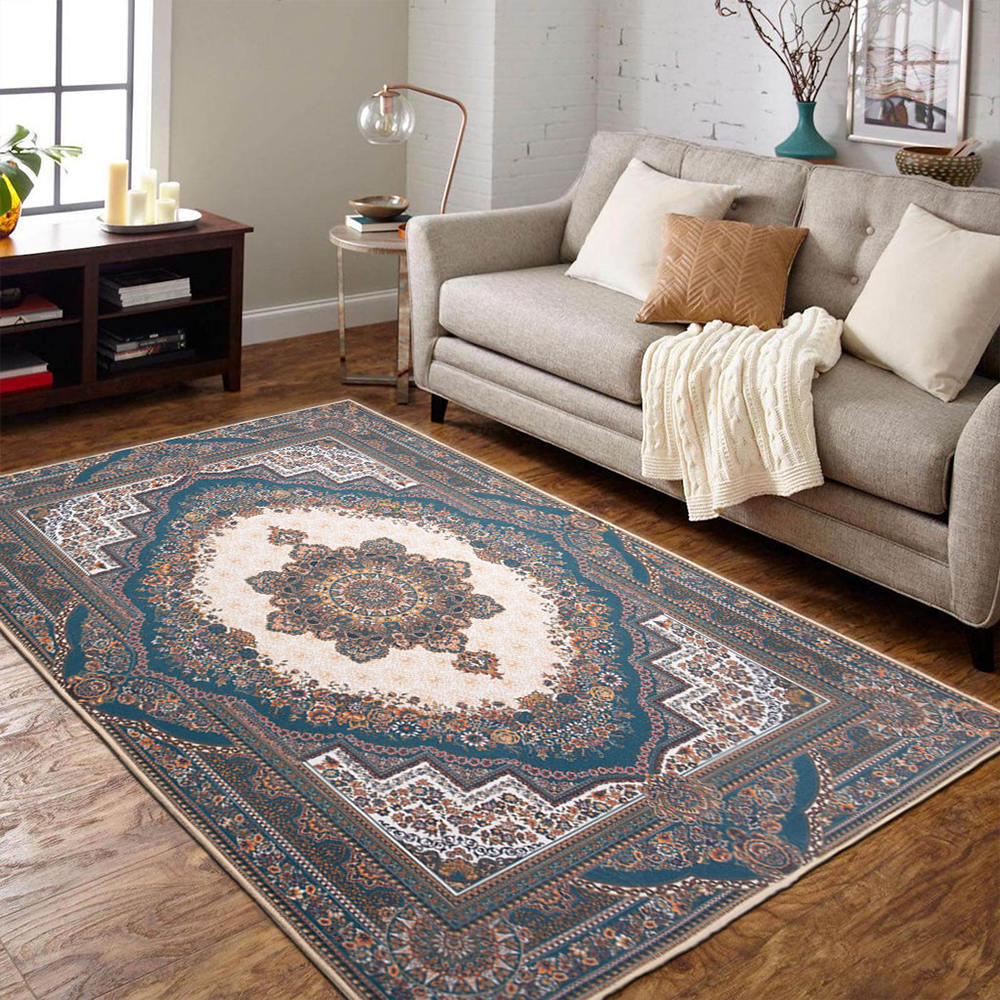
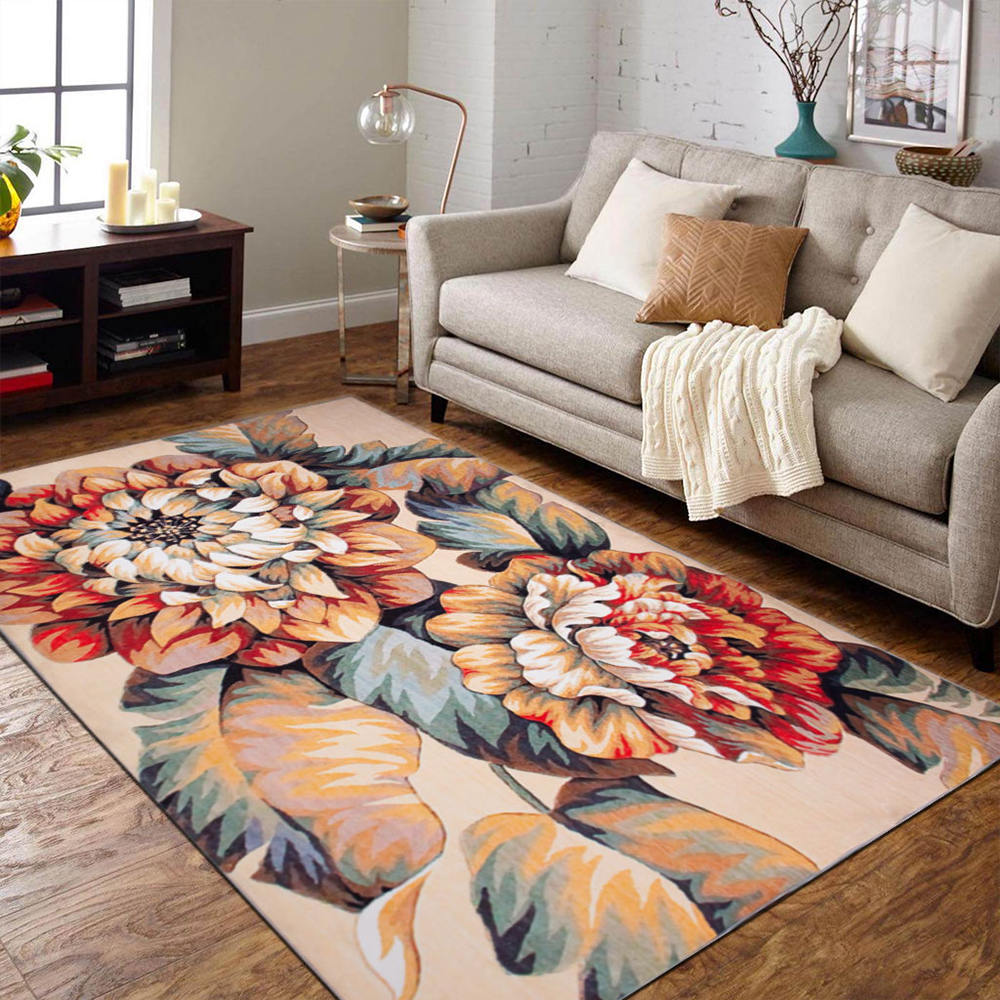
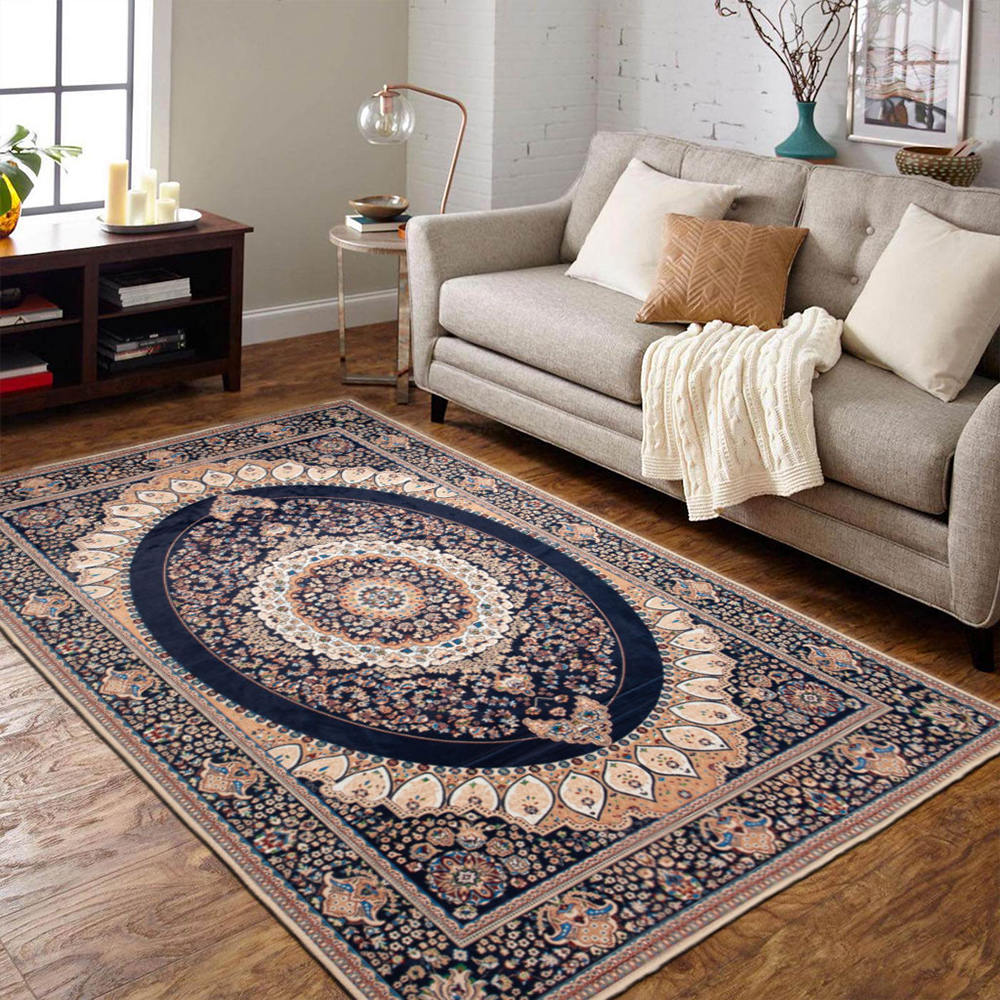
Kitchen mats are often purchased for function, but they occupy a visible part of the room. The Zero Pile Height Crystal Velvet Kitchen Mat uses modern and 3D pattern options to provide a stronger decorative contribution than a plain utility mat. Digital printing allows detailed graphics, layered shapes, tonal contrast, and visual depth to be added without using a thick textured pile.
The 3D effect is visual rather than structural. This is a useful design approach because it can create an expressive appearance while preserving a smooth surface that is easy to wipe and vacuum. Geometric forms, abstract patterns, contemporary line work, and dimensional illusions can make a small kitchen appear more coordinated and can help connect the mat with cabinets, wall colors, appliances, or decorative accessories.
Digital printing also supports a wider design vocabulary than traditional single-color manufacturing. A printed mat can be coordinated with changing interior trends, seasonal collections, hospitality concepts, or private-label programs. This is important for buyers who want to offer multiple designs without changing the fundamental construction of the mat.
Fade resistance is listed as a special feature. In practical terms, color retention is important because a kitchen mat may receive daylight from windows, artificial light, and repeated cleaning. A surface that loses its color quickly can make the product appear worn even when the physical fabric remains serviceable. The use of polyester and controlled printing processes is intended to support a more stable decorative appearance.
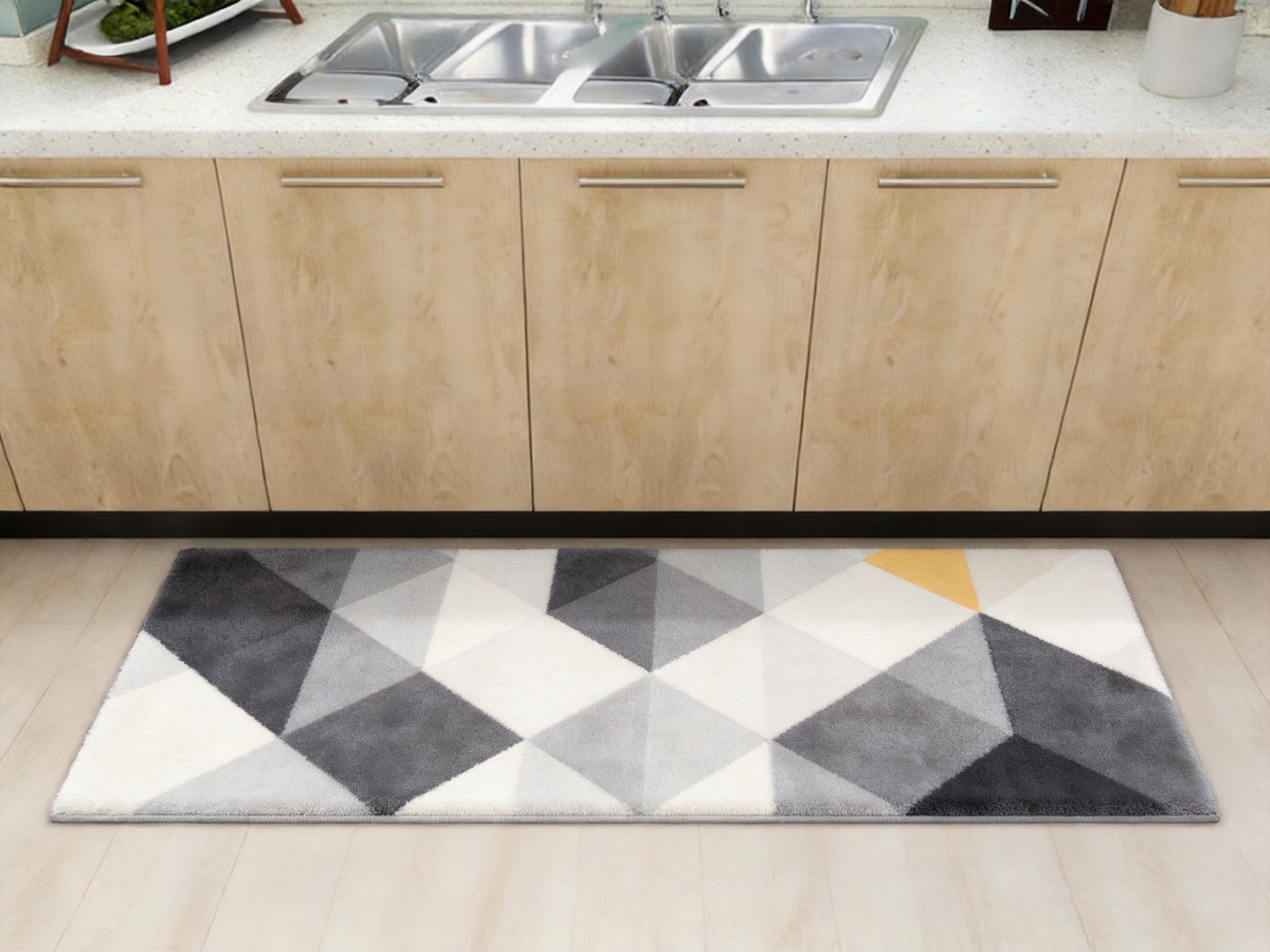
The product is available in several standard rectangular sizes: 40 by 60 centimeters, 40 by 120 centimeters, 50 by 80 centimeters, 50 by 120 centimeters, 50 by 150 centimeters, 60 by 90 centimeters, and 60 by 160 centimeters. Customized sizing is also offered. This range allows the same product concept to be used in compact areas and longer linear spaces.
| Standard Size | Common Placement Concept | Primary Benefit |
| 40 × 60 cm | Small sink area, compact work zone, or apartment kitchen | Space-efficient coverage |
| 40 × 120 cm | Narrow counter, galley kitchen, or entrance passage | Extended linear protection |
| 50 × 80 cm | Medium standing area near a sink or preparation counter | Balanced daily-use coverage |
| 50 × 120 cm | Longer countertop or kitchen island side | Useful combination of width and length |
| 50 × 150 cm | Extended kitchen work line or hallway | Continuous coverage along a narrow zone |
| 60 × 90 cm | More generous standing area or open kitchen section | Additional surface comfort |
| 60 × 160 cm | Large kitchen island, broad work area, or long hallway | Maximum listed standard coverage |
| Customized | Projects with specific room or commercial requirements | Closer fit to individual layouts |
Choosing the correct size is important for both appearance and performance. A mat that is too short may leave the principal standing area uncovered, while one that is too large may interfere with cabinet openings or create an unnecessarily crowded floor plan. Buyers should measure the intended placement area, account for door swings and appliance movement, and leave enough clearance for comfortable use.
The availability of customized sizing is a significant advantage for project buyers, retailers, hospitality suppliers, and interior designers. Standard dimensions are convenient for regular inventory, but customized formats can support residential developments, furnished apartments, model homes, restaurants, offices, and other projects with non-standard layouts.
A kitchen does not always require one large mat. In some layouts, two or more smaller mats provide better flexibility. For example, a compact mat may be placed in front of the sink while a longer runner follows the main preparation counter. Matching digital patterns can unify separate zones without requiring a single oversized piece.
Multiple sizes also make it easier to respond to furniture changes. A household may move an island, replace a cabinet, or alter a dining arrangement. Smaller or medium formats can be repositioned with less effort than a large floor covering. Because the product is available in a family of dimensions, buyers can create coordinated combinations for different rooms.
Kitchen floor coverings encounter more visible contamination than many bedroom or living-room rugs. Food particles, beverage splashes, cooking oils, dust, and moisture can collect on the surface. The zero-pile design makes everyday care straightforward. Loose debris can be removed by sweeping or vacuuming, and small marks can often be addressed with a damp cloth.
The product is listed as machine washable, which gives it an advantage over floor coverings that require specialized cleaning or cannot be safely immersed. Before washing, users should follow the care label, choose a suitable cycle, avoid excessive heat unless approved, and allow the mat to dry completely before placing it back on the floor. Proper drying is particularly important for preserving cleanliness and backing performance.
Regular maintenance should begin with frequent light cleaning rather than waiting until dirt has accumulated. In a high-use kitchen, daily or several-times-per-week surface cleaning may be appropriate. Spills should be treated promptly, especially if they contain strongly colored ingredients or oils. The mat should be lifted from time to time so the floor beneath it can be cleaned and dried.
The washable construction also supports a more economical ownership experience. A mat that can be refreshed at home may reduce the need for frequent replacement caused by ordinary household marks. While no textile product is completely stain-proof or maintenance-free, the combination of a flat surface, polyester fiber, fade resistance, and machine-wash care provides a practical cleaning profile.
For routine care, remove loose debris before using a damp cloth or washing machine. Excessive rubbing on a wet stain may spread it, so blotting is usually preferable. Mild cleaning solutions should be tested in an inconspicuous area first. Harsh bleaching products, aggressive solvents, or high-temperature treatments should be avoided unless specifically approved by the care instructions.
After washing, the mat should be reshaped and dried on a flat or suitable surface. It should not be placed back on the floor while damp. Moisture trapped beneath a mat can affect both the floor and the backing, particularly in areas with limited ventilation. A clean, dry floor helps maintain the intended anti-slip performance.
These maintenance practices are not unique to this product, but the zero-pile construction makes them easier to perform. There are fewer raised fibers to groom, fewer deep spaces where crumbs can hide, and less bulk to manage during handling and washing.
The market includes many kitchen floor coverings, including foam mats, rubber-backed rugs, tufted runners, woven cotton mats, printed non-textile sheets, and thick memory-foam products. Each format has its own purpose. The Zero Pile Height Crystal Velvet Kitchen Mat is differentiated by combining the visual character of a decorative rug with the low-maintenance profile of a flat mat.
Compared with deep-pile rugs, this product is easier to keep free of surface debris and less likely to obstruct cabinet doors. Its zero-pile height also gives it a cleaner, more contemporary silhouette. A deep-pile product may provide greater softness underfoot, but it often requires more effort to vacuum and may be less suitable where clearance is limited.
Compared with unbacked carpet fabric, the product includes a finished non-woven backing with anti-slip dots. This improves its suitability as a ready-to-use household mat. Buyers do not need to convert a roll of fabric into a finished floor product or purchase a separate rug pad for normal placement.
Compared with plain rubber or plastic mats, the crystal velvet surface offers a warmer textile touch and a broader range of decorative patterns. Hard synthetic mats can be easy to wipe, but they may not provide the same visual integration with contemporary interiors. Digital printing gives this product a more flexible design identity.
Compared with thick cushioned mats, the product has a slimmer, more versatile profile. Cushioned mats can provide a soft standing surface, but they may be heavier, bulkier, and more difficult to place around doors and cabinets. The zero-pile construction prioritizes smooth movement, simple storage, and visual neatness.
Compared with delicate decorative rugs that are not designed for kitchen conditions, this product provides washable care, fade resistance, and an anti-slip backing. It is therefore positioned between purely decorative textiles and heavy-duty utility mats, offering a balanced solution for buyers seeking both appearance and everyday functionality.
The product’s competitive value comes from the way its features work together. A printed surface alone would not guarantee useful kitchen performance. A non-slip backing alone would not create a decorative product. A washable material alone would not address clearance around cabinets. The combination of zero pile, 800gsm polyester construction, bonded assembly, anti-slip dots, and digital printing creates a more complete product proposition.
This balanced approach is particularly relevant to retailers and wholesalers. A product with several complementary benefits can appeal to multiple customer groups: homeowners seeking easy maintenance, renters needing a non-permanent floor accessory, designers seeking coordinated graphics, and project buyers requiring standard or customized dimensions.
The product is supported by the manufacturing capabilities of Zhejiang Benyi Textile Technology Co., Ltd. The company is located at No. 75 Zhenyuan Road, Yuecheng District, Shaoxing City, Zhejiang Province, China. Its location places it within a major textile ecosystem with access to material suppliers, technical labor, printing resources, finishing services, and logistics infrastructure.
The company describes itself as a new textile technology enterprise focused on carpets, rug fabrics, and finished products. Its stated objective is to improve production efficiency by combining the bottom and surface of carpet products, moving away from traditional processes that can involve high costs and lower efficiency. This approach is relevant to the kitchen mat because a finished product requires more than attractive surface fabric; the backing, bonding, finishing, and dimensional consistency must all be managed together.
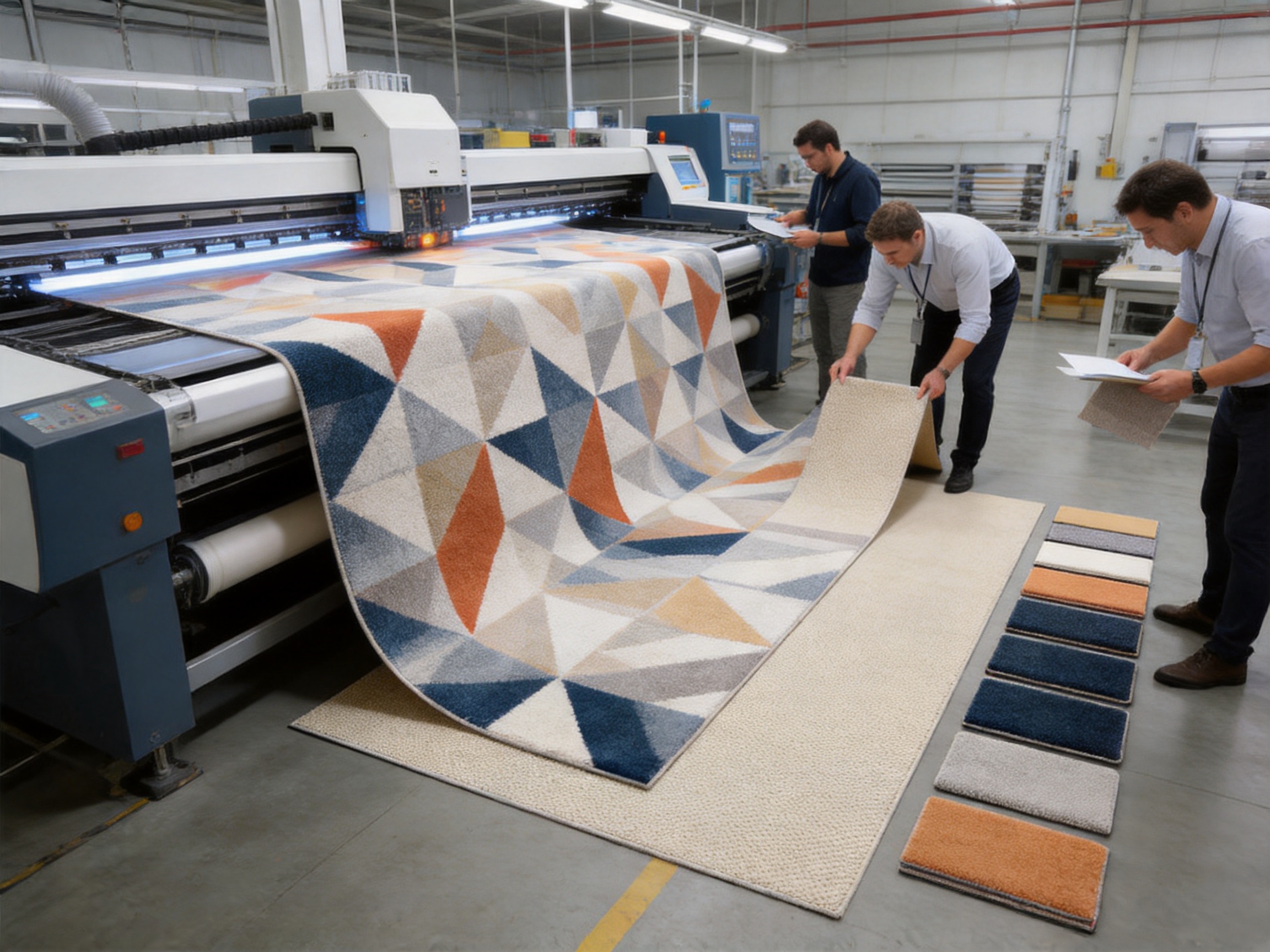
Benyi maintains its own weaving, dyeing and printing factories, and finished carpet processing factories. This level of production integration can provide greater oversight across the manufacturing chain. When surface design and finished product processing are handled within a coordinated system, it becomes easier to align color, construction, backing, order specifications, and delivery schedules.
Vertical or semi-integrated manufacturing can also reduce communication gaps. In a fragmented supply chain, a design may be developed by one company, printed by another, backed by a third, and cut or finished by a fourth. Each transfer introduces potential variation. An integrated factory structure can simplify technical communication and make it easier to identify the cause of production issues.
Material selection begins with the intended performance of the finished mat. Polyester microfiber is suitable for a product that must combine a smooth touch, visual clarity, durability, and washable care. The selected fabric must be compatible with the printing process, bonding method, and backing system. The company’s control of multiple production stages supports coordination among these requirements.
Digital printing is used to create modern and 3D patterns. This method is valuable for detailed graphics and product variety. It can support smaller design runs, pattern experimentation, and customization more readily than some traditional methods. For buyers who want a broad catalog of contemporary patterns, digital printing provides flexibility without requiring a completely different structural product for each design.
Bonded construction is another important process element. Bonding joins layers into a stable composite rather than leaving the surface and backing as loosely associated components. The quality of bonding affects the product’s flatness, handling, durability, and resistance to separation. Consistent pressure, temperature, adhesive control, and curing conditions are all relevant to reliable results.
Finishing operations may include cutting to size, edge treatment, inspection, packing, and order-specific preparation. These steps influence how the product looks when unpacked and how easily it can be placed in a customer’s home. Standardized finishing is especially important when multiple sizes are supplied within the same collection.
The company reports a team of more than 20 fabric engineers. Their role includes developing new carpet fabrics each quarter based on market trends and providing customized services according to customer requirements. This technical development capability supports more than routine manufacturing; it allows the company to respond to changes in interior design, consumer expectations, and product specifications.
For the Zero Pile Height Crystal Velvet Kitchen Mat, research and development can contribute to improvements in pattern libraries, print clarity, color combinations, backing performance, fabric hand, and production efficiency. Product development is especially important in the home textile sector because customers often expect new appearances while retaining familiar performance features.
Customization may involve size, pattern, color direction, packaging, or project-specific product combinations. The available customized sizing is directly relevant to buyers whose spaces do not match standard retail dimensions. A restaurant group, residential developer, hotel operator, or private-label distributor may need coordinated mats for several different floor plans. A factory with in-house technical resources is better positioned to discuss these requirements in detail.
Customization also supports brand differentiation for wholesale customers. Instead of competing only on a common stock design, a buyer can select patterns that match a particular retail identity or interior collection. The underlying zero-pile construction can remain consistent while the visual treatment changes to meet different market segments.
Quality in a finished kitchen mat depends on several linked factors. The polyester surface must be consistent, the printed pattern must be clear, the bonded layers must remain stable, the dimensions must be accurate, and the backing must be applied evenly. A weakness in any one of these areas can affect customer satisfaction even when the original design is attractive.
Benyi’s control of weaving, dyeing and printing, and finished carpet processing provides a framework for monitoring these stages. Integrated production can help the company manage lead times, respond to technical questions, and maintain closer communication between development and manufacturing teams.
The company also states that it focuses on quality and delivery control. For wholesale buyers, lead-time predictability can be nearly as important as product design. Retail programs depend on consistent replenishment, promotional calendars, container planning, and seasonal launches. A manufacturer that can coordinate materials and processing internally may be able to respond more efficiently than a supplier relying entirely on external production partners.
Quality assurance should include checks for surface defects, print alignment, shade consistency, bonding, backing coverage, dimensions, edge condition, and packaging. For customized orders, approval samples and clearly defined specifications are particularly useful. Buyers should confirm testing requirements, tolerances, care labeling, carton details, and inspection procedures before production begins.
The company states that it has passed OEKO-TEX® and GRS certifications. OEKO-TEX® certification is associated with testing textile products for specified harmful substances, while GRS is associated with recycled-content claims and social, environmental, and chemical-processing requirements within the applicable certification scope. Buyers should request current certification documents and confirm that the specific product, material, and production site are covered.
The company also describes a commitment to ecological and environmental protection. Its sustainability activities include investment in recycled polyester and water-saving dyeing techniques. These efforts are relevant to the broader textile industry, where raw material selection, dyeing, water consumption, energy use, and production waste all influence environmental performance.
A responsible production program does not depend on one feature alone. It involves material traceability, controlled chemical use, efficient resource management, responsible working conditions, waste reduction, and accurate product communication. For buyers evaluating suppliers, these factors should be reviewed alongside price, design, capacity, quality, and delivery performance.
The use of recycled materials may be available for selected programs, but the exact composition should be confirmed for each order. If a buyer requires a specific recycled content percentage, certification claim, or labeling statement, those details should be documented before production. Clear communication protects both the supplier and the customer from inaccurate sustainability claims.
The product is categorized as a kitchen mat, and the stated room types include kitchen and hallway. However, its low-profile construction and decorative surface allow it to perform in several indoor settings. It can be positioned in front of a utility counter, at an entrance, beside a laundry area, near a workbench, or along a narrow indoor passage where a washable textile surface is helpful.
In a hallway, the smooth profile can reduce interference with doors and create a visually continuous path. In an apartment entrance, the mat can contribute a decorative layer while helping collect ordinary surface dust. In a utility area, its washable construction can be convenient when the floor covering needs periodic refreshing.
The product may also suit furnished rental properties, student accommodation, offices, salons, studios, and other indoor spaces where a low-maintenance decorative mat is preferred. Commercial users should evaluate traffic levels and cleaning requirements carefully. The product is designed for indoor household-style use, and particularly intensive commercial conditions may require a specialized contract-grade specification.
Modern and 3D patterns can be coordinated with different design themes. Neutral geometric designs may suit minimalist kitchens, while stronger abstract prints can create a visual accent in a plain room. Because the mat is rectangular and available in several proportions, it can be used as a discreet border element or a more prominent focal point.
A coordinated mat can also help define separate functions within an open-plan home. A long format placed along the working side of a kitchen can visually distinguish the cooking area from the dining or living zone. In smaller kitchens, a compact format can provide definition without overwhelming the room.
The printed surface allows buyers to update an interior without replacing permanent flooring. This is useful for renters and homeowners who want an affordable decorative change. Since the product is washable and relatively easy to move, it can be replaced seasonally or relocated when the room arrangement changes.
Wholesale customers should begin by identifying the intended market and use environment. A retailer serving compact urban apartments may prioritize 40 by 60 centimeter and 40 by 120 centimeter formats. A home furnishing chain may require a complete size family. A project buyer may need customized lengths for specific countertops or corridors.
Pattern selection should be discussed together with target customer preferences. Modern and 3D designs can be offered in neutral, colorful, geometric, abstract, or themed collections. Buyers should request strike-offs or samples when exact color matching is important, because display screens and lighting conditions can affect how colors appear.
Packaging and labeling should also be confirmed. Important details may include product name, size, material, care instructions, origin information, quantity per carton, carton dimensions, barcode requirements, and private-label packaging. Clear packaging specifications reduce delays and help products arrive ready for retail or project distribution.
Customization requires a more detailed technical discussion. Buyers should provide drawings or measurements, specify acceptable tolerances, identify edge requirements, confirm pattern direction, and determine whether multiple sizes should share a common design scale. The production team can then assess feasibility, sample requirements, minimum order quantities, and estimated lead time.
Before placing a large order, buyers may wish to evaluate samples for flatness, surface feel, color, print sharpness, backing grip, edge finishing, wash performance, and packaging condition. A sample review is particularly useful when the product will be sold under a private label or used in a coordinated interior project.
For a small sink or preparation station, the 40 by 60 centimeter format provides compact coverage and is easy to move for cleaning. It can suit a narrow apartment kitchen or a location where cabinets and appliances leave limited floor space.
For a galley kitchen or narrow counter line, a 40 by 120 centimeter or 50 by 120 centimeter format can provide a longer standing surface without taking up excessive width. These sizes may also work well in a hallway or beside a kitchen island.
For a more generous working area, the 60 by 90 centimeter format offers broader coverage. It can be appropriate when the user stands in one place for longer periods or when the kitchen has an open section in front of a sink or counter.
For a long kitchen island, extended work line, or passageway, the 50 by 150 centimeter and 60 by 160 centimeter formats create a more continuous visual effect. Buyers should carefully check clearances before choosing the longest option.
Customized sizing is most appropriate when a standard format leaves awkward gaps or extends into an area where it may interfere with doors or appliances. Custom production can improve the visual fit of a project, although it may involve additional sampling, production planning, and minimum order requirements.
Place the mat on a clean, dry, and level indoor floor. Smooth out folds after unpacking and allow the product to settle flat. Do not place it over wet surfaces, loose debris, or freshly treated floors until the surface is ready for textile contact.
Keep the mat away from open flames, high-temperature heating elements, and direct contact with hot cookware. Although polyester is durable for ordinary indoor use, it is still a textile material and should be treated accordingly.
Inspect the anti-slip backing periodically. If the backing becomes coated with oil, dust, or cleaning residue, clean it according to the care guidance and allow it to dry fully. If the mat becomes damaged, curled, or unable to remain stable, it should be removed from service.
Machine washing should follow the product care label. Overloading a washing machine, using unsuitable chemicals, or applying excessive heat may affect the print, fabric, or backing. A gentle approach generally supports better long-term appearance and construction stability.
These practices are simple, but they help preserve the key benefits of the product: a clean surface, stable placement, attractive print, and reliable everyday usability.
Zero pile height means that the mat has no raised pile in the conventional sense. Its surface is smooth and low profile, with a stated pile height of 0 millimeters. This makes it suitable for areas where doors, cabinets, and frequent foot movement require a slim floor covering.
Its low-profile design is intended to reduce interference with cabinets and doors compared with thicker rugs. Nevertheless, users should measure the available clearance and test the placement, especially where cabinet doors open close to the floor.
Yes. The backing consists of non-woven fabric with anti-slip dots. This design is intended to improve floor grip and reduce movement during normal indoor use. The floor should remain clean and dry for the best possible stability.
The product information states that no additional rug pad is needed because of the anti-slip backing. However, the mat should be used according to the conditions of the specific floor. If a floor is unusually smooth, oily, uneven, or otherwise difficult, the user should verify stability before regular use.
Machine washing is listed as the product care instruction. Users should follow the care label for temperature, cycle, detergent, drying, and other requirements. The mat should be completely dry before it is returned to the floor.
The mat is made from polyester and is described as using 100% polyester microfiber for durability and fade resistance. Polyester also supports detailed digital printing and straightforward routine maintenance.
The listed pattern category is modern and 3D. The visual effect is created through digital printing, allowing contemporary graphics, dimensional illusions, geometric forms, and other decorative styles without adding a deep physical pile.
Available sizes include 40 by 60 centimeters, 40 by 120 centimeters, 50 by 80 centimeters, 50 by 120 centimeters, 50 by 150 centimeters, 60 by 90 centimeters, and 60 by 160 centimeters. Customized dimensions are also available for suitable orders.
Yes. The listed room types include the kitchen and hallway. The rectangular shape, low profile, smooth surface, and longer size options make it suitable for many indoor passageways, provided the floor is appropriate and the mat remains stable.
The principal difference is the zero-pile construction. A thick runner may provide more cushioning, but it can be harder to clean, bulkier to store, and more likely to interfere with doors. This mat emphasizes a smooth surface, low clearance, washable care, and decorative digital printing.
A rubber mat may offer a highly utilitarian appearance and a firm surface. The crystal velvet kitchen mat provides a textile feel and a wider selection of modern printed designs while still incorporating anti-slip backing features.
The stated usage is indoor. It should not be assumed to be suitable for prolonged outdoor exposure, heavy weather, standing water, or direct environmental conditions unless a specific outdoor-rated version is confirmed by the manufacturer.
Customized sizing is specifically offered, and the company also describes customized services according to customer requirements. Buyers should discuss pattern, dimensions, order quantity, packaging, certifications, tolerances, and lead time before confirming production.
The manufacturer reports its own weaving, dyeing and printing factories, and finished carpet processing factories. It also has a team of more than 20 fabric engineers developing new carpet fabrics and supporting customized requirements.
The company states that it invests in recycled polyester and water-saving dyeing techniques and has passed OEKO-TEX® and GRS certifications. Buyers seeking specific environmental claims should request current documentation for the exact product and production scope.
Buyers should review samples for color, print clarity, dimensions, flatness, backing grip, surface feel, edge quality, and wash performance. They should also confirm packaging, labeling, certification coverage, minimum order quantities, production tolerances, and delivery schedules.
The Zero Pile Height Crystal Velvet Kitchen Mat offers a broad combination of benefits in a format that is easy to explain to end customers. Its core message is clear: a smooth, washable, digitally printed, anti-slip kitchen mat with a low profile and multiple size options. This clarity can support product listings, showroom demonstrations, catalog presentation, and private-label programs.
Its design flexibility gives wholesalers room to build collections rather than sell one isolated item. Modern and 3D patterns can be grouped by color family, room style, season, or customer demographic. The size range enables retailers to offer entry-level compact formats and larger options without changing the basic product concept.
The manufacturing background adds another layer of value. Buyers are not dealing only with a trading catalog; they are working with a textile technology company that reports control over several production stages and maintains technical engineering resources. This can be important when product development, custom sizing, sample approval, or repeated replenishment is required.
The company’s sustainability direction may also be relevant to buyers with responsible sourcing programs. Recycled polyester, water-saving dyeing, OEKO-TEX® certification, and GRS certification can support more informed procurement decisions when their scope is verified and properly documented.
The Zero Pile Height Crystal Velvet Kitchen Mat is designed for buyers who want more than a basic floor protector. It combines a smooth 0-millimeter pile, 800gsm polyester microfiber, bonded construction, non-woven anti-slip backing, washable care, fade-resistant performance, and modern digital designs. These features make it suitable for kitchens and hallways where easy cleaning, low clearance, stable placement, and visual coordination all matter.
Its advantages over many competing formats come from balance. It is flatter and easier to position than a thick rug, more decorative than a plain utility mat, more complete than unbacked carpet fabric, and more textile-oriented than rigid rubber or plastic alternatives. The product is not intended to replace every type of specialized floor covering, but it provides a practical middle ground for everyday indoor use.
The manufacturing capabilities of Zhejiang Benyi Textile Technology Co., Ltd. strengthen the product proposition. With operations covering weaving, dyeing and printing, and finished carpet processing, along with fabric engineers, customization support, and stated sustainability initiatives, the company is positioned to serve both standard retail demand and more specific wholesale requirements.
For households, the result is a low-maintenance mat that can bring comfort and personality to a busy space. For retailers, it is a versatile product with multiple sizes and design possibilities. For project buyers, its customization potential and integrated manufacturing support can simplify the development of coordinated floor textile programs. In each case, the product demonstrates how thoughtful construction and controlled textile production can turn a simple kitchen accessory into a more useful and adaptable interior solution.
1. Product specification sheet for the Zero Pile Height Crystal Velvet Kitchen Mat, including material, dimensions, weight, construction, backing, care, pattern, and room-use information.
2. Zhejiang Benyi Textile Technology Co., Ltd. company profile and manufacturing overview, including textile engineering, factory integration, customization, and product development information.
3. General textile product-care principles for polyester microfiber floor coverings and machine-washable household mats.
4. General industry guidance concerning textile printing, bonded carpet construction, non-woven backing materials, and anti-slip floor-covering design.
5. General descriptions of OEKO-TEX® and Global Recycled Standard certification objectives for textile products and recycled-material supply chains.

ADD: No.75 Zhenyuan Road, Yuecheng District, Shaoxing City, Zhejiang Province, China 312000

Tel : +86-189 6750 9795

FAX : +86-0575-8803 2773

Email : fisher@benetextile.com

Copyright © Zhejiang Benyi Textile Technology Co., Ltd. All Rights Reserved. Carpets and Rugs Manufacturer

 English
 Français
 Deutsch
 عربى
عربى