

Qiao Yunting — Senior Carpet Sales Manager
 Home / Author / Qiao Yunting — Senior Carpet Sales Manager / Glossy Yarn Velvet Solid Carpet: A Soft, Durable, and Versatile Indoor Flooring Solution
  2026.09.16
 Qiao Yunting — Senior Carpet Sales Manager
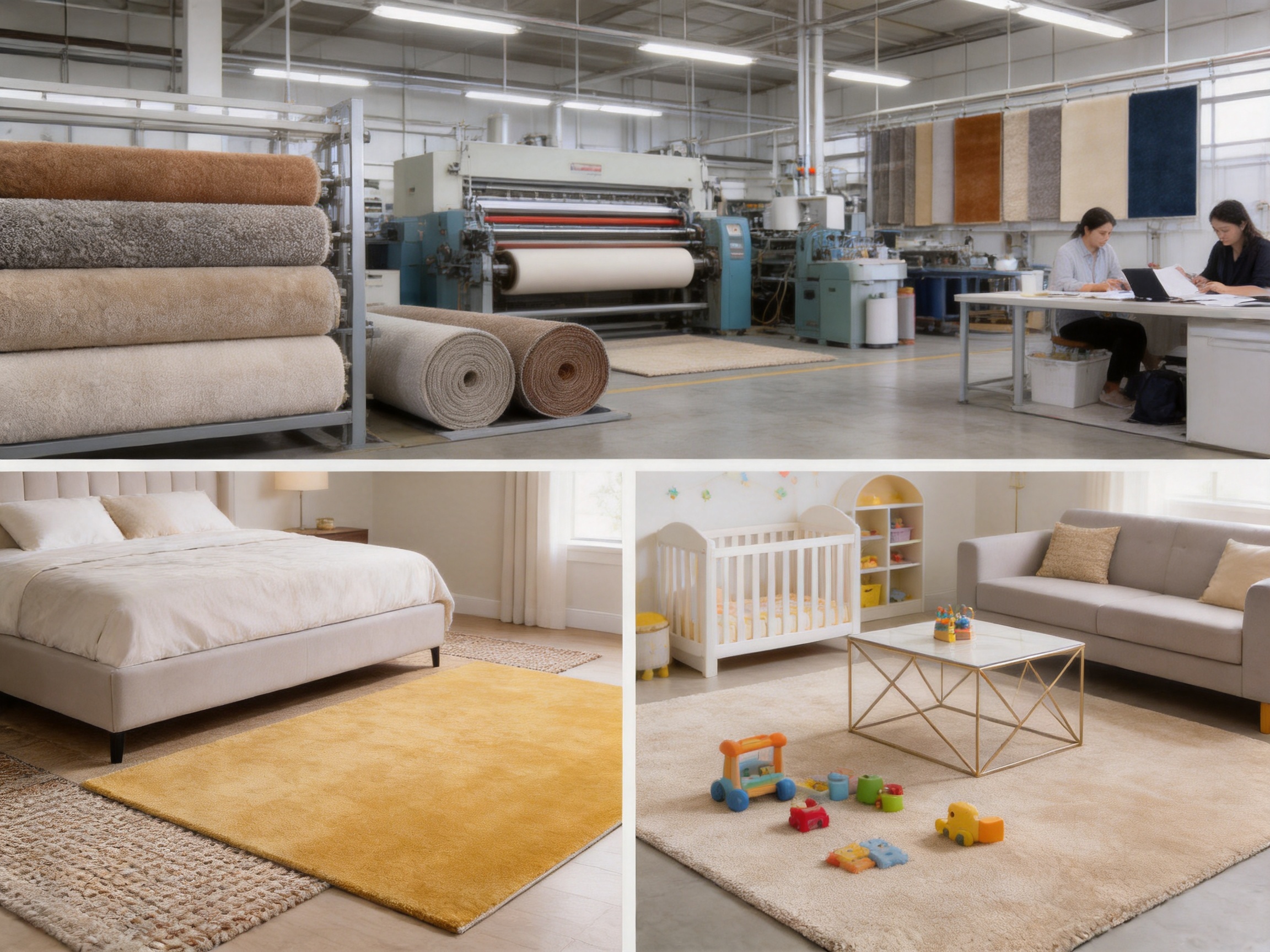
Choosing the right carpet involves more than selecting an attractive color. A well-designed carpet should provide comfort, support everyday household activities, remain stable underfoot, resist visible wear, and be easy to maintain. It should also be produced through a reliable manufacturing process that delivers consistent quality from the surface fibers to the backing layer. The Glossy Yarn Velvet Solid Carpet is designed to meet these requirements in bedrooms, living rooms, children’s rooms, nurseries, and other indoor spaces.
This solid-color area rug combines a soft polyester microfiber surface, a generous 20 millimeter pile height, a cushioning felt interlayer, and a non-woven backing finished with anti-slip dots. These features create a product that is comfortable enough for relaxed indoor living while remaining practical for regular household use. Its rectangular design and broad size range make it suitable for compact areas as well as larger living zones, and custom sizing can help buyers adapt the carpet to particular room layouts.
Behind the product is Zhejiang Benyi Textile Technology Co., Ltd., a textile manufacturer based in Shaoxing, Zhejiang Province, China. Shaoxing is widely recognized as an important textile production center. The company operates across fabric development, weaving, dyeing and printing, and finished carpet processing. This vertically coordinated structure gives the manufacturer greater control over materials, production schedules, finishing, and quality management.
For importers, wholesalers, interior furnishing companies, hospitality buyers, and residential consumers, the carpet offers a balance of visual simplicity, tactile softness, functional backing, and manufacturing flexibility. This article examines the product’s construction, benefits, competitive strengths, applications, care requirements, customization potential, and the company’s capabilities as a carpet and rug supplier.
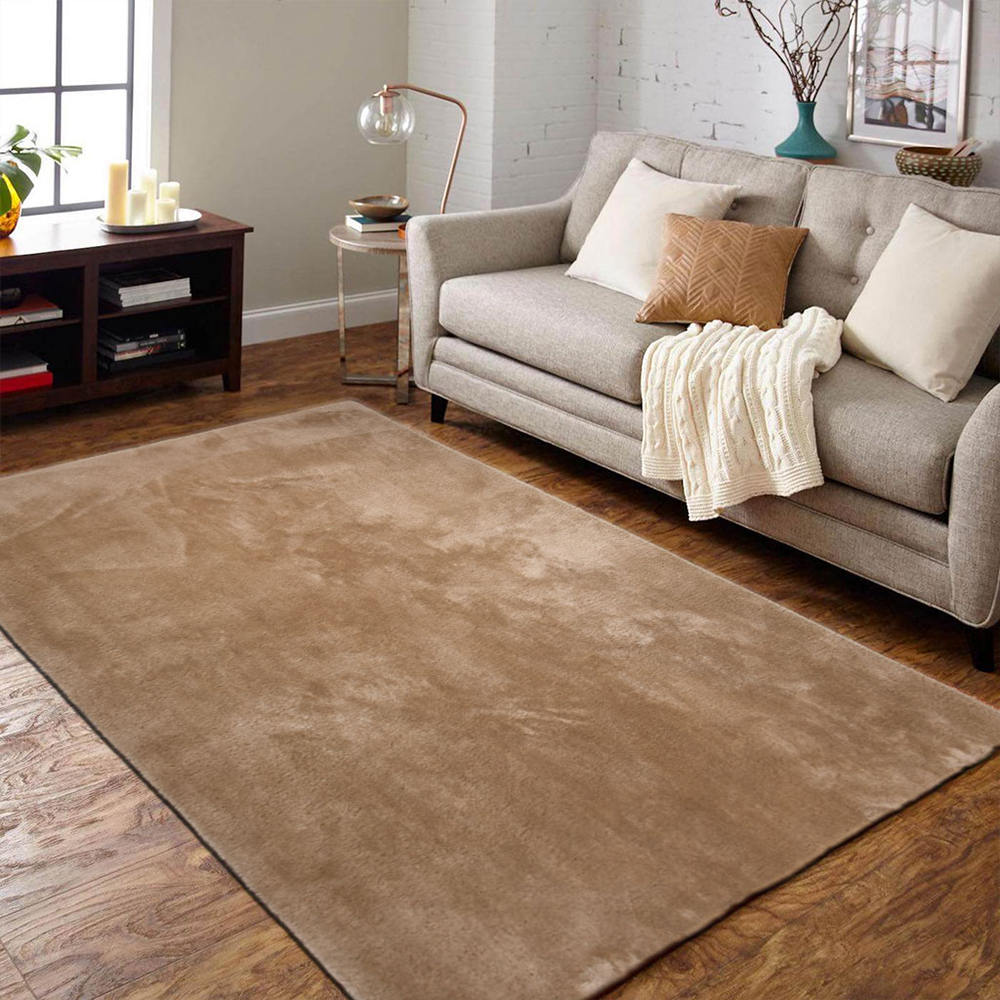
Glossy Yarn Velvet Solid Carpet
Content
The Glossy Yarn Velvet Solid Carpet is an indoor rectangular area rug made from polyester. Its surface is produced to provide a smooth, plush, and visually attractive velvet-like feel. The solid-color pattern is intentionally simple, allowing the carpet to coordinate with a wide range of interior styles, furniture arrangements, wall colors, and decorative themes.
The carpet is available in several standard sizes, including 2 by 3 feet, 2 by 6 feet, 3 by 5 feet, 4 by 6 feet, 5 by 7 feet, 6 by 9 feet, and 8 by 10 feet. Custom sizes are also available according to project requirements. This selection allows the product to function as a small bedside rug, a hallway or runner-style accent, a seating-area rug, or a larger foundation beneath furniture.
The primary product specifications are summarized below.
| Specification | Details |
|---|---|
| Product type | Solid-color area rug |
| Product name | Glossy Yarn Velvet Carpet |
| Material | Polyester microfiber |
| Weight | Approximately 1650 grams per square meter |
| Pile height | 20 millimeters |
| Construction | Bonded construction |
| Backing | Non-woven fabric with anti-slip dots |
| Shape | Rectangular |
| Pattern | Solid colors |
| Recommended use | Indoor applications |
| Care method | Vacuum cleaning and water washing |
| Available sizes | Standard sizes and custom dimensions |
| Recommended rooms | Bedrooms, living rooms, children’s rooms, and nurseries |
The combination of a substantial pile, soft contact surface, and stable backing distinguishes this product from thin decorative mats that offer limited cushioning. At the same time, the carpet remains more adaptable than highly patterned or heavily textured designs because its solid appearance can be integrated into both contemporary and traditional interiors.
One of the most noticeable characteristics of the carpet is its soft velvet-style surface. The polyester microfiber construction is designed to create a smooth tactile experience, making the carpet pleasant to walk on with bare feet. This quality is particularly useful in bedrooms, children’s rooms, nurseries, and relaxation areas where softness is an important part of the room’s atmosphere.
The 20 millimeter pile height gives the carpet a thicker and more substantial feel than many low-profile area rugs. A higher pile can add warmth and cushioning between the user and a hard floor. It can also create a more inviting appearance by introducing visual depth without requiring a complicated pattern.
The surface is described as glossy yarn velvet, which gives the solid color a subtle dimensional effect. Depending on viewing direction and lighting, the fibers may reflect light differently, creating a gentle change in tone across the surface. This effect can make a single-color carpet appear richer and more refined than a completely flat textile.
Softness, however, is not the only consideration. A surface that feels attractive but loses its structure quickly may not provide good long-term value. The product uses polyester because the fiber is widely valued for dimensional stability, durability, color retention, and ease of care. When properly processed, polyester microfiber can provide a comfortable surface while supporting repeated household use.
Polyester is a practical fiber choice for area rugs because it combines a soft hand feel with resistance to many common forms of household wear. The material is suitable for products that need to maintain their color and appearance during regular use. It is also compatible with modern dyeing and finishing processes, giving manufacturers flexibility when developing solid colors for different markets.
The carpet has an approximate weight of 1650 grams per square meter. This density contributes to its fuller appearance and helps create a more substantial product compared with lightweight floor coverings. A heavier carpet may also lie more comfortably on the floor, although proper placement on a clean, level surface remains important.
Bonded construction provides another layer of product integrity. In this method, the surface and supporting layers are combined to form a unified floor covering. A well-bonded structure can help prevent separation between layers during handling and use. It also supports the carpet’s ability to retain its overall shape when placed in a room.
No textile product is completely immune to wear. Furniture legs, sharp objects, repeated dragging, excessive moisture, and unsuitable cleaning chemicals can damage any carpet. Nevertheless, the combination of polyester fibers, a substantial pile, bonded construction, and a supportive backing gives this model a competitive foundation for indoor residential and commercial applications.
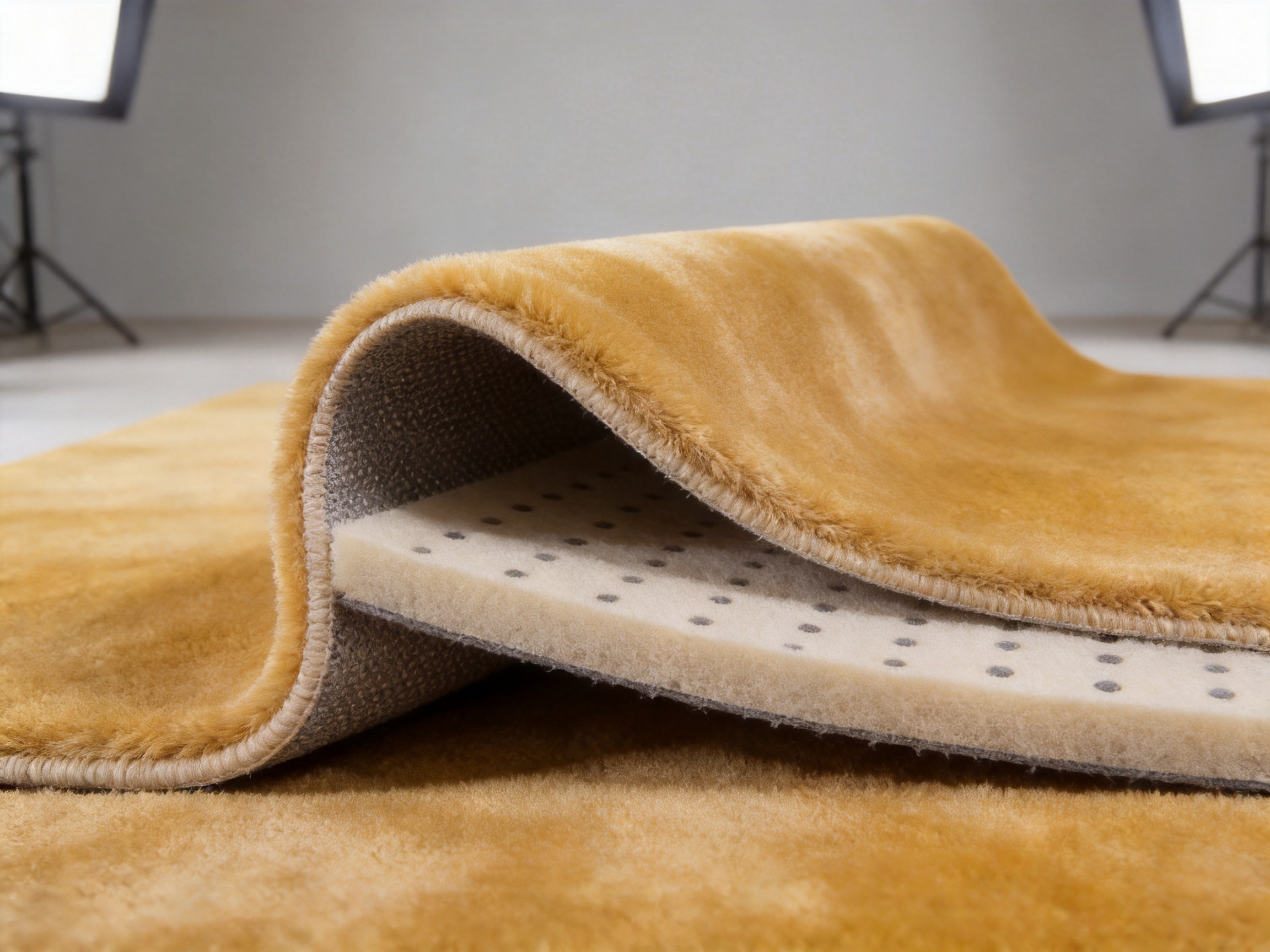
Safety and stability are important factors when selecting an area rug. A carpet that moves easily across a smooth floor can create inconvenience and may increase the risk of tripping. The Glossy Yarn Velvet Solid Carpet uses a non-woven fabric backing with anti-slip dots to improve contact between the rug and the floor.
The dot pattern helps create friction beneath the carpet. This can reduce unwanted movement on many common indoor surfaces, including finished flooring, tile, laminate, and other relatively smooth substrates. The backing is intended to help the rug remain in position during ordinary household activity.
The backing also contributes to the carpet’s overall structure. The non-woven layer supports the surface textile and helps create a more stable base. In addition, the product information identifies a thick non-woven felt interlayer, which adds cushioning and provides a degree of separation from hard or cold floors.
The anti-slip backing is designed to reduce the need for a separate rug pad in many normal situations. However, users should always inspect the floor and the rug before use. Dust, oil, moisture, uneven flooring, or a heavily sloped surface can reduce traction. In homes with very young children, elderly residents, or people with limited mobility, the carpet should be positioned carefully and checked regularly.
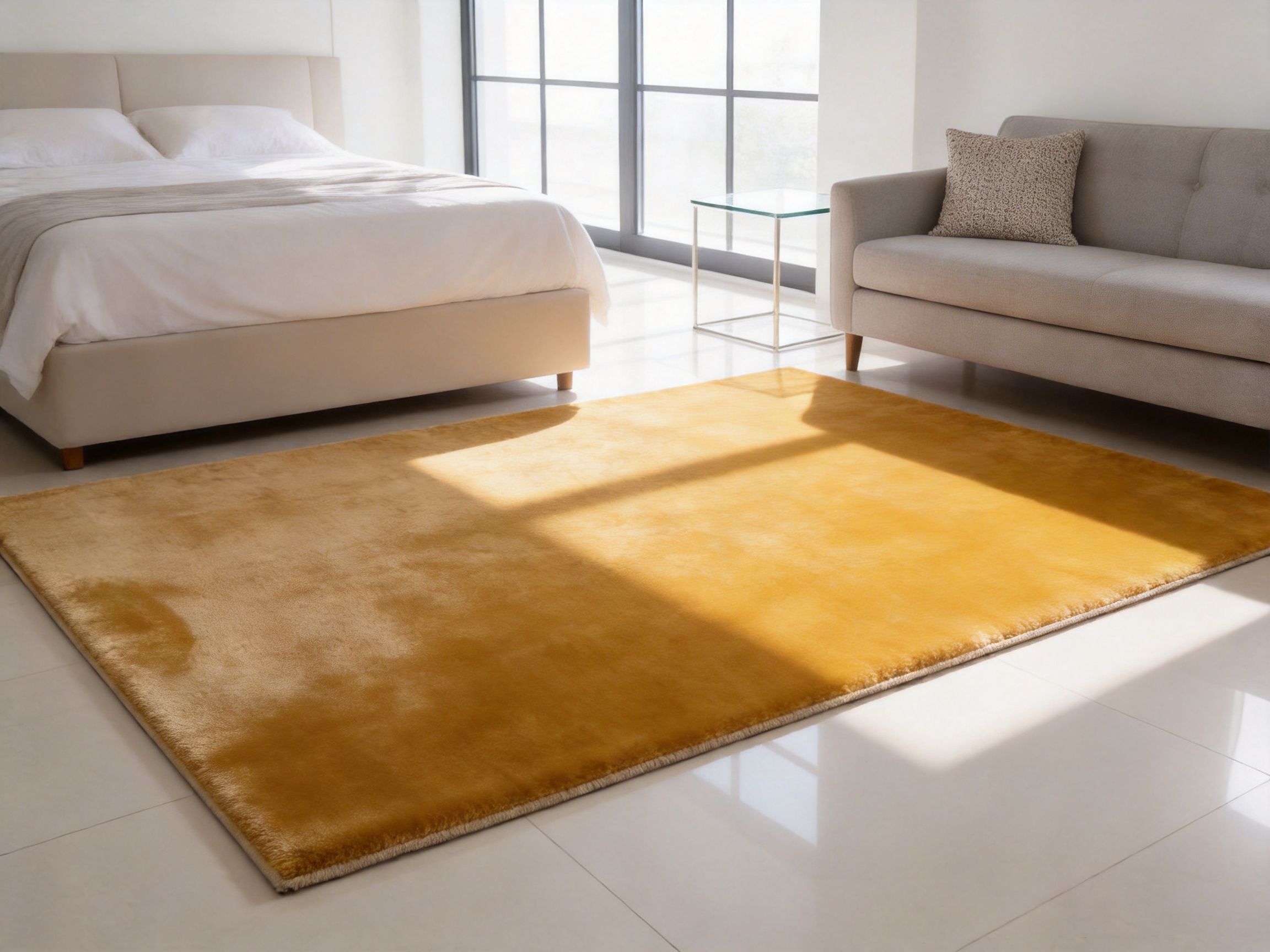
Hard flooring can feel cold and unforgiving, especially in bedrooms, nurseries, and children’s play areas. The carpet’s pile and felt interlayer introduce a softer surface that can make the room more comfortable. This cushioning is useful when standing, walking, sitting, or playing on the floor for extended periods.
In a bedroom, the carpet can be placed beside or beneath a bed to create a warmer landing area in the morning. In a living room, it can define a seating zone and provide a comfortable surface for family activities. In a children’s room, it can soften the floor beneath play areas, although it should not be regarded as a substitute for supervision or specialized impact protection.
The thick contact surface also supports a more welcoming visual environment. Textile surfaces absorb some of the visual hardness associated with wood, tile, and other rigid flooring materials. A solid-color velvet carpet can therefore contribute both physical comfort and a sense of warmth.
Solid-color rugs are among the most adaptable floor-covering options because they do not compete strongly with furniture, artwork, curtains, or decorative accessories. The Glossy Yarn Velvet Solid Carpet can serve as a quiet foundation for a room or as a way to introduce a controlled color accent.
In minimalist interiors, a solid carpet can reinforce clean lines and uncluttered design. In more decorative rooms, it can balance patterned upholstery, printed curtains, textured cushions, or detailed wall treatments. Because the carpet does not depend on a prominent motif, it can remain useful when furniture or interior colors are changed.
The velvet-like yarn creates visual interest without requiring geometric prints or complex imagery. Light reflection across the pile may produce subtle shading, helping the carpet avoid a completely flat appearance. This makes it suitable for modern apartments, family homes, hotel rooms, furnished rental properties, offices, and other spaces where coordinated design is important.
For wholesale buyers, solid colors can also simplify product planning. A collection can be developed around a manageable palette of neutral, warm, cool, or seasonal tones. Retailers can present the carpet as a versatile basic product, while interior designers can request colors that coordinate with specific projects.
The product is described as fade resistant. This feature is valuable because an area rug is exposed to indoor lighting, daylight entering through windows, dust, and repeated cleaning. Maintaining color helps preserve the carpet’s appearance and extends the period during which it looks attractive.
Fade resistance does not mean that the carpet should be placed in intense direct sunlight indefinitely. Strong ultraviolet exposure can affect many dyed textiles over time. For best results, users should consider room orientation, window treatments, and the arrangement of furniture. Rotating the carpet periodically may also help distribute exposure and foot traffic.
Color consistency is especially important for manufacturers and wholesale customers. A reliable dyeing and finishing process supports repeat orders and helps buyers maintain a consistent product range. Zhejiang Benyi Textile Technology Co., Ltd. operates its own weaving and dyeing or printing factories, giving it greater involvement in color development and production coordination than a business that purchases every stage from unrelated suppliers.
Ease of maintenance is one of the carpet’s significant practical advantages. The product can be cleaned with a vacuum cleaner for routine dust and debris removal. Water washing is also identified as an appropriate care method, allowing users to address more substantial dirt when necessary.
Regular vacuuming helps prevent particles from becoming embedded deeply in the pile. The frequency should depend on traffic level, household conditions, and whether pets or children use the room. High-traffic areas may benefit from more frequent cleaning, while decorative rugs in low-use rooms may require less attention.
When water washing is necessary, users should follow the seller’s specific care instructions and consider the rug’s size and weight. Smaller sizes may be easier to wash and dry at home, while larger sizes may require professional or specialized cleaning. The carpet should be dried thoroughly before being returned to the floor. Persistent moisture can create unpleasant odors or affect both the textile and flooring beneath it.
Cleaning products should be tested on an inconspicuous area first. Harsh bleach, strong solvents, abrasive tools, and excessive heat may change the color or damage the fibers. Immediate treatment of spills is generally preferable to allowing liquids to remain in the pile for a long time.
The carpet competes with several common categories, including thin printed mats, low-pile rugs, lightweight polyester floor coverings, and decorative rugs without anti-slip backing. Its advantages become clearer when its individual features are considered together.
| Product characteristic | Glossy Yarn Velvet Solid Carpet | Typical thin decorative mat |
|---|---|---|
| Surface feel | Soft, plush velvet-style microfiber | Often flatter and less cushioned |
| Pile height | Approximately 20 millimeters | Often low profile |
| Design | Solid color with subtle yarn sheen | May rely on printed patterns |
| Backing | Non-woven fabric with anti-slip dots | May have limited or no anti-slip treatment |
| Cleaning options | Vacuum cleaning and water washing | Care methods vary and may be restricted |
| Customization | Standard sizes and custom dimensions | Often limited to fixed retail sizes |
| Room suitability | Bedrooms, living rooms, nurseries, and children’s rooms | Often intended for decorative or light-use areas |
| Layered construction | Surface, cushioning interlayer, and supportive backing | May use a simpler single-layer structure |
The main competitive advantage is not one isolated specification but the product’s combination of comfort, stability, appearance, and maintenance convenience. A low-cost mat may be cheaper to purchase, but it may not offer the same cushioning or tactile quality. A thick rug may feel comfortable but lack an anti-slip backing. A highly patterned rug may attract attention but be more difficult to coordinate with changing décor. This product is positioned as a balanced solution for buyers who want several practical features in one carpet.
Zhejiang Benyi Textile Technology Co., Ltd. is located at No. 75 Zhenyuan Road, Yuecheng District, Shaoxing City, Zhejiang Province, China. Its location in one of the world’s major textile production centers provides access to established supply networks, technical expertise, production resources, and related textile services.
The company specializes in carpets, rug fabrics, and finished carpet products. Its business model combines textile technology with coordinated manufacturing. According to the supplied company information, the organization has its own weaving, dyeing and printing factories, and finished carpet processing factories. This structure allows the company to manage multiple stages rather than depending entirely on external processors.
Vertical coordination can provide several advantages. First, it can improve communication between fabric development and finished-product production. Second, it can help the manufacturer respond more quickly to changes in material specifications, colors, dimensions, or finishing requirements. Third, it can support closer control of quality and lead time.
The company also reports a team of more than 20 fabric engineers. These engineers develop new carpet fabrics each quarter based on market trends and customer requirements. Continuous development is important in the floor-covering industry because buyers increasingly seek products that combine softness, easy maintenance, safety, responsible materials, and distinctive visual effects.
The company describes its production approach as combining the bottom and surface of the carpet. This helps simplify the traditional carpet production model, which can involve multiple separate processes and suppliers. Integrating the surface and backing stages may improve production efficiency and reduce coordination problems.
For the Glossy Yarn Velvet Solid Carpet, the relationship between the pile surface, felt interlayer, and anti-slip backing is central to the user experience. The layers must work together so that the carpet feels soft above, remains supportive in the middle, and maintains contact with the floor below.
Manufacturing control is particularly important when producing different sizes. Larger rugs may require careful handling to maintain flatness and consistent bonding across the full area. Smaller rugs must still receive reliable edge and backing treatment. A coordinated factory system can help standardize these operations.
The product’s bonded construction also requires attention to adhesion, layer alignment, surface uniformity, and finishing. These factors affect how the rug looks when unrolled and how it performs during normal use. Consistent production procedures can help reduce differences between individual units and support dependable wholesale supply.
Quality control for a carpet of this type may involve checking fiber appearance, pile consistency, color uniformity, dimensions, weight, bonding, backing coverage, anti-slip dot distribution, edge finishing, packaging, and cleanliness. Each stage contributes to the finished product’s performance.
Surface inspection is important because a velvet-style carpet should have a reasonably even appearance. Variations in pile direction, density, or color can become more visible on solid-color products than on heavily patterned designs. Consistent dyeing and finishing help create a more uniform presentation.
Backing inspection is equally important. The non-woven fabric should be properly attached, and the anti-slip dots should be distributed across the intended area. Buyers may also request dimensional tolerances, packaging specifications, labeling, carton requirements, and pre-shipment inspection procedures according to their market needs.
Because the company controls weaving, dyeing or printing, and finished processing, it can coordinate corrective actions more directly if a production issue is identified. This is a meaningful advantage for wholesalers and private-label customers that require repeatability and clear communication throughout an order.
The availability of custom sizing makes the carpet suitable for more than standard retail sales. Residential developers, hospitality businesses, furniture retailers, interior designers, and online sellers may require dimensions that are not available in ordinary retail collections.
Custom dimensions can be useful for unusual room layouts, furniture groupings, children’s play areas, hotel rooms, staged properties, and coordinated multi-room projects. Buyers may also discuss color development, branding, packaging, labeling, and order quantities with the manufacturer.
Customization should be planned carefully. Buyers need to confirm the desired dimensions, acceptable tolerances, color references, edge treatment, packaging method, shipping requirements, and inspection standards before production begins. A sample or pre-production approval may be advisable for larger orders.
The company’s fabric engineering resources support product development beyond simple size changes. Depending on project conditions, buyers may be able to request specific surface effects, color families, weight requirements, or construction adjustments. All customization should be confirmed against available production capabilities and minimum order requirements.
Bedrooms are one of the most suitable environments for a soft, thick area rug. Positioned beside the bed, the carpet provides a comfortable surface for bare feet and adds warmth to the room. A larger model can be placed beneath the bed and extended beyond the sides, creating a unified visual zone.
In living rooms, the carpet can be used to organize a seating arrangement. It may be positioned beneath a coffee table, beneath the front legs of sofas and chairs, or in an open area where family members gather. The solid color allows the rug to coordinate with upholstery, tables, curtains, and decorative cushions.
The thick surface and felt interlayer can provide a softer floor for children’s rooms and nurseries. The washable construction is useful for areas where spills and everyday messes are more likely. Parents and caregivers should still clean spills promptly, inspect the backing regularly, and keep the rug on a suitable level floor.
Solid-color rugs are practical for furnished rental units, serviced apartments, and home staging because they appeal to a broad range of design preferences. Their neutral or coordinated appearance can help create a finished room without making the interior overly personal or difficult to modify.
Although the product is designed for indoor residential use, its appearance and customization options may also interest commercial buyers. Boutique accommodations, guest rooms, lounges, offices, model apartments, and interior furnishing projects often require rugs that look refined while remaining relatively easy to maintain.
Commercial buyers should evaluate expected traffic, cleaning schedules, fire and safety requirements, local regulations, and warranty expectations before placing an order. The product should be matched to the intended environment rather than used outside the conditions for which it was designed.
For hospitality projects, the solid color and customizable sizing can help designers create coordinated room schemes. A manufacturer with in-house fabric development and finished carpet processing can also be useful when a project requires repeated production across multiple locations.
The company states that it focuses on ecological and environmental protection as part of its textile technology development. Its reported initiatives include investment in recycled polyester and water-saving dyeing techniques. These approaches reflect broader efforts within the textile industry to reduce resource consumption and improve material responsibility.
The company also reports passing OEKO-TEX® and GRS certifications. Buyers should request current certificates, applicable scopes, certificate numbers, and product-specific documentation when compliance is important to a project. Certification details can vary according to facility, material, production stage, and validity period.
Responsible production involves more than material selection. It can include efficient cutting, reduced production waste, controlled water use, responsible chemical management, durable product design, and improved packaging practices. A carpet that remains useful for a longer period may also reduce the frequency of replacement.
Buyers interested in sustainable sourcing should discuss recycled content, dyeing methods, packaging materials, energy use, wastewater management, and documentation requirements directly with the supplier. Clear specifications help ensure that environmental claims are accurately connected to the actual product and production order.
Area rugs must be packaged carefully to protect the surface, edges, and backing during transport. The supplier and buyer should agree on whether the carpet will be rolled or folded, how it will be protected from moisture, and what carton or wrapping materials will be used.
For larger sizes, rolling is generally helpful in protecting the pile and reducing sharp creases. Upon arrival, the rug may require time to relax and lie flat. It should be opened in a clean, dry area and placed on a level floor. Heavy objects may be used carefully at the edges if recommended by the supplier, but excessive pressure or improper handling can affect the pile.
During storage, carpets should be kept away from standing water, excessive humidity, direct sunlight, sharp objects, and contaminants. Warehouse teams should avoid placing heavy loads on top of the rugs for extended periods unless the packaging has been designed for that purpose.
Size selection should begin with the room’s dimensions and the intended furniture arrangement. A 2 by 3 foot rug may work beside a bed, in a reading corner, or as a small accent. A 3 by 5 foot or 4 by 6 foot rug can define a compact seating or activity area. A 5 by 7 foot or 6 by 9 foot option may suit a larger bedroom or living room.
An 8 by 10 foot carpet can create a more substantial foundation for a spacious seating arrangement or open-plan interior. Buyers should measure the available floor area and consider door clearance, furniture placement, walking paths, and nearby rugs before making a final selection.
For custom orders, the required dimensions should be measured more than once. The buyer should also confirm whether the stated size refers to the finished carpet, the base textile, or a production tolerance. Accurate measurements are particularly important when the rug is intended to fit between walls, beneath fixed furniture, or inside a specific architectural area.
Before placing the carpet, clean and dry the floor. Remove dust, grit, oil, or moisture that could affect the anti-slip backing. Unroll the rug carefully and allow it to settle. Position it away from sharp protrusions, exposed heating elements, and areas where doors may catch the pile.
Furniture can help anchor a larger carpet, but heavy furniture should be moved carefully to avoid dragging it across the surface. The rug should not be exposed to unnecessary moisture, and users should periodically lift it to inspect the floor and backing.
If the carpet is used in a high-traffic area, rotating it can help distribute wear. In households with pets, frequent vacuuming and prompt spot treatment may be especially important. If the rug develops a persistent odor, visible backing damage, or significant movement, it should be removed and inspected.
For distributors, the product offers several features that can support market positioning. The solid-color design is easy to explain and display. The soft surface creates an immediate tactile selling point. The 20 millimeter pile provides a clear specification that distinguishes the carpet from thin mats. The anti-slip backing and washable construction add practical value that customers can understand.
The range of standard sizes supports multiple price points and room applications. Custom manufacturing can help retailers create exclusive collections or satisfy contract requirements. In addition, the manufacturer’s ability to manage fabrics and finished carpets may simplify communication for buyers seeking a stable supply partner.
Retailers should provide accurate care instructions, describe the intended indoor use, and explain that anti-slip performance depends on floor condition and placement. Clear product information helps reduce customer confusion and supports long-term satisfaction.
It is a rectangular indoor area rug made from polyester microfiber. It features a soft velvet-style surface, a 20 millimeter pile, bonded construction, and a non-woven backing with anti-slip dots.
The carpet is suitable for bedrooms, living rooms, children’s rooms, nurseries, and other indoor spaces. Its solid color and rectangular shape make it adaptable to many residential and furnishing environments.
Yes. The polyester microfiber surface and 20 millimeter pile are designed to provide a soft and comfortable underfoot feel. The felt interlayer also contributes additional cushioning.
Yes. The backing consists of non-woven fabric with anti-slip dots. This design is intended to help keep the rug in place on suitable indoor floors. The floor should be clean, dry, level, and free from oily residue for the best possible stability.
The anti-slip backing is designed to reduce the need for an additional rug pad in many ordinary situations. However, the need for extra support depends on the floor type, room conditions, rug size, and user requirements.
Yes. The product information identifies water washing as a care method. Users should follow the supplier’s detailed instructions, avoid harsh chemicals, and dry the carpet thoroughly before placing it back on the floor.
Routine cleaning can be carried out with a vacuum cleaner. The frequency should be increased in busy areas or homes with children and pets. Spills should be treated promptly to reduce the possibility of staining or odor.
Standard sizes include 2 by 3 feet, 2 by 6 feet, 3 by 5 feet, 4 by 6 feet, 5 by 7 feet, 6 by 9 feet, and 8 by 10 feet. Custom dimensions can also be discussed for suitable orders.
This model is designed with solid colors. The simple appearance provides flexibility for matching different furniture styles and interior color schemes.
Polyester is valued for its softness, durability, color performance, dimensional stability, and compatibility with practical cleaning requirements. It is a suitable fiber for an indoor rug that combines comfort with everyday usability.
The product combines a thicker 20 millimeter pile, a plush microfiber surface, cushioning layers, anti-slip backing, and washable characteristics. A thin decorative mat may offer visual appeal but less cushioning and fewer integrated performance features.
Yes. Custom sizes are identified as an available option, and buyers may discuss colors, packaging, labeling, and other specifications with Zhejiang Benyi Textile Technology Co., Ltd. Final options depend on production requirements and order conditions.
The company operates weaving, dyeing or printing, and finished carpet processing factories. It also has a team of more than 20 fabric engineers working on new carpet fabrics and customer-oriented development.
The company states that it invests in sustainable materials and production methods, including recycled polyester and water-saving dyeing techniques. It also reports OEKO-TEX® and GRS certifications. Buyers should request current documentation for specific products and orders.
The listed application is indoor use. It should not be treated as an outdoor rug unless the supplier specifically confirms that a particular construction is suitable for outdoor exposure.
Buyers should confirm dimensions, color, pile specifications, backing construction, tolerances, packaging, inspection requirements, care instructions, delivery schedule, and documentation before production. A sample approval process may be appropriate for large or specialized orders.
The Glossy Yarn Velvet Solid Carpet is designed for buyers seeking a combination of softness, visual simplicity, durability, stability, and convenient maintenance. Its 20 millimeter polyester microfiber pile creates a comfortable surface, while the felt interlayer adds cushioning and the anti-slip dotted backing supports safer placement on suitable indoor floors.
Its solid-color design gives it broad interior flexibility. It can complement bedrooms, living rooms, nurseries, children’s rooms, furnished apartments, and selected commercial interiors without overwhelming the surrounding décor. The availability of several standard sizes and custom dimensions further expands its practical value.
The product’s competitive position is strengthened by its layered construction and integrated manufacturing approach. Zhejiang Benyi Textile Technology Co., Ltd. controls important stages of textile and carpet production, including weaving, dyeing or printing, and finished processing. Its engineering team, customization support, and stated interest in recycled materials, water-saving dyeing, and certification provide additional advantages for wholesale and project buyers.
For customers who want a plush indoor rug that is easy to coordinate, comfortable underfoot, and practical for regular use, this carpet presents a balanced flooring solution. Proper sizing, installation, cleaning, storage, and inspection will help preserve its appearance and performance over time.
1. Product specification sheet for the Glossy Yarn Velvet Solid Carpet, including material, pile height, construction, backing, sizes, care instructions, and recommended rooms.
2. Manufacturer information supplied by Zhejiang Benyi Textile Technology Co., Ltd., Shaoxing, Zhejiang Province, China.
3. Textile manufacturing and carpet construction information concerning polyester microfiber, bonded structures, non-woven backing, and anti-slip treatments.
4. General indoor area rug care guidance covering vacuum cleaning, water washing, drying, storage, and floor preparation.
5. General reference materials concerning recycled polyester, water-saving dyeing methods, OEKO-TEX® certification, and Global Recycled Standard requirements.

ADD: No.75 Zhenyuan Road, Yuecheng District, Shaoxing City, Zhejiang Province, China 312000

Tel : +86-189 6750 9795

FAX : +86-0575-8803 2773

Email : fisher@benetextile.com

Copyright © Zhejiang Benyi Textile Technology Co., Ltd. All Rights Reserved. Carpets and Rugs Manufacturer

 English
 Français
 Deutsch
 عربى
عربى