

Shen Ruoxi — International Product Sales Executive
 Home / Author / Shen Ruoxi — International Product Sales Executive / Jacquard Chenille Composite Arctic Fleece Blanket: A Soft, Warm, Durable Solution for Modern Interiors
  2026.07.26
 Shen Ruoxi — International Product Sales Executive
Blankets are no longer viewed only as seasonal household necessities. In homes, hotels, offices, aircraft cabins, dormitories, care facilities, and hospitality environments, a well-designed blanket contributes to comfort, visual appeal, hygiene, and the overall quality of an interior. Buyers increasingly expect one product to deliver warmth, softness, attractive presentation, reliable washing performance, and long-term value. The Jacquard Chenille Composite Arctic Fleece Blanket is designed to respond to these expectations through a carefully balanced combination of jacquard chenille fabric and arctic fleece.
Constructed from 100% polyester and weighing approximately 450gsm, this double-layer blanket combines a 200gsm jacquard chenille face with a 230gsm single-sided arctic fleece backing. The result is a substantial yet versatile textile with a soft hand feel, a warm reverse side, a decorative surface, and practical care characteristics. Its composite construction allows each fabric layer to perform a different function rather than forcing one material to provide every benefit on its own.
The blanket is available in several sizes, including 50 x 60 inches, 60 x 80 inches, 90 x 90 inches, and 90 x 110 inches. These options make it suitable for personal use, sofa and bed coverage, hotel applications, office relaxation areas, travel, and larger shared spaces. Its solid-color styling supports a wide variety of interior schemes, while the textured jacquard surface can function as both a comfort layer and a decorative accent.
For wholesalers, retailers, hospitality buyers, and interior product distributors, the blanket offers a combination of functional design and manufacturing capability. It is supported by Zhejiang Benyi Textile Technology Co., Ltd., a textile technology company based in Shaoxing, Zhejiang Province, China. The company operates across weaving, dyeing and printing, and finished carpet and textile processing, allowing it to coordinate important stages of production and respond to customized requirements.
Content
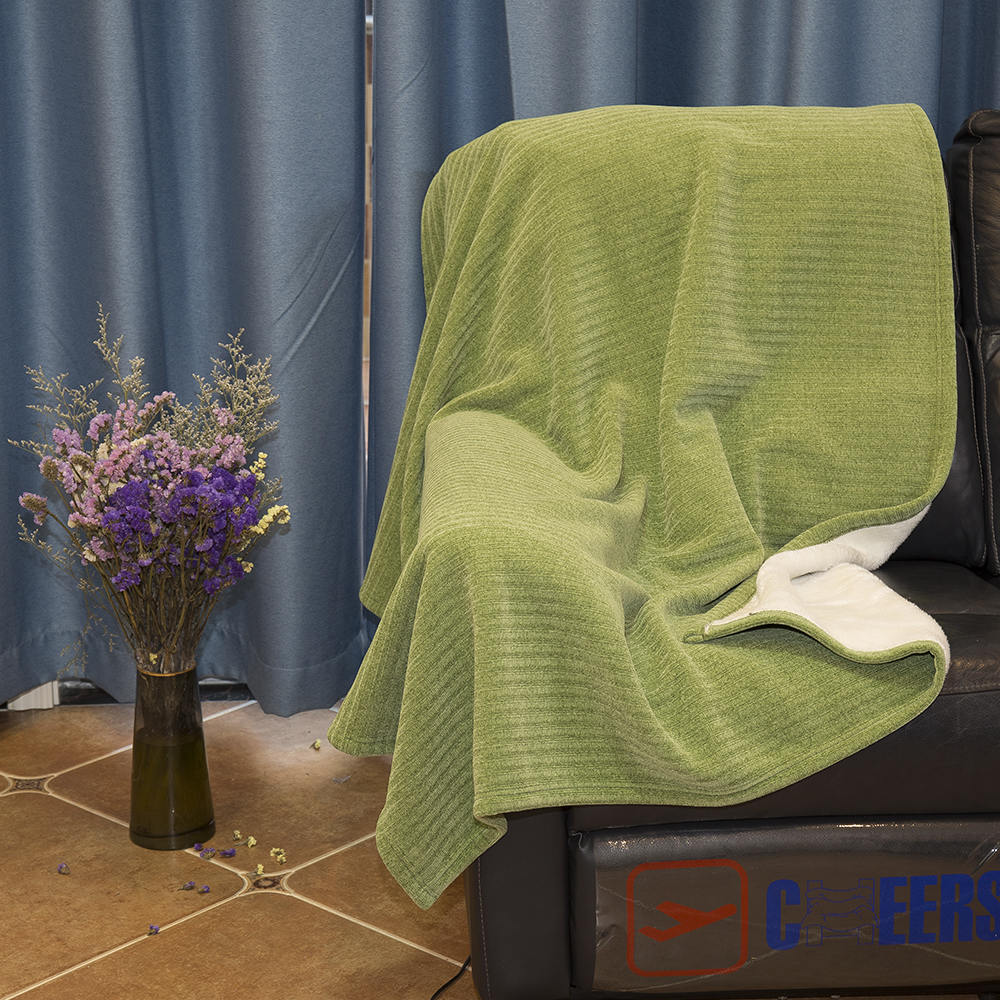
The Jacquard Chenille Composite Arctic Fleece Blanket is engineered as a two-layer textile rather than a single-fabric throw. The upper surface uses jacquard chenille fabric, while the reverse uses arctic fleece. These materials are composited to create a blanket that can offer decorative texture, softness, warmth, and practical durability in one finished product.
| Specification | Details |
|---|---|
| Product name | Jacquard Chenille Composite Arctic Fleece Blanket |
| Product category | Blanket |
| Material | 100% polyester |
| Total weight | Approximately 450gsm |
| Face fabric | Approximately 200gsm jacquard chenille |
| Reverse fabric | Approximately 230gsm single-sided arctic fleece |
| Construction | Double-layer composite construction |
| Weave type | Knitted |
| Pattern | Solid colors |
| Available sizes | 50 x 60 inches, 60 x 80 inches, 90 x 90 inches, and 90 x 110 inches |
| Recommended uses | Sofa, bed, hotel, plane, office, coach, and study environments |
| Care | Machine wash separately in cold water; tumble dry on low |
| Seasonal use | All seasons |
| Key features | Soft, warm, washable, reversible, wrinkle resistant, shrink resistant, and designed for color retention |
| Suitable users | All ages |
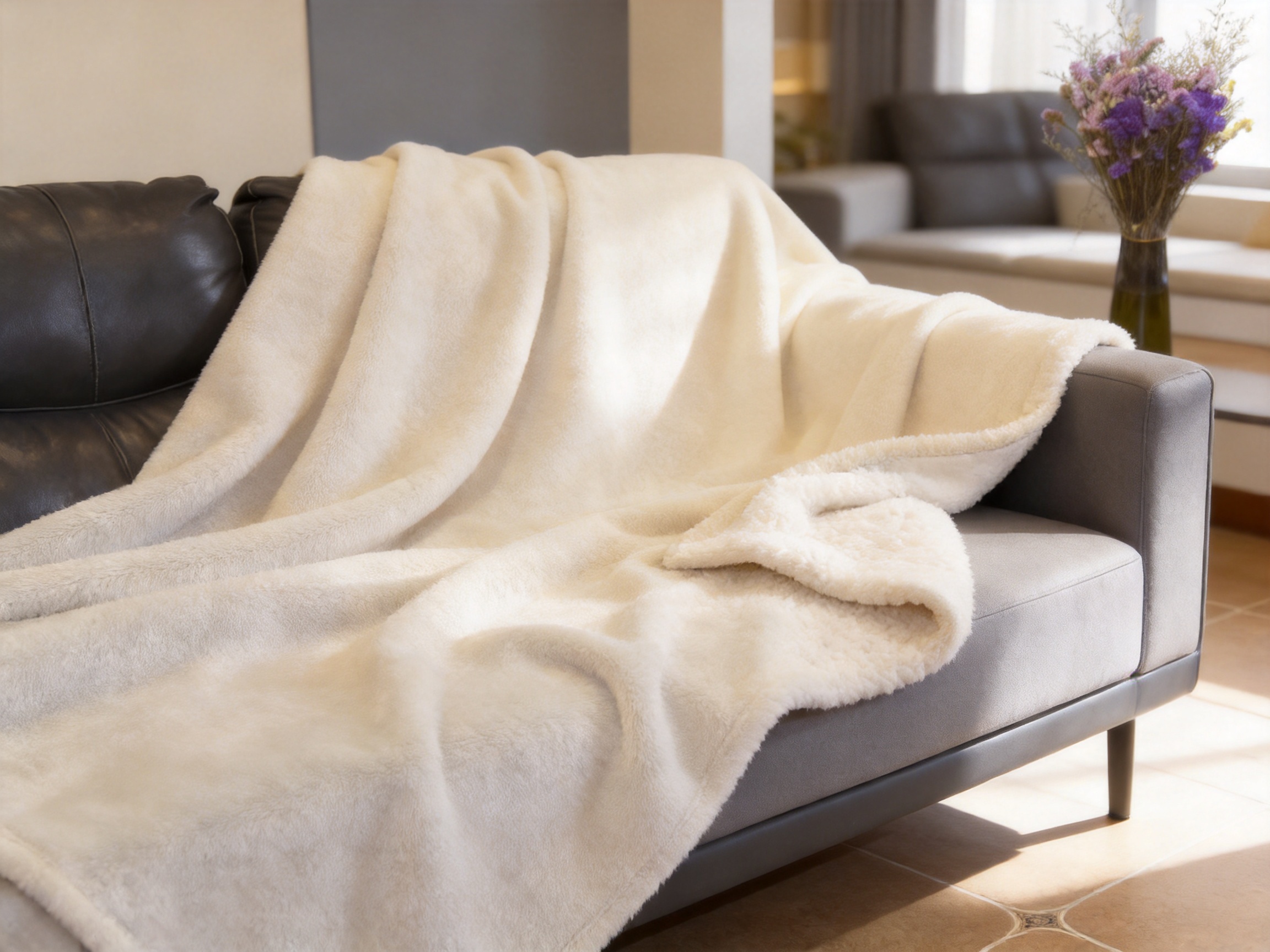
The 450gsm total weight gives the blanket a fuller presence than lightweight throws, while the dual-fabric structure helps distribute comfort across different use conditions. The fleece side is intended to provide a fluffy and warm touch, especially during colder weather. The chenille side contributes a more textured, decorative, and breathable surface that can be displayed on a sofa, bed, or chair.
Because the blanket is made from polyester, it is suitable for buyers seeking a material that is comparatively easy to care for, stable in repeated household use, and adaptable to large-scale manufacturing. Polyester also supports a broad range of color and surface treatments, making it practical for both standard collections and customer-specific programs.
A major advantage of this blanket is the deliberate separation of functions between the two sides. Instead of using one uniform textile throughout, the design combines a textured jacquard chenille face with a soft arctic fleece reverse. This approach provides a more varied tactile experience and increases the blanket’s usefulness in different settings.
The jacquard chenille face provides a visually rich surface with a plush, textured appearance. Chenille yarns are known for their soft, velvety hand and distinctive dimensional effect. When used in a jacquard structure, the surface can create a refined textile look even when the blanket is produced in solid colors. This makes the blanket suitable for decorative presentation as well as personal warmth.
The face side can be placed outward when the blanket is folded over a sofa arm, laid across the foot of a bed, or displayed in a retail setting. Its textured appearance can add depth to a room without depending on a complex printed pattern. For interior designers and hospitality buyers, this allows the blanket to coordinate with both contemporary and traditional environments.
The arctic fleece reverse is intended to provide a soft, fluffy, and warm touch. Its thicker feel is particularly useful during cold weather or in air-conditioned environments where users need additional comfort. The fleece side can be placed against the body for a more enveloping experience, while the chenille side remains visible as a decorative exterior.
The reverse side also gives the blanket a comfortable hand when it is used for resting, reading, travel, or relaxation. In practical terms, the two-sided construction allows users to select the surface that best matches the immediate need: a warmer fleece touch for direct contact or a more textured chenille surface for display and lighter use.
The double-layer construction creates a fuller blanket profile and increases the sense of substance. At approximately 450gsm, the product is designed to feel substantial without being described as a heavy weighted blanket. This balance can make it easier to use across seasons. In winter, the two layers offer additional insulation and softness. In milder weather, the blanket can function as a comfortable cover or decorative throw.
The composite format can also provide a stronger product identity than an ordinary single-layer fleece blanket. Buyers receive a product with two distinct surface experiences, a more developed visual presentation, and a broader range of placement options. For retailers, this differentiation can make the blanket easier to position in premium home-textile collections.
Jacquard Chenille Composite Arctic Fleece Blanket
Many basic blankets rely on a single fabric and a single surface treatment. While this approach can be economical, it may limit the range of tactile and visual benefits available to the user. The Jacquard Chenille Composite Arctic Fleece Blanket is designed to address several common limitations through its layered construction and manufacturing profile.
A single-surface fleece blanket generally emphasizes warmth and softness, but it may offer limited decorative texture. Conversely, a smooth decorative blanket may look attractive but provide less plushness or warmth. This product combines both directions. The jacquard chenille side gives the blanket a refined appearance, while the arctic fleece side provides a warmer, softer contact surface.
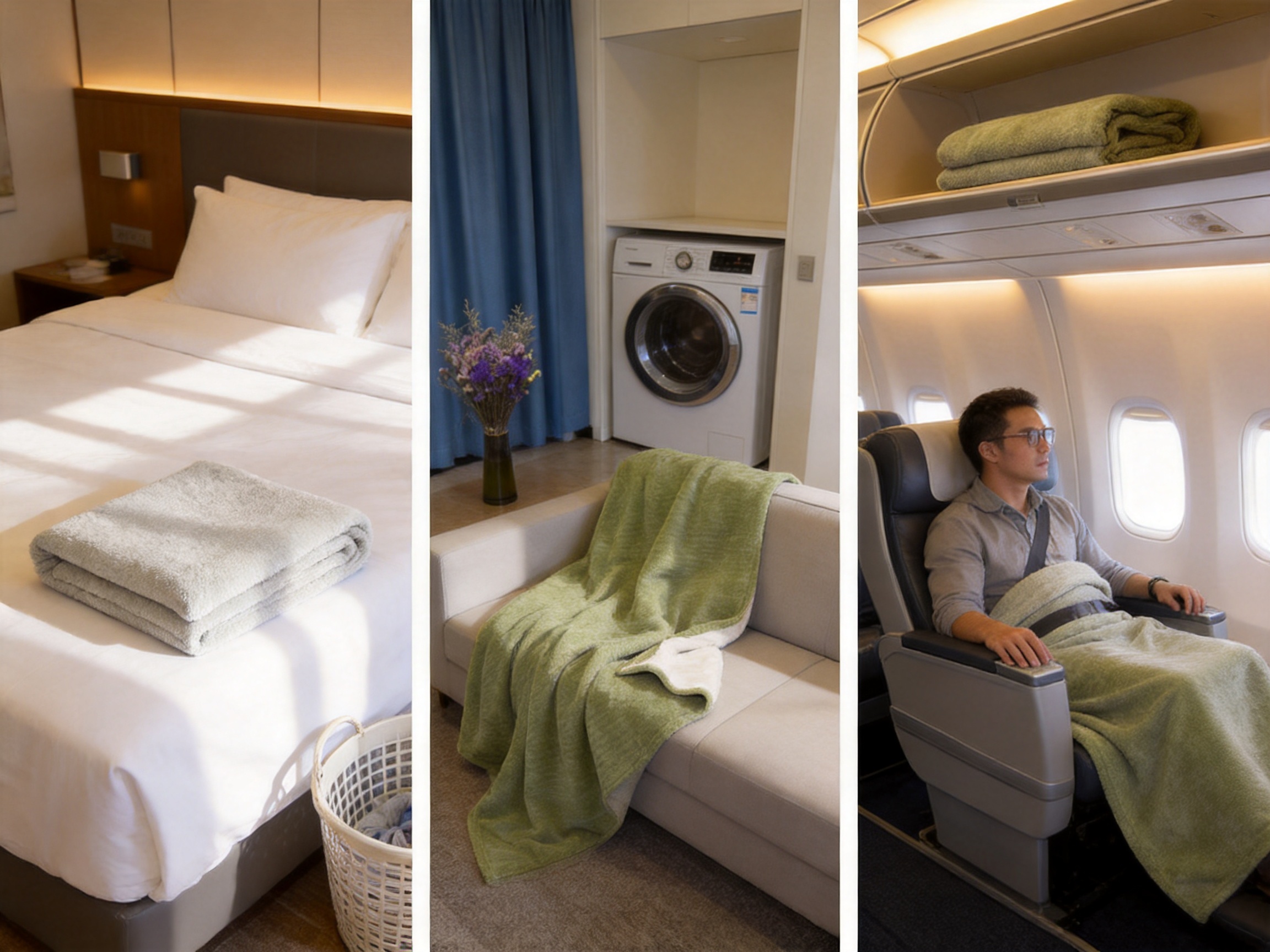
This versatility is useful in commercial environments where one blanket may need to serve different functions. In a hotel room, for example, the blanket can be folded at the end of a bed for visual presentation and then used as an additional comfort layer. In an office or aircraft setting, it can serve as a personal wrap. In a living room, it can remain visible as part of the room’s decoration.
Arctic fleece is commonly selected for warmth and softness, but a basic fleece blanket may have a relatively simple appearance. The jacquard chenille face creates a more structured and tactile visual effect. This can help the product occupy a higher position within a home-textile assortment, especially when buyers are looking for comfort products that also contribute to interior styling.
The solid-color design further supports this decorative role. Solid colors are easy to coordinate with furniture, curtains, bed linens, carpets, and other household textiles. They also provide a clean appearance for hospitality and institutional purchasing, where overly complex patterns may not suit every room.
Some decorative throws are designed primarily for appearance and may not provide enough warmth or coverage for everyday use. This blanket is designed as a functional comfort product as well as a decorative item. Its 450gsm weight, double-layer structure, and fleece backing provide a more practical level of coverage for sofas, beds, travel, and relaxation areas.
The range of available sizes allows distributors to create a broader assortment without changing to a completely different product concept. A smaller size can be offered for individual sofa use or travel, while larger sizes can be positioned for beds, guest rooms, and shared household use. Multiple size choices also allow hospitality buyers to match the product to different room categories.
The product’s polyester composition, solid-color format, and machine-washable care profile are also suitable for scalable purchasing. Retailers can present it as an accessible premium textile, while commercial buyers can evaluate it according to durability, maintenance, and replacement requirements.
Comfort is central to the design of any blanket. The product combines two fabrics selected for different forms of tactile performance. The chenille surface contributes a soft, textured hand, while the arctic fleece side adds a fluffy and warm sensation. The result is a blanket that can feel comfortable when wrapped around the body, placed over the legs, or used as a bed or sofa layer.
The product description identifies the blanket as suitable for all ages. This broad suitability is supported by its soft construction, adaptable sizes, and straightforward maintenance instructions. It can be used by adults, children, guests, travelers, and office workers, although normal product selection should always consider the user’s specific environment and safety requirements.
Reversible softness is another practical benefit. Users are not limited to one designated comfort side. The fleece side may be preferred when maximum softness and warmth are desired, while the jacquard chenille side can provide a different tactile experience and a more decorative appearance. This reversibility can also extend the visual life of the product because it can be arranged in multiple ways.
The blanket is not presented as a technical thermal product with a specified insulation rating. Instead, its comfort value comes from the combination of material weight, layered construction, surface softness, and coverage. This makes it appropriate for everyday household and hospitality use rather than specialized outdoor or extreme-weather applications.
The jacquard chenille face is described as providing a cooler and more breathable feeling than the fleece reverse. This difference allows the blanket to be used in more than one climate or indoor condition. During colder weather, the fleece side can be positioned against the user. During warmer seasons or in heated rooms, the chenille side can be used as a lighter-feeling cover or decorative layer.
All-season suitability does not mean that the blanket provides the same experience in every temperature. Rather, the two-sided design gives users greater flexibility. In a bedroom, it can be placed at the foot of the bed year-round. In an office, it can provide comfort in air-conditioned spaces. In a hotel, it can serve as an additional layer for guests with different comfort preferences.
This adaptability can be valuable for businesses seeking products with a longer selling period. A highly seasonal blanket may experience strong demand only during winter. An all-season composite blanket can be marketed for home decoration, travel, guest comfort, and relaxation throughout the year.
Maintenance requirements strongly influence purchasing decisions in both residential and commercial markets. The Jacquard Chenille Composite Arctic Fleece Blanket is designed for machine washing, with care guidance recommending separate washing in cold water and tumble drying on a low setting. These instructions provide a straightforward care routine for users who want to keep the blanket clean without depending on specialized textile services.
Separate washing can help reduce friction from other garments and minimize the risk of lint transfer. Cold-water washing may also help support color maintenance and reduce unnecessary energy use compared with hot-water cycles. Low-temperature tumble drying is recommended to help protect the textile structure and preserve the blanket’s hand feel.
The blanket is described as wrinkle resistant, shrink resistant, and resistant to fading after extended use and repeated washing. These characteristics are important in environments where a blanket must maintain a presentable appearance over time. Hotels, furnished apartments, offices, and rental properties may benefit from textiles that can be cleaned regularly while retaining a consistent visual standard.
Care performance is affected by washing conditions, detergents, drying settings, water quality, and mechanical stress. For this reason, buyers should follow the manufacturer’s care instructions and conduct their own evaluation when planning high-frequency commercial laundering. Nevertheless, a machine-washable polyester composite offers a practical foundation for routine maintenance.
In residential living rooms, the blanket can be folded over a sofa arm, placed across a sectional, or kept in a basket for everyday use. The jacquard chenille surface can complement furniture upholstery, while the fleece side provides comfort during reading, watching television, or resting. Its solid-color design can be coordinated with rugs, cushions, curtains, and other soft furnishings.
On a bed, the blanket can be used as an additional warmth layer or as a decorative cover at the foot of the bed. The larger 90 x 90 inch and 90 x 110 inch sizes are suitable for broader coverage, while the smaller sizes may be appropriate for individual use or accent styling. The textured surface can contribute to a layered bedding presentation without requiring an elaborate pattern.
Hotels, serviced apartments, and guesthouses require textiles that balance comfort, presentation, and maintenance. A double-layer blanket can provide guests with an additional bedding option while also enhancing the room’s appearance. The solid colors are suitable for a range of room designs, and the machine-washable construction can support routine housekeeping procedures.
For hospitality operators, size selection can be matched to room type. Smaller blankets may be placed on lounge chairs or guest sofas, while larger sizes can be used on beds. A consistent product family across different sizes can help create a unified purchasing and presentation strategy.
The product is also recommended for plane and coach environments. Travel settings often involve variable temperatures and extended periods of sitting. A soft blanket can improve passenger comfort in aircraft cabins, buses, trains, or other transportation environments. The smaller 50 x 60 inch size may be especially useful as a personal travel cover, subject to the specific storage and laundering requirements of the operator.
Modern offices, libraries, study rooms, and coworking spaces may use soft furnishings to support comfort and flexible working. Air conditioning can make indoor environments feel cool even outside winter, and a personal blanket can provide an easy comfort solution. The blanket can also be kept in relaxation areas, reading corners, or employee wellness rooms.
Because the product combines a decorative face with a functional reverse, it can be positioned in home-textile, bedding, seasonal gift, and lifestyle collections. Retailers may offer it as a premium throw, a practical household blanket, or a comfort-focused gift. The solid-color presentation can support coordinated collections with cushions, rugs, and other interior products.
The product is supplied by Zhejiang Benyi Textile Technology Co., Ltd., located in Shaoxing, Zhejiang Province, China. Shaoxing is widely recognized as a major textile production center, and the company operates within this established industrial environment. Its stated focus is on textile production technology, ecological responsibility, and improving consumers’ health and comfort experiences.
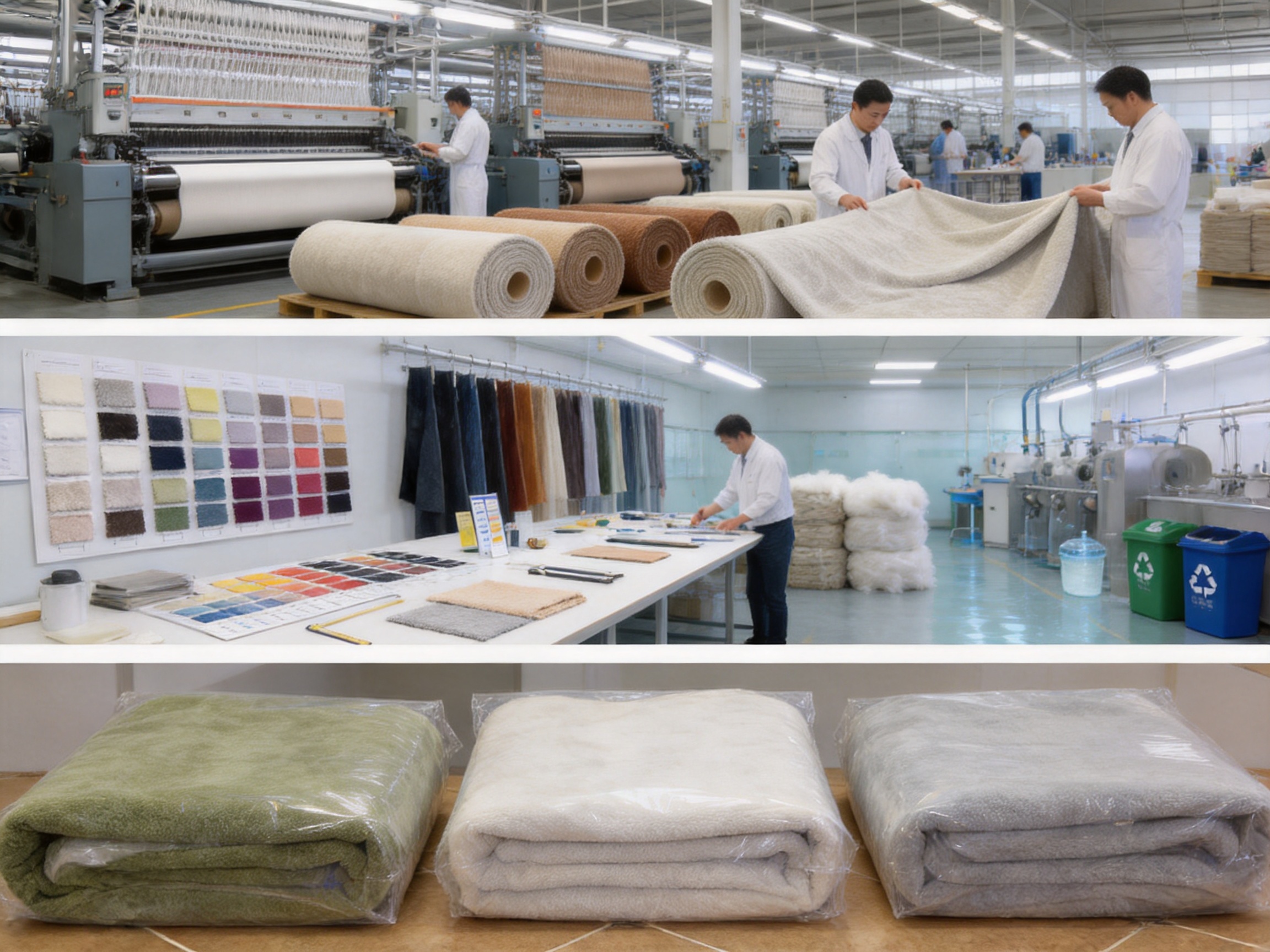
The company’s capabilities extend beyond the production of a single finished blanket. It specializes in carpets, rug fabrics, and finished textile products, with its business structure incorporating weaving factories, dyeing and printing factories, and finished carpet processing factories. This degree of vertical coordination can provide advantages in communication, production planning, quality supervision, and lead-time management.
When separate suppliers handle weaving, dyeing, finishing, and final assembly, communication gaps can occur between production stages. A company with control over multiple stages can more directly coordinate specifications and respond to technical adjustments. For a composite textile, where the appearance and hand feel of two materials must work together, such coordination can be particularly valuable.
Weaving and fabric development form the foundation of a textile product’s appearance and performance. The company reports having more than 20 fabric engineers who develop new carpet and textile fabrics each quarter in response to market trends. This engineering team can support the exploration of different textures, weights, colors, constructions, and surface effects.
Although the blanket described here follows a defined specification, an active fabric development capability can help a manufacturer improve future collections and respond to customer requests. Buyers may be able to discuss adjustments related to color, size, surface texture, packaging, or other product details depending on project requirements.
Color consistency is important for solid-color blankets, especially when the product is purchased in volume or used across multiple locations. The company’s dyeing and printing capabilities allow it to coordinate color-related production within its broader manufacturing system. Internal coordination can make it easier to communicate color standards and review samples before bulk production.
For wholesale customers, color development may involve laboratory dips, approval samples, production standards, and batch monitoring. Exact procedures depend on the order and customer requirements, but a manufacturer with in-house or closely controlled dyeing resources is better positioned to manage these stages systematically.
Composite blankets require more than the production of separate fabrics. The layers must be joined, finished, inspected, and prepared for packaging. Finished product processing provides an opportunity to control dimensions, surface appearance, edge treatment, cleanliness, labeling, and final presentation.
Coordinating final processing with upstream fabric production can help identify issues earlier. If the hand feel, color, or dimensional stability of one layer does not match the intended result, the production team can review the relevant stage rather than treating the finished blanket as an isolated item.
For international buyers, product quality is only one part of a successful sourcing relationship. Consistent supply, clear communication, dependable lead times, and the ability to manage customization are equally important. The company’s integrated production structure is intended to support these commercial needs.
The company states that it controls weaving, dyeing and printing, and finished carpet processing. Such control may reduce dependence on multiple external partners and simplify production coordination. It can also make it easier to trace a product from fabric development through final processing.
For a buyer, this can mean a more direct path for discussing specifications, sample revisions, production schedules, and quality concerns. It may also help support repeat orders because the company can maintain internal references for approved colors, fabric weights, and construction requirements.
The company provides customized services according to customer requirements. Customization may include selected colors, size adjustments, packaging formats, labeling, collection development, or other details agreed during the sourcing process. The feasibility of each request depends on order volume, technical requirements, and production planning.
Customization is valuable for retailers and hospitality groups that want products aligned with their own brand identity or interior design program. A blanket with a controlled solid-color palette can be developed to match a seasonal collection, a hotel’s room scheme, or a distributor’s existing home-textile range.
The company’s stated practice of developing new fabrics each quarter indicates an emphasis on ongoing product innovation. Textile buyers often need more than standard materials because market preferences change quickly. Consumers may request softer surfaces, improved washability, recycled fibers, new textures, or more coordinated home collections.
A manufacturer that maintains a fabric engineering team can be better prepared to test and introduce updated designs. This supports product differentiation and gives buyers more opportunities to build collections rather than relying only on generic catalog items.
Environmental responsibility is increasingly important in textile purchasing. Zhejiang Benyi Textile Technology Co., Ltd. describes its production approach as focused on ecological and environmental protection. The company reports investment in sustainable materials and production methods, including recycled polyester and water-saving dyeing techniques.
The company also reports having passed OEKO-TEX® and Global Recycled Standard certifications. Buyers should confirm the current scope, validity, certificate details, and applicability of any certification to the specific product, material, and production batch being purchased. Certification review is an important part of responsible sourcing because standards may apply to particular facilities, materials, or processes rather than automatically covering every item.
Polyester is a widely used synthetic fiber with advantages in durability, color application, and care performance. Recycled polyester options may help buyers address recycled-content goals when the product specification and certification requirements support such a choice. Water-saving dyeing methods may contribute to more efficient resource use, although the environmental impact of a finished textile should be evaluated across materials, energy, transportation, packaging, washing, and end-of-life considerations.
For purchasers developing sustainability programs, useful questions may include whether recycled fibers are available, what documentation accompanies them, how wastewater is managed, which packaging materials are used, and whether production records can support compliance reporting. Open technical communication between the buyer and manufacturer helps ensure that environmental claims are accurate and product-specific.
The blanket can be positioned in several market segments because it combines functional warmth with decorative styling. Retailers may describe it as a textured jacquard throw, a double-layer fleece blanket, an all-season comfort blanket, or a premium sofa and bed accessory. The final positioning can be adapted to the target customer and price structure.
The product’s premium character comes from its material combination, surface texture, weight, and construction rather than from an overly complicated pattern. This can appeal to consumers who prefer understated interiors. Solid colors make it easier to coordinate the blanket with existing furniture and reduce the risk that a seasonal pattern will become visually outdated.
The company’s broader expertise in carpets, rug fabrics, and finished textile products creates opportunities for coordinated home collections. A blanket can be developed alongside sofa cushions, area rugs, carpet fabrics, or other soft furnishings. Matching or complementary colors and textures can help retailers create room-based displays and encourage multiple-item purchases.
Wholesale customers may use the product as a foundation for private-label programs. Depending on the agreement, private-label development may involve customized labels, packaging, colors, sizes, and presentation materials. A private-label blanket can help a retailer differentiate its assortment while using an established manufacturing base.
Successful private-label development requires clear technical documentation. Buyers should define the target dimensions, tolerance, fabric composition, weight, color standard, packaging, labeling, care instructions, inspection criteria, and shipping requirements before production begins.
Before placing a large order, buyers should evaluate the blanket through a structured sample and approval process. The first step is to confirm the intended use. A household retail throw may have different requirements from a hotel blanket, airline comfort item, or office product. Usage frequency, cleaning methods, storage conditions, and expected service life should all be considered.
The second step is to examine the sample physically. Buyers should assess the softness of both sides, the consistency of the jacquard surface, the connection between layers, edge finishing, dimensional accuracy, color uniformity, odor, lint behavior, and overall appearance. The blanket should also be evaluated after washing according to the recommended care instructions.
The third step is to review documentation. Product specifications, fiber composition, weight, available sizes, care labels, packaging details, and any relevant certificates should be checked against the purchasing requirements. If a sustainability claim is important, the buyer should request appropriate supporting evidence rather than relying only on general marketing language.
The fourth step is to confirm commercial details, including minimum order quantity, sample costs, production lead time, payment terms, packaging, inspection arrangements, shipping marks, and destination requirements. A clear purchase specification helps minimize misunderstandings and supports consistent repeat orders.
| Evaluation Area | Questions for Buyers |
|---|---|
| Materials | Does the blanket meet the stated 100% polyester composition and layer specifications? |
| Weight | Is the total weight approximately 450gsm, and are tolerances defined? |
| Hand feel | Are both the chenille and fleece sides sufficiently soft for the intended market? |
| Appearance | Are color, texture, jacquard definition, and surface uniformity acceptable? |
| Construction | Are the two layers securely composited, with clean and durable edges? |
| Care | Does the product maintain acceptable appearance and hand feel after washing? |
| Dimensions | Do the available sizes and dimensional tolerances match the sales plan? |
| Compliance | Are applicable testing reports, labels, and certificates available for the destination market? |
| Customization | Can colors, packaging, labels, or other requirements be adapted? |
| Supply | Are lead times, production capacity, and repeat-order procedures clearly defined? |
Correct care helps preserve the blanket’s softness, appearance, and structural performance. The recommended routine is to wash the blanket separately in cold water, use a suitable detergent, and tumble dry on a low setting. Users should avoid unnecessary high heat, which may affect synthetic fibers and surface softness over time.
Before washing, the blanket should be checked for attached accessories, labels, or packaging materials. It should not be overloaded into a washing machine that is too small for its size and weight. Adequate space allows water and detergent to move through the textile more effectively and can reduce excessive mechanical stress.
After washing, the blanket should be dried thoroughly before storage. Damp storage can create an unpleasant odor and may affect the condition of the textile. Folding the blanket neatly in a dry, ventilated place can help maintain its appearance between uses.
For commercial users, care procedures should be aligned with the facility’s laundry equipment. A trial wash program is advisable before introducing the blanket into high-frequency service. This allows the operator to confirm that the selected cycle, detergent, drying temperature, and handling methods are suitable.
International wholesale buyers often seek products that combine broad consumer appeal with manageable logistics. This blanket offers several characteristics that support this objective. It is available in multiple sizes, uses a familiar polyester composition, has a solid-color design, and can be machine washed. These features reduce the need to educate consumers about complicated care or specialized use.
The product also fits several categories at once. It can be sold as a blanket, throw, bedding accessory, sofa accessory, travel comfort item, or hospitality supply. This flexibility can help distributors serve different customer groups with one core product. The range of sizes further allows buyers to construct good-better-best assortments or separate consumer and commercial lines.
From a manufacturing perspective, the company’s fabric engineering resources and integrated production chain may support consistent development and supply. Its location in Shaoxing provides access to a mature textile ecosystem, while its own weaving, dyeing and printing, and finished processing capabilities support greater coordination over production stages.
For buyers that value customization, the manufacturer’s ability to provide services according to customer requirements can be an important advantage. Instead of selecting a completely fixed item, a buyer may be able to discuss changes that make the blanket more suitable for a specific market, interior program, or private-label collection.
The blanket is made from 100% polyester. Its composite construction combines approximately 200gsm jacquard chenille fabric with approximately 230gsm single-sided arctic fleece fabric.
GSM means grams per square meter and indicates the approximate fabric weight. A 450gsm blanket has a substantial textile weight, although actual comfort also depends on fiber structure, thickness, finishing, and the way the layers are joined.
Yes. The product has a jacquard chenille face and an arctic fleece reverse. Both sides can be used, with the fleece side emphasizing softness and warmth and the chenille side offering a textured, decorative appearance.
The blanket is designed for all-season use. The fleece side can provide additional warmth in cold conditions, while the chenille side may offer a lighter and more breathable feeling in milder indoor environments.
The listed sizes are 50 x 60 inches, 60 x 80 inches, 90 x 90 inches, and 90 x 110 inches. Buyers should confirm final measurements and tolerances when placing an order.
Yes. The blanket is recommended for hotel use and provides a combination of decorative presentation, warmth, and machine-washable care. Hospitality buyers should conduct laundering trials based on their own equipment and service frequency.
It should be washed separately in cold water and tumble dried on a low setting. Users should follow the care label and avoid excessive heat or unsuitable washing conditions.
The product is described as wrinkle resistant and shrink resistant. Actual results depend on washing and drying conditions, so care instructions should be followed carefully.
The product is offered in solid colors, and the manufacturer provides customized services according to customer requirements. Buyers should discuss color availability, minimum quantities, sampling, and approval procedures directly with the manufacturer.
Yes. The jacquard chenille surface provides a textured appearance that can be displayed on beds, sofas, chairs, and other furniture. Its solid-color styling makes it suitable for coordinated interior schemes.
The manufacturer reports capabilities covering weaving, dyeing and printing, and finished textile processing. It also has a team of more than 20 fabric engineers and develops new fabrics according to market trends and customer requirements.
The company reports investment in recycled polyester and water-saving dyeing methods, as well as OEKO-TEX® and Global Recycled Standard certifications. Buyers should request current documentation and confirm whether a specific blanket order is covered by the relevant certification.
The product is supplied by Zhejiang Benyi Textile Technology Co., Ltd., located at No. 75 Zhenyuan Road, Yuecheng District, Shaoxing City, Zhejiang Province, China. The company specializes in carpets, rug fabrics, and finished textile products.
The Jacquard Chenille Composite Arctic Fleece Blanket is designed to combine warmth, softness, decorative texture, and everyday practicality in one double-layer textile. Its 100% polyester construction, approximately 450gsm weight, jacquard chenille face, and arctic fleece reverse provide a broader range of benefits than a basic single-surface blanket. The product can be used on sofas, beds, in hotels, offices, aircraft, coaches, study spaces, and other environments where comfort and presentable styling are important.
Its major advantages include reversible use, all-season flexibility, multiple size options, solid-color coordination, machine-washable care, and a fuller composite construction. These qualities can help retailers and wholesale buyers position it as both a practical comfort product and a decorative home-textile accessory.
The product is further supported by a manufacturer with capabilities across weaving, dyeing and printing, finished processing, fabric engineering, and customized development. The company’s integrated production structure may help improve communication, quality coordination, lead-time management, and product consistency. Its stated investment in recycled polyester, water-saving dyeing, and textile certifications also provides a foundation for sustainability-focused sourcing, subject to product-specific verification.
For buyers seeking a blanket that delivers more than basic warmth, this composite design offers a balanced solution. It brings together the visual character of jacquard chenille, the plush comfort of arctic fleece, and the practical advantages of a washable polyester textile. With appropriate quality evaluation, care management, and customization planning, it can serve as a versatile addition to residential, hospitality, travel, office, and wholesale textile collections.
1. Product specification sheet for the Jacquard Chenille Composite Arctic Fleece Blanket, including materials, sizes, weight, construction, care instructions, and recommended uses.
2. Manufacturing profile of Zhejiang Benyi Textile Technology Co., Ltd., including company capabilities, fabric engineering resources, production-chain structure, and customization services.
3. General textile manufacturing principles relating to polyester fibers, jacquard structures, chenille surfaces, arctic fleece, composite constructions, and GSM measurement.
4. General household and commercial textile care guidance for machine washing, cold-water cycles, low-temperature tumble drying, and moisture-controlled storage.
5. General sustainability guidance concerning recycled polyester, water-saving dyeing, textile certification review, and responsible sourcing practices.

ADD: No.75 Zhenyuan Road, Yuecheng District, Shaoxing City, Zhejiang Province, China 312000

Tel : +86-189 6750 9795

FAX : +86-0575-8803 2773

Email : fisher@benetextile.com

Copyright © Zhejiang Benyi Textile Technology Co., Ltd. All Rights Reserved. Carpets and Rugs Manufacturer

 English
 Français
 Deutsch
 عربى
عربى