

Shen Ruoxi — International Product Sales Executive
 Home / Author / Shen Ruoxi — International Product Sales Executive / Luminous Flannel Fleece Carpet Fabric: A Soft, Durable, and Customizable Textile Solution
 2026.10.04
 Shen Ruoxi — International Product Sales Executive
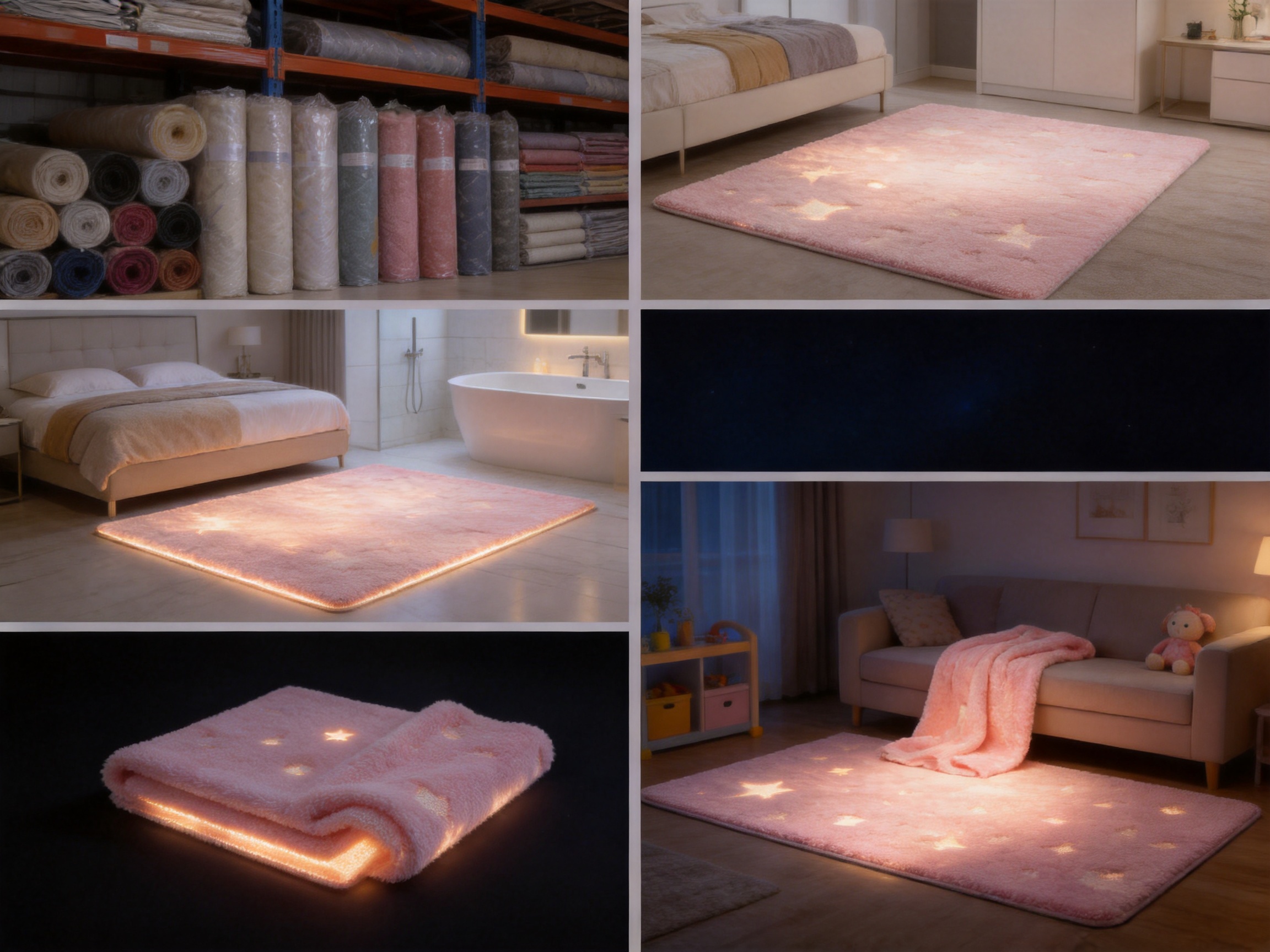
Modern home textile brands are seeking materials that combine comfort, visual appeal, practical performance, production flexibility, and dependable supply. Luminous Flannel Fleece Carpet Fabric responds to these requirements with a carefully balanced construction made from 100% polyester microfiber. Designed for carpets, area rugs, throw blankets, bath mats, and other soft furnishing applications, this fabric offers a plush 5mm pile, a practical 260gsm weight, customizable widths, solid dyed color options, and a distinctive luminous function.
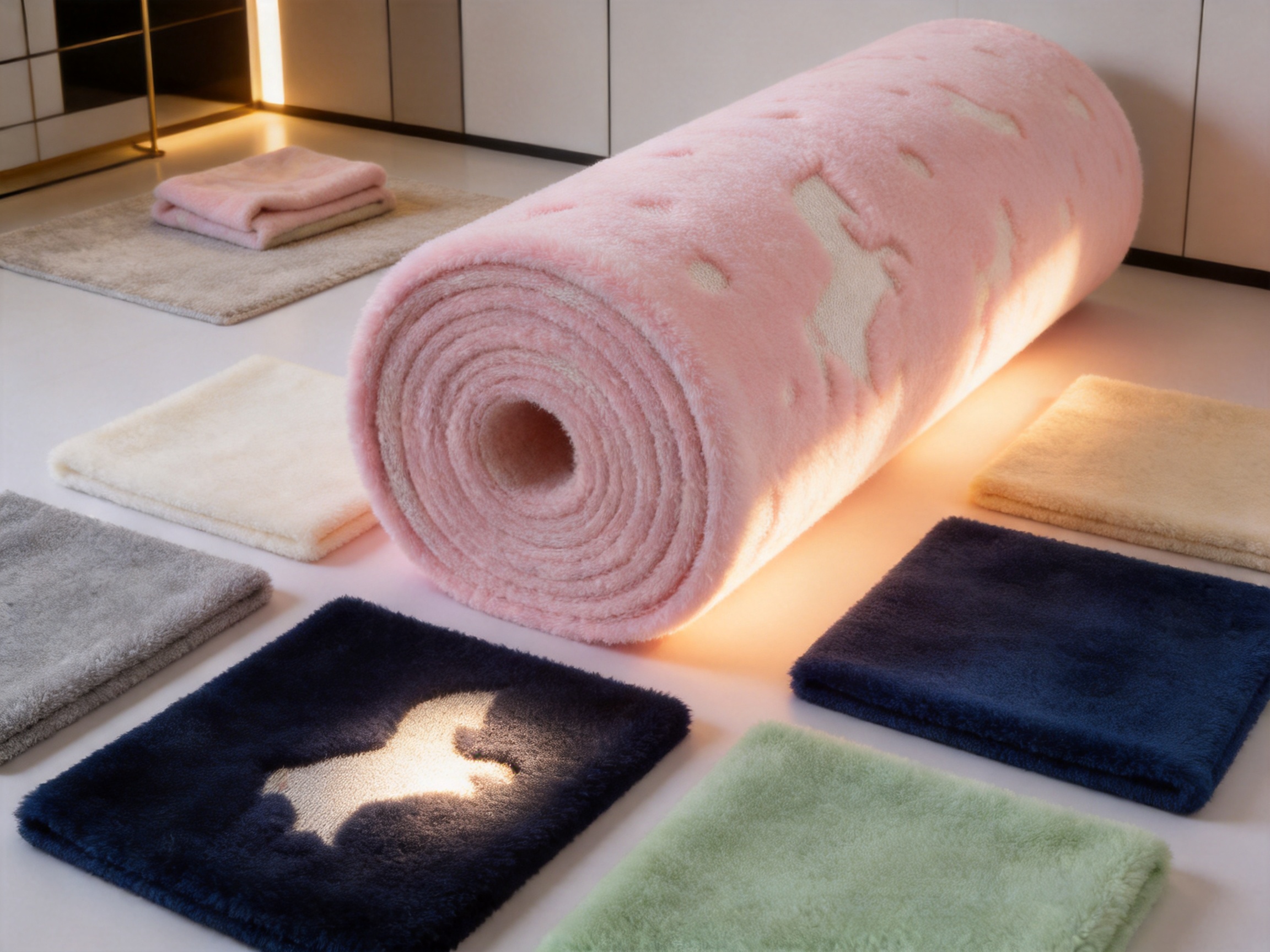
Unlike conventional carpet fabrics that focus only on softness or appearance, this material is developed to provide a broader product experience. Its flannel fleece surface creates a comfortable hand feeling, while its luminous design introduces a subtle glow in dark environments. This special characteristic can help improve visibility around bedrooms, children’s spaces, hallways, bathrooms, and other areas where gentle nighttime guidance is useful.
The fabric is supplied on a make-to-order basis, allowing buyers to select suitable colors, widths, and production specifications. Standard width choices include 170cm, 190cm, and 210cm, while customized widths are available for specific product designs. The maximum width can reach 3.2 meters, giving manufacturers additional flexibility when planning large rugs, wide blankets, and efficient cutting layouts.
Behind the product is an integrated textile manufacturing operation with experience in weaving, dyeing, printing, and finished carpet processing. This production structure gives buyers access to coordinated development, controlled quality, and more reliable lead times. For importers, wholesalers, home textile brands, and private-label manufacturers, the fabric provides a practical foundation for differentiated product collections.
Content
Luminous Flannel Fleece Carpet Fabric is a knitted textile produced from 100% polyester microfiber. Its construction is designed to deliver a soft surface, stable performance, and suitability for several home textile categories. It may be converted into area rugs, carpet products, bath mats, floor coverings, throw blankets, sofa accessories, and other household textile items.
The 260gsm weight provides a useful middle ground between lightness and substance. A fabric that is too light may lack body, while a fabric that is excessively heavy can create higher shipping costs and more difficult handling. At 260gsm, this material remains manageable for cutting, sewing, rolling, packaging, and transportation while still providing a comfortable and substantial surface.
The 5mm pile height is another important part of the design. It gives the fabric a noticeably plush touch without creating an excessively tall pile that may be difficult to process or maintain. The pile offers cushioning underfoot and contributes to the warm, soft feeling associated with fleece-based home textiles.
| Specification | Product Detail |
|---|---|
| Product name | Luminous Flannel Fleece Carpet Fabric |
| Item model number | 100046 |
| Material | 100% polyester microfiber |
| Weight | 260gsm |
| Standard width | 170cm, 190cm, and 210cm |
| Maximum stated width | Up to 3.2 meters |
| Pile height | 5mm |
| Production method | Knitted |
| Supply type | Make-to-order |
| Color | Solid dyed and customizable |
| Suitable applications | Carpets, rugs, blankets, bath mats, and related home textiles |
| Minimum order quantity | 500kg per color |
| Packaging | Rolls |
| Typical delivery time | 15–20 days |
| Main features | Soft, luminous, durable, fade-resistant, and customizable |
The most distinctive advantage of this fabric is its luminous function. Traditional carpet materials may provide warmth, decoration, and sound absorption, but they generally become visually inactive when the lights are turned off. A luminous textile adds another layer of usability by producing a gentle glow in dark conditions.
This feature can be used as a design element or as a practical visibility aid. In a bedroom, a luminous rug can provide a soft visual reference near the bed. In a child’s room, it can create an imaginative atmosphere without requiring bright lighting. In a hallway or entrance area, the glow may help users identify the location of a floor covering at night. In a bathroom, it can contribute to a calm and visually recognizable environment.
The luminous effect also creates opportunities for product differentiation. Home textile buyers often compare numerous rugs and blankets that use similar colors, dimensions, and surface textures. A glow-in-the-dark feature allows a manufacturer to develop collections with a clear selling point. It can support themed product lines for children, hospitality interiors, seasonal retail programs, dormitories, recreational spaces, and other specialty markets.
Compared with fabrics that depend solely on printed patterns for visual appeal, luminous material can continue to provide an engaging effect when the surrounding lighting changes. During the day, the textile can function as a conventional solid dyed fleece fabric. In low-light conditions, its special feature becomes more noticeable. This day-to-night transformation offers designers additional creative possibilities without requiring complicated surface graphics.
The luminous function should be evaluated as part of a complete product design rather than as an isolated feature. The effect may vary according to exposure to light, surrounding darkness, fabric color, product construction, and viewing distance. Buyers should request samples and conduct application-specific testing before confirming mass production. Even so, the feature gives brands a valuable way to distinguish their products from standard non-luminous carpet fabrics.
Luminous Flannel Fleece Carpet Fabric
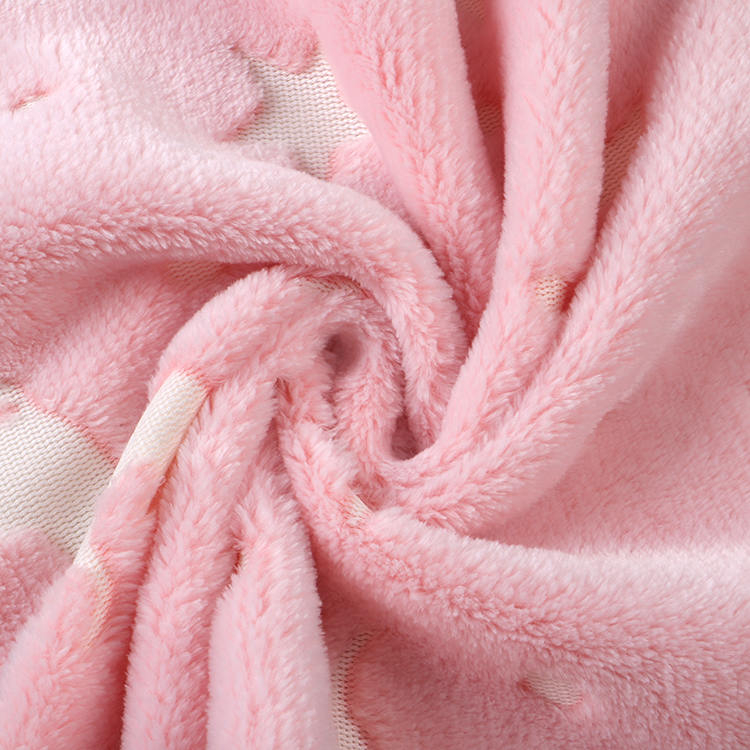
Comfort is central to the performance of any floor textile or fleece-based household product. The flannel fleece surface of this material is designed to feel soft against the skin and comfortable underfoot. The 5mm pile gives the surface a cushion-like character while maintaining a relatively practical profile for manufacturing and daily use.
For area rugs, softness improves the experience of walking, sitting, or playing on the floor. For bath mats, it offers a comfortable surface after bathing or showering. For blankets, the same fleece quality can provide a warm and pleasant hand feeling. The material can therefore support coordinated collections in which rugs, mats, and blankets share similar surface characteristics.
The knitted production method helps create a flexible textile structure. Compared with rigid floor covering materials, a knitted fleece fabric can be easier to cut, roll, store, and convert into different finished products. Its flexibility is valuable for brands that regularly develop new sizes, shapes, and product categories.
A 5mm pile is also suitable for designs that require a visible plush effect without the bulk of a high-pile carpet. Lower or medium pile structures may be easier to clean, stack, package, and integrate into contemporary interiors. They can also support more efficient conversion into finished rugs and mats, depending on the backing, edging, and sewing methods selected by the buyer.
The final feel of a finished product will depend on several factors, including the backing material, finishing process, construction method, edge treatment, and intended use. Manufacturers can use this fabric as a surface component and combine it with suitable backing or structural layers to create products for different markets. Sampling is recommended to confirm the exact hand feeling, drape, recovery, and thickness required for each application.
The fabric is knitted from 100% polyester microfiber. Polyester is widely used in home textiles because it can provide practical resistance to everyday handling, repeated use, and routine processing. Microfiber construction contributes to a soft touch while maintaining the performance characteristics expected from a synthetic textile.
Durability is particularly important for rugs, mats, and blankets because these products may experience frequent contact, folding, rolling, washing, or movement. A durable surface helps manufacturers create products with a longer usable life and fewer appearance changes during normal service. The fabric’s polyester composition also supports stable color development and consistent production across repeat orders when suitable dyeing controls are applied.
The supplied product information identifies the fabric as fade-resistant. This characteristic is useful for solid dyed collections, where color consistency is an essential part of the product’s appearance. Buyers can develop coordinated color ranges while maintaining a clean, uniform visual effect across large production runs.
Although polyester offers many practical benefits, finished-product performance depends on the full construction. A rug’s durability is influenced by backing, edge binding, stitching, traffic level, cleaning method, and placement. A bath mat may require additional consideration of moisture management and slip resistance. A blanket may require washing and colorfastness testing appropriate to its market. The fabric gives manufacturers a strong starting material, but product engineering should always match the intended use.
Compared with delicate natural fibers that may require more careful handling, polyester microfiber can be an attractive choice for brands that prioritize easy processing and repeatable supply. It can also help manufacturers offer soft products at accessible price points. This balance between tactile comfort and practical production is one of the key competitive strengths of the material.
Width selection can have a significant impact on product efficiency. A fabric that is available in only one narrow width may force manufacturers to add seams, increase cutting waste, or limit the dimensions of finished goods. This product is available in 170cm, 190cm, and 210cm widths, with customized widths also possible. The maximum stated width can reach 3.2 meters.
These options allow buyers to match the fabric width to their product patterns. For example, a rug manufacturer may select a width that minimizes side waste for a particular finished size. A blanket manufacturer may choose a wider specification to reduce the number of seams. A hospitality supplier may request a customized width for a repeatable room or floor plan.
Wider fabric can also support large-format products and improve cutting efficiency. When a suitable width is selected in advance, businesses can reduce unnecessary joining operations and simplify production planning. This may improve labor efficiency and help create a cleaner finished appearance.
Width customization is especially valuable for brands with multiple product categories. Rather than sourcing completely different materials for every product size, a buyer may be able to coordinate several designs around one production platform. This can simplify procurement, sampling, color management, and inventory planning.
Buyers should provide detailed specifications before production, including finished dimensions, allowable tolerances, cutting direction, edge requirements, roll length, and any backing or lamination plans. Early communication helps the factory recommend a practical width and reduce avoidable material loss.
The fabric is available in solid dyed colors, creating a clean and versatile foundation for modern home textile collections. Solid colors work well in minimalist interiors, contemporary bedrooms, hotel rooms, children’s spaces, bathrooms, entrances, and commercial environments. They can also be combined with printed labels, embroidered details, contrast borders, or shaped cutting patterns.
Color is one of the simplest ways for brands to build a recognizable collection. Neutral shades such as ivory, beige, gray, and taupe can support calm interior concepts. Brighter colors can be used for children’s products, seasonal ranges, and lifestyle collections. Darker shades may be selected for entrance mats, hospitality products, or designs intended to create a stronger visual presence.
Because the fabric is produced on a make-to-order basis, buyers can discuss color requirements before bulk production. This is helpful for private-label brands that need colors aligned with a specific brand palette or retail program. It is also useful for wholesalers that want to organize products by seasonal trends.
Color approval should be completed through laboratory dips or physical samples before bulk dyeing. Lighting conditions, substrate structure, pile direction, and luminous performance may affect the perceived result. A professional approval process helps ensure that the final color meets the buyer’s expectations.
Solid dyed fabric can also reduce design complexity when compared with highly detailed printed materials. This may support streamlined product planning and easier coordination across multiple finished goods. If a buyer needs a customized shade, the factory can assess the color reference, production feasibility, minimum quantity, and expected lead time.
The fabric is well suited to area rug production because it combines softness, a visible pile, broad width options, and a distinctive luminous feature. Manufacturers can convert it into rectangular, runner, round, irregular, or custom-shaped rugs, subject to the selected cutting and edging process.
In living rooms and bedrooms, the fabric can provide a warm surface and a soft decorative layer. In children’s rooms, the luminous function can support imaginative themes. In apartments and dormitories, lightweight construction may simplify handling and seasonal storage. Rug manufacturers can add suitable backing materials to improve stability and match the requirements of different markets.
The 5mm fleece surface offers a soft feeling for bath mat applications. The luminous feature may also provide a visual reference in low-light bathrooms. However, bath mat manufacturers should select an appropriate backing and conduct tests for moisture, washing, dimensional stability, drying, and slip performance.
Different regions may have specific requirements for bath mat safety and labeling. The surface fabric is an important component, but the complete finished product must be evaluated. This includes the interaction between the fleece, backing, stitching, printing, labels, and packaging.
The soft microfiber surface and flexible knitted structure make the fabric suitable for blankets and throws. A manufacturer may use the material as a single-layer fleece product or combine it with another textile to create a reversible or layered design.
Luminous blankets can appeal to children, themed bedrooms, gift markets, and novelty home textile collections. For these applications, buyers should confirm the desired glow effect, wash-care instructions, edge finish, and compliance requirements for the target country.
As a carpet fabric, the material can serve manufacturers that prefer to perform their own cutting, backing, binding, or final assembly. This approach gives buyers greater control over product dimensions and collection design. It can also help brands adapt one base fabric to several product sizes.
Finished floor coverings may be developed for homes, hotels, offices, retail stores, entrances, and other interior spaces. The appropriate construction will depend on traffic levels and the required resistance to movement, abrasion, moisture, and cleaning.
Although primarily designed for carpets and related products, the fabric may also be considered for decorative sofa cushions and coordinated home accessories. A brand could use matching colors and surface textures across rugs, cushions, blankets, and mats to create a complete room collection.
For cushion applications, designers should evaluate seam strength, filling compatibility, abrasion, pilling, and cleaning performance. The fabric’s soft touch can contribute to a comfortable decorative product, while its solid color supports coordinated interior design.
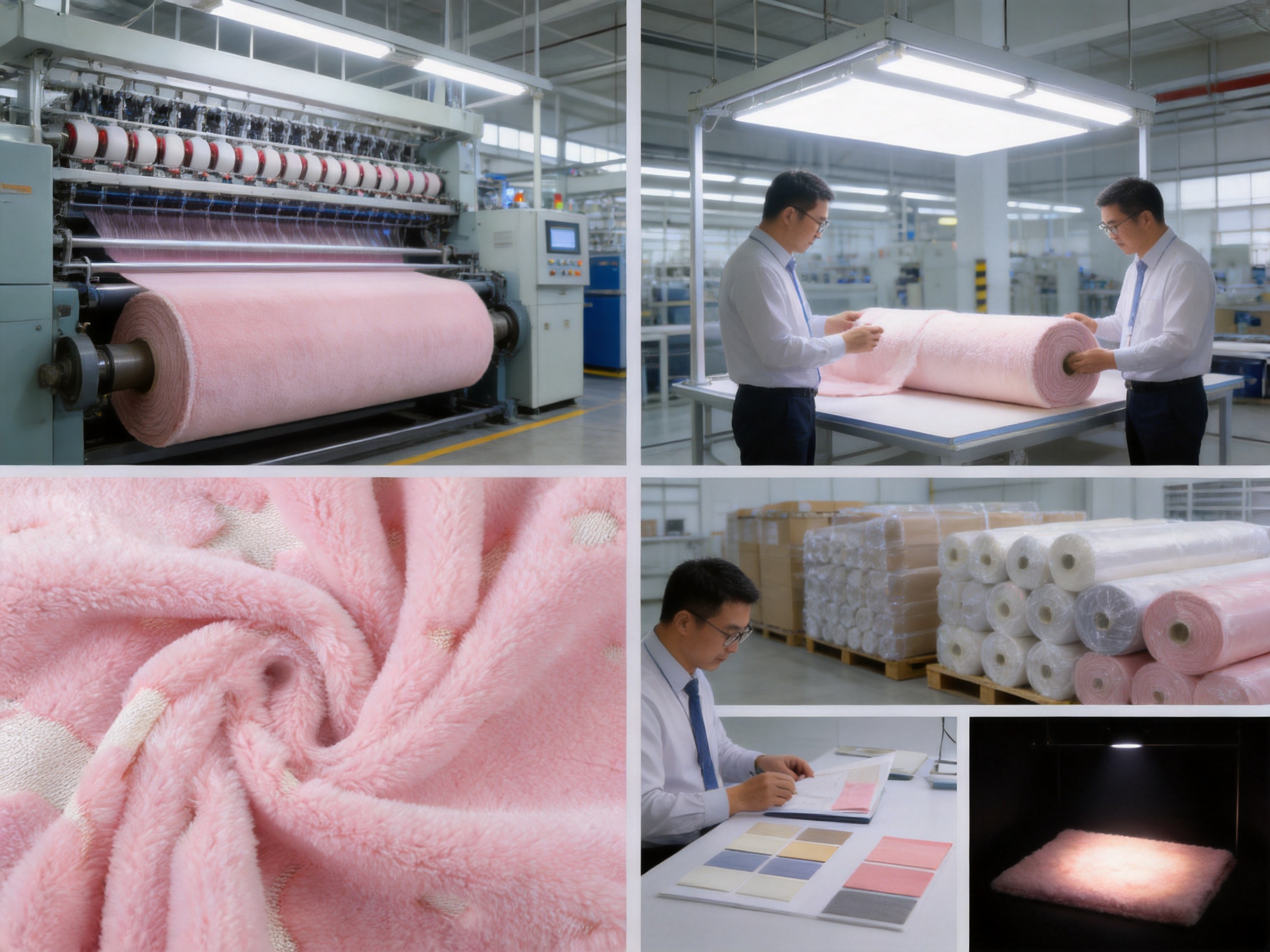
A reliable textile product depends not only on its listed specifications but also on the manufacturing system used to produce it. The company behind this fabric operates an integrated production structure that includes weaving, dyeing and printing facilities, and finished carpet processing factories. This creates a connected path from yarn and fabric development to color processing and final product conversion.
The first stage is material preparation. Polyester microfiber is selected and prepared for knitting according to the required weight, width, surface effect, and end use. Production planning must account for yarn quality, knitting parameters, machine settings, and the desired pile structure. Careful preparation helps reduce variations in surface appearance and fabric weight.
Knitting forms the base structure of the fabric and contributes to its flexibility and soft hand feeling. Machine settings are monitored to achieve the required 260gsm weight and 5mm pile height. During production, operators and quality personnel can inspect the fabric for defects such as uneven pile, holes, streaks, contamination, width variation, and inconsistent density.
Dyeing is then used to create the selected solid color. Accurate dyeing requires attention to recipe development, temperature, time, liquor ratio, washing, drying, and finishing. Consistent process control is essential when producing large quantities or repeating a color across multiple orders.
Finishing may include processes that improve the surface appearance, handle, dimensional stability, and roll presentation. The exact finishing sequence depends on the buyer’s specifications and intended application. A carpet fabric may require different finishing considerations from a blanket fabric or bath mat surface.
Roll inspection and packaging are important final steps. The product is supplied by rolls to help preserve the fabric during storage and transportation. Proper rolling can reduce creasing, simplify warehouse handling, and allow customers to feed the fabric into cutting or conversion equipment more efficiently.
The company’s team includes more than 20 fabric engineers who develop new carpet fabrics each quarter based on market trends. This research and development capacity supports continuous product improvement. It also enables the factory to respond to requests for customized textures, widths, colors, and applications.
Many buyers face difficulties when fabric knitting, dyeing, printing, and finished-product processing are handled by unrelated suppliers. Communication gaps can create delays, inconsistent colors, unclear responsibility, and quality disputes. An integrated production chain can reduce these risks by keeping key stages under coordinated management.
The company operates its own weaving, dyeing and printing factories, and finished carpet processing factories. This structure allows technical teams to communicate directly across stages. If a buyer requests a change in width, color, surface, or finished construction, the development process can be coordinated more efficiently than when every step is outsourced independently.
Supply chain control also supports lead-time planning. The stated delivery time for this product is approximately 15–20 days, subject to order details, color approval, quantity, and production scheduling. A coordinated factory structure helps the supplier organize production more effectively and provide clearer information to buyers.
For international buyers, consistency is often as important as the first sample. Repeat orders need to maintain similar weight, width, color, softness, pile height, and luminous behavior. An integrated operation makes it easier to keep technical records and compare production results against approved standards.
Another advantage is simplified purchasing. A buyer may be able to source fabric and finished carpet products from the same manufacturing partner. This can reduce the number of suppliers involved in a collection and make it easier to develop coordinated product lines.
Make-to-order production gives buyers the opportunity to develop products around their own market strategy instead of selecting only from fixed stock. Customers can discuss color, width, finished use, packaging, and other requirements before production begins.
Customization may be valuable for private-label brands, hotel suppliers, retailers, importers, and promotional product companies. For example, a retailer may require a specific seasonal color range. A hospitality buyer may need a wide fabric for a particular room layout. A children’s brand may wish to combine a luminous surface with a distinctive shape or themed packaging.
Customization should be planned carefully because special requirements may affect the minimum order quantity, production time, testing program, and price. The standard minimum order quantity is 500kg per color. Buyers should provide complete technical information at the quotation stage so the factory can confirm feasibility accurately.
Product development normally begins with a discussion of the intended application. The buyer should identify whether the material will be used for a rug, bath mat, blanket, cushion, or another product. The factory can then assess the suitable width, pile appearance, color process, backing requirements, and finishing approach.
Sample approval is an essential stage. Buyers should evaluate hand feeling, visual color, pile uniformity, luminous performance, width, weight, and conversion behavior. For finished products, they should also inspect sewing, edging, backing, washing, and packaging. Approval records help establish a reference for bulk production.
The material offers several advantages over conventional carpet fabrics that provide only a standard surface. Its most obvious difference is the luminous function, which creates a new experience in dark environments. This can support product differentiation in a crowded market.
Its second advantage is application flexibility. A standard carpet fabric may be designed for one particular floor covering category, while this material can be used for carpets, rugs, blankets, bath mats, and related soft furnishings. This versatility allows brands to develop more products from one textile platform.
Its third advantage is width adaptability. Standard width options of 170cm, 190cm, and 210cm, together with customized widths and a maximum stated width of 3.2 meters, can help manufacturers plan larger products and optimize cutting layouts.
Its fourth advantage is the balance between softness and manageable weight. At 260gsm with a 5mm pile, it provides a plush feel while remaining practical for roll packaging, transportation, and conversion. Heavier materials may offer more bulk but can increase freight and handling requirements. Lighter materials may reduce cost but may not deliver the same tactile impression.
Its fifth advantage is integrated manufacturing support. Product development, knitting, dyeing, printing, and finished carpet processing are coordinated within an experienced textile production network. This can provide better control of quality, communication, and lead time than a fragmented supply arrangement.
Its sixth advantage is the potential for responsible material development. The company invests in recycled polyester, water-saving dyeing techniques, and other approaches associated with environmental improvement. It has also passed OEKO-TEX® and GRS certifications according to the supplied company information. Buyers should request current certification documents and confirm that the specific order is covered by the relevant certification scope.
| Comparison Factor | Conventional Carpet Fabric | Luminous Flannel Fleece Carpet Fabric |
|---|---|---|
| Surface experience | Usually focused on ordinary softness or decoration | Soft fleece surface with a luminous feature |
| Application range | May be limited to one or two product categories | Suitable for rugs, carpets, blankets, bath mats, and related products |
| Width flexibility | May be available in limited fixed widths | 170cm, 190cm, 210cm, customized widths, and up to 3.2m stated maximum |
| Color approach | May use standard stock colors | Solid dyed colors with custom color development options |
| Production model | May depend on stocked or outsourced materials | Make-to-order production with coordinated textile manufacturing |
| Market differentiation | Often relies on pattern, price, or ordinary texture | Can use the luminous function as a distinctive selling point |
| Supply support | May involve several independent suppliers | Integrated weaving, dyeing, printing, and finished-product capabilities |
This comparison is intended to show product positioning rather than promise identical performance in every application. The final result depends on finished-product construction, care conditions, testing, and market requirements.
Before placing a production order, buyers should define the quality standards applicable to their market. These may include colorfastness, dimensional stability, pilling, abrasion, tensile strength, seam performance, washing behavior, flammability, odor, chemical restrictions, and slip resistance for relevant finished products.
For rugs and mats, backing selection is especially important. The backing should be matched to the intended floor type and use environment. A luminous surface alone does not determine whether a finished rug is slip resistant or suitable for wet areas. These properties must be engineered and tested at the finished-product level.
For blankets and children’s products, buyers should evaluate washing instructions, edge security, fiber shedding, colorfastness, and applicable safety requirements. The luminous function should also be assessed for consistency after cleaning and normal use.
OEKO-TEX® and GRS certifications are identified in the company information. Certification status, certificate number, validity period, product scope, and chain-of-custody requirements should be verified during procurement. Certification documents can support responsible sourcing and help buyers prepare compliance files for their customers.
Environmental claims should be communicated accurately. The company reports investment in recycled polyester and water-saving dyeing techniques, but buyers should confirm which material, process, and order are covered by a particular environmental claim. Clear documentation benefits both the supplier and the customer.
The fabric is packaged by rolls. Roll packaging is appropriate for textile materials because it helps maintain an organized form during transportation and storage. It also makes the material easier to move with warehouse equipment and feed into cutting machinery.
Buyers should confirm roll length, roll diameter, roll weight, inner core requirements, outer wrapping, labeling, palletization, and container loading before shipment. These details may vary according to the destination, transportation method, and warehouse system.
The minimum order quantity is 500kg per color. This requirement supports efficient dyeing and production planning, but it should be incorporated into inventory calculations. A buyer may need to evaluate projected sales, color rotation, storage space, and the number of colors in a collection before finalizing an order.
The stated delivery time is 15–20 days. This period should be considered together with sample approval, payment confirmation, raw material preparation, color development, production scheduling, inspection, and shipping arrangements. Custom colors or unusual widths may require additional planning.
To reduce delays, buyers should send a complete purchase specification. The specification should include product use, width, weight, pile height, color reference, quantity per color, roll requirements, packaging instructions, labeling, testing standards, and delivery destination.
Environmental responsibility is increasingly important in the carpet and home textile industries. Buyers are evaluating not only appearance and price but also material selection, water use, chemical management, waste reduction, and supply chain transparency.
The company describes a commitment to ecological protection and improved consumer health experiences. Its reported development activities include recycled polyester and water-saving dyeing techniques. These approaches can help reduce reliance on virgin resources and lower the environmental burden associated with conventional dyeing, subject to the actual process and verified documentation.
Using polyester fabric in a durable product can also support longer service life when the finished product is correctly designed and maintained. A product that remains attractive and functional for a longer period may reduce the frequency of replacement. However, responsible product development should consider the full life cycle, including production, care, reuse, recycling, and disposal.
Material efficiency is another important consideration. The availability of wider fabric can reduce cutting waste for certain product dimensions. Make-to-order production may also help avoid unnecessary stock in selected colors and specifications. Buyers should work with the factory to optimize nesting layouts and plan the use of offcuts where possible.
Environmental performance should be supported by measurable information. Buyers may request fiber content documentation, recycled content evidence, dyeing process information, wastewater management details, certification records, and packaging specifications. Transparent communication helps prevent vague claims and supports responsible purchasing decisions.
A professional evaluation process helps ensure that the selected fabric is suitable for the intended market. The first step is to define the finished product. A rug, bath mat, blanket, and cushion may all use a soft fleece surface, but each has different performance requirements.
The second step is to request a physical sample. Buyers should inspect the hand feeling, surface uniformity, pile height, color, width, flexibility, and luminous effect. The sample should be viewed under daytime and nighttime conditions to understand how the product appears in actual use.
The third step is application testing. For rugs, this may include abrasion, backing adhesion, edge strength, dimensional stability, and slip testing. For bath mats, it may include moisture, washing, drying, and slip resistance. For blankets, it may include laundering, pilling, colorfastness, and seam performance.
The fourth step is color approval. Buyers should compare the production sample with the approved color standard under suitable lighting. If the material will be used with other fabrics, those materials should be evaluated together to ensure that the complete collection looks coordinated.
The fifth step is production confirmation. Technical details should be documented in a purchase specification or approved sample record. This should include tolerances and inspection methods to reduce misunderstandings during bulk production.
The sixth step is pre-shipment inspection. Buyers may inspect roll appearance, quantity, width, weight, packaging, labels, and visible defects before shipment. Finished-product buyers should also check dimensions, sewing, backing, and product presentation.
This process may require additional time, but it helps protect the buyer’s investment and supports consistent quality. It is especially important for luminous textiles because the special effect should be evaluated together with the conventional fabric characteristics.
Brands can use the material as the central component of a differentiated collection. One approach is to create a “day and night” home textile range. During the day, the collection presents clean solid colors and soft textures. At night, the luminous feature becomes visible and adds an atmospheric element.
Another approach is to develop coordinated room products. A brand may offer a luminous area rug, a matching throw blanket, a bath mat, and sofa cushions in related solid colors. This creates a stronger merchandising story than selling one isolated item.
A third approach is to focus on children and family living. Softness, color, and luminous performance can support imaginative bedrooms, play areas, reading corners, and sleep-related products. Brands should ensure that the finished products meet all applicable child safety requirements.
A fourth approach is to serve hospitality and interior design projects. Hotels, serviced apartments, dormitories, and themed accommodations may use customized rugs or mats to create memorable spaces. Wide fabric options and made-to-order production can support project-specific requirements.
A fifth approach is to develop seasonal or gift collections. Luminous blankets and decorative rugs can be positioned for winter, holiday, back-to-school, dormitory, or home refresh programs. Solid colors make it easier to create collections that fit different retail themes.
It is made from 100% polyester microfiber. The material is knitted to create a soft fleece surface and is designed for use in carpets, rugs, blankets, bath mats, and related home textile products.
The stated weight is 260gsm. This offers a practical balance between a soft, substantial surface and manageable handling during cutting, rolling, storage, and transportation.
The pile height is 5mm. This provides a plush and comfortable touch while maintaining a profile that is suitable for many carpet, rug, mat, and blanket applications.
Its primary distinguishing feature is the luminous function. The fabric can gently glow in dark conditions, creating a visual effect that conventional non-luminous carpet fabrics generally do not provide. It also offers flexible widths and broad application possibilities.
Standard widths include 170cm, 190cm, and 210cm. Customized widths are also available, and the stated maximum width can reach 3.2 meters. Exact feasibility should be confirmed according to the order specification.
Yes. The product is available in solid dyed colors, and the supplied information indicates that it can be dyed to different colors. Buyers should submit a color reference and approve a physical sample before bulk production.
Typical applications include area rugs, carpets, bath mats, blankets, throw blankets, and certain decorative home accessories. The final suitability depends on backing, sewing, finishing, care, and market-specific performance requirements.
The stated minimum order quantity is 500kg per color. Buyers should consider this requirement when planning color ranges, inventory, and seasonal collections.
The fabric is packaged by rolls. Buyers should confirm roll length, roll weight, labeling, wrapping, and pallet or container requirements before shipment.
The stated delivery time is 15–20 days. The actual schedule may depend on color approval, quantity, customization, production planning, inspection, and shipping arrangements.
The supplied product information describes the carpet fabric itself and does not state that it includes a non-slip backing. If a finished rug or bath mat requires slip resistance, the buyer should request a suitable backing and test the complete finished product.
The material is described as luminous, but the visible effect can depend on light exposure, darkness, color, viewing conditions, cleaning, and product construction. Buyers should conduct application-specific testing and confirm care instructions before mass production.
Yes. The available widths, including the stated maximum width of up to 3.2 meters, can support large-format product planning. The most suitable width should be selected according to the finished rug dimensions and cutting layout.
The supplier operates an integrated textile production structure involving weaving, dyeing and printing, and finished carpet processing. Its engineering team develops new carpet fabrics regularly and provides customization based on customer requirements.
The company information identifies OEKO-TEX® and GRS certifications and reports work involving recycled polyester and water-saving dyeing. Buyers should request current certificates and verify their validity and scope for the specific material or order.
Luminous Flannel Fleece Carpet Fabric is designed for brands and manufacturers that want more than a conventional soft textile surface. Its 100% polyester microfiber construction, 260gsm weight, 5mm pile, flexible width options, solid dyed colors, and luminous function create a versatile material platform for modern home textile development.
The fabric’s key commercial advantage is its ability to combine familiar comfort with a distinctive nighttime effect. This gives buyers opportunities to develop rugs, carpets, bath mats, blankets, and coordinated accessories with a clear point of difference. Its practical weight and knitted structure also support efficient handling and conversion.
Manufacturing strength adds another layer of value. Integrated weaving, dyeing, printing, and finished carpet processing capabilities can simplify communication, improve process coordination, and support more dependable quality and delivery. A team of more than 20 fabric engineers provides additional development capacity for trend-based and customized products.
For buyers, the best results will come from careful specification, physical sampling, application testing, color approval, and finished-product inspection. When properly developed, this fabric can help home textile brands create soft, durable, visually engaging, and commercially differentiated products for a wide range of markets.
1. Product specification sheet for Luminous Flannel Fleece Carpet Fabric, item model number 100046.
2. Technical information supplied for 100% polyester microfiber knitted carpet fabric, including weight, width, pile height, applications, packaging, MOQ, and delivery time.
3. Company manufacturing profile describing weaving, dyeing, printing, finished carpet processing, product development, and customization capabilities.
4. General textile engineering references concerning polyester microfiber, knitted fleece construction, pile height, fabric weight, dyeing, and roll packaging.
5. General home textile quality references concerning colorfastness, abrasion, pilling, dimensional stability, washing performance, backing, and slip resistance.
6. OEKO-TEX® and Global Recycled Standard certification guidance for textile material verification and responsible sourcing.

ADD: No.75 Zhenyuan Road, Yuecheng District, Shaoxing City, Zhejiang Province, China 312000

Tel : +86-189 6750 9795

FAX : +86-0575-8803 2773

Email : fisher@benetextile.com

Copyright © Zhejiang Benyi Textile Technology Co., Ltd. All Rights Reserved. Carpets and Rugs Manufacturer

 English
 Français
 Deutsch
 عربى