

Shen Ruoxi — International Product Sales Executive
 Home / Author / Shen Ruoxi — International Product Sales Executive / Cake Velvet Bath Room Mat: A Plush, Safe, and Efficient Solution for Modern Indoor Spaces
 2026.10.06
 Shen Ruoxi — International Product Sales Executive
A bath mat is a small household furnishing, but it performs several important functions at the same time. It helps protect floors from moisture, improves safety after bathing, adds comfort underfoot, and contributes to the visual character of a bathroom or other indoor room. The Cake Velvet Bath Room Mat is designed to combine these practical responsibilities with a soft, luxurious feel and dependable everyday performance.
Produced by Zhejiang Benyi Textile Technology Co., Ltd., this rectangular polyester mat is intended for bathrooms, kitchens, kids’ rooms, entrances, and other indoor areas where softness, water absorption, and floor protection are valued. Its velvet microfiber surface provides a comfortable contact layer, while a TPR backing helps reduce shifting and skidding. The mat can also be machine washed, making it suitable for households, hospitality projects, retail programs, and other applications that require convenient maintenance.
Available in standard sizes of 40 × 60 cm, 50 × 80 cm, and 60 × 90 cm, with custom sizing available, the product can be adapted to different floor plans and purchasing requirements. Its solid-color design makes it easy to coordinate with contemporary, minimalist, traditional, and commercial interiors.
Content
The Cake Velvet Bath Room Mat is developed as a high-pile, soft-surface floor mat for indoor use. It is made primarily from polyester microfiber, a material commonly selected for its durability, color retention, flexibility, and ability to form a dense, comfortable surface. The mat uses a bonded construction and includes a TPR backing intended to improve stability on smooth floors.
The surface is designed to absorb water from wet feet rather than allowing moisture to remain concentrated on top of the mat. This helps improve comfort after bathing and supports a cleaner, drier floor around showers, bathtubs, and sinks. Because the pile is thick and fluffy, the mat provides cushioning that can make standing more comfortable during daily routines.
The product is suitable for residential and selected commercial indoor applications. It may be placed beside a bathtub, shower, vanity, kitchen sink, laundry area, children’s washroom, or indoor entrance. It can also be considered for private-label collections, hospitality supply programs, home furnishing retailers, and project-based interior purchasing.
| Product name | Cake Velvet Bath Room Mat |
| Product category | Bath mat |
| Brand | Bene |
| Model number | 100013 |
| Standard sizes | 40 × 60 cm, 50 × 80 cm, and 60 × 90 cm |
| Custom sizing | Available according to project requirements |
| Main material | Polyester microfiber |
| Reported weight | Approximately 1,600–1,650 gsm |
| Reported pile height | Approximately 20–30 mm, depending on specification |
| Construction | Bonded |
| Backing material | TPR |
| Shape | Rectangular |
| Pattern | Solid color |
| Indoor use | Bathroom, kitchen, kids’ room, entrance, and other indoor settings |
| Care method | Machine wash with cold water and mild detergent |
| Main features | Softness, water absorption, washable construction, and anti-slip support |
The supplied product information lists a weight of both 1,650 gsm and 1,600 gsm, and it describes the pile height as both 20 mm and 25–30 mm. These differences may reflect different production specifications, measurement methods, or product versions. Buyers should confirm the final approved specification, tolerance, color, labeling, and packing details before placing a production order.
The surface is the part of a bath mat that has the most direct contact with the user. A hard or thin floor covering may provide limited comfort, while a dense microfiber surface can create a noticeably softer step. The Cake Velvet Bath Room Mat uses a velvet-like polyester contact layer designed to feel smooth and plush beneath bare feet.
Its thick and fluffy structure is intended to produce a cushioned sensation, especially when the mat is placed on a hard ceramic, stone, vinyl, or wood floor. This can be valuable in bathrooms, where users often stand at a vanity or beside a shower for several minutes. It can also make the product suitable for households seeking a softer surface for children.
Polyester microfiber offers several advantages for this type of product. The fibers can be formed into a dense surface with a comfortable hand feel, and polyester is generally resistant to ordinary household wear. It also supports color stability when the mat is properly dyed and cared for. For a manufacturer, polyester provides flexibility in pile structure, color development, weight, and finishing.
The velvet effect is not only visual. It communicates a sense of softness and comfort that can help a product stand out in a crowded home textile market. Compared with basic flat-woven mats, a plush microfiber mat can create a more premium presentation while remaining practical for everyday use.
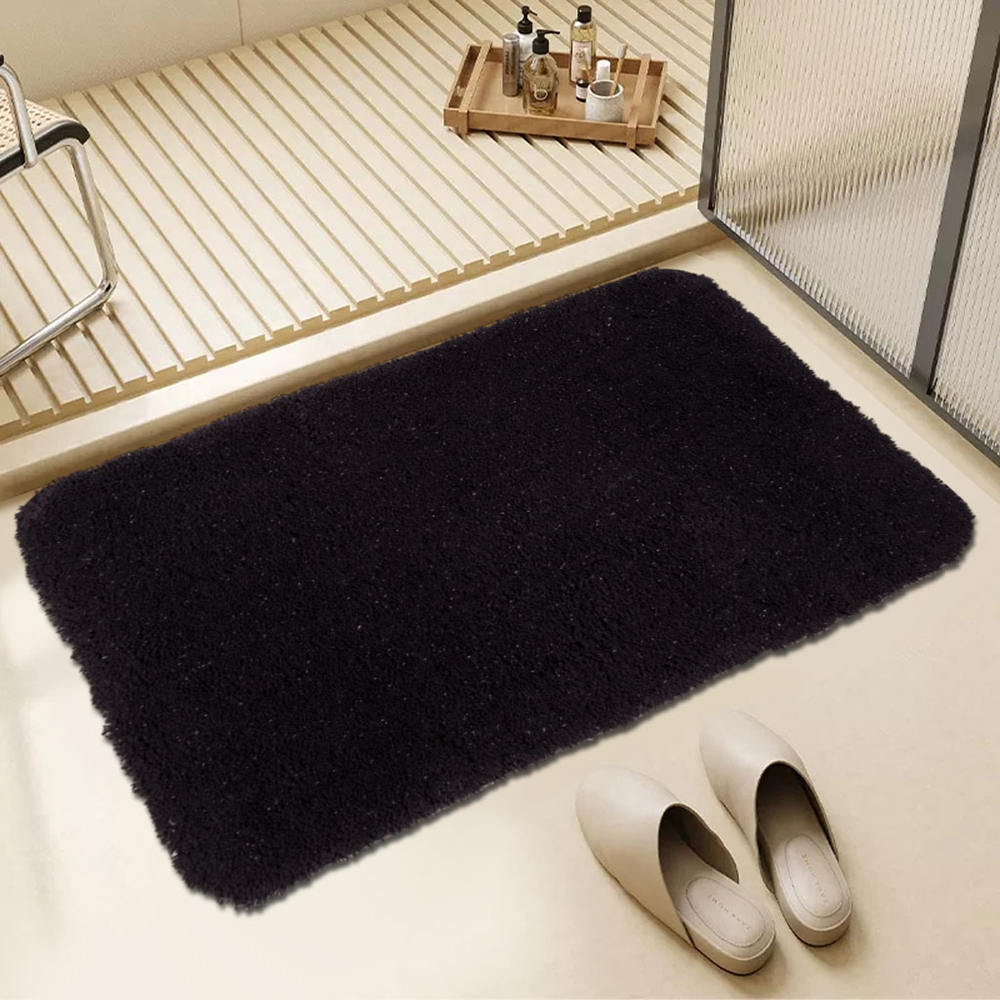
Cake Velvet Bath Room Mat
One of the main reasons consumers purchase a bath mat is to manage water after bathing. Wet feet can transfer moisture across the floor, creating puddles, stains, slippery patches, and unnecessary cleaning work. A properly designed mat provides a dedicated surface that captures moisture before it spreads into the surrounding room.
The Cake Velvet Bath Room Mat uses a soft microfiber layer intended to absorb water from wet feet. Its dense surface helps distribute moisture within the textile rather than leaving all of the water visible on the top. This creates a more comfortable stepping area and supports a drier floor environment around the bath or shower.
Water absorption is influenced by several factors, including fiber structure, surface density, pile height, finishing, laundering, and the amount of water present. No textile mat should be treated as a substitute for proper bathroom ventilation or immediate removal of standing water. However, a high-pile absorbent mat can be a useful part of a broader moisture-management routine.
The mat may also help protect floors from repeated exposure to small quantities of water. In bathrooms, moisture can affect grout, flooring joints, and edges over time. In kitchens, water near the sink can create spots and require frequent wiping. By placing the mat in a strategic position, users can reduce the amount of water that reaches the main floor surface.
The product’s absorption feature is also relevant to retailers and project buyers. Consumers increasingly expect bath mats to offer more than decoration. They want products that are comfortable, washable, stable, and capable of performing a clear household function. Water absorption gives the mat a practical value that is easy to explain in product descriptions and retail displays.
A bath mat may be soft and absorbent, but it must also remain reasonably stable during use. Movement is particularly undesirable in areas where floors may already be wet. The Cake Velvet Bath Room Mat uses a TPR backing to help reduce shifting and skidding on suitable indoor floor surfaces.
TPR, or thermoplastic rubber, is widely used in textile floor coverings because it can provide a flexible and comparatively resilient backing layer. It can help the mat maintain contact with the floor while allowing the product to be rolled, transported, stored, and placed in different rooms.
The backing is an important advantage over products that have no anti-slip support or that use a simple textile underside. A plain fabric backing may move more easily on polished tile or smooth vinyl. By contrast, a TPR-backed mat is designed to provide additional friction and stability.
It is important to use the product on a clean, dry, smooth, and suitable indoor surface. Dust, soap residue, oil, excess water, uneven flooring, and floor treatments can reduce the effectiveness of any anti-slip backing. The mat should be placed flat, and users should check it periodically to ensure that it has not folded, curled, or become contaminated.
Anti-slip construction improves safety, but it should not be described as an absolute guarantee against accidents. Users should remove standing water, maintain the floor, and replace a mat if the backing becomes damaged or loses its ability to lie flat. Clear and responsible product communication is especially important for retailers and commercial buyers.
Bathrooms are often associated with hard, cool, and moisture-resistant surfaces. These surfaces are easy to clean, but they may not be pleasant to stand on for long periods. A plush mat can introduce warmth and softness without requiring major changes to the room.
The Cake Velvet Bath Room Mat is designed to create a cushioned contact zone beside the shower, bathtub, or washbasin. The pile height and dense polyester construction contribute to a fuller feel underfoot. This may be particularly appreciated during cold seasons, early mornings, or extended grooming routines.
The comfort benefit can also support family use. Children may prefer standing on a soft surface after bathing, and older adults may appreciate the reduced hardness compared with a bare tile floor. Nevertheless, the product should be positioned securely and used with appropriate household safety practices.
Comfort is also a commercial differentiator. Many low-cost mats compete mainly on price, but customers often judge quality through touch. When a buyer feels a thick and soft surface, the product may be perceived as more substantial and better suited to a premium home textile collection.
Bath mats are exposed to water, soap residue, dust, skin oils, and ordinary household debris. For this reason, maintenance is a central part of product value. The Cake Velvet Bath Room Mat is designed to be machine washable, allowing users to clean it more easily than products that require specialized treatment.
Recommended care includes machine washing with cold water and a mild detergent. Chlorine and bleach should be avoided because they may weaken fibers, affect color, or damage the backing. After washing, the mat may be tumble dried at low speed or hung to dry, according to the final care instructions supplied with the approved product.
Regular laundering can help maintain a fresher and more hygienic surface. Users should not allow the mat to remain continuously damp. It should be dried thoroughly and placed back on a clean floor. Good ventilation is also beneficial, particularly in bathrooms with limited airflow.
The mat should be inspected after washing. If the TPR backing cracks, peels, curls, or becomes unusually slippery, the product should no longer be used in a location where stability is important. Care instructions should be followed exactly because washing machines, detergents, drying temperatures, and flooring conditions vary.
| Care stage | Recommended practice |
| Before washing | Shake off loose debris and check the backing and edges |
| Washing | Use cold water and mild detergent |
| Bleaching | Do not use chlorine or bleach |
| Drying | Tumble dry at low speed or hang dry |
| After drying | Ensure the mat is completely dry before placing it on the floor |
| Routine use | Keep the floor clean, dry, and free from oil or soap residue |
| Replacement check | Replace the product if the backing or surface becomes damaged |
Washability can give the product an advantage over decorative mats that are difficult to clean. It also makes the item more attractive to families, rental properties, hotels, dormitories, and other settings where repeated use requires straightforward maintenance.
The mat uses a solid-color pattern and a rectangular shape. This combination is intentionally versatile. Solid colors can coordinate with patterned shower curtains, plain ceramic tiles, wood-effect flooring, metal fixtures, and a broad range of wall colors.
A rectangular shape is practical for placement in front of a bathtub, shower enclosure, vanity, sink, or kitchen work area. The three standard sizes provide options for compact and larger spaces. The 40 × 60 cm version can suit smaller areas, while the 50 × 80 cm and 60 × 90 cm options offer broader coverage.
Custom sizing expands the product’s usefulness for project orders. A hotel bathroom may require a different proportion from a residential washroom. A retailer may also want a specific size assortment for a regional market. Custom dimensions can be discussed according to production capability, minimum order quantity, packaging, and quality requirements.
For interior designers and purchasing teams, a simple solid-color mat can be easier to specify than a highly decorative design. It can be coordinated across multiple rooms and used as part of a wider textile collection that includes area rugs, door mats, kitchen mats, sofa cushions, blankets, and carpet fabrics.
Color selection remains an important commercial consideration. Final buyers may request neutral colors, bright colors, seasonal colors, or coordinated private-label palettes. Colorfastness, sample approval, dye-lot control, and packaging presentation should be confirmed before mass production.
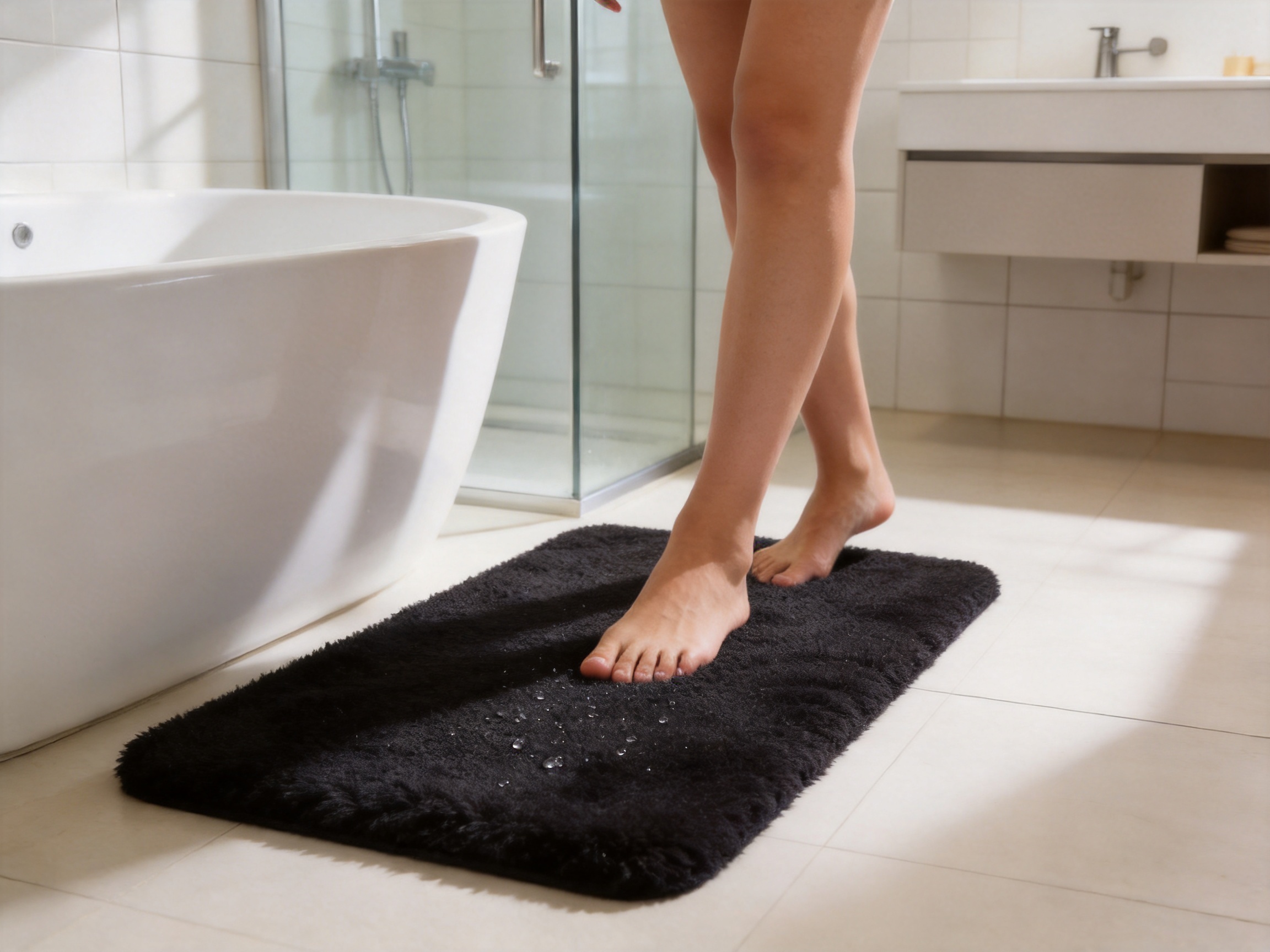
The primary application is the bathroom. The mat can be placed outside a shower, beside a bathtub, in front of a vanity, or near a sink. Its absorbent surface helps manage water from wet feet, while the plush pile provides a more comfortable standing area.
In family bathrooms, more than one size may be useful. A smaller mat can be positioned beside the shower, while a larger version can cover the area in front of a long vanity. The mat should not obstruct doors, drawers, toilet access, or floor drains.
The kitchen is another suitable indoor application. Water frequently collects around sinks, dishwashing areas, and food preparation stations. A soft mat can reduce the discomfort of standing on hard flooring and help capture small splashes.
Because kitchens may contain grease and food particles, regular cleaning is especially important. The mat should be removed and washed before residue accumulates. It should also be positioned away from open flames, hot appliances, and locations where it could create a trip hazard.
The soft surface may be attractive for children’s indoor spaces, particularly near a child-sized wash area or bathroom entrance. Its solid color can fit a simple children’s interior without creating excessive visual distraction.
Adults should supervise children and ensure that the mat is placed on a suitable floor. It should not cover electrical outlets, block doors, or be used as a substitute for certified play flooring where impact protection is required.
The mat can also be considered for indoor entrance zones, where users may bring in small amounts of moisture from outside. The absorbent surface can provide a transition area between an exterior doorway and the rest of the home.
For entrances with heavy dirt or abrasive particles, buyers should consider whether a dedicated outdoor scraper mat is needed before this softer indoor mat. The velvet surface is designed for comfort and absorption rather than aggressive removal of mud, stones, or coarse debris.
The Cake Velvet Bath Room Mat competes in a broad market that includes flat fabric mats, cotton mats, memory foam mats, woven rugs, PVC-backed mats, and low-pile synthetic products. Its principal advantages come from the combination of a plush microfiber surface, TPR backing, machine washability, solid-color styling, and custom production capability.
| Comparison factor | Cake Velvet Bath Room Mat | Basic flat fabric mat | Decorative non-washable mat |
| Surface feel | Soft, thick, and velvet-like | Usually thinner and firmer | Varies, often focused on appearance |
| Water management | Designed for high water absorption | May absorb less moisture | Depends on decorative material |
| Floor stability | TPR backing for anti-slip support | May have limited backing performance | May not be designed for wet rooms |
| Cleaning | Machine washable | Often washable, depending on construction | May require special care |
| Design flexibility | Solid color and custom sizing | Often limited to standard sizes | May prioritize fixed designs |
| Indoor versatility | Bathroom, kitchen, kids’ room, and other areas | Usually intended for one main use | May be less practical in wet locations |
Compared with a thin flat mat, the thicker pile can provide more cushioning and a more luxurious feel. Compared with a decorative rug not designed for moisture, the absorbent microfiber surface and washable construction are more appropriate for bathrooms and sink areas. Compared with a mat without a backing layer, the TPR underside offers additional support for stability.
These advantages do not mean that every user or application requires the same product. Some buyers may prefer a very thin mat for door clearance, a natural-fiber appearance, or a specialized commercial specification. The value of the Cake Velvet Bath Room Mat is strongest where softness, absorption, practical care, and indoor versatility are priorities.
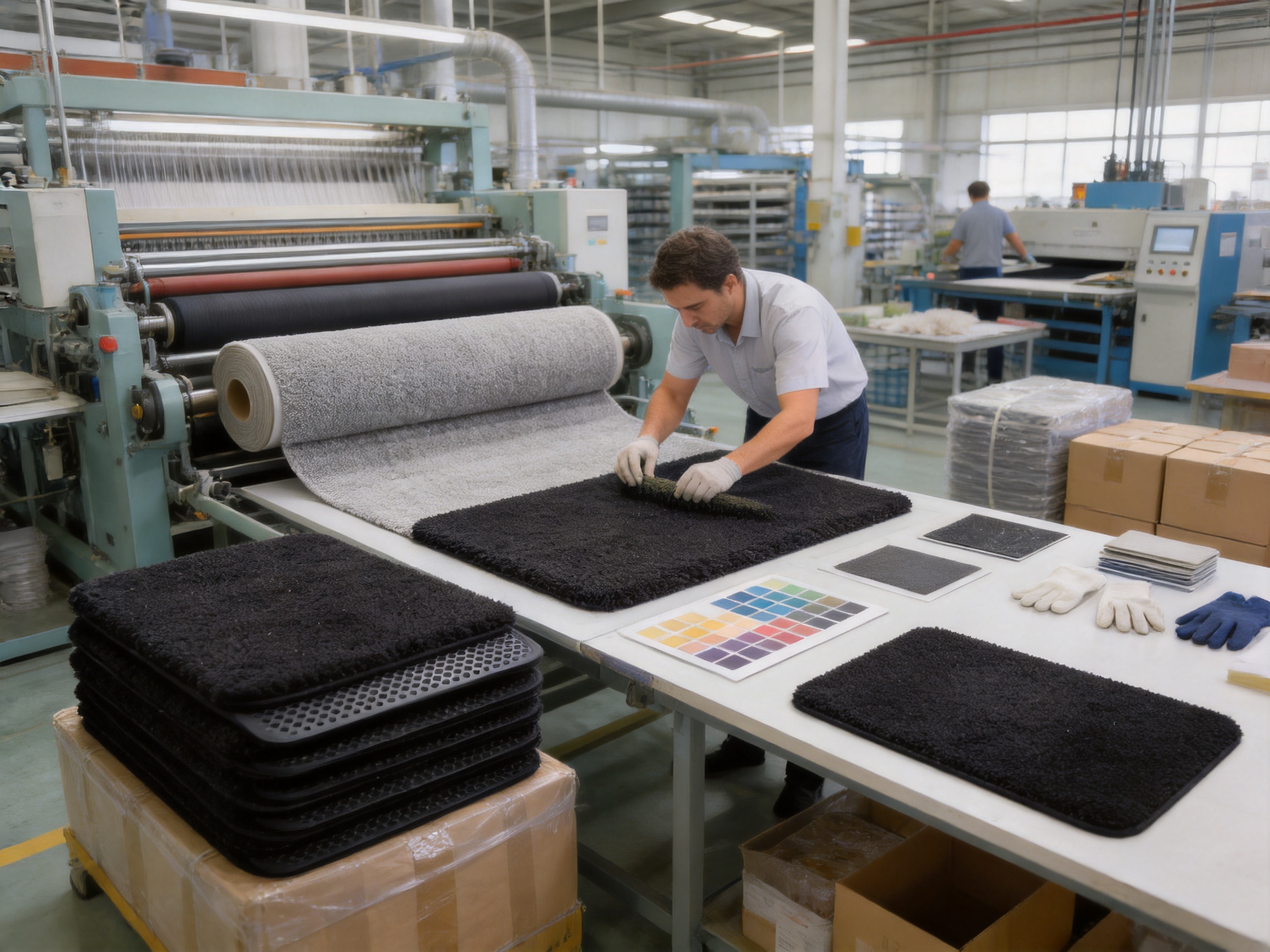
The product is supported by the manufacturing capabilities of Zhejiang Benyi Textile Technology Co., Ltd., a textile technology company located in Shaoxing, Zhejiang Province. Shaoxing is widely recognized as an important textile production center, often referred to as the “World Textile Capital.” This location provides access to textile materials, processing expertise, skilled labor, equipment, and an established supply network.
The company specializes in carpets, rug fabrics, carpet fabric rolls, and finished textile products. Its activities extend across weaving, dyeing and printing, and finished carpet processing. Control across these stages can help reduce dependence on fragmented external suppliers and improve coordination between material development, color production, finishing, inspection, and delivery.
A vertically coordinated production structure can also support more consistent quality. When different suppliers handle every stage independently, differences in material, color, density, backing, or finishing may create avoidable variation. Internal coordination allows the manufacturer to track requirements more closely and respond more quickly when adjustments are needed.
The company also focuses on combining the surface and bottom layers to make carpet production simpler and more efficient. This approach is relevant to products such as bath mats because the surface, backing, bonding, dimensional stability, and final finishing all influence performance. A well-coordinated process can improve production efficiency while maintaining attention to the finished article.
Zhejiang Benyi Textile Technology Co., Ltd. has a team of more than 20 fabric engineers. This technical team develops new carpet fabrics each quarter in response to market trends and customer requirements. Regular development activity can help the company evaluate new textures, weights, colors, fibers, backing systems, and applications.
For buyers, access to fabric engineering support is valuable when a standard item must be adapted. A project may require a different size, weight, pile height, color, packing method, label, or surface effect. The ability to discuss these details directly with a manufacturing team can shorten communication cycles and support more practical solutions.
Product development also helps manufacturers respond to changes in consumer expectations. Customers may increasingly seek softer materials, easier care, recycled fibers, lower-impact production, or coordinated home textile collections. A company that actively develops fabrics can evaluate these requirements rather than relying only on a fixed catalog.
Lead time is an important consideration for importers, distributors, retailers, and project buyers. Delays can affect promotional calendars, store launches, hospitality openings, seasonal programs, and inventory planning. A manufacturer with control over key production stages may be better positioned to coordinate schedules and identify potential issues early.
Actual lead time depends on quantity, material availability, color, customization, production capacity, packaging, inspection, and shipping arrangements. Nevertheless, the company’s integrated structure can support more direct planning from yarn and fabric development through final processing.
Buyers should request a written production schedule and confirm the approval process for samples, colors, labels, cartons, and inspection standards. Clear documentation remains essential even when a supplier operates multiple production facilities.
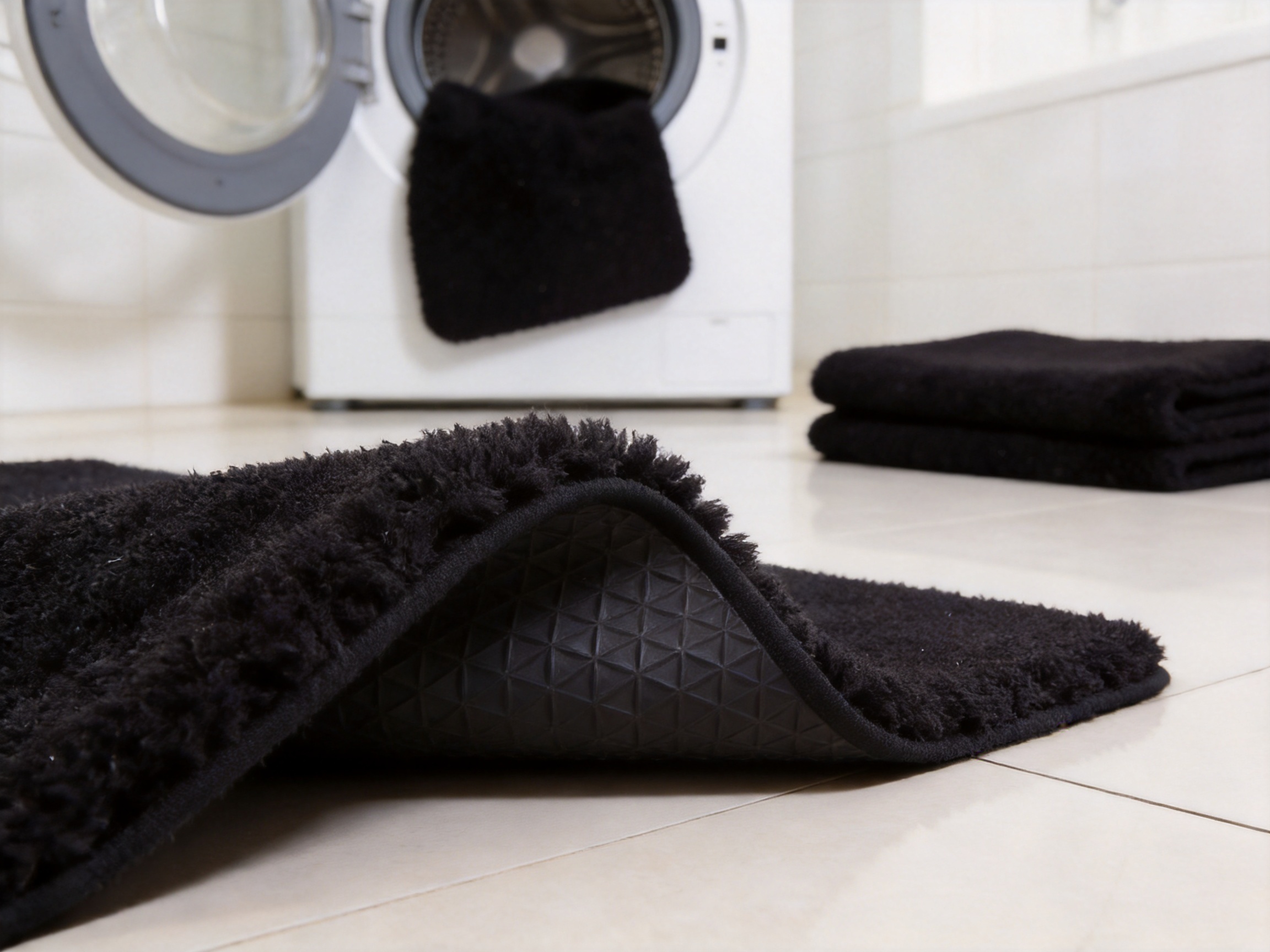
Quality control for a bath mat should evaluate more than visual appearance. The surface must be assessed for softness, pile uniformity, loose fibers, color consistency, edge finishing, dimensional accuracy, backing coverage, odor, bonding quality, and wash performance.
Water absorption should be evaluated using an agreed testing method. Different test procedures can produce different results, so buyers should define the testing conditions before comparing suppliers. Useful variables may include the amount of water applied, contact time, sample size, drying interval, and number of wash cycles.
The TPR backing should be checked for even application and adequate adhesion. The backing should not peel excessively, transfer residue, crack under normal handling, or create sharp edges. The product should also lie flat after unpacking and should not show severe curling or distortion.
Color quality is especially important for solid-color products. The approved sample should be retained as a reference, and bulk production should be checked against the approved standard. Buyers may use a recognized color system or a physical lab dip, depending on their program requirements.
Dimensional tolerance should be defined for each size. A product described as 50 × 80 cm may have a reasonable manufacturing tolerance, but the acceptable range should be documented. Pile height and gsm should also be measured according to a consistent procedure because compression, moisture, and sampling location can affect results.
| Inspection area | Points to verify |
| Dimensions | Length, width, shape, and tolerance |
| Surface | Pile uniformity, softness, density, and loose fibers |
| Color | Shade consistency, dye quality, and comparison with approved sample |
| Backing | Coverage, adhesion, flexibility, and anti-slip performance |
| Absorption | Water uptake according to an agreed test method |
| Washing | Color retention, dimensional stability, shedding, and backing condition |
| Edges | Binding, stitching, bonding, and resistance to fraying |
| Packaging | Labels, barcode, carton condition, folding, and moisture protection |
| Safety | Odor, material compliance, and suitability for the intended market |
The company describes environmental protection and sustainability as important parts of its textile technology approach. It invests in sustainable materials and production methods, including recycled polyester and water-saving dyeing techniques. These efforts are relevant to buyers who are developing environmentally conscious home textile collections.
Recycled polyester can help reduce reliance on virgin raw materials when it is properly sourced, processed, and documented. Water-saving dyeing techniques may reduce water consumption compared with less efficient processes. The environmental value of any claim depends on the exact material source, production method, certification scope, and documentation.
The company states that it has passed OEKO-TEX® and GRS certifications. Buyers should request current certificates, verify the certificate holder and scope, and confirm that the specific product, material, and production site are covered. Certification documents should be reviewed as part of a responsible sourcing process rather than treated as a substitute for product testing.
Sustainability also includes product durability. A mat that remains useful through repeated washing and ordinary household wear may reduce replacement frequency. Strong construction, appropriate care, and accurate performance claims can therefore contribute to a more responsible product lifecycle.
Packaging should also be considered. Buyers may discuss recycled packaging materials, reduced plastic use, optimized carton dimensions, efficient loading, and clear recycling instructions. These details can be especially relevant to retailers with environmental purchasing policies.
The availability of custom sizing makes the product suitable for wholesale and project-based purchasing. A distributor may select the standard sizes for broad market coverage, while a hotel, property developer, or retailer may request a special dimension. Custom production can also be combined with color selection, labeling, packaging, and collection planning.
Before requesting customization, buyers should prepare a clear specification. This may include finished size, pile height, gsm, fiber content, backing type, color reference, edge treatment, washing instructions, logo requirements, packing method, carton quantity, barcode, and destination-market compliance.
Minimum order quantities and development costs may vary depending on the level of customization. A new color may require a lab dip, while a new size may require production planning and packaging adjustments. A private-label program may require artwork approval, woven labels, printed inserts, or retail-ready cartons.
Wholesale buyers should also consider the relationship between size assortment and inventory. The three standard sizes can create a practical range for online or physical retail, but each additional color and size increases stock complexity. A carefully planned launch may begin with popular neutral colors and expand after demand is established.
The product can be considered by bathroom accessory distributors, home textile importers, department stores, online retailers, furniture retailers, hospitality suppliers, property managers, interior designers, and private-label brands.
Hospitality buyers may value the washable construction and repeatable production capability. Retailers may value the soft hand feel, clear functional benefits, and standard size options. Designers may value custom sizing and solid-color coordination. Distributors may value access to a manufacturer that also produces related carpet and rug products.
Bath mats are textile products that must be protected from moisture, contamination, compression damage, and excessive deformation during storage and transport. Packaging should preserve the surface, protect the TPR backing, and present the product clearly to the end customer.
Depending on the sales channel, the mat may be folded, rolled, polybagged, boxed, or packed in another approved format. The chosen method should be evaluated for creasing, pile compression, recovery time, ventilation, and retail appearance. If the product is compressed for shipping, buyers should confirm how quickly it returns to its intended shape after unpacking.
Carton markings should include product information, size, color, quantity, gross weight, net weight, country of origin, handling instructions, and any required shipping references. Retail packaging may also include care instructions, material information, barcode labels, and claims approved for the destination market.
During storage, the product should be kept in a dry, clean, ventilated area away from direct sunlight, chemicals, sharp objects, and excessive heat. Long-term compression or high humidity may affect the pile, color, odor, or backing. First-in, first-out inventory management can help reduce unnecessary storage time.
Before placing the mat, users should clean and dry the floor. The mat should be unfolded or unrolled fully and allowed to settle flat. It should not be positioned over loose dirt, soap residue, grease, or standing water.
The mat should not block doors, drawers, floor drains, or access routes. In bathrooms, it should be placed where it can absorb water without creating a raised obstruction. Users should check the edges after installation and reposition the mat if it curls or folds.
Although the TPR backing is intended to reduce movement, no backing can compensate for an unsuitable surface. Highly textured floors, wet floors, oily floors, and surfaces treated with certain polishes may affect stability. Regular inspection is recommended in high-use areas.
To maintain performance, the mat should be washed as needed and dried completely. It should not be left permanently saturated. If it develops a persistent odor, visible mold, damaged backing, severe shedding, or structural failure, it should be removed from service.
The Cake Velvet Bath Room Mat represents one category within a broader carpet and rug manufacturing portfolio. A company with experience in area rugs, prayer mats, bath mats, kitchen mats, door mats, carpet fabric, blankets, and sofa cushions can offer buyers opportunities to build coordinated collections.
For retailers, a coordinated portfolio may simplify supplier management and create a consistent visual identity across departments. A solid-color bath mat can be combined with matching or complementary kitchen mats, door mats, area rugs, and soft furnishings. For hospitality or residential projects, multiple textile categories can be sourced through one production relationship.
Carpet fabric expertise is also relevant to finished mats. Knowledge of weaving, dyeing, printing, backing, bonding, and finishing can be transferred across product categories. This broader technical foundation may help the company respond to requests that involve unusual textures, coordinated colors, or custom constructions.
The company’s focus on technology, environmental protection, and production efficiency supports a product-development model rather than a purely trading model. Buyers seeking long-term cooperation may benefit from discussing not only the current bath mat but also future seasonal collections and application-specific products.
The mat is made primarily from polyester microfiber. Polyester is used to create a soft, dense, durable, and color-stable surface suitable for indoor bath mat applications.
The standard sizes are 40 × 60 cm, 50 × 80 cm, and 60 × 90 cm. Custom sizes may be available according to the buyer’s requirements, order quantity, production plan, and packaging needs.
Yes. The product is designed for machine washing with cold water and mild detergent. Chlorine and bleach should not be used. Drying should be performed at low tumble speed or by hanging, according to the approved care instructions.
Yes. The backing material is TPR, which is intended to help reduce shifting and skidding on suitable indoor floor surfaces. The floor should be clean and dry, and the mat should lie flat.
Yes. The product is suitable for indoor areas such as kitchens, especially near sinks and food preparation zones where comfort and water absorption are useful. It should be cleaned regularly if exposed to grease or food particles.
The stated application is indoor use. It is not presented as an outdoor mat for continuous exposure to rain, sunlight, mud, or extreme temperature changes.
Gsm means grams per square meter and is used to describe textile weight. The supplied information reports approximately 1,600–1,650 gsm. Buyers should confirm the final specification and measurement tolerance with the manufacturer before ordering.
The supplied information reports a pile height ranging from approximately 20 mm to 30 mm. Since the materials contain more than one specification, the final pile height should be confirmed for the selected product version or purchase order.
Custom services are available according to customer requirements. Private-label packaging, labels, artwork, carton details, and minimum order quantities should be discussed and approved before production.
Buyers should verify the material composition, size, gsm, pile height, color, backing, edge finishing, washing performance, absorption, packaging, labels, certification scope, inspection standard, production lead time, and shipping documentation.
The soft surface may be suitable for indoor children’s areas, but the product should be used under normal household supervision. It should be kept flat, clean, dry, and away from locations where it could block doors or create a trip hazard.
Store it in a dry, clean, ventilated place away from direct sunlight, chemicals, sharp objects, and excessive heat. Avoid long-term compression and protect the product from moisture during storage and shipment.
The Cake Velvet Bath Room Mat combines a soft polyester microfiber surface, substantial pile, water absorption, TPR backing, machine washability, and adaptable sizing. These features address the main requirements of a modern bath mat: comfort, moisture management, stability, easy care, and compatibility with different interior styles.
Its advantages are strengthened by the manufacturing capabilities of Zhejiang Benyi Textile Technology Co., Ltd. The company operates in Shaoxing’s textile production environment and has experience across weaving, dyeing and printing, backing, bonding, and finished carpet processing. Its fabric engineering team develops new materials regularly, while its integrated production structure supports quality coordination and lead-time management.
For households, the product provides a softer and more comfortable surface around bathrooms and other indoor areas. For retailers and wholesale buyers, it offers a practical product proposition with standard sizes, custom options, solid-color styling, and clear functional benefits. For project and private-label customers, the manufacturer’s technical resources and broader textile portfolio create opportunities for further development.
As with any textile floor covering, final performance depends on correct specification, manufacturing quality, suitable installation, proper care, and appropriate floor conditions. Buyers should confirm all technical details before ordering, particularly the final gsm and pile-height specification, and should request current testing and certification documents where required. When properly selected and maintained, this bath mat can provide a durable, comfortable, and visually adaptable solution for contemporary indoor spaces.
1. Product specification and application information supplied for the Cake Velvet Bath Room Mat, model 100013.
2. Company information supplied for Zhejiang Benyi Textile Technology Co., Ltd., Shaoxing, Zhejiang Province, China.
3. General textile manufacturing principles relating to polyester microfiber, pile construction, bonded structures, TPR backing, and machine-washable floor coverings.
4. General household textile care principles for washing, drying, storage, and maintenance of synthetic-fiber bath mats.
5. General industry guidance concerning OEKO-TEX® and Global Recycled Standard certification verification and scope review.

ADD: No.75 Zhenyuan Road, Yuecheng District, Shaoxing City, Zhejiang Province, China 312000

Tel : +86-189 6750 9795

FAX : +86-0575-8803 2773

Email : fisher@benetextile.com

Copyright © Zhejiang Benyi Textile Technology Co., Ltd. All Rights Reserved. Carpets and Rugs Manufacturer

 English
 Français
 Deutsch
 عربى