

Tang Meilin — Customer Success and Product Support Specialist
 Home / Author / Tang Meilin — Customer Success and Product Support Specialist / Foldable Diatomaceous Earth Bath Mat: A High-Performance Solution for Modern Indoor Spaces
 2026.11.09
 Tang Meilin — Customer Success and Product Support Specialist
A bathroom mat is a small household product, but it performs several important functions every day. It helps absorb water from wet feet, protects flooring from moisture, contributes to household safety, and adds a finishing touch to the room. For buyers, retailers, hospitality operators, and distributors, selecting the right bath mat involves more than choosing a color or size. Material, absorbency, stability, durability, maintenance, production consistency, and customization capability all influence the long-term value of the product.
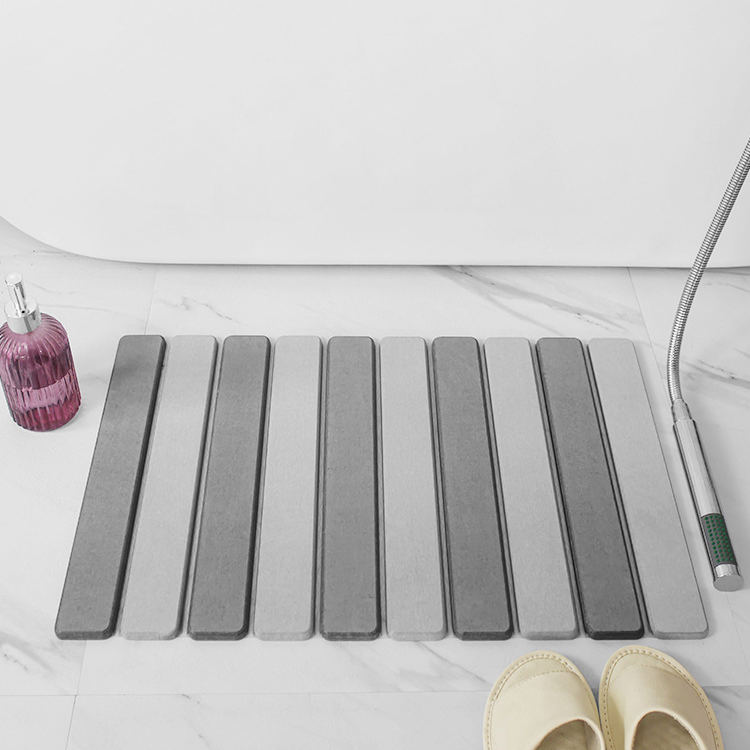
The Foldable Diatomaceous Earth Bath Mat is designed to answer these needs with a practical combination of mineral-based material, compact storage, firm support, modern appearance, and efficient water absorption. Measuring 39 × 60 cm as a standard size, with custom dimensions available, it is suitable for bathrooms, kitchens, children’s areas, entrances, and other indoor locations where moisture control and easy maintenance are important.
Unlike conventional textile bath mats that may remain damp after use, this hard-surface mat is engineered to draw water away from wet feet and help the surface dry quickly. Its 9 mm thickness provides a firm, supportive feel, while the foldable construction makes transportation and storage easier. It is machine-made for consistent production and can be washed with water or rinsed with foam before being dried naturally.
Manufactured by Zhejiang Benyi Textile Technology Co., Ltd., the product reflects the company’s experience in carpet fabrics, rugs, and finished flooring-related products. The company combines material development, weaving, dyeing and printing, and finished-product processing capabilities within its production chain. This integrated approach supports quality control, product customization, and more dependable lead times for wholesale and project customers.
Content
Diatomaceous earth is a naturally occurring mineral material formed from the fossilized remains of microscopic aquatic organisms known as diatoms. Because of its porous structure, it is widely recognized for its ability to absorb moisture. When used in a bath mat, this mineral-based composition provides a hard, smooth, and functional alternative to cotton, microfiber, polyester, and other soft textile surfaces.
The Foldable Diatomaceous Earth Bath Mat uses the moisture-absorbing properties of diatomaceous earth to help remove water from the soles of the feet. Instead of storing a large amount of water in a deep pile, the mat allows moisture to move into its porous body. This helps prevent the surface from feeling continuously wet between uses.
The material also contributes to the product’s firm structure. A traditional fabric mat bends easily and may bunch or curl when placed on a smooth floor. A mineral-based mat provides a more stable platform, although the floor should be clean, dry, and level before placement. For additional stability, an anti-slip pad should be installed underneath the mat, especially in bathrooms or other areas where water may be present.
The mat is supplied in a standard 39 × 60 cm rectangular format and can also be produced in customized sizes according to buyer requirements. This flexibility allows the product to serve different bathroom layouts, retail programs, hotel applications, residential projects, and private-label collections.
| Specification | Details |
|---|---|
| Product name | Foldable Diatomaceous Earth Bath Mat |
| Product category | Bath mat |
| Standard size | 39 × 60 cm |
| Customization | Custom sizes available |
| Material | Diatomaceous earth |
| Weight | Approximately 1,900 g per piece |
| Thickness | 9 mm |
| Shape | Rectangular |
| Pattern | Modern and solid |
| Construction | Machine-made |
| Use environment | Indoor |
| Care method | Water wash or foam rinse; natural drying |
| Special features | Water absorption, washable surface, hard construction, foldable design |
| Recommended rooms | Bathroom, kitchen, indoor living areas, children’s areas, entrances |
The combination of 9 mm thickness and approximately 1,900 g per piece gives the mat a substantial feel compared with lightweight fabric mats. This weight can help reduce unwanted movement during ordinary use, but it does not replace the need for an anti-slip pad. Product performance depends on the floor material, moisture level, installation conditions, and usage habits.
The central advantage of a diatomaceous earth bath mat is moisture management. After bathing or washing, water on the feet can quickly create puddles around the shower, bathtub, or sink. If the water remains on the floor, it may increase the risk of slipping, leave marks on flooring, or create an uncomfortable environment.
The porous mineral structure of the mat helps draw water away from the feet. The water does not remain concentrated on the surface in the same way it may remain in a dense textile pile. As a result, the mat can feel comparatively dry soon after use, particularly when the room is well ventilated and the mat is placed on a suitable floor.
Fast absorption also supports a cleaner visual appearance. Conventional bath mats can show dark damp patches, retain water in their fibers, and require frequent laundering. A hard mineral surface does not collect moisture in the same way as a thick fabric pile. This can make the product suitable for households seeking a lower-maintenance alternative to traditional soft mats.
Absorption performance naturally varies according to the amount of water, room temperature, ventilation, floor conditions, and frequency of use. To maintain the best results, the mat should be allowed to dry naturally and should not be covered by another object immediately after use.
Foldable Diatomaceous Earth Bath Mat
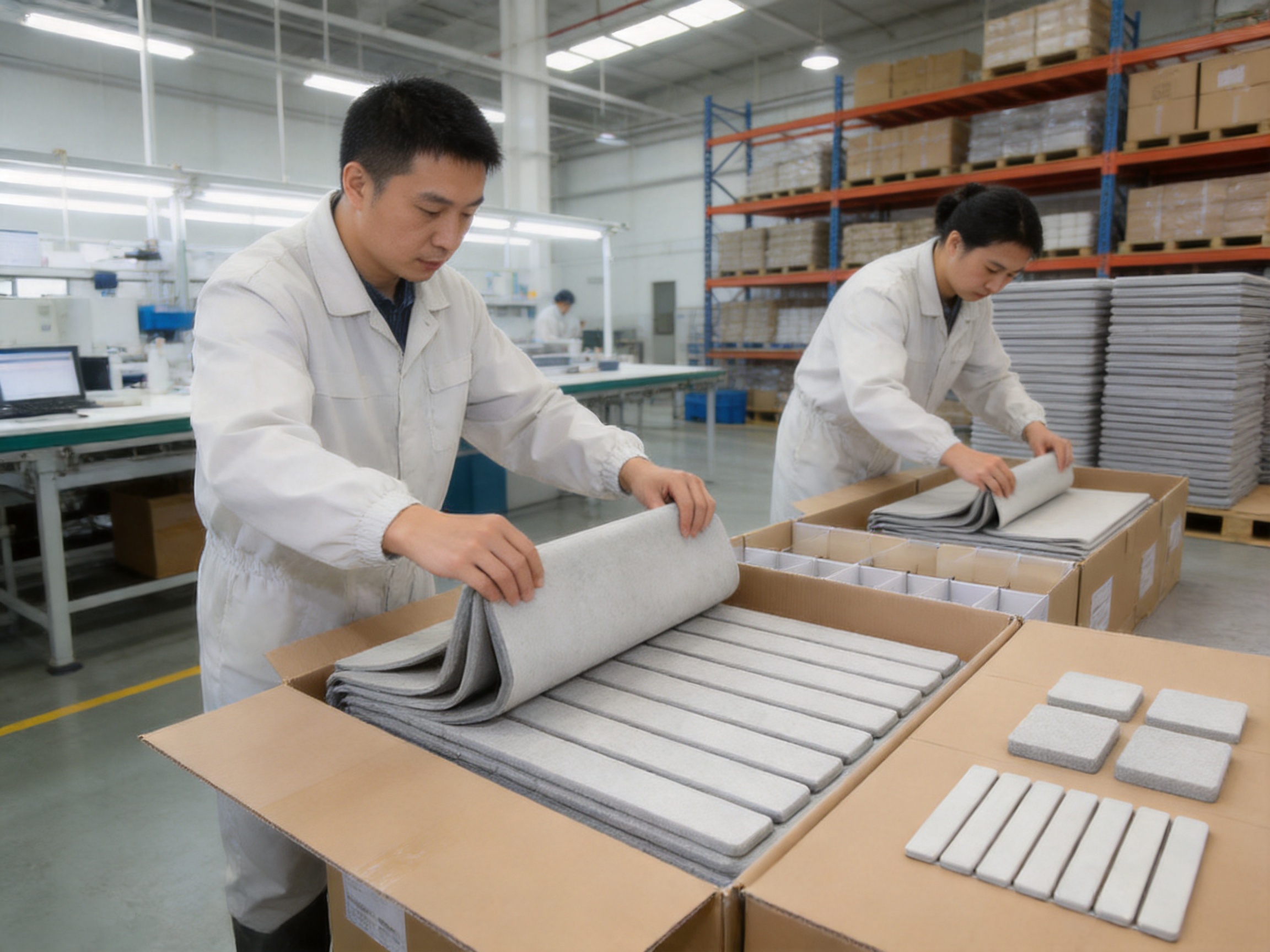
One of the product’s distinctive features is its foldable design. Many hard bath mats are rigid and require a large amount of storage space. This can create difficulties for distributors, retailers, apartment residents, hotels, and seasonal product users. The foldable structure is intended to make the mat easier to pack, store, and transport.
For wholesale buyers, a foldable product may support more efficient warehouse organization. It can be packed in a manner that saves space compared with a fully rigid format, helping simplify handling during storage and shipment. Retailers may also benefit from more flexible shelf or display arrangements.
For consumers, foldability is useful when the mat must be stored temporarily, moved between rooms, taken to a new home, or packed for travel. It is especially practical for small bathrooms, guest rooms, temporary accommodation, and homes where storage space is limited.
The folding function should be used according to the product’s construction. The mat should be folded carefully rather than sharply creased, and it should be stored in a dry, clean location. Avoid placing heavy objects on the folded product for long periods, as excessive pressure may affect its shape or surface.
Bath mats are exposed to water, soap residue, dust, hair, and occasional cosmetic products. A product that is difficult to clean can quickly become inconvenient, particularly in busy households or commercial settings. The hard surface of this diatomaceous earth mat allows it to be rinsed with water or cleaned with foam as required.
Unlike many textile mats, it does not need to be placed in a washing machine after every period of use. Routine maintenance can generally be completed by removing loose dirt, rinsing the surface, and allowing the mat to dry naturally. This can reduce the labor associated with frequent laundering and help preserve a neat appearance.
When cleaning the mat, users should avoid harsh chemicals, abrasive tools, and aggressive scrubbing unless the care instructions for a specific order state otherwise. Strong chemical exposure may affect the surface finish or appearance. The mat should also be dried in a well-ventilated place before being returned to regular use.
Because it is intended for indoor use, the mat should not be treated as an outdoor floor covering. Continuous exposure to rain, frost, mud, direct sunlight, or uncontrolled outdoor moisture may reduce its service life and affect its appearance.
The 9 mm thickness gives the product a balance between a low-profile design and a substantial, supportive feel. It is sufficiently slim for many bathroom layouts while remaining more solid than a thin disposable floor covering. The rectangular shape allows it to be positioned in front of a bathtub, shower enclosure, vanity, or sink.
A low-profile bath mat is useful in rooms where doors, drawers, cabinets, and shower screens require clearance. Excessively thick mats can interfere with doors or become difficult to position beneath bathroom furniture. The 9 mm construction helps the product fit into a wider range of indoor spaces, although users should always check the clearance of nearby doors before installation.
The weight of approximately 1,900 g per piece further contributes to a stable and substantial product impression. It also supports packaging and presentation for buyers who want to offer an upgraded alternative to lightweight textile mats.
The product uses a modern, solid pattern that can coordinate with a wide range of bathroom and household designs. A solid appearance is adaptable because it does not compete with patterned tiles, colorful towels, printed shower curtains, or decorative wall finishes.
Its rectangular shape is familiar to consumers and straightforward for retailers to display. It can be positioned horizontally in front of a standard shower or bathtub, or placed near a sink where a compact moisture-absorbing surface is required.
The same design principles make the mat suitable for kitchens, children’s areas, indoor entrances, and utility spaces. In a kitchen, it can help manage small amounts of water near a sink. In a children’s area, its washable hard surface can be convenient when spills occur. At an indoor entrance, it may be used where damp footwear or umbrellas create localized moisture, provided that the floor and application are appropriate.
For commercial buyers, the simple design can support different product lines and packaging concepts. It may be incorporated into hotel bathroom programs, apartment furnishing packages, home-improvement retail collections, or environmentally oriented household product ranges.
Textile bath mats remain popular because they are soft, warm, and available in many colors. However, they also have limitations. They may retain moisture in their fibers, require regular laundering, take longer to dry, and develop odors if left damp for extended periods. Some lightweight models may shift or bunch on smooth floors.
The diatomaceous earth format addresses several of these issues. Its key advantage is that it does not rely on a thick textile pile to absorb water. Moisture can be drawn into the porous mineral body, allowing the top surface to dry more quickly under suitable conditions. The hard surface is also less likely to collect loose fibers, and the product can be rinsed rather than routinely machine-washed.
The product’s foldable design creates an additional advantage over many rigid mineral mats. Traditional hard mats may have good moisture absorption but can be difficult to store or transport. Foldability makes this model more practical for wholesale logistics and compact homes.
The machine-made construction offers greater consistency than small-scale manual production. Consistent dimensions, thickness, and finishing can help retailers present a uniform collection and help buyers manage product specifications across larger orders.
| Comparison factor | Foldable diatomaceous earth mat | Conventional textile mat |
|---|---|---|
| Water handling | Absorbs moisture into a porous mineral body | Retains moisture within textile fibers |
| Surface feel | Firm and supportive | Soft and cushioned |
| Drying behavior | Designed to dry quickly under suitable conditions | May require longer drying time when heavily saturated |
| Routine care | Can be rinsed with water or foam and naturally dried | Often requires laundering and thorough drying |
| Storage | Foldable for space-saving storage | Usually flexible, but may require bulky folding or rolling |
| Appearance | Modern solid hard-surface appearance | Available in soft and textured textile designs |
| Stability | Substantial weight and hard construction; anti-slip pad recommended | Varies by backing material; some models may shift |
| Best suited for | Buyers seeking low-maintenance moisture control | Users prioritizing softness and warmth |
The most suitable choice depends on the buyer’s priorities. Customers who value a soft surface may prefer a textile mat, while those seeking fast moisture management, easy cleaning, and compact storage may prefer the diatomaceous earth option.
Safety is an important part of bath mat selection. A wet bathroom floor can become slippery, and the mat itself must be placed correctly. The product has a firm construction and substantial weight, but an anti-slip pad should be added underneath to help prevent shifting and skidding.
The anti-slip pad should be compatible with the floor surface and sized appropriately. Before placing the mat, remove dust, hair, and water from the floor. Uneven surfaces, loose tiles, grout gaps, or accumulated soap residue may reduce stability.
Users should step onto the mat normally and avoid jumping, running, or applying sudden lateral force. The mat should be inspected periodically for cracks, damage, deformation, or movement. If any part of the mat becomes damaged, it should be removed from service until its suitability has been assessed.
For children, older adults, and people with reduced mobility, additional bathroom safety measures may be appropriate. These can include grab bars, adequate lighting, dry flooring, and professional advice about the installation environment. A bath mat is one component of a wider safety system and should not be considered a complete substitute for other precautions.
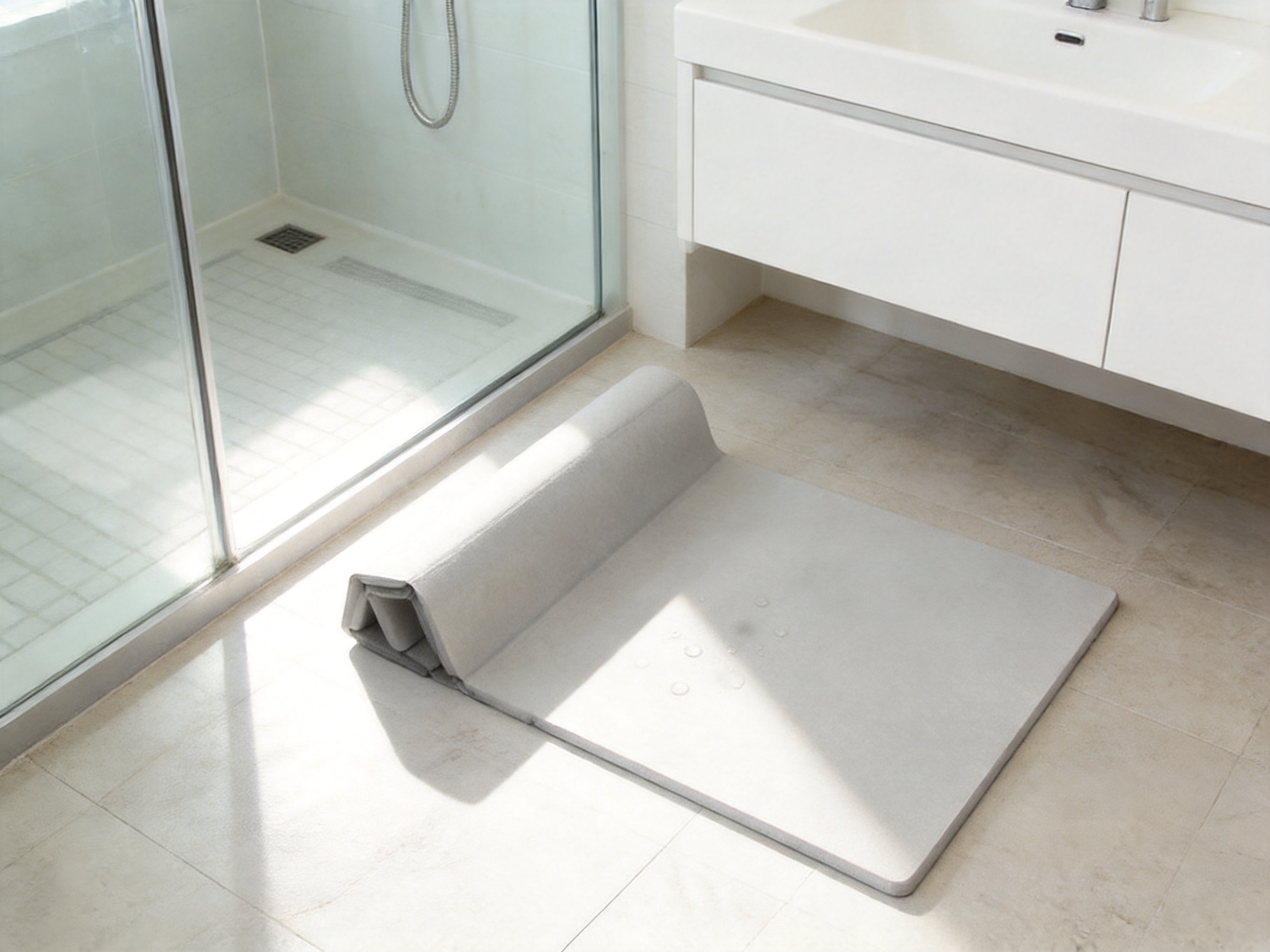
The primary application is the bathroom. The mat can be positioned outside a shower, beside a bathtub, or in front of a sink. Its absorbent surface helps manage water from wet feet, while its compact rectangular form fits many standard residential layouts.
In kitchens, the mat can be placed near a sink or food preparation area where occasional water splashes occur. It should be cleaned regularly in this environment, especially if exposed to oils, food residues, or cleaning products.
In children’s rooms or indoor activity areas, the washable surface can provide a practical solution for minor spills. The product should be used on a level floor and with suitable supervision. Its firm texture differs from that of a padded play mat, so it should not be promoted as a cushioning or impact-protection product.
Hotels, serviced apartments, dormitories, residential developments, and property-management companies may also consider the mat for standard room packages. Its modern appearance and simple maintenance can support housekeeping efficiency. The foldable format may simplify inventory storage, especially when large numbers of units must be held before installation.
Retailers and distributors can position the product within bathroom accessories, home organization, eco-conscious household products, or modern interior furnishing categories. Its combination of mineral material and foldable construction creates a clear point of difference from ordinary fabric mats.
Zhejiang Benyi Textile Technology Co., Ltd. is located in Shaoxing, Zhejiang Province, a region recognized for its textile manufacturing resources and industry expertise. The company focuses on carpets, rug fabrics, and finished products, while also developing new textile production technologies and material solutions.
Although the featured product is a diatomaceous earth bath mat, the company’s broader capabilities in surface products, flooring-related materials, and finished processing provide a useful foundation for product development. Experience with product structure, surface appearance, dimensional control, finishing, and customer-specific requirements is important when manufacturing household floor products for different markets.
The company operates its own weaving, dyeing and printing factories, and finished carpet processing factories. This level of production integration allows more stages of the supply chain to be managed within the organization. Integrated manufacturing can help improve communication between development, production, quality control, and delivery teams.
For international buyers, supply-chain coordination is a major purchasing consideration. When several manufacturing stages are handled through closely connected facilities, it may be easier to monitor production progress, address technical questions, and maintain consistent specifications. It can also support more efficient handling of customized orders.
The company has a team of more than 20 fabric engineers and develops new carpet fabrics each quarter based on market trends. This indicates an ongoing focus on product innovation rather than reliance on a static catalog. For buyers seeking differentiated household products, a supplier with active development capabilities may be better positioned to adjust materials, dimensions, finishes, packaging, or presentation requirements.
Machine-made production is a significant feature of the bath mat. Compared with inconsistent manual production, controlled machine manufacturing can support uniform dimensions, repeatable thickness, and stable surface finishing. Consistency is especially important for wholesale customers that need multiple units to match in appearance and performance.
Quality control should begin with incoming material inspection. The diatomaceous earth material should be assessed for suitability, cleanliness, and consistency before entering production. During forming and processing, dimensions and thickness should be monitored to ensure they remain within the agreed specification.
Visual inspection is also important. Finished mats should be checked for surface defects, uneven edges, cracks, folds, discoloration, and other issues that could affect presentation or use. Packaging inspection helps ensure that products are protected during handling and transportation.
For customized orders, quality control should also include confirmation of the approved size, surface design, folding configuration, labeling, carton specifications, and other buyer requirements. Clear communication between the customer and manufacturer reduces the risk of specification errors.
Buyers should confirm testing and certification requirements before placing an order. The appropriate requirements may vary according to destination market, intended application, packaging claims, and customer standards. Product information should accurately describe the material, care method, and safety features without overstating performance.
The standard 39 × 60 cm size is suitable for many household bathrooms, but different customers may require different dimensions. Custom sizing can support retail programs designed around regional bathroom layouts, hotel specifications, property-development packages, or coordinated home-accessory collections.
Customization may also involve packaging, labels, carton quantities, product inserts, color or surface preferences, and shipping arrangements. Buyers should provide detailed specifications at the quotation stage so that the manufacturer can evaluate feasibility and production requirements.
For private-label projects, a clear approval process is recommended. The buyer can confirm the product name, dimensions, material description, care instructions, packaging artwork, barcode information, carton markings, and any required compliance statements before mass production begins.
Customization can be particularly valuable for distributors that want to distinguish their product line from generic bath mats. A supplier with in-house development and finished-product processing experience may be able to support more efficient communication from initial concept to final shipment.
Diatomaceous earth is a natural mineral material, and the product is presented as a more environmentally conscious alternative for buyers interested in natural-material household goods. The company also states that it invests in sustainable materials and production methods, including recycled polyester and water-saving dyeing technologies in its wider textile operations.
The company reports that it has passed OEKO-TEX® and GRS certifications. Buyers should confirm which certification applies to a particular product, material, component, or production site before using certification claims in marketing. Certification scope should always match the actual item being sold.
Product sustainability involves more than material selection. A durable product that remains useful over a longer period can reduce the need for frequent replacement. The washable surface and foldable storage design may also support practical product longevity and more efficient handling.
Responsible use remains important. Customers should follow care instructions, avoid unnecessary chemical cleaning, and dispose of the product according to local waste-management rules when it reaches the end of its usable life. Retailers should provide accurate information rather than presenting broad environmental claims that cannot be verified.
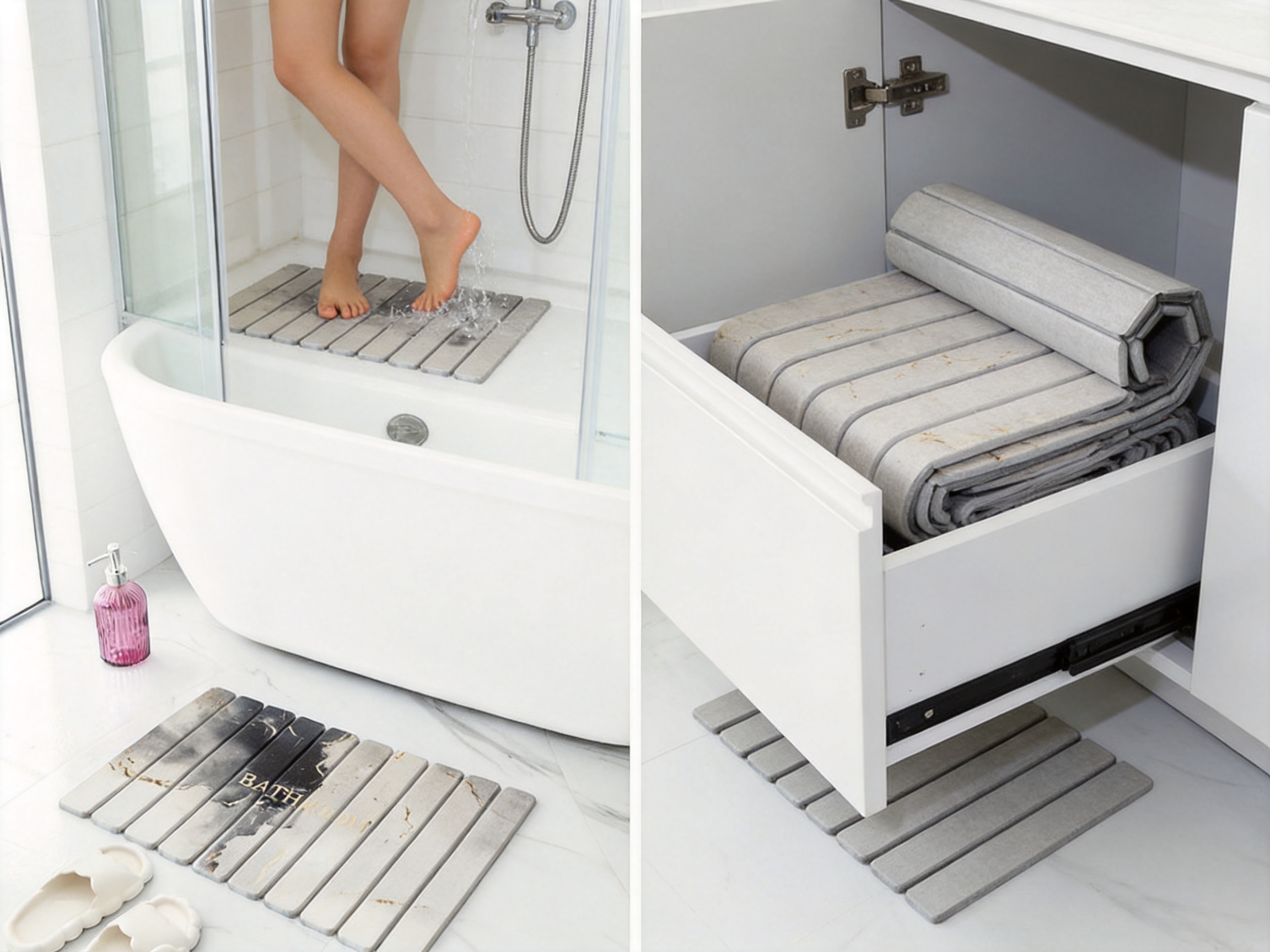
For importers and distributors, logistics can have a significant effect on product cost. A bath mat that can be folded and packed efficiently may help reduce storage requirements and simplify warehouse handling. This is particularly useful for buyers managing many sizes or maintaining inventory for seasonal demand.
The approximately 1,900 g unit weight should be considered when calculating shipping costs, carton quantities, pallet configurations, and handling requirements. The product is not a lightweight disposable mat, and its substantial construction should be communicated clearly to logistics teams and end users.
Packaging should protect the surface and folding areas from impact, abrasion, dust, and moisture during transportation. Carton design should provide sufficient support while avoiding unnecessary packaging volume. Buyers may request packaging suitable for retail display, e-commerce fulfillment, or bulk distribution.
Before shipment, buyers should confirm the product quantity, individual packaging, master-carton dimensions, gross and net weights, shipping marks, and documentation. These details help avoid delays and reduce errors during receiving and inventory management.
To maintain the bath mat, users should first remove loose dirt from the surface. The mat can then be rinsed with water or cleaned with foam. After washing, it should be placed in a well-ventilated area and allowed to dry naturally.
The mat should not be sealed in a damp condition or stored while wet. Prolonged moisture trapped between the mat and the floor may affect both the product and the flooring underneath. Periodically lifting the mat allows the floor to be inspected and ventilated.
Do not use the mat on a badly uneven surface. Do not place it where a door will repeatedly strike or drag across the surface. Do not use it outdoors unless the specific product specification expressly allows outdoor exposure.
An anti-slip pad should be positioned under the mat. The pad should remain flat and clean, and it should be replaced if it becomes worn or loses its grip. The mat and pad should be checked after cleaning, relocation, or changes in floor conditions.
When evaluating the product for wholesale purchase, buyers should begin by defining the intended market. A bathroom accessory retailer may prioritize consumer packaging and color presentation, while a hotel supplier may focus on standardized dimensions, durability, cleaning routines, and delivery schedules.
Buyers should confirm whether the standard 39 × 60 cm size is appropriate or whether custom sizing is needed. They should also establish acceptable tolerances for dimensions, thickness, weight, surface finish, and folding performance.
Sample evaluation is recommended before mass production. A sample can be assessed for water absorption, drying behavior, surface feel, folding convenience, visual consistency, cleaning response, package protection, and compatibility with the intended floor surface.
Commercial buyers should request clear documentation covering product specifications, care instructions, packaging, production lead time, minimum order quantity, payment terms, shipping terms, and applicable certifications. Written specifications help ensure that the delivered goods match the approved sample.
Marketing teams should focus on substantiated benefits such as diatomaceous earth composition, water absorption, washable construction, foldability, machine-made production, and customizable sizing. Claims about antibacterial action, guaranteed slip prevention, medical benefits, or unlimited durability should not be made unless supported by appropriate testing and documentation.
An integrated manufacturing partner can offer advantages beyond the production of a single item. Companies that manage product development, material sourcing, processing, and finished-product manufacturing within a connected organization may be better able to respond to changes in design, quality requirements, or delivery schedules.
Zhejiang Benyi Textile Technology Co., Ltd. combines textile technology development with manufacturing capabilities in weaving, dyeing and printing, and finished carpet processing. Its focus on ecological protection, consumer health experiences, and production efficiency aligns with the needs of buyers searching for practical and responsible household products.
The company’s engineering team supports ongoing fabric development and customization. This technical background can help buyers develop coordinated product ranges that include bath mats, area rugs, kitchen mats, door mats, carpet fabrics, blankets, sofa cushions, and related household products.
For international customers, communication is also important. Product development requires accurate discussions about dimensions, materials, packaging, quality standards, and delivery. A supplier with experience in customized manufacturing can help translate market requirements into practical production instructions.
The standard size is 39 × 60 cm. Custom sizes are available according to buyer requirements and production feasibility.
The mat is made from diatomaceous earth, a natural mineral material with a porous structure designed to absorb moisture.
No. It has a hard, firm surface rather than a soft textile pile. This structure supports fast moisture absorption and simple cleaning, but customers seeking a cushioned or plush feel may prefer a conventional fabric mat.
The mat is designed to absorb water and dry quickly under suitable conditions. Actual drying time depends on the amount of water, room ventilation, temperature, humidity, and frequency of use.
Yes. It can be rinsed with water or cleaned with foam, then dried naturally. Users should avoid storing it while wet and should follow the care instructions supplied with the order.
The product information indicates that an anti-slip pad should be added underneath the mat to help prevent shifting and skidding. Buyers should confirm whether an anti-slip pad is included in a specific order or must be purchased separately.
It is designed for indoor use. Outdoor exposure to rain, direct sunlight, frost, mud, and uncontrolled moisture is not recommended unless specifically approved for a particular order.
Yes. The foldable design makes the mat easier to pack, store, and transport. It should be folded carefully and stored in a clean, dry place.
The main application is the bathroom. It can also be used indoors in kitchens, children’s areas, entrances, and other locations where moisture absorption and washable surfaces are useful.
Yes. The construction is machine-made, which supports consistent production and repeatability across wholesale orders.
Yes. The manufacturer can discuss custom dimensions and other project requirements with wholesale buyers. Packaging, labeling, and product presentation should be confirmed during the quotation and approval process.
Buyers should confirm the material, dimensions, thickness, weight, folding structure, surface appearance, packaging, care instructions, anti-slip-pad arrangement, quality tolerances, certifications, minimum order quantity, lead time, and shipping details.
The Foldable Diatomaceous Earth Bath Mat offers a practical alternative to traditional textile bath mats. Its porous mineral material is designed to absorb water from wet feet, while its hard surface supports quick cleaning and a modern appearance. The 9 mm thickness and approximately 1,900 g weight provide a substantial product feel, and the rectangular 39 × 60 cm format suits many indoor bathroom layouts.
Its foldable design adds an important advantage for storage, transport, wholesale distribution, and compact homes. Custom sizing expands its usefulness for retail programs, hospitality projects, property developments, and private-label collections. The product is also suitable for kitchens, indoor entrances, children’s areas, and other spaces where a washable moisture-control surface is needed.
Safe installation remains essential. An anti-slip pad should be added underneath the mat, and the product should be used on a clean, level, dry floor. Regular rinsing, natural drying, and proper storage can help maintain performance over time.
Behind the product is a manufacturing company with experience in textile technology, carpets, rug fabrics, and finished products. Zhejiang Benyi Textile Technology Co., Ltd. combines production resources, engineering capabilities, customization support, and a focus on environmental protection. Its integrated manufacturing structure can help buyers obtain consistent products, coordinate customized specifications, and manage supply-chain requirements more efficiently.
For retailers, importers, hospitality suppliers, and household-product distributors, this bath mat represents a combination of functional material innovation, compact design, practical maintenance, and scalable manufacturing support. When paired with accurate product information and suitable safety guidance, it can serve as a distinctive and useful addition to a modern indoor floor-covering range.
1. Product specification and technical information supplied for the Foldable Diatomaceous Earth Bath Mat, including dimensions, material, weight, thickness, construction, care method, and applications.
2. Company profile information for Zhejiang Benyi Textile Technology Co., Ltd., including manufacturing capabilities, engineering resources, customization services, and sustainability initiatives.
3. General technical literature on diatomaceous earth, porous mineral materials, and moisture absorption in household products.
4. General guidance on bath mat placement, floor safety, ventilation, cleaning, and the use of anti-slip underlays in wet indoor areas.
5. General information regarding textile manufacturing integration, machine-made production, quality control, product development, and customized wholesale supply.

ADD: No.75 Zhenyuan Road, Yuecheng District, Shaoxing City, Zhejiang Province, China 312000

Tel : +86-189 6750 9795

FAX : +86-0575-8803 2773

Email : fisher@benetextile.com

Copyright © Zhejiang Benyi Textile Technology Co., Ltd. All Rights Reserved. Carpets and Rugs Manufacturer

 English
 Français
 Deutsch
 عربى