

Tang Meilin — Customer Success and Product Support Specialist
 Home / Author / Tang Meilin — Customer Success and Product Support Specialist / Imitation Cashmere Carpet with Ultra-Fine Yarn for Soft, Washable, and Stylish Indoor Living
  2026.07.20
 Tang Meilin — Customer Success and Product Support Specialist
In modern home textiles, an area rug is no longer only a decorative accessory placed under a coffee table or beside a bed. It is a comfort surface, a design statement, a safety feature, and a product that must perform through daily use, cleaning, movement, and changing interior trends. The Imitation Cashmere Carpet made with ultra-fine yarn is designed for exactly this new standard. It delivers the soft hand feeling associated with premium cashmere-inspired textiles while maintaining the durability, washable convenience, print flexibility, and practical price structure expected from advanced polyester microfiber rugs.
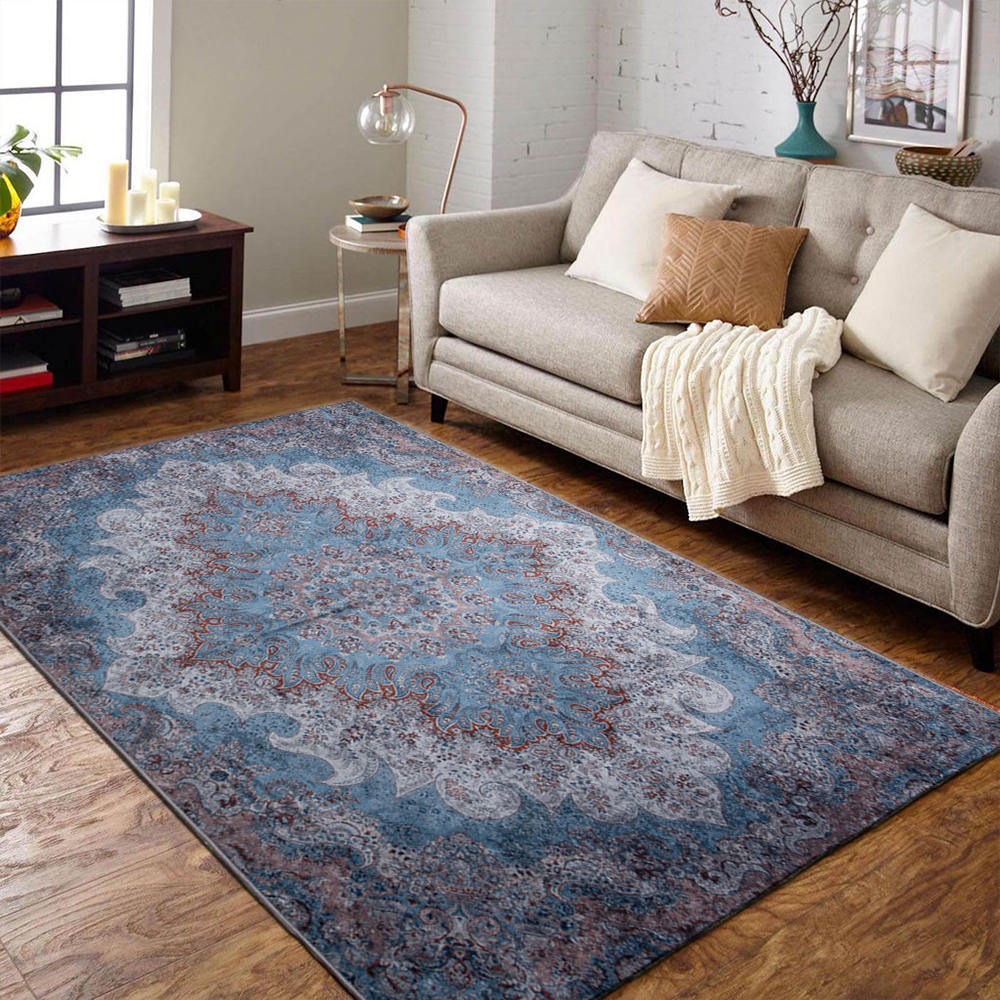
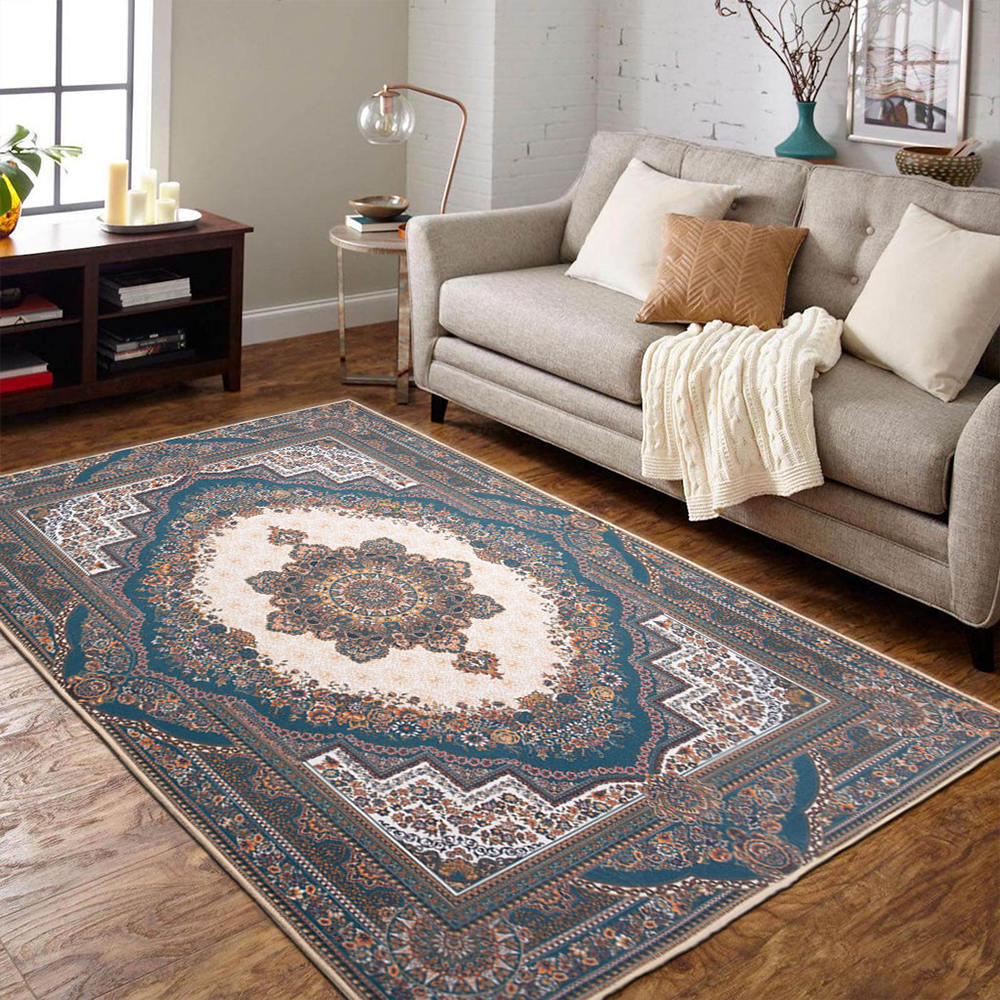
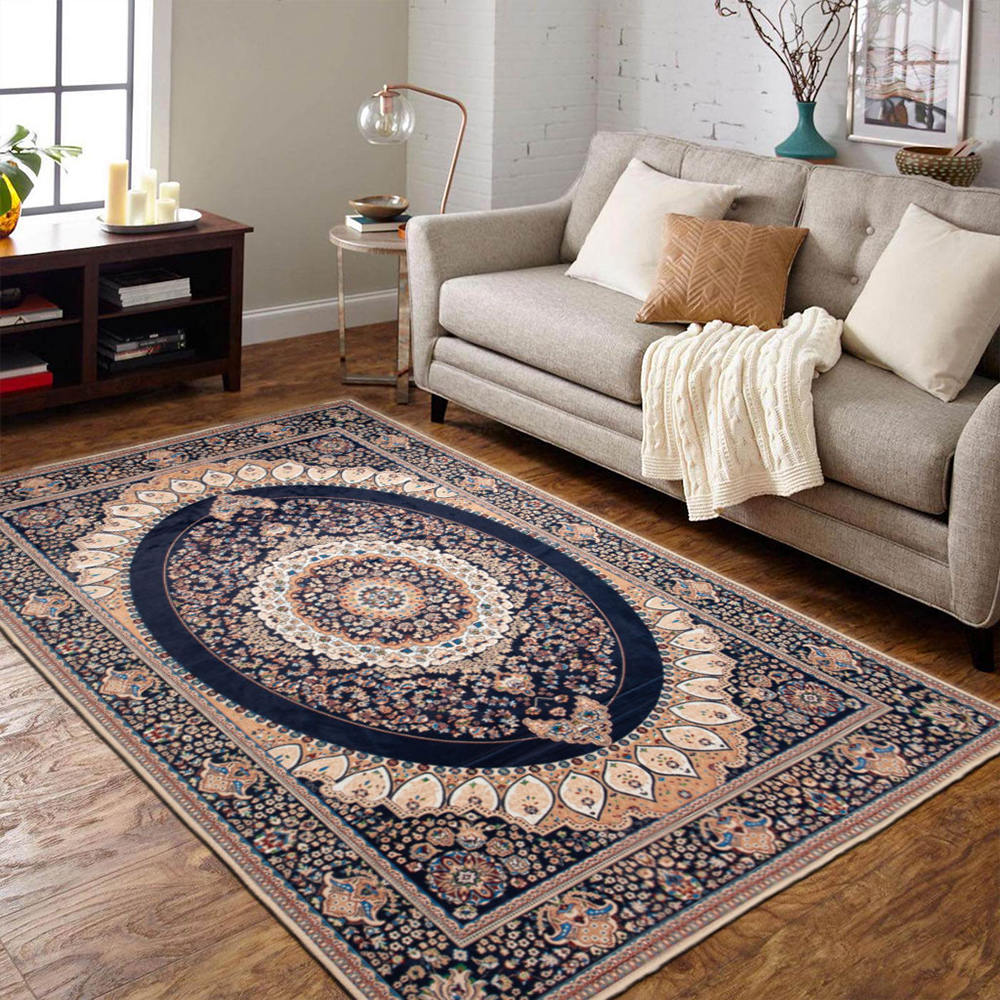
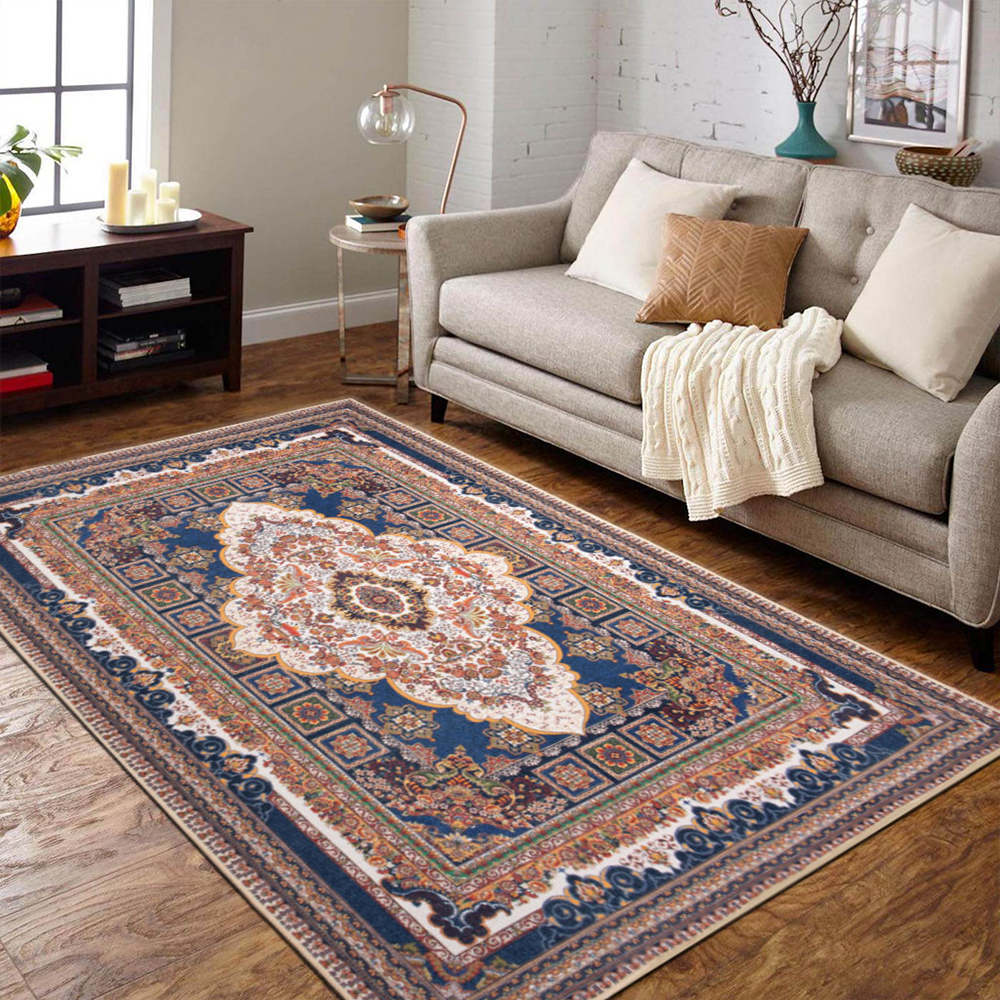
This printed area rug is developed for indoor living spaces such as bedrooms, living rooms, dining rooms, kitchens, children’s rooms, and entry areas. Its structure combines a 100% polyester microfiber surface, a 5 mm low pile, a 1150 gsm weight, and a soft TPR plus cotton fabric backing. The result is a rug that feels gentle underfoot, folds easily, resists fading, supports digital printed designs, and can be machine washed for practical home care. It is suitable for Persian, Moroccan, modern, classic, geometric, cartoon, and customized styles, giving retailers, distributors, and home textile brands wide creative freedom.
For buyers comparing rug options, this product offers a balanced value proposition. Genuine cashmere is luxurious but expensive, delicate, and not practical for many households. Conventional low-cost printed rugs may offer attractive patterns but often lack softness, color durability, backing stability, or washability. High-pile rugs can feel plush, but they may trap dust, interfere with furniture placement, or become difficult to clean. This imitation cashmere carpet aims to solve these problems by combining softness, low-pile practicality, non-slip support, easy maintenance, and efficient production technology.
Imitation Cashmere Carpet (Ultra-fine Yarn)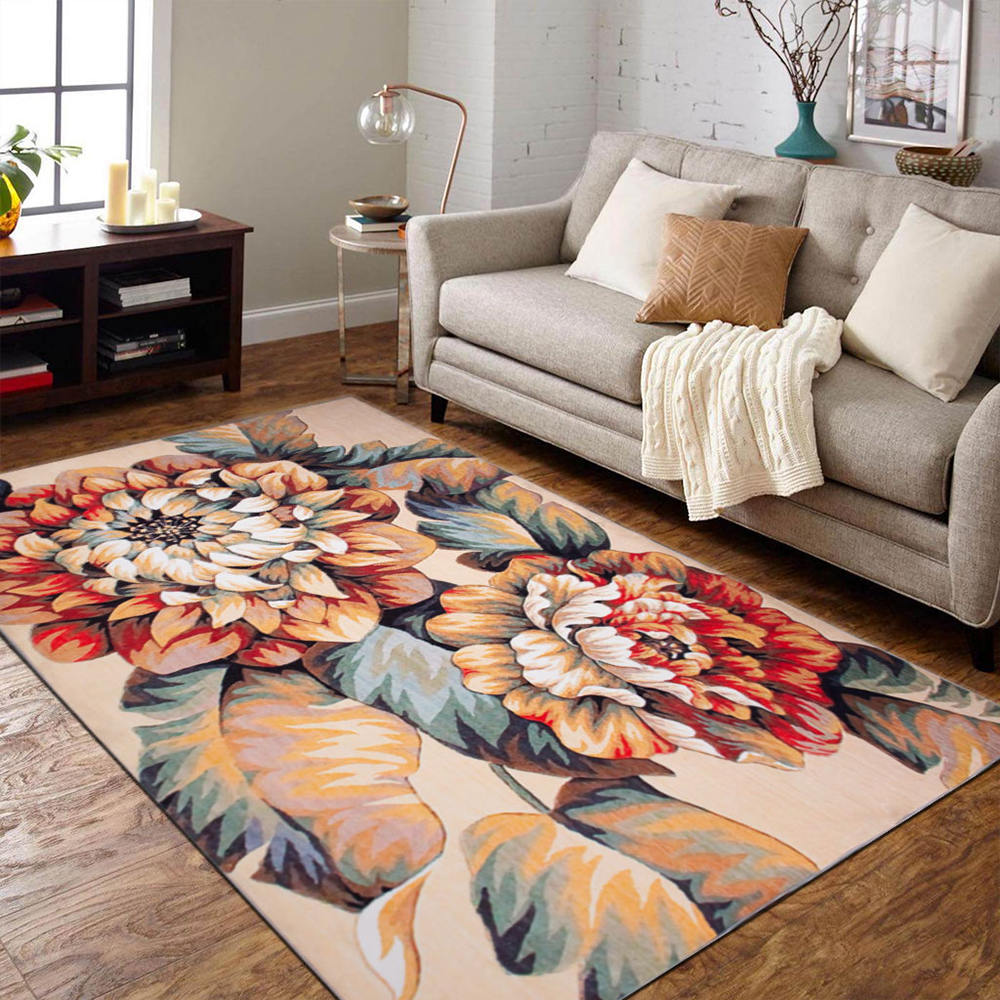
Content
The Imitation Cashmere Carpet with ultra-fine yarn belongs to the printed area rug category. Its rug form type is an indoor area rug, and it is available in common sizes including 2' x 3', 2' x 6', 3' x 5', 4' x 6', 5' x 7', 6' x 9', 8' x 10', and customized dimensions. Its rectangular shape makes it compatible with most common interior arrangements, from bedside placement to hallway runners and large living room layouts.
The surface is made from polyester microfiber. Polyester is widely used in modern rugs because it provides strong color performance, good resistance to daily wear, and practical cleaning characteristics. In this product, the fiber is engineered to create a soft, cashmere-like touch. While it is not natural cashmere, it is designed to imitate the smooth, delicate, and comfortable feeling that consumers associate with luxurious textiles.
The rug has a 5 mm pile height. This low-pile design is important because it helps the carpet fit under furniture, reduces the chance of tripping at edges, and makes vacuuming and washing easier. Low pile also performs well in multi-function rooms where people walk frequently, children play, chairs move, or doors open near the rug. Instead of emphasizing excessive thickness, the product focuses on refined softness, stability, and convenient use.
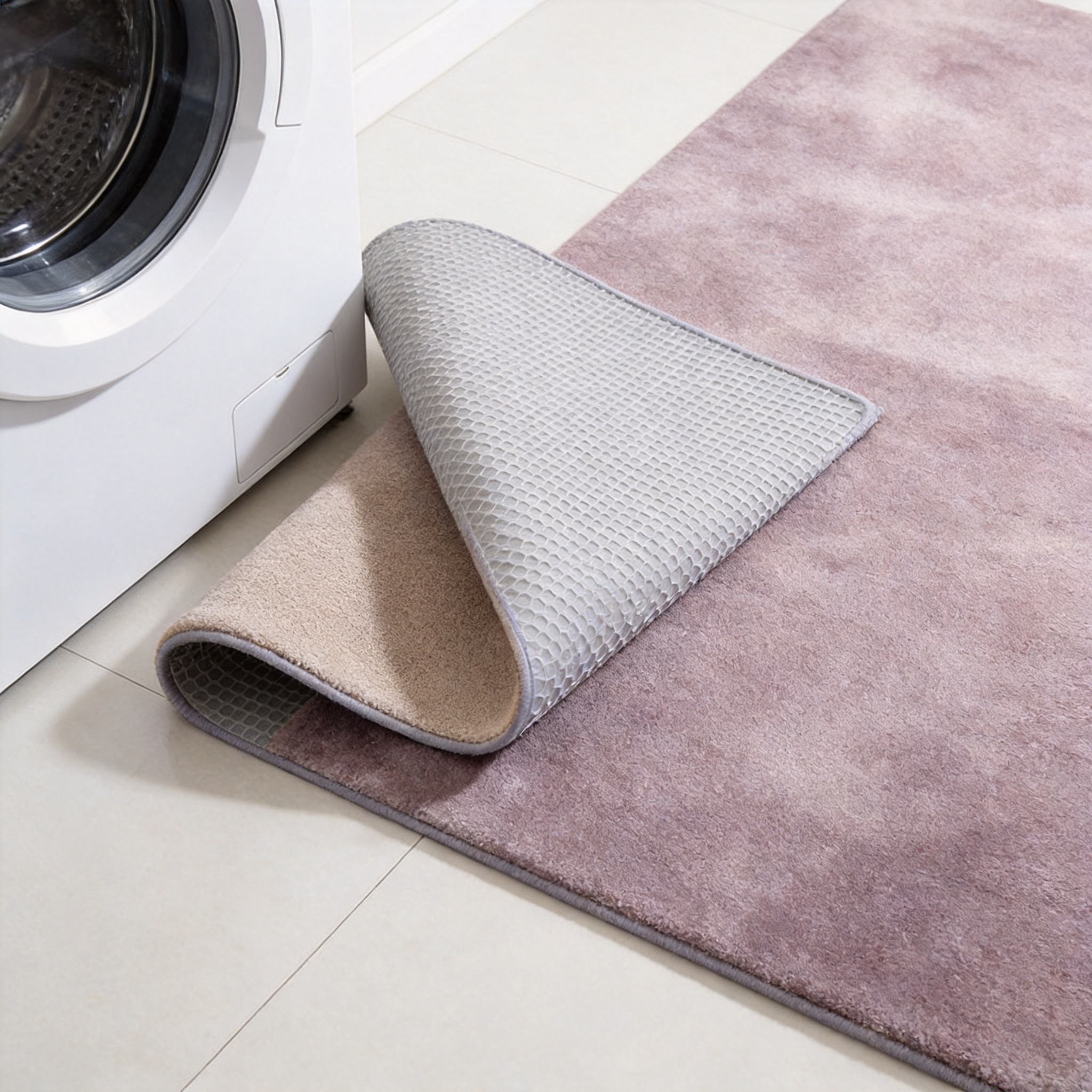
The backing combines TPR and cotton fabric. TPR, or thermoplastic rubber, is valued for its flexibility and skid-resistant characteristics. The cotton fabric layer improves softness, foldability, and textile comfort. This backing structure allows the rug to stay more stable on the floor without requiring an additional rug pad in many everyday indoor settings. It also helps the rug fold easily, making it easier to package, store, ship, and place into a washing machine.
| Product Type | Printed Indoor Area Rug |
| Surface Material | 100% Polyester Microfiber |
| Hand Feeling | Cashmere-Inspired Ultra-Soft Touch |
| Weight | 1150 gsm |
| Pile Height | 5 mm Low Pile |
| Backing | TPR Plus Cotton Fabric |
| Construction | Bonded |
| Care | Machine Washable |
| Key Features | Fade Resistant, Non-Slip, Soft, Foldable, Washable |
| Design Capability | Digital Printing for Persian, Moroccan, Modern, Classic, Geometric, Cartoon, and Custom Patterns |
| Common Rooms | Bedroom, Living Room, Dining Room, Kitchen, Indoor Entryway, Children’s Room |
One of the strongest selling points of this rug is its cashmere-inspired hand feeling. Cashmere is admired because it is soft, refined, warm, and luxurious. However, natural cashmere is not ideal for every area rug application. It is costly, can require careful maintenance, and is not always suitable for high-traffic rooms or machine washing. Many consumers want the feeling of luxury but need a more practical household textile.
This imitation cashmere carpet answers that need through ultra-fine polyester yarn. The fiber is designed to be smooth and delicate, giving the surface a gentle touch that feels comfortable under bare feet. In bedrooms, this softness improves the first step out of bed. In living rooms, it creates a relaxed surface for sitting, stretching, or children’s play. In children’s rooms, the gentle texture helps create a cozy and friendly environment.
Compared with rougher synthetic rugs, the ultra-fine yarn provides a more refined surface sensation. Some low-cost rugs feel stiff, plasticky, or thin because their yarn is selected mainly for cost. This product takes a different approach. It uses microfiber to improve softness while still preserving the performance benefits of polyester. That combination allows brands and buyers to offer a more premium tactile experience without moving into the high cost and delicate maintenance requirements of natural luxury fibers.
The softness also supports broader market positioning. It can fit into modern minimalist interiors, warm family homes, boutique hospitality settings, rental apartment decoration, and seasonal home collections. Because the surface feels pleasant and the pattern can be customized, the rug can be positioned as both a comfort product and a style product.
Design flexibility is essential in the rug market. Interior trends change quickly, and buyers often want different patterns for different regions, seasons, and retail channels. Traditional rug manufacturing can require costly setup, limited color control, or slower design changes. Digital printing gives this imitation cashmere carpet a major advantage because it allows a wide range of visual styles to be created with efficiency.
The rug can be printed with Persian patterns, Moroccan motifs, modern abstract graphics, classic borders, geometric layouts, cartoon themes, and customized artwork. This is especially valuable for wholesalers and private-label brands that need multiple design lines from one product base. A single rug construction can support many market segments: traditional homes, contemporary apartments, children’s rooms, holiday collections, online retail trends, and custom project orders.
Digital printing also helps create sharp visual expression on the polyester microfiber surface. The printed pattern can deliver layered color effects, distressed vintage looks, fine ornamental details, or playful character designs. Because the product is fade resistant, the design is made to maintain its appearance through normal indoor use and proper cleaning. This is a key advantage over lower-quality printed rugs that may lose color intensity quickly or appear dull after repeated care.
For retailers, design flexibility reduces inventory pressure. Instead of committing to one heavy, complex construction for each style, brands can develop many SKUs using a consistent base material and backing. This supports faster sampling, quicker seasonal updates, and more efficient product planning. For e-commerce sellers, the ability to offer diverse printed designs in popular sizes can also improve consumer choice and category competitiveness.
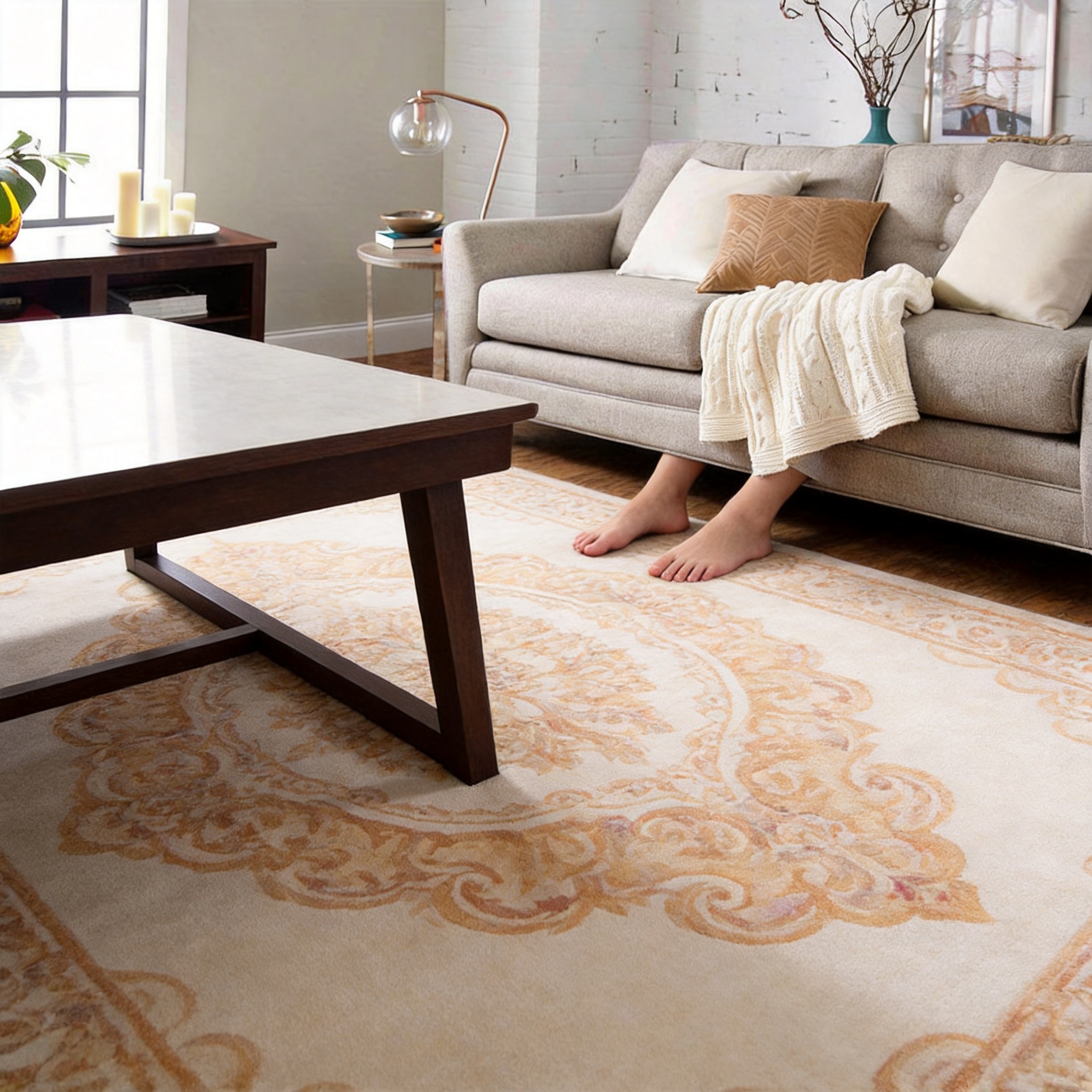
The 5 mm pile height is carefully selected for daily indoor performance. While very thick rugs can look luxurious, they are not always practical. High pile may trap dust, crumbs, pet hair, and small debris. It can also interfere with chair movement, door clearance, and furniture stability. A low-pile rug is often better for active households because it is easier to clean, easier to place, and easier to live with.
This rug’s 5 mm pile creates a smooth, comfortable surface while keeping the overall profile low. In dining rooms, chairs can move more easily over the rug. In kitchens, the lower pile is less likely to catch debris and is easier to maintain. In entry areas, it reduces the obstruction that can happen with thicker mats. In bedrooms and living rooms, it provides comfort without overwhelming the furniture layout.
Low pile also supports machine washability. A rug that is too thick or heavy can be difficult to fold and place into a washing machine. This product’s soft TPR backing and low-pile structure help make washing more practical. For consumers who value hygiene, especially families with children or pets, washable rugs are increasingly attractive. The ability to clean the rug at home improves long-term satisfaction and reduces the need for professional cleaning.
The low pile complements many furniture styles. It can be used under coffee tables, beside beds, in front of sofas, under dining tables, or in narrow rooms where thick rugs would feel bulky. Its construction helps it serve as a decorative foundation while remaining functional and easy to manage.
A rug’s backing is just as important as its surface. Many consumers first notice color and softness, but daily performance depends heavily on what is underneath. Poor backing can slide, curl, crack, separate, or make the rug difficult to wash. The TPR plus cotton fabric backing used in this product provides an important performance advantage.
TPR helps improve skid resistance. This means the rug is designed to stay more securely in place on indoor flooring than rugs with weak or slippery backs. In many cases, no additional rug pad is needed. That is a meaningful advantage for consumers because it reduces extra cost and simplifies installation. A rug that can be placed directly on the floor is easier to sell, easier to use, and easier to reposition.
The cotton fabric component adds softness and flexibility. Some rubber-backed rugs are too stiff, making them difficult to fold, package, or wash. By combining TPR with cotton fabric, the backing can remain flexible while still supporting floor grip. This is especially useful for e-commerce distribution, where compact packaging and manageable return logistics are important. It is also helpful for consumers who need to fold the rug for storage or cleaning.
Compared with lower-quality backings, this structure supports a better overall product experience. It reduces the need for separate accessories, improves user convenience, and helps the rug feel less rigid. For buyers evaluating competitive products, backing quality should not be overlooked. A beautiful rug can still disappoint if it slips, bunches, or becomes hard to maintain. This product is designed to address that issue directly.
Washability has become a major purchasing factor in the modern rug market. Consumers want attractive home textiles, but they also want products that fit real life. Spills happen. Children play on floors. Pets shed hair. Dust collects in entryways. A rug that cannot be cleaned conveniently may lose value quickly, even if it looks beautiful at first.
The Imitation Cashmere Carpet is designed for machine washing. Its polyester microfiber surface, low pile, bonded construction, and flexible backing support easier home care. This does not mean care instructions should be ignored; consumers should still follow proper washing and drying guidelines. However, the ability to place the rug into a washing machine is a major practical advantage over many traditional carpets that require special cleaning.
Machine washability also supports better hygiene. In bedrooms and children’s rooms, floor textiles come into close contact with skin, socks, toys, and bedding. In kitchens and dining rooms, food particles and spills may occur. In living rooms, the rug may receive daily foot traffic. Being able to wash the rug helps maintain a fresher indoor environment.
From a retail perspective, washable rugs have strong marketing appeal. They answer common consumer concerns before purchase. Many shoppers hesitate to buy rugs because they worry about stains or maintenance. A soft, attractive, washable rug reduces that hesitation. It is easier to recommend for families, pet owners, renters, students, and anyone who wants comfort without complicated care.
Color performance is essential for printed rugs. A rug’s design may be the reason a customer chooses it, but long-term satisfaction depends on how well that design remains attractive after use. Polyester microfiber offers good color retention characteristics, and the product is designed to be fade resistant. This helps maintain visual appeal in normal indoor environments.
Fade resistance is especially important for digitally printed patterns. Persian designs rely on rich decorative detail. Moroccan styles often use high-contrast shapes. Modern and geometric designs need clean edges and consistent tones. Cartoon patterns must stay bright and appealing. If the color fades unevenly, the rug loses its decorative value. This product is built to preserve the printed effect and support longer use.
Compared with inferior printed rugs, fade-resistant performance improves brand reputation. Consumers often judge textile quality over time, not only at the moment of purchase. A rug that looks good after repeated use and careful washing can lead to better reviews, repeat purchases, and stronger retailer confidence. For wholesale buyers, this means fewer complaints and more reliable product positioning.
Fade resistance also supports seasonal and trend-based collections. Brands can offer soft vintage tones, bold modern palettes, warm neutrals, or children’s designs with confidence that the printing method and fiber selection are aligned with daily performance needs.
The imitation cashmere carpet is positioned against several common competitor categories: genuine cashmere rugs, ordinary polyester printed rugs, high-pile shag rugs, non-washable carpets, and rugs with weak backings. Its advantage comes from balancing luxury feel with practical function.
Genuine cashmere has prestige, but it is not always practical for large-volume home rug markets. It is expensive, sensitive, and often requires delicate care. The imitation cashmere carpet provides a similar soft-touch direction at a more accessible cost. It also offers machine washable convenience and digital printing flexibility, making it better suited for everyday home use and broad retail programs.
Not all polyester rugs are equal. Lower-grade polyester rugs may feel rough, thin, or artificial. This product uses ultra-fine microfiber to improve the tactile experience. It is designed to deliver a cashmere-like hand feeling while retaining polyester’s durability and fade resistance. The result is a more premium product experience than standard low-cost printed rugs.
High-pile rugs can feel plush, but they may be difficult to clean and less suitable for dining rooms, kitchens, or entryways. The 5 mm low pile of this product provides comfort while supporting easier cleaning, furniture compatibility, and practical placement. It is a better choice for consumers who want softness without the maintenance burden of deep pile.
Traditional carpets often require professional cleaning or spot treatment only. This rug’s machine washable structure makes it more convenient for modern households. Washability is a clear advantage for families, pet owners, renters, and online shoppers who prioritize hygiene and low maintenance.
Many rugs slide on smooth floors unless customers buy additional rug pads. The TPR backing of this product provides skid resistance and can eliminate the need for an extra pad in many indoor applications. This improves value, simplifies use, and reduces the total purchase cost for consumers.
A high-quality rug depends on more than attractive material descriptions. It depends on manufacturing control, process knowledge, equipment capability, and quality management. Zhejiang Benyi Textile Technology Co., Ltd. is located in Shaoxing, Zhejiang Province, an area widely known as a major textile center. This location supports access to textile expertise, supply chain resources, and manufacturing experience.
The company specializes in carpets, rug fabrics, and finished carpet products. Its strength comes from integrating surface fabric production, dyeing and printing, and finished rug processing. This integrated structure improves control over the full production chain. Instead of relying on many disconnected suppliers, the company can manage key steps more directly, including yarn selection, fabric development, printing quality, backing application, cutting, finishing, inspection, and packaging.
This control is especially important for printed area rugs. Surface texture, print absorption, color clarity, backing adhesion, edge finishing, and final flatness must work together. If one step is weak, the whole product suffers. Integrated manufacturing helps maintain consistency between design intention and finished product performance.
The company also has a team of more than 20 fabric engineers who develop new carpet fabrics according to market trends. This engineering capability allows the company to respond to changing consumer preferences, test new textures, improve material combinations, and support customized services. For business customers, this means the product is not only a standard rug but also a platform for design development and private-label customization.
The company’s production concept focuses on combining the bottom and surface to simplify carpet production and improve efficiency. Traditional carpet production can involve complex processes, high labor demand, long lead times, and higher costs. By improving how the surface layer and backing are integrated, production can become more efficient while still meeting market expectations for comfort, design, and function.
For the imitation cashmere carpet, this matters because the product must balance soft surface feeling with stable backing. The polyester microfiber surface needs to remain pleasant and visually clear after printing. The TPR plus cotton fabric backing needs to bond effectively and support washability, flexibility, and skid resistance. Manufacturing coordination between these layers is essential.
Efficient bonding also helps the rug remain suitable for folding and machine washing. If the backing is too rigid, the rug becomes inconvenient. If the bonding is weak, layers may separate. If the surface is not properly prepared for printing, design quality may suffer. Advanced manufacturing control helps reduce these risks and produce a rug that works as a complete system.
This process advantage also benefits wholesale buyers. More efficient production can support better lead time control, competitive pricing, and consistent repeat orders. For retailers and distributors, reliable supply is as important as product appearance. A supplier with integrated manufacturing can often respond more effectively to changing order quantities, customized designs, and seasonal schedules.
Quality control begins before the rug is finished. It starts with material selection. Polyester microfiber must meet requirements for fineness, softness, strength, and print suitability. The surface fabric must be stable enough to accept digital printing clearly. The backing materials must meet flexibility and grip expectations. Each component influences the final product.
During printing, color management is critical. Digital printing must produce accurate patterns, clean edges, and consistent tones across production batches. For Persian and classic designs, fine ornamentation requires good print resolution. For geometric designs, lines and shapes need clarity. For cartoon patterns, bright and stable color is essential. Production control helps ensure that the final rug matches the approved sample.
During bonding and backing application, the goal is to create a stable, flexible structure. The backing should support skid resistance without making the rug too stiff. The layers should remain secure through normal use and proper washing. After bonding, rugs must be cut, finished, inspected, and packaged according to size and order requirements.
Final inspection may include checking dimensions, surface appearance, print quality, backing condition, edge finishing, pile feel, and packaging. Consistent inspection helps reduce defects and supports better customer satisfaction. For international buyers, quality consistency is essential because products must perform across different sales channels and consumer expectations.
The product’s design and manufacturing structure make it highly suitable for customization. Buyers can choose sizes, patterns, color directions, and collection themes. Standard sizes such as 2' x 3', 2' x 6', 3' x 5', 4' x 6', 5' x 7', 6' x 9', and 8' x 10' cover many common retail needs, while custom sizes can support special projects or market-specific requirements.
Digital printing is especially useful for private-label development. A brand can create a coordinated collection with multiple styles using the same soft, washable base. For example, a retailer might build a traditional Persian-inspired line, a neutral modern line, and a children’s cartoon line from the same product platform. This makes sourcing simpler while allowing visual variety.
Customization can also support different room applications. Small rugs can be developed for bedside use, kitchen placement, or entry areas. Runner sizes can serve corridors and narrow spaces. Larger sizes can anchor living rooms and dining rooms. Children’s designs can target playrooms and bedrooms. The same construction can be adapted to many consumer scenarios.
For wholesalers, customization improves market differentiation. Instead of selling only generic patterns, buyers can create exclusive designs suited to their customers. For online sellers, unique prints and size combinations can help listings stand out. For importers, the ability to develop designs according to regional style preferences can improve competitiveness.
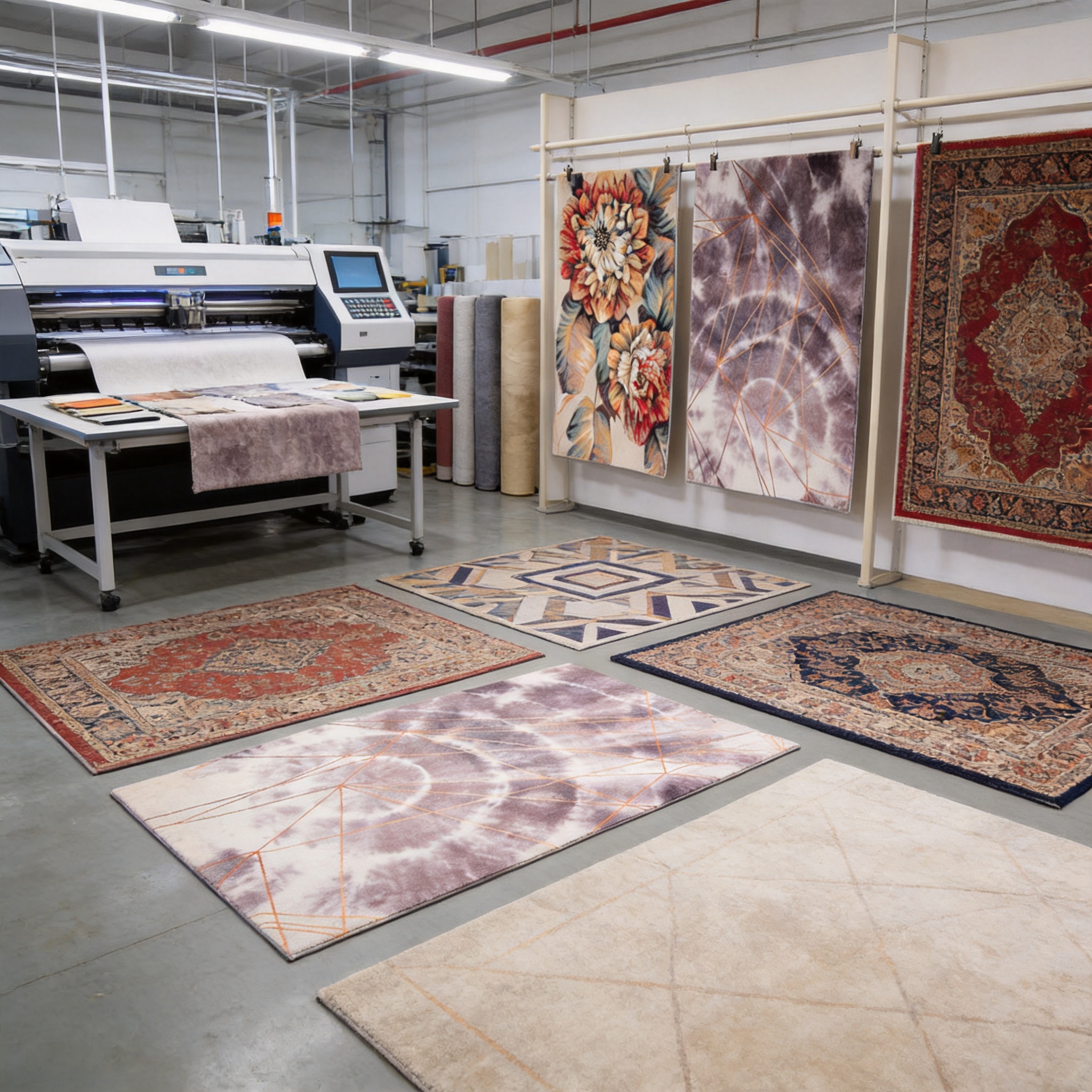
Modern textile buyers increasingly consider environmental responsibility and product safety. The company emphasizes ecological and environmental protection and works to improve consumers’ health experiences. It invests in sustainable materials and production methods, including recycled polyester and water-saving dyeing techniques. It has also passed OEKO-TEX and GRS certifications, supporting confidence in responsible textile production.
For an imitation cashmere carpet, sustainability is relevant in several ways. First, using polyester microfiber to imitate cashmere can reduce dependence on expensive animal-origin luxury fibers for mass-market applications. Second, washable durability can extend the useful life of the rug by making it easier to clean and maintain. Third, efficient production and integrated manufacturing can reduce waste associated with poor coordination between suppliers.
Water-saving dyeing and printing techniques are important because textile coloration can consume significant resources. By investing in improved processes, manufacturers can support more responsible production while still offering colorful, trend-driven products. For brands selling in markets where consumers ask about environmental and safety standards, these efforts add value.
Certifications such as OEKO-TEX and GRS are also meaningful for international sourcing. OEKO-TEX is widely associated with testing for harmful substances in textiles, while GRS relates to recycled material content and responsible processing in applicable supply chains. For buyers, these certifications can support compliance discussions, retailer requirements, and marketing communication.
In bedrooms, comfort is the priority. The ultra-fine yarn surface provides a soft and warm feeling underfoot. A small size can be placed beside the bed, while a larger size can sit under the bed frame to create a coordinated, comfortable layout. The low pile prevents the rug from feeling bulky, and the washable feature helps maintain cleanliness in a personal space.
In living rooms, rugs must balance beauty and durability. The printed design can define the style of the room, whether vintage Persian, modern abstract, or soft neutral. The 5 mm pile works well under coffee tables and sofas. The skid-resistant backing helps the rug stay positioned during daily movement, and the soft surface improves comfort for family activities.
Dining rooms require rugs that are easier to clean and not too thick. A low-pile washable rug is a practical choice because chairs can move more smoothly and spills can be addressed more conveniently. Digital printing allows elegant patterns that make the dining area look finished without sacrificing function.
In kitchens, rugs must be easy to manage. The product’s low profile, skid-resistant backing, and washable structure make it suitable for kitchen floor areas where comfort and cleanliness matter. A runner or small rectangular size can soften the standing area near counters or sinks.
Children’s rooms benefit from softness, safety, and colorful design. The cashmere-inspired hand feeling creates a gentle play surface, while digital printing can produce cartoon, educational, or playful patterns. Machine washability is particularly valuable because children’s spaces often require frequent cleaning.
Entry areas need rugs that stay in place and do not interfere with doors. The low pile and TPR backing are helpful in this setting. The rug can add visual warmth while remaining practical for daily foot traffic. Washability also helps maintain appearance over time.
This product is not only suitable for individual consumers; it also has strong potential for wholesalers, importers, retailers, e-commerce brands, and home textile distributors. Its combination of soft touch, digital design flexibility, washable convenience, and efficient manufacturing makes it suitable for broad product programs.
For wholesalers, the main advantage is versatility. One rug construction can serve many design markets. This reduces sourcing complexity and supports larger, more efficient orders. For retailers, the product offers strong consumer-facing benefits that are easy to communicate: soft, washable, non-slip, fade resistant, low pile, and customizable. For e-commerce sellers, the foldable structure can support more practical packaging compared with stiff or heavy rugs.
The product can also work well for promotional collections. Because digital printing supports many design options, buyers can create seasonal lines, festival patterns, children’s collections, or limited-edition styles. The accessible luxury positioning can appeal to consumers who want a premium look and feel without paying for natural cashmere or hand-knotted luxury rugs.
Hotels, apartments, and interior project suppliers may also find value in the product. While it is designed as an indoor area rug, its soft surface, low pile, and cleaning convenience make it suitable for many decorative indoor applications where comfort and easy maintenance are needed.
The strongest value of the Imitation Cashmere Carpet comes from balance. It is soft but not delicate. It is decorative but still practical. It is washable but still comfortable. It is low pile but not flat or harsh. It is digitally printable but also designed for fade resistance. It offers skid resistance without demanding an extra pad in many normal indoor uses.
This balance matters because consumers rarely judge rugs by only one feature. A rug that is beautiful but hard to clean may fail in daily life. A rug that is washable but rough may not feel premium. A rug that is soft but slides on the floor may create frustration. A rug that is affordable but fades quickly may harm the seller’s reputation. This product is engineered to reduce those compromises.
For brands and retailers, it provides a commercially practical way to offer accessible luxury. The cashmere-inspired touch improves perceived value, while polyester microfiber and integrated manufacturing keep the product suitable for scalable production. The range of standard and custom sizes makes it adaptable to different channels. The digital printing capability enables fast design response to market trends.
In a competitive rug market, products must stand out through both story and performance. This rug has a clear story: cashmere-like softness with washable, non-slip, fade-resistant practicality. It also has manufacturing support behind it, including integrated production, textile engineering, printing capability, and sustainability-oriented development.
The main advantage is its combination of cashmere-inspired softness and practical everyday performance. It uses ultra-fine polyester microfiber to create a soft hand feeling while also offering fade resistance, machine washability, low-pile convenience, and skid-resistant backing.
No. It is an imitation cashmere carpet made from 100% polyester microfiber. The surface is engineered to imitate the soft and refined feeling associated with cashmere, but it avoids the high cost and delicate maintenance needs of genuine cashmere.
Yes. The rug is designed for machine washing. Its low pile, polyester microfiber surface, bonded construction, and flexible TPR plus cotton fabric backing support convenient home care when proper washing instructions are followed.
In many indoor applications, an additional rug pad is not required because the rug has a skid-resistant TPR backing. However, performance can vary depending on floor surface, room conditions, and use intensity.
The rug supports digital printing for many styles, including Persian, Moroccan, modern, classic, geometric, cartoon, and customized patterns. This makes it suitable for private-label collections and diverse retail programs.
The 5 mm low pile provides comfort while making the rug easier to clean, easier to place under furniture, and less likely to interfere with doors or chair movement. It is practical for bedrooms, living rooms, dining rooms, kitchens, and entry areas.
It is suitable for indoor spaces such as bedrooms, living rooms, dining rooms, kitchens, children’s rooms, indoor entryways, and other home areas where softness, decorative design, and easy maintenance are desired.
Polyester microfiber offers softness, durability, fade resistance, and good suitability for digital printing. It allows the rug to provide a premium hand feeling while remaining practical and cost-effective for daily use.
The manufacturer controls weaving, dyeing and printing, and finished carpet processing. This integrated production chain improves control over quality, lead time, design execution, backing application, and final product consistency.
Yes. The product is well suited for wholesalers, distributors, retailers, e-commerce sellers, and private-label brands because it supports multiple sizes, custom patterns, flexible design development, and scalable production.
The Imitation Cashmere Carpet with ultra-fine yarn is a modern printed area rug designed for consumers who want softness, style, and practical maintenance in one product. Its polyester microfiber surface provides a cashmere-like hand feeling, while its 5 mm low pile supports easy placement and cleaning. The TPR plus cotton fabric backing adds skid resistance and foldability, and digital printing enables extensive design flexibility.
Compared with many competitor products, it offers a stronger balance of luxury feel and household practicality. It is more affordable and easier to care for than genuine cashmere, softer than ordinary polyester rugs, easier to maintain than high-pile rugs, more convenient than non-washable carpets, and more user-friendly than rugs that require separate pads.
Behind the product is an advanced manufacturing structure supported by integrated textile production, printing capability, finished rug processing, fabric engineering, customization services, and sustainability-oriented development. For buyers seeking a reliable printed area rug with premium touch, attractive designs, washable function, and scalable supply potential, this imitation cashmere carpet offers a compelling solution for today’s indoor living market.
Textile Institute. Textile Terms and Definitions. Textile Institute Publications.
Collier, B. J., and Epps, H. H. Textile Testing and Analysis. Pearson Education.
Goswami, K. K. Advances in Carpet Manufacture. Woodhead Publishing.
Kadolph, S. J. Textiles. Pearson Education.
OEKO-TEX Association. Standard 100 by OEKO-TEX: General Information and Testing Principles.
Textile Exchange. Global Recycled Standard: Certification and Processing Guidelines.

ADD: No.75 Zhenyuan Road, Yuecheng District, Shaoxing City, Zhejiang Province, China 312000

Tel : +86-189 6750 9795

FAX : +86-0575-8803 2773

Email : fisher@benetextile.com

Copyright © Zhejiang Benyi Textile Technology Co., Ltd. All Rights Reserved. Carpets and Rugs Manufacturer

 English
 Français
 Deutsch
 عربى
عربى