

Tang Meilin — Customer Success and Product Support Specialist
 Home / Author / Tang Meilin — Customer Success and Product Support Specialist / Jacquard Chenille Composite Arctic Fleece Blanket: A Complete Guide to Comfort, Performance, and Textile Manufacturing Excellence
  2026.07.22
 Tang Meilin — Customer Success and Product Support Specialist
Blankets are no longer viewed as simple household coverings. In modern homes, hotels, offices, aircraft cabins, and hospitality environments, a blanket must deliver warmth, softness, visual appeal, durability, easy care, and reliable long-term performance. Buyers increasingly expect one product to serve several purposes: a comfortable layer for sleeping, a decorative throw for a sofa, a practical travel companion, and a protective covering for premium furniture. The Jacquard Chenille Composite Arctic Fleece Blanket has been developed to meet these overlapping expectations through a carefully engineered double-layer construction.
Combining a jacquard chenille surface with a single-sided arctic fleece backing, the blanket brings together two different textile experiences in one reversible product. The chenille side offers a decorative, textured appearance and a comparatively cool, breathable touch, while the arctic fleece side provides fluffy softness, insulation, and a warmer hand feel. This combination allows the blanket to adapt to changing seasons and different indoor environments more effectively than many single-fabric blankets.
The product is made from polyester and is offered in a substantial 450gsm weight category. Available sizes include 50 by 60 inches, 60 by 80 inches, 90 by 90 inches, and 90 by 110 inches. This range supports multiple applications, from personal lap use and children’s comfort to full bed coverage and large sofa protection. Its knitted weave, composite construction, solid-color styling, machine-washable care profile, and resistance to wrinkles, shrinkage, and fading make it a practical choice for both residential and commercial users.
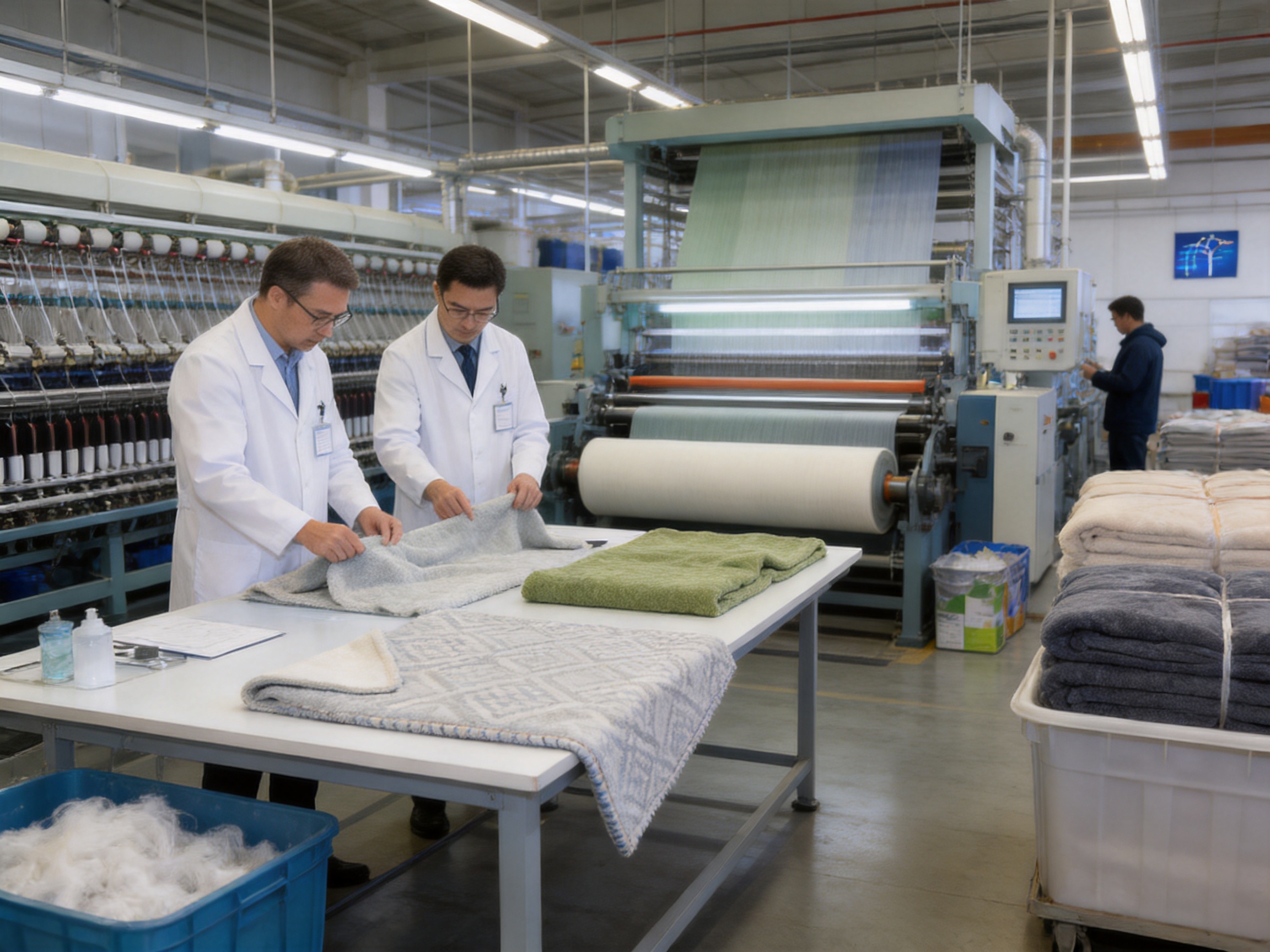
Behind the finished blanket is a vertically integrated textile manufacturing operation based in Shaoxing, Zhejiang, an important textile production center known for its extensive industry ecosystem. The manufacturer combines fabric development, weaving, dyeing and printing, and finished-product processing capabilities. This structure gives buyers greater access to consistent quality, shorter coordination chains, customized development, and more dependable production planning.
Content
The central advantage of this blanket is its composite design. Instead of relying on one fabric to provide every desired characteristic, the product uses two complementary textile layers. The jacquard chenille layer contributes surface character, decorative texture, and a more breathable touch. The arctic fleece layer contributes loft, softness, warmth, and a fluffy sensation against the skin. By joining these materials, the blanket addresses comfort requirements that are often difficult to achieve with a single-layer construction.
The product description identifies a double-layer arrangement made from jacquard chenille fabric and single-sided arctic fleece fabric. The jacquard chenille component is described as approximately 200gsm, while the arctic fleece component is described as approximately 230gsm. The overall product is listed in the 450gsm category. This substantial construction gives the blanket a fuller appearance and a more reassuring weight than lightweight fleece throws or thin decorative coverings.
Many conventional blankets are optimized for only one primary benefit. A thin fleece blanket may be soft and easy to carry but lack visual structure and furniture-protection capability. A decorative chenille throw may look attractive but provide less insulation. A heavy woven blanket may feel substantial but can be less flexible and less convenient to wash. The composite design is intended to balance these competing requirements in one product.
The jacquard chenille surface is particularly valuable in visible household settings. Its textured construction can add depth to a solid color without depending on printed graphics or complicated patterns. This enables the blanket to function as both a comfort product and a home accessory. Draped across a sofa, folded at the foot of a bed, or placed over an armchair, it can contribute to a coordinated interior while helping shield upholstery from dust, stains, and everyday contact.
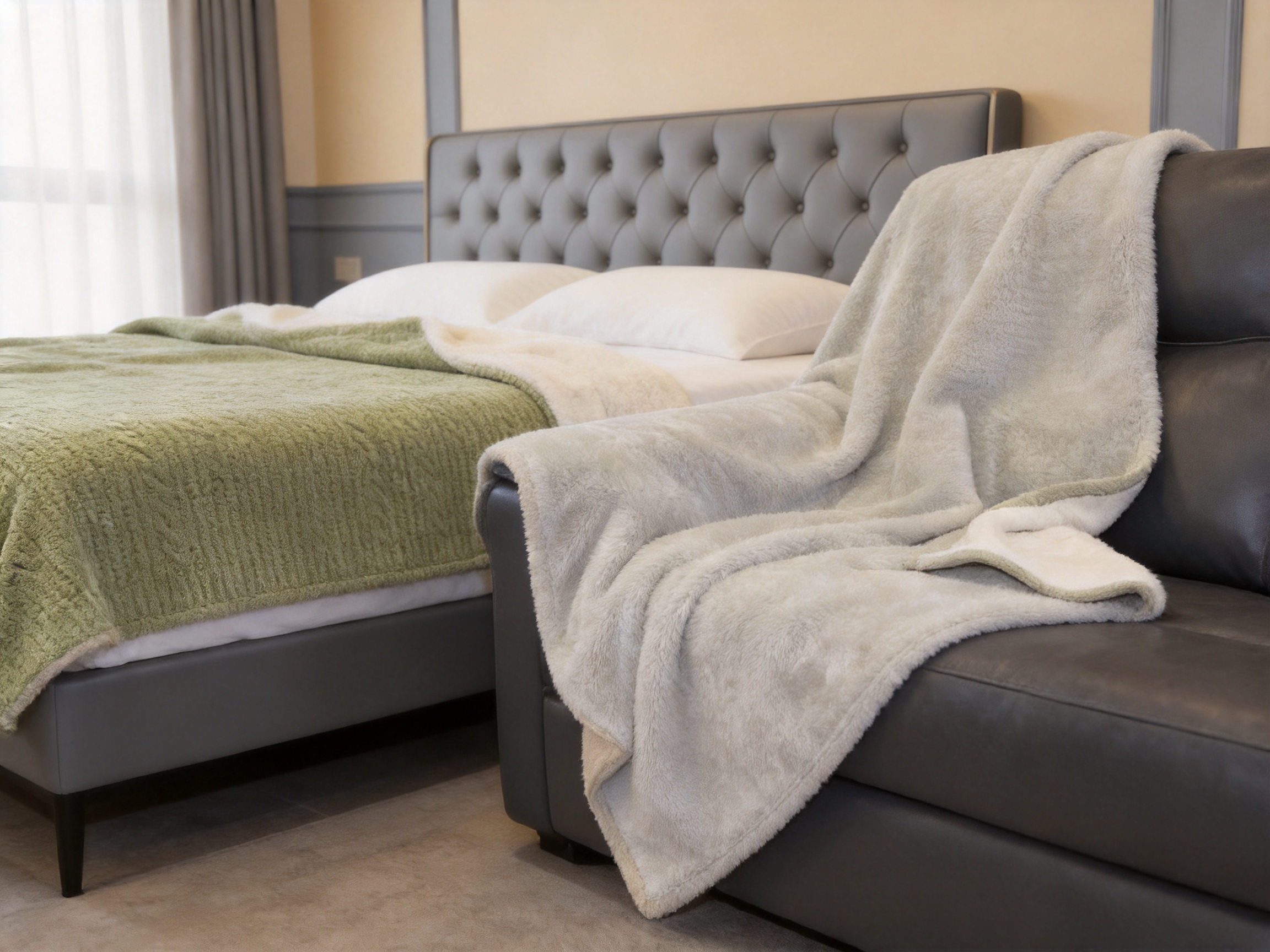
The arctic fleece side is designed to provide a noticeably soft and fluffy touch. The denser backing adds thickness and helps create a warm layer during colder weather. At the same time, the reversible structure allows the user to select the side that feels most appropriate for the moment. The chenille side may be preferred when a cooler, textured surface is desired, while the fleece side can be placed next to the body when maximum softness and warmth are priorities.
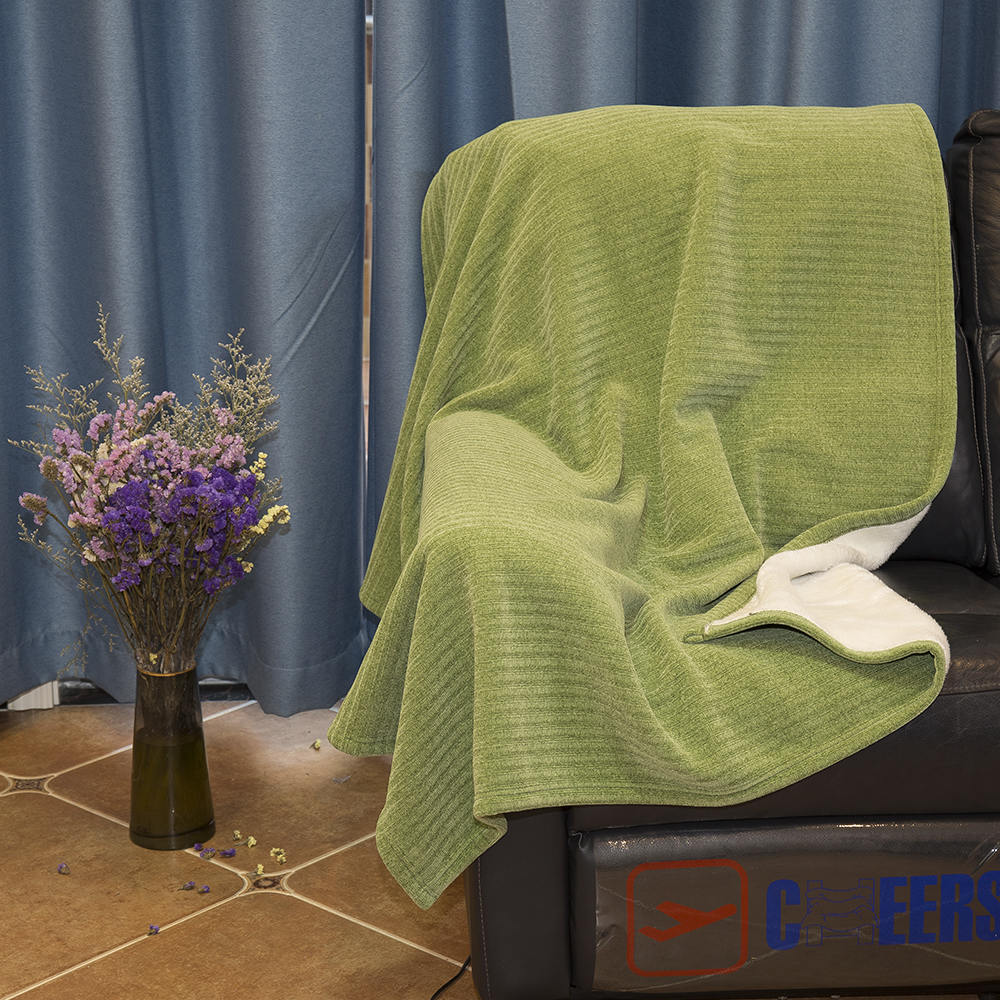
Jacquard Chenille Composite Arctic Fleece Blanket
The blanket is manufactured from 100% polyester. Polyester is widely used in household textiles because it can provide good dimensional stability, color consistency, abrasion resistance, and ease of care. In a blanket intended for frequent use, these characteristics are important. The material must maintain its appearance after repeated handling, folding, laundering, and exposure to normal household conditions.
Polyester also supports efficient textile production. It can be spun, knitted, woven, dyed, printed, finished, and assembled through established industrial processes. This allows manufacturers to develop consistent products in commercial quantities while offering different colors, sizes, and construction options. For buyers managing retail, hospitality, or private-label programs, the material provides a practical combination of performance and production flexibility.
The use of polyester does not mean that the blanket must feel rigid or synthetic. Through fiber selection, yarn formation, knitting, surface treatment, brushing, and finishing, polyester fabrics can be developed with highly varied textures. The fleece component in this blanket is engineered to feel fluffy and soft, while the chenille component provides a more dimensional and decorative surface.
A double-layer blanket can offer greater functional separation than a single-layer product. Each side is developed to perform a different role, and the composite structure makes it possible to combine those roles without requiring the user to purchase two separate blankets. The layers also create a fuller construction that can improve the perceived quality of the finished product.
The composite structure is useful in rooms where comfort and presentation are equally important. In a bedroom, the blanket can serve as an additional warmth layer. In a living room, it can protect a sofa while providing a readily available covering. In an office or study, it can be used during cool working conditions without appearing out of place. In a hotel or aircraft setting, the substantial but flexible construction can support a more comfortable guest experience.
Layered construction may also help the product maintain a stable balance between softness and resilience. The fleece side delivers loft, while the chenille side contributes surface density and structure. This combination can make the blanket feel more substantial than a lightweight throw while remaining more flexible than a rigid quilt or heavily filled bed covering.
The product uses a knitted weave type. Knitted textile structures are valued for their flexibility and soft hand feel. Rather than behaving like a stiff, tightly board-like fabric, a knitted material can conform more readily to the body, furniture, and bedding surfaces. This is especially helpful for blankets because users expect the product to drape naturally and move comfortably during use.
The knitted construction also supports the blanket’s casual versatility. It can be folded for storage, wrapped around the shoulders, placed across the legs, or spread across a bed. Its flexibility makes it suitable for both stationary and mobile uses, including travel between rooms, office use, and transportation settings such as coaches or aircraft cabins.
Surface comfort depends on more than fiber content alone. Yarn configuration, fabric density, brushing, finishing, and bonding or compositing methods all contribute to the final hand feel. The combination of jacquard chenille and arctic fleece is intended to create a tactile contrast: one side has a textured, decorative character, while the other has a smooth, plush, fluffy sensation.
The blanket’s softness is one of its primary selling points. The arctic fleece side is designed to offer a plush hand feel that is comfortable against the skin and suitable for extended use. The chenille side adds another type of tactile interest, with a textured surface that can feel rich without being excessively heavy.
Warmth is supported by the product’s weight and double-layer construction. At approximately 450gsm, it is positioned as a substantial blanket rather than a very light summer throw. The fleece layer helps retain warmth around the user, making the product appropriate for cold winter conditions, air-conditioned offices, cool hotel rooms, and transitional seasons.
At the same time, the two sides allow users to manage comfort across the year. The chenille surface is described as offering a cooler and more breathable feeling than the fleece side. This makes the product more adaptable than a blanket that provides only intense insulation. In mild weather, it can be used as a decorative cover or light comfort layer. In colder weather, the fleece side can be positioned for a warmer experience.
Furniture protection is an important but sometimes overlooked function of a blanket. Sofas, armchairs, and lounge furniture can accumulate dust, pet hair, body oils, food particles, and accidental spills through normal use. A blanket placed over a seating area can provide a removable barrier between daily activity and the upholstery.
The Jacquard Chenille Composite Arctic Fleece Blanket is well suited to this purpose because the chenille surface can function as a decorative covering while the fleece backing adds comfort for users. It can be placed over a sofa back, spread across seat cushions, or folded over an armrest. When the blanket becomes soiled, it can be removed and machine washed instead of requiring immediate cleaning of the entire piece of furniture.
Its solid-color styling also supports a wide range of interior concepts. Solid colors are easier to coordinate with patterned cushions, rugs, curtains, and furniture. For retailers, this can simplify product selection and make the blanket attractive to customers with different decorative preferences.
On a bed, the blanket can be used as a supplementary warmth layer, a decorative bed-end throw, or a protective cover for daytime use. The larger 90 by 90 inch and 90 by 110 inch sizes are suitable for more generous bed coverage, while the smaller sizes can be used for individual comfort or decorative placement.
The jacquard surface can contribute visual texture to a bedroom without creating a busy pattern. The blanket may be folded at the foot of the bed to provide easy access during the night. It can also be used over bedding during periods when a duvet or comforter feels too warm but a sheet alone is insufficient.
For hospitality operators, a blanket that combines presentation with washability can be valuable. Hotel rooms require products that look presentable, feel comfortable, and withstand repeated laundering. The machine-washable polyester construction is intended to support this type of regular-use environment when proper care procedures are followed.
Temperature differences in offices, study rooms, coaches, and aircraft cabins can make a compact personal blanket useful. The product can be kept near a desk, stored in a lounge area, or carried during travel. The 50 by 60 inch size is particularly suitable for lap coverage, personal use, or use by children, while larger sizes provide more extensive body and furniture coverage.
Its reversible design gives users flexibility in shared environments. The fleece side can be selected for warmth, while the chenille side can be used when a less plush and more decorative surface is preferred. The blanket’s soft structure allows it to be folded and stored without requiring the rigid packaging or specialized handling associated with heavier bedding products.
In offices and hospitality settings, solid colors may also support visual consistency. Companies and accommodation providers can select colors that align with existing furnishings, interior themes, or seasonal merchandising plans.
The product is identified as suitable for all ages. Its uses can therefore extend from children’s comfort and family living spaces to adult bedrooms, senior care environments, guest rooms, and travel applications. The soft fleece side can be appealing for children, while the substantial construction and decorative chenille surface make it appropriate for adult interiors.
As with any textile product, age-appropriate supervision and responsible use should be considered for infants and very young children. The blanket should be selected and used according to applicable safety guidance and the specific needs of the user. For older children, teenagers, and adults, the product can provide a practical personal layer for rest, reading, travel, or relaxation.
One of the strongest practical benefits of the blanket is its machine-washable care profile. A blanket used on sofas, beds, or during travel will eventually encounter dust, spills, skin oils, and other everyday contamination. A product that cannot be cleaned easily may become inconvenient or expensive to maintain. Machine washing gives users a straightforward method for keeping the blanket fresh.
The recommended care guidance is to wash the blanket separately in cold water and tumble dry on a low setting. Washing separately can help protect the blanket from rougher garments, zippers, hooks, and color transfer. Cold water can also support color retention and reduce unnecessary stress on the fibers. Low-temperature tumble drying helps limit excessive heat exposure, which may affect softness, shape, or surface appearance over time.
The product is described as wrinkle resistant, shrink resistant, and resistant to fading after extended use and multiple washes. These characteristics are important for a blanket intended to remain attractive in visible areas of the home. A product that emerges from laundering with excessive wrinkles, distortion, or color loss may be less suitable for hospitality, retail, or decorative applications.
Although polyester is generally easy to maintain, proper care remains essential. Users should follow the care label supplied with the finished product, avoid excessive heat, and allow the blanket to dry thoroughly before storage. It is also advisable to avoid harsh chemicals or bleaching agents unless specifically permitted by the care instructions. Gentle handling can help preserve the loft of the fleece and the texture of the chenille surface.
Regular maintenance can extend the useful life of the blanket. Light shaking or airing can remove loose particles between washes. Stains should be addressed according to their type and as soon as practical. When not in use, the blanket should be folded or loosely rolled in a dry, ventilated location rather than compressed for long periods under heavy objects.
Single-sided fleece blankets are often comfortable and economical, but they may provide limited decorative value. Their appearance can be relatively uniform, and they may not offer the textured visual character that buyers want for a sofa or bedroom. The composite blanket adds a jacquard chenille surface, creating a more elevated appearance while retaining a plush fleece side.
The double-layer format can also provide a fuller sensation and greater versatility. Users can choose between the two sides according to temperature, touch preference, and interior presentation. This dual-purpose capability can make the blanket more valuable than a simple fleece product designed only for warmth.
Decorative throws are commonly selected for their appearance, but some lightweight styles offer limited warmth and may provide little protection for furniture. The composite arctic fleece blanket combines decorative texture with a heavier, warmer construction. Its 450gsm category and double-layer design give it a more substantial presence.
This balance is useful for customers who do not want to purchase separate products for styling and comfort. One blanket can be displayed on furniture and then used when the room becomes cool. For retailers, this broadens the product’s appeal across multiple purchasing motivations.
Quilted or filled blankets can provide warmth, but they may be bulkier, less flexible, or more demanding to launder. The composite fleece and chenille structure supplies warmth without relying on a thick internal filling. The result is a soft, foldable product that can be used in a wider range of settings.
The absence of a bulky filled core may also make storage easier. The blanket can be folded on a shelf, placed in a linen closet, or stored in a travel bag. Its flexible construction is suitable for users who want substantial comfort without the formality or bulk of a heavy bed covering.
Some low-cost blankets are designed primarily for short-term promotion or occasional use. They may have limited attention to surface stability, long-term appearance, or repeated washing. The product discussed here is positioned as a more considered textile item, with a composite structure, specific weight, multiple sizes, and an emphasis on washability and resistance to common laundering effects.
For wholesale buyers, product consistency is especially important. A blanket program must maintain stable dimensions, color, hand feel, and construction across production batches. The manufacturer’s control of fabric development and finished-product processing is intended to support this consistency more effectively than a fragmented sourcing model.
The manufacturer is located in Shaoxing, Zhejiang Province, a region widely recognized for textile production, fabric trading, dyeing, finishing, and garment-related supply chains. This location provides access to specialized labor, technical resources, material suppliers, logistics services, and industry knowledge. For a textile buyer, manufacturing location matters because a strong regional ecosystem can improve responsiveness and support coordinated product development.
The company operates as a textile technology enterprise with capabilities extending across the production chain. Its activities include weaving, dyeing and printing, and finished carpet processing, alongside the development of carpet fabrics, rugs, and related textile products. Although the featured product is a blanket, these capabilities demonstrate experience with surface construction, color development, textile finishing, and finished-product quality control.
Vertical integration can reduce the number of independent handoffs between raw material selection and final packing. When weaving, dyeing or printing, and finishing are coordinated within one manufacturing network, technical decisions can be communicated more directly. This can help reduce misunderstandings concerning color, weight, texture, dimensions, and finishing requirements.
For composite products, production coordination is particularly important. The two layers must be compatible in appearance, hand feel, dimensional behavior, and processing requirements. If one layer shrinks or changes shape differently from the other, the finished blanket may develop rippling, distortion, or an uneven edge. Careful control of fabric preparation and compositing can help limit these risks.
Integrated control also supports faster problem solving. If a fabric sample does not meet the desired standard, technical teams can adjust the weaving, dyeing, finishing, or assembly process rather than relying solely on external suppliers. This can be valuable for buyers who require repeated revisions during product development.
The company has a team of more than 20 fabric engineers and develops new carpet fabrics each quarter in response to market trends. This development culture is relevant to blanket buyers because it indicates an organization accustomed to working with changing textures, constructions, colors, and end-use requirements.
Textile engineering involves much more than selecting a fiber. Engineers must consider yarn size, density, construction, finishing, colorfastness, surface behavior, dimensional stability, and the interaction between different fabrics. For a jacquard chenille and arctic fleece composite blanket, these details influence the final softness, warmth, appearance, and durability.
A product development team can also help translate a buyer’s concept into manufacturable specifications. A customer may request a particular color family, size combination, hand feel, packaging format, or private-label presentation. Technical personnel can evaluate whether the requested specifications are compatible with available machinery, materials, production volumes, and quality standards.
Weaving and knitting determine the basic structure of a textile, but dyeing and finishing strongly influence its final commercial value. Color must be consistent across production lots, while the surface must achieve the intended softness, loft, and appearance. Finishing processes may include brushing, raising, heat setting, softening, surface treatment, and other controlled operations appropriate to the fabric.
For a solid-color blanket, color quality is especially visible. Without a complicated printed pattern to distract the eye, uneven dyeing, shade variation, or poor color stability can be readily noticed. A controlled dyeing and finishing process is therefore essential to achieving a clean, dependable appearance.
The manufacturer’s focus on ecological and environmental protection also reflects broader changes in the textile sector. Buyers increasingly evaluate not only price and appearance but also material sourcing, water use, chemical management, waste reduction, and certification. The company reports investment in sustainable materials and production methods, including recycled polyester and water-saving dyeing techniques.
Modern textile buyers are increasingly concerned with the relationship between product performance and environmental responsibility. A blanket should provide long service, but manufacturers are also expected to consider how materials are sourced and how fabrics are produced. Longer product life can reduce the frequency of replacement, while efficient dyeing and carefully managed production can reduce resource consumption.
The company describes its sustainability efforts as including recycled polyester and water-saving dyeing techniques. Recycled polyester can make use of existing polymer resources and may help reduce dependence on newly produced materials, depending on the specific fiber source and production system. Water-saving dyeing methods can reduce water consumption and support more efficient use of a critical production resource.
The company also reports passing OEKO-TEX and Global Recycled Standard-related certifications. Certification claims should always be verified against current documentation, certificate scope, and the specific product or facility covered. Nevertheless, the presence of recognized certification systems in a supplier’s quality and sustainability framework can provide buyers with a useful basis for due diligence.
Responsible production is not limited to environmental claims. It also includes reliable specifications, transparent communication, repeatable quality, safe handling, suitable packaging, and timely delivery. A blanket supplier that can coordinate these elements is better positioned to support wholesale customers, importers, hospitality groups, retailers, and private-label brands.
The product’s washable and durable characteristics also contribute to practical sustainability. When a blanket remains attractive and functional after repeated use and laundering, it can serve customers for a longer period. Resistance to wrinkles, shrinkage, and fading can reduce premature replacement caused by deterioration in appearance or fit.
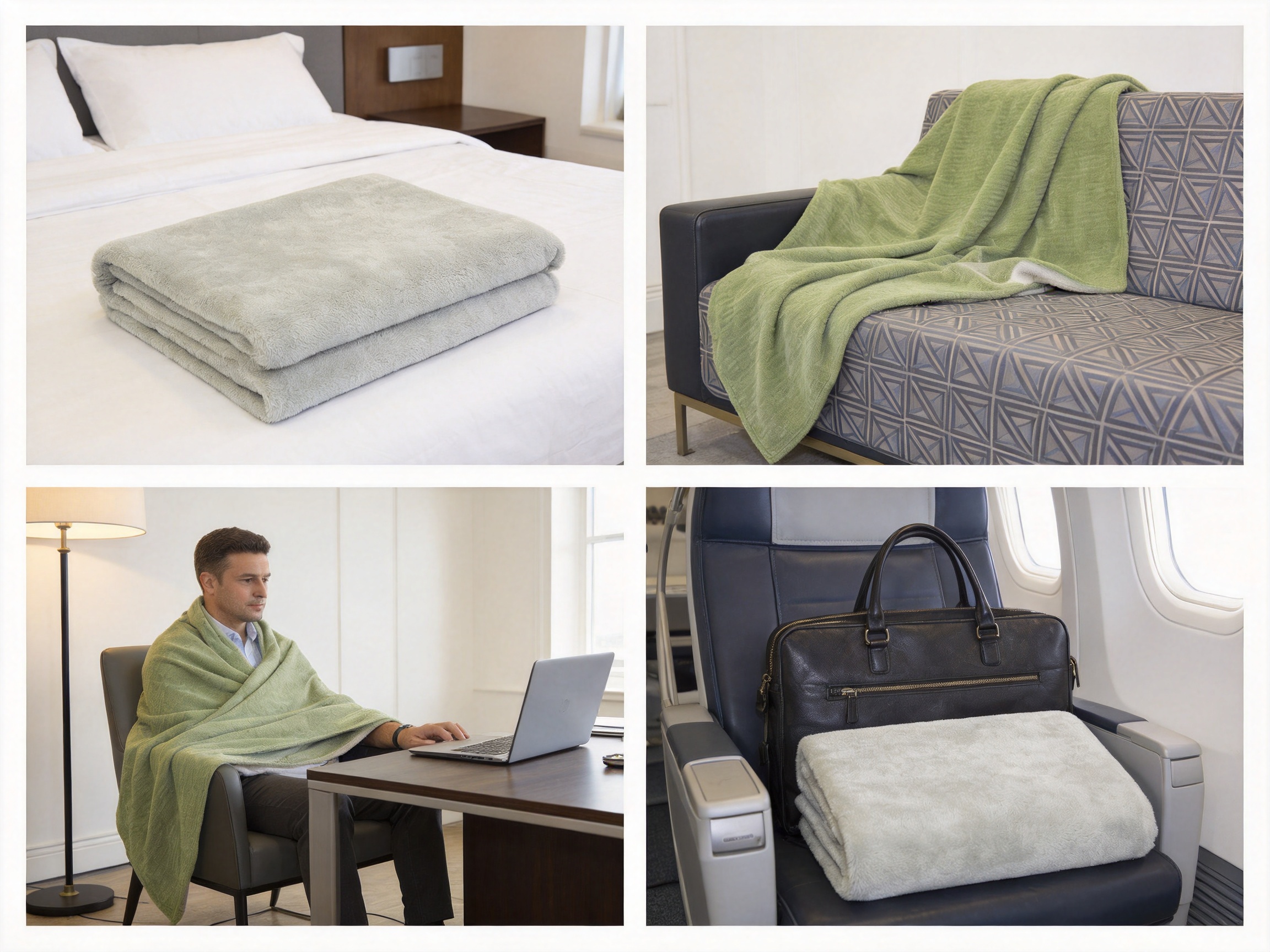
The Jacquard Chenille Composite Arctic Fleece Blanket can serve as a base product for multiple sales channels. Retailers may offer it as a premium home comfort item. Hospitality companies may select appropriate sizes and colors for guest rooms, lounges, or travel applications. Furniture and home décor brands may use it as a coordinated accessory. Promotional buyers may explore customized colors, labels, packaging, or other presentation details.
Customization begins with the core specifications. Buyers can discuss dimensions, color palettes, fabric weight, surface texture, edge finishing, label placement, and packaging requirements. The available standard sizes provide a practical starting point, while the manufacturer’s product development capabilities may support additional requirements subject to technical review and order volume.
Color selection is especially important for a solid-color blanket. Neutral shades can support minimalist interiors and hospitality environments, while deeper or warmer tones can create a more luxurious appearance. A buyer may also request colors matched to a brand identity, furniture collection, seasonal collection, or regional market preference.
Packaging can be adapted to the intended sales channel. A retail program may require folded presentation packaging, product information, barcode labeling, and branded inserts. A hospitality buyer may prioritize efficient bulk packing and easy warehouse identification. A private-label customer may request custom woven labels, care labels, cartons, and documentation.
Wholesale buyers should evaluate the full supplier relationship rather than focusing only on the unit price. Important considerations include sample approval, production lead time, minimum order quantity, color consistency, inspection procedures, packaging accuracy, loading plans, and communication during production. A vertically coordinated manufacturer can potentially simplify these discussions by offering access to several stages of the production process.
| Specification | Product Information | Practical Significance |
|---|---|---|
| Product type | Jacquard chenille composite arctic fleece blanket | Combines decorative texture with plush warmth |
| Category | Blanket | Suitable for home, hospitality, office, and travel use |
| Material | 100% polyester | Supports softness, durability, color consistency, and easy care |
| Listed weight | 450gsm | Provides a substantial, warm construction |
| Layer | Double layer | Creates reversible comfort and fuller coverage |
| Construction | Composite | Joins complementary chenille and arctic fleece fabrics |
| Weave type | Knitted | Supports flexibility, drape, and a soft hand feel |
| Available sizes | 50 by 60 inches; 60 by 80 inches; 90 by 90 inches; 90 by 110 inches | Covers lap, personal, sofa, bed, and large-format uses |
| Pattern | Solid colors | Easy to coordinate with different interiors |
| Care | Machine wash; wash separately in cold water; tumble dry low | Convenient for repeated household or commercial use |
| Seasonal use | All seasons | Reversible construction supports changing comfort needs |
| Key features | Soft, warm, washable | Combines comfort with practical maintenance |
Professional buyers should request a representative sample before confirming a large order. The sample should be assessed for color, dimensions, weight, edge construction, surface consistency, softness, odor, and overall workmanship. If the product will be used in a hospitality or institutional environment, the buyer should also consider repeated washing and drying tests based on the intended care process.
Hand feel should be evaluated on both sides. The fleece layer should feel soft, fluffy, and evenly finished, while the jacquard chenille side should display a consistent texture without excessive loose fibers or irregular areas. The transition between the two layers should be secure and visually neat. Buyers should inspect edges and corners because these areas receive significant handling during use and laundering.
Dimensional checks are also important. The buyer should measure the blanket before washing and again after a controlled wash test. This helps confirm whether the product remains within the required tolerance. The blanket should be observed for twisting, puckering, layer separation, or excessive shedding after laundering.
Color evaluation should take place under suitable lighting. If the blanket is part of a coordinated collection, it should be compared with other textiles, furniture materials, or approved color standards. The buyer should also clarify whether the supplied color is intended to be a standard shade or a custom development requiring laboratory dips and approval.
For larger programs, buyers may establish a written quality standard. This document can specify acceptable weight tolerance, size tolerance, color variation, stitching or edge requirements, surface defects, packaging details, labeling, and inspection procedures. Clear standards help both parties understand what constitutes an acceptable shipment.
Before the first use, the blanket may be aired in a clean, dry space to remove any packaging-related odor. It should be washed according to the supplied care label if pre-use washing is preferred. Users should avoid mixing it with garments that have hooks, sharp fasteners, or rough surfaces that could catch the textile.
For routine laundering, wash the blanket separately in cold water. Select a suitable gentle or normal cycle according to the care label and the washing machine capacity. Overloading the machine can prevent adequate rinsing and may place unnecessary stress on the blanket. A properly sized machine allows the textile to move freely during washing.
Use a suitable amount of detergent and avoid excessive chemical treatment. Bleach and strong whitening agents may affect color or surface performance unless specifically approved for the product. After washing, tumble dry at a low temperature. Excessive heat should be avoided because it can reduce softness, affect dimensions, or stress the surface fibers.
Once dry, the blanket can be folded or draped for storage. It should not be stored while damp. Long-term storage is best carried out in a clean, dry, ventilated place. If the blanket is used in a home with pets, regular removal of loose hair and periodic washing can help preserve freshness and appearance.
Consumers increasingly want products that combine comfort, practicality, and visual appeal. They are also more conscious of space and value. A blanket that can cover a sofa, warm a bed, serve as a travel layer, and complement an interior offers more utility than a narrowly specialized product.
Reversible products are attractive because they provide variety without requiring additional storage. The two-sided construction gives users a choice of texture and warmth. The solid-color design supports broad compatibility, while the jacquard surface adds enough visual detail to avoid looking plain or unfinished.
Washability is another important purchasing factor. Household textiles are used closely against the body and on high-contact furniture, so consumers expect them to be maintainable. A machine-washable product is easier to integrate into normal home routines than one requiring specialist cleaning.
The product also aligns with the continued popularity of soft furnishings and layered interiors. Throws, cushions, rugs, and blankets are often used together to create depth and comfort in living spaces. The chenille surface can coordinate naturally with other textured décor, while the fleece backing provides a functional benefit that remains invisible when the blanket is displayed.
For commercial buyers, the combination of appearance, comfort, and production capability is equally relevant. Hotels, offices, lounges, and travel-related businesses need textiles that can withstand regular use while contributing to a positive user experience. A product with a defined construction, range of sizes, and clear care guidance is easier to specify and manage across multiple locations.
The blanket uses a double-layer composite construction. One side is jacquard chenille fabric, and the other side is single-sided arctic fleece. The two sides are intended to provide different but complementary experiences: decorative texture and a cooler, breathable touch on one side, and plush softness and warmth on the other.
The blanket is made from 100% polyester. The polyester construction is selected for softness, durability, color stability, flexibility in production, and convenient machine washing.
The listed product weight is 450gsm. The construction description identifies approximately 200gsm jacquard chenille fabric and approximately 230gsm arctic fleece fabric. Buyers placing commercial orders should confirm the final production specification and acceptable weight tolerance with the supplier.
Yes. The substantial weight, double-layer construction, and arctic fleece backing are designed to provide warmth and thickness suitable for cold winter conditions. The chenille side can also be used when a less plush and more breathable surface is preferred.
It is described as suitable for all seasons. In warmer conditions, users can select the jacquard chenille side, use the blanket as a light cover, or display it as a decorative layer rather than using it for maximum insulation.
The listed sizes are 50 by 60 inches, 60 by 80 inches, 90 by 90 inches, and 90 by 110 inches. These options support lap coverage, personal use, sofa applications, bed coverage, and larger furnishing requirements.
Yes. It can be placed across sofa seats, backs, or armrests to help protect upholstery from dust, stains, pet hair, and daily contact. The jacquard chenille surface also allows it to function as a decorative accessory.
The recommended guidance is to wash it separately in cold water and tumble dry it on a low setting. Users should follow the care label supplied with the final product and avoid excessive heat or unsuitable chemicals.
The product is described as wrinkle resistant, shrink resistant, and resistant to fading after long-term use and multiple washes. Actual performance depends on laundering conditions, so users should follow the recommended care instructions.
Customization can be discussed for requirements such as color, size, labeling, packaging, and other product details. The feasibility of a specific request depends on technical requirements, order quantity, materials, production scheduling, and sample approval.
The manufacturer operates within a textile production network that includes weaving, dyeing and printing, finished-product processing, fabric engineering, and customized development. Its integrated capabilities are intended to improve coordination, quality control, and production responsiveness.
Buyers should review a representative sample, confirm dimensions and weight, test softness and surface quality, evaluate color consistency, conduct a wash test, inspect edge construction, confirm packaging requirements, and establish written quality standards before mass production.
The Jacquard Chenille Composite Arctic Fleece Blanket is designed as a versatile, multi-purpose textile rather than a single-use seasonal covering. Its double-layer construction brings together a textured jacquard chenille surface and a soft arctic fleece backing. This combination provides decorative value, reversible comfort, warmth, flexibility, and practical furniture protection.
The 450gsm product category, 100% polyester composition, knitted construction, solid-color styling, multiple size options, and machine-washable care profile make it suitable for a wide range of homes and commercial settings. It can be used on sofas, beds, hotel furnishings, office chairs, study areas, coaches, aircraft, and other environments where comfort and easy maintenance are important.
Its strongest distinction is the balance between appearance and performance. Compared with a basic fleece throw, it offers more visual texture. Compared with a lightweight decorative blanket, it offers greater warmth and substance. Compared with a bulky quilted product, it remains flexible and comparatively easy to store and wash.
The supplier’s manufacturing strengths further support the product. Based in Shaoxing’s textile industry environment, the company combines fabric engineering, weaving, dyeing and printing, finishing, and finished-product processing. Its focus on customization, sustainability, production-chain coordination, and quality management gives wholesale buyers a foundation for developing reliable product programs.
For customers seeking a blanket that can move naturally between decoration, warmth, travel, furniture protection, and everyday comfort, this composite jacquard chenille and arctic fleece design offers a well-rounded solution. For professional buyers, it also provides a practical platform for private-label development, hospitality supply, retail merchandising, and customized textile collections.
1. Product specification sheet for the Jacquard Chenille Composite Arctic Fleece Blanket, including material, weight, sizes, construction, care instructions, and recommended uses.
2. Manufacturer-provided company information concerning textile engineering, weaving, dyeing and printing, finished-product processing, customization, and production-chain management.
3. Manufacturer-provided sustainability information concerning recycled polyester, water-saving dyeing methods, environmental protection, and reported textile certifications.
4. General textile manufacturing principles relating to polyester fibers, knitted structures, jacquard chenille fabrics, arctic fleece, composite construction, and textile finishing.
5. General household textile care guidance for machine washing, cold-water laundering, low-temperature tumble drying, storage, and maintenance of polyester blankets.

ADD: No.75 Zhenyuan Road, Yuecheng District, Shaoxing City, Zhejiang Province, China 312000

Tel : +86-189 6750 9795

FAX : +86-0575-8803 2773

Email : fisher@benetextile.com

Copyright © Zhejiang Benyi Textile Technology Co., Ltd. All Rights Reserved. Carpets and Rugs Manufacturer

 English
 Français
 Deutsch
 عربى
عربى