

Lu Wanyao — After-Sales Service Supervisor
 Home / Author / Lu Wanyao — After-Sales Service Supervisor / Cake Velvet Solid Color Carpet: A Soft, Durable, and Customizable Indoor Rug Solution
 2026.10.08
 Lu Wanyao — After-Sales Service Supervisor
The Cake Velvet Solid Color Carpet is designed for buyers who want more than a basic floor covering. It combines a thick 25–30 mm pile, a soft polyester microfiber surface, a 1600 gsm construction, and a practical TPR and cotton fabric backing. The result is an indoor area rug that offers comfort, visual simplicity, everyday durability, and convenient maintenance in one product.
Available in several standard rectangular sizes and custom dimensions, this carpet can be used in bedrooms, living rooms, children’s rooms, nurseries, entrances, and other indoor areas. Its solid-color appearance makes it easy to coordinate with contemporary, minimalist, Scandinavian, transitional, and family-oriented interior designs. Rather than competing with a room’s furniture and accessories, the rug provides a calm foundation that allows the rest of the décor to remain the focus.
For wholesalers, retailers, interior furnishing companies, hospitality buyers, and project purchasers, the product also offers manufacturing flexibility. Zhejiang Benyi Textile Technology Co., Ltd. controls multiple stages of the textile and carpet production chain, including weaving, dyeing and printing, and finished carpet processing. This integrated structure supports consistent quality, improved production coordination, custom development, and more reliable lead-time management.
Content
Rugs with complicated patterns can create a strong visual impression, but they may also limit where and how they can be used. A solid-color carpet is easier to merchandise, easier to coordinate, and suitable for a wider selection of rooms. It can complement colorful furniture, patterned curtains, decorative cushions, wooden flooring, tile, or neutral walls without creating visual conflict.
The Cake Velvet Solid Color Carpet uses a clean surface appearance to emphasize texture. Instead of relying on printed graphics or elaborate motifs, the product creates interest through its thick, fluffy pile and soft touch. This design approach is particularly appropriate for consumers who want a comfortable atmosphere without making the floor covering the dominant feature of the room.
Solid colors can also support different retail strategies. A retailer may offer several colors in the same size range, allowing customers to select a shade that suits their interior. Property developers, apartment furnishing companies, and hospitality buyers can use a consistent style throughout multiple rooms while adjusting colors according to room function or design theme.
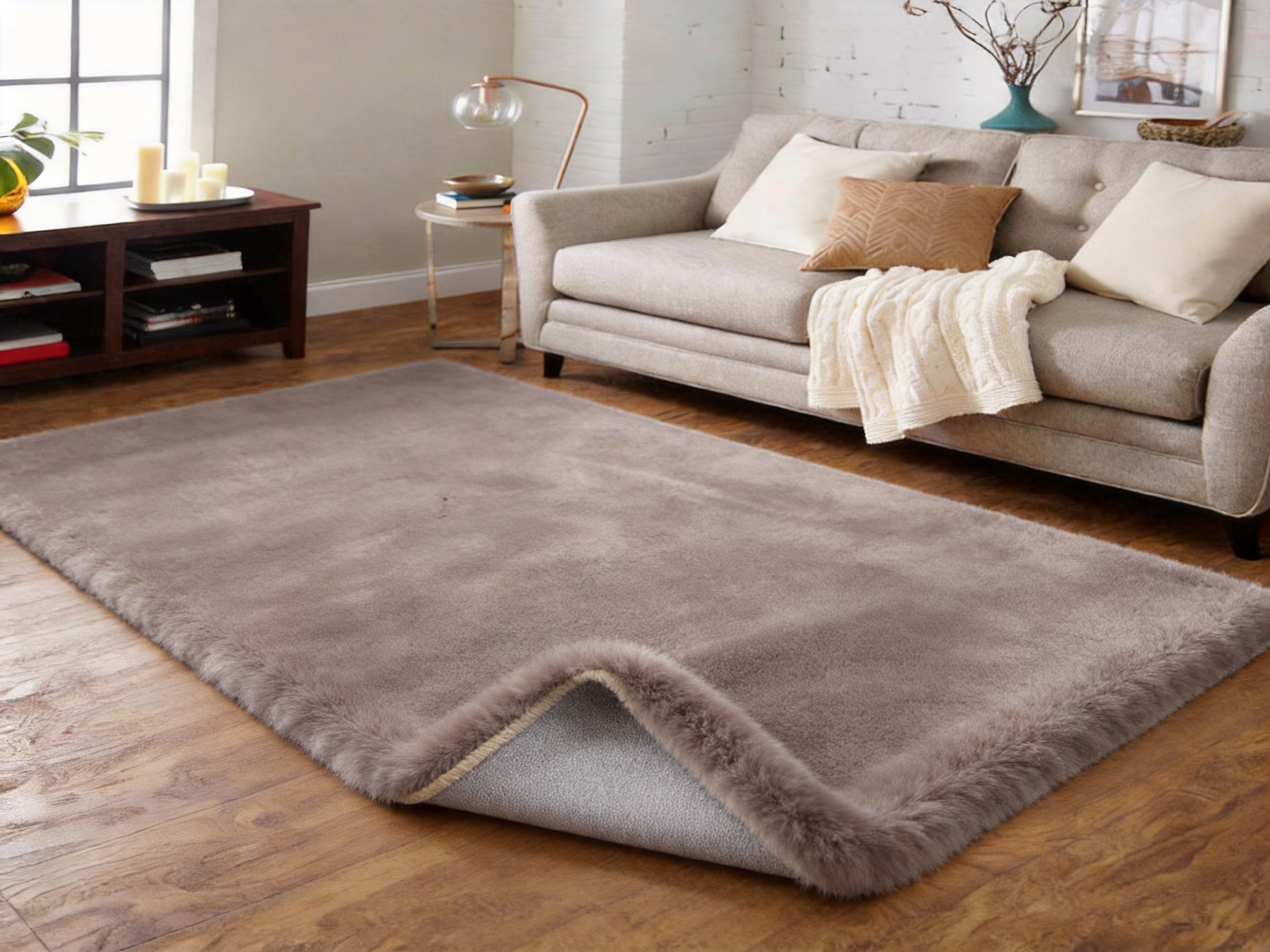
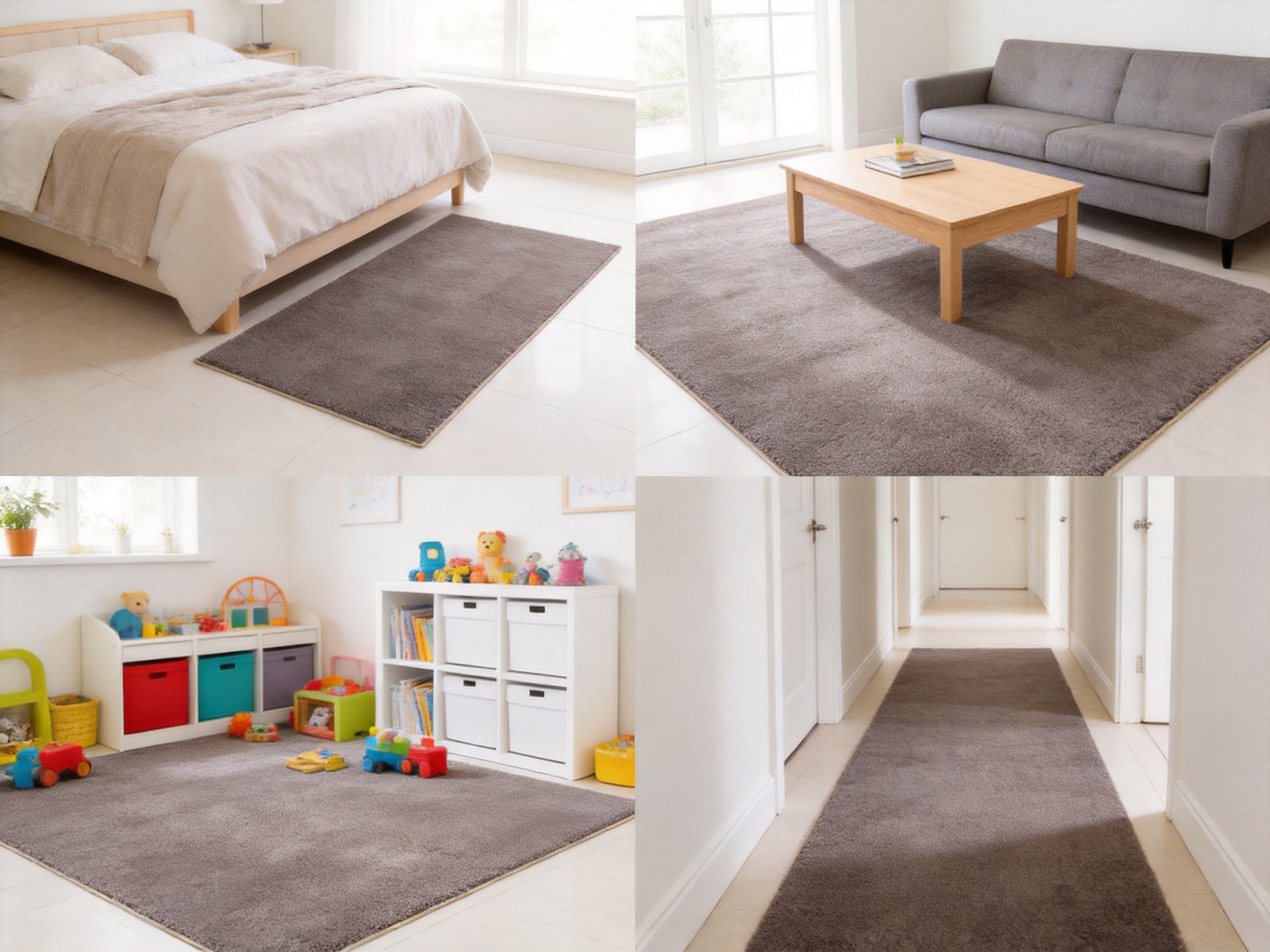
The carpet is specified for indoor use and is suitable for bedrooms, living rooms, children’s rooms, and nurseries. It can also be used in other dry indoor settings where a soft, decorative floor covering is desired. The 2' x 3' size can work beside a bed, in a small reading corner, or near a seating area. Medium sizes can define a living room conversation zone, while larger formats can visually anchor a more spacious room.
Although the product belongs to the area rug category, its applications are not limited to one room type. Its simple pattern, soft surface, and rectangular shape make it adaptable for family homes, rental properties, dormitories, guest rooms, showrooms, and selected commercial interiors. Buyers should select the appropriate size according to furniture placement, traffic level, and available floor area.
The soft surface is especially helpful in spaces where people commonly walk barefoot or sit on the floor. In bedrooms and children’s rooms, the pile adds a warmer and more cushioned contact surface than a hard floor. In living rooms, it helps create a more comfortable transition between furniture and flooring.
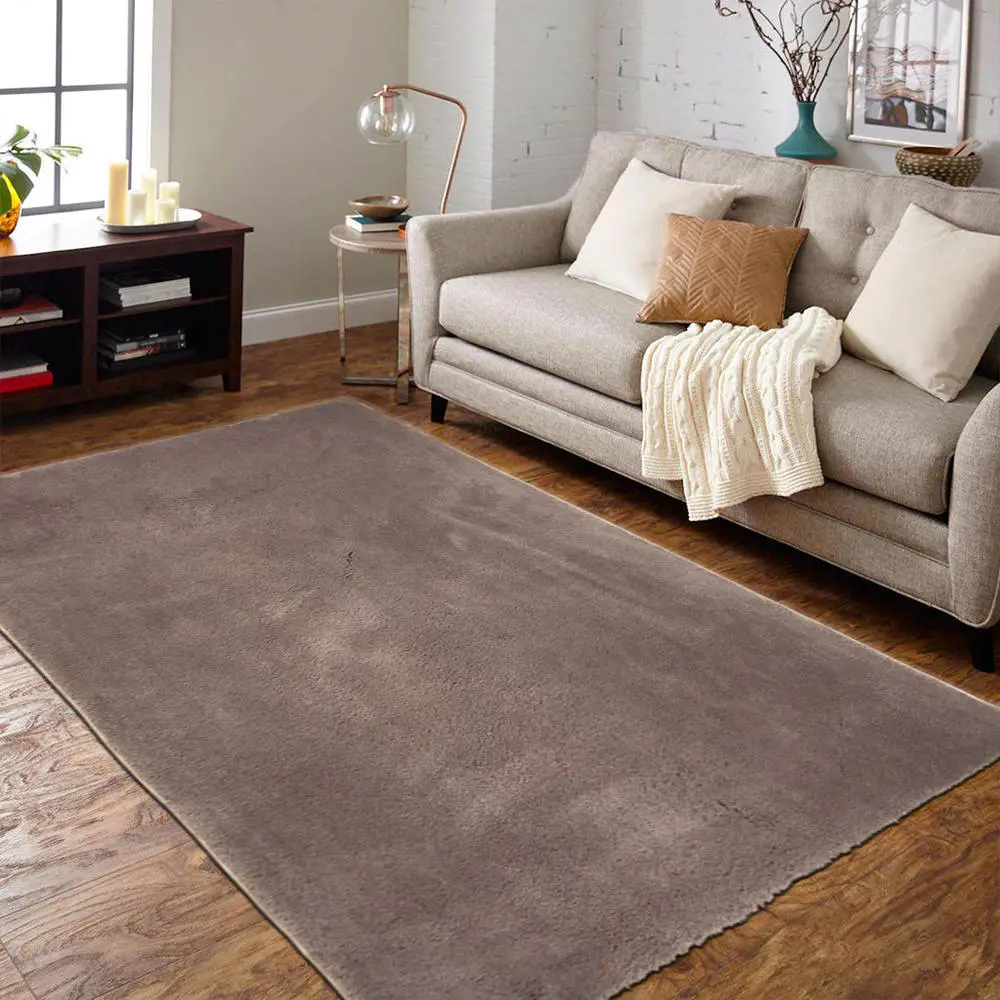
Cake Velvet Solid Color Carpet
The performance of an area rug depends on more than its appearance. Surface fiber, pile height, total weight, construction method, backing, and care instructions all influence the user experience. The Cake Velvet Solid Color Carpet combines these elements into a format intended for comfortable indoor use and convenient household maintenance.
The carpet is made from polyester, with the product information describing a 100% polyester microfiber surface. Polyester is widely used in modern home textile products because it offers a useful balance of softness, color performance, processability, and durability. Microfiber construction can create a smooth and pleasant hand feel, making the carpet comfortable underfoot.
Polyester also supports efficient color development during textile production. The solid-color format benefits from an even appearance, while the stated fade-resistant feature helps the rug retain its visual character during normal indoor use. As with all textile products, actual color longevity depends on exposure to sunlight, cleaning practices, friction, and the selected color, but the material and finish are well suited to a decorative indoor rug.
Compared with some natural-fiber rugs, polyester microfiber is generally easier to process into a soft, uniform surface and can provide a more consistent appearance across production batches. It can also be a practical choice for buyers seeking a machine-washable product rather than a rug that requires specialized professional cleaning.
A pile height of 25–30 mm gives the carpet a noticeably thick and fluffy profile. This height is one of the product’s main comfort advantages. It creates a cushioned feeling underfoot and helps the rug feel warmer and softer than a flat, low-profile mat.
The elevated pile is also important from a visual perspective. It gives the solid-color surface depth and texture, preventing a plain design from appearing flat or uninteresting. Light interacts with the fibers differently depending on the direction of the pile, creating subtle variations that enhance the velvet-like appearance.
A thick pile can be particularly attractive in bedrooms, nurseries, and relaxing areas. However, proper placement remains important. Buyers should avoid covering floor vents, blocking doors, or placing the rug where a thick edge could interfere with movement. Regular care can also help maintain the pile’s appearance and prevent it from becoming compressed in frequently used areas.
The stated weight of 1600 gsm indicates a substantial textile structure. GSM, or grams per square meter, is a useful reference for comparing the density and overall material presence of textile products. A higher weight does not by itself guarantee superior performance, but it can contribute to a fuller feel, improved visual richness, and a more substantial user experience.
In this carpet, the 1600 gsm weight works together with the 25–30 mm pile to create a soft and comfortable floor covering. The rug does not feel like a thin decorative sheet. Instead, it has the presence expected from a plush area rug while remaining foldable for storage, transport, and washing.
For wholesale buyers, a balanced weight is also valuable. An overly heavy rug may increase shipping costs and complicate handling, while an overly light rug may look or feel less substantial. The product’s construction aims to combine a comfortable pile with practical handling characteristics.
The listed construction type is bonded. Bonding joins the relevant textile layers into a cohesive product structure. This construction approach can support efficient production and help create a neat relationship between the carpet surface and the backing.
For a manufacturer, bonded construction can also help simplify production compared with more complex traditional carpet structures. Zhejiang Benyi Textile Technology Co., Ltd. describes its production model as combining the bottom and surface layers to make carpet production more efficient. This approach is consistent with the company’s focus on reducing unnecessary production complexity while maintaining control over finished products.
Construction quality should always be evaluated through production inspection, surface uniformity, backing attachment, edge finishing, dimensional consistency, and wash testing. Buyers ordering commercial quantities can discuss these requirements with the manufacturer to establish suitable quality standards before production.
The back material is specified as TPR plus cotton fabric. TPR, or thermoplastic rubber, is commonly used in rug backing because it can provide flexibility and traction. The cotton fabric component contributes to the backing structure and supports a softer, more textile-oriented construction.
The backing is designed to help the carpet remain in place and minimize slipping on suitable indoor surfaces. This non-slip feature can be especially useful in bedrooms, living rooms, and children’s areas where users may walk across the rug frequently. The product information states that no additional rug pad is needed under normal intended use, although the suitability of any rug depends on the floor surface, moisture, slope, and traffic conditions.
Even with a non-slip backing, safe placement is important. The floor should be clean, dry, and reasonably level. Users should check that the rug lies flat after installation and should avoid placing it on wet or excessively polished surfaces without testing. Corners and edges should be adjusted if they become folded during packaging or transportation.
The Cake Velvet Solid Color Carpet competes in a broad market that includes low-pile printed rugs, thin washable mats, traditional woven rugs, shag rugs, and basic synthetic area rugs. Its principal advantages come from the combination of features rather than from one isolated specification.
Many lightweight decorative mats prioritize low cost and easy storage but provide limited cushioning. Their thin construction may be adequate beside a sink or doorway, yet it may not offer the same comfort in a bedroom or living room. The Cake Velvet carpet’s 25–30 mm pile and 1600 gsm weight create a more substantial underfoot experience.
This difference is meaningful for consumers who expect an area rug to contribute to the comfort of a room. A thick surface can make a seating area feel more inviting and can provide a softer place for children to play or for family members to sit. It also gives the product a more premium appearance than a very thin floor mat.
Patterned rugs can be attractive, but their visual identity may not suit every interior. A bold pattern can clash with printed upholstery, colorful toys, decorative wallpaper, or existing flooring. The solid-color design of this carpet offers more flexibility during interior planning and retail selection.
For product distributors, solid colors can simplify inventory planning. The same construction can be presented to customers with different color choices while maintaining a consistent product identity. For contract buyers, the plain surface may also be easier to integrate into rooms with different furniture packages.
The carpet is described as machine washable, which gives it a practical advantage over many delicate rugs that require dry cleaning, hand washing, or professional treatment. Washability is valuable in homes with children, pets, or high-use rooms because occasional cleaning can be incorporated into normal household routines.
Machine washing should be performed according to the manufacturer’s care guidance and the capacity of the washing machine. Users should avoid overcrowding the machine, use suitable detergent, and ensure that the rug is fully dried before placing it back on the floor. Care practices can vary according to size, washing equipment, and local conditions.
Some low-cost rugs have little or no grip on the underside and may move easily on smooth flooring. The TPR and cotton fabric backing is intended to improve stability and reduce unwanted movement. This can enhance convenience in rooms where people regularly walk across the carpet.
Backing performance is influenced by the floor itself. Smooth tile, sealed wood, laminate, and vinyl may produce different results, and dust or moisture can reduce traction. Nevertheless, the dedicated backing provides a functional advantage over a simple textile underside.
The standard size range includes 2' x 3', 2' x 6', 3' x 5', 4' x 6', 5' x 7', 6' x 9', and 8' x 10'. The manufacturer also accepts custom sizes. This flexibility is valuable because room dimensions, furniture arrangements, retail programs, and project requirements vary widely.
A custom-size option can help buyers avoid compromising between an undersized rug and one that extends too far into a walkway. It can also support coordinated purchasing for residential developments, hospitality spaces, furnished apartments, and private-label collections. Custom orders should be discussed in advance so that buyers can confirm dimensions, tolerances, color requirements, packaging, minimum quantities, and production schedules.
| Available Size | Possible Indoor Application | Key Consideration |
|---|---|---|
| 2' x 3' | Bedside area, reading corner, small seating space, nursery accent | Useful where floor space is limited |
| 2' x 6' | Bedside runner, hallway section, narrow indoor passage | Works well in elongated spaces |
| 3' x 5' | Entry area, small lounge, children’s room, accent zone | Suitable for compact furniture arrangements |
| 4' x 6' | Bedroom, small living room, study, play area | Provides a balanced medium-size footprint |
| 5' x 7' | Bedroom, family room, apartment living area | Can fit beneath or in front of selected furniture |
| 6' x 9' | Large bedroom or living room | Offers broader visual coverage |
| 8' x 10' | Spacious living room, large bedroom, project interior | Should be measured carefully around furniture and doors |
| Custom | Special room layouts, contract furnishing, private-label programs | Confirm specifications and production requirements before ordering |
The correct size depends on the intended furniture layout. In a living room, buyers may want the front legs of sofas and chairs to rest on the rug, or they may prefer a smaller rug centered beneath a coffee table. In a bedroom, a large rug can extend beyond the sides and foot of the bed, while smaller runners can be positioned beside the bed.
Measuring should include door swings, walkways, heating vents, built-in cabinets, and other fixed features. A thick rug should not prevent an interior door from opening. Buyers should also consider how the rug will be washed and dried, especially when selecting the largest sizes.
The manufacturer, Zhejiang Benyi Textile Technology Co., Ltd., is located in Shaoxing, Zhejiang Province, a region widely recognized for its textile industry. The company focuses on carpets, rug fabrics, and finished carpet products, combining textile development with finished-product manufacturing.
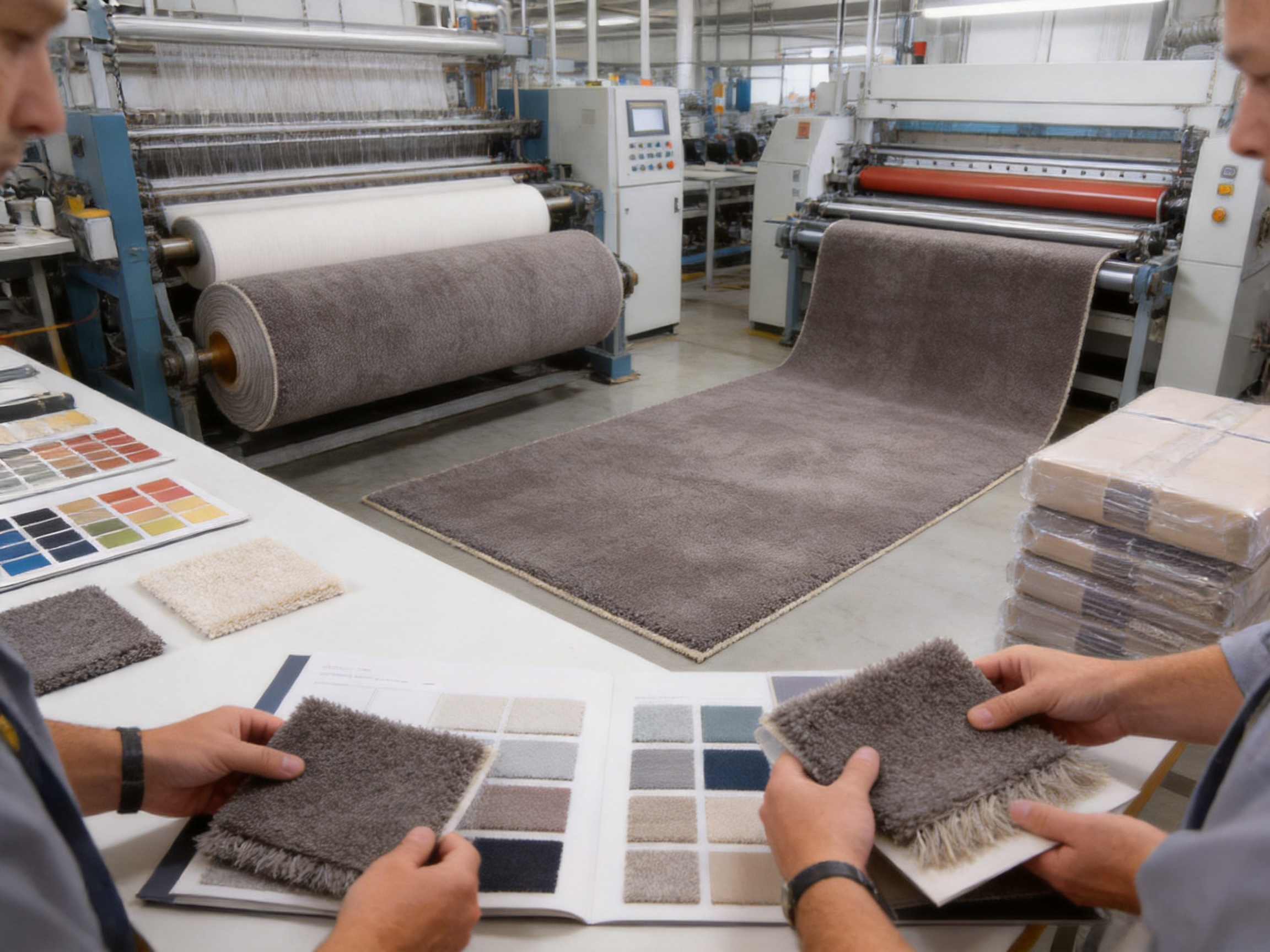
Its manufacturing model is important because it extends beyond simple product assembly. The company states that it operates weaving, dyeing and printing factories, and finished carpet processing factories. Control over these stages can support closer coordination between materials, color development, surface production, backing application, finishing, and final inspection.
When different stages of production are handled through disconnected suppliers, delays or inconsistencies may occur between fabric development, dyeing, backing, and final finishing. An integrated manufacturing structure can reduce communication gaps and make it easier to identify the source of production issues.
For buyers, this may translate into better coordination of color, dimensions, surface quality, and delivery planning. It also creates a clearer path for product adjustments. If a customer requests a different size, color, backing specification, or packaging format, an integrated supplier is better positioned to evaluate how the change affects the complete production process.
Integration does not eliminate the need for quality control. Buyers should still request samples, confirm technical details, and agree on inspection standards. However, it provides a stronger operational foundation for consistent manufacturing than a model based entirely on external purchasing.
The company reports a team of more than 20 fabric engineers and states that it develops new carpet fabrics each quarter based on market trends. This product-development capability is relevant to buyers seeking more than a fixed catalog item.
Fabric engineers can contribute to the development of surface textures, colorways, backing combinations, weight ranges, pile structures, and finishing methods. Regular development also allows the supplier to respond to changing consumer preferences, such as demand for softer surfaces, washable construction, recycled materials, low-maintenance products, or modern neutral colors.
For private-label customers, engineering resources may help transform a general concept into a manufacturable specification. The buyer can provide a target application, reference sample, preferred hand feel, color direction, size range, and price objective. The manufacturer can then assess the construction and recommend a practical production route.
The company describes its approach as combining the bottom and surface of the carpet in order to move away from a traditional model characterized by high production costs and lower efficiency. A more streamlined construction process can improve productivity and help reduce unnecessary handling.
Production efficiency is important in wholesale business because it affects more than factory output. It can influence quotation stability, minimum order planning, quality consistency, inventory turnover, and delivery schedules. Efficient processes may also reduce material waste when cutting, bonding, and finishing are properly coordinated.
For international buyers, efficiency is especially important when products must be prepared for export packaging, container loading, and seasonal retail programs. A supplier with a structured production system is better positioned to plan capacity around agreed delivery windows.
Control over the production chain can support quality and lead-time management. The company’s stated ability to manage weaving, dyeing or printing, and finished carpet processing internally gives buyers a single manufacturing contact for several important stages.
Quality management for this type of rug may include checking fiber consistency, color uniformity, pile height, surface appearance, backing attachment, dimensions, edge condition, folding behavior, wash performance, and packaging. For large orders, buyers can define acceptable tolerances and inspection procedures before production begins.
Lead times depend on order quantity, selected color, custom dimensions, raw material availability, season, packaging requirements, and shipping arrangements. The manufacturer’s integrated structure can help coordinate these factors, but specific delivery dates should always be confirmed in a formal quotation or purchase agreement.
Customization is one of the product’s important commercial strengths. The manufacturer already offers a range of standard sizes, but its production capabilities can also support customer-specific programs. Customization may involve dimensions, colors, labels, packaging, order assortments, and other agreed details.
Custom dimensions are useful when standard sizes do not fit a particular room or sales channel. A furniture retailer may need rugs designed around a specific sofa collection. A property furnishing company may require a size that fits a repeated apartment layout. An online seller may want a size range based on customer search data.
Custom dimensions should be evaluated in relation to production yield, washing capacity, folding method, packaging volume, and shipping weight. These factors can affect pricing and minimum order quantities. Early technical discussion helps ensure that the requested size is practical for both the buyer and the factory.
The solid-color design is suitable for developing a coordinated color collection. Buyers may select neutral tones for broad market appeal, soft colors for nurseries and bedrooms, or deeper shades for living rooms and hospitality interiors. Exact color development should be based on physical standards or approved lab dips rather than screen images alone.
Color consistency is especially important for repeat orders. Buyers should identify whether future production must match a previous shipment, a standard color reference, or a private-label palette. Clear approval procedures can reduce misunderstandings between design teams, purchasing departments, and the factory.
Wholesale customers may request customized labels, inserts, hangtags, barcode information, carton marks, or polybag printing. These details can help retailers present the carpet as part of a coherent home textile collection.
Packaging should protect the pile and backing during storage and transportation without creating unnecessary material use. The rug’s foldable construction supports practical packing, but the final packaging format should be selected according to the size, quantity, shipping method, and retail requirements.
The carpet is listed as machine washable, which makes routine maintenance relatively convenient. Before washing, users should check the care label, remove loose debris, and confirm that the washing machine can safely accommodate the rug. Larger rugs may require a commercial-capacity machine.
A gentle or suitable washing cycle is generally preferable to excessive agitation. Mild detergent can help clean the surface without unnecessary stress on the fibers. Bleach, harsh chemicals, and high heat should not be used unless specifically approved by the care instructions.
After washing, the carpet should be dried thoroughly. Residual moisture can create odor and may affect the floor beneath the backing. Depending on the size and local conditions, the rug may be air-dried flat or dried using an appropriate low-temperature method. It should be returned to the floor only when both the surface and underside are completely dry.
Routine vacuuming can help remove dust and loose particles. A vacuum setting suitable for a thick pile should be selected so that the fibers are cleaned without excessive pulling. Spills should be addressed promptly by blotting rather than rubbing aggressively. Furniture legs may compress the pile over time, so repositioning heavy items occasionally can help distribute wear.
Although the rug is described as fade resistant, prolonged direct sunlight can affect many textile products. Using curtains, blinds, or a suitable room arrangement can help reduce uneven exposure. The rug should also be kept away from standing water and should not be treated as an outdoor carpet.
The TPR and cotton fabric backing is designed to improve traction, but the rug should still be placed on a clean, dry, level floor. Dust, water, oil, and cleaning residues can reduce grip. Users should inspect the carpet after unpacking and smooth out any folds created during storage or transportation.
Edges should not be placed where they obstruct doors or create a trip hazard. In children’s rooms and nurseries, the rug should be inspected regularly for lifted corners, damaged edges, or objects trapped underneath. Heavy furniture can help hold a rug in place, but it should not create severe compression or prevent the carpet from being removed for cleaning.
For commercial installations, buyers should evaluate the intended traffic level and cleaning program. The carpet is specified for indoor use, and its most suitable applications are residential and selected light-commercial environments. Buyers with specialized fire, accessibility, or institutional requirements should discuss additional testing and compliance documentation with the manufacturer before ordering.
Zhejiang Benyi Textile Technology Co., Ltd. presents environmental protection and sustainability as part of its company direction. The company states that it invests in sustainable materials and production methods, including recycled polyester and water-saving dyeing techniques.
The company also states that it has passed OEKO-TEX® and GRS certifications. Certification scope and validity can vary by facility, material, product, and date, so buyers requiring certification for a specific order should request current documentation and confirm that it applies to the relevant product and production batch.
Polyester products can support long service life when properly designed and maintained. A durable rug that remains usable for an extended period may reduce the frequency of replacement. Recycled polyester options may also be considered for selected programs, subject to availability, technical requirements, certification, and agreed cost.
Water-saving dyeing methods can help reduce resource consumption during color production. However, responsible manufacturing should be assessed across the wider production chain, including raw material sourcing, energy use, wastewater management, packaging, transportation, and product lifespan. Buyers can ask the manufacturer for relevant details when sustainability reporting is part of their procurement process.
The Cake Velvet Solid Color Carpet has several features that support wholesale merchandising. Its solid-color appearance is easy to display, its size range supports different room applications, and its thick surface creates a noticeable tactile benefit that can be communicated in product demonstrations and online content.
Retailers can position it as a comfort-focused area rug, a washable family rug, a soft bedroom carpet, or a practical nursery floor covering. Different positioning can be supported through photography, room settings, color collections, and size guides. The product’s non-slip backing and machine-washable construction are also useful points for consumers comparing similar rugs.
For online retail, clear photography should show the pile thickness, surface texture, backing, folded form, and scale in a room. Product pages should provide accurate dimensions and explain that color appearance can vary between screens. Care instructions, shipping weight, and packaging information should be confirmed with the supplier before publication.
For physical stores, the carpet can be displayed folded to show its thickness or laid flat to demonstrate its surface. Touch-and-feel merchandising can be particularly effective because the softness of the microfiber surface is one of the product’s principal selling points.
Commercial buyers should request a sample before placing a large order. The sample can be used to evaluate color, softness, pile height, backing grip, edge finishing, foldability, and overall workmanship. If the order will include multiple colors or sizes, buyers should confirm whether one sample represents the complete production range.
Important pre-order questions may include the following: What are the dimensional tolerances? How is pile height measured? What wash test is used? What packaging method will be applied? What is the minimum order quantity for custom colors or sizes? How will color approvals be documented? What inspection standard will apply before shipment?
Buyers should also clarify whether the product is intended for private-label sale, whether custom labels are available, and whether the supplier can provide product photographs, care instructions, carton information, and certification documents. Written specifications help ensure that the finished goods match the commercial expectations established during development.
For repeat programs, a sealed reference sample or approved production sample should be retained. This provides a physical benchmark for later orders and can help distinguish acceptable natural variation from a genuine quality issue.
An integrated carpet manufacturer can offer advantages beyond a single product. Because Zhejiang Benyi Textile Technology Co., Ltd. works across fabric development, weaving, dyeing or printing, and finished carpet processing, it can support customers at different stages of product planning.
A buyer with an established design may need only standard production and packaging. Another buyer may need assistance developing a new surface, choosing a backing, adjusting weight, or creating a custom size. A manufacturer with fabric engineers and finished-product facilities can potentially support both kinds of projects.
Direct factory communication may also simplify problem solving. Questions about shade, construction, washability, packaging, or delivery can be addressed through one coordinated supplier instead of several unrelated vendors. This can be valuable for buyers managing multiple product categories or expanding a home textile collection.
The company’s location in Shaoxing also places it within a major textile manufacturing environment. Access to regional textile resources, technical talent, and supporting suppliers can contribute to product development and production coordination. As with any supplier relationship, buyers should evaluate performance through samples, communication, documentation, inspections, and completed orders.
The carpet is made from polyester, with the product information specifying a 100% polyester microfiber surface. Its backing combines TPR and cotton fabric.
The stated pile height is 25–30 mm. This creates a thick, soft, and cushioned surface compared with many low-pile decorative mats.
GSM means grams per square meter. A 1600 gsm specification indicates a substantial textile weight and contributes to the rug’s full feel and plush appearance.
No. The product is specified for indoor use. It is intended for areas such as bedrooms, living rooms, children’s rooms, nurseries, and other suitable dry indoor spaces.
Yes. The product is listed as machine washable. Users should follow the care label, use an appropriately sized machine, avoid harsh chemicals, and dry the rug completely before reuse.
The TPR and cotton fabric backing is designed to provide a non-slip function, and the product information states that no additional rug pad is needed. Actual performance depends on the floor surface, cleanliness, moisture, and placement conditions.
Listed sizes include 2' x 3', 2' x 6', 3' x 5', 4' x 6', 5' x 7', 6' x 9', and 8' x 10'. Custom sizes are also available subject to production requirements.
The product is presented as a solid-color carpet, and the manufacturer provides customized services according to customer requirements. Buyers should confirm available color development, minimum order quantities, and approval procedures with the factory.
Children’s rooms and nurseries are listed among the suitable room types. The soft pile and washable construction are useful features for these areas. Adults should still inspect the rug regularly and ensure that it is placed securely on a clean, dry floor.
The company provides customized services and finished carpet processing. Buyers interested in private-label programs should discuss labels, packaging, barcodes, color collections, minimum quantities, and documentation directly with the manufacturer.
The main differences are the 25–30 mm pile, 1600 gsm weight, microfiber surface, soft texture, TPR and cotton fabric backing, and machine-washable construction. Together, these features provide a more cushioned and comfort-oriented product.
Zhejiang Benyi Textile Technology Co., Ltd. is located in Shaoxing, Zhejiang Province, China, a major textile production region.
The company states that it invests in sustainable materials and production methods, including recycled polyester and water-saving dyeing techniques. Buyers should request current documentation and confirm the sustainability specifications for a particular order.
The Cake Velvet Solid Color Carpet combines a comfortable velvet-like surface with practical construction features suited to modern indoor living. Its 25–30 mm pile, 1600 gsm weight, polyester microfiber material, bonded structure, and TPR plus cotton fabric backing create a well-balanced area rug for bedrooms, living rooms, children’s spaces, and other interior applications.
Compared with thinner decorative mats or highly patterned rugs, it offers a stronger combination of softness, design flexibility, non-slip support, washability, and size choice. The solid-color format is easy to coordinate with different interiors, while the range of standard dimensions and custom-size capability supports both retail and project purchasing.
The manufacturing capabilities of Zhejiang Benyi Textile Technology Co., Ltd. further strengthen the product’s commercial potential. Its control of weaving, dyeing or printing, and finished carpet processing, together with fabric engineering resources and sustainability initiatives, provides a foundation for customized development and organized wholesale production.
For buyers seeking a soft, versatile, washable, and customizable indoor carpet, this product offers a practical solution. Proper sample evaluation, written specifications, care guidance, and quality inspection will help ensure that the final order meets the intended market and application requirements.
1. Product specification sheet for Cake Velvet Solid Color Carpet, including material, pile height, weight, backing, sizes, construction, room type, and care information.
2. Company information provided by Zhejiang Benyi Textile Technology Co., Ltd., including manufacturing capabilities, fabric engineering, customization, and production-chain control.
3. General textile manufacturing principles concerning polyester microfiber, carpet pile construction, bonded structures, TPR backing, and GSM measurement.
4. General indoor rug care practices concerning machine washing, drying, vacuuming, stain treatment, and safe placement.
5. General sustainability references concerning recycled polyester, water-saving dyeing methods, OEKO-TEX® certification, and Global Recycled Standard certification.

ADD: No.75 Zhenyuan Road, Yuecheng District, Shaoxing City, Zhejiang Province, China 312000

Tel : +86-189 6750 9795

FAX : +86-0575-8803 2773

Email : fisher@benetextile.com

Copyright © Zhejiang Benyi Textile Technology Co., Ltd. All Rights Reserved. Carpets and Rugs Manufacturer

 English
 Français
 Deutsch
 عربى