

Lu Wanyao — After-Sales Service Supervisor
 Home / Author / Lu Wanyao — After-Sales Service Supervisor / Glossy Cashmere Solid Area Rug: A Comfortable, Washable, and Efficiently Manufactured Flooring Solution
 2026.10.12
 Lu Wanyao — After-Sales Service Supervisor
Content
Floor coverings influence much more than the appearance of a room. They affect how a space feels underfoot, how easily it can be maintained, how safely people can move across it, and how effectively the interior design comes together. A thoughtfully selected rug can soften hard flooring, reduce visual emptiness, add warmth, and create a more comfortable environment for everyday living. The Glossy Cashmere Solid Area Rug is designed around these practical and aesthetic needs, combining a soft polyester microfiber surface, a 15mm pile, a non-slip thermoplastic rubber backing, and machine-washable construction.
Unlike highly patterned rugs that may dominate a room or become difficult to coordinate with existing furniture, this solid-color area rug is intended to provide a flexible foundation for bedrooms, living rooms, kitchens, bathrooms, children’s rooms, nurseries, and other indoor areas. Its simple appearance allows the rug to complement a wide range of decorative styles, while its thick, fluffy surface provides a comfortable place for standing, walking, relaxing, or playing.
The rug is produced by Zhejiang Benyi Textile Technology Co., Ltd., a textile manufacturer based in Shaoxing, Zhejiang Province, China. Located in an area widely recognized for textile production, the company combines fabric development, weaving, dyeing and printing, backing, and finished carpet processing capabilities. This integrated approach supports consistent quality, coordinated production scheduling, and the ability to develop customized rug and carpet solutions for different markets.
From the selection of polyester microfiber to the application of the TPR backing, each element contributes to the rug’s overall performance. The result is an indoor area rug that emphasizes softness without sacrificing practicality, offering a balanced alternative to products that focus exclusively on appearance, low price, or thickness.
Glossy Cashmere Solid Area Rug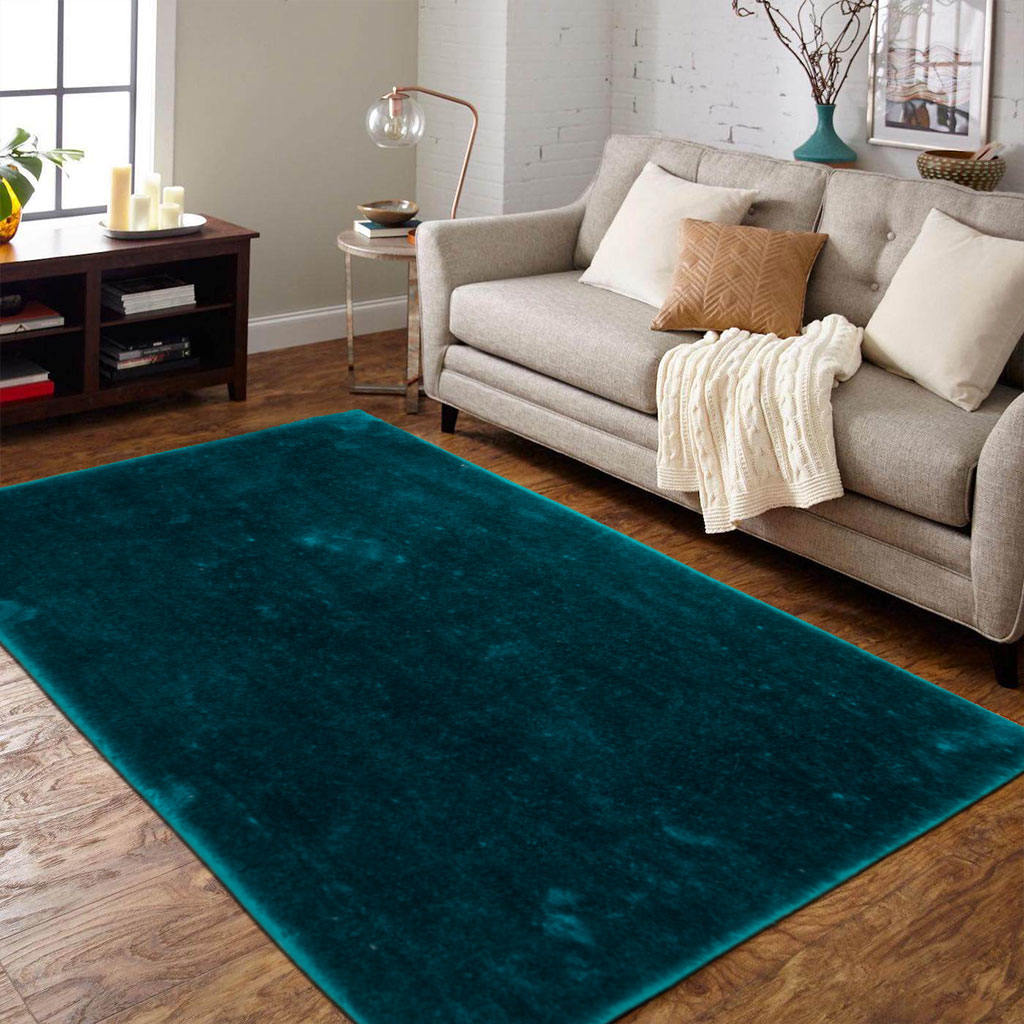
The Glossy Cashmere Solid Area Rug is a rectangular indoor rug made primarily from polyester. It has a 15mm pile height and a listed weight of 1550gsm, giving it a substantial, cushioned feel while remaining practical for routine household use. The surface is designed to feel thick and fluffy, creating a comfortable contact layer between the user and the floor.
The rug is available in several standard dimensions, including approximately 40 x 60 centimeters, 50 x 80 centimeters, and 60 x 90 centimeters. Larger formats are also available, ranging from approximately 2 x 3 feet to 8 x 10 feet, with custom dimensions offered for specific requirements. This range enables the product to serve as a small bedside mat, a bathroom rug, a kitchen accent, a children’s play surface, or a larger centerpiece for a living room or bedroom.
Its solid-color pattern is one of its most versatile features. A plain surface can blend into minimalist, contemporary, Scandinavian, transitional, hospitality, and casual residential interiors. It can also be used as a quiet background element in spaces where furniture, wall art, bedding, or accessories provide the main decorative focus.
The backing is made with TPR, or thermoplastic rubber. This material helps improve grip on suitable indoor flooring surfaces and is designed to reduce unwanted movement during ordinary use. The non-slip construction may reduce the need for an additional rug pad, which can simplify installation and reduce the total number of materials required for a flooring arrangement.
Care is also an important part of the product concept. The rug is described as machine washable, allowing regular cleaning to be more convenient than with many large, delicate, or difficult-to-handle floor coverings. Its water-absorbent feature makes it suitable for areas where small amounts of moisture may occur, including bathrooms, kitchens, and entrances, although proper drying and indoor use remain important for maintaining the product over time.
| Product Attribute | Specification or Feature |
|---|---|
| Product Name | Glossy Cashmere Area Rug |
| Rug Type | Indoor rectangular area rug |
| Material | Polyester microfiber |
| Pattern | Solid color |
| Pile Height | 15mm |
| Weight | 1550gsm |
| Construction | Bonded |
| Backing | TPR |
| Special Features | Soft, washable, water absorbent, non-slip |
| Care Instruction | Machine wash |
| Usage | Indoor |
| Available Sizes | 40 x 60cm, 50 x 80cm, 60 x 90cm, larger sizes, and custom dimensions |
The first quality many users notice in a rug is how it feels. The Glossy Cashmere Solid Area Rug uses polyester microfiber to create a soft surface intended to provide a pleasant underfoot experience. The material is formed into a thick, fluffy contact layer that can make hard floors feel warmer and more inviting.
A 15mm pile height offers a useful middle ground. Very low-pile rugs can be easy to place beneath furniture and simple to vacuum, but they may provide less cushioning. Extremely high-pile rugs can feel luxurious, yet they may be more difficult to clean, harder to position beneath doors, and less stable in frequently used areas. The 15mm profile provides visible and tactile thickness while remaining suitable for a broad range of indoor applications.
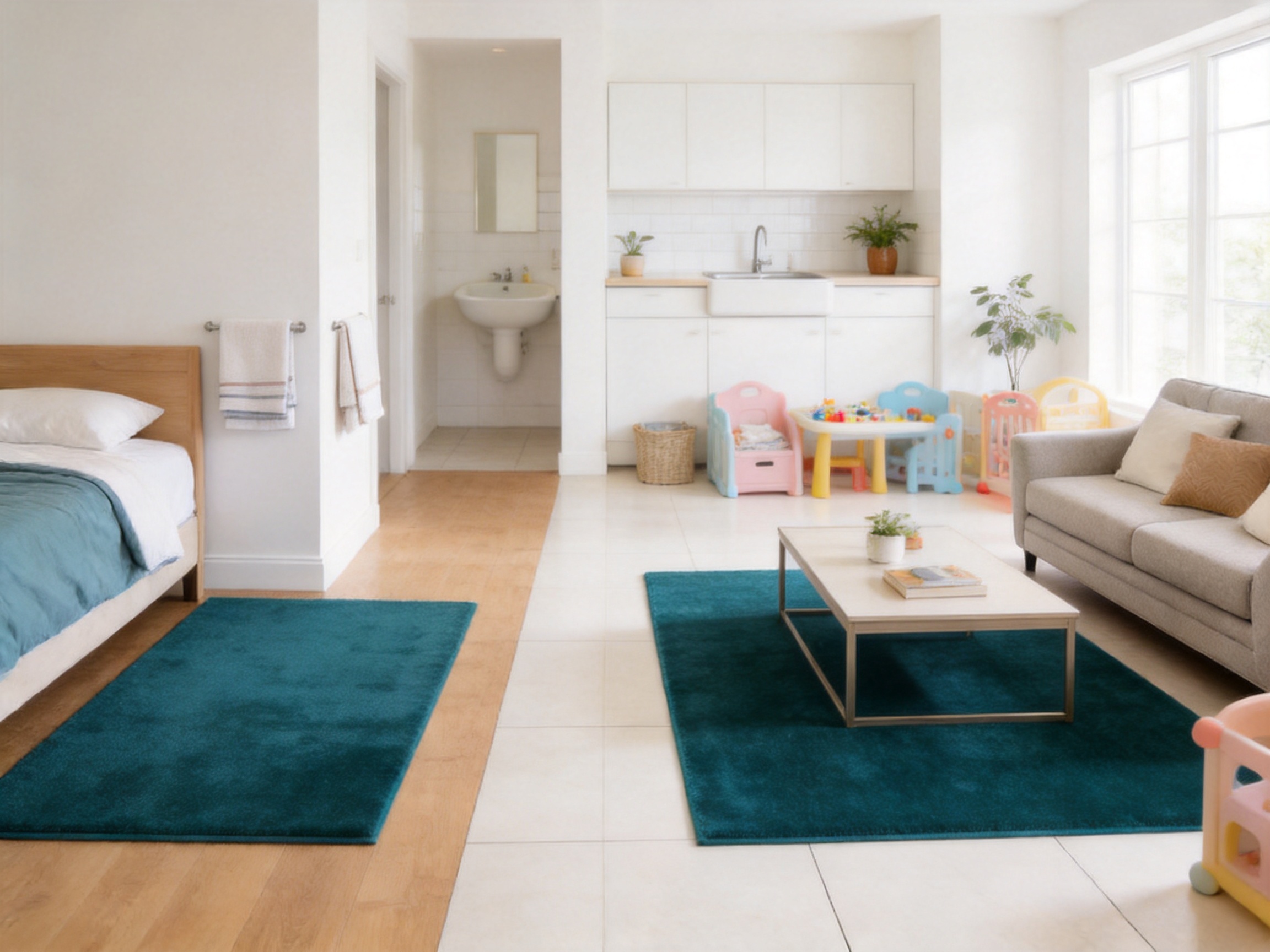
This balance makes the rug appropriate for rooms where people spend time standing or walking. In a bedroom, it can be placed beside a bed to create a warmer landing area in the morning. In a living room, it can add softness beneath a coffee table or seating arrangement. In a nursery or children’s room, it can provide a more comfortable surface for floor-based activities. In a bathroom, it can make the area beside a sink or shower feel more welcoming, provided that the rug is dried properly and used on a suitable surface.
The soft texture is also useful in homes where people prefer a more comfortable environment for children. While no rug eliminates all risks associated with play, a cushioned textile surface can be more pleasant than bare tile, stone, or wood flooring. Parents and caregivers should still place the rug on a clean, stable surface and supervise children appropriately.
Compared with thin decorative mats, this rug offers greater surface fullness and a more substantial feel. Compared with some traditional heavy rugs, it can be easier to fold, move, wash, and reposition. This combination of comfort and practical handling is a key point of differentiation for buyers seeking more than a purely decorative floor covering.
Polyester is widely used in household textiles because it can provide a combination of durability, color retention, flexibility, and relatively straightforward care. In this product, polyester microfiber is used to create a dense and soft surface while supporting regular indoor use.
The supplied product information describes the microfiber construction as durable and resistant to fading. These properties are particularly valuable for solid-color rugs because the visual appeal depends on an even, consistent surface. A material that maintains its appearance through routine use can help the rug remain coordinated with the surrounding décor for a longer period.
Polyester microfiber can also be engineered to create fine, closely arranged fibers. This structure contributes to the plush touch associated with the cashmere-inspired product name without requiring natural cashmere or other delicate luxury fibers. As a result, the product aims to provide a soft appearance and feel while retaining the practical characteristics expected from a washable household textile.
The material is also suitable for color development across multiple product collections. A manufacturer can offer different shades while preserving the same general construction, pile height, and backing system. This is useful for wholesalers, retailers, hospitality buyers, and interior furnishing businesses that need coordinated colors or multiple sizes for different room concepts.
Material selection is only one part of rug performance. Fiber density, bonding, finishing, backing application, cutting accuracy, edge treatment, and inspection all influence the final result. The manufacturer’s ability to manage several of these stages within its own production network allows the rug to be developed as a complete system rather than as an isolated surface fabric.
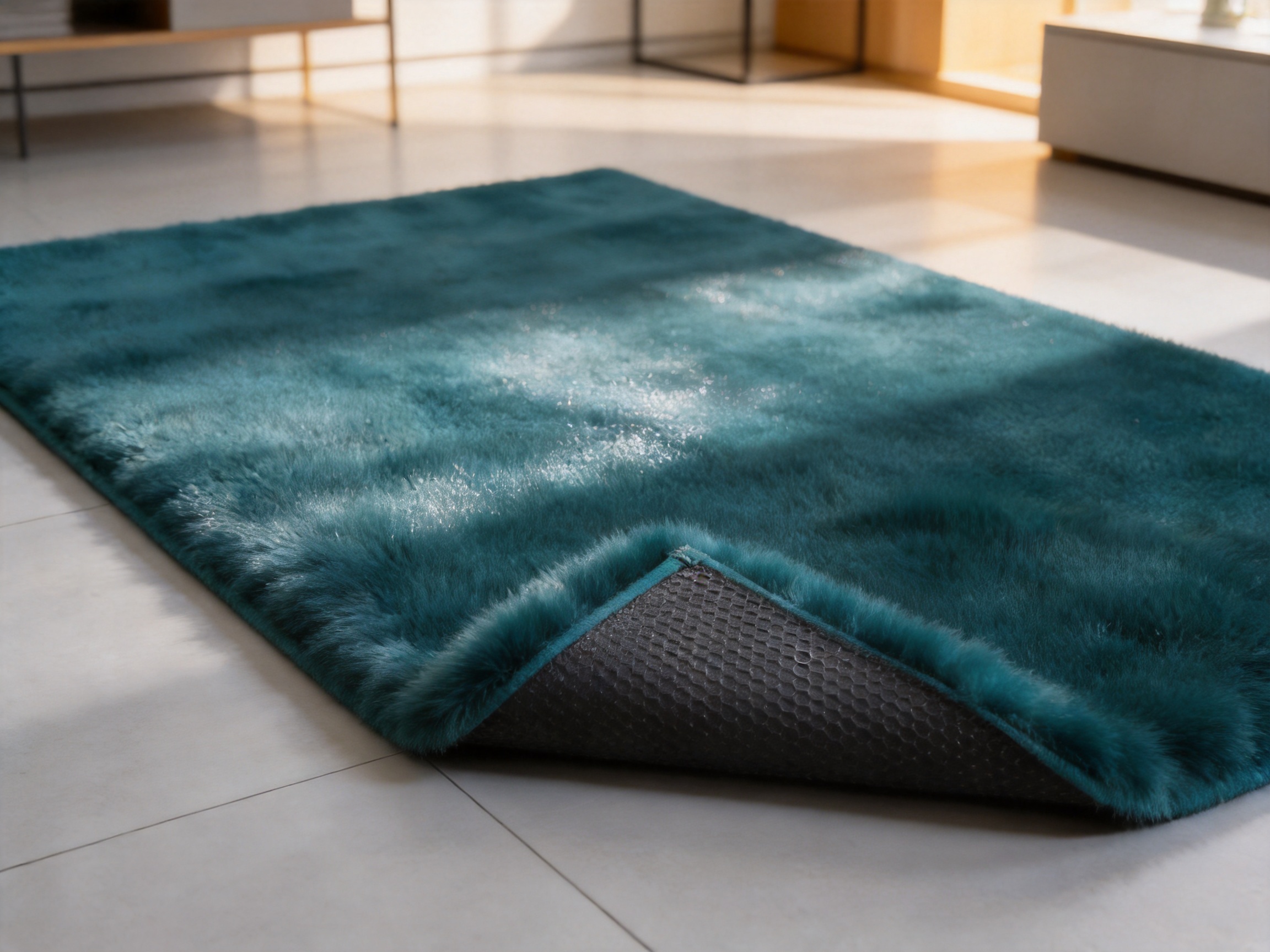
A rug’s backing affects safety, comfort, durability, and ease of installation. The Glossy Cashmere Solid Area Rug uses a TPR backing designed to provide a skid-resistant contact layer between the rug and the floor. This is especially valuable for small and medium-sized rugs, which can shift more easily when stepped on or moved by household activity.
TPR, or thermoplastic rubber, offers flexibility and grip. The backing can help the rug stay in position on appropriate indoor flooring surfaces, reducing bunching and unwanted sliding during normal use. The product information states that no additional rug pad is needed, which can make setup simpler and help reduce the cost and thickness of the complete floor-covering arrangement.
A non-slip backing is beneficial in bedrooms, hallways, kitchens, bathrooms, and children’s rooms, where a moving rug can be inconvenient or potentially hazardous. However, the floor should be clean, dry, smooth, and compatible with the backing. Users should check the rug after installation and periodically during use, particularly in areas with heavy traffic or where moisture may be present.
The TPR backing also supports the rug’s flexible construction. The product is described as easy to fold, making it more convenient to package, transport, store, and wash than rigid or very heavy floor coverings. For businesses, foldable construction can improve shipping efficiency and simplify inventory handling. For consumers, it can make seasonal storage or room rearrangement easier.
Compared with products that require a separate pad, the integrated backing reduces the number of components needed for installation. This may also reduce the risk of the rug and pad shifting independently of each other. The result is a cleaner and more straightforward product experience, especially for buyers who want to place the rug quickly without additional accessories.
Cleaning requirements are a major consideration when selecting an area rug. Floor coverings collect dust, fibers, crumbs, and other debris simply because they are placed in areas where people walk and live. Rugs used in kitchens, bathrooms, nurseries, and children’s rooms may need more frequent attention than decorative products placed in low-traffic areas.
The Glossy Cashmere Solid Area Rug is designed for machine washing, offering a practical advantage over many rugs that require professional cleaning or complicated spot-treatment procedures. Regular washing can help maintain freshness and reduce the buildup of everyday household particles. It may also be more convenient for families with children, pet owners, hospitality businesses, and retailers looking for products that are easy to explain and use.
Although the rug is washable, care instructions should be followed carefully. The selected washing cycle, water temperature, detergent, drum capacity, and drying method should be appropriate for the rug’s size and the washing machine being used. Larger rugs may require a commercial-size machine. The rug should be dried thoroughly before being returned to the floor, particularly when used in bathrooms or other areas exposed to moisture.
Machine washability can extend the useful life of a rug by making routine maintenance easier. A product that can be cleaned conveniently is less likely to be discarded solely because of ordinary household soil. This practical feature also supports the rug’s use in spaces where comfort and hygiene are both important.
Compared with delicate rugs that can lose their appearance through improper cleaning, a washable polyester construction is often more suitable for active households. It gives buyers greater flexibility and reduces the need to treat the rug as a purely decorative item. The rug can be integrated into everyday life rather than being reserved for occasional use.
The rug includes water-absorbent characteristics, which can be useful in rooms where minor moisture is expected. In a bathroom, it can provide a softer surface near a sink or shower. In a kitchen, it can help create a more comfortable standing area near a countertop. At an indoor entrance, it can serve as a decorative and functional layer, provided that it is used away from excessive outdoor water and mud.
Water absorption should not be confused with complete waterproofing. The rug is intended for indoor use, and it should not be left saturated or placed in conditions where water remains underneath it. Good ventilation, proper drying, and regular inspection are important for maintaining cleanliness and protecting the floor beneath.
The combination of absorption, softness, and machine washability gives the rug more placement options than many purely decorative area rugs. It can be used in rooms where people want warmth and comfort but also need a textile that can tolerate routine cleaning. This makes the product suitable for residential projects, rental properties, serviced apartments, dormitories, guest rooms, and other interior applications.
Its rectangular shape further supports versatile placement. Rectangular rugs can be positioned beside beds, in front of sofas, under coffee tables, along kitchen counters, beside bathroom fixtures, or in play areas. Multiple sizes allow buyers to select a proportional format instead of forcing one standard dimension into every room.
A solid-color rug is one of the easiest floor coverings to coordinate with existing interiors. Patterned rugs can create visual interest, but their motifs may compete with furniture, artwork, bedding, or architectural features. A solid rug provides a calmer foundation and can be selected to blend with or gently contrast against the surrounding palette.
The Glossy Cashmere Solid Area Rug is suitable for minimalist rooms that depend on texture rather than complex pattern. Its fluffy surface adds visual depth even though the color is plain. In a modern living room, it can soften the appearance of wood, laminate, stone, or tile flooring. In a bedroom, it can support a coordinated bedding palette. In a child’s room, a suitable color can add warmth without making the space feel overly busy.
Solid colors also support commercial purchasing. Hotels, furnished apartments, interior design projects, and property managers often require products that can be used across multiple rooms. A consistent rug design in different sizes can help create a unified appearance while allowing each room to maintain practical flexibility.
For retailers and wholesalers, the simple style may appeal to a broad customer base. Instead of serving only one decorative trend, the product can be presented as a basic comfort and utility item with broad application. This can make it suitable for seasonal collections, home furnishing ranges, bedding departments, bathroom accessories, and general interior décor programs.
The glossy or softly reflective visual character suggested by the product name can also add a refined impression without relying on elaborate construction. It is intended to communicate comfort and gentle luxury while maintaining the easy-care features expected from a practical polyester rug.
Bedrooms are one of the most natural applications for this rug. A small format can be placed on either side of a bed, while a larger format can extend beneath the bed and surrounding furniture. The soft pile provides a comfortable surface for bare feet, especially on cold mornings or in rooms with hard flooring.
The solid design can work with neutral bedding, colorful textiles, upholstered furniture, and wooden bedroom sets. Because the rug can be folded and washed, it is also practical for guest rooms, children’s rooms, and rental properties that require regular maintenance.
In a living room, the rug can define a seating area and help connect a sofa, armchairs, coffee table, and side tables. Larger sizes can create a unified arrangement, while smaller sizes can be positioned in front of seating or beneath a coffee table. The 15mm pile offers softness without the extreme height that may interfere with furniture placement.
The solid surface gives the living room a calm visual foundation. It can complement patterned curtains, textured cushions, decorative throws, or artwork without competing for attention. The washable construction is useful in homes where the living room is also used for family activities or informal gatherings.
Placed near a sink, island, or food preparation area, the rug can provide a softer standing surface than bare tile or wood. Its water-absorbent feature may be useful for minor splashes, and its machine-washable construction supports regular cleaning. Users should ensure that the rug lies flat and that the TPR backing is compatible with the kitchen floor.
Because kitchens can experience grease, crumbs, and frequent foot traffic, regular maintenance is important. The solid-color design may make the room appear more organized, while the rug’s removable format allows the floor beneath it to be cleaned easily.
In bathrooms, the rug can be used beside a vanity, sink, bathtub, or shower area. The soft pile can make the room more comfortable, while the absorbent surface can help manage small amounts of water. It should be washed and dried regularly to maintain freshness.
Bathroom users should confirm that the rug remains stable on the specific floor material. Standing water should not be allowed to collect beneath the backing. Adequate ventilation and thorough drying are essential in any textile product used in a moisture-prone room.
The soft surface is suitable for children’s rooms and nurseries where floor-based activities are common. It can create a warmer, more comfortable play area and help soften the feel of hard flooring. The washable construction is especially useful in rooms that require frequent cleaning.
For children’s spaces, the rug should be placed on a clean and stable floor, and the backing should be checked periodically. Parents should also select dimensions that do not create trip hazards near doors, furniture, or other play equipment.
A smaller size can be used in an indoor entry area or near an interior doorway. It may help create a visual transition between rooms and provide a soft surface for removing shoes. Because the rug is designed for indoor use, it should be protected from prolonged exposure to rain, mud, and outdoor debris.
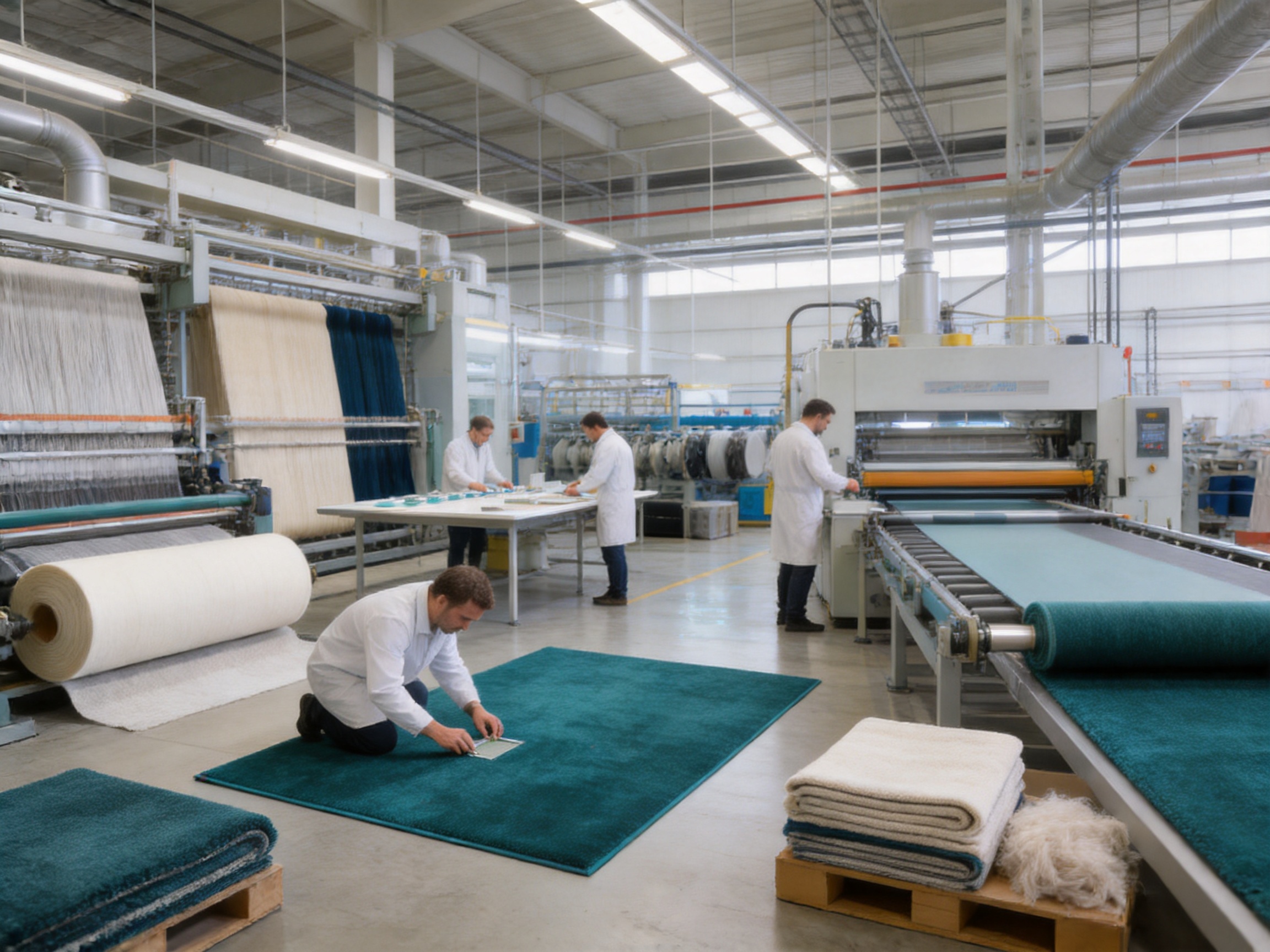
The strength of a finished rug depends not only on its listed materials but also on how consistently those materials are converted into a finished product. Zhejiang Benyi Textile Technology Co., Ltd. operates across several stages of the textile and carpet production chain. Its capabilities include weaving, dyeing and printing, and finished carpet processing.
Managing multiple stages within an integrated manufacturing network can provide several advantages. It can improve communication between fabric development and final assembly, reduce delays caused by outside coordination, and make it easier to adjust production according to buyer requirements. It can also support more consistent control of color, texture, backing, dimensions, and finishing.
The company’s focus on combining the surface and bottom layers reflects an effort to simplify traditional carpet production. By coordinating the face material and backing system, the manufacturer can develop products with a more unified construction rather than treating each component as an unrelated part. This approach may help improve production efficiency and reduce unnecessary processing steps.
The company also reports a team of more than 20 fabric engineers. A dedicated technical team can contribute to new product development, material testing, color exploration, construction improvements, and customized specifications. The company develops new carpet fabrics quarterly based on market trends, enabling it to respond to changing preferences in softness, appearance, sustainability, and application.
For buyers seeking private-label or customized products, in-house technical knowledge is particularly important. Customization may involve size, color, packaging, pile characteristics, backing, branding, or application-specific requirements. A manufacturer with fabric engineering and finished-product capabilities can help coordinate these requirements more efficiently than a supplier that only trades standard products.
Consistent quality is essential for area rugs because small variations can affect appearance, dimensions, stability, and customer satisfaction. A reliable production system should control raw materials, color matching, pile formation, bonding, backing application, cutting, edge finishing, packaging, and final inspection.
Vertical coordination gives the manufacturer greater visibility across these stages. If a problem is identified in surface softness, color, bonding, or backing performance, the relevant production teams can communicate directly. This can support faster corrective action and help reduce repeated inconsistencies across batches.
Production integration also supports lead-time management. Retailers, distributors, hospitality businesses, and project purchasers often work according to strict schedules. A supplier that can coordinate fabric production and finished rug processing may be better positioned to manage planned delivery windows, especially when custom sizes or colors are involved.
Quality control should be understood as an ongoing process rather than a single inspection at the end of production. Fiber selection, machine settings, bonding temperature, backing coverage, drying, folding, and packaging all influence the final item. A structured manufacturing workflow helps ensure that each stage contributes to the intended performance of the finished rug.
The company’s location in Shaoxing provides access to a mature textile ecosystem, including experienced labor, material suppliers, production knowledge, and logistics resources. This regional concentration can support efficient sourcing and encourage continuous development within the textile sector.
The availability of custom dimensions makes the product suitable for more than direct household use. Wholesale customers may require specific sizes for retail packaging, coordinated room collections, or regional market preferences. Interior designers and project contractors may need dimensions that correspond to particular floor plans, furniture arrangements, or hospitality standards.
Custom sizing can reduce the need for buyers to adapt a room around a limited selection of standard products. It also allows businesses to develop more precise collections, such as small mats for bathrooms, medium rugs for bedsides, and larger rugs for living spaces. When combined with color customization, the same basic construction can support multiple product lines.
Customization may also extend to packaging and presentation. Retailers can request product labeling, carton specifications, color cards, folding methods, or other logistical details depending on their sales channels. The manufacturer’s experience in finished carpet processing provides a foundation for discussing these requirements.
For large-volume buyers, a standardized construction can simplify purchasing. The polyester microfiber surface, 15mm pile, bonded structure, and TPR backing create a clear product platform that can be adapted across sizes and colors. This helps buyers maintain a consistent product identity while serving different room applications.
The company describes environmental protection and sustainability as important parts of its development direction. Its reported initiatives include investment in recycled polyester and water-saving dyeing technologies. These efforts reflect broader changes in the textile industry, where manufacturers are increasingly evaluating material sourcing, resource consumption, production efficiency, and product life cycle.
Recycled polyester can help create demand for recovered plastic-based materials when used appropriately within a controlled textile system. Water-saving dyeing technologies can reduce the amount of water required during coloration and finishing. The specific environmental benefits depend on the material source, processing method, energy use, wastewater treatment, and the percentage incorporated into a particular product.
The company also reports passing OEKO-TEX and GRS certifications. These certifications are associated with recognized textile and recycled-material standards, although buyers should request current certificates and verify that they apply to the relevant facility, material, and product range. Documentation is especially important for importers, retailers, and project purchasers with formal compliance requirements.
Environmental responsibility can also be supported through durable design and practical maintenance. A rug that remains useful through regular washing and repeated household use may reduce the need for frequent replacement. Efficient production, thoughtful packaging, appropriate sizing, and responsible material selection can all contribute to a more sustainable approach.
Thin decorative mats may be inexpensive and easy to place, but they often provide limited cushioning and may feel less comfortable underfoot. The 15mm pile of this rug offers a thicker contact surface and a more substantial appearance. It is designed to function as both a decorative element and a comfort layer.
Some luxury rugs require professional cleaning, careful handling, and restricted placement. The washable polyester construction offers a more practical alternative for customers who want a soft, refined look without complicated maintenance. It is better suited to active households and frequently used rooms.
Products without integrated grip may require a separate underlay to reduce movement. The TPR backing is designed to provide skid resistance within the rug itself. This simplifies installation and may reduce total purchasing costs, while also making the product easier to fold, move, and store.
Complex patterns can be visually striking but may limit compatibility with existing décor. The solid-color surface is easier to coordinate across different rooms and furniture styles. It can provide texture and comfort without introducing another strong motif.
Heavy rugs may be difficult to move, wash, or store. The flexible construction of this product supports folding and handling, making it practical for seasonal changes, room rearrangement, shipping, and inventory management.
Size selection should be based on the room’s dimensions, furniture arrangement, doorway clearance, and intended function. Smaller sizes such as 40 x 60 centimeters may work well beside a sink, near a bed, or in a compact entry area. A 50 x 80 centimeter or 60 x 90 centimeter format may offer broader coverage beside a bed, in front of a vanity, or along a kitchen counter.
For living rooms and larger bedrooms, a larger rug can help define a complete furniture grouping. Buyers should measure the intended area before ordering and consider whether furniture legs will sit on the rug or around its perimeter. Doors should be checked carefully because a 15mm pile and backing may affect clearance in some locations.
Custom dimensions are useful when standard sizes do not match a particular floor plan. Buyers should provide accurate measurements and communicate whether the rug must fit beneath furniture, beside fixed fixtures, or within a defined walkway. A clear specification can reduce installation problems and improve the final visual result.
Routine care begins with regular removal of loose dust and debris. Light vacuuming can help keep the surface fresh, provided that the vacuum setting is appropriate for the pile. Shaking or airing the rug outdoors may also help remove loose particles, although prolonged exposure to direct sunlight should be avoided if color preservation is a concern.
When machine washing, use a machine large enough for the selected rug size. Avoid overloading the drum, as excessive compression can prevent proper cleaning and may place unnecessary stress on the backing. Use a mild detergent and follow the recommended water temperature and cycle whenever specific instructions are provided.
Dry the rug completely before placing it back on the floor. A damp rug can create an unpleasant environment and may affect the floor beneath it. After washing, reshape the rug while it is still slightly damp if necessary, then allow it to dry in a well-ventilated area.
For spills, remove excess liquid promptly and treat the affected area according to the material and stain type. Avoid harsh chemicals unless they are confirmed to be compatible with polyester microfiber and the TPR backing. If the rug becomes heavily soiled or too large for a household machine, professional textile cleaning may be appropriate.
Inspect the TPR backing periodically. If the backing becomes damaged, severely worn, or contaminated with substances that reduce grip, the rug should be removed from use until it can be safely addressed. Keeping the floor clean and dry also helps maintain the backing’s performance.
The rug is made primarily from polyester microfiber. Polyester is used to create a soft, durable, and practical surface suitable for indoor household and commercial applications.
The listed pile height is 15mm. This provides a plush feel while maintaining a practical profile for bedrooms, living rooms, kitchens, bathrooms, children’s rooms, and other indoor areas.
Yes. The backing is made from TPR and is designed to provide skid resistance. The product information states that an additional rug pad is not required, although the floor should still be clean, dry, and suitable for the backing.
Yes. Machine washing is listed as the product care instruction. Users should select a washing machine and cycle appropriate for the rug’s size and follow any additional care guidance supplied with the order.
It can be used indoors in bathrooms because it is soft and water absorbent. However, it should be dried thoroughly, protected from standing water, and placed on a stable floor to maintain hygiene and safety.
Yes. It can be placed near a sink, island, or food preparation area. Its washable surface and water-absorbent characteristics are useful in kitchens, where occasional spills and frequent cleaning may occur.
Listed sizes include approximately 40 x 60 centimeters, 50 x 80 centimeters, and 60 x 90 centimeters. Larger sizes from approximately 2 x 3 feet to 8 x 10 feet and custom dimensions are also available according to requirements.
Custom dimensions are available, and the manufacturer provides customization services according to customer requirements. Buyers should discuss size, color, construction, backing, packaging, and order quantities in advance.
The 15mm pile, 1550gsm weight, and thick microfiber surface give it a fuller and softer feel than many thin decorative mats. It is intended to provide both visual appeal and everyday comfort.
No. The listed usage is indoor. It should be protected from prolonged exposure to rain, mud, direct outdoor conditions, and standing moisture.
The construction type is listed as bonded. The bonded structure connects the surface and backing system to create a finished flexible area rug.
The product is manufactured by Zhejiang Benyi Textile Technology Co., Ltd., a textile technology company located in Shaoxing, Zhejiang Province, China. The company specializes in carpet fabrics, rugs, and finished carpet products.
Yes. The company reports capabilities in weaving, dyeing and printing, finished carpet processing, fabric engineering, and customized product development. It also develops new carpet fabrics based on market trends.
The rug is suitable for individual households, retailers, wholesalers, interior designers, hospitality businesses, property managers, furnishing companies, and project purchasers seeking washable solid-color rugs in standard or custom dimensions.
The Glossy Cashmere Solid Area Rug combines a soft polyester microfiber surface with a 15mm pile, a flexible bonded structure, a TPR non-slip backing, and machine-washable care. Its solid-color appearance makes it easy to coordinate with a wide variety of interiors, while its practical features allow it to serve bedrooms, living rooms, kitchens, bathrooms, children’s spaces, nurseries, and indoor entrances.
Its main advantage is balance. It offers a more comfortable and substantial surface than many thin mats, while remaining easier to clean and handle than some high-maintenance luxury rugs. The integrated TPR backing reduces the need for additional accessories, and the available size range supports both small-room applications and larger furniture arrangements.
The manufacturing strengths behind the product further support its commercial value. Zhejiang Benyi Textile Technology Co., Ltd. manages textile development and finished carpet production through an integrated production network that includes weaving, dyeing and printing, fabric engineering, backing, and processing. This structure supports product consistency, customization, production coordination, and the development of new carpet solutions.
For buyers seeking a versatile indoor rug with a soft touch, washable construction, water-absorbent surface, and stable backing, this product provides a practical option. Its adaptable design and manufacturing flexibility also make it suitable for wholesale, retail, hospitality, and customized interior furnishing projects.
1. Product specification sheet for the Glossy Cashmere Solid Area Rug, including material, pile height, weight, backing, construction, sizes, features, and care instructions.
2. Manufacturer information for Zhejiang Benyi Textile Technology Co., Ltd., including company capabilities, textile engineering, production integration, customization services, and sustainability initiatives.
3. General textile manufacturing principles concerning polyester microfiber, bonded carpet construction, thermoplastic rubber backing, and machine-washable floor coverings.
4. General interior furnishing guidance concerning rug placement, size selection, room coordination, cleaning, drying, and indoor safety.
5. General information regarding recycled polyester, resource-conscious dyeing processes, OEKO-TEX certification, and Global Recycled Standard certification requirements.

ADD: No.75 Zhenyuan Road, Yuecheng District, Shaoxing City, Zhejiang Province, China 312000

Tel : +86-189 6750 9795

FAX : +86-0575-8803 2773

Email : fisher@benetextile.com

Copyright © Zhejiang Benyi Textile Technology Co., Ltd. All Rights Reserved. Carpets and Rugs Manufacturer

 English
 Français
 Deutsch
 عربى