

Lu Wanyao — After-Sales Service Supervisor
 Home / Author / Lu Wanyao — After-Sales Service Supervisor / Jacquard Chenille Composite Arctic Fleece Blanket: A Complete Guide to Softness, Warmth, Durability, and Textile Manufacturing Excellence
 2026.09.26
 Lu Wanyao — After-Sales Service Supervisor
A blanket is more than a layer of fabric placed over a bed or sofa. It contributes to comfort, visual atmosphere, thermal regulation, cleanliness, and the overall experience of a living space. For retailers, hospitality buyers, furniture suppliers, interior designers, and private-label brands, the right blanket must also provide consistent quality, attractive construction, reliable care performance, and flexible sizing. The Jacquard Chenille Composite Arctic Fleece Blanket is designed to address these requirements through a carefully engineered double-layer structure that combines textured jacquard chenille with soft arctic fleece.
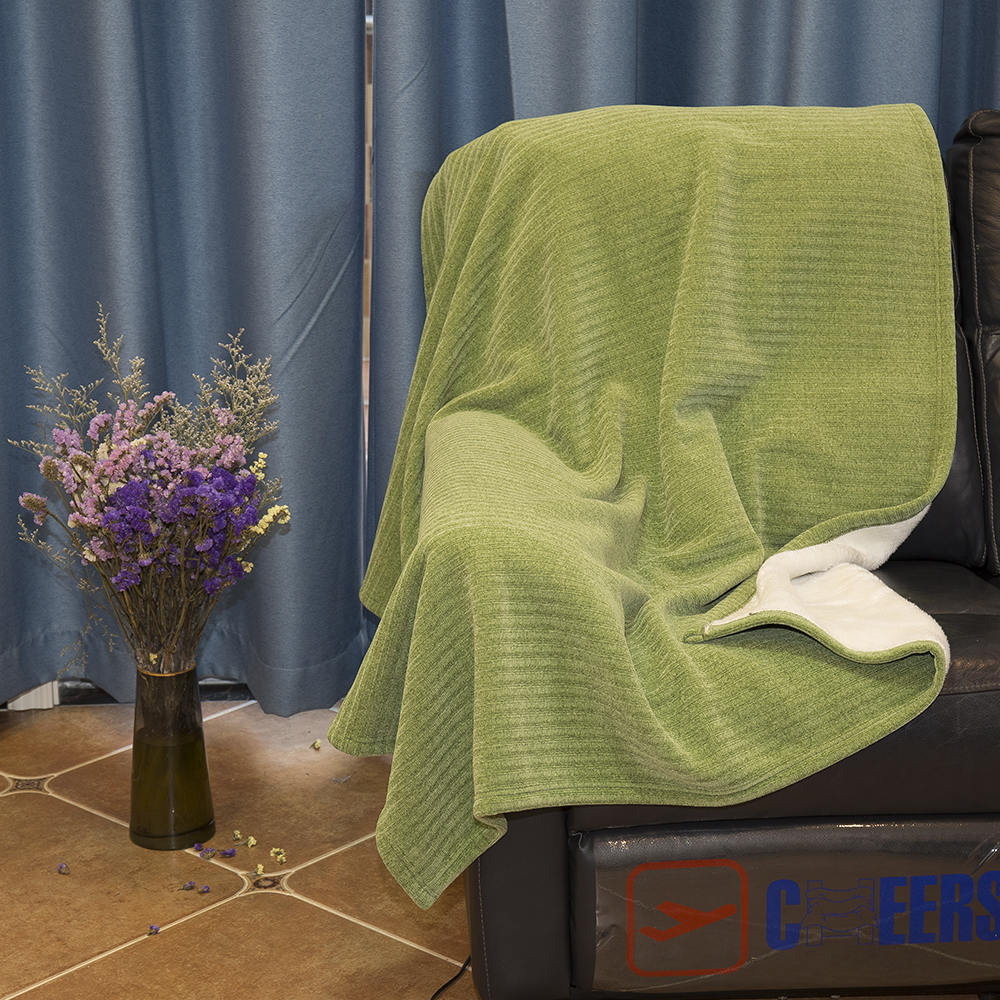
Made from 100% polyester and produced at a substantial total weight of 450gsm, this blanket is intended to provide a comfortable balance of warmth, softness, durability, and practical maintenance. Its construction combines approximately 200gsm jacquard chenille fabric with approximately 230gsm single-sided arctic fleece fabric. The two materials create a reversible blanket with different surface characteristics: the jacquard chenille side contributes texture, visual interest, breathability, and decorative appeal, while the arctic fleece side contributes thickness, insulation, and a soft, fluffy hand feel.
This combination gives the product a broader range of uses than a basic single-layer fleece blanket. It can be used on beds, sofas, office chairs, airplanes, hotel beds, reading areas, study spaces, and other indoor environments. It is suitable for adults, children, and older users, and its all-season construction allows it to function in both cool and moderately warm conditions when used according to personal preference.
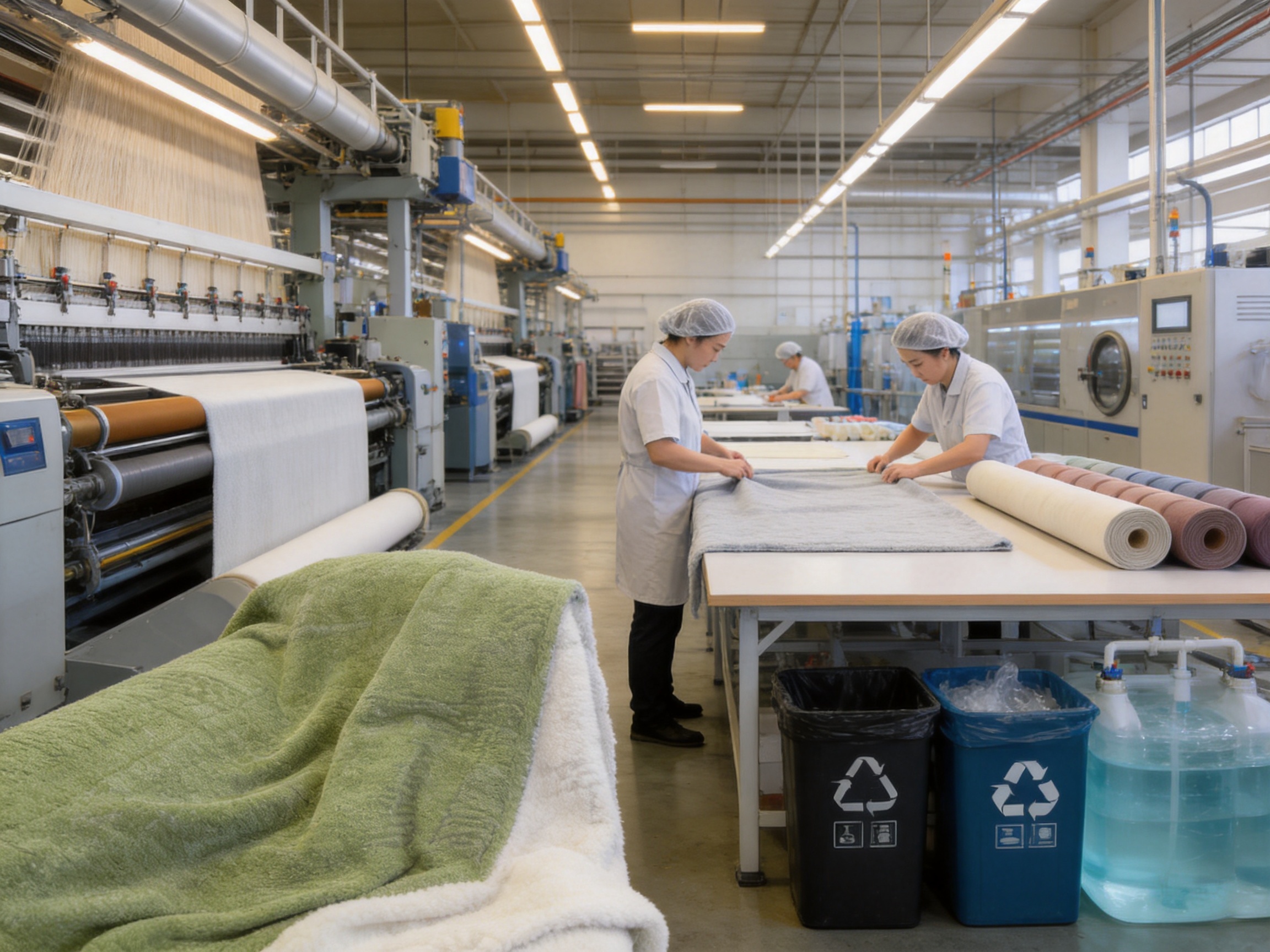
The product is manufactured by Zhejiang Benyi Textile Technology Co., Ltd., a textile technology company based in Shaoxing, Zhejiang Province, China. Located in a region widely recognized for textile production, the company combines fabric development, weaving, dyeing and printing capabilities, and finished-product processing. This vertically coordinated structure supports control over materials, production schedules, quality, and customization.
Content
The Jacquard Chenille Composite Arctic Fleece Blanket is positioned as a premium composite blanket rather than a simple printed or single-layer textile. Its key value comes from the relationship between the two fabric layers. Instead of relying on one material to perform every function, the blanket uses each layer for a specific purpose.
| Specification | Product Details |
|---|---|
| Product type | Composite jacquard chenille and arctic fleece blanket |
| Material | 100% polyester |
| Total weight | 450gsm |
| Layer construction | Double layer |
| Fabric combination | Approximately 200gsm jacquard chenille and 230gsm arctic fleece |
| Construction type | Composite |
| Weave or fabric character | Knitted and textured chenille surface with fleece backing |
| Available sizes | 50 x 60 inches, 60 x 80 inches, 90 x 90 inches, and 90 x 110 inches |
| Pattern | Solid colors |
| Recommended uses | Sofa, bed, hotel, airplane, office, study, and general home use |
| Care method | Machine wash separately in cold water; tumble dry on low |
| Seasonal use | All seasons |
| Primary features | Soft, warm, washable, wrinkle resistant, shrink resistant, and colorfast in normal use |
The 450gsm specification is especially important for buyers comparing this blanket with lightweight throws. A higher fabric weight generally contributes to a fuller, more substantial feel, although actual warmth also depends on fiber arrangement, air retention, surface structure, and construction. In this design, the weight is distributed between a decorative chenille layer and a fleece layer, creating a more dimensional product than a basic flat polyester blanket.
Many blankets are made from a single textile surface. Single-material construction can be efficient, but it may require compromises. A very smooth fleece can be warm and soft but visually plain. A highly textured decorative fabric may look attractive but lack sufficient loft or insulation. The composite approach is intended to bring together the advantages of both categories.
The jacquard chenille side has a textured surface that can enhance the appearance of a room. Chenille yarns are known for their soft, velvety character and distinctive raised texture. The jacquard construction allows the fabric to develop a more refined surface appearance while retaining the comfort expected from a soft textile. In a solid-color design, the texture itself becomes the visual feature, producing depth through light reflection and surface variation rather than relying on a printed pattern.
The arctic fleece side provides the warmer and fluffier tactile experience. Its raised structure can help retain air near the body, which contributes to a cozy sensation. The fleece surface is also comfortable against clothing, bedding, or skin. For cold-weather use, the fleece side can be placed toward the user to emphasize softness and warmth. For a lighter or more decorative arrangement, the jacquard chenille side can face outward.
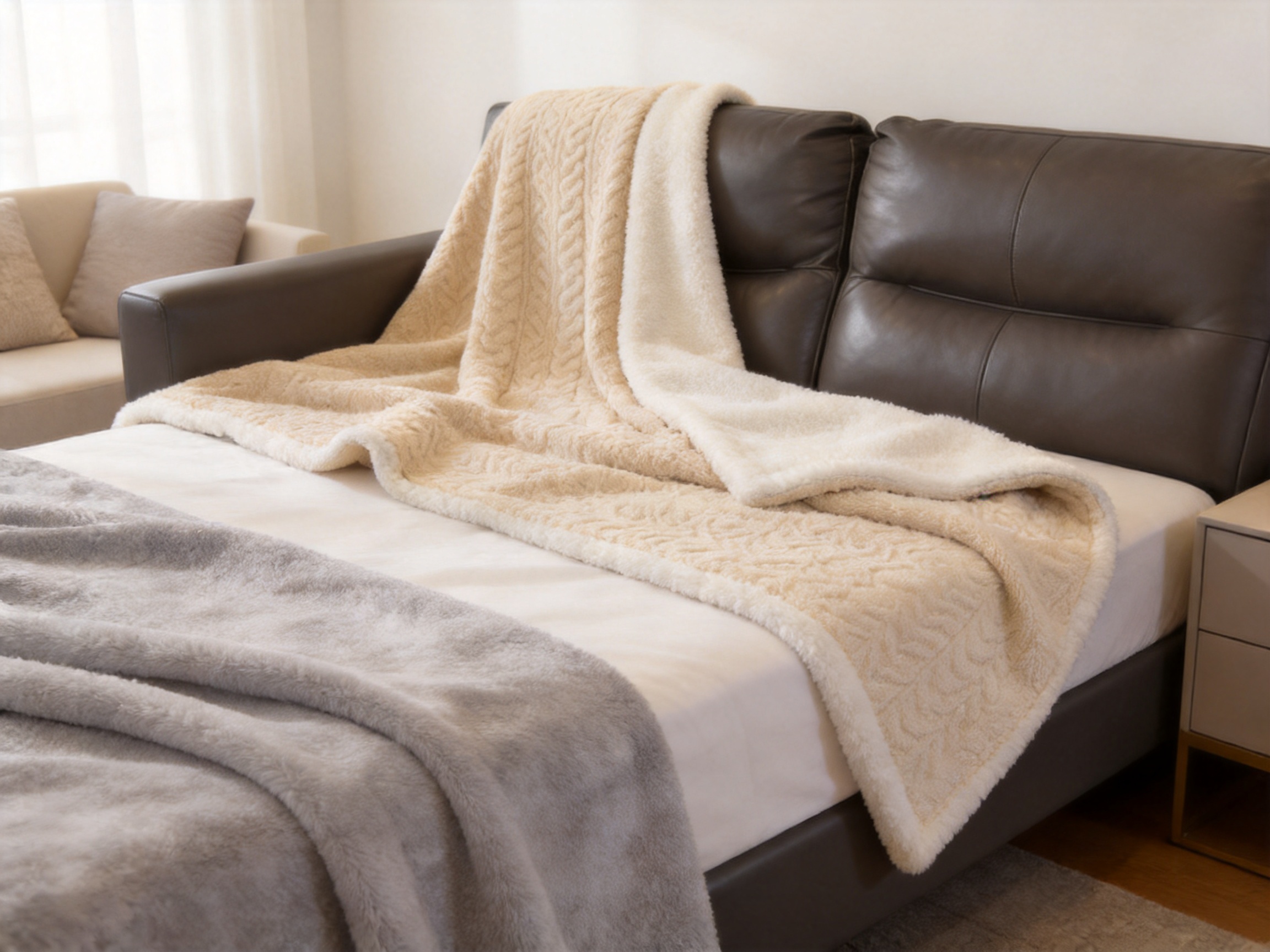
By combining the layers, the blanket becomes reversible in function as well as appearance. One side can prioritize comfort and insulation, while the other can prioritize decoration, texture, and a comparatively cooler hand feel. This flexibility is useful in homes and commercial settings where the same product may be used in different ways throughout the day or across seasons.
A blanket that is too light may feel insubstantial, while one that is excessively heavy may be inconvenient for daily use, storage, or laundering. The 450gsm construction is intended to provide a substantial but practical level of coverage. It offers a fuller hand feel without requiring the complexity of a filled duvet or heavily padded comforter.
The weight also makes the product suitable for layering. It can be used independently in a living room, placed over a bedspread, folded at the foot of a bed, or added to a sofa for occasional use. For hospitality and transportation settings, the available sizes allow buyers to select a format appropriate to the intended coverage area.
The product description emphasizes reversible softness. The chenille side has a textured, gentle feel, while the arctic fleece side provides a plush and fluffy surface. This is an important advantage over blankets that offer a soft face but a rough, thin, or less comfortable reverse side.
For consumers, double-sided comfort increases the likelihood that the blanket will be used regularly. For retailers, it creates a clearer product story: the blanket does not simply have a decorative front and functional back; both sides contribute to the experience. For hotels, offices, and other facilities, the comfortable reverse side can help improve user satisfaction when the blanket is folded, draped, or repositioned.
The blanket market includes lightweight fleece throws, cotton blankets, knitted blankets, sherpa-style products, quilted comforters, and decorative jacquard covers. Each category has its own strengths. The composite jacquard chenille and arctic fleece design differentiates itself by combining several commonly desired features in one product.
Single-layer fleece is often valued for affordability, light weight, and easy care. However, it may have a simpler appearance and may not provide the same dimensional feel as a double-layer blanket. The composite blanket adds a textured chenille surface, greater visual depth, and a more substantial 450gsm construction.
The jacquard side also makes the product more appropriate for visible placement. A basic fleece throw may be treated as a purely functional item, while this blanket can be folded over a sofa arm, arranged across the end of a bed, or used as part of an interior design scheme. Its solid colors allow it to coordinate with different styles without becoming visually overwhelming.
Many decorative throws are attractive but designed primarily for appearance. They may offer limited insulation or a thin hand feel. This composite blanket is designed to maintain decorative value while delivering a warmer and fuller construction. The fleece layer gives it a practical role in colder conditions, and the chenille layer helps it remain presentable when displayed.
Cotton blankets can offer breathability and a natural fiber identity, but they may be heavier when wet, more prone to wrinkling, and slower to dry. The polyester composition of this blanket supports quick handling and convenient machine washing. Polyester also provides strong resistance to ordinary wear and can help maintain color and shape through repeated use when care instructions are followed.
The product should not be considered a direct replacement for every cotton application. Users seeking a natural-fiber textile may prefer cotton. However, buyers who prioritize washability, softness, durability, color consistency, and easy maintenance may find the polyester composite structure more suitable.
Some plush blankets have a soft face but a less refined reverse side. The double-layer construction here provides comfort on both surfaces, allowing the blanket to be used more flexibly. Reversible construction can also reduce concern about which side is facing upward when the blanket is casually placed on a sofa or bed.
Quilts and comforters can provide high levels of warmth, but they generally require more storage space and may be less convenient for travel, office use, or occasional sofa coverage. The composite blanket offers warmth and thickness without the complete bulk of a filled bedding product. It can be folded, carried, and stored more easily, making it suitable for multipurpose environments.
The choice of 100% polyester supports several practical performance characteristics. Polyester fibers are widely used in blankets because they can be engineered for softness, loft, dimensional stability, and color retention. In this product, the fiber is used in two different fabric structures to create varied surface performance.
Warmth is influenced by more than fabric weight. Surface loft, fiber arrangement, thickness, and the ability of a textile to retain still air all contribute to perceived insulation. The arctic fleece layer has a raised, fluffy structure that can create a comfortable thermal barrier. The additional chenille layer adds body to the blanket and contributes to the overall double-layer effect.
The blanket is therefore suitable for cool bedrooms, winter sofa use, office environments with air conditioning, and travel situations where additional comfort is needed. It can also be used in warmer conditions when placed loosely over the legs or used as a lightweight cover rather than wrapped tightly around the body.
Softness is a key purchasing factor in blankets, particularly for products used directly against the skin. The arctic fleece surface is designed to provide a fluffy feel, while the chenille surface contributes a soft, textured touch. Together, these surfaces create a tactile experience that is more varied than a flat woven sheet.
The product description also identifies an anti-pilling hand feel. Pilling can occur when loose fibers become tangled on the surface through friction. Although no textile is completely immune to pilling under all conditions, appropriate fiber selection, knitting, finishing, and care can help reduce the tendency. Users should follow the recommended cold-water washing and low-temperature drying instructions to protect the surface.
The jacquard chenille surface is described as providing a comparatively cool and breathable feeling. This characteristic helps balance the warmth of the fleece side. Users can choose the side that best suits the environment: fleece for a warmer, fluffier sensation and chenille for a more textured and breathable surface.
This reversible relationship supports all-season use. During winter, the blanket can provide additional insulation over bedding or around the body. During spring, autumn, or air-conditioned summer conditions, it can serve as a moderate cover without requiring heavy bedding.
The blanket is offered in solid colors rather than complex printed designs. Solid colors are useful for wholesale buyers because they can be integrated into many interior schemes. They are also easier to coordinate with bedding, upholstery, curtains, carpets, and other home textiles.
The texture of jacquard chenille gives the surface visual character even without a prominent motif. Depending on the lighting and direction of the pile, the surface may show subtle tonal variation. This allows a simple color palette to appear more sophisticated while remaining commercially versatile.
The performance of a blanket begins with its design but depends heavily on manufacturing control. Zhejiang Benyi Textile Technology Co., Ltd. operates within Shaoxing, a major textile production center with extensive experience in yarns, fabrics, dyeing, finishing, and finished textile goods. This industrial environment provides access to specialized suppliers, skilled technical personnel, and established production resources.
The company describes itself as a textile technology enterprise focused on ecological production, new textile technologies, and improved consumer experiences. Its business covers carpets, rug fabrics, and finished textile products, but its manufacturing capabilities are also relevant to blanket production because the company works across fabric development, surface treatment, composite construction, and finished-product processing.
One of the company’s strengths is its ability to coordinate multiple stages of the production chain. Its reported capabilities include weaving factories, dyeing and printing factories, and finished carpet processing factories. Although the blanket is a textile product rather than a floor covering, this infrastructure reflects experience in controlling fabric quality and managing the transition from raw material to finished product.
When several production stages are coordinated within one business network, communication can be more direct. This may help reduce delays caused by transferring materials between unrelated suppliers. It can also support more consistent interpretation of color, hand feel, width, weight, finishing requirements, and packaging specifications.
For wholesale customers, coordinated production is particularly valuable. A buyer may require specific dimensions, color families, packaging formats, labeling, or private-label details. A manufacturer with fabric and finished-product experience is generally better positioned to evaluate whether those requirements are technically feasible and how they may influence cost and lead time.
The company reports a team of more than 20 fabric engineers and the development of new carpet fabrics each quarter based on market trends. This product-development culture can support the creation of textile constructions that respond to changing customer expectations, including softer surfaces, improved durability, more attractive textures, lower-impact materials, and more efficient production methods.
For the Jacquard Chenille Composite Arctic Fleece Blanket, fabric engineering is evident in the decision to combine two different materials. The product is not simply a standard fleece blanket with a decorative label. Its value depends on the compatibility of the chenille and fleece layers, the balance of their weights, the quality of their bonding or compositing, and the final handling characteristics.
Control over production can improve quality monitoring at multiple stages. Raw materials can be checked before production, fabric weight can be reviewed during manufacturing, color can be assessed after dyeing, and finished blankets can be inspected for dimensions, surface defects, edge condition, and overall appearance.
Lead-time control is another advantage for commercial buyers. A manufacturer that understands both fabric production and finished-goods processing can plan capacity more effectively than a business that only performs one isolated step. This is especially important for seasonal blanket demand, hospitality projects, promotional programs, and large retail orders.
The company states that it provides customized services according to customer requirements. Potential areas of customization may include dimensions, color selection, fabric combinations, labels, packaging, and order quantities, subject to technical review and minimum order requirements.
Customization is useful for buyers who want a blanket to support a specific brand identity or market segment. A hotel may request standardized sizes and packaging. A home-textile retailer may require a coordinated color range. A furniture supplier may want blankets that match upholstery collections. A promotional buyer may need custom labeling or presentation packaging.
Textile buyers increasingly evaluate products according to both performance and environmental responsibility. Polyester is a synthetic fiber, and its environmental profile depends on the source of the material, production efficiency, product life, and end-of-life management. A durable, washable blanket that remains useful for a long period can reduce the need for frequent replacement.
Zhejiang Benyi Textile Technology Co., Ltd. states that it invests in sustainable materials and production methods, including recycled polyester and water-saving dyeing techniques. The company also reports having passed OEKO-TEX and Global Recycled Standard certifications. Buyers should confirm the specific certification scope, product applicability, certificate validity, and material composition for each order or customized program.
Water-saving dyeing methods can help reduce the water demand associated with color production, while recycled polyester can provide an alternative source of raw material when the relevant product specification includes it. These measures are most meaningful when supported by documented processes, transparent sourcing, and accurate product claims.
From a consumer perspective, the blanket’s machine-washable design may also support longer practical use. Easy cleaning can help users maintain hygiene without relying on specialized services. The recommended care process—washing separately in cold water and tumble drying on low—should be followed to help preserve the surface and reduce unnecessary wear.
Correct care is essential for maintaining softness, appearance, and dimensional stability. The product is designed for machine washing, which is a major convenience for both households and commercial users. However, the double-layer construction and textured surfaces require appropriate handling.
Wash the blanket separately in cold water. Washing it separately helps prevent friction with garments or other textiles and reduces the possibility of color transfer. A gentle or standard low-impact machine cycle is generally preferable to an aggressive cycle, especially when the blanket has a raised chenille surface.
Use a suitable amount of mild detergent. Excessive detergent can leave residue that affects softness, while harsh chemical products may weaken fibers or influence color over time. Avoid bleach unless a specific care label expressly permits it.
Tumble dry on low. High heat can affect synthetic fibers, surface texture, and dimensional stability. Low-temperature drying is a better choice for protecting the fleece loft and the chenille hand feel. Remove the blanket promptly after drying and shake it gently to restore its loft and reduce creasing.
Air drying is also an option where practical. Spread the blanket evenly over a clean surface or drying rack, avoiding excessive strain on one edge. Do not store the blanket while damp, as retained moisture can create an unpleasant odor.
For seasonal storage, wash and dry the blanket completely before folding it. Store it in a dry, ventilated space away from direct sunlight. Avoid placing heavy objects on top of it for extended periods, since compression may reduce the loft of the fleece surface.
In daily use, turn or reverse the blanket periodically to distribute friction evenly. This is particularly useful when the blanket is used repeatedly on a sofa or bed. Although the construction is designed for durability, rough surfaces, sharp accessories, and excessive pulling can damage raised fibers.
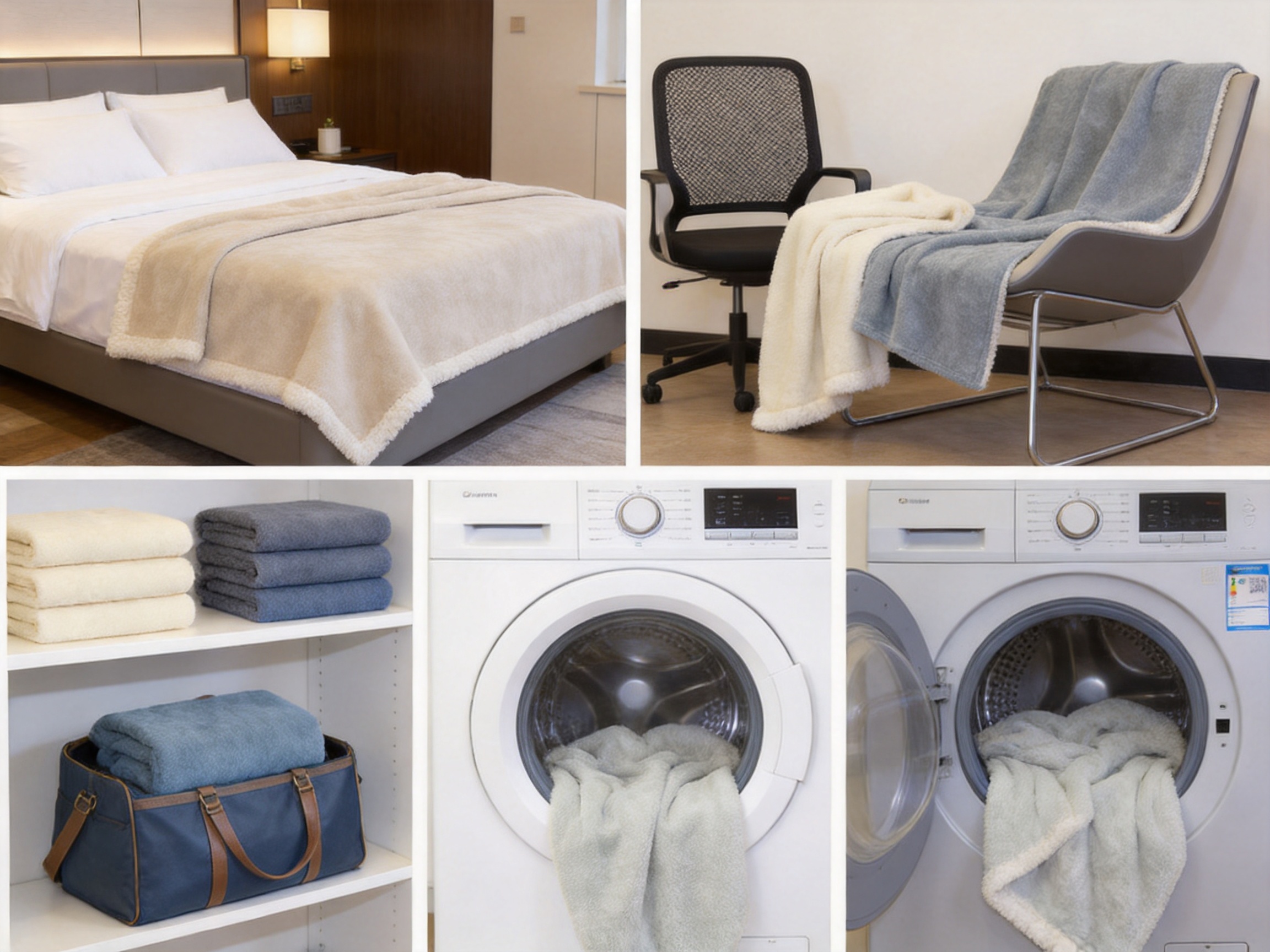
The broad sizing range and reversible construction allow this blanket to serve different user groups and environments. The 50 x 60 inch size is suitable for personal use, lap coverage, reading chairs, office seating, or compact sofa arrangements. The 60 x 80 inch size can provide broader coverage for an individual bed or larger seating area. The 90 x 90 inch and 90 x 110 inch options can be used for larger beds, shared coverage, hospitality applications, or generous decorative layering.
In a bedroom, the blanket can be placed at the foot of the bed as a decorative layer or used as an additional cover during cold nights. The jacquard chenille surface can complement bedding and contribute texture to a simple room. The fleece side can be turned inward when greater warmth is desired.
On a sofa, the blanket can provide warmth during reading, watching television, or resting. Its solid-color design can coordinate with upholstery, rugs, and cushions. The double-sided construction also makes it practical for casual use because the blanket remains attractive whichever side is visible.
Hotels and serviced apartments need textiles that are comfortable, presentable, and easy to maintain. A machine-washable, solid-color blanket can support housekeeping routines and room presentation. Different sizes can be assigned to beds, lounge areas, or guest-request programs.
Hospitality buyers should evaluate the product according to their laundering systems, daily usage frequency, color standards, packaging needs, and replacement cycles. Bulk purchasing may also allow the buyer to coordinate blanket colors with room interiors or broader bedding programs.
Modern offices, libraries, coworking spaces, and study rooms may benefit from soft furnishings that improve comfort in cool indoor climates. The smaller blanket sizes can be placed in private offices, reading areas, relaxation rooms, or executive lounges. Because polyester is relatively easy to wash, the product can be incorporated into managed textile programs.
The blanket is listed for use on airplanes and other travel situations. Its ability to fold and its moderate portability make it useful for personal travel, coach seating, waiting areas, and long journeys. Users should select the size according to luggage capacity and desired coverage.
For distributors and retailers, a successful blanket must have a clear selling proposition. This product offers several points that can be communicated effectively: double-layer construction, jacquard chenille texture, arctic fleece softness, 450gsm weight, multiple sizes, solid-color versatility, machine washability, and all-season functionality.
The product can be marketed as a comfort item, a decorative home accessory, a seasonal gift, or a practical hospitality textile. Its broad application range may help buyers serve different customer segments without sourcing entirely separate product categories.
The solid-color format also supports assortment planning. Retailers can choose neutral colors for broad appeal and add seasonal or trend-oriented colors according to market demand. Because the surface design is based on texture rather than a complex printed image, the product can remain relevant as interior design trends change.
A neatly folded blanket can be displayed on shelving, in baskets, at the foot of a bed, or in a furniture showroom. Retail presentation can emphasize the contrast between the textured chenille surface and the fluffy fleece reverse. Touch-and-feel merchandising is particularly effective for this type of product because softness is one of its primary advantages.
For online retail, product descriptions should explain the two sides clearly and state the fabric weight, size, care method, and intended applications. High-quality images should show the surface texture, folded thickness, full dimensions, and use on a bed or sofa. Buyers should avoid describing the product with unsupported performance claims and should distinguish between warmth, softness, and insulation.
Before placing a large order, buyers should request samples and confirm the exact specification. Important points include fabric composition, total weight, layer weights, finished dimensions, color standards, edge finishing, packaging, labeling, and acceptable tolerances.
Sample evaluation should include hand feel, surface uniformity, layer adhesion, edge construction, color consistency, odor, dimensional stability, and washing performance. A buyer may wish to wash the sample several times according to the intended care procedure. This helps assess whether softness, appearance, and size remain acceptable after laundering.
For customized orders, the buyer should establish written approval procedures for color, artwork, labeling, packaging, and pre-production samples. It is also advisable to agree on inspection standards and documentation requirements before production begins.
The blanket is made from 100% polyester. It combines approximately 200gsm jacquard chenille fabric with approximately 230gsm single-sided arctic fleece fabric, creating a total product weight of approximately 450gsm.
The double-layer design and raised fleece surface are intended to provide substantial softness and warmth, including use during cold winter conditions. Actual warmth depends on room temperature, personal preference, clothing, bedding, and how the blanket is used.
Yes. The jacquard chenille side is described as providing a cooler and more breathable feeling, while the blanket can be used loosely or as a light cover. Its reversible construction makes it suitable for different seasons and indoor climates.
Yes. Both sides are designed to be usable. The chenille side offers a textured decorative appearance, while the arctic fleece side provides a plush and fluffy hand feel.
The listed sizes are 50 x 60 inches, 60 x 80 inches, 90 x 90 inches, and 90 x 110 inches. Buyers should confirm finished dimensions and allowable tolerances when ordering.
Wash it separately in cold water using a suitable detergent. It is machine washable. Tumble dry on low, and avoid excessive heat. Following the care instructions helps protect the fleece loft, chenille texture, color, and dimensional stability.
The product information describes it as wrinkle resistant and shrink resistant. These characteristics are supported by the polyester construction and appropriate finishing, but users should still follow the recommended low-temperature care process.
The product is described as having an anti-pilling hand feel. Pilling can still be influenced by friction, washing conditions, and use. Washing separately in cold water and drying on low can help reduce unnecessary surface wear.
Customized services are available according to customer requirements, subject to technical evaluation, order quantity, production capacity, and agreed specifications. Potential areas may include size, color, labeling, packaging, and related textile details.
The blanket is manufactured by Zhejiang Benyi Textile Technology Co., Ltd., a textile technology company located in Shaoxing, Zhejiang Province, China. The company reports capabilities in fabric development, weaving, dyeing and printing, finished-product processing, and customized textile services.
The company reports control and coordination across several stages of textile production, including fabric development and finished-product processing. It also reports a team of more than 20 fabric engineers, ongoing new fabric development, and capabilities related to sustainable materials and water-saving production methods.
Yes. Its machine-washable design, solid colors, multiple sizes, reversible comfort, and broad application range make it suitable for hotels, offices, serviced apartments, furniture showrooms, and other commercial environments. Commercial buyers should confirm laundering compatibility and durability requirements through sampling and testing.
Buyers should request current documentation, confirm the scope of any OEKO-TEX or Global Recycled Standard certification, and verify whether the specific blanket, material, or production site is covered. Sustainability claims should correspond to the exact ordered specification.
The Jacquard Chenille Composite Arctic Fleece Blanket combines decorative texture, plush comfort, practical warmth, and convenient care in a carefully considered double-layer construction. Its approximately 200gsm jacquard chenille surface provides visual depth and a refined hand feel, while the approximately 230gsm arctic fleece layer adds softness, thickness, and thermal comfort. Together, the layers produce a 450gsm blanket that can serve residential, hospitality, office, travel, and retail applications.
Its advantages over simpler alternatives include reversible usability, a fuller hand feel than many lightweight throws, stronger decorative potential than basic fleece, and easier maintenance than many bulky or high-maintenance bedding products. The solid-color design further supports broad interior coordination and flexible wholesale merchandising.
The product is also supported by the manufacturing strengths reported by Zhejiang Benyi Textile Technology Co., Ltd. These include textile-industry experience in Shaoxing, fabric engineering, coordinated weaving and dyeing resources, finished-product processing, customization support, and a stated commitment to environmental protection and sustainable production. For wholesale and private-label buyers, these capabilities can support more consistent product development, quality management, and lead-time planning.
As with any textile product, the best results depend on accurate specification, suitable application, proper care, and quality verification before mass production. When these factors are managed correctly, the Jacquard Chenille Composite Arctic Fleece Blanket offers a versatile and commercially appealing solution for customers seeking comfort, warmth, texture, durability, and everyday convenience.
1. Product specification sheet for the Jacquard Chenille Composite Arctic Fleece Blanket, including material, weight, construction, sizes, uses, and care instructions.
2. Textile fiber and fabric construction principles relating to polyester, chenille surfaces, knitted structures, fleece loft, composite layers, and textile durability.
3. General guidance for household textile care, including cold-water machine washing, low-temperature tumble drying, stain prevention, and storage.
4. Manufacturer-provided company information concerning fabric engineering, production coordination, customized textile services, sustainable materials, and water-saving dyeing methods.
5. General reference principles for textile quality inspection, including composition verification, fabric weight, color consistency, dimensional stability, surface appearance, and laundering performance.
Jacquard Chenille Composite Arctic Fleece Blanket

ADD: No.75 Zhenyuan Road, Yuecheng District, Shaoxing City, Zhejiang Province, China 312000

Tel : +86-189 6750 9795

FAX : +86-0575-8803 2773

Email : fisher@benetextile.com

Copyright © Zhejiang Benyi Textile Technology Co., Ltd. All Rights Reserved. Carpets and Rugs Manufacturer

 English
 Français
 Deutsch
 عربى