

Lu Wanyao — After-Sales Service Supervisor
 Home / Author / Lu Wanyao — After-Sales Service Supervisor / Cool Yarn Solid Bath Mat: A Practical Guide to Comfort, Safety, Durability, and Efficient Production
  2026.08.27
 Lu Wanyao — After-Sales Service Supervisor
The Cool Yarn Solid Bath Mat is designed for homes, hospitality spaces, interior projects, and private-label textile programs that require dependable performance without sacrificing comfort or appearance. Combining a soft polyester surface, a cushioning memory foam middle layer, and a strong PVC mesh backing, this rectangular bath mat addresses several everyday concerns at once: wet floors, uncomfortable standing surfaces, frequent washing, shifting underfoot, and the need for a clean contemporary style.
Unlike decorative mats that provide limited water absorption or thin floor coverings that move easily, this bath mat is engineered as a functional multilayer product. Its surface is made from 100% polyester cool yarn, its construction is bonded, and its backing system is designed to improve stability. The result is a product suitable for bathrooms, kitchens, children’s rooms, indoor entrances, and other areas where softness, moisture management, and simple maintenance are important.
For home textile brands, distributors, retailers, and project buyers, the product also offers valuable sourcing flexibility. Standard sizes include 40*60 cm, 50*80 cm, and 60*90 cm, while custom dimensions can be developed for specific programs. Its solid-color design allows it to coordinate with a broad range of interior styles, packaging concepts, and seasonal collections.
This article examines the product’s structure, performance advantages, applications, care requirements, customization possibilities, and the manufacturing strengths behind its production. It also explains why an integrated textile supplier can offer advantages in consistency, development speed, quality management, and responsible manufacturing.
Cool Yarn Solid Bath Mat
Content
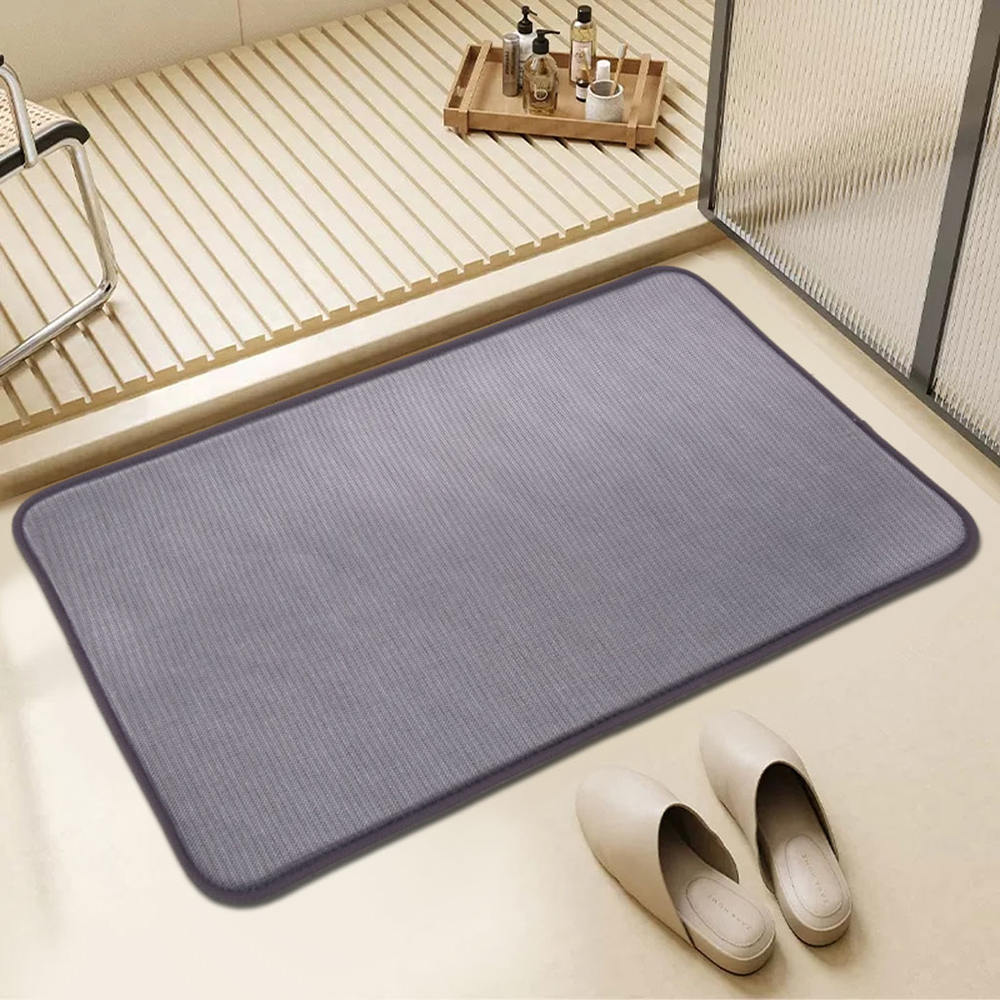
The Cool Yarn Solid Bath Mat is a rectangular indoor floor mat with a 0 mm listed pile height and bonded construction. Its low-profile design makes it easy to place near a bathtub, shower, vanity, kitchen sink, or indoor doorway. The product is available in several practical dimensions, including 40*60 cm, 50*80 cm, and 60*90 cm. Buyers may also request custom sizes for different room layouts, retail requirements, hospitality projects, or coordinated rug collections.
The main material is polyester. More specifically, the product description identifies a 100% polyester cool yarn surface. Polyester is widely used in modern home textiles because it combines durability, color retention, dimensional stability, and comparatively simple care. When properly processed, polyester fibers can create a soft hand feel while remaining capable of handling repeated household use.
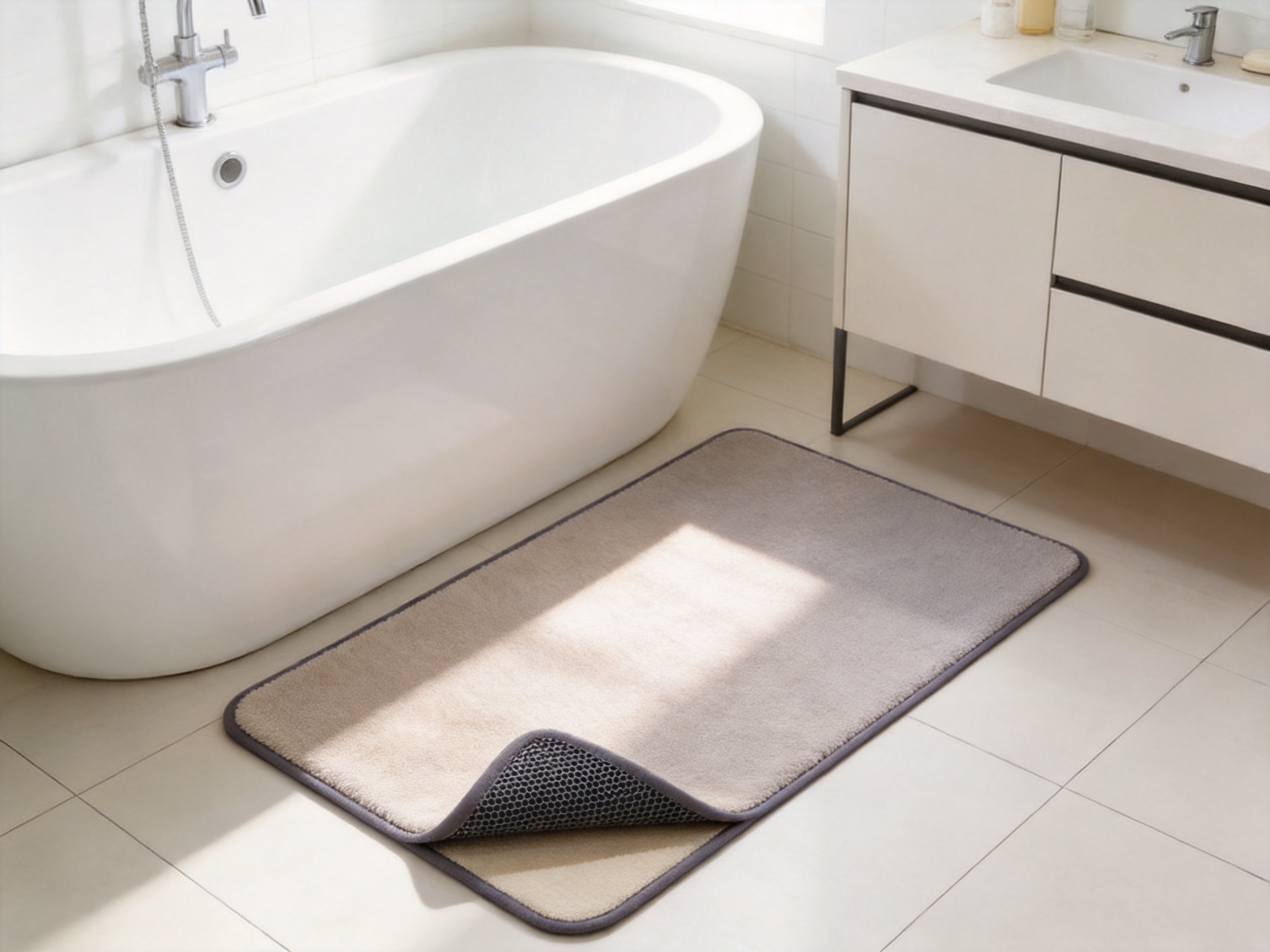
The backing consists of memory foam combined with PVC mesh. The memory foam contributes cushioning and helps make the mat more comfortable for people who stand on it after bathing, while the PVC mesh helps reduce movement and skidding. This combination provides a more substantial construction than a simple single-layer fabric mat.
The product is described as soft, washable, and non-slip. It is intended for indoor use and is particularly suitable for kitchens, bathrooms, children’s rooms, and other residential settings. Its solid-color pattern gives it a simple visual identity that can complement modern, minimalist, traditional, and transitional interiors.
| Specification | Details |
|---|---|
| Product name | Cool Yarn Bath Mat |
| Product category | Bath Mat |
| Brand | Bene |
| Model number | 100068 |
| Shape | Rectangular |
| Available sizes | 40*60 cm, 50*80 cm, 60*90 cm, or custom dimensions |
| Surface material | 100% polyester cool yarn |
| Construction | Bonded |
| Listed pile height | 0 mm |
| Backing | Memory foam and PVC mesh |
| Pattern | Solid color |
| Indoor or outdoor use | Indoor |
| Care instruction | Machine wash |
| Special features | Non-slip, soft, washable |
| Recommended rooms | Kitchen, bathroom, children’s room, and other indoor areas |
The upper surface is the part of a bath mat that has the most direct contact with bare feet and water. For that reason, surface material affects comfort, drying behavior, appearance, and service life. The use of 100% polyester cool yarn gives this product a practical balance between softness and durability.
A bathroom mat should feel pleasant underfoot, particularly during the first moments after a shower or bath. The soft velvet microfiber surface is designed to provide a comfortable touch and a gentle landing area for wet feet. This is a meaningful advantage over hard flooring, thin plastic mats, or rough low-cost textiles that may feel cold or abrasive.
The combination of fine polyester fibers and the cushioning layer beneath the surface creates a more comfortable standing experience. The memory foam middle layer helps distribute pressure and reduces the harsh feeling that can occur when standing directly on ceramic tile, stone, or vinyl flooring.
The surface is designed to absorb water from wet feet. This helps reduce the amount of moisture transferred to the surrounding floor after bathing. While no textile mat eliminates the need for ventilation and regular laundering, a water-absorbing microfiber surface can contribute to a cleaner and more comfortable bathroom environment.
Moisture management is also useful in kitchens, where splashes around sinks are common. In children’s rooms or indoor entrances, the mat can provide a soft surface in areas where small amounts of water or dampness may be tracked indoors.
Polyester is valued for its ability to hold color and resist fading when compared with many less stable textile options. The product information emphasizes that the cool yarn is intended to offer durability and fade resistance. This is particularly important for solid-color products, because even fading across a plain surface can become noticeable.
Stable coloration helps retailers maintain a consistent visual identity across repeat orders. It also supports coordinated collections in which several sizes or colors are sold together. For residential users, color retention helps the bath mat continue to look presentable after repeated washing and regular exposure to indoor light.
A bath mat’s performance depends not only on its surface but also on what happens beneath it. The Cool Yarn Solid Bath Mat uses two complementary backing materials: memory foam and PVC mesh. Each layer serves a different function, and together they create a more practical product structure.
Memory foam provides a soft and resilient foundation beneath the textile surface. Its cushioning effect can make standing more comfortable, especially in front of a sink, shower, or vanity where people may remain in one position for several minutes. The foam also separates the feet from a hard floor, creating a warmer and more welcoming underfoot experience.
The cushioning layer can be especially useful for families, older users, people who spend time styling hair or applying skincare at a bathroom counter, and anyone who values comfort in daily routines. It also gives the mat a fuller feel than a very thin fabric product.
The PVC mesh backing is intended to help prevent shifting and skidding. A bath mat that moves easily can create an inconvenience and may increase the risk of losing balance. The mesh structure provides a more secure interface with the floor than a smooth textile underside alone.
Although the non-slip performance of any mat depends on the cleanliness, dryness, texture, and material of the floor, a dedicated PVC backing is a significant design advantage. It is particularly useful on smooth indoor surfaces such as ceramic tile, sealed stone, laminate, and certain types of vinyl flooring.
The surface, foam, and backing work together as a system. The polyester layer provides softness and water absorption. The memory foam contributes cushioning. The PVC mesh supports stability. A competitor product that includes only one or two of these functions may not provide the same overall balance.
This multilayer approach is one of the product’s strongest selling points. It allows the bath mat to serve not merely as a decorative accessory, but as a functional household textile developed around comfort, moisture control, and everyday safety.
Bath mats available in the market vary widely in construction. Some are lightweight, single-layer textile pieces. Others rely on thick pile, rigid natural materials, or simple rubber coatings. The Cool Yarn Solid Bath Mat is positioned between decoration and technical utility, offering a group of features that can make it more competitive in many retail and project situations.
Very thin bath mats may be easy to store, but they can offer little cushioning and may allow users to feel the hardness of the floor beneath them. The memory foam component gives the Cool Yarn Solid Bath Mat a more comfortable profile without relying on an excessively high pile.
The listed 0 mm pile height also supports a clean, low-profile appearance. This can be preferable for customers who want cushioning but do not want a visibly shaggy or bulky mat. A low-profile product may also be easier to position beneath bathroom doors or near cabinets, subject to the specific clearance of the installation area.
Regular cleaning is essential for bathroom textiles. A mat can collect moisture, skin particles, dust, and residues from daily use. The machine-washable construction makes routine care more convenient than products that require specialized cleaning or cannot be immersed.
According to the provided care guidance, the mat should be machine washed with cold water and mild detergent. Chlorine and bleach should be avoided. It may be tumble dried at low speed or hung to dry. These instructions are practical for households and also useful for hospitality operations that need repeatable cleaning procedures.
Patterned bath mats can create a strong visual effect, but they may be difficult to coordinate with changing bathroom décor. The solid-color pattern of this product is more adaptable. It can be offered in neutral shades for minimalist collections, calm colors for wellness-inspired interiors, or stronger tones for seasonal merchandising.
A solid design may also make the product easier to incorporate into coordinated collections that include area rugs, kitchen mats, door mats, and other home textile categories. This gives brands the opportunity to build a consistent product family rather than selling an isolated bath accessory.
The availability of three common sizes provides flexibility for different bathroom layouts. The 40*60 cm size can suit compact spaces, guest bathrooms, or areas beside a small vanity. The 50*80 cm size offers a longer footprint for standard household use. The 60*90 cm size can provide wider coverage in front of a double vanity, bathtub, or larger shower area.
Custom sizing is particularly valuable for hospitality, contract furnishing, retail exclusives, and private-label programs. It also allows buyers to respond to regional preferences, where standard home dimensions may differ.
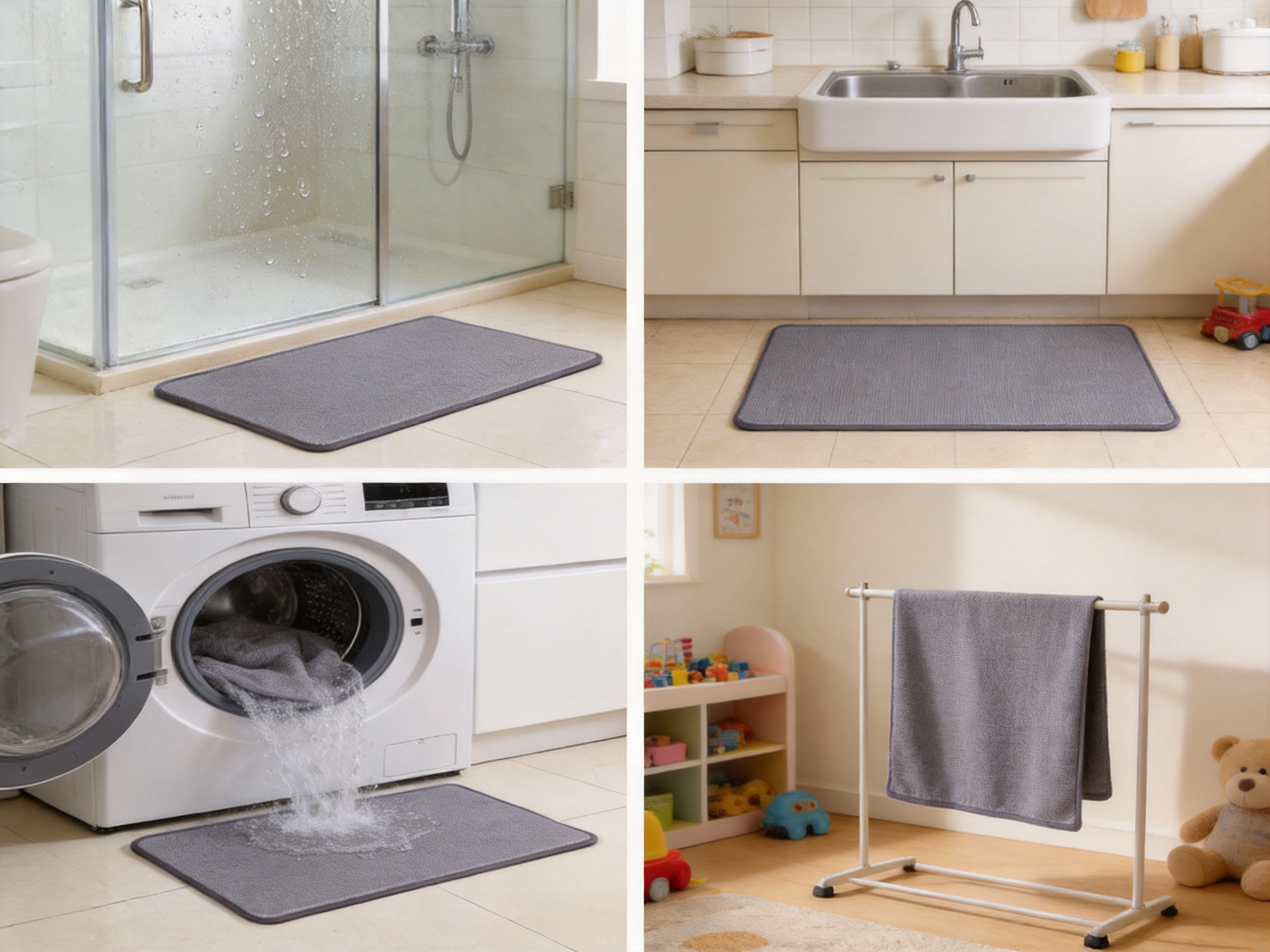
The primary application is the bathroom. Placed beside a shower, bathtub, or vanity, the mat provides a comfortable location for wet feet and helps absorb surface water. Its non-slip backing is intended to reduce movement, while the machine-washable construction supports regular hygiene maintenance.
In a family bathroom, several sizes can be used in different zones. A smaller mat may be positioned beside a shower, while a larger version may cover the front of a bathtub or vanity. The solid-color design enables different room zones to remain visually coordinated.
The product is also suitable for indoor kitchen use. A mat placed in front of a sink can make standing more comfortable during food preparation and washing. The surface may absorb small splashes, while the foam layer provides cushioning on hard kitchen floors.
Because kitchens can experience grease, food particles, and frequent foot traffic, appropriate washing and drying are important. Users should follow the recommended care instructions and ensure the mat is fully dry before returning it to the floor.
The soft surface and cushioned construction make the bath mat suitable for selected areas in children’s rooms, play spaces, or family indoor areas. It can provide a comfortable floor surface beside a changing station, near a wash area, or in a room where a small washable mat is useful.
As with any floor textile, the mat should be placed on a clean, stable floor and checked regularly. Children should not use it as a substitute for dedicated play equipment, and the product should be kept dry and properly maintained.
The rectangular design and solid appearance can also work in indoor entrances, laundry areas, dressing areas, and other utility spaces. The mat is intended for indoor use, so it should not be treated as an outdoor rug exposed to rain, direct weather, or prolonged sunlight.
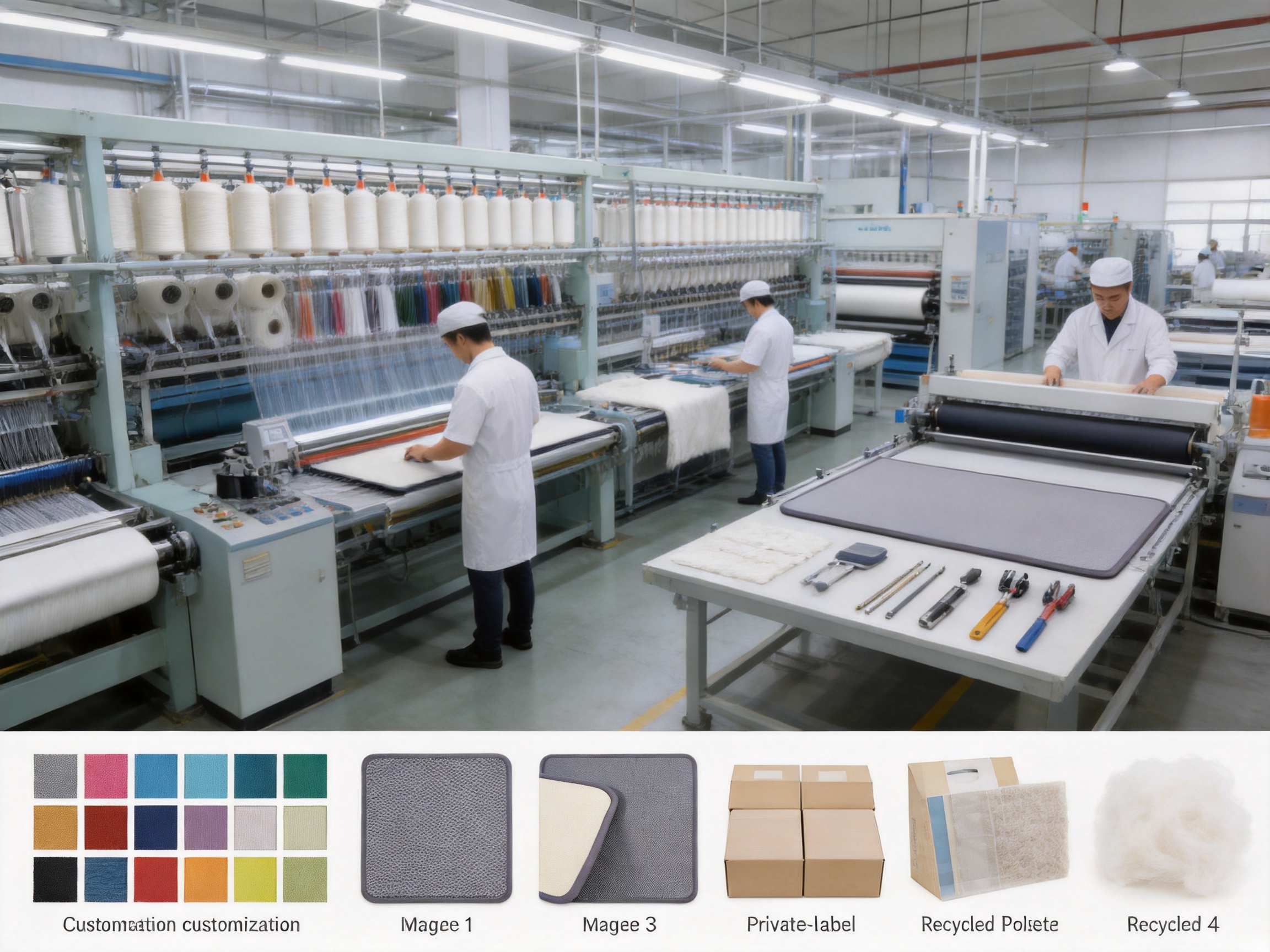
The performance of a finished bath mat depends heavily on the manufacturing system used to create it. Zhejiang Benyi Textile Technology Co., Ltd. operates in Shaoxing, Zhejiang, a region recognized for its extensive textile infrastructure. This location provides access to textile skills, production resources, material networks, and specialized processing capabilities.
The company focuses on carpets, rug fabrics, and finished textile products. Its manufacturing model combines surface and bottom components to simplify carpet and mat production. By integrating these stages, the company aims to reduce unnecessary complexity, improve efficiency, and strengthen control over the final product.
The company has its own weaving facilities, dyeing and printing factories, and finished carpet processing factories. This level of integration can provide important advantages for buyers. Instead of depending entirely on unrelated external suppliers for each stage, the manufacturer can coordinate fabric development, coloration, backing, cutting, bonding, and finishing within a connected production chain.
Integrated production supports better communication between technical departments. If a customer requests a change to surface feel, color, size, backing, or construction, the relevant teams can evaluate the effect across the entire product rather than treating each component in isolation.
For buyers, this may lead to more consistent quality, clearer production scheduling, and better traceability. It can also reduce the risk of mismatched components, such as a surface fabric that does not bond correctly with the backing or a color that varies significantly between production stages.
The company employs more than 20 fabric engineers and develops new carpet fabrics each quarter based on market trends. This development capacity is significant for brands seeking products that feel current rather than generic.
Fabric engineers can work on yarn selection, surface texture, color development, fabric density, finishing, backing combinations, and application-specific performance. For a bath mat, these considerations may include softness, absorbency, drying behavior, dimensional stability, bonding quality, and compatibility with machine washing.
Regular development also makes it possible to respond to changing consumer preferences. For example, demand may shift toward quiet neutral colors, recycled materials, low-maintenance products, enhanced cushioning, or coordinated home collections. A manufacturer with an active development program is better positioned to turn those market signals into practical product options.
The product is suitable for customized textile programs as well as standard wholesale orders. Customization can involve dimensions, colors, packaging, labeling, surface materials, backing specifications, and coordinated product development, depending on project requirements and technical feasibility.
Standard sizes offer an efficient starting point, but custom dimensions may be useful when a retailer serves a particular market or a contract project has specific room plans. Buyers can request alternative lengths and widths for compact apartments, large bathrooms, hotel rooms, serviced residences, or coordinated multipiece sets.
Custom sizing should be evaluated together with production yield, edge finishing, backing stability, packaging dimensions, and shipping requirements. A professional manufacturer can help determine whether a requested size can be produced efficiently while maintaining the intended appearance and performance.
The solid-color format is well suited to color customization. Brands can develop collections around warm neutrals, cool grays, earthy tones, pastel shades, or stronger accent colors. A consistent color system can be extended across bath mats, kitchen mats, door mats, area rugs, and carpet fabrics.
Color approval is an important stage in textile production. Buyers should confirm the target color, acceptable tolerance, lighting conditions for evaluation, and the reference standard used for approval. Since fabric texture and backing can influence visual perception, color should be reviewed on the actual material rather than relying only on a digital image.
Wholesale buyers often require more than the product itself. They may need custom labels, barcode stickers, retail packaging, carton markings, instruction cards, or branded photography support. An experienced home textile manufacturer can coordinate these requirements with production planning so that the finished goods are prepared for the intended sales channel.
Packaging should protect the bath mat from dust, moisture, compression damage, and deformation during storage and transport. It should also communicate care instructions clearly. For retail, packaging can highlight softness, washability, indoor use, and non-slip features without making claims beyond the product’s verified performance.
Quality control should begin before the first finished mat is produced. It starts with raw material selection and continues through yarn preparation, fabric production, dyeing, bonding, cutting, backing application, inspection, packing, and shipment.
Polyester yarn and other components should be checked for consistency, cleanliness, color, and suitability for the planned construction. The memory foam should have stable thickness and resilience, while the PVC mesh should be uniform and free from obvious defects that could affect floor contact.
Solid-color products require careful inspection because variations are easier to see across an uninterrupted surface. Inspectors may review shade consistency, streaks, spots, uneven dyeing, surface contamination, and changes in hand feel.
The microfiber surface should also be checked for unwanted bald patches, loose fibers, holes, irregular bonding, and inconsistent texture. These checks help protect both product appearance and consumer satisfaction.
Bonded construction requires reliable contact between the surface and the underlying layers. Inadequate bonding may result in delamination, bubbling, shifting, or premature separation during washing. Edge finishing should also be examined for loose threads, uneven cuts, fraying, and weak seams.
For custom sizes, edge treatment is especially important because the cutting and finishing process may differ from standard production. The final dimensions should be measured against approved tolerances, and the rectangular shape should remain accurate enough for practical placement.
The backing should be inspected for coverage, consistency, cleanliness, and contact with the floor. Non-slip performance depends on the PVC mesh, the mat’s overall structure, and the flooring surface on which it is used. For this reason, product evaluation should consider representative smooth indoor floors and appropriate test conditions.
Quality teams may also review the backing after washing to ensure that it remains attached and functional. This is important because the product is marketed as washable and intended for repeated household use.
Modern home textile buyers increasingly evaluate not only product appearance and price but also the environmental and social factors associated with production. The company states that it focuses on ecological protection, consumer health experiences, and sustainable development.
Its sustainability efforts include investment in recycled polyester and water-saving dyeing techniques. These approaches can help reduce dependence on virgin raw materials and lower water consumption during coloration. The exact environmental benefit depends on material proportions, processing conditions, energy sources, and verified production data, but the direction is relevant to brands seeking more responsible product ranges.
The company also states that it has passed OEKO-TEX® and GRS certifications. Such certifications can support responsible sourcing programs when the certification scope, validity, product coverage, and transaction documentation are properly confirmed for the specific order.
Recycled polyester may be considered for buyers who want to include recycled content in a home textile collection. It can provide a pathway toward using post-consumer or post-industrial polyester resources, subject to the applicable certification and chain-of-custody requirements.
When specifying recycled materials, buyers should confirm the exact recycled content percentage, the type of recycled input, certification status, labeling requirements, and whether the recycled option has the same appearance and performance as the standard material.
Dyeing is a major part of textile processing and can require significant water and energy. Water-saving dyeing methods may reduce resource consumption when appropriately implemented. Consistent process control is important because environmental improvements should not compromise shade accuracy, colorfastness, or product durability.
For brands with environmental claims, communication should be precise and supported by relevant documentation. Clear claims help avoid consumer confusion and allow buyers to present sustainability information responsibly.
Correct care helps preserve the softness, color, backing, and overall shape of the bath mat. The provided instructions recommend machine washing with cold water and mild detergent. Chlorine and bleach should not be used, as they may damage fibers, weaken the backing, or affect color.
Low-speed tumble drying or hanging to dry is recommended. The mat should be completely dry before it is placed back on the floor. A damp mat left in a poorly ventilated area may develop unpleasant odors or encourage microbial growth, regardless of its material.
Users should shake or vacuum the mat regularly to remove loose dust and debris. Small spills should be addressed promptly. After bathing, the mat should be allowed to dry rather than remaining folded or compressed while wet.
Periodic machine washing should be based on usage. A frequently used family bathroom may require more frequent cleaning than a lightly used guest bathroom. In commercial or hospitality settings, operators should establish a documented laundering schedule appropriate to occupancy and hygiene requirements.
The floor beneath the mat should be clean and dry. Dust, soap residue, oil, and excess moisture can reduce the effectiveness of many non-slip backings. Before first use, users should check that the mat lies flat and does not interfere with doors, drawers, or other moving components.
The mat is designed for indoor use. Prolonged outdoor exposure, rain, standing water, and direct weather conditions are not recommended. Keeping the product indoors helps preserve the textile surface, color, foam, and PVC backing.
For retailers, a bath mat must be easy to explain, visually adaptable, and practical for customers. The Cool Yarn Solid Bath Mat offers a straightforward feature set: soft polyester surface, cushioned memory foam, PVC mesh backing, machine washability, solid colors, standard sizes, and custom options.
These features support several retail positions. It can be presented as an everyday bathroom essential, a comfort-focused home accessory, a practical gift item, or part of a coordinated home textile collection. Its neutral rectangular form also makes it suitable for online catalogs, where clear product specifications and straightforward photographs are important.
For distributors, the product can serve multiple customer segments. Residential retailers may focus on softness and easy care. Hospitality buyers may emphasize repeatable maintenance and standard sizing. Interior designers may value color coordination and custom dimensions. Private-label brands may focus on packaging, collection development, and reliable manufacturing support.
The three standard sizes make it possible to create a tiered inventory structure. A smaller size can serve compact spaces and value-oriented packages. A medium size can function as the primary volume item. A larger size can support premium or spacious bathroom applications.
Buyers should consider color assortment, carton dimensions, seasonal demand, and the relationship between online and physical retail. Solid colors may simplify inventory management because they can remain relevant across multiple seasons and design trends.
Effective product positioning should emphasize verified benefits rather than vague claims. The bath mat can be described as soft, cushioned, washable, and designed with a PVC mesh backing to help reduce movement. It should not be represented as completely slip-proof under every condition, because floor type, moisture, cleaning, and installation affect actual performance.
Clear communication builds trust. Retail descriptions should include dimensions, material composition, room recommendations, care instructions, and any limitations regarding outdoor use or floor compatibility.
Purchasing from a manufacturer with control over weaving, dyeing, printing, and finished processing can simplify the sourcing process. Buyers may have fewer production interfaces to coordinate, which can reduce misunderstandings about specifications and timing.
Integrated production can also help maintain consistent standards across different product categories. A brand developing a bath mat alongside an area rug, door mat, or carpet fabric may benefit from one technical partner that understands the relationship between surface materials, backing systems, color, and finishing.
Lead-time management is another potential advantage. When key production stages are coordinated within the same manufacturing organization, scheduling can be more transparent. This does not eliminate the effects of raw material availability, order quantity, production complexity, or peak-season demand, but it can improve the supplier’s ability to plan and communicate.
Technical collaboration is especially valuable for customized products. A buyer may begin with a basic request for a different size or color and later require changes to packaging, recycled content, surface texture, or backing. A supplier with fabric engineers and multiple production capabilities can evaluate these changes more effectively than a trading operation with limited technical resources.
Before placing an order, professional buyers should prepare a clear specification sheet. This should include product dimensions, tolerances, color references, material requirements, backing construction, packaging, labeling, carton details, and inspection standards.
Samples should be reviewed for surface softness, color, water absorption, foam resilience, dimensional accuracy, backing coverage, edge finishing, and general workmanship. If the product will be machine washed frequently, buyers should request or conduct appropriate wash evaluations to examine color, shape, bonding, and backing performance after laundering.
For larger programs, buyers should discuss production capacity and expected lead times before confirming a launch schedule. They should also clarify minimum order quantities, sample charges, payment terms, shipping documentation, and quality claim procedures. These details help prevent avoidable delays during commercialization.
Important customization questions include whether the requested color can be matched to a physical standard, whether custom dimensions affect minimum order quantities, whether packaging can be branded, and whether recycled polyester is available for the specific construction.
Buyers should also ask whether the requested product will carry the same certification status as a standard item. Certification claims should always be connected to the actual material, production site, and order documentation rather than assumed from a general company statement.
The main material is 100% polyester cool yarn. The polyester surface is designed to provide softness, durability, color retention, and practical care performance.
The backing combines memory foam with PVC mesh. Memory foam contributes cushioning, while PVC mesh is intended to help reduce shifting and skidding on suitable indoor floors.
Yes. The product is designed for machine washing. Cold water and mild detergent are recommended, while chlorine and bleach should be avoided. Low-speed tumble drying or hanging to dry is advised.
Standard sizes include 40*60 cm, 50*80 cm, and 60*90 cm. Custom dimensions are also available for suitable wholesale and private-label programs.
No. The listed pile height is 0 mm, giving the mat a low-profile appearance. Its cushioning comes primarily from the memory foam layer rather than a high pile.
It is intended for indoor applications, especially bathrooms, kitchens, children’s rooms, and other household areas. It should not be treated as an outdoor mat exposed to rain or prolonged weather conditions.
The PVC mesh backing is designed to help prevent shifting and skidding, but no mat can guarantee identical performance on every floor. The floor should be clean and dry, and users should confirm that the mat lies flat before use.
Customization can be discussed for colors, dimensions, packaging, labels, and other project requirements. Final availability depends on order quantity, technical feasibility, and production specifications.
Integrated weaving, dyeing or printing, and finished-product processing can improve communication, production coordination, quality consistency, and customization support. It can also simplify sourcing for buyers developing several related home textile products.
The company states that it invests in recycled polyester, water-saving dyeing methods, environmental protection, and consumer health considerations. It also states that it has passed OEKO-TEX® and GRS certifications. Buyers should confirm the certification scope and documentation for the specific product and order.
The Cool Yarn Solid Bath Mat is a balanced home textile product built around four practical priorities: comfort, moisture management, stability, and easy care. Its soft polyester cool yarn surface is pleasant underfoot and designed to absorb water from wet feet. Its memory foam middle layer adds cushioning, while the PVC mesh backing helps reduce movement. Machine washability supports routine maintenance, and the solid-color design fits a wide range of interiors.
Compared with basic single-layer mats, the product offers a more complete multilayer construction. Compared with very thick or high-pile products, its low-profile structure may be easier to coordinate with doors, cabinets, and contemporary room designs. Compared with highly patterned products, its solid color provides greater flexibility for collections and interior matching.
The manufacturing organization behind the product adds further value for professional buyers. Its location in Shaoxing provides access to an established textile environment. Its weaving, dyeing and printing, and finished processing capabilities support an integrated supply chain. Its fabric engineering team develops new materials regularly and provides customized services according to customer needs.
For brands, distributors, and home textile project buyers, these capabilities can support more than a single bath mat order. They can provide a foundation for coordinated product families across bath mats, kitchen mats, door mats, area rugs, carpet fabrics, blankets, and sofa cushions. The combination of product functionality, customization flexibility, and manufacturing control makes this bath mat a practical option for modern indoor textile programs.
1. Product specification sheet for the Cool Yarn Bath Mat, model 100068.
2. Manufacturer-provided material and care information for polyester microfiber bath mats.
3. General textile manufacturing principles for bonded floor coverings and multilayer mat construction.
4. OEKO-TEX® textile safety and harmful-substance testing framework.
5. Global Recycled Standard principles for recycled materials and chain-of-custody management.
6. General industry guidance on indoor floor-mat care, machine washing, drying, and backing maintenance.

ADD: No.75 Zhenyuan Road, Yuecheng District, Shaoxing City, Zhejiang Province, China 312000

Tel : +86-189 6750 9795

FAX : +86-0575-8803 2773

Email : fisher@benetextile.com

Copyright © Zhejiang Benyi Textile Technology Co., Ltd. All Rights Reserved. Carpets and Rugs Manufacturer

 English
 Français
 Deutsch
 عربى
عربى