

Lu Wanyao — After-Sales Service Supervisor
 Home / Author / Lu Wanyao — After-Sales Service Supervisor / Why a High-Performance Velvet Bath Mat Belongs in Every Modern Home
  2026.08.21
 Lu Wanyao — After-Sales Service Supervisor
A bathroom mat is more than a decorative accessory placed beside a shower, bathtub, or sink. It is an important part of the daily home experience, influencing comfort, cleanliness, safety, and the overall appearance of an interior. Every time someone steps out of a bath or shower, the mat must respond immediately by absorbing moisture, providing a stable surface, and creating a pleasant feeling underfoot. For this reason, selecting a well-designed bath mat requires more consideration than simply choosing a color or pattern.
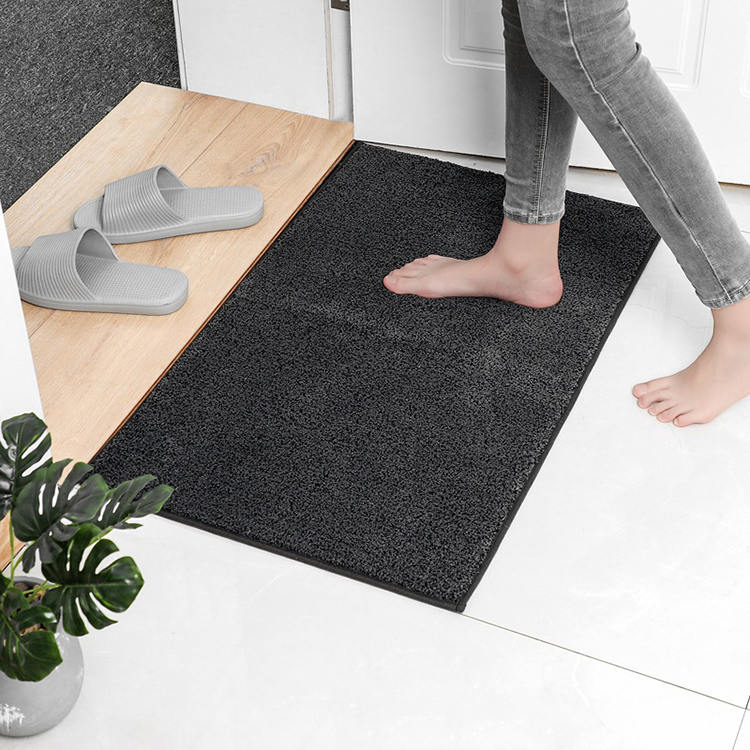
The Polaris Velvet Bath Mat is designed to meet these practical and aesthetic expectations in one product. It combines a soft polyester microfiber surface, a substantial 1650gsm weight, a plush 20mm pile height, and a TPR backing intended to reduce movement on smooth indoor floors. Available in 40*60cm, 50*80cm, and 60*90cm sizes, as well as customized dimensions, it can serve a range of spaces from compact powder rooms to larger family bathrooms.
Its solid-color appearance makes it easy to coordinate with contemporary, traditional, minimalist, and family-oriented interiors. At the same time, its water absorption, machine-washable construction, soft contact surface, and indoor versatility make it a practical choice for homes, hotels, residential developments, retail programs, and other interior projects.
This article examines the product in detail, explains how its construction supports daily performance, and explores the manufacturing strengths behind the Bene textile production system. It also compares the product’s advantages with common bath mat alternatives and provides guidance for buyers, importers, designers, and consumers who need a reliable soft-floor textile.
Polaris Velvet Bath Mat
Content
A quality bath mat must manage several requirements at the same time. It should feel comfortable, absorb water quickly, remain reasonably stable, withstand repeated washing, and maintain an attractive appearance. These requirements can sometimes conflict. A very thin mat may dry quickly but offer little cushioning. A highly absorbent mat may become heavy if its backing and fiber structure do not support effective moisture release. A soft mat may feel luxurious but fail to stay in position if the underside is poorly designed.
The Polaris Velvet Bath Mat addresses these needs through a combination of material selection, pile development, product weight, construction method, and backing material. Its polyester microfiber surface is soft enough for bare feet while offering the durability needed for repeated household use. The 20mm pile creates a thicker contact layer than a flat woven mat, giving the product a more comfortable and cushioned feel.
The 1650gsm weight also contributes to a substantial hand feel. Grammage is not the only measurement of quality, but it is an important indication of how much fiber is incorporated into a textile product. A heavier mat can provide a fuller appearance and a more stable feeling underfoot than a lightweight floor covering, provided that its construction is properly balanced.
The mat’s TPR backing is another important component. TPR, or thermoplastic rubber, is commonly used in indoor mat applications because it can provide flexibility and traction while remaining suitable for smooth flooring. The backing helps reduce shifting and skidding when the product is placed on a clean, dry indoor surface. As with all non-slip products, the floor should be kept free of excess water, dust, oil, and cleaning residue to achieve the best possible performance.
The first sensation a user notices is usually the surface feel. The Polaris Velvet Bath Mat uses a soft velvet-style microfiber layer made from polyester. Its surface is intended to feel smooth, plush, and comfortable when a person steps out of a shower or bath.
Many inexpensive floor mats use a thin or coarse surface that can feel harsh against wet feet. Other low-pile products provide little separation between the user and the hard floor. By contrast, the 20mm pile height of this bath mat creates a thicker layer of textile fibers between the foot and the floor. This gives the mat a fuller, more cushioned character and helps make everyday routines more comfortable.
The softness is especially useful in homes where the bathroom is used frequently by children, older adults, or people who prefer additional comfort while standing at a sink. It can also enhance guest bathrooms by giving visitors a more refined impression of the space.
Softness, however, should not be confused with fragility. The product is made from 100% polyester microfiber, a material widely used in home textiles because it can combine a soft hand with practical durability. Polyester fibers are also valued for their resistance to fading, helping solid colors remain visually attractive over time when the product is washed and cared for properly.
The velvet-like surface can also contribute to a warmer visual impression. Even in a bathroom with ceramic tile, stone, or vinyl flooring, the mat introduces a textile element that makes the room feel less cold and more welcoming.
Water absorption is one of the most important functions of a bath mat. A mat placed beside a shower or bathtub should draw moisture away from wet feet rather than allowing water to collect in a visible layer on top of the surface. The Polaris Velvet Bath Mat is designed with a soft microfiber contact layer that absorbs water from the feet and helps prevent moisture from remaining on the surface.
This feature supports a cleaner and more comfortable bathroom routine. When water is absorbed quickly, users are less likely to leave wet footprints across adjacent floors. This can be particularly useful in homes with wood-look flooring, laminate, or other surfaces where standing water should be minimized.
The product can also be used in front of bathroom sinks, where splashes frequently occur during handwashing, shaving, toothbrushing, or bathing children. In kitchens, it may help manage occasional water around a sink or dishwasher, although it is intended for indoor applications and should not be treated as a substitute for specialized industrial spill-control equipment.
Absorption performance depends on several factors, including fiber density, pile structure, washing condition, ventilation, and the amount of water involved. No textile mat can absorb unlimited moisture. For best results, the mat should be washed and dried regularly, and it should be allowed to dry fully between heavy-use periods.
The combination of a thick pile and microfiber surface gives this product an advantage over very thin printed fabric mats. A flat mat may offer basic protection from splashes, but it generally has less fiber volume available to capture moisture and less cushioning for the user.
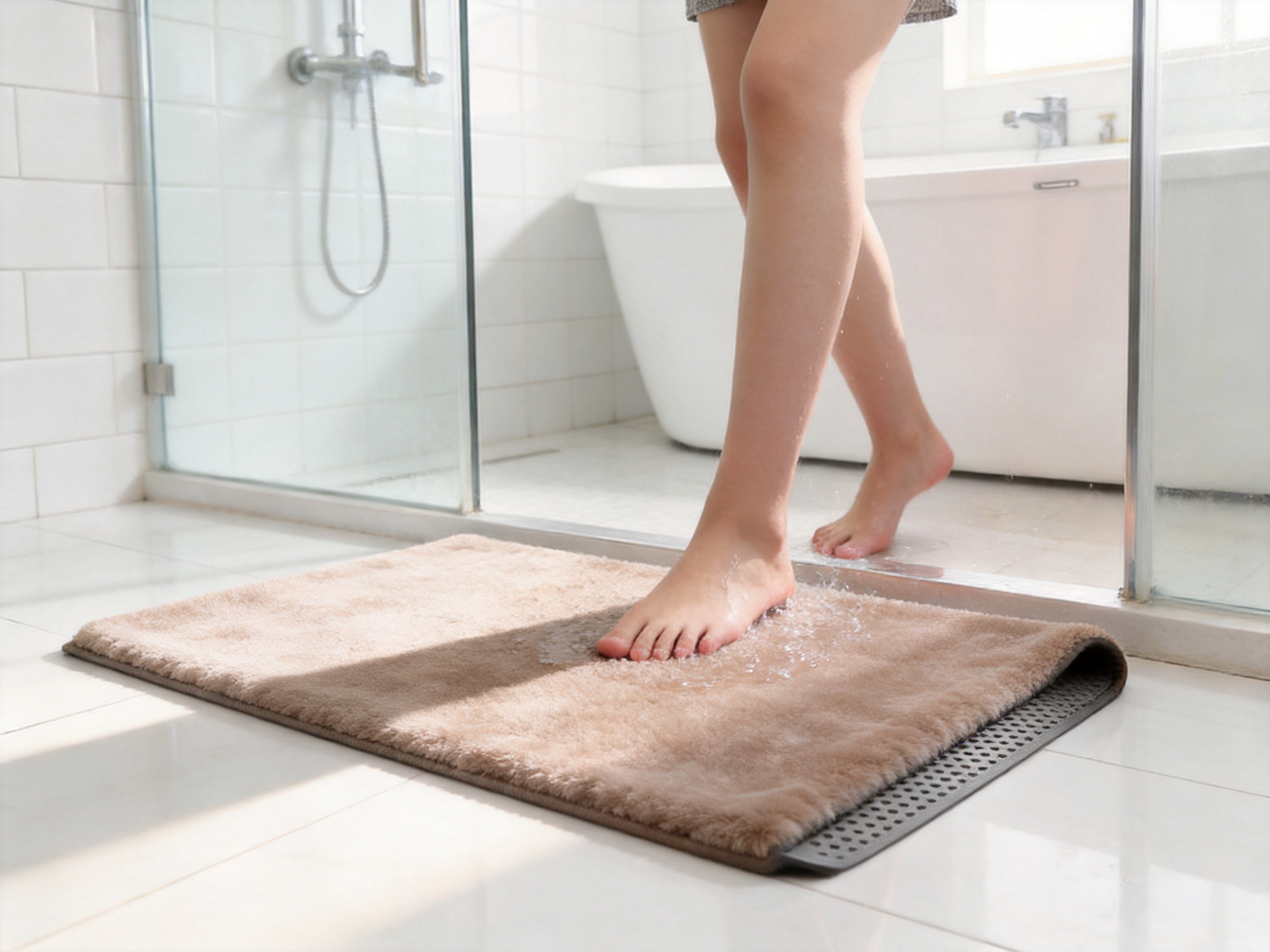
Safety is a central consideration in bathroom textile selection. Smooth bathroom floors can become slippery when exposed to water, and a mat that moves easily may create an additional hazard. The Polaris Velvet Bath Mat uses a TPR backing designed to help prevent shifting and skidding during ordinary indoor use.
The backing works by creating a more supportive interface between the textile and the floor. Compared with a simple fabric underside, TPR can provide greater friction and improved contact on many smooth surfaces. This makes it useful for tile, sealed stone, vinyl, and other common indoor flooring types.
The product should always be placed on a clean, dry, level floor. Any bath mat can move if the floor is wet underneath, if dust accumulates between the backing and the floor, or if the product is used on an unsuitable surface. Users should also inspect the backing periodically for wear and replace the mat if its non-slip performance has been significantly reduced.
The TPR backing offers a practical advantage over mats with no dedicated anti-slip layer. It also creates a more polished product specification for wholesale and project buyers who need to provide customers with an identifiable safety feature rather than a basic decorative textile.
For families, this backing can offer additional peace of mind during busy morning routines. For hospitality and property projects, it can support a more complete bathroom furnishing specification when combined with appropriate flooring maintenance and safety procedures.
Bathroom textiles face repeated exposure to water, detergents, foot traffic, and frequent cleaning. A product that looks attractive on the first day but loses its surface quality after a few washes is not a reliable long-term solution. The use of polyester microfiber supports a balance between comfort and durability.
Polyester is a strong synthetic fiber commonly selected for rugs, mats, blankets, cushions, and other household textiles. It can maintain its shape effectively, resist everyday abrasion, and dry more readily than many natural fibers. The product description also highlights fade resistance, which is especially important for solid-color mats that depend on consistent visual appearance.
The bonded construction type contributes to the product’s overall structure. A bonded construction can help integrate the surface and base layers into a unified mat body, supporting durability during repeated use. The exact production parameters may vary according to size, color, and order requirements, but the objective is to produce a stable textile article that performs consistently across its intended indoor applications.
Durability does not mean that care instructions can be ignored. Abrasive cleaners, chlorine bleach, excessive heat, and harsh mechanical treatment may damage fibers or affect the backing. Following the recommended machine-washing process is important for preserving the surface and maintaining the appearance of the product.
A bath mat is placed in an area where moisture, soap residue, hair, dust, and other household contaminants can accumulate. The ability to machine wash the mat is therefore a major practical benefit. Instead of relying only on spot cleaning or difficult hand washing, users can place the mat in a washing machine according to the recommended care process.
The suggested care method is to machine wash with cold water and mild detergent. Chlorine and bleach should be avoided. After washing, the mat can be tumble dried at low speed or hung to dry. These instructions are designed to reduce unnecessary stress on the polyester surface and TPR backing.
Regular cleaning helps maintain freshness and supports a more hygienic indoor environment. In a family bathroom, a mat may need to be washed more frequently than in a guest room. Homes with pets, young children, or high humidity may also benefit from a regular washing schedule.
Before washing, users should check the product label and remove loose dirt where possible. The mat should not be folded in a way that places excessive strain on the backing, and it should be fully dried before being returned to the floor. Prolonged dampness can create unpleasant odors and may affect the condition of any textile flooring product.
Compared with non-washable decorative rugs, a machine-washable bath mat is easier to maintain and more suitable for spaces where cleanliness is a daily concern. This feature also improves its appeal to rental properties, student residences, hotels, and other environments where straightforward care is valuable.
The Polaris Velvet Bath Mat is offered in three standard rectangular sizes: 40*60cm, 50*80cm, and 60*90cm. These dimensions provide a practical range for different bathroom layouts.
The 40*60cm option is suitable for smaller bathrooms, compact shower areas, powder rooms, and narrow spaces beside a sink or toilet. Its limited footprint makes it easy to position without overwhelming a small floor plan.
The 50*80cm option offers more coverage for common residential bathrooms. It can be placed in front of a bathtub, shower enclosure, double-use sink area, or a frequently used bathroom entrance. It is also an adaptable size for apartment and hotel applications.
The 60*90cm option provides the broadest standard coverage. It may be appropriate for larger bathrooms, family spaces, dressing areas, or areas where users want more generous protection between wet feet and the surrounding floor.
Custom sizing is available for specific requirements. This is particularly useful for hospitality projects, furniture packages, residential developers, retail collections, and bathroom layouts with unusual proportions. Custom dimensions can help reduce visible gaps, improve design coordination, and support a more tailored installation plan.
| Feature | Product Specification | Practical Benefit |
|---|---|---|
| Product type | Velvet bath mat | Designed for comfortable indoor bathroom use |
| Standard sizes | 40*60cm, 50*80cm, 60*90cm | Supports compact, standard, and larger spaces |
| Custom sizing | Available according to requirements | Useful for projects and specialized layouts |
| Material | 100% polyester microfiber | Soft feel, practical durability, and fade resistance |
| Weight | 1650gsm | Fuller structure and substantial underfoot feel |
| Pile height | 20mm | Plush contact surface and added comfort |
| Backing | TPR | Helps reduce shifting and skidding |
| Care | Machine wash with cold water and mild detergent | Convenient routine maintenance |
| Pattern | Solid color | Easy coordination with different interiors |
| Usage | Indoor | Suitable for bathrooms, kitchens, kids’ rooms, and other indoor areas |
Pattern selection can determine whether a mat integrates naturally into a room or becomes a distracting visual element. The solid-color design of the Polaris Velvet Bath Mat provides a simple and versatile foundation for interior coordination.
Solid colors work well with patterned shower curtains, tiled walls, textured towels, printed wallpaper, and decorative accessories. They can also support a minimalist bathroom where the emphasis is on clean lines and uncluttered surfaces. For commercial projects, solid colors simplify purchasing and make it easier to coordinate multiple rooms.
A neutral shade can create a calm, spa-inspired atmosphere, while a deeper color may add visual definition around a white bathtub or pale ceramic floor. Softer colors can make a compact bathroom feel more open, and richer tones can contribute warmth to a large or contemporary space.
Because the product is available in a variety of solid colors, buyers can develop coordinated collections rather than relying on a single universal shade. This is valuable for retailers and hospitality operators that want to offer customers or guests multiple style choices while retaining a consistent product format.
Color performance is also connected to care. Washing in cold water, using mild detergent, and avoiding chlorine or bleach can help preserve the appearance of the textile. Although polyester is recognized for its resistance to fading, all colored textiles benefit from appropriate maintenance and protection from unnecessary chemical exposure.
The primary application is the bathroom, where the mat can be positioned beside a shower, bathtub, vanity, or sink. However, its design and specifications allow it to serve other indoor locations as well.
In the bathroom, the mat offers a soft landing area for wet feet and helps manage moisture around bathing zones. Its rectangular form makes it easy to align with common fixtures and floor plans. The TPR underside supports stability, while the microfiber surface contributes to water absorption and comfort.
Placed near a kitchen sink or food preparation zone, the mat can provide a comfortable standing surface and help absorb small amounts of water from routine splashing. It may also reduce the cold sensation of hard flooring during longer periods of food preparation.
The soft surface may be suitable for selected indoor children’s spaces, especially where a washable textile is preferred. Parents and caregivers should place the mat on a clean, level floor and supervise children according to the needs of the environment. It should not be used as a substitute for dedicated playground safety flooring.
The mat may also be used in laundry rooms, dressing areas, entry points within the home, or other indoor locations where a soft, washable textile is useful. Its solid color and rectangular profile allow it to transition between rooms without creating a mismatched appearance.
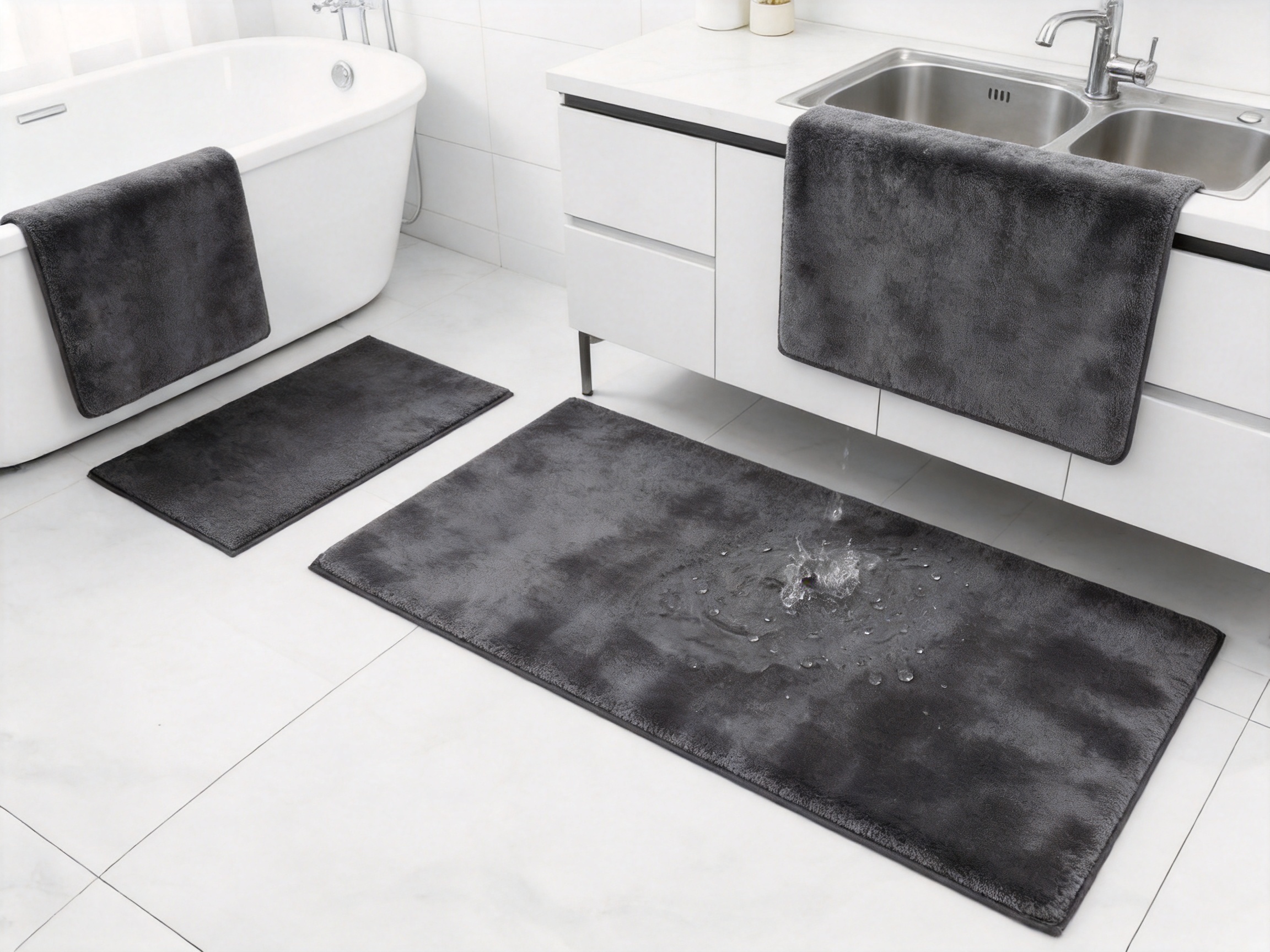
Many bath mats compete primarily on price, but the lowest purchase cost does not always represent the best value. A product should be evaluated according to its comfort, expected service life, ease of cleaning, appearance, and ability to meet the requirements of its intended environment.
Compared with thin printed fabric mats, the Polaris Velvet Bath Mat provides a thicker 20mm pile and a heavier 1650gsm structure. This can create a more substantial and comfortable experience. Thin mats may be convenient for temporary use, but they generally offer less cushioning and may look less luxurious in a carefully designed bathroom.
Compared with mats made from coarse natural fibers, the polyester microfiber surface is softer against bare feet and may dry more readily. Natural materials can offer a distinctive aesthetic, but they may require more careful moisture management and may not provide the same combination of soft velvet feel, color consistency, and machine-washable convenience.
Compared with mats without a dedicated non-slip layer, the TPR backing provides an important functional advantage. A decorative surface alone does not address movement on smooth flooring. The backing gives buyers a clearer safety-oriented specification and supports better day-to-day usability.
Compared with highly patterned designs, the solid-color construction provides greater flexibility for room coordination. It can be used across multiple bathroom styles and can be included in standardized purchasing programs without being tied to one short-lived decorative trend.
Compared with products available only in one size, the range of standard dimensions and the possibility of customization make the product more adaptable. Buyers can select a size that fits the room rather than forcing the room to accommodate an unsuitable mat.
The performance of a finished bath mat is strongly influenced by the capabilities of the manufacturer. Raw materials and design specifications are important, but so are production control, engineering knowledge, supply-chain coordination, quality management, and the ability to respond to customized requirements.
Zhejiang Benyi Textile Technology Co., Ltd. is located in Shaoxing, Zhejiang Province, a region widely known for its textile industry and described by the company as the “World Textile Capital.” This location provides access to an established textile ecosystem, experienced labor, material resources, production partners, and industry knowledge.
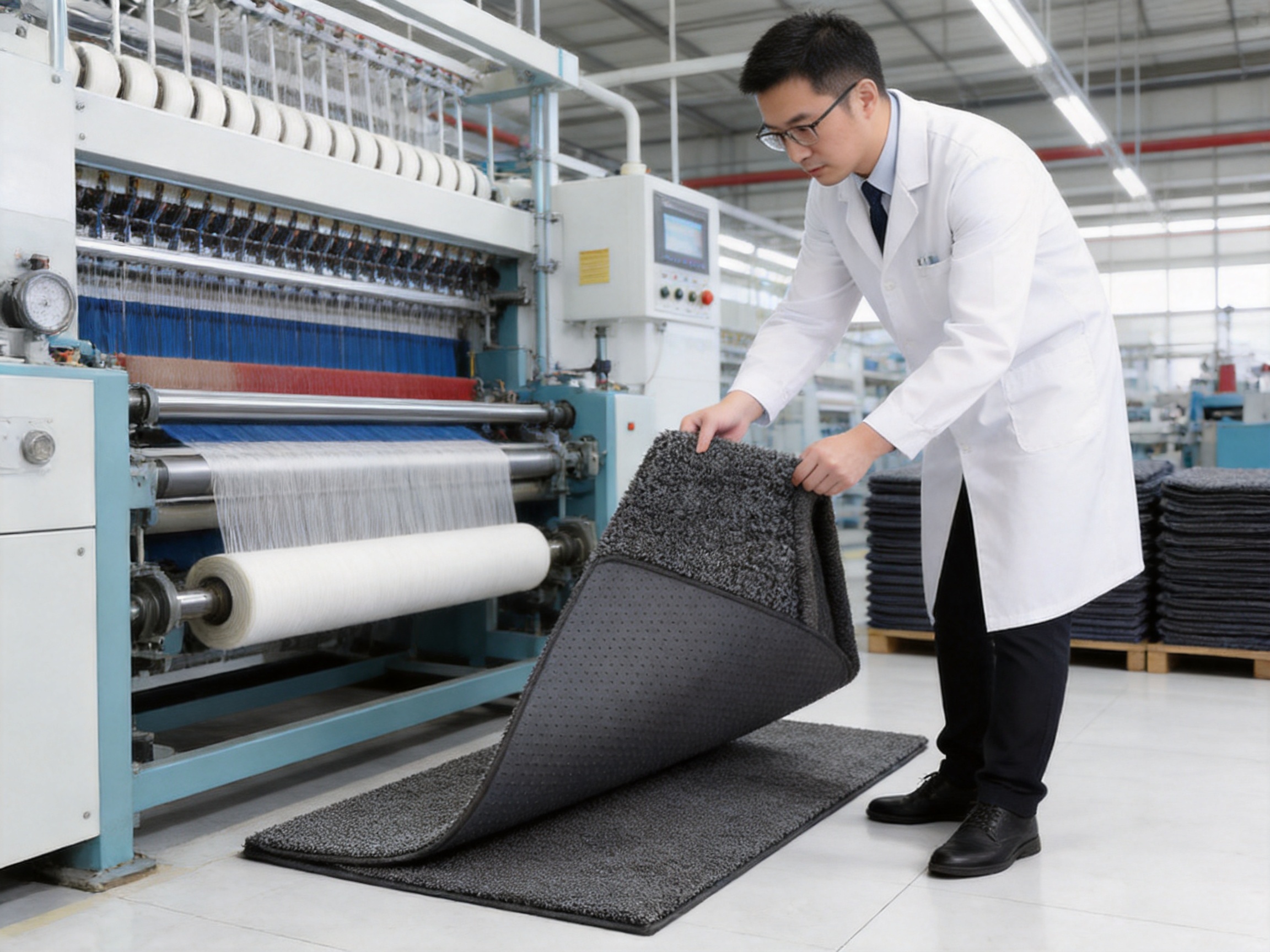
The company focuses on carpets, rug fabrics, and finished textile products. Its production model combines surface and backing processes, helping simplify carpet and mat production compared with more fragmented traditional methods. By coordinating these stages, the company aims to improve production efficiency, control quality, and manage lead times more effectively.
The company operates its own weaving, dyeing and printing factories, as well as finished carpet processing factories. This level of vertical integration can provide several benefits. It allows technical teams to communicate more directly with production departments, helps reduce unnecessary delays between manufacturing stages, and makes it easier to investigate quality issues at their source.
For buyers, integrated production can also improve consistency between approved samples and bulk orders. Color, surface texture, backing application, finishing, cutting, and packaging can be coordinated through a more controlled supply chain. This is especially important for custom programs in which a buyer needs repeatable specifications across multiple production batches.
The company has a team of more than 20 fabric engineers and develops new carpet fabrics each quarter in response to market trends. This engineering capacity supports the development of products that are not limited to existing standard constructions.
For a product such as the Polaris Velvet Bath Mat, fabric engineering may involve evaluating fiber selection, pile density, surface softness, backing compatibility, color performance, dimensional stability, washing behavior, and production efficiency. Each of these factors influences the final user experience.
Product development is also important because buyers increasingly request more than a standard catalog item. They may require a specific size, color range, packaging method, label design, backing specification, or coordinated collection. A manufacturer with internal technical resources is better positioned to review these requirements and determine how they can be translated into stable production specifications.
Customization can be valuable for private-label retailers, hotel groups, property developers, home textile distributors, and e-commerce brands. Rather than selecting a product that only approximately meets the intended use, a buyer can work toward a version aligned with the dimensions, colors, and positioning of a particular market.
The company’s ability to produce both fabrics and finished products also supports broader sourcing programs. A buyer may be able to coordinate bath mats with area rugs, kitchen mats, door mats, carpet fabric, blankets, or sofa cushions through one textile manufacturing organization. This can make collection development more efficient and help maintain a consistent material or color concept across multiple home furnishing categories.
Quality control in textile production involves more than checking the appearance of finished goods. It includes the inspection of raw materials, monitoring of production settings, checking of dimensions, verification of color consistency, assessment of surface defects, examination of backing application, and review of packaging before shipment.
Vertical integration can strengthen this process because production information is available across more stages of the manufacturing chain. If a surface issue, color variation, or bonding problem is identified, the responsible team can trace the issue more efficiently and implement corrective action.
Lead-time control is equally important for international buyers. Delays in fabric production, dyeing, finishing, or packing can affect retail launches, promotional campaigns, seasonal assortments, and project schedules. A manufacturer with its own facilities and coordinated processing capabilities can work toward more predictable production planning.
No manufacturer can eliminate every supply-chain variable, and actual lead times will depend on order volume, customization, season, raw material availability, and shipping arrangements. Nevertheless, a more integrated manufacturing structure can reduce reliance on multiple unrelated suppliers and improve communication throughout the order process.
Modern textile buyers are paying increased attention to material sourcing, water consumption, chemical management, and product durability. A product that lasts longer and can be maintained effectively may reduce the need for frequent replacement, which is one element of a more responsible consumption model.
Zhejiang Benyi Textile Technology Co., Ltd. states that it is committed to ecological and environmental protection and to improving consumers’ health experiences. The company invests in sustainable materials and production methods, including recycled polyester and water-saving dyeing techniques. It also states that it has passed OEKO-TEX® and GRS certifications.
These initiatives are relevant to customers seeking textile partners with an awareness of environmental requirements. Recycled polyester can help incorporate recovered material into textile production, while water-saving dyeing methods may reduce resource consumption compared with less efficient processes. The practical value of any sustainability claim depends on the specific certified scope, product composition, production location, and current documentation, so commercial buyers should request the appropriate certificates and supporting records for each order.
Durability and washability also contribute to product value. A washable bath mat that maintains its appearance and function over repeated use can be more resource-efficient than a product that must be discarded after a short period. Proper care, responsible laundering, and timely replacement when the backing is worn are all part of a sensible product life cycle.
Wholesale buyers should evaluate the product according to the needs of their target market. Important questions include which sizes are most appropriate, whether a single color or multiple colors should be offered, how the product will be packaged, what labeling is required, and whether customized dimensions are necessary.
Retailers may prefer a compact assortment built around the three standard sizes. The 40*60cm size can address smaller rooms, while the 50*80cm and 60*90cm sizes can serve customers seeking broader coverage. Offering more than one size helps consumers choose according to their floor plan and budget.
Hospitality buyers may prioritize consistent color, repeatability, non-slip performance, and ease of laundering. For these customers, sample approval and bulk-production inspection are particularly important. Hotels and serviced apartments may also benefit from standardizing several rooms with one recognizable mat specification.
Project buyers should consider custom sizing and color matching. A large residential development, retail store, or interior design program may require products that coordinate with a specific palette or fit a non-standard space. Early technical discussion is recommended because custom requirements can affect minimum order quantities, sampling time, production scheduling, and packaging.
Importers should also review carton dimensions, unit weight, product folding or rolling methods, shipping marks, labeling, and destination-market compliance requirements. Clear specifications reduce the risk of misunderstanding between the buyer and manufacturer.
Correct care helps preserve the softness, color, absorption, and backing performance of the bath mat. Users should machine wash with cold water and a mild detergent. Chlorine and bleach should not be used because they may weaken fibers, alter colors, or affect the backing.
Low-speed tumble drying or hanging is recommended. Excessive heat may create unnecessary stress on textile fibers or backing materials. If the mat is hung to dry, it should be supported in a way that avoids permanent creasing or distortion.
The mat should be washed whenever it becomes visibly soiled or develops an odor, and it should not remain damp for extended periods. Bathrooms with limited ventilation may require more frequent drying and cleaning. Periodically lifting the mat allows the floor beneath it to be cleaned and dried.
Do not place the product over a wet floor. The TPR backing is designed to help reduce movement, but it cannot compensate for flooding, heavy moisture beneath the mat, oily residue, or an uneven surface. Users should make sure that both the floor and backing are clean before placing the mat back in position.
Following these simple steps can help maximize the useful life of the product and maintain the comfort that distinguishes it from thinner or less carefully constructed alternatives.
Before purchasing, measure the available floor space and consider how doors, drawers, cabinets, and bathroom fixtures open. A mat should provide useful coverage without blocking movement or creating a raised obstruction in a doorway.
The 40*60cm size may work well beside a compact shower or in front of a single washbasin. The 50*80cm size is a balanced choice for many standard residential bathrooms. The 60*90cm size can offer more generous coverage in larger rooms or in front of a bathtub.
For a double vanity, a wider custom format may be more suitable than placing two small mats side by side. For a narrow galley-style bathroom, a smaller size may be easier to position and maintain. Custom sizing should be considered when a project requires exact alignment with a furniture plan or interior design drawing.
The product is rectangular, which makes it straightforward to place parallel to walls, shower screens, bathtubs, and vanity units. Before final installation, users should test the selected position to confirm that the mat remains clear of doors and does not create a trip risk.
Purchasing a bath mat is a direct consumer decision, but sourcing a bath mat for a business is a manufacturing partnership decision. Businesses need confidence that the supplier can deliver consistent products, communicate clearly, handle changes, and support future orders.
A company specializing in carpets, rug fabrics, and finished products can offer broader knowledge than a supplier focused only on one narrow category. This broader expertise may help buyers develop coordinated collections and identify practical improvements in material, construction, color, and finishing.
The manufacturing capabilities of Zhejiang Benyi Textile Technology Co., Ltd. include weaving, dyeing and printing, and finished-product processing. Its team of fabric engineers develops new materials according to market trends and customer needs. This structure supports a product strategy based not only on current specifications but also on continued design and technical development.
The company’s location in Shaoxing places it within a major textile manufacturing region. Its focus on ecological development, production efficiency, customized service, and supply-chain control adds value for buyers who require more than a generic catalog product.
For the Polaris Velvet Bath Mat, these strengths support the combination of a soft surface, durable polyester microfiber, substantial weight, thick pile, TPR backing, flexible sizing, solid-color options, and machine-washable care. The finished product is therefore supported by both user-oriented design and an organized manufacturing foundation.
The primary use is as an indoor bath mat placed beside showers, bathtubs, sinks, and other bathroom fixtures. It can also be used in kitchens, children’s indoor areas, laundry rooms, dressing spaces, and other suitable interior locations.
The mat is made from 100% polyester microfiber. Polyester microfiber provides a soft surface, practical durability, and resistance to fading when maintained according to the recommended instructions.
The standard sizes are 40*60cm, 50*80cm, and 60*90cm. Customized sizes are also available for specific residential, commercial, hospitality, and retail requirements.
Yes. The product is designed for machine washing. Cold water and mild detergent are recommended, while chlorine and bleach should be avoided. The mat can be tumble dried at low speed or hung to dry.
Yes. The backing material is TPR, which is designed to help prevent shifting and skidding on suitable clean, dry indoor floors. The backing should be kept clean, and the mat should not be placed over a wet or oily surface.
The pile height is 20mm. This creates a plush and comfortable contact surface suitable for bare feet and gives the mat a fuller feel than many thin fabric alternatives.
GSM means grams per square meter. A specification of 1650gsm indicates a substantial textile weight, contributing to the mat’s dense, full, and comfortable hand feel. Actual performance also depends on fiber structure, bonding, backing, and finishing quality.
The listed design is a solid-color pattern. A range of solid colors can be offered so that buyers can coordinate the mat with different interior styles and product collections.
The product is intended for indoor use. It should not be treated as an outdoor mat or exposed to prolonged weather, direct rain, standing water, or harsh outdoor conditions.
The product is manufactured by Zhejiang Benyi Textile Technology Co., Ltd., a textile technology company based in Shaoxing, Zhejiang Province, China. The company specializes in carpets, rug fabrics, and finished textile products.
Yes. Custom sizing and customer-specific services are available according to production requirements. Buyers should discuss color, dimensions, packaging, labeling, order quantity, sampling, and delivery schedules with the manufacturer before placing a production order.
Its principal advantages include a 20mm plush pile, 1650gsm weight, soft polyester microfiber surface, TPR backing, water absorption, machine washability, solid-color flexibility, multiple standard sizes, and the possibility of customization. Together, these features provide a more complete balance of comfort, appearance, safety support, and maintenance convenience.
The Polaris Velvet Bath Mat is designed to provide a practical and comfortable solution for modern indoor spaces. Its polyester microfiber surface delivers a soft velvet feel, while the 20mm pile and 1650gsm construction provide substantial cushioning and a fuller appearance. Water absorption helps manage moisture from wet feet and everyday splashes, and the TPR backing helps reduce movement on suitable indoor floors.
Its machine-washable care instructions make routine maintenance straightforward, while the solid-color design supports a wide range of interior styles. The availability of 40*60cm, 50*80cm, and 60*90cm sizes makes the product suitable for different room layouts, and custom sizing expands its value for commercial and project-based applications.
Behind the product is a textile manufacturer with integrated weaving, dyeing and printing, and finished-product processing capabilities. Its fabric engineering team, Shaoxing location, customized service, supply-chain control, and stated commitment to environmental responsibility provide a strong foundation for continued product development and reliable sourcing.
For consumers, the mat offers everyday softness, absorbency, washability, and support. For wholesalers and project buyers, it offers a flexible specification that can be adapted to varied markets and coordinated with broader carpet and home textile collections. As a result, it represents a balanced option for buyers seeking more than a basic decorative floor mat.
1. Product specification sheet for the Polaris Velvet Bath Mat, including material, weight, pile height, construction, backing, dimensions, care instructions, and intended usage.
2. Zhejiang Benyi Textile Technology Co., Ltd. company information regarding textile manufacturing, weaving, dyeing, printing, finished-product processing, engineering development, and customized services.
3. General textile product-care principles for polyester microfiber floor coverings, including cold-water washing, mild detergent use, low-temperature drying, and avoidance of chlorine bleach.
4. General indoor floor-covering considerations concerning moisture absorption, non-slip backing, bathroom placement, ventilation, and routine maintenance.
5. General textile sustainability information concerning recycled polyester, water-saving dyeing processes, OEKO-TEX® certification, and Global Recycled Standard certification.

ADD: No.75 Zhenyuan Road, Yuecheng District, Shaoxing City, Zhejiang Province, China 312000

Tel : +86-189 6750 9795

FAX : +86-0575-8803 2773

Email : fisher@benetextile.com

Copyright © Zhejiang Benyi Textile Technology Co., Ltd. All Rights Reserved. Carpets and Rugs Manufacturer

 English
 Français
 Deutsch
 عربى
عربى