

Lu Wanyao — After-Sales Service Supervisor
 Home / Author / Lu Wanyao — After-Sales Service Supervisor / Embroidered Felt Door Mats: Durable, Absorbent, and Customizable Entrance Solutions
 2026.09.24
 Lu Wanyao — After-Sales Service Supervisor
Content
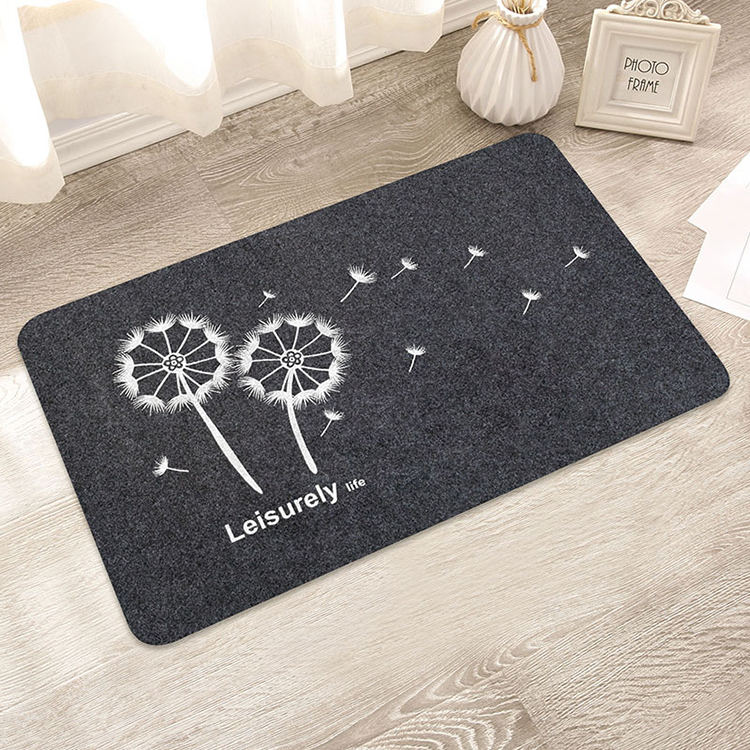
A well-designed door mat performs several important functions at the entrance of a home, office, hotel, shop, apartment building, or other commercial space. It helps remove dirt from footwear, absorbs moisture, protects interior flooring, reduces the amount of cleaning required, and creates a welcoming first impression. The Embroidered Felt Door Mat combines these practical responsibilities with a decorative embroidered surface, a comfortable 6mm profile, and a stable PVC backing designed for everyday use.
Produced by Zhejiang Benyi Textile Technology Co., Ltd., the mat is developed for customers who need more than a thin decorative floor covering. Its polyester microfiber construction offers durability and fade resistance, while the hard wool felt-inspired surface increases friction for improved dust removal. The absorbent upper layer helps collect water from wet shoes, and the waterproof PVC backing helps prevent moisture from reaching the floor beneath.
Available in standard sizes of 40*60cm, 50*80cm, and 60*90cm, the product can also be customized for specific applications. This combination of practical performance, visual personalization, flexible sizing, and controlled textile manufacturing makes it suitable for residential and commercial buyers seeking a reliable entrance mat solution.
Embroidered Felt Door Mat
The entrance is one of the highest-traffic areas in a building. Outdoor dust, soil, sand, rainwater, and other debris are regularly carried indoors on footwear. Without an effective entrance mat, these contaminants can spread quickly across tile, wood, vinyl, stone, laminate, and other floor surfaces. Frequent foot traffic can also produce wear marks and increase the need for cleaning and maintenance.
A suitable door mat creates a transition zone between the outdoor environment and the interior. Its surface gives footwear an area where dust and moisture can be removed before people continue into the building. When the mat is absorbent and sufficiently textured, it can support cleaner floors and contribute to a more comfortable indoor environment.
However, not every mat offers the same level of performance. Very thin mats may slide, curl, or become saturated quickly. Lightweight printed mats may provide visual appeal but lack adequate friction and water absorption. Some low-quality rubber-backed products may deteriorate, produce an unpleasant odor, or fail to remain stable after repeated use. A professional entrance mat therefore needs a balance of surface texture, density, thickness, absorbency, backing strength, appearance, and ease of care.
The Embroidered Felt Door Mat addresses these requirements through a bonded polyester construction, a hard felt-style microfiber surface, and a PVC backing. Rather than relying on appearance alone, it is designed as a functional textile product for daily entrance use.
| Product name | Embroidered Felt Door Mat |
| Category | Door Mat |
| Brand | Bene |
| Available sizes | 40*60cm, 50*80cm, 60*90cm, or customized sizes |
| Material | Polyester microfiber |
| Weight | 1100–1200gsm |
| Pile height | 6mm |
| Construction | Bonded |
| Back material | PVC |
| Shape | Rectangular |
| Pattern | Embroidered |
| Application | Indoor and outdoor use |
| Care method | Water wash |
| Special features | Non-slip performance, washable construction, and water absorption |
The specifications show that the product is designed as a substantial floor mat rather than a lightweight accent piece. A weight range of 1100–1200gsm gives the mat a denser and more stable feel, while the 6mm thickness provides cushioning without creating an excessively high threshold at most entrances. The rectangular form is compatible with standard doorways, corridors, utility entrances, balconies, kitchens, and commercial access points.
The main material is polyester microfiber. Polyester is widely used in floor textiles because it can provide strength, dimensional stability, color retention, and resistance to routine wear. In microfiber form, the material can create a large effective surface area, helping the mat collect fine dust and absorb moisture from footwear.
The product information identifies the construction as 100% polyester microfiber. This material choice supports durability and fade resistance, two important characteristics for a mat placed near an entrance. Door mats are exposed to repeated foot traffic, friction from shoes, dust, occasional moisture, and frequent cleaning. A surface that cannot tolerate these conditions may flatten, lose its appearance, or become difficult to maintain.
Compared with many simple flat fabric mats, the polyester microfiber surface offers a more functional texture. Its fibers can interact with the sole of a shoe, helping loosen and hold small particles rather than allowing all debris to pass directly onto the indoor floor. The material is also suitable for dyed or embroidered designs, enabling the product to serve both practical and decorative purposes.
Polyester is also useful for buyers who require consistent product specifications in larger orders. Its manufacturing properties allow textile producers to control weight, color, surface appearance, and finished dimensions across production batches. This consistency is particularly valuable for hospitality projects, retail programs, property developments, and private-label collections.
The mat includes a hard wool felt design intended to increase friction and improve dust removal. This surface concept is important because effective cleaning begins with contact between the footwear and the mat. If the surface is too smooth, dirt may remain on the sole. If the surface is too loose or delicate, it may not tolerate repeated use.
The felt-style layer provides a firm but comfortable texture. It is structured to engage with the tread of footwear while maintaining a relatively low 6mm profile. This makes it suitable for entrances where users need a mat that feels substantial but does not create an unnecessarily high step.
The friction generated by the surface can help remove dust, small particles, and dry debris. The mat can be shaken or brushed to release accumulated dirt, while water washing can be used when deeper cleaning is required. This straightforward maintenance approach is convenient for households and commercial users that need a product with uncomplicated care requirements.
Compared with a basic smooth woven mat, the felt-inspired surface offers a more purposeful cleaning function. Compared with very deep-pile products, the 6mm construction may be easier to vacuum, shake, brush, and position beneath doors. Its balanced profile is useful for locations where frequent cleaning and easy access are priorities.
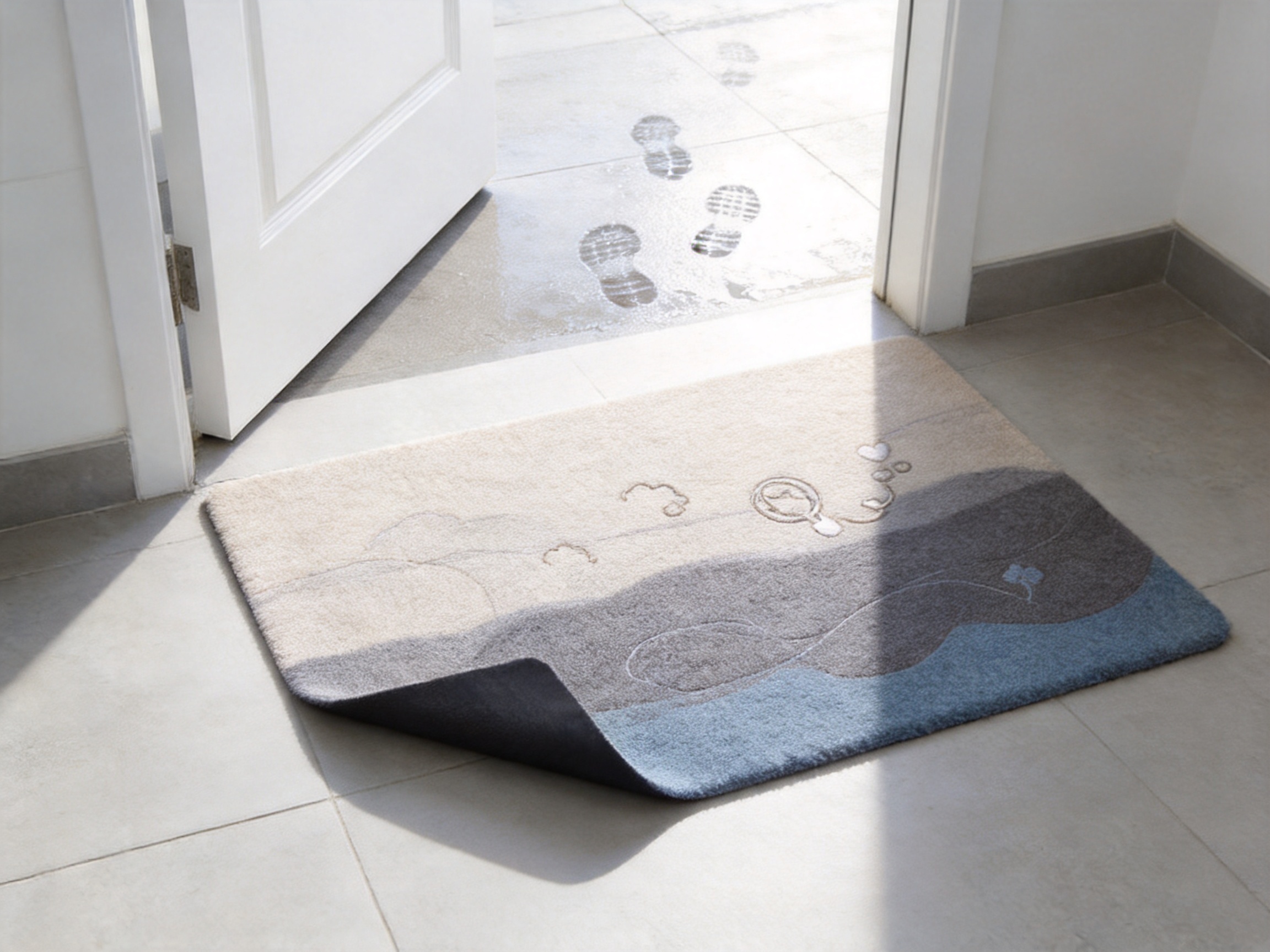
Wet footwear is a common source of interior floor contamination. Rain, snow, damp pavement, and freshly washed outdoor areas can leave shoes carrying a significant amount of moisture. When this moisture is transferred to indoor flooring, it can create slippery spots, water marks, surface deterioration, and additional cleaning work.
The Embroidered Felt Door Mat is designed with a hard microfiber layer that can absorb water from wet shoes. The textile surface provides contact points where moisture can be captured before users walk farther into the building. While no mat can replace proper cleaning during severe weather, an absorbent entrance layer can significantly improve day-to-day moisture control.
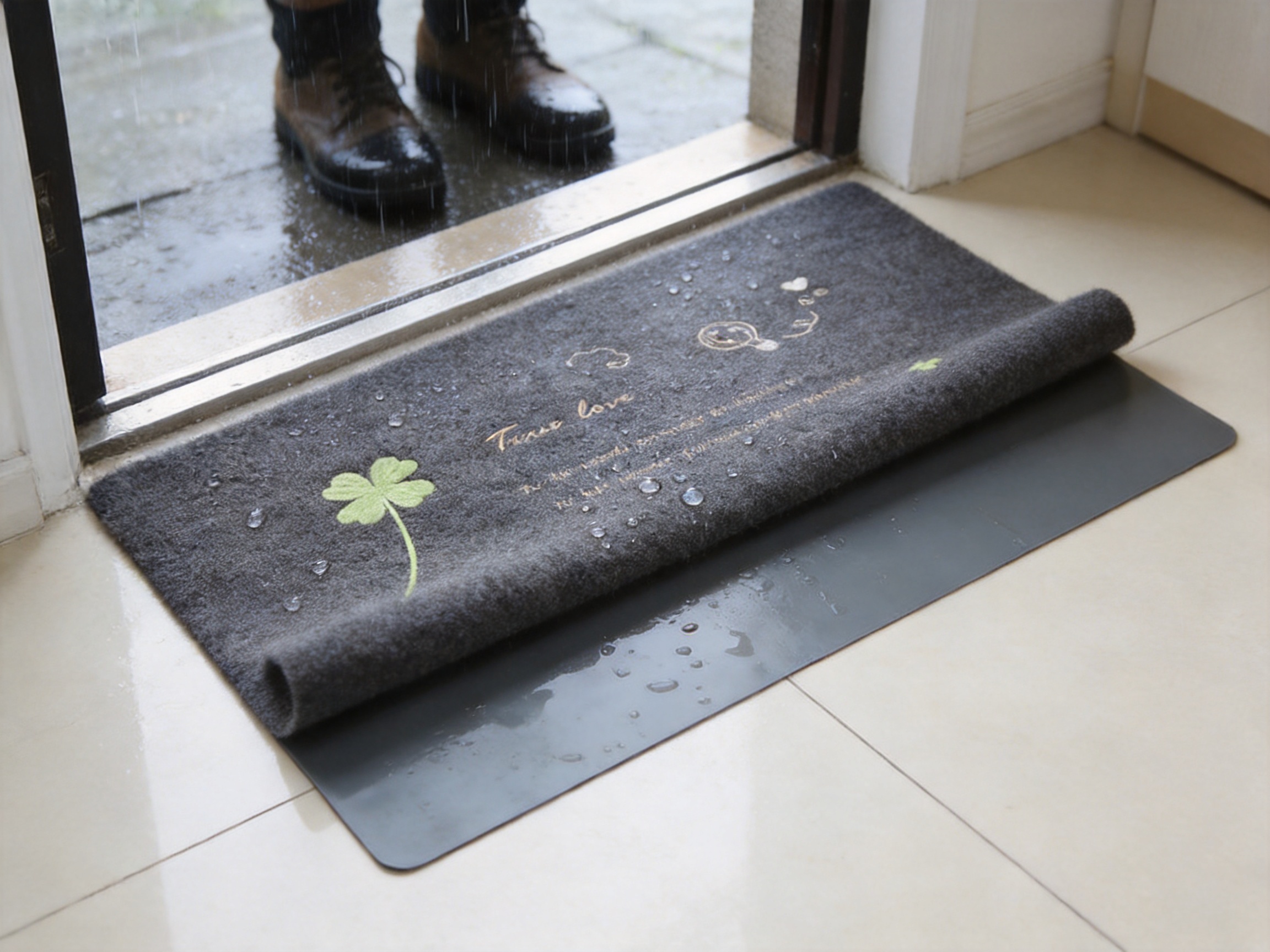
The PVC underside adds another layer of protection. PVC is waterproof and helps prevent absorbed moisture from seeping through to the floor below. This is especially useful on wood, laminate, vinyl, and other flooring materials that may be sensitive to prolonged contact with water. The backing also helps keep moisture contained within the mat until it can be removed through drying or washing.
Proper placement and maintenance remain important. The mat should be laid flat on a clean, suitable surface and allowed to dry thoroughly after heavy saturation. Regular shaking, brushing, or water washing helps prevent dirt from blocking the fibers. With appropriate care, the surface can continue to perform as a moisture-control barrier at the entrance.
A door mat that shifts underfoot can be inconvenient and potentially unsafe. Movement is particularly common on smooth surfaces such as ceramic tile, polished stone, laminate, and finished wood. The product uses a strong PVC backing to help prevent shifting and skidding during normal use.
The backing adds weight and contact with the floor, helping the mat remain in position as people enter and exit. This stable construction is useful in homes with children or older residents, as well as in stores, offices, and other areas where multiple people may walk over the mat throughout the day.
In addition to its non-slip function, the PVC backing helps isolate moisture from the floor. The backing is waterproof, so water collected by the upper layer is less likely to pass directly through. It also contributes to the overall structural integrity of the mat, helping the product retain a finished rectangular shape during everyday handling.
Compared with mats that use only a thin textile underside, the PVC-backed design offers a more secure placement solution. Compared with some loose rubber or low-density backing materials, the bonded PVC construction is intended to provide a durable and consistent base. Buyers should still ensure that the installation surface is clean, dry, level, and suitable for a textile mat.
Function is essential for an entrance mat, but appearance also influences purchasing decisions. A door mat is often one of the first products visitors see when entering a property. The embroidered pattern adds visual detail and gives the mat a more refined appearance than a plain utility mat.
Embroidery can be used to create decorative motifs, coordinated patterns, text, symbols, or customized visual elements, depending on the project requirements. This makes the product suitable for homes, hospitality settings, retail stores, offices, branded premises, and property management applications where the entrance should reflect a specific design style.
The design can complement a range of interior themes. Neutral embroidery may support minimalist interiors, while stronger patterns can create a more distinctive entrance feature. In commercial environments, a customized mat may help reinforce a visual identity without requiring a large sign or permanent floor installation.
The decorative surface does not replace the functional qualities of the mat. Instead, it combines appearance with a textured, absorbent textile layer. This is a key advantage over basic plain mats that may perform adequately but offer limited personalization. Buyers can evaluate embroidery options according to color, motif, scale, and intended placement.
The product is offered in three standard dimensions: 40*60cm, 50*80cm, and 60*90cm. These sizes cover many common doorways and residential entrance areas. The smaller format can be useful for compact apartment entries, interior doors, balconies, and individual access points. The medium size provides broader coverage for standard residential doors and office entrances. The largest listed size can cover a wider approach area and provide more room for users to wipe or dry their footwear.
Custom sizing is also available. This is important for projects with non-standard doors, long corridors, wide commercial entrances, elevator lobbies, hospitality spaces, and coordinated interior schemes. A customized mat can be developed to fit a particular entrance width, clearance requirement, or design layout.
When choosing a size, buyers should consider the width of the door, the direction in which it opens, the amount of available floor space, and the expected level of traffic. The mat should not interfere with door movement. In high-traffic locations, a larger surface may provide more effective contact time and reduce the amount of moisture and dirt transferred beyond the entrance.
Custom production also gives professional buyers greater control over project consistency. Several entrances can receive mats with coordinated dimensions and embroidery, while different areas can use sizes suited to their individual floor plans. This flexibility is an advantage over mass-market products available only in a narrow selection of fixed dimensions.
The Embroidered Felt Door Mat is specified for indoor and outdoor use. Indoor applications include residential entryways, apartment corridors, bedrooms, kitchens, utility rooms, offices, shops, hotels, reception areas, and building lobbies. Outdoor applications may include sheltered porches, covered entrances, balconies, garages, and other locations where the mat is protected from extreme exposure.
At a main entrance, the mat can act as the first stage of a dirt and moisture management system. At an interior transition, it can provide a comfortable and decorative layer between different rooms. In a kitchen, the absorbent surface can help manage occasional splashes, although it should not be treated as a replacement for immediate spill cleanup. In a bathroom or utility area, the mat can provide a soft standing surface while helping collect water from footwear or surrounding activity.
For outdoor use, sheltered placement is recommended to support longer service life. Prolonged exposure to intense sunlight, heavy rainfall, standing water, or extreme environmental conditions may affect any textile product over time. Proper drainage, regular cleaning, and adequate drying can help preserve the surface and backing.
Commercial users can place the mats at entrances to offices, shops, showrooms, clinics, hotels, restaurants, and public facilities. The combination of water absorption, non-slip backing, custom sizing, and embroidered appearance makes the product suitable for spaces where both performance and presentation matter.
The market includes many simple door mats made from thin fabric, low-density fiber, plain rubber, or unstructured textile layers. These products may be inexpensive and suitable for light use, but they do not always provide a balanced combination of density, absorbency, stability, and design flexibility.
The Embroidered Felt Door Mat has several advantages over basic alternatives. First, its 1100–1200gsm weight gives it a more substantial construction than very lightweight mats. A heavier textile can feel more stable and better suited to regular foot traffic.
Second, the 6mm felt-style surface provides a practical middle ground. It is thick enough to offer a comfortable and functional textile layer, but not so deep that it becomes difficult to clean or creates a major transition at the doorway.
Third, the polyester microfiber surface supports both dust removal and water absorption. Some decorative mats focus primarily on appearance, while some utility mats offer limited visual appeal. This product is designed to combine both roles.
Fourth, the PVC backing provides non-slip support and waterproof separation from the floor. A textile surface without a stable backing may shift or allow moisture to pass through. The backing helps address both issues.
Fifth, embroidery and custom sizing allow buyers to specify a product that matches the environment. Standard mass-market mats may offer only a few colors and sizes, whereas customized production can support coordinated commercial or residential programs.
Finally, the mat is washable with water and can also be cleaned by shaking or brushing. Simple maintenance reduces the complexity of ownership and supports continued use in areas where dust and moisture accumulate quickly.
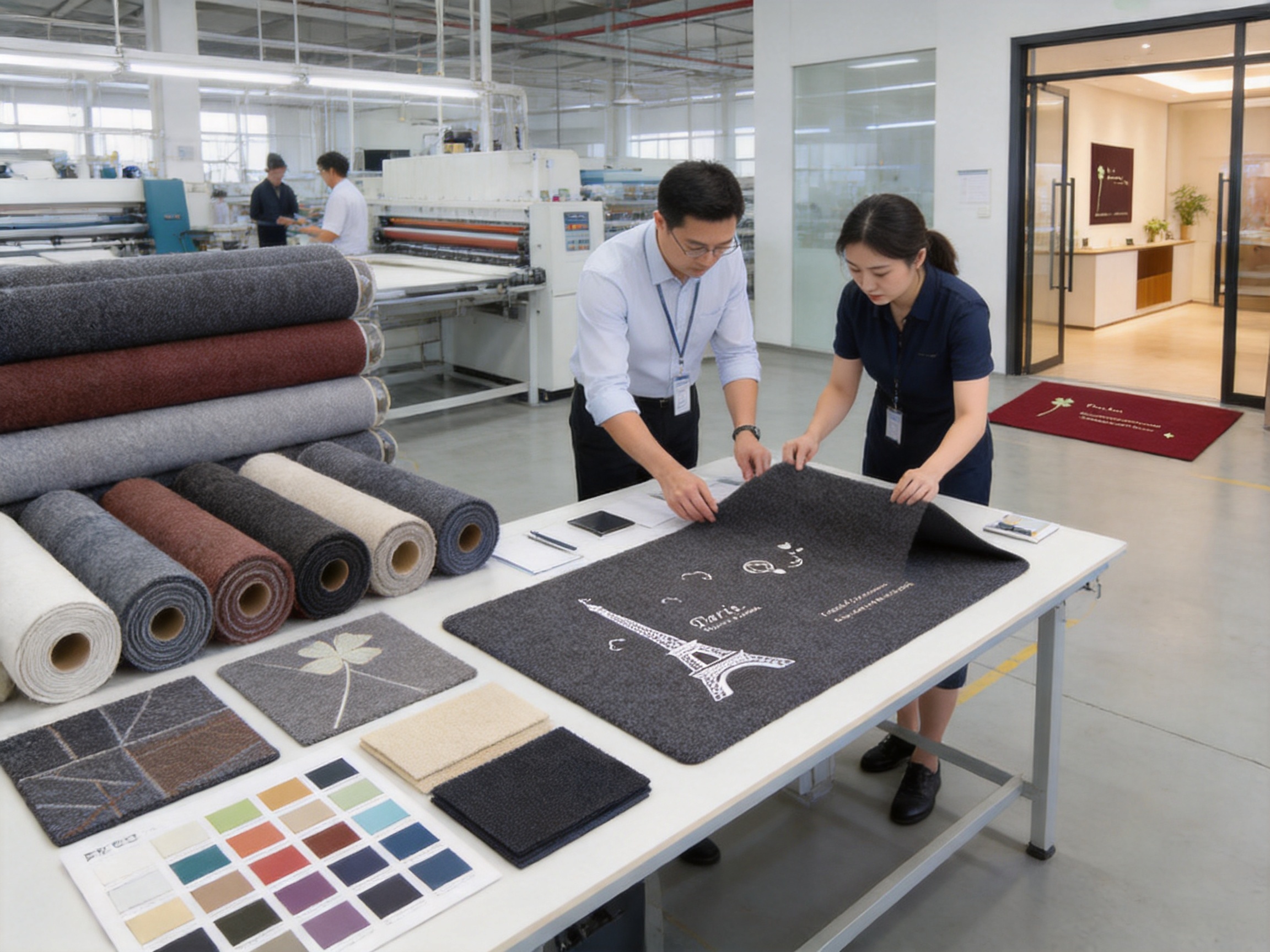
Zhejiang Benyi Textile Technology Co., Ltd. is located in Shaoxing, Zhejiang Province, a region recognized as an important textile manufacturing center. The company focuses on textile technology, carpets, rug fabrics, and finished carpet products. Its production model covers multiple stages of the supply chain, including weaving, dyeing and printing, and finished carpet processing.
Control across these stages can provide important benefits to buyers. When surface materials, colors, patterns, backing processes, and final finishing are managed through a coordinated manufacturing system, it becomes easier to maintain consistency and respond to specifications. It can also help reduce communication gaps between separate suppliers and improve control over lead times.
The company combines carpet surface and backing processes to simplify production compared with traditional models that may involve more separate operations. This approach is intended to improve efficiency and reduce production complexity. For customers, a more integrated process can support smoother project management, especially when ordering customized products or multiple related textile items.
The company also has a team of more than 20 fabric engineers. These specialists develop new carpet fabrics based on market trends and customer needs. Their work supports ongoing product development, material experimentation, surface design, and customization. For buyers seeking private-label or project-specific products, access to textile engineering resources can be a meaningful advantage.
Manufacturing control is particularly valuable for door mats because performance depends on the relationship between several components. The surface must be sufficiently durable and absorbent. The weight and thickness need to remain consistent. The backing must bond effectively to the textile layer. Embroidery must be integrated without compromising the mat’s usability. A company with capabilities across these processes is better positioned to manage the product as a complete system rather than as unrelated parts.
Customization can involve more than changing the size. Buyers may also need specific colors, embroidered designs, packaging requirements, application-based specifications, or coordinated product collections. Since the manufacturer provides customized services, the mat can be considered for a broad range of wholesale and project applications.
Retail buyers may use customized embroidery to create a distinctive product line. Hospitality customers may select designs that coordinate with a hotel, guesthouse, restaurant, or resort interior. Property developers can specify sizes for different building entrances. Corporate offices and retail stores may request entrance mats that reflect their visual identity.
Before placing a customized order, buyers should confirm the required dimensions, acceptable tolerances, embroidery layout, color references, backing requirements, packaging method, and expected production schedule. It is also useful to clarify whether the mats will be used indoors, outdoors, or in sheltered outdoor areas. These details help align the product with its intended environment.
The manufacturer’s ability to manage textile development and finished carpet processing supports an integrated approach to customization. Instead of selecting a generic mat and adding decoration later, buyers can discuss the surface, pattern, backing, and dimensions as part of one coordinated product design.
For wholesale customers, product quality includes more than the appearance of one sample. It also includes repeatability across production batches, dependable communication, reasonable lead times, and the ability to support future orders. A mat program may require hundreds or thousands of pieces, sometimes across multiple sizes or designs. Consistency is therefore essential.
The manufacturer’s own weaving, dyeing and printing facilities, together with finished carpet processing factories, provide a foundation for supply-chain control. This structure can support closer supervision of raw materials, textile production, coloration, pattern development, bonding, and finishing.
Having several production capabilities within one company may also reduce the risk of delays caused by transferring semi-finished goods between unrelated suppliers. It can make it easier to coordinate changes and respond to technical questions. These advantages are important for customers managing seasonal collections, hospitality installations, retail launches, or construction schedules.
Quality evaluation should include the surface appearance, embroidery precision, edge finishing, thickness, weight, backing adhesion, dimensional stability, water absorption, and resistance to movement on the intended floor. Buyers can request samples and define inspection criteria before mass production. Clear specifications help both the customer and manufacturer maintain the desired result.
The company states that ecological and environmental protection are important parts of its development strategy. It invests in sustainable materials and production methods, including recycled polyester and water-saving dyeing techniques. These efforts reflect the broader movement toward more responsible textile manufacturing.
The company also states that it has passed OEKO-TEX® and GRS certifications. Certification details should be confirmed for the specific product, material composition, production batch, and intended market, but such standards can provide useful information for buyers evaluating textile safety and recycled-material claims.
Environmental performance can be considered throughout a product’s life cycle. Durable construction may reduce the need for frequent replacement. Washable materials can support continued use when properly maintained. Recycled fibers and water-saving production methods may help reduce resource consumption during manufacturing, depending on the exact materials and processes used.
Buyers seeking sustainability-focused products should discuss the percentage of recycled content, certification scope, packaging materials, dyeing methods, wastewater management, and end-of-life considerations. Transparent technical communication helps ensure that environmental claims accurately match the product supplied.
Regular care helps preserve both the appearance and performance of a door mat. For routine cleaning, the mat can be shaken outdoors to remove loose dirt and dust. A soft or suitable brush may be used to loosen particles from the felt-style surface. This is especially helpful in dry environments where soil and sand accumulate.
When deeper cleaning is required, the product can be washed with water. Users should remove loose dirt before washing and ensure that the mat is completely dry before returning it to the floor. Drying reduces the possibility of trapped moisture and helps preserve a clean indoor environment.
The mat should be placed on a clean, dry, level surface. Dirt underneath the PVC backing can affect stability, so the floor and underside should be checked periodically. If the mat becomes saturated after heavy rain or repeated use, it should be lifted and dried rather than left continuously wet.
Harsh chemicals, aggressive scrubbing, excessive heat, or unsuitable machine-washing conditions may affect embroidery, color, fibers, or backing. Care instructions should be adapted to the specific order and confirmed with the supplier when purchasing customized products.
High-traffic commercial locations may benefit from a planned maintenance schedule. Daily shaking or vacuuming, periodic water washing, inspection of edges and backing, and replacement planning can help maintain presentation and safety. A maintenance program is often more effective than waiting until the mat is heavily soiled or saturated.
Begin by measuring the entrance area. Record the clear width of the doorway, the available depth, the direction of door swing, and the distance to nearby walls or furniture. The chosen mat should lie fully flat without obstructing the door or creating a raised edge that causes a trip risk.
For a small residential doorway, 40*60cm may provide a compact entrance solution. A 50*80cm mat can offer broader coverage for a standard entry, while 60*90cm may be appropriate where there is more available floor space or higher expected traffic. Custom dimensions should be considered when the entrance is unusually wide, narrow, long, or irregular.
Placement also affects performance. A mat positioned immediately inside the doorway can protect interior flooring from moisture and dust. A sheltered exterior mat can remove larger particles before they enter the building. In some facilities, using one mat outside and another inside creates a more effective two-stage cleaning system.
For commercial projects, buyers should evaluate traffic direction and volume. A mat placed perpendicular to the walking path gives users more opportunity to wipe their footwear. If the walking route is wide, a larger or custom mat can provide more complete coverage than a small standard format.
In homes and apartments, the mat can help keep entry floors cleaner while adding a decorative touch. Its embroidered surface may be selected to complement the interior style, and its washable construction is convenient for routine household care.
Hotels, guesthouses, and serviced apartments need entrance products that combine appearance and durability. Customized embroidery can support a coordinated visual environment, while water absorption and a stable backing help manage traffic from guests and staff.
Retail entrances receive frequent foot traffic and contribute to the customer’s first impression. A branded or decorative embroidered mat can reinforce the character of a store while helping reduce dust and moisture on sales-floor surfaces.
Office buildings, clinics, reception areas, and shared facilities can use the mat at main entrances, internal transitions, service doors, and staff access points. Standard and custom sizes allow the product to be adapted to different floor plans.
The absorbent surface can be useful in locations where occasional moisture is present, such as kitchens, laundry areas, covered balconies, and sheltered porches. Users should select the location carefully and maintain adequate drying to support long-term performance.
Wholesale and project customers should provide clear information when requesting a quotation. Important details include the quantity, preferred size, custom dimensions if required, embroidery design, colors, application environment, packaging requirements, delivery schedule, and target market.
It is also useful to explain whether the product will be sold as a retail item or installed in a commercial project. Retail buyers may require barcode labels, product cards, folded packaging, or coordinated color collections. Project buyers may prioritize installation dimensions, repeat-order consistency, and delivery timing.
A sample approval process is recommended for customized orders. The sample can be evaluated for color, embroidery scale, surface feel, thickness, backing, dimensions, and overall appearance. Once approved, the production specification should be documented so that future orders can be compared against the agreed standard.
Technical communication is particularly important when customers use the word “felt” to describe a product. The supplied specification identifies polyester microfiber with a hard wool felt design, so buyers should confirm the exact fiber composition and construction before finalizing marketing materials or regulatory documents.
The Embroidered Felt Door Mat stands out because it brings several useful functions together in one coordinated design. Its polyester microfiber surface supports durability, dust removal, and water absorption. Its 6mm profile provides a comfortable yet manageable thickness. Its 1100–1200gsm weight gives the mat a substantial feel. Its PVC backing supports stability and moisture separation. Its embroidered pattern adds visual value, and its standard or custom sizes support different entrances.
Many competing products may provide one or two of these qualities, but the advantage of this mat is the balance among them. A purely decorative mat may lack sufficient density. A heavy industrial mat may not offer the same decorative flexibility. A thin absorbent mat may not remain stable. A plain utility mat may not support customized branding. This product is positioned between these categories, offering a combination suited to both practical and aesthetic requirements.
The manufacturer’s broader capabilities strengthen the product proposition. Its textile engineering team, in-house production resources, finished carpet processing, customization services, and focus on sustainable development provide buyers with more than a standard catalog item. They offer a platform for developing and supplying coordinated carpet and mat solutions.
The Embroidered Felt Door Mat is designed for users who need a reliable, attractive, and customizable entrance textile. Its polyester microfiber surface helps remove dust and absorb moisture, while the felt-inspired texture provides friction and a comfortable underfoot feel. The 6mm thickness and 1100–1200gsm weight support everyday use without making the mat unnecessarily bulky.
The PVC backing helps prevent shifting, skidding, and moisture transfer to the floor. Water washing, shaking, and brushing provide straightforward care options. Standard sizes make ordering convenient, while custom dimensions and embroidered patterns support residential, hospitality, retail, office, and project-specific applications.
Behind the product is a manufacturer with capabilities across weaving, dyeing and printing, finished carpet processing, textile engineering, and customized development. Its integrated production approach can support consistency, quality control, flexible design, and dependable supply. Its stated investment in recycled polyester, water-saving dyeing, and environmental protection also aligns with the growing demand for more responsible textile products.
For buyers comparing entrance mats, the most important consideration is not simply price or appearance. It is the complete relationship between material, construction, performance, maintenance, customization, and manufacturing support. By combining these factors, the Embroidered Felt Door Mat offers a practical solution for cleaner, safer, and more welcoming entrances.
The mat is made from 100% polyester microfiber according to the supplied product information. It includes a hard felt-style surface and a PVC backing.
The standard sizes are 40*60cm, 50*80cm, and 60*90cm. Custom dimensions can also be requested for specific entrance layouts or commercial projects.
Yes. It is specified for indoor and outdoor use. For longer service life, outdoor placement should preferably be in a sheltered location protected from continuous heavy rain, standing water, and extreme exposure.
Yes. The microfiber surface is designed to absorb water from wet shoes. The PVC backing helps prevent moisture from passing through to the floor.
The strong PVC backing is designed to help prevent shifting and skidding during normal use. The mat should still be placed on a clean, dry, level surface.
The listed pile height is 6mm. This provides a soft and functional surface while maintaining a relatively low profile for entrance placement.
Loose dirt can be removed by shaking or brushing. The mat can also be washed with water. It should be dried thoroughly before being placed back on the floor.
The embroidered pattern adds decorative value and allows greater personalization. Depending on the project, embroidery can support coordinated patterns, motifs, text, or other visual elements.
Yes. The standard sizes, custom sizing options, textile manufacturing capabilities, and finished carpet processing resources make it suitable for wholesale and project-based purchasing.
Customization may include dimensions and embroidered design requirements. Buyers should discuss colors, patterns, technical specifications, packaging, quantities, and delivery schedules with the manufacturer before production.
Potential users include homes, hotels, offices, retail stores, showrooms, restaurants, clinics, apartment buildings, property developments, and other facilities requiring entrance floor protection and presentation.
Buyers should confirm material composition, size, weight, thickness, embroidery details, backing construction, care instructions, certification requirements, packaging, sample approval, production schedule, and delivery terms.
1. Product specification sheet for the Embroidered Felt Door Mat, including material, dimensions, weight, thickness, construction, backing, care, and application data.
2. Manufacturer information for Zhejiang Benyi Textile Technology Co., Ltd., including company capabilities, textile engineering resources, production facilities, customization services, and sustainability initiatives.
3. General textile flooring principles relating to fiber durability, moisture absorption, surface friction, backing stability, and routine mat maintenance.
4. General guidance for entrance mat selection, including doorway measurement, traffic assessment, floor compatibility, cleaning, drying, and safe placement.
5. General information concerning OEKO-TEX® and Global Recycled Standard certification frameworks, subject to verification for the specific product and production order.

ADD: No.75 Zhenyuan Road, Yuecheng District, Shaoxing City, Zhejiang Province, China 312000

Tel : +86-189 6750 9795

FAX : +86-0575-8803 2773

Email : fisher@benetextile.com

Copyright © Zhejiang Benyi Textile Technology Co., Ltd. All Rights Reserved. Carpets and Rugs Manufacturer

 English
 Français
 Deutsch
 عربى