

Lu Wanyao — After-Sales Service Supervisor
 Home / Author / Lu Wanyao — After-Sales Service Supervisor / Why Cake Velvet Bath Mats Are Becoming a Smarter Choice for Modern Indoor Spaces
 2026.09.22
 Lu Wanyao — After-Sales Service Supervisor
A bath mat is a small household product, but it performs several important functions at the same time. It helps protect flooring from moisture, improves underfoot comfort, reduces the risk of slipping, and contributes to the overall appearance of a bathroom or other indoor area. When it is well designed, a bath mat also needs to be easy to clean, durable enough for frequent use, attractive enough to complement different interiors, and adaptable to different room layouts.
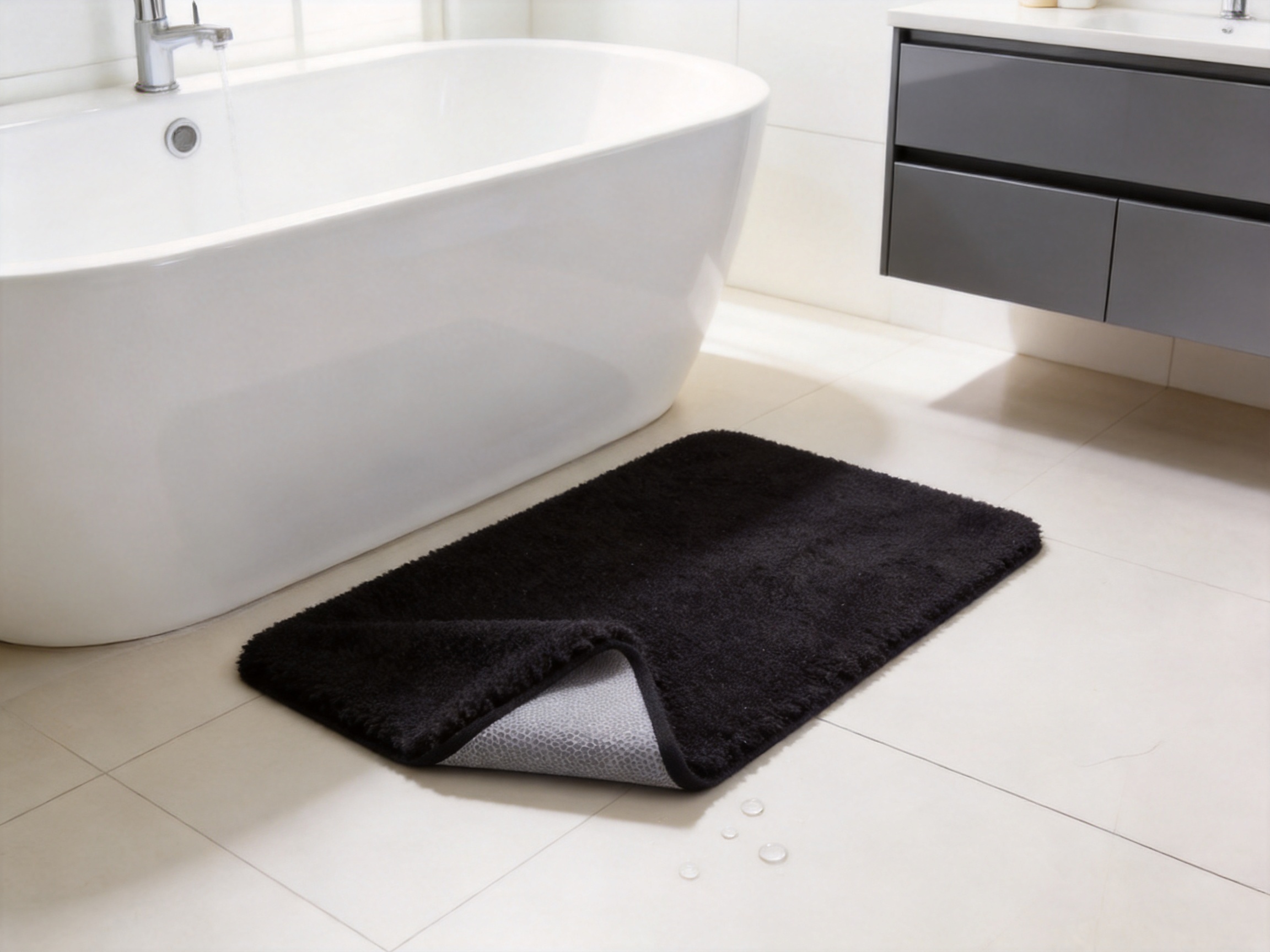
The Cake Velvet Bath Room Mat is developed around these practical and aesthetic requirements. Made primarily from polyester microfiber, it combines a soft velvet-like surface with a strong TPR backing, a dense construction, machine-washable care, and effective water absorption. Standard sizes include 40*60cm, 50*80cm, and 60*90cm, while custom sizing is available for customers who need a particular length, width, or project specification.
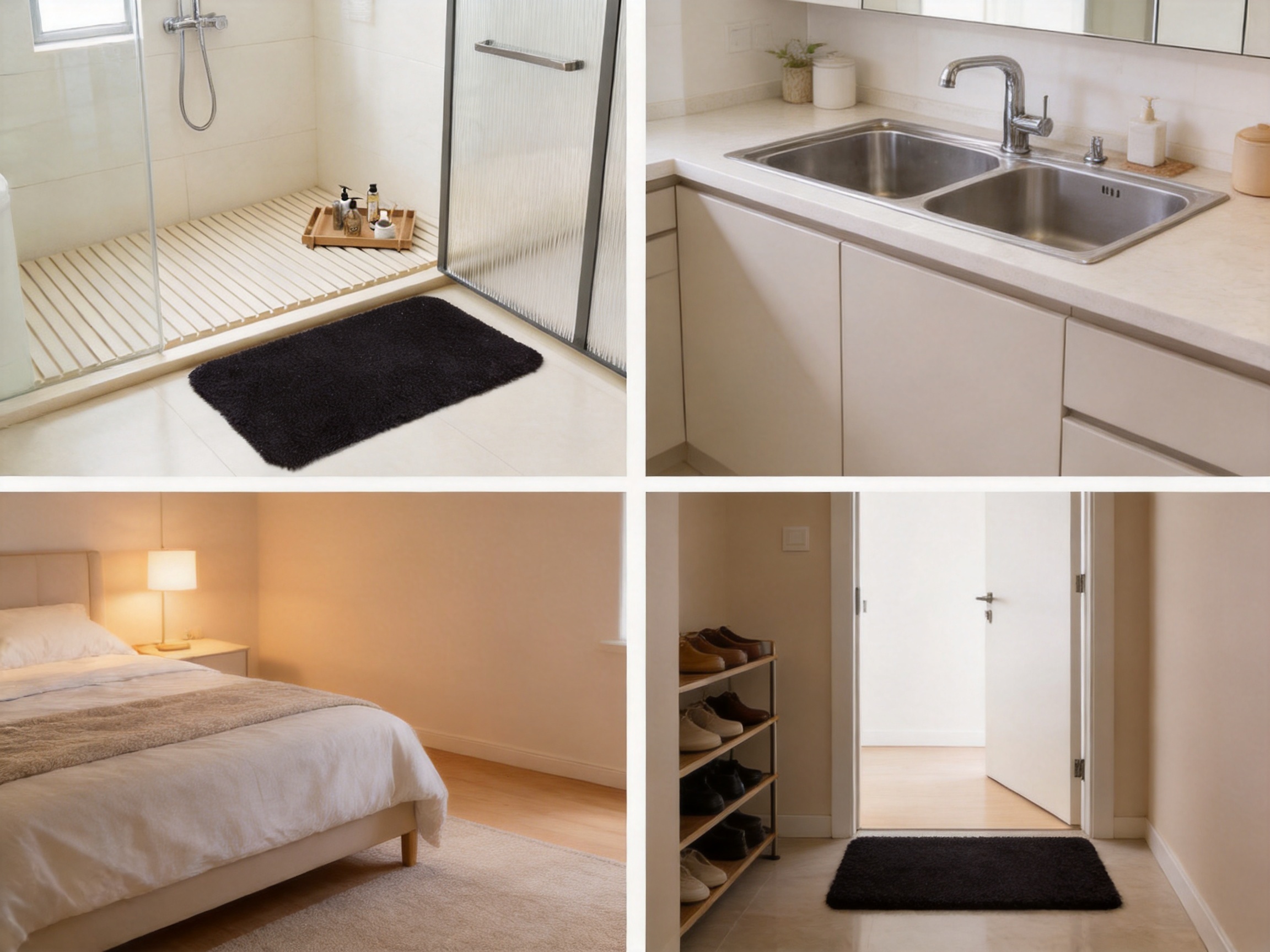
Although it is categorized as a bath mat, its usage is not limited to the bathroom. Its rectangular form, solid-color appearance, non-slip backing, and moisture-management properties make it suitable for kitchens, children’s rooms, entrances, bedrooms, utility areas, and other indoor environments. This versatility is especially valuable for wholesalers, retailers, hospitality buyers, property developers, and interior furnishing businesses seeking one product that can serve multiple applications.
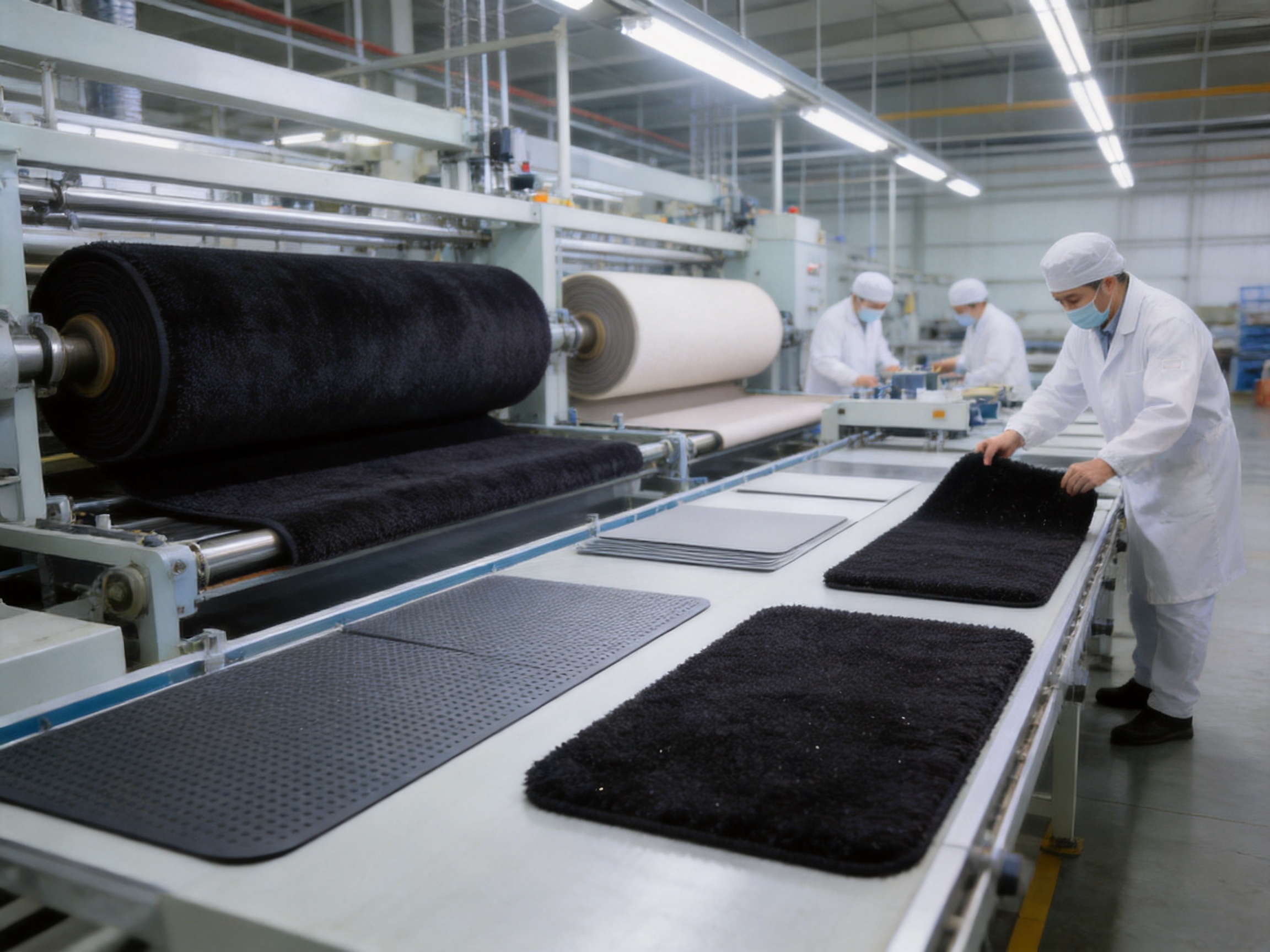
Behind the finished mat is a manufacturing approach that combines textile development, surface production, dyeing or printing, backing integration, and final processing. Zhejiang Benyi Textile Technology Co., Ltd., operating under the Bene brand, has built its business around carpet fabrics, rugs, mats, and finished textile products. Its integrated production capabilities allow it to control more stages of the manufacturing process than a trading-only supplier, supporting consistency, customization, quality management, and lead-time control.
Content
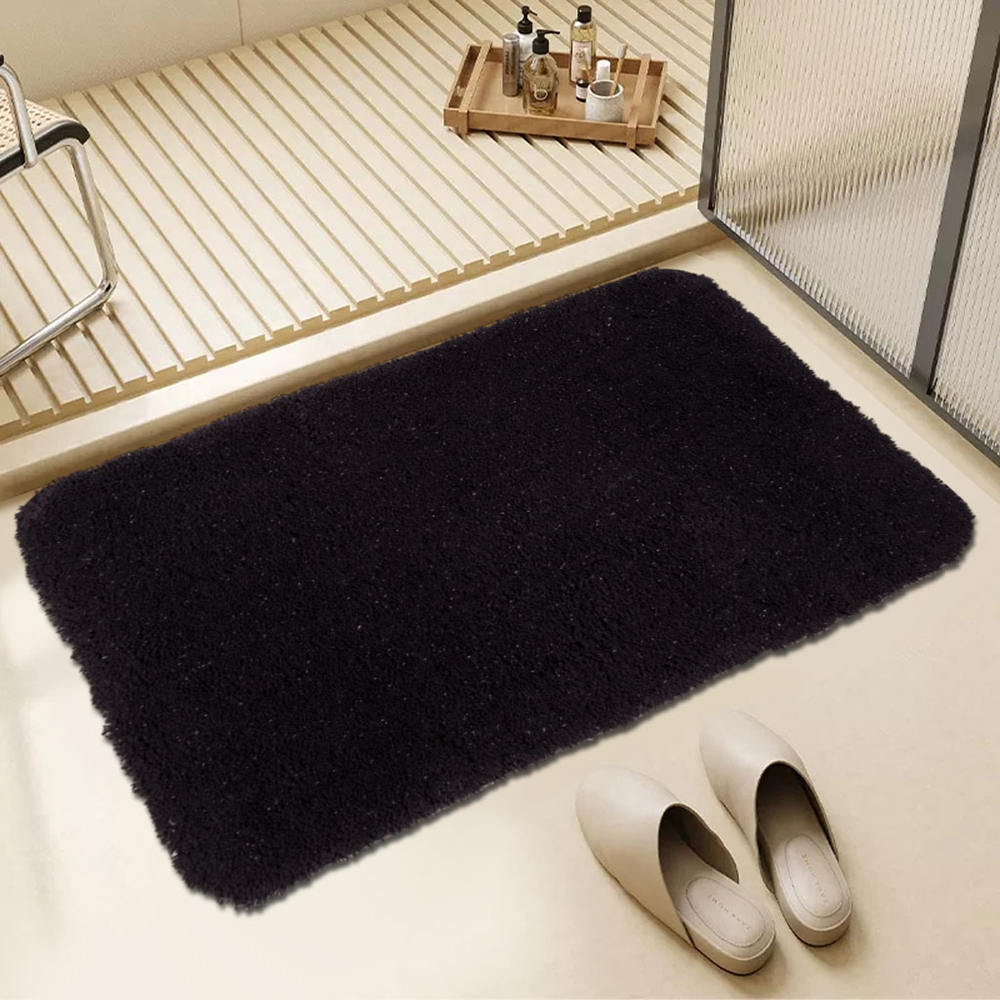
The Cake Velvet Bath Room Mat is a rectangular indoor mat designed for areas where comfort, absorbency, and floor safety are important. The surface uses polyester microfiber to create a soft and dense contact layer. Polyester is widely used in household textile products because it offers good durability, resistance to fading, dimensional stability, and compatibility with modern dyeing and finishing processes.
The supplied product information identifies the mat as a bonded construction with a TPR back. Bonding helps join the surface and backing into a unified structure, while the TPR layer contributes to grip and stability. The product is intended for indoor use and is suitable for machine washing when cared for according to recommended instructions.
| Specification | Details |
|---|---|
| Product name | Cake Velvet Bath Mat |
| Product category | Bath mat |
| Standard sizes | 40*60cm, 50*80cm, and 60*90cm |
| Custom sizing | Available according to project requirements |
| Main material | Polyester microfiber |
| Reported product weight | Approximately 1600–1650gsm |
| Reported pile height | Approximately 20mm to 30mm, depending on specification |
| Construction | Bonded |
| Back material | TPR |
| Shape | Rectangular |
| Pattern | Solid color |
| Recommended use | Bathroom, kitchen, indoor areas, kids’ rooms, and other dry or wet-prone spaces |
| Care method | Machine wash with cold water and mild detergent |
| Special features | Non-slip, soft, washable, and water absorbent |
The supplied specifications include slightly different references for weight and pile height. Product descriptions mention approximately 1650gsm and a 20mm pile, while the detailed information lists 1600gsm and a 25–30mm pile height. These differences may reflect different production configurations, measurement methods, or listing versions. For bulk orders, buyers should confirm the final approved specification, sample, tolerance, color, and construction before mass production.
This point is important for professional purchasing. A reliable supplier should be able to clarify whether a specification is measured before or after finishing, whether the weight includes the backing, and whether the pile height refers to the surface fiber alone or the overall raised profile. Clear confirmation helps buyers compare products accurately and prevents misunderstandings during private-label or contract production.
The most noticeable characteristic of this mat is its soft surface. The velvet microfiber layer creates a comfortable contact area that feels gentle beneath bare feet. In a bathroom, where users often step onto the floor immediately after bathing or washing, that transition from a hard, cold surface to a soft textile layer can make the room feel more comfortable and welcoming.
The relatively thick and fluffy surface also provides a cushioned sensation. It does not replace a specialized anti-fatigue mat, but it can make short periods of standing at a sink, vanity, or shower exit more pleasant than standing directly on ceramic tile, stone, or laminate flooring. The tactile quality is particularly useful in homes where comfort and warmth are as important as basic water control.
Compared with thin, flat mats, the Cake Velvet Bath Room Mat offers a fuller surface profile. A thin mat may dry quickly and take up little storage space, but it can feel less luxurious and may provide less separation from a hard floor. The dense velvet style is positioned toward buyers who want a more comfortable, premium-feeling product without moving into the complexity of a fully decorative area rug.
The soft surface can also contribute to a quieter indoor environment. Textile fibers help reduce the sharp sound of footsteps compared with bare tile or other rigid floors. This can be useful in family homes, guest rooms, apartments, hotels, and other spaces where sound control and a calm atmosphere are desirable.
Water absorption is one of the central functions of a bath mat. After a shower, bath, or handwashing routine, residual water on the feet can quickly spread across the floor. A highly absorbent surface helps capture this moisture and reduces the amount left on surrounding flooring.
The soft polyester microfiber layer is designed to draw water away from the surface of wet feet. Instead of leaving water sitting visibly on top of the mat, the fibers help distribute and hold moisture within the textile structure. This supports a drier stepping area and can help reduce the need for repeated wiping during normal household use.
Water absorption is also valuable in kitchens. Splashes around a sink, dishwasher, or food preparation area can create slippery patches and leave flooring looking untidy. Placing the mat in front of a sink can help manage small amounts of water while providing a more comfortable standing surface for cooking and washing dishes.
However, no textile mat should be treated as a solution for flooding, standing water, leaking appliances, or uncontrolled plumbing problems. For best performance, the mat should be placed on a clean, reasonably dry floor, and it should be washed and dried regularly. If it becomes saturated, it should be removed for laundering or drying rather than left continuously wet.
A bath mat must remain where it is placed. If it slides unexpectedly when a person steps onto it, its basic safety purpose is compromised. The TPR backing on the Cake Velvet Bath Room Mat is intended to help prevent shifting and skidding on suitable indoor floors.
Thermoplastic rubber, commonly referred to as TPR, is used in many household mats because it combines flexibility with rubber-like grip. The backing creates friction between the mat and the floor, helping it stay in position during normal movement. This is especially useful near shower exits, bathtubs, washbasins, and kitchen sinks, where floors may be smooth and moisture may be present.
The backing also forms a protective separation between the textile and the floor. It helps limit direct contact between the absorbent top and the underlying surface, although ventilation and regular drying remain important. A mat should not be left permanently wet on a delicate floor, because any textile product can create moisture-related concerns if the floor cannot breathe.
For the best result, the floor should be flat, clean, and free from dust, oil, loose grit, and soap residue before the mat is placed. The TPR backing is not a substitute for responsible placement. Buyers should also follow the floor manufacturer’s recommendations, especially when using the mat on natural stone, unfinished wood, specialty vinyl, or other sensitive flooring materials.
Compared with mats that use only a lightweight woven backing, a bonded TPR-backed construction can offer a more secure and substantial feel. It is one of the product’s key functional advantages over inexpensive, thin mats that may curl, bunch, or move easily during daily use.
Cake Velvet Bath Room Mat
Bathroom products are exposed to water, body oils, dust, soap residue, hair, and other everyday contaminants. A bath mat that cannot be cleaned conveniently may lose its appearance and freshness quickly. The Cake Velvet Bath Room Mat is designed for machine washing, which makes routine maintenance easier for households and commercial users.
The recommended care method is to wash with cold water and a mild detergent. Chlorine and bleach should be avoided because aggressive chemicals may damage fibers, weaken the backing, affect color stability, or reduce the product’s overall service life. A low-speed tumble-dry setting or hang drying is recommended, depending on the user’s equipment and local conditions.
Regular washing can help maintain the mat’s softness and absorbency. Dirt and residue can occupy the spaces between fibers, making the surface feel less fresh and reducing its ability to accept moisture. A consistent care schedule is therefore not only a matter of appearance; it also supports functional performance.
Users should avoid excessively hot water and high drying temperatures unless the final care label specifically permits them. Excessive heat can cause dimensional change, affect the backing, or place unnecessary stress on bonded layers. After washing, the mat should be fully dried before it is returned to the floor.
For commercial environments such as hotels, serviced apartments, salons, spas, and property management projects, machine washability may reduce labor demands compared with products that require specialized cleaning. Buyers should still establish their own laundering procedures, including wash frequency, detergent selection, drying method, and replacement criteria.
Compared with decorative mats that are difficult to clean or products with delicate surface treatments, a washable polyester microfiber construction offers a practical advantage. It supports a balance between comfort and maintenance, which is particularly important in busy households and high-turnover accommodation settings.
The product uses a solid-color pattern and a rectangular shape. These design choices are intentionally versatile. Solid colors can work with contemporary, minimalist, traditional, Scandinavian, industrial, and hospitality interiors without competing with patterned tiles, wall treatments, towels, or decorative accessories.
The rectangular format fits naturally in front of showers, bathtubs, vanities, washbasins, kitchen counters, and doors. The three standard sizes provide useful options for different floor plans. The 40*60cm version may suit a compact washbasin or a narrow apartment bathroom. The 50*80cm option offers a balanced choice for many standard residential layouts. The 60*90cm format provides greater coverage near a wider shower, bathtub, or double vanity.
Custom sizing creates additional opportunities for developers, hospitality groups, retailers, and private-label customers. Some bathrooms require unusually long mats, while others have narrow spaces or architectural features that do not work well with standard dimensions. Custom production can help buyers create a more coordinated installation and reduce the need to place several small mats side by side.
A solid-color mat can also support coordinated purchasing. Retailers may offer multiple colors under the same product structure, allowing customers to match towels, shower curtains, wall colors, or cabinetry. From a merchandising perspective, a consistent design with multiple color choices is easier to present as a collection.
Although the product is described as a solid-color mat, color selection, shade matching, and production approval should be discussed before an order is placed. Textile color can vary according to fiber, dye lot, lighting conditions, screen display, and finishing. For commercial production, a physical sample or approved color standard is recommended.
In the kitchen, the mat can be positioned in front of a sink, food preparation counter, or dishwasher. Its water-absorbent surface helps manage small splashes, while its soft structure makes extended standing more comfortable. The washable construction is useful because kitchen mats are exposed to food particles and frequent foot traffic.
The soft surface can add comfort to children’s indoor spaces. It may be used near a wash area, beside a bed, or in a supervised play environment where a soft textile surface is preferred. The product should always be placed on a clean, stable floor, and caregivers should inspect the backing and edges regularly.
The rectangular form and non-slip backing make the mat suitable for indoor entrances, hallway transitions, and balcony door areas. It can help collect small amounts of moisture brought indoors by footwear. For heavy outdoor dirt, a dedicated outdoor entrance mat may be more appropriate, but this product can serve as a comfortable second-stage mat inside the home.
Placed beside a bed, wardrobe, or dressing area, the mat provides a warmer and softer first step in the morning. Its solid color allows it to coordinate with bedroom textiles without dominating the room. Regular washing is recommended in these areas to prevent dust accumulation.
Hotels, serviced apartments, student housing, senior living facilities, and rental properties often require products that are attractive, repeatable, washable, and easy to replace. Standard sizing supports streamlined purchasing, while custom dimensions can be considered for specific room layouts or project requirements.
The bath mat market includes very thin printed mats, cotton loop mats, memory-foam products, woven floor mats, PVC-backed mats, and premium textile constructions. Each category has different strengths. The Cake Velvet Bath Room Mat stands out through the combination of features it provides rather than through one isolated characteristic.
Thin printed mats are often economical and easy to store, but they may offer less cushioning, less surface depth, and a less luxurious feel. The Cake Velvet Bath Room Mat uses a thicker, denser velvet-like structure designed to provide greater underfoot comfort. Its surface is intended to feel substantial rather than merely decorative.
Some decorative floor coverings depend on delicate materials, complex structures, or rigid backings that are difficult to launder. The machine-washable polyester construction provides a more practical solution for areas exposed to moisture and frequent use.
Products with lightweight fabric backing may shift more easily on smooth floors. The TPR backing is designed to improve grip and reduce movement. This can create a more secure user experience when the mat is correctly placed and maintained.
Some bath mats are designed only for a particular bathroom arrangement or decorative style. The rectangular shape, solid color, standard size range, and custom-sizing option make this product adaptable to different rooms and customer groups.
Low-density mats may compress quickly and lose their original appearance under repeated use. The reported 1600–1650gsm range and substantial pile profile indicate a product developed for a fuller surface and more supportive tactile performance. Final durability will depend on fiber quality, bonding, backing formulation, washing conditions, and usage intensity, but the construction is positioned above very lightweight alternatives.
These comparisons do not mean that one bath mat is ideal for every application. Rather, they show how the product balances softness, water management, stability, cleaning convenience, design flexibility, and supply capability. For many buyers, this balance is more valuable than maximizing only one specification.
The performance of a finished mat depends heavily on manufacturing control. A good fiber alone does not guarantee a reliable product. Surface density, color consistency, backing adhesion, edge finishing, dimensional accuracy, and wash durability all depend on coordinated production processes.
Zhejiang Benyi Textile Technology Co., Ltd. is located in Shaoxing, Zhejiang Province, an area widely recognized for its textile manufacturing ecosystem. The company specializes in carpet fabrics, rugs, and finished textile products. Its production structure includes weaving, dyeing or printing, and finished carpet processing capabilities, giving it access to multiple stages of the supply chain.
This integrated model can offer several advantages. First, it improves communication between fabric development and final product processing. Second, it can reduce dependence on multiple outside suppliers. Third, it supports better oversight of quality and lead times. Fourth, it makes it easier to develop customized products based on a buyer’s requirements.
The company’s production concept focuses on combining the surface and bottom layers to simplify the carpet manufacturing model. For a mat such as the Cake Velvet Bath Room Mat, this type of integration is relevant because the final result depends on how effectively the soft top layer, bonded structure, and TPR backing work together.
With more than 20 fabric engineers, the company develops new carpet fabrics on a quarterly basis according to market trends. This development capacity is valuable for buyers who need new colors, textures, surface effects, or constructions rather than a fixed catalog item. It also supports continued improvement as consumer preferences shift toward softer, more washable, more sustainable, and more multifunctional floor textiles.
In-house or closely controlled production can also help improve responsiveness. When a customer requests a custom size, color, packaging format, or surface specification, communication is generally more direct when the supplier understands both the fabric and finished-product stages. This is especially important for private-label programs, seasonal collections, and project orders with defined delivery dates.
For a professional buyer, quality control should cover the entire product rather than focusing only on appearance. A complete inspection program may include raw-material verification, color approval, weight measurement, pile-height measurement, size tolerance, backing coverage, bonding strength, edge integrity, odor evaluation, wash testing, and packaging inspection.
Surface appearance should be checked for evenness, shade consistency, fiber shedding, visible defects, marks, and irregular pile direction. A velvet-like surface can show differences under changing light, so inspection should be performed under suitable lighting conditions. If the product is ordered in several colors, each color should be evaluated against an approved standard.
Dimensional consistency is important when mats are used in a coordinated project. Buyers should define acceptable length, width, thickness, and squareness tolerances. Custom-sized products require especially clear drawings or specification sheets to prevent errors during cutting and finishing.
The TPR backing should be inspected for complete coverage, secure bonding, smoothness, and freedom from excessive cracking or peeling. The backing should not have sharp projections or areas that could damage the floor. Buyers may also conduct friction or slip-resistance evaluations appropriate to their intended market and applicable standards.
Wash testing can help confirm whether the surface remains soft, whether colors remain stable, whether the mat retains its shape, and whether the backing remains attached after repeated laundering. The exact testing method should reflect the buyer’s market, washing equipment, detergent conditions, and care-label instructions.
The company’s control of weaving, dyeing or printing, and finished processing creates a foundation for this type of quality management. However, buyers should still agree on formal inspection standards, sample approval procedures, packaging requirements, and corrective-action processes before production begins.
Custom sizing is one of the product’s most useful commercial advantages. Standard sizes make ordering simple, but custom sizes help address architectural spaces, hospitality room plans, retail collections, and special promotional programs. A buyer may request a long runner-style format, a narrower washbasin mat, or a larger floor mat for a wide bathroom entrance.
Customization may also extend to color, label, packaging, carton markings, surface weight, pile height, backing treatment, and product assortment. Not every option is available for every order quantity, so the final program should be confirmed with the manufacturer. A technical sample is often the most effective way to verify a custom construction.
For private-label customers, a consistent supply partner can help maintain product identity across multiple seasons. The buyer may develop a collection of related bath mats in different colors and sizes while keeping the same general velvet surface and TPR backing. This creates a recognizable product family for retail or e-commerce presentation.
Packaging is another consideration. Individual polybags, paper bands, recycled packaging, barcode labels, color stickers, instruction cards, and master-carton configurations may be discussed according to the sales channel. A retail-ready package can reduce repacking work, while bulk project packaging may prioritize efficient transportation and protection.
Before confirming a large custom order, buyers should approve a pre-production sample. The sample should represent the final yarn, color, surface density, pile height, backing, edge finish, label, and packaging. Any difference between a development sample and mass production should be documented and approved.
Textile sustainability involves material selection, water use, energy consumption, chemical management, product durability, packaging, and end-of-life considerations. A durable, washable mat can provide value over repeated use, potentially reducing the need for frequent replacement. Longer service life is one practical aspect of responsible consumption.
The company describes an interest in ecological protection, consumer health, recycled polyester, water-saving dyeing techniques, and responsible production methods. It also reports OEKO-TEX and GRS certifications. Buyers should request current certificates, confirm the scope of each certification, and verify whether the specific product, material, facility, and production batch are covered.
Recycled polyester can help reduce dependence on virgin petroleum-based raw materials when it is used appropriately and supported by traceability. Water-saving dyeing methods can reduce resource consumption compared with less efficient processes. These approaches are particularly relevant to brands and retailers that need to provide more transparent sustainability information to customers.
Responsible manufacturing should also include suitable chemical controls, worker safety, wastewater management, process efficiency, and accurate product claims. Sustainability statements should be supported by documentation rather than used only as marketing language. A professional buyer can contribute to better outcomes by asking clear questions about fiber origin, certification validity, dyeing processes, packaging materials, and factory practices.
Polyester products also require sensible care. Washing only when necessary, using appropriate detergent, avoiding excessive heat, and drying efficiently can reduce the environmental impact of use. Buyers may include care guidance with the product to help consumers maintain performance while avoiding unnecessary washing or harsh chemicals.
Before placing the mat, clean the floor and remove dust, hair, oil, soap residue, and loose particles. The floor should be as dry as possible. Unroll or lay the mat flat and allow any temporary packaging folds to relax before regular use.
Position the mat where water is most likely to fall, such as outside a shower, bathtub, or sink. Make sure the complete backing is in contact with the floor. Do not place the product over loose rugs, uneven surfaces, damaged flooring, or areas where the backing cannot grip properly.
Inspect the mat periodically for movement, edge curling, excessive wear, backing damage, or moisture trapped beneath it. If the mat shifts, remove it, clean both the backing and floor, dry them thoroughly, and reposition it. If the backing has deteriorated, replacement is advisable.
For households with children, older adults, or people with mobility challenges, the mat should be checked more frequently. A non-slip backing can reduce movement, but no mat can eliminate every risk associated with wet floors. Good bathroom ventilation and prompt removal of excess water remain important safety practices.
Shake or vacuum the mat gently before washing to remove loose dust and hair. Follow the final sewn-in care label if it provides instructions that differ from general product guidance. Use cold water and a mild detergent, and avoid chlorine or bleach.
Wash the mat with similar colors and avoid overloading the washing machine. An overloaded drum may prevent adequate rinsing and can place unnecessary stress on the bonded structure. After washing, remove the mat promptly and dry it at low speed or hang it in a well-ventilated area.
Do not return a damp mat to the floor. Complete drying helps preserve freshness and reduces the risk of moisture remaining between the backing and the floor. In humid climates, additional ventilation may be necessary.
Do not iron the mat, use aggressive solvents, or apply strong cleaning chemicals unless specifically authorized by the manufacturer. If a localized stain occurs, treat it promptly with a mild cleaning solution and test the method on an inconspicuous area first.
Wholesale buyers should begin by defining the sales channel and usage environment. A product intended for online retail may require attractive packaging, lifestyle photography, clear care instructions, and multiple color options. A hotel or property project may prioritize consistent size, repeat availability, delivery scheduling, and replacement supply.
The buyer should confirm the final product specification in writing. Important points include surface material, total weight, pile height, backing material, size tolerance, color standard, edge finish, label content, packing method, and inspection requirements. Because the supplied information contains alternative weight and pile-height figures, these details should be resolved before a purchase order is issued.
Sample evaluation should include touch, appearance, absorbency, stability, washing, drying, dimensional retention, and backing condition. Testing should be performed in a manner that resembles the intended end use. For example, a hotel buyer may conduct more frequent washing than a residential customer, while a retailer may focus on packaging, color consistency, and presentation.
Buyers should also discuss minimum order quantities, production lead time, sample lead time, material availability, payment terms, shipping marks, export documentation, and after-sales procedures. A supplier with integrated manufacturing resources may be able to provide more dependable information about production scheduling, but all commercial terms should still be documented.
When comparing suppliers, price should not be considered alone. A lower unit price may reflect lighter weight, weaker backing, lower density, less consistent dyeing, limited quality control, or reduced service capability. A more complete comparison considers landed cost, expected service life, return rates, cleaning performance, packaging efficiency, and the supplier’s ability to support future orders.
Zhejiang Benyi Textile Technology Co., Ltd. combines textile development with finished-product manufacturing. Its location in Shaoxing places it within a major textile production region, supporting access to materials, technical knowledge, processing resources, and related supply-chain services.
The company’s own weaving, dyeing or printing factories, and finished carpet processing factories provide a level of vertical coordination that can benefit international buyers. Control over multiple stages may help reduce communication gaps, improve production monitoring, and support more consistent lead times.
Its team of more than 20 fabric engineers provides a development resource for customers seeking new constructions or trend-based products. Instead of relying only on standard offerings, the company can work on new carpet fabrics each quarter and adjust products according to market requirements.
The company also emphasizes ecological and environmental protection. Its reported interest in recycled polyester, water-saving dyeing, consumer health, OEKO-TEX certification, and GRS certification aligns with the growing demand for more responsible textile sourcing. Buyers should verify documentation for each specific order, but the stated direction is relevant to brands that are building sustainability into their purchasing decisions.
The company serves a broad range of applications, including living rooms, bedrooms, bathrooms, kitchens, entrances, exits, and other indoor spaces. This broad product experience can help customers develop coordinated textile programs rather than sourcing every mat or rug from a separate supplier.
Retailers need products that are easy to explain and easy for customers to use. The Cake Velvet Bath Room Mat has several straightforward selling points: soft velvet microfiber, strong water absorption, a non-slip TPR backing, machine washability, solid colors, multiple sizes, and indoor versatility.
These attributes can support different price positions. A basic assortment may include the smaller standard size in popular neutral colors. A broader collection may add larger sizes, seasonal shades, private-label packaging, and custom options. Because the underlying product structure remains familiar, retailers can expand the range without creating an entirely new product concept.
For distributors, the product can serve bathroom, kitchen, home textile, hotel supply, and property maintenance customers. Its cross-category potential may improve inventory flexibility. A bath mat that can also be used in kitchens, bedrooms, and entrances is less restricted to one seasonal demand cycle.
Online sellers can emphasize practical benefits through clear product descriptions and demonstrations. Images can show the surface texture, backing, size comparison, water absorption, and washing process. Accurate claims are important: the product should be described as helping reduce movement rather than guaranteeing complete slip prevention, and it should be presented as suitable for indoor moisture management rather than flood control.
The Cake Velvet Bath Room Mat is designed as a balanced indoor textile product rather than a single-purpose decorative accessory. Its polyester microfiber surface provides a soft and comfortable contact layer, while the dense velvet-like construction creates a fuller feel underfoot. The surface is intended to absorb water from wet feet and help keep surrounding floors cleaner and drier during ordinary use.
The TPR backing contributes to improved stability, and the bonded construction supports a unified surface-and-backing structure. Machine washability makes the mat practical for regular household maintenance, while the solid-color rectangular design fits a wide range of interior styles and room layouts.
Its standard sizes make ordering convenient, and custom sizing extends its usefulness for hospitality projects, property developments, retailers, and private-label programs. The product can be used in bathrooms, kitchens, children’s rooms, bedrooms, indoor entrances, and other areas where softness, absorbency, and floor protection are valuable.
The product is further supported by the manufacturing strengths of Zhejiang Benyi Textile Technology Co., Ltd. The company’s textile development team, weaving and dyeing or printing resources, finished-product processing capabilities, and focus on quality and sustainability provide a foundation for consistent supply and customized development.
For the best purchasing outcome, buyers should confirm the final weight, pile height, color, size tolerance, backing specification, care label, certification documentation, and packaging before production. With those details clearly controlled, the Cake Velvet Bath Room Mat offers a practical combination of comfort, stability, maintenance convenience, design flexibility, and manufacturing support.
The mat is made primarily from polyester microfiber, with a TPR backing. The polyester surface provides softness, durability, and water absorption, while the TPR backing is designed to help reduce shifting on suitable indoor floors.
The standard sizes are 40*60cm, 50*80cm, and 60*90cm. Custom sizing is also available, subject to production requirements and order conditions.
No. It is designed for indoor use and can also be used in kitchens, children’s rooms, bedrooms, entrances, utility areas, and other locations where a soft, absorbent, washable mat is useful.
Yes. The recommended care method is machine washing with cold water and mild detergent. Chlorine and bleach should be avoided. Low-speed tumble drying or hang drying is recommended, and the mat should be completely dry before being placed back on the floor.
No floor mat can guarantee complete slip prevention in every situation. The TPR backing is designed to improve grip and reduce shifting, but the floor must be clean, flat, and dry enough for proper contact. Regular inspection and responsible placement are still necessary.
The velvet microfiber surface is designed to absorb water from wet feet and small indoor splashes. Absorbency can vary according to usage, washing condition, saturation level, and drying time. The mat is not intended to handle flooding or large amounts of standing water.
The supplied product information lists both approximately 1600gsm and 1650gsm. These figures may relate to different specifications or measurement methods. Buyers should confirm the final approved gsm, including whether the measurement includes the backing, before placing a bulk order.
The product information refers to approximately 20mm in one description and 25–30mm in the detailed specification. This may reflect different configurations or measurement methods. A pre-production sample and written technical specification should be approved for each order.
The product is described as a solid-color mat, and color options can be discussed with the manufacturer. Custom color production should be confirmed through color standards, samples, minimum order quantities, and production feasibility.
Private-label opportunities may include labels, packaging, carton markings, and product collections. The exact options depend on order volume, packaging requirements, and production arrangements. Buyers should confirm these details during the quotation and sampling stages.
Buyers should inspect the surface texture, color, weight, pile height, size, edge finish, TPR coverage, bonding, wash performance, absorbency, packaging, and labeling. They should also confirm certification documents and any required testing for the destination market.
The manufacturer operates within Shaoxing’s textile industry and has capabilities covering fabric development, weaving, dyeing or printing, and finished carpet processing. Its engineering team develops new fabrics and supports customized product requirements.
The company reports OEKO-TEX and GRS certifications and describes the use of sustainable materials and water-saving production methods. Buyers should request current certificates and confirm that the specific material and production facility covered by the documents match their order.
1. Product specification and technical information supplied for the Cake Velvet Bath Room Mat.
2. Manufacturer profile and company information supplied for Zhejiang Benyi Textile Technology Co., Ltd.
3. General textile product-development principles relating to polyester microfiber, bonded constructions, TPR backing, and machine-washable household mats.
4. General quality-control considerations for textile floor coverings, including dimensional inspection, color evaluation, wash testing, backing assessment, and packaging review.
5. General guidance on responsible textile sourcing, recycled polyester, water-saving dyeing, product durability, and certification verification.

ADD: No.75 Zhenyuan Road, Yuecheng District, Shaoxing City, Zhejiang Province, China 312000

Tel : +86-189 6750 9795

FAX : +86-0575-8803 2773

Email : fisher@benetextile.com

Copyright © Zhejiang Benyi Textile Technology Co., Ltd. All Rights Reserved. Carpets and Rugs Manufacturer

 English
 Français
 Deutsch
 عربى