

Lu Wanyao — After-Sales Service Supervisor
 Home / Author / Lu Wanyao — After-Sales Service Supervisor / Teddy Fleece Solid Sofa Cover: Comfort, Protection, and Efficient Textile Manufacturing
 2026.10.14
 Lu Wanyao — After-Sales Service Supervisor
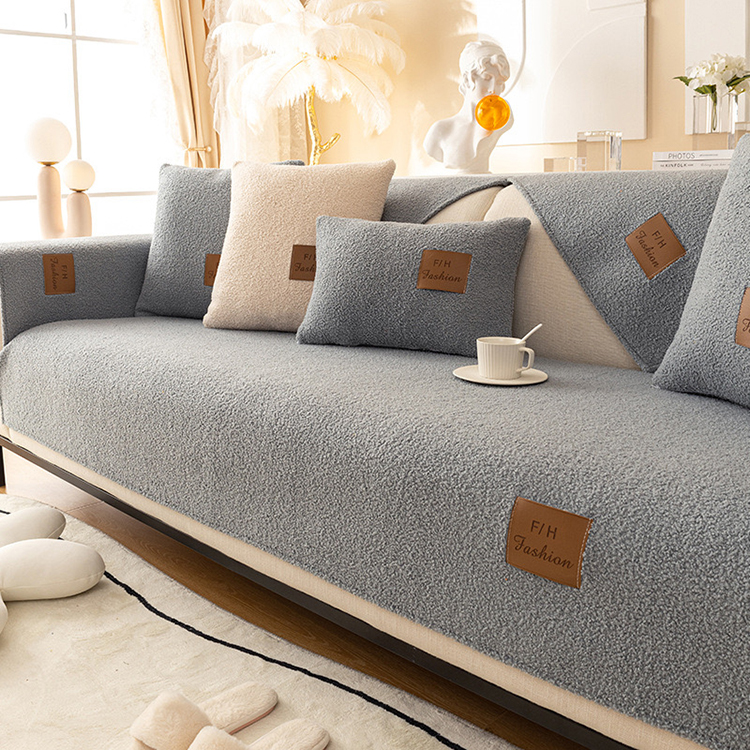
A sofa is one of the most frequently used pieces of furniture in a home. It is a place for relaxing, reading, watching films, receiving guests, and spending time with family. Because it experiences constant contact, a sofa can quickly collect dust, pet hair, food residue, moisture, and everyday wear. A practical sofa cover helps protect the original upholstery while also improving comfort and refreshing the appearance of an interior.
The Teddy Fleece Solid Sofa Cover is designed to meet these needs through a combination of plush polyester fabric, substantial 600gsm weight, a non-slip backing, machine-washable care, and a broad range of ready-made dimensions. Its simple solid-color appearance makes it suitable for different interior styles, while its bonded construction provides a dependable balance between softness, stability, and durability.
For home textile brands, wholesalers, retailers, hospitality suppliers, and furniture accessory distributors, this product offers more than a basic decorative throw. It is a functional textile solution manufactured through an integrated production system that combines fabric development, weaving, dyeing or printing, bonding, and finished-product processing. This degree of production control can support consistent quality, efficient lead times, and flexible customization.
Content
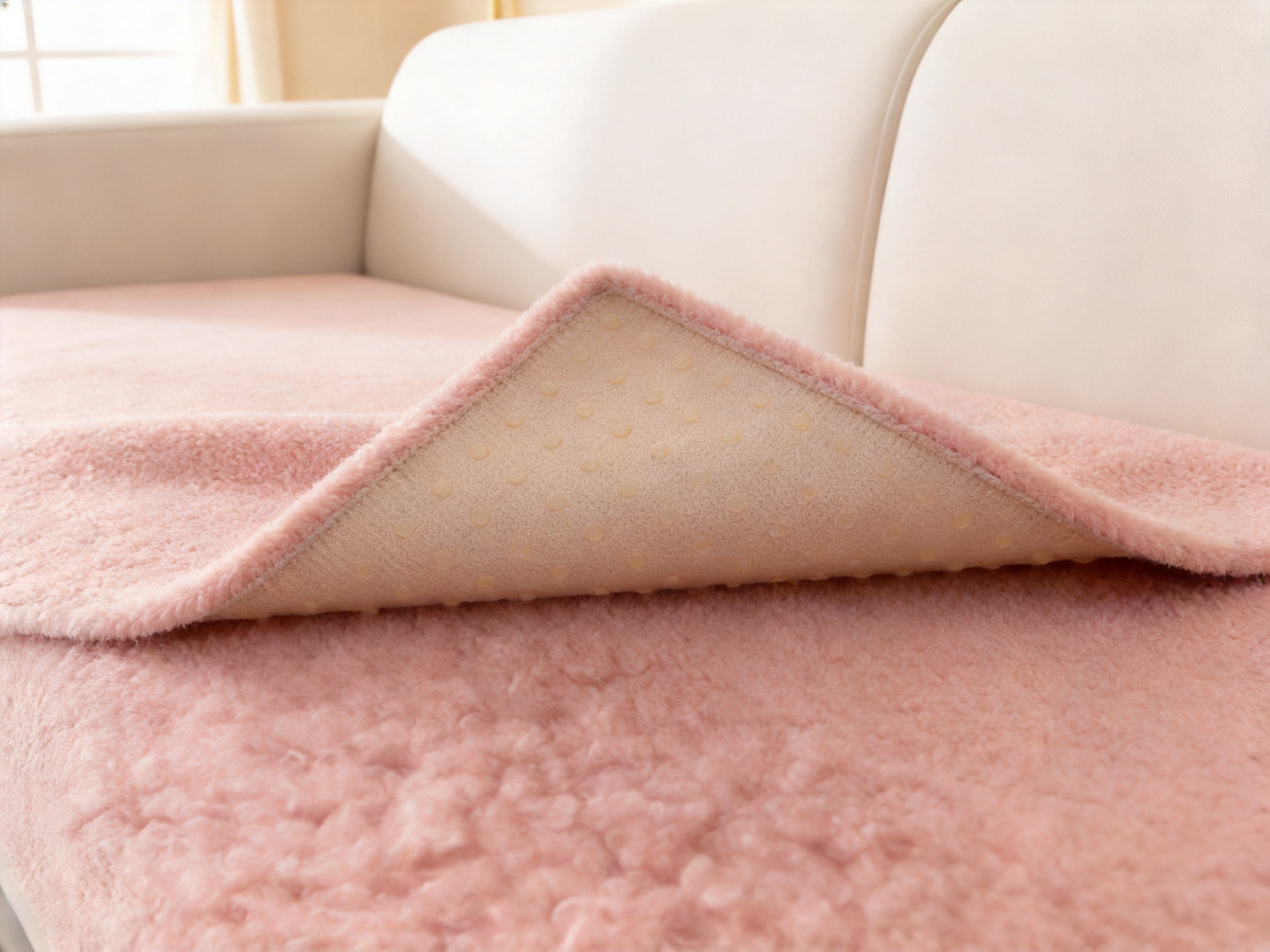
The Teddy Fleece Solid Sofa Cover is a rectangular sofa protection and comfort textile made primarily from polyester. Its surface is developed to provide a soft, warm, and cozy hand feel. The 600gsm construction gives the cover a fuller and more substantial character than lightweight decorative throws, helping it sit comfortably on the sofa while adding a plush layer between the user and the furniture.
The cover is available in multiple dimensions, including compact pieces for cushions and arm areas and longer sizes designed to cover the seating, back, or larger sections of a sofa. Available sizes include 70*70cm, 70*90cm, 70*120cm, 70*150cm, 70*180cm, 70*210cm, 70*240cm, 90*90cm, 90*120cm, 90*160cm, 90*180cm, 90*210cm, 90*240cm, 110*110cm, 110*160cm, 110*180cm, 110*210cm, and 110*240cm.
This size range supports different sofa formats, including individual seat cushions, chaise sections, bench seating, armrests, backrests, and broad sofa surfaces. Rather than relying on one universal dimension, buyers can select a closer fit for their target furniture configuration. This can improve product presentation in retail channels and reduce the inconvenience associated with excessive fabric overhang or insufficient coverage.
| Product Attribute | Specification |
| Product Name | Teddy Fleece Sofa Cover |
| Primary Material | Polyester |
| Fabric Weight | 600gsm |
| Construction | Bonded |
| Back Material | Tricot with anti-slip plastic dots |
| Shape | Rectangular |
| Pattern | Solid colors |
| Care Instruction | Machine wash |
| Key Features | Soft, non-slip, washable |
| Recommended Use | Sofa cover and furniture protection |
Teddy fleece is valued for its distinctive surface texture and comfortable touch. The raised, plush character of the fabric creates a warmer and softer user experience than many flat woven furniture covers. This makes it especially appropriate for family rooms, bedrooms with occasional seating, reading corners, and living areas where comfort is an important part of the product decision.
The surface also gives the sofa cover a visually rich appearance. Even when produced in a solid color, the fleece texture can create subtle variations in light and shadow. This allows the cover to look inviting without relying on complex prints, large motifs, or seasonal graphics. A solid-color product can therefore coordinate with modern, minimalist, Scandinavian, contemporary, rustic, and casual interiors.
Polyester is a practical fiber for this type of household textile. It offers useful resistance to everyday handling, supports color development, and can be processed into fabrics with different textures and weights. Polyester fleece can also be manufactured in a way that combines a soft face with a structured reverse side, creating a product that is comfortable on top and functional underneath.
The 600gsm weight is one of the product’s most notable characteristics. A heavier construction generally provides a fuller handle and improved visual presence. It is less likely to feel insubstantial when placed over furniture, and it can help create a stronger perception of value at retail. The weight also contributes to the cover’s insulating and cushioning feel, making the sofa more comfortable during extended use.
However, the product is not intended to replace a professionally tailored upholstery slipcover in every application. It is a ready-made textile cover designed for convenient placement, protection, and comfort. Its versatility comes from its range of sizes, soft construction, and backing system rather than from a permanently fitted shape.
Household furniture is exposed to many routine risks. People may eat or drink while sitting on a sofa, children may play on it, and pets may climb onto it with muddy paws or sharp claws. Clothing, keys, toys, and other objects can also contribute to abrasion. Over time, these activities can cause staining, pilling, fading, or visible wear on the original upholstery.
The Teddy Fleece Solid Sofa Cover creates a protective textile layer between the sofa and many common sources of daily damage. It can help reduce direct contact with dust, crumbs, minor spills, pet hair, and surface friction. When a cover becomes soiled, it can be removed and washed instead of requiring immediate cleaning of the entire sofa.
This protective function is particularly useful for households with children or pets. A cover does not eliminate the possibility of damage, and it should not be described as an absolute barrier against every spill or scratch. Nevertheless, it can provide a convenient first line of defense and help extend the attractive appearance of the underlying furniture.
For landlords, serviced apartments, student residences, hotels, and other accommodation providers, removable sofa covers can support routine maintenance between users. A washable textile is easier to handle than a fixed upholstered surface, particularly when several covers are purchased for rotation. Commercial buyers can also choose different dimensions according to the seating arrangements used in their properties.
One of the main limitations of a conventional sofa throw is movement. Smooth upholstery, frequent sitting, and repeated adjustment can cause an unsecured cover to slide onto the floor or bunch into uncomfortable folds. This reduces the protective area and creates an untidy appearance.
The Teddy Fleece Solid Sofa Cover uses a tricot backing combined with anti-slip plastic dots. This reverse construction is designed to increase friction between the cover and the sofa surface. The dots help reduce unwanted sliding, while the tricot layer adds structure and supports the bonded construction.
The non-slip feature is especially valuable on seating areas where people change position frequently. It can help the cover remain more stable when users sit down, stand up, or move across the sofa. Stability is also useful for households with children, because a cover that stays in place requires less frequent repositioning.
The backing should be considered a stability aid rather than a permanent fastening system. Sofa materials, surface conditions, angle, user activity, and furniture shape can all affect performance. Even so, the combination of a textured top and anti-slip reverse is a significant advantage over a single-layer decorative blanket with no grip structure.
From a product-development perspective, the backing also demonstrates the value of designing both sides of a textile. The face delivers comfort and appearance, while the reverse contributes practical performance. This two-sided approach allows the sofa cover to perform more effectively than products developed only as ornamental throws.
The cover is made using a bonded construction. Bonding brings textile layers together to create a composite product with a coordinated face and reverse. In this case, the soft teddy fleece surface works together with the tricot and anti-slip backing to create a more functional furniture cover.
A bonded structure can improve the overall handle of the product. It may help the cover feel more substantial, reduce the loose movement associated with very lightweight fabric, and provide a more finished appearance when placed over a sofa. The construction can also support dimensional consistency when the product is cut and processed into different sizes.
For manufacturers and brands, bonded construction offers opportunities for product differentiation. Instead of selling a basic fleece rectangle, a supplier can offer an engineered cover with a defined face, backing, and performance purpose. This provides a stronger basis for communicating value to consumers and for developing product lines with different weights, colors, textures, and reverse materials.
Bonding quality depends on careful control of fabric preparation, adhesive or bonding technology, pressure, temperature, line speed, and inspection. An experienced textile manufacturer can coordinate these factors with the characteristics of the face and backing materials. Proper process control is important because the final product must remain comfortable while retaining sufficient structural integrity during normal use and washing.
Teddy Fleece Solid Sofa Cover
Many decorative sofa throws are designed primarily for light seasonal decoration. They may be thin, loosely structured, or unable to provide meaningful coverage across a large seating area. At 600gsm, this product is developed with a fuller and more premium-feeling construction. It offers greater tactile comfort and a stronger visual presence.
A standard blanket may slide easily because it has no special reverse treatment. The Teddy Fleece Solid Sofa Cover includes tricot and anti-slip plastic dots, giving it a functional advantage in furniture applications. This can improve convenience for consumers who want a cover that requires fewer adjustments.
A single-size throw may be too small for one sofa and unnecessarily large for another. The available range of dimensions helps buyers match the cover to the intended area. This makes the product suitable for individual cushions, compact sofas, large sofas, chaise sections, and other rectangular furniture areas.
Machine washing is one of the most important practical benefits of a removable sofa textile. Consumers can clean the cover as part of their normal household routine. This is more convenient than relying exclusively on professional upholstery cleaning or manually treating a fixed sofa surface.
Solid colors are easy to coordinate with other home furnishings. Retailers can select colors for different seasons, market preferences, or interior collections without depending on a complicated print design. The lack of a large pattern can also make the product more adaptable across different room styles.
The teddy fleece face is soft and pleasant against the skin. This makes the cover useful not only for protecting furniture but also for improving the experience of sitting or resting. A product that combines protection with comfort can have broader appeal than a stiff or purely technical furniture protector.
The primary application is sofa protection in residential living rooms. The cover can be placed over seat cushions, back cushions, arm areas, or larger sections of a sofa. Depending on its size and the furniture arrangement, it may also be used on loveseats, benches, daybeds, recliners, and other rectangular upholstered surfaces.
In bedrooms, a smaller size can be used as a soft furniture layer on a bench, window seat, or occasional chair. In home offices, the cover can protect a compact sofa or lounge chair from dust and regular contact. In family rooms, it can provide an additional washable surface for children and pets.
The product may also suit temporary decorative changes. A homeowner can introduce a different solid color for a new season, holiday period, home renovation, or furniture refresh without purchasing a new sofa. This can be an economical way to update an interior while preserving the existing furniture.
Commercial settings can benefit from the same flexibility. Waiting rooms, beauty salons, wellness studios, guesthouses, rental properties, and hospitality environments often need furniture textiles that are attractive and easy to maintain. The availability of different dimensions allows commercial buyers to select products for individual seating layouts rather than adapting every area to one standard size.
For retail brands, the cover can be positioned within several product categories. It may be sold as a sofa protector, washable furniture throw, pet-friendly household textile, seasonal home accessory, or comfort-oriented living-room product. This category flexibility can support different sales channels, from home textile stores to furniture retailers and online marketplaces.
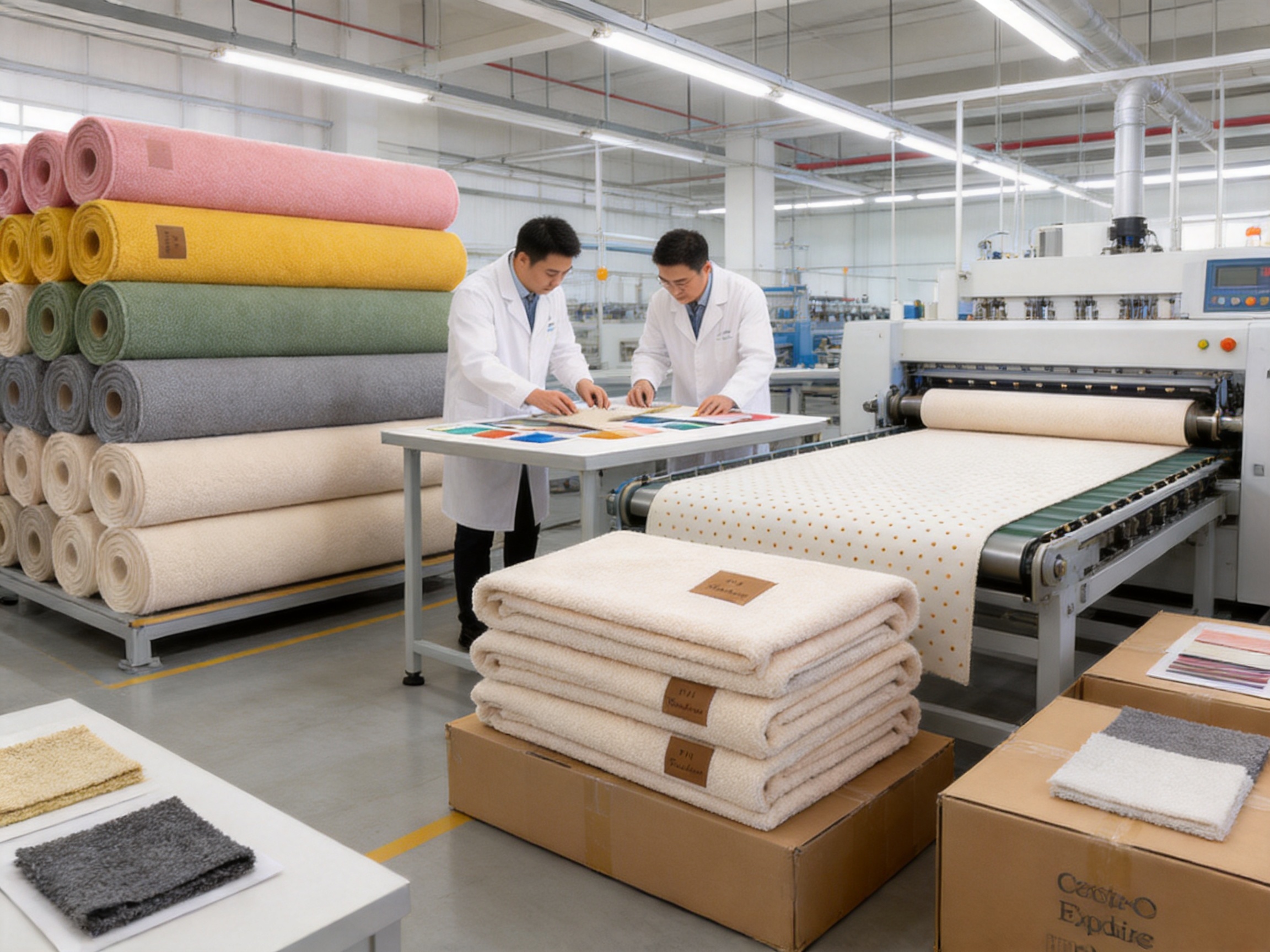
The manufacturer is a textile technology company based in Shaoxing, Zhejiang Province, a region widely recognized for its textile industry. Its capabilities cover carpets, rug fabrics, and finished textile products. This product focus provides a useful foundation for developing household textiles that require coordinated control of surface appearance, backing construction, finishing, and final processing.
The company operates its own weaving, dyeing and printing factories, and finished carpet processing facilities. Although the Teddy Fleece Solid Sofa Cover is a sofa textile rather than a traditional floor carpet, this integrated structure is relevant because it allows multiple stages of textile production to be coordinated under one organizational system.
Vertical production control can improve communication between development, manufacturing, quality inspection, and delivery planning. When a product involves several layers or processing stages, close coordination can help reduce misunderstandings about specifications. It may also provide better visibility into material availability, production scheduling, and finished-product quality.
The company’s production philosophy combines surface and backing processes to simplify carpet and textile manufacturing. This approach is applicable to products such as bonded sofa covers because the face and reverse must work together rather than being treated as unrelated materials. Coordinating these elements from the development stage can help create a more balanced finished product.
The manufacturer also maintains a team of more than 20 fabric engineers. A dedicated engineering team can contribute to fabric structure development, color selection, surface design, finishing, bonding, and performance adjustments. Regular product development based on market trends enables the company to respond to changing preferences in softness, texture, color, sustainability, and household use.
For buyers requiring special specifications, the engineering capability can support customized services. Customization may involve dimensions, color ranges, material choices, backing options, packaging, labeling, or other agreed requirements. The feasibility of each request depends on order volume, technical conditions, and production planning, but an established development team provides a stronger starting point than a supplier focused only on trading finished goods.

Quality control for a bonded sofa cover should begin with the incoming materials. Polyester yarns, fleece fabric, tricot, anti-slip dots, dyes, and bonding components must be checked against agreed specifications. Consistency in material weight, color, texture, width, and surface condition is important because defects in an early stage can become more difficult to correct after bonding.
During fabric production, inspection can focus on uniform pile or fleece appearance, shade consistency, fabric width, weight, and visible defects. The surface should provide a consistent hand feel and appearance across the finished piece. If the product is offered in solid colors, shade control becomes particularly important because large uninterrupted color fields can make variation easy to notice.
Bonding inspection should evaluate whether the face and backing are evenly joined. Areas of weak adhesion, excessive adhesive, bubbling, wrinkles, or separation can affect both appearance and performance. Process parameters should be monitored so that the bonded structure remains flexible and comfortable rather than becoming excessively stiff.
The anti-slip backing also requires careful inspection. Plastic dots should be distributed consistently across the specified area, and the tricot base should remain securely attached. The reverse should be examined for missing dots, contamination, irregular coverage, or damage caused during cutting and handling.
Finished products can be checked for dimensions, shape, stitching or edge treatment where applicable, surface cleanliness, color accuracy, packaging condition, and labeling. Wash testing may be used to evaluate dimensional change, surface appearance, colorfastness, bonding stability, and backing condition after care. Such testing should be aligned with the care instructions and the quality standards agreed between the supplier and buyer.
Integrated facilities can make it easier to trace issues back to a specific production stage. If a problem is identified in the final cover, the manufacturer can review the material, dyeing, bonding, cutting, and packing records together. This supports more systematic corrective action than a fragmented supply chain in which each stage is managed by a separate, disconnected supplier.
Modern home textile buyers increasingly consider the environmental profile of a product alongside softness, price, and appearance. The company’s stated development direction includes ecological protection, consumer health, recycled polyester, and water-saving dyeing methods. These areas reflect the broader movement toward more responsible textile production.
Recycled polyester can be considered as a material option for certain product programs when the required performance, color, hand feel, and supply conditions are compatible. Using recycled content may help brands develop collections with a stronger sustainability message. The exact recycled content, certification status, and applicable production conditions should be confirmed for each specific order.
Water-saving dyeing methods can help reduce the amount of water used during color processing. Dyeing efficiency also involves chemical management, energy consumption, wastewater treatment, and accurate color planning. A responsible approach requires attention to the complete process rather than focusing on one isolated production claim.
The company reports that it has passed OEKO-TEX® and GRS certifications. Certification scope and validity should always be verified for the relevant facility, material, and product order. Buyers should request current documentation when certification is a requirement for a particular market or retail program.
Product durability also contributes to a more responsible consumption model. A sofa cover that remains useful over repeated cleaning and regular household use may reduce the need for frequent replacement. A washable removable cover can also help extend the usable life of a sofa, delaying the disposal or replacement of larger furniture.
Packaging design is another area where brands can pursue improvement. Buyers may discuss recycled packaging materials, right-sized cartons, reduced plastic components, clear care labeling, and efficient packing quantities. These choices can lower unnecessary material use while preserving protection during transport.
The product is designed for machine washing, which supports convenient maintenance. Before washing, users should check the product label, remove loose debris, and separate the cover from other items when necessary. Using a suitable cycle and a moderate temperature can help preserve the fleece surface, color, bonding, and anti-slip backing.
Harsh chemicals, excessive heat, and aggressive mechanical treatment may affect textile performance. The precise care routine should follow the manufacturer’s label and the requirements of the fabric composition. If the cover is heavily soiled, pre-treatment should be performed carefully to avoid damaging the surface or creating uneven color.
After washing, the cover should be dried according to the stated instructions. Excessive heat may influence polyester fibers, bonded layers, or plastic anti-slip dots. Air drying or low-temperature drying may be more appropriate where specified. The cover should be completely dry before it is placed back on furniture.
Regular light maintenance can reduce the need for frequent deep washing. Vacuuming or gently shaking the cover can help remove surface dust and pet hair. Prompt treatment of small spills may also prevent them from becoming more difficult stains. These simple practices can improve the product’s appearance and extend the interval between washes.
Users should ensure that the sofa surface is reasonably clean and dry before placing the cover. Objects with sharp edges should not be left underneath it, because they may damage the textile or create pressure points. The cover should be positioned so that it does not obstruct moving mechanisms on recliners or create a tripping hazard around the furniture.
The solid-color format is well suited to coordinated collections. A brand can develop neutral colors such as cream, beige, gray, charcoal, brown, or black for broad market appeal. It can also introduce muted greens, blues, terracotta, or other seasonal shades to create a more distinctive assortment.
Color selection should consider the target market, interior trends, furniture materials, and care expectations. Lighter shades can create a bright and calm appearance but may show stains more easily. Darker shades can offer a practical visual effect in high-use environments, while mid-tone colors can provide a balance between style and everyday usability.
Because teddy fleece has a textured surface, color may appear slightly different depending on pile direction and lighting. Sample approval is therefore important. Buyers should review physical samples under different light conditions before confirming a large production run.
A coordinated collection may include matching or complementary products such as cushion covers, blankets, pet mats, bed throws, or other home textiles. The sofa cover can serve as an anchor product within a broader comfort and protection range. Matching textures and color families can help retailers create a stronger visual presentation.
Wholesale buyers often need products that combine broad consumer appeal with manageable production specifications. The Teddy Fleece Solid Sofa Cover has a clear function, a recognizable texture, and a relatively simple solid-color design. These features can make it easier to present in catalogs, online listings, showroom displays, and retail packaging.
The broad size range can support multiple stock-keeping units for different furniture applications. Buyers may choose to carry only the most popular dimensions or develop a complete size assortment. This flexibility allows distributors to adapt the product to their sales data, warehouse capacity, and market positioning.
Private-label customers can discuss branding requirements such as woven labels, printed care labels, packaging sleeves, inserts, cartons, and barcode systems. Product presentation can be adapted to the buyer’s retail identity, subject to order quantities and production feasibility.
Manufacturing control can also support better lead-time planning. When weaving, dyeing or printing, bonding, and finished processing are coordinated within an experienced textile production system, the supplier can provide clearer communication about sampling and bulk manufacturing. This is particularly valuable for seasonal collections and promotional campaigns.
Customization may include alternative colors, selected dimensions, different backing configurations, special packaging, or adjustments to the fabric weight. Technical review is necessary before any change is confirmed, because modifications to one component can influence softness, stability, washing behavior, cost, and production timing.
The sofa cover can be positioned as a premium comfort protector rather than a disposable furniture sheet. Its teddy fleece surface communicates softness, while its 600gsm weight suggests substance. The non-slip reverse communicates practical performance, and machine washing communicates convenience.
For pet-owner markets, the key message can focus on protecting furniture from hair, light dirt, and everyday contact while providing a comfortable resting surface. For family households, the emphasis can be on washable maintenance and protection from regular activity. For style-conscious consumers, the solid colors and plush texture can be presented as a simple way to refresh a room.
For commercial buyers, the positioning may center on replaceability, easy care, size choice, and furniture preservation. A collection of removable covers can help support routine cleaning programs and reduce the visual impact of wear in customer-facing areas.
Product descriptions should communicate realistic benefits. The cover can help protect furniture and reduce movement, but it should not be advertised as completely waterproof, claw-proof, stain-proof, or permanently fixed unless those properties have been specifically tested and verified. Accurate communication helps build consumer trust and reduces the risk of unsuitable expectations.
Before placing an order, buyers should confirm the desired face fabric, weight, color, size, edge treatment, backing construction, anti-slip dot coverage, packaging, labeling, and care instructions. If the product will be sold in a regulated market, applicable textile labeling and chemical requirements should also be reviewed.
Sample evaluation should include touch, visual appearance, dimensions, placement stability, surface shedding, color, and ease of handling. Buyers may also request washing samples to assess dimensional change and post-wash appearance. If the product is intended for commercial use, additional testing under more intensive conditions may be appropriate.
It is useful to discuss minimum order quantities and color minimums at the beginning of a project. Solid colors can be efficient for production, but each additional shade may require separate dyeing and inspection arrangements. Early planning can help balance assortment variety with manufacturing efficiency.
Packaging should be selected according to the sales channel. A compact folded package may suit e-commerce, while a larger retail sleeve or hanging presentation may be preferred in physical stores. Packaging should identify the size, material, care instructions, and primary benefits without making unsupported performance claims.
Buyers should also clarify production lead times for sample development, color approval, bulk manufacturing, inspection, and shipment. Integrated manufacturing can support efficient coordination, but lead time still depends on material availability, order volume, seasonality, customization, and shipping arrangements.
The cover is primarily made from polyester. It has a teddy fleece surface and a tricot reverse with anti-slip plastic dots. The construction is bonded to combine softness, structure, and improved placement stability.
Gsm means grams per square meter. A 600gsm specification indicates that the textile has a substantial material weight of approximately 600 grams per square meter. In practical terms, this contributes to a fuller hand feel, a more substantial appearance, and enhanced comfort compared with many lightweight throws.
It is suitable for households seeking a removable layer that can help protect sofa surfaces from everyday pet contact, hair, and light dirt. It is not an absolute guarantee against claw damage, chewing, or large spills. Pet owners should select an appropriate size and wash the cover according to the care instructions.
The tricot backing and anti-slip plastic dots are designed to reduce sliding and movement. Actual stability depends on the sofa’s material, shape, angle, and level of use. The product is more stable than an ordinary single-layer throw, but it is not a permanently attached upholstery cover.
Yes. Machine washing is listed as the product care instruction. Users should follow the specific label guidance regarding temperature, detergent, spin speed, drying, and ironing. Avoiding excessive heat and harsh treatment can help preserve the fleece and backing.
The available sizes range from 70*70cm to 110*240cm and include multiple intermediate dimensions. This range supports smaller cushions, individual seating areas, arm sections, chaise sections, and larger sofa surfaces.
The product is described as a solid-color sofa cover, and customized color development may be discussed with the manufacturer. Color feasibility depends on the material, order quantity, dyeing conditions, target shade, and sample approval process.
Private-label buyers can discuss packaging, labeling, inserts, and other presentation requirements with the manufacturer. The available options depend on order quantity, packaging format, and production specifications.
The product is developed specifically for sofa protection. It combines a 600gsm teddy fleece face, bonded construction, a tricot backing, anti-slip plastic dots, multiple furniture-oriented dimensions, and machine-washable care. A regular blanket may provide warmth but usually does not include the same furniture-stability features.
The company has fabric engineers and provides customized services according to customer requirements. Custom projects should be assessed for technical feasibility, material availability, order quantity, testing needs, and delivery schedule before confirmation.
The product is manufactured by a textile company located in Shaoxing, Zhejiang Province, China. The company operates weaving, dyeing or printing, and finished-product processing facilities as part of its textile production capabilities.
The company reports that it has passed OEKO-TEX® and GRS certifications. Buyers requiring certification should request current documentation and confirm that the certificate applies to the relevant facility, material, and product order.
The Teddy Fleece Solid Sofa Cover combines comfort, protection, stability, and convenient care in one practical home textile product. Its soft polyester teddy fleece surface creates a warm and inviting feel, while the 600gsm weight gives the cover a substantial character. The bonded construction, tricot reverse, and anti-slip plastic dots provide functional advantages over ordinary decorative throws that may slide or offer limited furniture protection.
The range of available sizes makes the product adaptable to different sofa layouts and commercial applications. Its solid-color design can complement a wide variety of interiors and support private-label collections, seasonal ranges, and coordinated

ADD: No.75 Zhenyuan Road, Yuecheng District, Shaoxing City, Zhejiang Province, China 312000

Tel : +86-189 6750 9795

FAX : +86-0575-8803 2773

Email : fisher@benetextile.com

Copyright © Zhejiang Benyi Textile Technology Co., Ltd. All Rights Reserved. Carpets and Rugs Manufacturer

 English
 Français
 Deutsch
 عربى