

Lu Wanyao — After-Sales Service Supervisor
 Home / Author / Lu Wanyao — After-Sales Service Supervisor / Glossy Silk Velvet Solid Fabric: A High-Performance Material for Carpets, Rugs, and Bath Mats
  2026.09.04
 Lu Wanyao — After-Sales Service Supervisor

Glossy Silk Velvet Solid Fabric is a premium knitted textile developed for manufacturers, wholesalers, interior textile brands, and project buyers seeking a soft, visually rich, and durable material for carpet-related applications. Made from 100% polyester microfiber, the fabric combines a dense 850gsm construction with a 20mm pile height, creating a plush surface that feels comfortable underfoot while delivering a distinctive glossy appearance.
Designed for use in area rugs, carpets, bath mats, and other decorative home textile products, this solid-dyed velvet fabric offers a practical alternative to conventional carpet surfaces. Its soft hand feeling, shaggy texture, adaptable width, color flexibility, and make-to-order production system make it suitable for both standardized product lines and customized collections.
The fabric is produced by Zhejiang Benyi Textile Technology Co., Ltd., a textile technology company based in Shaoxing, Zhejiang Province, China. Shaoxing is widely recognized as an important global textile manufacturing center, providing access to skilled technicians, integrated supply chains, dyeing resources, and specialized fabric production equipment. Through its weaving, dyeing, printing, and finished carpet processing capabilities, the company is positioned to manage multiple stages of production and maintain closer control over quality, lead time, and customization.
This article examines the structure, performance, manufacturing advantages, applications, customization possibilities, purchasing considerations, and commercial value of Glossy Silk Velvet Solid Fabric. It also explains why this material can be a strong choice for businesses looking to create attractive and functional rugs and carpet products.
Content
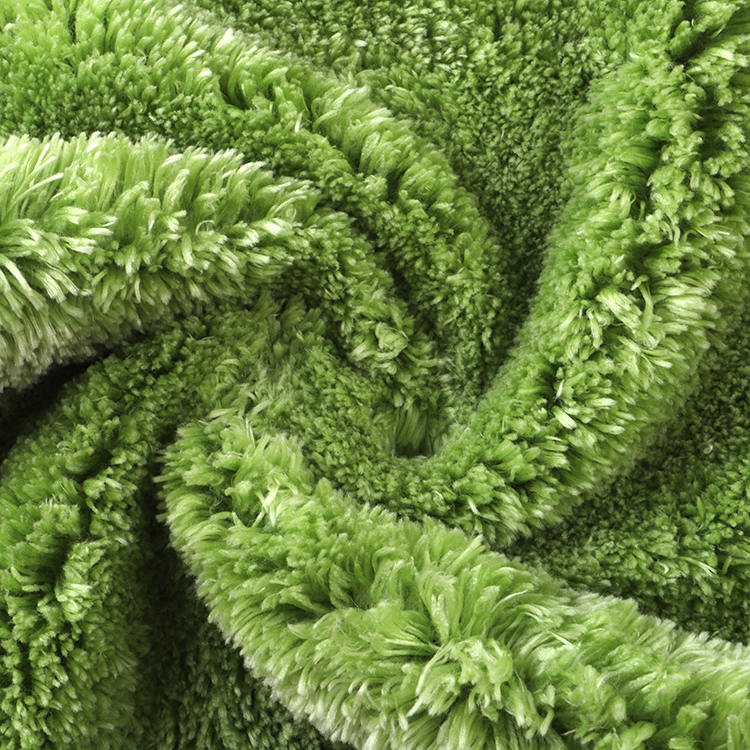
Glossy Silk Velvet Solid Fabric is a knitted carpet fabric manufactured from 100% polyester microfiber. It is engineered with an approximately 20mm pile height and a total weight of approximately 850gsm. This combination gives the surface a substantial, full appearance while preserving the softness expected from velvet-style home textiles.
The fabric is available in standard widths of 170cm, 190cm, and 210cm, while customized widths can also be discussed according to project requirements. The maximum width can reach up to 3.2 meters for suitable production programs. This range of width options allows buyers to plan production around different rug formats, cutting layouts, and manufacturing equipment.
Unlike many ordinary flat carpet fabrics, this material is designed to provide both visual depth and tactile comfort. The pile catches and reflects light, creating the glossy effect suggested by its name. At the same time, the shaggy surface gives the fabric a warm and inviting character that is well suited to residential interiors, hospitality spaces, bedrooms, bathrooms, and decorative commercial environments.
The fabric is supplied by rolls and produced on a make-to-order basis. This production method allows the manufacturer to prepare fabric according to confirmed specifications instead of relying only on a fixed inventory of standard materials. Buyers can discuss color, width, quantity, and other production details before manufacturing begins.
| Product name | Glossy Silk Velvet Fabric |
| Item model number | 100067 |
| Material | 100% polyester microfiber |
| Weight | 850gsm |
| Standard width | 170cm, 190cm, or 210cm |
| Maximum stated width | Up to 3.2 meters for suitable production requirements |
| Pile height | 20mm |
| Supply type | Make-to-order |
| Manufacturing technique | Knitted |
| Recommended uses | Carpets, area rugs, bath mats, and related home textiles |
| Color treatment | Solid dyed; custom colors may be discussed |
| Minimum order quantity | 500 kilograms per color |
| Packaging | Rolls |
| Stated delivery time | Approximately 15–20 days, subject to order details |
| Main features | Soft, shaggy, plush, glossy, and adaptable |
Technical values should be confirmed before purchase because final specifications may vary according to color, width, order quantity, finishing requirements, production scheduling, and the intended end product.
The most immediate advantage of Glossy Silk Velvet Solid Fabric is its combination of softness and visual appeal. A carpet or rug is often judged first by its appearance, but its long-term commercial success depends equally on how it feels during use. This fabric is designed to address both expectations.
The 20mm pile creates a noticeably deep surface. Compared with thin, low-pile carpet fabrics, the taller pile can produce a more luxurious appearance and a softer touch. It also helps the finished product look fuller after cutting and assembly. For area rugs and bath mats, this substantial surface can make the product feel more comfortable and premium to consumers.
The 850gsm weight contributes to a dense and substantial impression. Weight alone does not determine quality, but a suitable combination of fiber, pile height, and fabric construction can help the finished textile maintain a richer appearance than lightweight alternatives. For product developers, this allows the material to occupy a higher visual and tactile position within a collection.
The surface also provides a subtle light-reflective effect. Depending on viewing direction, room lighting, and pile orientation, the velvet face can appear to shift in tone or brightness. This gives a solid-colored rug more visual movement without requiring a printed pattern. As a result, the material can support minimalist, modern, hotel, boutique, and contemporary interior styles.
Some highly decorative fabrics may feel attractive at first but prove difficult to use in everyday home products. Glossy Silk Velvet Solid Fabric is designed as a carpet fabric rather than only as a decorative upholstery textile. Its polyester microfiber construction offers a practical balance between a soft hand feeling and the durability expected from a synthetic fiber.
Polyester is widely used in home textiles because it can provide good resistance to ordinary wear, is relatively easy to process, and accepts color effectively. The microfiber format allows manufacturers to create a fine, comfortable surface while maintaining a suitable basis for carpet and rug production.
The fabric is especially appropriate when a buyer wants to create a plush product without moving to more expensive natural fibers. It can help brands offer a luxury-inspired appearance at a more manageable material cost, depending on the complete product specification and production volume.
Glossy Silk Velvet Solid Fabric
Glossy Silk Velvet Solid Fabric is knitted from 100% polyester microfiber. The knitted construction is significant because the way fibers are formed into a textile affects the surface, flexibility, handling, and production behavior of the material.
Knitting can create a fabric structure that is suitable for a soft and resilient surface. In carpet applications, this can be useful when the material must be cut, shaped, combined with a backing, or converted into different product formats. The exact performance of the final carpet will also depend on backing material, edge treatment, adhesive, finishing, and product design, but the face fabric provides an important starting point.
Polyester microfiber is valued for its fine filament structure and smooth touch. In a velvet-style textile, these fine fibers can contribute to the soft feeling and clean surface appearance associated with premium fabrics. The fiber is also suitable for dyed products, allowing the manufacturer to develop solid colors for coordinated interior collections.
Another benefit is design consistency. Solid-dyed fabrics can be used in product lines where the buyer wants a clear, stable color identity rather than a complicated printed pattern. This is useful for private-label rug collections, hospitality projects, uniform bathroom accessories, and furniture or interior programs that require coordinated shades.
Polyester can also be selected for projects where color retention and practical care are important considerations. While no textile should be described as completely immune to fading, the material is promoted for fade resistance, and appropriate dyeing and care practices can help preserve its appearance over time. Buyers should request colorfastness data when the product is intended for strong sunlight, commercial cleaning, or other demanding conditions.
The 20mm pile height is one of the defining characteristics of this product. It gives the surface a plush, shaggy profile that can immediately distinguish a finished rug from a flat woven or low-pile alternative.
In bedrooms and living areas, a deeper pile can create a warm and comfortable atmosphere. In bathrooms, it can enhance the feeling of stepping onto a soft surface after bathing, provided that the complete bath mat design includes suitable backing, moisture management, and safe floor contact. For decorative floor coverings, the pile helps provide depth and a premium visual impression.
A taller pile also creates opportunities for product differentiation. Many carpet collections compete through color and pattern, but texture is another important way to build a distinctive product identity. A glossy, shaggy surface can be used as a collection signature, especially when offered in carefully selected solid colors.
Glossy Silk Velvet Solid Fabric offers several potential advantages when compared with standard flat carpet fabrics, ordinary low-pile polyester materials, and less adaptable decorative textiles. The exact advantage depends on the buyer’s product requirements, but the following characteristics are particularly relevant.
Traditional flat fabrics may be economical and easy to handle, but they may not provide the deep, soft sensation that consumers associate with a premium rug. The 20mm pile and microfiber surface help this fabric provide a richer tactile experience. For retail products, that feeling can influence customer perception and support a higher-value product position.
Flat solid fabrics can sometimes appear visually plain. The glossy velvet surface introduces changes in reflection across the pile, allowing a single color to appear more dynamic. This creates a refined look without the complexity of jacquard patterns, printed artwork, or multi-color yarn arrangements.
The product can be dyed in solid colors and may be customized to a buyer’s color requirements. This is useful for brands developing seasonal palettes, hospitality projects requiring a specific interior tone, or retailers seeking exclusive colors. Solid colors also simplify coordination with furniture, curtains, wall finishes, bedding, and bathroom accessories.
The availability of 170cm, 190cm, and 210cm widths provides more planning flexibility than a material supplied in only one narrow format. The stated maximum width of up to 3.2 meters may further support larger cutting layouts and reduce the need for unnecessary joins in certain products. Buyers should confirm the available width for each order, because maximum production width can depend on color, equipment, and technical conditions.
One of the material’s strongest commercial benefits is its multi-application potential. It can be used for area rugs, carpets, bath mats, and related products. A manufacturer or brand can therefore use one fabric concept across several product categories while adapting the cutting, backing, dimensions, and finishing details to each application.
Make-to-order production can reduce the limitations of a fixed-stock program. Rather than choosing only from immediately available colors or widths, buyers can develop a specification around their collection. This approach is especially useful for wholesale programs, contract projects, and brands that require a consistent product identity across multiple sizes.
The supplier’s ability to work across weaving, dyeing and printing, and finished carpet processing can simplify communication. Instead of coordinating every stage with unrelated vendors, buyers may be able to discuss fabric production and finished product development through a more integrated supply chain. This can support better coordination of color, construction, packaging, and scheduling.
The manufacturing strength behind a carpet fabric is as important as the fabric specification itself. A good material requires appropriate yarn selection, machine control, dyeing discipline, finishing management, inspection, packaging, and communication. Zhejiang Benyi Textile Technology Co., Ltd. emphasizes an integrated approach to these activities.
The company is located in Shaoxing, Zhejiang Province, an area with extensive experience in textile manufacturing. This regional concentration provides access to raw material suppliers, skilled labor, equipment resources, logistics services, dyeing facilities, and technical knowledge. For international buyers, a mature textile cluster can support more efficient sourcing and a wider range of product development options.
The company has its own weaving, dyeing and printing factories, and finished carpet processing factories. Managing or closely coordinating these stages can provide advantages in production control. When the same organization understands the face fabric, coloration, and final carpet conversion, it can be easier to identify the causes of quality variation and address them earlier.
Integrated production may also help reduce communication delays. A buyer developing a new rug may need to confirm pile appearance, color, width, backing, edge treatment, and packaging. A supplier with experience across these processes can provide more practical guidance than a company focused on only one isolated operation.
The company has a team of more than 20 fabric engineers and develops new carpet fabrics each quarter based on market trends. This focus on continuous development is relevant to buyers who need more than a static catalog. Consumer preferences in home textiles change frequently, with demand moving between long pile, short pile, textured surfaces, natural-looking effects, bold colors, neutral palettes, and sustainable materials.
Regular product development can help the manufacturer explore new combinations of fiber, color, texture, construction, and finishing. It also creates a foundation for customer-specific projects, where a buyer may need to adjust the standard material for a different market or product category.
For a knitted velvet carpet fabric, consistency is essential. Variations in pile height, weight, width, color, surface direction, or roll winding can create problems during cutting and sewing. A professional production process should therefore include controls for raw materials, knitting parameters, dyeing conditions, drying, finishing, inspection, and packaging.
As a make-to-order item, Glossy Silk Velvet Solid Fabric can be manufactured according to confirmed production instructions. Buyers should establish approval procedures before bulk production, including color standards, sample confirmation, width tolerances, weight expectations, pile height, roll length, and packaging requirements.
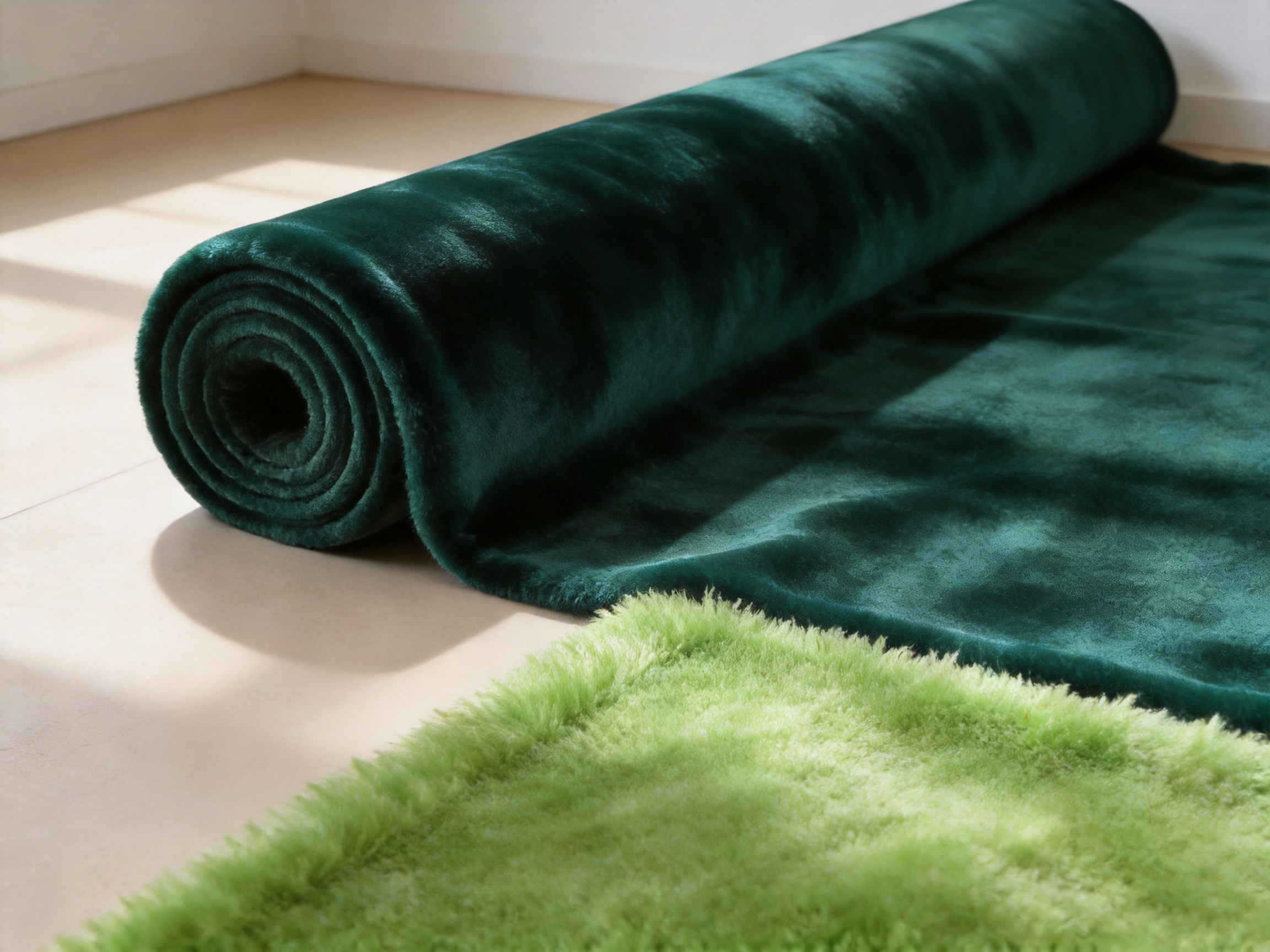
Color is one of the most important commercial elements in carpet and rug manufacturing. A well-constructed fabric may still perform poorly in the market if the color does not match the intended interior style or brand identity. Glossy Silk Velvet Solid Fabric is offered in solid dyed colors and can be developed in different shades according to project needs.
Solid colors are commercially versatile. Neutral tones such as ivory, beige, taupe, gray, and charcoal can support minimalist and contemporary interiors. Richer colors such as forest green, navy, burgundy, terracotta, and deep brown can create a more dramatic visual effect. Soft pastel tones may be appropriate for children’s rooms, bedrooms, boutique hospitality spaces, and seasonal collections.
When a specific color is required, the buyer should provide a recognized color standard, a physical swatch, or a detailed color reference. Digital images can be useful for preliminary discussion but should not be treated as the only basis for final approval because screen settings, lighting, photography, and display technology can alter perceived color.
A proper color approval process generally includes laboratory sampling, physical sample review, bulk production confirmation, and inspection under agreed lighting conditions. Velvet and pile fabrics may appear different depending on the direction of the pile, so the sample should be viewed from multiple angles.
Color variation can also occur between dye lots. For large projects, buyers should discuss whether the entire quantity will be produced in one lot or whether multiple lots can be accepted. Maintaining records of approved standards helps support repeat orders and future collection development.
Width customization can help improve material utilization. Buyers can plan the finished rug size, cutting direction, seam placement, and border configuration before ordering. Wider fabric may be beneficial for large area rugs, while standard widths may be more appropriate for smaller bath mats or modular products.
Material planning should account for cutting waste, pile direction, pattern or color alignment, edge finishing, defects, and replacement pieces. Although the fabric is solid colored, pile direction may influence the visual shade, so cutting plans should maintain consistent orientation across a finished product.
The fabric is primarily intended for carpet-related applications, but its combination of softness, pile, and color flexibility supports a broad range of finished products.
Area rugs are one of the most natural applications for this material. The 20mm pile offers a comfortable and decorative surface, while solid colors allow the rug to coordinate with furniture and other room elements. Manufacturers can create rectangular, square, round, runner, or irregular shapes, depending on cutting and finishing capabilities.
For residential use, the fabric can be developed into rugs for living rooms, bedrooms, reading corners, dressing areas, and children’s spaces. A solid velvet surface can complement both modern and classic interiors. The final rug should include a suitable backing system to improve stability, protect the textile, and support safe use on the intended floor type.
The soft pile makes the fabric suitable for bath mat development. Consumers often look for bath mats that feel comfortable, absorb or manage moisture effectively, and coordinate with bathroom décor. The velvet surface can provide a luxurious appearance and a pleasant underfoot sensation.
For bath mat production, the face fabric is only one part of the performance system. Manufacturers should select an appropriate backing, consider water exposure, evaluate drying behavior, and test slip resistance on common floor surfaces. The finished product should be designed for regular washing or cleaning according to its construction and care instructions.
A deep, soft pile is well suited to bedside rugs because users often value warmth and comfort when stepping out of bed. Solid dyed colors can create a calm atmosphere and coordinate with bedding, curtains, and upholstered furniture.
For this application, buyers may prioritize softness, color stability, edge appearance, and dimensional consistency. Rounded or rectangular formats can be produced depending on the finished product design.
In living rooms, carpet products must balance visual impact with routine use. The glossy velvet surface can act as a focal point, particularly when presented in a rich solid color. It can also provide a softer contrast against hard flooring such as tile, wood, stone, or laminate.
Commercial buyers should evaluate expected foot traffic and cleaning requirements before selecting the fabric for high-use public areas. The material is particularly suitable for decorative and comfort-oriented applications where a plush appearance is a priority.
Boutique hotels, serviced apartments, salons, showrooms, and other hospitality environments may use plush carpet surfaces to create a more welcoming atmosphere. The availability of customized colors can support a coordinated interior design program.
Contract buyers should request project-specific information regarding fire performance, cleaning procedures, slip resistance, abrasion, colorfastness, backing, and relevant compliance requirements. These requirements may vary by country, building type, and installation location.
The broader company product range includes kitchen mats and door mats, although the suitability of this particular 20mm velvet fabric should be evaluated according to the specific environment. Areas exposed to dirt, moisture, grease, or heavy traffic may require specialized backing, surface treatments, or alternative constructions.
The material may be used in decorative entrance or kitchen products when the design prioritizes softness and appearance, but technical testing should guide the final application decision. A product designed for an entrance should not be assumed to have the same performance as a product designed for a bedroom.
Quality control should begin before production and continue through finished roll inspection. For buyers importing carpet fabric, clear specifications can reduce misunderstandings and improve consistency between sample and bulk order.
The polyester microfiber yarn should be checked for consistency, cleanliness, and suitability for the intended knitting process. Differences in yarn quality can affect surface softness, shine, pile appearance, and dye uptake.
During knitting, production teams should monitor fabric width, weight, pile height, surface density, and structural uniformity. Inspectors should look for broken yarns, holes, uneven pile, streaks, contamination, and other visible defects.
Because velvet surfaces can reflect light differently across the fabric, inspection should take place under appropriate lighting and from more than one viewing direction. A surface that appears uniform from one angle may reveal shading or pile-direction differences from another.
Solid dyed fabrics should be compared against an approved standard. Buyers may also request testing for colorfastness to rubbing, washing, perspiration, and light when the product will face these conditions. Testing requirements should be agreed upon before production rather than after shipment.
The fabric is packaged by rolls. Roll packaging can protect the textile during handling and transportation, but the buyer should confirm roll diameter, roll length, roll weight, internal support, moisture protection, labeling, and pallet or container requirements.
During shipping, carpet fabrics should be protected from water, dirt, excessive compression, and sharp objects. Storage should take place in a clean, dry area away from direct sunlight and extreme humidity.
The minimum order quantity is stated as 500 kilograms per color. This quantity is appropriate for wholesalers, carpet manufacturers, private-label brands, distributors, and project buyers planning a medium- or large-scale product program.
A structured ordering process can help buyers manage risk and improve production efficiency.
The buyer should specify the intended application, target finished dimensions, desired color, estimated quantity, width, backing method, packaging format, and delivery destination. A bath mat program may require different finishing and performance checks than an area rug program.
Before placing a bulk order, buyers should request a fabric sample or development sample. The sample should be evaluated for softness, pile appearance, color, weight, width, shedding, odor, and compatibility with the planned backing or finishing process.
Important details include the confirmed material composition, pile height, finished weight, usable width, tolerance, color standard, roll format, inspection method, and delivery schedule. Any special requirements should be included in written production documentation.
For customized colors or finished rugs, the buyer should approve a physical sample before bulk production. This step is especially important for velvet fabrics because the apparent shade can change with pile direction and lighting.
Once the specifications are confirmed, the supplier can schedule make-to-order production. The stated delivery time is approximately 15–20 days, but the final schedule may depend on color development, raw material availability, order size, production loading, inspection, and shipping arrangements.
Final inspection may include roll count, weight, width, color, appearance, packaging, labeling, and shipping marks. For finished carpets or rugs, additional checks may include size, edge quality, backing adhesion, flatness, odor, and packaging integrity.
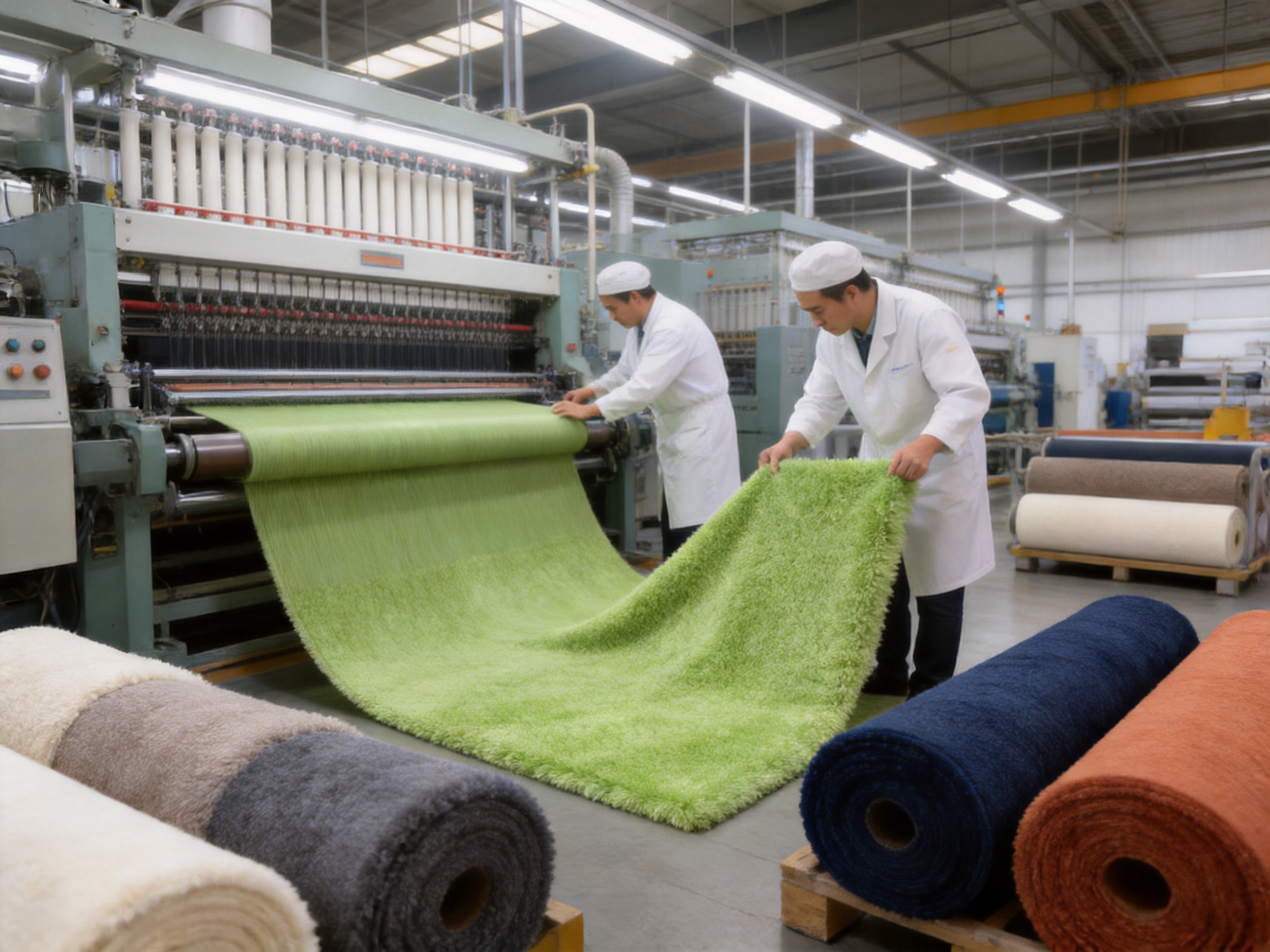
Environmental responsibility is becoming increasingly important in the carpet and home textile industry. Zhejiang Benyi Textile Technology Co., Ltd. describes its business as focused on ecological protection, consumer health experiences, sustainable materials, and water-saving dyeing methods.
The company also reports investment in recycled polyester and sustainable production approaches, as well as OEKO-TEX® and Global Recycled Standard certifications. Buyers should request current certificates, scope information, certificate numbers, and product-specific applicability when certification is important to a project.
Recycled polyester can reduce dependence on virgin raw materials when it is correctly sourced and verified. However, sustainability should be considered across the entire product life cycle, including fiber production, dyeing, finishing, backing, packaging, transportation, cleaning, durability, and end-of-life management.
Dyeing is an important part of textile environmental performance. Water-saving dyeing technologies can help reduce water consumption and wastewater generation compared with less efficient processes. The actual environmental benefit depends on the equipment, process controls, wastewater treatment, energy source, chemical management, and production volume.
For buyers with environmental procurement policies, it is advisable to request specific information rather than relying only on general sustainability language. Useful documentation may include certification records, restricted substance declarations, wastewater management information, recycled content evidence, and production audit reports.
Home textiles are used in close contact with people, particularly rugs, bath mats, bedroom carpets, and children’s products. OEKO-TEX® certification or comparable testing may help buyers assess whether products meet defined limits for certain harmful substances. Certification requirements should be verified for the actual fabric and production location involved in the order.
A responsible product program should also include clear care instructions, safe backing materials, appropriate adhesives, and suitable packaging. These details contribute to the overall consumer experience and product responsibility.
For brands and distributors, the value of Glossy Silk Velvet Solid Fabric extends beyond its physical characteristics. It can support product differentiation, collection development, efficient sourcing, and a more consistent brand presentation.
The combination of glossy appearance, 20mm pile, soft microfiber, and substantial weight can support a premium product position. This does not automatically determine the retail price, but it gives product developers meaningful features to communicate through packaging, merchandising, photography, and showroom presentation.
Solid colors allow multiple rug sizes and product categories to be coordinated within one collection. A brand can offer matching area rugs, runners, bath mats, bedside rugs, and decorative cushions or related textile accessories using a carefully planned palette.
Make-to-order production and color customization can support private-label programs. Retailers may develop exclusive colors or sizes that are not directly comparable with a competitor’s standard stock collection. This can help create a distinctive assortment and support repeat purchasing.
Because the company has capabilities related to fabric production and finished carpet processing, buyers may be able to consolidate part of their supply chain. Fewer supplier handovers can simplify communication about color, specifications, inspection, packaging, and delivery scheduling.
The presence of a technical engineering team can be helpful when a buyer has a concept but needs assistance converting it into a manufacturable product. Discussions may cover width, pile, weight, color, backing, cut dimensions, and finishing. The earlier these matters are addressed, the lower the risk of costly revisions during bulk production.
The fabric is a face material and should be evaluated as part of a complete finished product. The backing system has a major effect on stability, grip, durability, moisture behavior, and care performance.
For loose area rugs, an anti-slip backing or separate rug pad may be appropriate depending on the floor surface. For bath mats, the backing should be designed to maintain safe contact with smooth floors while remaining compatible with washing and drying requirements. For larger carpets, the backing may need to support dimensional stability and installation requirements.
Edge finishing is also important. Serging, binding, hemming, or other edge treatments can protect the fabric from unraveling and create a clean visual frame. The correct method depends on pile direction, thickness, end use, washing conditions, and the desired appearance.
Manufacturers should also consider pile compression during packing and transport. Deep-pile fabrics may require suitable roll handling and a recovery period after unpacking. Care labels should explain how to vacuum, clean, dry, and restore the surface without damaging the pile.
Care instructions should be based on testing of the complete finished product rather than the face fabric alone. The backing, adhesive, stitching, label, and edge treatment can all affect cleaning performance.
Routine care may include gentle vacuuming or surface cleaning to remove loose dust and debris. Aggressive brushing, excessive heat, or harsh chemicals may alter the pile or affect color. Spills should generally be addressed promptly using a method appropriate for polyester velvet and the finished construction.
For bath mats, regular washing and thorough drying are important to help manage moisture and maintain freshness. The buyer should determine whether the final product is machine washable, hand washable, or suitable only for spot cleaning. Washing tests should be conducted before printing care instructions.
For commercial applications, a maintenance schedule should account for traffic levels, cleaning frequency, furniture placement, sunlight exposure, and local environmental conditions. Although the polyester construction provides practical advantages, no textile surface is suitable for every level of use without application-specific testing.
When comparing this fabric with competing carpet fabrics, buyers should evaluate more than price per kilogram. A meaningful comparison should include the complete technical and commercial package.
| Evaluation area | Questions for buyers |
| Material | Is the fiber composition clearly stated and consistent with the intended use? |
| Surface | Does the pile provide the required softness, density, height, and visual effect? |
| Weight | Is the stated gsm suitable for the finished product and target market? |
| Width | Can the available width improve cutting efficiency and reduce seams? |
| Color | Can the supplier match approved colors and manage dye-lot consistency? |
| Customization | Can the supplier adjust width, color, finishing, or finished product details? |
| MOQ | Does the minimum quantity fit the buyer’s forecast and inventory strategy? |
| Lead time | Can the supplier meet launch dates, replenishment schedules, and project deadlines? |
| Quality control | Are inspection standards, tolerances, and sample approvals clearly defined? |
| Compliance | Are applicable certificates and test reports available for the exact product? |
| Supply chain | Can the supplier coordinate fabric and finished carpet production efficiently? |
| Packaging | Will roll packaging protect the fabric during storage and international transport? |
On these criteria, Glossy Silk Velvet Solid Fabric is particularly attractive to buyers who value softness, pile height, color customization, broad application potential, and integrated textile manufacturing support.
This product can serve several types of professional buyers.
Carpet and rug manufacturers may use it as a face fabric for new collections or as an alternative to existing plush materials. Home textile wholesalers can develop coordinated product assortments in multiple solid colors and sizes. Private-label retailers can use the make-to-order model to build exclusive collections. Hospitality and interior contractors may explore customized colors for selected rooms or design schemes.
Bath mat manufacturers can evaluate the fabric for soft, decorative products with an appropriate moisture-resistant and anti-slip construction. Furniture and home décor businesses may also consider the material for selected soft furnishing applications, although the supplier’s recommended uses focus primarily on carpets, rugs, and bath mats.
Because the MOQ is 500 kilograms per color, the product is generally more suitable for established wholesale programs, commercial production, and planned collections than for very small sample-only orders. Buyers with smaller requirements should discuss sampling options and potential stock availability directly with the supplier.
Zhejiang Benyi Textile Technology Co., Ltd. presents itself as a new textile technology company with a focus on carpet fabrics, carpets, and finished textile products. Its location in Shaoxing gives the company access to a deep textile ecosystem, while its production structure is designed to connect fabric development with finished product manufacturing.
The company’s stated strengths include weaving facilities, dyeing and printing factories, finished carpet processing factories, a team of more than 20 fabric engineers, quarterly product development, customization services, and attention to environmental protection. These capabilities can be valuable for buyers who want a supplier that understands both material production and the commercial requirements of finished carpets.
Its integrated model is intended to address a traditional challenge in the carpet industry: separate production stages can create high costs, longer communication chains, and inconsistent efficiency. By combining the surface and bottom or coordinating the relevant production stages, the company aims to make carpet production simpler and more efficient.
Quality and lead-time control are important benefits of this approach. When production is centralized or closely coordinated, it can be easier to monitor orders, identify bottlenecks, and maintain communication. Nevertheless, buyers should still confirm the exact factory responsible for each order, inspection procedures, certifications, capacity, and delivery commitments before signing a contract.
The fabric is made from 100% polyester microfiber. The polyester construction is designed to provide a soft surface, practical durability, and good suitability for solid-dyed carpet and rug products.
The stated pile height is 20mm. This creates a deep, plush, and shaggy surface with a soft hand feeling and a distinctive glossy visual effect.
The stated weight is 850gsm. Final weight should be confirmed according to the production specification and any applicable tolerance.
Standard widths are 170cm, 190cm, and 210cm. Customized widths may be discussed, and the stated maximum width can reach up to 3.2 meters for suitable production requirements.
Yes. The fabric is solid dyed and can be developed in different colors according to the buyer’s requirements. A physical color standard or recognized color reference should be used for approval.
The primary recommended applications are carpets, area rugs, and bath mats. It may also be considered for related decorative floor textile products after application-specific testing.
The stated minimum order quantity is 500 kilograms per color. Sampling and smaller development quantities should be confirmed directly with the supplier.
The fabric is packaged in rolls. Buyers should confirm roll dimensions, weight, length, moisture protection, labeling, and export packaging before production.
The stated delivery time is approximately 15–20 days. The actual schedule may depend on color development, quantity, production capacity, inspection, and shipping arrangements.
It is listed as suitable for bath mats, primarily because of its soft, plush surface. The finished bath mat must also include appropriate backing, slip resistance, moisture management, and care performance. These factors should be tested as a complete product.
The fabric is designed for carpet-related applications, but heavy commercial use requires additional testing. Buyers should request information on abrasion, colorfastness, pile recovery, fire performance, cleaning, and backing before specifying it for demanding public areas.
The company states that it provides customized services according to customer requirements. Possible discussion areas include color, width, fabric development, and finished carpet processing. Exact customization options should be confirmed for each project.
The company describes its focus on ecological protection and reports investment in recycled polyester, water-saving dyeing methods, and relevant certifications. Buyers should verify current certificates and determine whether they apply to the exact material and production batch being purchased.
Glossy Silk Velvet Solid Fabric is a versatile carpet textile that combines a luxurious appearance with practical polyester construction. Its 20mm pile height, 850gsm weight, soft microfiber surface, shaggy texture, and glossy visual effect give it strong potential for premium-looking area rugs, carpets, and bath mats.
Its competitive advantages include a rich tactile experience, visual depth without printed patterns, solid-color flexibility, multiple width options, make-to-order production, and suitability for several finished product categories. The stated maximum width of up to 3.2 meters can also support efficient planning for larger layouts when confirmed for a specific order.
The supplier’s strengths extend beyond the fabric itself. Zhejiang Benyi Textile Technology Co., Ltd. operates within the Shaoxing textile manufacturing cluster and provides access to weaving, dyeing and printing, finished carpet processing, technical engineering, product development, and customization capabilities. This integrated structure can help wholesale buyers coordinate their product development and supply chain more efficiently.
For the best result, buyers should treat the fabric as part of a complete finished-product system. Color approval, pile direction, backing, edge finishing, slip resistance, cleaning, packaging, compliance, and application-specific testing should all be addressed before bulk production.
For brands and manufacturers seeking a soft, visually distinctive, and customizable carpet fabric, Glossy Silk Velvet Solid Fabric offers a strong foundation for developing coordinated home textile collections and specialized interior products.
1. Product technical information supplied for Glossy Silk Velvet Fabric, item model number 100067.
2. Zhejiang Benyi Textile Technology Co., Ltd., company information concerning textile technology, carpet fabric production, finished carpet processing, and customization services.
3. General textile manufacturing principles relating to polyester microfiber, knitted fabrics, pile height, textile dyeing, and carpet construction.
4. General purchasing and quality-control practices for carpet fabrics, area rugs, bath mats, roll packaging, and made-to-order textile production.
5. General sustainability guidance concerning recycled polyester, water-saving dyeing, OEKO-TEX® certification, and Global Recycled Standard certification.

ADD: No.75 Zhenyuan Road, Yuecheng District, Shaoxing City, Zhejiang Province, China 312000

Tel : +86-189 6750 9795

FAX : +86-0575-8803 2773

Email : fisher@benetextile.com

Copyright © Zhejiang Benyi Textile Technology Co., Ltd. All Rights Reserved. Carpets and Rugs Manufacturer

 English
 Français
 Deutsch
 عربى
عربى