

Qiao Yunting — Senior Carpet Sales Manager
 Home / Author / Qiao Yunting — Senior Carpet Sales Manager / Diatomite Mud Kitchen Floor Mat: A Durable, Washable, and Non-Slip Solution for Modern Interiors
 2026.09.30
 Qiao Yunting — Senior Carpet Sales Manager
The kitchen is one of the busiest areas in a home, commercial property, or hospitality environment. It is exposed to spilled water, cooking residue, food particles, frequent foot traffic, and repeated cleaning. A suitable kitchen floor mat therefore needs to do much more than add visual appeal. It should absorb moisture, protect the floor, remain stable during use, feel comfortable underfoot, and withstand regular washing without quickly losing its shape or appearance.
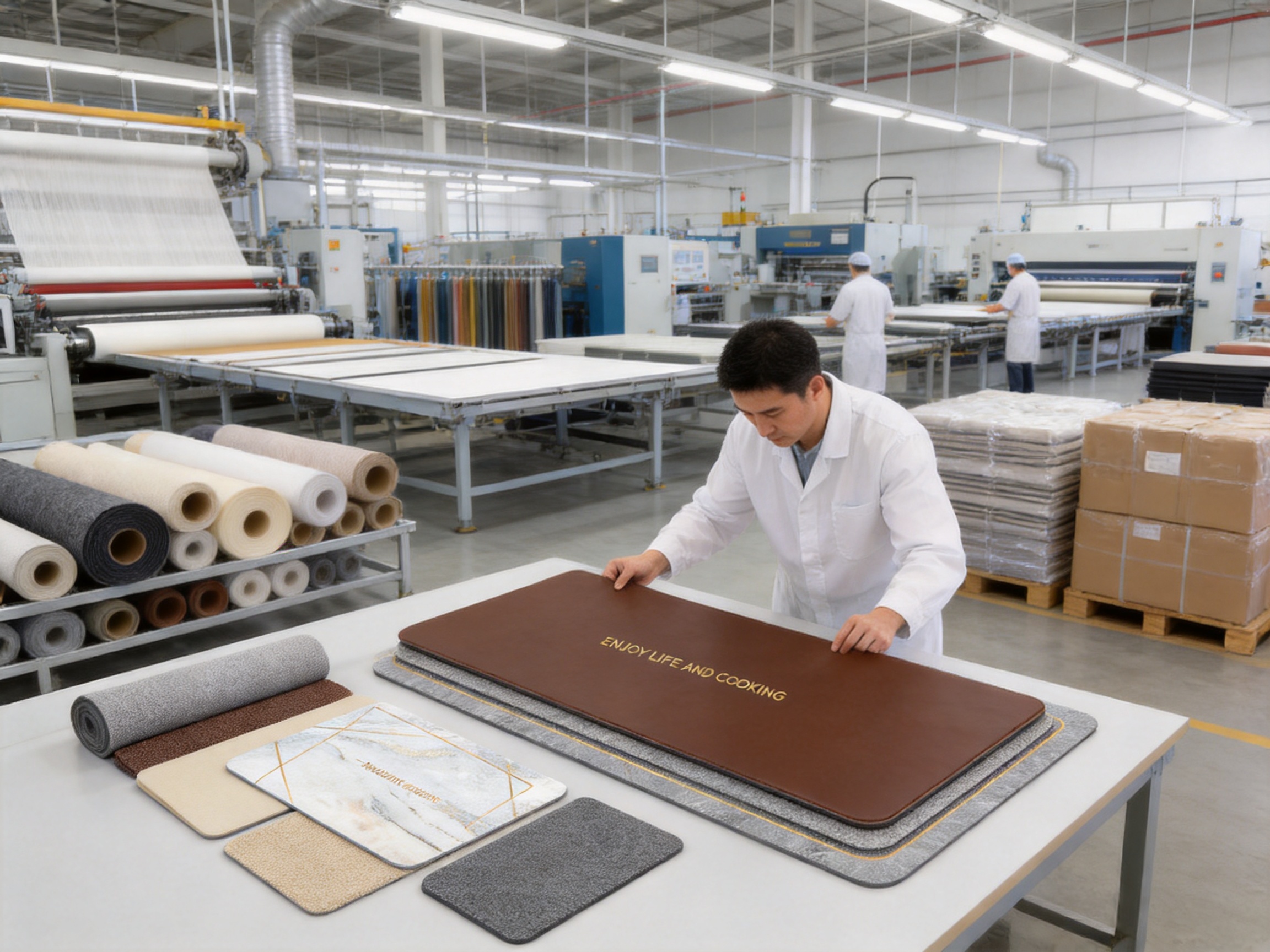
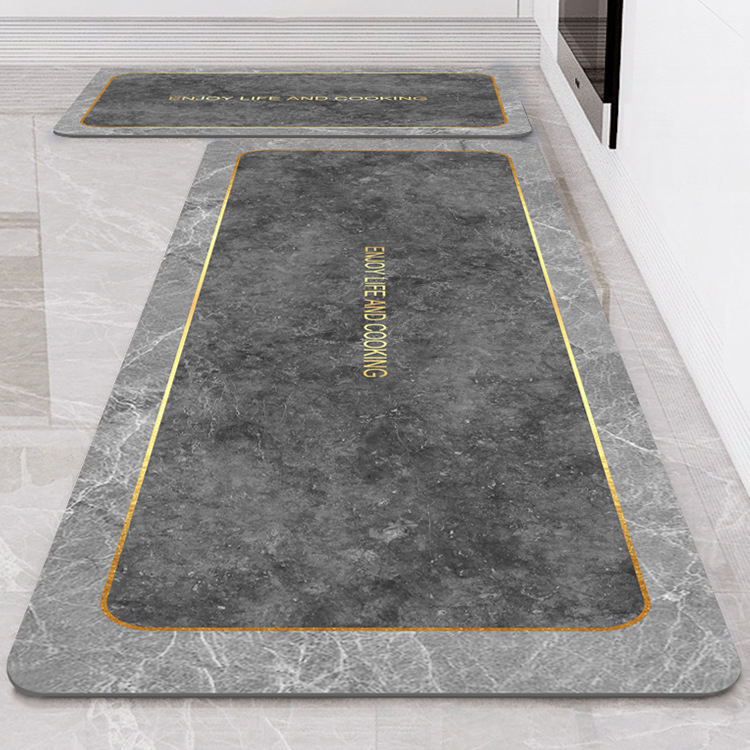
The Diatomite Mud Kitchen Floor Mat is designed to address these practical requirements in one product. It combines a soft leathaire surface, a cushioning foam middle layer, and a waterproof rubber backing. This bonded construction creates a slim yet functional mat with a 3 mm thickness, a substantial 1800gsm weight, water-absorption capability, and reliable resistance to shifting and skidding.
Although the product is presented as a diatomite mud kitchen mat, its specified surface material is 100% polyester leathaire cloth. The name reflects the product’s moisture-management concept and intended use in areas where water and dampness are common. The multilayer structure gives it several advantages over ordinary fabric mats, thin printed floor coverings, and less stable non-slip alternatives.
Available in several standard dimensions and customizable sizes, the mat can be used in front of sinks, cooking areas, counters, hallway entrances, utility spaces, and other indoor locations. Its modern rectangular form is easy to coordinate with contemporary interiors, while its washable construction supports convenient daily maintenance.
Diatomite Mud Kitchen Floor Mat
Content
Kitchen floors experience a combination of conditions that can shorten the useful life of ordinary mats. Water may splash from a sink or dishwasher. Oil and food particles can fall during meal preparation. Shoes may bring in dust and moisture, while chairs, stools, and frequent foot traffic create repeated mechanical stress. A kitchen mat that performs well in a bedroom may not be appropriate for this environment.
A traditional woven mat can offer softness, but it may retain moisture for a long time. Prolonged dampness can create unpleasant odors, make the mat difficult to dry, and encourage hygiene concerns. Some low-cost mats have a loose structure that allows liquid to pass through to the floor. Others have a lightweight backing that curls, slides, or develops wrinkles after repeated use.
Hard plastic mats may be easy to wipe, but they can feel uncomfortable during extended standing. They may also become slippery when their surface is wet. Very thick mats can provide cushioning, yet they may interfere with doors, create raised edges, or become difficult to clean and store.
The Diatomite Mud Kitchen Floor Mat is positioned between these different categories. Its 3 mm thickness provides a low-profile design, while the layered construction delivers softness and functional support. The surface is intended to help manage water, the middle foam layer adds absorption and cushioning, and the rubber underside helps keep the mat in place.
The upper layer is made from polyester leathaire cloth. This material is selected for durability, a soft hand feel, and resistance to fading. It provides a smoother and more comfortable standing surface than many coarse woven floor coverings. The surface can also support modern printed or finished designs, making the mat suitable for interiors where practical products must also contribute to visual presentation.
Leathaire is particularly useful in a kitchen setting because it offers a balance between softness and cleanability. It does not have the same deep pile as a conventional rug, so food particles and surface dust are less likely to become deeply embedded. The relatively smooth construction also makes routine rinsing more straightforward.
The surface layer contributes to comfort when a person stands at a sink or counter for an extended period. While a 3 mm mat should not be confused with a thick anti-fatigue platform, the fabric surface and middle foam layer provide a more pleasant feel than a bare hard floor or a rigid plastic sheet.
The foam layer is an important part of the product’s performance. It provides cushioning between the upper fabric and the floor while helping absorb water. When moisture reaches the mat, the middle structure can hold a significant amount of liquid rather than allowing it to immediately spread across the surrounding floor.
This layer also helps the product maintain a comfortable, slightly resilient feel. In a kitchen, the user may stand in one place while washing dishes, preparing ingredients, or operating a worktop. The foam layer cannot eliminate all standing fatigue, but it can make the surface feel more supportive than tile, stone, or sealed concrete.
The middle layer is bonded to the other components rather than loosely assembled. This reduces the possibility of the layers separating during ordinary use and supports the mat’s ability to retain its shape. Proper bonding is especially important for washable products because repeated exposure to water and handling can stress the interfaces between layers.
The underside is made from rubber and is designed to help prevent shifting and skidding. This is a significant feature for a kitchen floor mat. A mat that moves easily can become a trip hazard, particularly when placed near a sink, cooking station, or entrance where the floor may be wet.
The rubber backing also acts as a water-resistant barrier. According to the product specifications, the backing helps prevent absorbed moisture from permeating through to the floor. This can help protect flooring materials such as wood-look surfaces, laminate, vinyl, and other indoor floor finishes from unnecessary contact with water.
A rubber backing must still be used correctly. The floor should be clean, dry, and free of grease before the mat is placed. Users should also lift and dry the mat periodically so that moisture does not remain trapped between the rubber underside and the floor. These normal care practices help preserve both the mat and the flooring below it.
Water absorption is one of the mat’s main functional benefits. In kitchens, small splashes are common and may otherwise create slippery patches around a sink or counter. The fabric surface and foam middle layer are designed to capture moisture and help keep the immediate walking area drier.
Absorption is useful for more than accidental spills. It can help manage wet footprints, drips from washed dishes, and water carried from adjacent areas. By collecting moisture in the mat instead of leaving it on the floor, the product can contribute to a cleaner and safer indoor environment.
The mat is not intended to replace immediate cleanup of large spills. If a considerable amount of liquid is released, the product should be rinsed or dried promptly. Its value lies in handling routine moisture and providing a convenient first layer of protection during normal kitchen activity.
The product can be rinsed with foam or water and dried naturally. This makes it easier to maintain than mats that require specialized cleaning or cannot tolerate moisture. Regular washing can remove dust, food residue, and surface marks before they accumulate.
Water washing is particularly suitable for kitchen products because it supports a more hygienic maintenance routine. Instead of relying only on vacuuming or surface wiping, users can periodically rinse the mat and allow it to dry thoroughly. Natural drying also avoids the need for complex equipment.
For best results, loose dirt should be removed before washing. The mat should be rinsed with suitable water and mild cleaning foam when necessary, then placed flat or hung in a well-ventilated location. It should be completely dry before being returned to the floor. Harsh chemicals, abrasive brushes, and excessive heat may affect the surface or backing and should generally be avoided unless specifically approved.
The rubber backing helps reduce unwanted movement during everyday use. This advantage is especially relevant for households with children, older adults, or anyone who spends considerable time working in the kitchen. A stable mat is easier to use because it remains positioned where it is needed instead of bunching or sliding underfoot.
Compared with lightweight fabric mats that rely only on friction, a bonded rubber-backed mat provides a more deliberate anti-skid solution. It is also less likely to form loose folds when placed on a smooth indoor floor. The exact level of traction will depend on the condition and cleanliness of the floor, but the backing gives the product a stronger foundation than an unbacked textile.
The 3 mm thickness creates a relatively slim profile. This allows the mat to sit beneath or near doors with less interference than a thick pile rug. It is also easier to move, wash, and store when compared with heavy, high-pile floor coverings.
At the same time, the product is not simply a thin decorative sheet. Its 1800gsm weight and bonded multilayer construction give it a more substantial feel. The surface remains soft, while the foam layer adds a degree of cushioning. This combination is useful in areas where users want comfort without the bulk associated with a thick kitchen runner.
The product is manufactured with a focus on repeated indoor use. The polyester leathaire surface is described as durable and fade resistant, while the bonded structure is intended to help the mat retain its form. The rubber backing contributes to overall stability and protects the underside from direct contact with the floor.
Durability does not mean that the mat is indestructible. Sharp objects, excessive heat, aggressive cleaning, and prolonged exposure to unsuitable chemicals can damage textile and rubber materials. However, under normal indoor conditions, the selected construction is designed to provide a useful service life while maintaining its core appearance and performance.
Basic fabric mats may be inexpensive and visually appealing, but many are not designed for frequent water exposure. They can become saturated, remain damp, and move across smooth flooring. The Diatomite Mud Kitchen Floor Mat offers a more application-specific construction, including an absorbent middle layer and rubber backing.
The smooth leathaire surface is also easier to rinse than a deep, loose pile. This can reduce the amount of time needed for routine maintenance. The bonded edges and layers provide a more unified structure than some lightweight textile mats that may fray or separate with repeated washing.
High-pile rugs can feel soft but may collect crumbs, hair, dust, and other kitchen debris. They may also take longer to dry after washing. A low-profile 3 mm mat provides a cleaner, more streamlined surface for kitchen areas and is less likely to obstruct nearby doors.
The thinner format is also practical in narrow spaces. A user can place it along a counter, in front of a sink, or beside a kitchen island without creating a pronounced step. This makes it suitable for modern kitchens where clear lines and easy movement are important.
An absorbent mat without a waterproof or non-slip backing may collect moisture but still allow it to reach the floor. It may also slide when stepped on. This product combines absorption in the upper and middle layers with a rubber underside intended to reduce both water penetration and movement.
This layered approach offers a more complete response to kitchen conditions. Absorption addresses moisture on the upper surface, the foam contributes to water retention and comfort, and the rubber layer supports floor protection and stability.
Rigid plastic coverings are often easy to wipe clean, but they may not provide the same soft standing experience. They can also feel cold or hard in residential kitchens. The textile surface of this mat offers a more comfortable alternative while retaining the practical benefit of washability.
The rubber underside further improves the user experience by reducing the sharp movement that can occur with a lightweight plastic sheet. The result is a product that combines a softer tactile experience with a functional, easy-care design.
The standard size range includes 40 by 60 centimeters, 40 by 120 centimeters, 50 by 80 centimeters, 50 by 120 centimeters, 50 by 150 centimeters, 60 by 90 centimeters, and 60 by 160 centimeters. Customized dimensions are also available, subject to production requirements and order confirmation.
| Available Size | Potential Placement | Primary Benefit |
|---|---|---|
| 40 × 60 cm | Compact sink or preparation area | Suitable for limited floor space |
| 40 × 120 cm | Narrow counter or galley kitchen | Provides length without excessive width |
| 50 × 80 cm | Sink, dishwasher, or small work zone | Balances coverage and easy handling |
| 50 × 120 cm | Kitchen counter or island side | Useful for common standing areas |
| 50 × 150 cm | Long preparation counter | Extends protection along a work surface |
| 60 × 90 cm | Wider sink or entrance area | Provides additional standing coverage |
| 60 × 160 cm | Long kitchen run or hallway | Supports extended linear placement |
For a sink area, users should measure the available standing zone and allow enough clearance for cabinet doors and drawers. A mat that is too large may interfere with movement, while a mat that is too small may leave the most frequently used area unprotected.
In a galley kitchen, a long rectangular format can follow the length of a counter. In front of an island, a larger size may protect the area where food preparation takes place. The same product can also be used in a hallway, particularly where wet footwear or frequent traffic creates a need for moisture management.
Customized dimensions are valuable for commercial buyers, furniture manufacturers, hospitality projects, and private-label programs. Buyers can discuss the desired length, width, color, surface design, packaging, and other requirements with the manufacturer before production.
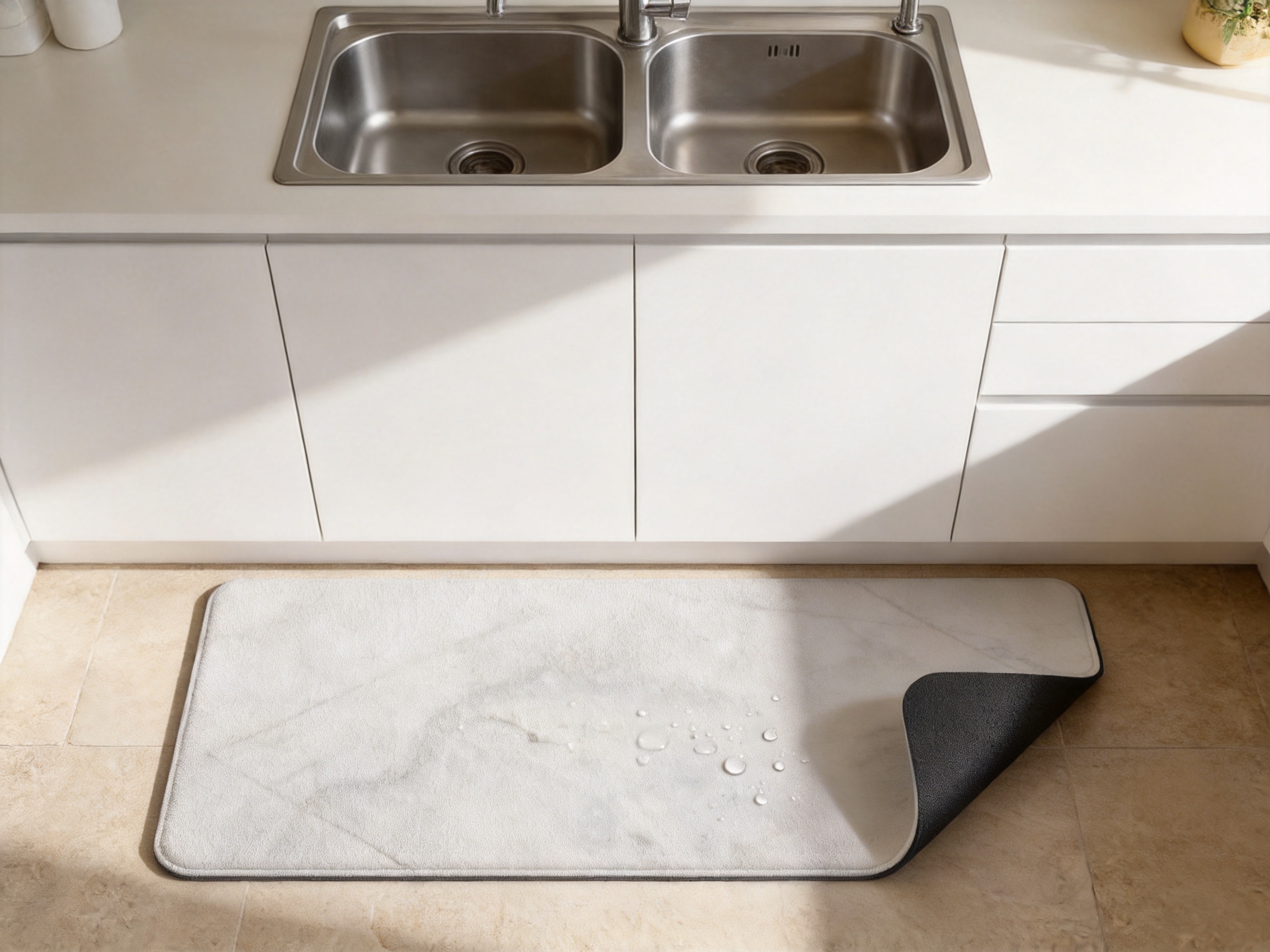
The rectangular shape gives the mat a familiar and adaptable appearance. It can be aligned with straight kitchen cabinets, counters, islands, and hallway walls. The modern pattern classification makes it appropriate for contemporary interiors, rental properties, apartments, offices, showrooms, and hospitality spaces.
Although the product is primarily functional, visual coordination remains important. Kitchen textiles often occupy a prominent position because they are placed in open-plan living areas. A mat with a modern surface can complement cabinetry, worktops, flooring, and other soft furnishings without appearing out of place.
The same construction can be useful outside the kitchen. In a hallway, it can help manage moisture near an entrance. In a utility room, it can provide a washable standing surface. In selected indoor areas, it can function as a compact floor covering where water absorption, low profile, and non-slip performance are desirable.
The product is specified for indoor use. Outdoor exposure can subject the textile and rubber components to ultraviolet radiation, rain, dirt, temperature changes, and rough surfaces that are beyond the intended application. Using the mat indoors helps preserve its appearance and functional properties.
The manufacturer is based in Shaoxing, Zhejiang Province, an area widely recognized for its textile production capabilities. Its business focuses on carpet fabrics, rugs, and finished carpet products. The company operates weaving, dyeing and printing, and finished carpet processing facilities, allowing multiple stages of production to be managed within an integrated supply chain.
Vertical integration can provide important advantages for buyers. When raw material development, textile processing, printing, bonding, and finishing are coordinated through connected facilities, production communication is more direct. This can support more consistent specifications, better oversight of lead times, and faster responses to technical or design changes.
For a multilayer product such as this kitchen mat, coordination between surface production and final assembly is particularly important. The appearance of the leathaire cloth must be compatible with the foam and rubber layers. Bonding pressure, temperature, cutting accuracy, edge treatment, and inspection all influence the final product.
The company reports a team of more than 20 fabric engineers. This technical team develops new carpet fabrics each quarter in response to market trends and customer requirements. Such development capacity can help buyers access more than a fixed catalog of standard products.
Textile engineers can work on surface hand feel, pattern development, color presentation, material selection, backing compatibility, and application-specific performance. For a buyer seeking a kitchen mat for a particular market, these capabilities may support adjustments to size, design, construction, or packaging.
Continuous product development is also relevant to changing consumer expectations. Buyers increasingly look for products that are easy to clean, durable, comfortable, visually modern, and aligned with sustainability goals. A manufacturer with dedicated engineering resources is better positioned to explore improvements across these areas.
The kitchen mat uses a bonded construction. Bonding is a critical process because it connects the surface, middle layer, and backing into one functional unit. Inadequate bonding can result in bubbling, delamination, uneven edges, or premature separation. Controlled production helps reduce these risks.
Finishing processes may include accurate cutting, edge inspection, surface checking, backing inspection, and packing preparation. Each stage affects how the product appears when it reaches the customer. Consistent dimensions are important when mats are sold as pairs, arranged in sets, or installed in commercial projects.
A professional manufacturing process should also include checks for visible defects, uneven bonding, contamination, poor printing, irregular cutting, and backing damage. While individual inspection procedures may vary by order, systematic quality control provides a basis for more reliable supply.
The ability to provide customized sizes is useful for wholesalers, importers, retailers, and project buyers. Standard dimensions are convenient for regular distribution, but customized products can help brands address local housing layouts, retailer requirements, or specific customer preferences.
Customization may involve more than size. Depending on technical feasibility and order volume, buyers may discuss surface patterns, colors, labels, packaging formats, logo applications, and product assortments. Early communication is important because each adjustment can affect material consumption, production planning, testing, and delivery schedules.
By controlling weaving, dyeing or printing, and finished processing, the manufacturer can coordinate these requirements more efficiently than a company that outsources every stage to unrelated suppliers. This may help reduce communication delays and improve accountability when a buyer needs a complete finished product.
The company describes its business as focused on ecological and environmental protection, consumer health experiences, and sustainable textile innovation. It reports investment in recycled polyester and water-saving dyeing techniques. These approaches can reduce reliance on virgin resources and help limit water consumption during textile production.
The company also states that it has passed OEKO-TEX® and GRS certifications. Buyers should request current certification documents, scope information, and product-specific applicability when these credentials are required for a particular order. Certification status can depend on the facility, material, product category, and validity period.
For responsible sourcing, buyers should evaluate the complete product rather than relying on one material claim. Important questions may include the source of polyester, the percentage of recycled content where applicable, the composition of the rubber backing, packaging materials, wastewater management, chemical controls, and factory social compliance.
The kitchen mat’s washable design may also contribute to practical sustainability by supporting repeated use. A product that can be cleaned and maintained may remain useful for longer than a disposable or difficult-to-clean floor covering. However, product longevity depends on correct care, appropriate placement, and regular inspection.
Shake or brush away loose crumbs and dry dirt before washing. This prevents solid particles from being rubbed into the surface during cleaning. For small marks, a damp cloth and mild cleaning solution may be sufficient.
When a deeper clean is needed, rinse the mat with water or use suitable foam. Avoid excessive scrubbing, especially with abrasive brushes that could affect the leathaire surface. After washing, remove excess water and dry the mat naturally in a ventilated area.
The mat should be completely dry before it is returned to the floor. Placing a wet mat directly on the floor can trap moisture beneath the rubber backing. Drying it flat can help maintain its shape, while hanging or positioning it in a way that allows air circulation may speed the process.
Direct high heat should generally be avoided because it may affect the textile surface, foam layer, or rubber backing. Natural drying is consistent with the stated care instructions and is usually sufficient for a mat of this thickness.
Before placing the mat, clean the floor to remove grease, dust, and loose particles. A dirty or oily floor can reduce the effectiveness of the non-slip backing. The mat should be laid flat without folds or curled corners.
Users should periodically lift the mat to inspect the floor and underside. This allows any trapped moisture or debris to be removed and helps ensure that the floor remains in good condition. Regular inspection is especially important in kitchens where spills are frequent.
Wholesale customers should determine the intended sales channel before confirming the product specification. Retail packaging, bulk packaging, private-label requirements, barcode placement, and carton dimensions may differ between online, department store, supermarket, hospitality, and project-based sales.
Sample approval is recommended before placing a large order. A sample allows the buyer to evaluate color, surface feel, edge finishing, thickness, backing grip, washability, absorbency, and packaging presentation. It also provides an opportunity to confirm that the actual product matches catalog information.
Buyers should request a complete specification sheet covering product name, material composition, weight, thickness, construction type, backing material, standard sizes, care instructions, and applicable certifications. For customized orders, the approved sample or signed specification should define the reference standard.
Lead time should be discussed in relation to material availability, production capacity, printing or dyeing requirements, bonding schedules, inspection, and shipping arrangements. An integrated manufacturer may be able to coordinate these stages more effectively, but lead time still depends on order complexity and quantity.
For market positioning, the product can be presented as a washable, low-profile, absorbent, rubber-backed kitchen mat with a soft leathaire surface. These attributes give retailers several clear selling points without requiring exaggerated claims. Product descriptions should distinguish between routine moisture management and the handling of large spills.
In a home kitchen, the mat can be placed in front of a sink, along a counter, beside a dishwasher, or near a kitchen island. Its soft surface makes it suitable for areas where residents stand during food preparation or cleaning.
The different size options allow users to select a compact mat for a small apartment or a longer runner for a larger kitchen. The modern rectangular shape can be used independently or combined with other mats to define separate work zones.
Property managers and residents often prefer products that are easy to clean and replace. A washable mat can help protect flooring in rental kitchens while offering a practical furnishing solution for tenants. Its low profile also makes it suitable for compact layouts where space is limited.
In commercial environments, mats may be used in staff kitchens, service areas, hotel pantries, breakfast stations, or indoor entrances. Buyers should assess local workplace requirements and select products appropriate for the level of traffic and moisture involved.
The washable construction can support regular maintenance, while the rubber backing may help improve stability on suitable indoor floors. Commercial customers should establish cleaning schedules and inspect mats for wear so that damaged products can be replaced promptly.
The product is specified for kitchens and hallways. In an indoor hallway, it can help collect moisture from shoes and provide a defined transition between rooms. It is most appropriate where the mat can be kept relatively clean and dry between washings.
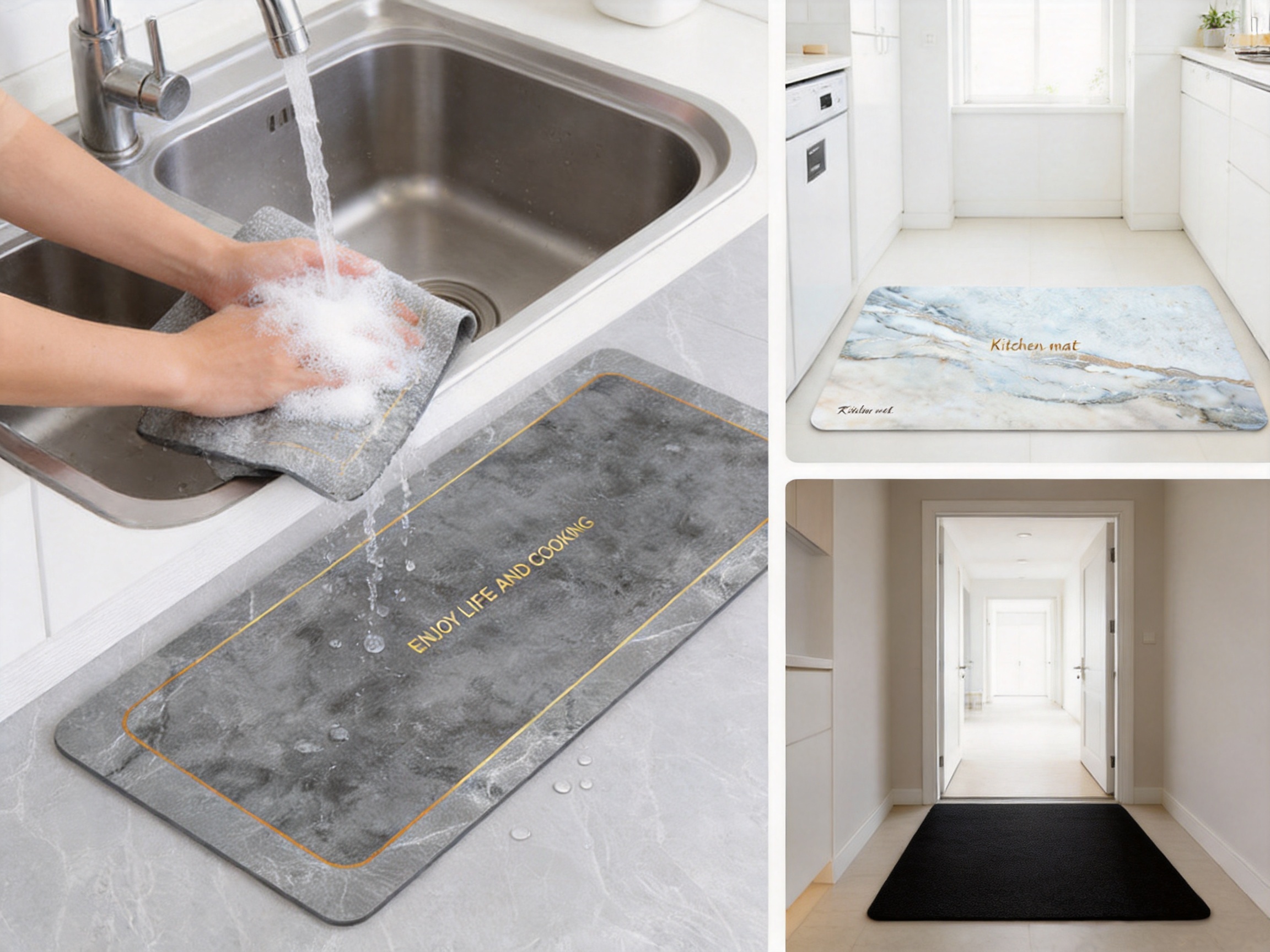
Start by measuring the length and width of the area where the mat will be placed. Include cabinet openings, door swings, appliance clearances, and walking paths in the measurement. The mat should protect the intended standing zone without blocking access.
For a narrow sink, a 40 by 60 centimeter or 50 by 80 centimeter format may be adequate. A long counter may benefit from a 40 by 120 centimeter or 50 by 120 centimeter size. Larger work areas may require a 50 by 150 centimeter or 60 by 160 centimeter format.
When using multiple mats, leave enough space between them to avoid overlapping edges. Matching dimensions can create a coordinated appearance, while different sizes can distinguish separate work zones. Wholesale buyers should consider which sizes are most suitable for their market before ordering a complete assortment.
Customized sizes may be appropriate for built-in kitchens, branded retail programs, hospitality projects, and furniture packages. Customized production should be confirmed with technical drawings or a clear dimension chart to minimize errors.
The surface material is 100% polyester leathaire cloth. The product also includes a foam middle layer and a rubber backing. These layers are bonded together to create the finished mat.
The product name refers to the diatomite mud kitchen mat category and its moisture-management concept. The listed material specification identifies polyester leathaire cloth as the primary surface material, with foam and rubber used in the layered construction. Buyers should consult the final technical specification for a complete material breakdown.
Yes. The stated care instruction is water washing. It can be rinsed with water or suitable foam and should then be dried naturally and completely before being placed back on the floor.
Yes. Water absorption is listed as a special feature. The surface and foam middle layer are designed to help collect moisture, while the rubber backing helps reduce water permeation to the floor.
The rubber backing is designed to help prevent shifting and skidding. Performance depends on the condition of the floor, so the surface should be clean, dry, and free from grease before use.
The specified thickness is 3 millimeters. This low-profile format provides a balance between everyday comfort and easy placement near doors, cabinets, and appliances.
GSM means grams per square meter. The stated 1800gsm weight indicates the product has a substantial material density for its size. It should not be interpreted as the weight of every individual mat, because the total weight changes according to the selected dimensions.
Standard sizes include 40 × 60 centimeters, 40 × 120 centimeters, 50 × 80 centimeters, 50 × 120 centimeters, 50 × 150 centimeters, 60 × 90 centimeters, and 60 × 160 centimeters. Customized sizes can also be discussed.
The product is specified for indoor use. Outdoor exposure may subject it to ultraviolet light, rain, temperature changes, and rough surfaces that can affect the textile and rubber components.
The mat is intended for indoor floors, but the user should confirm compatibility with the specific flooring material. The floor should be clean and dry, and the mat should be lifted periodically to check for trapped moisture or discoloration.
Yes. Hallway use is included in the listed room types. It can be placed in an indoor transition area where water absorption, a low profile, and a stable backing are useful.
Customized sizes are listed as an option. Buyers can also discuss other requirements, such as surface design, packaging, and private-label arrangements, depending on order quantity and technical feasibility.
The manufacturer operates or coordinates weaving, dyeing and printing, and finished carpet processing facilities. It also has a fabric engineering team and provides customized services. These capabilities support control over material development, surface appearance, bonding, finishing, and production coordination.
Wholesale buyers should request samples, a detailed specification sheet, current certification information where relevant, packaging details, production lead time, inspection procedures, and written confirmation of customized requirements.
The Diatomite Mud Kitchen Floor Mat is designed as a practical multilayer solution for indoor areas exposed to routine moisture and frequent foot traffic. Its polyester leathaire surface provides a soft and durable standing experience, the foam middle layer contributes to water absorption and cushioning, and the rubber backing helps reduce slipping and moisture penetration.
Its 3 mm low-profile design makes it easy to position around sinks, counters, islands, hallways, and other indoor areas. The 1800gsm construction gives the mat a substantial feel, while water washing and natural drying simplify maintenance. A range of standard sizes and customization options allow the product to serve both individual consumers and wholesale buyers.
Compared with ordinary unbacked fabric mats, thick high-pile rugs, and rigid plastic coverings, this mat offers a balanced combination of comfort, cleanability, moisture management, and stability. Its value is further supported by the manufacturer’s integrated textile capabilities, fabric engineering resources, finished product processing, and focus on sustainable production technologies.
For best performance, the mat should be used indoors on a clean, dry floor, washed according to the care instructions, dried completely, and inspected regularly. When selected according to the space and maintained correctly, it can provide a durable and attractive layer of protection for modern kitchens, hallways, and other indoor environments.
1. Product specification sheet for the Diatomite Kitchen Mat, including material, size, weight, thickness, construction, backing, care, and application information.
2. Manufacturer-provided company profile for Zhejiang Benyi Textile Technology Co., Ltd., including textile production, engineering, customization, and supply-chain capabilities.
3. Textile material and construction notes supplied for polyester leathaire cloth, foam-layer absorption, bonded assemblies, and rubber-backed floor mats.
4. General indoor floor-mat care guidance concerning water washing, natural drying, floor preparation, and routine inspection.
5. Manufacturer-provided sustainability information concerning recycled polyester, water-saving dyeing methods, OEKO-TEX® certification, and GRS certification.

ADD: No.75 Zhenyuan Road, Yuecheng District, Shaoxing City, Zhejiang Province, China 312000

Tel : +86-189 6750 9795

FAX : +86-0575-8803 2773

Email : fisher@benetextile.com

Copyright © Zhejiang Benyi Textile Technology Co., Ltd. All Rights Reserved. Carpets and Rugs Manufacturer

 English
 Français
 Deutsch
 عربى