

Qiao Yunting — Senior Carpet Sales Manager
 Home / Author / Qiao Yunting — Senior Carpet Sales Manager / Why Velveteen Solid Carpets Are Becoming a Superior Choice for Modern Interior Spaces
 2026.10.22
 Qiao Yunting — Senior Carpet Sales Manager
Choosing the right carpet involves much more than selecting an attractive color. A dependable carpet must offer comfort, durability, visual consistency, easy maintenance, safe underfoot performance, and reliable manufacturing quality. The Jacquard Shu Velveteen Solid Carpet is designed around these practical expectations. It combines a soft polyester microfiber surface with an 8–10 mm pile, a stable bonded construction, and a TPR-and-cotton backing that helps reduce slipping on smooth indoor floors.
Unlike many low-cost rugs that prioritize appearance while compromising on construction, this carpet is developed as a complete flooring textile. The face, backing, bonding method, weight, washing performance, and dimensional options are considered together. This approach creates a product that can serve bedrooms, living rooms, children’s spaces, nurseries, and other indoor areas where people expect both comfort and dependable daily performance.
The solid-color design gives the carpet a clean and adaptable appearance. It can coordinate with modern, minimalist, Scandinavian, contemporary, transitional, or casual interiors without competing with furniture and decorative accessories. At the same time, the velveteen finish adds depth through the direction of the fibers, allowing a simple solid tone to appear rich rather than flat.
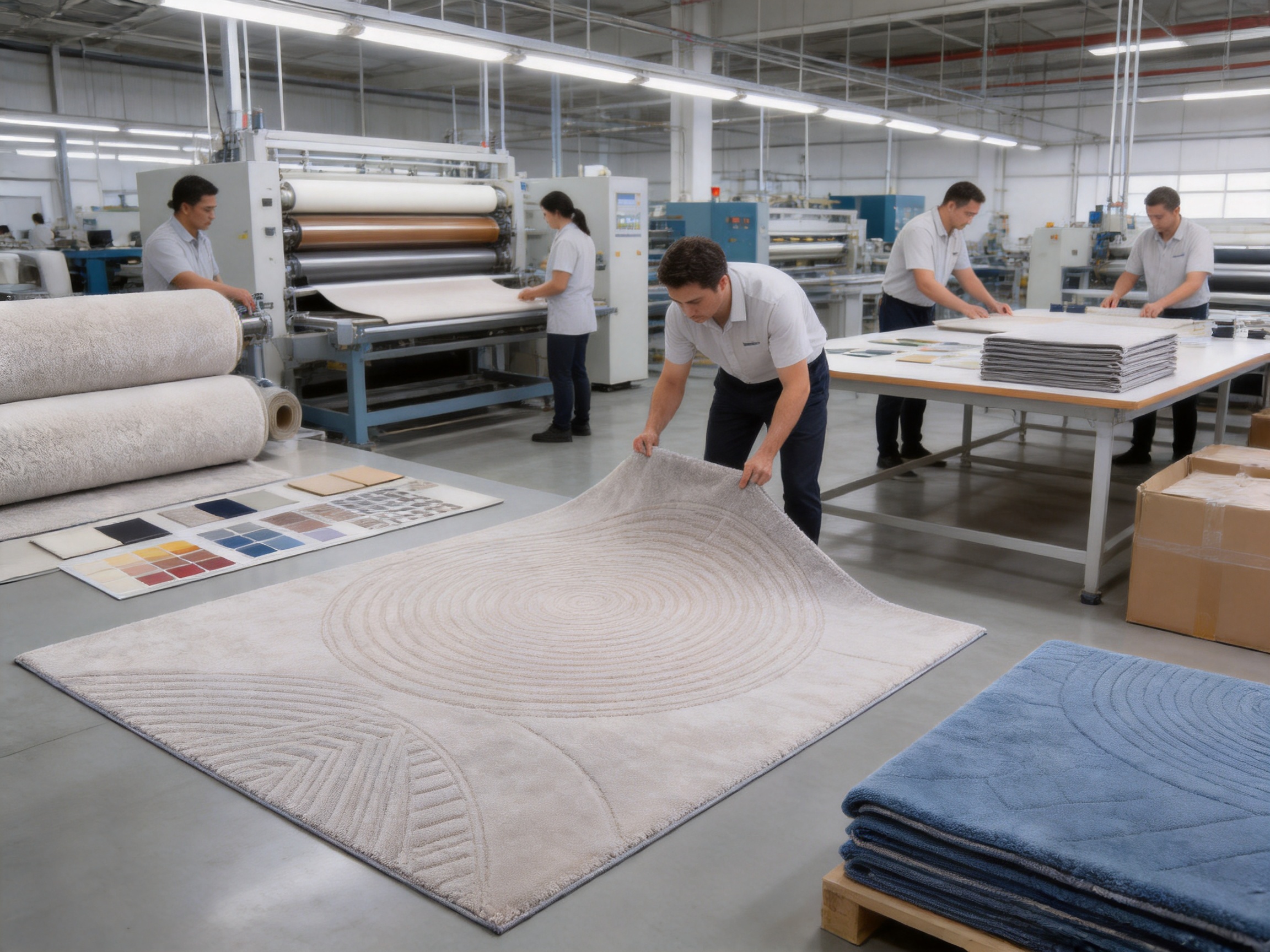
Produced by Zhejiang Benyi Textile Technology Co., Ltd., the carpet reflects an integrated textile manufacturing model. The company operates across weaving, dyeing and printing, and finished carpet processing, which supports closer control over quality, development schedules, customization, and lead times. Its experience in textile manufacturing also enables buyers to request different jacquard effects, sizes, colors, and product configurations for residential, hospitality, commercial, or private-label programs.
Content
The product is an indoor rectangular area rug made primarily from polyester. Its surface uses polyester microfiber to create a smooth, soft, and comfortable contact layer. The velveteen effect is particularly suitable for customers who want a plush sensation without moving to a much higher pile that can be more difficult to clean, maintain, or place beneath furniture and doors.
The carpet is classified as a solid area rug, but the construction can be adapted with customized jacquard patterns. This means the standard product provides a visually calm solid-color option while the manufacturing platform can also support buyers who need a more distinctive surface design. A company purchasing rugs for several markets can therefore use the same general production capability for solid, textured, or customized programs.
Available standard dimensions include 2 feet by 3 feet, 2 feet by 6 feet, 3 feet by 5 feet, 4 feet by 6 feet, 5 feet by 7 feet, 6 feet by 9 feet, and 8 feet by 10 feet. Custom dimensions are also available. This range allows the carpet to function as a compact bedside rug, a hallway runner, an accent rug, a children’s activity-area covering, or a larger living-room foundation.
| Product Attribute | Specification | Practical Benefit |
|---|---|---|
| Product type | Solid rectangular area rug | Suitable for flexible indoor placement |
| Primary material | Polyester microfiber | Soft hand feel, durability, and color retention |
| Surface finish | Velveteen | Comfortable, smooth, and visually rich texture |
| Pile height | 8–10 mm | Plush underfoot feel with manageable maintenance |
| Weight | 1080–1300 gsm | Substantial feel and improved surface presence |
| Construction | Bonded | Supports structural stability and service life |
| Backing | TPR plus cotton fabric | Helps improve grip and overall stability |
| Care | Machine washable | Convenient routine cleaning |
| Use environment | Indoor | Appropriate for bedrooms, living rooms, and children’s areas |
| Available shape | Rectangular | Easy to coordinate with standard room layouts |
One of the most immediate advantages of a carpet is the sensation it creates beneath the feet. Hard flooring can feel cold, echoing, and uncomfortable, particularly in bedrooms and children’s rooms. The polyester microfiber surface of this carpet creates a softer transition between the floor and the user. Its 8–10 mm pile height adds cushioning without creating an excessively deep surface.
The velveteen finish is designed to feel smooth and plush. When the fibers are brushed in different directions, the surface can display subtle changes in shading. This gives the solid carpet greater visual depth while preserving a restrained overall appearance. The result is a surface that feels luxurious but remains easy to combine with other furnishings.
For families, surface comfort is especially valuable. Children often sit, crawl, read, play, or rest on the floor. A soft rug can make these activities more pleasant while providing a warmer and more welcoming surface than tile, wood, or laminate. In bedrooms, the carpet can also provide a comfortable landing area beside the bed, reducing the unpleasant sensation of stepping directly onto a cold floor in the morning.
Softness does not have to mean fragility. The product is made from polyester, a fiber widely used in residential textiles because it offers a useful balance of resilience, color stability, affordability, and ease of care. The microfiber format provides a refined surface texture, while the substantial 1080–1300 gsm weight contributes to a fuller and more stable feel.
Carpets are exposed to repeated foot traffic, furniture movement, vacuuming, sunlight, spills, and regular cleaning. A visually attractive product that loses its shape or surface character quickly is not a good long-term choice. This carpet addresses durability through the combined use of polyester microfiber, bonded construction, and a structured backing system.
Polyester is naturally suited to products that need dependable everyday performance. It is resistant to many common forms of wear and can retain color effectively when properly dyed and finished. The material is also less demanding than some delicate natural fibers, which makes it practical for households and purchasing programs that value efficient maintenance.
The bonded construction helps connect the carpet’s components and supports the integrity of the finished product. A well-bonded carpet is less likely to feel loose or unstable during use. It also provides a consistent base for the face material and backing. The construction is particularly important when a rug is folded, transported, installed, removed for washing, and placed again.
The carpet’s 8–10 mm pile height is another practical design decision. Very thin rugs may offer limited comfort and can appear less substantial, while very high-pile rugs may trap more debris, interfere with doors, or require additional care. The medium plush height provides a balance between softness, visual fullness, accessibility, and daily usability.
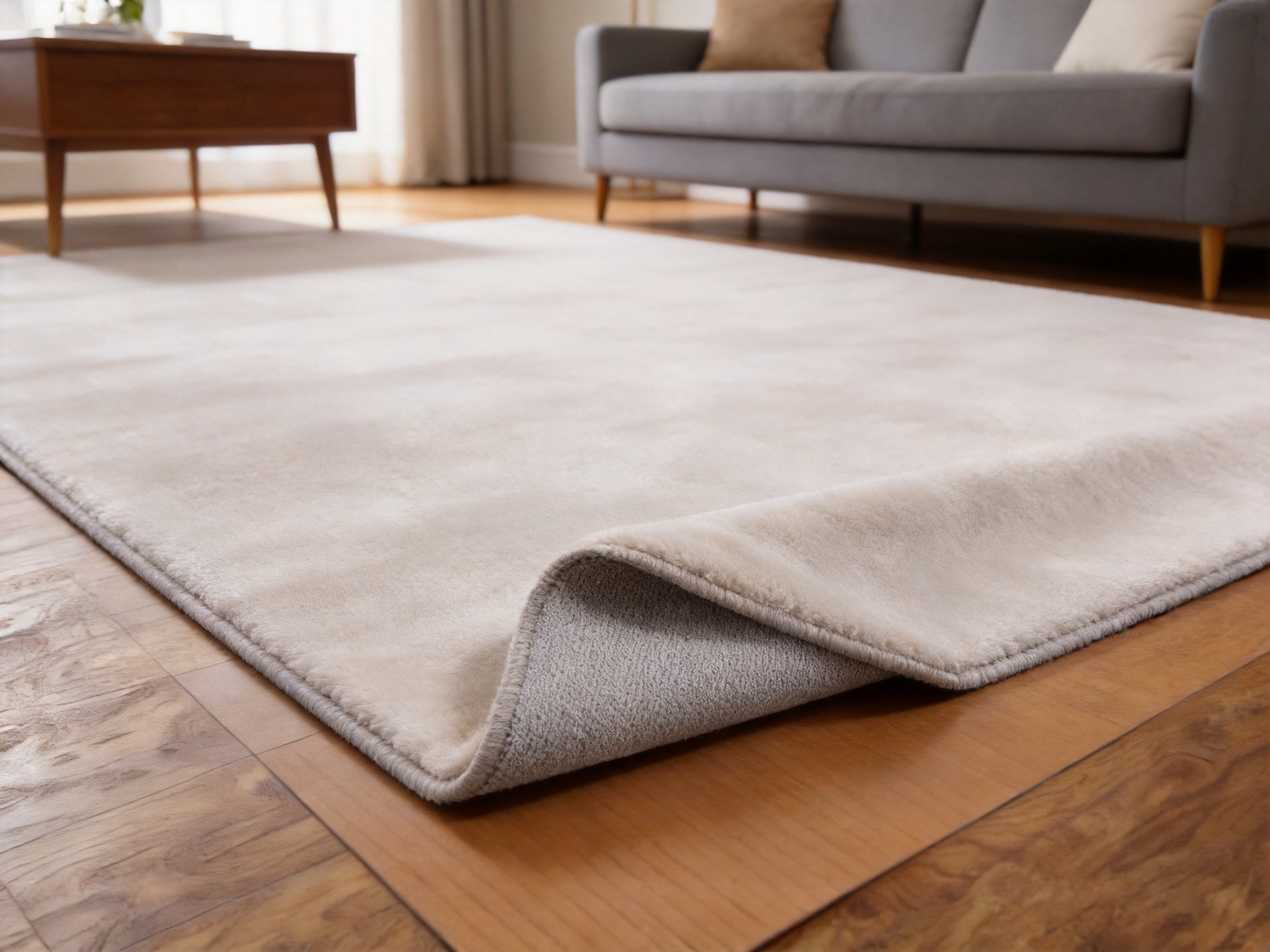
A rug’s performance depends heavily on its backing. Even a soft and durable surface can become inconvenient if it slides easily on the floor. This product uses a TPR-and-cotton fabric backing designed to improve contact with the floor and help reduce unwanted movement.
Thermoplastic rubber, commonly known as TPR, is valued for its flexible yet grippy properties. In a carpet backing, it can help create a more stable relationship between the rug and smooth indoor flooring. The cotton fabric component contributes to the backing structure and provides a textile support layer. Together, these materials help the rug lie more securely while preserving flexibility for folding and handling.
The non-slip feature is particularly useful in bedrooms, children’s rooms, hallways, and living rooms where users frequently walk across the carpet. It can also help reduce the need for a separate rug pad in many everyday installations. However, the carpet should still be placed on a clean, dry, and reasonably level floor, and users should inspect the rug periodically to ensure that the edges remain flat.
A stable rug is not only more convenient but also contributes to a more comfortable room. Constant sliding can cause edges to curl, create visible gaps, or require repeated repositioning. By using a backing designed for grip, this product provides a more dependable foundation for daily activities.
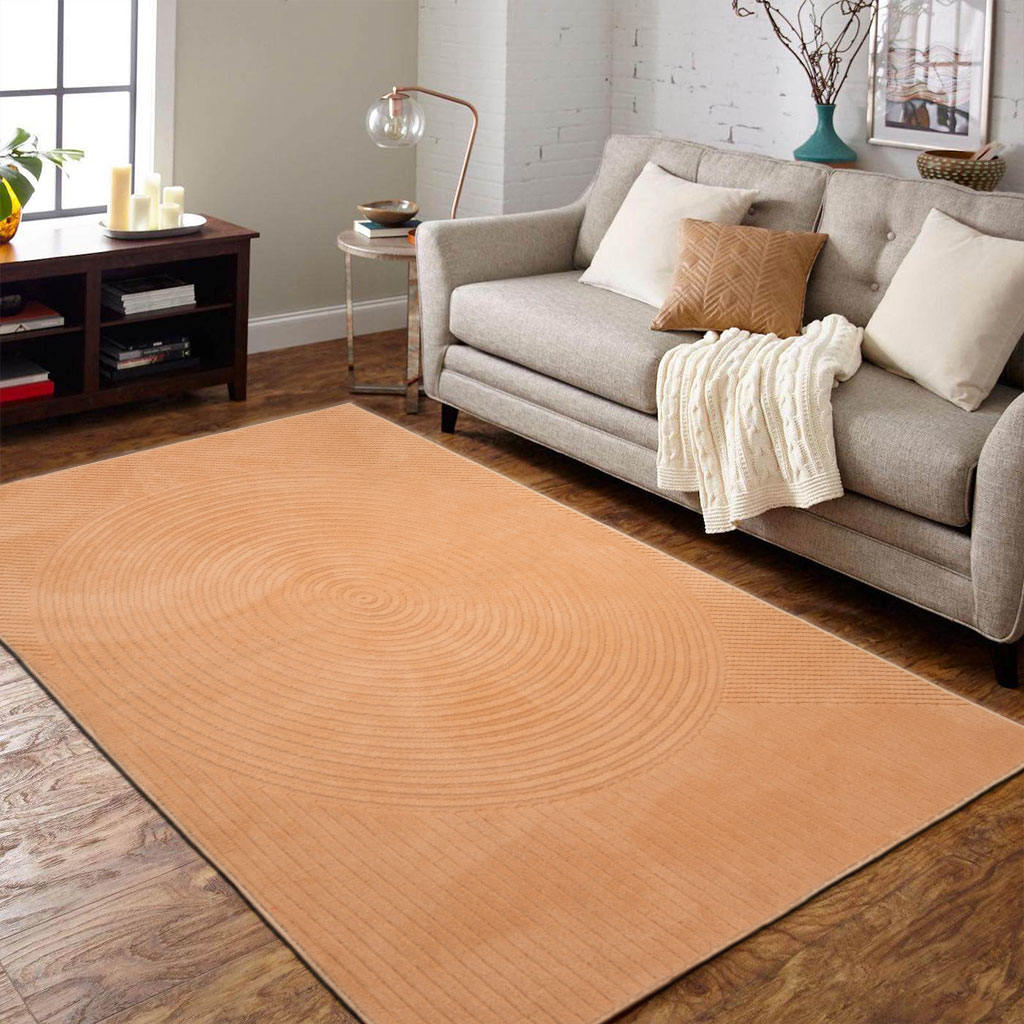
Jacquard Shu Velveteen Solid Carpet
Solid-color carpets make color quality especially important. On a heavily patterned rug, small variations may be visually absorbed by the design. On a solid rug, the surface must appear even, rich, and consistent. The Jacquard Shu Velveteen Solid Carpet is developed with fade resistance as one of its listed special features.
Fade resistance helps the carpet maintain its intended color when exposed to ordinary indoor light. It does not mean that the product should be placed in intense direct sunlight indefinitely. Window placement, ultraviolet exposure, cleaning chemicals, and environmental conditions can affect every textile. Nevertheless, appropriate fiber selection and dyeing control can help extend the period during which the carpet retains its original appearance.
The velveteen surface also contributes to perceived color richness. The direction of the fine fibers can reflect light differently, creating a gentle tonal variation that adds sophistication. This effect can make a single-color carpet appear more expensive and carefully finished than a flat, low-texture surface.
For interior designers and wholesale buyers, color stability reduces the risk of inconsistent presentations across product photography, showroom displays, and installed spaces. A reliable solid-color collection can also be easier to merchandise because the products coordinate naturally with furniture, wall coverings, curtains, bedding, and decorative accessories.
Maintenance is a decisive factor in carpet selection. Dust, crumbs, pet hair, and accidental spills are unavoidable in active households. A product that can be cleaned conveniently is more likely to remain attractive and useful for a longer period. This carpet is designed for machine washing, providing a practical advantage over many bulky or delicate rugs that require specialized cleaning.
Routine care should begin with regular vacuuming suited to the carpet’s pile and construction. Vacuuming removes loose particles before they are pressed deeper into the surface. Small spills should be addressed promptly by blotting rather than aggressive rubbing. When deeper cleaning is required, the product can be machine washed according to the care instructions and the capacity limits of the washing equipment.
Before washing, users should check the rug’s size, the machine’s drum capacity, and the manufacturer’s recommended water temperature and cycle. The rug should be dried completely before being returned to the floor. Adequate drying helps prevent moisture retention and supports a fresh, hygienic surface.
Machine washability is also valuable for commercial buyers. Hotels, serviced apartments, childcare facilities, rental properties, and home-textile retailers often need products that are simple for end users to maintain. A washable rug can offer a stronger value proposition because cleaning does not necessarily require professional services for ordinary household use.
Care instructions should always be followed carefully. Excessive heat, harsh bleach, unsuitable solvents, or overloading a washing machine may damage textile products. Proper maintenance preserves the softness, shape, backing, and color of the carpet.
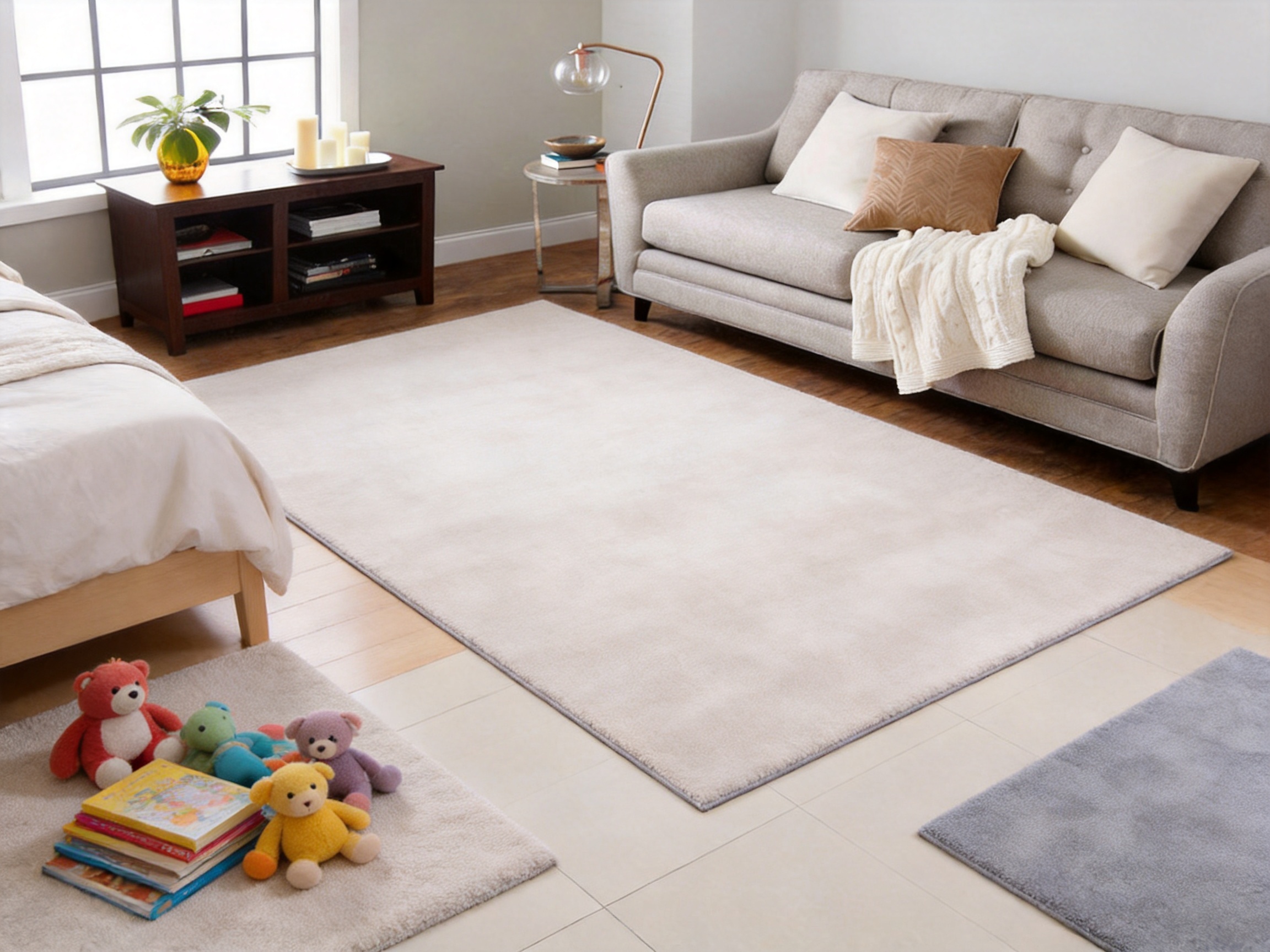
The range of standard sizes allows the carpet to support different interior applications. A 2-foot by 3-foot rug can be used beside a bed, beneath a small table, near a reading chair, or in a compact entry area. A 2-foot by 6-foot option can serve as a narrow runner in a hallway, beside a kitchen counter, or along the side of a bed.
Medium dimensions such as 3 feet by 5 feet and 4 feet by 6 feet are appropriate for accent areas, nursery seating zones, small living rooms, home offices, and children’s rooms. A 5-foot by 7-foot carpet can anchor a seating arrangement or define a central area in a bedroom. Larger formats such as 6 feet by 9 feet and 8 feet by 10 feet can make a stronger visual contribution in spacious living rooms or open-plan interiors.
Custom sizing is important for both residential and commercial projects. Buyers may need a specific dimension for a hospitality room, a branded retail display, a rental apartment, a model home, or an unusual architectural layout. The ability to discuss custom measurements with the manufacturer provides greater flexibility than relying only on fixed retail dimensions.
Custom production can also support product differentiation. Retailers may request exclusive dimensions, selected solid colors, special labels, customized packaging, or coordinated patterns. Interior project buyers can develop a consistent rug program across rooms of different sizes while retaining the same surface and backing specifications.
| Size Category | Example Dimension | Common Application |
|---|---|---|
| Compact accent | 2 ft x 3 ft | Bedside use, small seating areas, entry accents |
| Runner format | 2 ft x 6 ft | Hallways, bedside placement, narrow passages |
| Small-to-medium area | 3 ft x 5 ft | Nurseries, home offices, reading corners |
| Medium area | 4 ft x 6 ft | Small living rooms, bedrooms, children’s areas |
| Room accent | 5 ft x 7 ft | Bedroom centers and seating groups |
| Large area | 6 ft x 9 ft | Living rooms and larger bedrooms |
| Statement area | 8 ft x 10 ft | Open living spaces and large furniture layouts |
| Project-specific | Custom dimensions | Hospitality, commercial, and private-label projects |
In a bedroom, a rug should provide softness without overwhelming the room. The velveteen surface is comfortable for bare feet, while the solid-color format supports calm and coordinated decoration. A larger rug can extend beyond the sides of a bed, while smaller rugs can be placed beside the bed or near a dressing area.
The medium pile is also practical in bedrooms because it offers cushioning without creating a difficult height transition at doorways. Its washable construction is useful in spaces where dust and fibers may accumulate over time.
In living rooms, a carpet can define a conversation area and visually connect a sofa, coffee table, chairs, and side tables. The solid surface acts as a neutral or complementary foundation. Depending on the selected color, it can either soften a room with strong architectural features or reinforce a minimalist design.
The non-slip backing helps the rug remain more stable beneath normal foot traffic. A larger size can be positioned beneath the front legs of seating furniture, creating a unified arrangement rather than leaving each piece visually isolated.
Children’s spaces benefit from soft flooring surfaces that support play, reading, and quiet activities. The carpet’s plush feel can make the floor more comfortable, while its machine-washable design supports easier cleaning after everyday accidents.
The absence of a busy pattern can also be an advantage in nurseries and children’s rooms. A solid rug can work with colorful toys, bedding, wall art, and storage units without creating excessive visual stimulation. As children grow, the same rug can remain suitable even when the room’s decorative theme changes.
A smaller carpet can provide warmth beneath a desk or chair and reduce the hardness of a work area. It can also help visually distinguish a reading corner within a larger room. Since the rug is rectangular and available in compact sizes, it can be aligned easily with desks, shelves, and seating.
Although this product is intended for indoor use, it can be placed in interior entry areas or behind a main doorway where it is protected from direct outdoor exposure. The stable backing and washable surface are useful in locations where people may track in small amounts of dust or moisture. Users should avoid treating it as an outdoor mat or exposing it to prolonged weather conditions.
Different carpet materials and construction methods serve different purposes. A low-cost printed rug may offer a low initial price but may not provide the same tactile depth or structural feel. A very high-pile shag rug may feel soft but can be more difficult to vacuum and may interfere with doors or furniture. A delicate natural-fiber rug may provide a distinctive appearance but often requires more specialized maintenance.
This velveteen polyester carpet occupies a practical middle position. It offers a soft and visually refined surface, yet it is designed for machine washing and regular indoor use. Its 8–10 mm pile is substantial enough to feel comfortable but moderate enough for easier handling than a deep shag construction.
Compared with a thin flatweave rug, it delivers greater cushioning and a fuller underfoot sensation. Compared with some thick foam-backed products, its textile-and-TPR construction provides a more conventional carpet feel and can be folded for storage and transportation. Compared with an unbacked fabric rug, the TPR-and-cotton backing offers improved floor contact and stability.
| Comparison Factor | Jacquard Shu Velveteen Solid Carpet | Typical Thin Flatweave | Typical Deep-Pile Shag |
|---|---|---|---|
| Underfoot comfort | Soft and moderately plush | Limited cushioning | Very plush |
| Routine cleaning | Machine-washable design | Often easy to vacuum | Can require more effort |
| Door clearance | Generally manageable at 8–10 mm | Usually very easy | May create clearance issues |
| Visual character | Rich velveteen solid surface | Simple and flat | Highly textured |
| Stability | TPR and cotton backing | May need a separate pad | Varies by product |
| Customization potential | Custom dimensions and jacquard options | Depends on supplier | Often more limited |
The comparison does not suggest that one carpet type is appropriate for every buyer. Rather, it shows why this product is competitive for customers who want a blend of softness, manageable care, stable placement, flexible sizing, and a polished solid-color appearance.
The product’s advantages are supported by the manufacturing capabilities of Zhejiang Benyi Textile Technology Co., Ltd. Based in Shaoxing, Zhejiang Province, a major textile center known as the “World Textile Capital,” the company operates within an environment that provides access to textile talent, materials, production expertise, and supply-chain resources.
The company controls several important stages of the production chain, including weaving, dyeing and printing, and finished carpet processing. This integrated structure can improve communication between departments and reduce dependence on unrelated outside suppliers. When a product moves through a more coordinated system, it becomes easier to monitor material consistency, surface appearance, backing performance, and final finishing.
Vertical coordination is particularly valuable for carpets because the final product depends on the interaction of several components. The yarn or microfiber must be suitable for the intended surface. Dyeing must produce consistent color. Weaving or surface formation must create the required texture. Bonding must connect the layers effectively. Backing application must support stability without making the carpet excessively rigid. Final inspection must confirm that the finished item meets the agreed specification.
By managing these areas through its own factories and processing operations, the company can improve oversight of quality and lead time. This is a meaningful advantage for wholesale customers, importers, retailers, hospitality buyers, and brands that need dependable production planning.
Textile markets change quickly. Consumers may prefer softer textures one season, subtle jacquard effects the next, and new color families after that. A manufacturer that only repeats existing products may struggle to support buyers seeking differentiation. The company addresses this challenge with a team of more than 20 fabric engineers who develop new carpet fabrics each quarter according to market trends.
Regular development activity helps the manufacturer explore surface textures, color combinations, jacquard effects, fiber arrangements, and construction methods. It also creates a foundation for customers who need a product that is not identical to widely available market offerings.
Customization is one of the most important strengths associated with this carpet platform. Buyers can discuss custom dimensions and request jacquard patterns that match a specific decoration style or personal preference. For a retailer, this may mean creating a private collection with exclusive colors. For a hotel or property developer, it may mean specifying sizes that correspond to a room plan. For an interior designer, it may mean developing a surface that coordinates with a particular furniture or wall-covering program.
Customization can extend beyond appearance. Depending on project requirements, buyers may discuss packaging, labeling, color standards, size combinations, and production quantities. The feasibility of each request should be evaluated with the manufacturer, but the presence of an established development team provides a stronger starting point than a supplier focused only on standardized stock products.
Carpet quality is not determined by a single inspection at the end of production. It begins with material selection and continues through surface formation, dyeing, bonding, backing application, cutting, sewing or edge finishing where applicable, washing tests, packaging, and shipment preparation.
An integrated manufacturer can establish checkpoints at different stages. Surface materials may be checked for fiber consistency and color. Dyed material may be reviewed for shade accuracy and uniformity. Bonding and backing may be examined for adhesion, flatness, flexibility, and coverage. Finished rugs may be evaluated for dimensions, pile appearance, edge condition, cleanliness, folding behavior, and packaging integrity.
For solid-color carpets, shade control is especially important. Buyers typically expect repeated orders to remain visually compatible with earlier shipments. Maintaining production records and agreed color standards can help reduce unnecessary variation. For custom jacquard designs, pattern clarity and repeat accuracy become additional inspection points.
The company’s control over weaving, dyeing and printing, and finished processing gives it a practical basis for coordinating these checks. This can help reduce the communication gaps that sometimes occur when different suppliers handle separate stages without a unified quality system.
For wholesale buyers, product quality is only one part of the purchasing decision. Delivery reliability, production communication, minimum order planning, packaging, and repeat-order capability are equally important. Delays in a carpet program can affect retail launches, interior projects, seasonal promotions, and customer commitments.
Because the company operates its own textile and finished-product facilities, it can coordinate production schedules more directly. This may support more efficient transitions from material development to finished carpet manufacturing. It also gives the company greater visibility into capacity, processing steps, and potential bottlenecks.
Efficiency does not mean reducing quality. The company’s stated approach is to combine surface and backing production in a way that makes carpet production simpler and more efficient than traditional models with high costs and low efficiency. A streamlined process can help buyers obtain competitive pricing while retaining a defined level of material and construction performance.
Repeatability is another important advantage. When a buyer returns for a new order, a vertically coordinated manufacturer can refer to previous specifications, development records, color information, and production requirements. This helps create a more stable relationship and reduces the need to restart the product-development process from the beginning.
Modern carpet buyers increasingly consider environmental impact, indoor comfort, material safety, and responsible production. Zhejiang Benyi Textile Technology Co., Ltd. positions ecological protection and consumer health experience as important parts of its textile technology strategy.
The company invests in sustainable materials and production methods, including recycled polyester and water-saving dyeing techniques. Recycled polyester can help reduce reliance on virgin petroleum-based inputs when appropriately sourced and managed. Water-saving dyeing methods can reduce the amount of water used in textile processing and support more responsible resource management.
The company has also passed OEKO-TEX® and Global Recycled Standard, commonly known as GRS, certifications according to the supplied company information. Certification details should always be confirmed for the specific product, production batch, and current certificate scope. Nevertheless, these certifications indicate an organizational commitment to controlled materials, responsible processing, and improved transparency.
Environmental performance is becoming increasingly relevant to retailers and project buyers. Customers may ask where materials come from, how products are dyed, whether recycled content is available, and whether manufacturing practices support responsible sourcing. A supplier with established environmental initiatives is better positioned to respond to these questions and develop products that meet evolving market expectations.
Sustainability should be considered across the entire product life cycle. A washable and durable rug may remain in service longer than a fragile alternative, reducing the frequency of replacement. A product that can be folded and transported efficiently may also support easier storage and distribution. Responsible material selection, durable construction, practical care, and controlled production all contribute to a more complete sustainability strategy.
Solid carpets are often underestimated because they appear simple. In reality, a solid surface demands careful control of shade, texture, pile direction, and finishing. It also offers strong design flexibility. Without a complex pattern competing for attention, the room’s architectural features and furniture can remain central.
A solid velveteen carpet can create a calm foundation beneath a bold sofa, patterned bedding, colorful children’s furnishings, or decorative artwork. It can also support a monochromatic interior by adding texture rather than contrast. The directional softness of the velveteen surface gives the rug character while preserving a restrained palette.
For property developers and hospitality designers, solid carpets can simplify procurement. One product family can be specified across multiple rooms while different colors or sizes are used to create variation. This can make replacement planning easier and support a consistent visual identity.
The ability to customize jacquard patterns adds further design flexibility. A buyer may choose a solid surface for one collection and introduce subtle woven or jacquard effects for another. This broadens the manufacturer’s ability to serve different price points and style preferences without abandoning the core strengths of its textile platform.
Before placing the carpet, the floor should be clean, dry, and free from loose debris. Any moisture or dust beneath the backing can reduce stability and may affect the rug’s long-term condition. The carpet should be unrolled or unfolded carefully and allowed to settle flat.
Furniture placement should be considered in relation to the rug’s dimensions. In a living room, the front legs of a sofa or chairs may rest on the carpet to create visual unity. In a bedroom, a larger rug can extend beyond the bed, while a narrow size can be positioned beside it. In a nursery or children’s room, the rug can be placed in an open play area away from door swings and sharp furniture edges.
Although the TPR backing is designed to provide a non-slip effect, no rug should be placed where it blocks a doorway, covers an uneven surface, or creates an unavoidable trip point. The edges should be checked after installation and after washing. If the rug is moved frequently, users should confirm that the backing remains clean and fully in contact with the floor.
Indoor use is recommended. The carpet should be protected from prolonged outdoor weather, standing water, and excessive humidity. Appropriate placement will help preserve its color, backing, softness, and overall appearance.
Wholesale customers should begin by defining the intended market and application. A retailer serving apartment residents may prioritize compact sizes, neutral colors, machine washability, and affordable shipping. A hospitality buyer may require consistent large sizes, repeat-order capability, customized colors, and project scheduling. A private-label brand may focus on exclusive packaging, product photography, labeling, and collection development.
Buyers should confirm the desired dimensions, colors, weight, pile height, backing specification, packaging method, and order quantity before final production. Sample approval is recommended for programs where shade, hand feel, or surface texture is especially important. For custom jacquard designs, buyers should review artwork, repeat scale, and sample appearance carefully.
It is also useful to establish quality expectations in writing. These may include acceptable dimensional tolerance, color variation, edge finishing, backing coverage, pile consistency, packaging condition, and wash performance. Clear specifications help both the manufacturer and the buyer evaluate production results objectively.
Questions about certifications, recycled content, dyeing processes, and product-specific compliance should be addressed during the quotation and development stage. The company’s environmental capabilities may support these discussions, but documentation should be requested for the exact product and order.
The competitive value of the Jacquard Shu Velveteen Solid Carpet comes from the combination of features rather than one isolated selling point. Its polyester microfiber surface delivers softness and practical durability. The 8–10 mm pile provides a comfortable middle ground between a thin flat rug and a deep shag construction. The bonded build supports structural integrity. The TPR-and-cotton backing improves stability. Machine washability simplifies care. Fade resistance supports long-term appearance. Custom sizes and jacquard development expand its commercial flexibility.
Many competing products may offer one or two of these characteristics, but buyers often have to compromise elsewhere. A soft rug may be difficult to wash. A washable rug may feel thin. A large rug may not be available in custom dimensions. A low-cost rug may lack a stable backing. A patterned rug may not suit changing interiors. This product is designed to reduce those compromises.
The manufacturing company adds another level of competitive strength. Its own weaving, dyeing and printing, and finished carpet processing operations create a more coordinated supply chain. Its fabric engineering team supports regular development. Its investment in recycled materials and water-saving dyeing aligns with current sustainability expectations. Its location in a major textile center provides access to an established manufacturing ecosystem.
For customers seeking a supplier rather than a one-time product source, these strengths are important. A successful carpet program may require new colors, different sizes, repeat orders, seasonal designs, and technical adjustments. A manufacturer with production depth and customization experience is better equipped to support that ongoing process.
The carpet can be positioned as a practical premium area rug for customers who want softness, simple design, and easy care. It is not limited to one decorative style. Neutral colors can serve minimalist and contemporary interiors, while richer shades can add warmth to traditional or eclectic rooms.
Retail descriptions should emphasize the soft velveteen feel, washable construction, non-slip TPR backing, medium plush pile, fade-resistant performance, and range of sizes. Images and merchandising should show the carpet in realistic room settings so customers can understand its scale and surface character.
For business-to-business buyers, the product can be presented as a customizable indoor carpet platform. The standard solid design offers immediate market suitability, while custom dimensions and jacquard pattern development provide opportunities for differentiation. This positioning is relevant to furniture retailers, home-textile distributors, interior design studios, hospitality suppliers, property developers, and private-label brands.
Clear communication is important. The carpet is intended for indoor use, and machine washing should follow the appropriate care instructions. The non-slip backing improves stability but does not eliminate the need for safe placement. Accurate product information builds customer confidence and reduces misunderstandings after purchase.
The carpet is made primarily from polyester microfiber. Polyester provides a soft surface, practical durability, color stability, and relatively easy maintenance. The microfiber construction contributes to the smooth velveteen feel.
The velveteen finish is smooth, soft, and plush underfoot. Its fine surface fibers can reflect light differently according to their direction, creating subtle shading and a richer appearance than a completely flat solid surface.
Yes. Bedrooms are one of the recommended applications. The carpet provides a comfortable surface beside or beneath a bed, and its solid design can coordinate with a wide range of bedding and furniture styles.
Yes. The soft surface is suitable for play and sitting areas, and the machine-washable design can make routine maintenance easier. The rug should be placed on a clean, level floor and checked regularly for flat edges and stable contact.
The TPR-and-cotton backing is designed to provide a non-slip effect, and the product is promoted as not requiring an additional rug pad in ordinary indoor applications. Floor condition, rug placement, and user activity can affect stability, so buyers should inspect the rug after installation.
Standard sizes include 2 feet by 3 feet, 2 feet by 6 feet, 3 feet by 5 feet, 4 feet by 6 feet, 5 feet by 7 feet, 6 feet by 9 feet, and 8 feet by 10 feet. Custom dimensions can also be discussed for suitable orders.
Yes. The manufacturer states that it can customize different jacquard patterns according to a buyer’s decoration style and preferences. Artwork, size, color, quantity, and production requirements should be reviewed during development.
Yes. Machine washing is listed as the product-care method. Users should confirm the correct washing cycle, load capacity, temperature, detergent, and drying procedure before cleaning. The rug should be completely dry before being placed back on the floor.
It is designed for indoor use. It should not be exposed to prolonged outdoor weather, standing water, or continuous high humidity.
The pile height is approximately 8–10 mm. This provides a soft and comfortable surface while remaining more manageable than many deep-pile carpets.
The listed weight is approximately 1080–1300 grams per square meter. Actual weight may vary according to size, color, customization, and production specifications.
The construction type is bonded. The bonded structure helps unite the surface and backing components and supports the carpet’s overall stability and service life.
The carpet is manufactured by Zhejiang Benyi Textile Technology Co., Ltd., a textile technology company based in Shaoxing, Zhejiang Province, China. The company specializes in carpet fabrics, carpets, rugs, and finished textile products.
The company has its own weaving, dyeing and printing factories, and finished carpet processing factories. This integrated model supports control over the production chain, quality, development, and lead time.
The company states that it invests in recycled polyester, water-saving dyeing techniques, and other sustainable production methods. It also reports passing OEKO-TEX® and GRS certifications. Buyers should request current documentation for the specific product and order.
The product is suitable for households, interior designers, furniture and home-textile retailers, hospitality suppliers, property developers, wholesalers, and private-label brands seeking a soft, washable, stable, and customizable indoor area rug.
The Jacquard Shu Velveteen Solid Carpet is designed to meet the practical and aesthetic demands of modern indoor spaces. Its polyester microfiber surface provides softness and durability, while the velveteen finish gives a simple solid color greater visual richness. The 8–10 mm pile offers comfortable cushioning without the maintenance challenges associated with very deep carpets.
Its bonded construction, TPR-and-cotton backing, fade-resistant performance, and machine-washable design create a balanced product for everyday use. A broad selection of standard sizes makes it suitable for compact and spacious rooms, while custom dimensions and jacquard development support more specialized projects.
The product is further strengthened by the manufacturing capabilities of Zhejiang Benyi Textile Technology Co., Ltd. The company’s integrated control of weaving, dyeing and printing, and finished carpet processing supports quality oversight, customization, production efficiency, and lead-time management. Its fabric engineering team and environmental initiatives add value for buyers seeking both design flexibility and responsible textile development.
For customers comparing area rugs, the strongest advantage is the combination of comfort, stability, washable care, adaptable styling, and manufacturing depth. It offers the refined appearance expected from a velveteen carpet while retaining the practical qualities required for busy homes, commercial programs, and wholesale distribution.
1. Product specification sheet for the Jacquard Shu Velveteen Solid Carpet, including material, dimensions, pile height, backing, construction, care, and room-use information.
2. Zhejiang Benyi Textile Technology Co., Ltd. company profile and manufacturing capability statement.
3. General textile engineering principles concerning polyester microfiber, bonded carpet construction, thermoplastic rubber backing, and pile-height performance.
4. OEKO-TEX® standard textile safety and responsible production information.
5. Global Recycled Standard principles for recycled materials and supply-chain verification.
6. General interior design guidance for area-rug sizing, furniture placement, indoor use, and routine carpet maintenance.

ADD: No.75 Zhenyuan Road, Yuecheng District, Shaoxing City, Zhejiang Province, China 312000

Tel : +86-189 6750 9795

FAX : +86-0575-8803 2773

Email : fisher@benetextile.com

Copyright © Zhejiang Benyi Textile Technology Co., Ltd. All Rights Reserved. Carpets and Rugs Manufacturer

 English
 Français
 Deutsch
 عربى