

Shen Ruoxi — International Product Sales Executive
 Home / Author / Shen Ruoxi — International Product Sales Executive / Glossy Cashmere Solid Area Rug: A Complete Guide to Comfort, Performance, and Responsible Manufacturing
  2026.09.06
 Shen Ruoxi — International Product Sales Executive
Choosing an area rug is not simply a matter of selecting a color that matches a room. A well-designed rug must provide comfort underfoot, remain stable during everyday use, complement different interior styles, tolerate repeated cleaning, and deliver dependable value over time. The Glossy Cashmere Solid Area Rug is designed around these practical requirements. It combines a soft polyester microfiber surface, a 15mm pile, bonded construction, and a TPR backing to create an indoor rug that is comfortable, versatile, washable, and resistant to unwanted movement.
Its solid-color appearance gives it a particularly broad design appeal. Unlike heavily patterned floor coverings that can dominate a room or become difficult to coordinate with furniture, a solid rug creates a calm visual foundation. It can be used as a subtle accent, a neutral base, or a soft contrast against walls, flooring, and upholstered furniture. Available in compact formats, larger room sizes, and custom dimensions, it can serve many applications, including bedrooms, living rooms, children’s rooms, nurseries, kitchens, bathrooms, entrances, and other indoor spaces.
Behind the finished product is a textile manufacturing model that combines fabric development, surface production, dyeing or printing, backing, and finished-rug processing. Zhejiang Benyi Textile Technology Co., Ltd. operates in Shaoxing, Zhejiang, a major textile manufacturing region known for its extensive supply-chain resources. Its integrated capabilities help connect material selection, production control, customization, quality management, and delivery planning. This makes the product relevant not only to individual buyers but also to wholesalers, importers, interior furnishing companies, retailers, and private-label customers.
This article examines the construction, performance, design value, manufacturing strengths, customization potential, care requirements, and commercial advantages of the Glossy Cashmere Solid Area Rug. It also explains how its specifications compare with common alternatives and answers frequently asked questions for buyers evaluating soft washable rugs for indoor use.
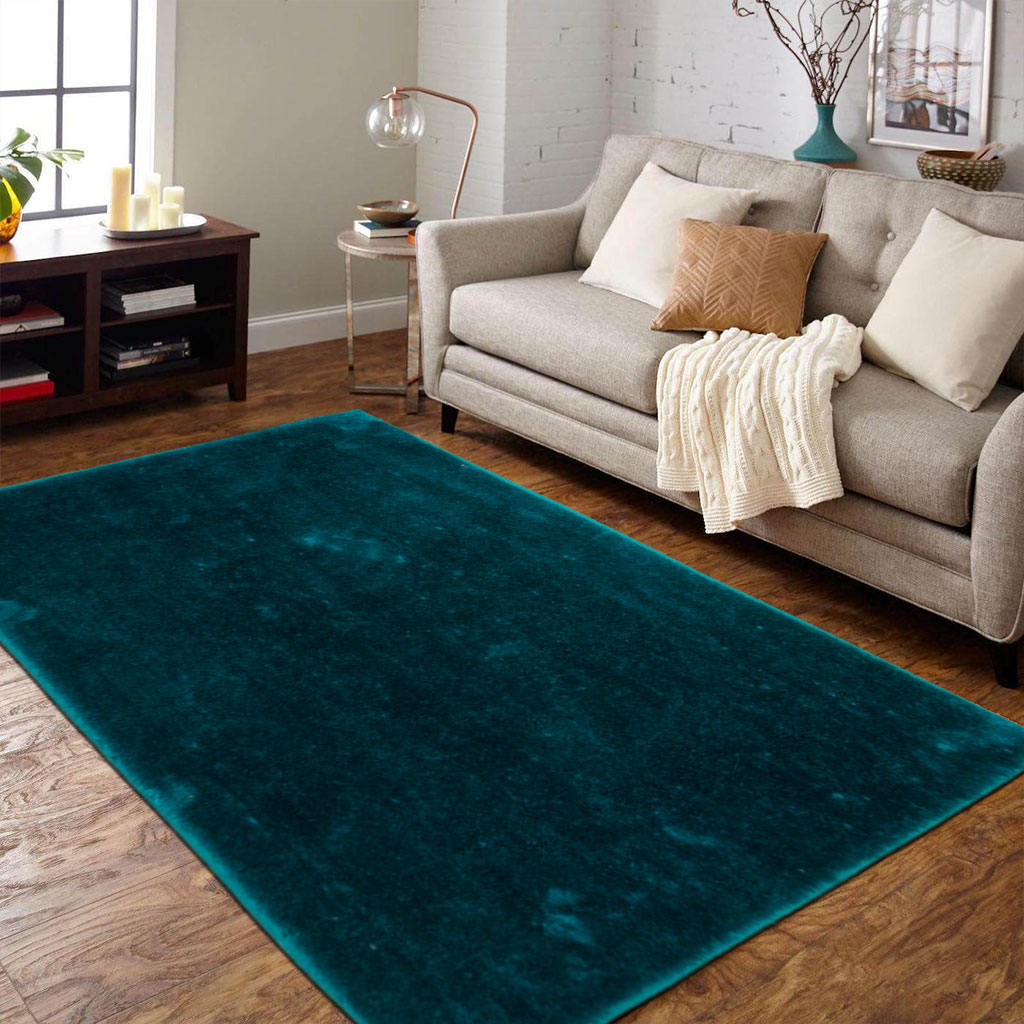
Glossy Cashmere Solid Area Rug
Content
The Glossy Cashmere Solid Area Rug is an indoor rectangular rug made primarily from polyester. Its product design focuses on a combination of softness, practical maintenance, stable placement, and flexible use. The surface is made from 100% polyester microfiber, a material commonly selected for rugs because it can create a soft hand feel while offering good durability and resistance to fading when properly produced and cared for.
The phrase “cashmere” in the product name describes the luxurious, smooth, and comfortable sensation intended by the surface design. It does not indicate that the rug is made from animal cashmere. The microfiber surface is engineered to provide a plush contact layer while maintaining the practical advantages of synthetic fiber. This allows the rug to offer a comfortable feel at a more accessible and manageable level than many natural-fiber luxury floor coverings.
The rug has a 15mm pile height. This height gives the surface noticeable thickness without creating the excessive bulk associated with very deep-pile rugs. A 15mm pile can provide cushioning for bare feet, children’s play, and everyday standing while remaining comparatively easy to fold, move, vacuum, and place beneath furniture or near doors.
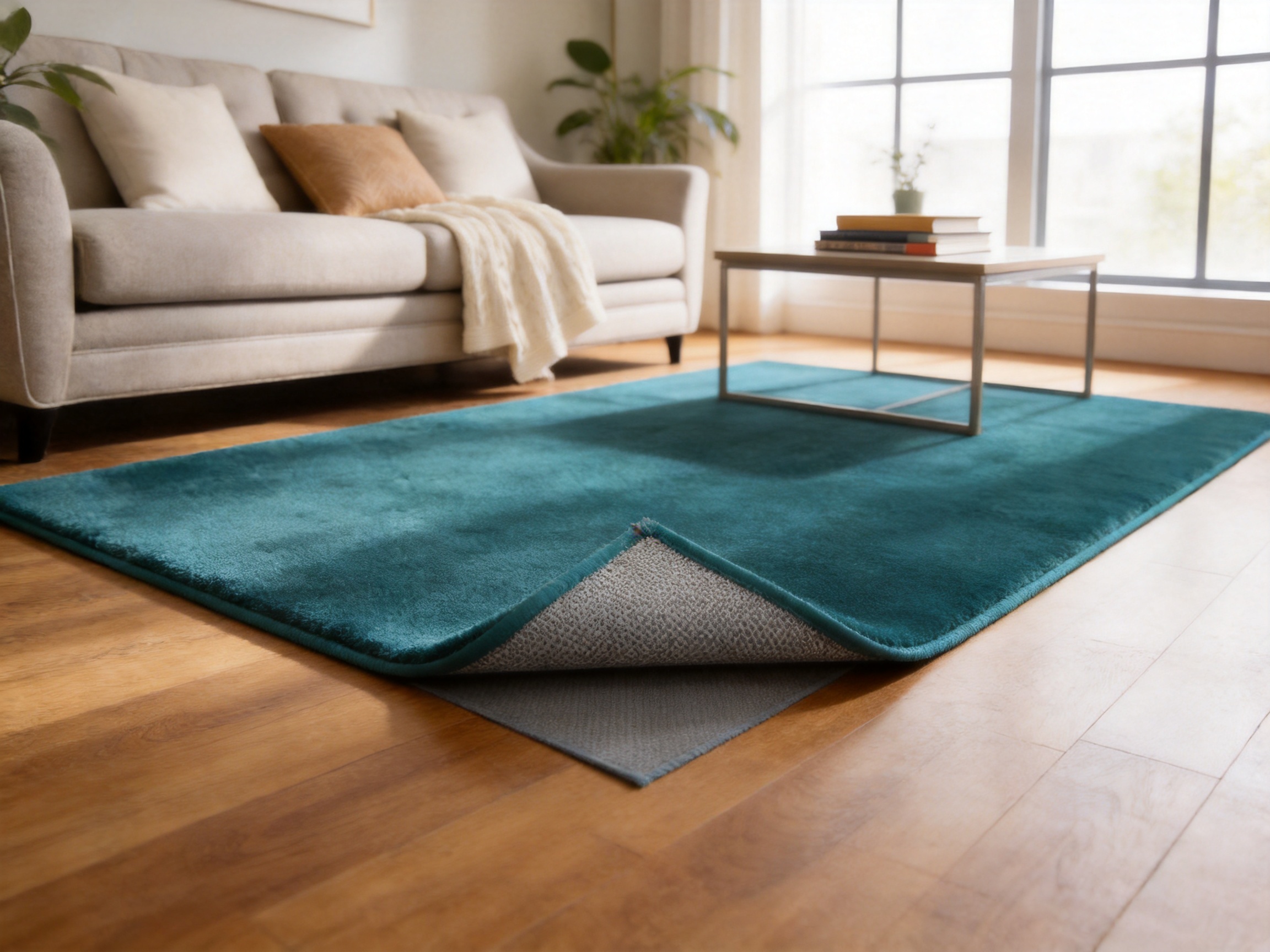
The construction is bonded, which means the surface and backing are joined to create a unified finished product. The underside uses TPR, or thermoplastic rubber, to help improve grip on suitable indoor flooring. The backing is intended to reduce sliding and shifting during ordinary use, meaning an additional rug pad may not be necessary in many applications. However, the suitability of the rug should always be checked against the specific floor surface, moisture conditions, and local safety requirements.
The product is machine washable, water-absorbent, and intended for indoor use. These characteristics make it suitable for areas where spills, dust, moisture, or frequent contact are likely. A bedroom rug may collect lint and dust, a kitchen mat may encounter food particles, and a bathroom rug may be exposed to splashes. The ability to remove the rug and clean it more thoroughly can be a significant advantage over floor coverings that require specialized or inconvenient maintenance.
The following table summarizes the principal product information supplied for this area rug.
| Specification | Details |
|---|---|
| Product name | Glossy Cashmere Area Rug |
| Product category | Solid area rug |
| Brand | Bene |
| Model number | 100201 |
| Material | Polyester microfiber |
| Weight | 1550 gsm |
| Pile height | 15mm |
| Construction | Bonded |
| Backing | TPR |
| Pattern | Solid color |
| Shape | Rectangular |
| Available sizes | 40 × 60cm, 50 × 80cm, 60 × 90cm, larger sizes, or custom dimensions |
| Intended use | Indoor |
| Care instruction | Machine wash |
| Special features | Non-slip, soft, washable, water absorption |
| Suggested rooms | Bedroom, living room, kitchen, bathroom, children’s room, nursery, and other indoor spaces |
The listed weight of 1550 grams per square meter contributes to the rug’s substantial feel. Weight alone does not determine quality, but a higher material density can help create a fuller surface and a more comfortable contact experience when combined with suitable fiber construction. The weight, pile, and bonded backing work together to produce a rug that feels more substantial than a very thin printed floor mat.
Comfort is one of the main reasons consumers purchase an area rug. Hard flooring can feel cold, rigid, or uncomfortable when used barefoot. The Glossy Cashmere Solid Area Rug introduces a soft textile layer between the user and the floor, helping create a warmer and more welcoming environment.
The 15mm pile gives the surface enough height to provide a cushioned sensation without becoming unusually difficult to manage. Very low-pile rugs are easy to clean but may offer limited softness. Extremely high-pile rugs can feel luxurious but may trap more debris, interfere with furniture legs, or create a less stable walking surface. The 15mm specification occupies a useful middle ground for consumers who want a visibly plush surface with practical everyday handling.
Polyester microfiber is composed of fine synthetic fibers that can create a smooth and dense surface. The fine fibers help distribute contact across the surface, producing a soft feel under bare feet. The surface is also suitable for rooms where children sit or play, provided the rug is placed on a clean, dry floor and used in accordance with appropriate household safety practices.
Comfort can also be influenced by the rug’s density, backing, and flatness. A surface that shifts or wrinkles may reduce the perceived quality of the product. The TPR backing supports a more secure position, while the bonded construction helps maintain the relationship between the top and bottom layers. Together, these features support a more consistent underfoot experience.
Compared with a basic flat woven mat, this product offers more surface loft and a softer tactile experience. Compared with a deep shag rug, it may be easier to place beneath furniture, easier to fold for cleaning, and less visually overwhelming in compact rooms. These qualities make it suitable for buyers who want comfort without sacrificing manageability.
A solid area rug is one of the most adaptable categories of floor covering. It can support a minimalist room, soften a modern interior, balance a traditional setting, or add warmth to a practical space. Because the product does not rely on a complex motif, it can coordinate with patterned curtains, decorative cushions, upholstered furniture, wall art, and bedding.
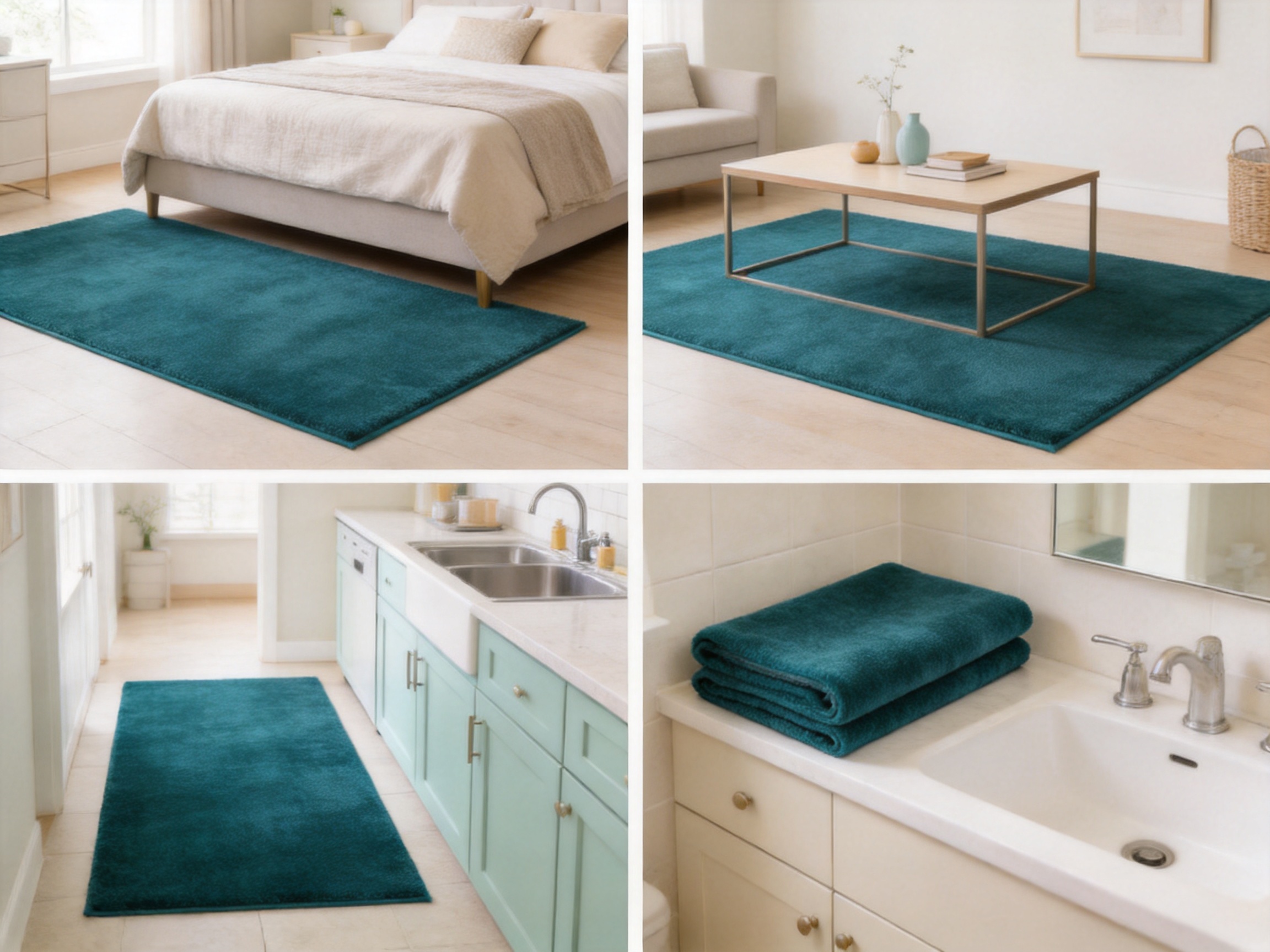
In a bedroom, the rug can be positioned beside a bed or beneath part of the bed frame to create a softer landing area. Its solid appearance supports a calm visual atmosphere, which is often desirable in sleeping spaces. In a living room, it can define a seating arrangement by visually connecting a sofa, coffee table, and accent chairs. The rug can also help separate a sitting area from the rest of an open-plan interior.
In a children’s room or nursery, the soft surface can create a more comfortable area for supervised floor activities. The washable construction is useful in these environments because children’s spaces may require more frequent cleaning than formal rooms. A solid color can also make it easier to coordinate the rug with changing décor as a child grows.
In a kitchen, the rug can be used near a sink, preparation zone, island, or dining area, where water absorption and a softer standing surface can be useful. It should be placed away from open flames, hot appliances, and conditions that could damage synthetic fibers. In a bathroom, it can provide a comfortable surface near a vanity or shower area, but it should be allowed to dry thoroughly and should not be used as a substitute for proper moisture control.
In an entrance or hallway, a compact size can help collect moisture and debris before they travel farther into the home. Users should select a thickness that does not obstruct doors or create a trip hazard. The TPR backing can assist with stability, but the rug should still be laid flat and inspected regularly.
Rug movement is a common concern, especially on smooth indoor surfaces. A rug that slides easily may bunch at the edges or require constant repositioning. The TPR backing on this product is designed to increase friction between the rug and the floor, helping it remain in place during ordinary foot traffic.
TPR is a flexible rubber-like material that can combine elasticity with practical handling. It is suitable for a backing that needs to remain soft enough for folding while providing a more secure contact surface. This is an important difference from some rigid or brittle backing materials that may crack, shed, or make the rug difficult to roll.
The non-slip feature can be particularly useful beside beds, sofas, sinks, and other locations where people step on and off the rug frequently. It may also help reduce movement caused by children or pets, although no rug backing can guarantee complete immobility in every situation. Floor condition, dust, moisture, rug size, and traffic level all influence performance.
Before placement, the floor should be clean, dry, and free from loose particles. The rug should be fully opened and allowed to settle flat. If temporary folding marks appear after transportation, gentle reverse rolling or flat resting may help. Users should avoid placing the rug on wet floors or using it over surfaces that are incompatible with rubber-backed products.
Compared with a rug that has no anti-slip treatment, the TPR-backed design provides a clear functional advantage. It can reduce the need for a separate pad in many normal indoor situations, which may simplify purchasing and installation. For commercial spaces, elderly users, children, or high-traffic locations, buyers should still conduct their own floor-specific safety assessment.
Maintenance is a major factor in the total value of a rug. A beautiful floor covering that requires complicated cleaning may be unsuitable for busy households. The Glossy Cashmere Solid Area Rug is designed for machine washing, allowing routine cleaning to be handled more conveniently than with many large, delicate, or non-washable rugs.
Small and medium sizes are particularly convenient for home washing because they can often be placed into an appropriately sized washing machine. Larger sizes may require a commercial machine or another suitable cleaning method, depending on the dimensions of the product and the capacity of the equipment. The care label and washing instructions supplied with the specific order should always take priority.
Before washing, users should remove loose dirt by shaking, brushing, or vacuuming the rug gently. Stains should be addressed promptly with a suitable mild cleaning solution. Harsh chemicals, abrasive brushes, excessive heat, and aggressive bleaching may affect color, fibers, or backing. The rug should be dried completely before being returned to the floor.
Water absorption can be beneficial in kitchens, bathrooms, and entrances, but absorbent textiles must not remain damp for extended periods. Prolonged moisture may contribute to odor, mildew, or floor damage. Good ventilation and thorough drying are therefore essential. In bathrooms, the rug should be lifted periodically so that both the underside and the floor can dry.
Regular vacuuming can help remove dust and loose particles before they become embedded. Because the rug has a 15mm pile, users should select a vacuum setting that does not pull excessively on the fibers. Rotating the rug from time to time can distribute wear more evenly, particularly when one section receives constant foot traffic.
The product is made from 100% polyester microfiber, selected for a balance of softness, durability, color performance, and ease of care. Polyester is widely used in home textiles because it can withstand repeated everyday handling while remaining relatively lightweight and economical to manufacture.
The material is described as offering fade resistance. In practical use, color retention depends on dye quality, exposure to sunlight, washing temperature, detergents, and the frequency of cleaning. To help preserve appearance, the rug should not be left in prolonged direct sunlight, and care instructions should be followed carefully.
The bonded construction contributes to the product’s structural integrity. Joining the surface and backing helps create a finished rug rather than a loose textile layer placed over a separate base. Production quality remains important: even bonding, consistent edge treatment, accurate dimensions, and controlled finishing all influence how the rug performs after use.
Durability should also be considered in relation to application. A bedroom rug may experience light to moderate traffic, while an entrance rug may receive repeated contact from footwear and outdoor moisture. The same product can serve both areas, but service life will vary according to traffic, cleaning frequency, furniture pressure, floor condition, and maintenance habits.
Compared with some natural fibers, polyester microfiber generally offers easier routine care and greater resistance to certain forms of staining. Compared with very inexpensive thin synthetic mats, the 1550 gsm weight and 15mm pile provide a fuller and more substantial construction. Compared with high-pile luxury rugs, this product may offer a more practical balance for households that prioritize washing and handling.
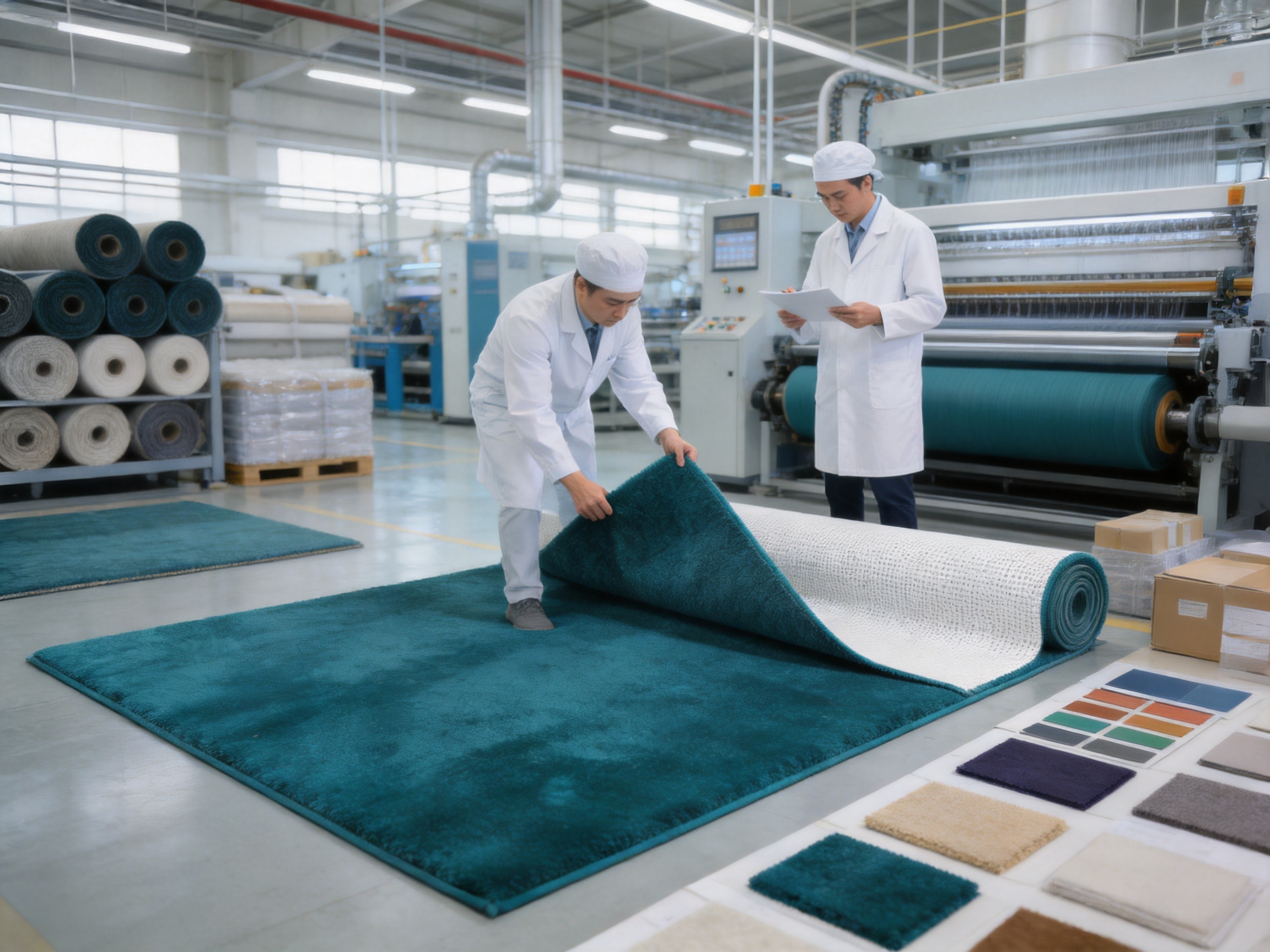
The quality of a finished rug depends on more than the visible surface. Fiber selection, yarn preparation, weaving or surface formation, coloration, backing, bonding, cutting, edge finishing, inspection, packing, and logistics all influence the final result. Zhejiang Benyi Textile Technology Co., Ltd. describes itself as a textile technology company specializing in carpets, rug fabrics, and finished products.
The company is located in Shaoxing, Zhejiang Province, a region widely associated with textile production. Access to a developed textile ecosystem can support material sourcing, technical collaboration, equipment services, dyeing resources, packaging, and export logistics. This regional concentration can help shorten communication channels and improve responsiveness when developing or modifying a product.
A notable strength is the company’s ability to work across several stages of the production chain. Its stated capabilities include weaving, dyeing and printing factories, and finished carpet processing factories. This type of manufacturing integration can provide stronger coordination than a model in which every stage is assigned to unrelated suppliers.
Integrated production may help reduce delays between fabric development and finished-product conversion. It can also make it easier to investigate quality issues because technical teams can trace more of the process. For buyers, this may improve consistency in color, surface feel, dimensions, backing, and delivery schedules.
The company also states that it has more than 20 fabric engineers and develops new carpet fabrics each quarter based on market trends. A dedicated engineering team can support experimentation with fibers, textures, backing combinations, weights, colors, and finishing techniques. It can also assist customers that need a specific product for a target market or distribution channel.
The company’s approach to combining the surface and bottom layers is intended to simplify carpet production and improve efficiency compared with more fragmented traditional processes. While actual performance depends on equipment, process control, and inspection standards, a streamlined production model can help support repeatability and reduce unnecessary handling.
For wholesale buyers, quality control is as important as product appearance. Retail customers expect rugs from the same collection to have consistent color, dimensions, pile height, backing, and packaging. Variations may create returns, customer complaints, or difficulties when products are displayed together.
A manufacturer with control over fabric production and finished-rug processing can establish quality checkpoints at multiple stages. These may include incoming material inspection, yarn or microfiber checks, surface density evaluation, color review, pile-height measurement, backing adhesion testing, dimensional inspection, edge finishing, washing evaluation, and final appearance review.
Product testing should be matched to the customer’s requirements and destination-market regulations. Buyers may request documentation relating to fiber content, colorfastness, restricted substances, packaging, labeling, and performance. Testing requirements can vary by country, sales channel, and intended use, so importers should communicate specifications before production begins.
The company reports that its products and operations have passed OEKO-TEX® and GRS certifications. Buyers should request current certificates, confirm the scope of each certificate, and verify that the specific product, material, facility, and production batch are covered where relevant. Certification is valuable when it is current, traceable, and connected to the product being purchased.
Supply-chain coordination is also important for custom orders. A buyer may require a particular color, private label, carton design, size assortment, or delivery schedule. When fabric engineers, dyeing teams, backing production, and finished-goods processing are coordinated within one manufacturing network, communication can be more direct and production planning can be more efficient.
For large orders, buyers should establish approval procedures before mass production. A written specification, approved color standard, confirmed size tolerance, packaging sample, and pre-production sample can reduce misunderstandings. Clear communication is especially important when the rug will be sold under a retailer’s own brand or included in a coordinated home-textile collection.
Modern buyers increasingly evaluate not only what a textile product looks like, but also how it is made. The company states that it focuses on ecological and environmental protection, consumer health experiences, sustainable materials, and water-saving dyeing methods. It also identifies recycled polyester as one of the materials considered in its sustainability strategy.
Polyester recycling can help reduce dependence on virgin raw materials when appropriate recycled feedstocks are available and properly controlled. The environmental value of recycled content depends on the source material, processing method, energy use, product life, durability, and end-of-life options. Buyers seeking recycled content should request documentation specifying the percentage and certification status.
Water-saving dyeing techniques may reduce water consumption in coloration processes. Dyeing efficiency can also influence wastewater volume, chemical management, energy use, and production cost. Responsible production requires more than a single technique; it depends on a broader system of water treatment, chemical control, energy management, worker protection, and regulatory compliance.
The stated OEKO-TEX® and GRS certifications are relevant to buyers concerned with product safety and recycled-material claims. OEKO-TEX® certification is generally associated with testing for certain substances in textiles, while GRS relates to recycled content and chain-of-custody requirements. Certification details should always be checked against the current documentation rather than assumed from a general company statement.
Durability is itself an important sustainability consideration. A rug that remains attractive and functional for a longer period may reduce the need for frequent replacement. Washability can also support longer use by allowing the product to be refreshed instead of discarded after minor staining. Proper care, responsible washing, and suitable placement all contribute to extending the usable life of the rug.
The Glossy Cashmere Solid Area Rug has characteristics that can work well in wholesale distribution. Its solid design is broadly marketable, and its use across several rooms allows retailers to present it as a flexible household product rather than a niche decorative item. A single base design can potentially support different colors, dimensions, packaging formats, and customer segments.
Compact dimensions such as 40 × 60cm, 50 × 80cm, and 60 × 90cm can serve as bedside rugs, bathroom mats, kitchen accents, entrance mats, or small decorative pieces. Larger sizes can support living-room and bedroom merchandising. Custom dimensions may help buyers develop assortments for specific markets, furniture collections, hospitality projects, or online retail requirements.
Machine washability is a strong selling point in e-commerce and retail descriptions because consumers often prioritize easy care. Softness, non-slip backing, water absorption, and indoor versatility create several clear product messages without requiring a complicated explanation. A retailer can position the rug as a comfort product, a practical mat, a children’s-room accessory, or a general home décor item.
Private-label customers may also benefit from the manufacturer’s engineering and production resources. Custom services can include color development, size adjustments, surface changes, label application, packaging customization, and coordinated product development. The precise scope, minimum order quantity, lead time, and sampling process should be confirmed during inquiry.
For distributors, the product can be included in seasonal collections, new-home ranges, back-to-school room updates, bathroom programs, or general soft-furnishing assortments. Its solid-color format can also be coordinated with blankets, sofa cushions, curtains, towels, and other interior textiles.
Commercial buyers should consider packaging carefully. Foldable construction can help reduce storage and transport requirements, while suitable protective packaging can prevent moisture, dust, compression marks, and handling damage. Carton dimensions, units per carton, gross weight, labeling, and palletization should be finalized before mass production.
Thin flat mats are often easy to store and inexpensive, but they may provide limited cushioning. The 15mm microfiber pile gives the Glossy Cashmere Solid Area Rug a softer, fuller feel. It is more suitable for consumers who want comfort under bare feet or a warmer surface in bedrooms and living rooms.
Deep shag rugs can create a dramatic and luxurious appearance, but they may trap more debris and require more effort to vacuum. They can also be difficult to place near doors or beneath furniture. The 15mm pile offers visible softness while remaining comparatively manageable for washing, folding, and daily care.
Cotton rugs can provide a natural tactile quality and may be comfortable in casual interiors. However, they may shrink, crease, or require more careful laundering depending on their construction. Polyester microfiber offers a synthetic alternative with strong washability and consistent production characteristics.
Wool is valued for warmth, resilience, and natural texture, but wool rugs can be more expensive and may require specialized care. Some users may also prefer to avoid animal fibers. The polyester construction of this rug provides a soft, washable, and generally more accessible option for everyday indoor use.
A rug without a dedicated anti-slip backing may require a separate pad to limit movement. The TPR backing is integrated into the product and is designed to provide added grip. This can simplify installation and reduce the number of separate components required by the buyer.
Size has a major effect on how an area rug performs visually and functionally. A small rug can define a compact zone, while a larger rug can connect several pieces of furniture. Before ordering, buyers should measure the available floor area, account for door clearance, and consider the position of furniture legs.
The 40 × 60cm size may be suitable for a small bedside area, a narrow decorative zone, or a compact entrance. The 50 × 80cm and 60 × 90cm formats can provide broader coverage beside a bed, in front of a vanity, near a sink, or beneath a small table. Larger formats are better suited to living rooms, bedrooms, play areas, and open spaces.
A rug placed beneath a bed should be positioned so that users can step onto the soft surface when getting up. In a living room, the rug can be placed beneath the front legs of a sofa and chairs to create visual unity. In a kitchen, the rug should not interfere with cabinet doors, appliance access, or walking routes.
For bathrooms and kitchens, moisture management should be considered before installation. The floor should be dry, and the rug should not cover a drain or block access to plumbing. In homes with heated floors, users should confirm that the backing is suitable for the specific heating system and follow the instructions provided for the product.
Custom dimensions can be helpful when standard sizes leave awkward gaps or interfere with doors. A custom order should include accurate measurements, acceptable tolerances, preferred edge treatment, color requirements, and intended use. Buyers should also request a sample where color or surface feel is especially important.
Good maintenance begins with correct placement. The rug should be installed on a clean, dry, smooth surface. Dirt beneath the backing can reduce grip and potentially scratch delicate flooring. Uneven surfaces may cause the rug to fold or create pressure points.
Vacuum the surface regularly using a suitable setting. Avoid excessive force, particularly around edges and areas where fibers may be pulled. Promptly remove spills by blotting rather than rubbing aggressively. A gentle cleaning method can reduce the risk of spreading a stain or damaging the surface texture.
When machine washing, use an appliance with enough capacity for the rug to move freely. Overloading the machine may result in inadequate cleaning or unnecessary stress on the rug. Use a mild detergent, select an appropriate cycle, and avoid high heat unless the care label specifically permits it.
Dry the rug completely before use. Do not place a damp rug directly on the floor for an extended time. If outdoor drying is used, avoid prolonged intense sunlight that could affect color. Once dry, return the rug to a clean floor and check that all corners and edges are flat.
For long-term storage, clean and dry the rug first. Fold or roll it without placing heavy objects on top. Store it in a dry, ventilated area protected from insects, moisture, and direct sunlight. These simple steps can help preserve the pile, backing, and color.
One of the company’s stated strengths is the ability to provide customized services according to customer requirements. This is important because buyers in different markets may need different dimensions, colors, packaging, fiber blends, labels, or performance characteristics.
Color development is particularly important for solid rugs. A small variation in shade can affect how a product coordinates with furniture and other home textiles. Professional buyers may provide a physical color standard, a recognized color reference, or a digital target. A laboratory sample or strike-off should be approved before production whenever color accuracy is commercially important.
Surface development can include changes to pile height, fiber thickness, density, luster, texture, or finishing. The glossy cashmere concept may be adapted for customers seeking a more reflective surface, a softer touch, a denser hand, or a particular visual effect. Any modification should be evaluated for washability, shedding, colorfastness, backing adhesion, and production stability.
Size customization can help retailers fit local room dimensions or create coordinated collections. A buyer may request a range that includes small mats, standard area rugs, runners, and larger room formats. Developing a size family around one surface and backing system can create a coherent merchandising program.
Packaging customization can support brand recognition and retail presentation. Options may include woven labels, printed inserts, barcode stickers, color boxes, polybags, carton marks, care labels, and instruction cards. Packaging should protect the rug without creating unnecessary material waste.
The company’s fabric engineering team can be valuable during development because technical decisions affect both appearance and cost. A professional development process should consider target price, minimum order quantity, material availability, production lead time, testing needs, shipping volume, and expected sales channel. A product that looks attractive but cannot be produced consistently or delivered economically may not be commercially successful.
Many textile products pass through multiple independent suppliers before reaching a finished-goods exporter. That structure can work, but it may also create communication gaps. If the surface fabric is produced by one supplier, the backing by another, and final assembly by a third, changes may take longer and responsibility for defects may be harder to establish.
An integrated or closely coordinated manufacturing model can make technical communication more efficient. The team responsible for the finished rug can communicate directly with fabric engineers and processing departments. This may support faster sample revisions, more consistent specifications, and better coordination of production schedules.
Integration can also support product traceability. When more process stages are managed within one company or manufacturing group, it may be easier to identify the source of an issue, whether it relates to fiber, coloration, bonding, cutting, edge finishing, or packaging. Traceability is valuable for both quality improvement and customer service.
Lead-time control is another potential advantage. Seasonal retail programs often operate according to strict delivery windows. Delays in fabric development or finishing can affect product launches and promotional plans. A coordinated production chain can help the manufacturer plan capacity and respond more effectively to changes in demand.
These advantages do not eliminate the need for buyer-side verification. Importers should still review samples, inspect production, confirm test reports, and agree on quality tolerances. Manufacturing integration is a strong foundation, but consistent results depend on documented processes and clear commercial communication.
Before placing a wholesale or customized order, buyers should ask for a complete technical specification. This should include fiber composition, pile height, weight, backing material, construction method, available sizes, color options, care instructions, packaging details, and acceptable dimensional tolerances.
Buyers should also confirm whether the listed machine-wash instruction applies to every size. A small rug may be suitable for a domestic washing machine, while a large rug may require commercial equipment. The recommended wash temperature, detergent type, drying method, and restrictions should be included in product documentation.
For sustainability claims, request current certificates and supporting documents. Confirm whether recycled content applies to the entire rug, the surface, the backing, or only a particular production series. Check whether the certificate holder, factory location, product category, and validity period correspond to the order.
For color-sensitive orders, approve a physical sample. Digital images can differ because of screen settings, lighting, photography, and compression. A physical sample also allows the buyer to evaluate softness, density, pile height, backing, edge finish, odor, and overall construction.
For large orders, clarify inspection procedures. Buyers may use pre-shipment inspection, random sampling, factory audits, or third-party testing. Defect definitions should be agreed in advance. Examples may include open seams, uneven bonding, excessive loose fibers, visible stains, major color variation, incorrect labeling, damaged packaging, or dimensions outside the agreed tolerance.
The rug is suitable for household consumers who want a soft and washable floor covering with a simple appearance. It can serve renters, families, first-time homeowners, students, and customers furnishing guest rooms. Its range of sizes and indoor applications makes it adaptable to different budgets and room layouts.
Retailers can market it through home décor, bedding, bath, kitchen, nursery, or seasonal furnishing departments. Online sellers can highlight its washable construction, soft microfiber surface, 15mm pile, non-slip TPR backing, solid color, and range of dimensions. Because the product does not depend on a complex visual pattern, product photography can focus on texture, thickness, edge quality, and room placement.
Hospitality and property-management buyers may consider the product for bedrooms, guest bathrooms, serviced apartments, student accommodation, or other indoor spaces where replaceable and easy-care textiles are useful. Commercial users should evaluate traffic levels, cleaning protocols, fire-safety requirements, and local regulations before ordering.
Interior designers can use the rug as a quiet background element in residential projects. Its solid-color format allows the designer to emphasize furniture, wall treatments, lighting, or artwork. Custom sizing can be useful when a project has unusual room proportions or requires a coordinated set of floor coverings.
Private-label brands can build a collection around the product by offering multiple colors, sizes, packaging styles, and complementary soft furnishings. The manufacturer’s textile development resources may support the creation of a consistent visual identity across several product lines.
The rug is made from 100% polyester microfiber. This synthetic fiber is selected to provide a soft surface, practical durability, fade resistance, and convenient care.
No. “Cashmere” describes the intended luxurious softness and appearance of the rug. The supplied material specification identifies polyester microfiber as the fiber content.
The 15mm pile height indicates the approximate height of the surface fibers above the backing. It provides a plush, cushioned feel while remaining more manageable than an extremely deep-pile rug.
Yes, the product is described as machine washable. The correct machine size, cycle, temperature, detergent, and drying method should be confirmed from the care label, especially for larger sizes.
The rug uses a TPR backing designed to provide non-slip performance, and an additional pad may not be needed in many indoor applications. Actual stability depends on the floor surface, moisture, traffic, and rug size. Buyers should use an additional safety solution if required for their environment.
It is intended for indoor use and can be used in bedrooms, living rooms, kitchens, bathrooms, children’s rooms, nurseries, entrances, and other suitable interior spaces.
The soft surface is described as suitable for children to play on. It should be placed on a clean, dry, stable floor, and children should be supervised according to normal household safety practices.
Listed sizes include 40 × 60cm, 50 × 80cm, and 60 × 90cm. The product information also indicates that larger sizes and custom dimensions are available, subject to production requirements.
The manufacturer provides customized services according to customer requirements. Custom color development should be discussed in advance, with a physical sample or approved color standard used for confirmation.
Yes, custom dimensions are identified as an available option. Buyers should provide accurate measurements and confirm tolerances, minimum quantities, sampling requirements, and lead times before production.
The rug should be dried thoroughly before being placed back on the floor. Excessive heat should be avoided unless specifically allowed by the care instructions. Good ventilation can help prevent lingering moisture and odor.
No. The supplied specification identifies the product as intended for indoor use. Outdoor exposure can subject the fibers and backing to ultraviolet light, rain, dirt, and temperature changes beyond the product’s intended conditions.
The rug uses bonded construction, joining the surface and backing into a finished floor-covering structure. Consistent bonding and edge finishing are important to the final product’s appearance and durability.
It combines a 15mm microfiber pile, a 1550 gsm weight, a soft contact surface, machine washability, water absorption, and TPR backing. This gives it a fuller and more versatile profile than many thin, unbacked mats.
The company states that it has weaving, dyeing and printing, and finished carpet processing factories, as well as a team of more than 20 fabric engineers. These resources support product development, customization, process coordination, and quality management.
The company states that it invests in sustainable materials and production methods, including recycled polyester and water-saving dyeing techniques. It also reports OEKO-TEX® and GRS certifications. Current certificate documents should be requested for verification.
A buyer should confirm material content, size, weight, pile height, color, backing, wash instructions, packaging, minimum order quantity, sampling, inspection standards, certificates, lead time, and shipping terms.
Regular gentle vacuuming, prompt stain removal, correct washing, thorough drying, protection from prolonged direct sunlight, and proper storage can help preserve the color, pile, and backing.
The Glossy Cashmere Solid Area Rug is designed for buyers who want a combination of softness, simple styling, easy care, and dependable everyday function. Its 15mm polyester microfiber surface provides a comfortable underfoot feel, while the 1550 gsm weight gives the rug a fuller presence. The solid-color design supports a wide range of interior styles, and the rectangular shape is suitable for many common room layouts.
The product’s practical advantages include machine washability, water absorption, a flexible TPR backing, and a range of standard and custom dimensions. These features make it more adaptable than many decorative rugs that require specialized care or separate anti-slip accessories. Its balanced pile height offers comfort without the maintenance burden often associated with very deep surfaces.
For professional buyers, the manufacturer’s textile capabilities are equally important. Control of weaving, dyeing or printing, backing, and finished-rug processing can support more consistent production and more efficient customization. A team of fabric engineers, experience in textile technology, and stated attention to sustainability provide additional value for customers developing private-label or wholesale programs.
As with any textile product, the best results depend on matching the rug to the intended environment. Correct sizing, dry placement, suitable cleaning, and regular inspection will help maintain performance. Wholesale buyers should verify certificates, approve samples, define quality standards, and confirm production details before placing a large order.
Overall, this rug offers a practical balance between comfort and manageability. It is not positioned as a specialized outdoor carpet or a high-maintenance luxury floor covering. Instead, it is a versatile indoor textile product intended to make everyday spaces softer, warmer, cleaner-looking, and easier to maintain.
1. Product technical specification for the Glossy Cashmere Solid Area Rug, including material, weight, pile height, construction, backing, sizes, care instructions, and intended uses.
2. Manufacturer-provided company profile for Zhejiang Benyi Textile Technology Co., Ltd., including textile engineering, weaving, dyeing, printing, finished carpet processing, customization, and supply-chain capabilities.
3. Manufacturer-provided sustainability information concerning recycled polyester, water-saving dyeing methods, environmental protection, and consumer health considerations.
4. Manufacturer-provided certification information concerning OEKO-TEX® and Global Recycled Standard-related manufacturing claims.
5. General textile product-care principles for polyester microfiber rugs, including vacuuming, stain treatment, machine washing, drying, storage, and moisture management.
6. General interior-furnishing guidance concerning rug placement, room zoning, size selection, floor compatibility, and household safety.

ADD: No.75 Zhenyuan Road, Yuecheng District, Shaoxing City, Zhejiang Province, China 312000

Tel : +86-189 6750 9795

FAX : +86-0575-8803 2773

Email : fisher@benetextile.com

Copyright © Zhejiang Benyi Textile Technology Co., Ltd. All Rights Reserved. Carpets and Rugs Manufacturer

 English
 Français
 Deutsch
 عربى
عربى