

Shen Ruoxi — International Product Sales Executive
 Home / Author / Shen Ruoxi — International Product Sales Executive / Silk Loop Solid Door Mat: Durable, Water-Absorbent Protection for Modern Entrances
  2026.08.13
 Shen Ruoxi — International Product Sales Executive
A door mat is one of the first practical details people notice when they enter a home, office, hotel, shop, or public building. Although it occupies a relatively small area, it performs several important functions at once. It helps remove dirt from footwear, captures water before it reaches the floor, reduces slipping risks, protects interior surfaces, and contributes to the overall appearance of an entrance. The Silk Loop Solid Door Mat is designed to address these requirements through a combination of dense polyester construction, a resilient loop surface, a waterproof PVC backing, and an easy-care design.
Available in standard sizes of 40 × 60 cm, 50 × 80 cm, and 60 × 90 cm, as well as custom dimensions, the mat can be adapted to residential, commercial, hospitality, and institutional applications. Its rectangular shape and solid-color pattern provide a clean appearance, while its 2,600 gsm weight and 7 mm pile height create a substantial surface that feels comfortable underfoot and performs effectively in high-traffic areas.
Unlike lightweight decorative mats that may move easily, flatten quickly, or absorb only a limited amount of moisture, this product is built as a functional entrance solution. Its bonded construction, PVC backing, water-washable surface, and non-slip characteristics make it appropriate for both indoor and outdoor use. It can be used at apartment entrances, office doors, hotel lobbies, kitchens, bathrooms, balconies, retail stores, service counters, and other locations where floor protection and moisture control are important.
Content
Every shoe brings a combination of dust, soil, small particles, and moisture into a building. During rainy or snowy weather, the quantity of water can increase substantially. Without an effective entrance mat, this material is transferred directly onto flooring, where it can create stains, scratches, unpleasant odors, and slip hazards. A properly engineered door mat acts as the first line of defense between outdoor conditions and indoor surfaces.
The performance of an entrance mat depends on more than its appearance. A high-quality mat should have a surface that makes contact with footwear effectively, enough mass to remain stable, a backing that resists movement, and a structure that can be cleaned repeatedly without losing its function. Water management is also critical. A mat that merely spreads moisture across its surface may provide an unsatisfactory result, while a mat that absorbs and retains water appropriately can help keep surrounding floors visibly drier.
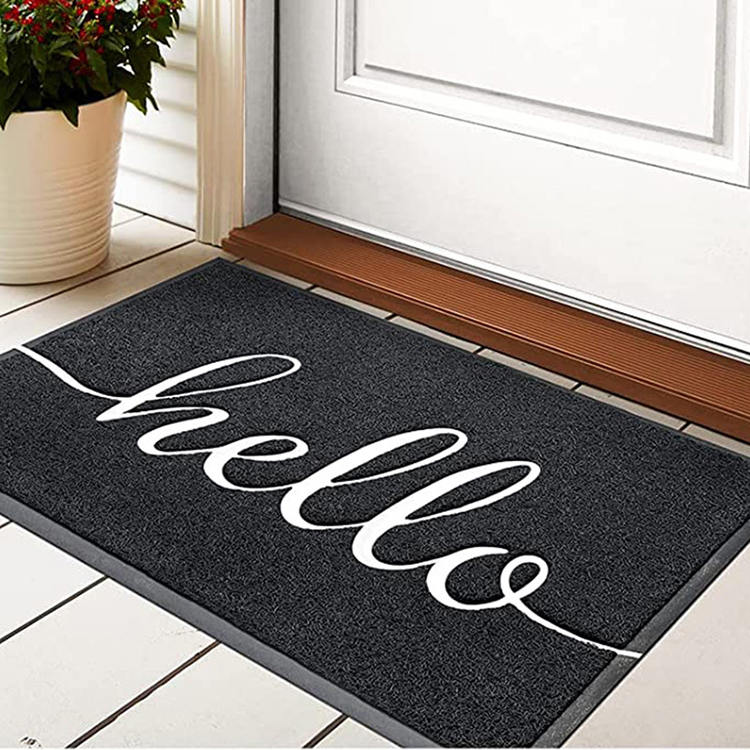
The Silk Loop Solid Door Mat is designed around these practical requirements. Its looped surface creates friction against the soles of shoes and helps loosen dust. The dense material provides a substantial cleaning area, while the PVC backing helps prevent moisture from passing through to the floor. The combination of surface texture and backing stability supports both everyday convenience and long-term use.
| Product Name | Silk Loop Door Mat |
| Product Category | Door Mat |
| Brand | Bene |
| Available Sizes | 40 × 60 cm, 50 × 80 cm, 60 × 90 cm, or custom dimensions |
| Primary Material | Polyester |
| Weight | 2,600 gsm |
| Pile Height | 7 mm |
| Construction Type | Bonded |
| Backing Material | PVC |
| Usage | Indoor and outdoor |
| Pattern | Solid color |
| Shape | Rectangular |
| Care Instruction | Water wash |
| Special Features | Non-slip performance, washable surface, water absorption |
These specifications show that the mat is positioned as a performance-oriented product rather than a purely decorative floor accessory. The high material weight, moderate pile height, and PVC backing are selected to balance comfort, cleaning action, stability, and practical maintenance.
Silk Loop Solid Door Mat
The surface material is polyester, a widely used fiber for textile products that require durability, dimensional stability, and convenient care. Polyester is suitable for entrance mats because it can withstand repeated contact with footwear and can be cleaned with water. It also offers good resistance to ordinary household wear, making it appropriate for areas where users enter and leave frequently.
The 2,600 gsm weight gives the mat a dense and substantial construction. In practical terms, a heavier mat can offer a fuller surface, improved contact with footwear, and a more stable feel than a very thin alternative. Density also contributes to the mat’s ability to capture small particles and hold moisture temporarily before cleaning or drying.
The loop structure is particularly useful in entrance applications. As a shoe passes over the surface, the loops create friction that helps dislodge dust and dirt from the sole. This action is more effective than placing a smooth fabric at the doorway, because a textured surface gives particles more opportunities to become trapped within the mat instead of being carried into the room.
The loop design also provides visual consistency. Because the product uses a solid-color pattern, the surface has a simple and adaptable appearance. It can coordinate with modern, minimalist, commercial, and traditional interiors without competing with surrounding furniture or architectural features. Buyers can select colors according to their interior design, traffic level, or commercial identity while maintaining a clean and uniform presentation.
Pile height affects comfort, cleaning efficiency, appearance, and door clearance. A very low-profile mat may fit beneath doors easily but can offer less surface volume for dirt and water. A very thick mat may feel luxurious but could interfere with doors, require more drying time, or become difficult to position in narrow entrance areas.
The 7 mm pile height provides a practical middle ground. It offers enough surface structure to support dirt removal and water absorption while remaining relatively easy to place near standard doorways. The moderate profile also helps the mat maintain a neat appearance without creating an excessive step at the entrance.
For buyers specifying custom dimensions, door clearance should still be checked before production. The appropriate size and thickness depend on the door type, floor transition, traffic volume, and installation environment. In commercial projects, these considerations should be reviewed during the planning stage to ensure that the mat integrates smoothly with the entrance layout.
The backing is made from PVC, a material commonly selected for floor products because of its strength, water resistance, and ability to provide a stable foundation. The backing helps the mat remain in position when people walk across it, reducing unwanted shifting and bunching. This is especially important in busy spaces where users approach the door from different angles and at different speeds.
A shifting mat can create an uncomfortable walking experience and may become a tripping risk. The PVC backing helps address this issue by increasing contact with the floor and supporting the mat’s non-slip function. While no loose floor covering should be treated as completely slip-proof under every condition, a strong backing can significantly improve stability when the floor is clean, level, and suitable for the product.
The PVC layer also helps protect the floor from moisture. When wet shoes deposit water on the upper surface, the waterproof backing helps prevent that moisture from immediately passing through to wood, laminate, tile, vinyl, or other flooring. This feature is valuable in entrances exposed to rain, as well as in kitchens, bathrooms, utility spaces, and other areas where occasional water is expected.
The backing creates a useful division of functions. The upper layer works to remove and absorb dirt and water, while the lower layer supports stability and floor protection. This layered approach is one of the product’s key advantages over simple fabric mats that may lack sufficient resistance to movement or moisture penetration.
Water management is a major reason consumers purchase a door mat. A wet floor can become slippery, damage sensitive surfaces, and make an entrance look untidy. The looped upper layer is designed to absorb water from wet footwear, helping reduce the amount of moisture carried beyond the doorway.
The mat’s water-absorbent performance is especially useful during rainy seasons, in regions with frequent humidity, and in facilities where users regularly move between indoor and outdoor areas. It can also help in homes with children or pets, where wet footprints may otherwise appear throughout the building.
Water absorption does not eliminate the need for routine cleaning or drying. Like any textile floor product, the mat performs best when it is emptied of accumulated dirt and allowed to dry thoroughly after heavy exposure to moisture. The water-washable construction makes this maintenance process straightforward. Users can shake away loose particles, brush the surface, or wash it with water according to the level of soiling.
The waterproof backing provides an additional benefit by reducing the risk of water reaching the floor directly. This is particularly valuable on flooring materials that are vulnerable to prolonged dampness. However, the mat should not be left saturated for extended periods. Regular cleaning and proper drying help preserve freshness, hygiene, and product life.
Entrance mats operate in one of the dirtiest areas of a building, so easy maintenance is essential. A mat that looks attractive but is difficult to clean may become a long-term inconvenience. The water-washable design of this product allows users to remove ordinary dust, mud residue, and surface stains without relying exclusively on specialized cleaning services.
For routine care, loose debris can be removed by shaking the mat outdoors or using a suitable vacuum cleaner. A soft brush can help release dirt caught between the loops. When deeper cleaning is required, the surface can be washed with water. After washing, the mat should be positioned in a well-ventilated place and allowed to dry completely before being returned to the floor.
Cleaning frequency should correspond to traffic and environmental conditions. A residential entrance may require less frequent washing than a retail store, school, office building, hotel, or industrial facility. In high-traffic applications, a regular maintenance schedule can help prevent dirt from becoming deeply embedded and can preserve the mat’s appearance for a longer period.
The washable feature also supports a more economical ownership model. Instead of replacing a mat whenever it becomes visibly dirty, users can restore its appearance through cleaning. This may reduce replacement frequency and help organizations manage operating costs over the service life of the product.
The mat uses bonded construction, which supports the connection between the textile surface and the backing. A strong bond is important because a door mat is exposed to repeated loading, friction, folding pressure, dragging, and moisture. If the layers separate easily, the mat may lose its shape or become less safe to use.
Bonded construction can contribute to a more unified product structure. The surface remains connected to the backing as users walk over it, while the backing continues to provide support and stability. This construction is suitable for products intended for repeated daily use, especially where the mat will be moved, cleaned, and repositioned on a regular basis.
Durability is not determined by one specification alone. It depends on the interaction of fiber selection, surface density, backing quality, bonding, finishing, and care practices. The product’s construction brings these elements together to create an entrance mat designed for reliable use in both domestic and commercial settings.
Many mats are designed for one specific environment. Some are intended only for indoor decoration, while others prioritize heavy scraping outdoors and may feel too coarse for interior use. This product is designed for both indoor and outdoor applications, giving buyers more flexibility when planning entrance protection.
Indoors, it can be positioned at apartment doors, office entrances, hotel corridors, kitchens, bathrooms, utility rooms, and balcony access points. Its solid-color appearance makes it suitable for spaces where a coordinated visual style is preferred.
Outdoors, it can be used in sheltered entrances, porches, covered walkways, storefronts, and building access areas. The PVC backing helps provide resistance to ground moisture, while the polyester loop surface contributes to dirt and water removal. For exposed outdoor placement, users should consider local weather conditions and choose a location where the mat is not subjected to prolonged standing water or extreme environmental stress.
The availability of custom dimensions is useful for projects with non-standard entryways. Large doors, double entrances, corridor openings, commercial counters, and modular mat systems may require sizes beyond ordinary household formats. Custom production allows buyers to specify dimensions that fit the installation area more accurately.
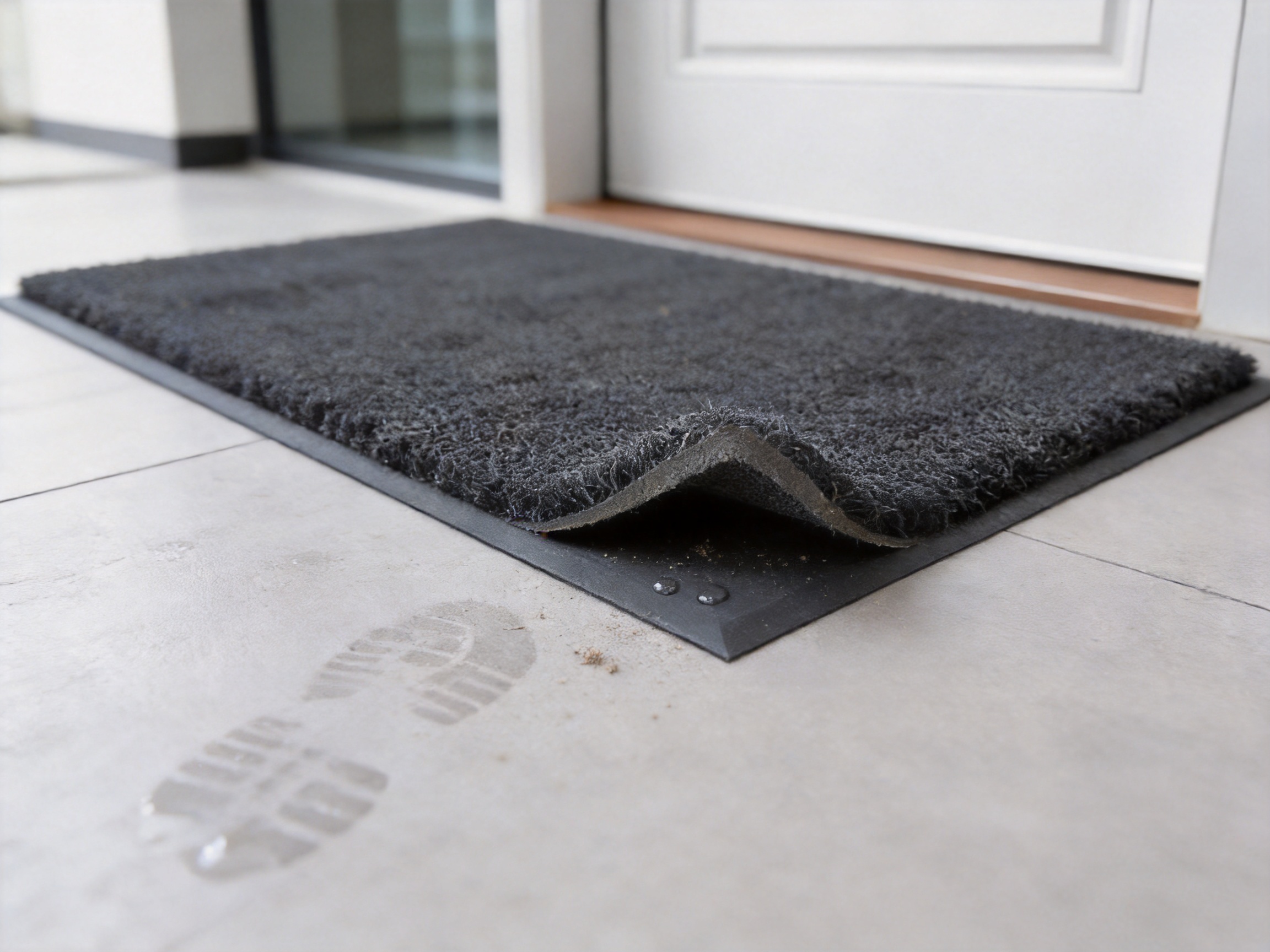
Design is an important part of product selection, especially in commercial environments where an entrance contributes to the first impression of a business. The solid-color pattern creates a restrained and versatile appearance. It does not rely on complex graphics or prominent motifs, so it can be integrated into different architectural settings.
A solid mat can support a consistent visual identity across multiple locations. Property managers may use one color throughout a building, while retailers, hotels, offices, and service providers may select a shade that complements their interior palette. In residential spaces, the simple design can work with wood flooring, ceramic tile, stone, laminate, and other common surfaces.
Solid-color products may also simplify purchasing and replacement. When several entrances require matching mats, a uniform pattern helps create a coordinated appearance. The rectangular form is familiar, efficient, and easy to position in front of standard doors.
Lightweight fabric mats can be affordable and visually appealing, but they may have limitations in demanding entrance applications. They may slide more easily, curl at the edges, absorb less water, or become displaced under repeated foot traffic. Their low mass can also make them feel less stable when users wipe their shoes.
The 2,600 gsm construction gives this product a more substantial presence. Its bonded layers and PVC backing support better stability, while the looped surface increases contact with footwear. These features make it more appropriate for entrances where performance is more important than minimal weight.
Another advantage is washable maintenance. Some decorative mats require delicate handling or may lose their shape when exposed to moisture. A water-washable product is easier to maintain in environments where dirt and water are unavoidable.
Rubber mats can provide strong resistance to water and may be effective for scraping large debris. However, some rubber-only surfaces are less comfortable underfoot, may offer limited textile absorption, and may not provide the same soft or refined appearance desired for indoor entrances.
The Silk Loop Solid Door Mat combines a textile upper layer with a PVC backing. This arrangement gives users the benefits of a softer, absorbent surface while retaining the stability and moisture resistance associated with PVC. It is therefore suitable for buyers who want a more balanced product rather than a hard industrial scraper mat.
The loop surface can help capture fine dust and moisture while remaining relatively comfortable for everyday walking. This makes the product suitable for homes, offices, hotels, and customer-facing areas where both function and presentation matter.
Very thin PVC-coated mats may be easy to roll and transport, but they often provide less material volume for water absorption and dirt capture. They may also feel less comfortable and offer limited cushioning at the entrance.
The 7 mm pile height and higher overall weight provide a fuller surface. This can support a more effective contact area for footwear and create a more substantial feel. The mat remains practical for everyday use while offering more performance than a minimal flat sheet.
The best selection depends on the environment. A thin mat may be sufficient for a low-traffic indoor doorway, while a denser, water-absorbent design is generally more appropriate for entrances exposed to frequent moisture and foot traffic.
The manufacturer is Zhejiang Benyi Textile Technology Co., Ltd., located in Shaoxing, Zhejiang Province, China. Shaoxing is widely recognized as an important textile manufacturing center, providing access to textile expertise, material resources, production capabilities, and experienced labor.
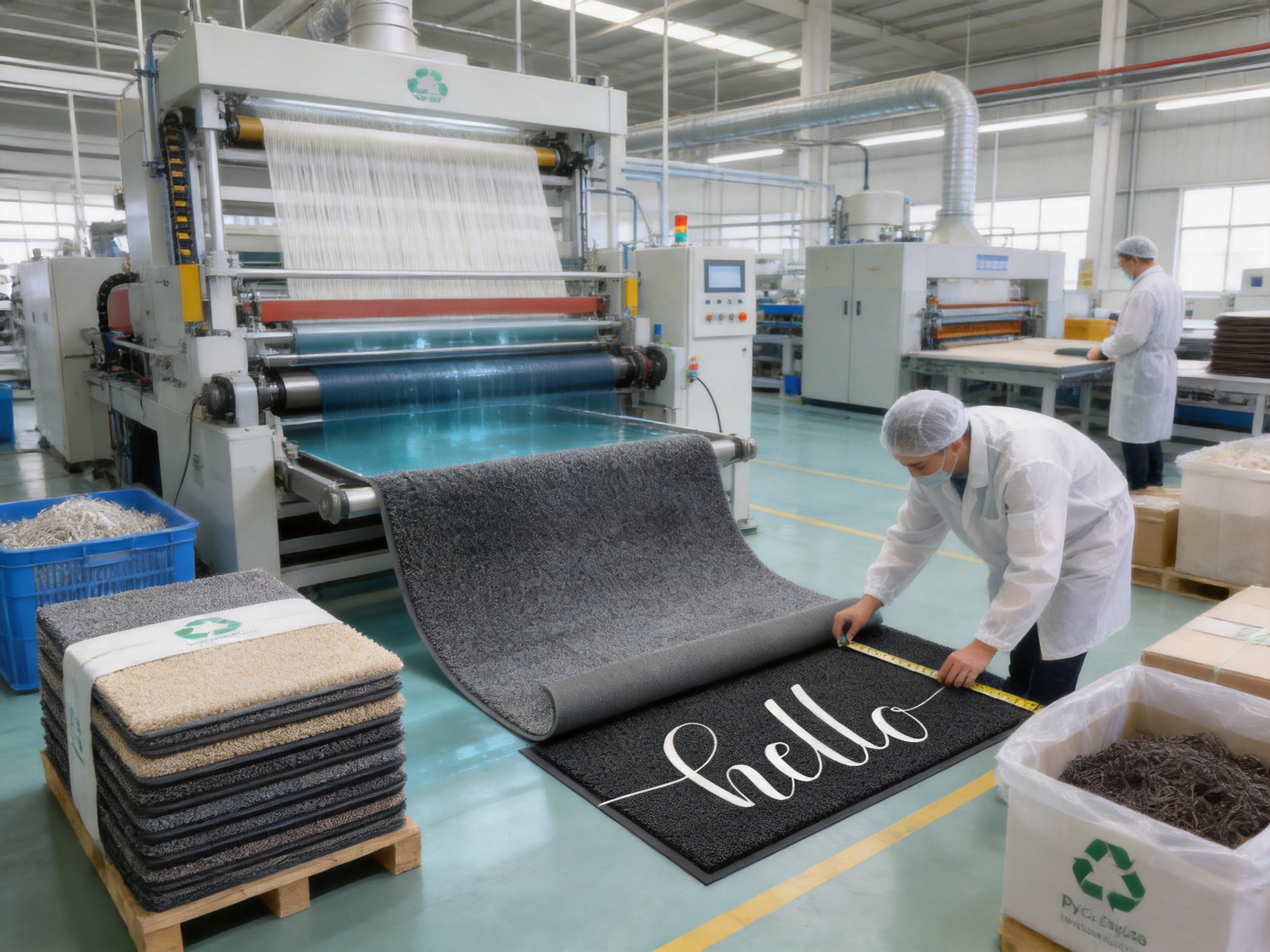
The company specializes in carpets, rug fabrics, and finished carpet products. Its production model combines the bottom and surface of textile floor products, helping simplify manufacturing and improve production efficiency. By maintaining control over multiple stages of the production chain, the company is positioned to coordinate material selection, weaving, dyeing or printing, backing, bonding, finishing, and final processing more effectively.
The company operates its own weaving and dyeing or printing factories, as well as finished carpet processing facilities. This integrated structure can provide several advantages to buyers. It may improve communication between product development and production teams, reduce delays caused by external coordination, and support more consistent quality monitoring from raw material preparation to finished goods.
Control over the production chain is particularly valuable for customized orders. Buyers may need special dimensions, colors, surface specifications, packaging requirements, or project quantities. An integrated manufacturer can review these requirements across several production stages and provide a more coordinated response than a trading company that relies entirely on unrelated subcontractors.
The company also has a team of more than 20 fabric engineers. Their work includes developing new carpet fabrics based on market trends and responding to customer requirements. Technical personnel can contribute to fiber selection, surface construction, color development, backing compatibility, dimensional planning, and product improvement. For buyers seeking new designs or private-label programs, this development capability can be an important advantage.
Modern textile manufacturing requires more than basic machinery. It depends on controlled processes, accurate specifications, stable raw materials, skilled technical staff, and ongoing product development. A door mat must maintain consistency in dimensions, weight, surface density, color, bonding, and backing performance. Variations in any of these areas can affect the user experience.
The manufacturer’s focus on textile technology supports a process-oriented approach to product development. New materials and construction methods can be evaluated according to their durability, appearance, environmental impact, and suitability for different applications. This approach allows the company to move beyond standard products and develop solutions for specific market needs.
For the Silk Loop Solid Door Mat, the production concept combines a polyester loop surface with a PVC backing. The surface must be formed with consistent density and height, while the backing must be applied evenly enough to support stability without compromising flexibility. Bonding must be controlled so that the layers remain connected during use and washing.
Finishing and inspection are also important. The final product should be checked for size, shape, surface uniformity, backing coverage, color consistency, and visible defects. In commercial orders, packaging and labeling may also be coordinated according to customer specifications. These steps help create a product that is suitable for repeat purchasing and organized distribution.
An integrated manufacturing structure can support quality control at several points. Raw materials may be assessed before entering production, semi-finished goods may be reviewed after weaving or dyeing, and finished mats may be inspected before packing. This layered approach helps identify issues earlier and reduces the risk that defects will continue into later stages.
Supply chain coordination is another important strength. When weaving, coloration, backing, and final processing are managed within a connected production system, the manufacturer can better coordinate lead times and respond to changes in order requirements. This is especially relevant for wholesale buyers, importers, retail programs, hospitality projects, and contract furnishing businesses.
Production efficiency can also influence pricing. By simplifying the relationship between the surface and backing processes, the company aims to reduce unnecessary complexity and improve manufacturing effectiveness. Cost efficiency does not mean reducing quality. Instead, it can help provide a more competitive balance between product performance, customization, lead time, and purchase price.
Buyers should still confirm detailed specifications, testing requirements, packaging standards, and order schedules for each project. Professional procurement normally includes pre-production confirmation, sample review, production inspection, and shipping coordination.
The company states that it focuses on ecological protection, sustainability, and improved consumer health experiences. It invests in sustainable materials and production methods, including recycled polyester and water-saving dyeing techniques. These efforts reflect broader changes in the textile industry, where buyers increasingly consider not only product performance but also material origins, resource consumption, and manufacturing impact.
The company also states that it has passed OEKO-TEX® and GRS certifications. OEKO-TEX® certification is commonly associated with testing textiles for certain harmful substances, while GRS certification relates to recycled materials and chain-of-custody requirements. Buyers should request current certificates and verify that the relevant certification scope applies to the specific product, material, and production site involved in an order.
Using recycled polyester can help support demand for materials derived from recovered resources. Water-saving dyeing technologies may reduce water consumption compared with less efficient processes. These initiatives do not remove all environmental impacts associated with textile production, but they demonstrate an effort to improve the sustainability profile of manufactured floor products.
Durability and washability can also contribute to responsible product use. A mat that remains functional over an extended period may require fewer replacements, reducing the material and transportation resources associated with frequent disposal and repurchasing. Proper maintenance is therefore relevant not only to appearance and performance but also to the practical life cycle of the product.
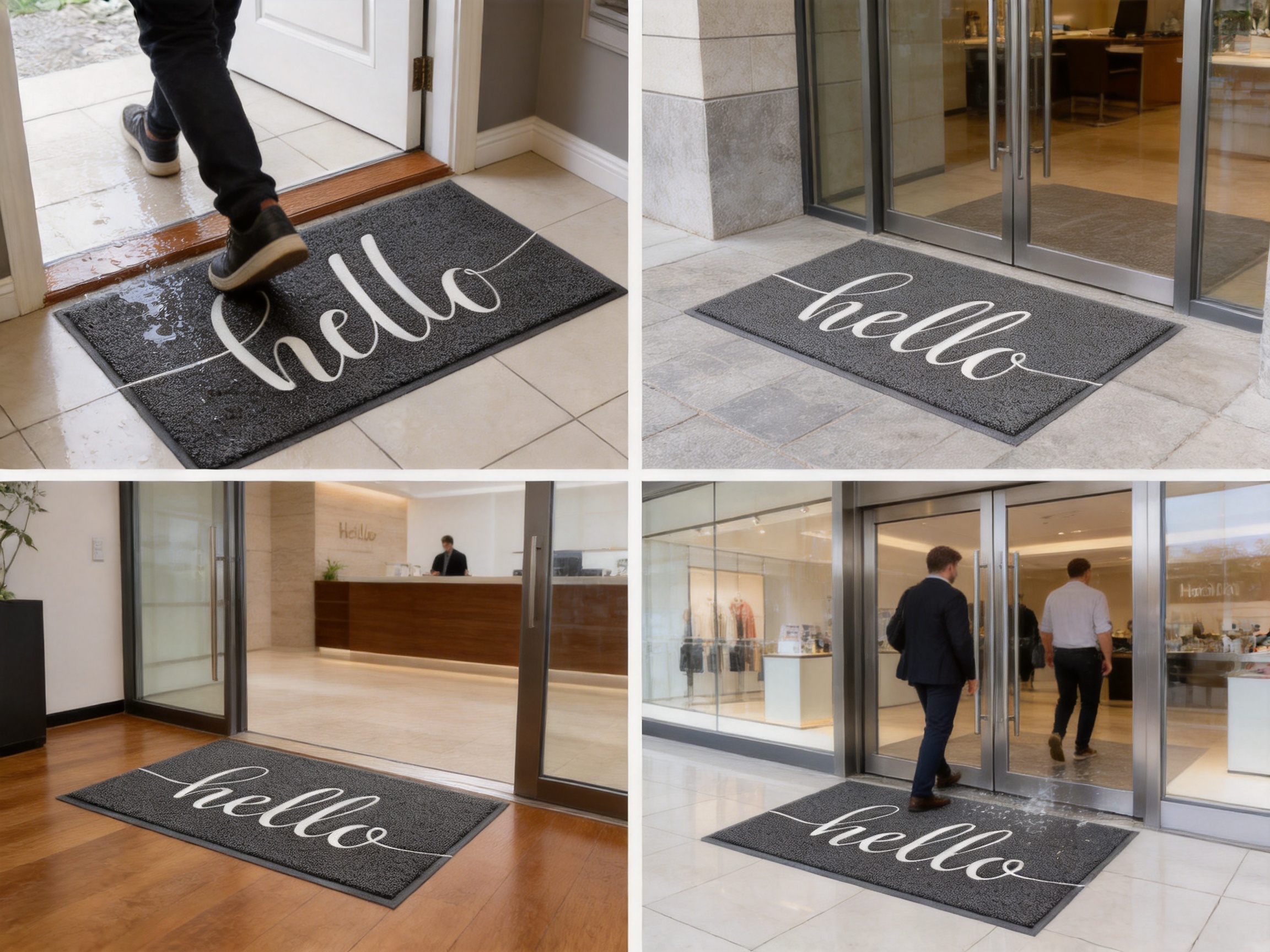
In homes and apartments, the mat can be placed inside or outside the main door to capture dirt and water before it reaches interior flooring. The standard sizes are suitable for common entryways, while custom dimensions can be considered for larger porches or wide openings. Its washable surface is useful for households with children, pets, or frequent visitors.
Office entrances often experience concentrated traffic during opening hours, lunch periods, and changes in weather. A stable, water-absorbent mat can help maintain a cleaner entrance and reduce the amount of moisture carried into reception areas, corridors, and workspaces. Solid colors can support a professional and understated appearance.
Hotels, restaurants, serviced apartments, and event venues need products that combine visual consistency with easy maintenance. Mats may be used at lobby doors, staff entrances, guest facilities, kitchens, and service areas. The ability to order custom dimensions can help accommodate different entrance layouts within one project.
Retail entrances are exposed to continuous foot traffic and are often judged by their cleanliness. A door mat with a textured surface can help remove dust and water, while its solid color can complement store fixtures and branding without creating a visually distracting pattern.
The product’s water-washable surface and moisture-resistant backing make it suitable for selected kitchen, laundry, utility, and service areas. In these locations, users should ensure that the mat lies flat and does not obstruct equipment, cabinets, or doors.
The mat can also be used near bathroom entrances or other areas where wet footwear is common. The absorbent surface can help manage small amounts of water, while the PVC backing helps reduce moisture transfer to the floor. It should be cleaned and dried regularly in humid environments.
The 40 × 60 cm size is convenient for compact entrances, apartment doors, bedrooms, balconies, and secondary access points. It provides a focused area for wiping footwear without occupying excessive floor space.
The 50 × 80 cm size offers a broader cleaning zone and is suitable for many residential entrances, offices, and small commercial doorways. It can accommodate more than one foot placement and provide improved coverage at frequently used doors.
The 60 × 90 cm size creates a more generous entrance surface for larger residential doors, shop entrances, hotel access points, and high-traffic locations. It gives users more room to step onto the mat and can help reduce the amount of dirt and water transferred beyond the threshold.
Custom sizing is appropriate when the entrance has unusual dimensions, when several mats need to align along a wide opening, or when a project requires consistent coverage across multiple areas. Before ordering, buyers should measure the available floor area, door swing, threshold height, adjacent flooring, and clearance around the entrance.
The floor beneath the mat should be clean, dry, and reasonably level. Dust, grease, or loose debris can reduce contact between the backing and the floor. The mat should be placed flat, with its edges fully extended and free from folds or curled corners.
Doors should be opened and closed several times after installation to confirm that the mat does not interfere with movement. If the door scrapes the surface, a thinner specification or a different placement may be necessary. In public spaces, the mat should be checked regularly to ensure that it remains flat and properly positioned.
When used outdoors, the mat should ideally be placed in a sheltered or partially protected area. It is designed for indoor and outdoor use, but prolonged exposure to standing water, harsh weather, heavy mud, or extreme sunlight may increase cleaning requirements and affect the service life of any textile product.
For larger commercial installations, multiple mats may be arranged in sequence. An outer mat can remove coarse debris, while an inner absorbent mat can manage remaining moisture. The Silk Loop Solid Door Mat can serve as an effective component in such a system, particularly where a softer and more presentable interior surface is required.
Daily or frequent shaking helps remove loose dirt before it becomes embedded. Vacuuming may be used when suitable for the mat and the surrounding environment. A soft brush can assist with cleaning the loops, but aggressive scraping should be avoided because it may damage the textile surface.
When washing is necessary, use clean water and avoid harsh chemicals unless they are confirmed to be compatible with polyester and PVC. Excessive chemical exposure may affect color, surface feel, or backing performance. After washing, allow the mat to dry fully in a ventilated area.
Do not place a saturated mat on delicate flooring for an extended period. Although the PVC backing helps reduce water penetration, moisture can remain around the edges or beneath the product if it is not dried correctly. Periodic lifting of the mat allows the floor below to be inspected and ventilated.
In commercial environments, maintenance personnel should record cleaning schedules and inspect high-traffic areas regularly. Early attention to worn edges, surface damage, or backing separation can help prevent safety and appearance issues.
The product is suitable for wholesale supply and project-based purchasing. Standard sizes allow distributors and retailers to maintain commonly requested inventory, while custom dimensions support contract orders and specialized applications. Buyers can discuss color requirements, packaging, labeling, quantities, and production schedules with the manufacturer.
Custom services are especially relevant to hotel groups, property developers, office furniture suppliers, home goods retailers, and commercial interior contractors. These customers may require consistent products across many locations or need a particular size to match a building plan.
Having access to weaving, dyeing or printing, and finished processing facilities can simplify the customization process. Product development teams can coordinate with production departments to review feasibility, confirm materials, and prepare samples. A clear technical specification should include dimensions, tolerance, weight, pile height, color reference, backing requirements, packaging, and inspection standards.
For repeat orders, buyers can establish an approved sample and production reference. This helps maintain consistency between shipments. It is also advisable to confirm whether changes in raw material, color, backing, or packaging have been made before each new production run.
A well-selected door mat can support more than basic cleanliness. It can reduce routine floor maintenance, improve the appearance of an entrance, and provide a more comfortable transition between outdoor and indoor areas. By capturing dirt and moisture at the point of entry, it helps limit the spread of debris into rooms and corridors.
The product’s non-slip characteristics can also contribute to a more stable walking surface. This is valuable in homes, offices, and public facilities where users may enter with wet footwear. Safe use still depends on correct placement, suitable floor conditions, regular inspection, and prompt removal of excessive moisture.
The mat’s solid design and standard rectangular shape make it easy to include in entrance planning. It can be used as a standalone mat in a home or as part of a coordinated system across several commercial entrances. Its washable construction supports practical maintenance, while the polyester and PVC combination provides a balance between comfort and protection.
The mat uses polyester for the upper textile surface and PVC for the backing. The polyester surface provides a textured loop structure for dirt removal and water absorption, while the PVC backing supports stability and helps reduce moisture transfer to the floor.
Standard sizes include 40 × 60 cm, 50 × 80 cm, and 60 × 90 cm. Custom dimensions are also available for buyers with special entrance layouts or project requirements.
Yes. The product is specified for indoor and outdoor use. For outdoor placement, a sheltered location is recommended where possible, and the mat should not be left in prolonged standing water or exposed to unusually harsh conditions without appropriate care.
The listed pile height is 7 mm. This provides a practical balance between surface depth, comfort, dirt capture, water absorption, and door clearance. Buyers should confirm the complete finished thickness when checking compatibility with a specific doorway.
Yes. Water washing is listed as the care instruction. Loose dirt can be shaken or brushed away, and the mat can be washed when deeper cleaning is required. It should be dried completely before being placed back on the floor.
The PVC backing is designed to provide non-slip support and help prevent shifting or skidding. Performance depends on the condition of the floor, correct placement, cleanliness, and the amount of moisture present. The mat should always be positioned flat on a suitable surface.
The soft PVC loop and textile surface create friction against footwear. This helps loosen dust and dirt while also absorbing water from wet shoes. The loop structure provides a more functional entrance surface than a smooth, non-textured fabric.
The 2,600 gsm weight, bonded construction, polyester material, and PVC backing are intended to support repeated use. The product may be used in offices, retail stores, hotels, homes, and other high-traffic settings. Cleaning and routine inspection remain important for long-term performance.
Custom dimensions are available, and buyers can discuss project-specific requirements with the manufacturer. Depending on the order, customization may include size, color, packaging, labeling, and other production details.
The supplier operates weaving, dyeing or printing, and finished carpet processing facilities. It also has a team of more than 20 fabric engineers and develops new carpet fabrics based on market trends and customer needs. This integrated production model supports product development, quality coordination, and customized manufacturing.
The company states that it invests in sustainable materials and production methods, including recycled polyester and water-saving dyeing technologies. It also states that it has passed OEKO-TEX® and GRS certifications. Buyers should request current documentation for the specific product and order.
It can be used at residential doors, offices, hotels, shops, kitchens, bathrooms, utility rooms, balconies, corridors, and other areas where dirt or moisture needs to be managed. The selected size should match the available space and door clearance.
The Silk Loop Solid Door Mat is a practical entrance product that combines a dense polyester surface, loop construction, 7 mm pile height, bonded structure, and PVC backing. Its design addresses several common requirements at once: dirt removal, water absorption, floor protection, stability, comfort, appearance, and convenient maintenance.
Compared with lightweight decorative mats, it offers a more substantial and stable construction. Compared with hard non-absorbent mats, it provides a softer textile surface with useful water-management performance. Compared with very thin floor coverings, its higher weight and fuller surface provide a more functional cleaning area without becoming excessively bulky.
The manufacturer’s integrated textile capabilities strengthen the product’s commercial value. In-house weaving, dyeing or printing, finished processing, technical engineering, and supply chain coordination support consistent production and customization. The company’s stated investment in recycled materials, water-saving dyeing, and textile certifications also responds to the increasing demand for more responsible manufacturing.
For homes, commercial buildings, hospitality projects, retailers, and distributors, this door mat offers a flexible solution that can be supplied in standard or custom sizes. With appropriate placement and regular care, it can help maintain cleaner entrances, protect flooring from moisture, and provide a reliable first step into the building.
1. Product specification sheet for the Silk Loop Door Mat, including material, size, weight, pile height, backing, construction, care, and usage information.
2. Manufacturer information supplied by Zhejiang Benyi Textile Technology Co., Ltd., including textile production capabilities, engineering resources, customization services, and supply chain structure.
3. General textile flooring maintenance principles covering routine cleaning, water washing, drying, and inspection of entrance mats.
4. General guidance on entrance mat design, dirt removal, moisture management, backing stability, and floor protection in residential and commercial buildings.
5. OEKO-TEX® textile safety certification information and general product testing principles.
6. Global Recycled Standard certification information and general recycled-material chain-of-custody principles.

ADD: No.75 Zhenyuan Road, Yuecheng District, Shaoxing City, Zhejiang Province, China 312000

Tel : +86-189 6750 9795

FAX : +86-0575-8803 2773

Email : fisher@benetextile.com

Copyright © Zhejiang Benyi Textile Technology Co., Ltd. All Rights Reserved. Carpets and Rugs Manufacturer

 English
 Français
 Deutsch
 عربى
عربى