

Shen Ruoxi — International Product Sales Executive
 Home / Author / Shen Ruoxi — International Product Sales Executive / How a 970 GSM Faux Wool Throw Blanket Combines Luxury Comfort, Practical Performance, and Advanced Textile Manufacturing
  2026.08.11
 Shen Ruoxi — International Product Sales Executive
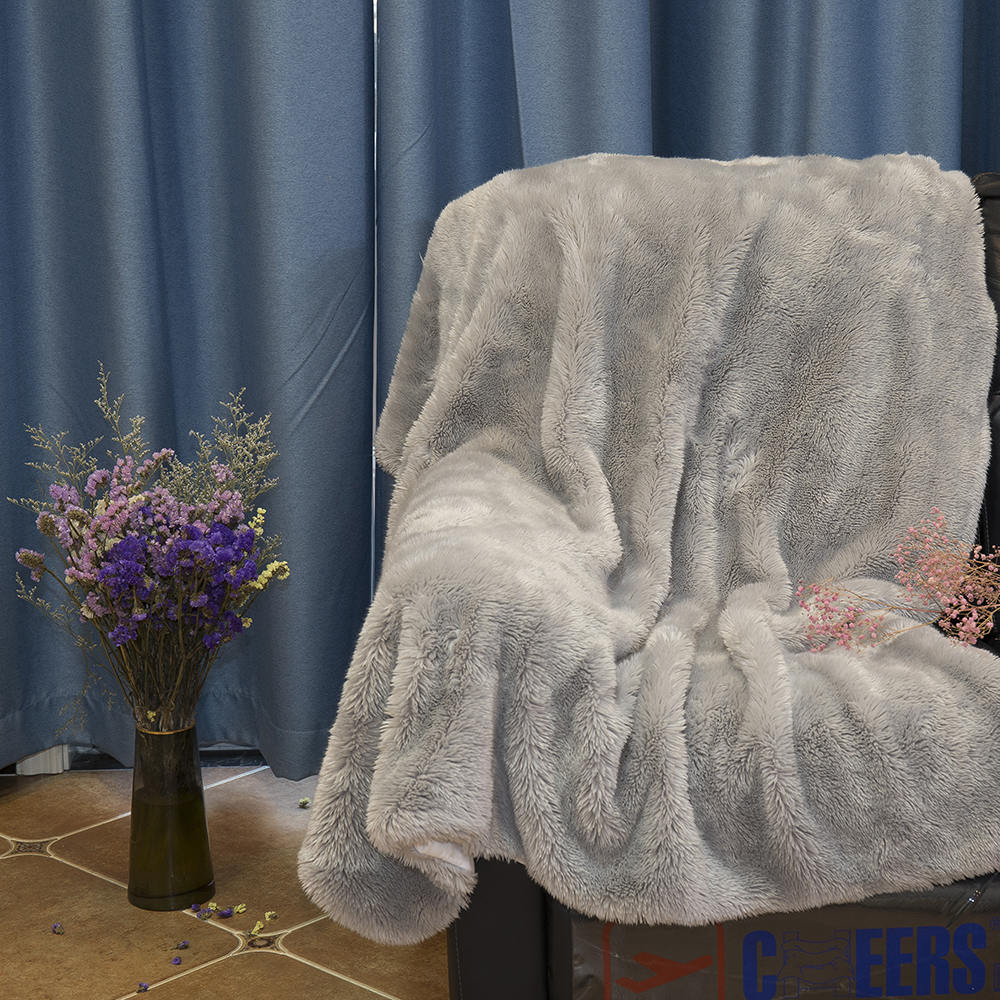
A throw blanket is one of the simplest ways to improve comfort in a home, hotel, office, or travel setting. Yet not every blanket delivers the same combination of warmth, softness, durability, appearance, and easy care. The Roll Bundle Faux Wool Throw Blanket is designed to bring these qualities together in one versatile textile product. Made from 100% polyester microfiber, it uses a substantial 970 GSM construction, a double-layer structure, and a combination of long and short pile heights to create a noticeably plush and insulating surface.
Unlike lightweight throws that are mainly decorative, this blanket is designed for practical warmth. Unlike some heavy blankets that feel stiff or difficult to maintain, it is machine washable, wrinkle resistant, shrink resistant, and suitable for everyday use. Its solid-color styling also allows it to work across a wide range of interior environments, from modern living rooms and bedrooms to hotel suites, study areas, offices, and guest rooms.
The product is manufactured by Zhejiang Benyi Textile Technology Co., Ltd., a textile technology company based in Shaoxing, Zhejiang Province, China. Shaoxing is widely recognized as an important global textile manufacturing center. The company combines fabric development, weaving, dyeing and printing, and finished-product processing capabilities, giving it greater control over material consistency, production scheduling, quality management, and customization.
This article examines the blanket’s construction, comfort, appearance, care performance, application range, and competitive advantages. It also explains how an integrated manufacturing model can improve product reliability and why advanced textile production is important for buyers seeking a dependable wholesale or private-label blanket supply.
Roll Bundle Faux Wool Throw Blanket
Content
The Roll Bundle Faux Wool Throw Blanket is a knitted, double-layer blanket designed for year-round use. It is available in several dimensions, including 50 by 60 inches, 60 by 80 inches, 90 by 90 inches, and 90 by 110 inches. These options allow the product to serve multiple purposes, from a compact personal throw to a generous bed covering.
| Product name | Roll Bundle Faux Wool Throw Blanket |
| Material | 100% polyester microfiber |
| Weight | 970 GSM |
| Construction | Double layer with welt sewing |
| Weave type | Knitted |
| Pattern | Solid colors |
| Available sizes | 50 by 60 inches; 60 by 80 inches; 90 by 90 inches; 90 by 110 inches |
| Recommended uses | Sofa, bed, hotel, plane, office, study, and travel |
| Care instructions | Machine wash separately in cold water and tumble dry low |
| Special features | Soft, warm, washable, wrinkle resistant, shrink resistant, and anti-pilling |
| Seasonal suitability | All seasons |
| Age suitability | All ages |
The 970 GSM specification indicates a dense and substantial textile. GSM, or grams per square meter, is commonly used to describe fabric weight. A higher GSM generally means that more material is present in a defined area, although actual warmth and comfort also depend on fiber structure, pile height, layering, and finishing. In this product, the high fabric weight works together with the double-layer construction to produce a thick and enveloping hand feel.
The blanket is made from polyester rather than natural wool. This gives it a faux wool appearance and softness while avoiding several concerns sometimes associated with natural wool, including a tendency to feel scratchy, sensitivity to certain washing conditions, and a higher risk of shrinkage or shape change when improperly cared for. Polyester microfiber can be engineered for a smooth, fluffy, and consistent surface, making it suitable for a broad consumer audience.
Many low-cost throws are thin, loosely constructed, or designed primarily as decorative accessories. They may look attractive when folded on a sofa but provide limited insulation when used in a cold room. The 970 GSM construction of this blanket is intended to offer a more substantial alternative.
A heavier blanket can help create a stronger sense of warmth because the additional textile mass reduces the amount of open space through which body heat can escape. The dense structure also gives the blanket a fuller drape. Instead of sliding easily from the lap or appearing flat over a bed, a heavier throw can settle naturally over furniture and provide a more luxurious visual effect.
Weight alone does not determine quality. A poorly engineered heavy blanket may become rigid, uneven, or uncomfortable. The benefit of this design comes from the relationship between weight and softness. The use of microfiber polyester helps maintain a plush hand feel, while the knitted structure allows the fabric to retain flexibility. As a result, the blanket can feel cozy without becoming excessively stiff.
For retailers, a high-GSM product can occupy a premium position in a blanket collection. It can be presented as a substantial comfort product rather than a basic seasonal accessory. For hotels and hospitality businesses, the heavier construction can support a more upscale guest experience. For consumers, it offers a practical layer for cold evenings, air-conditioned offices, long flights, and quiet relaxation at home.
The blanket uses a double-layer construction, which is one of its most important functional features. Two connected textile layers provide greater thickness and surface coverage than a single-layer throw. This structure also supports the product’s reversible softness, allowing users to enjoy a comfortable surface from either side.
The two layers are designed with different pile heights. The combination of long and short pile creates visual and tactile variation while helping the blanket feel deeply plush. The longer pile contributes to a fluffy, luxurious surface, while the shorter pile can provide a more stable and manageable underside. This balance is useful because an entirely long-pile blanket may be difficult to fold, clean, or keep in position, while an entirely short-pile blanket may not provide the same level of softness.
Double-layer construction can also help the blanket maintain its form during normal use. When a throw is repeatedly folded, draped, gathered, and washed, the connection between layers becomes important. Welt sewing is used to finish and secure the edges. This type of edge treatment can create a neat perimeter while helping reduce fraying and separation at the boundary of the blanket.
The reversible design increases the number of ways the product can be displayed. A user may place one surface upward for a more textured appearance or reverse it for a different touch and visual effect. In commercial environments, this flexibility can make room styling easier. Hotels, furniture retailers, and home décor stores can use the same blanket in different arrangements without requiring multiple product styles.
Softness is a central reason consumers purchase plush throws. The blanket uses fine polyester microfiber to create a smooth surface that is comfortable against the skin. Microfiber construction can produce a dense, silky feel while supporting the fluffy appearance associated with faux wool.
The product is intended for use by people of all ages. It can be placed over the legs while reading, wrapped around the shoulders during an evening outdoors, folded at the foot of a bed, or used as an extra layer on a sofa. Its softness is also appropriate for guest rooms, where a blanket must feel inviting to a wide variety of users.
Warmth is provided through the combination of fabric weight, double layering, and pile structure. The long and short fibers create a surface with insulating depth, while the dense polyester base helps reduce the feeling of cold contact. This makes the blanket useful during winter, but its flexible dimensions and breathable textile handling also allow it to serve as a comfort layer during spring, autumn, or strongly air-conditioned summer conditions.
A blanket designed for all seasons does not need to be used in exactly the same way throughout the year. In winter, it may be placed over a duvet or used as an additional bed layer. In warmer months, it can remain on a sofa for evening use or be carried to an office where indoor air conditioning creates a cool environment. Its purpose is not limited to extreme weather; it is designed to provide convenient comfort whenever additional warmth is needed.
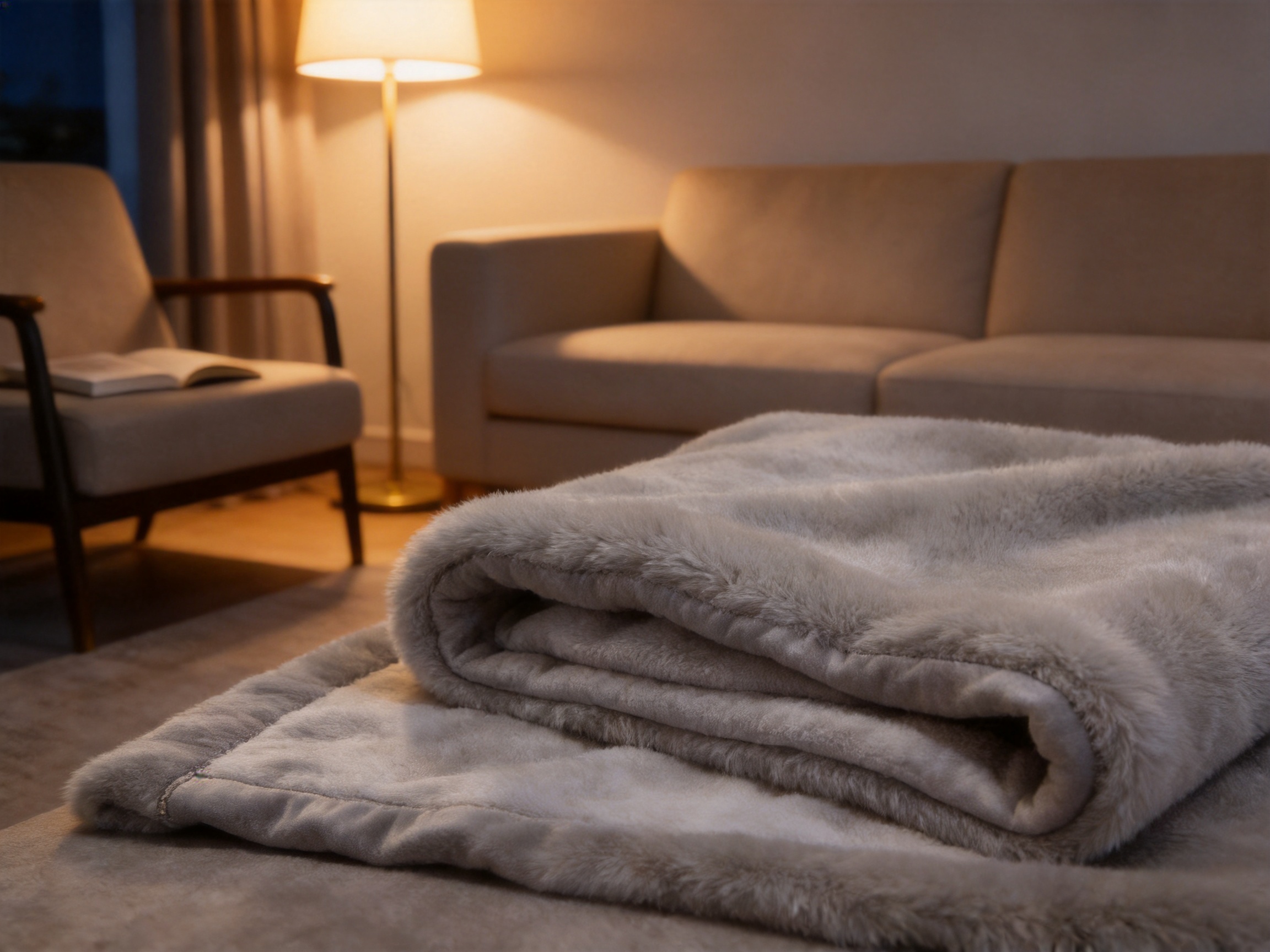
Faux wool offers the visual and tactile appeal of wool while allowing manufacturers to control the consistency of the finished textile. Natural wool can be valued for its warmth and heritage, but it may vary in fiber texture, require more careful cleaning, and feel uncomfortable to people who are sensitive to coarser fibers. A well-finished faux wool blanket can provide a smoother and more uniform experience.
Polyester microfiber also supports color consistency. Solid colors are a key part of this product’s design, and a controlled synthetic fiber system can help produce an even appearance across production runs. Consistent color is important for retailers ordering multiple units and for hospitality buyers who want coordinated room presentation.
Another advantage is daily practicality. The blanket is designed for machine washing, cold-water cleaning, and low-temperature tumble drying. This makes it easier to integrate into a normal household laundry routine than products that require special treatment. It is also useful in commercial environments where cleaning efficiency influences operating costs and turnaround times.
The faux wool structure is not intended to imitate every characteristic of natural wool. Its main purpose is to deliver plushness, warmth, attractive texture, and manageable care in a modern polyester format. For many buyers, this combination is more suitable than a traditional wool product, especially when the blanket is expected to be washed regularly or shared among different users.
Pilling occurs when loose fibers gather into small balls on the surface of a textile. It can make a blanket appear worn even when the underlying material remains usable. The product information identifies the blanket as anti-pilling, wrinkle resistant, shrink resistant, and colorfast through repeated use and washing.
These performance features are particularly valuable for a dense, plush blanket. Soft surfaces often receive frequent contact from clothing, furniture, hands, and pets, so resistance to surface deterioration affects the product’s perceived value. A blanket that retains a clean and attractive appearance over time is more likely to satisfy consumers and reduce replacement frequency.
Durability depends on appropriate care as well as material selection. Washing the blanket separately in cold water can help reduce friction with other garments, while low-temperature tumble drying can help protect the fibers and preserve the blanket’s shape. Avoiding excessive heat is especially important for synthetic textiles because high temperatures may affect surface texture or cause unwanted compression.
For commercial purchasers, the combination of anti-pilling performance and machine washability can simplify maintenance planning. Hotels, serviced apartments, offices, and furnished rental properties need textiles that can be refreshed without complex procedures. A blanket that is easy to wash and dry can contribute to faster room preparation and more consistent presentation.
The available size range allows the blanket to be positioned for different market segments. The 50 by 60 inch option is suitable as a personal throw for a chair, sofa, office, plane journey, or compact guest space. It is easy to fold and store and can be offered as an accessible entry-level size.
The 60 by 80 inch size provides greater coverage for individuals using the blanket on a bed or larger sofa. It can cover the upper body and legs more effectively while remaining relatively easy to handle. This size may appeal to consumers who want a flexible throw that is larger than a standard lap blanket.
The 90 by 90 inch and 90 by 110 inch options are designed for more extensive bed coverage or shared use. They can function as decorative bed layers, large sofa blankets, or hospitality textiles intended to provide generous coverage. Larger dimensions also make the blanket more suitable for couples, family use, or placement across wide furniture.
Offering multiple sizes is a competitive advantage because it allows retailers to create a complete product range under one design concept. Buyers can select different sizes according to room type, end use, and price level while maintaining a consistent material story and solid-color aesthetic.
| Size | Practical positioning | Typical use |
| 50 by 60 inches | Compact personal throw | Chair, lap blanket, office, plane, or travel |
| 60 by 80 inches | Medium comfort blanket | Sofa, single bed, guest room, or everyday home use |
| 90 by 90 inches | Large shared or bed covering | Double bed, wide sofa, or family use |
| 90 by 110 inches | Oversized premium blanket | Large bed, hospitality, or generous decorative layering |
The blanket is offered in solid colors rather than complex printed patterns. This design approach gives it broad compatibility with different decorating styles. It can complement minimalist interiors, contemporary apartments, traditional bedrooms, hotel rooms, reading lounges, and office environments.
Solid colors also help the blanket function as a supporting décor element. A neutral tone can soften a room without competing with furniture or artwork. A deeper shade can introduce visual warmth to a pale interior. A coordinated color can be folded on a sofa arm, placed at the end of a bed, or layered over a chair to create a deliberate styling effect.
For retailers, solid colors can simplify merchandising. A single product shape can be displayed in multiple colors, making it easier to build coordinated collections. Solid shades may also reduce the risk that a blanket will become visually outdated when interior trends change.
In hospitality environments, understated colors are often preferred because they can fit different room designs and appeal to a broad guest population. The blanket’s simple appearance allows the texture and fullness of the faux wool surface to become the main visual feature.
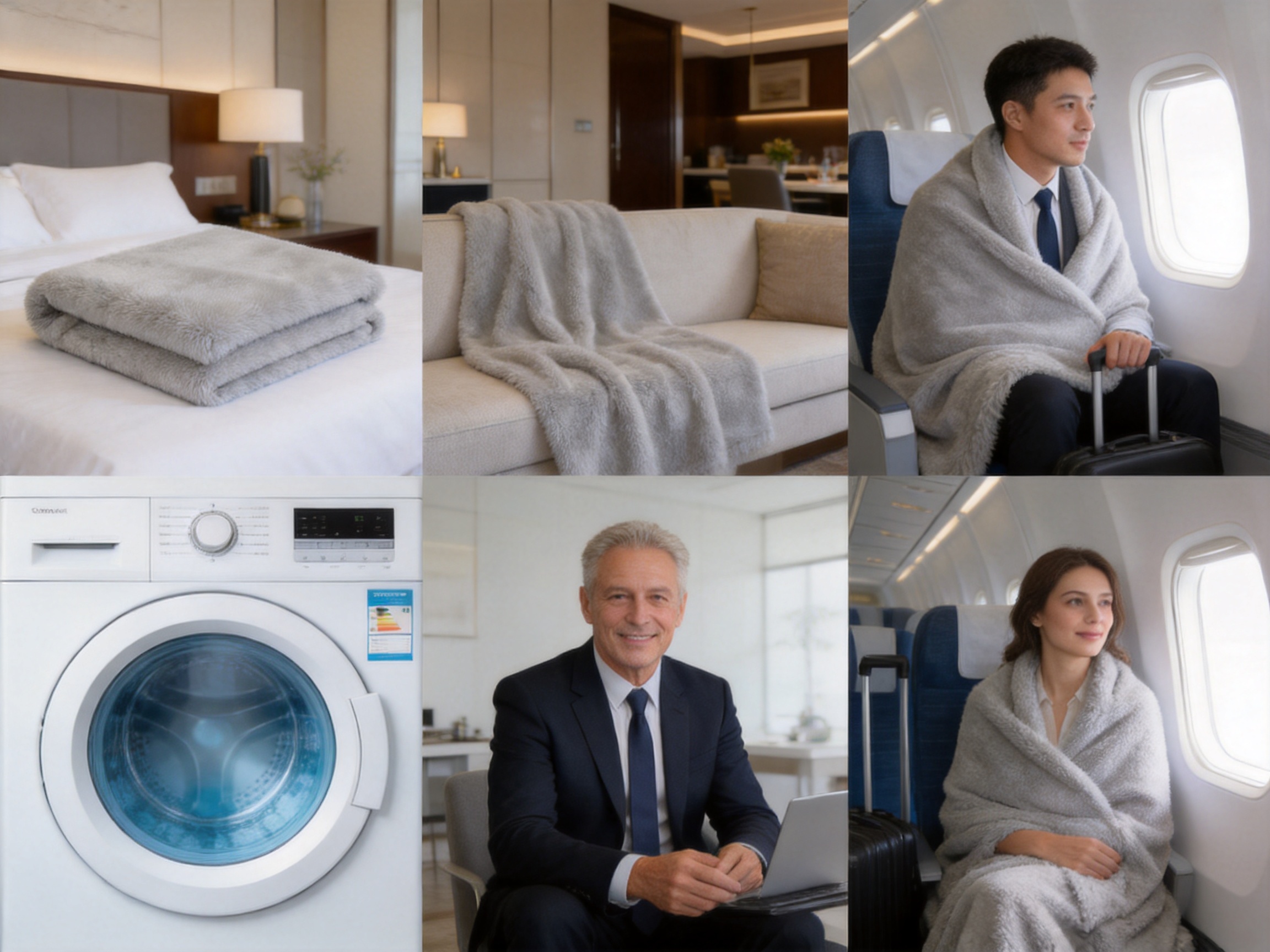
The blanket is designed to serve more than one environment. At home, it can be used on sofas, beds, recliners, reading chairs, and benches. Its plush construction makes it suitable for relaxation, while its solid appearance allows it to remain part of the room’s décor when not in use.
In bedrooms, the blanket can be placed over a duvet or folded at the foot of the bed. The larger sizes provide an additional warming layer, while the smaller sizes can be assigned to individual sleepers or kept on a chair. Its faux wool appearance adds depth to bedding arrangements without requiring an elaborate pattern.
Hotels can use the blanket in guest rooms, executive suites, lounges, and waiting areas. A soft, substantial textile can make a room feel more comfortable and thoughtfully equipped. Since the blanket is machine washable, housekeeping teams can incorporate it into established laundry processes. Buyers should always confirm their own laundering requirements and test the product under intended commercial conditions before large-scale deployment.
In offices, the blanket can be supplied in meeting rooms, reception lounges, private workspaces, and rest areas. Modern offices may experience uneven temperatures due to air conditioning, glass walls, or open-plan ventilation. A compact throw provides personal comfort without requiring changes to the entire building’s temperature settings.
Travel is another practical application. The smaller size can be used during plane journeys, road trips, or train travel. It can also be kept in a vehicle, guest room, or home office. Although a 970 GSM blanket is more substantial than a thin travel cover, its softness and warmth can be valuable during long periods in cold cabins or waiting areas.
For educational spaces, study rooms, and care environments, the blanket’s all-age suitability and washable construction may also be beneficial. Users can select an appropriate size based on whether the product is intended for individual comfort, furniture coverage, or shared use.
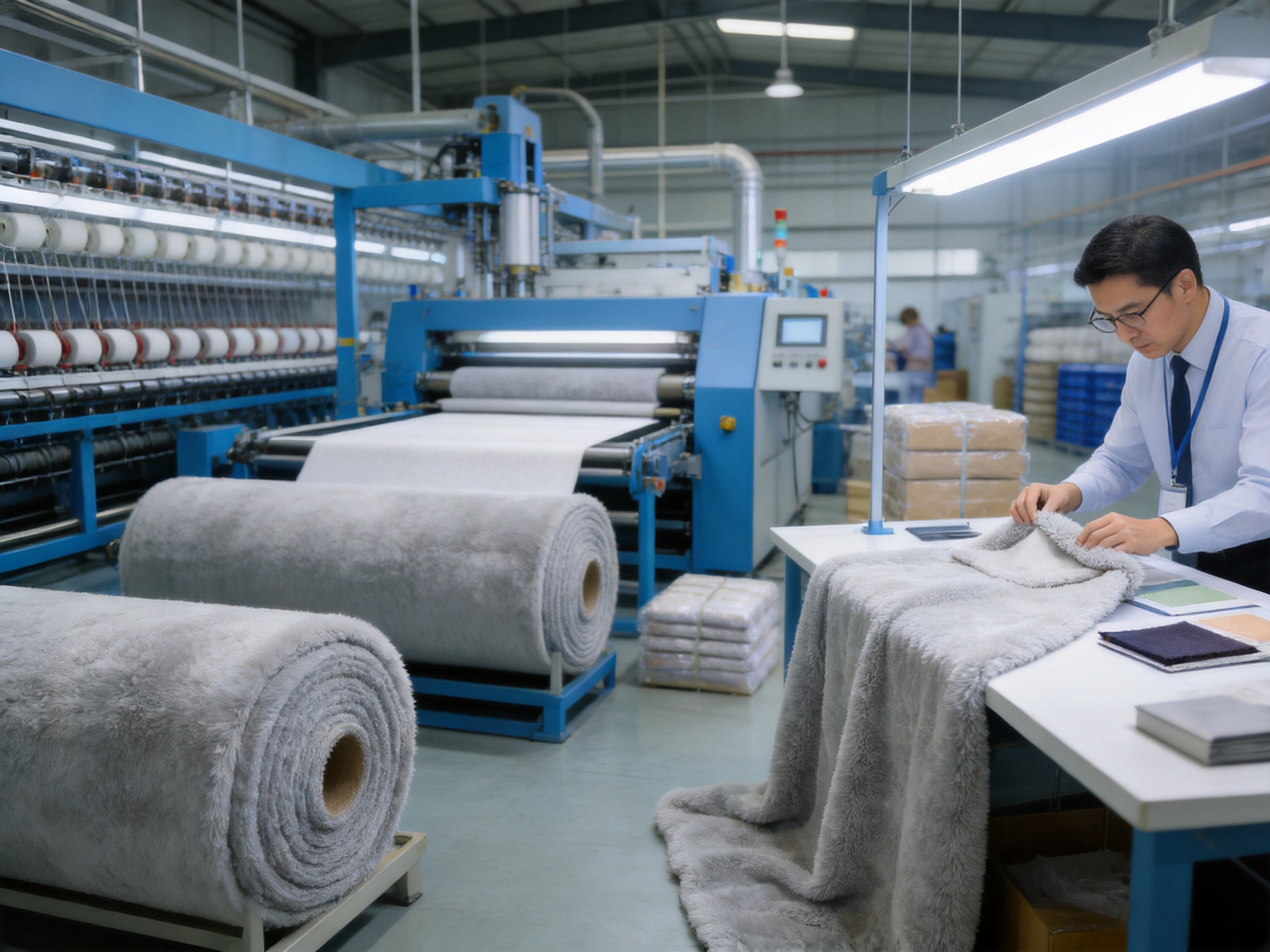
The product is supported by the manufacturing capabilities of Zhejiang Benyi Textile Technology Co., Ltd. The company is located in Shaoxing, a major textile production region with access to specialized labor, material suppliers, dyeing resources, weaving expertise, and finished-product processing services.
One of the company’s stated strengths is its ability to manage several stages of the production chain. It has its own weaving, dyeing and printing factories, and finished carpet processing factories. Although the featured product is a blanket, this broader textile infrastructure is relevant because it demonstrates experience in converting fibers and fabrics into finished consumer products.
An integrated production model can offer several advantages over a supply chain that depends entirely on unrelated outside vendors. When weaving, coloration, finishing, and final processing are managed within a coordinated system, technical information can move more efficiently between departments. Production issues may be identified earlier, and adjustments can be made with greater control over timing and specifications.
Integrated manufacturing can also support better lead-time management. Buyers of wholesale textiles often need reliable delivery schedules for seasonal launches, hotel projects, retail promotions, and private-label programs. A company with greater control over production stages may be better positioned to coordinate material preparation, fabric development, sewing, inspection, and packing.
Quality control is another important benefit. Consistency in fabric weight, pile appearance, color, edge finishing, and dimensions requires attention at multiple points. When the manufacturer understands the whole process, it can establish clearer checkpoints from raw material selection through final product inspection.
The company has a team of more than 20 fabric engineers and develops new carpet fabrics each quarter according to market trends. This indicates an ongoing emphasis on textile research rather than reliance on a fixed product catalog. Experience in fabric development can support improvements in surface texture, color selection, weight, finishing, and production efficiency.
Although the company’s expertise includes carpets, rug fabrics, and finished carpet products, the same textile development principles can be applied to blanket production. Consumer preferences in home textiles change over time. Buyers may request softer surfaces, richer colors, different dimensions, altered pile heights, special packaging, or modified performance characteristics.
Customization is particularly important for distributors, hospitality groups, online retailers, and private-label brands. A manufacturer able to adjust specifications can help buyers create a product that is differentiated from generic marketplace offerings. Potential customization areas may include size, color, edge treatment, packaging format, labeling, and order composition, subject to technical review and minimum order requirements.
Product development should always balance appearance with manufacturability. A visually impressive surface must remain stable during sewing, washing, folding, packing, and transportation. The company’s combination of fabric engineering and finished-product processing can help evaluate these factors before a design is introduced at scale.
For wholesale customers, technical communication is essential. Clear specifications for GSM, dimensions, material composition, color standards, stitching, packaging, care labeling, and inspection requirements can reduce misunderstanding. A manufacturer with in-house technical personnel can provide more direct assistance during this process.
The company describes itself as a new textile technology company focused on making carpet production simpler and more efficient by combining the bottom and surface of textile products. This approach reflects a broader effort to improve the relationship between design, material usage, production cost, and finished-product performance.
Efficiency does not simply mean producing more units quickly. In a high-quality textile operation, efficiency also involves reducing unnecessary handling, improving material utilization, minimizing defects, stabilizing production parameters, and coordinating delivery. These improvements can help manufacturers offer competitive pricing without sacrificing the characteristics that define a premium product.
For the faux wool blanket, process efficiency may support more consistent production of double-layer fabric, edge sewing, color batches, and final packaging. It can also make it easier to repeat a successful specification across different sizes and production orders.
Manufacturing efficiency is especially significant for buyers comparing products from different suppliers. A low unit price may not represent good value if the supplier delivers inconsistent color, irregular dimensions, weak seams, delayed orders, or high defect rates. A technically organized manufacturer can create value through reliability as well as price.
The company states that it focuses on ecological and environmental protection and improving consumers’ health experiences. Its sustainability efforts include investment in recycled polyester, water-saving dyeing methods, and related production improvements. The company also states that it has passed OEKO-TEX and Global Recycled Standard certifications.
Environmental responsibility in textile manufacturing involves several connected areas. Fiber selection affects the origin and lifecycle of materials. Dyeing can influence water use and wastewater treatment. Energy consumption, packaging, transportation, and product durability also contribute to the overall environmental profile.
A durable blanket can support more responsible consumption because it may remain useful for a longer period before replacement. Anti-pilling performance, resistance to shrinkage, and color retention all contribute to service life. Machine washability can also reduce the need for specialized cleaning processes, although users should still follow the recommended washing temperature and drying instructions.
Recycled polyester is one potential pathway for reducing dependence on virgin petroleum-based inputs. However, sustainability claims should be evaluated according to the exact material composition, certification scope, and production batch. Buyers seeking recycled content should request specific documentation and confirm whether the intended blanket specification includes that material.
Water-saving dyeing technologies may help reduce the amount of water required during coloration. Consistent dyeing is also important for product quality because uneven shades or excessive fading can lead to waste and customer dissatisfaction. Environmental improvements are most meaningful when they are combined with reliable quality systems and transparent documentation.
The first major advantage of this blanket over many lightweight throws is its substantial 970 GSM weight. A heavier construction creates a fuller appearance and a more comforting hand feel. It is better positioned for buyers seeking warmth and luxury rather than a purely decorative cover.
The second advantage is the double-layer structure. Single-layer blankets can be convenient and inexpensive, but they may provide less thickness and may appear less rich when displayed. The double-layer design helps create greater volume and supports reversible use.
The third advantage is the combination of long and short pile heights. This feature gives the surface a more dimensional texture and helps balance softness with practical handling. It distinguishes the product from flat fleece or basic knitted throws.
The fourth advantage is ease of care. Some premium-looking blankets require dry cleaning or delicate hand washing. This product is designed for machine washing and low-temperature tumble drying, making it more suitable for frequent use and shared environments.
The fifth advantage is the range of sizes. Buyers do not have to choose between only a small personal throw and a single oversized blanket. Multiple dimensions support product segmentation and different end-use requirements.
The sixth advantage is manufacturing integration. The company’s control over weaving, dyeing and printing, and finished-product processing can support more consistent quality and more responsive customization than a trading company that simply purchases finished goods from multiple unrelated factories.
| Evaluation area | Potential limitation of basic throws | Product advantage |
| Warmth | Thin construction may provide limited insulation | 970 GSM weight and double-layer structure support stronger warmth |
| Surface feel | Flat or coarse fabric may feel ordinary | Microfiber and varied pile heights create a plush hand feel |
| Appearance | Lightweight throws may look narrow or insubstantial | Dense construction creates fuller drape and premium presentation |
| Care | Special cleaning may increase inconvenience | Machine-washable design supports routine maintenance |
| Product range | Limited sizing restricts market applications | Four size options serve personal, bed, hospitality, and shared uses |
| Supply capability | Fragmented sourcing can affect consistency | Integrated textile production supports coordinated quality and lead time |
Correct care helps preserve the softness, pile appearance, color, and shape of the blanket. The recommended process is to wash it separately in cold water. Separate washing reduces contact with rough fabrics, zippers, hooks, and other items that may create unnecessary friction.
A low-temperature tumble-dry setting is recommended after washing. Excessive heat can affect synthetic fibers and may flatten the pile or alter the surface feel. The blanket should be removed promptly after drying and folded or draped in a clean, dry place.
Users should avoid overloading the washing machine. A heavy blanket needs sufficient space for water and detergent to circulate properly. Overloading may lead to uneven cleaning and increased mechanical stress. A mild detergent is generally appropriate, while harsh bleaching agents should be avoided unless specifically approved for the fabric.
When storing the blanket for a long period, it should be completely dry before folding. Storage in a cool, dry area helps prevent unwanted odors and moisture-related issues. Compressing the blanket excessively for extended periods may flatten the pile, so loose folding is preferable when space allows.
For hospitality and commercial use, buyers may wish to establish a written care procedure. Staff should be trained on washing temperature, drying settings, load size, inspection, and storage. Regular inspection can identify loose threads or edge damage before the blanket is returned to service.
The product’s roll bundle concept can support attractive retail presentation and practical storage. A well-organized folded or rolled blanket is easier to display, count, transport, and place on shelves. Packaging can be adapted for retail, hotel supply, promotional programs, or private-label distribution according to buyer requirements.
For online retailers, the blanket’s main selling points are clear and easy to communicate: 970 GSM weight, faux wool softness, double-layer construction, multiple sizes, solid colors, machine washability, and all-season use. Product photography and descriptions should show the pile texture, edge finishing, scale, and available dimensions so that customers can make informed decisions.
For physical stores, the blanket can be displayed on furniture or folded in a stacked color arrangement. Allowing customers to touch the fabric is useful because softness and thickness are important purchasing factors. A specification card can explain the material, GSM, size, and care instructions.
Wholesale buyers may use the product in home textile collections, seasonal gift programs, bedding assortments, hotel supply catalogs, furniture packages, office comfort programs, or travel accessory ranges. Because the product is suitable for several environments, it can reach multiple sales channels without requiring a completely different manufacturing platform.
Private-label buyers should discuss branding, packaging, labels, color matching, carton specifications, quality standards, and delivery schedules in advance. A clear technical brief helps the factory confirm feasibility and prepare an accurate quotation.
Before placing a large order, buyers should evaluate representative samples. Important checkpoints include fabric weight, overall dimensions, softness, pile uniformity, color consistency, stitching quality, edge alignment, shrinkage after washing, and resistance to pilling.
Because the product is double layered, buyers should inspect the connection between layers. The layers should remain properly aligned, and the edge should be finished neatly without excessive loose threads. Welt sewing should create a stable and clean boundary around the blanket.
Color evaluation should be performed under consistent lighting. Solid-color textiles may show differences between production batches if dyeing conditions are not carefully controlled. Buyers with existing home décor collections should provide an approved color standard whenever possible.
Dimensional tolerance should be agreed before production. Textile products can experience minor changes during finishing and washing, so specifications should distinguish between nominal size and acceptable tolerance. The same principle applies to GSM, especially when the blanket is marketed using a specific weight claim.
Wash testing is especially important for a plush product. A sample should be washed according to the recommended instructions and inspected for shrinkage, color change, pile loss, seam separation, and changes in hand feel. Commercial buyers may conduct additional testing based on their own laundry systems.
Packaging should also be checked. The blanket should be protected from moisture, dirt, compression damage, and odor during storage and transportation. Carton markings, quantity per carton, and product identification should be confirmed to reduce warehouse errors.
A high-quality design can still fail if the manufacturing partner cannot maintain consistency. Blanket buyers should therefore evaluate more than product photographs or a single sample. They should consider factory capabilities, technical communication, material control, production capacity, quality systems, customization experience, and delivery performance.
Zhejiang Benyi Textile Technology Co., Ltd. presents itself as a manufacturer with control across multiple textile stages. Its own weaving, dyeing and printing, and finished-product processing facilities can provide a more coordinated foundation for supplying textile goods. Its fabric engineering team supports continued development, while its focus on sustainability addresses growing market interest in responsible production.
The company’s location in Shaoxing provides access to a mature textile ecosystem. This can be valuable when buyers require specialized fibers, color development, fabric finishing, sewing resources, packaging materials, or rapid sampling. A strong regional supply network can also help support production flexibility.
For international customers, the most useful supplier relationship is one based on clear expectations. Buyers should communicate intended application, target market, required certifications, packaging needs, estimated annual volume, delivery destination, and inspection standards. Manufacturers can then recommend suitable materials, sizes, construction details, and production methods.
The blanket is made from 100% polyester microfiber. The material is engineered to provide a soft, fluffy, faux wool-like surface while supporting practical machine washing and everyday durability.
GSM means grams per square meter and describes the approximate weight of the textile. A 970 GSM blanket is substantially heavier and denser than many lightweight throws. Its warmth also depends on the double-layer structure, pile height, and fiber construction.
Yes. The substantial weight, double-layer construction, and plush pile are designed to provide strong warmth during cold weather. It can be used alone, over bedding, or as an additional layer on a sofa or chair.
Yes. The blanket is intended for all-season use. During spring, autumn, or summer in strongly air-conditioned spaces, it can provide a comfortable layer without requiring a change in bedding or room temperature.
Yes. The recommended care process is to wash the blanket separately in cold water and tumble dry it on a low setting. Users should avoid excessive heat and should not overload the washing machine.
The product is described as anti-pilling. This feature is intended to help preserve the smooth and attractive surface during normal use. Proper washing and low-temperature drying can further help protect the pile.
The product is described as shrink resistant. However, buyers should follow the care instructions carefully and conduct their own wash testing if the blanket will be used in a commercial laundry environment.
The listed sizes are 50 by 60 inches, 60 by 80 inches, 90 by 90 inches, and 90 by 110 inches. The smaller size is convenient for personal use, while the larger sizes can cover beds, wide sofas, or shared seating areas.
Yes. The double-layer construction provides reversible softness. The combination of long and short pile heights creates a varied tactile experience on the two surfaces.
Recommended applications include sofas, beds, hotels, airplanes, offices, studies, guest rooms, lounges, and travel. It can also be used as a decorative layer in residential and hospitality interiors.
The listed pattern is solid colors. This makes the blanket easy to coordinate with different furniture, bedding, curtains, rugs, and room décor.
Welt sewing is an edge-finishing method used to create a defined and reinforced perimeter. In this blanket, the construction helps provide a clean appearance and supports edge stability.
The manufacturer provides customized services according to customer requirements. Buyers should discuss possible adjustments to size, color, packaging, labeling, and other specifications with the production team before ordering.
The company states that it operates weaving, dyeing and printing, and finished carpet processing factories. It also has more than 20 fabric engineers and develops new textile fabrics according to market trends.
Yes. The company describes its focus on ecological protection and sustainability and states that it invests in recycled polyester, water-saving dyeing methods, and related production practices. It also states that it has passed OEKO-TEX and Global Recycled Standard certifications. Buyers should request current documentation for specific orders.
The Roll Bundle Faux Wool Throw Blanket is designed as a premium, practical, and adaptable comfort textile. Its 970 GSM weight gives it a substantial presence, while the double-layer structure and varied pile heights create warmth, softness, and reversible usability. The 100% polyester microfiber material supports a smooth faux wool feel, solid-color styling, and convenient machine care.
Its range of sizes allows the blanket to serve personal, residential, hospitality, office, and travel applications. Anti-pilling, wrinkle-resistant, shrink-resistant, and washable characteristics further strengthen its position against basic lightweight throws that may offer less warmth or require more complicated maintenance.
The product’s commercial potential is also supported by the manufacturer’s broader capabilities. Zhejiang Benyi Textile Technology Co., Ltd. combines fabric engineering, weaving, dyeing and printing, and finished-product processing within an integrated textile operation. Its Shaoxing location, technical team, sustainability initiatives, and customization services provide a foundation for wholesale buyers seeking consistent supply and product development support.
For retailers and project buyers, the blanket can serve as a dependable core item in a home textile or hospitality collection. For consumers, it offers a comfortable layer for everyday use across all seasons. By combining dense construction, soft microfiber, practical care, flexible sizing, and coordinated manufacturing, it represents a well-rounded alternative to thin, ordinary throws.
1. Product specification sheet for the Roll Bundle Faux Wool Throw Blanket, including material, weight, dimensions, construction, care instructions, and recommended uses.
2. Company profile of Zhejiang Benyi Textile Technology Co., Ltd., including textile production capabilities, engineering resources, factory integration, and customization services.
3. General textile industry reference materials concerning GSM measurement, knitted construction, microfiber polyester, pile height, and fabric durability.
4. General home textile care guidance concerning cold-water washing, low-temperature tumble drying, pilling prevention, and storage of plush synthetic blankets.
5. Sustainability information supplied by the manufacturer concerning recycled polyester, water-saving dyeing methods, OEKO-TEX certification, and Global Recycled Standard certification.

ADD: No.75 Zhenyuan Road, Yuecheng District, Shaoxing City, Zhejiang Province, China 312000

Tel : +86-189 6750 9795

FAX : +86-0575-8803 2773

Email : fisher@benetextile.com

Copyright © Zhejiang Benyi Textile Technology Co., Ltd. All Rights Reserved. Carpets and Rugs Manufacturer

 English
 Français
 Deutsch
 عربى
عربى