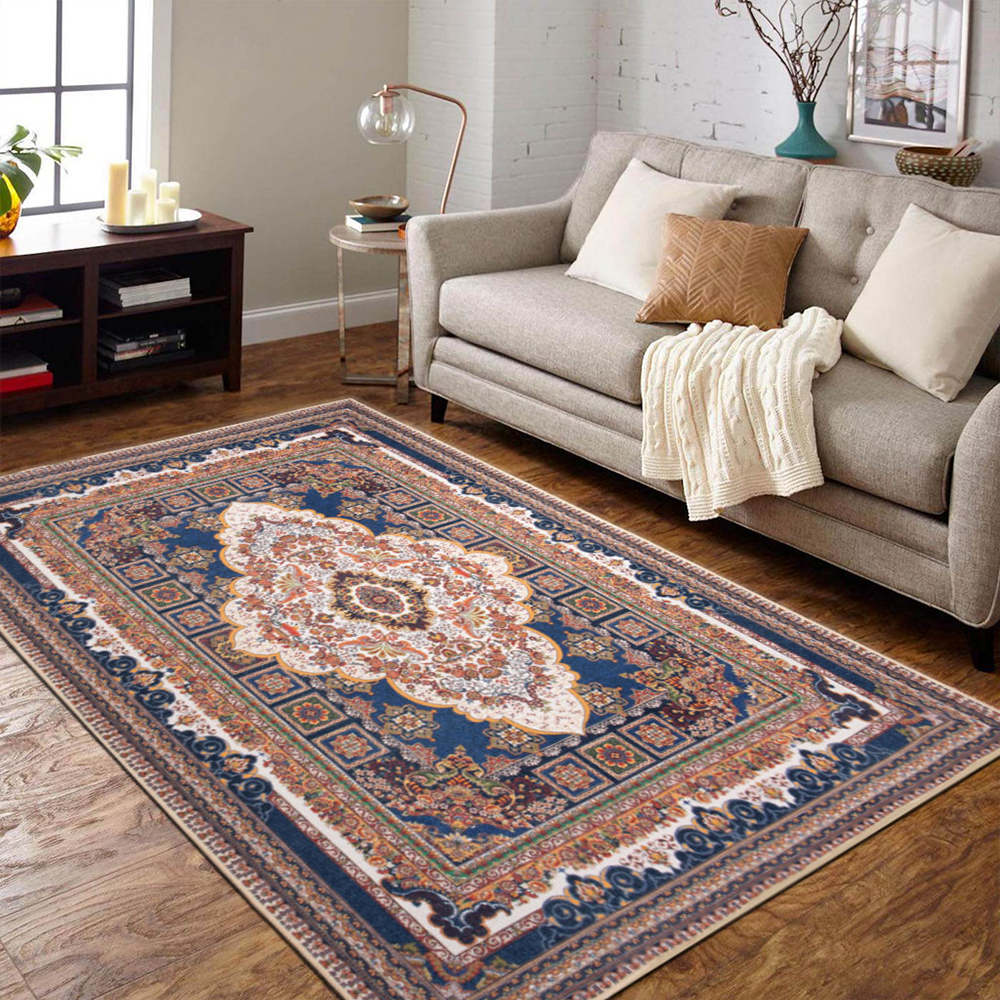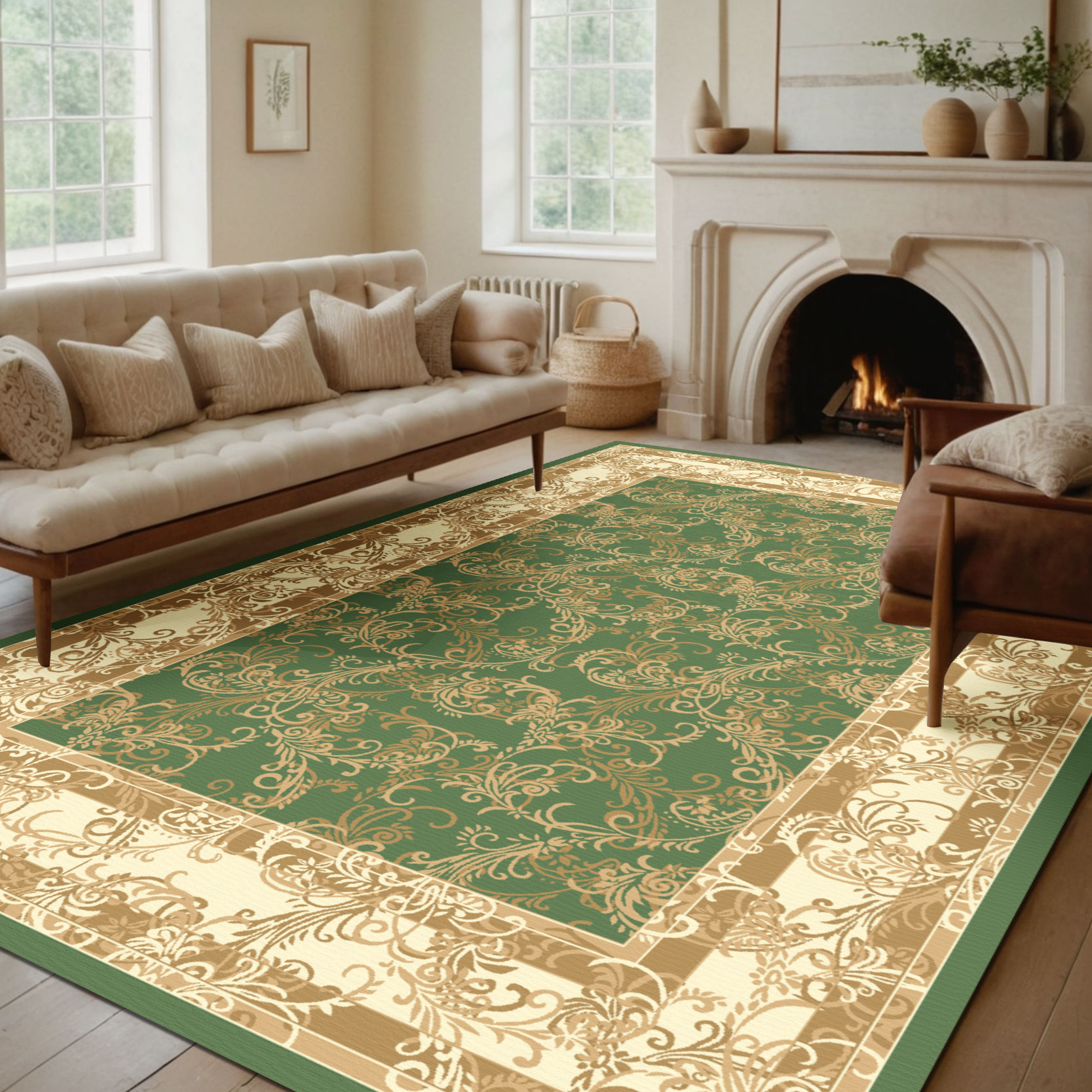


Shen Ruoxi — International Product Sales Executive
 Home / Author / Shen Ruoxi — International Product Sales Executive / Luminous Flannel Fleece Carpet Fabric: A Soft, Durable, and Versatile Material for Modern Home Textiles
  2026.08.09
 Shen Ruoxi — International Product Sales Executive
In the modern home textile market, fabric selection influences nearly every aspect of a finished product, including appearance, comfort, durability, production efficiency, safety, and customer satisfaction. Carpet manufacturers, rug brands, blanket suppliers, bath mat producers, and interior textile designers increasingly require materials that combine attractive design with reliable technical performance. Luminous Flannel Fleece Carpet Fabric has been developed to answer these needs through a combination of soft microfiber construction, practical dimensions, consistent coloration, and a distinctive luminous effect.
This fabric is made from 100% polyester microfiber and produced with knitted technics. Its 260gsm weight offers a useful balance between lightness and substance, while the approximately 5mm pile height creates a soft and comfortable surface. Available in widths of 170cm, 190cm, and 210cm, with customized widths also possible, the material can support a wide variety of manufacturing programs. The maximum width may reach 3.2 meters for selected requirements, giving manufacturers additional flexibility when planning large-format products.
Unlike ordinary solid-dyed fleece fabrics, this material has a luminous feature that allows it to glow gently in dark conditions after exposure to light. This visual effect can make finished rugs, carpets, blankets, and mats more distinctive. It may also contribute to improved visibility in bedrooms, hallways, children’s areas, bathrooms, and other low-light settings. The luminous surface is not simply a decorative novelty; it can become an important design element for brands seeking to develop products with a recognizable identity.
The fabric is supplied on a make-to-order basis, allowing production to be organized around customer requirements for color, width, quantity, and application. With a minimum order quantity of 500 kilograms per color, it is suitable for wholesale programs, private-label collections, retail development, and commercial home textile production. Rolls are used for packaging so that the material can be transported and prepared for subsequent cutting, sewing, lamination, backing, or finishing processes.
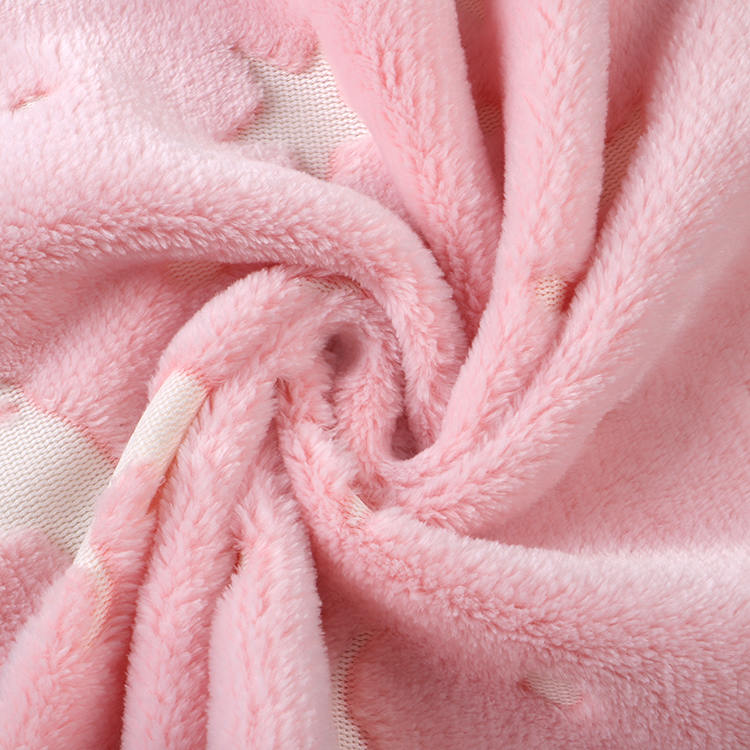
Luminous Flannel Fleece Carpet Fabric
Content
Luminous Flannel Fleece Carpet Fabric is a surface textile designed for conversion into finished soft home products. It combines the hand feel of flannel fleece with a carpet-compatible pile structure and a special luminous effect. Its construction makes it appropriate for applications where softness, visual appeal, and easy product development are important.
The material is knitted from polyester microfiber. Knitting allows the yarns to form a flexible textile structure that can provide softness and adaptability. Compared with some rigid or heavily structured carpet materials, knitted fleece fabric can be easier to cut, handle, sew, and convert into different product shapes. This makes it useful for manufacturers that produce more than one category of home textile from the same basic fabric platform.
The fabric has a solid-dyed appearance. Solid colors provide a clean and consistent visual foundation for modern interiors, promotional collections, and coordinated home textile ranges. Customers can select colors for seasonal collections, private-label programs, hospitality projects, children’s products, or specific room themes. The material can also be dyed to different colors according to production requirements, subject to technical confirmation and order conditions.
Its 5mm pile height gives the surface a noticeably plush touch without making the material excessively heavy. A moderate pile height is practical for many applications because it can offer cushioning and comfort while remaining relatively easy to roll, package, transport, and process. The result is a fabric that can serve both decorative and functional purposes.
| Specification | Details |
|---|---|
| Product name | Luminous Flannel Fleece Carpet Fabric |
| Item model number | 100046 |
| Material | 100% polyester microfiber |
| Weight | 260gsm |
| Pile height | Approximately 5mm |
| Available width | 170cm, 190cm, 210cm, or customized |
| Potential maximum width | Up to 3.2 meters for selected requirements |
| Production method | Knitted |
| Color approach | Solid dyed; custom color development available |
| Supply type | Make-to-order |
| Typical applications | Carpets, area rugs, blankets, bath mats, and related textile products |
| Minimum order quantity | 500 kilograms per color |
| Packaging | Rolls |
| Typical delivery time | 15–20 days, subject to order confirmation |
| Main features | Soft, durable, color-consistent, and luminous |
The choice of 100% polyester microfiber is one of the primary reasons this carpet fabric is suitable for large-scale home textile production. Polyester is widely used in floor coverings and soft furnishings because it offers a practical combination of durability, color adaptability, dimensional stability, and production reliability. Microfiber construction further improves the surface experience by creating fine fibers that can feel soft and smooth against the skin or underfoot.
For carpet and rug manufacturers, durability is essential. Finished products may experience repeated foot traffic, regular handling, transportation, vacuuming, and cleaning. A polyester-based fabric can provide a dependable foundation for products intended for everyday use. While the performance of a finished rug or mat also depends on its backing, stitching, edge treatment, and overall design, the face fabric plays an important role in maintaining appearance and comfort.
Polyester microfiber can also support fade-resistant product development when appropriate dyeing and finishing methods are used. Solid-dyed surfaces help maintain a uniform appearance across a production batch. This is valuable for brands that need multiple pieces to match within one collection, particularly for hospitality, retail, and coordinated home furnishing programs.
Another practical advantage is the material’s adaptability. Polyester fleece can be used in products that require a soft touch, flexible cutting, or a visually rich surface. It can be converted into an area rug, throw blanket, bath mat, floor mat, or decorative textile. This multi-application capability allows buyers to build product families around one dependable fabric source instead of sourcing a completely different material for every category.
Softness is a major purchasing factor in today’s home textile market. Consumers often judge a rug, blanket, or bath mat by how it feels during the first touch. The 5mm pile height and microfiber composition create a surface that feels comfortable while maintaining a manageable overall weight. At 260gsm, the fabric is substantial enough to support a premium tactile impression but not unnecessarily bulky for roll packaging and warehouse handling.
This balance is particularly valuable for online retail. Products that look attractive in product photography must also deliver a pleasing physical experience when received by the customer. A soft, plush surface can strengthen the perceived value of an otherwise simple solid-color design. It can also support the development of comfort-focused collections for bedrooms, lounges, bathrooms, and quiet relaxation spaces.
Flooring textiles and bath products must be designed for repeated use. The fabric’s polyester microfiber construction is intended to provide a strong foundation for products that may be exposed to routine friction, folding, storage, and cleaning. The knitted structure contributes flexibility, while the pile adds surface comfort and visual depth.
Manufacturers should select the appropriate backing, edge binding, and finishing method according to the final application. A decorative bedroom rug may require different construction details from a bathroom mat or commercial entrance product. The face fabric can serve as a versatile component, while the final performance should be validated through application-specific testing.
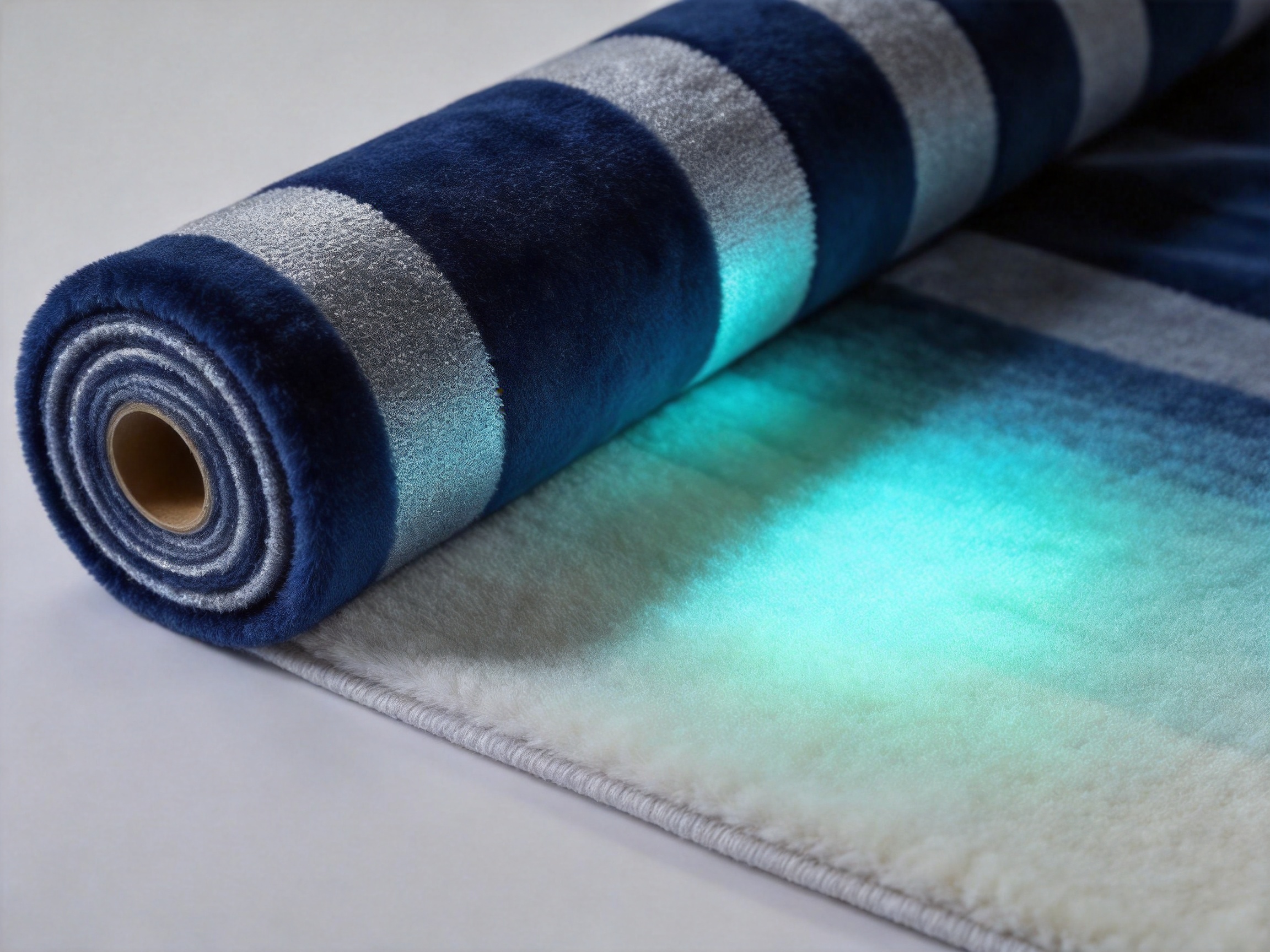
The most distinctive feature of this fabric is its ability to glow gently in the dark. After receiving sufficient light exposure, the luminous areas can become visible in low-light conditions. This effect introduces a new design possibility for carpet and home textile brands that want to move beyond conventional solid-color fleece products.
In a competitive market, differentiation is increasingly important. Standard fleece fabric can be soft and attractive, but many suppliers offer similar textures and color ranges. A luminous surface gives manufacturers an opportunity to create a product with an immediately recognizable selling point. It can be used subtly, allowing the glow to complement a room, or incorporated into playful patterns and themed designs.
The luminous feature may be particularly suitable for children’s rooms, nurseries, gaming spaces, entertainment areas, bedrooms, and creative interior projects. It can also be used in products designed for nighttime visibility, such as small mats placed near beds, hallways, or bathroom entrances. The feature is intended to provide a gentle visual effect rather than replace standard lighting or emergency illumination.
Product developers can use luminous fabric in several ways. A finished area rug may contain an entirely luminous surface, or only selected motifs may be made visible after dark. A blanket can use luminous yarns or surface sections to form stars, planets, animals, geometric patterns, or other decorative elements. A bath mat can combine a calm daytime color with a soft nighttime glow that adds an unexpected visual detail.
The fabric may also support coordinated collections. For example, a brand could create a bedroom range containing a luminous area rug, matching throw blanket, bedside mat, and cushion cover. A children’s collection could use several solid-dyed colors with different glow patterns. A seasonal collection could combine neutral daytime shades with luminous accents that become visible in the evening.
Because the base material can be dyed to different colors, product designers are not limited to one visual style. Soft white, gray, blue, green, pink, beige, and other color directions may be considered according to the intended market. Color development should be confirmed with laboratory dips, sample approval, and production testing before bulk manufacturing.
The visible intensity and duration of a luminous effect can depend on several factors, including the strength and duration of light exposure, the surrounding darkness, the amount of luminous material used, surface cleanliness, and the finished product’s construction. For this reason, buyers should evaluate samples under realistic use conditions.
Manufacturers can provide instructions explaining that the surface should be exposed to daylight or suitable artificial light before the luminous effect is viewed in darkness. Product packaging may include simple care and usage guidance. Clear communication helps customers understand that the fabric provides a decorative and visibility-supporting effect, while ordinary room lighting remains necessary for general illumination and safety.
The product category range includes area rugs, prayer mats, bath mats, kitchen mats, door mats, carpet fabric, blankets, and sofa cushions. Luminous Flannel Fleece Carpet Fabric is especially well suited to applications that benefit from softness, flexible cutting, and a visually distinctive surface.
Area rugs are one of the most direct applications for this material. The 5mm pile creates a comfortable surface for bedrooms, living rooms, study areas, children’s rooms, and relaxation spaces. The 170cm, 190cm, and 210cm widths can support different rug sizes, while customized dimensions may be planned for specific collections.
Brands can use solid colors for minimalist interior programs or create printed, cut, stitched, or appliquéd designs using the fabric as a base. The luminous feature can be emphasized through patterns or used as a subtle accent. Additional backing may be applied to improve grip and provide structural support according to the target market and end-use conditions.
Softness, portability, and a clean surface are important considerations in prayer mat development. This fleece fabric may be converted into lightweight or medium-weight prayer mats with carefully selected dimensions, edge finishing, and backing. A solid-dyed surface can support simple, understated designs, while the luminous feature may be incorporated into decorative borders or patterns where appropriate.
For prayer mat production, manufacturers should pay close attention to surface cleanliness, edge stability, colorfastness, and the selection of any anti-slip backing. Product design should respect the expectations of the intended market and should be tested for comfort during repeated folding and use.
Bath mats require a soft hand feel and a surface that is pleasant underfoot. The 5mm pile can create a comfortable step-out surface, while the polyester construction offers practical durability. The luminous effect can add a gentle nighttime design element, especially in bathrooms used by children or in homes where low-light visibility is useful.
Because bathrooms involve moisture, bath mat manufacturers should select an appropriate backing and evaluate drying behavior, dimensional stability, and cleaning performance. The face fabric is only one part of the finished product. Proper backing, edge construction, and care instructions are important for achieving reliable performance.
Kitchen mats are often selected for comfort during standing tasks and for their ability to coordinate with kitchen interiors. A soft fleece surface can create a warmer and more comfortable feel than a hard floor. Solid-dyed colors can match cabinets, walls, appliances, and other furnishings.
For kitchen use, buyers should confirm the suitability of the finished construction for exposure to crumbs, spills, oils, and frequent cleaning. A washable or easy-care backing system may be necessary. Luminous details can be used to create an attractive nighttime accent, but the product should not be positioned as a replacement for proper kitchen lighting.
Door mats may benefit from the fabric’s visual appeal, especially in residential interiors where the entrance area is part of the home’s decorative scheme. A luminous element can help create a welcoming effect after dark. However, entrance products exposed to outdoor dirt, abrasive particles, or heavy traffic may require a specialized backing and construction method.
For indoor entrance mats, the fabric may be used as a decorative top layer combined with a stable, non-slip base. Buyers should assess abrasion resistance and cleaning needs according to whether the product will be used in a private home, office, hotel, or retail environment.
The fabric’s soft microfiber surface is naturally appropriate for blankets and throws. Its moderate weight allows designers to create comfortable products that are easy to fold and package. A luminous throw blanket can offer a distinctive benefit for children, teenagers, themed rooms, and gift collections.
Blanket manufacturers can explore solid colors, contrast borders, jacquard-like visual arrangements created through cutting and sewing, or custom patterns developed for specific retail programs. The fabric may also be used as one side of a reversible product, with a different textile selected for the reverse side.
Sofa cushions can use the fabric as a soft decorative cover or as part of a cushion construction. Luminous accents may be suitable for casual interiors, children’s furniture, gaming rooms, and seasonal home décor. A cushion cover can be designed with a zipper, envelope opening, piping, or other finishing method based on the desired retail position.
For upholstery-related applications, manufacturers should verify seam strength, pilling behavior, colorfastness, and resistance to repeated compression. The fabric’s suitability depends on the intended level of use and the complete cushion design.
The supplier behind this fabric operates in Shaoxing, Zhejiang, a region widely recognized for its textile manufacturing resources and supply-chain depth. Its production structure includes weaving, dyeing and printing facilities, and finished carpet processing factories. This level of integration can help coordinate fabric development, coloration, finishing, and product conversion more efficiently than a fragmented supply model.
Vertical or semi-integrated production offers several potential benefits. It can improve communication between technical teams and production departments, reduce unnecessary transfer time, and make it easier to identify quality issues at an earlier stage. When a buyer requests a change in width, color, hand feel, pile specification, or finished application, integrated factory resources can support a more direct response.
The company has more than 20 fabric engineers and develops new carpet fabrics each quarter based on market trends. This continuing development program is important in a market where product buyers require more than standard commodity materials. The ability to develop new constructions can help brands respond to changing consumer preferences, sustainability objectives, room décor trends, and application requirements.
Manufacturing control is particularly important for carpet fabrics because the face material must work together with backing, cutting, stitching, edging, printing, and packaging. A supplier that understands both fabric production and finished carpet processing can provide more practical technical guidance than a company focused only on selling raw material.
Production control may include raw-material selection, knitting, dyeing, drying, surface inspection, width checking, roll formation, and shipment preparation. Each stage can influence the finished result. Consistent yarn quality supports a stable surface. Controlled dyeing helps maintain color uniformity. Careful inspection helps identify stains, holes, uneven pile, width deviations, or other concerns before the rolls are dispatched.
For wholesale buyers, this process can reduce the complexity of supplier coordination. Instead of managing separate companies for fabric, dyeing, and carpet conversion, buyers may communicate with a production partner capable of supporting several stages. This does not eliminate the need for quality inspection, but it can make order management more organized and transparent.
The make-to-order supply model allows production to be scheduled around confirmed customer requirements. This is useful for buyers that need custom colors, planned widths, or coordinated product development. It can also help avoid unnecessary inventory of colors or specifications that may not match current market demand.
Make-to-order production requires accurate communication. Buyers should confirm material composition, target weight, width, pile height, color standard, luminous effect, packaging, order quantity, and delivery schedule before bulk production begins. Sample approval is recommended, particularly when the finished product will be sold under a private label or included in a coordinated collection.
The listed minimum order quantity is 500 kilograms per color. This quantity is suitable for professional buyers planning wholesale distribution, retail programs, or multiple finished products from one fabric batch. A single color can potentially be used across rugs, blankets, mats, cushions, and other items, improving collection consistency and helping buyers use the production quantity efficiently.
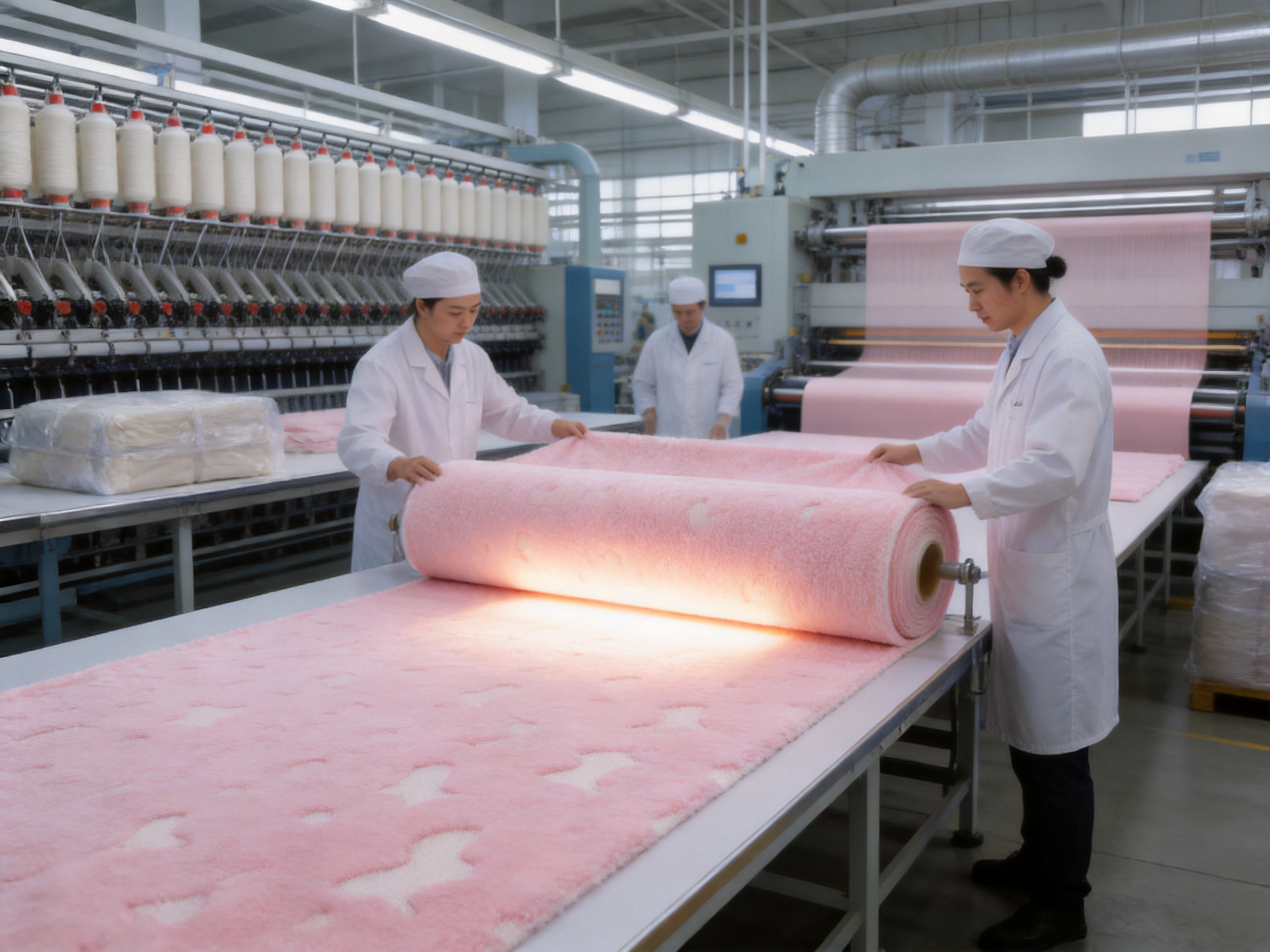
Consistency is one of the most important differences between a dependable textile supplier and an ordinary material source. Carpet fabric buyers need stable color, width, weight, pile height, softness, and surface appearance from one production batch to the next. Consistency supports predictable cutting plans, accurate product costing, and uniform finished goods.
Color control should begin with an approved standard. Depending on the buyer’s system, this may be a physical swatch, a recognized color reference, or an approved laboratory sample. Bulk dyeing should be compared against the approved standard under appropriate lighting conditions. Because luminous materials may appear different in daylight and darkness, both daytime color and nighttime effect should be evaluated.
Width is another important production factor. Available standard widths are 170cm, 190cm, and 210cm, while customized and wider formats may be considered. Accurate width information helps manufacturers calculate cutting layouts and reduce unnecessary waste. Large widths may be especially valuable for wide rugs, blankets, floor coverings, and products that require fewer seams.
Weight and pile height should also be monitored. A 260gsm target and approximately 5mm pile height provide the intended balance of softness and manageability. Buyers may request testing or inspection reports according to their quality-control procedures. Finished-product testing should be aligned with the intended use rather than relying only on general fabric inspection.
Before placing a large order, buyers may evaluate the fabric for colorfastness to rubbing, washing, and light; dimensional stability; pilling; abrasion; tensile strength; seam performance; and surface appearance after repeated handling. For bath mats and kitchen mats, moisture-related testing may be appropriate. For blankets, laundering and skin-contact comfort should receive special attention.
The luminous effect should be evaluated by exposing the material to a defined light source for a specific period and then observing it in a dark environment. A repeatable test method makes it easier to compare samples and communicate expectations. Buyers should also confirm whether the luminous effect is visible across the entire surface or concentrated in particular fibers, yarns, prints, or design sections.
Finished products may require additional tests after backing, sewing, printing, or washing. A fabric that performs well as a raw material may behave differently after conversion. Early prototype development helps identify such issues before production quantities are committed.
Material efficiency affects the total cost of every carpet or rug. The available width options allow manufacturers to select a format that matches their cutting plans. When the fabric width corresponds closely to the finished product dimensions, fewer seams may be required and offcut waste may be reduced.
The possibility of widths up to 3.2 meters can be valuable for larger products. Wide-format fabric may support oversized rugs, broad decorative panels, bed throws, and other applications that would otherwise require joining multiple pieces. Fewer joins can improve visual continuity and simplify some production processes.
Roll packaging supports efficient storage and handling. Rolls can be labeled by color, batch, width, and order number, helping warehouse teams organize incoming materials. Roll form also makes it easier to feed fabric into cutting and processing equipment. Buyers should confirm roll length, roll diameter, core specifications, and protective packaging requirements for their logistics systems.
A multi-application material can create additional efficiency. If one fabric is used for a rug collection and a matching blanket collection, the buyer may consolidate purchasing, color development, inspection, and shipping. Shared materials can also make brand collections look more coordinated, which may strengthen merchandising and cross-selling opportunities.
Environmental performance has become an important consideration for textile buyers, retailers, and consumers. The supplier describes a focus on ecological protection, consumer health experiences, sustainable materials, and water-saving dyeing methods. It also reports the use of recycled polyester in selected development programs and certification through OEKO-TEX® and GRS systems.
Certification claims should always be matched to the specific product, production site, and current certificate scope. Buyers should request relevant documentation and confirm whether the exact fabric model is covered. This is particularly important when products are marketed for children, bedding, bath use, or other applications involving extended skin contact.
Polyester itself can support long product life, which is one aspect of responsible product design. A durable textile that remains useful for a longer period may reduce the frequency of replacement. At the same time, polyester is a synthetic fiber, so end-of-life considerations, recycling options, and responsible production practices should be discussed as part of a broader sustainability strategy.
Water-saving dyeing methods may help reduce resource consumption during coloration. However, sustainability is a complete supply-chain issue involving raw materials, energy, water, chemicals, packaging, transportation, product lifespan, and disposal. Buyers should evaluate the information most relevant to their own environmental standards and customer communication policies.
Traditional carpet materials include cotton, wool, polypropylene, nylon, polyester, tufted fabrics, woven structures, and nonwoven surfaces. Each has different characteristics and may be appropriate for different end uses. Luminous Flannel Fleece Carpet Fabric is not intended to replace every carpet material. Its competitive advantage comes from combining a soft microfiber surface, moderate pile, flexible knitted construction, broad application range, and luminous design capability.
Compared with ordinary non-luminous fleece, this fabric offers a more distinctive product story. Compared with heavier carpet constructions, its 260gsm weight and roll format may make handling and conversion more convenient for selected products. Compared with natural-fiber materials, its polyester composition can provide a different balance of durability, color flexibility, and production scalability.
Compared with materials that are available only in fixed widths or standard colors, the customized width and dyeing options may give buyers greater control over product development. The ability to coordinate raw fabric and finished carpet processing can also provide a more integrated purchasing experience.
| Comparison factor | Luminous flannel fleece fabric | Potential buyer benefit |
|---|---|---|
| Surface feel | Soft microfiber fleece with approximately 5mm pile | Comfortable touch and plush underfoot experience |
| Visual effect | Solid-dyed appearance with a luminous feature | Distinctive products with nighttime appeal |
| Material | 100% polyester microfiber | Durability, color flexibility, and scalable supply |
| Construction | Knitted | Flexible handling and multi-application conversion |
| Width selection | 170cm, 190cm, 210cm, and customized options | Improved cutting and product planning |
| Large-format capability | Maximum width may reach 3.2 meters | Potentially fewer seams for broad products |
| Supply model | Make-to-order | Custom planning rather than dependence on stock colors |
| Product range | Rugs, carpets, blankets, mats, and cushions | One material platform for coordinated collections |
The correct comparison should always be based on the finished product and its intended environment. A high-traffic outdoor entrance mat may require a different material system from a bedroom rug. A blanket requires different testing from a kitchen mat. Nevertheless, the fabric’s broad flexibility gives product developers a useful starting point for many soft home textile categories.
A successful development program begins with a clear product brief. Buyers should define the intended product type, finished dimensions, target market, color direction, luminous expectations, backing requirements, packaging format, estimated annual volume, and applicable quality standards.
The next step is sample review. A fabric sample should be examined in daylight and darkness, touched for softness, measured for width and pile height, and tested for color accuracy. If the final product will be washed, backed, sewn, or printed, a prototype should be made using the intended production method.
Color approval is especially important for solid-dyed materials. Small differences in color can become visible when products are displayed together. Buyers should retain an approved standard and ensure that production teams understand the acceptable tolerance. For multi-product collections, all items should be compared under the same lighting conditions.
Once the sample is approved, the purchase order should specify all critical details. The order should identify the product model, composition, weight, pile height, width, color, quantity per color, packaging, delivery location, inspection requirements, and documentation. Any special luminous design requirement should be described clearly.
During bulk production, buyers may request pre-shipment inspection or production updates. Inspection can focus on roll appearance, width, weight, color, pile consistency, defects, packaging, labels, and quantity. For custom colors or large collections, retaining production samples can help with future repeat orders.
Care instructions should be developed according to the finished product rather than the raw fabric alone. A rug may require vacuuming and spot cleaning. A blanket may be machine washable under controlled conditions. A bath mat may need regular drying and washing. The selected backing may impose additional limitations.
Consumers should be advised to follow the care label, avoid unsuitable bleaching agents, and use appropriate washing temperatures. Product developers should test the actual finished item before printing care instructions. Clear care information helps preserve softness, color, shape, and luminous performance throughout the product’s useful life.
Customization is a central strength of this material program. Buyers can discuss width, color, application, and finished product requirements with a supplier that has experience in both fabric and carpet production. Customized service can support private-label brands, regional retailers, hospitality groups, e-commerce sellers, and designers working on specialized collections.
The supplier’s location in Shaoxing provides access to a broad textile ecosystem, including yarn, knitting, dyeing, finishing, printing, and product-processing resources. This environment can support faster technical communication and access to related production capabilities. The company’s focus on textile technology and quarterly fabric development also indicates an orientation toward ongoing product innovation rather than only standard catalogue supply.
Delivery is listed at approximately 15–20 days, subject to order confirmation. Actual timing may depend on color development, raw-material availability, order quantity, production scheduling, inspection, and shipping arrangements. Buyers should establish a confirmed production timeline before placing an order, especially when the fabric is part of a seasonal launch.
Packaging by rolls helps protect the material during transportation and keeps the fabric organized for later processing. Buyers with specialized warehouse or cutting equipment should discuss roll specifications in advance. Proper packaging, moisture protection, identification labels, and loading procedures can reduce avoidable logistics problems.
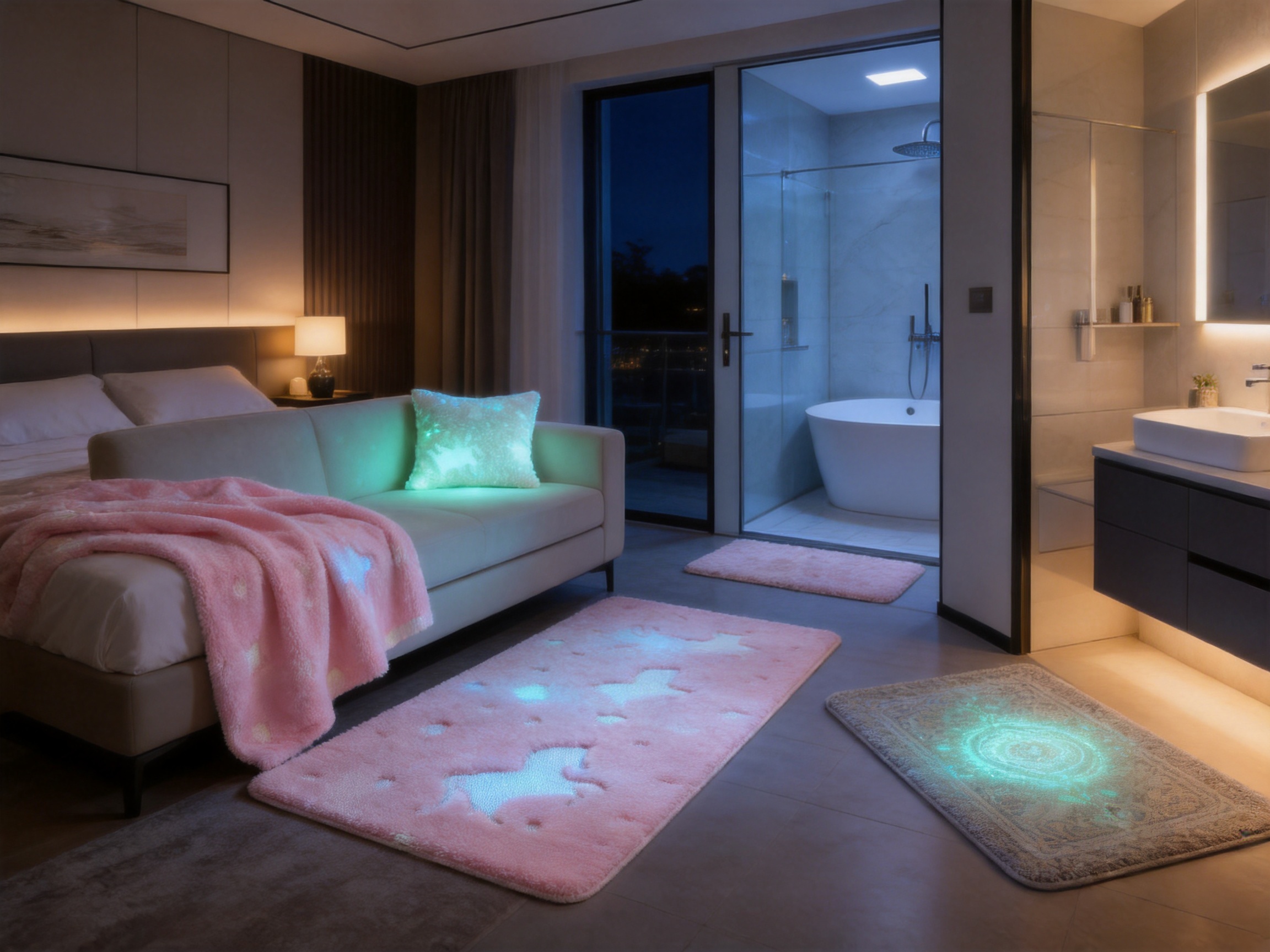
The fabric is made from 100% polyester microfiber. Its knitted construction and approximately 5mm pile height provide a soft surface suitable for carpets, rugs, blankets, bath mats, and related home textile products.
The fabric can glow gently in dark conditions after receiving light exposure. The effect creates a decorative nighttime appearance and may improve visibility in selected low-light settings. It should not be treated as a replacement for normal room lighting or emergency lighting.
Standard listed widths are 170cm, 190cm, and 210cm. Customized widths are also available, and the maximum width may reach approximately 3.2 meters for selected requirements. The exact width should be confirmed during product development.
Yes. The fabric is described as solid dyed and can be dyed to different colors according to customer requirements. Buyers should provide a color reference and approve a sample before bulk production.
The listed minimum order quantity is 500 kilograms per color. Buyers should confirm whether the final quantity, color combination, and customized specification meet the production conditions for a specific order.
Typical applications include area rugs, carpets, prayer mats, bath mats, kitchen mats, door mats, blankets, throw blankets, and sofa cushions. The suitable construction method depends on the final product and may include backing, sewing, edge binding, printing, or other finishing processes.
It may be considered for children’s rugs, blankets, and decorative products because of its soft surface and luminous design. However, the finished product must be evaluated against the safety, chemical, flammability, labeling, and performance requirements of the destination market.
Expose the sample to a defined light source for a controlled period and then observe it in a dark environment. Buyers should compare samples using the same exposure time, viewing conditions, and distance. Testing should be repeated on the finished product when backing, sewing, printing, or washing may affect the surface.
The 5mm pile provides a plush feel while remaining suitable for common cutting and conversion processes. Actual processing performance depends on the cutting equipment, backing method, sewing construction, and finished product design. Prototype testing is recommended before bulk production.
The material is packaged in rolls. Roll packaging helps protect the fabric, simplify storage, and support feeding into cutting or processing equipment. Buyers should confirm roll dimensions, core requirements, labels, and protective packaging for their logistics system.
The listed delivery time is approximately 15–20 days. The actual schedule may vary according to order quantity, customized colors, width requirements, production planning, inspection, and shipping arrangements.
The supplier describes environmental initiatives including sustainable materials, recycled polyester programs, and water-saving dyeing methods. It also reports OEKO-TEX® and GRS certifications. Buyers should request current documentation and confirm that the specific product and production site are covered before making certification claims.
Buyers can plan finished dimensions around the available width, select a suitable customized width, optimize cutting layouts, and use coordinated products from the same fabric batch. Large widths may help reduce seams and offcuts for broad rugs, throws, and other large-format products.
Luminous Flannel Fleece Carpet Fabric offers a practical and visually distinctive solution for manufacturers seeking more than a conventional fleece surface. Its 100% polyester microfiber construction provides a durable and soft foundation, while the 260gsm weight and 5mm pile height create a useful balance between comfort and manageability. Knitted technics support flexible conversion into rugs, carpets, blankets, mats, and cushions.
The luminous effect is the material’s strongest point of differentiation. It gives brands the opportunity to create products that change character between day and night, adding interest to children’s rooms, bedrooms, bathrooms, entertainment spaces, and modern interior collections. Solid-dyed colors and customized color development allow the fabric to be adapted to minimalist, playful, seasonal, or coordinated product programs.
From a manufacturing perspective, the combination of integrated textile resources, in-house development capability, dyeing and printing support, finished carpet processing, customized widths, and make-to-order production can help buyers manage product development more efficiently. The supplier’s location in Shaoxing, technical team, environmental focus, and broad manufacturing structure provide additional support for wholesale and private-label customers.
Buyers should evaluate each proposed finished product through sampling and application-specific testing. Width, color, pile height, luminous performance, backing, care, and destination-market standards should be confirmed before bulk production. When these details are carefully managed, this fabric can become a flexible platform for differentiated home textile products that combine softness, practicality, and memorable visual design.
1. Product specification sheet for Luminous Flannel Fleece Carpet Fabric, item model number 100046.
2. Technical information supplied for 100% polyester microfiber knitted carpet fabric, including weight, width, pile height, usage, packaging, and delivery specifications.
3. Company manufacturing information concerning weaving, dyeing, printing, finished carpet processing, customized services, and fabric engineering development.
4. Textile product development principles relating to microfiber construction, pile fabrics, colorfastness, dimensional stability, and finished-product testing.
5. General guidance from OEKO-TEX® and Global Recycled Standard certification frameworks concerning textile safety, restricted substances, recycled content, and responsible production claims.
6. General carpet and home textile quality-control practices for rugs, mats, blankets, cushions, and other polyester-based soft furnishings.

ADD: No.75 Zhenyuan Road, Yuecheng District, Shaoxing City, Zhejiang Province, China 312000

Tel : +86-189 6750 9795

FAX : +86-0575-8803 2773

Email : fisher@benetextile.com

Copyright © Zhejiang Benyi Textile Technology Co., Ltd. All Rights Reserved. Carpets and Rugs Manufacturer

 English
 Français
 Deutsch
 عربى
عربى