

Shen Ruoxi — International Product Sales Executive
 Home / Author / Shen Ruoxi — International Product Sales Executive / Jacquard Elastic Fleece Sofa Cover: A Practical Guide to Comfort, Protection, and Textile Quality
 2026.11.11
 Shen Ruoxi — International Product Sales Executive
A sofa is one of the most frequently used pieces of furniture in a home. It is a place for relaxing, reading, watching television, entertaining guests, and spending time with family members and pets. Because of this constant use, sofa upholstery is exposed to dust, friction, accidental spills, pet hair, scratches, and everyday wear. A well-designed sofa cover provides a practical way to protect the original furniture while also improving its softness, warmth, and visual appearance.
The Jacquard Elastic Fleece Sofa Cover is developed for households and commercial spaces that need a combination of comfort, reliable coverage, attractive styling, and simple maintenance. Made from polyester and constructed with a substantial 600gsm fabric weight, it offers a soft, substantial feel while helping protect sofas and couches from routine damage. Its jacquard surface provides dimensional texture, while the elastic belt at the back helps the cover stay in position during daily use.
Unlike a basic loose throw, this sofa cover is designed to provide a more secure and organized fit. Its 360-degree coverage wraps around the furniture more completely, reducing the likelihood of exposed upholstery and unwanted movement. The product is available in S, M, L, XL, and XXL sizes, allowing buyers to select an option according to the dimensions and configuration of their sofa.
This article examines the product’s construction, comfort, fit, maintenance, applications, and advantages over conventional sofa throws and lighter furniture covers. It also explains the manufacturing strengths of Zhejiang Benyi Textile Technology Co., Ltd., including its integrated textile production capabilities, fabric development expertise, quality control approach, and focus on more responsible manufacturing.
Jacquard Elastic Fleece Sofa Cover
Content
The product is a sofa cover made from polyester jacquard elastic fleece fabric. It is classified as a cushion-style furniture cover and is intended for sofas and couches of different sizes. The product combines several features that are important in a modern home textile: softness, durability, elasticity, non-slip performance, washability, and an adaptable solid-color appearance.
Its 600gsm weight gives the material a fuller and more substantial hand than many lightweight sofa covers. Fabric weight is not the only factor that determines performance, but a higher weight often contributes to a denser feel, improved warmth, and greater visual richness. For users who want a cover that feels like a meaningful layer of protection rather than a thin decorative sheet, the 600gsm construction offers a stronger sense of quality.
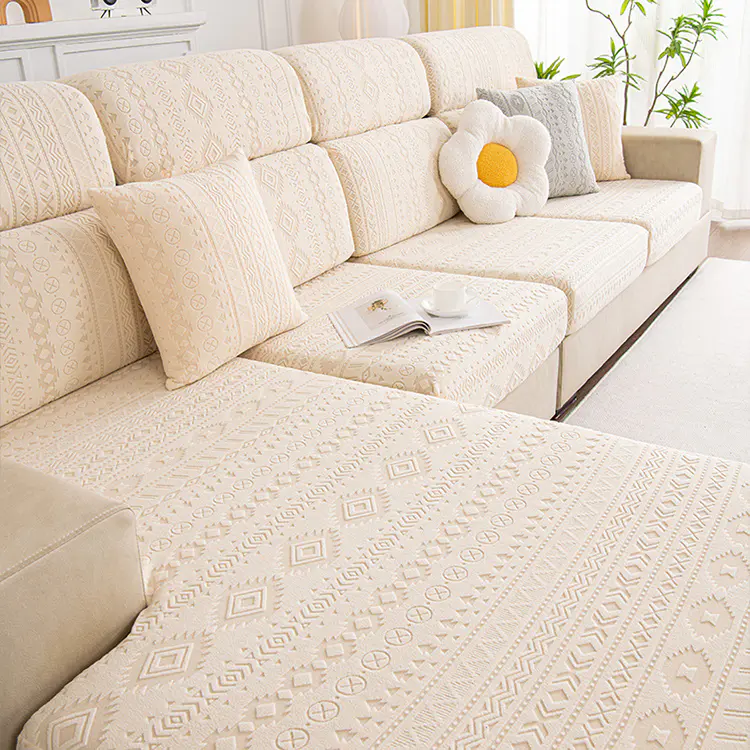
The jacquard construction adds patterned texture through the structure of the fabric rather than relying only on a surface print. This creates a tactile finish that can make the sofa appear more refined. The product uses solid colors, allowing the textured construction to remain subtle and versatile. As a result, the cover can be used with modern, traditional, minimalist, family-oriented, or hospitality interiors.
The elastic belt at the back is an important functional component. Loose sofa throws can slide, bunch, or become displaced when people sit down or stand up. The high elastic belt helps hold the cover closer to the furniture and supports a cleaner fit. In combination with the full-coverage construction, it helps reduce shifting during regular use.
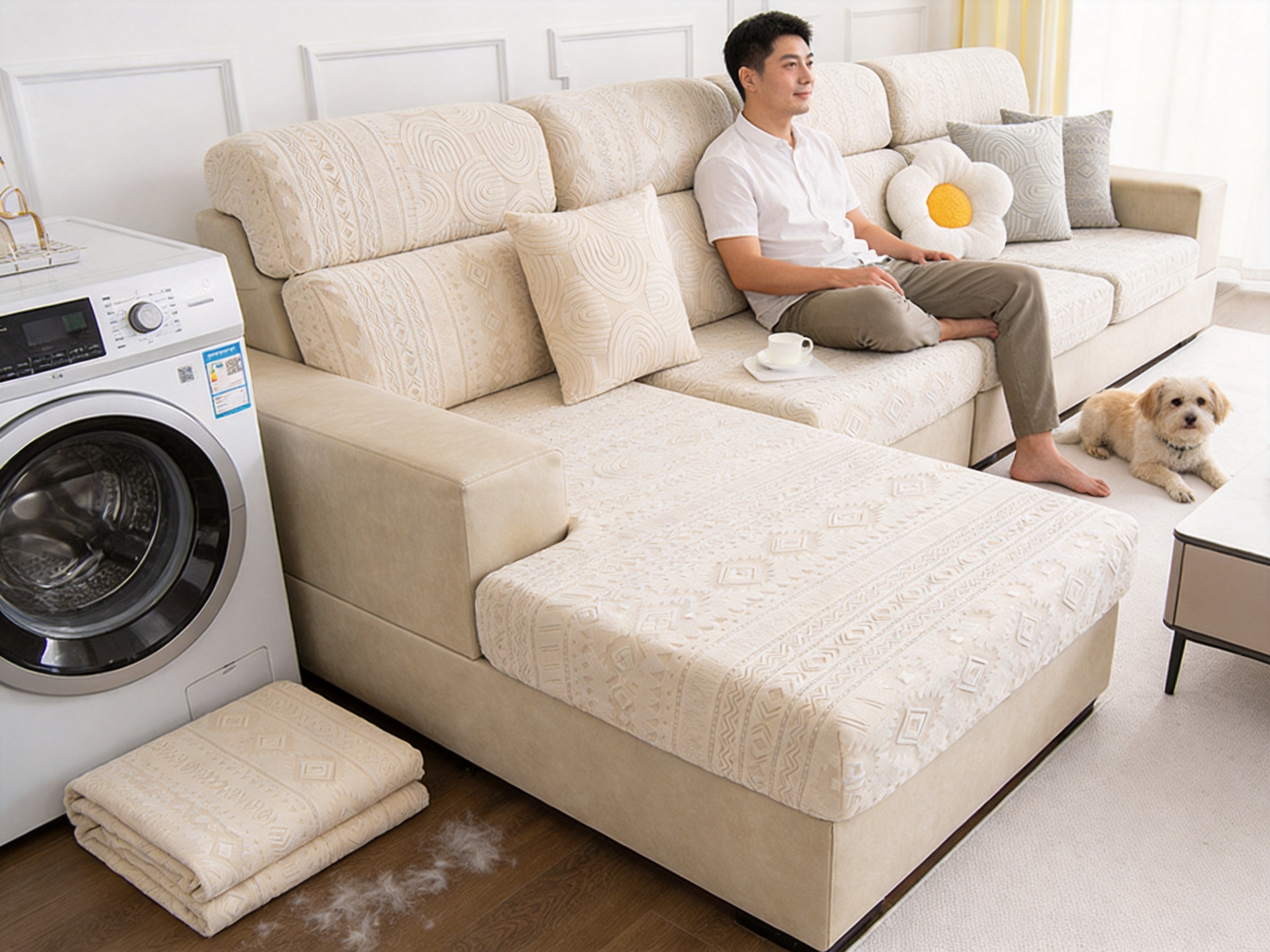
The cover is also machine washable. This makes it suitable for homes where furniture is exposed to children, pets, food, drink, dust, and frequent use. Instead of requiring specialized upholstery cleaning each time a small accident occurs, the removable cover can be laundered according to the care instructions. Regular cleaning can help maintain a fresher sofa environment and extend the useful appearance of the original upholstery.
| Specification | Details |
|---|---|
| Product type | Jacquard elastic fleece sofa cover |
| Recommended use | Sofa and couch protection |
| Primary material | Polyester |
| Fabric weight | 600gsm |
| Construction | Jacquard |
| Back material | High elastic belt |
| Available sizes | S, M, L, XL, and XXL |
| Style | Cushion style |
| Pattern | Solid colors |
| Shape | Rectangular |
| Care method | Machine wash |
| Special features | Non-slip, soft, and washable |
The specifications show that the cover is designed to balance decorative appeal and practical performance. The polyester base supports durability and ease of care, while the jacquard structure improves texture. The elastic belt and full-coverage design address one of the most common problems with loose furniture covers: movement during use.
Fabric weight is commonly expressed in grams per square meter, or gsm. A 600gsm textile contains a relatively high quantity of material within each square meter. For a sofa cover, this can create a more substantial layer between the furniture and daily sources of wear. It can also provide a warmer and more cushioned hand, which is especially welcome during colder seasons.
The heavier construction can help the cover drape with greater stability than a very thin textile. A light material may be easy to handle, but it can also move more readily, wrinkle quickly, or provide less protection against friction. The 600gsm fabric is intended to offer a more reassuring level of coverage while retaining the flexibility required for installation and removal.
Weight alone should not be interpreted as a guarantee of performance. Yarn quality, knitting or weaving precision, finishing, seam construction, elasticity, and washing performance also matter. The product’s value comes from the combination of these elements. The jacquard construction, fleece-like softness, elastic support, and machine-washable design work together rather than functioning as isolated features.
The three-dimensional warm jacquard velvet fabric creates a soft surface that is comfortable against the skin. The raised and structured texture also gives the cover visual depth. This is useful for consumers who want to update the appearance of a sofa without replacing the furniture or commissioning permanent reupholstery.
The fabric is described as supporting air circulation while providing warmth. This balance is beneficial because a furniture cover should feel comfortable in prolonged contact with the body without becoming excessively heavy or unpleasant. Proper air movement can make a textile feel less stuffy, particularly when it is used in a living room for extended periods.
Softness is one of the most noticeable qualities of a sofa cover. A stiff or coarse material can make furniture less inviting, while a plush textile encourages relaxation. The fleece surface is intended to provide a comfortable hand and a warmer touch. This makes the cover suitable for sofas used for lounging, napping, family activities, and casual entertainment.
The cushion style further supports a comfortable appearance. Although the cover is primarily protective, it also contributes to the atmosphere of the room. A textured, soft cover can make an older sofa look more welcoming and can help create a coordinated appearance when used with cushions, blankets, rugs, or other soft furnishings.
Living rooms and family rooms are high-traffic spaces. The sofa may be used several times each day, and the cover must tolerate repeated contact, folding, sitting, and laundering. Polyester is widely used in home textiles because it offers useful resistance to ordinary wear and is comparatively easy to maintain.
The dense 600gsm construction gives the cover a robust feel that is appropriate for frequent use. It can help reduce direct contact between the sofa upholstery and common sources of wear, including clothing friction, children’s activity, pet movement, and occasional spills. The cover does not eliminate the need for sensible care, but it adds a protective layer that can reduce the pressure placed on the original sofa material.
Jacquard textiles are recognized for their woven or knitted structural patterns and dimensional surface effects. Instead of depending entirely on a printed image, jacquard construction creates visual interest through the arrangement of textile elements. This can result in a richer appearance and a more tactile finish.
On this sofa cover, the jacquard texture complements the solid-color format. Solid colors are easy to coordinate with existing furniture because they do not introduce a strong competing pattern. The textured surface prevents the cover from appearing flat or ordinary. This combination is particularly useful for interior settings where the buyer wants understated elegance rather than a highly decorative print.
The solid-color design can support many decorating approaches. Neutral shades can create a calm and adaptable foundation. Darker shades can provide a more formal appearance and may help disguise minor signs of everyday use. Softer colors can make a room feel brighter or more relaxed. Because the product is available in a simple color format, it can be combined with patterned cushions, throws, curtains, and area rugs without creating visual confusion.
Textile texture also has a practical visual advantage. A three-dimensional surface can make small creases less noticeable than they might be on a very smooth, flat textile. The cover still needs to be installed correctly and adjusted after washing, but its structured appearance can help maintain a more finished look during use.
One of the most important differences between a fitted sofa cover and a simple throw is the way the product stays in place. A loose blanket may protect part of the sofa, but it can slip from the seat, fall behind the backrest, or expose the arms. This creates a need for frequent adjustment and can make the room look untidy.
The high elastic belt at the back is intended to improve stability. By creating tension around the sofa, it helps the cover remain closer to the furniture. The elastic component also supports a neater appearance by helping the material follow the general form of the sofa instead of hanging loosely behind it.
The 360-degree full-coverage design extends protection around the sofa. This is useful because damage does not occur only on the seating surface. Armrests, side panels, the front edge, and sections near the back may also be exposed to dust, pet hair, contact with walls, and accidental spills. A cover that wraps around more of the furniture offers more complete protection than a narrow seat-only protector.
Full coverage can also be valuable when a sofa is placed in an open-plan room where its rear and sides are visible. A cover that is intended to wrap around the furniture can create a more consistent appearance from different viewing angles.
Before selecting a size, users should measure the sofa carefully. Important measurements may include the overall width, seat width, height, armrest dimensions, seat depth, and the distance around the back and lower sections. Since sofa designs vary considerably, the listed S, M, L, XL, and XXL options should be matched with the seller’s sizing guidance and the actual dimensions of the furniture.
Installation is generally easier when the cover is placed over a clean, dry sofa. The material should be spread evenly across the seating area, backrest, and arm sections. The rear elastic belt should then be positioned so that it creates a secure hold without excessive stretching. Any excess fabric can be adjusted around the cushions and corners to improve the appearance.
A correct fit improves both comfort and performance. If the cover is too small, the elastic may be under unnecessary tension and the fabric may not provide full coverage. If it is too large, excess material may bunch or move more easily. Accurate measurement is therefore one of the most important steps in obtaining the best result.
Traditional sofa throws are inexpensive and easy to place, but they often provide incomplete protection. They may cover the seat and part of the back while leaving the arms and lower sides exposed. They can also slide when a person sits down, requiring repeated repositioning.
The Jacquard Elastic Fleece Sofa Cover is designed to address these limitations through its full-coverage structure and elastic support. Rather than functioning as a simple decorative blanket, it acts as a more organized protective layer. This can be particularly useful in homes with children or pets, where movement and spills are more common.
A conventional throw may also have a lighter construction. Lightweight material can be comfortable, but it may provide less substantial protection and may not create the same premium appearance. The 600gsm jacquard fleece offers a fuller hand and a more pronounced textile presence.
Another advantage is maintenance. A loose throw can usually be washed, but it may not remain in place during ordinary use. This product combines machine washability with a secure-fit design, offering both easy cleaning and more consistent coverage. The result is a practical alternative for users who want the convenience of a removable textile without the constant adjustment associated with an unsecured blanket.
Permanent reupholstery can transform a sofa, but it often requires a significant financial investment, professional labor, transportation, and time away from the home. It may not be a practical option for renters, temporary interiors, seasonal decorating, or households that want to change the appearance of furniture without making a permanent commitment.
A removable sofa cover provides greater flexibility. It can be installed when protection is needed, removed for cleaning, and replaced if the room’s style changes. This makes it suitable for people who want to extend the useful appearance of existing furniture while postponing replacement or reupholstery.
The cover can also serve as a transitional product. A sofa that remains structurally comfortable but has faded, stained, or worn upholstery may continue to be useful when protected by a high-quality cover. This approach can reduce the immediate need to dispose of functional furniture and purchase a replacement.
Although a removable cover does not replicate the exact tailored finish of professional reupholstery, its accessibility, washability, and lower commitment make it attractive for many everyday situations. The choice depends on the condition of the sofa, the desired appearance, the available budget, and the need for flexibility.
Furniture is exposed to many forms of routine wear. Clothing can create friction against the seating area. Food and drinks can be spilled during meals or entertainment. Children may bring toys, art materials, or outdoor dirt onto the sofa. Pets may leave hair, moisture, or scratches. Dust can accumulate in seams and textured upholstery.
The sofa cover creates a removable barrier between these sources of wear and the original furniture. It is especially useful for households that want to preserve a sofa in good condition for longer. By absorbing some of the daily contact, the cover can help reduce the rate at which the original upholstery becomes soiled or visibly worn.
The cover should not be treated as completely stain-proof or damage-proof. Sharp objects, heavy abrasion, excessive heat, and large spills still require immediate attention. However, the protective layer can make routine maintenance easier and can reduce the consequences of minor incidents.
For pet owners, the cover may be particularly convenient. Pet hair can often be removed through regular cleaning, while the washable construction allows the cover to be refreshed more easily than fixed upholstery. The product can also help protect against light scratching and repeated contact from dogs or cats, although it cannot guarantee protection against determined chewing or severe claw damage.
Machine washability is a major practical advantage for a sofa cover. Because the product can be removed, washed, and returned to the sofa, users can maintain a cleaner surface without arranging specialized cleaning for the entire piece of furniture.
Care should follow the product’s washing instructions. Users should check the recommended water temperature, cycle, detergent type, drying method, and any restrictions concerning bleach or harsh chemicals. Washing with similar colors may help preserve the appearance of solid-color fabric. Excessive heat should be avoided unless specifically approved, because high temperatures can affect synthetic fibers, elastic components, or the shape of the cover.
Before washing, visible debris and pet hair should be removed. Fasteners, if present, should be secured, and the cover should not be overloaded into a washing machine that is too small. After washing, the cover should be fully dried before it is placed back on the sofa. Damp fabric can encourage unpleasant odors and may affect the condition of the furniture beneath it.
Regular but reasonable washing is preferable to waiting until heavy dirt accumulates. However, unnecessary over-washing can place additional stress on any textile. A routine based on household use, pets, children, and visible cleanliness can help balance hygiene and fabric longevity.
The elastic belt contributes to the cover’s secure fit and should be handled carefully. When installing or removing the cover, users should avoid pulling the elastic sharply or dragging it across rough surfaces. The cover should be lifted and adjusted rather than forced into position.
After laundering, the elastic area should be inspected for twisting or uneven tension. Correct positioning helps distribute pressure and supports a more consistent fit. If the cover is stored for a long period, it should be clean and completely dry, and it should be kept in a dry place away from direct sunlight and sharp objects.
The primary application is residential living rooms. In a family home, the cover can protect the main sofa from frequent use while providing a warm and comfortable surface. It may also be useful in television rooms, reading areas, guest rooms, bedrooms with sofa beds, and home offices that include lounge furniture.
It can support seasonal changes in interior styling. A warm fleece texture may be especially appealing during autumn and winter, while the removable format allows the sofa to be returned to its original upholstery or fitted with another cover in warmer months.
Rental properties can also benefit from removable protection. Tenants may want to improve the appearance of existing furniture without making permanent alterations. Landlords and property managers may use sofa covers in furnished apartments, serviced accommodation, student housing, or short-term rental units where furniture experiences frequent turnover.
Hospitality and commercial environments may use washable furniture covers in lounges, waiting areas, staff rooms, beauty studios, clinics, and reception spaces. In such settings, the choice of size, color, and washing routine should be matched to traffic levels and cleaning requirements.
The product is also suitable for furniture staging and retail display. A textured solid-color cover can help present an older sofa in a more coordinated setting, especially when combined with rugs, cushions, blankets, and curtains. Because the style is visually adaptable, it can support a range of display themes.
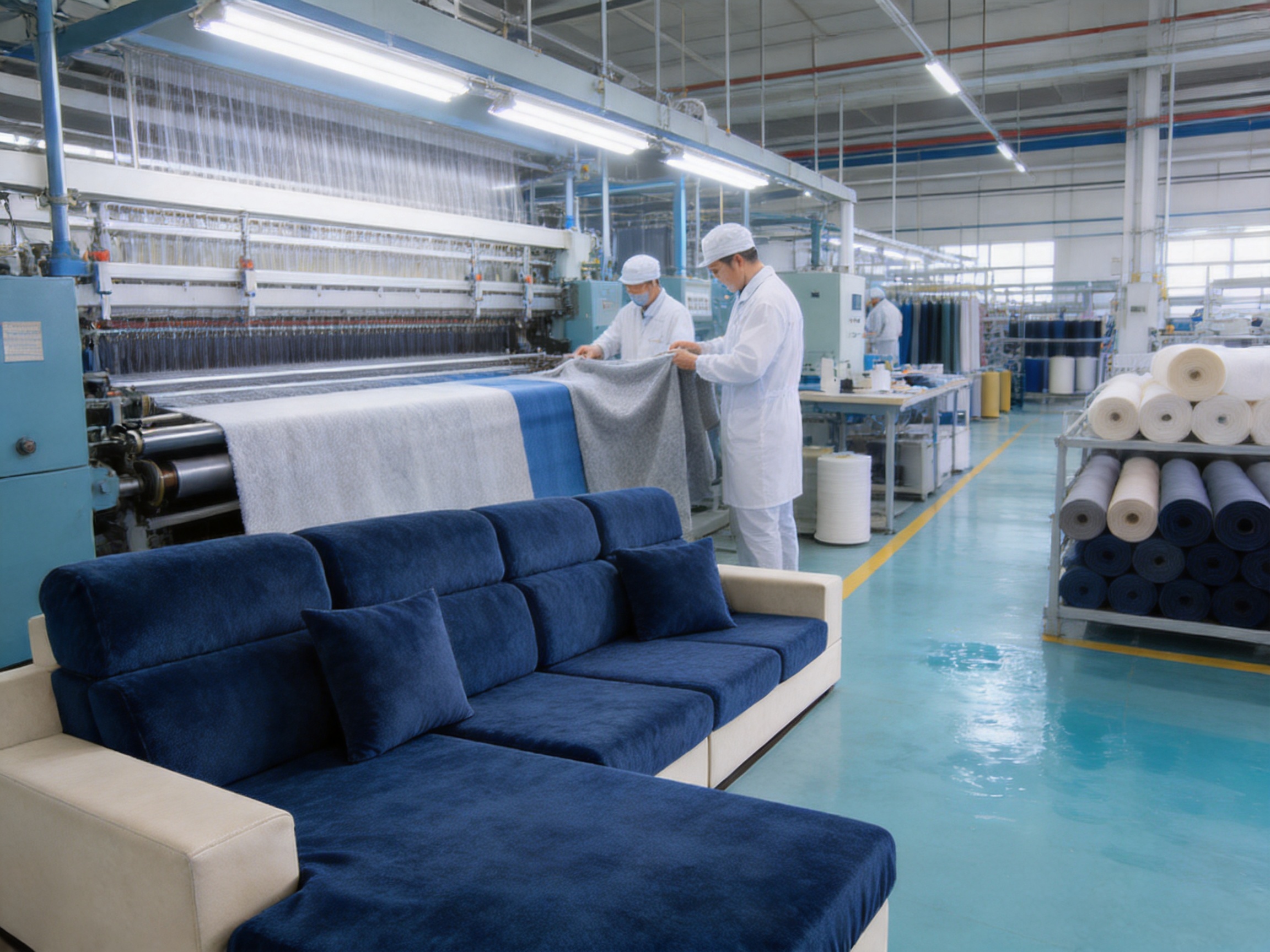
The product is manufactured by Zhejiang Benyi Textile Technology Co., Ltd., a textile technology company located in Shaoxing, Zhejiang Province. Shaoxing is widely recognized as an important textile manufacturing center, often described as the “World Textile Capital.” This location provides access to textile knowledge, raw materials, production networks, skilled labor, and supporting industrial services.
The company specializes in carpets, rug fabrics, and finished textile products. Its capabilities extend across weaving, dyeing and printing, and finished carpet processing. Although the sofa cover is a furniture textile rather than a floor carpet, the same expertise in fabric construction, surface development, coloration, finishing, and quality management supports the production of soft furnishing materials.
A significant strength is the company’s control over multiple stages of the production chain. By operating its own weaving, dyeing and printing factories, and finished-product processing facilities, the company can coordinate fabric development and production more directly. This type of integration can improve communication between departments, reduce delays caused by external handoffs, and make it easier to respond to customer requirements.
Integrated manufacturing can also support more consistent quality. When fabric construction, coloration, finishing, and final processing are managed within a coordinated system, production teams can monitor the relationship between each stage. Problems involving shade, hand feel, dimensions, or finishing can be identified earlier and addressed with greater efficiency.
The company has a team of more than 20 fabric engineers. This technical team develops new carpet fabrics each quarter according to market trends and provides customized services based on customer requirements. The same development mindset is valuable for sofa covers, where buyers may request specific weights, textures, colors, dimensions, backing methods, or functional properties.
Fabric engineering involves more than selecting a fiber. It can include decisions about yarn type, density, construction, surface texture, finishing, elasticity, color development, dimensional stability, and care performance. A product such as the Jacquard Elastic Fleece Sofa Cover requires these elements to work together so that the final textile is comfortable, attractive, stable, and practical.
Regular development activity helps the manufacturer respond to changing interior trends. Consumers may seek softer surfaces, deeper textures, more sustainable materials, improved washability, or new color ranges. A dedicated engineering team can study these requirements and translate them into fabric specifications and production methods.
For wholesale buyers, lead time is a major consideration. Delays can affect product launches, seasonal programs, promotional campaigns, and retail availability. A manufacturer with control over key production stages can coordinate schedules more effectively than a business that depends entirely on unrelated external suppliers.
Integrated facilities may also make customization more practical. Buyers can discuss private-label requirements, size changes, color selections, packaging formats, fabric adjustments, and order quantities with a manufacturer that understands the complete production process. Customization remains dependent on technical feasibility and minimum order requirements, but direct factory coordination can simplify communication.
The company’s ability to provide finished textile products is particularly relevant for buyers who do not want to source fabric from one supplier and sewing or final processing from another. A coordinated supply chain can reduce the number of production interfaces and make responsibility clearer throughout the order.
Quality in a sofa cover should be evaluated at several levels. The fabric should have an even appearance, consistent texture, secure construction, and acceptable dimensional stability. The elastic belt should be properly attached and should provide useful tension without creating excessive distortion. Seams and edges should be neat and suitable for repeated handling and laundering.
Color consistency is also important, particularly for wholesale programs. When multiple covers are used in one room, variations between production batches can be visually noticeable. Coordinated dyeing and quality inspection processes can help reduce unwanted differences, although buyers should confirm the manufacturer’s batch-control procedures for specific orders.
Wash testing may assess changes in size, color, surface appearance, elasticity, and seam performance after laundering. Since the product is designed to be machine washable, these factors are central to its long-term usefulness. Buyers with specific performance requirements may request test standards, sample approval, or inspection protocols before placing a large order.
Packaging and storage also affect product quality. The cover should be protected from moisture, contamination, compression damage, and prolonged direct sunlight during transport and warehousing. Appropriate packaging helps ensure that the textile reaches distributors, retailers, and end users in satisfactory condition.
The company states that it focuses on ecological and environmental protection and on improving consumers’ health experiences. Its sustainability efforts include investment in recycled polyester and water-saving dyeing techniques. These approaches are relevant to the textile industry because fiber selection and dyeing processes can influence resource use and environmental impact.
Recycled polyester can make use of existing polymer resources and may reduce dependence on newly produced raw materials in suitable applications. The environmental value of recycled content depends on the source, processing method, durability, product life, and end-of-life management. Nevertheless, incorporating recycled materials into product development represents an important direction for textile manufacturing.
Water-saving dyeing techniques can help reduce water consumption during coloration. Dyeing is a resource-intensive stage in many textile supply chains, so improvements in water efficiency can contribute to more responsible production. The effectiveness of a specific method should be assessed through factory data, process controls, and relevant certification or audit documentation.
The company has passed OEKO-TEX® and GRS certifications, according to the provided company information. OEKO-TEX® certification is associated with testing textiles for certain harmful substances under applicable standards. GRS, or the Global Recycled Standard, relates to recycled content and chain-of-custody requirements under the relevant certification framework. Buyers should confirm the exact certificate scope, validity, product coverage, and applicable transaction documentation for a particular order.
Sustainability is not limited to materials or dyeing. A durable, washable sofa cover can support longer furniture life by protecting the original sofa from premature deterioration. Extending product life can reduce the frequency of replacement and help households make fuller use of existing furniture. Responsible care and long-term use are therefore important parts of the product’s overall environmental profile.
Wholesale buyers often need products that are visually appealing, practical, easy to explain, and suitable for more than one customer group. This sofa cover offers a combination of features that can support retail presentation: a soft jacquard surface, multiple sizes, solid colors, machine washability, elastic support, and full coverage.
The range from S to XXL makes it possible to serve different sofa dimensions without limiting the product to one furniture format. Retailers can present the cover as a solution for compact sofas, standard family sofas, large couches, or selected sectional configurations, provided the actual furniture measurements match the product’s intended fit.
Solid colors simplify inventory planning because they can coordinate with a wide range of interior styles. The jacquard texture gives the product a premium visual element without depending on a complex printed pattern. This may help retailers position it as both a protective household item and a decorative home textile.
Its benefits are also easy for consumers to understand. The cover protects furniture, feels soft, stays more securely in position, and can be machine washed. Clear benefits can reduce the amount of explanation needed at the point of sale and can support online product descriptions, catalog presentations, and showroom demonstrations.
For hospitality and contract buyers, durability, washability, and replaceability are particularly important. A removable cover can be laundered or replaced without replacing the entire sofa. Buyers should still assess commercial washing conditions, expected use intensity, and colorfastness requirements before selecting the product for a high-traffic program.
Buyers should begin by identifying the intended sofa type and measuring all relevant dimensions. It is helpful to record the total width, seat width, seat depth, back height, arm height, and the shape of any detachable cushions. Photographs can also help a supplier recommend the most suitable size, although measurements remain essential.
The next step is to evaluate the desired appearance and use environment. A household with pets may prioritize easy cleaning and dark or medium colors. A minimalist living room may require a neutral solid shade. A hospitality setting may require standardized colors across multiple rooms. The selection should consider both appearance and the expected frequency of washing.
Wholesale buyers should request samples when possible. A sample allows them to assess hand feel, surface texture, color, elastic tension, coverage, stitching, and packaging. It also provides an opportunity to test the product on the intended sofa before committing to a larger order.
Buyers should discuss production details with the manufacturer, including available colors, size tolerances, minimum order quantities, packaging, labeling, sample approval, inspection, lead time, and shipping arrangements. If a custom version is required, the desired specifications should be written clearly to avoid misunderstandings.
Care instructions should be included in the product information provided to end users. Clear instructions can reduce misuse and help preserve the textile. Retailers may also explain that the cover should be washed according to the recommended method and that the sofa should be fully dry before the cover is reinstalled.
To install the cover, first remove loose objects, dust, and debris from the sofa. If the cushions are removable, clean and position them according to the cover’s intended layout. Place the cover over the backrest and seating area, then distribute the fabric across the arms and sides.
Adjust the cover gradually rather than pulling one section aggressively. The fabric should be spread evenly so that the jacquard surface remains attractive and the seams are not placed under unnecessary stress. Position the high elastic belt at the back as intended, checking that it is neither twisted nor caught on furniture components.
After installation, sit gently on different parts of the sofa and inspect whether the cover remains stable. Minor adjustments may be necessary around corners, cushions, and armrests. A well-fitted cover should provide comfortable seating without excessive bunching or exposed upholstery.
During use, sharp tools, open flames, and excessive heat should be kept away from the textile. Spills should be addressed promptly. If a large amount of liquid reaches the sofa, the cover should be removed and both the cover and the underlying furniture should be dried appropriately.
A sofa cover is a protective textile, not a replacement for careful furniture use. It can reduce contact with dirt, friction, pet hair, and minor spills, but it cannot guarantee complete protection against all damage. Sharp claws, chewing, heavy stains, extreme heat, or prolonged moisture may still affect the cover or the furniture beneath it.
Fit can vary according to sofa shape. The available S, M, L, XL, and XXL sizes provide options, but highly unusual furniture designs may require a custom solution. Deep cushions, oversized arms, reclining mechanisms, attached back cushions, and sectional arrangements should be evaluated carefully before purchase.
Color appearance may vary depending on lighting, screen settings, and production batch. Buyers who require precise color matching should request a physical sample or an approved color standard. Textile texture can also appear different under natural and artificial light.
Machine washability does not mean that every washing condition is suitable. Incorrect temperatures, harsh chemicals, overloaded machines, or inappropriate drying can shorten the life of the textile or affect the elastic belt. Following the supplied care instructions is essential.
The strongest aspect of the Jacquard Elastic Fleece Sofa Cover is the balance between decorative and functional performance. It is not simply a blanket, because it is designed for fuller coverage and improved stability. It is not a permanent upholstery replacement, because it can be removed and washed. It is not a thin disposable protector, because the 600gsm jacquard fleece construction provides a more substantial feel.
For consumers, this balance means that the product can support everyday comfort while helping maintain the condition of existing furniture. For retailers, it creates a product story that is easy to communicate: soft texture, secure fit, broad size availability, practical washing, and protection from daily wear.
For wholesale and private-label customers, the manufacturer’s integrated textile capabilities add further value. Control over weaving, dyeing, printing, and finished processing can support more coordinated development, while the company’s fabric engineering team can assist with changes required for different markets and applications.
The company’s focus on sustainable materials, water-saving dyeing, and relevant textile certifications also aligns with increasing demand for more responsible home products. Buyers should verify certification details and project-specific requirements, but the stated direction demonstrates awareness of the environmental and health considerations associated with modern textile production.
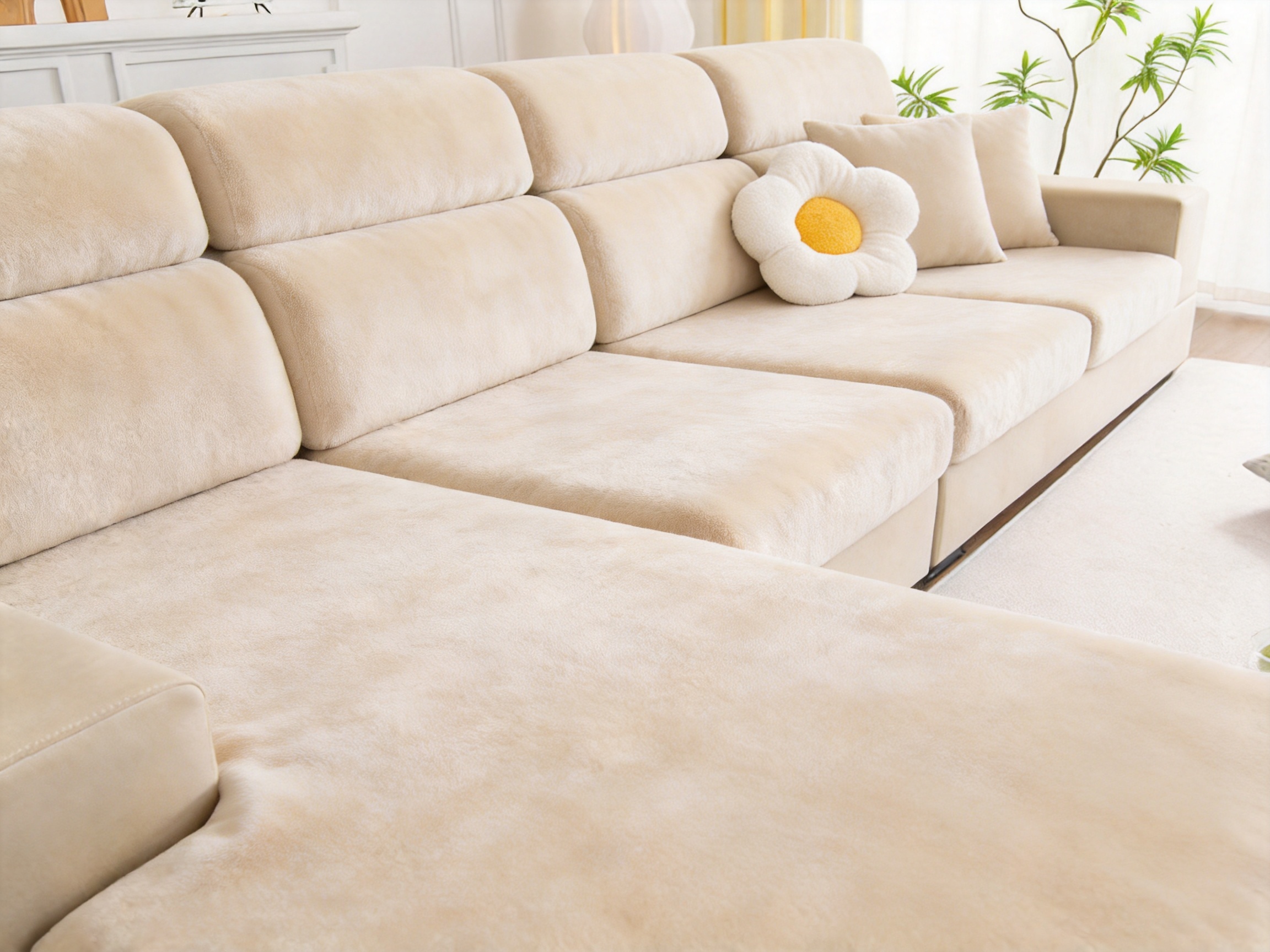
The main purpose is to protect sofas and couches from everyday wear, dust, pet hair, scratches, accidental spills, and general household use. It also adds softness, warmth, texture, and a refreshed appearance to existing furniture.
The cover is made from polyester. Its fabric has a jacquard construction and a 600gsm weight, providing a substantial and soft surface suitable for regular furniture use.
Gsm means grams per square meter. A 600gsm fabric contains a relatively high amount of material per square meter, giving it a fuller hand, stronger visual presence, and a warmer, more substantial feel than many lightweight covers.
The product is designed with a high elastic belt at the back and a 360-degree full-coverage structure. These features help reduce slipping and shifting. The final fit depends on selecting the correct size and installing the cover properly.
Yes. The cover can help protect sofa upholstery from pet hair, light scratches, and everyday contact. It is machine washable, which makes regular cleaning more convenient. However, it should not be considered completely resistant to severe scratching, chewing, or other intense pet damage.
Yes. Machine washing is one of its main care features. Users should follow the supplied washing and drying instructions, avoid unsuitable chemicals or excessive heat, and make sure the cover is completely dry before reinstalling it.
The product is available in S, M, L, XL, and XXL sizes. Because sofa shapes differ, buyers should measure their furniture and compare the measurements with the supplier’s size guidance before ordering.
The product is described as having solid colors. Its visual interest comes primarily from the jacquard construction and dimensional fleece texture rather than from a printed design.
A loose blanket usually provides partial coverage and can move easily during use. This sofa cover is intended to wrap more completely around the furniture and includes an elastic belt to support a more secure fit. It also combines a substantial 600gsm construction with machine washability.
It can be used on many sofas and couches, but suitability depends on the furniture’s measurements and shape. Reclining sofas, sectional sofas, sofas with unusual arms, and furniture with attached cushions should be checked carefully before purchase.
The supplier operates weaving, dyeing and printing, and finished carpet processing facilities. It also has a team of more than 20 fabric engineers and provides product development and customization services according to customer requirements.
According to the provided company information, the supplier invests in recycled polyester and water-saving dyeing techniques and has passed OEKO-TEX® and GRS certifications. Buyers should confirm the exact certification scope and validity for the product and order under consideration.
The company provides customized services according to customer requirements. Possible areas for discussion may include colors, sizes, fabric specifications, packaging, and finished-product details. Feasibility, minimum order quantities, and lead times should be confirmed directly with the supplier.
The Jacquard Elastic Fleece Sofa Cover is a versatile furniture textile designed for consumers and businesses that want comfort, protection, and a more refined appearance. Its 600gsm polyester construction offers a substantial feel, while the jacquard surface contributes texture and visual depth. The soft fleece finish makes the sofa more inviting, and the solid-color format allows the cover to coordinate with many interior styles.
Its high elastic belt and 360-degree coverage provide practical advantages over ordinary loose throws by helping the cover remain in position and protecting more of the furniture. Machine washability makes routine care easier, while the range of S through XXL sizes supports use on a variety of sofas when the correct measurements are selected.
The product is also supported by the manufacturing strengths of Zhejiang Benyi Textile Technology Co., Ltd. The company’s location in Shaoxing, integrated production facilities, fabric engineering team, customization capabilities, and focus on quality and sustainability provide a strong foundation for textile development and wholesale supply.
For households, the cover offers a practical way to protect and refresh existing furniture. For retailers and commercial buyers, it provides a clear combination of comfort, appearance, fit, and maintenance benefits. When correctly sized, carefully installed, and maintained according to the recommended instructions, it can become a useful long-term addition to a wide range of living spaces.
1. Product specification sheet for the Jacquard Elastic Fleece Sofa Cover, including material, weight, size, construction, care, and special features.
2. Manufacturer-provided company profile for Zhejiang Benyi Textile Technology Co., Ltd., including production facilities, textile engineering capabilities, customization services, and sustainability direction.
3. General textile manufacturing principles concerning polyester fibers, jacquard construction, fabric weight, dyeing, finishing, and dimensional stability.
4. OEKO-TEX® textile safety and harmful-substance testing framework information.
5. Global Recycled Standard information concerning recycled content, chain of custody, and responsible textile production.
6. General home textile care guidance for machine-washable polyester furniture covers.

ADD: No.75 Zhenyuan Road, Yuecheng District, Shaoxing City, Zhejiang Province, China 312000

Tel : +86-189 6750 9795

FAX : +86-0575-8803 2773

Email : fisher@benetextile.com

Copyright © Zhejiang Benyi Textile Technology Co., Ltd. All Rights Reserved. Carpets and Rugs Manufacturer

 English
 Français
 Deutsch
 عربى