

Tang Meilin — Customer Success and Product Support Specialist
 Home / Author / Tang Meilin — Customer Success and Product Support Specialist / 380gsm Imitation Nylon Fabric for Durable, Comfortable, and Custom Carpet Applications
 2026.10.24
 Tang Meilin — Customer Success and Product Support Specialist
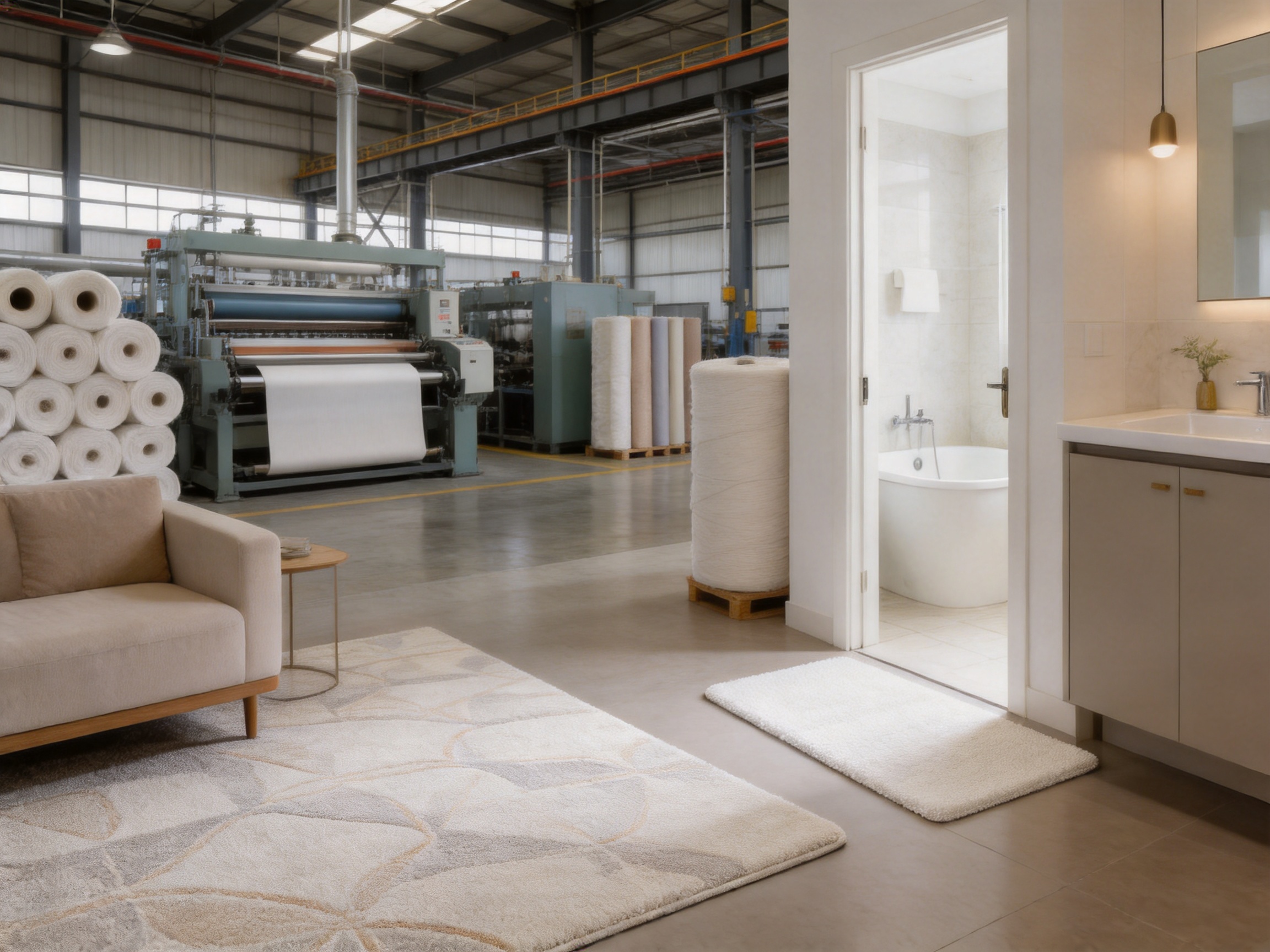
Flooring textiles must perform under constant pressure, repeated foot traffic, and changing environmental conditions while still providing a comfortable and attractive surface. For carpet manufacturers, rug converters, mat producers, and distributors, the choice of backing or pile fabric has a direct effect on product quality, production efficiency, user safety, and long-term customer satisfaction. The 380gsm Imitation Nylon Fabric is developed to address these requirements through a balanced combination of polyester microfiber construction, looped pile, anti-slip performance, flexible knitted technology, and customization potential.
Although commonly described as imitation nylon fabric, this material is manufactured from 100% polyester. Its polyester microfiber structure provides durability, a refined hand feel, color stability, and resistance to the practical demands associated with carpets, area rugs, door mats, and related floor-covering products. With a weight of 380gsm and a pile height of approximately 2.5 to 3 millimeters, the fabric offers a substantial yet manageable construction that can be incorporated into multiple product designs.
The material is supplied in standard widths of 170, 190, and 210 centimeters, with customized widths available for specific production requirements. Its maximum width can reach approximately 3.2 meters, creating additional opportunities for manufacturers working with larger-format rugs, broad carpet panels, and efficient roll-to-roll processing. The fabric can also be used directly for digital printing or paper transfer printing, allowing buyers to develop customized patterns, branding, seasonal collections, and decorative surfaces.
This article examines the construction, performance, manufacturing advantages, customization possibilities, and commercial applications of the 380gsm Imitation Nylon Fabric. It also explains how Zhejiang Benyi Textile Technology Co., Ltd. supports the product through integrated production capabilities, textile engineering expertise, controlled quality management, and a focus on sustainability.
Content
The 380gsm Imitation Nylon Fabric is a knitted carpet fabric intended for use in carpets, rugs, doormats, and related floor-covering products. It is designed as a practical surface material that combines a soft touch with a functional loop structure. The material is suitable for manufacturers who need a stable fabric platform that can accept printing and be converted into finished floor products.
| Product name | 380gsm Imitation Nylon Fabric |
| Item model number | 100076 |
| Material | 100% polyester microfiber |
| Weight | 380gsm |
| Standard width | 170 cm, 190 cm, or 210 cm |
| Maximum available width | Approximately 3.2 meters |
| Pile height | Approximately 2.5–3 mm |
| Manufacturing technique | Knitted |
| Surface structure | Looped pile |
| Color specification | PFP white |
| Primary applications | Carpets, area rugs, door mats, and floor mats |
| Printing compatibility | Digital printing and paper transfer printing |
| Supply type | Make-to-order |
| Minimum order quantity | 500 kilograms per color |
| Packaging | Rolls |
| Typical delivery time | 15–20 days |
The 380gsm specification gives the fabric enough substance to create a stable and premium-feeling product without making it unnecessarily heavy. This balance is important for manufacturers because very light materials may feel less substantial, while excessively heavy constructions can increase shipping costs, handling requirements, and production complexity. The selected weight provides an adaptable foundation for consumer rugs, contract mats, promotional floor coverings, and other textile-based flooring products.
The fabric is knitted from 100% polyester microfiber. Polyester is widely used in technical and home textile applications because it can offer strong fibers, dimensional stability, reliable dye uptake, and resistance to everyday wear. Microfiber construction further contributes to a smooth and refined touch, helping the finished surface feel comfortable under bare feet.
The looped pile is one of the most important functional features of the material. At a height of approximately 2.5 to 3 millimeters, the loops create a textured surface that can increase contact and friction between the floor covering and the soles of the feet. This makes the fabric suitable for bathroom mats, bedroom rugs, indoor entrance mats, and other products where a combination of softness and practical traction is desirable.
Loop construction can also provide advantages during daily use. Compared with a very smooth surface, a looped structure can add visual dimension and support the development of textured designs. It may also help conceal minor surface marks that can be more visible on flat, solid-colored materials. For manufacturers, the loop structure gives the fabric a recognizable appearance that can be used in both plain and printed product ranges.
The fabric is designed with anti-slip functionality in mind. The term anti-slip may refer to the overall construction and its use in a finished product, so final performance will depend on the complete rug system, including the backing, coating, lamination, floor type, and installation conditions. Nevertheless, the looped textile surface contributes to friction and can support the development of safer, more stable finished mats when paired with an appropriate non-slip backing.
Polyester microfiber offers several advantages for carpet and rug manufacturing. Its fine fiber structure can create a soft touch while retaining the strength required for routine use. The material is also well suited to modern printing methods, which is important for buyers seeking customized patterns, photographic designs, brand graphics, or coordinated interior collections.
Compared with some conventional textile surfaces, polyester can provide a more consistent supply base for large-volume production. It is available in many forms and can be engineered for different weights, textures, colors, and finishing requirements. This flexibility allows fabric producers to respond to changing market preferences without redesigning the entire product category.
Another advantage is the fabric’s suitability for made-to-order production. Rather than limiting buyers to a small range of ready-made colors and widths, the manufacturing process can be organized around confirmed specifications. This is particularly valuable for importers, retailers, private-label brands, hospitality suppliers, and project contractors that require coordinated colors or special dimensions.
The fabric is supplied in PFP white, which provides a clean base for printing, dyeing, or further finishing. A white base can be advantageous when the buyer wants to apply digital graphics, transfer patterns, or custom artwork. It helps support design flexibility and can reduce the limitations associated with purchasing only pre-colored materials.
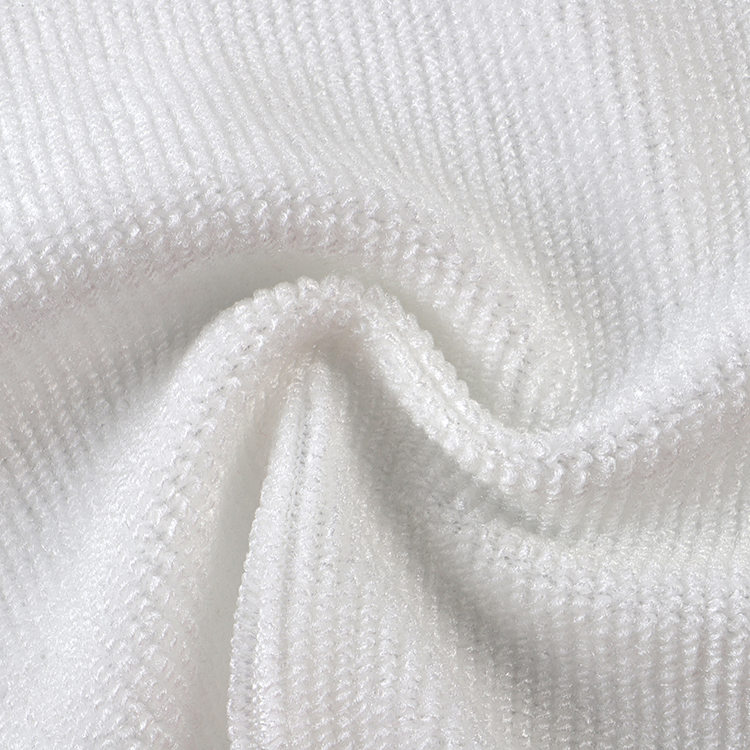
380gsm Imitation Nylon Fabric
A 380gsm construction occupies a useful middle position between lightweight decorative fabrics and heavier carpet materials. It has enough body to support the appearance and feel of a quality rug, yet it remains suitable for roll packaging, warehouse handling, cutting, sewing, lamination, and other converting operations.
For manufacturers and distributors, manageable roll weight can simplify internal logistics. Rolls can be moved, stored, and prepared for production more efficiently than excessively dense materials. The exact roll length and weight will depend on width, production settings, and customer requirements, but the roll format is generally suitable for organized bulk handling.
Some durable floor-covering materials can feel coarse or rigid, while some soft materials may not provide enough structure for frequent use. This product is developed to bridge those requirements. The microfiber composition creates a refined touch, and the looped pile provides texture, visual depth, and practical foot contact.
This combination is particularly relevant for home rugs, bathroom mats, bedroom runners, and products used in spaces where comfort is an important purchasing factor. The material can support a more pleasant user experience without sacrificing the basic strength expected from a commercial textile input.
The fabric can be used directly for digital printing or paper transfer printing in customized designs. This is a major advantage for brands operating in design-led markets. Instead of relying only on standard dyed colors, buyers can develop customized themes for children’s rugs, seasonal merchandise, hospitality interiors, promotional mats, sports-related products, or coordinated home textile collections.
Digital printing is also useful for shorter design runs and rapid product testing. A brand may introduce several patterns in smaller quantities, evaluate market response, and then increase production for the most successful designs. This approach can reduce the need for large inventories of pre-printed goods and allow collections to change more frequently.
The standard widths of 170, 190, and 210 centimeters accommodate many conventional rug and mat sizes. For larger requirements, the maximum width can reach approximately 3.2 meters. Wide-width production can reduce the number of joins required in certain applications and may improve material utilization when producing broad carpet panels or large-format floor coverings.
Wide fabric is also valuable to manufacturers that want to cut multiple product sizes from a single roll. Depending on the cutting plan, a broad roll can support more efficient nesting of patterns, potentially reducing edge waste and simplifying production planning.
Make-to-order production allows the material to be prepared according to confirmed specifications rather than being limited to an inflexible stock program. This can help buyers request customized width, color, finishing, and printing-related requirements. It also supports more deliberate purchasing and may reduce unnecessary inventory for special designs.
The minimum order quantity is 500 kilograms per color. This quantity is appropriate for commercial buyers, manufacturers, and distributors that require meaningful production volumes. It enables the factory to organize material preparation efficiently while giving customers access to customized supply options.
The product is manufactured using knitted textile technology. Knitting creates an interconnected structure that can provide flexibility, resilience, and adaptability during converting. For carpet fabric, these qualities are important because the material may need to pass through cutting, printing, bonding, sewing, backing, or molding processes before becoming a finished product.
A knitted construction can also support a comfortable drape and controlled surface formation. The exact behavior of the fabric will depend on yarn characteristics, knitting parameters, finishing, and subsequent processing. By controlling these stages, the manufacturer can work toward a consistent fabric surface and stable production performance.
The production process begins with the selection and preparation of polyester microfiber yarns. Fiber consistency matters because differences in yarn fineness, tension, or quality can affect the appearance and hand feel of the finished fabric. Proper preparation helps the knitting equipment operate smoothly and supports uniform loop formation.
For a PFP white fabric intended for later printing, cleanliness and surface uniformity are especially important. A consistent white base can help printed colors appear more accurate and reduce visual variation between production batches. Buyers should still approve laboratory dips, printed samples, and bulk standards before beginning large-scale production.
During knitting, the yarns are converted into the required fabric structure. Machine settings influence the density, elasticity, surface appearance, and pile height. For this product, the target pile height is approximately 2.5 to 3 millimeters, allowing the fabric to maintain a low-profile looped surface.
Maintaining a consistent loop height helps ensure that the final material has a uniform touch and appearance across the roll. It also makes downstream printing and cutting more predictable. Consistency is particularly important when several rolls will be joined or used in a single product collection.
After knitting, the fabric may undergo inspection, finishing, and preparation for shipment. Quality checks can include width measurement, weight verification, pile-height assessment, visual inspection, roll appearance, and identification of defects. Where printing or transfer processing is planned, additional tests may be used to evaluate surface suitability and color performance.
Roll packaging protects the fabric during transport and allows buyers to feed the material into production systems efficiently. Appropriate packaging can help reduce creasing, contamination, moisture exposure, and handling damage. Buyers should specify their preferred roll length, core dimensions, wrapping requirements, labeling, and palletization arrangements when placing an order.
Zhejiang Benyi Textile Technology Co., Ltd. is located in Shaoxing, Zhejiang Province, a region widely recognized for textile manufacturing and supply-chain resources. The company focuses on textile technology, carpet fabrics, rugs, mats, and finished carpet products. Its location provides access to experienced textile labor, supporting suppliers, dyeing and printing resources, and established logistics networks.
The company operates an integrated production structure that includes weaving, dyeing and printing factories, and finished carpet processing facilities. This integration can improve communication between different production stages. Instead of treating fabric development, coloration, printing, and final conversion as completely separate activities, the company can coordinate them through a connected manufacturing system.
Integrated production offers several practical benefits. Technical feedback from finished-product processing can be transferred back to the fabric development team. Printing requirements can be considered during the initial material design. Quality concerns can be traced more efficiently because the company has visibility across multiple stages of the production chain.
Control over more of the production process can also support lead-time management. The stated delivery time for this product is approximately 15 to 20 days, subject to order specifications, quantity, color, printing requirements, and production scheduling. Buyers should confirm the final delivery schedule before order placement, especially for customized designs or peak-season programs.
The company has a team of more than 20 fabric engineers. This technical resource supports the development of new carpet fabrics and helps the business respond to changing market trends. New products are developed each quarter, giving customers access to evolving textures, constructions, weights, and visual effects.
Engineering expertise is especially valuable in customized projects. A buyer may require a specific width, pile height, surface feel, printing result, backing compatibility, or finished-product application. Technical personnel can help evaluate whether the requested specifications are compatible and can recommend adjustments where necessary.
Experienced engineers can also assist with production troubleshooting. Issues such as uneven printing, fabric distortion, insufficient friction, inconsistent pile height, or unsuitable backing adhesion may involve several variables. A manufacturer with knowledge of knitting, dyeing, printing, and finished-product processing is better positioned to identify the source and develop a practical solution.
The fabric is suitable for area rugs used in living rooms, bedrooms, studies, children’s rooms, and other interior spaces. Its 2.5 to 3 millimeter looped pile provides a low-profile surface that can be comfortable underfoot while remaining easier to position beneath furniture and near doors than very thick pile constructions.
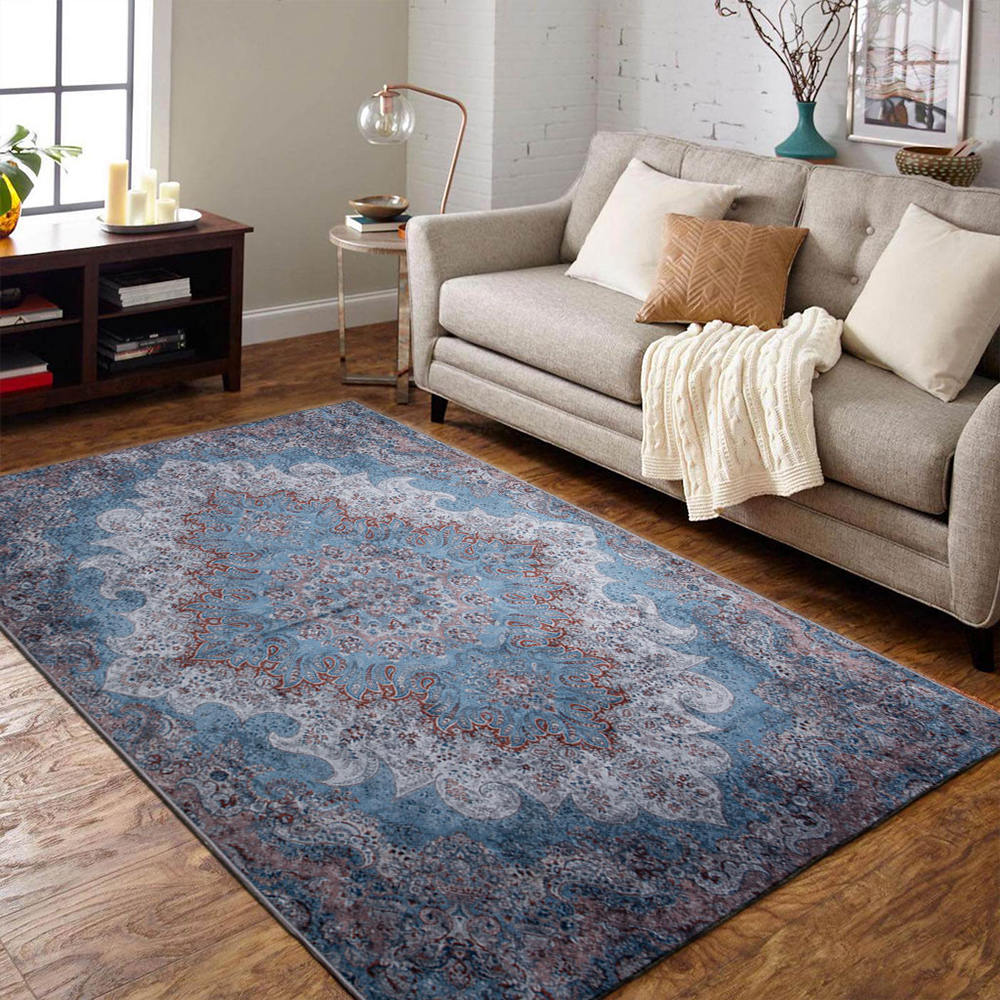
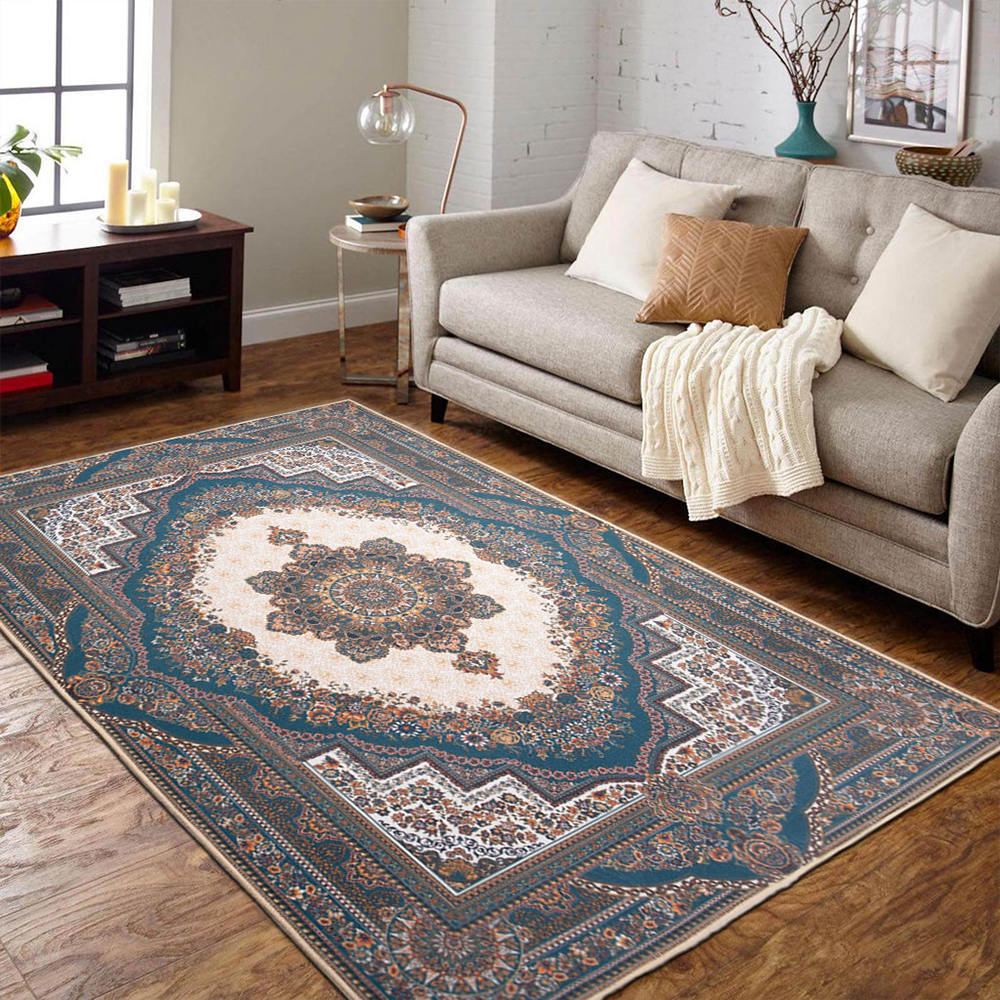
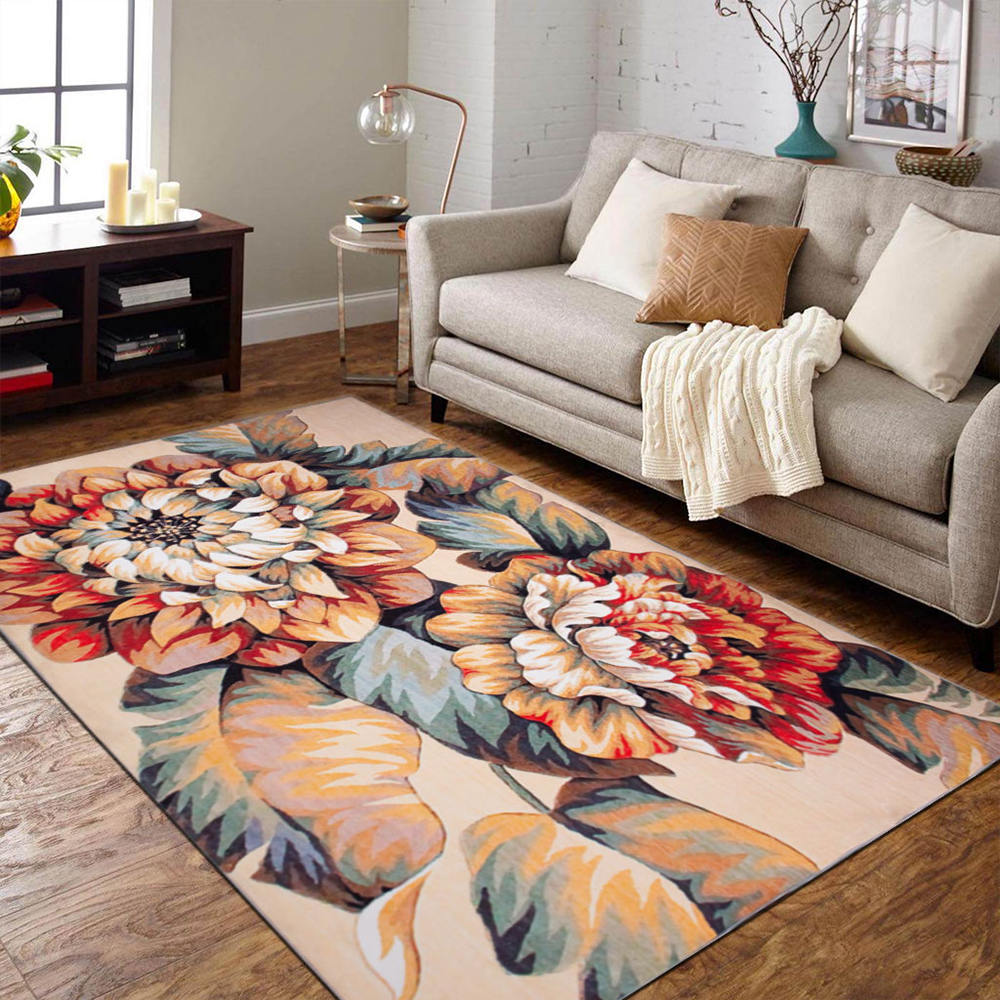
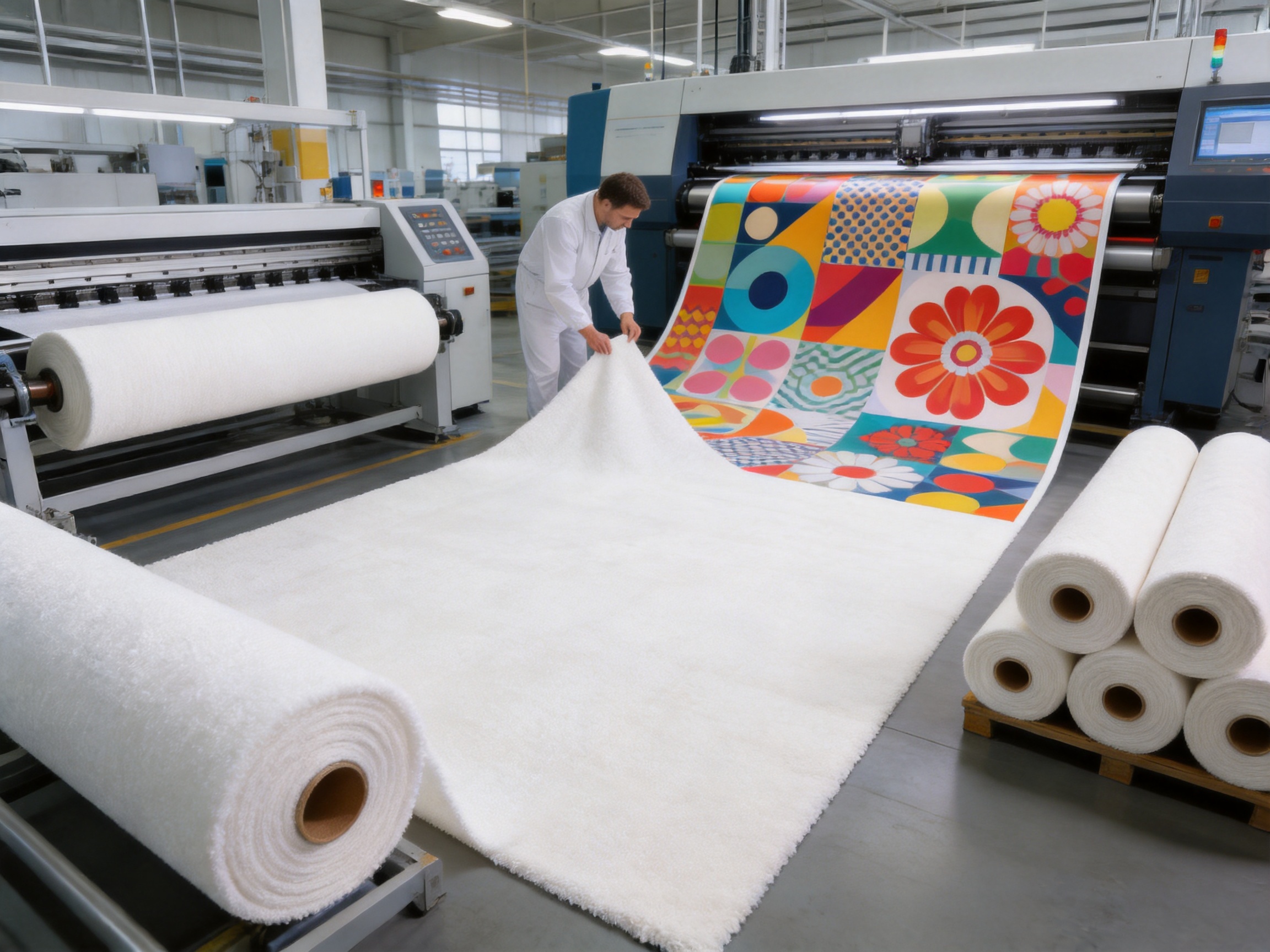
For area-rug brands, the PFP white base creates opportunities for printed collections. Manufacturers can develop geometric patterns, botanical artwork, abstract textures, traditional motifs, cartoon characters, or neutral interior designs. The same base material can support several collections by changing only the artwork and finishing specifications.
Prayer mats require a surface that feels comfortable, remains stable during use, and can be decorated with meaningful patterns. The soft polyester microfiber surface may support a pleasant tactile experience, while a suitable anti-slip backing can help keep the finished mat positioned on the floor.
Printing compatibility makes it possible to produce a wide range of decorative and culturally appropriate designs. As with all textile products intended for regular contact, the final manufacturer should evaluate colorfastness, surface cleanliness, backing safety, and care performance according to the target market’s requirements.
Bathroom environments require floor coverings that provide comfort and practical contact under bare feet. The looped pile can create a textured surface suitable for bath mats, while the fabric’s soft touch supports a comfortable user experience.
For bath-mat production, the finished construction should be designed with moisture management in mind. The textile fabric is only one part of the final product. Backing selection, drying characteristics, washing resistance, edge binding, and mildew-control requirements should be considered during development and testing.
Kitchen mats are exposed to frequent foot traffic, spills, food particles, and repeated cleaning. The 380gsm fabric can provide a durable textile surface for kitchen-mat designs when combined with a suitable backing and finishing system. Its low-profile construction may also help reduce interference around cabinets, appliances, and door openings.
Printed kitchen mats can be produced with decorative patterns, food-related graphics, simple geometric themes, or brand-specific designs. Buyers should evaluate stain resistance, cleaning performance, color retention, and edge durability based on the intended use environment.
Door mats require a surface that can tolerate frequent contact and remain visually presentable. The looped structure provides texture and can contribute to a more functional entrance surface. The material can be combined with a non-slip backing or rubberized base to create a finished entrance mat with improved floor stability.
Because entrance products can experience high traffic, manufacturers should conduct abrasion, shedding, colorfastness, and dimensional-stability tests. The suitability of the final product depends on the complete construction, not the face fabric alone.
Beyond individual mats and rugs, the fabric can serve as a component in broader carpet programs. Its available widths, roll format, and printing compatibility make it adaptable to commercial and residential product development. It may be used for decorative carpet panels, custom floor coverings, promotional carpets, and other applications requiring a printed textile surface.
Customization is a key advantage for buyers who want to differentiate their product ranges. The fabric can be produced according to requested dimensions and can be processed for digital printing or paper transfer printing. This allows customers to coordinate the textile with a brand identity, interior design scheme, seasonal theme, or specific project requirement.
Standard widths of 170, 190, and 210 centimeters are available for common production needs. Customized width arrangements can be discussed when a project requires a different format. The maximum width of approximately 3.2 meters is useful for large products and can help reduce joins in selected applications.
Width should be confirmed according to the complete production plan. Buyers should consider printing equipment dimensions, cutting layouts, finished-product sizes, roll handling, and expected edge loss. A wider fabric is not automatically more efficient if the final cutting plan cannot use the additional material effectively.
PFP white provides a neutral foundation for color development and printed artwork. Digital printing is suitable for highly detailed graphics, multiple colors, gradients, photographic imagery, and shorter production runs. Paper transfer printing may be selected for particular visual effects, production methods, or design requirements.
Before bulk production, buyers should approve artwork files, color references, strike-offs, and printed samples. They should also define acceptable tolerances for color variation, registration, surface appearance, and print coverage. Clear standards help reduce misunderstandings between the buyer and manufacturer.
The fabric can be incorporated into rugs and mats with different backing materials, edge treatments, shapes, and labels. Finished products may include rectangular rugs, runners, round mats, irregular decorative shapes, or modular pieces. Binding, overlocking, laser cutting, sewing, and lamination can be evaluated according to the product design.
Private-label customers may also request customized packaging, woven labels, printed care instructions, barcodes, carton marks, and retail presentation. These details should be confirmed early because packaging and labeling can affect the production schedule.
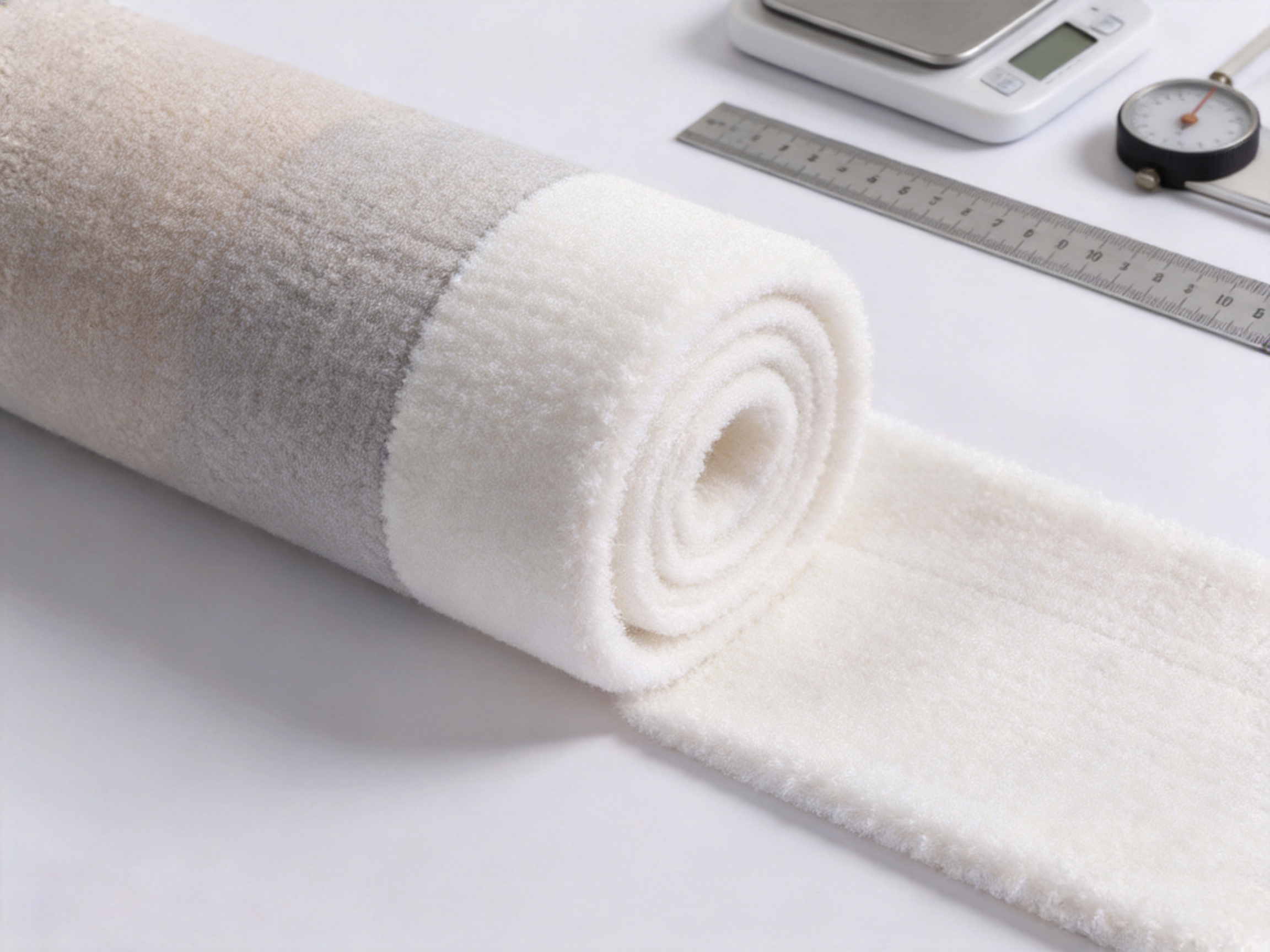
Commercial buyers often evaluate more than the unit price of carpet fabric. They also consider yield, production speed, consistency, storage, transport, defect rates, and the ability to respond to new designs. The 380gsm fabric addresses several of these factors through roll packaging, multiple width options, make-to-order production, and compatibility with common printing and converting processes.
Roll packaging supports continuous processing. Instead of handling individual cut pieces during the initial production stage, manufacturers can feed the material through printing, lamination, cutting, or inspection equipment in a more organized manner. Continuous roll handling may improve productivity and help reduce unnecessary manual operations.
The fabric’s moderate weight can also support efficient warehouse management. Compared with very bulky or extremely heavy carpet inputs, rolls of this material may be easier to position and organize. Storage conditions should still be clean, dry, and protected from direct sunlight, excessive humidity, sharp objects, and contamination.
The company’s integrated manufacturing structure can further support production planning. By coordinating fabric development, printing, and finished carpet processing, the supplier can help buyers move from sample approval to bulk production with fewer communication gaps. This is particularly useful when the customer requests a complete product rather than fabric alone.
Environmental responsibility is an important consideration in modern carpet and home textile purchasing. Zhejiang Benyi Textile Technology Co., Ltd. states that it focuses on ecological protection, consumer health, and sustainable textile development. Its initiatives include work with recycled polyester and water-saving dyeing methods.
Recycled polyester can help reduce reliance on newly produced fossil-based raw materials when it is sourced and processed through suitable systems. Water-saving dyeing technologies may help reduce water consumption and improve resource efficiency. The environmental value of any specific product depends on the actual raw materials, production methods, certification status, and chain-of-custody documentation associated with the order.
The company also states that it has passed OEKO-TEX® and Global Recycled Standard-related certifications. Buyers should request current certificates, scope information, transaction certificates where applicable, and product-specific documentation before making compliance claims in marketing materials. Certification requirements may vary according to the destination market and the exact material composition.
Sustainability also includes product durability. A longer-lasting textile may reduce the frequency of replacement and help lower the material consumption associated with short product lifecycles. By developing durable carpet fabrics with practical performance and adaptable designs, manufacturers can create products that remain useful and attractive over an extended period.
When purchasing the 380gsm Imitation Nylon Fabric, buyers should establish a clear technical specification before confirming bulk production. The specification should include fiber content, weight tolerance, width tolerance, pile height, color standard, surface appearance, roll length, packaging, printing requirements, and acceptable defect levels.
Sample approval is recommended for all customized orders. A physical sample allows the buyer to review hand feel, loop formation, print clarity, color, thickness, width, and compatibility with the intended backing. If the fabric will be made into a finished rug or mat, the sample should ideally be evaluated in the complete construction rather than as an isolated textile layer.
Useful quality tests may include:
• Fabric weight and dimensional measurement.
• Width and roll-length verification.
• Pile-height consistency.
• Visual inspection for holes, streaks, stains, uneven loops, and knitting defects.
• Colorfastness to rubbing, washing, and light exposure where relevant.
• Abrasion and wear evaluation for high-traffic products.
• Backing adhesion or lamination strength.
• Slip-resistance testing of the completed mat or rug.
• Washing and drying performance for washable product categories.
• Packaging integrity during transport and storage.
Testing should be adapted to the final application. A decorative bedroom rug and a commercial entrance mat do not experience identical conditions. The appropriate test program should reflect expected traffic, moisture, cleaning frequency, floor type, and customer use.
The product is supplied on a make-to-order basis with a minimum quantity of 500 kilograms per color. Buyers should provide detailed information at the quotation stage, including required width, color or printing method, estimated quantity, intended use, backing requirements, packaging preferences, and destination port or address.
The stated delivery time is approximately 15 to 20 days. This should be understood as a standard production reference rather than an unconditional guarantee. Lead time may change according to order volume, the number of colors, artwork approval, laboratory testing, raw-material availability, production capacity, public holidays, and shipping arrangements.
For time-sensitive programs, buyers should request a production schedule with clear milestones. These may include sample preparation, artwork confirmation, pre-production approval, knitting, printing, inspection, packing, and dispatch. Early approval of technical details is one of the most effective ways to reduce avoidable delays.
Roll packaging should be specified according to the buyer’s warehouse and production equipment. Important details may include roll diameter, core size, maximum roll weight, wrapping materials, moisture protection, identification labels, and pallet requirements. Properly defined packaging can reduce handling problems after the shipment arrives.
Purchasing from a specialist carpet textile manufacturer can provide advantages over sourcing from a general fabric trader. A specialist is more likely to understand the relationship between yarn selection, knitted construction, printing, backing, and final carpet performance. This technical understanding can improve communication during product development.
An integrated supplier can also offer a broader range of services. The customer may begin with a fabric sample, proceed to printed development, and then request a finished rug or mat. Having access to multiple stages under one organizational structure can simplify project management and reduce the need to coordinate several unrelated suppliers.
Zhejiang Benyi Textile Technology Co., Ltd. combines fabric production with dyeing, printing, and finished carpet processing. Its engineers develop new fabrics quarterly and provide customization based on customer requirements. This combination of manufacturing capability and product-development support is valuable for companies that want to create differentiated carpet collections rather than purchase generic stock material.
The company’s position in Shaoxing also connects it with one of China’s most important textile manufacturing regions. Local industry resources can support access to yarns, machinery services, printing capabilities, packaging providers, and logistics channels. These regional advantages can contribute to supply flexibility and responsive project coordination.
Floor coverings are increasingly treated as decorative products rather than purely functional household items. Consumers may choose rugs and mats to coordinate with furniture, wall colors, seasonal interiors, children’s themes, or lifestyle preferences. The printable PFP white fabric provides a suitable base for building collections around these different design directions.
Retailers can use the same fabric platform for several price points and visual categories. A simple geometric pattern may appeal to minimalist interiors, while a high-detail floral or illustrative design may target a more decorative segment. Neutral palettes can support everyday home products, and vivid graphics can be developed for children’s rooms, hospitality spaces, or promotional merchandise.
Design flexibility also benefits project-based customers. Hotels, restaurants, offices, schools, retailers, and event organizers may require mats or carpets carrying specific colors, patterns, or brand elements. The ability to print customized artwork can make the fabric suitable for these projects, subject to minimum quantities and technical approval.
The fabric is an input material, and care performance depends on the complete finished product. Before issuing care instructions, the manufacturer of the finished rug or mat should conduct washing, drying, stain, and dimensional-stability tests. Instructions may differ depending on backing, edge treatment, adhesives, printing method, and construction.
For household products, regular vacuuming or gentle surface cleaning may help maintain appearance. Spills should generally be addressed according to the finished product’s care label. Excessive moisture, aggressive chemicals, high heat, or unsuitable machine washing may damage the backing or printed surface even when the face fabric itself is durable.
Manufacturers should also consider the target floor surface. A mat intended for tile, wood, laminate, vinyl, or carpet may require different backing materials and slip-control solutions. Final anti-slip performance should be verified under realistic conditions and should not be assumed solely from the presence of a looped face fabric.
The fabric is made from 100% polyester microfiber. It is called imitation nylon fabric because its appearance and performance concept may resemble nylon-based carpet surfaces, but the stated composition is polyester.
GSM means grams per square meter. A 380gsm specification indicates that one square meter of the fabric weighs approximately 380 grams, subject to normal production tolerances. Weight influences hand feel, coverage, handling, and the overall appearance of the finished product.
Standard widths are 170, 190, and 210 centimeters. Customized widths can be discussed, and the maximum width can reach approximately 3.2 meters for suitable production requirements.
The pile height is approximately 2.5 to 3 millimeters. The low-profile looped surface provides texture and a comfortable feel while remaining practical for many rug and mat applications.
Yes. The material can be used directly for digital printing or paper transfer printing in customized designs. Buyers should approve print samples and confirm color, artwork, registration, and performance requirements before bulk production.
The looped surface can increase friction with the soles of the feet, but anti-slip performance in a finished rug depends on the entire construction. A suitable non-slip backing, coating, or lamination system should be selected and tested for the intended floor surface.
The minimum order quantity is 500 kilograms per color. The final quantity should be confirmed with the supplier according to the requested width, printing method, and customization level.
The fabric is packaged in rolls. Buyers should confirm roll dimensions, core size, wrapping, labeling, palletization, and moisture-protection requirements when placing an order.
The stated delivery time is approximately 15 to 20 days. Actual lead time depends on order details, customization, raw materials, production capacity, approval timing, and shipping arrangements.
Yes. Standard widths cover many common rug formats, and the maximum width can reach approximately 3.2 meters. Buyers should confirm the required finished size and cutting layout to determine the most efficient fabric width.
The company specializes in carpets, rug fabrics, and finished products. Its integrated manufacturing resources include weaving, dyeing and printing, and finished carpet processing, allowing customers to discuss both fabric-only and finished-product programs.
The company states that it works with sustainable materials and production methods, including recycled polyester and water-saving dyeing technologies. It also states that it has passed OEKO-TEX® and Global Recycled Standard-related certifications. Current documentation should be requested for product-specific verification.
The 380gsm Imitation Nylon Fabric is a versatile carpet textile designed for manufacturers that require a balance of comfort, durability, flexibility, and design potential. Its 100% polyester microfiber construction provides a refined touch, while the 2.5 to 3 millimeter looped pile adds surface texture and practical foot contact. The 380gsm weight offers substantial coverage without creating an unnecessarily heavy material, and roll packaging supports efficient handling and processing.
Its compatibility with digital printing and paper transfer printing gives buyers the freedom to develop customized patterns and branded products. Width options from 170 to 210 centimeters, together with customized widths and a maximum width of approximately 3.2 meters, support a broad range of rug, mat, and carpet formats. The make-to-order supply model is appropriate for commercial buyers that need planned production and specific technical requirements.
The material is supported by Zhejiang Benyi Textile Technology Co., Ltd.’s integrated manufacturing capabilities, including fabric development, weaving or knitting resources, dyeing and printing facilities, and finished carpet processing. A team of more than 20 fabric engineers helps the company develop new products and support customized projects. Its location in Shaoxing provides access to an established textile ecosystem, while its focus on ecological production and consumer health reflects the increasing importance of responsible textile manufacturing.
For buyers seeking a dependable fabric platform for area rugs, prayer mats, bath mats, kitchen mats, door mats, and printed carpet products, this material offers a practical foundation for both standard and customized collections. Proper sample approval, final-product testing, backing selection, and clear technical communication will help ensure that the finished product achieves the desired appearance, safety, durability, and commercial performance.
1. Product technical information supplied for 380gsm Imitation Nylon Fabric, item model number 100076.
2. Company information supplied by Zhejiang Benyi Textile Technology Co., Ltd., Shaoxing, Zhejiang Province, China.
3. General textile manufacturing principles concerning polyester microfiber, knitted structures, carpet pile, and roll-based fabric processing.
4. General product-development practices for digital printing, paper transfer printing, backing systems, and finished rug construction.
5. General quality-assurance considerations for carpet fabrics, including weight, width, pile height, colorfastness, abrasion, dimensional stability, and slip performance.
6. OEKO-TEX® textile safety and restricted-substance certification principles.
7. Global Recycled Standard principles concerning recycled materials, chain-of-custody management, and responsible textile processing.

ADD: No.75 Zhenyuan Road, Yuecheng District, Shaoxing City, Zhejiang Province, China 312000

Tel : +86-189 6750 9795

FAX : +86-0575-8803 2773

Email : fisher@benetextile.com

Copyright © Zhejiang Benyi Textile Technology Co., Ltd. All Rights Reserved. Carpets and Rugs Manufacturer

 English
 Français
 Deutsch
 عربى