

Tang Meilin — Customer Success and Product Support Specialist
 Home / Author / Tang Meilin — Customer Success and Product Support Specialist / Jacquard Shu Velveteen Solid Carpet: A Complete Guide to Comfort, Durability, Customization, and Manufacturing Quality
 2026.10.02
 Tang Meilin — Customer Success and Product Support Specialist
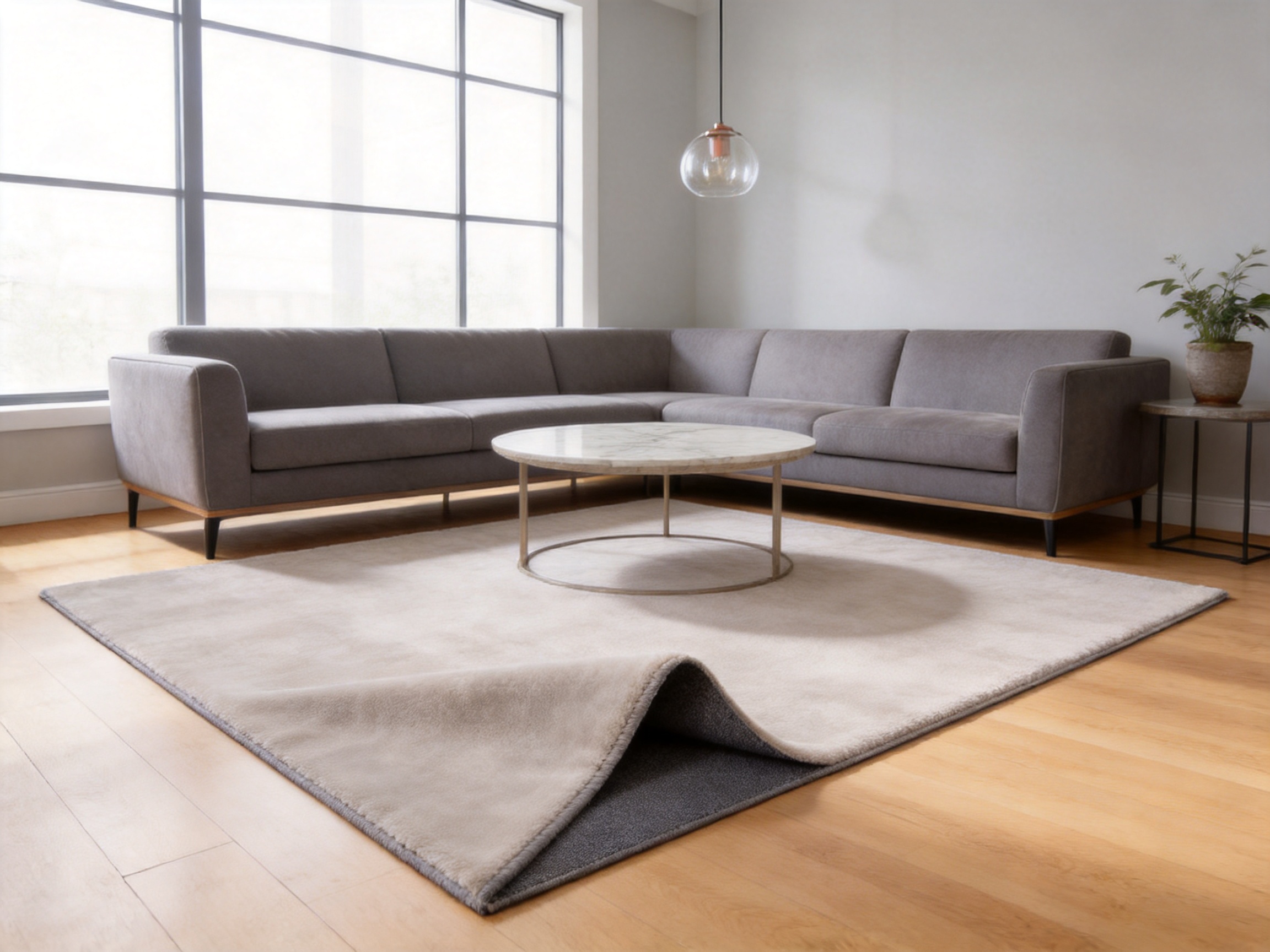
Choosing an area rug involves much more than selecting an attractive color. A high-quality carpet must provide lasting comfort, retain its appearance through daily use, remain stable on the floor, and be simple to maintain. It should also be available in practical sizes and adaptable enough to suit different rooms, interior styles, and customer requirements. The Jacquard Shu Velveteen Solid Carpet is designed around these expectations, combining a soft polyester microfiber surface, an 8–10 mm plush pile, a bonded construction, and a TPR-and-cotton backing.
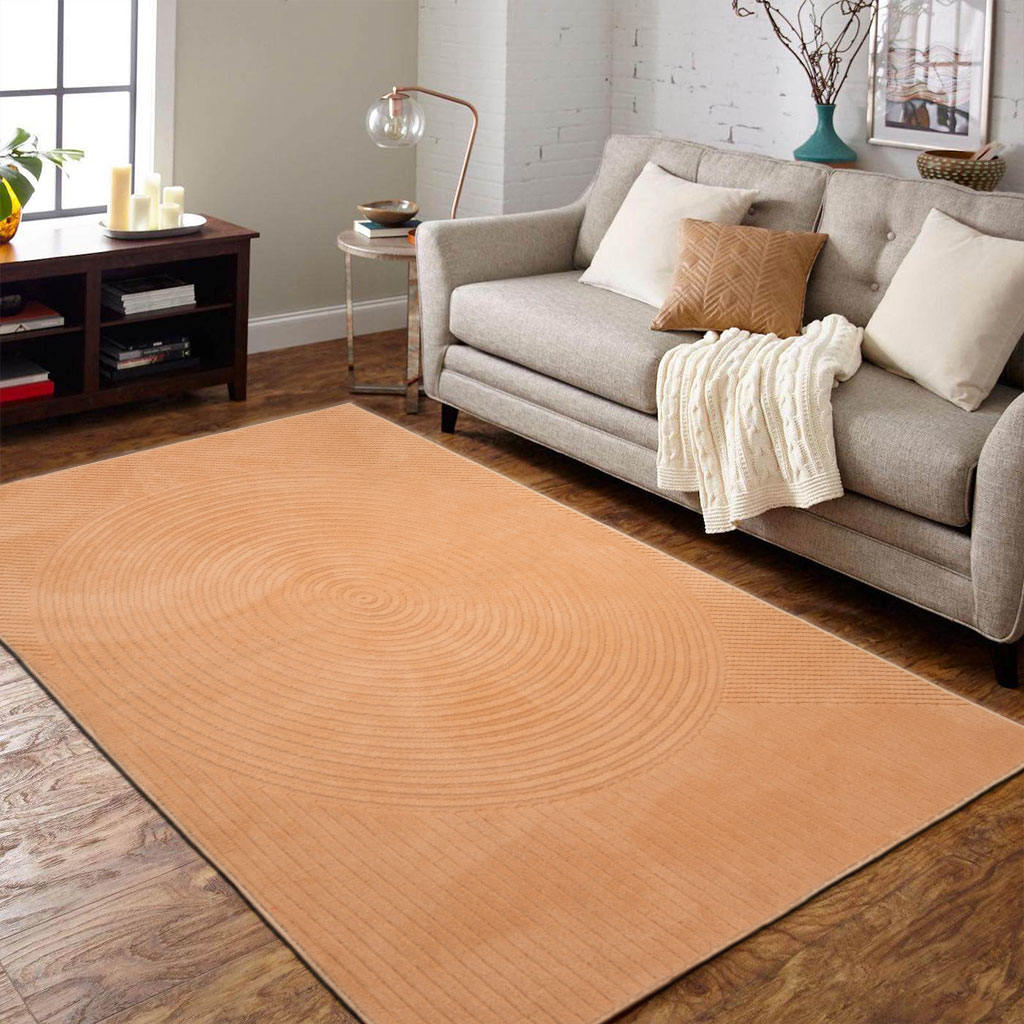
This solid area rug is intended for indoor spaces such as bedrooms, living rooms, children’s rooms, nurseries, and other areas where comfort and visual simplicity are important. Its velveteen finish creates a smooth, soft hand feel, while the dense contact surface provides a comfortable sensation underfoot. The rectangular design and solid-color appearance allow the rug to coordinate with modern, minimalist, traditional, and transitional interiors.
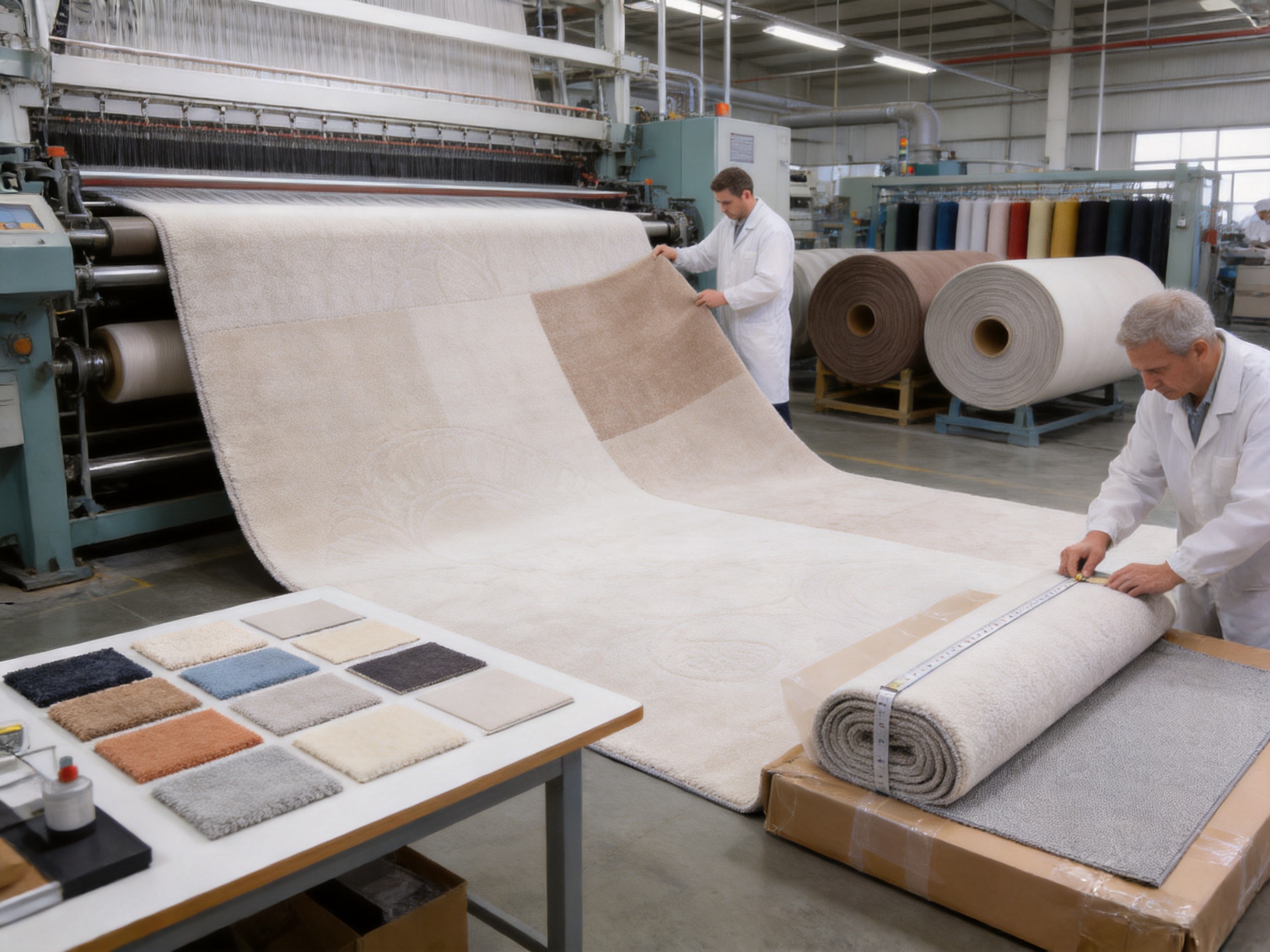
Behind the finished product is a manufacturing system designed to support consistent quality, flexible customization, and efficient production. Zhejiang Benyi Textile Technology Co., Ltd., based in Shaoxing, Zhejiang, operates across multiple stages of textile and carpet production. Its capabilities include weaving, dyeing and printing, carpet fabric development, and finished carpet processing. This level of production integration can provide advantages in quality control, lead-time management, product development, and private-label or wholesale cooperation.
The following article examines the product’s materials, construction, functional performance, design potential, applications, care requirements, and manufacturing advantages. It also explains why this carpet can be a competitive choice for distributors, retailers, hospitality buyers, interior furnishing companies, and consumers seeking a washable, soft, and stable indoor rug.
Content
The Jacquard Shu Velveteen Solid Carpet is an indoor rectangular area rug made primarily from polyester. It is available in several standard sizes, including 2' x 3', 2' x 6', 3' x 5', 4' x 6', 5' x 7', 6' x 9', and 8' x 10'. Custom dimensions can also be discussed for projects that require specific room proportions, retail programs, contract installations, or coordinated product collections.
The rug combines a velveteen surface with a relatively substantial 8–10 mm pile height. This creates a plush tactile experience without positioning the product as an excessively deep-pile carpet that may be difficult to place beneath furniture or doors. Its construction is described as bonded, a structure that supports the attachment and stability of the carpet layers. The backing is made from TPR combined with cotton fabric, contributing to floor grip, flexibility, and general stability.
The solid-color pattern is one of the product’s most commercially useful features. Patterned rugs can become difficult to coordinate when furniture, wall treatments, artwork, and decorative accessories change. A solid carpet offers a calmer foundation and can be selected to complement a wide range of color schemes. At the same time, the manufacturing platform can support customized jacquard patterns when a buyer wants a more distinctive surface design.
| Product Attribute | Specification or Feature |
|---|---|
| Product name | Jacquard Shu Velveteen Carpet |
| Product category | Solid area rug |
| Brand | Bene |
| Model number | 100358 |
| Primary material | Polyester microfiber |
| Available sizes | 2' x 3', 2' x 6', 3' x 5', 4' x 6', 5' x 7', 6' x 9', 8' x 10', or custom |
| Weight | 1080–1300 gsm |
| Pile height | 8–10 mm |
| Construction | Bonded |
| Backing | TPR plus cotton fabric |
| Shape | Rectangular |
| Usage | Indoor |
| Care | Machine washable |
| Notable features | Soft, washable, fade resistant, non-slip, customizable |
| Recommended rooms | Bedroom, living room, children’s room, nursery, and other indoor areas |
Polyester is widely used in modern carpet manufacturing because it offers a useful balance of softness, color performance, durability, and production flexibility. In this product, polyester microfiber is used to create a smooth and comfortable contact surface. The fine fibers help produce the velveteen effect, giving the carpet a soft appearance and a pleasant feel when walked on or touched.
A microfiber surface can be especially attractive in bedrooms, reading areas, nurseries, and children’s rooms. These spaces benefit from a carpet that feels comfortable when users sit, kneel, play, or walk barefoot. The surface is intended to offer a thick and fluffy contact experience while maintaining a practical construction suitable for routine indoor use.
Polyester also supports strong color presentation. The solid-color design depends on an even and attractive appearance, and the product is described as fade resistant. Fade resistance is valuable in rooms that receive regular daylight because it helps the carpet maintain its intended visual character over time. While all textile products should be protected from unnecessary prolonged exposure to intense direct sunlight, a fade-resistant construction gives buyers greater confidence in everyday indoor placement.
Compared with some low-cost rugs made from coarse fibers or thin printed fabrics, a microfiber velveteen surface can offer a more refined hand feel. It may also create a more substantial visual impression, helping the rug appear like a considered interior furnishing rather than a temporary floor covering. This distinction can matter to retailers and hospitality buyers who want products that communicate comfort and quality at the point of sale.
One of the product’s key advantages is the relationship between its softness and its moderate pile height. At 8–10 mm, the rug has enough height to feel cushioned and comfortable, but it is not described as an extremely high-pile or shag carpet. This can make it easier to position near furniture, beneath tables, and in rooms where a lower profile is preferred.
A very thick rug can create practical challenges. Doors may catch on the edge, chairs may become harder to move, and cleaning can require more effort. A very thin rug, on the other hand, may feel less comfortable and may not provide the desired visual richness. The 8–10 mm specification offers a balanced solution for buyers looking for plushness with everyday practicality.
The product’s polyester construction is intended to support routine indoor use. Its bonded construction helps hold the surface and backing together, while the carpet’s weight range of 1080–1300 gsm contributes to a fuller, more substantial feel than lightweight floor coverings. These features are relevant to homes where the rug may be walked on daily, as well as commercial programs requiring consistent appearance across multiple rooms.
Durability should always be understood in relation to the application. The carpet is designed for indoor use and is suitable for normal residential and light commercial environments. Its performance will depend on foot traffic, cleaning practices, furniture loads, moisture exposure, and correct installation. Nevertheless, the combination of polyester fibers, bonded construction, and TPR-backed stability provides a practical foundation for long-term use.
The velveteen finish gives the product a distinctive surface character. Rather than relying on a complicated motif, the carpet uses texture and softness to create visual interest. Light interacts with the short, smooth fibers, producing subtle variations in appearance as the pile direction changes. This can make a solid rug feel more dimensional without introducing a busy pattern.
Solid-color rugs remain popular because they are easy to coordinate. They can anchor a seating arrangement, add warmth to a bedroom, define a children’s play area, or provide a quiet visual foundation in a minimalist interior. Neutral colors can support natural wood, stone, white, gray, beige, or black furniture. Stronger colors can introduce emphasis while preserving a clean and organized appearance.
The solid design is also well suited to repeat purchasing. A distributor can offer several colors across the same size range, allowing customers to create coordinated collections. Property developers, furniture retailers, and hospitality buyers can use the same product structure in different colorways without changing the basic performance expectations.
In a living room, the carpet can be placed beneath a coffee table and the front legs of a sofa to visually connect the seating area. In a bedroom, a larger size can extend beyond the bed to provide a soft landing area on both sides. Smaller sizes can be used beside a bed, beneath a reading chair, or in a compact apartment.
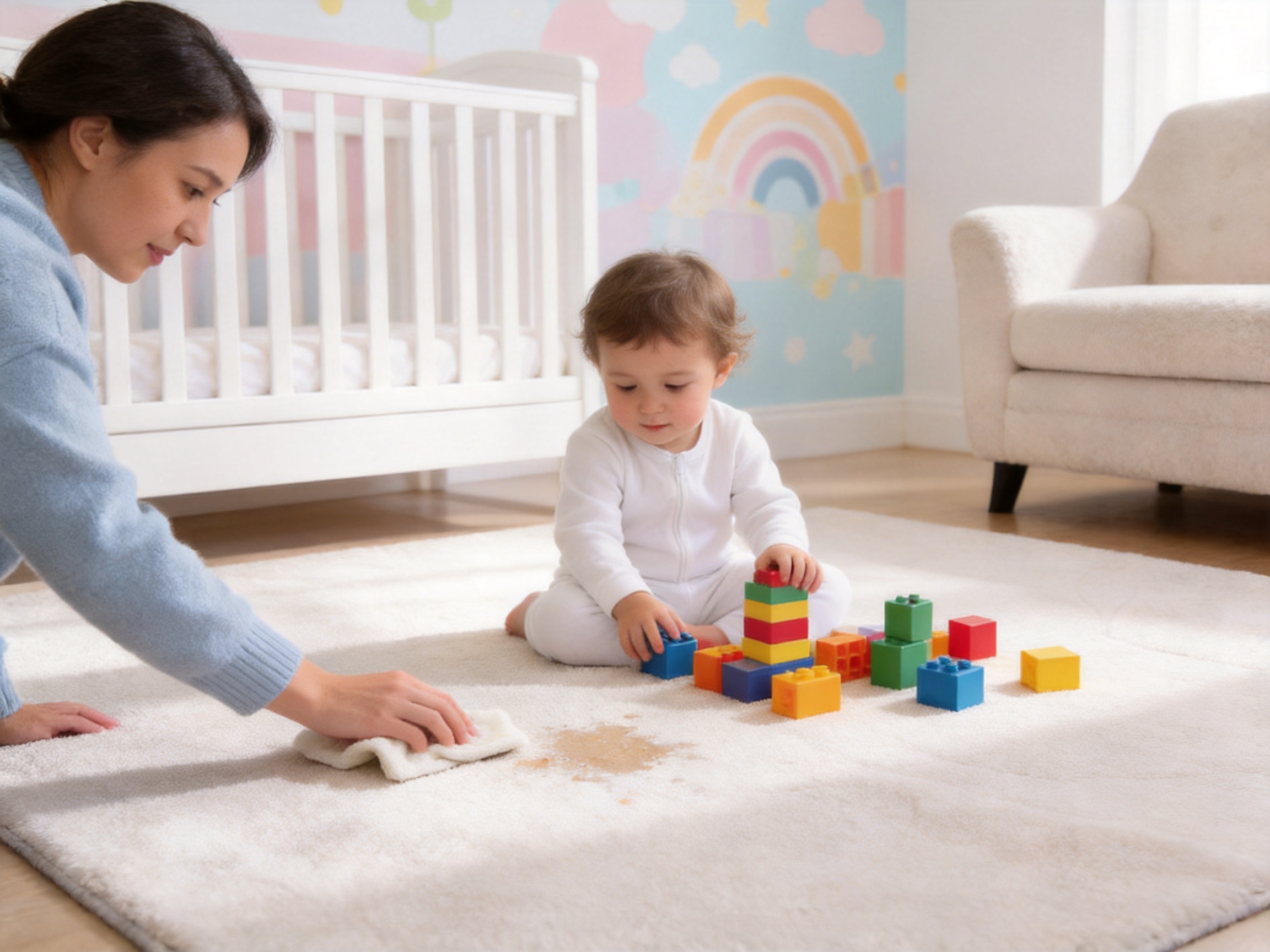
In children’s rooms and nurseries, the soft surface can create a more comfortable area for sitting and playing. The washable construction is particularly useful in these environments because spills, dust, and everyday marks are common. In an entrance or hallway, a narrow size such as 2' x 6' can provide a decorative runner-like solution, although the carpet should be selected according to the level of traffic and the specific safety requirements of the location.
Although the standard product is a solid-color area rug, the manufacturing platform can support customized jacquard patterns. This allows buyers to develop designs according to a decoration concept, seasonal collection, private-label identity, or project requirement. Custom jacquard development may include different arrangements of texture, tonal variation, geometric structure, or decorative patterning.
Customization is valuable for companies that want to differentiate their rug collection from standard mass-market products. Instead of competing only on price, a buyer can create a recognizable assortment with coordinated dimensions, colors, and patterns. Custom development also allows a manufacturer and buyer to consider intended room use, market preferences, packaging requirements, and target price positioning during the product-development stage.
The back of a carpet is as important as its surface. A beautiful rug can be inconvenient if it shifts during use, curls excessively, or lacks sufficient structural stability. This product uses TPR combined with cotton fabric as the backing material. TPR, or thermoplastic rubber, is commonly selected for its flexibility and grip-related properties. When integrated with a textile backing, it can help the rug remain more stable on suitable indoor floor surfaces.
The non-slip feature is one of the product’s principal functional advantages. A rug that moves less can provide a more comfortable user experience and reduce the need for an additional rug pad in many typical applications. The backing also allows the carpet to be folded, which supports more efficient storage, packing, and transportation compared with rigid or heavily structured floor coverings.
Floor conditions still matter. Dust, oil, moisture, wax, and loose debris can affect how any non-slip backing performs. The floor should be clean and dry before the carpet is placed. Buyers should also ensure that the rug lies flat and that the edges are not obstructed or folded. For areas with unusual flooring, high traffic, steep movement, or special safety requirements, an additional underlay may still be appropriate.
Some inexpensive rugs use simple woven or felt-like backings that provide little grip. These products may move easily when walked on, particularly on smooth floors. A TPR-backed design can offer a more stable alternative while preserving flexibility. This is particularly useful in bedrooms, children’s areas, and living rooms where the rug may be used without permanent installation.
The backing also supports a cleaner visual installation. When a rug remains properly positioned, furniture arrangements look more orderly and the floor covering performs more consistently. For retailers, the non-slip feature can be presented as a practical benefit that improves the product’s value beyond softness and appearance alone.
Maintenance is a major consideration when comparing area rugs. A product that is difficult to clean may be attractive at first but inconvenient over time. This carpet is described as machine washable, providing a practical solution for routine cleaning and household maintenance. Washability can be particularly beneficial in homes with children, pets, frequent visitors, or users who prefer a fresh and hygienic floor covering.
Before washing, users should review the supplier’s recommended cleaning method, confirm that the washing machine can accommodate the selected size, and avoid overloading the machine. Smaller rugs are generally easier to manage in household equipment. Larger sizes may require commercial washing equipment or professional cleaning, depending on the machine capacity and local care instructions.
The carpet should be shaken or vacuumed regularly to remove loose dust and surface particles. Vacuuming should be performed according to the equipment manufacturer’s instructions so that the pile is cleaned without unnecessary stress. Spills should be addressed promptly with an appropriate method rather than being allowed to penetrate and dry deeply.
After washing, the rug should be dried thoroughly before being returned to the floor. Excess moisture can affect the backing, create odors, or contribute to problems beneath the carpet. The rug should be laid flat where possible, and it should not be placed on the floor while damp. Correct care helps preserve the softness, color, shape, and backing performance.
Many decorative rugs require specialized cleaning or cannot be washed easily because of delicate fibers, rigid backing, or complex construction. A washable polyester rug can provide a more convenient ownership experience. This is a meaningful advantage for customers who prioritize easy care and for commercial buyers who need straightforward maintenance procedures.
Washability may also reduce the perceived risk of purchasing a lighter-colored carpet. Customers are often cautious about cream, beige, pastel, or other pale shades because marks are more visible. A washable structure can make these colors more practical for everyday use, provided the cleaning instructions are followed carefully.
The available size range allows the product to serve several room layouts. The 2' x 3' option is suitable for compact decorative placements, bedside areas, small seating corners, or entrance zones. The 2' x 6' size can function as a narrow runner-style piece in selected indoor areas. The 3' x 5' and 4' x 6' options are practical for smaller living spaces, study areas, children’s rooms, and apartment layouts.
The 5' x 7' size is a versatile choice for many living rooms and bedrooms. The 6' x 9' and 8' x 10' sizes can define larger seating groups or extend around a bed, depending on the room dimensions and furniture arrangement. Offering multiple sizes allows retailers to serve customers with different budgets and floor plans while maintaining a consistent product identity.
Custom dimensions are particularly useful in contract furnishing, hospitality, real estate staging, office interiors, and residential projects with unusual layouts. A custom-size program can reduce the need to cut or layer standard rugs, helping create a more intentional finished appearance. Buyers should confirm minimum order quantities, production tolerances, color approvals, packaging details, and delivery schedules when requesting customized dimensions.
| Size | Potential Application | Primary Benefit |
|---|---|---|
| 2' x 3' | Small bedroom area, reading corner, entrance, or bedside placement | Compact and easy to position |
| 2' x 6' | Narrow indoor passage or side-of-bed placement | Longer coverage in limited-width areas |
| 3' x 5' | Children’s room, study, small seating area, or apartment | Flexible medium-small format |
| 4' x 6' | Small living room, bedroom, or play area | Balanced coverage and manageable handling |
| 5' x 7' | Common living room or bedroom arrangement | Versatile everyday size |
| 6' x 9' | Larger bedroom, lounge, or seating group | Defines a broader interior zone |
| 8' x 10' | Large living room, master bedroom, or hospitality setting | Creates a substantial coordinated floor area |
| Custom | Contract projects, special layouts, and private-label collections | Supports precise project requirements |
The quality and consistency of a finished carpet depend heavily on the manufacturing system behind it. Zhejiang Benyi Textile Technology Co., Ltd. operates in Shaoxing, Zhejiang, a region widely recognized for textile production and supply-chain expertise. The company focuses on textile technology, carpets, rug fabrics, and finished carpet products.
A notable strength is its control over several stages of production. The company has weaving factories, dyeing and printing factories, and finished carpet processing factories. This integrated structure can reduce dependence on disconnected outside suppliers and improve coordination between fabric development, color processing, backing application, cutting, finishing, and final inspection.
Vertical integration can provide several practical benefits. First, it makes communication more direct when a buyer requests a change in color, weight, texture, pattern, or backing. Second, it can support more consistent material control from one production stage to the next. Third, it may improve lead-time visibility because the manufacturer can coordinate multiple stages internally rather than relying entirely on separate vendors.
Weaving capability is important for developing the base fabric and surface structures used in carpet products. The manufacturer can work with polyester materials and develop fabrics according to the required hand feel, weight, surface appearance, and intended application. For the Jacquard Shu Velveteen Solid Carpet, the surface objective is a soft, dense, velveteen-like contact layer with a consistent solid-color appearance.
Weaving expertise also supports customized product development. When buyers request jacquard motifs or coordinated patterns, technical teams can consider yarn selection, structure, pattern scale, surface definition, and production efficiency. A design that looks attractive on a digital screen must also be translated into a stable and manufacturable textile structure. Experience at the weaving stage helps bridge that gap.
Color is central to a solid carpet. Uneven coloration, inconsistent shade matching, or poor process control can reduce the perceived quality of an otherwise well-constructed rug. In-house or closely controlled dyeing and printing capability allows the manufacturer to manage color development and coordinate production more efficiently.
Color approval is especially important for wholesale and private-label programs. Buyers may require a specific palette across several rug sizes or products. They may also need repeat production to match previously approved shades. A structured color-management process helps reduce variations and supports more reliable product presentation in retail collections and project installations.
After the surface textile is developed and processed, the carpet must be combined with its backing and finished into a usable floor covering. The bonded construction connects the carpet layers and contributes to overall resilience. The TPR-and-cotton backing must be applied consistently so that the rug remains flexible, stable, and suitable for folding and packaging.
Finished processing may include cutting to size, edge treatment, inspection, folding, labeling, and packing. Each step affects the customer’s experience. Accurate dimensions help the rug fit the intended space. Proper edge finishing contributes to a clean appearance. Correct folding and packaging reduce unnecessary damage during storage and shipping. Final inspection can identify surface defects, shade irregularities, dimensional issues, or backing concerns before the product leaves the factory.
The company maintains a team of more than 20 fabric engineers and develops new carpet fabrics each quarter based on market trends. This product-development approach is important in a category where consumers frequently seek changes in color, texture, pattern, size, and care performance.
Regular development allows the manufacturer to explore new surface effects, updated color stories, improved material combinations, and application-specific constructions. It also gives wholesale customers more opportunities to refresh their collections. Instead of offering only fixed catalog products, a development-oriented supplier can help buyers respond to changing interior design preferences and regional market demand.
Customization may include jacquard pattern development, color selection, size adjustments, backing specifications, packaging, labeling, and coordinated product programs. The exact scope depends on project quantity and technical feasibility. A successful custom program normally requires clear communication regarding target performance, design references, sample approval, production tolerances, packaging expectations, and delivery schedules.
Standard products are useful for quick purchasing, but they can place multiple sellers in direct comparison. A customized carpet collection can create more distinctive value. Retailers may use exclusive colors or patterns to strengthen their visual identity. Hospitality buyers may request dimensions that align with specific room plans. Interior designers may need a coordinated range that matches furniture and wall finishes.
Customization can also support market segmentation. The same basic manufacturing platform may be adapted for budget-conscious retail, mid-market home furnishings, children’s collections, or higher-end decorative programs. By changing surface design, packaging, size assortment, and presentation while maintaining controlled production methods, buyers can create products for different customer groups.
The company describes environmental protection and sustainability as important parts of its textile technology strategy. It invests in sustainable materials and production methods, including recycled polyester and water-saving dyeing techniques. These efforts reflect a broader movement in the textile industry toward responsible resource use, more efficient production, and improved transparency.
The company also reports that it has passed OEKO-TEX® and GRS certifications. Buyers should request current certification documents, applicable product scopes, and validity information when compliance documentation is required for a particular project. Certification details can vary according to factory, material, product line, and production batch, so verification remains an important part of professional sourcing.
Environmental responsibility is increasingly relevant to both consumers and commercial buyers. Retailers may need sustainability information for product descriptions and procurement policies. Hospitality and contract customers may have environmental standards for materials, packaging, and manufacturing. A supplier that can discuss recycled materials, water-saving processes, and certification documentation is better positioned to support these requirements.
Integrated manufacturing can support quality control at multiple points. Incoming materials may be checked for composition and consistency. Woven fabrics can be reviewed for structure, weight, and surface defects. Dyeing and printing can be monitored for shade accuracy. Backing and bonding can be evaluated for adhesion, flexibility, and visual uniformity. Finished rugs can be inspected for dimensions, edge quality, cleanliness, and packaging condition.
Quality control should be matched to the buyer’s requirements. A wholesale order may require inspection standards, approved samples, carton markings, and shipment documentation. A private-label program may add label placement, barcode accuracy, color-card approval, and packaging tests. Clear specifications help the manufacturer and buyer evaluate the same quality targets.
The Jacquard Shu Velveteen Solid Carpet occupies a practical position between very thin decorative mats and heavier traditional carpets. Its advantages become clearer when it is compared with common alternatives.
Thin printed mats can be lightweight and inexpensive, but they may provide less cushioning and a less substantial tactile experience. Their surface may also appear flatter. The velveteen carpet offers a thicker 8–10 mm pile, a softer microfiber feel, and a more furnished appearance. Its TPR backing can also provide stronger floor stability than a basic textile underside.
High-pile shag rugs can feel very soft, but they may be more difficult to vacuum, place beneath furniture, and clean thoroughly. The 8–10 mm pile of this product provides comfort without the same degree of bulk. It can therefore be a better choice for customers who want softness while retaining easier everyday handling.
Natural-fiber rugs can offer distinctive texture and visual appeal, but some may be more sensitive to moisture, staining, shedding, or specialized cleaning requirements. Polyester microfiber provides a different performance profile, emphasizing softness, color consistency, washability, and production flexibility. Customers should select according to their priorities, but the polyester construction is advantageous for users seeking easy-care indoor comfort.
Wall-to-wall carpeting and rigidly installed floor coverings can create a continuous appearance, but they require more complex installation and are less convenient to remove for cleaning or replacement. A foldable area rug can be repositioned, stored, exchanged, or transported more easily. This flexibility is valuable for renters, seasonal decoration, staging projects, and retail customers who want to update a room without renovation.
The product is suitable for several indoor applications. In bedrooms, it creates a soft surface near the bed and can add warmth to hard flooring. In living rooms, it can define a seating zone and introduce color without overwhelming the rest of the interior. In children’s rooms, it offers a comfortable surface for play and reading while retaining a washable construction.
In nurseries, buyers may value the soft touch and easy-care properties, although the product should always be used on a clean, flat, and safe floor. In home offices, the rug can soften the appearance of the room and make the workspace more comfortable. Smaller formats may also be used beneath a desk chair or beside a cabinet, provided that the backing and pile are compatible with the chair movement.
Commercial applications may include guest rooms, serviced apartments, model homes, retail displays, lounges, and selected office areas. For such projects, buyers should evaluate expected traffic, cleaning schedules, fire and safety requirements, and any applicable local regulations. The manufacturer’s ability to provide customized sizes and designs can be useful when multiple rooms need coordinated furnishings.
Retailers can position this product around four central selling points: velveteen softness, washable convenience, non-slip backing, and flexible solid-color styling. These benefits are easy for customers to understand and apply to everyday household needs. Product displays should show the surface texture, available color range, size options, and care information clearly.
Wholesale buyers should confirm the exact material composition, available colors, size tolerance, minimum order quantity, packaging method, production lead time, and sample approval procedure. They should also determine whether custom jacquard development is required or whether the standard solid-color design meets their needs.
For online retail, accurate product photography and complete dimensions are particularly important. Customers should be shown the carpet in room settings as well as close-up views of the surface and backing. Descriptions should explain that the carpet is intended for indoor use, is machine washable according to care requirements, and includes a TPR-and-cotton backing designed to improve stability.
Retailers should avoid overstating performance. Terms such as non-slip and fade resistant should be presented as product features, while actual results depend on floor type, sunlight, maintenance, and usage conditions. Clear communication builds customer trust and reduces misunderstanding after purchase.
Before placing the rug, clean the floor and remove dust, moisture, oil, and loose debris. Unpack the carpet carefully and allow it to relax flat if it has been folded for transportation. Minor temporary creases may reduce as the rug settles. Avoid placing heavy furniture on sharp folds or edges.
Check that the carpet lies flat and that the corners do not create a tripping hazard. If the product is placed near a door, verify that the door opens and closes freely. On smooth floors, ensure that the backing and floor are dry and clean to maximize stability. In high-risk areas, consider whether an additional rug pad or alternative installation method is appropriate.
Vacuum or shake the rug regularly. Clean spills promptly using a suitable method. When machine washing, follow the approved temperature, detergent, cycle, and drying instructions. Do not use harsh chemicals unless they are confirmed to be compatible with polyester microfiber and the TPR backing. Dry the rug completely before returning it to the floor.
Rotate the rug periodically if it receives uneven sunlight or foot traffic. This can help distribute wear and maintain a more uniform appearance. Furniture legs should be checked occasionally to ensure that they are not creating permanent pressure marks or damaging the surface.
It is a rectangular indoor solid area rug made primarily from polyester microfiber. It features a soft velveteen surface, an 8–10 mm pile height, bonded construction, and a TPR-and-cotton backing.
Yes. The product is designed for indoor use and is recommended for bedrooms, living rooms, children’s rooms, nurseries, and similar interior spaces.
The product is described as machine washable. The selected rug size must be compatible with the washing machine, and users should follow the supplier’s care instructions regarding washing, detergent, drying, and handling.
The TPR-and-cotton backing is designed to provide non-slip performance and improve stability. Actual grip depends on the cleanliness, dryness, texture, and condition of the floor. An additional rug pad may be considered for special safety situations.
Pile height refers to the approximate height of the carpet fibers above the base structure. An 8–10 mm pile provides a soft and cushioned feel while remaining more manageable than an especially deep-pile rug.
Yes. Standard sizes range from 2' x 3' to 8' x 10', and custom dimensions can be discussed for suitable projects. Buyers should confirm production requirements, minimum quantities, tolerances, and lead times.
The manufacturer can customize different jacquard patterns according to a buyer’s decoration style and preferences. Custom development normally requires design references, technical review, sample approval, and agreement on production specifications.
No. The stated application is indoor use. It should not be treated as an outdoor carpet unless the manufacturer separately confirms a suitable construction for outdoor exposure.
The product combines a soft microfiber velveteen surface, an 8–10 mm pile, a substantial 1080–1300 gsm weight range, bonded construction, and a TPR-based backing. These features provide a more comfortable and stable floor covering than many very thin basic mats.
The supplier operates weaving, dyeing and printing, and finished carpet processing facilities. It also has a team of more than 20 fabric engineers and develops new carpet fabrics regularly. This integrated structure supports product customization, quality coordination, and lead-time management.
Fade resistance is listed as a special feature. As with any textile, unnecessary prolonged exposure to intense direct sunlight should be avoided, and performance will depend on the environment and care conditions.
Yes. Children’s rooms and nurseries are among the recommended applications. The soft surface and washable construction are useful in these spaces, but the rug should be placed flat on a clean floor and checked regularly for safe positioning.
The Jacquard Shu Velveteen Solid Carpet combines several features that are important in the modern area-rug market. Its polyester microfiber surface provides softness and a refined velveteen appearance. The 8–10 mm pile offers comfortable cushioning without the excessive bulk associated with some high-pile rugs. The bonded construction and 1080–1300 gsm weight range contribute to a substantial, durable product feel.
The TPR-and-cotton backing adds practical value by helping the rug remain stable and foldable. Machine-washable care makes the product more convenient for households and selected commercial environments. The solid-color format is versatile, while the manufacturer’s jacquard development capability allows buyers to pursue more distinctive patterns when needed.
From a sourcing perspective, the company’s integrated production system is a significant strength. Control across weaving, dyeing and printing, and finished carpet processing can support more consistent communication and coordination. The presence of fabric engineers, quarterly product development, custom services, and sustainability initiatives gives the supplier the capabilities needed to support both standard products and tailored wholesale programs.
For buyers comparing competitors, the strongest points are not limited to a single feature. The product creates value through the combination of comfort, washable maintenance, non-slip backing, flexible sizing, fade-resistant color performance, and customization potential. Supported by an experienced textile manufacturing base in Shaoxing, it is positioned as a practical and adaptable solution for residential interiors, retail collections, and selected contract projects.
1. Product specification sheet for the Jacquard Shu Velveteen Solid Carpet, including material, size, pile height, weight, construction, backing, and care information.
2. Manufacturer-provided company profile for Zhejiang Benyi Textile Technology Co., Ltd., including production capabilities, engineering resources, customization services, and textile technology focus.
3. Manufacturer-provided information concerning weaving, dyeing and printing, finished carpet processing, sustainable materials, and water-saving dyeing methods.
4. General textile product-development and carpet-care principles concerning polyester microfiber, pile construction, bonded structures, TPR backing, washing, drying, and indoor placement.
5. Manufacturer-provided information regarding OEKO-TEX® and GRS certification claims. Current documentation should be requested and verified for the relevant product, facility, and production period.
Jacquard Shu Velveteen Solid Carpet

ADD: No.75 Zhenyuan Road, Yuecheng District, Shaoxing City, Zhejiang Province, China 312000

Tel : +86-189 6750 9795

FAX : +86-0575-8803 2773

Email : fisher@benetextile.com

Copyright © Zhejiang Benyi Textile Technology Co., Ltd. All Rights Reserved. Carpets and Rugs Manufacturer

 English
 Français
 Deutsch
 عربى