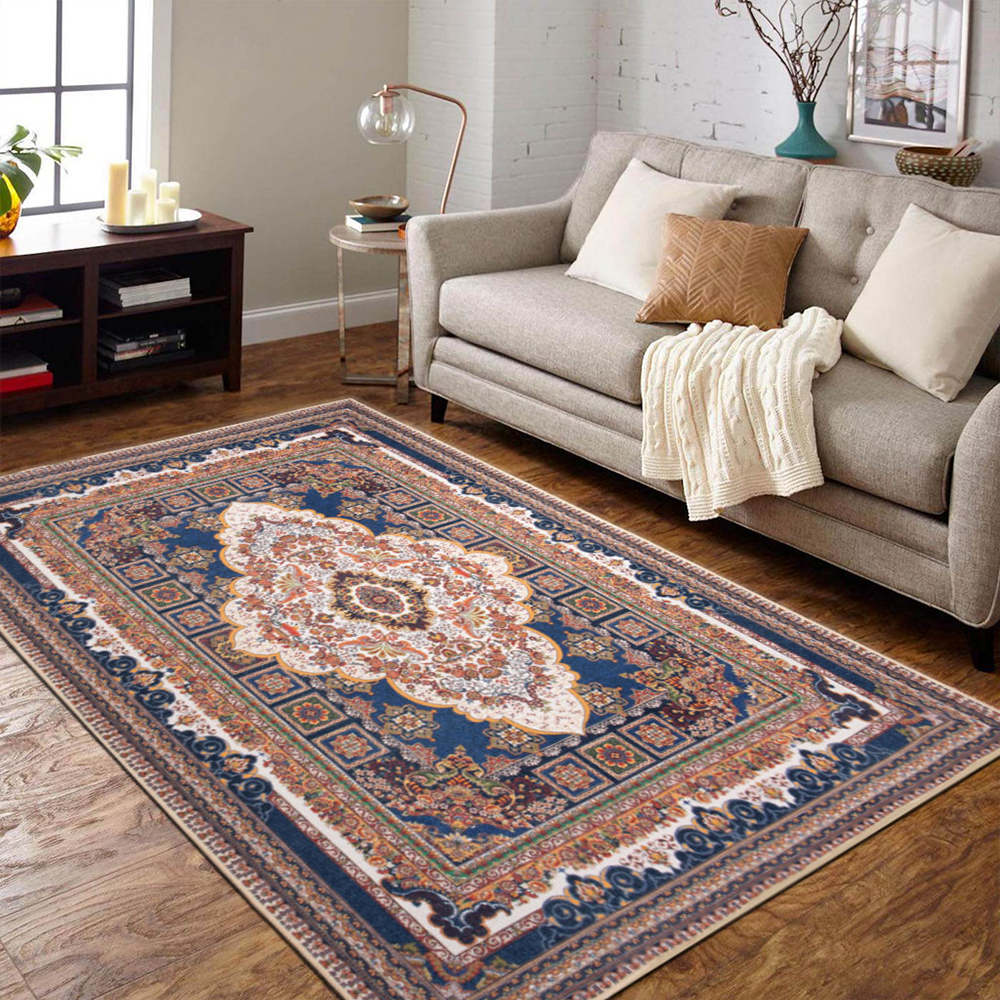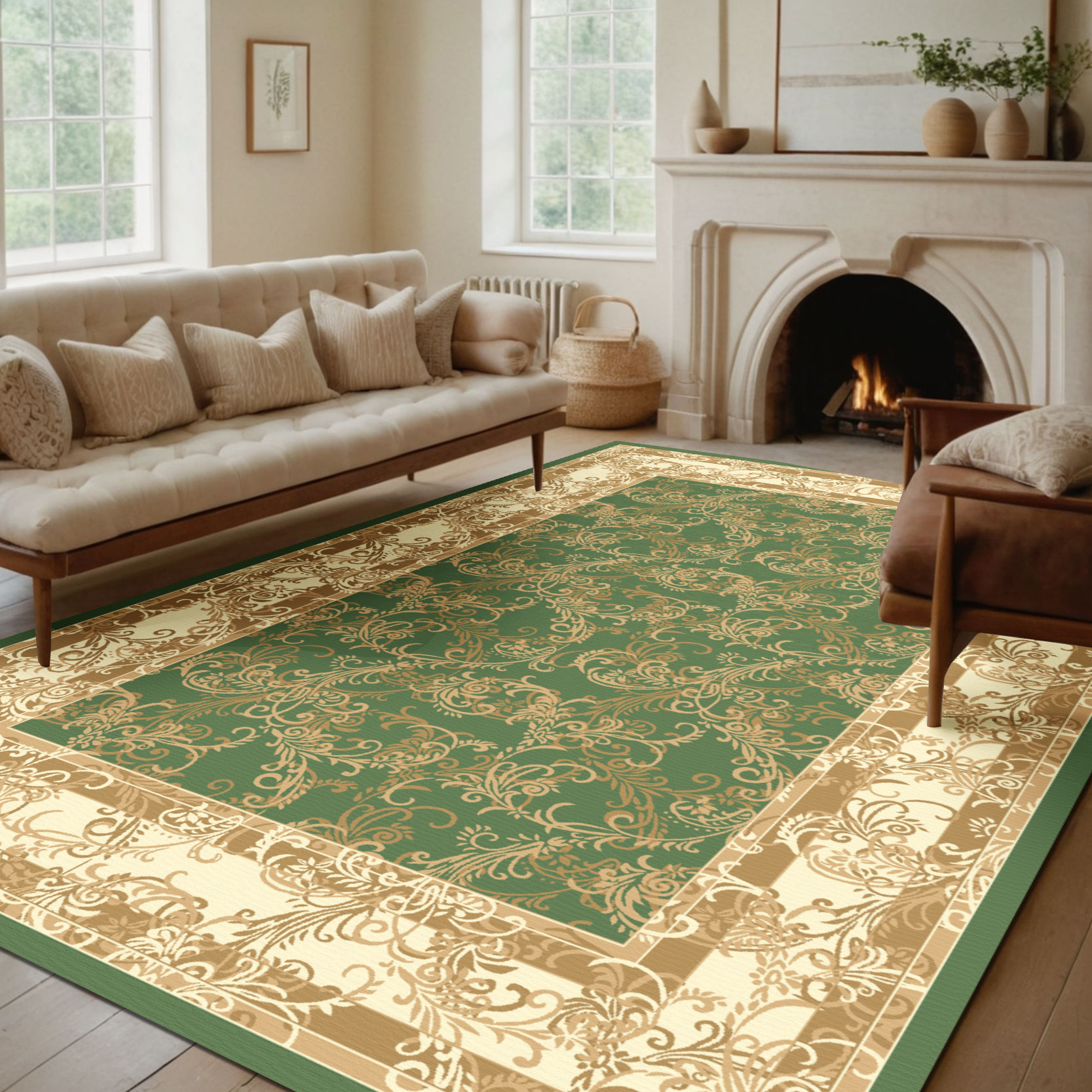


Tang Meilin — Customer Success and Product Support Specialist
 Home / Author / Tang Meilin — Customer Success and Product Support Specialist / Diamond Velvet Prayer Mat: Luxurious Comfort, Reliable Grip, and Flexible Textile Manufacturing
  2026.08.05
 Tang Meilin — Customer Success and Product Support Specialist
A prayer mat is more than a small floor covering. It is a personal surface associated with concentration, comfort, cleanliness, and daily spiritual practice. For many users, the ideal mat must feel soft beneath the knees, remain stable during movement, be easy to transport, and retain its appearance after repeated washing. It should also be attractive enough to complement a bedroom, living room, or other interior setting. The Diamond Velvet Prayer Mat is designed around these practical and aesthetic expectations, combining a glossy velvet-like surface, a Persian or Muslim-inspired pattern, a lightweight profile, and anti-slip backing technology.
Manufactured by Zhejiang Benyi Textile Technology Co., Ltd., this prayer mat reflects the company’s broader expertise in carpet fabrics, finished rugs, and textile production. The product uses 100% polyester microfiber, an 800gsm construction, a 1mm pile height, digital printing, and a non-woven backing with anti-slip dots. These features are intended to create a balance between softness, visual richness, durability, portability, and everyday maintenance.
Unlike many basic prayer mats that focus on only one characteristic, such as low price or decorative appearance, this design addresses multiple use requirements at the same time. It can serve as a dedicated prayer surface, a portable travel mat, a decorative accent, or a small area rug. Its available dimensions range from compact 70 × 110 cm and 80 × 120 cm formats to larger 160 × 230 cm and 200 × 300 cm formats, with customized sizing also available for commercial, hospitality, retail, and project applications.
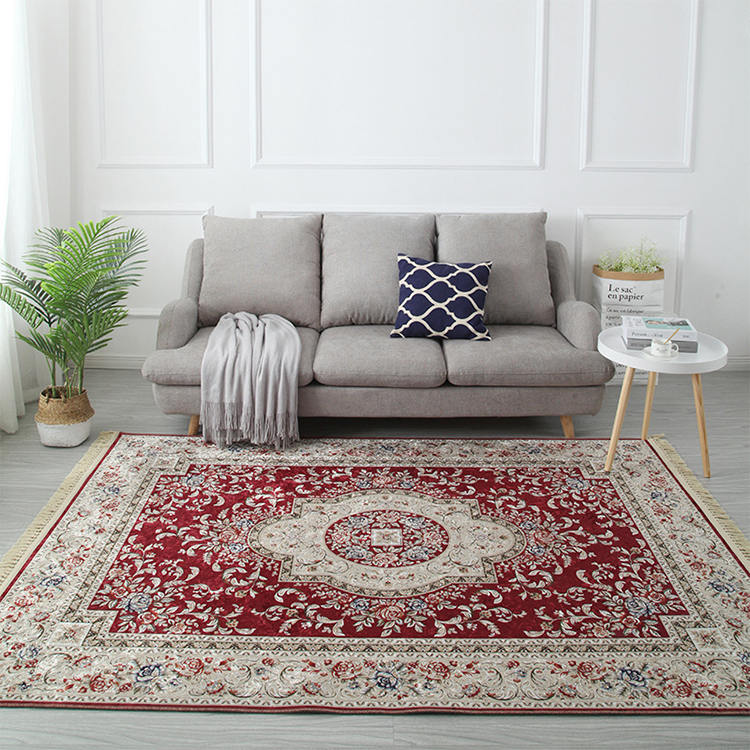
Diamond Velvet Prayer Mat
Content
The central purpose of a prayer mat is to provide a clean, comfortable, and clearly defined place for prayer. A hard floor can create pressure on the knees, ankles, and forehead, while an unstable mat may shift during changes in position. The Diamond Velvet Prayer Mat addresses these concerns through a soft polyester microfiber surface and a backing designed to help reduce movement on smooth floors.
The 800gsm weight gives the mat a substantial feel without making it excessively heavy. A product with too little material may feel thin and temporary, while an overly thick rug can become difficult to fold, roll, store, or transport. This mat occupies a practical middle ground. It provides a cushioned textile layer for regular indoor use while remaining manageable for travel and household cleaning.
The 1mm pile height contributes to the product’s distinctive surface appearance. The low pile creates a sleek profile that is easier to place beneath doors, furniture edges, or adjacent rugs than a thick, high-pile design. At the same time, the microfiber surface can reflect light in a soft, glossy way, supporting the diamond velvet appearance described in the product name.
Comfort also depends on how a surface feels when touched. Polyester microfiber is commonly selected for its smooth hand feel, resistance to everyday abrasion, and ability to hold printed color. In this product, the microfiber construction supports a surface that feels pleasant during kneeling and sitting while remaining suitable for repeated household use.
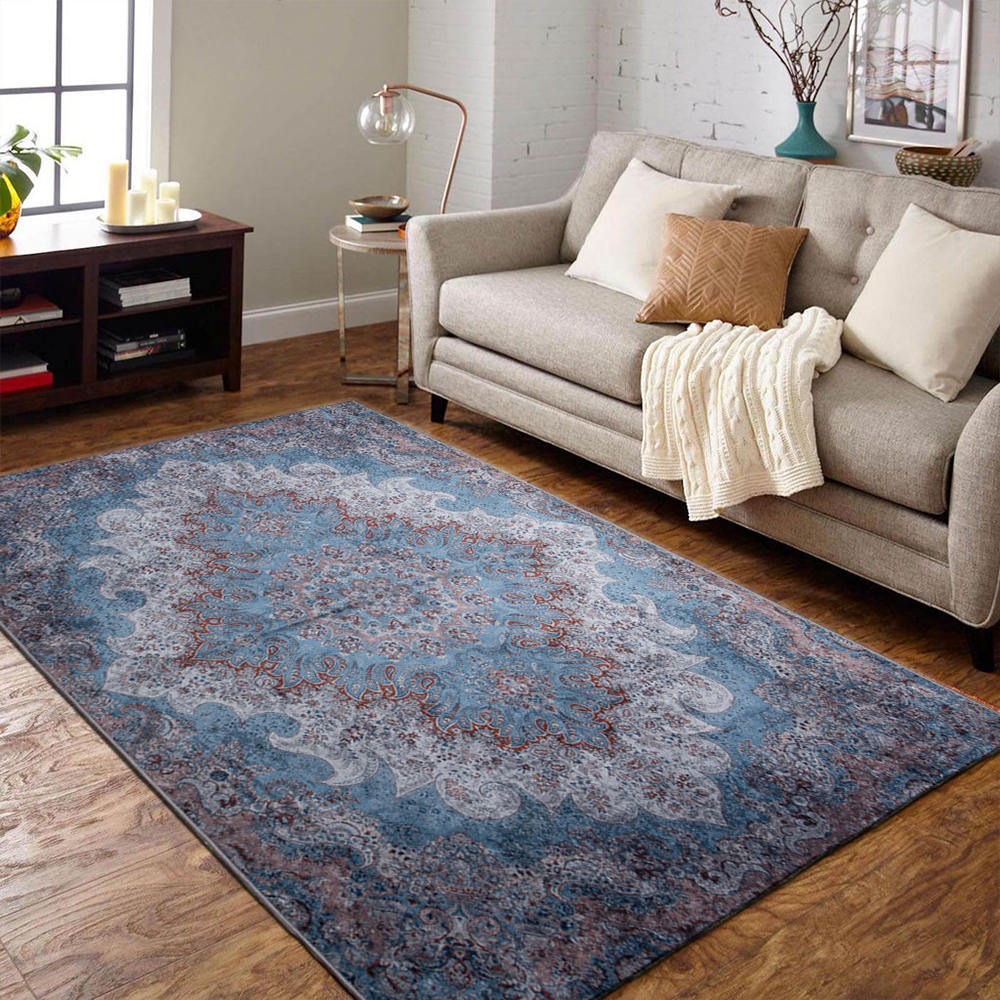
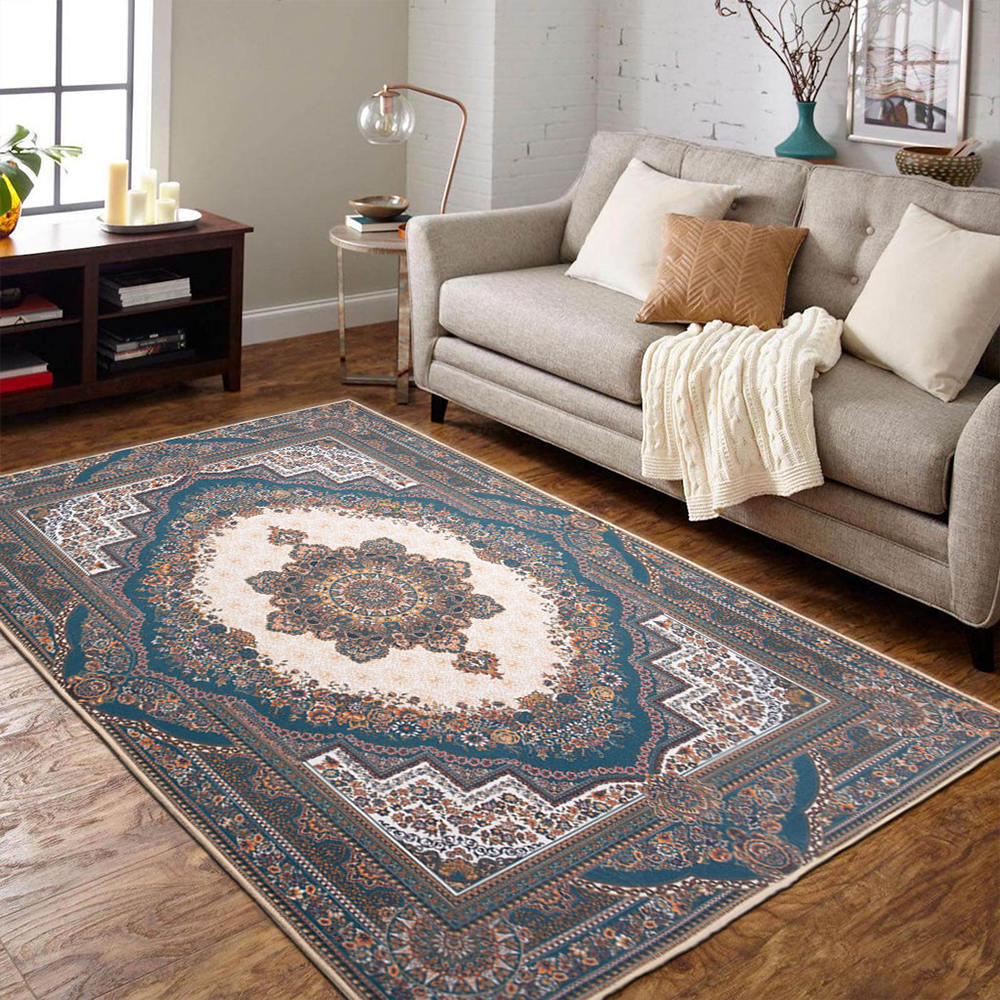
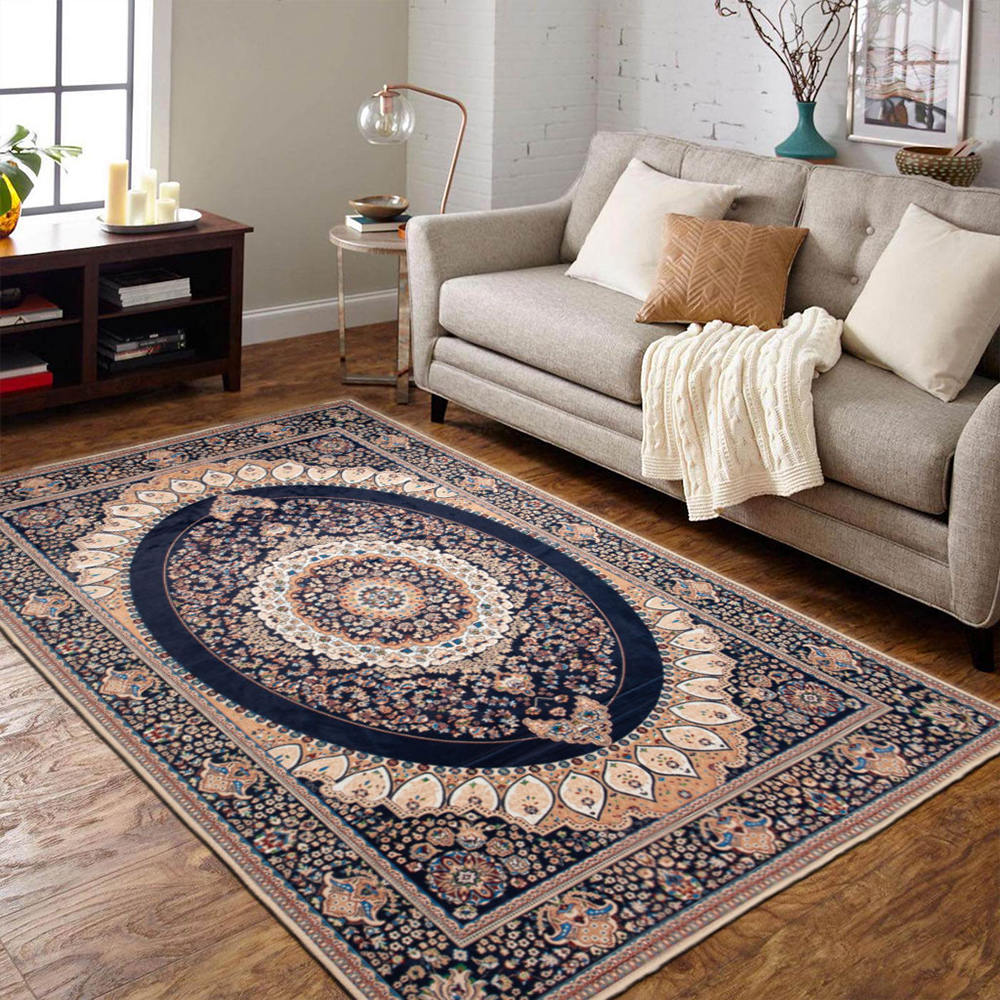
Visual design is an important part of the prayer mat experience. A recognizable central motif or border can help define the prayer space and create a sense of order. Persian and Muslim-inspired patterns are associated with geometric balance, ornamental detail, and carefully arranged visual elements. The Diamond Velvet Prayer Mat uses digital printing to reproduce these decorative qualities across a soft textile surface.
Digital printing offers several practical benefits compared with simple, limited-color printing methods. It can support detailed artwork, tonal variation, fine lines, and multiple color combinations. This makes it possible to develop designs for different markets, interior styles, seasonal collections, and customer preferences. For wholesalers and importers, digital printing also provides greater flexibility when building a product range.
The printed pattern is intended to perform both a functional and decorative role. On the floor, it identifies a personal prayer area. In a home, it can coordinate with surrounding furniture, curtains, bedding, or other textile accessories. In travel situations, a compact version can provide a familiar visual and practical environment away from home.
Fade resistance is listed as one of the product’s special features. Although all textile products should be protected from unnecessary prolonged exposure to intense sunlight, fade-resistant materials are beneficial in rooms with regular daylight and in occasional outdoor applications. Maintaining color depth over time helps the mat continue to look presentable after repeated use.
A prayer mat should remain in position when a user stands, kneels, sits, or moves between prayer positions. Sliding can interrupt concentration and may create a safety concern, especially on smooth tile, wood, laminate, or polished stone floors. The Diamond Velvet Prayer Mat uses a non-woven fabric backing with anti-slip dots to help improve contact with the floor.
The dotted backing creates areas of friction between the mat and the underlying surface. This design is intended to reduce unwanted movement without requiring an additional rug pad. For consumers, that can simplify installation and reduce the total number of accessories needed. For retailers, it provides a clear product benefit that can be communicated easily on packaging and product pages.
Anti-slip performance can vary according to floor condition. Dust, moisture, wax, and other residues may reduce friction, so the floor should be clean and dry before use. The mat should also be laid flat and checked periodically after washing or storage. Even with a slip-resistant backing, users should take normal care on wet or highly polished surfaces.
Compared with a plain textile mat without backing treatment, the dotted non-woven construction provides a more complete solution. It combines a soft top surface with a functional underside, which is particularly useful in homes where the mat is moved between rooms or placed directly on hard floors.
The product is made from 100% polyester microfiber. Polyester is widely used in rugs and home textiles because it offers a practical combination of durability, color retention, shape stability, and production flexibility. Microfiber refers to very fine fibers that can create a smooth, dense, and soft textile surface.
For a prayer mat, polyester microfiber has several relevant advantages. It can provide a comfortable touch without the maintenance demands of some natural fibers. It is also suitable for digital printing, allowing detailed Persian or Muslim-inspired patterns to be applied with strong visual definition. The material’s resistance to everyday wear supports repeated use in bedrooms, living rooms, travel environments, and other areas.
Polyester is also useful for manufacturers because it can be processed into different surface constructions and weights. A supplier with in-house textile development capabilities can adjust yarn selection, surface appearance, printing effects, backing combinations, and dimensions to meet different customer requirements.
The product description emphasizes durability and fade resistance. These qualities are valuable for both household consumers and wholesale buyers. A household user wants a mat that remains attractive after regular use and washing. A distributor or retailer needs a product that can maintain acceptable appearance through storage, handling, transportation, display, and customer use.
Material selection should always be considered together with care instructions. The recommended care method is machine washing, but the specific wash cycle, temperature, detergent, drying process, and size limitations should be confirmed according to the final product label and order specification. Proper care helps protect both the printed surface and the anti-slip backing.
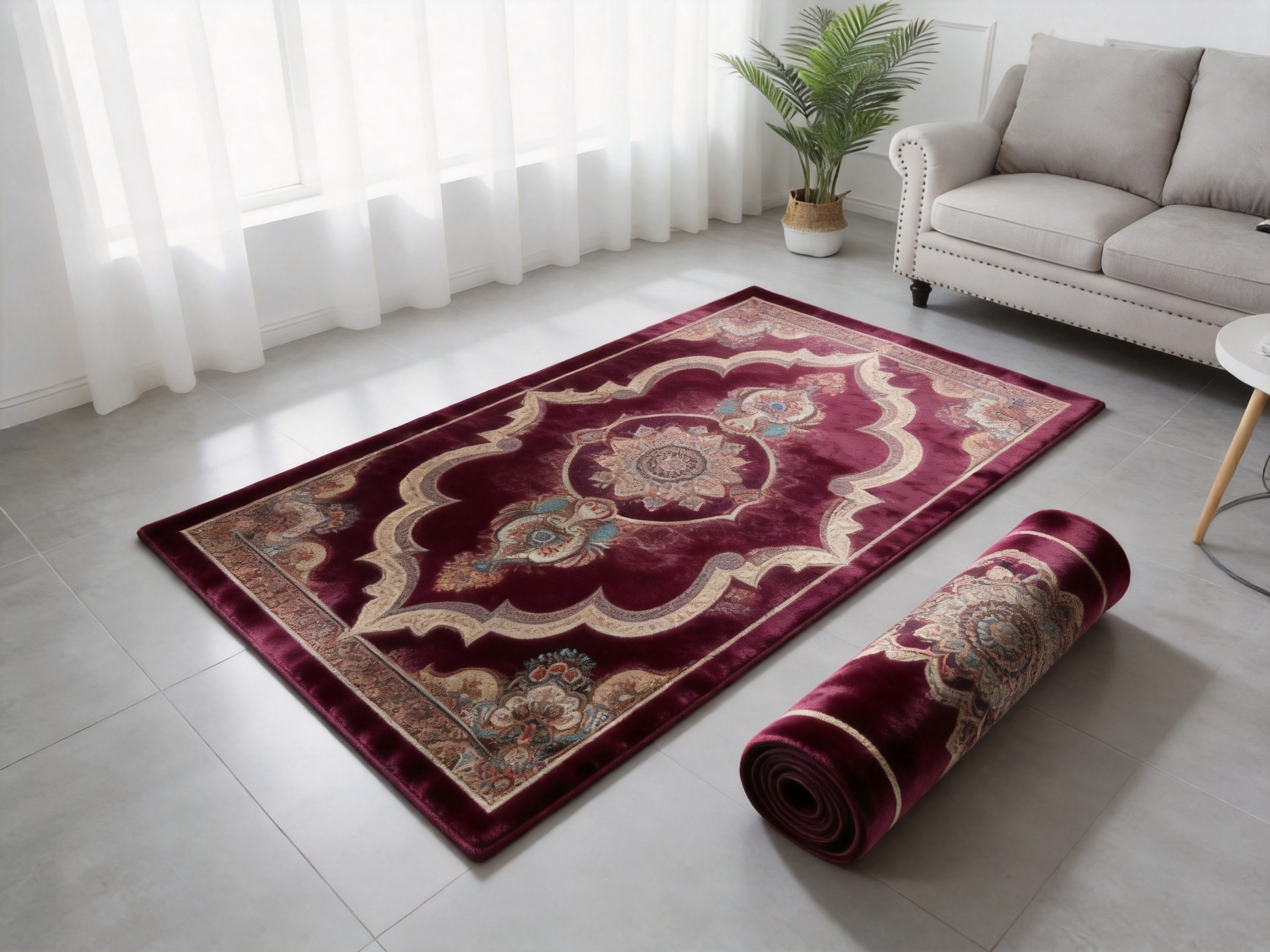
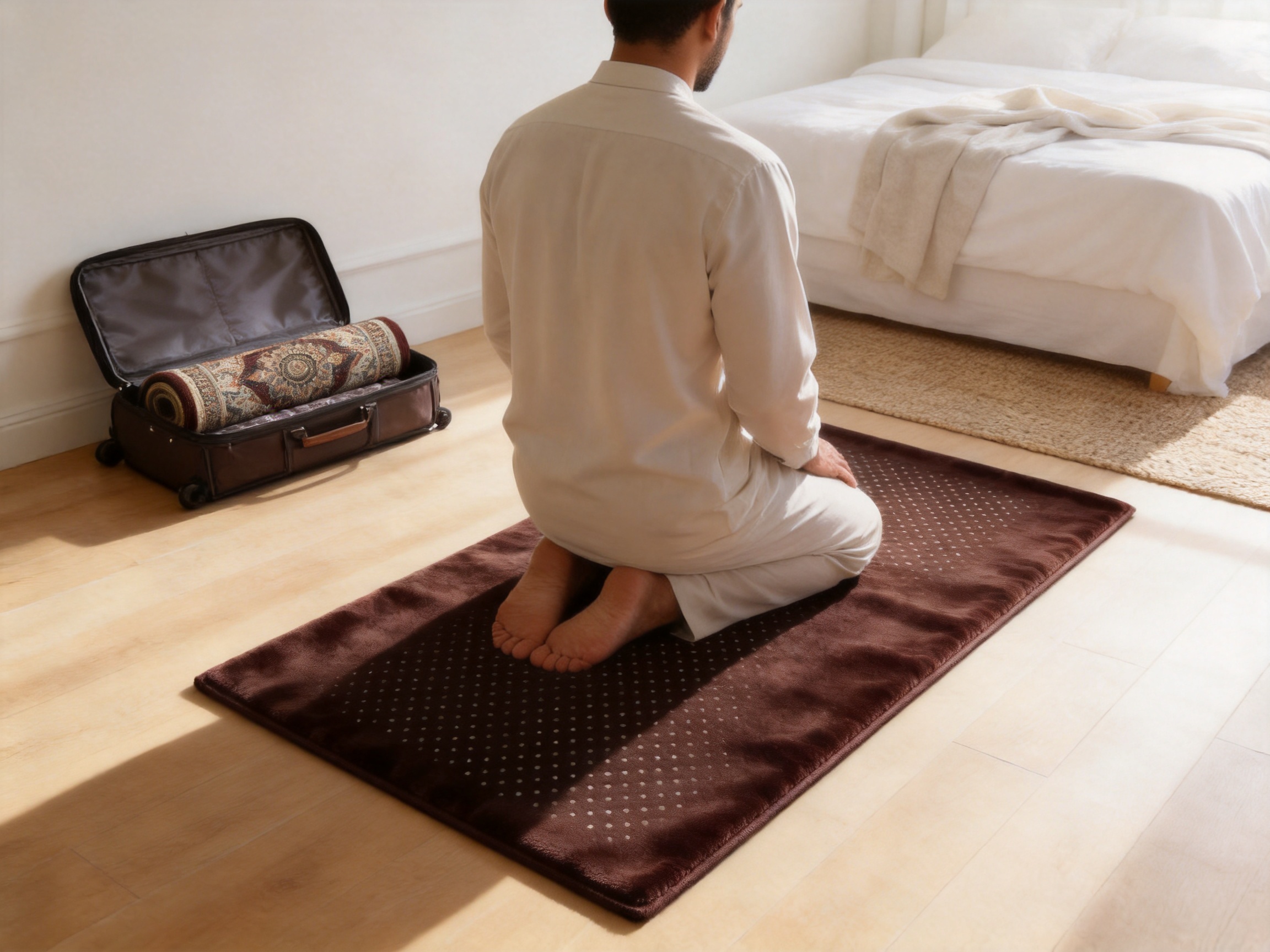
One of the product’s important advantages is its range of available sizes. The compact 70 × 110 cm and 80 × 120 cm versions are appropriate for individual prayer use, travel, gifting, and retail packaging. They can be rolled for transport and placed in luggage, making them convenient for people who need a personal prayer surface away from home.
Larger sizes, including 160 × 230 cm and 200 × 300 cm, extend the product beyond the traditional individual prayer mat category. These dimensions can be used as decorative area rugs, shared prayer surfaces, bedroom accents, living room coverings, or textile elements in hospitality and community environments. The larger formats may also be considered for coordinated interior projects where a prayer mat design is expected to function as a broader floor covering.
Custom sizing gives buyers additional flexibility. Retailers may request dimensions suited to local market preferences. Hospitality customers may need mats that fit guest rooms, designated prayer spaces, or interior layouts. Project buyers may require coordinated sizes across multiple rooms. Custom production can also support private-label collections, promotional programs, and specialized packaging requirements, subject to order quantity and technical confirmation.
| Specification | Product Detail | Practical Benefit |
|---|---|---|
| Product type | Prayer mat and decorative rug | Suitable for prayer, relaxation, travel, and interior use |
| Material | 100% polyester microfiber | Soft feel, practical durability, and printing compatibility |
| Weight | 800gsm | Substantial feel while remaining manageable |
| Pile height | 1mm | Low-profile surface with a sleek appearance |
| Construction | Bonded | Supports the connection of surface and backing layers |
| Backing | Non-woven fabric with anti-slip dots | Helps reduce movement on suitable indoor floors |
| Pattern | Persian or Muslim-inspired | Decorative appearance and defined prayer area |
| Shape | Rectangular | Easy placement and efficient packing |
| Available sizes | 70 × 110 cm, 80 × 120 cm, 160 × 230 cm, 200 × 300 cm, or custom | Supports personal, retail, hospitality, and project requirements |
| Care | Machine washable | Convenient routine maintenance |
| Usage | Indoor and outdoor applications | Flexible use in homes, travel, and selected outdoor settings |
Portability is a significant advantage for smaller prayer mats. People may need a prayer surface while traveling for work, visiting family, staying in hotels, or participating in outdoor activities. A compact polyester mat can be rolled and placed in luggage without taking up the space required by a thick traditional rug.
The low 1mm pile height also supports efficient storage. When not in use, the mat can be rolled or folded according to the recommended handling method. This is useful in smaller homes, shared bedrooms, dormitories, offices, and vehicles. A product that is easy to store is more likely to be used consistently rather than left in a fixed location.
Travel convenience also creates commercial opportunities. Retailers can present the smaller sizes as practical gifts, travel accessories, religious-season products, or everyday personal items. The combination of decorative pattern, machine-washable construction, and anti-slip backing gives the product broader appeal than a basic disposable or unbacked travel mat.
For transportation and export, packaging should be selected according to the size and order requirements. Small pieces may be packed in rolls, while larger sizes may require different folding or rolling arrangements. The final packaging method should protect the surface from dust, moisture, compression damage, and excessive creasing during handling.
Prayer mats are placed directly on the floor and may encounter dust, fibers, soil, and household particles. Regular cleaning is therefore essential. The machine-washable feature allows users to maintain the mat without relying exclusively on professional cleaning services or manual washing.
Machine washing can be especially valuable for families, hospitality businesses, prayer facilities, and retailers that need practical care solutions. A washable product can be refreshed more easily than a delicate rug with complicated maintenance requirements. It also supports a more hygienic routine when the mat is used frequently or by multiple people.
Care should be performed according to the instructions supplied with the final product. Users should remove loose dirt before washing, avoid unsuitable bleaching agents, use a gentle cycle when recommended, and allow the mat to dry thoroughly. Excessive heat or aggressive mechanical treatment may affect printed textiles or backing materials, so the care label should take priority over general assumptions.
Washability is not only a consumer benefit; it is also a strong wholesale selling point. Retail customers often compare textile products according to cleaning requirements. A prayer mat that combines a refined appearance with straightforward maintenance can stand out from products that are visually attractive but difficult to care for.
The Diamond Velvet Prayer Mat is described as suitable for indoor and outdoor use. Indoors, it can be placed in bedrooms, living rooms, dining rooms, personal prayer areas, offices, and guest spaces. Its decorative pattern allows it to function as an accent rug when not being used for prayer.
Outdoor applications may include travel, patios, temporary prayer areas, picnics, campsites, and other situations where a portable textile surface is useful. The mat should be placed on a relatively clean, dry, and stable surface. Outdoor exposure should be limited when conditions are wet, muddy, or extremely sunny, because moisture and prolonged environmental exposure can affect textile products over time.
The ability to move between indoor and outdoor settings strengthens the product’s value proposition. A consumer does not need to purchase one mat for home use and another for travel. A distributor can also market the product to several customer groups, including household buyers, travelers, gift purchasers, religious communities, and home décor shoppers.
For larger sizes, indoor use is generally the most practical application. The 160 × 230 cm and 200 × 300 cm formats can provide an ornamental floor layer in living rooms or bedrooms, while smaller sizes are easier to transport and use outdoors. Offering several formats allows buyers to select the balance between coverage, portability, and storage that best fits their needs.
Basic prayer mats may consist of a thin printed textile without a specialized backing. Such products can be inexpensive and lightweight, but they may not offer the same level of surface comfort, visual richness, or floor stability. The Diamond Velvet Prayer Mat is positioned as a more complete product by combining several features in one construction.
Compared with a plain flat textile, the 800gsm microfiber design offers a more substantial hand feel. Compared with a high-pile rug, the 1mm surface is easier to store, clean, and position near doors or furniture. Compared with an unbacked mat, the anti-slip dots help improve stability on suitable smooth floors. Compared with a design with limited decoration, digital printing supports more detailed Persian or Muslim-inspired artwork.
These differences matter in competitive markets. Customers increasingly evaluate a product based on the total ownership experience rather than purchase price alone. They consider comfort, ease of cleaning, safety, appearance, storage, and service support. A product that addresses these points can deliver stronger perceived value and create a more compelling retail story.
The mat can also compete with generic decorative rugs by offering a specific cultural and functional identity. It is not merely a floor covering with an ornamental pattern. Its dimensions, design language, portable formats, anti-slip backing, and prayer-oriented purpose make it relevant to a clearly defined user need.
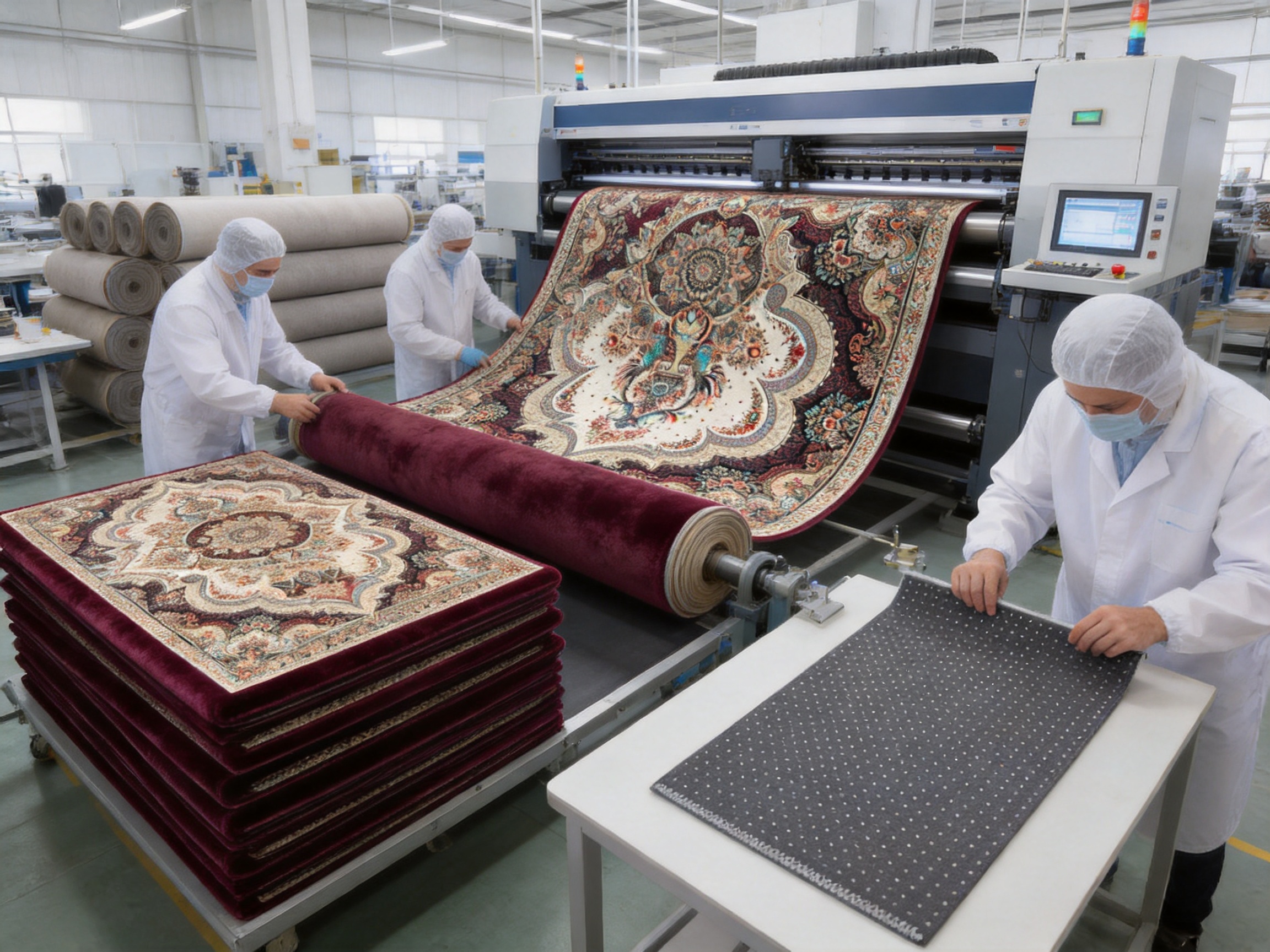
The company behind the product, Zhejiang Benyi Textile Technology Co., Ltd., is located in Shaoxing, Zhejiang Province, a region widely recognized for textile production and supply-chain activity. The company focuses on textile technology, carpets, rug fabrics, and finished products. Its production model includes weaving, dyeing or printing, and finished carpet processing capabilities.
Control over multiple production stages can provide important advantages. When fabric development, coloration, printing, backing, and finishing are coordinated within one manufacturing organization, technical communication can be more efficient. This may help reduce delays caused by transferring materials between unrelated suppliers. It also allows quality requirements to be followed more consistently from the surface layer to the finished product.
The company describes a production approach that combines the bottom and surface layers, helping simplify carpet manufacturing compared with traditional models that may involve multiple disconnected stages. A more integrated process can support improved production efficiency, better coordination of lead times, and greater control over finished-product consistency.
For buyers, manufacturing integration is particularly important when placing repeat orders. Consistent color, texture, dimensions, backing adhesion, and packaging can influence customer satisfaction and inventory planning. A supplier with control over its own production chain is better positioned to investigate problems and coordinate corrective action when necessary.
The company also employs a team of more than 20 fabric engineers. This technical team develops new carpet fabrics based on market trends and works on customized requirements. Such development capacity is useful for buyers seeking more than a standard catalog item. It may support adjustments to pattern, size, material combination, surface effect, backing, packaging, and other specifications, depending on feasibility.
A specialized textile manufacturer can approach a prayer mat as part of a broader material-development program rather than as an isolated product. Experience in carpet fabric construction helps the manufacturer evaluate surface feel, dimensional stability, printing performance, backing compatibility, and finishing quality together.
This perspective is valuable because a prayer mat must satisfy several requirements simultaneously. A surface that is soft but difficult to clean may not be practical. A design that is attractive but prone to fading may disappoint customers. A backing that grips well but damages floors would create another problem. Product development therefore involves balancing comfort, appearance, maintenance, stability, production cost, and end-use expectations.
Digital printing provides a platform for testing and expanding designs. Manufacturers can develop new collections with variations in geometry, ornament, color, and scale. This allows distributors to create differentiated assortments instead of competing only on identical standard designs. Custom artwork may also be considered for private-label programs, provided that intellectual property rights and production requirements are properly addressed.
Fabric engineers can also help buyers select suitable specifications for different markets. A compact travel mat may prioritize lightness and rollability. A home décor collection may emphasize color coordination and larger sizes. A hospitality order may require repeatable dimensions and packaging. A promotional program may need custom branding or coordinated artwork. The ability to discuss these requirements with technical personnel can shorten the path from concept to finished product.
Quality control in a finished rug involves more than checking the final appearance. The manufacturer must consider raw material consistency, surface density, print clarity, color matching, bonding, backing coverage, anti-slip dot distribution, edge finishing, dimensions, packaging, and cleanliness. Integrated production can make it easier to establish checkpoints throughout the process.
For the Diamond Velvet Prayer Mat, the relationship between the microfiber face and the non-woven anti-slip backing is especially important. The layers should be securely connected, and the finished product should remain stable during normal handling and use. A well-organized production system can monitor bonding and finishing conditions before goods are packed for shipment.
Lead time is another consideration for wholesale and project buyers. Production delays can affect seasonal launches, retail promotions, and inventory availability. Zhejiang Benyi Textile Technology Co., Ltd. states that its control over weaving, dyeing or printing, and finished carpet processing supports control of quality and lead time. While exact delivery depends on order size, customization, materials, and shipping conditions, coordinated production can provide a stronger basis for planning.
Buyers should request pre-production confirmations, sample approval, packaging details, and inspection standards for commercial orders. These steps help ensure that expectations are documented before mass production begins. A professional supplier can then use the approved sample and specifications as references for production and final inspection.
Customization is a major advantage for importers, distributors, retailers, hospitality groups, and project contractors. The available standard sizes provide an efficient starting point, while custom dimensions can help buyers match local consumer preferences or specific room layouts.
Pattern customization may also be possible. Buyers can explore different Persian or Muslim-inspired designs, color combinations, border treatments, and central motifs. If a private-label program is required, the buyer should confirm minimum order quantities, artwork formats, color approval procedures, labeling, packaging, and production timelines at the beginning of the project.
Custom packaging can help a product perform better at retail. A compact prayer mat may be packaged in a way that highlights portability, washability, design, and anti-slip performance. Larger rugs may need protective packaging suitable for warehouse storage and transport. Product labels should communicate accurate specifications and care instructions without overstating performance.
Customization can also support collection building. Instead of offering a single design, a retailer may develop a coordinated series with several colors and sizes. A collection approach encourages customers to select according to personal taste while preserving a consistent product identity. It can also help distributors serve different market segments without changing the core manufacturing platform.
Zhejiang Benyi Textile Technology Co., Ltd. describes environmental protection and sustainability as part of its company direction. The company invests in sustainable materials and production methods, including recycled polyester and water-saving dyeing techniques. It also states that it has passed OEKO-TEX® and Global Recycled Standard certifications.
Environmental claims should always be evaluated according to the specific material, certification scope, product batch, and documentation supplied for an order. Nevertheless, the company’s focus on recycled materials and water-saving processes demonstrates an effort to address environmental concerns within textile manufacturing.
Polyester products can be designed for long-term use, and durability itself is an important sustainability consideration. A mat that remains functional and attractive for an extended period may reduce the need for frequent replacement. Washability can also support continued use, provided that the product is cared for according to the manufacturer’s instructions.
Responsible sourcing involves more than material choice. It may include production efficiency, waste reduction, water management, worker safety, packaging decisions, logistics planning, and transparent quality documentation. Buyers seeking sustainability-focused products should discuss certification requirements and evidence directly with the supplier before making formal claims in their own marketing.
The Diamond Velvet Prayer Mat can serve several customer groups. Individual consumers may choose the compact sizes for home prayer, personal use, or travel. Families may select multiple mats for different rooms or household members. Gift buyers may appreciate the combination of cultural design and practical care features.
Home décor retailers can present larger sizes as decorative rugs with prayer-oriented styling. Religious goods stores can focus on the product’s portability, Persian or Muslim-inspired pattern, and stable backing. Online sellers can highlight the washable construction, size range, and compact storage potential. Hospitality businesses may consider the product for guest rooms, designated prayer areas, or culturally inclusive accommodation services.
Wholesale buyers can benefit from the broad product category fit. The same manufacturing platform can support prayer mats, area rugs, carpet fabric, and other textile products. This may allow distributors to develop a wider assortment from one supplier, simplifying communication and potentially improving purchasing efficiency.
Sales presentation should remain accurate and practical. Important points include the 100% polyester microfiber material, 800gsm weight, 1mm pile height, machine-washable care, anti-slip dotted backing, available sizes, rectangular shape, and indoor or outdoor suitability. Retailers should also explain that anti-slip performance depends on the condition and type of the underlying floor.
Before first use, the mat should be unrolled or unfolded on a clean, level surface and allowed to settle if necessary. Any temporary packaging creases should normally relax with time. The floor should be free of dust, oil, wax, and moisture to support the best possible contact between the anti-slip backing and the floor.
For regular cleaning, users should follow the care label supplied with the product. Machine washing is a listed feature, but the correct cycle and temperature should be confirmed. A gentle treatment is generally preferable for printed textiles and backing materials. Strong chemicals, aggressive brushing, and excessive heat should be avoided unless specifically approved.
The mat should be dried fully before it is placed back on the floor or stored. Damp storage may create unpleasant odors and can affect textile performance. If the product is used outdoors, it should be brought indoors after use and kept away from prolonged rain or moisture.
For long-term storage, the mat should be clean and dry before rolling or folding. Avoid placing heavy objects on it for extended periods. Store it in a dry, ventilated location protected from direct sunlight. These simple practices can help preserve the printed pattern, soft surface, and backing condition.
The competitive value of the Diamond Velvet Prayer Mat comes from the combination of features rather than one isolated specification. Its microfiber surface supports comfort, the 800gsm weight gives it substance, and the 1mm pile maintains a low-profile shape. Digital printing provides visual detail, while the Persian or Muslim-inspired pattern gives the product a clear cultural and decorative identity.
The non-woven backing with anti-slip dots adds practical stability. Machine-washable construction improves maintenance convenience. Multiple sizes support both individual use and larger interior applications. Custom production creates opportunities for private-label and project orders. Together, these features make the mat more versatile than a basic unbacked prayer textile.
The manufacturer’s strengths add another layer of value. In-house or closely controlled production across fabric development, weaving, dyeing or printing, backing, and finished processing can support consistency and communication. A dedicated engineering team can help develop new designs and specifications. Sustainability initiatives and stated certifications may also be relevant to buyers with responsible sourcing requirements.
For a competitive market, these qualities provide a strong foundation for differentiation. Buyers can position the product around comfort, portability, visual appeal, easy care, stability, customization, and manufacturing reliability. The result is a prayer mat capable of serving both a meaningful personal function and a broader home-textile market.
The mat is made from 100% polyester microfiber. This material is selected for its soft feel, practical durability, printing compatibility, and suitability for repeated household use.
The 800gsm specification indicates the approximate weight of the textile per square meter. It gives the mat a substantial feel while keeping it more manageable than a thick, heavy-pile rug.
Yes. Its soft surface, rectangular format, defined decorative pattern, and anti-slip dotted backing are designed to support regular prayer use on suitable indoor floors.
Yes. The smaller sizes, particularly 70 × 110 cm and 80 × 120 cm, can be rolled for transport and placed in luggage. They are suitable for people who need a personal prayer surface while traveling.
Machine washing is listed as the product care method. Users should follow the final care label regarding water temperature, cycle selection, detergent, drying, and any size-specific recommendations.
The non-woven fabric backing with anti-slip dots is designed to help reduce movement on suitable clean and dry floors. No textile backing can guarantee identical performance on every surface, especially wet, dusty, oily, or highly polished floors.
The product is described with Persian or Muslim-inspired patterns. Digital printing allows the manufacturer to develop detailed designs and explore different colors, motifs, and collections.
Standard sizes include 70 × 110 cm, 80 × 120 cm, 160 × 230 cm, and 200 × 300 cm. Custom sizes may also be available according to order requirements, production feasibility, and minimum quantities.
Yes. The larger formats can function as decorative area rugs in bedrooms, living rooms, dining rooms, and other interior spaces. The design remains suitable for prayer while also providing ornamental floor coverage.
The mat is described as suitable for indoor and outdoor use. Outdoor placement should be on a clean, stable, and relatively dry surface, and the mat should be protected from prolonged exposure to rain, moisture, and intense sunlight.
Zhejiang Benyi Textile Technology Co., Ltd. specializes in carpets, rug fabrics, and finished products. Its capabilities include weaving, dyeing or printing, and finished carpet processing, supported by a team of more than 20 fabric engineers. This integrated expertise can support product consistency, customization, and lead-time coordination.
Customization is available as a stated capability of the company. Buyers can discuss dimensions, designs, colors, packaging, labeling, and other requirements with the supplier. Final options depend on technical feasibility, order quantity, and confirmed specifications.
The Diamond Velvet Prayer Mat is a versatile textile product developed to combine prayer-focused function with modern home-textile performance. Its 100% polyester microfiber surface, 800gsm weight, 1mm pile height, digital Persian or Muslim-inspired design, and non-woven anti-slip dotted backing create a balanced solution for comfort, appearance, stability, and maintenance.
Small sizes make the mat portable and suitable for travel, gifting, and personal use. Larger formats expand its role into bedroom, living room, dining room, hospitality, and decorative rug applications. Machine-washable care supports everyday convenience, while fade-resistant construction helps preserve its visual appeal under normal use.
Its competitive strength is reinforced by the manufacturing capabilities of Zhejiang Benyi Textile Technology Co., Ltd. The company’s experience in carpet fabrics and finished products, control of important production stages, fabric engineering resources, customization services, and stated sustainability initiatives provide a strong foundation for wholesale and project supply.
For consumers, the product offers a comfortable and attractive personal prayer surface. For retailers, it provides a differentiated product with several clear selling points. For distributors and project buyers, the range of sizes, customization potential, and integrated textile manufacturing support make it a flexible option for developing broader rug and prayer-mat collections.
1. Product specification sheet for the Diamond Velvet Prayer Mat, including material, weight, pile height, construction, backing, sizes, care instructions, pattern, and usage information.
2. Company information supplied for Zhejiang Benyi Textile Technology Co., Ltd., including textile manufacturing capabilities, fabric engineering, production integration, customization, and sustainability initiatives.
3. General textile manufacturing principles concerning polyester microfiber, digital printing, bonded constructions, non-woven backing, and anti-slip floor-covering applications.
4. General consumer guidance for the care, washing, drying, storage, and safe placement of machine-washable textile floor coverings.
5. General references concerning sustainable textile production, recycled polyester, water-saving dyeing methods, and textile certification practices.

ADD: No.75 Zhenyuan Road, Yuecheng District, Shaoxing City, Zhejiang Province, China 312000

Tel : +86-189 6750 9795

FAX : +86-0575-8803 2773

Email : fisher@benetextile.com

Copyright © Zhejiang Benyi Textile Technology Co., Ltd. All Rights Reserved. Carpets and Rugs Manufacturer

 English
 Français
 Deutsch
 عربى
عربى