

Tang Meilin — Customer Success and Product Support Specialist
 Home / Author / Tang Meilin — Customer Success and Product Support Specialist / Jacquard Imitation Wool Solid Carpet: A Soft, Washable, and Customizable Flooring Solution
  2026.08.15
 Tang Meilin — Customer Success and Product Support Specialist
Content
Floor coverings influence much more than the appearance of a room. They affect comfort, warmth, noise control, safety, maintenance routines, and the overall impression of a residential or commercial interior. For buyers seeking a balance between softness, durability, practical care, and design flexibility, the Jacquard Imitation Wool Solid Carpet offers a well-rounded solution.
Designed as an indoor rectangular area rug, this carpet combines a plush 8-millimeter pile with a substantial 1400-gram-per-square-meter weight. Its 100% polyester microfiber surface is created to imitate the comfortable hand feel and visual richness associated with wool while offering the practical advantages of synthetic fiber. The result is a soft, versatile floor covering suitable for bedrooms, living rooms, children’s spaces, nurseries, and other indoor areas.
The product is also designed for modern household requirements. It is machine washable, foldable, fade resistant, and fitted with a TPR and cotton fabric backing intended to help reduce movement on the floor. These features make it particularly useful for families, hospitality projects, interior furnishing programs, and buyers who want a decorative rug without complicated maintenance.
Behind the finished carpet is an integrated textile manufacturing system operated by Zhejiang Benyi Textile Technology Co., Ltd. The company combines fabric development, weaving, dyeing and printing, backing integration, and finished carpet processing. This structure allows the manufacturer to coordinate product quality, customization, production scheduling, and delivery more efficiently than a supply chain that depends entirely on unrelated third-party facilities.
This article examines the product’s construction, advantages, applications, maintenance requirements, customization possibilities, and manufacturing strengths. It also explains why a polyester imitation-wool carpet can be a practical alternative to conventional wool rugs and lower-specification synthetic floor coverings.
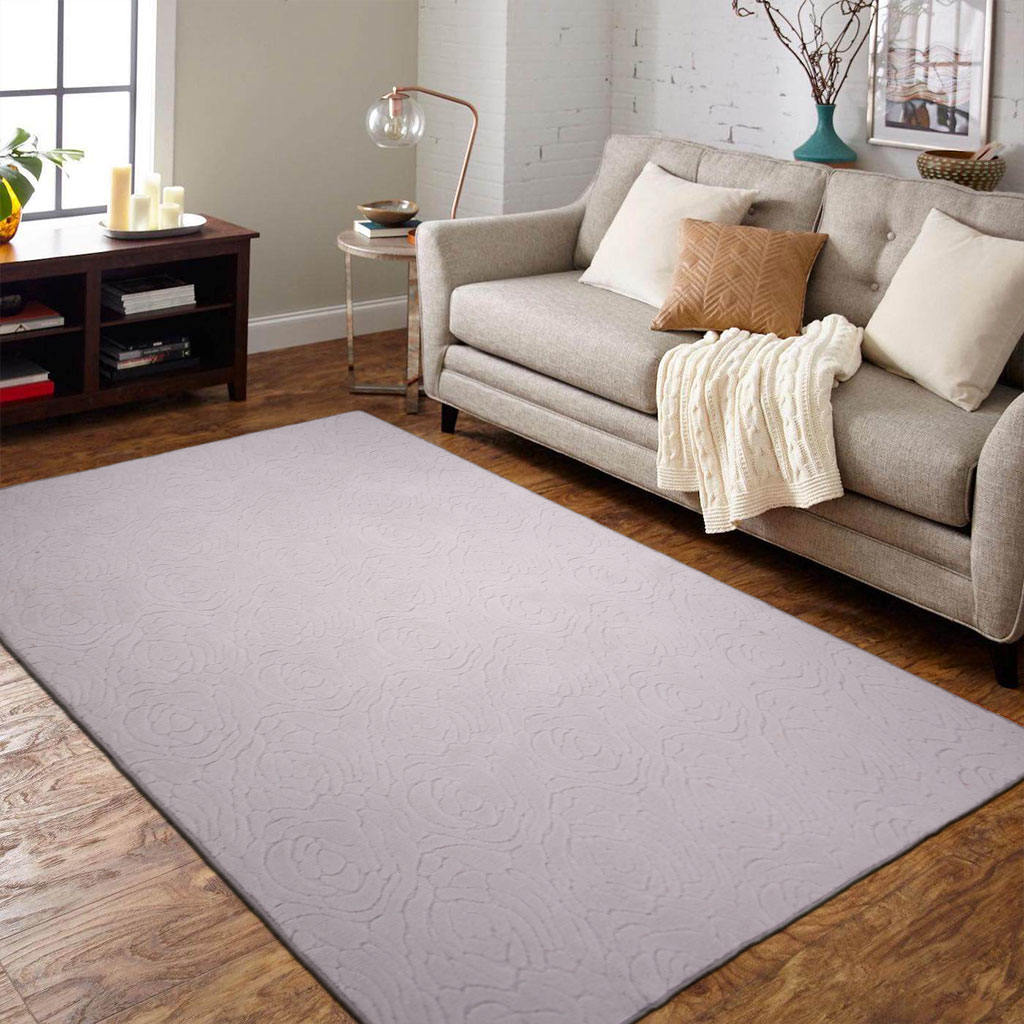
Jacquard Imitation Wool Solid Carpet
The Jacquard Imitation Wool Solid Carpet is categorized as a solid area rug. Its appearance is intentionally clean and adaptable, making it suitable for interiors that require a calm foundation rather than a bold printed pattern. Solid colors can support minimalist, contemporary, Scandinavian, transitional, children’s, and hospitality-oriented design schemes.
Although the visible surface is presented in solid colors, the jacquard manufacturing concept provides opportunities for additional development. Buyers can request different jacquard patterns according to a project’s decoration style, visual identity, or target market. This gives the product platform more flexibility than a fixed, single-design rug collection.
The carpet is manufactured from polyester microfiber. Polyester is widely used in modern floor coverings because it can provide softness, color retention, resistance to everyday wear, and relatively simple care. In this product, the fiber is developed to create a wool-like visual and tactile impression without requiring the higher maintenance or higher material cost often associated with natural wool.
The 8-millimeter pile height gives the carpet a visibly thick and comfortable contact surface while remaining practical for ordinary indoor use. It offers cushioning underfoot without creating the excessive height that can interfere with doors, furniture, vacuuming, or routine movement through a room.
With a stated weight of 1400 grams per square meter, the rug has a substantial feel compared with lightweight decorative mats. A heavier surface can contribute to a more stable appearance, improved drape, and a richer underfoot experience. Weight alone does not determine performance, but when combined with suitable backing and bonded construction, it supports the product’s positioning as a comfortable and durable area rug.
| Specification | Details |
|---|---|
| Product name | Jacquard Imitation Wool Carpet |
| Product category | Solid area rug |
| Material | 100% polyester microfiber |
| Weight | 1400 grams per square meter |
| Pile height | 8 millimeters |
| Construction type | Bonded |
| Backing | TPR and cotton fabric |
| Shape | Rectangular |
| Usage | Indoor |
| Care | Machine washable |
| Special features | Fade resistant, non-slip, soft, washable |
| Available sizes | 2' x 3', 2' x 6', 3' x 5', 4' x 6', 5' x 7', 6' x 9', 8' x 10', or custom sizes |
| Suitable rooms | Bedroom, living room, children’s room, nursery, and other indoor areas |
Natural wool has long been valued for its warmth, softness, texture, and premium appearance. However, wool rugs may require specialized care, can be more expensive, and may not suit every household or commercial purchasing program. The Jacquard Imitation Wool Solid Carpet addresses this market need by reproducing some of wool’s most desirable sensory qualities through polyester microfiber construction.
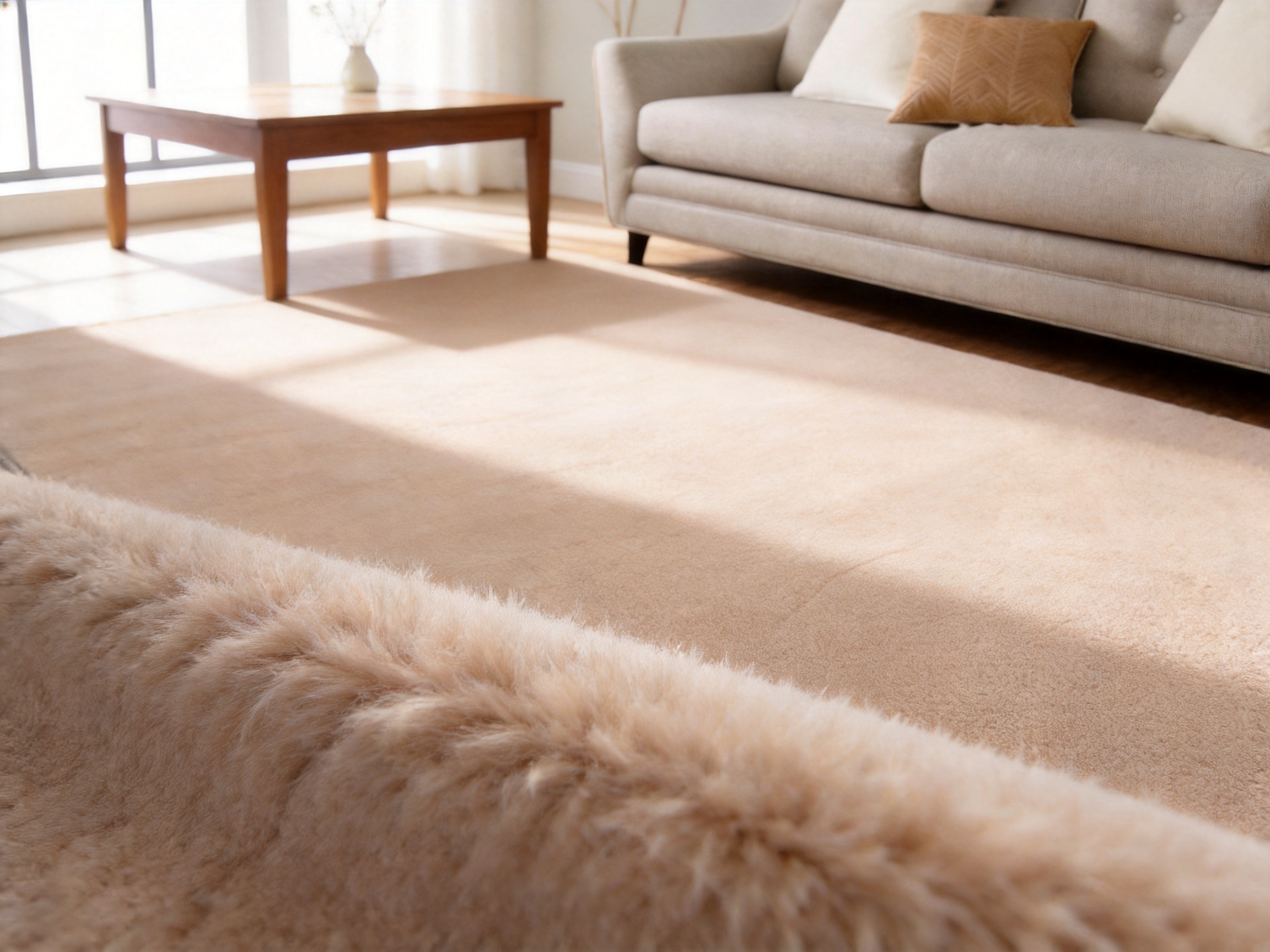
The surface is designed to feel thick and fluffy underfoot. This is important in bedrooms, reading areas, living rooms, children’s spaces, and nurseries, where users often expect a warmer and softer surface than hard flooring can provide. The carpet can create a more comfortable transition beside a bed, sofa, play area, or seating arrangement.
Polyester also supports consistent production and design repeatability. Compared with many natural fibers, synthetic fiber can be engineered with controlled characteristics, making it suitable for larger-volume projects that require uniformity across multiple sizes or production batches. For wholesalers, retailers, interior designers, and property developers, consistency can be a major purchasing consideration.
The product’s imitation-wool positioning is therefore not limited to appearance. It represents a broader balance between tactile comfort and operational convenience. Buyers can obtain a soft, substantial rug while retaining access to machine-washing, flexible sizing, and the predictable characteristics associated with polyester.
The 8-millimeter pile provides a comfortable surface without presenting the maintenance challenges sometimes associated with very deep-pile rugs. A moderate pile can be easier to place beneath furniture and easier to integrate into common room layouts. It can also offer a more stable walking surface than an excessively loose or high-pile construction.
The product is suitable for areas where people spend time barefoot or seated close to the floor. In a bedroom, it can provide a soft landing beside the bed. In a living room, it can visually connect seating furniture while adding warmth beneath a coffee table. In a children’s room or nursery, it can create a more inviting surface for quiet play and daily activities.
Comfort is supported by the combination of fiber, pile height, and overall weight. While individual preferences vary, this construction is designed to avoid the thin, insubstantial feel common in lower-weight decorative mats.
A floor covering must withstand repeated foot traffic, furniture contact, cleaning, folding, and seasonal changes in use. The Jacquard Imitation Wool Solid Carpet is developed with durability in mind through its polyester fiber, bonded construction, substantial weight, and backing system.
Polyester microfiber is valued for its resistance to everyday wear and its ability to maintain a consistent surface appearance. The product information identifies the carpet as fade resistant, which helps preserve the visual strength of its solid color over time. This is especially useful in rooms that receive regular use or in retail collections where color consistency is important.
Solid rugs can reveal uneven fading or surface wear more clearly than highly patterned designs. For this reason, fiber selection and dyeing quality are important. The manufacturer’s internal control over weaving, dyeing and printing, and finished processing supports closer coordination of color development and production quality.
The bonded construction type adds another layer of structural support. Bonding helps connect the carpet components and contributes to a cohesive finished product. It is particularly relevant when the rug must be folded, handled, transported, washed, and returned to service repeatedly.
Durability should always be understood in relation to use conditions. The product is intended for indoor applications, and performance may vary depending on traffic level, floor type, furniture weight, cleaning frequency, and exposure to moisture or abrasive substances. Nevertheless, its specification profile positions it above lightweight, purely decorative floor coverings that may lack comparable pile density or backing support.
Fade resistance is a useful feature for buyers who want a rug to maintain a consistent appearance over an extended period. In a living room, the carpet may be placed near windows or in a frequently used seating area. In a children’s room, it may be exposed to repeated cleaning and daily activity. A fade-resistant surface can help the product retain its intended color character during ordinary indoor use.
Color stability also benefits wholesale and project buyers. When several rugs are used in one property, noticeable differences between pieces can weaken the design. A controlled manufacturing process can help reduce variation and support a more uniform finished collection.
The back of the carpet uses TPR and cotton fabric. TPR, or thermoplastic rubber, is commonly selected for its flexibility, grip, and ability to form a practical backing layer. The cotton fabric component can support the backing structure and contribute to a softer, more manageable rug body.
The stated non-slip feature is intended to help reduce unwanted movement during ordinary indoor use. This is valuable in bedrooms, living rooms, nurseries, and children’s spaces, where a moving rug can become inconvenient or create a safety concern. The backing is designed to provide a skid-resistant contact surface, and the product information indicates that an additional rug pad may not be required in normal applications.
Floor conditions still matter. Dust, moisture, wax, oil, uneven surfaces, and certain highly polished floors can affect grip. Users should place the carpet on a clean, dry, level surface and check the rug periodically after installation. Proper furniture arrangement and correct sizing can further improve stability.
Compared with rugs that have no backing or a very light textile backing, a TPR and cotton fabric system offers a more practical foundation for daily use. It supports the product’s positioning as a complete area rug rather than simply a decorative textile panel.
In homes with children, older adults, or active pets, floor stability is an important consideration. A rug that stays more securely in position can contribute to a tidier and more predictable environment. In commercial settings such as guest rooms, lounges, model apartments, and childcare interiors, reduced movement can also simplify routine housekeeping.
The backing is soft enough to allow the carpet to be folded for storage and transport. This is advantageous for distributors and retailers because folded products are easier to package, handle, and organize than rigid or bulky floor coverings.
One of the product’s strongest competitive advantages is its machine-washable construction. Traditional wool carpets and many large, heavily structured rugs may require professional cleaning or specialized care. A washable polyester rug can be more convenient for households and businesses that need to remove dust, spills, and everyday dirt efficiently.
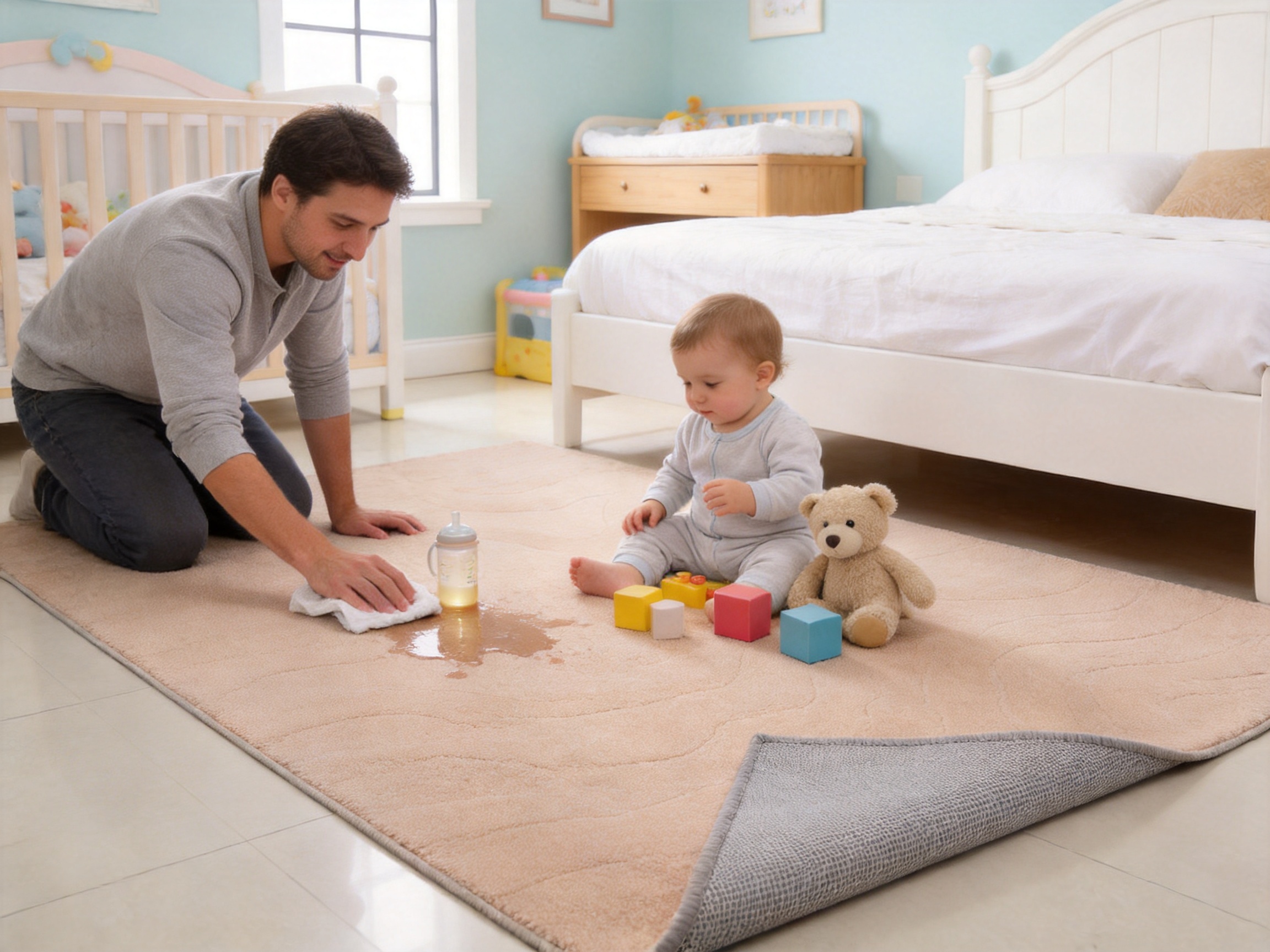
Machine washing is particularly useful in children’s rooms, nurseries, dining-adjacent areas, rental properties, and hospitality environments. These locations can experience more frequent spills and surface contamination than formal rooms. The ability to wash the rug can extend its practical service life and reduce the inconvenience of ownership.
Users should follow the specific care guidance supplied with the product, select an appropriate washing machine based on rug size, avoid overloading, and ensure the carpet is thoroughly dried before placing it back on the floor. Larger sizes may require commercial laundry equipment or professional cleaning depending on the available machine capacity.
The rug’s foldable structure supports easier movement to and from a washing area. It can also be stored seasonally without requiring a large rigid storage space. This combination of softness, flexibility, and washable construction is a significant difference from many conventional carpets that are difficult to remove or clean.
Regular vacuuming can help remove loose dust and surface particles before they become embedded in the pile. Spills should be addressed promptly by blotting rather than aggressively rubbing the affected area. When machine washing is appropriate, users should choose a gentle process that is compatible with polyester textiles and the rug’s dimensions.
After washing, the carpet should be dried completely. Placing a damp rug on the floor for an extended period may encourage odor, moisture retention, or floor damage. The rug should also be returned to a clean, dry surface so that the non-slip backing can function properly.
Routine care is simple, but it remains important. No textile floor covering is immune to staining, abrasion, or misuse. Proper cleaning habits help preserve softness, color, and backing performance.
The solid-color appearance makes this carpet easy to coordinate with furniture, wall finishes, curtains, bedding, and decorative accessories. Unlike highly complex patterns, a solid rug can provide visual balance in rooms that already contain multiple textures or colors. It can also serve as a neutral base for seasonal decoration and changing interior styles.
Available sizes range from compact 2' x 3' pieces to large 8' x 10' rugs. This range allows the carpet to serve different placement requirements. Smaller sizes may be suitable beside a bed, in a reading corner, at the entrance to an indoor room, or beneath a small table. Medium sizes can define seating or sleeping areas, while larger formats can anchor open-plan living spaces.
Custom sizing is available for projects that do not fit standard retail dimensions. This is useful for hotels, serviced apartments, residential developments, showrooms, offices, and interior design projects that require precise floor coverage. Custom production can reduce awkward gaps and help designers achieve a more intentional layout.
The company also provides customized jacquard pattern development according to decoration style and personal preferences. Although the standard product is a solid area rug, the same manufacturing capability can support alternative textures and jacquard effects for buyers seeking a more distinctive collection.
In the bedroom, the carpet can be placed beside or beneath a bed to create a soft, warm surface for morning and evening routines. Its solid appearance can complement both neutral and colorful bedding, while its washable construction supports regular household care.
In the living room, a 5' x 7', 6' x 9', or 8' x 10' size can be selected according to the furniture arrangement and available floor area. A larger rug can help connect sofas, chairs, and a coffee table into one visual zone. The 8-millimeter pile adds comfort without overwhelming the room.
For children’s rooms and nurseries, softness and cleanability are particularly valuable. The carpet can provide a comfortable surface for floor-level activities while the non-slip backing helps reduce shifting. Caregivers should still inspect the rug regularly and maintain a clean, dry floor beneath it.
Interior designers and purchasing teams may use the carpet in guest rooms, apartments, lounges, reading spaces, showrooms, and other indoor projects. Its combination of standard sizes and custom sizing supports both individual orders and coordinated multi-room installations.
For hospitality and property developers, washable materials can help streamline housekeeping. A rug that can be removed, folded, washed, and returned to service may be easier to manage than a permanently installed floor textile. The fade-resistant feature also supports consistent room presentation when carpets are used repeatedly.
Retailers can position the product as a practical premium-look rug. It offers a wool-inspired appearance and soft hand feel while remaining accessible to customers who prioritize easy care and synthetic-fiber durability.
The product is manufactured by Zhejiang Benyi Textile Technology Co., Ltd., a textile technology company located in Shaoxing, Zhejiang Province. Shaoxing is widely recognized as an important textile production center, providing access to manufacturing knowledge, material resources, technical personnel, and related supply-chain services.
The company specializes in carpet fabrics, rugs, and finished carpet products. Its production model combines the surface and backing rather than relying exclusively on a fragmented, traditional process. By integrating these stages, the company aims to simplify carpet production, improve efficiency, and reduce unnecessary production costs.
This integrated approach can benefit customers in several ways. Fewer disconnected production stages may make communication more direct. It can also help coordinate specifications, color requirements, backing details, packaging, and delivery schedules. For wholesale buyers, the ability to work with one coordinated manufacturing partner can reduce the complexity of managing multiple suppliers.
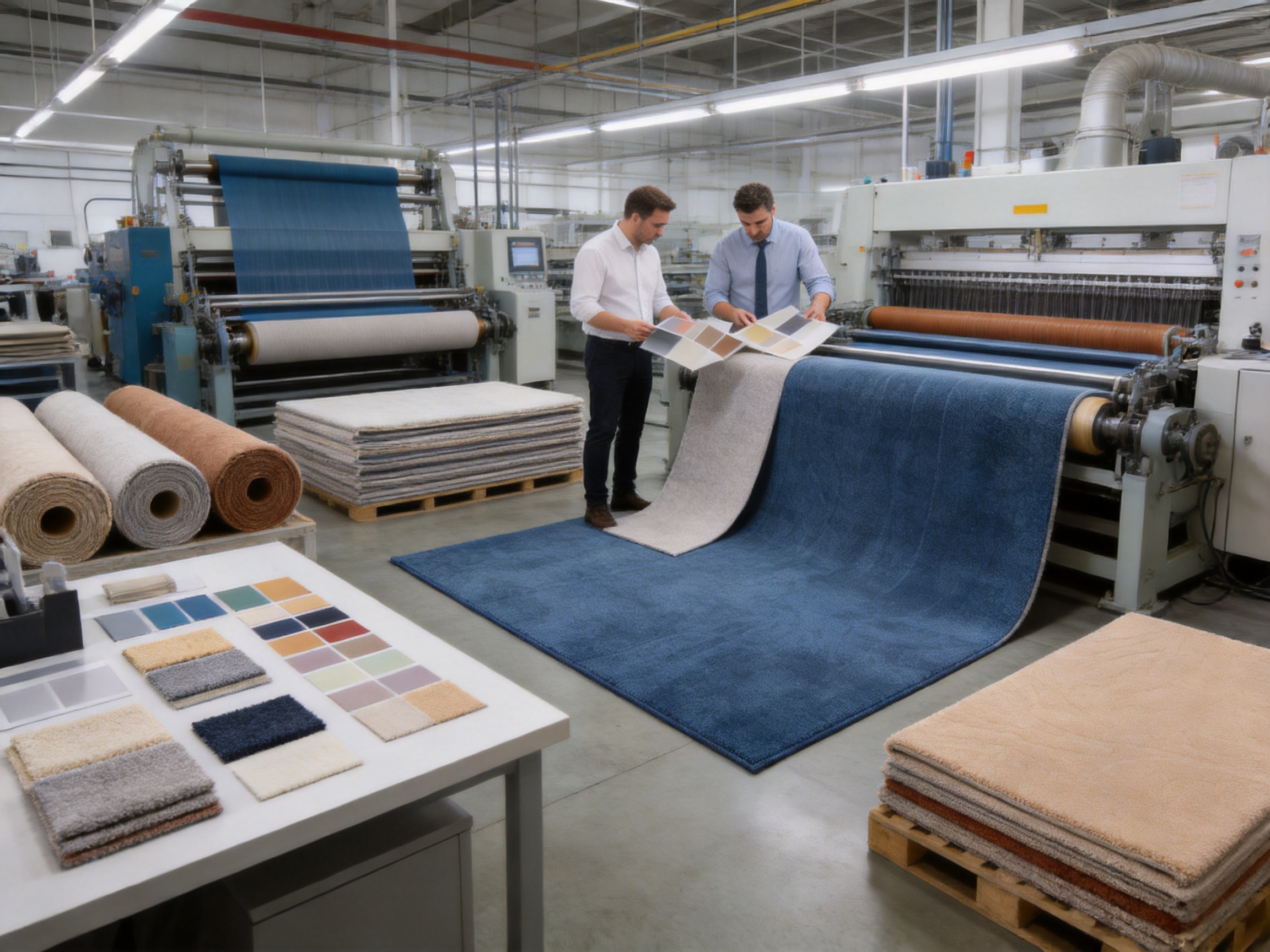
The company has its own weaving facilities, dyeing and printing factories, and finished carpet processing factories. This means that key stages of product development and production can be managed within the company’s broader manufacturing system.
Weaving capability supports the development of carpet fabrics and surface structures. Dyeing and printing resources support color and pattern production. Finished carpet processing enables the conversion of fabric into completed rugs with specified dimensions, backing, and edge treatment. The combination gives the manufacturer greater control over how materials move from development to finished goods.
Integrated resources are especially important for customized orders. A buyer may require a particular color, texture, jacquard effect, size, backing, or packaging format. When the manufacturer controls multiple steps, it can review the complete production requirement rather than treating each stage as an isolated transaction.
Internal coordination may also contribute to lead-time management. While delivery schedules depend on order volume, raw materials, customization, and production planning, a coordinated factory structure can help reduce delays caused by repeated transfers between unrelated suppliers.
The company has a team of more than 20 fabric engineers. These engineers develop new carpet fabrics each quarter based on market trends and customer needs. Regular development supports a more responsive product range and allows buyers to explore updated textures, patterns, colors, and constructions.
For customers, fabric engineering is valuable because a carpet is not defined by appearance alone. Fiber type, surface density, pile height, backing compatibility, bonding, washability, color performance, and packaging all influence the final product. Technical personnel can help connect design objectives with manufacturing feasibility.
Quarterly development also creates opportunities for private-label programs and differentiated collections. A buyer can request a familiar solid-color concept while adjusting color families, dimensions, jacquard effects, or finishing details to suit a particular market.
The company’s stated mission emphasizes ecological and environmental protection alongside consumer health experiences. This direction is relevant to modern carpet buyers, who increasingly consider material sourcing, production methods, indoor use, and long-term product value when selecting textile products.
The company invests in sustainable materials and production methods, including recycled polyester and water-saving dyeing techniques. These initiatives indicate an effort to reduce the environmental impact associated with textile manufacturing while continuing to provide practical carpet products.
The company has also passed OEKO-TEX® and Global Recycled Standard certifications according to the supplied company information. Buyers should request current certification documentation, applicable scopes, and product-specific details when compliance verification is required for a project.
Environmental performance is not determined by one feature alone. It involves raw materials, energy use, water consumption, chemical management, waste reduction, product durability, packaging, transport, and end-of-life considerations. A washable, durable carpet can offer practical value by remaining useful over repeated cleaning cycles, while recycled-material programs can support more responsible material selection.
For a small retail order, product appearance and price may be the primary considerations. For larger wholesale or project orders, manufacturing reliability becomes equally important. Buyers need confidence that the supplier can repeat colors, maintain dimensions, coordinate backing specifications, and deliver the required quantity within an agreed schedule.
An integrated production chain can support these requirements by keeping product information closer to the factory teams responsible for execution. It may also make it easier to discuss modifications and solve production questions quickly.
The combination of manufacturing facilities, fabric engineers, and finished-product processing gives the company a foundation for both standard and customized rug programs. This is a meaningful advantage over suppliers that only trade finished goods without direct control of fabric or processing operations.
The market includes natural wool rugs, thin polyester mats, printed microfiber carpets, foam-backed products, and heavier non-washable area rugs. The Jacquard Imitation Wool Solid Carpet occupies a practical middle position by combining a premium-looking surface with accessible care and flexible production.
Natural wool offers distinctive qualities, but it may require more specialized cleaning and can be costly for large-area applications. The polyester imitation-wool construction provides a soft, wool-inspired surface while allowing machine washing under suitable conditions. It also offers a useful option for customers who prefer synthetic fiber for budget, consistency, or maintenance reasons.
Polyester can support uniform coloration and repeatable production across multiple sizes. This can be helpful for commercial programs where matching products are required in several rooms or locations.
Very thin mats may be inexpensive, but they can lack cushioning, visual substance, and stability. The 8-millimeter pile and 1400-gram-per-square-meter weight give this carpet a fuller feel. Its bonded construction and TPR plus cotton fabric backing further distinguish it from products that consist of a thin printed surface without a substantial support layer.
Many area rugs are difficult to remove and clean, particularly when they are large or heavily structured. A machine-washable design can reduce the practical burden of ownership. This is valuable for households with children, properties with frequent turnover, and commercial spaces where hygiene and housekeeping efficiency matter.
Some rugs are available only in predetermined colors and dimensions. This can make them unsuitable for projects with unusual floor plans or specific brand and decoration requirements. The availability of custom sizes and jacquard pattern development gives this product a broader customization pathway.
The product is suitable for buyers looking beyond individual retail purchases. Wholesalers can select from multiple standard dimensions while requesting custom color programs or private-label packaging. Interior design firms can specify sizes and textures for individual projects. Retail brands can develop collections based on solid colors, wool-inspired textures, and coordinated jacquard patterns.
Custom orders should be discussed in detail before production. Important points include fiber composition, pile height, surface weight, backing material, dimensions, color references, edge finishing, packaging, labeling, carton requirements, washing instructions, and expected production quantity.
Sampling is particularly important for customized products. A physical sample can help confirm softness, color, backing grip, pile appearance, edge quality, and dimensional accuracy. It also allows the buyer to evaluate whether the product meets the intended market position before placing a larger order.
For large projects, buyers should also clarify tolerances, inspection procedures, replacement policies, production milestones, and shipment documentation. The manufacturer’s integrated resources may support these discussions, but project requirements should always be recorded clearly in the purchase agreement.
Before placing the rug, clean the floor and remove dust, grit, oil, and moisture. The surface should be level and dry. Unroll or unfold the carpet and allow it to settle naturally. Temporary creases from folding or transport generally reduce as the product rests flat, although the time required can vary according to temperature, storage conditions, and handling.
Choose a size that provides sufficient coverage for the intended furniture arrangement. A rug that is too small may appear disconnected from the room, while a rug that is too large may interfere with doors or built-in fixtures. Custom sizing can be considered when standard dimensions do not provide the desired fit.
Place heavy furniture carefully to avoid unnecessary stress on the pile or edges. Do not drag sharp objects across the surface. In rooms with wheeled furniture or unusually high traffic, inspect the carpet more frequently for signs of compression or movement.
The product is intended for indoor use. It should not be treated as an outdoor rug or placed in areas with prolonged exposure to rain, standing water, excessive humidity, or direct outdoor weather conditions.
A simple maintenance program can help preserve the carpet’s appearance and performance. Vacuuming at an appropriate setting removes loose particles without placing excessive stress on the pile. High-suction settings should be used carefully, particularly around edges and areas where the pile may catch.
Small spills should be blotted quickly with a clean absorbent cloth. Rubbing can spread the stain and disturb the surface fibers. For larger cleaning tasks, follow the product’s machine-washing instructions and confirm that the washing equipment can safely accommodate the rug’s size and weight.
After washing, dry the carpet completely. Avoid returning it to the floor while it is still damp. Periodically lift the rug to clean the floor underneath and to check for trapped moisture or accumulated debris.
When storing the carpet, fold or roll it clean and dry. Keep it in a ventilated area away from sharp objects, excessive heat, and prolonged moisture. Correct storage helps preserve the backing and prevents avoidable odor or deformation.
The carpet is made from 100% polyester microfiber. The surface is designed to imitate the soft and luxurious feel of wool while providing the practical characteristics associated with polyester.
Yes. It is designed for indoor use and is suitable for bedrooms, living rooms, children’s rooms, nurseries, and other interior areas. The correct size should be selected according to the room layout and furniture arrangement.
Yes. Machine wash is listed as the product care method. Users should follow the supplied care instructions, select equipment appropriate for the rug’s dimensions, and dry the carpet completely before reuse.
The TPR and cotton fabric backing is designed to provide skid resistance, and the product information states that no additional rug pad is needed. Actual performance depends on the floor surface, cleanliness, moisture, and placement conditions.
The pile height is 8 millimeters. This provides a soft and comfortable surface while remaining suitable for common indoor furniture and room arrangements.
GSM means grams per square meter. A stated weight of 1400gsm indicates a substantial textile surface compared with very lightweight mats. It contributes to the carpet’s fuller feel, although overall performance also depends on fiber, construction, backing, and finishing quality.
Yes. Standard sizes include 2' x 3', 2' x 6', 3' x 5', 4' x 6', 5' x 7', 6' x 9', and 8' x 10'. Custom sizing is also available for suitable orders and project requirements.
The company can customize different jacquard patterns according to a customer’s decoration style and preferences. Buyers should confirm available colors, pattern development procedures, minimum order quantities, sampling, and production schedules before ordering.
No. The stated application is indoor use. It should be protected from prolonged outdoor weather exposure, standing water, and unsuitable environmental conditions.
Its combination of a wool-inspired polyester microfiber surface, 8-millimeter pile, 1400gsm weight, bonded construction, TPR and cotton fabric backing, machine washability, fade resistance, non-slip performance, and custom-size availability gives it a more complete specification profile than many basic decorative mats.
The manufacturer has weaving, dyeing and printing, and finished carpet processing facilities, as well as a team of more than 20 fabric engineers. These resources support fabric development, customization, quality coordination, and production planning.
The company states that it invests in recycled polyester and water-saving dyeing techniques and has passed OEKO-TEX® and Global Recycled Standard certifications. Buyers requiring formal compliance should request current certificates and confirm their relevance to the specific product and order.
The Jacquard Imitation Wool Solid Carpet is designed for buyers who want the comfort and appearance of a plush wool-inspired rug without giving up practical care and production flexibility. Its polyester microfiber surface provides softness and durability, while the 8-millimeter pile and 1400gsm weight create a substantial underfoot experience.
Machine washability gives the product a clear advantage for homes, children’s spaces, rental properties, hospitality interiors, and other environments where cleaning convenience matters. Fade resistance helps support long-term visual consistency, while the TPR and cotton fabric backing contributes to skid-resistant placement on suitable indoor floors.
The product’s range of standard sizes and custom sizing options makes it adaptable to both retail and project requirements. Its solid-color design can complement a wide variety of interior styles, while the manufacturer’s jacquard customization capability allows buyers to develop more distinctive collections.
Equally important is the production structure behind the carpet. Zhejiang Benyi Textile Technology Co., Ltd. combines weaving, dyeing and printing, and finished carpet processing with technical fabric development. This integrated model can support better coordination of materials, quality, customization, and lead time. Its focus on sustainable materials and water-saving production methods further reflects the changing expectations of the modern textile market.
For wholesalers, retailers, designers, and project purchasers seeking a soft, washable, customizable, and commercially practical area rug, this product offers a balanced combination of comfort, appearance, functionality, and manufacturing support.
1. Product specification sheet for Jacquard Imitation Wool Carpet, model number 100502.
2. Manufacturer-provided information on polyester microfiber construction, pile height, carpet weight, bonded construction, and TPR plus cotton fabric backing.
3. Manufacturer-provided care and application information for machine washing, indoor use, fade resistance, and non-slip performance.
4. Manufacturer profile describing textile production, weaving, dyeing and printing, finished carpet processing, and fabric engineering resources.
5. General textile industry references concerning polyester microfiber, synthetic carpet construction, textile backing systems, and machine-washable floor coverings.
6. General sustainability references concerning recycled polyester, water-saving dyeing, OEKO-TEX® standards, and Global Recycled Standard certification practices.

ADD: No.75 Zhenyuan Road, Yuecheng District, Shaoxing City, Zhejiang Province, China 312000

Tel : +86-189 6750 9795

FAX : +86-0575-8803 2773

Email : fisher@benetextile.com

Copyright © Zhejiang Benyi Textile Technology Co., Ltd. All Rights Reserved. Carpets and Rugs Manufacturer

 English
 Français
 Deutsch
 عربى
عربى