

Tang Meilin — Customer Success and Product Support Specialist
 Home / Author / Tang Meilin — Customer Success and Product Support Specialist / Glossy Yarn Imitation Tufted Carpet: A Soft, Durable, and Practical Solid Area Rug for Modern Interiors
  2026.07.28
 Tang Meilin — Customer Success and Product Support Specialist
A well-chosen area rug can change the atmosphere of an interior in an instant. It adds warmth to hard flooring, defines furniture arrangements, improves everyday comfort, and contributes color and texture to a room. However, not every rug combines softness, visual appeal, stability, durability, and easy care in a balanced way. Some products look attractive but flatten quickly. Others provide a thick pile but are difficult to clean, shift easily, or require an additional underlay. The Glossy Yarn Imitation Tufted Carpet is designed to address these common concerns through a combination of polyester glossy yarn, a substantial 25mm pile, bonded construction, a cushioned interlayer, and a TPR and cotton fabric backing.
Developed as a solid rectangular area rug for indoor use, this carpet is available in several standard sizes, including 2' x 3', 2' x 6', 3' x 5', 4' x 6', 5' x 7', 6' x 9', and 8' x 10'. Custom dimensions are also available for projects that require a specific fit. This range allows the product to serve many purposes, from a compact bedside rug to a large living room centerpiece. Its solid-color design makes it suitable for residential interiors, hospitality spaces, children’s rooms, nurseries, and other areas where a calm, coordinated appearance is important.
The carpet is manufactured by Zhejiang Benyi Textile Technology Co., Ltd., a textile technology company based in Shaoxing, Zhejiang Province, China. Shaoxing is widely recognized as an important textile production center. The company combines fabric development, weaving, dyeing and printing, and finished carpet processing within its broader manufacturing system. This integrated approach gives the manufacturer greater control over material selection, production consistency, quality management, and lead time.
Content
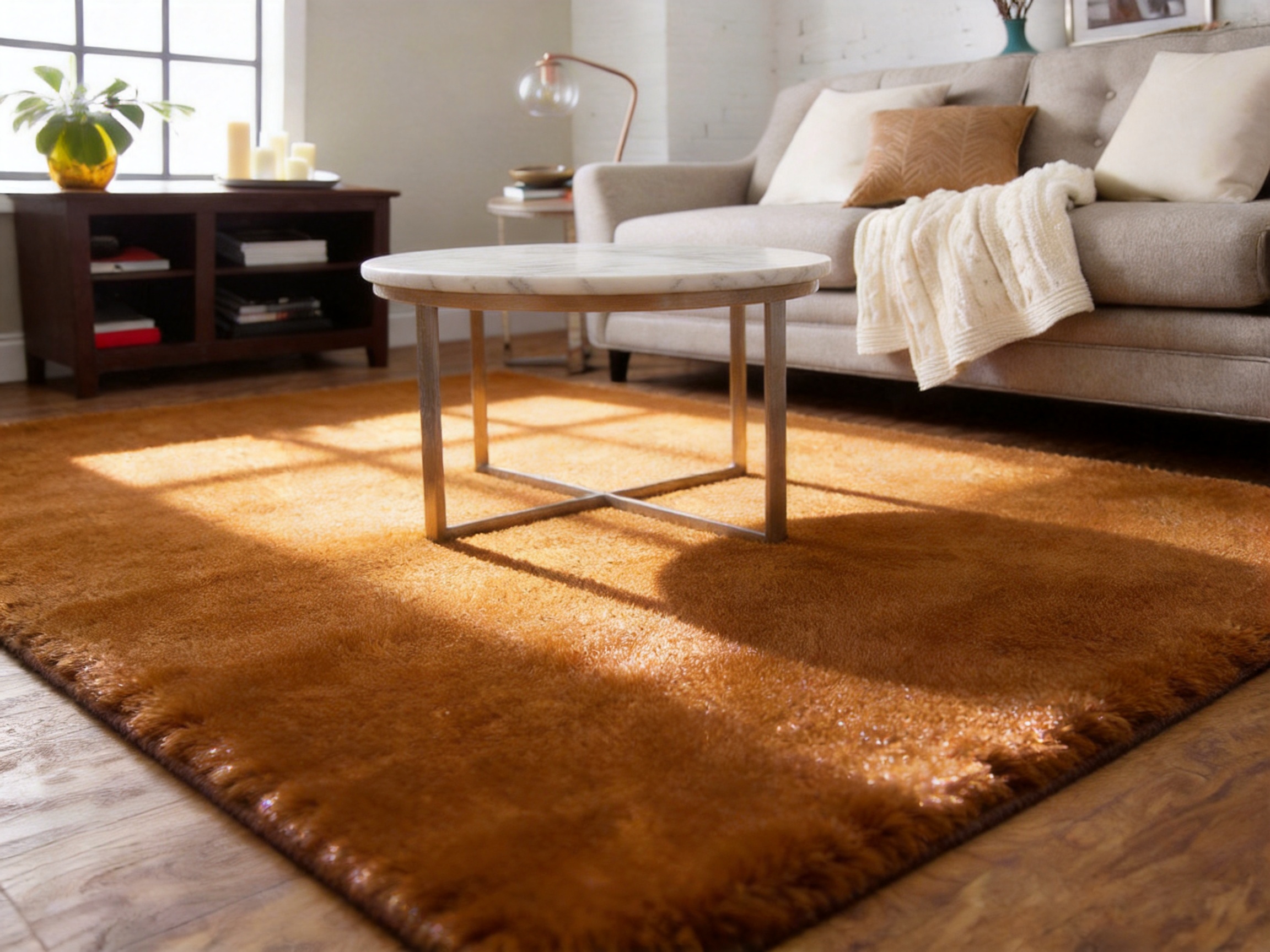
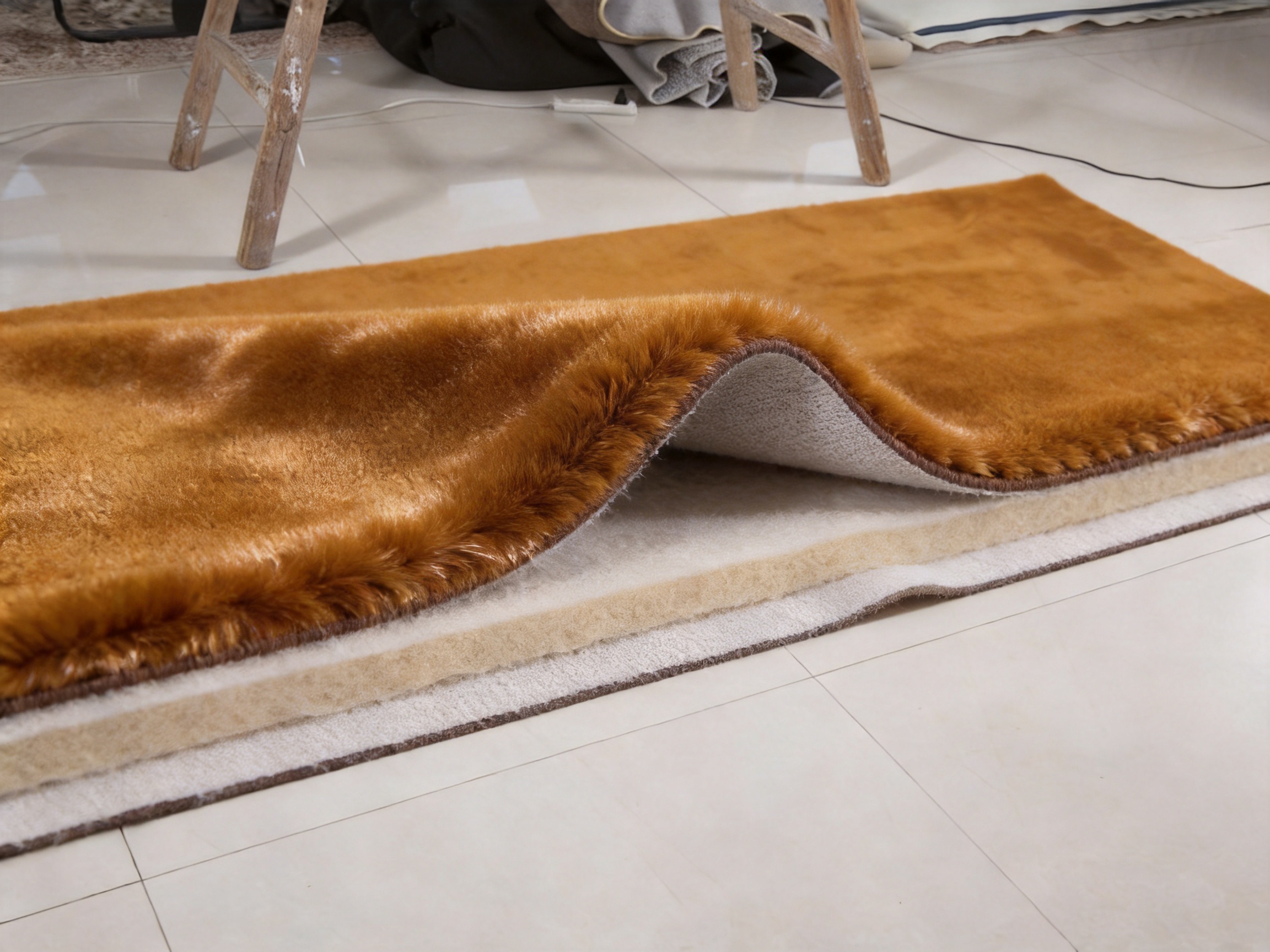
The Glossy Yarn Imitation Tufted Carpet is a solid-color area rug made primarily from polyester. It has a reported weight of 1850gsm and a 25mm pile height, creating a thick and plush surface intended to feel soft beneath bare feet. The construction is bonded, with a thick non-woven felt interlayer that adds cushioning between the surface and the floor. The underside uses TPR combined with cotton fabric to improve contact with the floor and help limit unwanted movement.
| Product Name | Glossy Yarn Imitation Tufted Carpet |
| Product Category | Solid Area Rug |
| Brand | Bene |
| Model Number | 100037 |
| Primary Material | Polyester glossy yarn |
| Product Weight | 1850gsm |
| Pile Height | 25mm |
| Construction | Bonded |
| Back Material | TPR and cotton fabric |
| Pattern | Solid colors |
| Shape | Rectangular |
| Recommended Use | Indoor |
| Care Instruction | Machine washable |
| Special Features | Fade resistant, non-slip, soft, and washable |
| Available Sizes | 2' x 3', 2' x 6', 3' x 5', 4' x 6', 5' x 7', 6' x 9', 8' x 10', or custom |
| Suitable Rooms | Bedroom, living room, children’s room, and nursery |
These specifications place the product in the category of thick, comfort-oriented indoor rugs. The combination of a high pile and felt interlayer is particularly relevant for buyers who want more than a decorative floor covering. It is intended to provide a softer contact surface and additional insulation from hard or cold floors while remaining practical for regular household use.
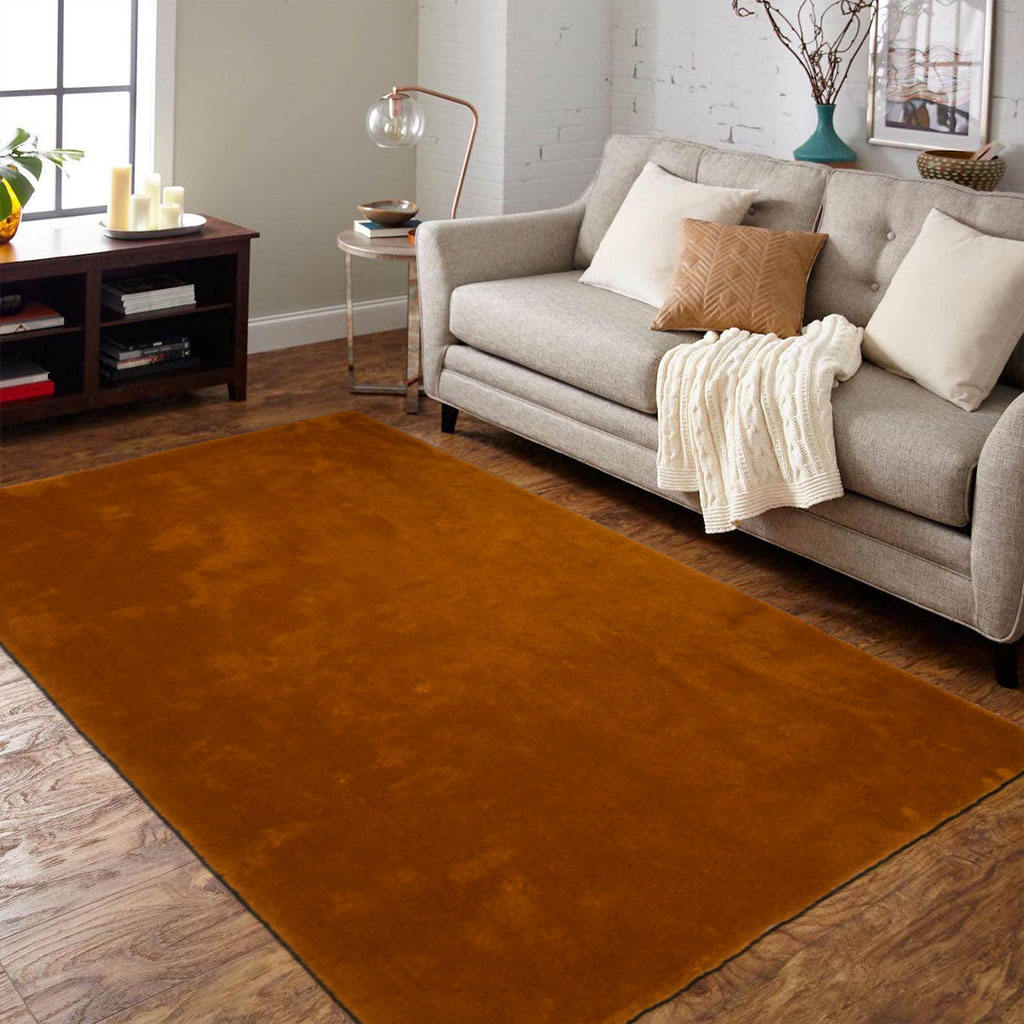
Glossy Yarn Imitation Tufted Carpet
One of the product’s most noticeable characteristics is its use of 100% polyester glossy yarn. Compared with ordinary low-luster fibers, glossy yarn reflects light differently and can give a solid-color rug greater visual depth. Even when the pattern is intentionally simple, the surface may display subtle changes in sheen as people walk across it or as daylight moves through the room. This creates an elegant appearance without relying on complicated motifs or busy graphics.
A solid-color rug is often selected because it works with many interior styles. Patterned rugs can become the strongest visual element in a room, but they may also compete with furniture, artwork, curtains, or decorative accessories. A solid glossy surface offers a quieter alternative. It can support minimalist, contemporary, modern, Scandinavian-inspired, transitional, or family-oriented interiors. The final appearance depends on the selected color, lighting conditions, pile direction, and surrounding materials, but the glossy yarn gives the surface more character than a completely flat textile.
Polyester is also widely used in floor coverings because it can provide a practical balance between softness, color performance, and manufacturing flexibility. The fiber can be dyed in a broad range of shades, supporting coordinated collections and custom color development. In this product, fade-resistant performance is listed as a special feature. This is valuable in rooms that receive regular daylight, although normal interior-care practices remain important for preserving the appearance of any textile product.
Many thin woven mats are easy to move and store, but they do not necessarily provide the cushioned feel associated with a high-pile rug. Low-pile carpets may be convenient beneath doors or furniture, yet they can feel less comfortable in bedrooms and lounging areas. Very shaggy products may offer softness but can be more difficult to vacuum and may not provide the same clean, solid appearance. The Glossy Yarn Imitation Tufted Carpet occupies a practical middle ground: it has a substantial 25mm pile for comfort while maintaining a visually simple form and a washable construction.
The glossy polyester surface may also offer a different design effect from wool or cotton rugs. Wool is valued for its natural texture and resilience, while cotton is often chosen for its lightness and familiar hand feel. Polyester can be a suitable alternative for customers who prioritize a soft synthetic surface, broad color availability, easy maintenance, and consistent production. It also supports scalable manufacturing for residential, commercial, and private-label applications.
The 25mm pile height is central to the comfort of this carpet. A thicker pile creates more distance between the user’s feet and the hard floor, improving the sense of softness when walking, standing, or sitting on the rug. It can also contribute to a warmer and more welcoming atmosphere, especially in bedrooms, children’s rooms, and living areas with tile, wood, laminate, or other hard flooring.
The reported 1850gsm weight indicates a substantial amount of textile material across the rug’s surface area. Weight alone does not determine quality, because yarn structure, density, backing, bonding, and finishing also influence performance. Nevertheless, the combination of 1850gsm and a 25mm pile suggests a product designed with fullness and comfort in mind rather than as an ultra-thin decorative mat.
The thick surface can help soften the acoustics of a room by adding a textile layer between furniture, footsteps, and the floor. While an area rug is not a substitute for professional acoustic treatment, a substantial floor textile may reduce the sharpness of footfall sounds and contribute to a more comfortable indoor environment. This can be particularly useful in bedrooms, family rooms, nurseries, and apartments where hard floors may otherwise create a more reflective soundscape.
The product includes a thick non-woven felt interlayer beneath the floor-facing surface. This layer provides additional body and cushioning, helping the rug feel more substantial underfoot. It can also create a softer barrier between children, pets, and hard flooring during ordinary play and household activity. The interlayer is an important distinction from very thin rugs that consist mainly of a surface fabric and a lightweight backing.
For families, cushioning is not only about comfort. It can make a children’s room or nursery feel less severe and more welcoming. A rug can define a play area, provide a softer place for reading or sitting, and reduce direct contact with a cold floor. Parents and caregivers should still use appropriate supervision and follow general safety practices, but the rug’s multi-layer construction adds practical value beyond decoration.
The carpet uses bonded construction to combine the surface, interlayer, and backing into a unified product. Bonding is an important part of the manufacturing process because the performance of a rug depends on more than its top yarn. If the layers do not remain properly connected, the product may develop ripples, separation, or changes in shape during regular use and cleaning.
A carefully controlled bonding process can improve the stability of the layered structure. It can help the pile surface, felt interlayer, and backing function together rather than behaving as separate materials. This is especially relevant for a washable rug because laundering introduces movement, moisture, and mechanical action. Product construction must therefore be considered together with care instructions, drying practices, and the size of the washing machine available to the user.
Compared with a simple single-layer textile, bonded construction gives the manufacturer more opportunities to engineer comfort and stability. The top layer can be selected for softness and appearance, the felt layer for cushioning and body, and the backing for floor contact and movement resistance. This layered approach is one of the product’s main advantages over basic flat mats and low-cost rugs that do not include a comparable internal structure.
The backing uses TPR and cotton fabric. TPR, or thermoplastic rubber, is commonly used in floor-covering applications because it can provide flexible contact with hard surfaces. In this product, the TPR layer is combined with cotton fabric to form a soft yet functional underside. The backing is intended to help the rug stay in place during ordinary indoor use and is described as skid resistant.
A stable rug is more convenient than one that constantly bunches, curls, or slides away from its original position. This is particularly important beside beds, sofas, children’s play areas, and frequently used walkways. The backing may also reduce the need for a separate rug pad in many typical indoor applications. That can simplify installation and lower the total cost of setting up a room.
However, no rug backing can guarantee complete movement prevention on every surface. Floor finish, dust, moisture, rug size, traffic, and the condition of the underside can all affect stability. Buyers should place the carpet on a clean, dry, level floor and inspect it periodically. Extra caution is appropriate on stairs, highly polished surfaces, or areas where a moving rug could create a hazard.
For wholesalers, retailers, interior furnishing companies, and project buyers, an integrated backing can make the product easier to present as a ready-to-use solution. Customers do not necessarily want to research and purchase multiple components. A carpet that combines the decorative surface, cushioning, and non-slip underside into one product can be easier to merchandise and explain.
The backing also supports a broader range of room applications. A rug intended only for appearance may work in a formal sitting room, but a rug with a soft cushioned body and skid-resistant backing can be marketed for bedrooms, children’s rooms, nurseries, and family spaces. This expands the potential customer base without changing the fundamental product category.
Easy maintenance is one of the strongest practical advantages of this carpet. The product is designed to be machine washable, which allows users to clean it more conveniently than many large, rigid, or delicate floor coverings. This is especially helpful in households with children and pets, where dust, crumbs, spills, and everyday marks may occur more frequently.
Washability also supports a more flexible approach to interior use. A rug can be placed in a high-use bedroom, playroom, nursery, or living space without requiring professional cleaning after every minor incident. The ability to fold the carpet and place it into a washing machine makes routine upkeep more manageable, provided the selected rug size is compatible with the available equipment.
Care should be carried out according to the product’s actual dimensions and the washing machine manufacturer’s capacity recommendations. Smaller sizes are typically easier to handle in a household machine. Larger sizes may require a commercial-capacity washer or professional cleaning service. Users should also avoid excessive heat or harsh chemical treatments unless specifically approved, because heat, agitation, and unsuitable detergents can affect fibers, color, bonding, and backing materials.
Regular vacuuming helps remove loose dust and particles before they become embedded in the pile. Spills should be addressed promptly by blotting rather than aggressively rubbing the surface. When washing is appropriate, the rug should be folded or placed according to the machine’s instructions, using a compatible cycle and mild detergent. Thorough drying is important because moisture retained in the backing or interlayer can lead to odors or other problems.
The rug should be laid flat or positioned according to the care instructions while drying. Direct, intense heat should be avoided unless the manufacturer specifically permits it. After cleaning, the carpet should be checked to ensure that the backing remains flat and that the surface has returned to its normal appearance. These practices are useful for preserving the softness, color, shape, and functional properties of the product over time.
The available size range is designed to support different room layouts and purchasing requirements. A 2' x 3' rug can be used beside a bed, in a reading corner, near a small seating arrangement, or in an entrance area where a compact textile is preferred. The 2' x 6' size can work alongside a bed, in a narrow passage, or in front of a kitchen counter, subject to the product’s indoor-use positioning.
Medium sizes such as 3' x 5' and 4' x 6' are suitable for small seating areas, children’s spaces, bedrooms, and apartment interiors. A 5' x 7' rug can help define a larger seating arrangement or provide a comfortable central area in a bedroom. The 6' x 9' and 8' x 10' options are intended for more spacious interiors where the rug needs to sit beneath or around major furniture groups.
Custom dimensions are particularly valuable for project buyers. Interior designers, hospitality operators, property developers, and furniture retailers may require sizes that are not available in standard retail assortments. Custom production can help coordinate the carpet with a room plan, furniture footprint, display area, or architectural feature. Final custom specifications should be confirmed with the manufacturer, including dimensions, color, edging, packaging, order quantity, and production lead time.
| Size | Potential Indoor Application | Primary Benefit |
| 2' x 3' | Bedside area, reading corner, compact room | Easy placement and handling |
| 2' x 6' | Bedside, narrow passage, elongated space | Useful coverage in limited-width areas |
| 3' x 5' | Small bedroom, children’s area, accent zone | Balances coverage and portability |
| 4' x 6' | Bedroom, small living area, nursery | Comfortable medium-size floor definition |
| 5' x 7' | Bedroom or seating arrangement | Broader coverage for everyday use |
| 6' x 9' | Living room or larger bedroom | Defines a substantial furniture area |
| 8' x 10' | Large living room or open interior | Creates a prominent central floor zone |
| Custom | Commercial, hospitality, or project applications | Supports specific layout requirements |
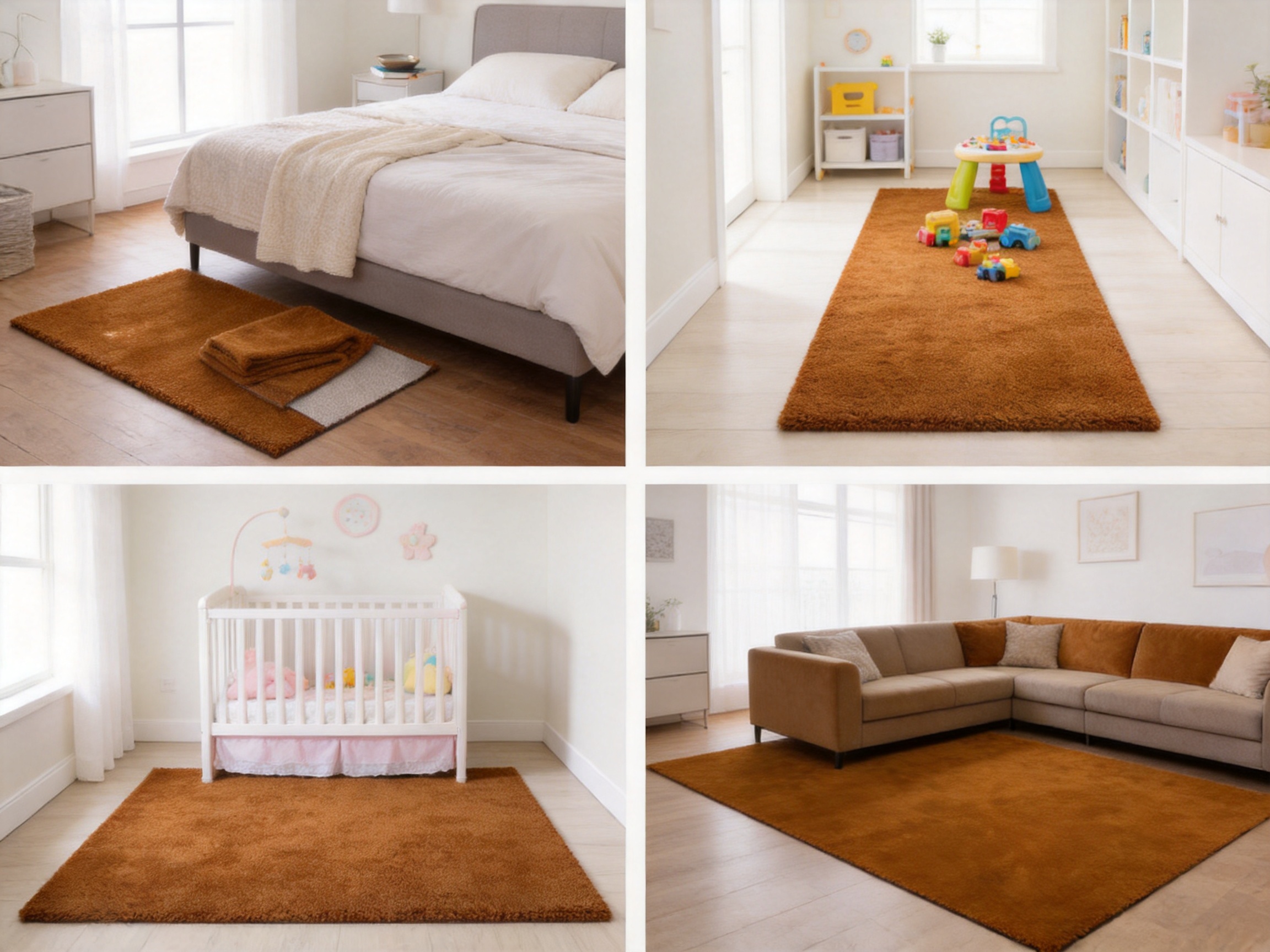
In a living room, an area rug can visually connect a sofa, chairs, coffee table, and side tables. The solid color helps establish a coordinated foundation without overpowering furniture or decorative objects. The 25mm pile adds a more relaxed and comfortable feeling to seating zones, while the non-slip backing helps keep the rug positioned during normal movement.
A bedroom benefits from the soft contact surface of a high-pile rug. Placed beside or partly beneath the bed, the carpet can create a warmer surface for bare feet in the morning. Smaller sizes can serve as bedside rugs, while larger options can extend around the bed to create a unified design. The washable construction is also useful in personal spaces where regular household cleaning is important.
The soft surface and felt interlayer make the carpet appropriate for children’s rooms and nurseries. It can help define a play or reading area and provide added cushioning over hard flooring. The solid-color design can work with colorful toys, furniture, wall art, and bedding. For these applications, adults should inspect the rug regularly, keep it dry and flat, and ensure that the backing remains secure on the floor.
Renters often want to improve the appearance and comfort of a room without making permanent changes. A movable area rug can provide an immediate visual update and can be taken to a new residence. The range of sizes makes it possible to adapt the carpet to compact apartments, open-plan rooms, or temporary living arrangements.
Although the stated product use is indoor, the carpet can serve in many different interior zones where a soft floor covering is desired. It should not be treated as an outdoor rug unless the manufacturer provides separate confirmation for outdoor exposure, moisture resistance, and ultraviolet conditions.
The performance of a finished rug is closely connected to the capabilities of its manufacturer. Zhejiang Benyi Textile Technology Co., Ltd. is located at No. 75 Zhenyuan Road, Yuecheng District, Shaoxing City, Zhejiang Province, China. The company presents itself as a new textile technology enterprise focused on carpets, rug fabrics, and finished carpet products.
One of the company’s main strengths is its integrated production structure. It has its own weaving factories, dyeing and printing factories, and finished carpet processing facilities. This gives the company greater oversight across several stages that are sometimes separated among unrelated suppliers. A more connected production chain can help reduce communication gaps, improve coordination between fabric and backing processes, and support more consistent scheduling.
The company also combines the bottom and surface in its manufacturing model. This approach is intended to simplify carpet production and improve efficiency compared with traditional processes that may involve more fragmented operations. For buyers, an integrated process can make it easier to discuss the complete product rather than separately sourcing surface material, backing, bonding, and finishing.
Benyi has a team of more than 20 fabric engineers. According to the company information, this team develops new carpet fabrics each quarter based on market trends and provides customized services according to customer requirements. This development capability is important in a market where buyers increasingly seek differentiated textures, colors, weights, finishes, and functional features.
For the Glossy Yarn Imitation Tufted Carpet, fabric engineering is relevant to the relationship between glossy yarn, pile height, backing, bonding, and washability. A successful product must balance softness with structural stability. It must also present a consistent surface across different sizes and colorways. An experienced development team can help evaluate these interactions before a product is supplied at scale.
Customization can also support private-label and project business. Buyers may request different colors, dimensions, packaging formats, labels, or production quantities. Each request should be confirmed through technical samples and written specifications, but the existence of an internal development team gives the supplier a foundation for handling such discussions more efficiently.
Control over the production chain may help the company manage quality and lead time more effectively. When weaving, dyeing or printing, and finished processing are connected within one manufacturing organization, production decisions can be coordinated more quickly. This may reduce the time required to communicate changes between separate vendors and can make it easier to investigate quality concerns.
For wholesale customers, predictable lead time is often as important as product appearance. Retail launches, seasonal collections, hospitality projects, and promotional campaigns depend on goods arriving according to schedule. An integrated factory network cannot eliminate every supply-chain risk, but it can provide a stronger basis for planning, production follow-up, and corrective action than an entirely outsourced model.
The company describes its broader development direction as focused on ecological and environmental protection and improved consumer health experiences. It invests in sustainable materials and production methods, including recycled polyester and water-saving dyeing techniques. These efforts reflect the growing importance of responsible textile manufacturing in the carpet and home-furnishing industries.
The company also states that it has passed OEKO-TEX® and GRS certifications. Certification status should always be checked against the relevant certificate, scope, facility, material, and product batch when a buyer requires formal verification. Nevertheless, the company’s stated attention to certified materials and production practices indicates an awareness of the documentation and process expectations common in international textile supply.
Sustainability is not limited to the choice of fiber. It can involve water use, dyeing efficiency, energy consumption, waste control, packaging, product lifespan, and the ability to maintain a product rather than replace it quickly. A washable, durable indoor rug can support longer use when it is cared for properly. Buyers seeking environmental claims should request current technical and certification documents and avoid assuming that a general company-level statement applies automatically to every product variation.
The Glossy Yarn Imitation Tufted Carpet has several characteristics that can support wholesale merchandising. Its solid-color format is easy to coordinate with existing home textile collections. The glossy yarn gives the product a recognizable surface feature, while the plush pile and washable construction provide clear selling points for consumers. The range of standard sizes allows retailers to stock multiple options, and custom sizing supports larger accounts.
The product can be positioned around several customer needs at once: comfort, appearance, safety-oriented floor stability, easy maintenance, and flexible placement. This variety of benefits can make it suitable for different market segments without requiring a highly complex pattern story. Retailers can present it as a bedroom rug, living room rug, children’s rug, nursery rug, or general indoor area rug.
For distributors, the manufacturer’s broader product category is also relevant. Zhejiang Benyi Textile Technology Co., Ltd. specializes not only in finished rugs but also in carpet fabrics and carpet fabric rolls. This may allow professional buyers to explore related products or create coordinated sourcing programs through one textile supplier. Such a relationship can simplify vendor management and support consistent material development across multiple product lines.
Custom programs can be built around color, size, labeling, packaging, and assortment planning. A retailer may require a neutral collection for apartment furnishings, a colorful selection for children’s rooms, or a coordinated series for hospitality interiors. Because the manufacturer offers custom services, buyers can discuss these requirements with a supplier that has experience across fabric production and finished carpet processing.
Before placing a production order, buyers should confirm the complete specification. Important points include fiber composition, pile height tolerance, weight tolerance, backing material, edge finishing, washing instructions, color standard, packaging, carton dimensions, inspection procedures, and order quantity. Pre-production samples and approved reference samples are recommended for color-sensitive or large-volume programs.
Product comparisons should be based on intended use rather than on one specification alone. A thin cotton mat may be easier to fold but may not provide the same thickness or floor cushioning. A low-pile printed rug may be easier to position beneath doors but may offer less softness. A large wool rug may provide natural-fiber appeal but can involve different maintenance requirements, a higher purchase price, and more specialized cleaning. A basic polyester mat may have similar fiber content but lack the 25mm pile, felt interlayer, or integrated TPR and cotton fabric backing.
Against these alternatives, the Glossy Yarn Imitation Tufted Carpet is distinguished by its combined feature set. Its value is not based only on a glossy appearance or only on a thick pile. Instead, the product brings together:
• A soft polyester glossy yarn surface.
• A 25mm pile height for a plush underfoot feel.
• An 1850gsm construction for substantial body.
• A thick non-woven felt interlayer for additional cushioning.
• Bonded construction for layered integration.
• TPR and cotton fabric backing for floor contact and skid resistance.
• Machine-washable care for more convenient maintenance.
• Fade-resistant performance as a listed product feature.
• Standard and custom sizes for different room plans.
• Solid colors that coordinate with a broad range of interiors.
These features may give the product an advantage over competitors that focus on only one benefit. A very soft rug may not be washable. A washable rug may be thin. A thick rug may slide without a suitable backing. A decorative rug may not offer custom sizing. The product’s competitive position comes from balancing several practical and aesthetic requirements in one construction.
Before installation, the floor should be clean, dry, and free from loose particles. The carpet should be unrolled or unfolded carefully and allowed to settle on a flat surface. Minor temporary impressions from folding or packaging may diminish with time. Furniture can be placed gradually, avoiding unnecessary dragging across the surface.
The rug should be positioned so that its edges do not obstruct doors, drawers, or walkways. In a living room, the size should be selected according to whether the rug will sit under the coffee table only, under the front legs of seating, or beneath the full furniture arrangement. In a bedroom, buyers should consider how much surface they want visible around the bed and whether bedside clearance is required.
Furniture with sharp or unusually narrow legs should be checked for pressure marks. Heavy furniture may compress any high-pile textile over time. Rotating or repositioning the rug periodically can help distribute traffic and sunlight more evenly. Regular inspection is especially important in homes with children, older adults, or pets.
Wholesale customers should request a complete product specification before approving an order. The following points are useful for evaluation:
1. Confirm the exact fiber composition and whether the stated polyester content applies to the surface, the full product, or a specified component.
2. Confirm the pile height, product weight, size tolerance, and dimensional stability after washing.
3. Review the backing composition and clarify whether the TPR and cotton fabric combination is consistent across all sizes.
4. Request color samples under suitable lighting and compare them with the intended interior collection or brand standard.
5. Confirm wash-care instructions, drying requirements, and the recommended washing capacity for each size.
6. Ask for packaging details, including folding method, protective materials, carton quantity, and shipping dimensions.
7. For projects requiring compliance documentation, request applicable test reports and current certification records.
8. Approve a pre-production sample before bulk manufacture, especially for custom colors or dimensions.
9. Establish inspection criteria for pile appearance, bonding, backing adhesion, edge quality, color consistency, odor, and packaging.
10. Confirm production lead time, minimum order quantity, payment terms, and shipping arrangements in writing.
This process helps buyers compare suppliers on total value rather than on a single advertised feature. It also creates a clear reference for quality control throughout manufacturing and delivery.
Modern households often expect home textiles to serve several purposes at once. A floor covering must look attractive, feel comfortable, remain stable, and fit into regular cleaning routines. Consumers may also prefer products that can adapt to changing rooms, furniture arrangements, and family needs. The Glossy Yarn Imitation Tufted Carpet responds to these expectations with a design that is decorative but not visually overwhelming, plush but intended for practical indoor use, and substantial but available in sizes that can be folded and managed.
The product’s strongest advantage is its balanced construction. Glossy yarn creates a refined surface effect. The 25mm pile and 1850gsm weight support a fuller feel. The felt interlayer adds cushioning. The bonded structure connects the layers. The TPR and cotton fabric backing improves floor contact. The washable design simplifies care. Solid colors provide design flexibility. Together, these features make the carpet more versatile than a basic decorative mat.
The manufacturer’s integrated textile capabilities strengthen the product’s commercial value. Control over weaving, dyeing or printing, and finished carpet processing supports communication between development and production. A team of more than 20 fabric engineers and an emphasis on quarterly product development provide a basis for customization and ongoing innovation. The company’s stated interest in recycled polyester, water-saving dyeing, and environmental responsibility also aligns with current sourcing priorities.
It is a solid-color rectangular indoor area rug made from polyester glossy yarn. It is designed for rooms such as bedrooms, living rooms, children’s rooms, and nurseries.
The listed pile height is 25mm. The carpet also includes a thick non-woven felt interlayer, which contributes additional cushioning and body.
1850gsm refers to the reported weight of the textile per square meter. It indicates a substantial construction, although overall performance also depends on yarn characteristics, pile density, bonding, backing, and finishing.
Yes. Machine washing is listed as the product-care instruction. The appropriate machine capacity, wash cycle, detergent, and drying method should be confirmed according to the rug size and the manufacturer’s instructions.
The TPR and cotton fabric backing is designed to provide skid resistance, and the product is described as requiring no additional rug pad in ordinary indoor applications. Floor condition and use environment can affect stability, so the rug should be placed on a clean, dry, level surface.
The product is described as having solid colors. Specific color options should be confirmed with the supplier, particularly for wholesale, private-label, or custom orders.
Yes. In addition to the listed standard sizes, custom dimensions are available. Buyers should confirm custom minimum order quantities, tolerances, edge treatment, color requirements, and lead time.
The stated usage is indoor. It should not be used outdoors unless the manufacturer separately confirms suitability for moisture, weather, sunlight, and outdoor cleaning conditions.
Glossy yarn reflects light and can give the surface a subtle sheen. This adds visual depth to the solid-color design while preserving a simple and easily coordinated appearance.
The product is manufactured by Zhejiang Benyi Textile Technology Co., Ltd., a textile technology company in Shaoxing, Zhejiang Province, China. The company specializes in carpets, rug fabrics, and finished carpet products.
The company reports having weaving, dyeing and printing, and finished carpet processing factories. It also has more than 20 fabric engineers and provides product development and customization services.
The company states that it invests in recycled polyester, water-saving dyeing methods, and other sustainable production practices. It also states that it has passed OEKO-TEX® and GRS certifications. Buyers requiring specific compliance should request current documents applicable to the exact product and facility.
The Glossy Yarn Imitation Tufted Carpet is designed for buyers who want a floor covering that combines comfort, style, stability, and manageable care. Its 100% polyester glossy yarn gives a solid-color surface a subtle refined effect, while the 25mm pile and 1850gsm construction provide a fuller and softer feel. A non-woven felt interlayer adds cushioning, bonded construction integrates the layers, and the TPR and cotton fabric backing helps reduce unwanted movement on indoor floors.
Its machine-washable design, fade-resistant positioning, broad size range, and custom-dimension option further increase its usefulness. Compared with thinner mats, low-pile rugs, or products without an integrated backing, it offers a more complete solution for bedrooms, living rooms, nurseries, children’s rooms, and other indoor spaces.
The supplier’s manufacturing structure adds another important advantage. With control across weaving, dyeing and printing, and finished processing, plus an engineering team focused on ongoing fabric development, Zhejiang Benyi Textile Technology Co., Ltd. is positioned to support both standard products and customized wholesale programs. Its attention to sustainable materials and water-saving production methods reflects the changing expectations of international textile buyers.
For retailers, distributors, designers, and project purchasers, the product provides a strong combination of consumer-friendly features and manufacturing flexibility. When paired with appropriate quality documentation, approved samples, and clear care guidance, it can serve as a practical and attractive addition to modern carpet and rug collections.
1. Product specification sheet for Glossy Yarn Imitation Tufted Carpet, model 100037.
2. Manufacturer-provided product information concerning polyester glossy yarn, pile height, weight, backing, construction, care, and available sizes.
3. Zhejiang Benyi Textile Technology Co., Ltd. company profile and manufacturing capability information.
4. General textile product-development principles relating to pile construction, bonded layers, backing stability, and household rug maintenance.
5. General guidance concerning OEKO-TEX® and Global Recycled Standard certification documentation and scope verification.

ADD: No.75 Zhenyuan Road, Yuecheng District, Shaoxing City, Zhejiang Province, China 312000

Tel : +86-189 6750 9795

FAX : +86-0575-8803 2773

Email : fisher@benetextile.com

Copyright © Zhejiang Benyi Textile Technology Co., Ltd. All Rights Reserved. Carpets and Rugs Manufacturer

 English
 Français
 Deutsch
 عربى
عربى