

Tang Meilin — Customer Success and Product Support Specialist
 Home / Author / Tang Meilin — Customer Success and Product Support Specialist / Low-Pile Printed Chenille Carpets: Design Flexibility, Everyday Comfort, and Efficient Wholesale Supply
  2026.08.17
 Tang Meilin — Customer Success and Product Support Specialist
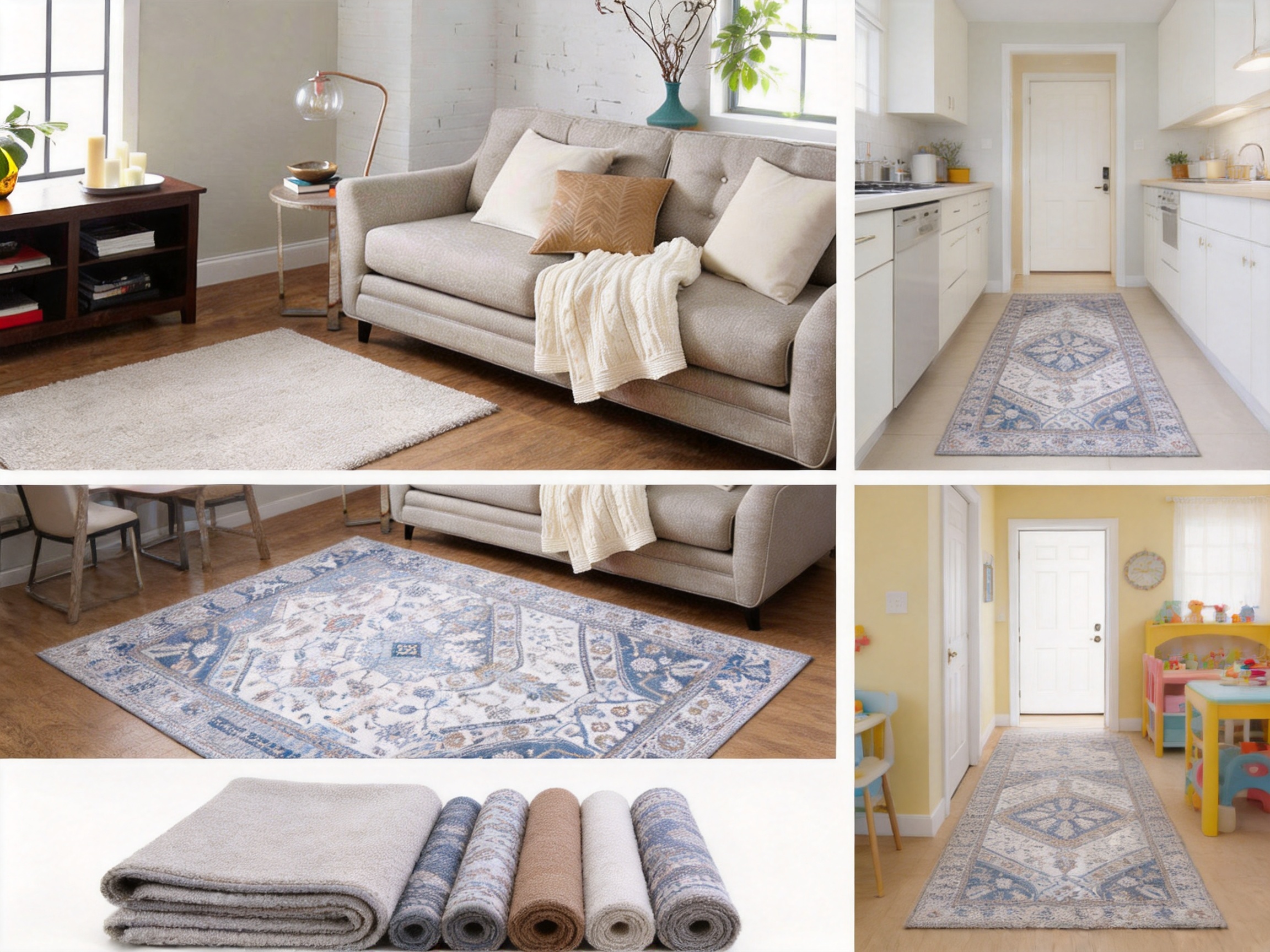
Modern interiors increasingly require floor coverings that balance visual appeal, practical performance, easy care, and commercial value. A carpet may need to complement a living room, withstand frequent movement in a hallway, fit beneath furniture, remain comfortable in a bedroom, and be simple enough to clean in a busy household. For retailers, interior designers, hospitality buyers, and project contractors, the product must also be available in consistent quality, flexible dimensions, dependable lead times, and a broad range of patterns.
The Chenille 1# Low Pile Printed Carpet has been developed to answer these requirements. It combines a soft chenille surface, a low 2 millimeter pile, digital printing capability, and a bonded TPR and cotton fabric backing. The result is a versatile indoor area rug that can be used in bedrooms, living rooms, dining spaces, kitchens, children's areas, entrances, and other interior settings. Its rectangular format and selection of standard sizes make it easy to specify, while custom dimensions support individual room plans and private-label programs.
Produced by Zhejiang Benyi Textile Technology Co., Ltd., a textile manufacturer located in Shaoxing, Zhejiang Province, the carpet benefits from an integrated production structure. The company develops carpet fabrics, manages weaving and dyeing or printing operations, and completes finished carpet processing within its own manufacturing system. This structure provides greater control over fabric quality, design development, production coordination, and delivery compared with a supply model that depends entirely on unrelated subcontractors.
This article examines the product's construction, functional advantages, design potential, manufacturing process, customization opportunities, maintenance requirements, and suitability for wholesale buyers. It also explains why a low-pile printed chenille carpet can offer a practical advantage over thicker, less flexible, or more difficult-to-maintain alternatives.
Content
The Chenille 1# Low Pile Printed Carpet is a printed polyester area rug designed for indoor use. It is made with chenille yarn and has a 2 millimeter pile height. The low profile gives the carpet a smooth, streamlined appearance and allows it to sit comfortably under furniture, near doors, and in spaces where a thick rug could interfere with movement.
The product is available in a range of standard dimensions, including 2 feet by 3 feet, 2 feet by 6 feet, 3 feet by 5 feet, 4 feet by 6 feet, 5 feet by 7 feet, 6 feet by 9 feet, and 8 feet by 10 feet. Custom dimensions are also available. This combination of standard and customized sizing enables the same product family to serve small accent areas, bedside spaces, long runners, dining areas, family rooms, and larger open-plan interiors.
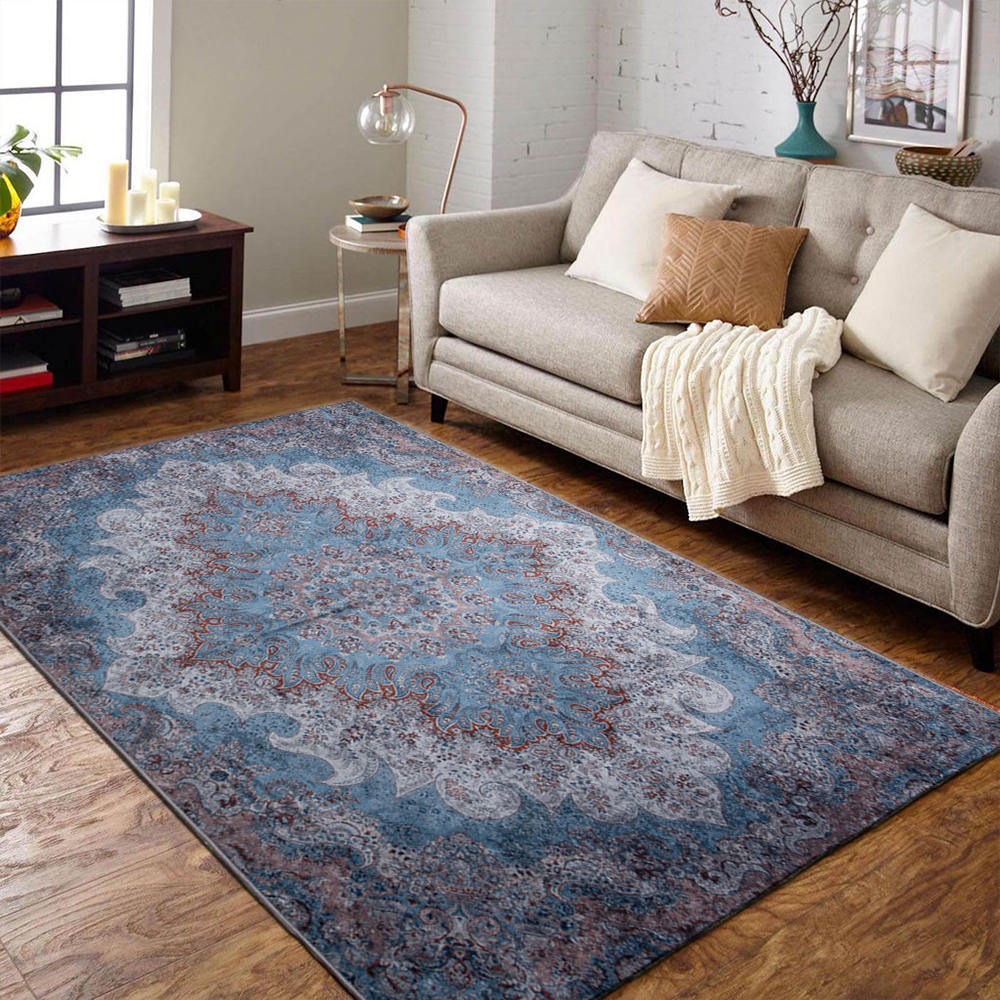
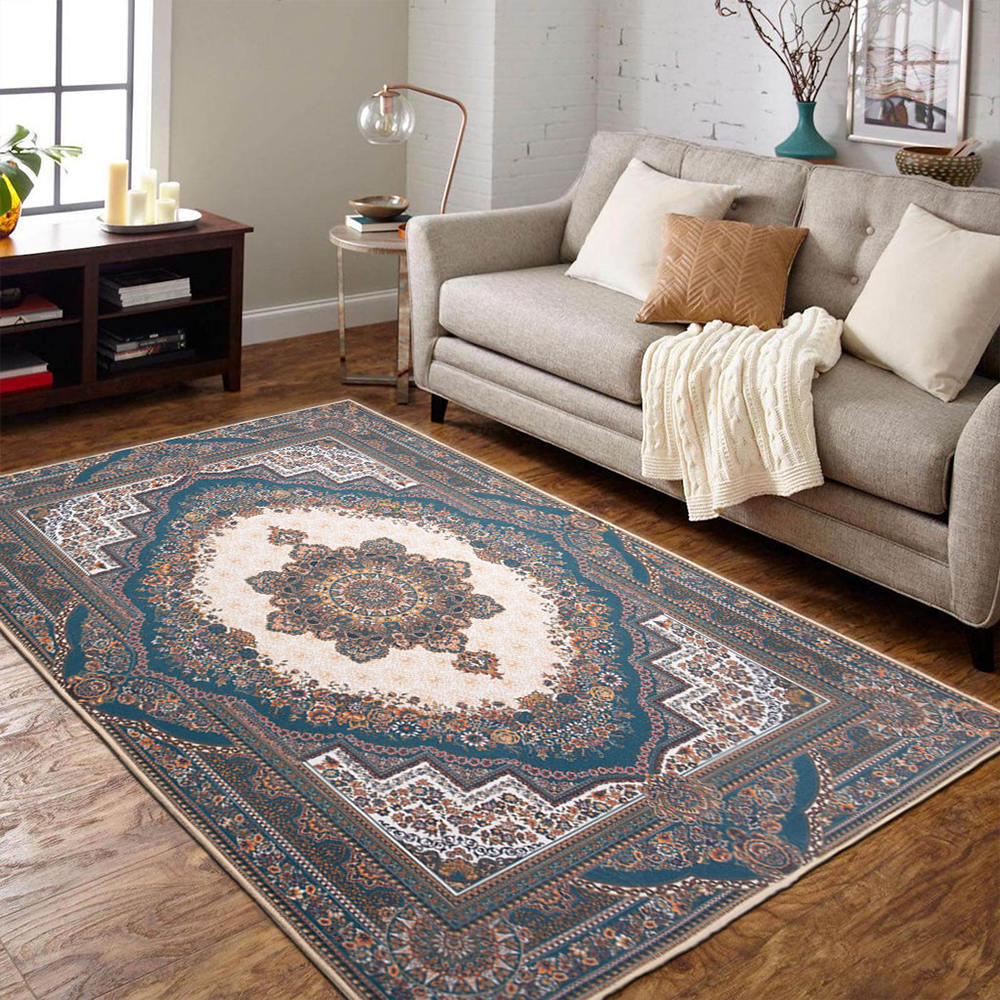
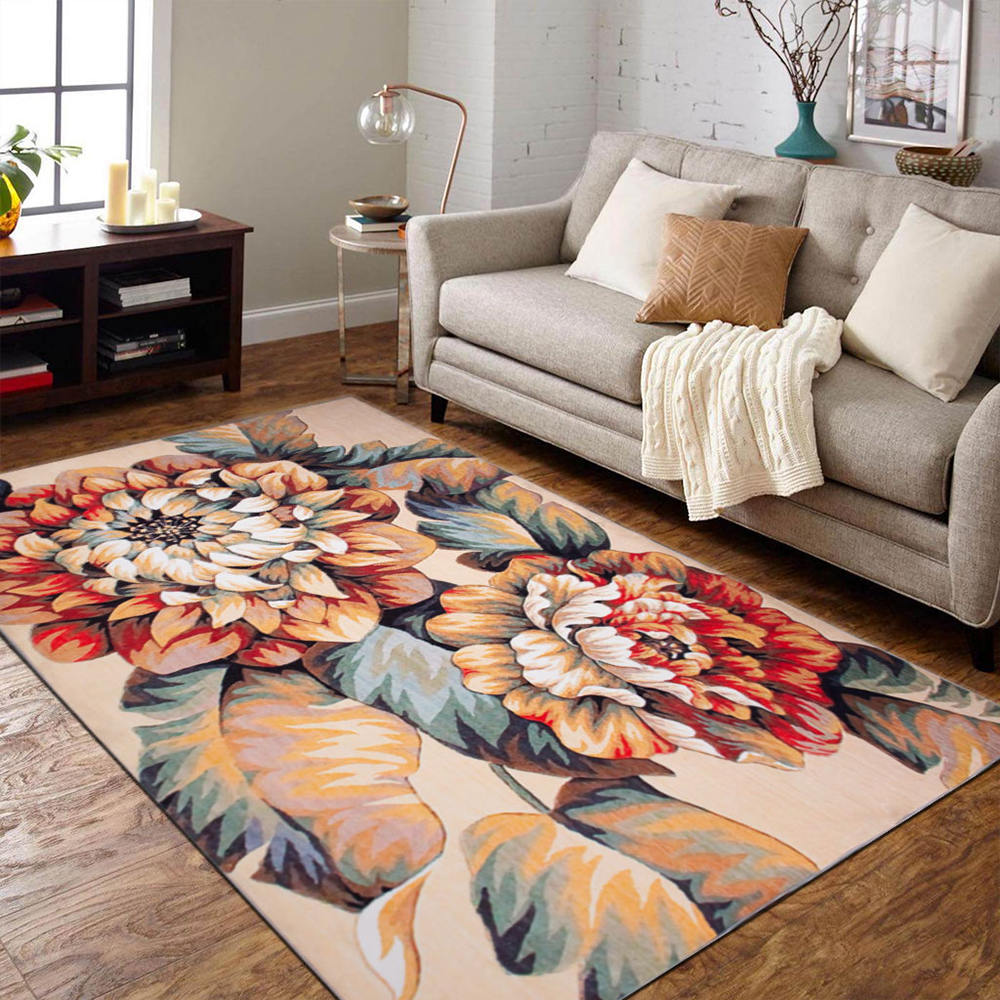
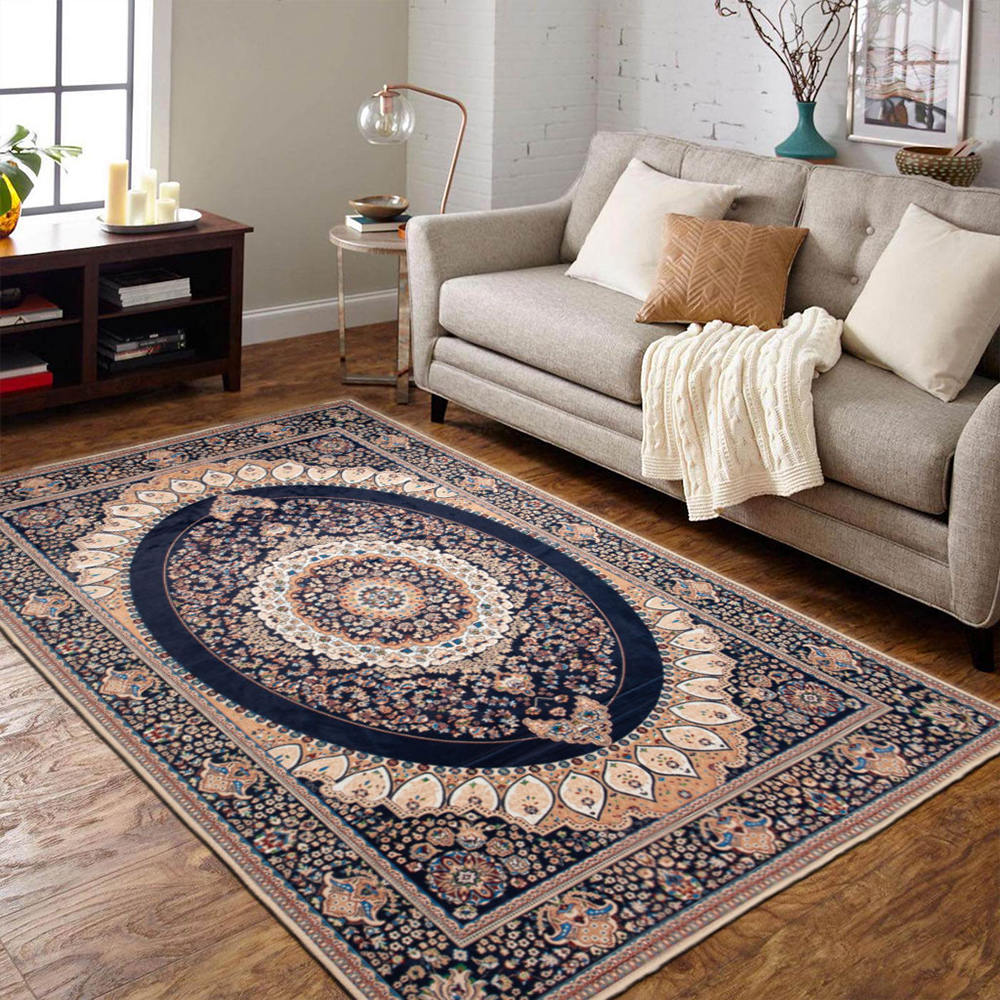
The surface is designed with Persian-inspired and modern patterns. Through digital printing, the manufacturer can produce a wide range of visual styles, including Persian, Moroccan, modern, classic, geometric, and cartoon designs. This capability is important for buyers who need more than one visual collection. A retailer may use traditional designs for one market segment, minimalist designs for another, and playful patterns for children's rooms without changing the basic carpet construction.
The back is made with TPR and cotton fabric in a bonded construction. This backing helps the rug remain stable during normal indoor use and provides a skid-resistant surface. The backing also allows the carpet to be folded more easily than many rigid or heavily structured floor coverings, which can simplify packaging, warehousing, shipment, and home storage.
Additional product features include fade resistance, washability, a soft hand feeling, and a 1,150 grams per square meter weight. These characteristics position the carpet as a practical everyday textile rather than a purely decorative floor accessory.
| Product Attribute | Specification | Commercial Benefit |
| Product type | Printed indoor area rug | Suitable for multiple residential and commercial interior applications |
| Surface material | Chenille yarn, polyester | Soft touch, durable fiber structure, and flexible design presentation |
| Pile height | 2 millimeters | Low profile, easy furniture placement, and convenient cleaning |
| Construction | Bonded | Stable combination of face and backing materials |
| Back material | TPR and cotton fabric | Skid resistance and improved handling flexibility |
| Weight | 1,150 grams per square meter | Balanced substance without excessive bulk |
| Pattern options | Persian, Moroccan, modern, classic, geometric, and cartoon | Supports different market segments and room styles |
| Available sizes | Standard sizes and custom dimensions | Suitable for retail collections and project requirements |
| Care method | Machine wash | Convenient maintenance for everyday indoor use |
| Special features | Fade resistant, non-slip, washable | Combines appearance retention, stability, and practical care |
Pile height has a direct effect on how a carpet feels, functions, and fits within a room. A high-pile rug can provide a deep, luxurious sensation, but it may be more difficult to place beneath doors, chairs, beds, and cabinets. It may also collect more dust and require additional effort during routine cleaning. By contrast, the 2 millimeter pile of the Chenille 1# carpet provides a clean and relatively flat surface that works well in active areas.
Low-pile construction is especially valuable in rooms where furniture is frequently moved. Dining chairs can slide across the floor more easily when the rug is not excessively thick. Office chairs and children's furniture are less likely to catch on a raised edge. Sofa legs can rest securely on the surface, while cabinet doors and interior doors are less likely to contact the carpet.
The low profile also supports flexible placement. The same carpet can be used as a decorative layer beneath a coffee table, as a bedside rug, under a dining table, or in an entryway. Its appearance is refined enough for visible living spaces, while its practical construction suits areas that experience regular foot traffic.
Another advantage is easier storage and shipment. A thin, flexible carpet can be folded without the volume associated with a thick, tightly tufted product. This can reduce packaging demands and make the item more convenient for online retail fulfillment. For wholesale buyers, compact handling can contribute to more efficient warehouse organization and transportation planning.
Low pile does not mean the carpet lacks comfort. Chenille yarn is known for its soft hand feeling and smooth surface. While the product does not provide the deep cushioning of a thick shag rug, it offers a pleasant textile feel underfoot while maintaining a neat and manageable structure.
The carpet uses 100 percent polyester chenille yarn. Polyester is widely used in home textiles because it can provide a balance of strength, color presentation, dimensional stability, and manageable care requirements. The chenille construction contributes to the product's soft hand feeling and visually rich surface.
Chenille surfaces can reflect light differently across the yarn, creating subtle texture even when the pile is low. This gives printed designs additional depth. A Persian motif, for example, can appear more textile-like and layered than the same artwork printed on a completely flat synthetic sheet. A modern geometric pattern can gain visual softness, helping it integrate with furniture, curtains, cushions, and other interior textiles.
The surface is designed to support fade-resistant performance. This is valuable in rooms that receive regular daylight or in retail environments where products may be displayed for extended periods. Fade resistance does not mean that every textile is unaffected by unlimited ultraviolet exposure, but it helps the carpet maintain a more consistent appearance when used under normal indoor conditions and cared for correctly.
Polyester chenille also enables a broad design range. Because the product is digitally printed, the surface can accommodate detailed artwork, tonal transitions, repeated motifs, and multiple color combinations. Buyers are not limited to a small number of yarn-dyed patterns. Instead, they can request collections tailored to seasonal trends, regional preferences, private-label identities, or specific customer groups.
The soft hand feeling is another competitive benefit. Some low-cost printed floor coverings may have a thin, plastic-like surface. The Chenille 1# construction is intended to provide a warmer and more textile-oriented touch. This distinction can improve the customer's first impression when the product is handled in a showroom or unpacked at home.
Digital printing is one of the most important features of this carpet program. It allows designs to be transferred to the textile surface with a high level of flexibility and detail. Rather than relying only on a fixed collection of woven or mechanically engraved patterns, the manufacturer can develop and print new artwork for different markets.
Persian patterns remain popular because they contribute a classic and decorative appearance. Floral elements, medallions, borders, and aged-color effects can make a room feel established and layered. Moroccan patterns offer another direction, often using repeated geometry and strong visual rhythm. Modern designs can be cleaner and more understated, making them appropriate for contemporary apartments, offices, and hospitality settings.
Classic motifs can appeal to buyers seeking a traditional home environment, while geometric styles can support minimalist or Scandinavian-inspired interiors. Cartoon patterns may be used in children's rooms, play areas, study spaces, and family-oriented retail collections. The ability to create all of these categories within one product platform is useful for distributors that want a broad assortment without managing numerous unrelated constructions.
Digital printing can also support coordinated collections. A buyer may request several sizes using the same artwork, or a group of related patterns with shared colors. For example, a collection could include a large living room rug, a narrow bedside rug, and a small entrance mat using variations of the same design language. This makes merchandising easier and allows consumers to create a more consistent interior.
Custom printing can be particularly valuable for private-label customers. Retailers may request exclusive patterns, hospitality groups may need a design aligned with a property concept, and interior designers may require a specific color direction. Any customization should be reviewed through artwork approval, sampling, color evaluation, and production confirmation. These steps help align expectations between the buyer and the manufacturing team.
The printing process also supports faster response to changing market trends. Fabric engineers and design teams can develop new carpet fabrics each quarter based on market information. This ongoing development is an advantage in a category where colors, motifs, room styles, and consumer preferences change regularly.
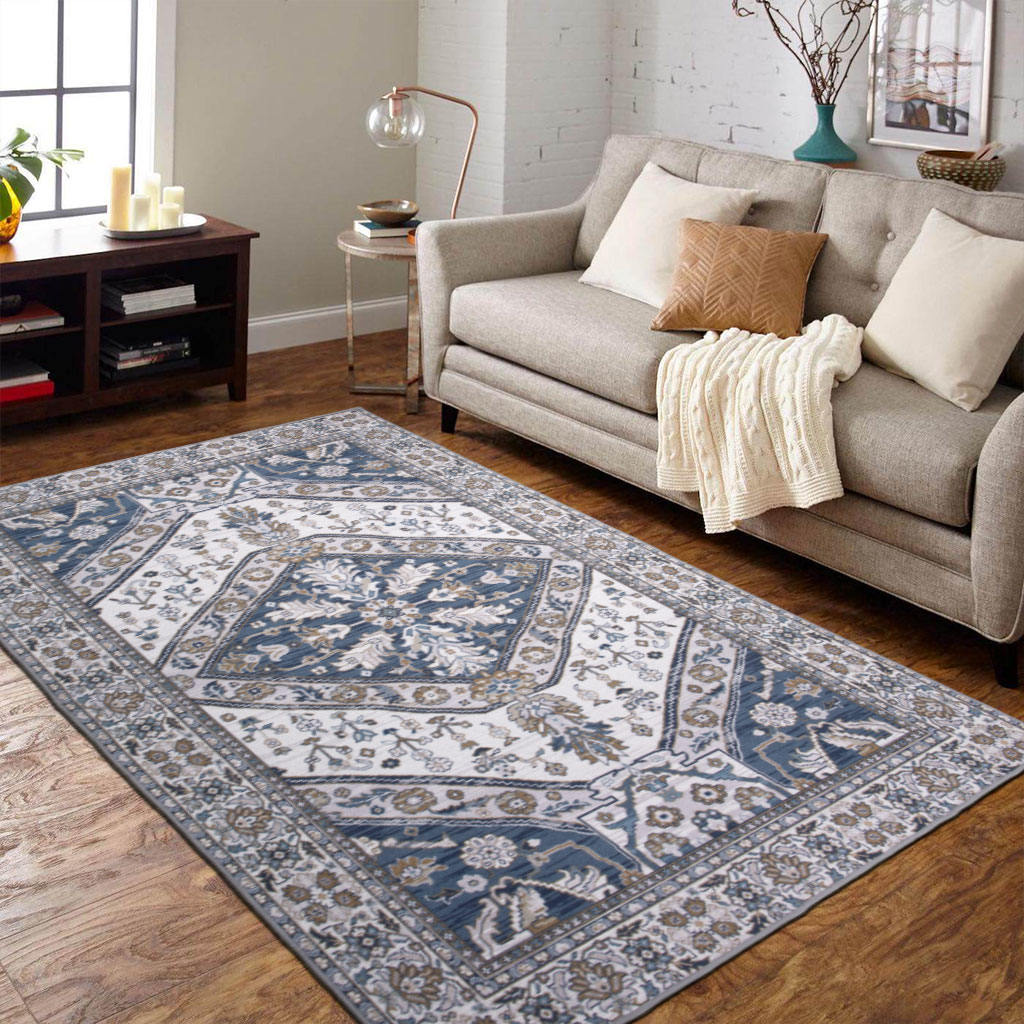
Chenille 1# Low Pile Printed Carpet
The carpet uses a bonded backing made from TPR and cotton fabric. TPR, or thermoplastic rubber, is commonly used in non-slip textile applications because it can provide a flexible, resilient, and relatively stable backing layer. Combined with cotton fabric, it creates a practical foundation for the printed chenille face.
The principal consumer benefit is improved skid resistance. A rug that shifts easily can become inconvenient and may create a trip concern, particularly in entryways, children's spaces, kitchens, and other active rooms. The TPR backing is designed to help the rug stay in place during ordinary indoor use. Nevertheless, the surface beneath the rug should be clean, dry, and suitable, and the rug should be positioned flat without folded corners.
The bonded structure also helps join the surface and backing materials into one manageable product. It supports the carpet's flexibility while retaining sufficient body for daily placement. Because the backing is soft enough to fold, the rug can be packaged and stored more efficiently than products with hard or bulky support layers.
The manufacturer identifies the product as requiring no additional rug pad under normal use. However, the need for an extra pad can depend on the floor type, rug size, room traffic, and customer preference. An additional pad may still be selected by buyers who want extra cushioning, greater grip, or increased protection for a particular floor surface.
For wholesale buyers, backing consistency is important. Uneven coating, poor bonding, or inconsistent edge handling can negatively affect the customer experience. An integrated factory structure gives the manufacturer greater opportunity to monitor the relationship between surface fabric, printing, bonding, finishing, and inspection.
Zhejiang Benyi Textile Technology Co., Ltd. is located in Shaoxing, Zhejiang Province, a region widely associated with textile production and supply-chain activity. The company focuses on carpets, rug fabrics, and finished textile products. Its manufacturing model is based on combining the surface and bottom components to make carpet production more efficient and coordinated.
The company operates its own weaving, dyeing and printing factories, and finished carpet processing factories. This integrated arrangement is a significant strength for buyers who need dependable product development and production control. When surface fabric creation, coloration, printing, backing, and finished processing are managed within one coordinated system, communication can be more direct and technical adjustments can be made more efficiently.
Vertical coordination can also reduce the risk of inconsistent materials between production stages. A supplier that purchases every component from separate sources may face differences in color, handle, width, backing behavior, and finishing quality. An integrated manufacturer is better positioned to establish internal specifications and monitor production from fabric development through final packing.
The company has a team of more than 20 fabric engineers. This technical team develops new carpet fabrics each quarter based on market trends and provides customized services according to customer requirements. Such engineering resources are useful when a buyer needs more than a standard catalog product. They can support decisions related to yarn selection, surface texture, printing direction, backing construction, dimensions, and application-specific performance.
Another important advantage is control over lead time. While actual delivery depends on order quantity, artwork approval, production scheduling, material availability, and shipping arrangements, internal control of more production stages can simplify coordination. It can reduce the number of external handoffs and make production planning clearer for wholesale customers.
The company also emphasizes ecological and environmental considerations. Its development direction includes sustainable materials and production methods, such as recycled polyester and water-saving dyeing techniques. The company reports having passed OEKO-TEX and GRS certifications. Buyers should confirm the exact certification scope, certificate validity, and applicability to each specific product or order, but these stated credentials demonstrate an effort to address responsible textile production.
High-pile rugs offer deep softness and a plush appearance, but they can be difficult to place beneath furniture and more demanding to clean. Their long fibers may trap dust, food particles, and pet hair. They can also create problems around doors or under chairs.
The 2 millimeter pile of the Chenille 1# carpet offers a cleaner profile and easier everyday handling. It can be used in rooms where furniture movement, door clearance, and regular vacuuming are important. The soft chenille face still provides a comfortable textile surface without the bulk of a deep shag structure.
Traditional woven rugs can have strong visual character, but creating a new design may require extended development time and specialized production planning. A digital printing platform can offer greater artwork flexibility and faster adaptation to trend-based collections.
The printed chenille format can reproduce detailed motifs, modern artwork, and customized graphics without requiring every visual variation to be developed as a separate woven construction. This can give retailers a wider design assortment and reduce the limitations associated with fixed pattern libraries.
Plastic mats can be easy to wipe, but they may feel cold, rigid, or less decorative. They may not provide the textile appearance expected in bedrooms, living rooms, and dining areas.
The Chenille 1# carpet combines a soft textile surface with washable performance and a skid-resistant backing. It therefore occupies a useful position between decorative area rugs and highly utilitarian plastic mats. It can deliver more warmth and visual sophistication while retaining practical maintenance characteristics.
Heavy rubber-backed products may offer stability, but they can be more difficult to fold, package, and store. They may also increase shipping volume and make the rug less convenient for consumers to handle.
The TPR and cotton fabric backing used in this carpet is designed to provide grip while maintaining flexibility. This supports easier folding, transportation, and repositioning. For e-commerce sellers, the ability to offer a practical rug in a manageable package can be an important commercial advantage.
Some suppliers offer only pre-existing patterns and sizes, limiting a retailer's ability to establish a distinct collection. The digital printing and custom-size capabilities of this product allow buyers to explore exclusive designs, coordinated collections, and market-specific formats.
Customization can help a retailer avoid direct comparison with identical products sold by competitors. It can also strengthen branding through unique artwork, packaging, labeling, and coordinated merchandising, subject to the manufacturer's development and order requirements.
In living rooms, an area rug often serves as a visual anchor. A 5 feet by 7 feet, 6 feet by 9 feet, or 8 feet by 10 feet format may be selected depending on the room layout and furniture arrangement. The low pile allows sofa legs, coffee tables, and occasional chairs to sit comfortably on the rug without creating excessive height.
Persian and classic patterns can add warmth to traditional interiors, while geometric or modern designs can complement contemporary furniture. Because digital printing offers multiple color directions, buyers can select designs that coordinate with upholstery, wall colors, curtains, and decorative cushions.
Bedrooms benefit from soft surfaces near beds and dressing areas. Smaller sizes can be placed beside the bed, while larger rugs can extend beneath the bed and surrounding furniture. The chenille surface provides a comfortable touch when stepping onto the rug, and the low pile makes vacuuming and general upkeep manageable.
Neutral modern patterns can support calm bedroom styling, while Persian designs can create a more layered and decorative appearance. For children's bedrooms, cartoon or playful geometric designs may be selected from the same product platform.
Dining areas require a rug that can accommodate table and chair movement. A low pile is useful because chair legs are less likely to catch than they might on a thick, high-pile surface. The washable construction also provides a practical response to ordinary household spills and crumbs.
When specifying a dining room rug, the buyer should consider the table footprint and allow sufficient space for chairs to remain on the rug when pulled away from the table. Custom sizing can be valuable for unusual dining layouts or commercial interiors.
Smaller formats and narrow custom dimensions can be used in kitchens, particularly near sinks, counters, islands, and preparation areas. The washable construction supports routine cleaning, while the low profile reduces interference with cabinet doors and foot movement.
Although the product is designed for indoor use and can serve kitchen areas, care should be taken to keep the rug dry and flat. It should not be treated as a substitute for a specialized industrial safety mat in areas exposed to heavy grease, open flames, or continuous moisture.
The 2 feet by 6 feet size can function as a narrow runner in hallways, beside beds, or near entrances. Low pile construction is particularly appropriate around doors because it minimizes clearance problems. The TPR backing can help the runner remain more stable during ordinary foot traffic.
In high-use entry areas, regular cleaning is important. Dirt should be removed promptly, and the rug should be washed according to the care instructions and dried thoroughly before returning it to the floor.
Children's spaces often require floor coverings that are comfortable, visually engaging, and easy to maintain. Cartoon and colorful geometric patterns can make the room more welcoming, while the washable surface supports practical household care.
The low pile is also helpful for play areas because small toys are less likely to disappear deep into the surface. Parents and facility managers should still inspect the rug regularly, ensure it lies flat, and use it only in suitable indoor environments.
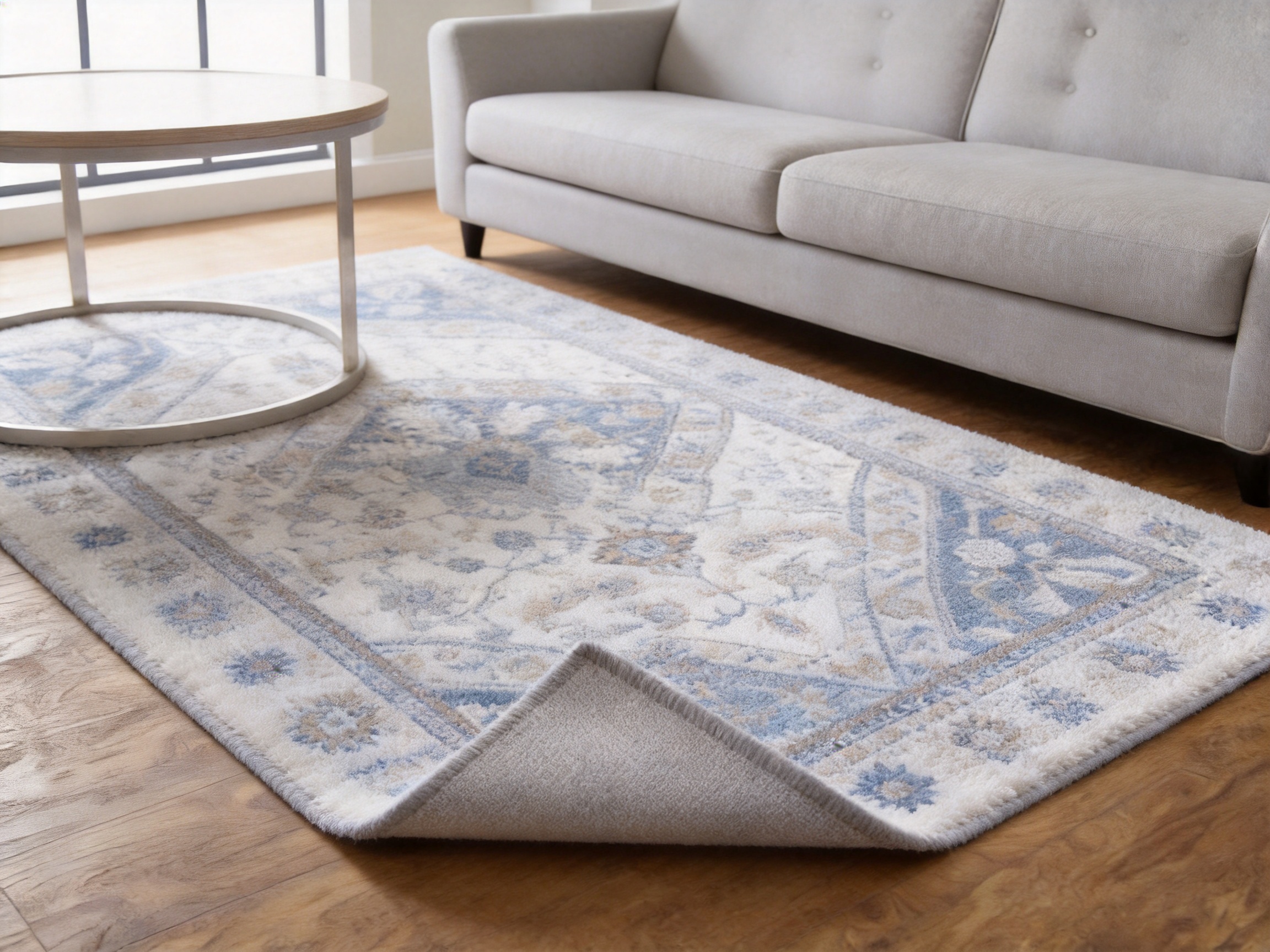
One of the product's key features is machine-washable construction. This can make maintenance more convenient than with rugs that require professional cleaning or specialized treatment. Before washing, users should consult the final care label, confirm that the machine capacity is appropriate for the rug size, and follow the recommended washing and drying instructions.
Routine care should begin with regular vacuuming or gentle surface cleaning. Removing loose dust and particles helps preserve the appearance of the printed surface. Vacuum settings should be selected appropriately for a low-pile textile, and aggressive brushing should be avoided if it could damage the chenille face.
Small spills should be addressed as soon as possible. Blotting is generally preferable to vigorous rubbing, which can spread a stain or disturb the surface appearance. Any cleaning agent should be tested first on an inconspicuous area. Strong bleach, harsh solvents, or unapproved chemical treatments may affect color, fiber appearance, or backing performance.
After washing, the carpet should be dried completely before use. A damp rug placed on a floor for an extended period may develop an unpleasant odor or affect certain flooring materials. The carpet should be laid flat during drying whenever possible, and it should not be folded or stored while moisture remains in the surface or backing.
For long-term storage, the rug should be clean and dry. It can be folded or rolled according to the recommended packaging method and kept in a dry, ventilated location away from direct sunlight. Proper storage helps reduce unnecessary creasing, moisture exposure, and color impact.
Wholesale buyers should evaluate more than the appearance of a sample. A reliable purchasing program should review the complete product specification, including fiber composition, pile height, weight, dimensions, backing material, print quality, edge finishing, wash performance, packaging, and labeling.
Color consistency is particularly important for digitally printed products. Buyers should approve a physical sample or color standard before bulk production. Screen images can vary between devices, so digital artwork alone should not be treated as the final color reference.
Dimensional tolerance should also be established. Textile products can experience minor variation due to fabric handling, bonding, cutting, and finishing. Clear tolerances help prevent misunderstandings during inspection and receiving.
Backing adhesion is another important checkpoint. The TPR and cotton fabric should remain properly bonded to the carpet surface, without excessive peeling, bubbling, or irregular coverage. Edges and corners should be inspected for clean cutting and stable finishing.
Wash testing can help confirm how the carpet responds to laundering. Buyers may evaluate dimensional stability, surface appearance, color retention, backing condition, and drying behavior. Testing should reflect the care instructions that will be communicated to the end customer.
For larger programs, a written quality-control plan can define inspection stages. These may include incoming material inspection, printing inspection, bonding inspection, finished-product inspection, packaging review, and random pre-shipment inspection. A coordinated factory is better positioned to connect these checks across production stages.
The product is suitable for customization in several areas. The most visible option is artwork. Buyers can request Persian, Moroccan, modern, classic, geometric, cartoon, or other approved design directions. Custom dimensions can also be developed for retail, hospitality, interior design, and project applications.
Color customization may be used to match a retailer's seasonal palette or a design project's interior scheme. Buyers should provide clear color references and approve samples because printed textile color can be affected by artwork files, fabric preparation, ink behavior, drying, and finishing.
Size customization is useful when standard area rug dimensions do not match the intended application. A buyer may need a long hallway runner, a compact bedside format, a large open-plan rug, or a set of coordinated sizes. Custom sizing should be reviewed for production feasibility, packaging dimensions, washing requirements, and shipping efficiency.
Private-label programs may also include woven labels, printed care labels, product cards, packaging sleeves, cartons, barcodes, and other retail presentation elements. These details should be confirmed early because packaging and labeling can influence production schedules and minimum order quantities.
Customization is most successful when the buyer provides a complete technical brief. The brief should identify the target market, preferred materials, intended room, dimensions, artwork, colors, performance expectations, packaging requirements, estimated order volume, and delivery schedule. The manufacturer's fabric engineers can then evaluate the requirements and propose a suitable development route.
Environmental responsibility is becoming increasingly important in textile purchasing. Buyers and consumers are paying closer attention to fiber sourcing, water consumption, chemical management, production waste, packaging, and product lifespan. Carpet manufacturers must therefore consider sustainability throughout the supply chain rather than focusing only on the finished appearance.
Zhejiang Benyi Textile Technology Co., Ltd. describes environmental protection and sustainability as part of its development direction. The company invests in sustainable materials and production methods, including recycled polyester and water-saving dyeing techniques. These approaches can help reduce dependence on virgin resources and lower the environmental burden associated with textile coloration.
Recycled polyester can be used to create new textile fibers from recovered materials, although buyers should confirm the exact recycled content and certification scope for a particular product. Water-saving dyeing technologies can help reduce water consumption compared with more resource-intensive processes, but actual performance depends on the equipment, recipe, production volume, and process controls used.
The company reports OEKO-TEX and GRS certifications. OEKO-TEX-related certification can address the testing of harmful substances in textile products, while GRS certification is associated with recycled content and chain-of-custody requirements. Certification details should be verified against current documents and the specific manufacturing facility or product line.
A durable and washable rug can also contribute to more responsible consumption by remaining useful over an extended period and reducing the need for frequent replacement. Proper care is essential to achieve this benefit. Consumers should follow washing instructions, avoid unnecessary chemical treatment, and dispose of the product responsibly at the end of its service life.
For commercial customers, product quality is only one part of a successful purchase. Supply reliability, communication, development speed, production consistency, and delivery planning are equally important. The supplier's integrated structure provides several advantages in these areas.
Control of weaving, dyeing and printing, and finished carpet processing can reduce the complexity of production coordination. The buyer does not need to manage every component through separate vendors. This can make it easier to discuss technical adjustments, confirm development samples, and identify the source of a production issue.
In-house fabric engineering also supports product evolution. If market feedback shows demand for a softer surface, a different pattern scale, a new color palette, or a modified backing, the factory can evaluate the construction as a complete system. This is more efficient than changing one component without understanding how it will interact with the others.
Full-chain coordination can also support more predictable lead-time planning. While no supplier can eliminate the effects of raw material availability, peak-season demand, shipping conditions, or artwork delays, fewer external handoffs may make the production schedule easier to manage.
For distributors, the ability to order multiple sizes and designs from one product platform can simplify assortment management. Instead of sourcing separate products for living rooms, bedrooms, kitchens, and children's spaces, a buyer can build a coordinated category around one low-pile chenille construction.
The company also offers customized services according to customer requirements. This makes the product suitable not only for standard wholesale sales but also for retail development, contract furnishing, promotional collections, online marketplace programs, and specialized interior projects.
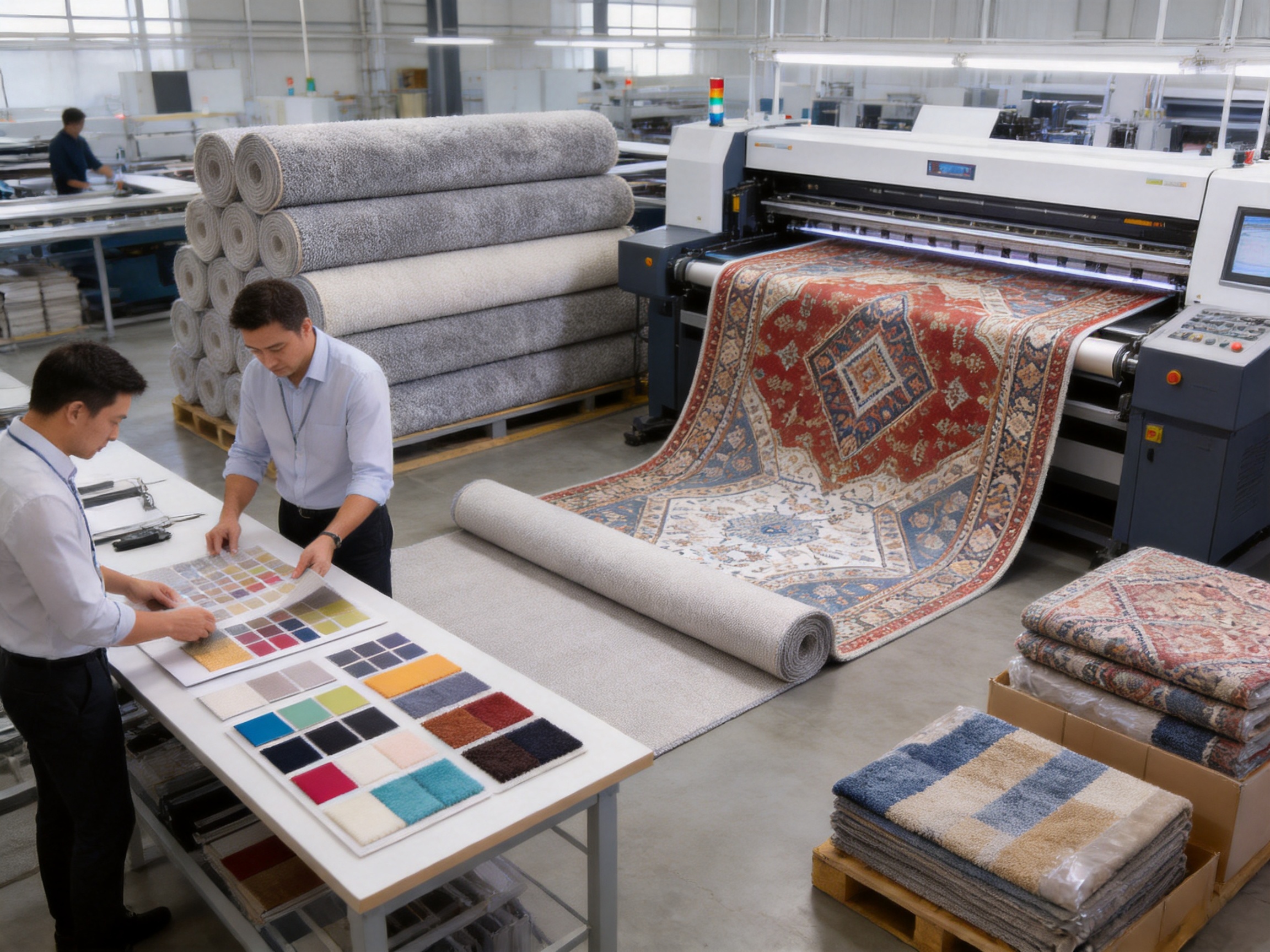
Choosing the right size is the first step. A small 2 feet by 3 feet rug may work as an accent piece, bedside mat, or compact entry rug. The 2 feet by 6 feet size is appropriate for narrow spaces and runner-style applications. Medium sizes such as 3 feet by 5 feet and 4 feet by 6 feet can serve small seating areas, bedrooms, and dining spaces.
Larger formats, including 5 feet by 7 feet, 6 feet by 9 feet, and 8 feet by 10 feet, can anchor larger furniture arrangements. Buyers should measure the room and consider the desired relationship between the rug and furniture. A rug that is too small may appear disconnected from the room, while an oversized rug may make the space feel crowded.
Pattern scale should be matched to room size and furniture density. Large, detailed Persian patterns may become a strong focal point and work well in rooms with relatively simple furniture. Smaller geometric repeats can be suitable for spaces that already contain several decorative elements. Neutral modern designs may offer greater flexibility for consumers who frequently change furniture or accessories.
Color selection should consider lighting conditions. A pattern that appears balanced in a bright showroom may look deeper or more muted in a room with limited natural light. Buyers should review samples under different lighting conditions whenever possible.
For online retail, product photography should show the rug in a realistic setting and include clear information about dimensions, pile height, material, backing, care, and expected color variation. Because low-pile rugs may be folded for shipment, packaging instructions should explain that temporary creases can relax after the product is laid flat.
The product's broad application range can help retailers build a more complete rug assortment. One construction can be presented in multiple pattern families and sizes, allowing the seller to target traditional, contemporary, family, and children's markets.
Washability is a strong selling point for consumers who want attractive rugs without complicated maintenance. Non-slip backing addresses a common concern about rug movement. Fade-resistant properties support long-term visual appeal, while the low pile provides practical benefits in rooms with furniture and regular foot traffic.
Digital printing also creates opportunities for seasonal launches. A retailer may introduce floral and warm-toned patterns for one collection, neutral geometric designs for another, and playful children's artwork for a separate campaign. The underlying production platform remains consistent while the visual offer changes.
Custom dimensions can increase the product's relevance to project buyers. Hotels, serviced apartments, property developers, offices, and interior designers may require sizes that differ from standard retail dimensions. A factory capable of producing custom sizes can compete for these opportunities more effectively than a supplier limited to fixed formats.
Foldability and manageable weight can support e-commerce logistics. The 1,150 grams per square meter specification provides substance while avoiding the bulk associated with some heavy carpets. Buyers should confirm finished package dimensions and shipping weight for each size before calculating freight and fulfillment costs.
A clear ordering process helps reduce errors and improves production efficiency. The first stage should be an inquiry that defines the intended market, estimated quantity, preferred sizes, pattern direction, material requirements, backing expectations, packaging, and target delivery date.
The second stage is sample development or sample confirmation. Buyers should examine the surface hand feeling, pile height, print clarity, color, backing grip, edge finishing, and overall dimensions. If the order includes custom artwork, a physical sample is strongly recommended before bulk production.
The third stage is specification approval. The buyer and manufacturer should confirm the final product name, model number, materials, sizes, weight, care instructions, pattern, packaging, labeling, and acceptable tolerances. Any certification or testing requirements should also be identified at this stage.
The fourth stage is production planning. The manufacturer can then schedule fabric preparation, printing, bonding, cutting, finishing, inspection, and packing. Artwork approval and material confirmation should be completed before the production schedule is finalized.
The final stage is inspection and shipment. Buyers may request photographs, inspection reports, random sampling, or third-party inspection depending on order size and market requirements. Products should be packed in a way that protects the printed surface and backing during transportation and storage.
It is an indoor printed area rug made with polyester chenille yarn. It has a low 2 millimeter pile, a bonded construction, and a TPR and cotton fabric backing.
The carpet is suitable for bedrooms, living rooms, dining rooms, kitchens, hallways, entrances, and children's indoor spaces. The correct size and pattern should be selected according to the room layout and expected traffic.
The stated application is indoor use. It should not be assumed to have the weather resistance, ultraviolet stability, or moisture resistance required for permanent outdoor exposure.
Standard sizes include 2 feet by 3 feet, 2 feet by 6 feet, 3 feet by 5 feet, 4 feet by 6 feet, 5 feet by 7 feet, 6 feet by 9 feet, and 8 feet by 10 feet. Custom dimensions can also be discussed for qualified orders.
Yes. The digital printing process supports Persian, Moroccan, modern, classic, geometric, cartoon, and other approved design directions. Artwork, color, size, and packaging requirements should be reviewed during development.
The skid-resistant TPR backing is designed to help the rug remain in place and is promoted as requiring no additional rug pad under normal conditions. However, floor type, room traffic, rug size, and customer preference may justify using an additional pad.
The product care instruction is machine wash. Users should follow the final care label, use a machine with suitable capacity, avoid harsh chemicals, and dry the carpet completely before placing it back on the floor.
The 2 millimeter pile is easy to position under furniture, near doors, and in active rooms. It can be simpler to vacuum and less likely to interfere with chair movement or door clearance than a thicker rug.
The carpet is made from chenille yarn and is designed to provide a cool, soft hand feeling. It offers textile comfort while retaining the practical profile of a low-pile area rug.
The digital printing system can support Persian, Moroccan, modern, classic, geometric, cartoon, and other visual styles. The final result depends on artwork preparation, color approval, fabric conditions, and production specifications.
The backing consists of TPR and cotton fabric. It is bonded to the carpet construction and is designed to provide flexibility and skid resistance.
Zhejiang Benyi Textile Technology Co., Ltd. specializes in carpets, rug fabrics, and finished carpet products. Its capabilities include weaving, dyeing and printing, finished carpet processing, fabric engineering, and customized development.
It can be considered for private-label programs involving custom artwork, sizes, labels, packaging, and coordinated collections. The buyer should confirm minimum order quantities, development procedures, and packaging specifications with the manufacturer.
The company reports investment in recycled polyester, water-saving dyeing techniques, ecological production, and related textile certifications including OEKO-TEX and GRS. Buyers should request current documentation and confirm whether the certification applies to the specific product and facility.
Buyers should check dimensions, color, print sharpness, surface softness, pile height, backing adhesion, grip, edge finishing, wash response, packaging, and labeling. A physical sample provides a more reliable reference than digital images alone.
The Chenille 1# Low Pile Printed Carpet combines a soft polyester chenille surface with a practical 2 millimeter profile, digital design flexibility, washable construction, fade-resistant performance, and a skid-resistant TPR and cotton fabric backing. These features make it suitable for a broad range of indoor applications, from bedrooms and living rooms to dining spaces, kitchens, entrances, hallways, and children's areas.
Its principal advantage over many competing products is balance. It provides a more comfortable and decorative surface than a basic plastic mat, a more manageable profile than a thick shag rug, greater artwork flexibility than a limited woven collection, and easier handling than a heavy rigid-backed carpet. Standard sizes support efficient retail assortment planning, while custom dimensions and printing support project work and private-label development.
The manufacturer's integrated production system strengthens the product proposition. By controlling weaving, dyeing and printing, backing integration, and finished carpet processing, Zhejiang Benyi Textile Technology Co., Ltd. can coordinate product development and quality management across more stages of the supply chain. Its fabric engineering team, ongoing development work, customized services, and stated sustainability initiatives further support its position as a capable carpet and rug supplier.
For buyers seeking a versatile wholesale carpet with modern production support, the Chenille 1# Low Pile Printed Carpet offers a practical foundation for retail collections, interior projects, and customized programs. Final specifications, certification documents, samples, testing requirements, order quantities, and delivery schedules should always be confirmed directly before production.
1. Product specification information for Chenille Carpet 1#, model number 100017, including materials, dimensions, pile height, construction, backing, care instructions, and special features.
2. Technical product description for the Chenille 1# Low Pile Printed Carpet, including digital printing capability, chenille yarn construction, low-pile design, washable fabric, and skid-resistant TPR backing.
3. Manufacturing profile of Zhejiang Benyi Textile Technology Co., Ltd., including weaving, dyeing and printing, finished carpet processing, fabric engineering, and customized textile development.
4. General textile manufacturing principles concerning polyester fibers, chenille yarn, digital printing, bonded backing, TPR materials, and low-pile carpet construction.
5. General care and maintenance guidance for washable indoor area rugs and textile floor coverings.
6. General sustainability references concerning recycled polyester, water-saving dyeing processes, OEKO-TEX certification, and Global Recycled Standard certification.

ADD: No.75 Zhenyuan Road, Yuecheng District, Shaoxing City, Zhejiang Province, China 312000

Tel : +86-189 6750 9795

FAX : +86-0575-8803 2773

Email : fisher@benetextile.com

Copyright © Zhejiang Benyi Textile Technology Co., Ltd. All Rights Reserved. Carpets and Rugs Manufacturer

 English
 Français
 Deutsch
 عربى
عربى