

Tang Meilin — Customer Success and Product Support Specialist
 Home / Author / Tang Meilin — Customer Success and Product Support Specialist / Starry Sky Bath Mat: A Practical Guide to Comfort, Safety, Durability, and Custom Production
  2026.09.12
 Tang Meilin — Customer Success and Product Support Specialist
A bathroom mat is a small household product with an important daily role. It helps absorb water, creates a softer surface underfoot, adds visual character to an indoor space, and can reduce the discomfort associated with stepping onto a cold or hard floor. The Starry Sky Bath Mat is designed to bring these functions together in one versatile product. It combines a soft polyester surface, a low but comfortable 3 mm pile, a 1400gsm construction, water absorption, machine-washable care, and a non-woven backing with anti-slip dots.
Although the product is categorized as a bath mat, its use is not limited to bathrooms. Its rectangular format and available sizes make it suitable for kitchens, children’s rooms, laundry spaces, entrances, bedrooms, and other indoor areas where a washable and comfortable floor covering is required. Standard sizes include 40 × 60 cm, 50 × 80 cm, and 60 × 90 cm, while customized dimensions can be developed for particular projects, retail programs, hospitality applications, or private-label collections.
The mat is produced by Zhejiang Benyi Textile Technology Co., Ltd., a textile manufacturer located in Shaoxing, Zhejiang Province, China. The company combines textile development, weaving, dyeing and printing, and finished carpet processing within its production network. This integrated structure gives buyers access to a broader range of materials, patterns, dimensions, and finishing options while supporting control over quality and lead time.
This article examines the Starry Sky Bath Mat in detail. It explains the product’s construction, compares its practical advantages with common alternatives, reviews its care and performance characteristics, and describes the manufacturing capabilities behind it. It also includes a technical specification table, purchasing guidance, answers to common questions, and references for readers evaluating indoor textile floor coverings.
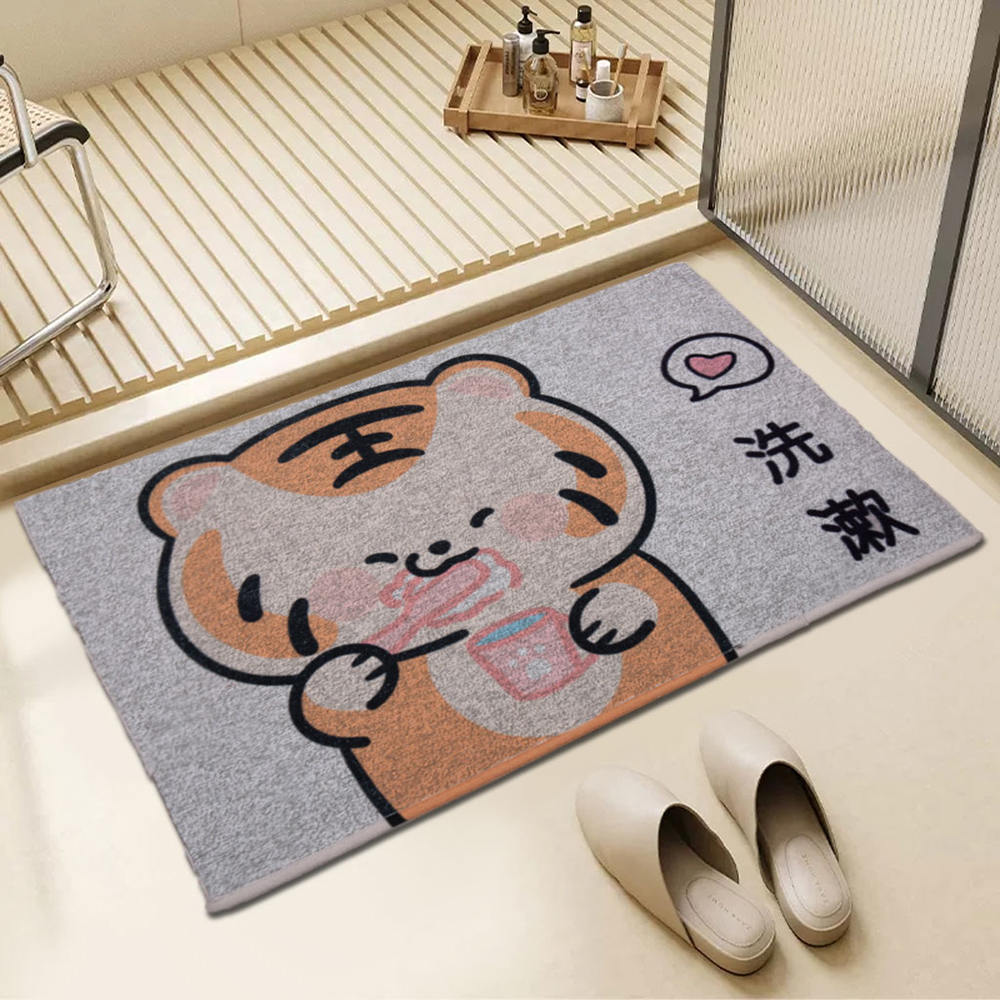
Starry Sky Bath Mat
Content
The Starry Sky Bath Mat is a rectangular indoor floor mat made primarily from polyester. Its design is intended to provide a balance between softness, absorbency, durability, and easy maintenance. The surface is described as a polyester loop pile with a soft velvet microfiber layer. This combination creates a comfortable contact surface while helping the mat resist ordinary household wear and retain its appearance through repeated use.
A 3 mm pile height gives the mat a relatively low profile. This is useful in rooms where a thick rug could interfere with doors, cabinets, drawers, or nearby furniture. A low-profile mat is also easier to place beside a bathtub, shower enclosure, sink, vanity, kitchen counter, or interior doorway. At the same time, the 1400gsm weight gives the product a substantial feel compared with very thin, lightweight mats that can look or feel insubstantial.
The mat is bonded during construction. Bonding joins the principal layers into a stable finished structure and can support a consistent shape during handling and daily use. The backing consists of non-woven fabric with anti-slip dots. This backing is designed to improve contact with the floor and help reduce shifting or skidding on suitable clean, dry indoor surfaces.
Water absorption is one of the product’s central functions. The soft microfiber contact layer is intended to draw moisture away from wet feet rather than leave water sitting on the surface. By helping keep water within the mat instead of allowing it to spread across a hard floor, the product contributes to a cleaner and more comfortable bathroom environment.
The product is available in printed or solid-color patterns. This gives buyers two different design directions. Printed surfaces can support decorative themes, seasonal collections, children’s ranges, or coordinated room concepts. Solid colors can provide a simpler appearance suitable for minimalist interiors, hospitality programs, rental properties, and broad retail assortments.
The following table summarizes the main product information supplied for the Starry Sky Bath Mat. Buyers should confirm final specifications, tolerances, color standards, packaging, and performance requirements with the manufacturer before placing a production order.
| Specification | Details |
|---|---|
| Product name | Starry Sky Bath Mat |
| Product category | Bath mat |
| Brand | Bene |
| Model number | 100147 |
| Material | Polyester |
| Construction | Bonded |
| Pile height | 3 mm |
| Weight | 1400gsm |
| Standard sizes | 40 × 60 cm, 50 × 80 cm, and 60 × 90 cm |
| Customized size | Available according to project requirements |
| Back material | Non-woven fabric with anti-slip dots |
| Shape | Rectangular |
| Pattern options | Printed or solid color |
| Recommended environment | Indoor use |
| Care method | Machine washable |
| Primary features | Softness, water absorption, washability, and anti-slip backing |
| Suitable rooms | Bathroom, kitchen, children’s room, and other indoor areas |
Comfort is one of the first qualities people notice when using a bath mat. A hard bathroom floor can feel cold, especially during the morning or in cooler seasons. The Starry Sky Bath Mat provides a textile surface between the user and the floor, offering a warmer and softer step than ceramic tile, stone, vinyl, or other hard surfaces.
The product information describes the contact surface as thick and fluffy, with a soft velvet microfiber layer. This structure is intended to provide a pleasant tactile experience without requiring the excessive height of a deep shag rug. The 3 mm pile is suitable for users who want cushioning and softness while still needing a mat that remains relatively easy to position and maintain.
The 1400gsm weight also contributes to the product’s hand feel. In general, a higher textile weight can create a denser and more substantial impression than a very light mat, although actual comfort also depends on fiber structure, surface density, backing, and finishing. In this product, the weight works together with the bonded construction and non-woven interlayer to create a balanced floor covering for regular indoor use.
The thick non-woven felt interlayer described in the product information can provide additional cushioning. This may be especially helpful in homes with children or pets, where a softer floor surface can make indoor spaces more comfortable. It can also help reduce the immediate hardness of the floor around a sink, bathtub, kitchen work area, or changing area.
Unlike some decorative rugs that are designed primarily for appearance, the Starry Sky Bath Mat is developed around frequent contact with bare feet and regular exposure to moisture. Its material selection and construction therefore support both visual presentation and practical daily use.
Water management is a key difference between a bath mat and a general decorative rug. After bathing or washing, wet feet can transfer a considerable amount of moisture to the floor. A suitable bath mat should absorb water efficiently, feel comfortable when stepped on, and dry adequately between uses when cared for correctly.
The soft microfiber surface of the Starry Sky Bath Mat is designed to absorb water from wet feet. The product information indicates that moisture does not remain on the surface in the same way it may on a smooth synthetic fabric. By pulling water into the textile structure, the mat can help reduce visible wetness and limit the spread of water around the room.
This feature can offer several practical advantages. It may help keep bathroom floors cleaner, reduce the need to wipe up small amounts of water after every use, and make the area near a shower or bathtub feel more comfortable. In kitchens, the same absorbent function can help manage small splashes near a sink or preparation area, although the mat should not be treated as a substitute for cleaning spills immediately.
Absorbency does not mean that the mat should remain saturated. Like any textile floor covering, it performs best when allowed to dry fully. Good ventilation, periodic washing, and avoiding prolonged placement on a continuously wet floor can help preserve freshness and service life. Users should also follow the manufacturer’s care guidance and ensure that the floor beneath the mat is clean and dry before placement.
Compared with non-absorbent plastic or hard rubber mats, a polyester microfiber bath mat generally offers a softer and more comfortable surface. Compared with ordinary cotton mats, polyester may offer advantages in dimensional stability, drying behavior, color retention, and resistance to everyday wear, depending on the specific construction and finishing process.
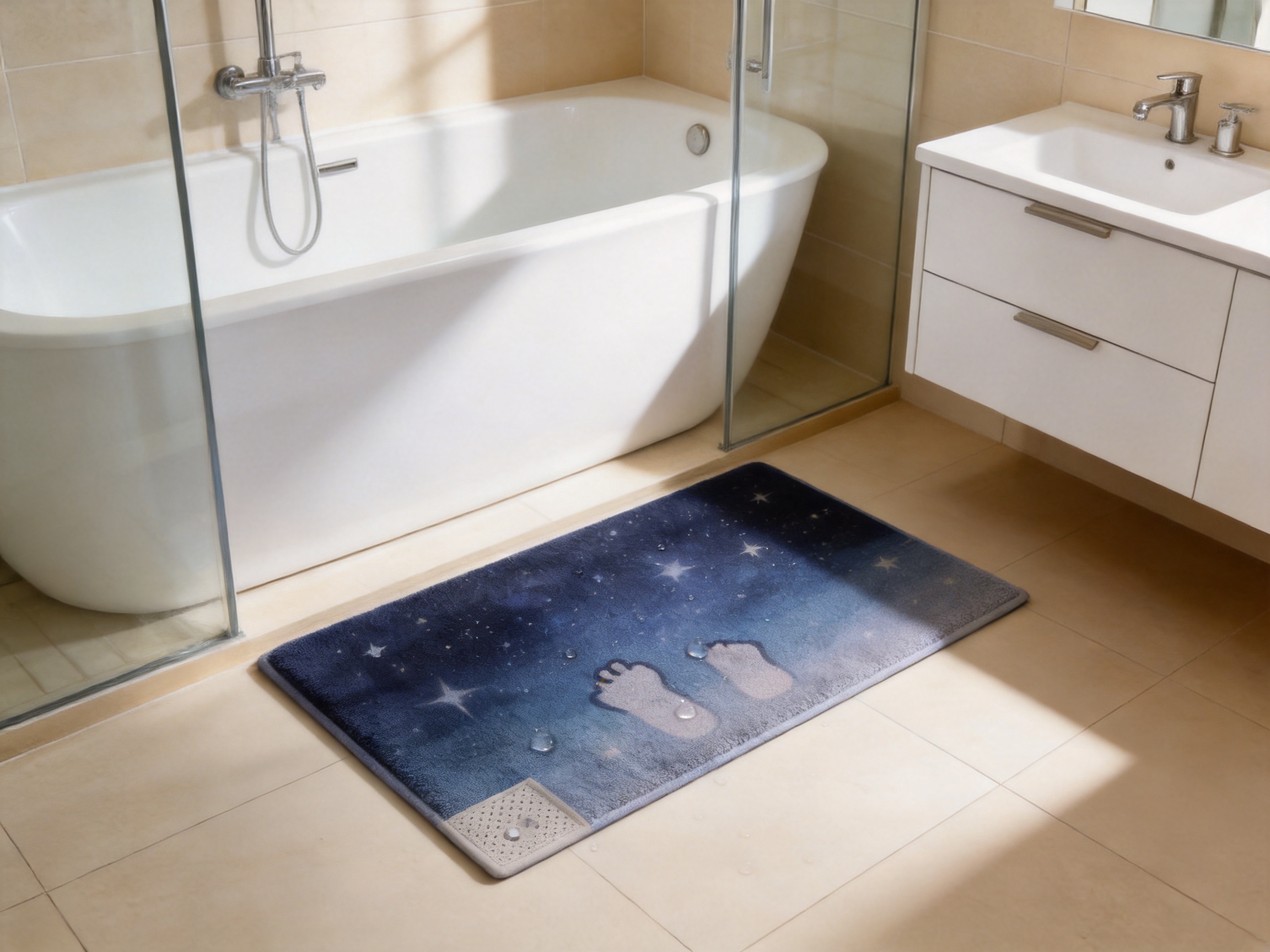
Floor stability is an important consideration in bathroom products. Water, smooth flooring, and frequent movement can increase the chance that an unsecured mat will shift. The Starry Sky Bath Mat uses a non-woven fabric backing with anti-slip dots to help maintain contact with the floor and reduce unwanted movement.
The anti-slip dots are intended to create additional friction between the mat and the floor. This can be particularly useful when the mat is placed beside a bathtub, shower, vanity, or sink. The backing also helps the mat remain more stable during normal stepping and walking compared with a mat that has no anti-slip treatment.
However, no anti-slip backing can guarantee complete immobility on every surface or under every condition. Performance depends on the type of floor, the amount of moisture, the cleanliness of both surfaces, the flatness of the floor, and the condition of the backing. The mat should be placed on a smooth, clean, dry, and structurally sound indoor floor. It should not be used on loose dust, standing water, oily surfaces, or damaged flooring.
Users should inspect the mat periodically. If the backing becomes worn, heavily contaminated, curled, or damaged, the product should be cleaned or replaced as appropriate. The corners should lie flat, and the mat should not be folded or placed where it obstructs doors or creates a trip hazard.
Compared with a simple fabric towel used as a temporary floor covering, the anti-slip dotted backing provides a more purpose-built solution. A towel may absorb water but can bunch, slide, or develop uneven folds. The Starry Sky Bath Mat is constructed as a dedicated floor product, with a defined shape, bonded layers, and a backing specifically intended to reduce movement.
Bath mats are exposed to repeated stepping, moisture, washing, detergent, and occasional contact with dust or cosmetic products. Durability is therefore important for both consumers and commercial buyers. The product is described as being made from 100% polyester loop pile, a fiber construction selected for durability and resistance to fading.
Polyester is widely used in indoor textile products because it can provide a good combination of strength, color flexibility, shape retention, and ease of care. A loop pile structure can also help create a stable surface that is suitable for regular foot traffic. The bonded construction helps connect the product layers, while the non-woven backing supports the overall finished form.
Color retention is especially important for printed bath mats and solid-color collections. A fading or uneven surface can make an otherwise functional mat look old before its physical structure has reached the end of its useful life. The supplied product information indicates that the material is intended to resist fading and remain vibrant through repeated washing and drying when appropriate care practices are followed.
Actual service life will depend on household traffic, washing frequency, detergent, drying temperature, floor conditions, and exposure to strong chemicals. Chlorine bleach and aggressive cleaning products should be avoided unless specifically approved by the manufacturer. Mild detergent and a suitable washing program are preferable for protecting both the surface and backing.
For buyers comparing products, durability should not be judged by thickness alone. A very thick mat may feel luxurious but can be difficult to dry. A very thin mat may dry quickly but provide less cushioning and may move more easily. The Starry Sky Bath Mat attempts to balance these factors through its 3 mm pile, 1400gsm weight, bonded construction, and anti-slip backing.
Easy cleaning is one of the strongest practical advantages of a washable bath mat. Bathrooms and kitchens can expose floor coverings to water, dust, hair, soap residue, and other household contaminants. A machine-washable design allows users to clean the mat more thoroughly than they could clean a fixed or non-washable floor covering.
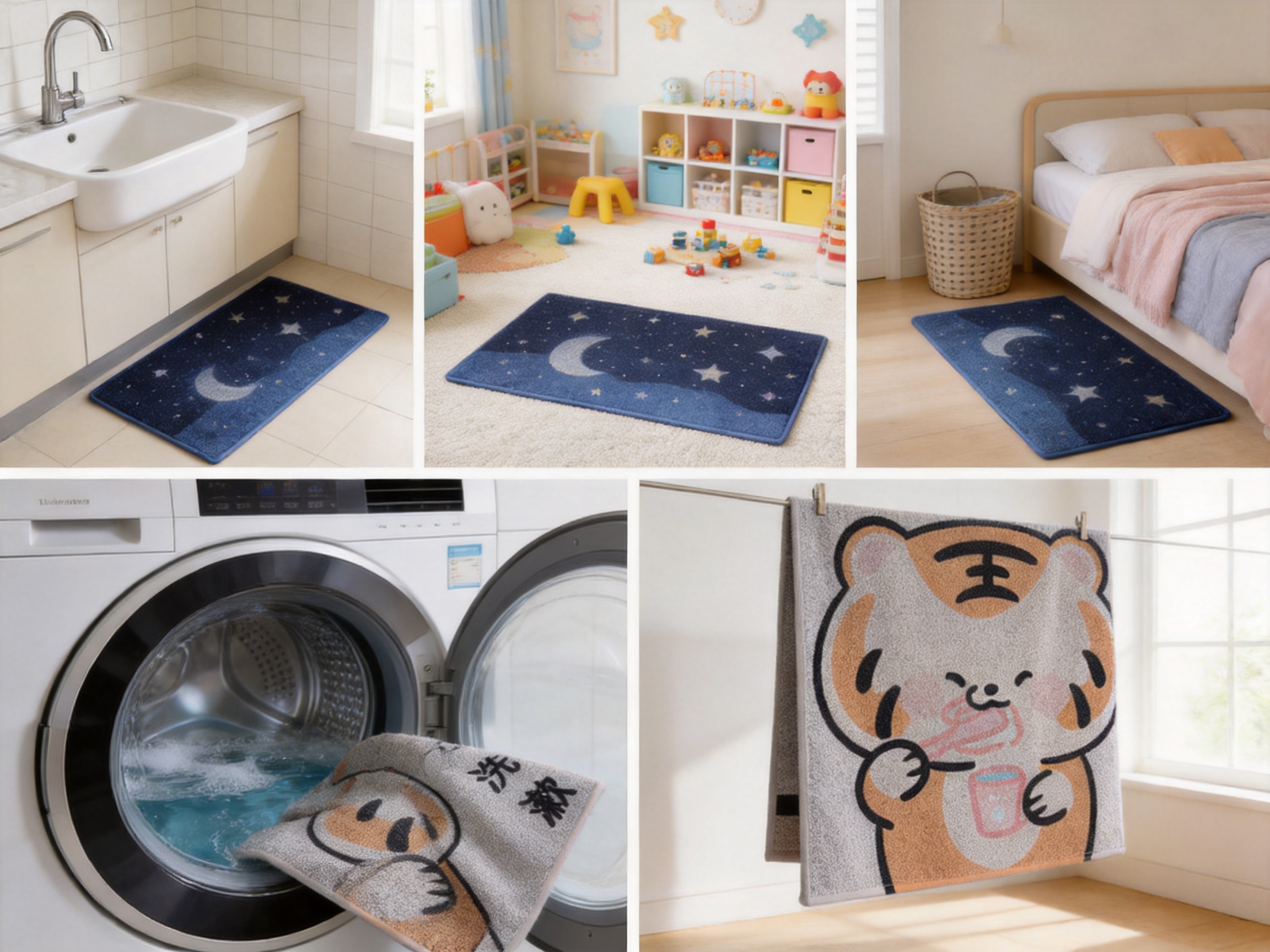
The recommended care direction is machine washing with cold water and mild detergent. Chlorine and bleach should not be used because they may weaken fibers, alter printed designs, damage the backing, or cause undesirable color changes. After washing, the mat can be tumble dried at low speed or hung to dry.
Low-temperature drying is important because excessive heat may affect synthetic fibers, bonded layers, or anti-slip dots. Hanging the mat in a well-ventilated space can be a suitable alternative when there is enough room for the item to dry evenly. The mat should be completely dry before it is returned to the floor.
Regular cleaning frequency should reflect actual use. A heavily used family bathroom may require more frequent washing than a guest bathroom. Homes with children, pets, or high humidity may also benefit from a more regular cleaning routine. Between washes, shaking out loose debris and allowing the mat to air can help maintain freshness.
Before washing, users should check the care label and product packaging for the latest instructions. It is also sensible to avoid washing the mat with items that could transfer strong dyes, sharp hooks, or excessive lint. Proper care supports the mat’s appearance, absorbency, and backing performance over time.
The Starry Sky theme gives the product a decorative identity while retaining the practical functions expected from a bath mat. A sky-inspired design can complement modern, children’s, relaxed, or imaginative interior styles. The availability of printed and solid-color options also allows the same basic product concept to serve multiple market segments.
Printed designs can be used to create stronger shelf appeal in retail environments. A distinctive pattern can help a product stand apart from plain utility mats and may support coordinated bathroom accessories or seasonal home collections. Prints can also be adjusted for different consumer preferences, including subtle decorative effects, abstract motifs, nature-inspired graphics, or children’s themes.
Solid colors provide a more adaptable alternative. They can coordinate with ceramic tiles, painted walls, wood-look flooring, metal fixtures, and neutral bathroom furnishings. Solid colors may also be easier for buyers who need a consistent product range across different locations or property types.
Because the manufacturer develops both fabrics and finished carpet products, buyers can discuss design, color, size, and finishing requirements as part of a broader product-development process. This is useful for importers, distributors, hospitality suppliers, online retailers, and private-label businesses that need more than a standard off-the-shelf item.
The rectangular shape is familiar and practical. The 40 × 60 cm size can fit in compact spaces or in front of a single sink. The 50 × 80 cm option provides more coverage for larger vanity areas, while the 60 × 90 cm size can create a broader landing area in front of a shower or bathtub. Custom sizes allow buyers to address unusual floor plans or build coordinated sets.
Very thin printed mats are often inexpensive and easy to handle, but they may provide less cushioning and can feel less substantial underfoot. Their lightweight construction may also make them more prone to shifting, especially on smooth floors. The Starry Sky Bath Mat offers a higher 1400gsm weight, a soft contact surface, and anti-slip dotted backing, creating a more developed product proposition.
A thin mat may dry quickly because it holds less water, but it may also have lower absorbency and less comfort. The Starry Sky Bath Mat is intended for buyers who want a stronger balance between absorption, softness, and everyday durability rather than the lowest possible material weight.
Cotton bath mats are known for their natural hand feel and absorbency. However, they may take longer to dry depending on their density and construction. Cotton can also be more vulnerable to shrinkage or changes in shape if it is washed and dried improperly. Polyester products can offer advantages in color flexibility, shape retention, and resistance to repeated household use.
The choice between cotton and polyester depends on customer priorities. Buyers seeking a synthetic, washable, design-flexible product may prefer polyester. Buyers seeking a natural fiber experience may prefer cotton. The Starry Sky Bath Mat is positioned around the performance and manufacturing advantages associated with polyester.
Rubber and plastic mats can offer a firm, water-resistant surface and are sometimes selected for areas where rapid surface drainage is important. However, they may feel colder or harder under bare feet and may not provide the same textile comfort as a soft microfiber mat. Some plastic products may also have a more utilitarian appearance.
The Starry Sky Bath Mat offers a warmer textile contact surface, water absorption, washable care, and decorative flexibility. Its anti-slip backing is designed to assist floor stability while preserving the comfort associated with a fabric-based product.
A household towel can be placed on the floor temporarily, but it is not designed as a dedicated mat. It may bunch, curl, slide, or become uneven after absorbing water. It may also lack a structured backing and may not sit flat near doors or furniture.
The Starry Sky Bath Mat is purpose-built with a defined rectangular shape, bonded construction, pile surface, interlayer, and dotted backing. These features make it more suitable for repeated use in a fixed indoor location.
Zhejiang Benyi Textile Technology Co., Ltd. is located in Shaoxing, a region widely recognized for its textile industry and supply-chain resources. The company focuses on carpets, rug fabrics, and finished textile floor products. Its operations are built around the development of new textile production technologies, ecological considerations, and improvements to consumer comfort.
One of the company’s notable strengths is its integrated production structure. The supplied company information states that Bene has weaving, dyeing and printing factories, and finished carpet processing factories. This level of integration can reduce the number of external production handoffs and make communication more direct between design, fabric development, coloration, and final assembly.
For buyers, integrated production may provide several benefits. It can support better control over raw material selection, help align color and surface design with final production, simplify problem-solving, and improve visibility over manufacturing schedules. It can also make it easier to develop a product from an initial pattern or sample into a finished commercial item.
The company combines the bottom and surface of carpet products, an approach intended to simplify production and improve efficiency compared with more fragmented traditional processes. A coordinated approach to surface, backing, bonding, and finishing can help ensure that the final product performs as an integrated floor covering rather than as separate layers assembled without sufficient process control.
The company also reports a team of more than 20 fabric engineers. This technical team develops new carpet fabrics each quarter in response to market trends and customer requirements. For buyers, ongoing material development can be valuable when they need updated textures, colors, weights, patterns, or construction concepts for changing market conditions.
Customization is another important capability. The manufacturer can provide services based on customer requirements, including size and pattern-related needs. Depending on the project, buyers may discuss custom dimensions, private-label development, printed artwork, solid colors, packaging, and product assortment planning.
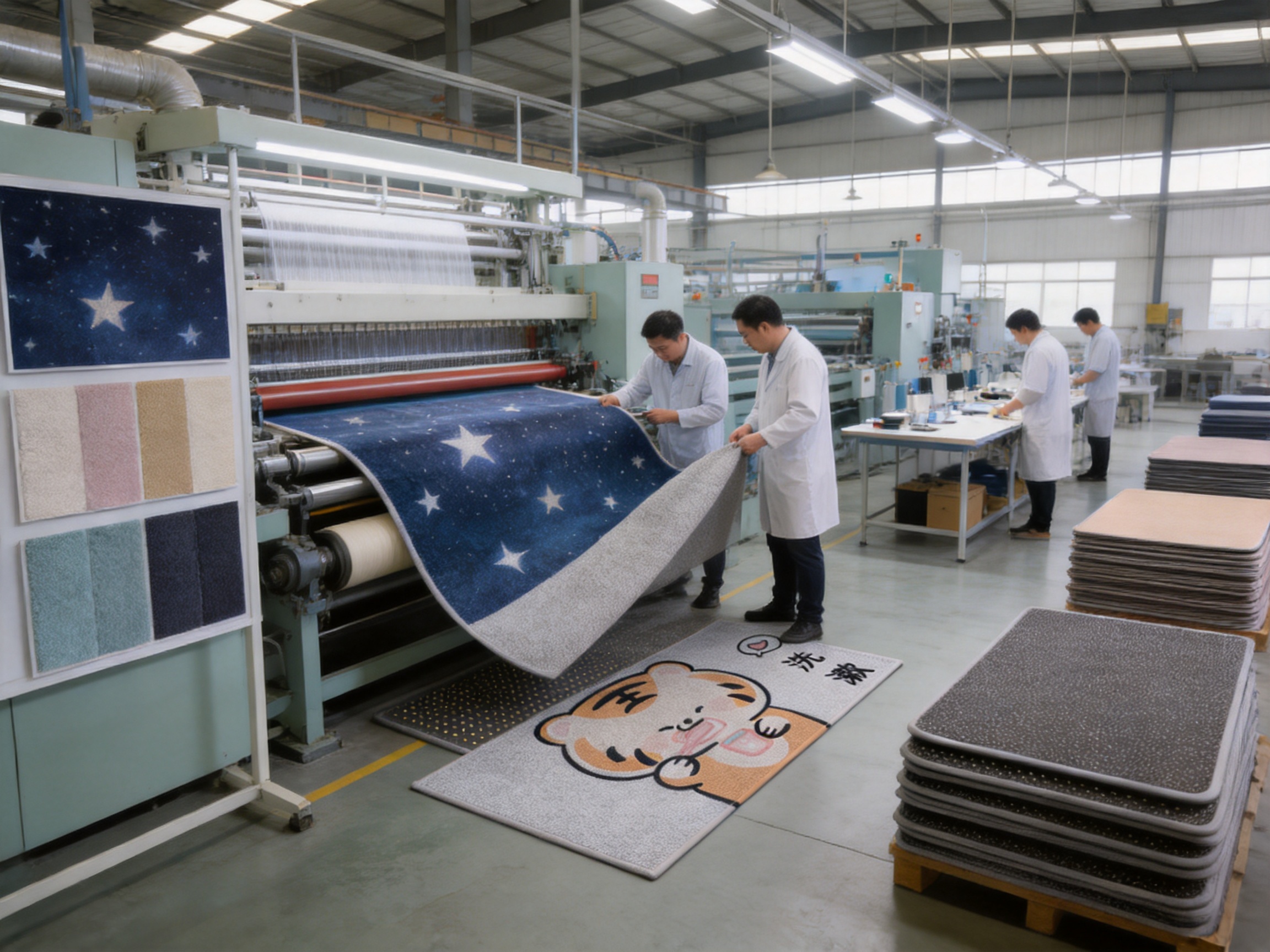
The production of a finished bath mat involves more than selecting a soft surface fabric. The fiber, yarn, pile, backing, interlayer, bonding method, printing or dyeing process, edge treatment, dimensional accuracy, and final inspection all influence the finished product.
Production begins with the selection and development of polyester materials suitable for the desired hand feel, appearance, weight, and performance. Surface density and loop-pile characteristics influence softness, visual texture, water absorption, and resistance to foot traffic. A manufacturer with fabric engineering resources can adjust these factors for different market positions.
Weaving or related textile formation creates the base structure of the surface material. Consistency at this stage is important because irregular density can affect the appearance, thickness, and durability of the finished mat. A stable fabric foundation also supports later bonding and finishing operations.
Solid-color products require controlled dyeing, while printed products require artwork preparation, color management, and surface printing. Consistent coloration is essential when a buyer is ordering multiple production lots or coordinating mats with other home textile products. The manufacturer’s access to dyeing and printing facilities supports greater control over these stages.
The surface, interlayer, and backing must be combined securely. Bonding helps create a unified product and may support dimensional stability during normal use and washing. The bonding process should be controlled so that the layers remain connected without creating excessive stiffness or an uneven surface.
The non-woven backing with anti-slip dots is applied as part of the final construction. Uniform backing coverage and dot distribution are important for the mat to lie flat and provide consistent contact with the floor. The backing must also be compatible with the intended care method and indoor use conditions.
After the layered material is formed, it is cut to the required dimensions and finished around the edges. Accurate cutting supports consistent size and appearance across a production batch. Edge finishing helps maintain the shape and reduces the likelihood of loose material during normal handling.
Finished mats should be checked for surface defects, print irregularities, color variation, bonding problems, backing damage, dimensional deviations, and packaging condition. The final product is then folded or rolled according to the selected packing method and prepared for shipment. Buyers should establish inspection standards in advance, particularly for custom products or large orders.
The company states that it is committed to environmental protection and sustainability. Its reported initiatives include the use of sustainable materials such as recycled polyester and water-saving dyeing techniques. These approaches are relevant to buyers seeking to reduce the environmental impact of textile products, although the specific recycled content and production details should be confirmed for each individual product.
The company also reports OEKO-TEX® and GRS certifications. Certifications can provide useful evidence that specified materials or production processes meet defined standards, but buyers should verify the scope, validity, certificate holder, and applicability to the exact product and production facility. A certification associated with a company or material category does not automatically mean that every product has identical certification coverage.
For responsible procurement, buyers should ask for current documentation, material declarations, testing reports, and compliance information applicable to the target market. They may also wish to review packaging materials, wastewater management, chemical controls, recycled content, and factory social-compliance requirements.
Sustainability should be considered across the entire product life cycle. A washable mat that remains functional for a long period may reduce replacement frequency. Durable polyester, appropriate care, efficient packaging, and responsible production can all contribute to a more considered product strategy. At the same time, polyester is synthetic, so end-of-life disposal and microfiber management should be included in broader environmental planning.
In residential bathrooms, the mat can be placed beside a bathtub, shower, sink, or vanity. The soft surface provides a comfortable place to stand, while absorbency helps manage water from wet feet. The low pile can be practical in areas where doors and drawers pass close to the floor.
In kitchens, the mat can be used near a sink or food preparation area. Its cushioning can make prolonged standing more comfortable, and its washable structure supports routine household maintenance. Users should remove the mat promptly if it becomes saturated with oil, grease, or a large spill, since such substances can affect both hygiene and backing performance.
In children’s rooms, the soft surface and decorative options can contribute to a more comfortable indoor environment. The mat may also be used in play or activity areas where a small cushioned surface is useful. It should always be placed flat, kept clean, and used under appropriate adult supervision for younger children.
In guest accommodations, rental properties, and hospitality settings, washable bath mats can support consistent room presentation and simplified housekeeping. Standard sizes make replacement planning easier, while custom sizes and patterns can support a coordinated interior concept.
Retailers and distributors can position the product as a multi-purpose indoor textile rather than a single-use bathroom accessory. Its applications across bathrooms, kitchens, children’s areas, and other indoor spaces may help broaden the potential customer base and support multiple product listings or sales channels.
Buyers should begin by defining the intended application. A compact bathroom may require the 40 × 60 cm format, while a larger vanity or shower area may benefit from 50 × 80 cm or 60 × 90 cm. Custom dimensions are useful when the mat must fit a specific floor plan or be sold as part of a coordinated collection.
Color and pattern should be selected according to the target market. Printed designs may attract customers seeking personality and visual interest. Solid colors may be preferable for neutral interior styles, commercial projects, or buyers who want easy coordination with existing décor.
Buyers should also confirm the desired pile height, weight, backing, edge finish, packaging, labeling, and care instructions. If the product is to be sold under a private label, artwork, logo placement, hangtags, carton markings, and barcode requirements should be discussed before sampling.
For larger projects, it is advisable to request a pre-production sample. The sample can be evaluated for softness, color, dimensions, absorbency, flatness, backing contact, odor, wash behavior, and overall appearance. If the product is printed, the buyer should approve a color standard or physical strike-off before bulk production.
Quality-control criteria should be written clearly. These may include acceptable dimensional tolerance, color variation, surface defects, bonding strength, backing coverage, packaging condition, and carton quantity. A documented standard reduces uncertainty and helps both parties evaluate production consistently.
Lead time should be discussed at the quotation stage. Custom colors, printed artwork, unusual sizes, special packaging, and certification requirements may affect the schedule. The manufacturer’s integrated production capabilities can support coordination, but the final timeline will depend on raw materials, sampling, order quantity, production capacity, and shipping arrangements.
Place the mat on a clean, dry, smooth indoor floor. Remove loose dust before installation and ensure that all corners lie flat. Do not place the mat over standing water, oily residue, or unstable flooring.
Wash the mat with cold water and mild detergent. Avoid chlorine and bleach unless the manufacturer specifically approves them for the exact product. Use a suitable machine cycle that does not place unnecessary stress on the backing or bonded layers.
After washing, tumble dry at low speed and temperature or hang dry in a well-ventilated location. Do not return the mat to the floor while it is wet. A fully dry mat is more comfortable, more hygienic, and less likely to transfer moisture to the floor beneath it.
Do not use excessive heat, harsh chemicals, or abrasive cleaning methods. These may affect the polyester surface, print, bonding, or anti-slip dots. Inspect the backing periodically and replace the mat if it becomes damaged or no longer lies flat.
For bathrooms with high humidity, ventilation is especially important. Opening a window, using an exhaust fan, or allowing air movement after bathing can help the mat dry more effectively. These simple habits support both the performance of the product and the cleanliness of the surrounding room.
The Starry Sky Bath Mat offers a combination of features that can support a differentiated product listing. Its 1400gsm weight provides a substantial specification for comparison, while the 3 mm pile maintains a practical low profile. The soft polyester surface, water absorption, anti-slip backing, machine washability, and multiple sizes address the main concerns customers commonly have when selecting a bath mat.
Its printed and solid-color options also support assortment planning. A retailer can offer a decorative hero design alongside neutral colors, or develop separate collections for different customer groups. Customization makes it possible to align the product with a retailer’s visual identity, seasonal program, hospitality project, or private-label strategy.
The supplier’s integrated manufacturing capabilities can reduce the complexity of coordinating separate fabric, printing, backing, and finishing vendors. This may be especially useful for businesses that want to control quality and lead time while developing multiple related carpet or rug products.
The manufacturer’s broader product scope is another commercial advantage. Because the company specializes in carpets, rug fabrics, and finished products, buyers may be able to source complementary items such as area rugs, prayer mats, kitchen mats, door mats, carpet fabric, blankets, and sofa cushions through a related supply relationship. Such coordination can help create a wider home-textile range.
Commercial success still depends on appropriate market positioning, accurate product claims, competitive pricing, packaging, logistics, and compliance with local regulations. The product’s strengths should be communicated clearly without promising performance beyond the verified specifications.
It is a rectangular indoor bath mat made from polyester. It is designed to provide a soft surface, absorb water from wet feet, help reduce movement through an anti-slip dotted backing, and simplify maintenance through machine washing.
The standard sizes are 40 × 60 cm, 50 × 80 cm, and 60 × 90 cm. Customized dimensions can also be discussed for specific retail, hospitality, residential, or private-label projects.
No. It is primarily a bath mat, but the product information also identifies kitchens, children’s rooms, and other indoor spaces as suitable applications. It can be placed wherever a soft, washable, absorbent indoor mat is appropriate.
GSM means grams per square meter and indicates the approximate weight of the textile material per unit area. A 1400gsm specification gives the mat a substantial construction, although overall performance also depends on the fiber, pile, backing, bonding, and finishing.
The 3 mm pile is a low-profile construction, but the product also includes a soft contact surface and a substantial 1400gsm weight. It is intended to provide comfort while remaining practical around doors, cabinets, and other areas where a tall mat could be inconvenient.
The backing uses non-woven fabric with anti-slip dots. These dots increase friction between the mat and a suitable floor surface, helping reduce shifting and skidding during normal use. The floor should be clean and dry, and users should inspect the backing regularly.
Yes. The recommended care guidance is machine washing with cold water and mild detergent. Chlorine and bleach should be avoided. The mat may be tumble dried at low speed or hung to dry, subject to the final care label supplied with the product.
Customization is available according to project requirements. Buyers can discuss size, printed or solid-color patterns, packaging, labeling, and other details with the manufacturer. Custom artwork and specifications should be approved before bulk production.
The stated application is indoor use. It is designed for bathrooms, kitchens, children’s rooms, and similar indoor areas. Outdoor exposure to weather, prolonged sunlight, standing water, or rough surfaces is not included in the supplied product specification.
The manufacturer operates in Shaoxing’s textile industry environment and has capabilities covering weaving, dyeing and printing, and finished carpet processing. It also reports a team of more than 20 fabric engineers and develops new carpet fabrics regularly. These resources can support custom material, design, size, and finishing requirements.
The company reports work involving recycled polyester, water-saving dyeing methods, environmental protection, and OEKO-TEX® and GRS certifications. Buyers should request current certificates and confirm whether a specific product, material, and production site are covered.
A buyer should check dimensions, color, surface softness, absorbency, pile consistency, flatness, backing contact, edge finishing, odor, and washing behavior. For commercial orders, the approved sample should become the reference for bulk-production inspection.
The Starry Sky Bath Mat is designed as a practical and visually adaptable indoor floor covering. Its polyester loop-pile surface, soft microfiber contact layer, 3 mm pile height, and 1400gsm weight create a balance between comfort and manageable everyday use. Water absorption helps manage moisture from wet feet, while the non-woven backing with anti-slip dots helps reduce shifting on suitable indoor floors.
Machine-washable care is a major advantage for a product used in areas exposed to water and household dirt. Printed and solid-color options provide design flexibility, while standard and custom sizes allow the mat to fit compact bathrooms, larger vanity areas, kitchens, children’s rooms, and commercial interiors.
The product is also supported by a manufacturer with textile engineering, weaving, dyeing and printing, and finished carpet processing capabilities. Zhejiang Benyi Textile Technology Co., Ltd. emphasizes integrated production, customization, material development, sustainability initiatives, and control of quality and lead time. These strengths can be valuable for buyers seeking a reliable bath mat supplier as well as broader carpet and rug development support.
For consumers, the product offers comfort, absorbency, washability, and a decorative finish. For retailers and importers, it offers a specification-rich product with multiple sizes, design options, and customization potential. For project buyers, the manufacturer’s integrated resources can support coordinated development from fabric concept through finished mat production.
1. Product specification sheet for Starry Sky Bath Mat, model number 100147, supplied in the source materials.
2. Manufacturer company information for Zhejiang Benyi Textile Technology Co., Ltd., including production capabilities, engineering resources, customization services, and sustainability statements.
3. General textile floor-covering terminology relating to pile height, GSM, bonded construction, non-woven backing, and anti-slip finishes.
4. General household textile-care principles for polyester products, including cold-water washing, mild detergent use, low-temperature drying, and avoidance of chlorine bleach.
5. General procurement guidance for textile products, including sample approval, production specifications, quality inspection, packaging review, and certification verification.

ADD: No.75 Zhenyuan Road, Yuecheng District, Shaoxing City, Zhejiang Province, China 312000

Tel : +86-189 6750 9795

FAX : +86-0575-8803 2773

Email : fisher@benetextile.com

Copyright © Zhejiang Benyi Textile Technology Co., Ltd. All Rights Reserved. Carpets and Rugs Manufacturer

 English
 Français
 Deutsch
 عربى
عربى