

Tang Meilin — Customer Success and Product Support Specialist
 Home / Author / Tang Meilin — Customer Success and Product Support Specialist / Silk Loop Solid Door Mat: Durable, Washable Protection for Modern Entrances
  2026.08.19
 Tang Meilin — Customer Success and Product Support Specialist
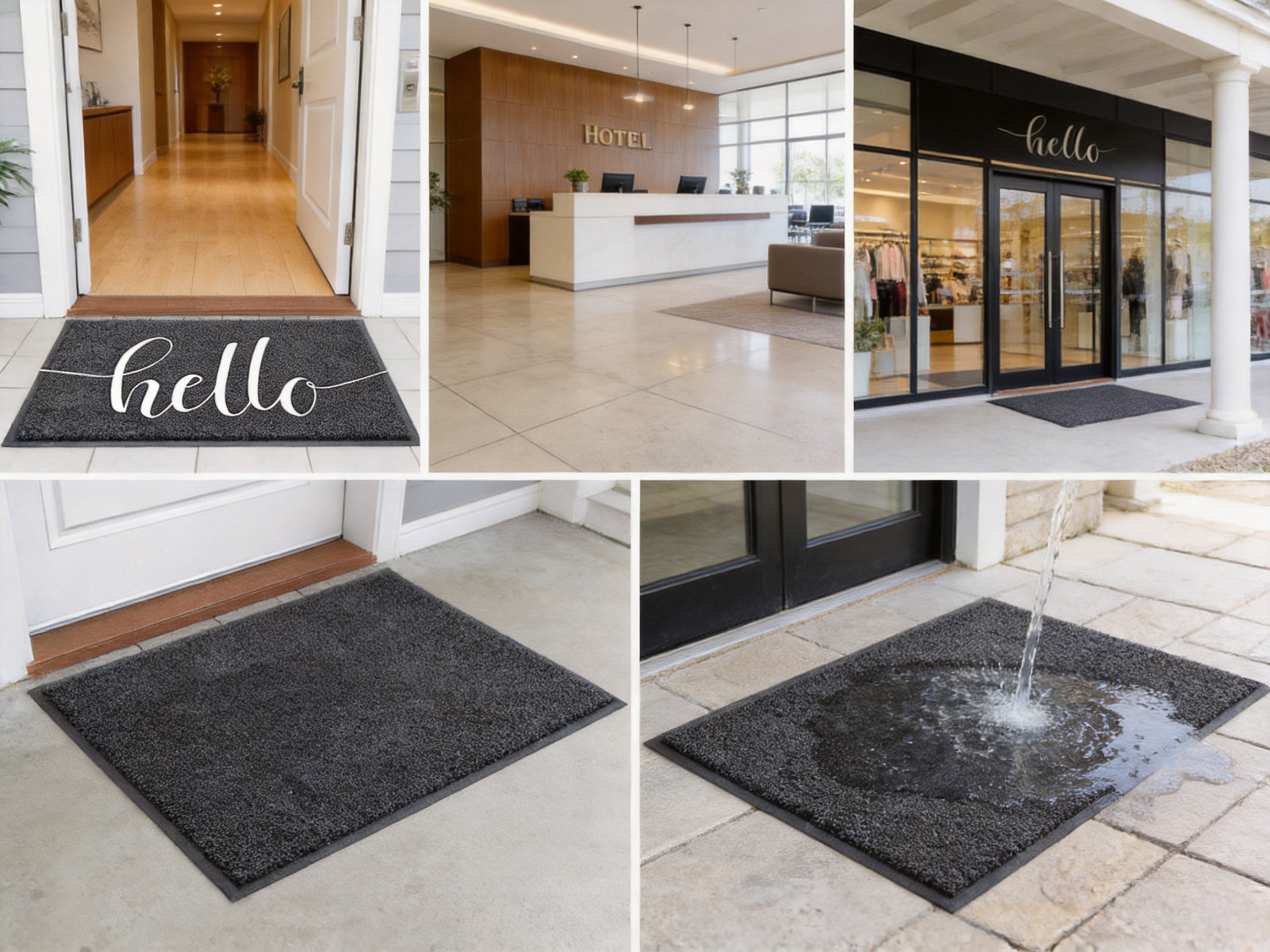
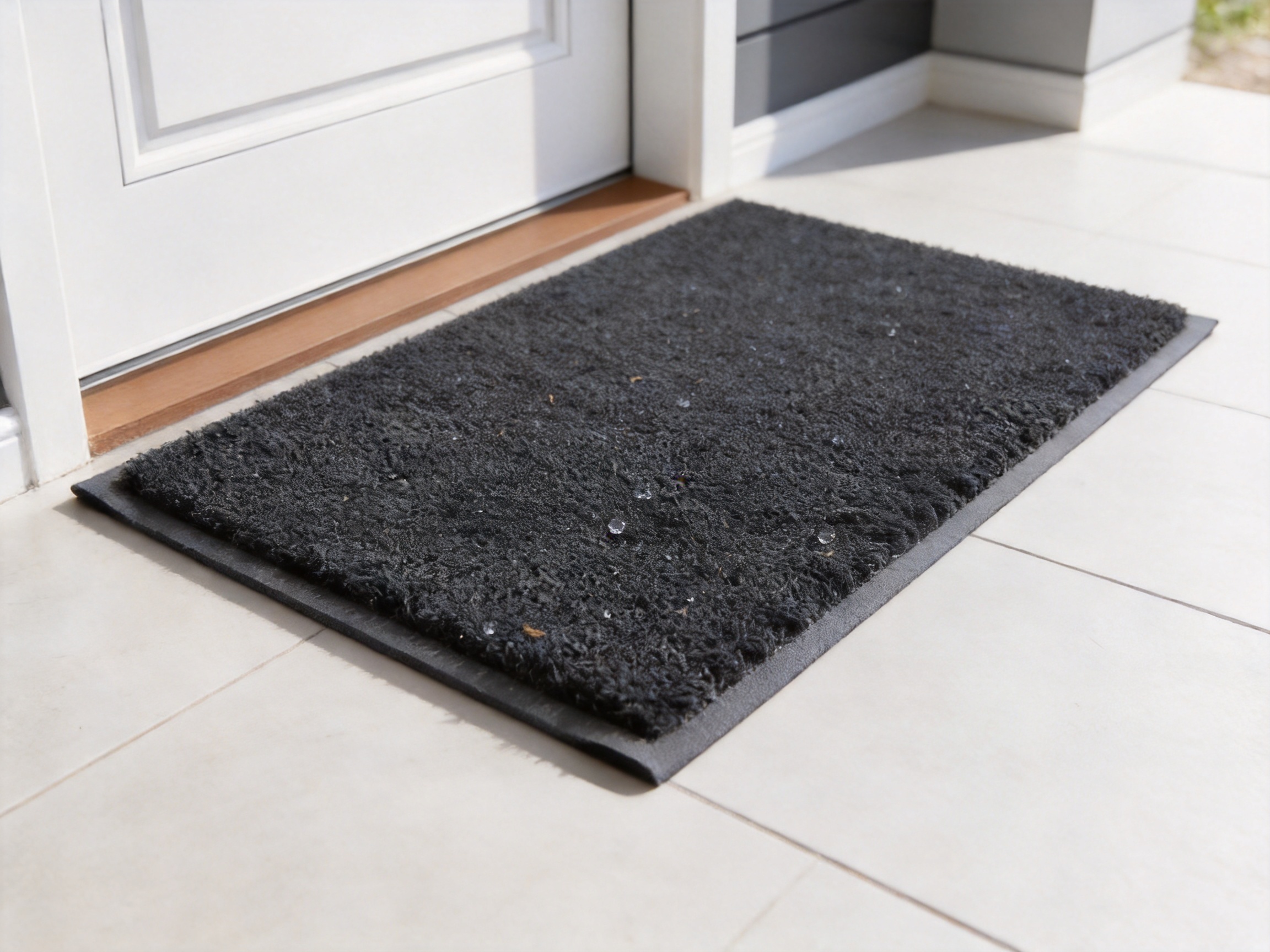
A well-designed door mat performs several important tasks at the entrance of a home, office, hotel, shop, or public building. It helps remove dirt from footwear, absorbs moisture, protects interior flooring, reduces slipping risks, and creates a neat transition between outdoor and indoor environments. The Silk Loop Solid Door Mat is developed around these practical requirements while also providing a clean, understated appearance suitable for a wide range of interior styles.
Constructed with a durable polyester surface, a strong PVC backing, and a bonded structure, this door mat is designed for dependable daily performance. Its 7 mm pile height offers a comfortable and substantial feel underfoot without becoming unnecessarily bulky. With a weight of 2600 gsm, the mat has the density needed for frequent use in entrances and other areas where dirt and water are regularly introduced by footwear.
The mat is available in standard sizes of 40 × 60 cm, 50 × 80 cm, and 60 × 90 cm. Custom dimensions can also be developed for projects requiring specific entrance coverage, coordinated floor layouts, or private-label production. Its rectangular shape and solid-color design make it easy to combine with residential, commercial, hospitality, and institutional settings.
Behind the finished product is a textile manufacturing organization with capabilities covering weaving, dyeing and printing, carpet fabric development, and finished carpet processing. This integrated approach supports more consistent quality, better production coordination, and greater flexibility for customers seeking reliable wholesale supply. The manufacturer’s experience in textile technology also enables it to respond to changing market preferences, including demand for durable, washable, environmentally conscious, and customizable flooring textiles.
Content
Entrance areas are exposed to more stress than many other parts of a building. Foot traffic can bring in dust, sand, mud, rainwater, and other debris. A mat placed in this environment must withstand repeated compression, friction, moisture, and cleaning. It must also remain stable on the floor and retain an acceptable appearance after continuous use.
The Silk Loop Solid Door Mat addresses these demands through a combination of surface density, loop construction, PVC backing, and washable care characteristics. The textile surface is designed to interact with the soles of shoes, helping to loosen and retain particles before they are carried farther into the building. At the same time, the looped texture provides space for moisture and dirt to be held temporarily within the mat rather than immediately transferred to the floor.
The 2600 gsm specification indicates a substantial construction suitable for regular service. A heavier mat generally offers a more stable feel than a lightweight decorative mat, particularly when placed near a busy entrance. The product is not intended merely as an ornamental accent. It is designed as a functional floor textile that contributes to cleanliness, comfort, and safer movement.
The 7 mm thickness creates a useful balance between performance and practicality. It is thick enough to provide softness and surface volume, but low enough to fit beneath many doors without creating excessive obstruction. This makes the mat suitable for entrances where clearance must be considered. As with any entrance textile, users should confirm the available door gap and floor transition before installation.
| Product name | Silk Loop Door Mat |
| Product category | Door mat |
| Available sizes | 40 × 60 cm, 50 × 80 cm, 60 × 90 cm, or custom dimensions |
| Surface material | Polyester |
| Total weight | 2600 gsm |
| Pile height | 7 mm |
| Construction type | Bonded |
| Backing material | PVC |
| Shape | Rectangular |
| Pattern | Solid color |
| Use environment | Indoor and outdoor applications |
| Care instruction | Water washable |
| Special features | Non-slip performance, water absorption, washable construction |
The specifications demonstrate that the product is positioned between a lightweight household mat and a highly engineered commercial entrance system. It provides a practical combination of density, surface performance, easy care, and adaptable sizing. This balance is useful for distributors and project buyers who need one product platform that can serve multiple market segments.
Polyester is widely used in textile flooring because it offers a useful combination of durability, color flexibility, dimensional stability, and comparatively straightforward care. In a door mat, the fiber must tolerate repeated contact with footwear while maintaining a consistent appearance. Polyester is also suitable for producing structured loop surfaces that can assist with dirt removal and moisture management.
The Silk Loop Solid Door Mat uses a polyester surface to create a soft but functional contact layer. Compared with a purely hard plastic entrance surface, the textile loop construction is more comfortable underfoot and produces a warmer visual effect. Compared with delicate natural-fiber mats, polyester is generally easier to maintain in areas exposed to water, mud, and frequent cleaning.
The solid-color surface supports a wide range of interior applications. A single-color design can coordinate with furniture, wall finishes, flooring, and corporate color schemes without creating visual competition. It can also help distributors simplify product selection because the design is not tied to a specific decorative trend. For customers ordering custom sizes or private-label products, a restrained surface design can be easier to integrate into different markets.
Polyester also allows manufacturers to develop consistent surface coloration across production batches when suitable dyeing controls are applied. The integrated textile capabilities of the manufacturer support closer management of yarn, fabric, coloration, and finished-product processing. This is particularly valuable for wholesale customers who require repeat orders with stable appearance and performance.
The looped surface is one of the product’s most important functional features. Rather than presenting a completely flat face, the loops create a textured contact area that increases interaction with footwear. As a shoe crosses the surface, the loops can help loosen dust and collect particles from the sole. This reduces the amount of dry debris transferred to interior floors.
The loop structure also provides a degree of surface volume for holding water. Wet shoes can release moisture onto the mat, where it can be temporarily captured within the textile surface instead of spreading immediately across a smooth floor. This feature is especially useful during rainy seasons, in climates with frequent humidity, or in locations where visitors enter from wet outdoor areas.
The product information describes the PVC loop design as increasing friction and contributing to dust removal. In practical use, the combination of a textured surface and a stable backing helps create a more controlled step. The mat can serve as a first barrier at the entrance, limiting the movement of dirt and water into the building.
No door mat can remove every particle or absorb unlimited water, and performance depends on traffic levels, footwear condition, climate, and cleaning frequency. Nevertheless, a dense loop surface offers clear functional advantages over a thin, smooth decorative mat. It is better suited to customers who expect their entrance textile to contribute actively to floor protection and routine maintenance.
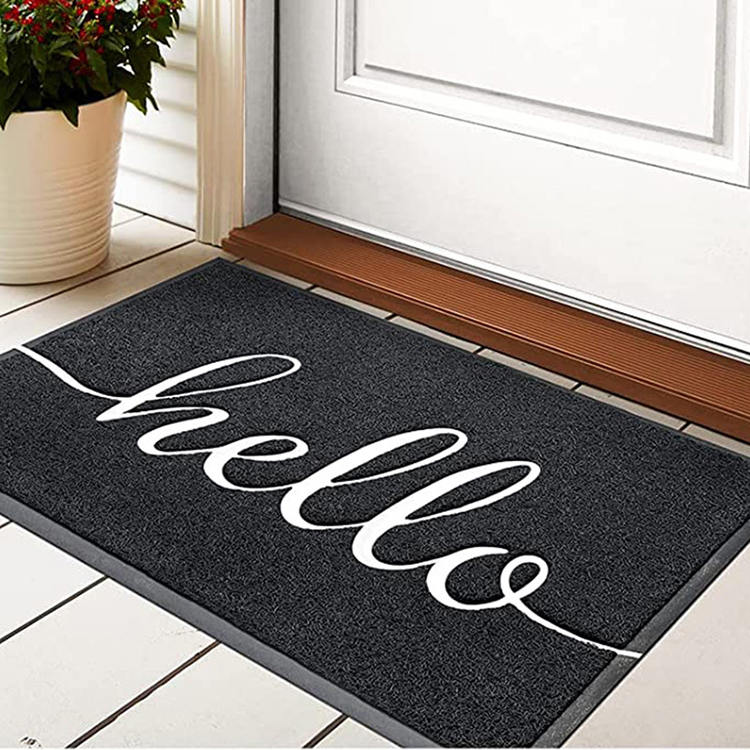
Silk Loop Solid Door Mat
The backing of a door mat is critical because even a highly effective surface can become inconvenient if the mat shifts, curls, or allows moisture to pass through to the floor. The Silk Loop Solid Door Mat uses a PVC backing designed to improve stability and help prevent water from reaching the underlying surface.
PVC provides a firm lower layer that helps the mat remain positioned during ordinary foot traffic. The backing increases friction with the floor and reduces unwanted movement, helping to create a more secure stepping area. This is particularly important in entrances, corridors, reception areas, and other locations where people may cross the mat from different directions.
The PVC bottom is also described as waterproof. When moisture is deposited by wet footwear, the backing helps prevent it from seeping directly through to the floor below. This can be beneficial on wood, laminate, tile, vinyl, concrete, and other common flooring materials. Protecting the floor from repeated moisture exposure may help reduce staining, swelling, discoloration, or maintenance concerns.
The backing should be used on a clean, dry, and suitable floor surface. Like other PVC-backed products, the mat should be inspected periodically to ensure that dirt, water, or cleaning residue has not accumulated beneath it. Proper placement and routine cleaning support better hygiene and more consistent non-slip performance.
Many low-cost door mats are selected primarily for appearance or initial purchase price. They may be thin, light, difficult to clean, or prone to shifting. Such products can be adequate in low-traffic decorative applications, but they may not provide sufficient performance at entrances exposed to daily moisture and dirt.
The Silk Loop Solid Door Mat offers several advantages over basic alternatives. Its 2600 gsm construction provides a more substantial feel and supports repeated use. The 7 mm pile gives the product a more comfortable surface than a thin flat mat. The loop design creates a functional texture for dirt and moisture management. The PVC backing improves stability and helps protect the floor from dampness.
Another advantage is the washable construction. A mat that can be cleaned with water is easier to maintain than products that can only be shaken or dry-cleaned. Water washing can help remove accumulated dust, mud, and water-soluble residues. This is valuable for households as well as commercial users who need to keep entrance areas presentable.
The product also offers a more adaptable supply model than many finished retail mats. Standard sizes are available for common applications, while custom dimensions can be considered for projects with unusual entrances or specific coverage requirements. This combination of standardization and customization helps buyers manage both regular inventory and special orders.
Decorative textile mats often emphasize color, pattern, and softness. Those features can be attractive, but they do not always address the demanding conditions found at entrances. A visually appealing mat may have limited water resistance, a weak backing, or a surface that becomes difficult to clean after exposure to mud and rain.
The solid-color Silk Loop design retains a clean and refined appearance while emphasizing practical performance. Its visual simplicity allows the product to be used in modern, minimalist, traditional, hospitality, and commercial interiors. More importantly, the surface and backing are selected for functional entrance use rather than decoration alone.
The PVC-backed construction offers an advantage where floor stability matters. Decorative mats with loose fabric backs may move more easily when walked on. The stronger backing of this product is intended to reduce shifting and skidding, creating a more dependable relationship between the mat and the floor.
The washable feature is also important for buyers who want a balance between appearance and operating cost. Instead of replacing a mat at the first sign of dirt, users can wash and maintain it as part of a regular cleaning program. This can extend the useful service period and support a more sustainable consumption pattern when the mat is cared for properly.
The Silk Loop Solid Door Mat is identified for indoor and outdoor use. It can be positioned inside an entrance to intercept water and dirt before they reach interior flooring, or it can be used in a sheltered outdoor area such as a porch, covered walkway, balcony entrance, or building vestibule.
For indoor use, the mat is suitable for residential entrances, apartment lobbies, offices, hotels, schools, clinics, retail stores, restaurants, and service facilities. Its solid color can support professional environments where a discreet and coordinated appearance is preferred. The rectangular format works well in front of single doors, side entrances, patio doors, and narrow passageways.
For outdoor use, placement under cover is generally recommended to reduce prolonged exposure to intense sunlight, standing water, ice, and severe weather. Although the materials are designed for practical durability, all textile products benefit from protection against conditions that exceed normal use. A covered entrance also helps the mat dry more effectively between cleaning cycles.
In commercial environments, the mat can be used as part of a broader entrance management system. A business may position one mat outside to remove coarse debris and another inside to absorb remaining moisture. The product’s washable construction allows maintenance teams to include it in routine cleaning schedules.
In homes and apartments, the mat can be placed at the main entrance, balcony door, garage entry, back door, or laundry-area access point. The solid color is easy to coordinate with common flooring materials, while the soft loop texture provides a comfortable surface for everyday use. The washable design is practical for households with children, pets, gardeners, or frequent outdoor activity.
Hotels, serviced apartments, guesthouses, and holiday properties require entrance products that combine a presentable appearance with simple maintenance. The mat can be used at guestroom entrances, reception-area transitions, staff entrances, or service corridors. Its neutral visual language can support consistent design across multiple rooms or buildings.
Offices and commercial premises often experience concentrated foot traffic during opening hours. A dense, stable mat can help reduce the movement of dirt into reception areas and corridors. Custom sizing may be useful for larger entrances or for locations where several mats must fit into a coordinated layout.
Retail and food-service businesses need to manage both appearance and safety. A clean entrance contributes to customer impressions, while moisture absorption and non-slip properties can support safer movement. The product can be placed at customer entrances, staff entrances, stockroom access points, and transition areas exposed to outdoor weather.
Schools, clinics, offices, and public buildings often require durable products that can be washed and returned to service. The mat’s stable construction and water-washable surface make it suitable for locations where cleaning frequency is important. Facility managers can select standard sizes for regular doorways or discuss custom dimensions for larger access points.
The product is manufactured by Zhejiang Benyi Textile Technology Co., Ltd., a textile technology company based in Shaoxing, Zhejiang Province. Shaoxing is widely recognized as an important textile production center, often associated with broad expertise in weaving, dyeing, printing, fabric development, and finished textile processing.
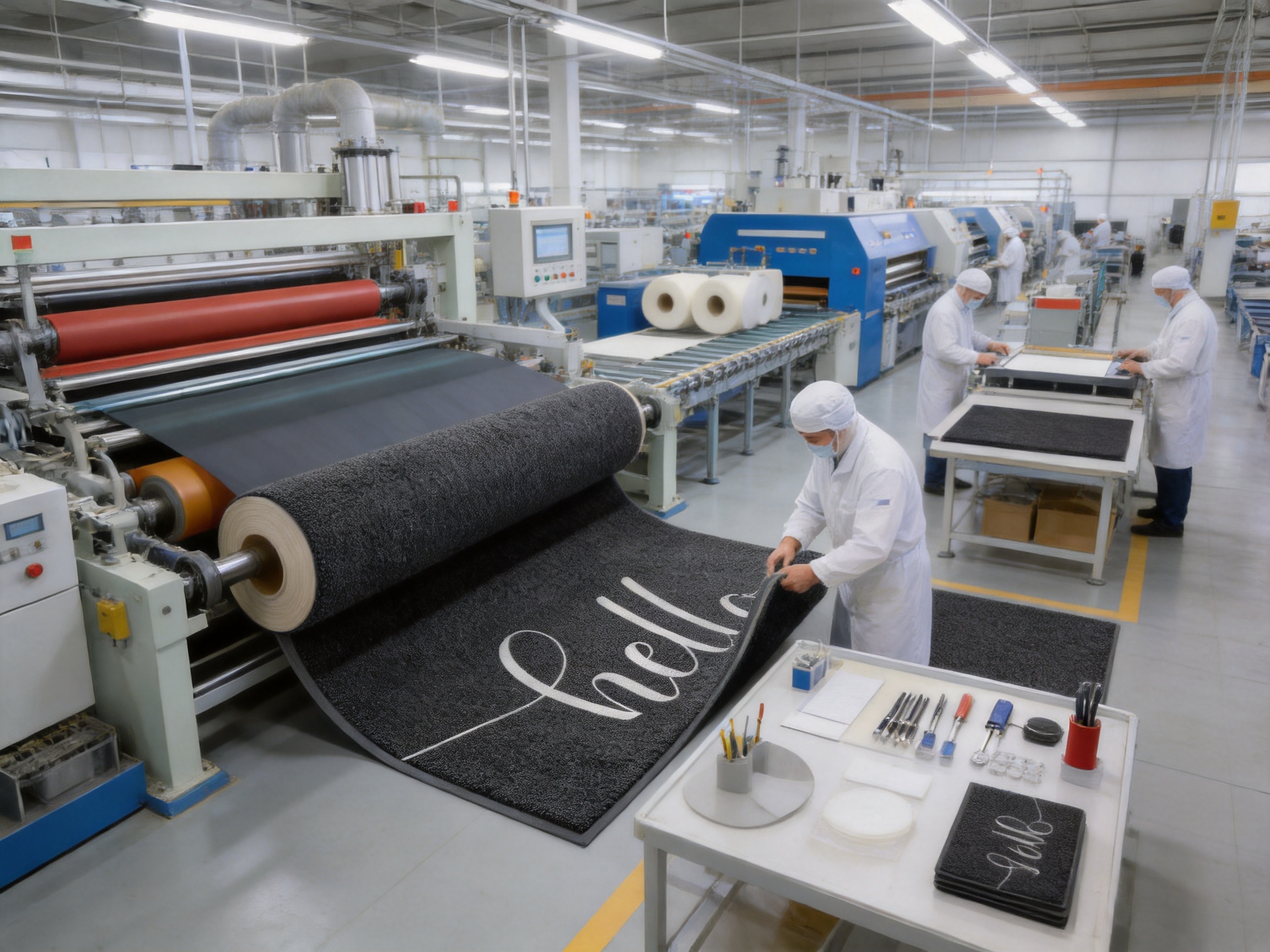
The company focuses on carpets, rug fabrics, and finished carpet products. Its manufacturing model combines the surface and bottom layers, helping simplify the traditional carpet production process. This approach is intended to improve production efficiency, reduce unnecessary handling, and support more consistent coordination between fabric development and finished-product processing.
Control across multiple stages of production is a meaningful advantage for wholesale buyers. When weaving, dyeing or printing, and finished processing are closely coordinated, the manufacturer can respond more efficiently to technical adjustments. It may also support better control over production schedules, material compatibility, quality inspection, and order communication.
The company has its own weaving facilities, dyeing and printing factories, and finished carpet processing factories. This integrated structure allows the organization to manage a wider part of the supply chain rather than relying entirely on unrelated outside suppliers. For customers, potential benefits include improved lead-time visibility, more direct communication, and better ability to address product-specific requirements.
Manufacturing integration is especially valuable for products such as door mats, where surface appearance, backing adhesion, dimensional accuracy, weight, and cleaning performance must work together. A change to the surface material or backing cannot be considered in isolation. It must be evaluated in relation to bonding, thickness, flexibility, washing, and final use. A company with capabilities across these stages is better positioned to coordinate the complete product.
The manufacturer maintains a team of more than 20 fabric engineers. This technical team develops new carpet fabrics each quarter in response to market trends and customer requirements. Such ongoing development supports a product strategy based not only on existing designs but also on changing expectations regarding texture, color, performance, sustainability, and application.
For a door mat, fabric engineering may involve the selection of yarn types, loop dimensions, surface density, backing compatibility, bonding conditions, and finishing methods. Each variable affects the final user experience. A surface that is too loose may not retain dirt effectively, while one that is too dense may become harder to clean. A backing that is too flexible may not provide adequate stability, while one that is too rigid may reduce handling convenience.
Technical development also helps manufacturers create products for different market levels. A residential customer may prioritize softness and appearance, while a commercial buyer may focus on durability, washability, and stable repeat supply. Through fabric development and customization, one manufacturing platform can serve several customer groups without sacrificing the essential characteristics of the product.
Customer-specific development is another strength. Buyers may request custom sizes, colors, packaging, labels, or production specifications. While every request must be reviewed for feasibility, a manufacturer with in-house engineering and processing capabilities is better equipped to evaluate such requirements than a trading operation with limited production control.
The production process begins with the selection of polyester materials suitable for the desired surface characteristics. The choice of fiber, yarn structure, color, and weight affects the mat’s texture, density, visual uniformity, and resistance to daily wear. Backing materials are also selected according to the required stability, water resistance, and bonding performance.
During weaving or surface formation, the polyester is developed into a looped textile structure. Consistent loop formation is important because it influences the mat’s feel, appearance, dirt-removal performance, and capacity to retain moisture. Production control helps reduce variations in surface height and density across the finished roll or batch.
For solid-color products, even coloration is a central quality consideration. Dyeing must be managed to achieve a uniform appearance and acceptable color consistency between production lots. The manufacturer’s dyeing and printing capabilities provide a foundation for developing standard shades and customer-specific colors, subject to material and production requirements.
The textile surface is combined with the PVC backing through a bonded construction. This stage must create a reliable connection between the upper and lower layers while preserving the product’s flexibility and dimensional stability. Proper bonding supports durability during foot traffic and washing, helping prevent premature separation between the surface and backing.
After the bonded material is produced, it can be cut into standard dimensions or prepared according to custom specifications. Finishing checks may include edge appearance, dimensional accuracy, surface consistency, backing condition, and overall cleanliness. These steps are important for wholesale customers who need products that can move directly into distribution or project installation.
Quality control should address both appearance and performance. A finished mat may be checked for size, weight, thickness, color, bonding, backing integrity, and visible defects. Order coordination also involves confirming quantities, packaging, delivery schedules, and any special customer requirements. Integrated manufacturing helps connect these activities more efficiently.
For wholesale and commercial customers, product quality is only one part of the purchasing decision. Reliable supply, repeatability, communication, and lead-time management are equally important. A mat that performs well but cannot be replenished consistently may create difficulties for distributors, retailers, property managers, and project contractors.
The manufacturer’s control of weaving, dyeing and printing, and finished processing supports a more coordinated supply model. It can help reduce the number of separate production interfaces and make it easier to discuss changes or solve technical issues. This is particularly useful when buyers need recurring production in standard sizes or a custom program for a specific market.
Repeatability is also important for multi-location projects. Hotels, retail chains, office groups, and property developers may require the same product across several sites. Stable construction, consistent color, and controlled sizing help create a more uniform result. Buyers should confirm acceptable tolerances and approval procedures before beginning a large production order.
As with any textile product, actual performance depends on use conditions and maintenance. Buyers may request samples or pre-production approvals to evaluate surface feel, color, backing, size, and cleaning response. These steps help ensure that the product is appropriate for the intended application.
The standard 40 × 60 cm, 50 × 80 cm, and 60 × 90 cm sizes cover many common residential and commercial uses. However, entrances vary significantly in width, depth, door clearance, and traffic pattern. Custom sizing allows buyers to select a mat that better matches the space rather than forcing every application into a limited standard format.
Custom dimensions may be useful for hotel corridors, commercial vestibules, retail storefronts, reception areas, schools, apartment buildings, and branded entrance programs. Buyers can discuss required measurements, acceptable tolerances, edge treatment, packaging, and expected order quantities with the manufacturer.
Color customization may also be considered for buyers who need a coordinated visual identity. A solid-color surface is particularly suitable for this purpose because it provides a clear, uninterrupted appearance. Businesses may choose a neutral tone for general use or a color that corresponds with interior design, signage, or corporate branding.
Private-label and wholesale customers can benefit from direct manufacturer communication during product development. Packaging and labeling requirements can be reviewed alongside dimensions and color. Early technical confirmation is recommended because changes to size, material, weight, backing, or packing method may affect production planning and quotation.
Routine maintenance is essential for preserving the appearance and performance of any entrance mat. The Silk Loop Solid Door Mat can be cleaned with water, making it suitable for a practical maintenance program. The appropriate method depends on the amount and type of dirt, the available drying conditions, and the instructions agreed for the specific order.
For light daily dirt, shaking or vacuuming can remove loose dust and particles. The mat can then be returned to service once the surface is clean and dry. For heavier dirt, a water brush or water wash can help remove mud and residue from the loops. Excess water should be allowed to drain, and the mat should dry thoroughly before being placed back on the floor.
The mat should be lifted periodically so that the floor beneath can be cleaned and dried. This is especially important in rainy conditions or high-traffic locations. Dirt trapped beneath the mat can reduce floor cleanliness and may affect the backing’s contact with the floor.
Strong chemicals, abrasive tools, and excessively aggressive mechanical cleaning should be avoided unless specifically approved for the product. Cleaning agents can affect color, textile fibers, bonding, or PVC. Before applying any new detergent, users should test it in a small, inconspicuous area or follow the supplier’s care recommendations.
Correct maintenance does more than preserve appearance. It helps keep the loops open and functional, supports moisture absorption, reduces odors caused by trapped contamination, and maintains the friction between the backing and the floor. A clean, dry mat is more effective than one overloaded with dirt and water.
Modern textile buyers increasingly evaluate products according to both performance and environmental responsibility. The manufacturer states that it focuses on ecological protection, consumer health experiences, sustainable materials, and water-saving production methods. It also reports the use of recycled polyester and water-saving dyeing techniques in its sustainability efforts.
Recycled polyester can help reduce reliance on virgin petroleum-based raw materials when it is incorporated appropriately into a product program. Water-saving dyeing methods may reduce the amount of water required during coloration and processing. These initiatives reflect a broader effort to improve the environmental profile of textile manufacturing while continuing to meet practical performance requirements.
The company also reports having passed OEKO-TEX® and GRS certifications. Buyers should confirm the relevant certificate scope, validity, product coverage, and transaction requirements for a specific order. Certification details can vary by facility, material, product, and production period, so documentation should be reviewed during procurement.
Durability and washability contribute to sustainability as well. A mat that remains useful through repeated cleaning may reduce the frequency of replacement compared with a fragile product that is discarded after limited use. Buyers should consider the full service life, maintenance requirements, transport, packaging, and end-of-life options when comparing products.
Environmental performance should always be evaluated together with safety, quality, and suitability for the intended application. The goal is not simply to select a product with a sustainability claim, but to choose a well-made textile that performs reliably, can be maintained efficiently, and supports responsible purchasing decisions over time.
Shaoxing is one of China’s major textile centers, with established networks covering raw materials, yarns, fabrics, dyeing, finishing, machinery, logistics, and related technical services. Operating in this environment gives a textile manufacturer access to specialized knowledge and supporting resources.
For international buyers, a location within a mature textile cluster may offer practical advantages. It can support faster access to material options, more efficient technical coordination, and broader production experience. It may also make it easier to develop related products such as area rugs, prayer mats, bath mats, kitchen mats, carpet fabrics, blankets, and sofa cushions.
The manufacturer’s product range reflects this broader textile capability. Although the Silk Loop Solid Door Mat is the focus of this article, customers may be able to coordinate different categories through one supplier. This can simplify product development, purchasing communication, and quality management for distributors with multiple flooring or home-textile requirements.
Distributors can position the Silk Loop Solid Door Mat as a practical mid-to-premium entrance textile that combines a clean appearance with useful performance features. The product is suitable for customers who want more than a basic decorative mat but do not necessarily require a specialized modular entrance system.
The standard sizes make it accessible for general retail and e-commerce channels. Custom sizing creates an additional opportunity for project business and professional buyers. A distributor may offer the standard formats for immediate purchase while using custom production for hotels, offices, property developments, and commercial contracts.
The solid-color design can simplify merchandising. It is less dependent on seasonal decorative trends and may appeal to customers seeking a neutral, modern, or professional appearance. Product communication can focus on the practical combination of loop texture, water absorption, washable care, PVC backing, and indoor/outdoor versatility.
For importers, the manufacturer’s integrated production capabilities may support larger orders and repeat programs. Buyers should discuss minimum order quantities, packaging configuration, sample approval, color standards, inspection procedures, loading plans, and shipping documents at the quotation stage.
Before placing the mat, ensure that the floor is clean, dry, level, and free from loose debris. The mat should lie flat without folded corners or raised edges. Confirm that doors can open freely over the mat and that the product does not interfere with thresholds or accessibility routes.
In areas with heavy traffic, the mat should be positioned so that users naturally step onto it rather than bypassing it. For wider entrances, multiple mats may be arranged with adequate alignment and without creating unnecessary gaps. The mat should not be placed over unstable floor coverings or surfaces that may react adversely to PVC.
Moisture conditions should be monitored during use. If the mat becomes saturated, it should be removed, washed or drained as appropriate, and dried completely. Regular rotation or replacement may be considered in commercial settings where traffic is continuous and cleaning access is limited.
Appropriate use and maintenance help maximize the advantages of the product. Even a durable door mat performs best when it is correctly sized, properly positioned, cleaned at suitable intervals, and protected from conditions beyond its intended application.
The surface is made from polyester, while the backing is made from PVC. The bonded construction combines the textile surface and backing into a stable finished mat.
Standard sizes include 40 × 60 cm, 50 × 80 cm, and 60 × 90 cm. Custom dimensions can also be discussed for suitable wholesale, commercial, and project orders.
It is identified for indoor and outdoor use. For the best service life, outdoor placement should preferably be in a sheltered area away from prolonged standing water, extreme weather, and unnecessary exposure to harsh conditions.
The PVC backing is designed to improve friction with the floor and help prevent shifting and skidding. Actual stability depends on the floor material, cleanliness, moisture level, traffic, and correct installation.
Yes. The looped surface is designed to help capture moisture from wet footwear. The PVC backing also helps prevent moisture from passing directly through to the floor.
Light dust can be removed by shaking or vacuuming. For heavier dirt, the mat can be cleaned with water and a suitable brush. It should be drained and dried thoroughly before being placed back on the floor.
Its 2600 gsm weight, bonded construction, loop surface, and PVC backing make it suitable for regular use in many residential and commercial entrance areas. Cleaning frequency should be adjusted according to traffic and weather conditions.
The solid-color pattern is intentionally versatile. It can coordinate with many interior styles and may also support custom color programs, subject to material availability, technical feasibility, and order requirements.
Yes. Custom dimensions are available for discussion. Buyers should provide the required measurements, quantity, application, preferred color, packaging requirements, and target delivery schedule for evaluation.
The manufacturer has capabilities in weaving, dyeing and printing, carpet fabric development, and finished carpet processing. It also has a team of more than 20 fabric engineers and manages multiple stages of the textile production chain.
The company states that it invests in recycled polyester, water-saving dyeing techniques, and other sustainable production methods. It also reports OEKO-TEX® and GRS certifications. Buyers should request current documentation relevant to the specific product and order.
Commercial buyers should confirm size, weight, thickness, color, backing, edge finishing, packaging, quantity, production tolerance, inspection requirements, delivery schedule, and any certification or labeling needs before approving production.
The Silk Loop Solid Door Mat is designed as a functional entrance solution rather than a purely decorative floor accessory. Its polyester loop surface helps remove dirt and manage moisture, while its 2600 gsm construction and 7 mm pile provide a substantial, comfortable feel. The bonded structure and PVC backing support durability, stability, and protection against moisture reaching the floor.
Its washable care characteristics make routine maintenance straightforward, and its solid-color rectangular design allows it to fit a broad range of residential, commercial, hospitality, and institutional environments. Standard dimensions meet common requirements, while custom sizing creates flexibility for project applications and wholesale programs.
The product is further supported by a manufacturer with integrated textile capabilities in one of China’s major textile centers. Weaving, dyeing and printing, carpet fabric engineering, and finished processing are coordinated through a broader production system. This helps support product consistency, development flexibility, quality management, and supply communication.
For distributors, importers, property managers, and project buyers seeking a dependable entrance mat, the product offers a balanced combination of performance, appearance, maintainability, and customization potential. Its strongest value lies in the interaction of these features: a durable textile surface, effective loop texture, stable PVC backing, washable construction, and manufacturing expertise capable of supporting both standard and tailored orders.
1. Product specification sheet for the Silk Loop Door Mat, including material, weight, pile height, backing, construction, sizes, care instructions, and special features.
2. Manufacturer-provided company information concerning textile production capabilities, fabric engineering, finished carpet processing, and supply-chain integration.
3. Manufacturer-provided sustainability information concerning recycled polyester, water-saving dyeing methods, environmental protection, OEKO-TEX® certification, and GRS certification.
4. General textile flooring principles relating to loop construction, moisture management, backing stability, washing, and entrance-mat maintenance.
5. General procurement considerations for commercial floor textiles, including sample approval, dimensional tolerances, color consistency, quality inspection, packaging, and repeat-order management.

ADD: No.75 Zhenyuan Road, Yuecheng District, Shaoxing City, Zhejiang Province, China 312000

Tel : +86-189 6750 9795

FAX : +86-0575-8803 2773

Email : fisher@benetextile.com

Copyright © Zhejiang Benyi Textile Technology Co., Ltd. All Rights Reserved. Carpets and Rugs Manufacturer

 English
 Français
 Deutsch
 عربى
عربى