

Tang Meilin — Customer Success and Product Support Specialist
 Home / Author / Tang Meilin — Customer Success and Product Support Specialist / Luminous Flannel Fleece Carpet Fabric: A Soft, Durable, and Customizable Textile Solution for Modern Interior Products
 2026.11.03
 Tang Meilin — Customer Success and Product Support Specialist
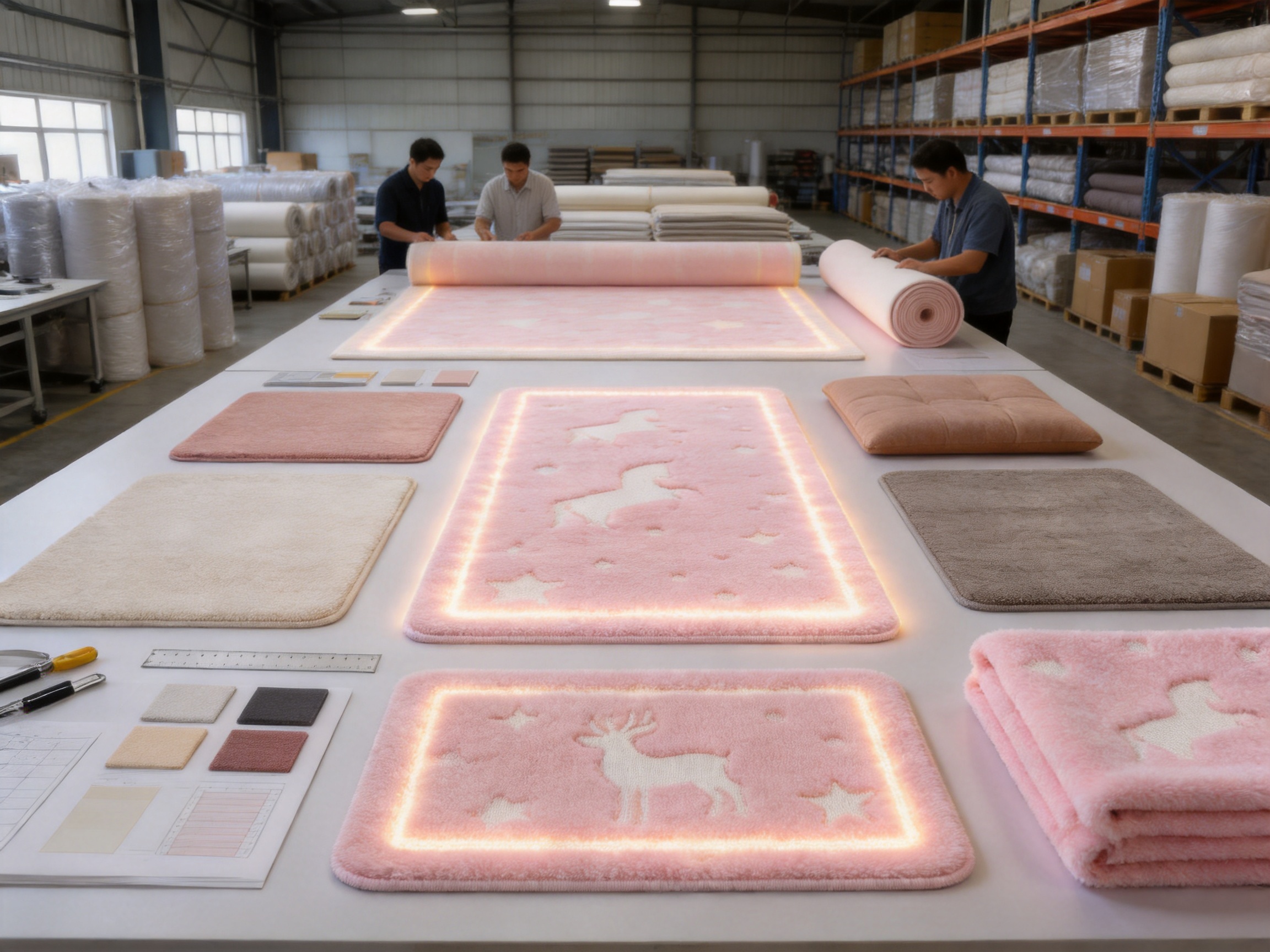
Carpet fabric is no longer limited to providing a basic layer of comfort beneath the feet. In modern interior design, textile surfaces contribute to atmosphere, safety, visual identity, acoustic comfort, and the overall feeling of a room. Manufacturers of area rugs, prayer mats, bath mats, kitchen mats, door mats, blankets, sofa cushions, and other home textile products therefore require materials that combine softness, durability, visual appeal, production flexibility, and dependable supply.
Luminous Flannel Fleece Carpet Fabric has been developed to meet these changing expectations. Made from 100% polyester microfiber, this knitted fabric combines a soft 5mm pile with a luminous design that gently glows in dark conditions. Its 260gsm construction offers a balance between light handling and practical durability, while its available widths of 170cm, 190cm, and 210cm, together with customized width options, support a wide range of manufacturing requirements.
The fabric is suitable for carpet, rug, blanket, and bath mat production. It can also be developed for related home textile applications where a soft hand feel, consistent color, flexible cutting, and an attractive surface are important. The material is supplied on a make-to-order basis, with solid-dyed colors and a minimum order quantity of 500 kilograms per color. Rolls are used for packaging, helping protect the fabric during storage and transportation.
For textile brands, wholesalers, and finished-product manufacturers, the value of this fabric lies not only in its appearance. It also comes from the manufacturing capabilities behind it. Zhejiang Benyi Textile Technology Co., Ltd. operates across weaving, dyeing and printing, fabric development, and finished carpet processing. This integrated structure supports closer quality control, more efficient communication, and improved coordination from raw material selection through final delivery.
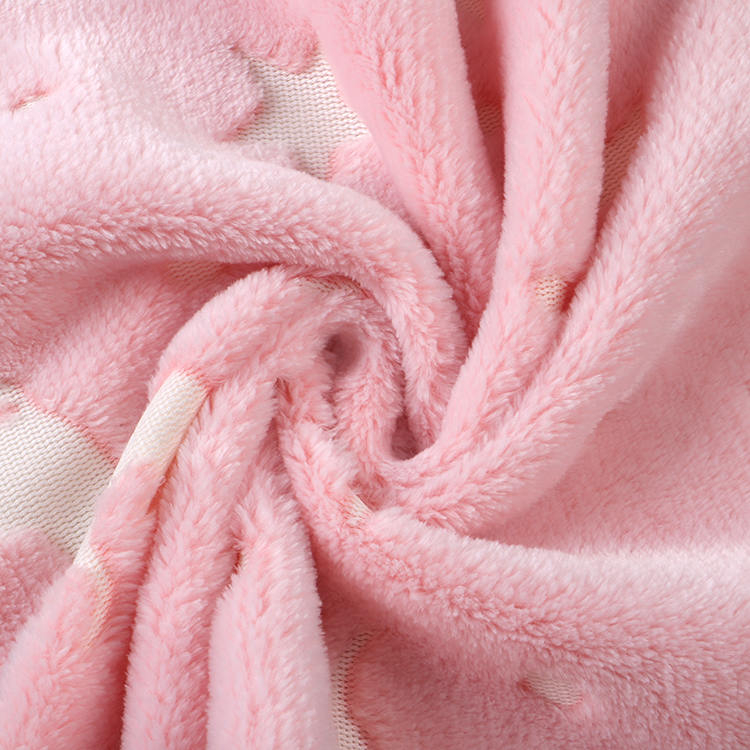
Luminous Flannel Fleece Carpet Fabric
Content
Luminous Flannel Fleece Carpet Fabric is a knitted polyester textile designed to provide a soft, comfortable, and visually distinctive surface. The term “flannel fleece” refers to the fabric’s warm and pleasant hand feel, while “luminous” identifies its ability to produce a subtle glow in dark environments. The combination creates a material that can function as both a practical textile and a decorative design element.
The fabric is manufactured from 100% polyester microfiber. Polyester is widely used in home textiles because it offers good dimensional stability, resistance to everyday wear, and compatibility with a broad range of dyeing and finishing processes. Microfiber construction can contribute to a softer surface and a more comfortable tactile experience than many conventional coarse synthetic fabrics.
With a 5mm pile height, the fabric has enough surface depth to feel soft underfoot without becoming excessively bulky. This makes it practical for products that must be cut, sewn, bound, rolled, packaged, or processed into different shapes. A deep pile may create a luxurious appearance, but it can also increase material consumption and complicate production. The 5mm pile offers a useful middle ground between comfort, manageability, and material efficiency.
The fabric has a weight of 260gsm. This construction is light enough to facilitate handling in roll form while providing a substantial surface for carpets, rugs, blankets, and bath mats. The precise performance of a finished product will also depend on backing materials, edge treatment, product size, stitching, and intended use. However, the fabric itself provides a versatile foundation for brands that need a soft and adaptable textile rather than a rigid or excessively heavy material.
| Specification | Details | Practical significance |
|---|---|---|
| Product type | Luminous flannel fleece carpet fabric | Suitable for decorative and functional home textile products |
| Material | 100% polyester microfiber | Supports durability, soft handling, and consistent processing |
| Weight | 260gsm | Balances manageable weight with a comfortable textile surface |
| Pile height | 5mm | Provides softness while remaining suitable for cutting and production |
| Width | 170cm, 190cm, 210cm, or customized | Supports different product dimensions and cutting plans |
| Maximum stated width | Up to 3.2 meters | Offers additional flexibility for large-format applications |
| Technics | Knitted | Creates a flexible textile structure and comfortable surface |
| Color | Solid dyed or customized color development | Supports coordinated collections and private-label programs |
| Supply type | Make-to-order | Allows production to be planned around customer requirements |
| Minimum order quantity | 500 kilograms per color | Suitable for commercial production programs |
| Packaging | By rolls | Protects the material and simplifies warehouse handling |
| Typical delivery time | 15–20 days | Supports organized production and replenishment planning |
Softness is one of the most important purchasing factors for household textile products. Consumers touch rugs with their bare feet, kneel on prayer mats, step onto bath mats after bathing, and use blankets and cushions close to the skin. A fabric that feels pleasant immediately communicates comfort and quality.
The knitted microfiber construction and 5mm pile height help create a soft hand feel. Unlike a flat textile that may feel thin or harsh, the raised surface gives the fabric a more cushioned and inviting character. This is especially valuable for bedroom rugs, children’s room products, relaxation spaces, sofa accessories, and bath-related applications.
Softness also has commercial value. Retail products with a comfortable texture are easier to demonstrate in showrooms and more likely to attract attention when shoppers touch them. For online sellers, a soft appearance can be communicated through close-up photography, lifestyle images, and descriptions focused on comfort. The fabric can therefore support both the physical experience of the product and its visual merchandising strategy.
The luminous feature is the defining characteristic of this carpet fabric. After exposure to suitable light, the surface can produce a gentle glow in dark conditions. This effect creates a distinctive visual experience that conventional solid-colored carpet fabric cannot provide.
Luminous material can be used to create a calming bedroom atmosphere, a playful children’s room, a themed hospitality interior, or an eye-catching decorative rug. It may also help users identify the location of a textile surface in low-light conditions. For example, a luminous border or pattern can make the edge of a rug, mat, or soft floor covering easier to notice at night.
The luminous effect should be understood as a design and visibility feature rather than a substitute for lighting or emergency equipment. Its intensity and duration can vary according to the amount and type of light received, the color and design of the textile, surrounding conditions, and the specific production configuration. Product developers should evaluate samples under the intended use conditions before making final claims for a finished product.
From a design perspective, the luminous surface gives brands an opportunity to create products with a second visual identity. In daylight, the fabric can present a conventional solid-dyed appearance. In darkness, it can reveal an additional glow effect. This day-and-night transformation adds storytelling value and can help a product stand apart from ordinary carpet textiles.
Polyester is widely selected for carpet and home textile applications because it can provide a useful combination of strength, color retention, dimensional stability, and processing convenience. The use of 100% polyester microfiber gives manufacturers a consistent material base and allows the fabric to be integrated into established synthetic textile production systems.
The fabric is described as having added durability and fade resistance. These characteristics are important in products exposed to repeated handling, sunlight, household activity, and routine cleaning. A durable face fabric can help preserve the appearance of a finished rug or mat over a longer period, although final product performance will depend on the backing, stitching, cleaning method, installation environment, and usage intensity.
For brands, material consistency is as important as basic durability. Rolls with a stable construction can help reduce variations during cutting and sewing. Consistent weight, width, pile height, and color support more predictable production yields and simplify quality inspection.
The standard width options are 170cm, 190cm, and 210cm, with customized widths available. The stated maximum width can reach 3.2 meters. This range is useful because different home textile products require different cutting layouts.
A narrower width may be efficient for smaller rugs, bath mats, prayer mats, and cushion covers. Wider fabric can reduce the number of joins required for larger area rugs or blankets. Large-width production may also help manufacturers optimize cutting plans and create wider products with a cleaner appearance.
Width customization can be particularly valuable for private-label programs. A brand may have established product dimensions, packaging specifications, or cutting equipment that do not match standard market widths. By discussing the required dimensions before production, the buyer can select a construction that supports efficient material utilization.
The fabric is available in solid-dyed colors. Solid colors are highly adaptable because they can fit minimalist interiors, contemporary collections, hospitality projects, children’s products, and seasonal ranges. They can also be combined with printing, embroidery, binding, labels, appliqué, or other surface treatments during finished-product manufacturing.
Color consistency is especially important when a product collection includes multiple sizes or when the same design will be produced over several orders. A controlled dyeing process helps reduce shade differences between production lots. Buyers should confirm color standards, sample approval procedures, light exposure requirements, and acceptable tolerance levels before placing bulk orders.
The company also states that the material can be dyed to various colors. This supports customized product development and enables brands to align the fabric with interior color trends, corporate palettes, retail programs, or customer-specific requirements.
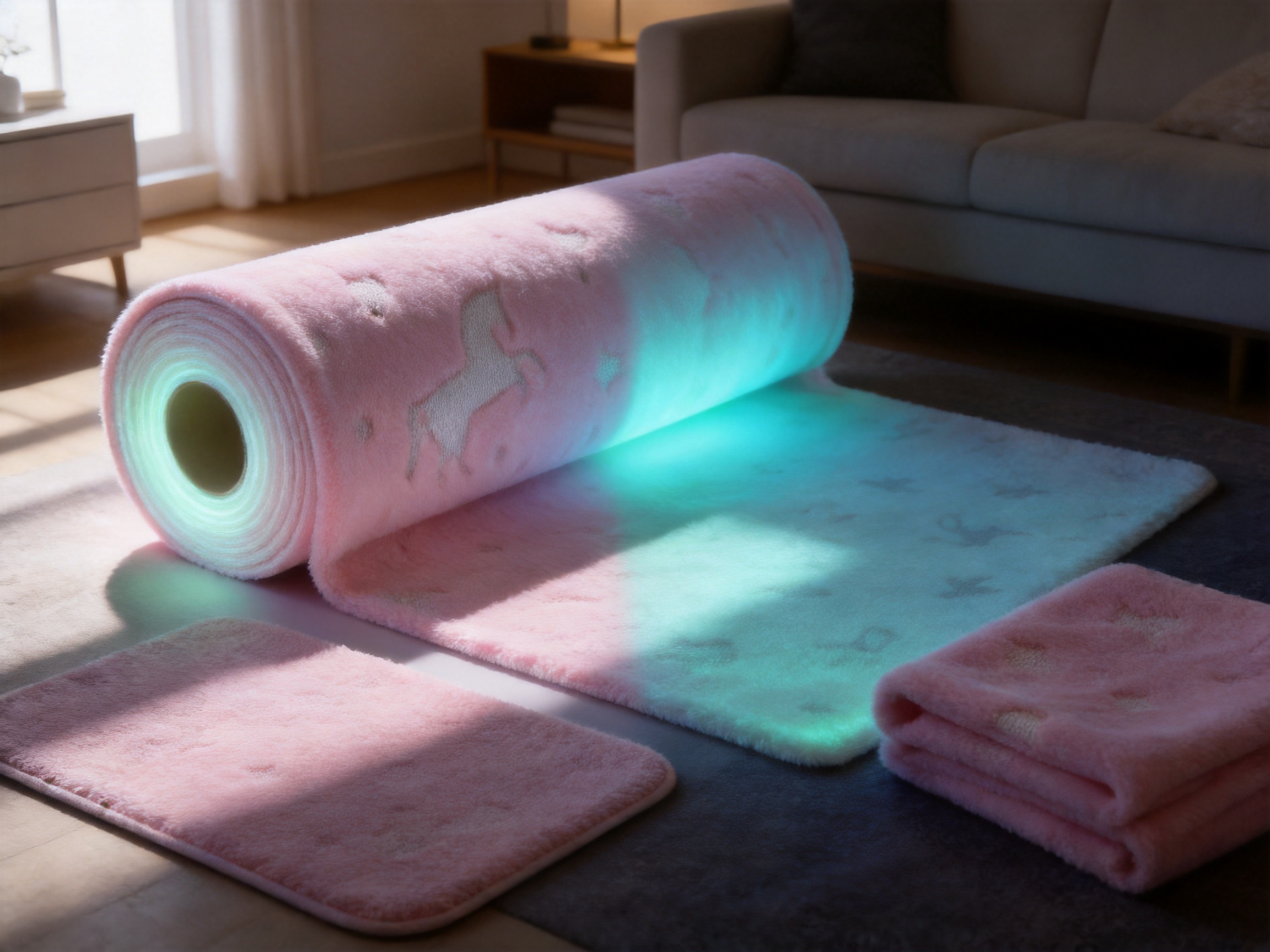
Area rugs are one of the most suitable applications for this fabric. The soft 5mm pile can create a comfortable surface for living rooms, bedrooms, children’s rooms, study areas, and other residential spaces. The luminous feature allows designers to develop rugs that appear understated during the day and become visually engaging at night.
Manufacturers can use the fabric for rectangular, round, runner, irregular, or customized rug shapes. Edge binding, overlocking, anti-slip backing, and other finishing techniques can be selected according to the intended market. For larger area rugs, the available wide-width options may help reduce seams and improve the visual continuity of the surface.
Product developers should consider the relationship between the face fabric and the backing. A suitable backing can improve stability, reduce movement on smooth floors, and influence the finished rug’s thickness and drape. The face material provides softness and visual appeal, while the complete product design determines how the rug performs in a particular room.
Prayer mats require a comfortable surface, manageable weight, and a construction that can be folded, rolled, stored, and transported. A soft microfiber pile can provide a pleasant kneeling surface, while the moderate 260gsm fabric weight supports practical handling.
The luminous option may also be used for decorative or visibility-oriented designs. Brands serving specific cultural or regional markets can combine solid colors with appropriate patterns, borders, and finishing details. Because prayer mats are often produced in standardized dimensions, manufacturers can plan cutting layouts efficiently when the fabric width is selected in advance.
As with any prayer mat program, the finished product should be evaluated for edge durability, folding behavior, surface recovery, cleanability, and compatibility with the selected backing. The fabric is a versatile component, but the overall product must be engineered for its actual use conditions.
Bath mats benefit from softness and a comfortable surface under bare feet. The 5mm pile provides a plush hand feel without creating an excessively deep structure. The fabric’s polyester construction can also support the color and shape requirements of coordinated bathroom collections.
The luminous feature can create a distinctive night-time bathroom product. A gently glowing mat may help users identify the floor area in low-light conditions, while also adding a decorative effect. Designers can use solid colors to match towels, shower curtains, bathroom storage, or other accessories.
For bath mat production, the choice of backing and finishing is important. The complete mat may require an anti-slip treatment or backing suited to damp environments. Buyers should also assess drying behavior, washing instructions, colorfastness, and resistance to repeated handling. The fabric should be tested as part of the finished bath mat rather than evaluated only as an isolated roll.
Kitchen mats and door mats are exposed to frequent foot traffic and may encounter dust, moisture, food particles, or outdoor debris. A polyester microfiber surface can support products that are comfortable and visually attractive, while the customized color range helps coordinate with different interior styles.
Kitchen mats can be developed in solid colors for modern homes, restaurants, offices, and hospitality spaces. Door mats can use luminous elements as a decorative feature or as a way to make the mat more noticeable in dim entrances. In both applications, backing stability, edge construction, and cleaning requirements should be considered during product development.
For commercial buyers, it is useful to define the intended traffic level before choosing the complete product construction. A residential kitchen mat may have different requirements from a mat intended for a busy retail entrance. The fabric can be adapted within a broader product engineering plan that includes backing selection, pile design, and finishing.
The material is also suitable for blankets and throw blankets. Its soft microfiber surface can create a warm and comfortable tactile experience, while the luminous function adds novelty and visual interest. A luminous throw can be marketed for bedrooms, children’s spaces, movie rooms, seasonal gifting, and leisure products.
Blanket manufacturers can select suitable dimensions based on the available width and cutting plan. Wide fabric may support larger throw sizes with fewer joins. Smaller pieces can be used for travel blankets, lap blankets, pet blankets, or decorative sofa throws.
When the fabric is used for blankets, product developers should evaluate drape, seam strength, edge finishing, laundering instructions, and contact comfort. The luminous effect should also be evaluated after washing and under different light sources. Clear consumer instructions can help users understand how to obtain the intended glow effect.
Although the fabric is primarily described for carpets, rugs, blankets, and bath mats, its soft face can also support decorative sofa cushions and related home accessories. Cushion covers can use the material as a front panel, a complete cover, or an accent section combined with other textiles.
The luminous effect can be used selectively rather than across an entire product. For example, a cushion may include a luminous piping detail, geometric panel, star motif, or decorative border. This approach allows designers to introduce novelty while preserving a refined overall appearance.
Other possible applications include children’s play mats, pet mats, soft wall panels, decorative floor runners, and themed event textiles. Each application should be checked for safety, cleaning, dimensional stability, and suitability for the target market.
The manufacturing process begins with the selection and preparation of polyester microfiber. Consistent raw material quality is essential because fiber characteristics influence softness, strength, dye uptake, surface appearance, and the stability of the finished fabric.
Before knitting, production teams can assess material specifications, color requirements, and order details. For make-to-order production, this planning stage is particularly important. It allows the manufacturer to coordinate raw material purchasing, machine scheduling, dyeing capacity, inspection procedures, and delivery timing around the customer’s requested construction.
The fabric is produced using knitted technics. Knitting creates a flexible textile structure that can contribute to comfort, drape, and handling performance. The surface is developed to achieve the specified 5mm pile height, creating the raised fleece character associated with the product.
During knitting, production controls may include fabric width, loop formation, weight, surface uniformity, and pile stability. Maintaining consistent machine settings is important because variations may influence cutting accuracy and the appearance of finished products. Operators and technical personnel must monitor production conditions and make adjustments when necessary.
A knitted construction can be advantageous for manufacturers that want a textile with a softer, more flexible feel than a rigid floor-covering material. It can be rolled for packaging, transported efficiently, and processed using standard textile cutting and sewing equipment.
After fabric formation, dyeing is used to create the requested solid color. Polyester dyeing requires controlled temperature, chemistry, time, and material handling. The objective is to achieve even coloration throughout the fabric while preserving the desired softness and surface appearance.
Color management begins before bulk production. Buyers may provide a physical standard, a recognized color reference, or a target sample. The manufacturer can then prepare lab dips or sample yardage for approval. This step reduces the risk of producing a bulk color that does not meet the buyer’s expectations.
For repeat orders, approved standards should be retained and used for comparison. Production records can include dye formulation, process conditions, lot information, and inspection results. Such documentation helps improve repeatability and supports communication between the manufacturer and the customer.
The luminous characteristic is integrated into the fabric’s design and finishing system. The exact glow performance depends on the material configuration and exposure conditions. Production teams must therefore control the application or integration of the luminous component so that it is distributed consistently across the intended surface.
Inspection may focus on visual uniformity, surface feel, color appearance in daylight, and luminous response in darkness. Samples should be observed after exposure to appropriate light and compared under controlled conditions. If the fabric is developed with a printed or patterned luminous design, registration and repeat accuracy also become important.
For customers developing a new product, sample approval should include both normal-light and low-light evaluation. The buyer can then assess whether the luminous effect suits the product concept, packaging presentation, and target consumer expectations.
Finishing may include surface treatment, brushing, trimming, inspection, rolling, and preparation for shipment. The objective is to deliver a clean and consistent roll that can enter the customer’s production process with minimal additional preparation.
Quality inspection can cover fabric width, weight, pile height, color consistency, surface defects, roll length, packaging condition, and luminous performance. Depending on the buyer’s quality system, additional tests may be agreed for dimensional stability, colorfastness, abrasion, washing, or other end-use requirements.
Because the material is made to order, inspection should be connected to the specific purchase order. This helps ensure that customized width, color, weight, and packaging requirements are checked against the correct production specification.
The fabric is packaged by rolls. Roll packaging helps prevent unnecessary folding, supports efficient warehouse storage, and simplifies handling during transport. Proper wrapping and labeling are important to protect the surface from dust, moisture, pressure damage, and confusion between colors or production lots.
Labels may identify the product model, color, roll number, width, weight, quantity, and customer order. Clear identification is especially valuable for large orders containing multiple colors or customized specifications.
The stated delivery time is 15–20 days. Actual delivery planning may depend on order quantity, color approval, raw material availability, production scheduling, inspection, and shipping arrangements. Early confirmation of technical specifications can help reduce delays in the sampling and bulk production stages.
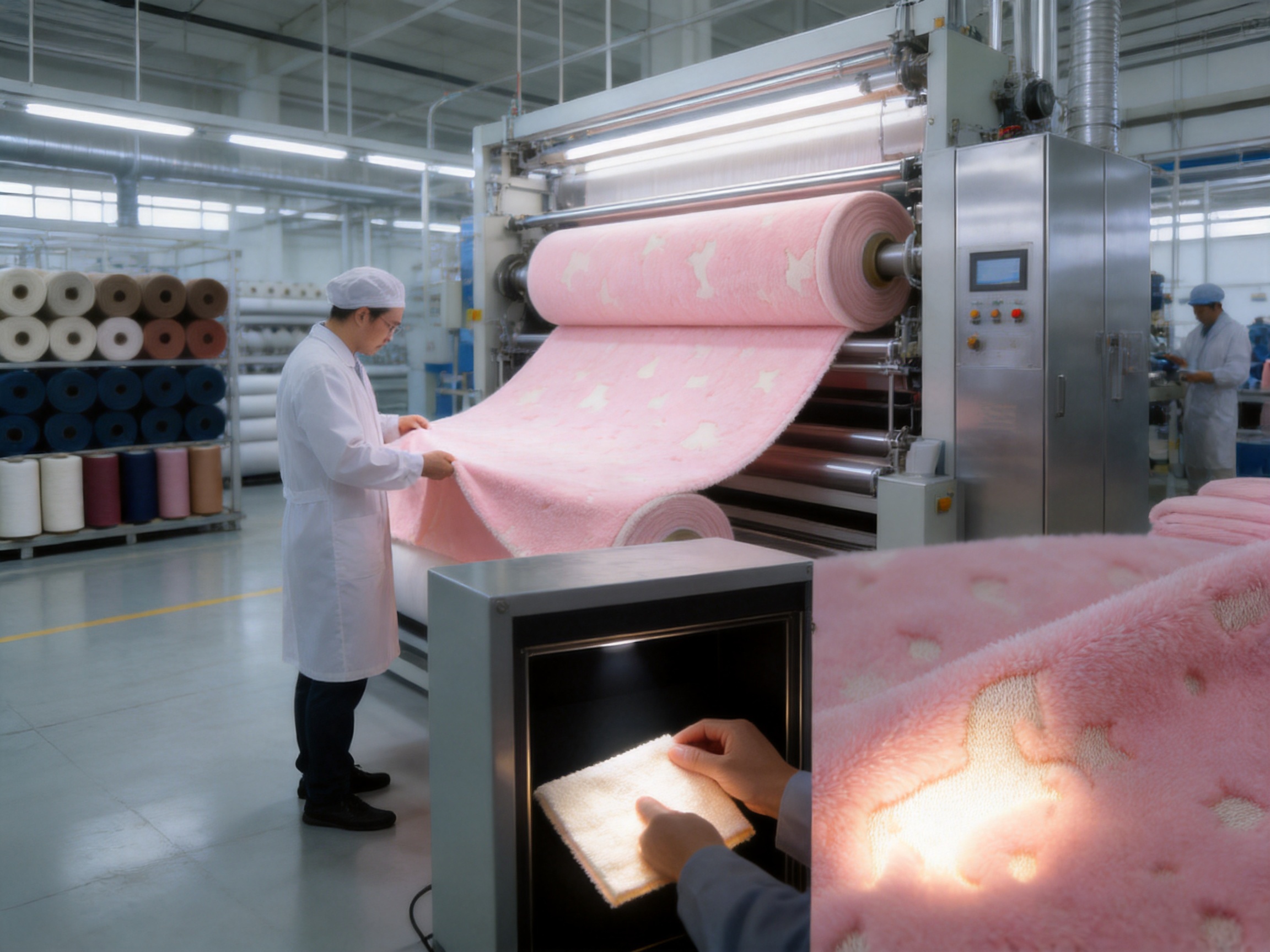
Zhejiang Benyi Textile Technology Co., Ltd. describes itself as a textile technology company with capabilities covering weaving, dyeing and printing, and finished carpet processing. This integrated structure is a significant advantage for buyers seeking more than a basic fabric trading relationship.
When multiple production stages are coordinated within one manufacturing organization, technical information can move more efficiently from development to production. Questions about width, color, surface construction, backing, or finished-product processing can be discussed with teams that understand the broader manufacturing chain.
Integrated production can also support better quality traceability. If an issue appears in the finished rug or mat, the manufacturer can review fabric formation, dyeing, finishing, and processing records together. This may help identify the source of variation more quickly than a fragmented supply chain.
The company reports a team of more than 20 fabric engineers and the development of new carpet fabrics each quarter based on market trends. This development structure supports continuous experimentation with surface effects, color, construction, comfort, and application performance.
For home textile brands, access to fabric engineering is useful when developing products that must meet a specific retail concept. A buyer may require a particular width, pile height, hand feel, luminous effect, color, or finishing method. Instead of selecting only from a fixed catalog, the customer can discuss a more tailored construction.
Regular product development also helps the manufacturer respond to changing consumer preferences. Current home textile markets increasingly value comfort, distinctive visual effects, easy merchandising, sustainability, and multi-purpose products. Luminous fleece fabric addresses several of these interests by combining a familiar soft textile surface with an unusual visual function.
Customization is central to the product’s commercial value. Width can be adjusted, colors can be developed, and the fabric can be supplied for different finished-product formats. This is particularly important for private-label customers that need a product differentiated from standard wholesale offerings.
Customization should be approached systematically. A successful project normally defines the intended application, finished dimensions, color standard, target weight, pile height, packaging method, quantity, testing requirements, and delivery schedule. Once these requirements are confirmed, the manufacturer can prepare samples and establish a bulk production specification.
Customized service can reduce compromises in product design. A brand does not have to select a rug size solely because it matches an available fabric width, or choose an unrelated color because it is already in stock. Instead, material planning can be connected to the brand’s collection strategy.
The company states that it focuses on ecological and environmental protection and invests in sustainable materials and production methods. Examples include recycled polyester and water-saving dyeing techniques. It also reports that it has passed OEKO-TEX® and Global Recycled Standard certifications.
These statements are relevant to buyers who increasingly evaluate not only price and appearance but also material origin, production responsibility, chemical management, and environmental impact. Certification documentation should always be confirmed for the specific factory, product, scope, and validity period required by the buyer.
Polyester-based textiles can also support circularity when recycled polyester is selected and when the finished product is designed for longer use. Durability, efficient cutting, responsible dyeing, and reduced production waste are all important parts of a broader sustainability strategy.
Conventional carpet fabrics often compete primarily on price, color, softness, or durability. Luminous Flannel Fleece Carpet Fabric adds another dimension: an integrated visual effect that changes the product’s appearance in low-light conditions. This can help brands create a clear point of difference without relying solely on complex patterns or expensive structural designs.
Compared with flat fabrics, the 5mm pile provides a more substantial tactile experience. Compared with very deep-pile materials, the moderate height can be easier to cut, sew, roll, and package. Compared with heavy carpet constructions, the 260gsm weight can support lighter products and more efficient logistics. Compared with fixed-width materials, the available width range and customization options offer greater production flexibility.
The material’s competitive advantage is therefore based on a combination of features rather than one isolated specification. Softness supports comfort. Polyester microfiber supports practical use. Luminous performance supports product differentiation. Width options support cutting efficiency. Solid dyeing supports collection coordination. Make-to-order production supports customization. Integrated manufacturing supports quality and supply-chain communication.
It is important to compare fabrics according to the actual finished product rather than relying on one headline feature. A buyer should evaluate the complete construction, including backing, edge treatment, stitching, packaging, cleaning instructions, and intended traffic level. Nevertheless, the luminous fleece surface provides a strong starting point for product concepts that seek both practicality and novelty.
The same base fabric may perform differently depending on whether it is used for a bedroom rug, bath mat, blanket, prayer mat, or decorative cushion. Buyers should identify the expected contact method, traffic level, cleaning routine, room environment, and target price before finalizing specifications.
For example, a bath mat may require moisture-oriented testing and anti-slip backing, while a blanket may require greater attention to drape and laundering. A door mat may need stronger edge construction, and a children’s rug may require careful evaluation of softness, stability, and surface cleanliness.
Samples should be examined in daylight, indoor lighting, and darkness. The buyer should check the appearance of the solid color, the feel of the pile, the visibility of the luminous effect, the uniformity of the surface, and the behavior after any planned finishing process.
If the material will be washed, folded, bound, printed, embroidered, or attached to a backing, those processes should be included in the sample evaluation. A fabric that performs well as an unprocessed roll may produce a different result after conversion into a finished product.
Width selection has a direct influence on material utilization. Buyers should create a cutting plan using the desired finished dimensions, seam allowances, edge treatments, pattern direction, and possible production waste. A wider roll may reduce joins for large rugs, while a narrower roll may improve efficiency for small mats.
For customized widths, the buyer should confirm tolerances, roll length, minimum quantity, and any effect on price or lead time. Early technical planning can prevent avoidable waste and make the final product more competitive.
A purchase specification should identify acceptable ranges for width, weight, pile height, color variation, surface defects, roll length, and packaging. Where relevant, buyers may also request testing for colorfastness, dimensional stability, abrasion, washing, pilling, and luminous performance.
Quality requirements should be agreed before bulk production. This gives both parties a common reference and supports objective inspection. Retaining an approved sample is also useful for repeat orders and future development.
Roll packaging is suitable for efficient transportation, but buyers should confirm the required roll dimensions, protective materials, labeling format, and palletization method. Retail-ready products may require different packaging from industrial fabric shipments.
Clear labeling is especially important where several solid colors or customized constructions are included in one order. A consistent system reduces warehouse errors and helps the buyer trace finished products back to specific fabric rolls.
For home textile brands, the fabric offers multiple routes to product differentiation. A brand can build a luminous collection around night-time comfort, children’s interiors, modern bedroom styling, themed decoration, or safety-oriented visibility. It can also use the material as a limited-edition feature within a broader carpet and rug range.
Wholesalers can benefit from carrying a fabric that serves several product categories. One material platform can support area rugs, mats, blankets, and accessories, helping simplify sourcing and create coordinated collections. Shared material sourcing may also improve communication between product lines and support more efficient sample development.
The make-to-order model is appropriate for customers that plan production rather than require immediate off-the-shelf shipment. It allows specifications to be established according to actual project needs. The minimum order quantity of 500 kilograms per color is suited to commercial buyers, private-label programs, and manufacturers preparing substantial finished-product quantities.
Because the company operates in Shaoxing, a major textile production center, it is positioned within a region known for textile manufacturing resources, processing expertise, and supply-chain connections. The company’s stated combination of fabric factories and finished carpet processing facilities further supports coordinated sourcing for customers seeking an integrated production partner.
The fabric is made from 100% polyester microfiber. This material provides a soft surface, practical durability, and compatibility with dyeing, knitting, and finished-product processing.
The fabric is designed to produce a gentle glow in dark conditions after receiving suitable light exposure. The effect creates decorative atmosphere and may help make the textile surface more noticeable at night. It should not be treated as a replacement for normal lighting or safety equipment.
The stated pile height is 5mm. This provides a soft and comfortable hand feel while remaining suitable for cutting, sewing, rolling, and conversion into different home textile products.
The fabric weighs 260gsm. This offers a balance between manageable handling and a substantial soft surface. Finished-product performance will also depend on backing, edge treatment, product size, and intended use.
Standard widths include 170cm, 190cm, and 210cm. Customized widths are available, and the stated maximum width can reach 3.2 meters. Buyers should confirm the required width and tolerance before bulk production.
Yes. The fabric is available in solid-dyed colors and can be developed in different colors according to customer requirements. Color standards and sample approvals should be confirmed before bulk dyeing.
Typical applications include carpets, area rugs, prayer mats, bath mats, blankets, and related home textile products. It may also be considered for kitchen mats, door mats, sofa cushions, children’s products, and decorative accessories after suitable product testing.
Yes. Its soft microfiber surface and fleece character make it suitable for throw blankets and other soft textile products. Blanket developers should evaluate drape, edge finishing, laundering, seam strength, and luminous performance after washing.
The stated minimum order quantity is 500 kilograms per color. The buyer should confirm whether the minimum applies separately to customized widths, special constructions, or additional finishing requirements.
The fabric is packaged by rolls. Roll packaging supports transportation, warehouse handling, and protection of the textile surface. Specific wrapping, labeling, and pallet requirements should be agreed for each order.
The stated delivery time is 15–20 days. The actual schedule may depend on order quantity, color approval, raw material availability, production planning, inspection, and shipping arrangements.
Yes. The company provides customized services, including width and color development, and has fabric engineering and finished-product processing capabilities. Buyers should provide a complete technical brief to support accurate sampling and quotation.
The company states that it invests in sustainable materials and production methods, including recycled polyester and water-saving dyeing techniques. It also reports OEKO-TEX® and Global Recycled Standard certifications. Buyers should request current documentation relevant to the exact product and production facility.
Evaluate approved samples under the light conditions expected during use. Compare the fabric in normal light and darkness, and assess the effect after different exposure times. If the finished product will be washed or backed, test the complete product rather than only the raw fabric.
Luminous Flannel Fleece Carpet Fabric is a versatile textile platform for manufacturers seeking softness, practical durability, visual differentiation, and customization. Its 100% polyester microfiber construction, 260gsm weight, 5mm pile height, knitted structure, and solid-dyed color options make it suitable for a broad range of carpet and home textile applications.
The luminous feature gives the material a distinctive advantage over ordinary carpet fabric. It can transform a conventional rug, mat, blanket, or cushion into a product with a second visual experience in dark environments. This supports creative product development for bedrooms, children’s rooms, bathrooms, living rooms, entrances, hospitality interiors, and themed spaces.
The company’s manufacturing strengths add further value. Its reported control over weaving, dyeing and printing, finished carpet processing, fabric engineering, and customized development can help buyers coordinate the entire product journey. A focus on environmental protection, sustainable materials, water-saving dyeing, and reported textile certifications also aligns with the growing demand for more responsible textile sourcing.
For buyers, the best results will come from treating the fabric as part of a complete product-development program. End use, backing, cutting layout, color standard, luminous performance, testing, packaging, and delivery requirements should be defined before bulk production. With appropriate evaluation and technical coordination, this fabric can help brands develop soft, attractive, and memorable home textile products with a clear point of difference.
1. Product specification sheet for Luminous Flannel Fleece Carpet Fabric, item model number 100046.
2. Technical information supplied for 100% polyester microfiber knitted carpet fabric, including weight, width, pile height, color, packaging, and delivery details.
3. Textile manufacturing information provided by Zhejiang Benyi Textile Technology Co., Ltd., including fabric engineering, dyeing, finished carpet processing, and customized service capabilities.
4. General textile engineering principles relating to polyester microfiber, knitted constructions, pile fabrics, dyeing, finishing, and roll packaging.
5. General guidance for evaluating home textile products according to intended use, surface comfort, color consistency, dimensional stability, cleaning requirements, and finished-product construction.

ADD: No.75 Zhenyuan Road, Yuecheng District, Shaoxing City, Zhejiang Province, China 312000

Tel : +86-189 6750 9795

FAX : +86-0575-8803 2773

Email : fisher@benetextile.com

Copyright © Zhejiang Benyi Textile Technology Co., Ltd. All Rights Reserved. Carpets and Rugs Manufacturer

 English
 Français
 Deutsch
 عربى