

Tang Meilin — Customer Success and Product Support Specialist
 Home / Author / Tang Meilin — Customer Success and Product Support Specialist / Polyester Faux Wool Printed Carpet: A Practical Guide to Style, Performance, and Modern Carpet Manufacturing
  2026.09.02
 Tang Meilin — Customer Success and Product Support Specialist
Content
Choosing the right carpet involves more than selecting an attractive pattern. A successful floor covering must also provide comfort, durability, easy care, dependable backing, and visual consistency across different spaces. The Polyester Faux Wool Printed Carpet described in this article is designed to combine the refined appearance of wool with the practical performance of modern polyester microfiber. It is suitable for homes, offices, hospitality interiors, retail environments, and other indoor settings where appearance and everyday usability must work together.
This product is presented as a printed area rug with a soft faux-wool hand feeling, a 7-millimeter pile, a 1,500-gram-per-square-meter weight, and a skid-resistant TPR and cotton-fabric backing. It is available in several standard sizes, including 2 by 3 feet, 2 by 6 feet, 3 by 5 feet, 4 by 6 feet, 5 by 7 feet, 6 by 9 feet, and 8 by 10 feet. Custom sizing is also available, making it suitable for residential decoration, commercial projects, private-label programs, and wholesale purchasing.
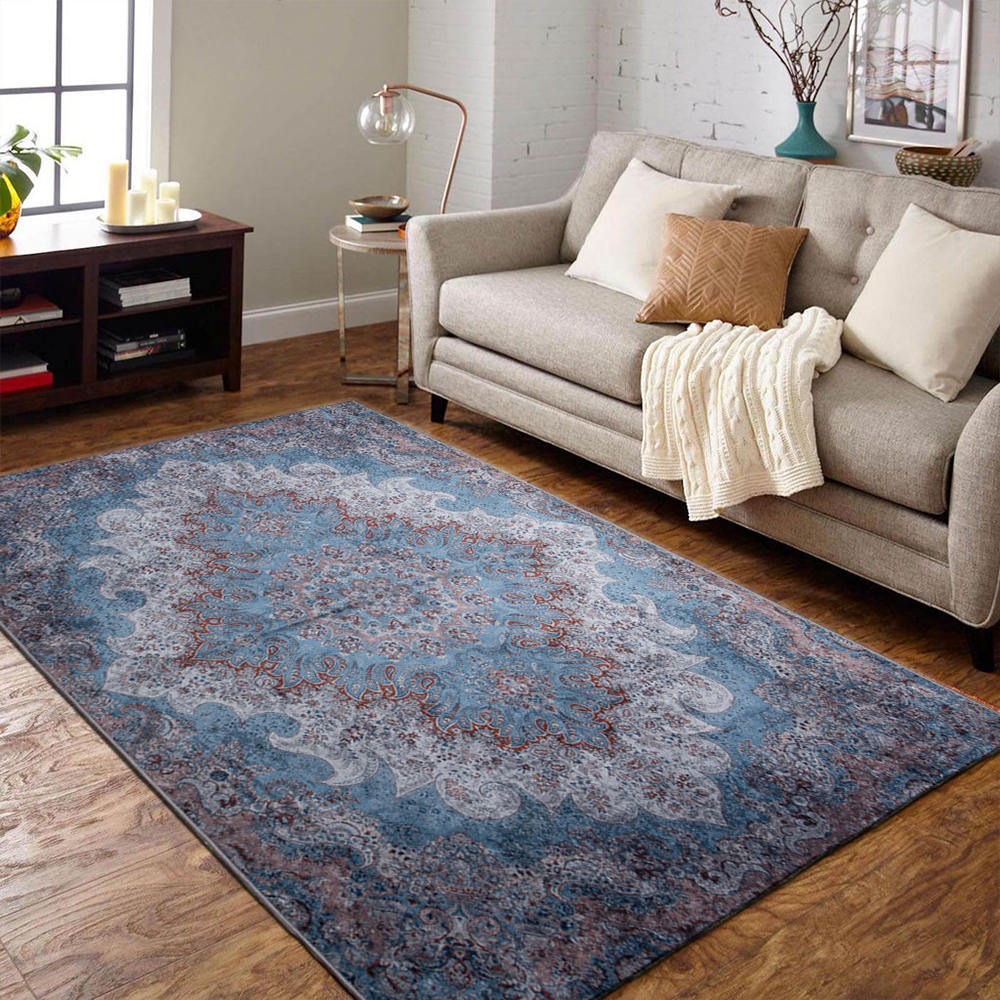
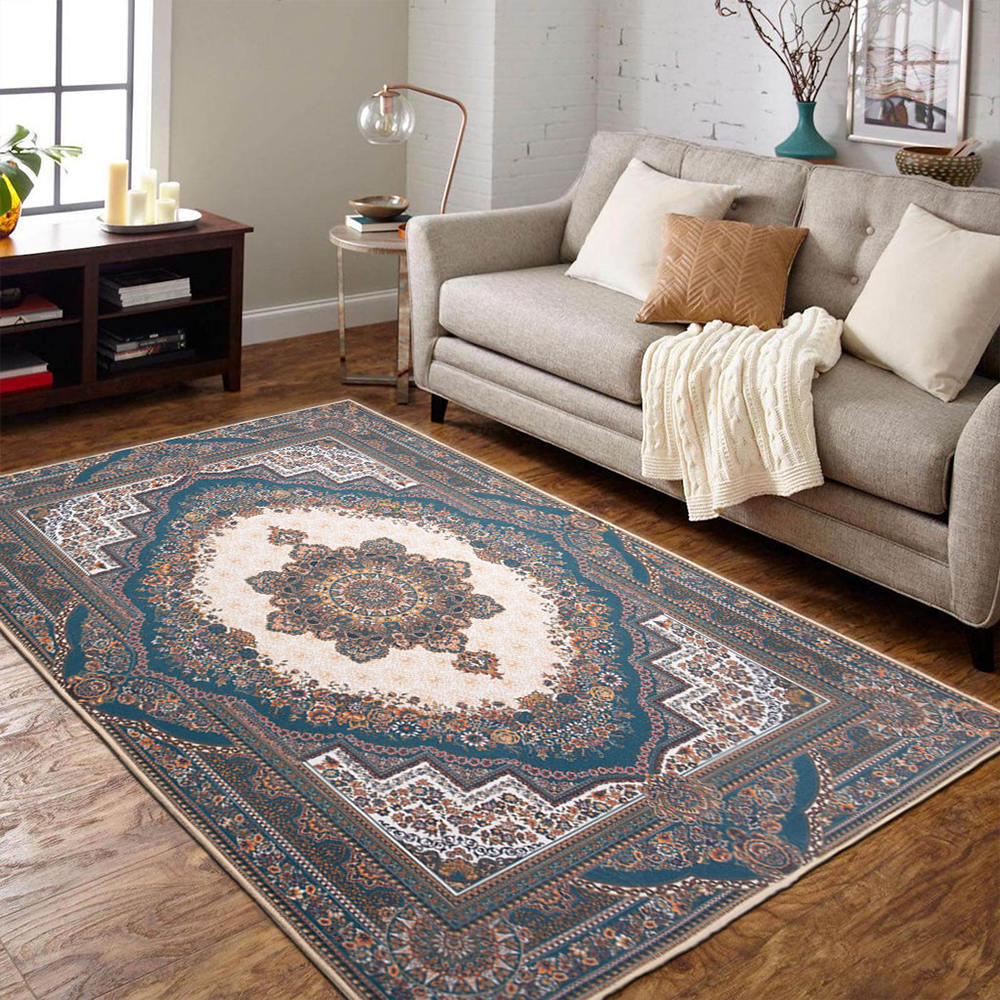
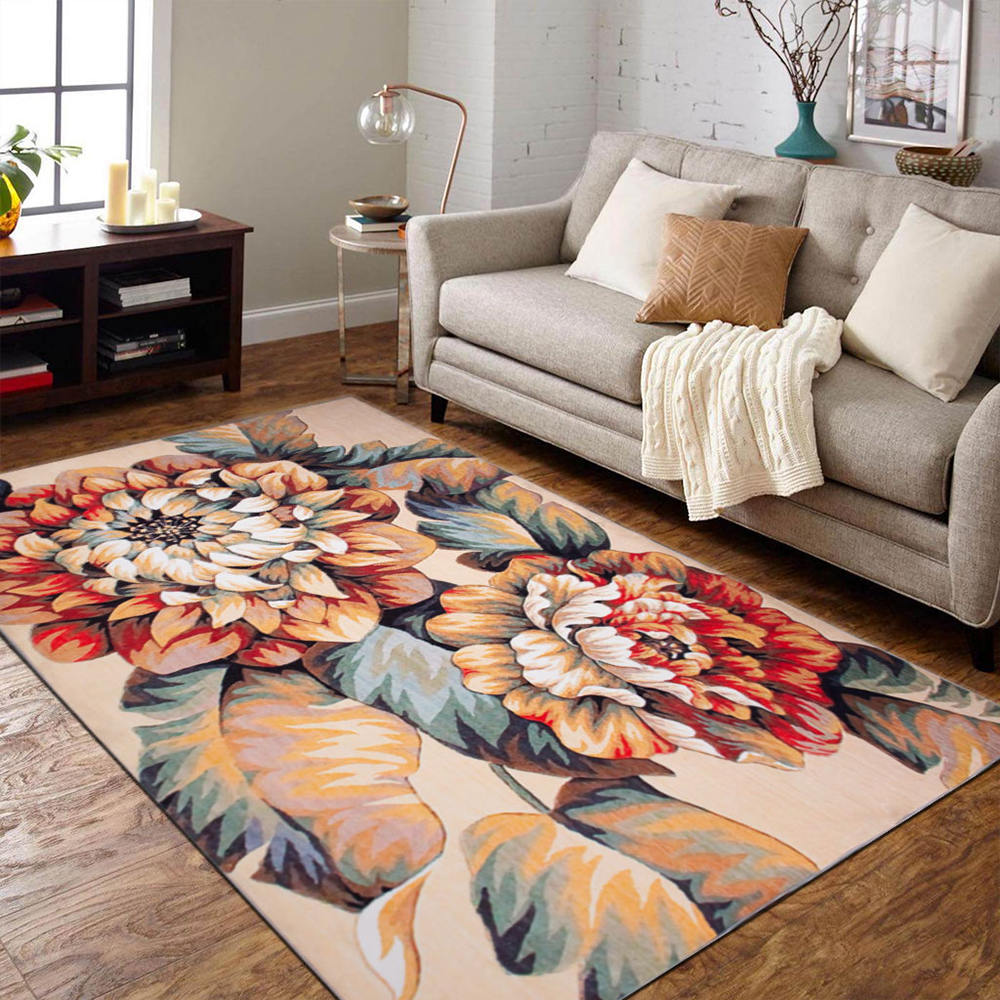
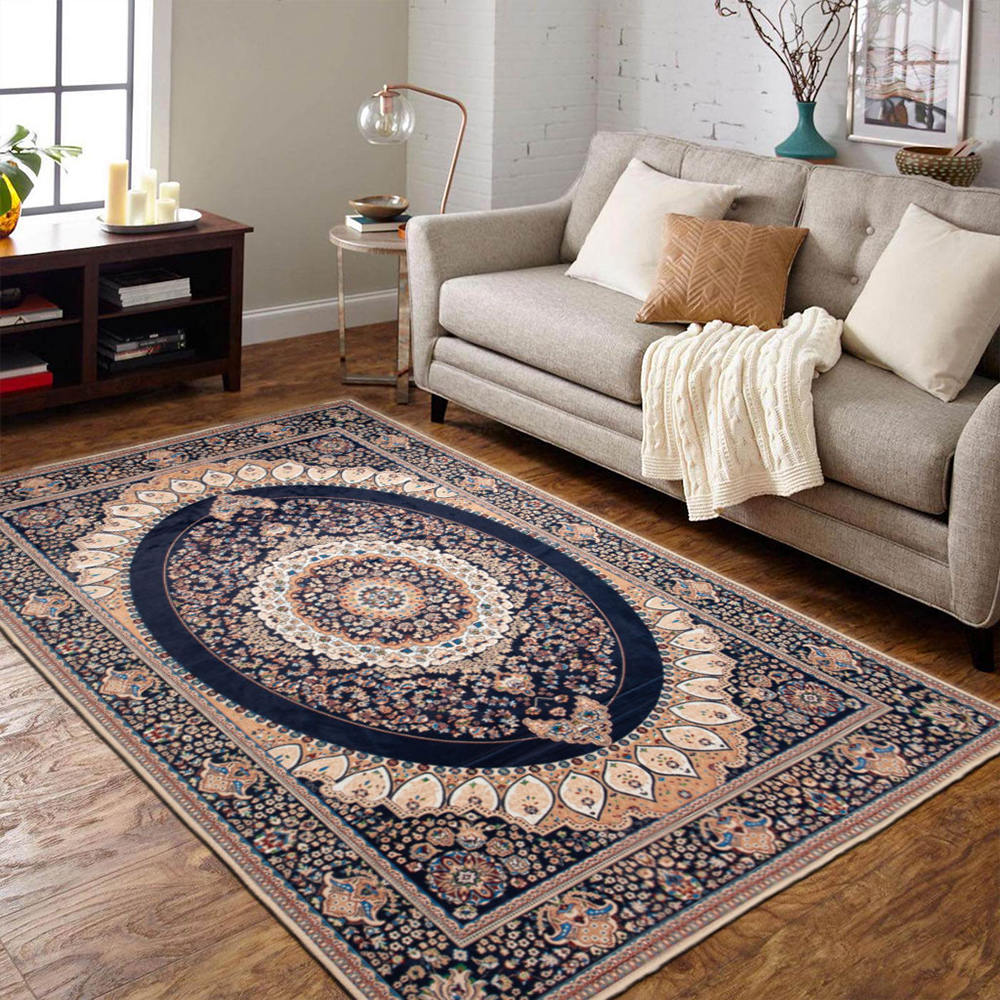
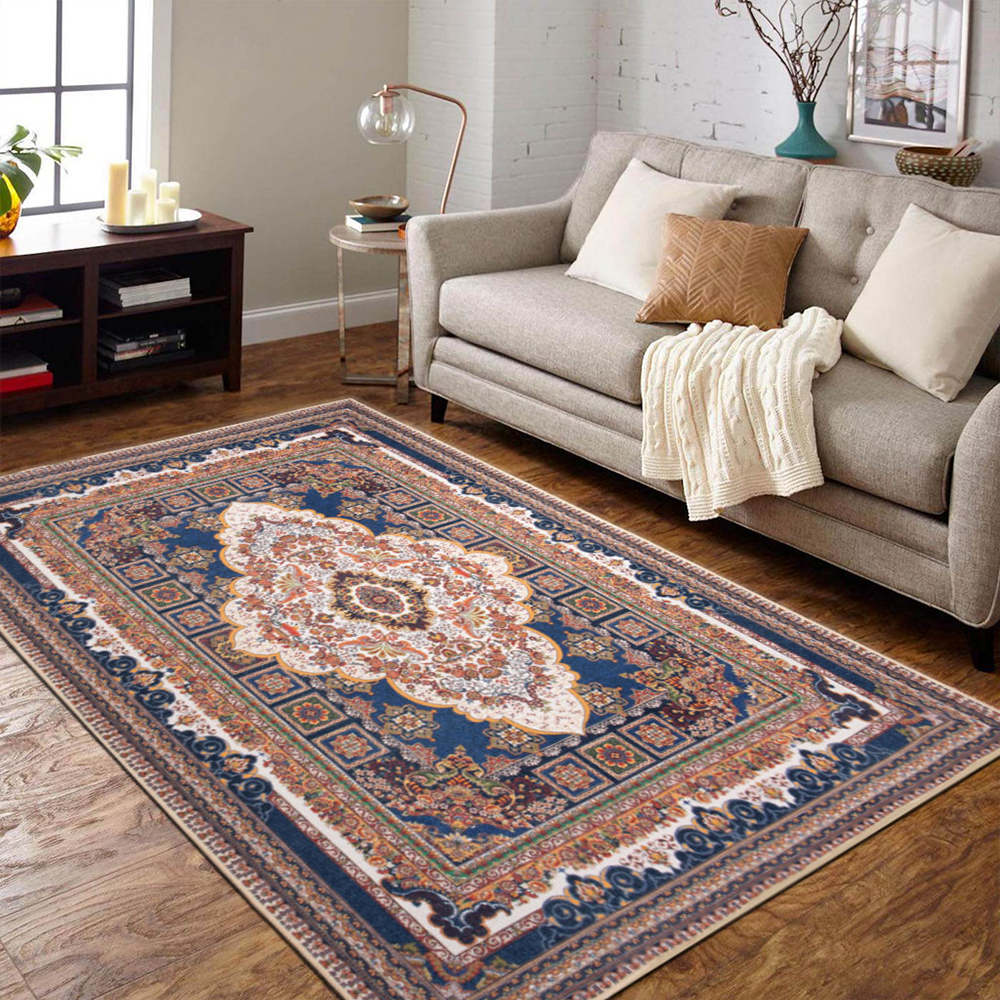
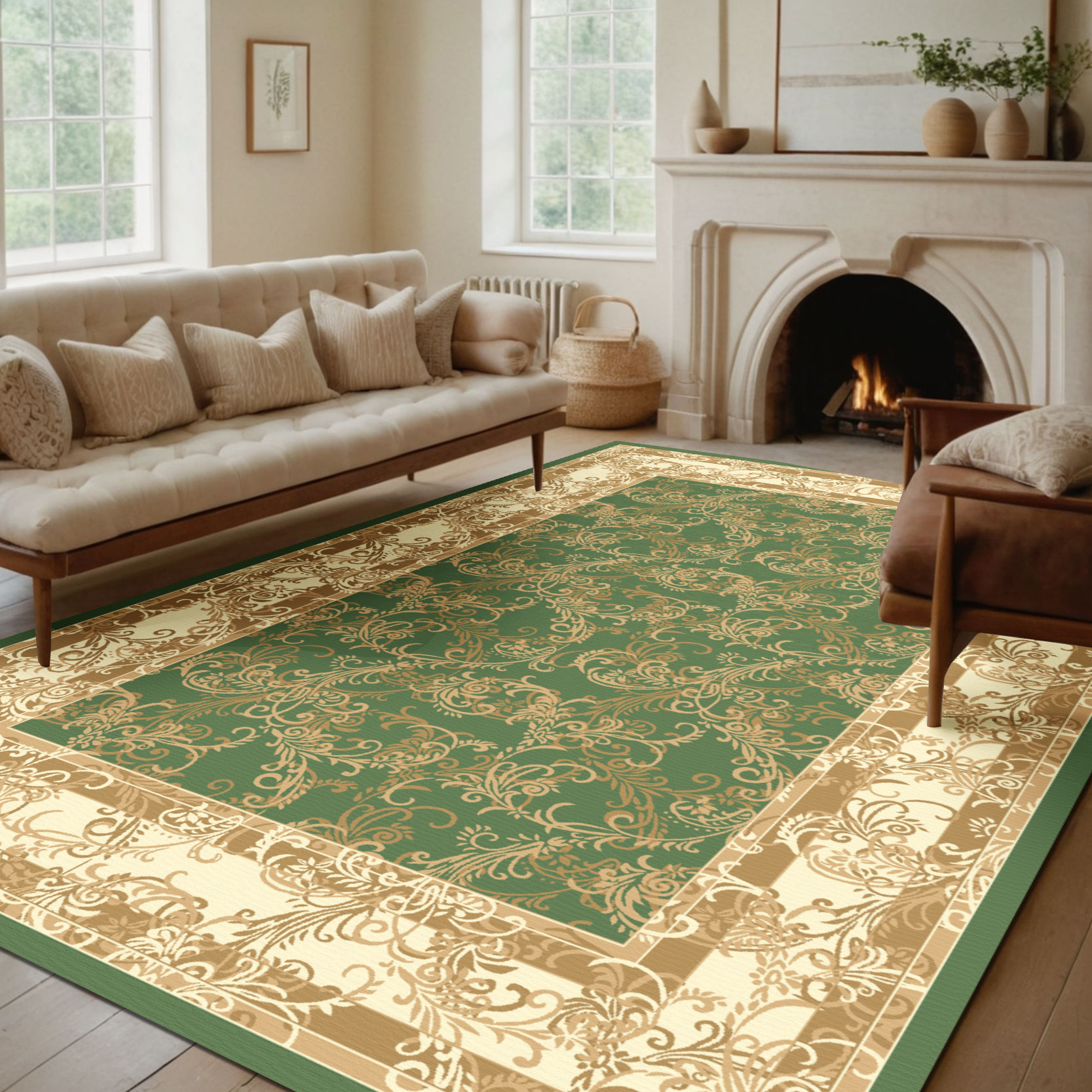
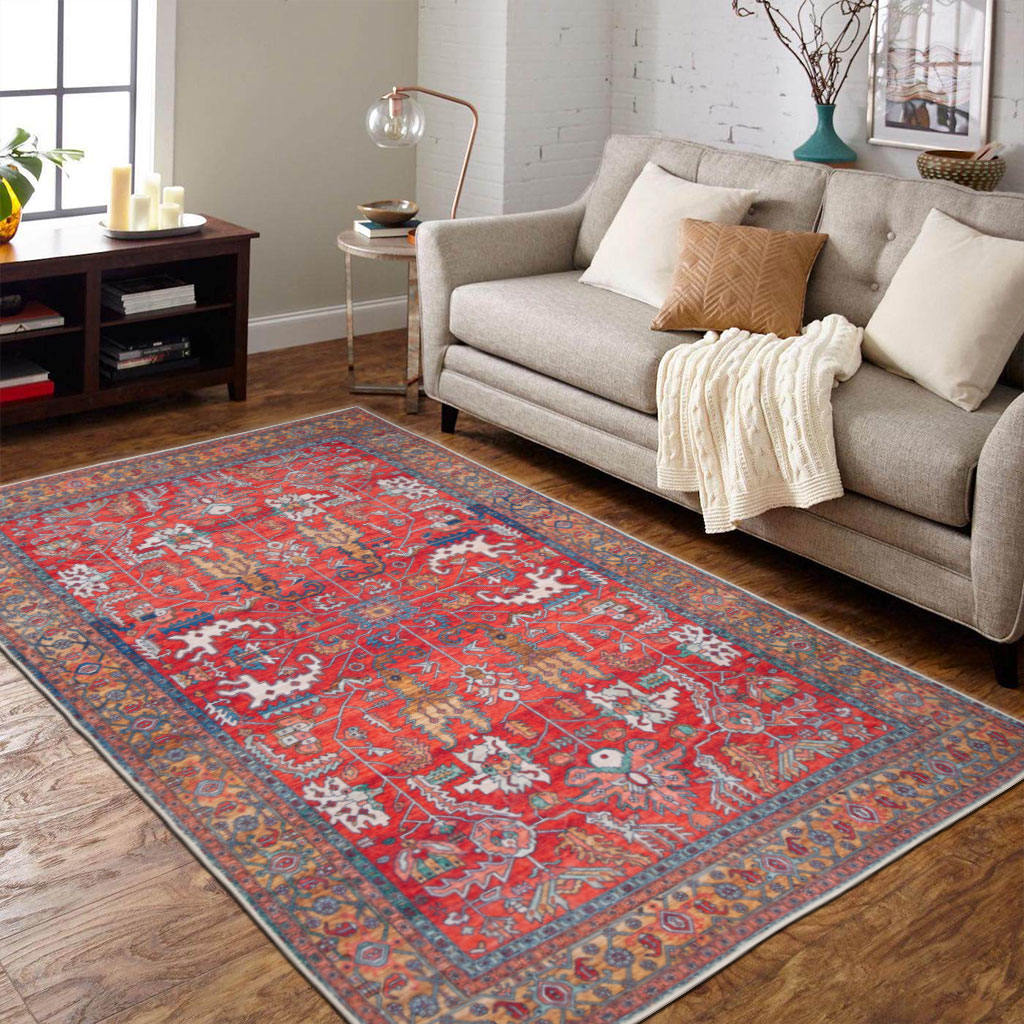
The carpet uses digital printing to reproduce a broad range of visual styles. Persian, Moroccan, modern, classic, geometric, and cartoon designs can all be developed according to market demand or customer specifications. This flexibility gives buyers more freedom than traditional production methods, especially when they need multiple patterns, small-batch collections, seasonal designs, or customized artwork.
In addition to product performance, the manufacturing background behind the carpet is an important consideration. Zhejiang Benyi Textile Technology Co., Ltd. operates in Shaoxing, Zhejiang Province, a major textile production center. The company combines fabric development, weaving, dyeing and printing, backing, and finished carpet processing within its supply chain. This integrated approach can support quality control, production coordination, product development, and lead-time management.
The following sections examine the construction, design flexibility, performance advantages, manufacturing strengths, applications, care requirements, purchasing considerations, and frequently asked questions related to this printed faux-wool carpet.
Polyester Faux Wool Printed Carpet
The Polyester Faux Wool Printed Carpet is an indoor rectangular area rug made primarily from polyester microfiber. Its product structure is intended to imitate the visual warmth and soft touch associated with wool while offering the practical advantages of synthetic fiber. Polyester is widely used in modern floor coverings because it can be engineered for softness, color retention, dimensional stability, and easy maintenance.
The product has a bonded construction and a 7-millimeter pile height. This middle pile level provides a balance between softness and practicality. It gives the surface enough depth to create a comfortable underfoot sensation without becoming excessively thick or difficult to place beneath furniture, doors, or other household features. The moderate pile is also suitable for entryways, living rooms, bedrooms, dining areas, kitchens, and children’s spaces.
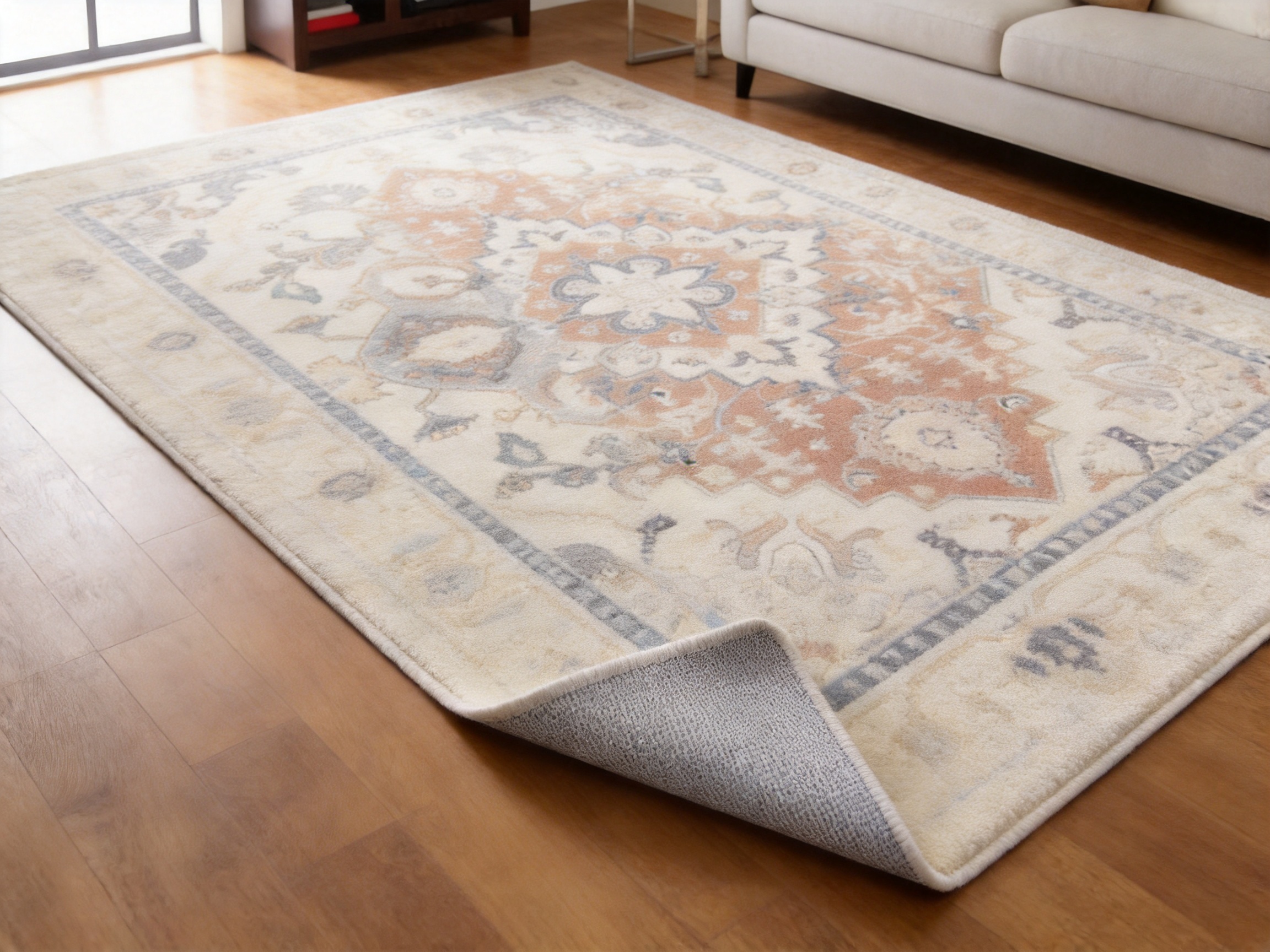
The backing consists of TPR and cotton fabric. TPR, or thermoplastic rubber, is used to create a flexible, skid-resistant underside. The cotton fabric layer contributes to the backing structure and helps support a stable, comfortable product format. Because the rug is designed to resist sliding, it may not require an additional rug pad in many normal indoor applications. However, the suitability of the rug without a separate pad can depend on the floor material, room conditions, furniture arrangement, and local safety requirements.
The carpet is machine washable according to the supplied product information. This feature is particularly useful for homes with children or pets, rental properties, hospitality spaces, and areas where dust or accidental spills are common. Washability can reduce the need for professional cleaning and make routine maintenance more convenient.
| Product Attribute | Specification |
|---|---|
| Product name | Faux Wool Carpet |
| Product category | Printed Area Rug |
| Brand | Bene |
| Material | Polyester microfiber |
| Weight | 1,500 grams per square meter |
| Pile height | 7 millimeters |
| Construction | Bonded |
| Backing | TPR and cotton fabric |
| Usage | Indoor |
| Care instruction | Machine washable |
| Pattern options | Persian, Moroccan, modern, classic, geometric, and cartoon |
| Shape | Rectangular |
| Standard sizes | 2 by 3 feet, 2 by 6 feet, 3 by 5 feet, 4 by 6 feet, 5 by 7 feet, 6 by 9 feet, and 8 by 10 feet |
| Customization | Custom sizes and designs available |
Wool has long been associated with high-quality carpets because of its natural softness, rich appearance, and traditional decorative value. Nevertheless, genuine wool can involve higher material costs, more specialized care, and limitations related to color development, production scale, and design customization. A polyester faux-wool carpet addresses some of these concerns by using engineered microfiber to create a similar visual and tactile impression.
The surface is designed to feel soft and thick enough for everyday comfort. Polyester microfiber can be manufactured with a fine fiber structure that creates a smooth hand feeling. This makes the rug comfortable in bedrooms, nurseries, reading corners, living rooms, and family areas where people may sit or walk barefoot.
Another benefit is consistency. Synthetic fibers can be produced with controlled specifications, allowing manufacturers to maintain a more uniform appearance across larger production runs. This is important for wholesale buyers who need a coordinated collection of rugs. Consistent fiber quality can also support predictable dyeing, printing, finishing, and inspection procedures.
Polyester offers a useful platform for digital printing. The fiber can accept detailed color patterns and tonal variations, enabling designs that would be difficult or expensive to reproduce through more limited methods. Fine lines, distressed effects, ornamental borders, multicolor motifs, and photographic-style visual elements can be explored during product development.
The result is a product that aims to provide the decorative character of a traditional wool rug while improving accessibility, maintenance, design flexibility, and production efficiency. It is not intended to be identical to natural wool in every technical respect. Instead, it offers an alternative for buyers who want a warm, soft, decorative carpet with the practical characteristics of polyester.
One of the most important advantages of this product is its digital printing capability. Traditional carpet design methods can require separate screens, plates, or dedicated production arrangements for each pattern. Digital printing allows artwork to be transferred to the carpet surface with greater flexibility and can simplify the development of diverse pattern collections.
For buyers, this means that the product can be adapted to different interior trends. Persian-inspired designs can introduce ornamental detail, medallions, and aged visual effects. Moroccan-inspired designs can use rhythmic geometry and distinctive line work. Modern designs can emphasize neutral color fields, abstract forms, or understated texture. Classic patterns can support timeless residential decoration, while geometric designs can coordinate with contemporary furniture and architectural interiors.
Cartoon and playful designs also create opportunities for children’s rooms, educational spaces, family areas, and themed retail collections. A printed rug can be developed around animals, clouds, vehicles, stars, letters, or other visual concepts. This flexibility is valuable for retailers that want to serve multiple customer groups without changing the fundamental carpet construction.
Digital printing can also support private-label and project-based programs. A buyer may request a specific color palette to match a furniture range, a hospitality identity, a seasonal campaign, or a home textile collection. Custom development can help manufacturers respond to these requirements with less dependence on standard catalog patterns.
Design flexibility must still be supported by color management and quality inspection. Accurate artwork preparation, suitable printing settings, controlled drying, and careful inspection are necessary to help maintain pattern clarity and color balance. An integrated manufacturer with experience in weaving, dyeing, printing, and finished product processing can coordinate these stages more effectively than a fragmented supply chain.
The carpet is made from polyester microfiber, a material selected for its practical performance and suitability for repeated indoor use. In homes, the rug may be exposed to routine walking, furniture movement, children’s activities, and occasional surface contamination. In offices or commercial interiors, it may experience more consistent foot traffic. The carpet’s construction and surface weight are intended to provide a dependable foundation for these everyday conditions.
No floor covering is completely immune to wear, and actual service life depends on traffic levels, furniture pressure, cleaning practices, sunlight exposure, and floor conditions. However, polyester provides a useful balance of softness and resilience for a broad range of indoor applications. Proper placement and care can help preserve the surface appearance over time.
Fade resistance is listed as one of the product’s special features. This is important because carpets are often placed near windows, glass doors, or bright interior lighting. A fade-resistant surface is intended to help colors remain attractive for longer periods under normal indoor exposure.
Color stability can vary depending on the intensity and duration of light exposure, cleaning chemicals, moisture, and the particular colors used in a design. For this reason, direct and prolonged sunlight should still be managed where possible. Curtains, blinds, UV-control window treatments, and periodic rotation of movable rugs can help reduce uneven exposure.
Polyester is often valued for its relatively easy-care characteristics. The product description highlights stain resistance and machine washing, two features that can be especially helpful in active households. A washable rug can be removed, cleaned, dried, and returned to service without the same level of inconvenience associated with some delicate floor coverings.
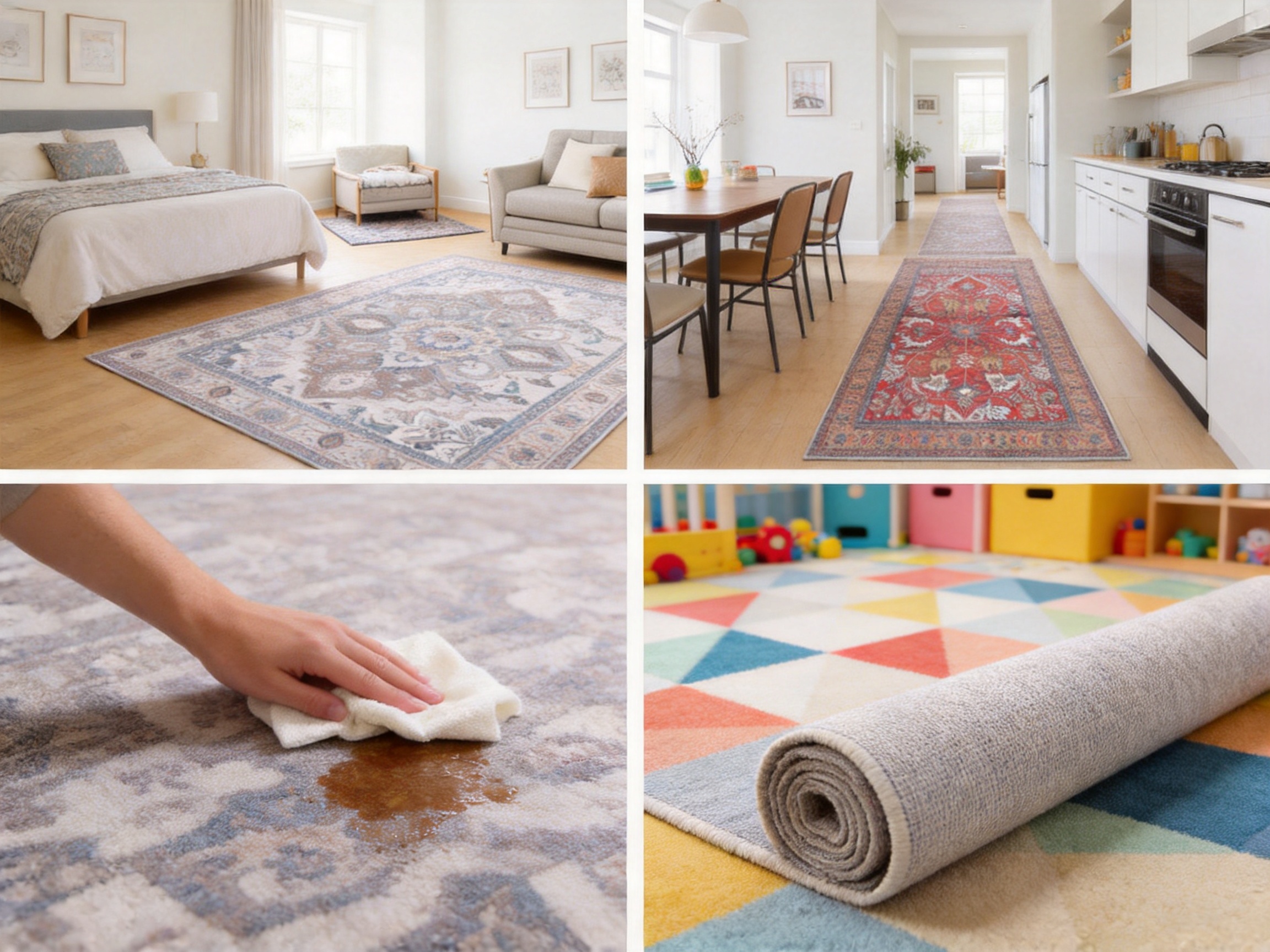
Routine maintenance should begin with regular vacuuming or gentle surface cleaning to remove loose dust and grit. Prompt attention to spills is also recommended. Absorbing liquid quickly can help reduce the chance of deep penetration or visible marks. Users should follow appropriate washing instructions, avoid unsuitable chemicals, and ensure that the rug is completely dry before placing it back on the floor.
The TPR backing is designed to reduce unwanted movement on the floor. This feature can improve convenience in living rooms, bedrooms, kitchens, children’s areas, and entry zones. A rug that remains more stable is less likely to bunch or shift during ordinary use.
Non-slip performance is influenced by the floor surface. Smooth ceramic tile, sealed wood, laminate, vinyl, and other materials may produce different results. Dust, moisture, wax, oil, and uneven flooring can reduce traction. Buyers should inspect the rug after installation and use additional safety measures if the surface moves under local conditions.
The soft construction and flexible backing make the rug easy to fold for packaging, transportation, storage, or seasonal replacement. Foldability can reduce logistical space requirements compared with rigid or highly structured floor coverings. It can also help consumers store the rug when changing interior decoration or preparing a room for a different use.
When storing the rug, it should be clean and completely dry. A dry, ventilated storage location is preferable. Long-term compression, excessive moisture, or heavy objects placed on top of the folded product should be avoided when possible.
The product’s main competitive strength is its combination of decorative appearance and practical maintenance. Traditional wool rugs can offer natural fiber appeal, but they may require more specialized care and can be more expensive. Low-cost synthetic rugs may be affordable but can lack softness, visual depth, or design sophistication. The faux-wool printed carpet is positioned between these alternatives.
| Comparison Factor | Polyester Faux Wool Printed Carpet | Traditional Wool Rug | Basic Low-Cost Synthetic Rug |
|---|---|---|---|
| Surface feel | Soft microfiber hand feeling designed to resemble wool | Natural wool texture and warmth | May range from smooth to coarse depending on fiber |
| Design flexibility | High, with digital printing and custom artwork | Can be limited by weaving, dyeing, and production cost | Often focused on standard designs |
| Maintenance | Machine washable according to product information | May require specialized cleaning | Varies by construction and backing |
| Weight and handling | Flexible and foldable | Can be heavier and less convenient to handle | Usually easy to handle, depending on size |
| Pattern development | Persian, Moroccan, modern, classic, geometric, and cartoon styles | Often associated with woven or traditional motifs | Usually dependent on available catalog patterns |
| Backing | TPR and cotton fabric with skid-resistant properties | May use woven, latex, cotton, or other backing systems | Backing quality varies widely |
| Customization | Custom sizes and designs can be developed | Customization may involve higher cost and longer development | Often limited for standard retail products |
This comparison does not mean that one carpet type is suitable for every situation. Natural wool may remain the preferred choice for buyers prioritizing natural fibers and traditional craftsmanship. Likewise, a basic synthetic mat may be sufficient for temporary or low-cost applications. The advantage of this printed polyester carpet is its balanced specification: soft appearance, varied design capability, washable construction, flexible handling, and a non-slip backing.
For wholesalers and retailers, another advantage is assortment management. A single basic construction can support many patterns and sizes. This can simplify purchasing and allow a product line to cover several interior styles. Buyers can create coordinated collections without needing entirely different manufacturing systems for each design group.
Zhejiang Benyi Textile Technology Co., Ltd. is located in Shaoxing, Zhejiang Province, a region widely recognized for textile manufacturing and supply-chain resources. The company focuses on carpets, rug fabrics, and finished carpet products. Its stated objective is to use textile technology to make carpet production more efficient while supporting product quality, environmental responsibility, and customer service.
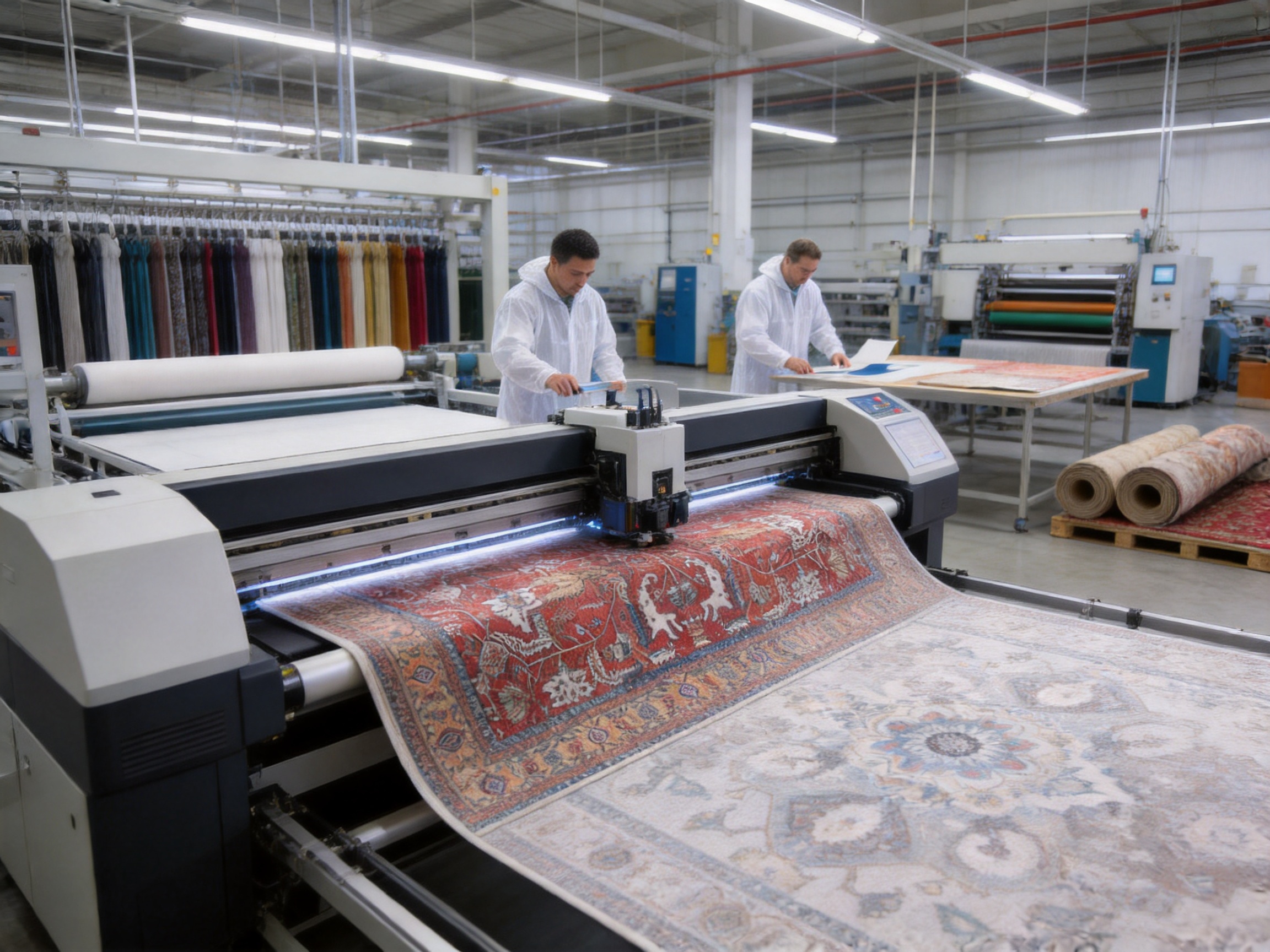
A significant strength is the company’s integrated production structure. It has its own weaving facilities, dyeing and printing factories, and finished carpet processing factories. This gives the company greater control over the path from raw material and fabric development to the finished rug. When multiple stages are handled within a connected production system, communication between technical teams can be faster and production problems may be addressed earlier.
Integration can also support quality consistency. For example, the characteristics of the surface fabric, printing process, bonded construction, and TPR backing must work together. If these stages are separated among unrelated suppliers, differences in technical standards may create delays or variations. An integrated manufacturer can coordinate specifications across the production chain and establish inspection procedures for each stage.
Lead-time control is another potential advantage. Wholesale orders often involve fixed sales seasons, retail launch dates, promotional campaigns, or project schedules. Internal coordination of weaving, printing, and finishing can help reduce dependency on multiple external production calendars. Actual lead time will depend on order volume, design complexity, raw material availability, sampling requirements, and shipping conditions, but a controlled supply chain provides a stronger basis for planning.
The company reports a team of more than 20 fabric engineers. This technical group develops new carpet fabrics each quarter based on market trends and also provides customization according to customer requirements. Regular development is important in a changing interior market, where consumers may shift from traditional ornament to neutral minimalism, abstract patterns, playful children’s designs, or nature-inspired palettes.
Fabric engineers can contribute to decisions about fiber selection, surface density, pile height, backing compatibility, print clarity, softness, wash performance, and visual effect. Their work is especially relevant to faux-wool products because the product must balance a plush hand feeling with practical weight, flexible handling, and reliable production.
Quarterly development can also help buyers refresh their collections. Retailers may request new colors, updated motifs, or coordinated sizes while maintaining the same general construction. For project customers, the engineering team can help translate design concepts into a manufacturable carpet format.
Quality control for a printed area rug involves more than checking the finished appearance. The manufacturer may need to evaluate fiber quality, fabric construction, print registration, color consistency, pile surface, bonding, backing adhesion, edge finishing, dimensions, packaging, and wash performance. Each stage contributes to the final customer experience.
In digital printing, inspection should pay attention to missing details, uneven color, blurred edges, unwanted marks, and pattern alignment. In backing production, inspectors should consider whether the TPR layer is evenly applied and whether the cotton fabric is properly integrated. Dimensional checks are also important when customers order multiple rugs for coordinated rooms or commercial projects.
Although specific inspection procedures can vary by order, a manufacturer with control over fabric, printing, and finishing can create a unified quality framework. This helps buyers communicate requirements and receive products made according to a consistent technical specification.
Modern carpet buyers increasingly consider environmental impact alongside design and performance. The company describes itself as committed to ecological protection, consumer health experiences, sustainable materials, and improved production methods. Its reported initiatives include the use of recycled polyester and water-saving dyeing techniques.
Recycled polyester can reduce dependence on virgin petroleum-based resources when the appropriate recycled feedstock and manufacturing controls are used. It can also support circular-material strategies for brands and retailers that want to offer products with a more sustainability-focused story. The environmental value of recycled fiber depends on the source material, processing method, certification, product durability, and end-of-life pathway, so buyers should request relevant documentation for specific orders.
Water-saving dyeing and printing methods may help reduce water consumption compared with less efficient processes. Textile dyeing is traditionally associated with water use, energy consumption, and wastewater management. Improvements in equipment, process control, color development, and wastewater treatment can help reduce the environmental burden of manufacturing.
The company also states that it has passed OEKO-TEX and Global Recycled Standard certifications. Certification status should be confirmed for the specific factory, material, product, and current validity period before being used in formal marketing or compliance documentation. These certifications can nevertheless provide a useful framework for buyers who need information about restricted substances, recycled content, production controls, or responsible sourcing.
Product durability and washability also relate to sustainability. A rug that remains attractive and functional for a longer period may reduce the frequency of replacement. Easy maintenance can help users care for the product at home rather than discarding it after minor contamination. Responsible use, appropriate washing, and suitable disposal remain important parts of the product’s overall environmental profile.
In living rooms, the carpet can be used to define a seating area, add warmth to hard flooring, and introduce pattern beneath a coffee table or central furniture group. The available sizes make it possible to select a compact rug for a small apartment or a larger format for an open-plan interior. Persian and classic patterns can support traditional décor, while modern or geometric designs can complement contemporary furniture.
The soft surface is suitable for spaces where people gather, sit, play, or relax. The non-slip backing may also help keep the rug stable beneath everyday foot traffic. When placing the carpet beneath furniture, users should ensure that the surface lies flat and that edges do not create a tripping hazard.
A faux-wool rug can provide a warmer, softer surface beside a bed or in a dressing area. A 2-by-3-foot rug may suit a smaller bedside application, while larger sizes can extend beneath part of a bed or define a broader bedroom zone. Neutral modern patterns may create a calm appearance, while traditional designs can add decorative richness.
The washable construction is useful in bedrooms because dust, fibers, and everyday debris can accumulate over time. Regular vacuuming and periodic washing can help maintain a cleaner floor covering, provided the care instructions are followed correctly.
Dining rooms require careful consideration of size and furniture movement. A rug should normally extend far enough beneath the table and chairs to allow chairs to remain on the carpet when pulled out. The 7-millimeter pile offers a relatively moderate profile that may be easier to use around dining furniture than a very thick, high-pile design.
Because food and drink spills are possible in dining areas, stain resistance and washability are valuable features. Prompt cleaning remains important, particularly for strongly colored foods, oily substances, or liquids that could migrate into the backing.
In kitchens, a runner or compact rectangular rug can be placed near a sink, preparation counter, or island. The printed surface can add color to a functional area, while the skid-resistant backing may help keep the rug in position. Kitchen users should take special care to keep the rug dry and remove it if grease or moisture accumulates underneath.
Although the carpet is designed for indoor use and can be machine washed, it should not be treated as a substitute for a specialized waterproof kitchen mat in areas exposed to continuous water, oil, or extreme contamination. Its best use is as a decorative and comfortable indoor floor covering under normal household conditions.
A compact rug can help introduce pattern and softness near an entrance or hallway. The 2-by-6-foot size may be suitable for narrow areas, depending on the available floor space. Since entryways often receive more dirt and grit, regular cleaning is particularly important. Grit can act as an abrasive material when walked into the fibers repeatedly.
Users should also verify that the rug does not interfere with door clearance. A 7-millimeter pile is moderate, but every door and threshold should be checked after installation.
Cartoon, animal, geometric, and colorful designs can make the carpet attractive for children’s bedrooms, playrooms, reading corners, and activity spaces. The soft surface can make hard floors more comfortable for sitting and playing. Washability is also valuable in areas where accidental spills and frequent use are expected.
Parents and facility managers should inspect the backing regularly, keep the surface dry, and ensure that the rug lies flat. The carpet should be selected according to the child’s age, room layout, and applicable safety considerations.
The product is well suited to wholesale programs because it combines a repeatable base construction with a broad design platform. Buyers can select from existing patterns or work with the manufacturer to develop custom artwork. This allows distributors, online retailers, furniture stores, interior design companies, hospitality suppliers, and private-label brands to create collections that align with their own markets.
Size customization is useful for projects with nonstandard room dimensions. While standard sizes can simplify inventory and sales planning, custom sizes may be required for hotels, serviced apartments, offices, showrooms, retail displays, or residential developments. Buyers should confirm minimum order quantities, size tolerances, packaging requirements, sample approval procedures, and production schedules before placing a custom order.
Color customization can help coordinate rugs with curtains, cushions, upholstery, bedding, wall coverings, or furniture. Because the product is digitally printed, the design process may support more variations than a limited catalog system. However, color appearance can differ between screens, printed samples, and final production. Physical sample approval is recommended for important projects.
Private-label buyers can also discuss labels, packaging, carton marks, barcode requirements, instruction inserts, and collection naming. These details should be agreed upon before production begins. Clear technical documents can reduce misunderstandings and help ensure that the finished goods match the intended retail presentation.
For importers, the company’s location in a major textile region can be advantageous for sourcing related products. Its broader product categories include area rugs, prayer mats, bath mats, kitchen mats, door mats, carpet fabric, blankets, and sofa cushions. A buyer interested in a coordinated home textile program may be able to explore multiple product types through one manufacturing partner, subject to the supplier’s current capabilities and order requirements.
Regular care can preserve the appearance and serviceability of the carpet. Vacuuming should be performed according to the level of traffic and the amount of dust in the room. A gentle setting is preferable when possible, especially for maintaining the printed surface and avoiding unnecessary stress on the pile.
Spills should be addressed promptly. Liquid should be blotted rather than aggressively rubbed, since rubbing may spread the mark or disturb the surface. A mild cleaning solution may be considered after testing it in an inconspicuous area. Strong bleaching agents, harsh solvents, and unapproved chemicals should be avoided unless the care label specifically permits them.
When machine washing, users should follow the manufacturer’s instructions regarding water temperature, cycle selection, detergent, load size, and drying. The rug should not be folded or stored while damp. Incomplete drying can create odors or affect the backing. If the washing machine is too small for the rug’s size, professional cleaning may be safer than forcing the product into an unsuitable drum.
Placement also affects longevity. Direct exposure to intense sunlight should be reduced when possible. Heavy furniture should not remain in one position indefinitely if it creates severe compression. Furniture legs can be fitted with appropriate protectors, and the rug can occasionally be rotated to distribute wear.
The TPR backing should be checked periodically. If the underside becomes dusty, oily, damaged, or wet, the rug should be removed and cleaned before use. The floor beneath it should also be dry and free of loose debris. These measures help support both hygiene and slip resistance.
Professional buyers should begin by defining the intended market and use environment. A rug intended for bedrooms may emphasize softness and calm colors, while a kitchen or entrance collection may require more practical patterns and stronger cleaning expectations. A children’s range may prioritize playful artwork, washable construction, and clear safety communication.
Next, buyers should confirm material specifications, pile height, weight, backing composition, construction type, printing method, available sizes, and packaging format. These details should be recorded in a product specification sheet. If the order involves multiple designs, every colorway and artwork version should be identified clearly.
Sampling is an important stage. A pre-production sample can help buyers evaluate surface softness, print quality, color accuracy, dimensions, backing stability, edge finishing, folding behavior, and packaging. For customized products, written approval of the artwork and physical sample can reduce the risk of producing an unsuitable bulk order.
Buyers should also ask about testing and documentation. Depending on the destination market, relevant topics may include restricted substances, color fastness, wash performance, fiber content, recycled-material claims, labeling, packaging materials, and social or environmental compliance. Certification documents should be checked for the correct company, factory, product scope, and validity period.
Shipping and logistics should be discussed early. The product’s foldable construction can support efficient packing, but final carton dimensions and gross weight depend on order quantity, individual rug size, folding method, protective packaging, and customer requirements. Importers should calculate landed cost using the complete shipping plan rather than product price alone.
Interior design trends increasingly combine comfort, practicality, and personal expression. Consumers want homes that feel warm but remain easy to maintain. The faux-wool printed carpet responds to this preference through its soft surface, decorative variety, and washable construction.
Vintage-inspired designs remain popular because they can create depth and character without requiring antique materials. Persian-style digital printing can reproduce an aged or ornamental appearance while allowing buyers to choose updated colors and softer contrast. This makes the look more adaptable to modern furniture and smaller rooms.
Minimalist interiors often benefit from restrained geometric patterns, subtle borders, and tone-on-tone designs. A printed carpet can add visual interest without overwhelming a simple room. Neutral shades may coordinate with wood, stone, metal, leather, and upholstered furniture.
Maximalist interiors can use stronger colors and more complex patterns. Since digital printing supports a broad design vocabulary, collections can include dramatic motifs for customers who want the rug to become a central decorative feature.
Family-oriented interiors may prioritize comfortable textures and easy cleaning. Washable rugs are increasingly attractive to households that want decorative products without excessive maintenance. The availability of cartoon and playful patterns expands the range beyond adult living spaces.
Zhejiang Benyi Textile Technology Co., Ltd. presents itself as a textile technology company rather than only a trading intermediary. Its stated capabilities cover fabric engineering, weaving, dyeing and printing, backing, and finished carpet processing. This broad scope can be valuable for buyers who need technical communication, product customization, and coordinated manufacturing.
The company’s location in Shaoxing provides access to a developed textile ecosystem. A mature textile region can offer supporting resources related to yarns, fabrics, printing, finishing, packaging, testing, and logistics. These regional connections may help manufacturers develop new products and respond to changing market requirements.
The company also emphasizes environmental protection and consumer health experiences. Its reported use of recycled polyester and water-saving dyeing techniques reflects the growing importance of responsible production. Its stated OEKO-TEX and Global Recycled Standard certifications may be relevant to customers seeking more transparent material and manufacturing information, subject to verification for each order.
Another strength is the combination of product breadth and technical development. The company supplies finished carpets and rug fabrics, while also covering related home textile categories. Its engineering team develops new fabrics each quarter and supports customer-specific services. This can help buyers move from a basic product concept to a complete collection.
For international customers, communication and service are also important. The company provides contact channels for business inquiries and is positioned to support wholesale and customized orders. Buyers should establish a clear communication process covering technical specifications, artwork, sample approvals, inspection, packaging, shipping, and after-sales support.
A strong product description should communicate benefits accurately and avoid overstatement. The carpet is designed for indoor use, not for continuous outdoor exposure or severe industrial conditions. Its fade resistance does not mean that colors are unaffected by all sunlight or chemicals. Its non-slip backing does not eliminate every possible movement risk on every type of floor. Its washability still requires correct handling.
Clear communication builds trust between manufacturers, distributors, retailers, and consumers. Product packaging should explain the material, size, care instructions, intended use, and any relevant limitations. Retailers should describe the carpet as a practical faux-wool alternative rather than implying that it is made from natural wool.
Responsible positioning also involves explaining sustainability claims carefully. If recycled polyester is used, the percentage and certification scope should be documented. If a product carries a certification, the certificate should correspond to the actual product and production facility. This level of transparency can help professional buyers meet internal policies and customer expectations.
Quality should be considered throughout the product life cycle. Durable fibers, stable construction, reliable backing, accurate printing, suitable packaging, and clear care instructions all contribute to customer satisfaction. A well-designed rug is not only attractive at the point of sale; it should also remain useful and presentable during normal ownership.
It is an indoor area rug made from polyester microfiber and designed to provide a soft hand feeling and appearance similar to wool. Its surface is digitally printed, allowing a broad selection of decorative patterns and colors.
No. The product is made from polyester. It is called faux wool because its appearance and hand feeling are designed to resemble the softness and visual character associated with wool.
The product can support Persian, Moroccan, modern, classic, geometric, and cartoon styles. Custom artwork and color development can also be discussed for suitable wholesale or project orders.
The listed pile height is 7 millimeters. This is a moderate pile level intended to balance softness, appearance, furniture compatibility, and ease of handling.
Yes. The backing uses TPR and cotton fabric and is described as skid resistant. Actual performance depends on the floor surface, cleanliness, moisture, and installation conditions.
The product information lists machine washing as the care instruction. Users should follow the specific washing and drying recommendations supplied with the product and make sure the carpet is fully dry before reuse.
The TPR backing is designed to reduce sliding, and the product information states that no additional rug pad is needed in normal conditions. However, a separate pad may still be appropriate if the rug moves on a particular floor or if additional cushioning is desired.
It is intended for indoor areas such as bedrooms, living rooms, dining rooms, kitchens, children’s rooms, hallways, entryways, offices, and other suitable interior spaces.
Listed sizes include 2 by 3 feet, 2 by 6 feet, 3 by 5 feet, 4 by 6 feet, 5 by 7 feet, 6 by 9 feet, and 8 by 10 feet. Custom sizes may also be available depending on order requirements.
It is described as suitable for high-traffic indoor areas as well as comfortable residential spaces. Actual performance depends on the traffic level, maintenance routine, furniture pressure, sunlight exposure, and floor conditions.
Its advantages include a soft faux-wool microfiber surface, 1,500-gram-per-square-meter weight, 7-millimeter pile, digital design flexibility, machine-washable construction, fade-resistant characteristics, and a TPR and cotton-fabric backing.
Customization can be discussed with the manufacturer. Buyers should confirm artwork requirements, color standards, minimum quantities, sampling procedures, labeling, packaging, and production schedules before ordering.
The supplier reports capabilities in weaving, dyeing and printing, finished carpet processing, fabric engineering, and customized product development. This integrated structure is intended to support quality control and production coordination.
The company reports using sustainable approaches such as recycled polyester and water-saving dyeing techniques. Buyers should request current documentation and verify the exact material and certification scope for the products they order.
The carpet should be cleaned and completely dry before storage. It should be kept in a dry, ventilated place and protected from excessive moisture, prolonged compression, and heavy objects that could permanently distort the folded product.
The Polyester Faux Wool Printed Carpet is a versatile floor-covering solution for buyers who want the softness and decorative appeal of a wool-inspired surface without committing to the maintenance and cost considerations often associated with natural wool. Its polyester microfiber construction, 7-millimeter pile, 1,500-gram-per-square-meter weight, flexible format, digital printing capability, washable design, and TPR and cotton-fabric backing create a balanced specification for modern indoor use.
Its competitive appeal comes from the combination of comfort, style, maintenance convenience, and customization. Persian, Moroccan, modern, classic, geometric, and cartoon designs can be developed for different customer groups and interior settings. Standard and custom sizes allow the product to serve both retail and project markets.
The manufacturing partner adds value through its location in Shaoxing, integrated textile facilities, fabric engineering team, in-house weaving, dyeing and printing, and finished carpet processing capabilities. These strengths can support coordinated development, quality management, customized production, and more dependable supply planning.
For professional buyers, the product is most attractive when its features are matched carefully to the intended market. Sample approval, technical documentation, artwork control, care labeling, certification verification, and shipping planning should all be included in the purchasing process. With appropriate selection and responsible use, this faux-wool printed carpet can provide a practical and visually distinctive addition to contemporary home textile collections.
1. Product specification and technical information supplied for the Polyester Faux Wool Printed Carpet, including material, pile height, weight, backing, sizes, care instructions, and design options.
2. Company information supplied for Zhejiang Benyi Textile Technology Co., Ltd., including manufacturing capabilities, engineering resources, textile technology focus, and sustainability initiatives.
3. General textile manufacturing principles concerning polyester microfiber, digital printing, bonded carpet construction, thermoplastic rubber backing, and washable floor coverings.
4. General product-care guidance for machine-washable indoor rugs, including spill response, drying, storage, vacuuming, and backing maintenance.
5. General sustainability considerations for recycled polyester, water-saving dyeing, textile certification, and responsible product communication.

ADD: No.75 Zhenyuan Road, Yuecheng District, Shaoxing City, Zhejiang Province, China 312000

Tel : +86-189 6750 9795

FAX : +86-0575-8803 2773

Email : fisher@benetextile.com

Copyright © Zhejiang Benyi Textile Technology Co., Ltd. All Rights Reserved. Carpets and Rugs Manufacturer

 English
 Français
 Deutsch
 عربى
عربى